RETINITIS
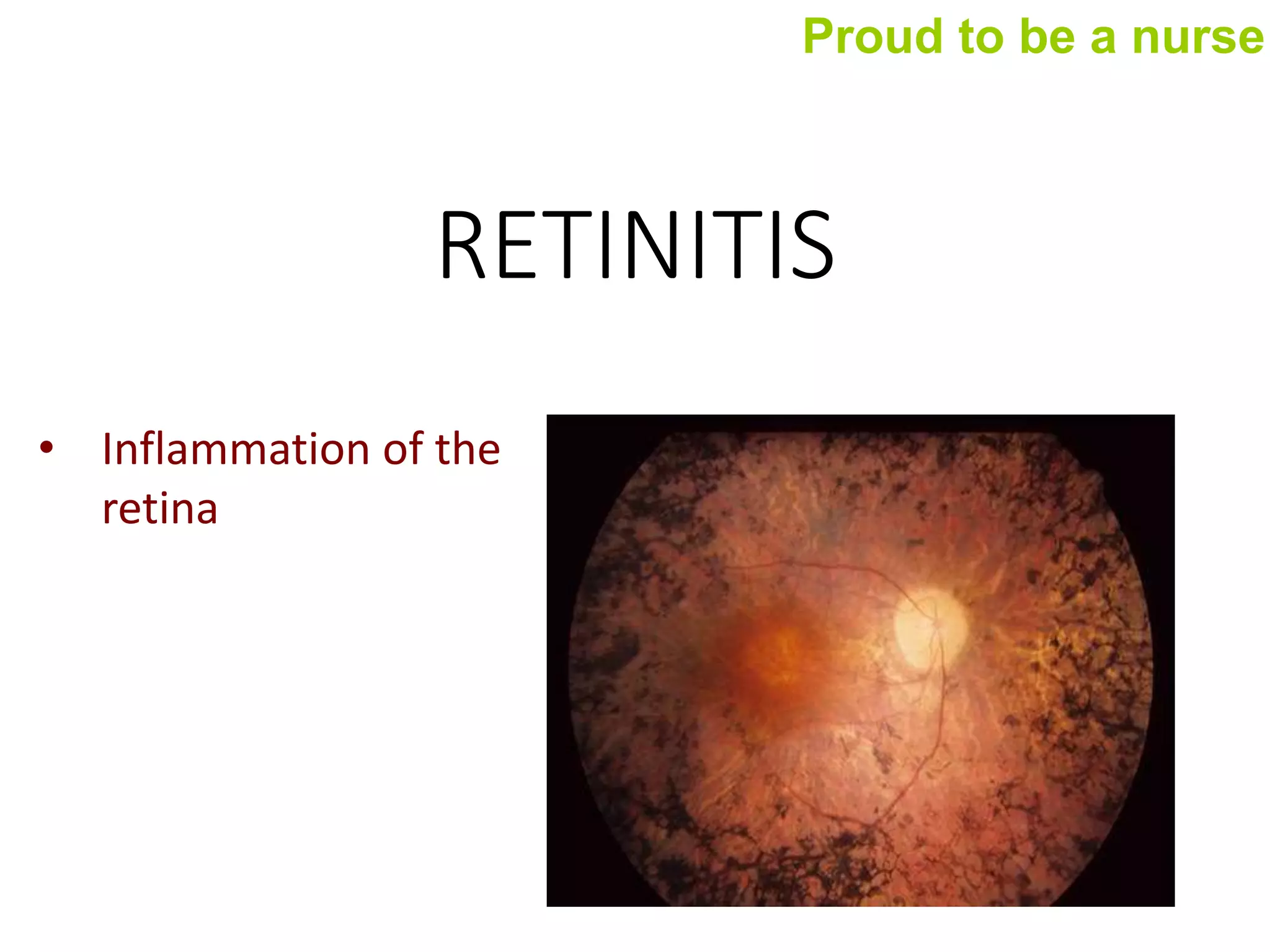
• Inflammation of the
retina
Proud to be a nurse
Etiology
• Toxoplasma
• Cytomegalo virus
• Herpes zoster
• Candida
• Aspergillus
• Mycobacterium
Proud to be a nurse
Types
Retinitis
pigmentosa
• Group of genetic
eye disease
• Affect the rods (
loss of night
vision)
Cytomegalo virus
retinitis
• Develops from
viral infection of
retina
Proud to be a nurse
Clinical manifestations
• Blurred vision
• Loss of side vision
• Floaters
• Tunnel vision
• Eye pain
• Photophobia
• Blindness redness
Proud to be a nurse
Floters
Diagnostic evaluation
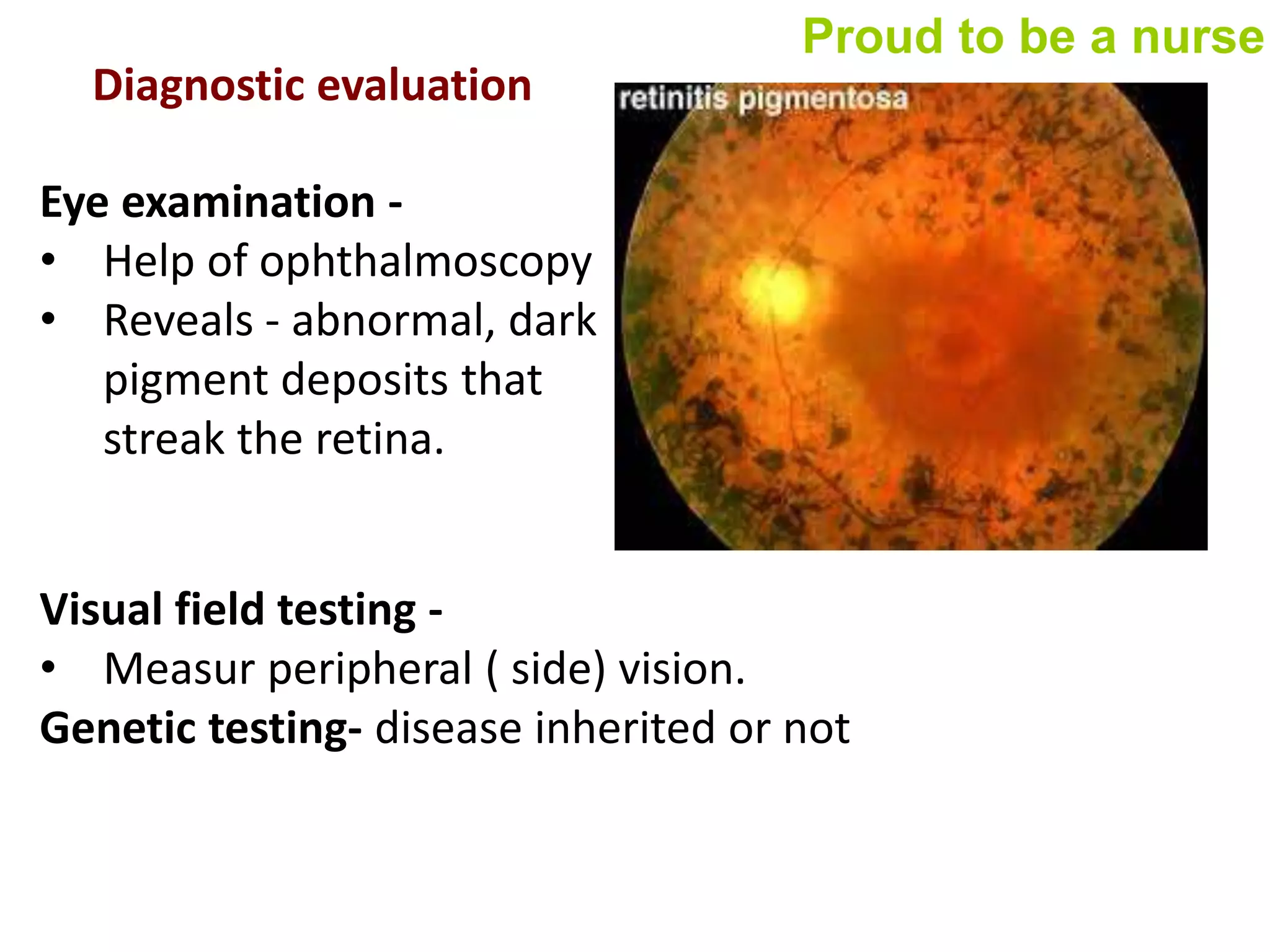
Eye examination -
• Help of ophthalmoscopy
• Reveals - abnormal, dark
pigment deposits that
streak the retina.
Visual field testing -
• Measur peripheral ( side) vision.
Genetic testing- disease inherited or not
Proud to be a nurse
Electrode tomography -
• Measure electrical activity in retina
• In retinitis have decreased electrical activity,
reflecting the declining of Photoreceptor.
Optical coherence tomography (OCT)-
• take special, highly detailed picture of retina.
Proud to be a nurse
MANAGEMENT
Pharmacological
Medical
Surgical
Nursing M.
Non- pharmacological
Proud to be a nurse
Pharmacological management
1. Carbonic anhydrase inhibitors -
• Action- decrease pressure in eye
• Example -. Topical Acetazolamide
2. Lutein-
• Action- protect the macula from oxidative
damage & oral supplementation has been
shown to increase the macular pigment.
• Dose- 20 mg/day
• 3. Vitamin A/ Carotene
Proud to be a nurse
Surgical management
1. Bionic retina 2. Retinal
transplantation
Proud to be a nurse
Nursing management
Assessment
• History collection ( previous eye infection,
family history).
• Physical examination (subjective and objective
data) like blurred vision , tunnel vision, floaters
etc .
Nursing diagnosis
1. Chronic pain r/t inflammation in retina as
evidence by expression of pain.
Goal- to reduce pain
Intervention -
• Determine the location, characteristics, onset,
duration, frequency, quality, and severity of
pain via assessment.
Proud to be a nurse
Proud to be a nurse
• Determine the patient’s anticipation for pain relief.
• Provide measures to relieve pain before it becomes
severe.
• Provide diversion therapy.
2. Disturbed sensory perception (visual )r/t damaged
retina as evidenced by verbal complaint of vision
problems such as tunnel vision, floaters.
Goal- The patient will regain optimal vision while being
able to cope with and accept permanent vision
changes.
Intervention -
• Assess the vision ability of the patient.
• Encourage the patient to have regular checkups with
an ophthalmologist at least once a year.
Proud to be a nurse
• Encourage the patient to have regular checkups with
an ophthalmologist at least once a year.
• Administer medications as prescribed.
• Advise to include fish that are high in omega-3 fatty
acid, such as salmon, sardines and tuna. Encourage
the patient to add foods containing vitamins C, E,
beta-carotene, zinc, and copper in his/her diet in
accordance to daily recommended intake.
3. Risk for Injury related to impaired sensory function
secondary to diplopia as evidence by patient reporting
he is seeing blurry.
Proud to be a nurse
Goal- Pt will remain free from injury throughout his
hospital stay.
Intervention -
• The nurse will identify factors that will increase
the risk for injury to the patient.
• The nurse will assess the patients vision twice a
shift for any more deterioration.
• To provide safe environment. (Remove sharp
objects from the surrounding of the pt.
• Assist to pt for ADLs.
Proud to be a nurse
Thank you 😊

RETINITIS.pptx

  • 1.
    RETINITIS • Inflammation ofthe retina Proud to be a nurse
  • 2.
    Etiology • Toxoplasma • Cytomegalovirus • Herpes zoster • Candida • Aspergillus • Mycobacterium Proud to be a nurse
  • 3.
    Types Retinitis pigmentosa • Group ofgenetic eye disease • Affect the rods ( loss of night vision) Cytomegalo virus retinitis • Develops from viral infection of retina Proud to be a nurse
  • 4.
    Clinical manifestations • Blurredvision • Loss of side vision • Floaters • Tunnel vision • Eye pain • Photophobia • Blindness redness Proud to be a nurse
  • 5.
  • 6.
    Diagnostic evaluation Eye examination- • Help of ophthalmoscopy • Reveals - abnormal, dark pigment deposits that streak the retina. Visual field testing - • Measur peripheral ( side) vision. Genetic testing- disease inherited or not Proud to be a nurse
  • 7.
    Electrode tomography - •Measure electrical activity in retina • In retinitis have decreased electrical activity, reflecting the declining of Photoreceptor. Optical coherence tomography (OCT)- • take special, highly detailed picture of retina. Proud to be a nurse
  • 8.
  • 9.
    Pharmacological management 1. Carbonicanhydrase inhibitors - • Action- decrease pressure in eye • Example -. Topical Acetazolamide 2. Lutein- • Action- protect the macula from oxidative damage & oral supplementation has been shown to increase the macular pigment. • Dose- 20 mg/day • 3. Vitamin A/ Carotene Proud to be a nurse
  • 10.
    Surgical management 1. Bionicretina 2. Retinal transplantation Proud to be a nurse
  • 11.
    Nursing management Assessment • Historycollection ( previous eye infection, family history). • Physical examination (subjective and objective data) like blurred vision , tunnel vision, floaters etc . Nursing diagnosis 1. Chronic pain r/t inflammation in retina as evidence by expression of pain. Goal- to reduce pain Intervention - • Determine the location, characteristics, onset, duration, frequency, quality, and severity of pain via assessment. Proud to be a nurse
  • 12.
    Proud to bea nurse • Determine the patient’s anticipation for pain relief. • Provide measures to relieve pain before it becomes severe. • Provide diversion therapy. 2. Disturbed sensory perception (visual )r/t damaged retina as evidenced by verbal complaint of vision problems such as tunnel vision, floaters. Goal- The patient will regain optimal vision while being able to cope with and accept permanent vision changes. Intervention - • Assess the vision ability of the patient. • Encourage the patient to have regular checkups with an ophthalmologist at least once a year.
  • 13.
    Proud to bea nurse • Encourage the patient to have regular checkups with an ophthalmologist at least once a year. • Administer medications as prescribed. • Advise to include fish that are high in omega-3 fatty acid, such as salmon, sardines and tuna. Encourage the patient to add foods containing vitamins C, E, beta-carotene, zinc, and copper in his/her diet in accordance to daily recommended intake. 3. Risk for Injury related to impaired sensory function secondary to diplopia as evidence by patient reporting he is seeing blurry.
  • 14.
    Proud to bea nurse Goal- Pt will remain free from injury throughout his hospital stay. Intervention - • The nurse will identify factors that will increase the risk for injury to the patient. • The nurse will assess the patients vision twice a shift for any more deterioration. • To provide safe environment. (Remove sharp objects from the surrounding of the pt. • Assist to pt for ADLs.
  • 15.
    Proud to bea nurse Thank you 😊