Mary Anne L. Colico-Bantiling
MA - English Language Teaching (MAELT)
Polytechnic University of the Philippines –Sta.Mesa
INSTRUCTIONAL
DESIGN
The Definition of Instructional Design
Definition of Basic terms

Instructional Design for Different Learners
Instructional Design Models
BASIC
TERMS
Permanent change in behavior
Learning
Development of new KSA
Instructional System Design
(ISD)
Instructional system design
is the systematic process of
planning instructional systems
Instructional system is the
arrangement of resources and
procedures used to promote
learning
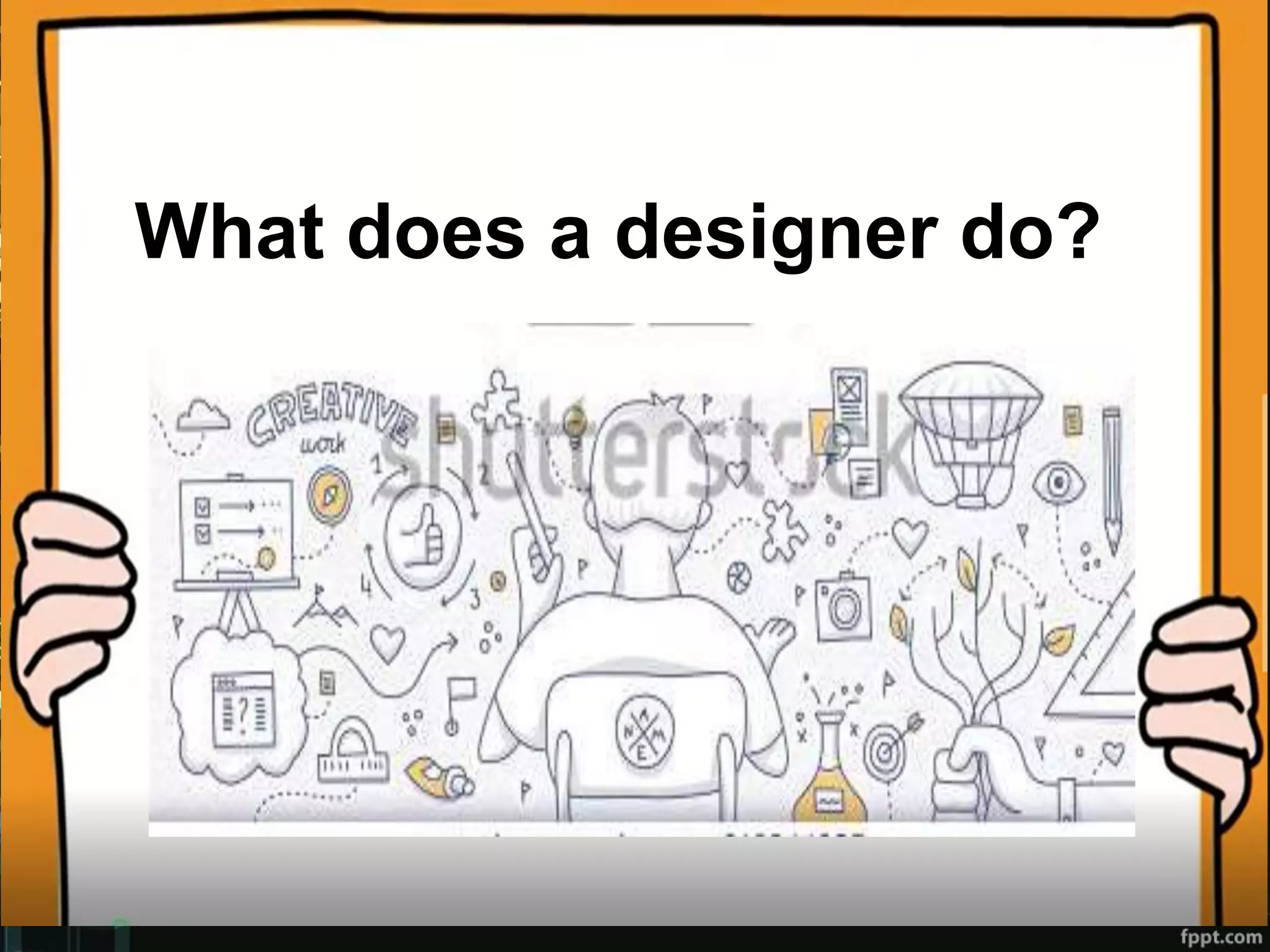
What does a designer do?
Instructional designer
Educational technologist
Curriculum designer
Instructional technologist
A designer is someone
who creates and delivers
educational training
materials for businesses,
HEI’s and other orgs.
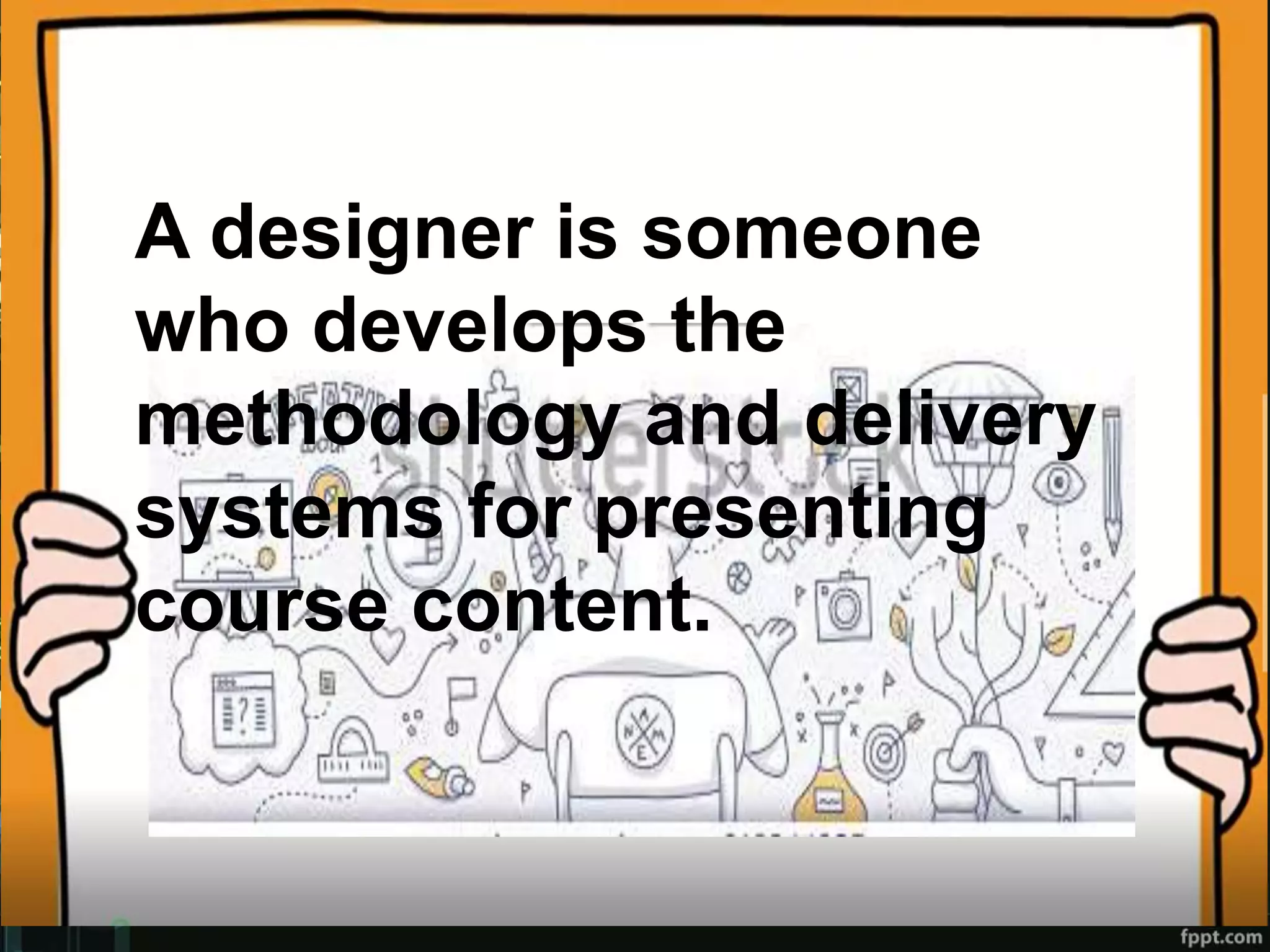
A designer is someone
who develops the
methodology and delivery
systems for presenting
course content.
Decide what is important
for the students to learn
Effectively arrange the learning
environment to maximize student
learning
INSTRUCTIONAL DESIGN
MODELS
 Merril’s First Principal of Instruction
 Kemp’s Instructional Design Model
 Gagne’s Nine Events of Instruction
 Kirkpatrick Four Levels of Training
 Dick and Carey Model
 ADDIE Model
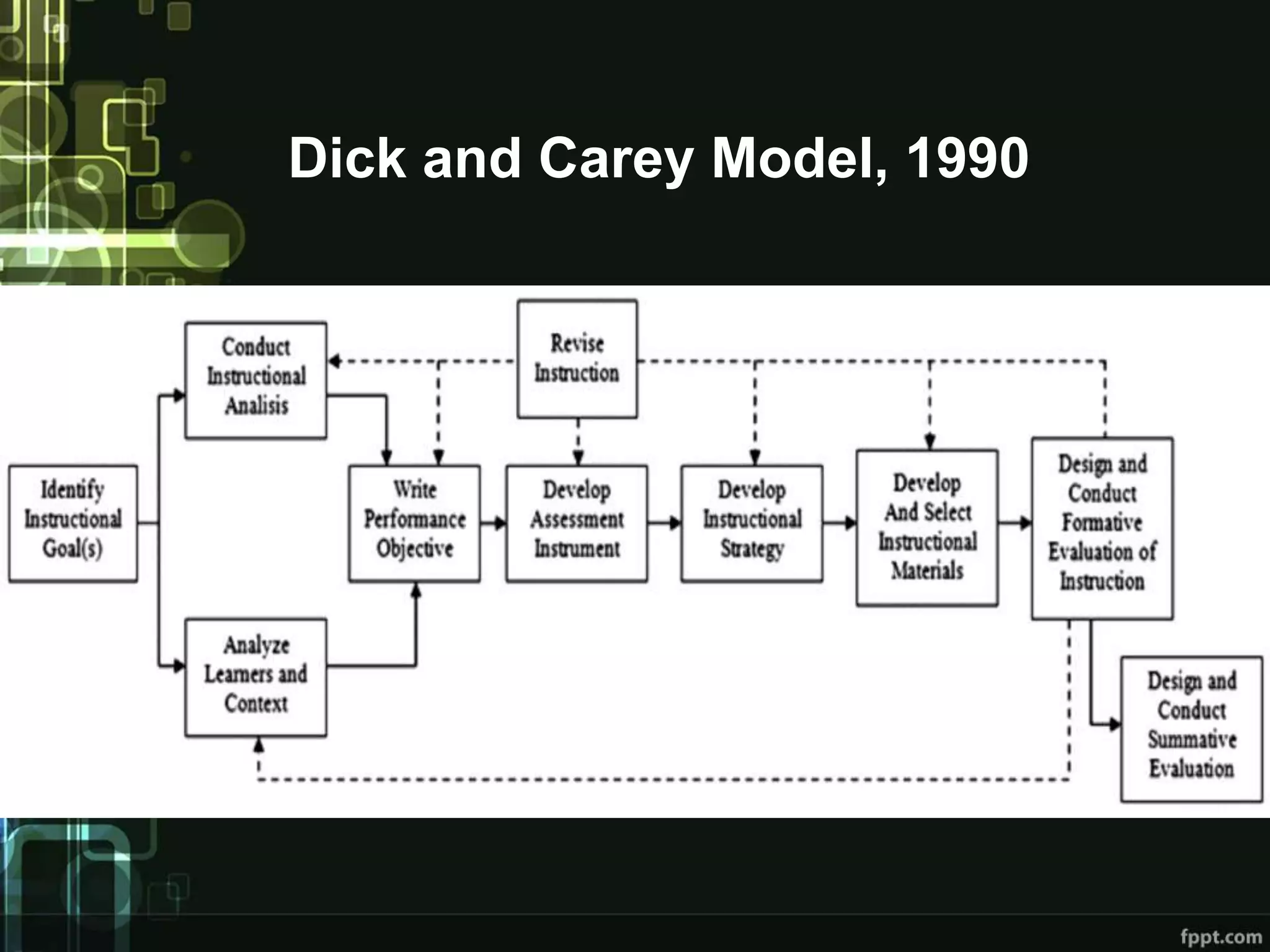
Dick and Carey Model, 1990
ID Process: Step by Step
Stage 1: Identify Instructional
Goals
 Conduct needs analysis
Stage 2: Conduct the instructional analysis
ID Process: Step by Step
 Necessary entry
behaviors
 Step-by-step goal
performance
Stage 3: Analyze learners and contexts
ID Process: Step by Step
 Prior knowledge
 Learning environment
 Application of skills and
knowledge
Stage 4: Write performance objectives
ID Process: Step by Step
 Very specific and measureable
 Include learning conditions and criteria
Stage 5: Develop assessment instruments
ID Process: Step by Step
 Emphasis on accurately measuring
behaviors
Stage 6: Develop instructional strategies
ID Process: Step by Step
 Follow-up
activities
 Practice and feedback
 Testing
 Presentation of information
Stage 7: Develop instructional materials
ID Process: Step by Step
 Use of existing
materials
 Creation of new
materials
Stage 8: Conduct formative evaluation of
instruction
ID Process: Step by Step
 One-on-one prototype
testing
 Field testing
 Small group evaluation
 Revise instruction
ID Process: Step by Step
 Data from formative evaluation used
to assess whole process
 Stage 9: Conduct summative evaluation
ID Process: Step by Step
Dick and Carey Model, 1990
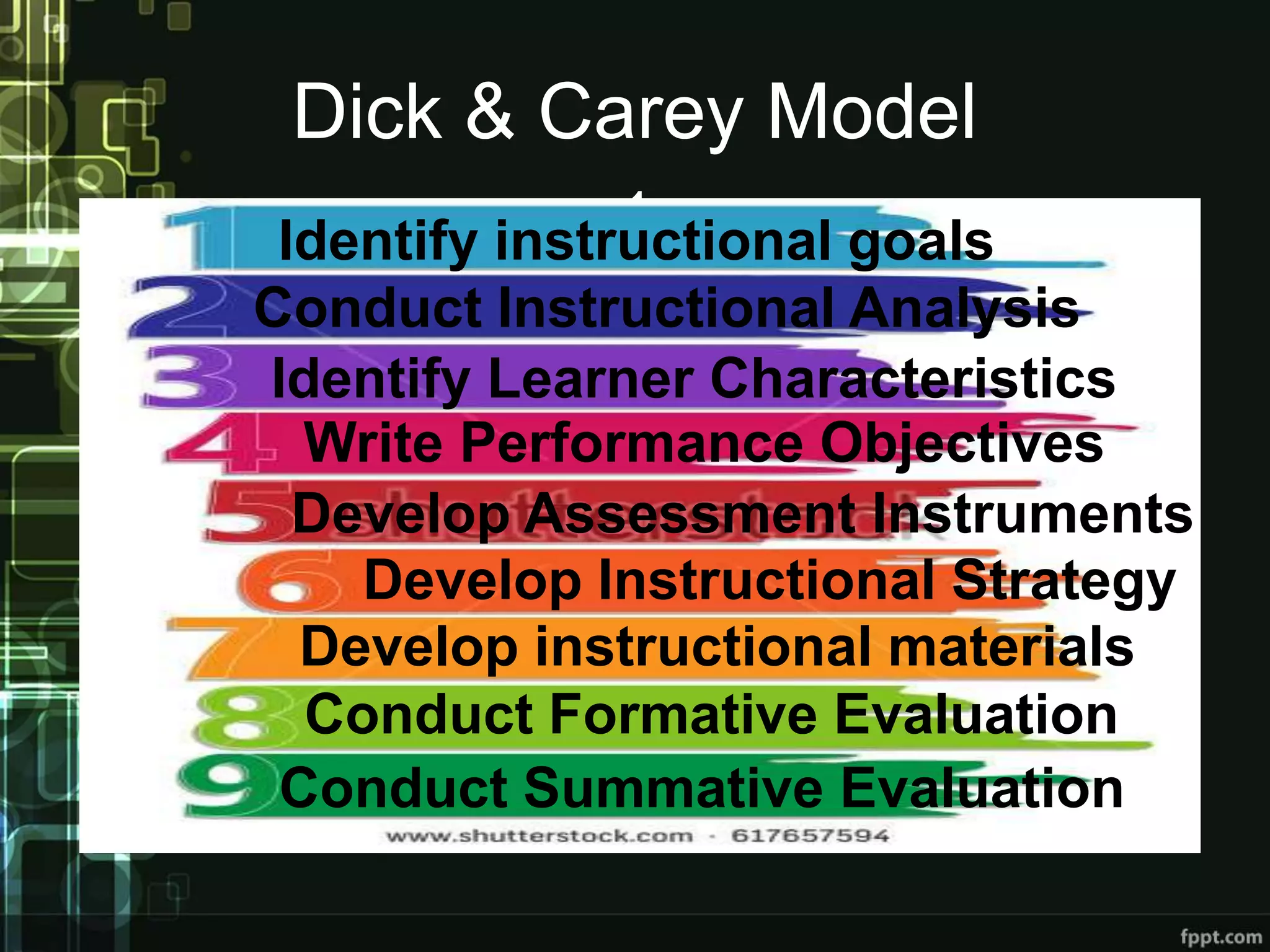
Dick & Carey Model
1.
2.
3.
4.
5.
6.
7.
8.
9.
Identify instructional goals
Conduct Instructional Analysis
Identify Learner Characteristics
Write Performance Objectives
Develop Assessment Instruments
Develop Instructional Strategy
Develop instructional materials
Conduct Formative Evaluation
Conduct Summative Evaluation
INSTRUCTIONAL
DESIGN FOR
DIFFERENT
LEARNERS
WHO is the target
audience?
What are the learners
Entry Skills
Prior Knowledge
Attitudes
Motivation
Abilities
Learning Preferences
Group Characteristics
What can I do to
capture their
interest?
How can I
maintain their
attention?
How can I tie the
instruction to the
learners’
experiences?
How can I assist
in building a
positive
expectation for
success?
How can I assist
in anchoring a
positive feeling
about their
accomplishments?
Collecting Learner Data
Site visit to the learner’s
classroom
Interviews with others who
work with the learners
Collecting Learner Data
Interviews with the
learners themselves
Records and surveys
Identify the implications of the
characteristics identified in the
analysis to design an
instructional plan
REFERENCES
• Driscoll, M.P (2000). Psychology of Learning for Instruction
(2nd ed.). Needham Heights, MA: Allyn & Bacon.
• Dick, W., Carey, L., & Carey, J.O. (2005). The systematic
design of instruction. Boston, MA: Pearson.
• Gagne, R., Briggs, L., & Wager, W. (1992). Principles of
instructional design (4th ed.). Fort Worth, TX: Harcourt
Brace College Publishers.
• Smith, P., Ragan, T. (2005). Instructional Design, 3rd Ed.
Hoboken, NJ: John Wiley & Sons, Inc.

Instructional Design

  • 1.
    Mary Anne L.Colico-Bantiling MA - English Language Teaching (MAELT) Polytechnic University of the Philippines –Sta.Mesa INSTRUCTIONAL DESIGN
  • 2.
    The Definition ofInstructional Design Definition of Basic terms Instructional Design for Different Learners Instructional Design Models
  • 3.
  • 4.
    Permanent change inbehavior Learning Development of new KSA
  • 12.
    Instructional System Design (ISD) Instructionalsystem design is the systematic process of planning instructional systems
  • 13.
    Instructional system isthe arrangement of resources and procedures used to promote learning
  • 14.
    What does adesigner do?
  • 15.
  • 16.
    A designer issomeone who creates and delivers educational training materials for businesses, HEI’s and other orgs.
  • 17.
    A designer issomeone who develops the methodology and delivery systems for presenting course content.
  • 18.
    Decide what isimportant for the students to learn
  • 19.
    Effectively arrange thelearning environment to maximize student learning
  • 22.
  • 23.
     Merril’s FirstPrincipal of Instruction  Kemp’s Instructional Design Model  Gagne’s Nine Events of Instruction  Kirkpatrick Four Levels of Training  Dick and Carey Model  ADDIE Model
  • 24.
    Dick and CareyModel, 1990
  • 26.
    ID Process: Stepby Step Stage 1: Identify Instructional Goals  Conduct needs analysis
  • 27.
    Stage 2: Conductthe instructional analysis ID Process: Step by Step  Necessary entry behaviors  Step-by-step goal performance
  • 28.
    Stage 3: Analyzelearners and contexts ID Process: Step by Step  Prior knowledge  Learning environment  Application of skills and knowledge
  • 29.
    Stage 4: Writeperformance objectives ID Process: Step by Step  Very specific and measureable  Include learning conditions and criteria
  • 30.
    Stage 5: Developassessment instruments ID Process: Step by Step  Emphasis on accurately measuring behaviors
  • 31.
    Stage 6: Developinstructional strategies ID Process: Step by Step  Follow-up activities  Practice and feedback  Testing  Presentation of information
  • 32.
    Stage 7: Developinstructional materials ID Process: Step by Step  Use of existing materials  Creation of new materials
  • 33.
    Stage 8: Conductformative evaluation of instruction ID Process: Step by Step  One-on-one prototype testing  Field testing  Small group evaluation
  • 34.
     Revise instruction IDProcess: Step by Step  Data from formative evaluation used to assess whole process
  • 35.
     Stage 9:Conduct summative evaluation ID Process: Step by Step
  • 36.
    Dick and CareyModel, 1990
  • 37.
    Dick & CareyModel 1. 2. 3. 4. 5. 6. 7. 8. 9. Identify instructional goals Conduct Instructional Analysis Identify Learner Characteristics Write Performance Objectives Develop Assessment Instruments Develop Instructional Strategy Develop instructional materials Conduct Formative Evaluation Conduct Summative Evaluation
  • 38.
  • 39.
    WHO is thetarget audience?
  • 41.
    What are thelearners Entry Skills Prior Knowledge Attitudes Motivation Abilities Learning Preferences Group Characteristics
  • 43.
    What can Ido to capture their interest?
  • 44.
    How can I maintaintheir attention?
  • 45.
    How can Itie the instruction to the learners’ experiences?
  • 46.
    How can Iassist in building a positive expectation for success?
  • 47.
    How can Iassist in anchoring a positive feeling about their accomplishments?
  • 48.
    Collecting Learner Data Sitevisit to the learner’s classroom Interviews with others who work with the learners
  • 49.
    Collecting Learner Data Interviewswith the learners themselves Records and surveys
  • 50.
    Identify the implicationsof the characteristics identified in the analysis to design an instructional plan
  • 51.
    REFERENCES • Driscoll, M.P(2000). Psychology of Learning for Instruction (2nd ed.). Needham Heights, MA: Allyn & Bacon. • Dick, W., Carey, L., & Carey, J.O. (2005). The systematic design of instruction. Boston, MA: Pearson. • Gagne, R., Briggs, L., & Wager, W. (1992). Principles of instructional design (4th ed.). Fort Worth, TX: Harcourt Brace College Publishers. • Smith, P., Ragan, T. (2005). Instructional Design, 3rd Ed. Hoboken, NJ: John Wiley & Sons, Inc.