Assertive Training. Benefits of
assertiveness
Components if assertive behaviour
Organizational Behaviour and
Organizational Development
Assertive training
 Assertiveness is a skill regularly referred to in
social and communication skills training.
 Often wrongly confused with aggression,
assertive individuals aim to be neither passive
nor aggressive in their interactions with other
people.
Benefits of Assertiveness
 1: Improved confidence and general self respect
Believe in yourself. Believe in others. If you weren’t
capable of the work, you wouldn’t have been given
the job. If you can’t do some tasks at first, you can
always learn.
 2: Improved personal and team performance
Improved confidence leads directly to improved
performance. It isn’t just that you can do the job; it’s
that you KNOW you can do it. You know that others
will help you succeed. You know that your team is
good enough and will work with you to achieve the
goals. If your colleagues think you trust and believe in
them, they will work as hard as you (and they) expect
them to.
 3: Improved stress management
Anxieties about your abilities, your relationships with
your colleagues, and your workload, will be reduced
to nothing. Why? Because if you can voice your
issues without upsetting anyone, listen to others
without feeling insecure and negotiate with your
bosses, there is no need to feel anxious. Replace
anxiety with assertiveness and you reduce the stress
automatically.
 Improved negotiation skills
Dealing with conflict is only one of the negotiation
areas required in the workplace. An assertive person
is reasonable without being a doormat. If your
workload is too much, or a job is not worth doing, the
Ctd………
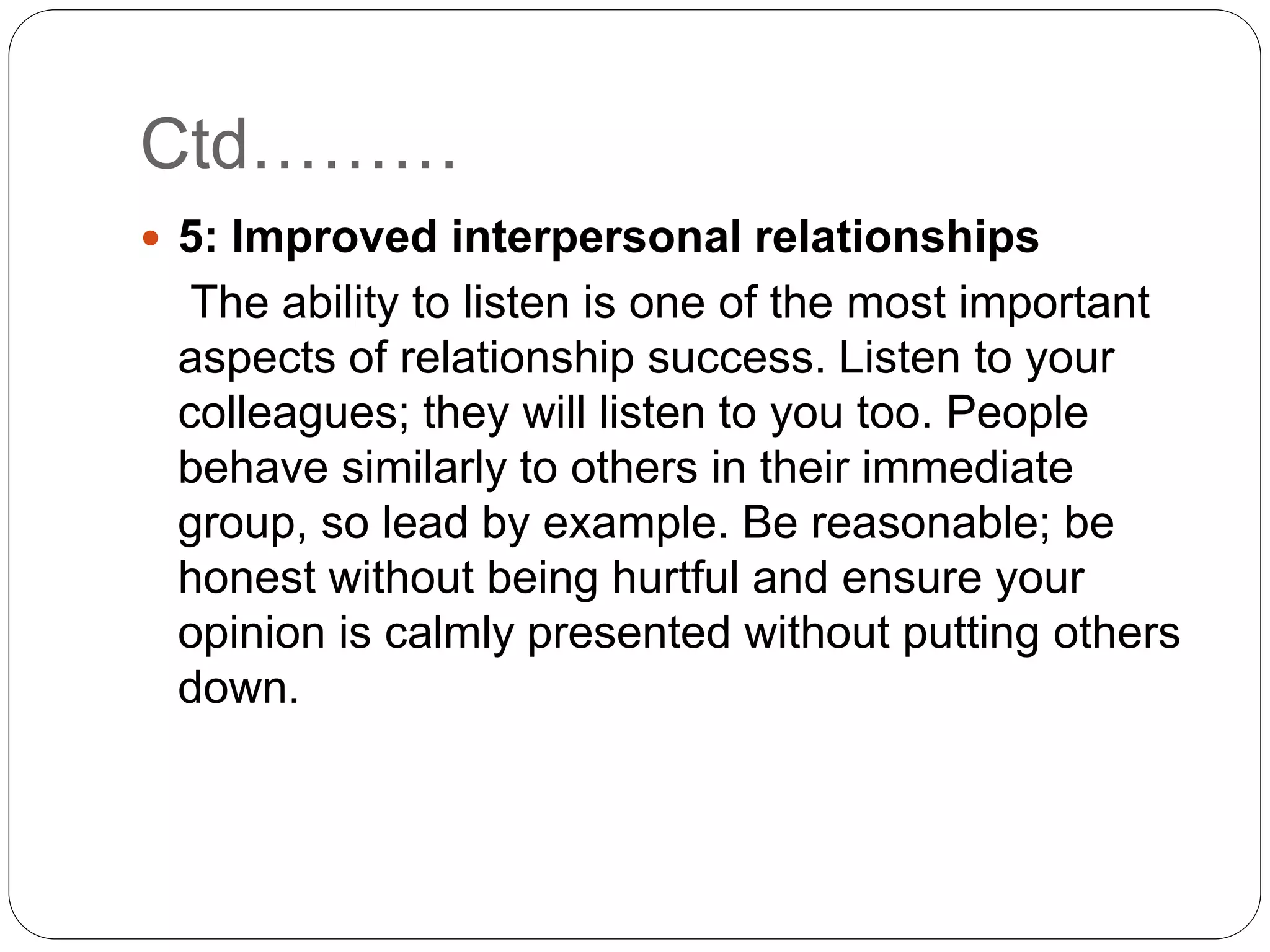
 5: Improved interpersonal relationships
The ability to listen is one of the most important
aspects of relationship success. Listen to your
colleagues; they will listen to you too. People
behave similarly to others in their immediate
group, so lead by example. Be reasonable; be
honest without being hurtful and ensure your
opinion is calmly presented without putting others
down.
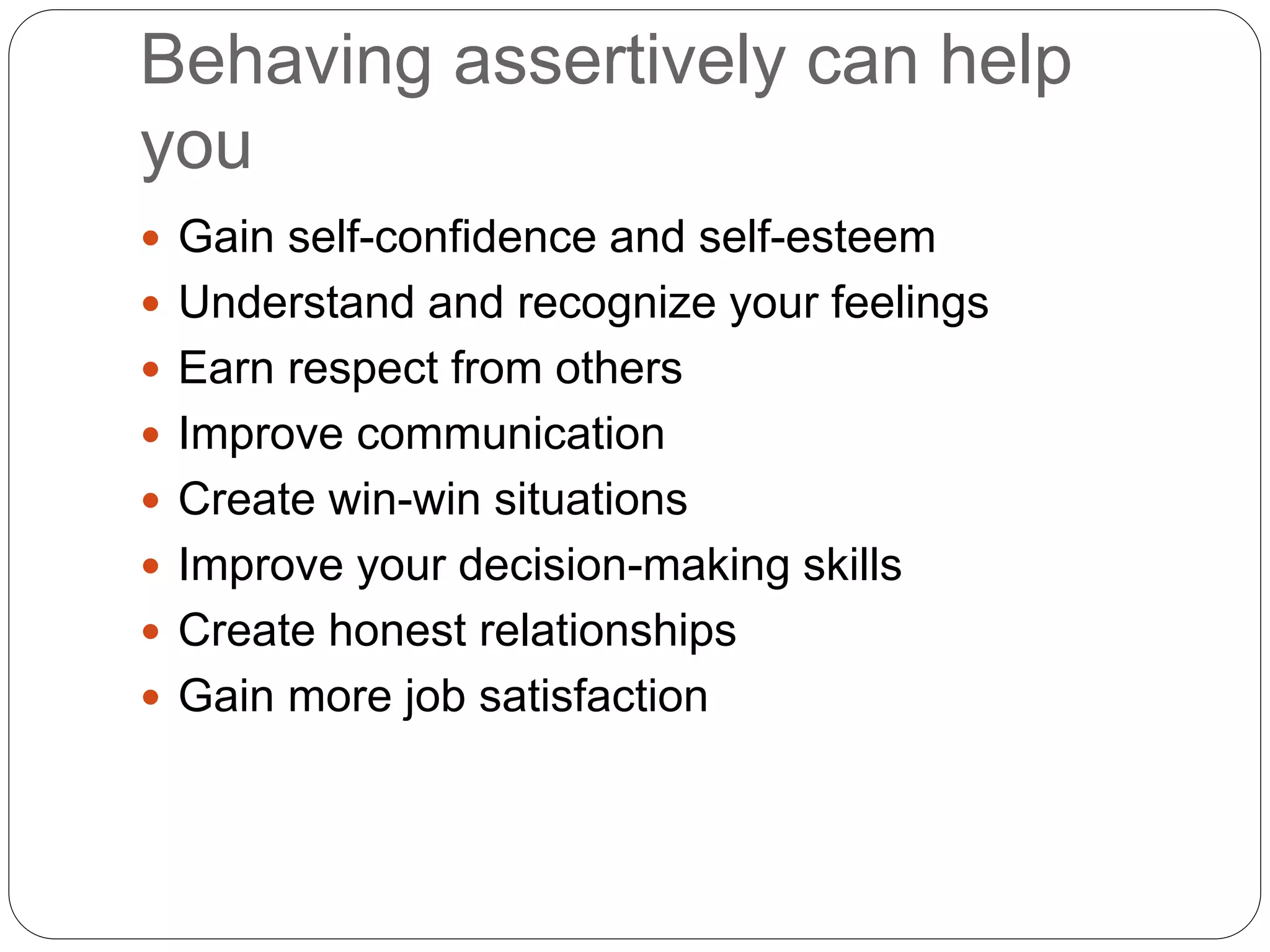
Behaving assertively can help
you
 Gain self-confidence and self-esteem
 Understand and recognize your feelings
 Earn respect from others
 Improve communication
 Create win-win situations
 Improve your decision-making skills
 Create honest relationships
 Gain more job satisfaction
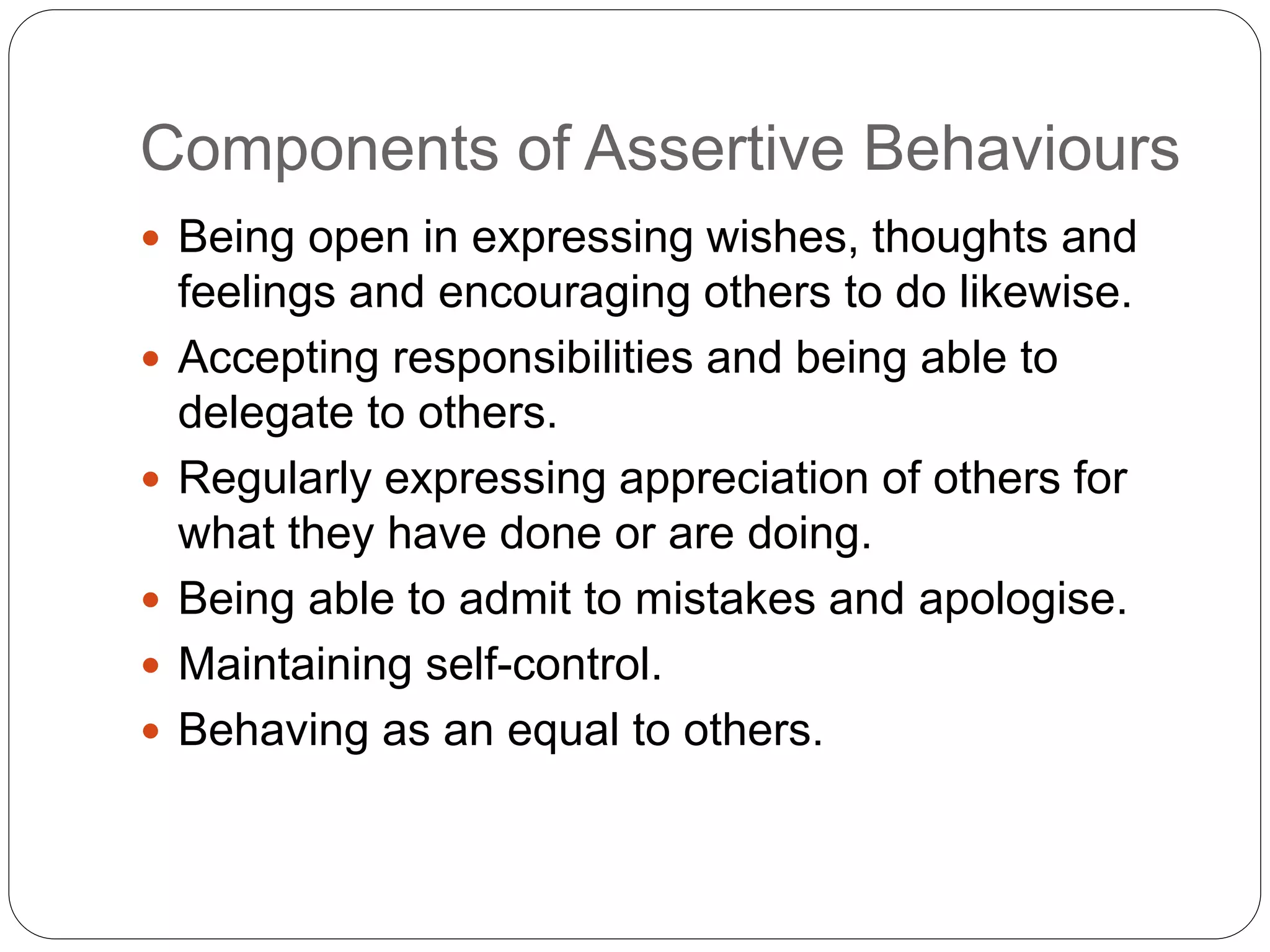
Components of Assertive Behaviours
 Being open in expressing wishes, thoughts and
feelings and encouraging others to do likewise.
 Accepting responsibilities and being able to
delegate to others.
 Regularly expressing appreciation of others for
what they have done or are doing.
 Being able to admit to mistakes and apologise.
 Maintaining self-control.
 Behaving as an equal to others.
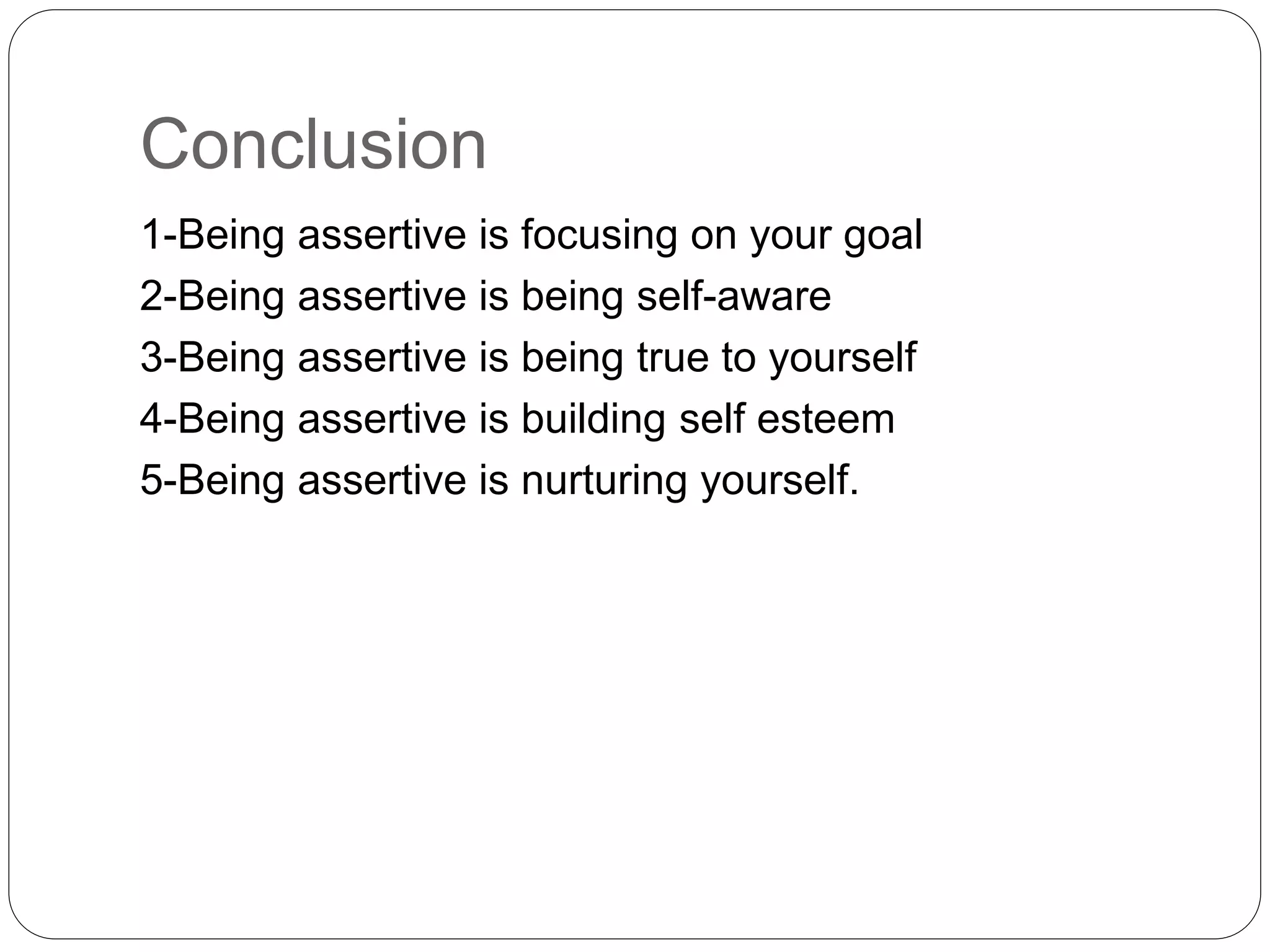
Conclusion
1-Being assertive is focusing on your goal
2-Being assertive is being self-aware
3-Being assertive is being true to yourself
4-Being assertive is building self esteem
5-Being assertive is nurturing yourself.
You will need action planning skills at this stage of the
counselling process.In particular, you need to help the
person set clear objectives;a mnemonic which can be
useful is SMART.
This stands for:
 Specific
 Measurable
 Achievable
 Realistic
 Time oriented
Asserttiveness

Asserttiveness

  • 1.
    Assertive Training. Benefitsof assertiveness Components if assertive behaviour Organizational Behaviour and Organizational Development
  • 2.
    Assertive training  Assertivenessis a skill regularly referred to in social and communication skills training.  Often wrongly confused with aggression, assertive individuals aim to be neither passive nor aggressive in their interactions with other people.
  • 3.
    Benefits of Assertiveness 1: Improved confidence and general self respect Believe in yourself. Believe in others. If you weren’t capable of the work, you wouldn’t have been given the job. If you can’t do some tasks at first, you can always learn.  2: Improved personal and team performance Improved confidence leads directly to improved performance. It isn’t just that you can do the job; it’s that you KNOW you can do it. You know that others will help you succeed. You know that your team is good enough and will work with you to achieve the goals. If your colleagues think you trust and believe in them, they will work as hard as you (and they) expect them to.
  • 4.
     3: Improvedstress management Anxieties about your abilities, your relationships with your colleagues, and your workload, will be reduced to nothing. Why? Because if you can voice your issues without upsetting anyone, listen to others without feeling insecure and negotiate with your bosses, there is no need to feel anxious. Replace anxiety with assertiveness and you reduce the stress automatically.  Improved negotiation skills Dealing with conflict is only one of the negotiation areas required in the workplace. An assertive person is reasonable without being a doormat. If your workload is too much, or a job is not worth doing, the
  • 5.
    Ctd………  5: Improvedinterpersonal relationships The ability to listen is one of the most important aspects of relationship success. Listen to your colleagues; they will listen to you too. People behave similarly to others in their immediate group, so lead by example. Be reasonable; be honest without being hurtful and ensure your opinion is calmly presented without putting others down.
  • 6.
    Behaving assertively canhelp you  Gain self-confidence and self-esteem  Understand and recognize your feelings  Earn respect from others  Improve communication  Create win-win situations  Improve your decision-making skills  Create honest relationships  Gain more job satisfaction
  • 7.
    Components of AssertiveBehaviours  Being open in expressing wishes, thoughts and feelings and encouraging others to do likewise.  Accepting responsibilities and being able to delegate to others.  Regularly expressing appreciation of others for what they have done or are doing.  Being able to admit to mistakes and apologise.  Maintaining self-control.  Behaving as an equal to others.
  • 8.
    Conclusion 1-Being assertive isfocusing on your goal 2-Being assertive is being self-aware 3-Being assertive is being true to yourself 4-Being assertive is building self esteem 5-Being assertive is nurturing yourself.
  • 9.
    You will needaction planning skills at this stage of the counselling process.In particular, you need to help the person set clear objectives;a mnemonic which can be useful is SMART. This stands for:  Specific  Measurable  Achievable  Realistic  Time oriented