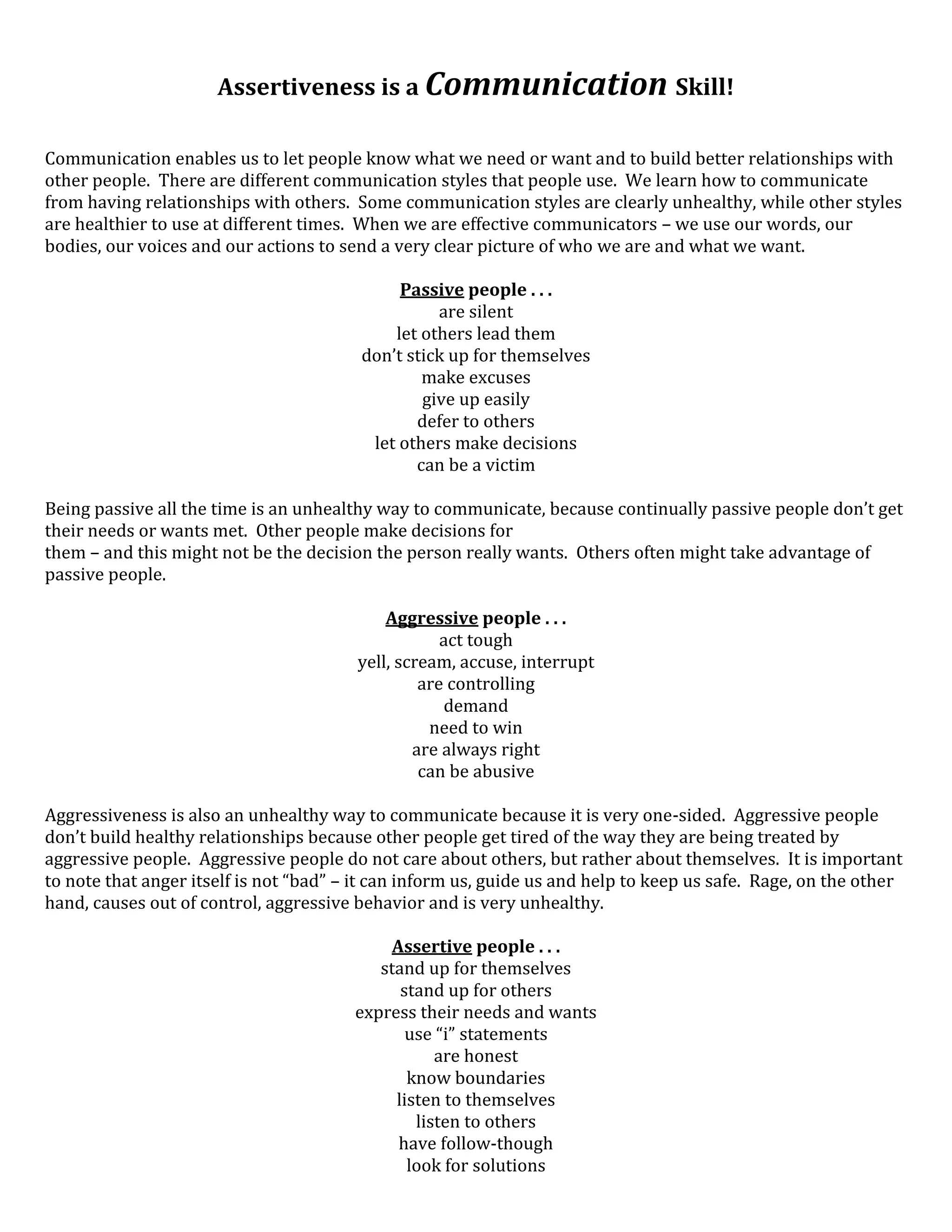
Assertiveness is a Communication Skill!

Communication enables us to let people know what we need or want and to build better relationships with
other people. There are different communication styles that people use. We learn how to communicate
from having relationships with others. Some communication styles are clearly unhealthy, while other styles
are healthier to use at different times. When we are effective communicators – we use our words, our
bodies, our voices and our actions to send a very clear picture of who we are and what we want.

                                              Passive people . . .
                                                   are silent
                                             let others lead them
                                         don’t stick up for themselves
                                                 make excuses
                                                 give up easily
                                                defer to others
                                          let others make decisions
                                                can be a victim

Being passive all the time is an unhealthy way to communicate, because continually passive people don’t get
their needs or wants met. Other people make decisions for
them – and this might not be the decision the person really wants. Others often might take advantage of
passive people.

                                            Aggressive people . . .
                                                    act tough
                                        yell, scream, accuse, interrupt
                                                 are controlling
                                                    demand
                                                  need to win
                                                are always right
                                                 can be abusive

Aggressiveness is also an unhealthy way to communicate because it is very one-sided. Aggressive people
don’t build healthy relationships because other people get tired of the way they are being treated by
aggressive people. Aggressive people do not care about others, but rather about themselves. It is important
to note that anger itself is not “bad” – it can inform us, guide us and help to keep us safe. Rage, on the other
hand, causes out of control, aggressive behavior and is very unhealthy.

                                             Assertive people . . .
                                           stand up for themselves
                                              stand up for others
                                        express their needs and wants
                                               use “i” statements
                                                   are honest
                                               know boundaries
                                             listen to themselves
                                                listen to others
                                              have follow-though
                                               look for solutions
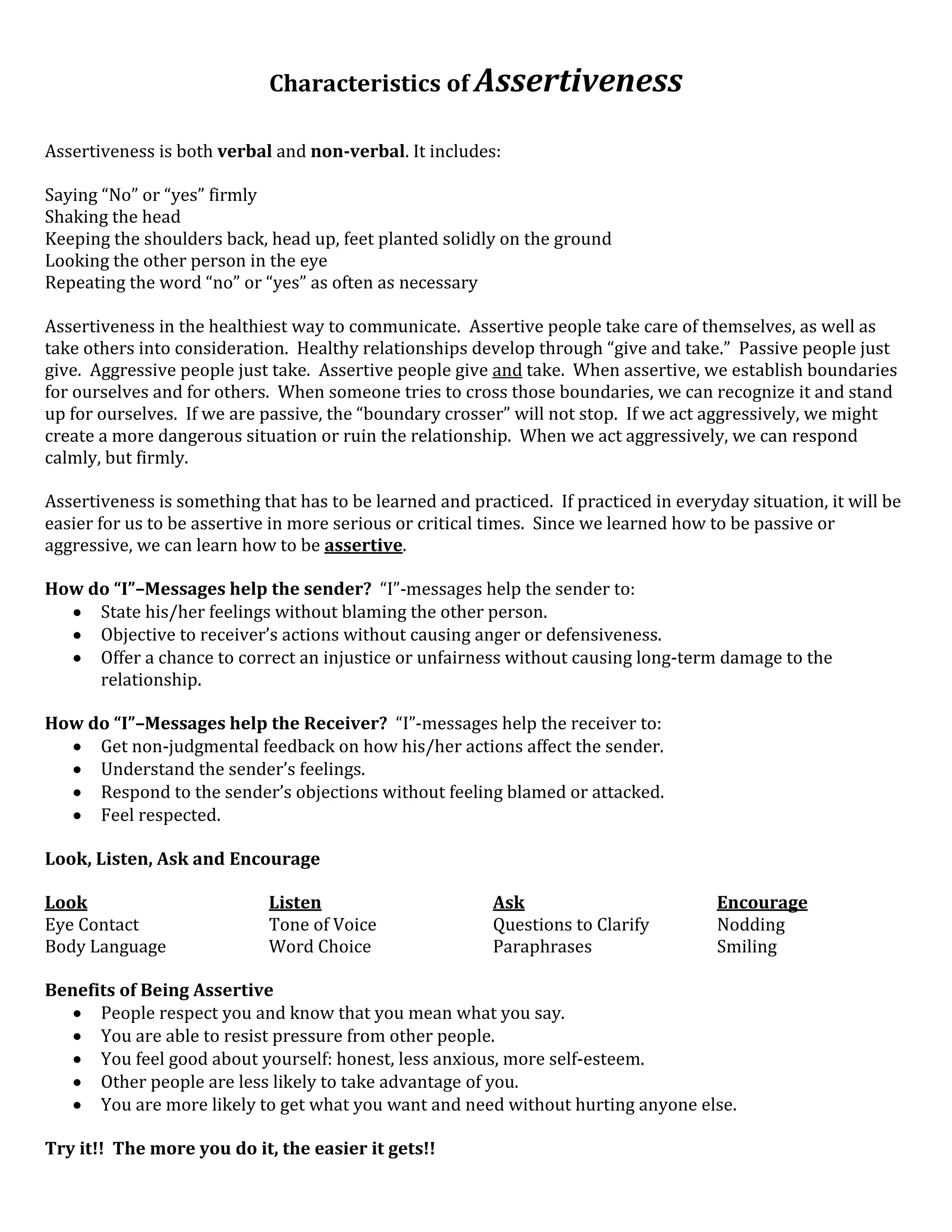
Characteristics of Assertiveness

Assertiveness is both verbal and non-verbal. It includes:

Saying “No” or “yes” firmly
Shaking the head
Keeping the shoulders back, head up, feet planted solidly on the ground
Looking the other person in the eye
Repeating the word “no” or “yes” as often as necessary

Assertiveness in the healthiest way to communicate. Assertive people take care of themselves, as well as
take others into consideration. Healthy relationships develop through “give and take.” Passive people just
give. Aggressive people just take. Assertive people give and take. When assertive, we establish boundaries
for ourselves and for others. When someone tries to cross those boundaries, we can recognize it and stand
up for ourselves. If we are passive, the “boundary crosser” will not stop. If we act aggressively, we might
create a more dangerous situation or ruin the relationship. When we act aggressively, we can respond
calmly, but firmly.

Assertiveness is something that has to be learned and practiced. If practiced in everyday situation, it will be
easier for us to be assertive in more serious or critical times. Since we learned how to be passive or
aggressive, we can learn how to be assertive.

How do “I”–Messages help the sender? “I”-messages help the sender to:
     State his/her feelings without blaming the other person.
     Objective to receiver’s actions without causing anger or defensiveness.
     Offer a chance to correct an injustice or unfairness without causing long-term damage to the
     relationship.

How do “I”–Messages help the Receiver? “I”-messages help the receiver to:
     Get non-judgmental feedback on how his/her actions affect the sender.
     Understand the sender’s feelings.
     Respond to the sender’s objections without feeling blamed or attacked.
     Feel respected.

Look, Listen, Ask and Encourage

Look                         Listen                       Ask                          Encourage
Eye Contact                  Tone of Voice                Questions to Clarify         Nodding
Body Language                Word Choice                  Paraphrases                  Smiling

Benefits of Being Assertive
      People respect you and know that you mean what you say.
      You are able to resist pressure from other people.
      You feel good about yourself: honest, less anxious, more self-esteem.
      Other people are less likely to take advantage of you.
      You are more likely to get what you want and need without hurting anyone else.

Try it!! The more you do it, the easier it gets!!

Assertiveness is a Communication Skill!

  • 1.
    Assertiveness is aCommunication Skill! Communication enables us to let people know what we need or want and to build better relationships with other people. There are different communication styles that people use. We learn how to communicate from having relationships with others. Some communication styles are clearly unhealthy, while other styles are healthier to use at different times. When we are effective communicators – we use our words, our bodies, our voices and our actions to send a very clear picture of who we are and what we want. Passive people . . . are silent let others lead them don’t stick up for themselves make excuses give up easily defer to others let others make decisions can be a victim Being passive all the time is an unhealthy way to communicate, because continually passive people don’t get their needs or wants met. Other people make decisions for them – and this might not be the decision the person really wants. Others often might take advantage of passive people. Aggressive people . . . act tough yell, scream, accuse, interrupt are controlling demand need to win are always right can be abusive Aggressiveness is also an unhealthy way to communicate because it is very one-sided. Aggressive people don’t build healthy relationships because other people get tired of the way they are being treated by aggressive people. Aggressive people do not care about others, but rather about themselves. It is important to note that anger itself is not “bad” – it can inform us, guide us and help to keep us safe. Rage, on the other hand, causes out of control, aggressive behavior and is very unhealthy. Assertive people . . . stand up for themselves stand up for others express their needs and wants use “i” statements are honest know boundaries listen to themselves listen to others have follow-though look for solutions
  • 2.
    Characteristics of Assertiveness Assertivenessis both verbal and non-verbal. It includes: Saying “No” or “yes” firmly Shaking the head Keeping the shoulders back, head up, feet planted solidly on the ground Looking the other person in the eye Repeating the word “no” or “yes” as often as necessary Assertiveness in the healthiest way to communicate. Assertive people take care of themselves, as well as take others into consideration. Healthy relationships develop through “give and take.” Passive people just give. Aggressive people just take. Assertive people give and take. When assertive, we establish boundaries for ourselves and for others. When someone tries to cross those boundaries, we can recognize it and stand up for ourselves. If we are passive, the “boundary crosser” will not stop. If we act aggressively, we might create a more dangerous situation or ruin the relationship. When we act aggressively, we can respond calmly, but firmly. Assertiveness is something that has to be learned and practiced. If practiced in everyday situation, it will be easier for us to be assertive in more serious or critical times. Since we learned how to be passive or aggressive, we can learn how to be assertive. How do “I”–Messages help the sender? “I”-messages help the sender to: State his/her feelings without blaming the other person. Objective to receiver’s actions without causing anger or defensiveness. Offer a chance to correct an injustice or unfairness without causing long-term damage to the relationship. How do “I”–Messages help the Receiver? “I”-messages help the receiver to: Get non-judgmental feedback on how his/her actions affect the sender. Understand the sender’s feelings. Respond to the sender’s objections without feeling blamed or attacked. Feel respected. Look, Listen, Ask and Encourage Look Listen Ask Encourage Eye Contact Tone of Voice Questions to Clarify Nodding Body Language Word Choice Paraphrases Smiling Benefits of Being Assertive People respect you and know that you mean what you say. You are able to resist pressure from other people. You feel good about yourself: honest, less anxious, more self-esteem. Other people are less likely to take advantage of you. You are more likely to get what you want and need without hurting anyone else. Try it!! The more you do it, the easier it gets!!