COMMUNICATION
What is communication?
Communication is derived from the Latin word
“ communicare ” which means “to share”.
Communication is the exchange of information from
one person to another.
Communication happens when one wants share
information and ideas.
Two types of communication : Verbal and Non
verbal communication.
Communication styles and
Personality traits
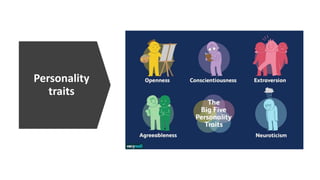
Personality
traits
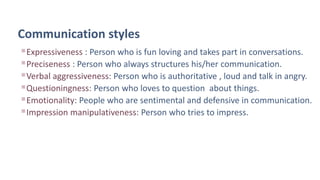
Communication styles
Expressiveness : Person who is fun loving and takes part in conversations.
Preciseness : Person who always structures his/her communication.
Verbal aggressiveness: Person who is authoritative , loud and talk in angry.
Questioningness: Person who loves to question about things.
Emotionality: People who are sentimental and defensive in communication.
Impression manipulativeness: Person who tries to impress.
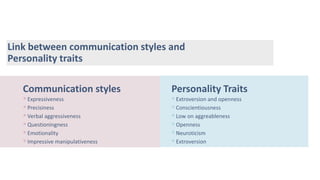
Link between communication styles and
Personality traits
Communication styles
Expressiveness
Precisiness
Verbal aggressiveness
Questioningness
Emotionality
Impressive manipulativeness
Personality Traits
Extroversion and openness
Conscientiousness
Low on aggreableness
Openness
Neuroticism
Extroversion
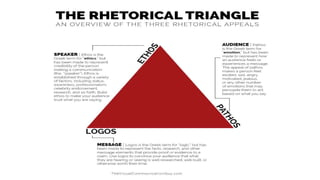
ETHOS
PATHOS
LOGOS
ETHOS
• Ethos is the credibility of the person
making communication.
• Be honest.
• Build trust.
• Avoid being single perspective and
try to be objective.
• Differentiate facts from opinions.
PATHOS
• Effort to appeal the emotions.
• Use emotional tones.
• Simple and meaningful words.
• Acknowledge others.
LOGOS
• Using logic and reasons to appeal
audience.
• Story telling and logical arguments.
• Stating facts.
• Helps in building your points.
ABC’s OF
COMMUNICATION
A - ACCURACY :
Accuracy is exactness and precision.
No factual errors.
Use simple and familiar words.
Avoid excessive jargons
B - BREVITY :
Brevity is being brief with your information.
Don’t use many words.
Avoid repetition of words
Avoid exaggeration.
Make your information concise.
C - CLARITY:
Clarity is the quality of being easily understood.
Use direct language.
Use concrete words.
Avoid exaggeration.
NON-VERBAL
COMMUNICATION
Basic aspects of non verbal
communication:
Kinesics : Interpretation of body language.
Proxemics: The amount of space between speaker
and listener.
Haptics: Sense of touch.
Chronemics: Use of time.
Oculesics : Eye contact.

Communication styles and personality traits

  • 1.
  • 2.
    What is communication? Communicationis derived from the Latin word “ communicare ” which means “to share”. Communication is the exchange of information from one person to another. Communication happens when one wants share information and ideas. Two types of communication : Verbal and Non verbal communication.
  • 3.
  • 4.
  • 5.
    Communication styles Expressiveness :Person who is fun loving and takes part in conversations. Preciseness : Person who always structures his/her communication. Verbal aggressiveness: Person who is authoritative , loud and talk in angry. Questioningness: Person who loves to question about things. Emotionality: People who are sentimental and defensive in communication. Impression manipulativeness: Person who tries to impress.
  • 6.
    Link between communicationstyles and Personality traits Communication styles Expressiveness Precisiness Verbal aggressiveness Questioningness Emotionality Impressive manipulativeness Personality Traits Extroversion and openness Conscientiousness Low on aggreableness Openness Neuroticism Extroversion
  • 7.
  • 8.
    ETHOS • Ethos isthe credibility of the person making communication. • Be honest. • Build trust. • Avoid being single perspective and try to be objective. • Differentiate facts from opinions.
  • 9.
    PATHOS • Effort toappeal the emotions. • Use emotional tones. • Simple and meaningful words. • Acknowledge others.
  • 10.
    LOGOS • Using logicand reasons to appeal audience. • Story telling and logical arguments. • Stating facts. • Helps in building your points.
  • 12.
  • 13.
    A - ACCURACY: Accuracy is exactness and precision. No factual errors. Use simple and familiar words. Avoid excessive jargons
  • 14.
    B - BREVITY: Brevity is being brief with your information. Don’t use many words. Avoid repetition of words Avoid exaggeration. Make your information concise.
  • 15.
    C - CLARITY: Clarityis the quality of being easily understood. Use direct language. Use concrete words. Avoid exaggeration.
  • 16.
  • 17.
    Basic aspects ofnon verbal communication: Kinesics : Interpretation of body language. Proxemics: The amount of space between speaker and listener. Haptics: Sense of touch. Chronemics: Use of time. Oculesics : Eye contact.