India
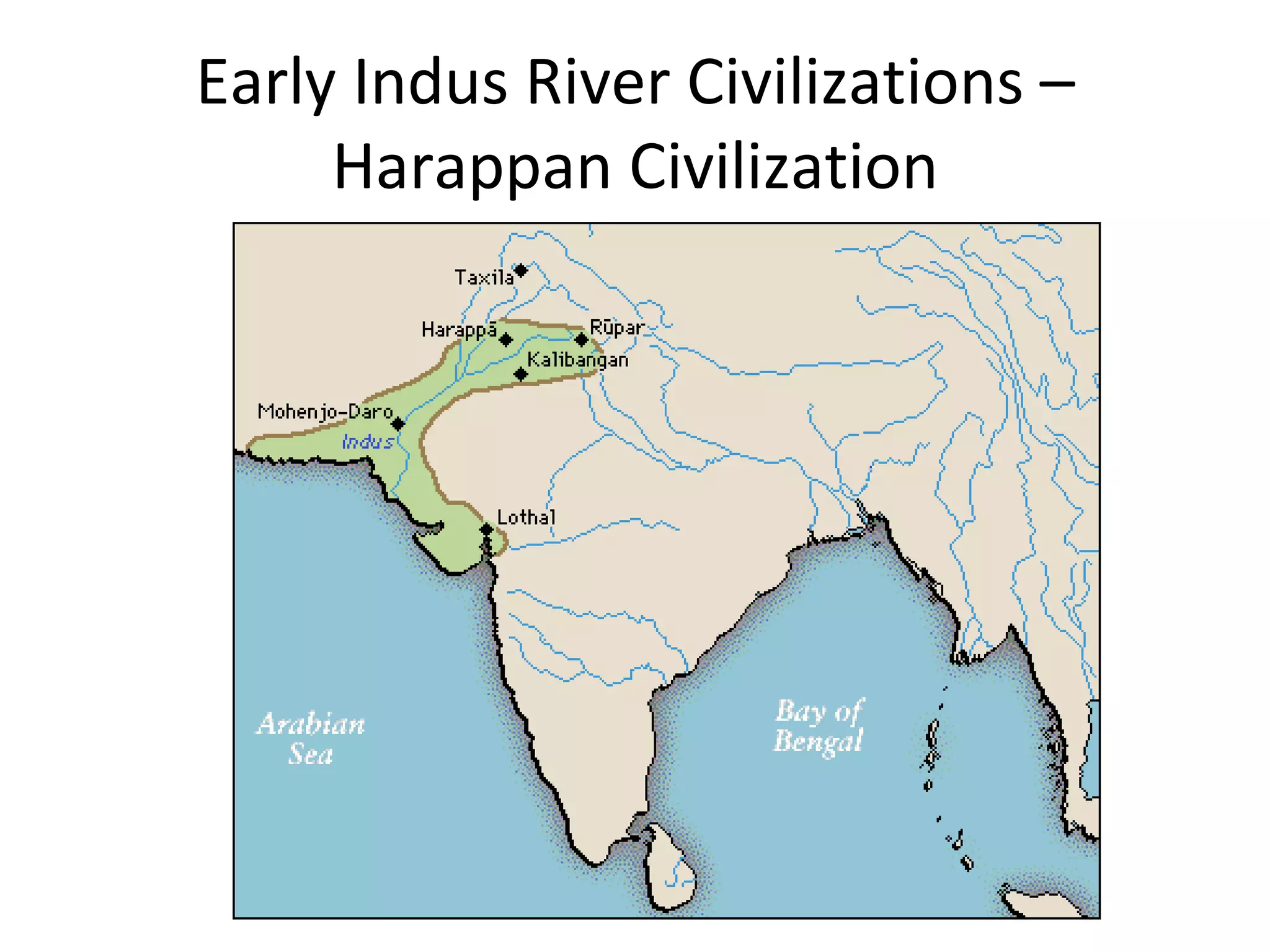
Early Indus River Civilizations –
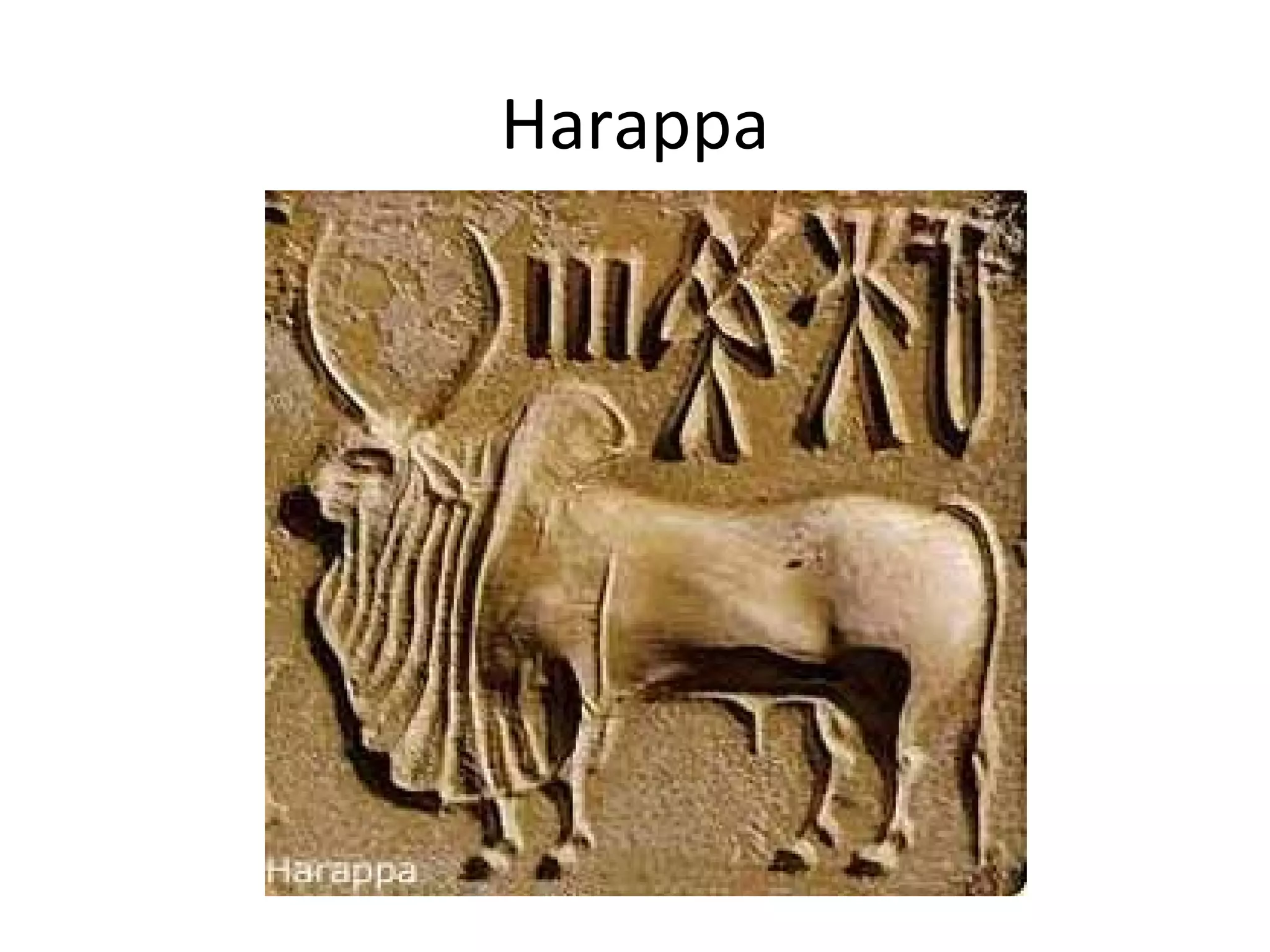
     Harappan Civilization
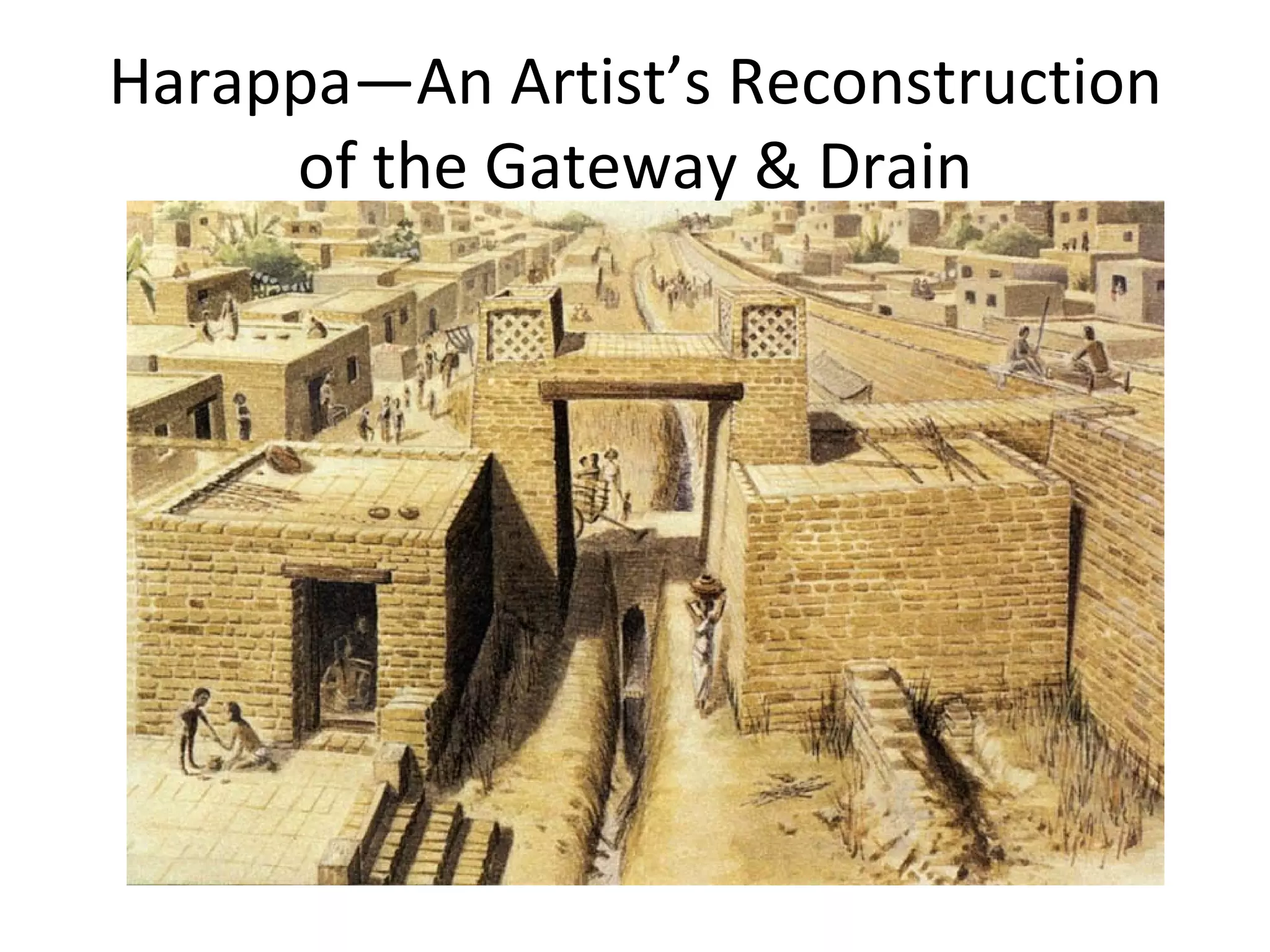
Harappa—An Artist’s Reconstruction
     of the Gateway & Drain
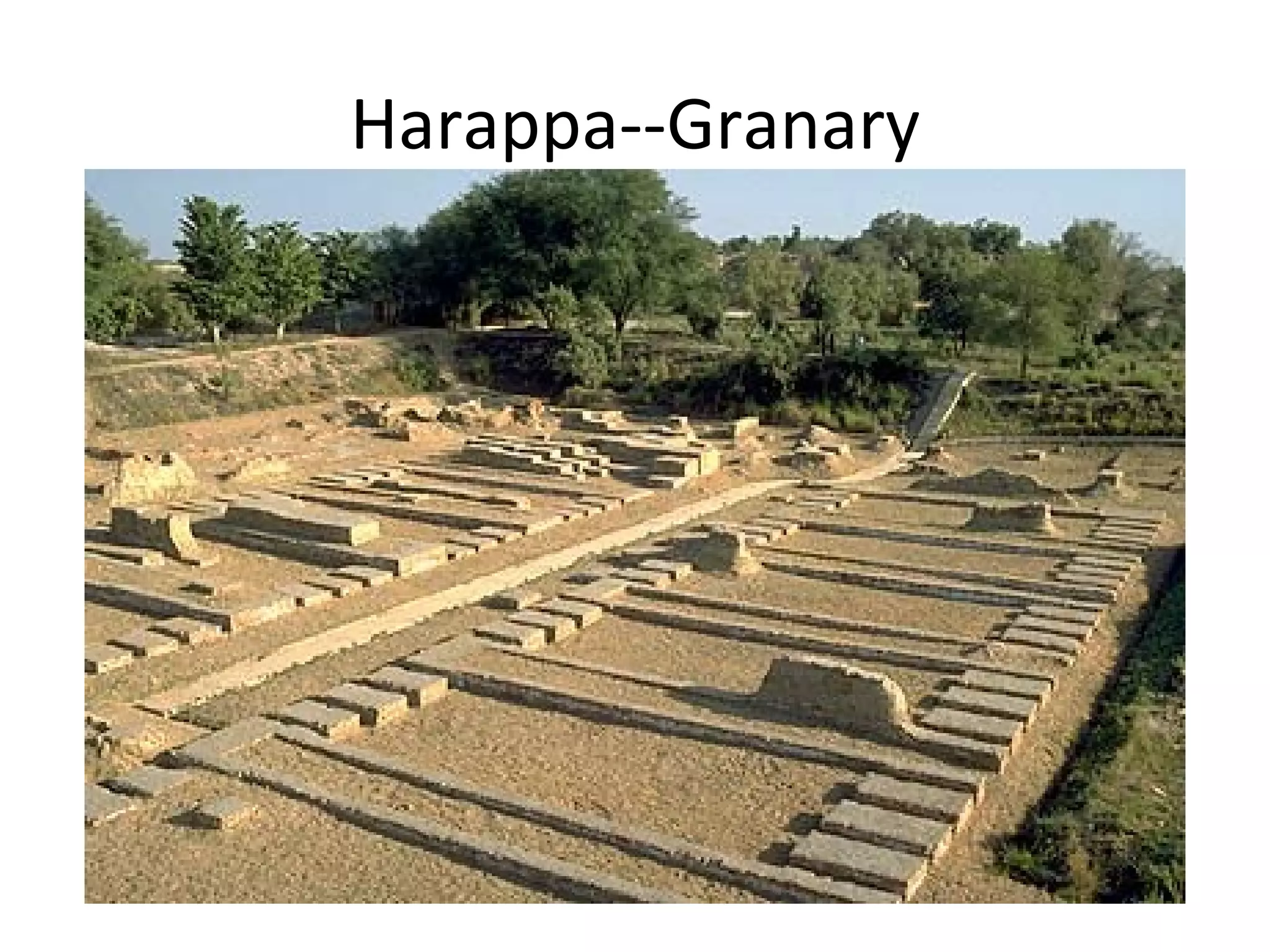
Harappa--Granary
Harappa
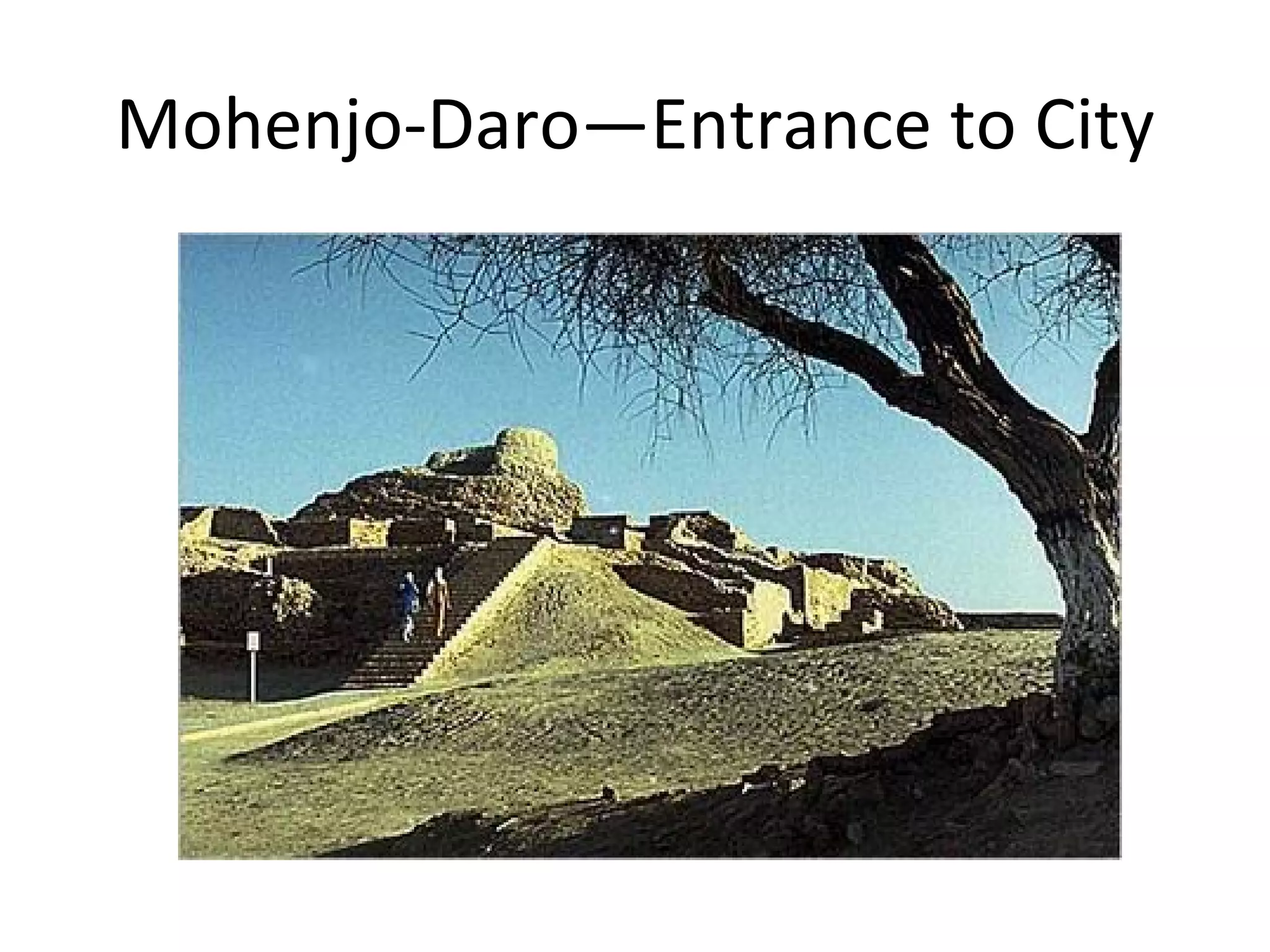
Mohenjo-Daro—Entrance to City
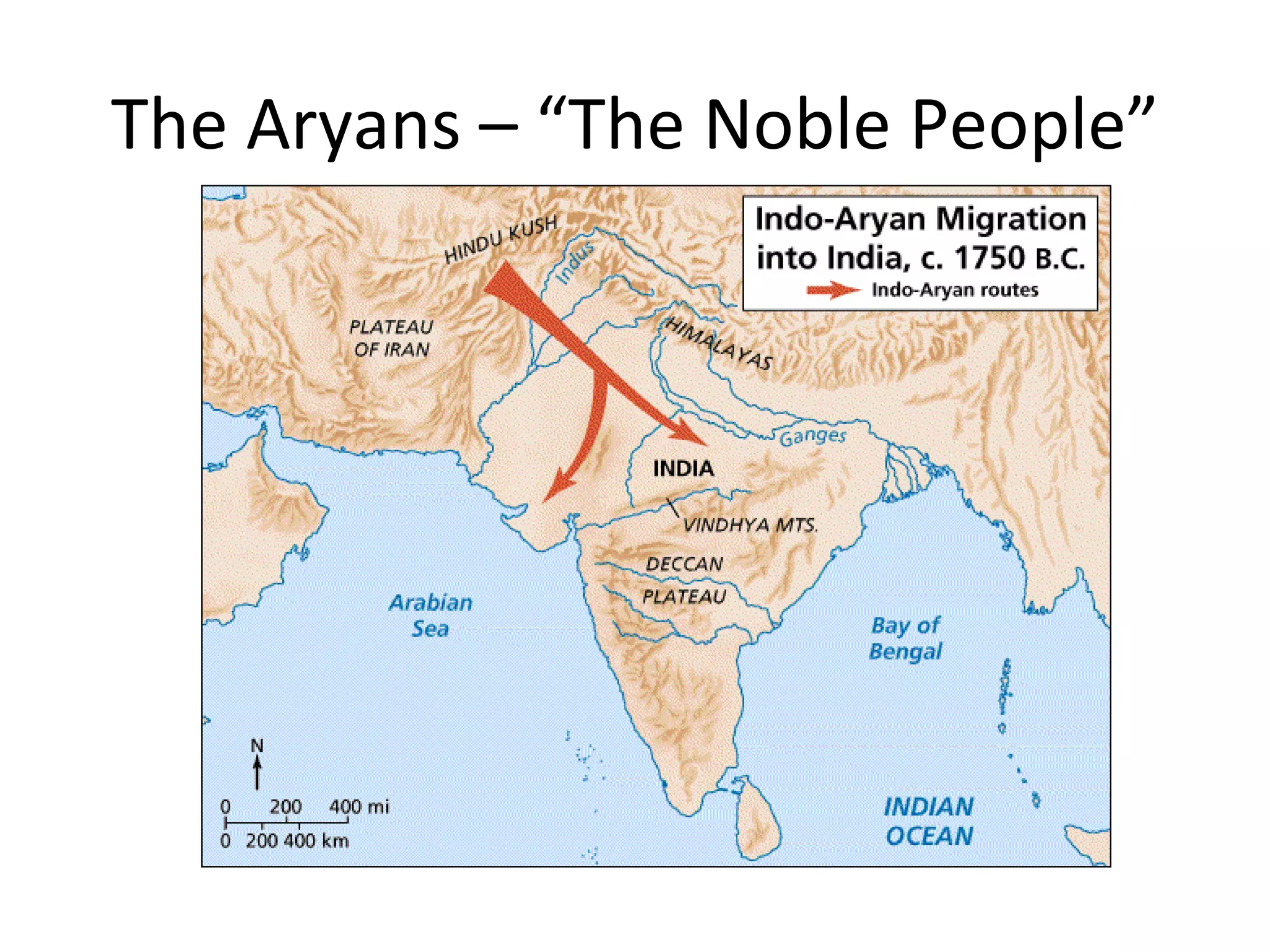
The Aryans – “The Noble People”
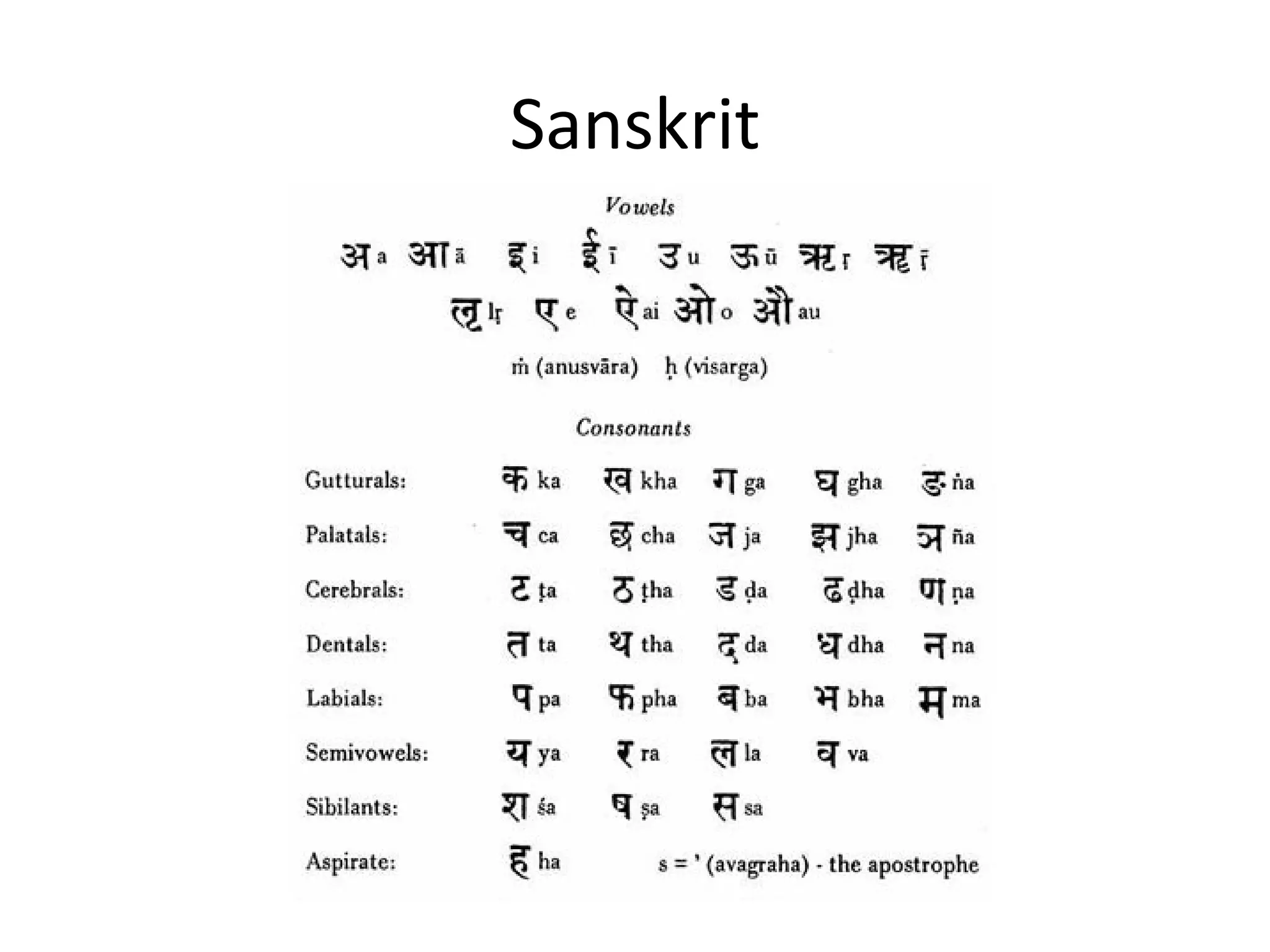
Sanskrit
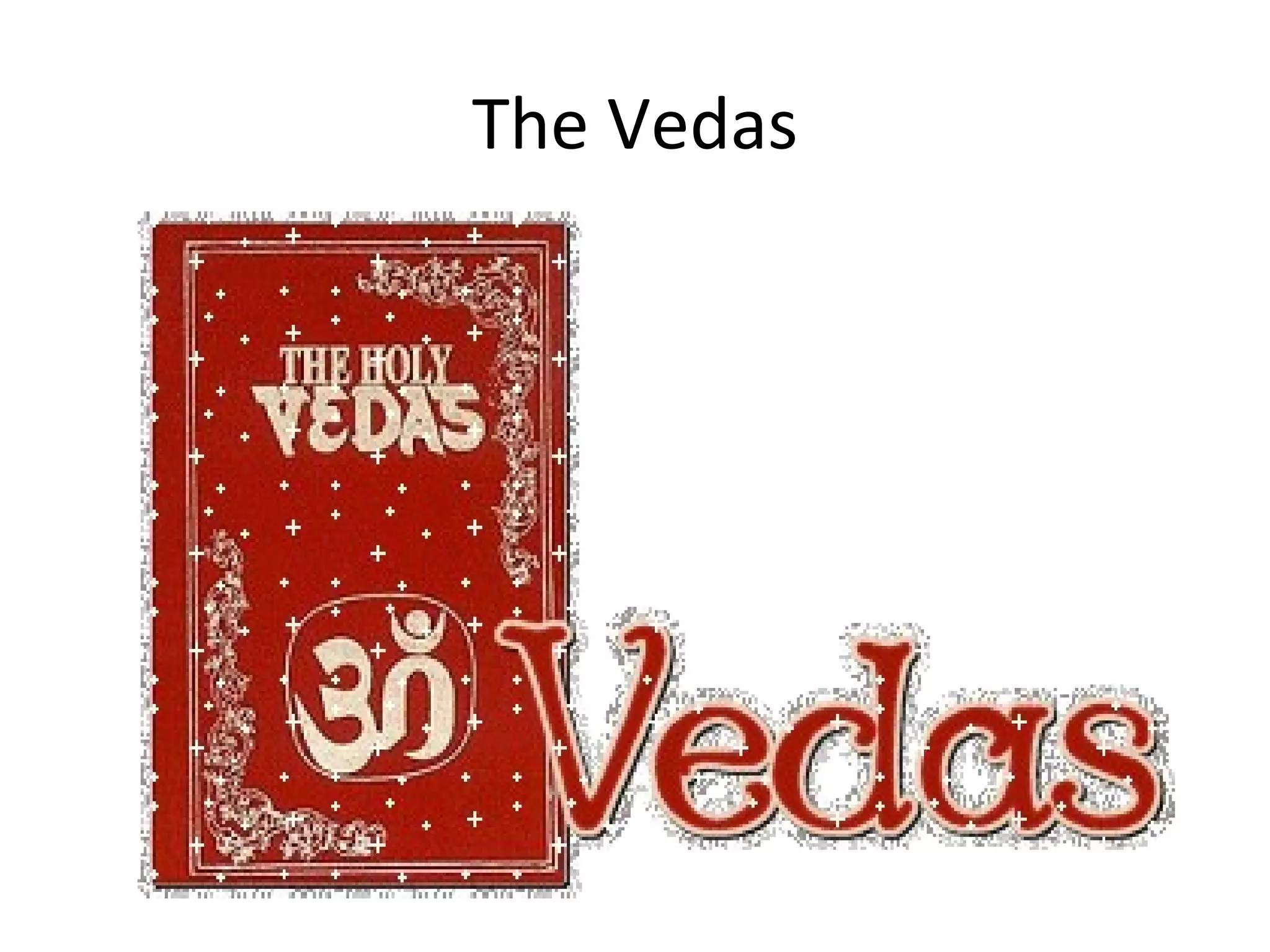
The Vedas
The Vedas
• A collection of poems and sacred hymns (c.
  1,500 B.C.) describing Aryan beliefs and daily
  life
• “Veda” means knowledge
• 1,500 – 1,000 B.C. – Vedic Period
Government

• Raja (“Prince”)

• Maharajas (“Major Princes”)
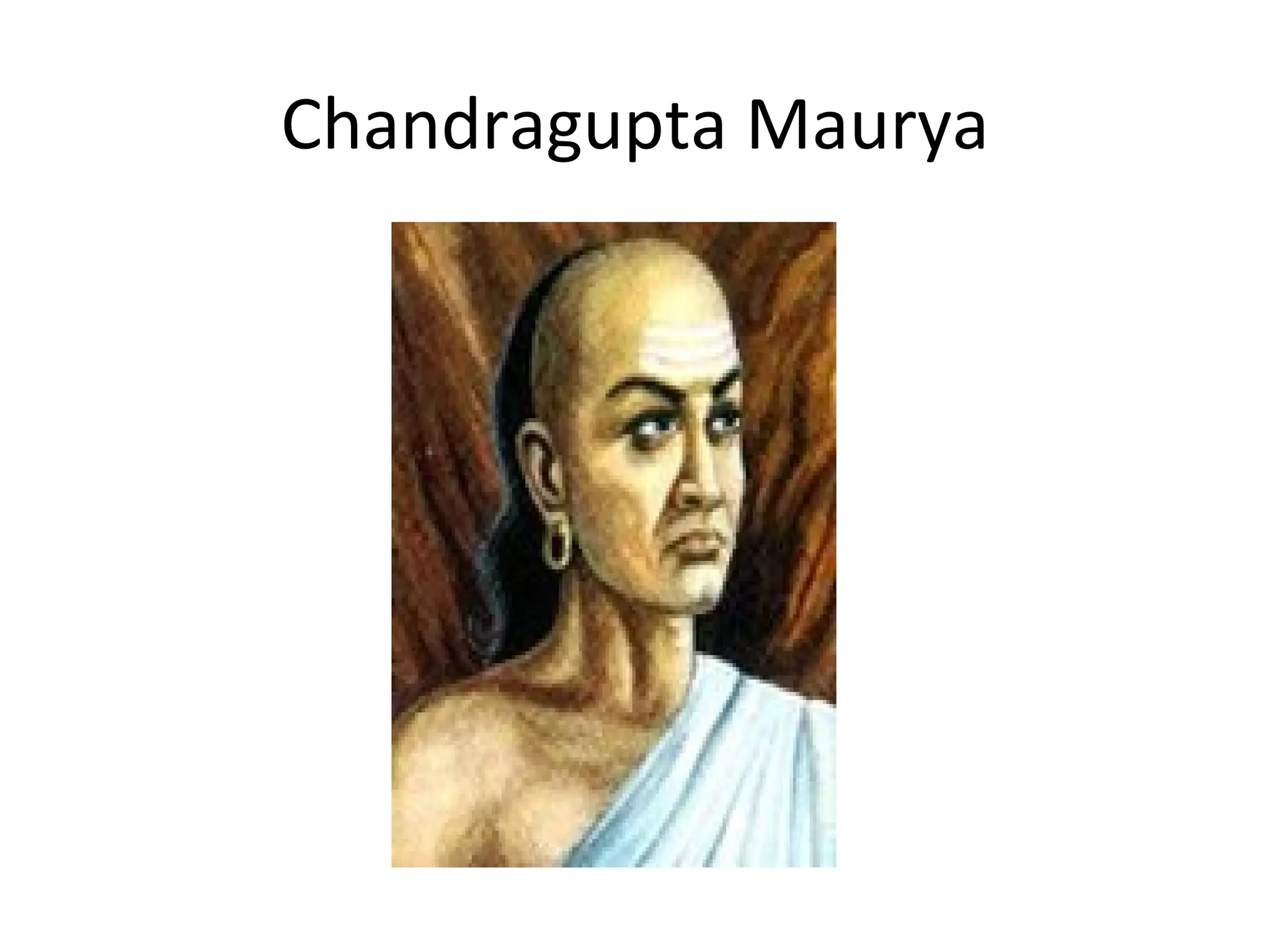
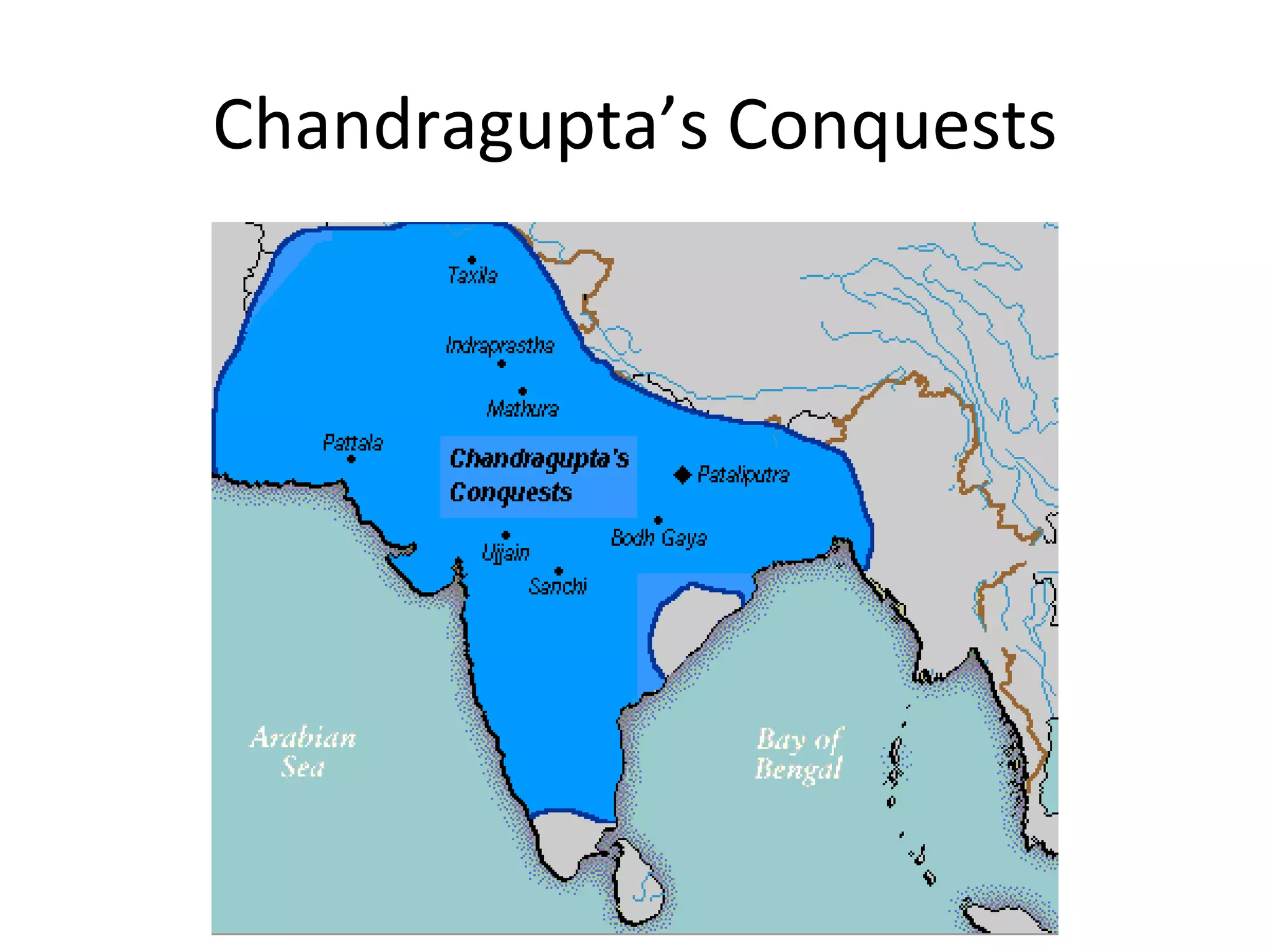
Chandragupta Maurya
Chandragupta’s Conquests
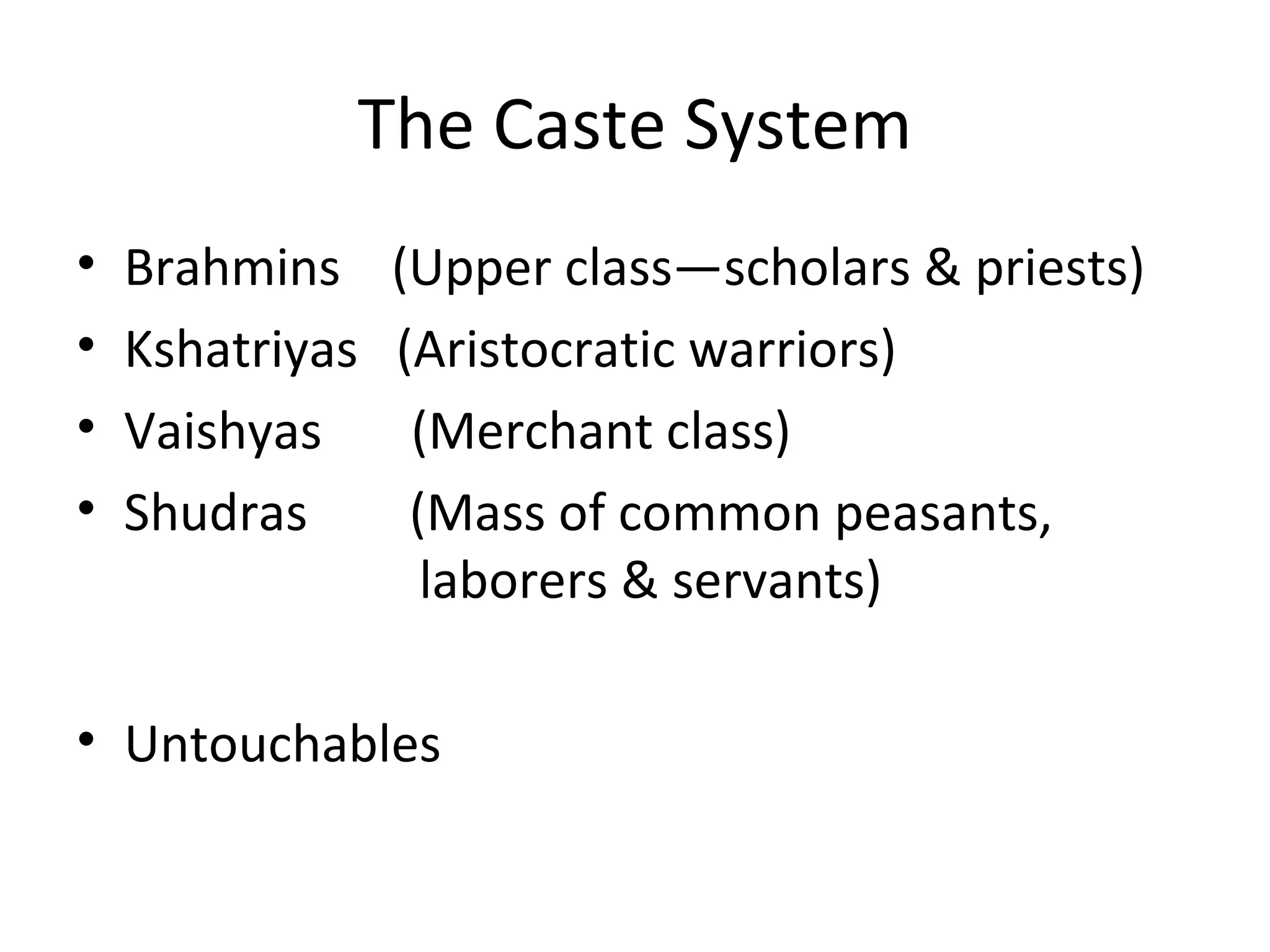
The Caste System
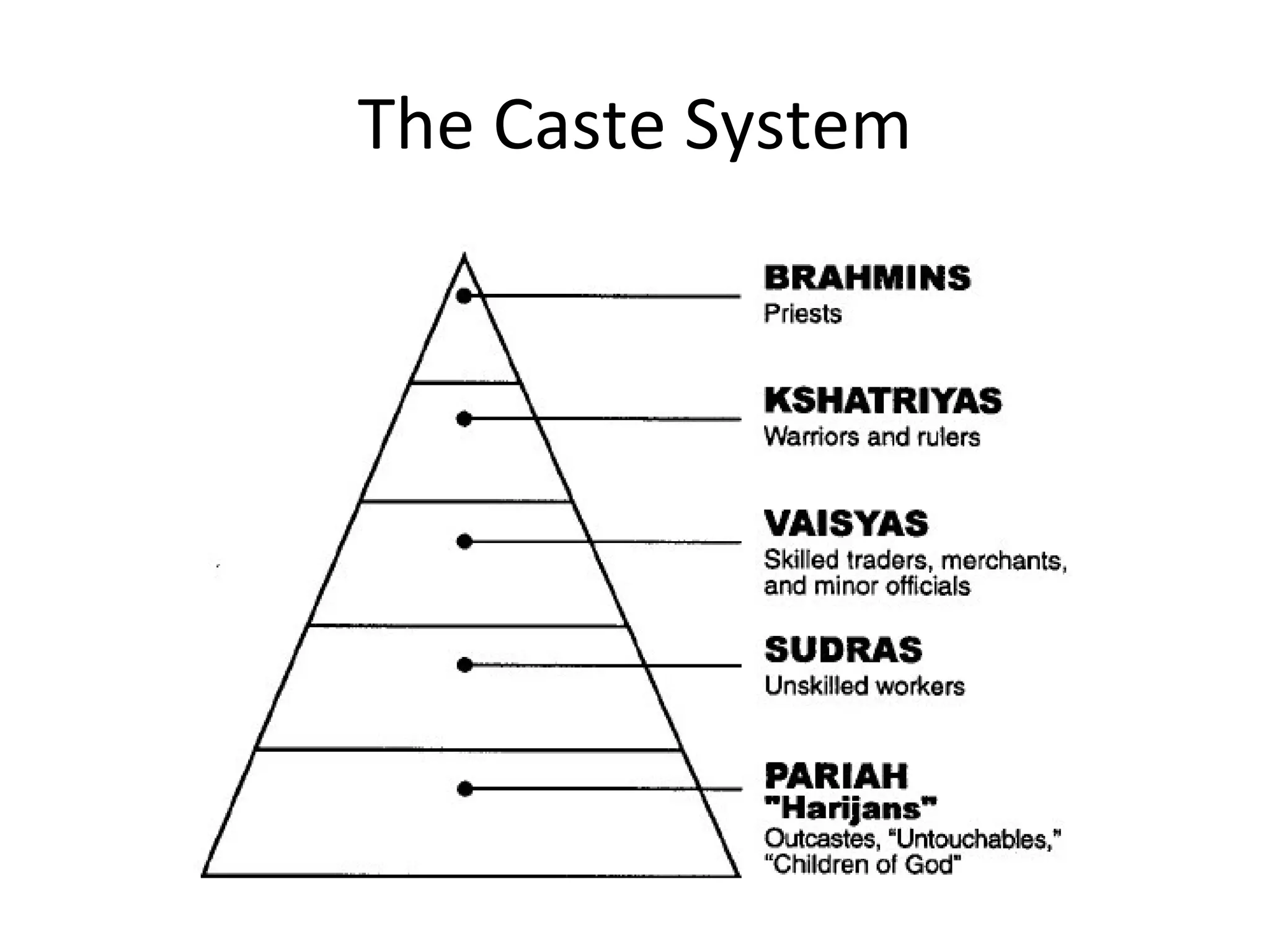
•   Brahmins     (Upper class—scholars & priests)
•   Kshatriyas   (Aristocratic warriors)
•   Vaishyas      (Merchant class)
•   Shudras       (Mass of common peasants,
                   laborers & servants)

• Untouchables
The Caste System
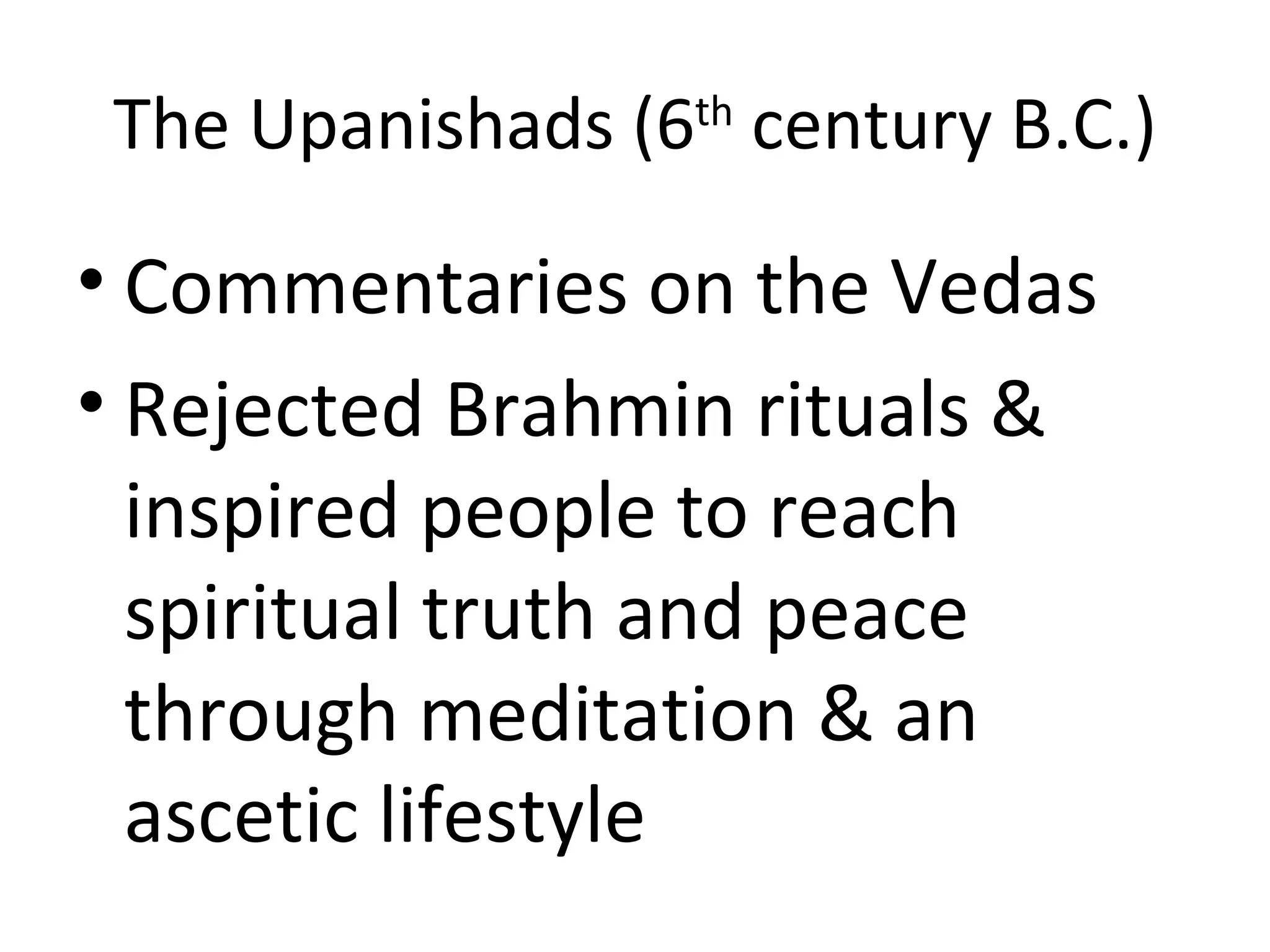
The Upanishads (6 century B.C.)
                  th


• Commentaries on the Vedas
• Rejected Brahmin rituals &
  inspired people to reach
  spiritual truth and peace
  through meditation & an
  ascetic lifestyle
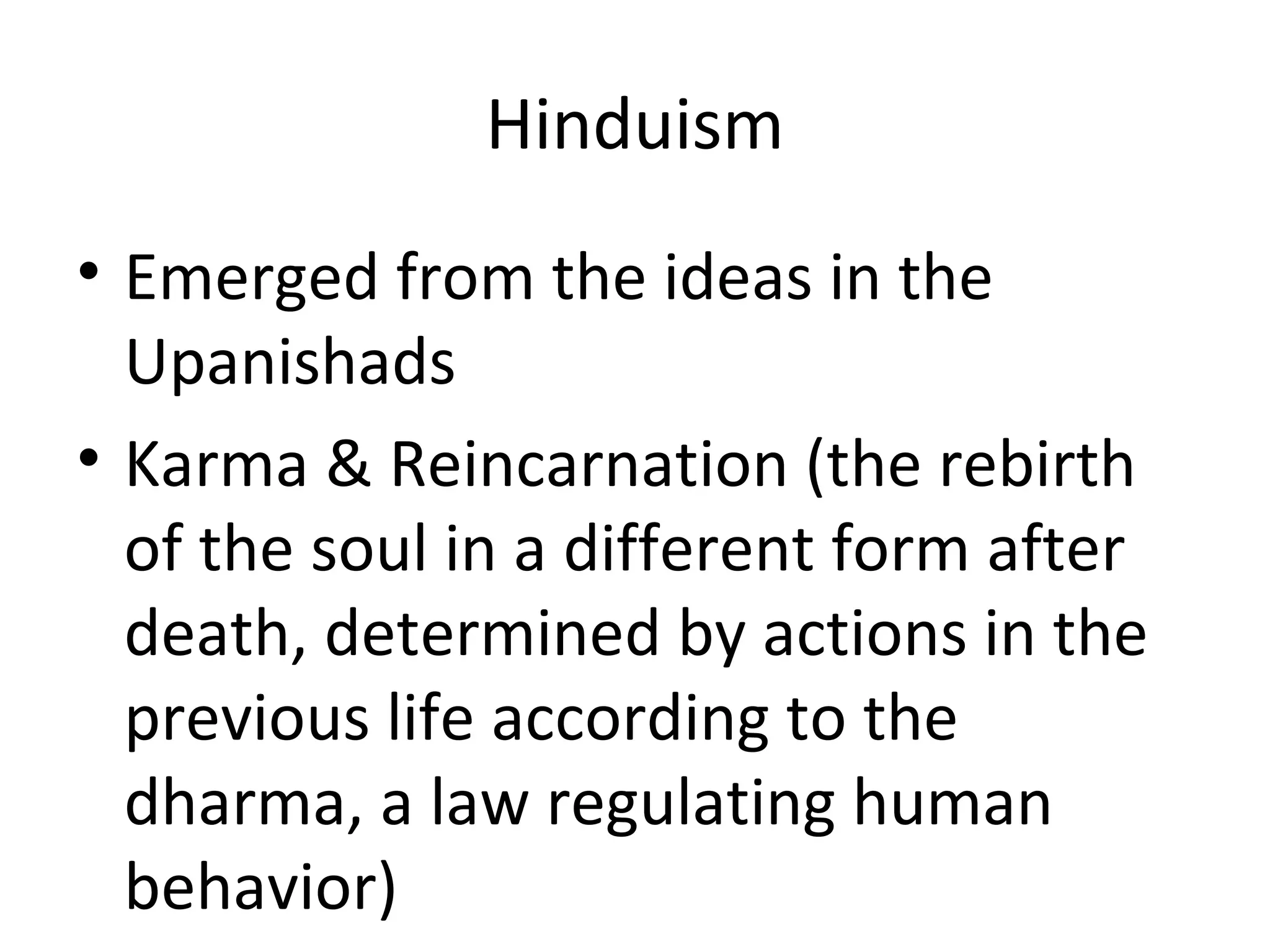
Hinduism
• Emerged from the ideas in the
  Upanishads
• Karma & Reincarnation (the rebirth
  of the soul in a different form after
  death, determined by actions in the
  previous life according to the
  dharma, a law regulating human
  behavior)
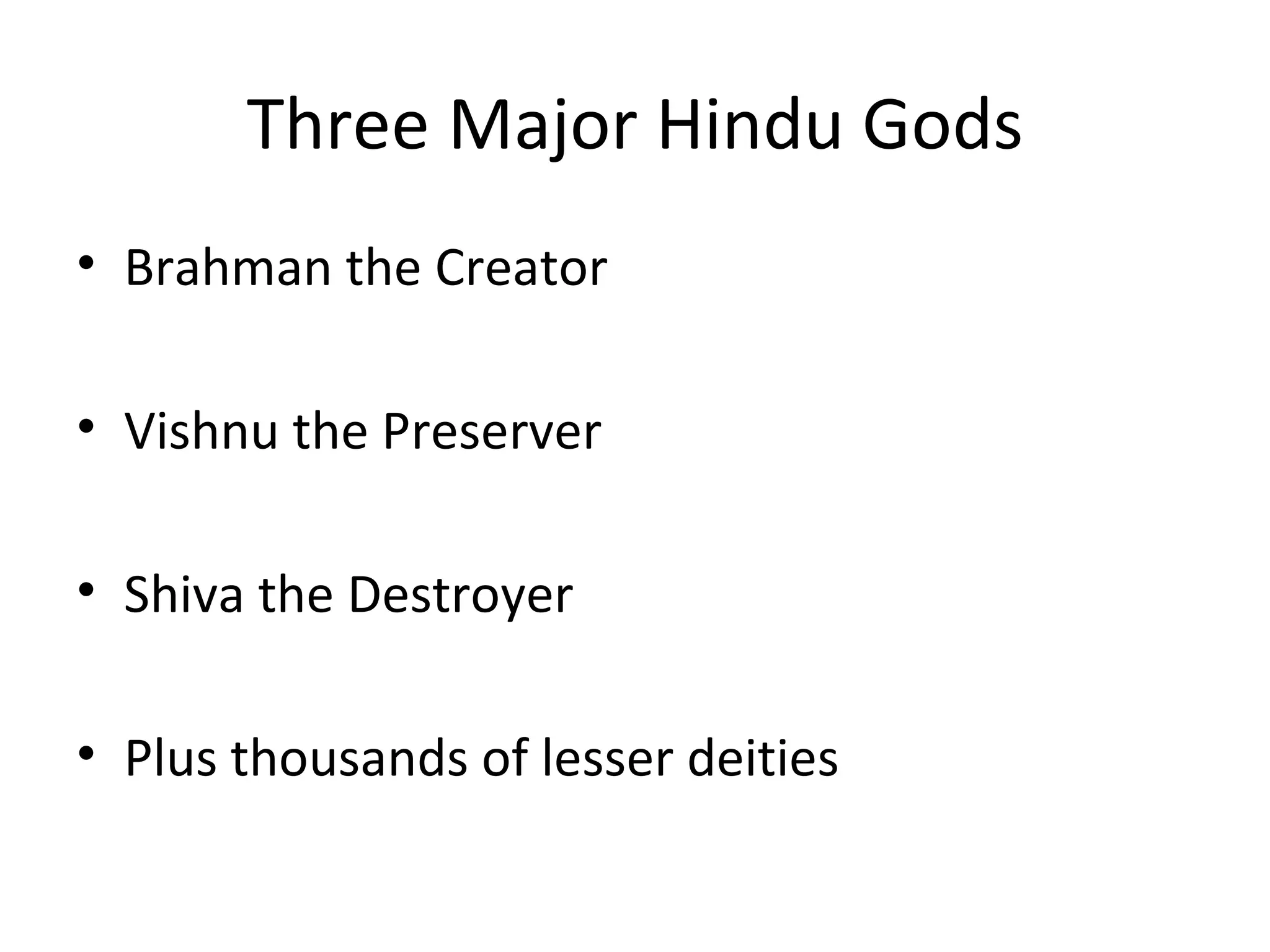
Three Major Hindu Gods
• Brahman the Creator

• Vishnu the Preserver

• Shiva the Destroyer

• Plus thousands of lesser deities
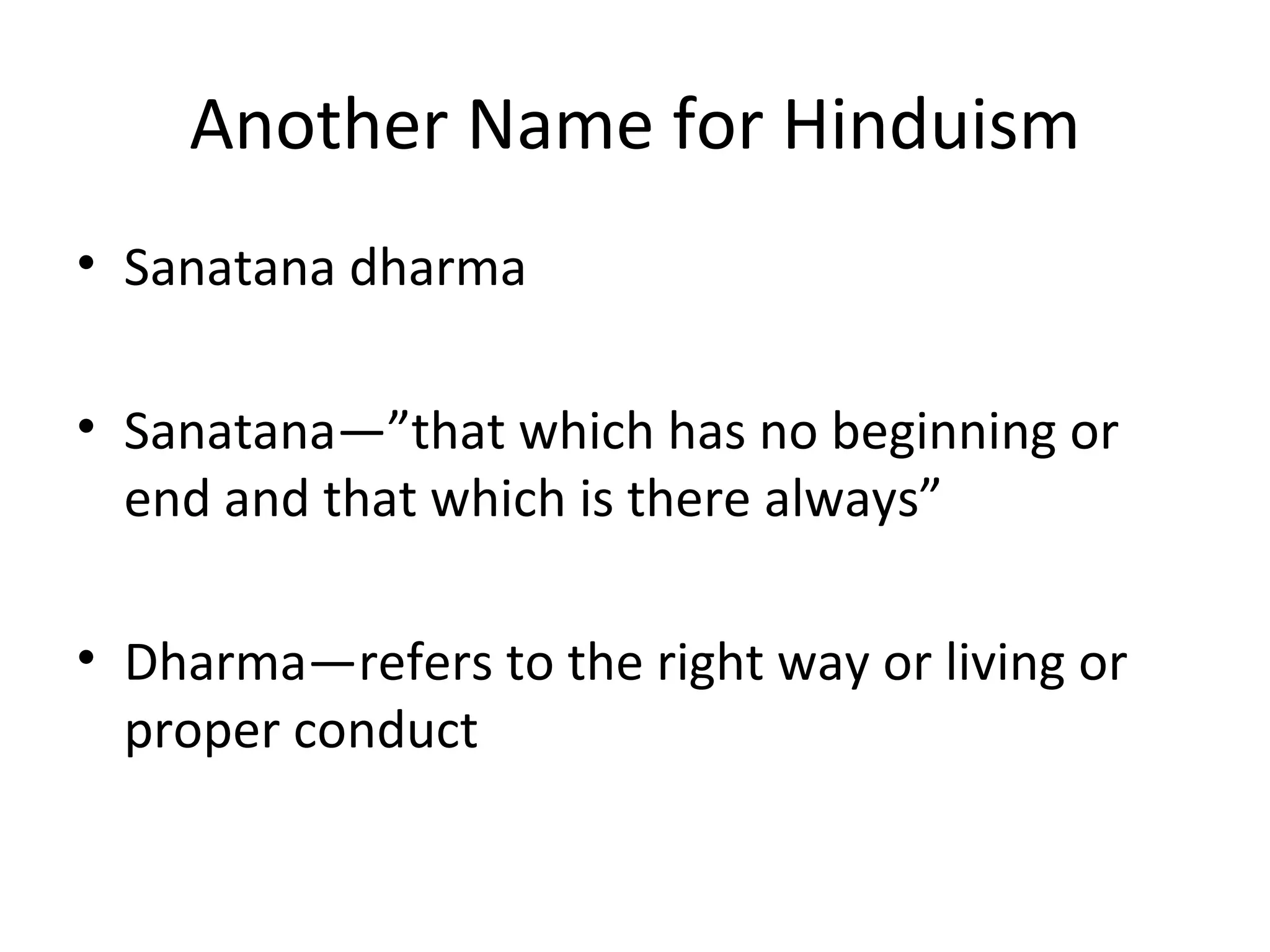
Another Name for Hinduism
• Sanatana dharma

• Sanatana—”that which has no beginning or
  end and that which is there always”

• Dharma—refers to the right way or living or
  proper conduct

India's Sanathana Dharma