





A PRACTICAL INTRODUCTION
TO DESIGN THINKING
14 July 2017, Poiana Brașov for ASPIRE Professional
Facilitated by Tudor Juravlea & Dragos Gavrilescu
3
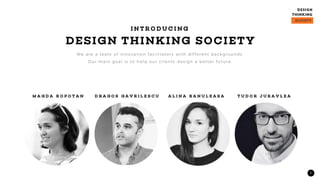
DESIGN THINKING SOCIETY
I N T R O D U C I N G
We are a team of innovation facilitators with different backgrounds.
Our main goal is to help our clients design a better future.
M A G D A R O P O T A N D R A G O S G A V R I L E S C U A L I N A B A N U L E A S A T U D O R J U R A V L E A
4
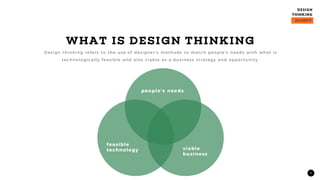
WHAT IS DESIGN THINKING
Design thinking refers to the use of designer's methods to match people's needs with what is
technologically feasible and also viable as a business strategy and opportunity.
people's needs
feasible
technology viable
business
5
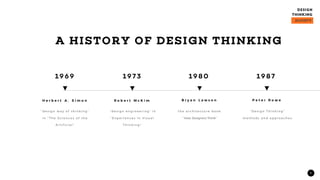
H e r b e r t A . S i m o n R o b e r t M c K i m B r y a n L a w s o n P e t e r R o w e
” d e si g n w a y o f th i n k i n g ”
i n ” Th e S c i e n c e s o f th e
A r ti f i c i a l”
1 9 6 9
” d e si g n e n g i n e e r i n g ” i n
“ E x p e r i e n c e s i n Vi su a l
Th i n k i n g "
th e a r c h i te c tu r e b o o k
” How Designers Think”
“ D e si g n Th i n k i n g ”
m e th o d s a n d a p p r o a c h e s
1 9 73 1 9 80 1 9 87
A HISTORY OF DESIGN THINKING
6
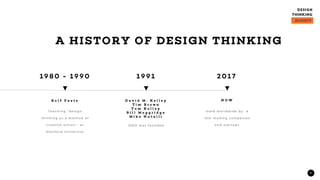
R o l f F a s t e D a v i d M . K e l l e y
T i m B r o w n
T o m K e l l e y
B i l l M o g g r i d g e
M i k e N u t a l l i
N O W
Te a c h i n g " d e si g n
th i n k i n g a s a m e th o d o f
c r e a ti ve a c ti o n . ” a t
S ta n f o r d U n i ve r si ty
1 9 80 - 1 9 9 0
ID E O w a s f o u n d e d
U se d w o r ld w i d e b y a
f e w le a d i n g c o m p a n i e s
a n d sta r tu p s
1 9 9 1 2 01 7
A HISTORY OF DESIGN THINKING
7
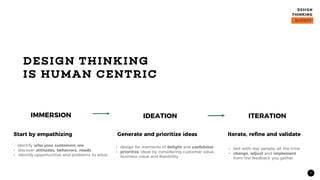
DESIGN THINKING
IS HUMAN CENTRIC
Start by empathizing
- identify who your customers are
- discover attitudes, behaviors, needs
- identify opportunities and problems to solve.
Generate and prioritize ideas
- design for moments of delight and usefulness
- prioritize ideas by considering customer value,
business value and feasibility.
- test with real people, all the time
- change, adjust and implement
from the feedback you gather
Iterate, refine and validate
IMMERSION ITERATIONIDEATION
8
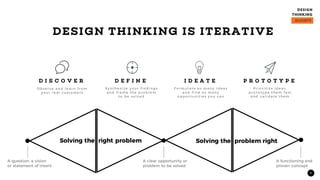
DESIGN THINKING IS ITERATIVE
D I S C O V E R
Ob se r v e a nd l e a r n f r o m
y o ur r e a l custo m e r s
D E F I N E
Sy nthe si z e y o ur f i nd i ng s
a nd f r a m e the p r o b l e m
to b e so l v e d
I D E A T E
F o r m ul a te a s m a ny i d e a s
a nd f i nd a s m a ny
o p p o r tuni ti e s y o u ca n
P R O T O T Y P E
Pr i o r i ti z e i d e a s,
p r o to ty p e the m f a st
a nd v a l i d a te the m
A question, a vision
or statement of intent
A clear opportunity or
problem to be solved
A functioning and
proven concept
Solving the right problem Solving the problem right
9
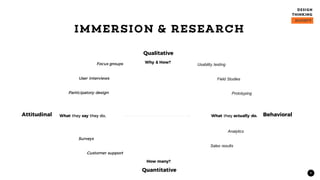
IMMERSION & RESEARCH
Qualitative
Quantitative
Attitudinal Behavioral
Focus groups
User interviews
Participatory design
Why & How?
How many?
Usability testing
Field Studies
Prototyping
Analytics
Sales results
Surveys
Customer support
What they say they do. What they actually do.
10
“ M o s t p e o p l e d o n ’ t l i s t e n w i t h
t h e i n t e n t t o u n d e r s t a n d .
T h e y l i s t e n w i t h t h e i n t e n t
t o r e p l y . ”
S t e p h e n R . C o v e y
11
Brené Brown on Empathy
12
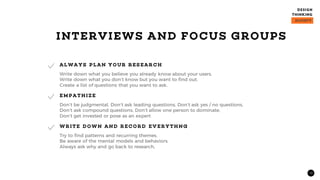
Write down what you believe you already know about your users.
Write down what you don’t know but you want to find out.
Create a list of questions that you want to ask.
ALWAYS PLAN YOUR RES EARCH
Don’t be judgmental, Don’t ask leading questions, Don’t ask yes / no questions,
Don’t ask compound questions, Don’t allow one person to dominate,
Don’t get invested or pose as an expert
EMPATHIZE
Try to find patterns and recurring themes.
Be aware of the mental models and behaviors.
Always ask why and go back to research,
WRITE DOWN AND RECORD EV ERYTHNG
INTERVIEWS AND FOCUS GROUPS
13
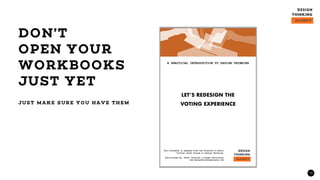
DON’T
OPEN YOUR
WORKBOOKS
JUST YET
JUS T MAKE S URE YOU HAV E THEM
14
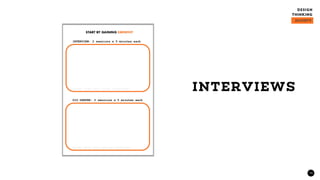
INTERVIEWS
15
INSIGHT
16
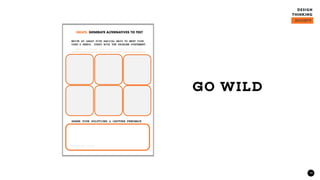
GO WILD
17
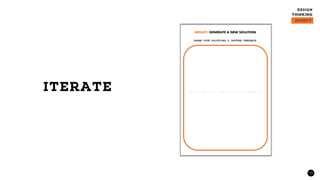
ITERATE
18
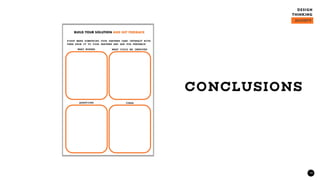
CONCLUSIONS
19
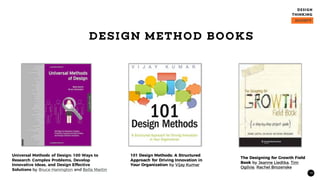
DESIGN METHOD BOOKS
Universal Methods of Design: 100 Ways to
Research Complex Problems, Develop
Innovative Ideas, and Design Effective
Solutions by Bruce Hanington and Bella Martin
101 Design Methods: A Structured
Approach for Driving Innovation in
Your Organization by Vijay Kumar
The Designing for Growth Field
Book by Jeanne Liedtka, Tim
Ogilvie, Rachel Brozenske
20
Q&A
21
T U D O R J U R A V L E A
+ 40744447777
tud o r @d e si g nthi nk i ng so ci e ty .co m
D R A G O S G A V R I L E S C U
+ 40744675605
d r a g o s@d e si g nthi nk i ng so ci e ty .co m
THANK YOU!

Aspire Professional camp - Intro to Design Thinking

  • 2.
    A PRACTICAL INTRODUCTION TODESIGN THINKING 14 July 2017, Poiana Brașov for ASPIRE Professional Facilitated by Tudor Juravlea & Dragos Gavrilescu
  • 3.
    3 DESIGN THINKING SOCIETY IN T R O D U C I N G We are a team of innovation facilitators with different backgrounds. Our main goal is to help our clients design a better future. M A G D A R O P O T A N D R A G O S G A V R I L E S C U A L I N A B A N U L E A S A T U D O R J U R A V L E A
  • 4.
    4 WHAT IS DESIGNTHINKING Design thinking refers to the use of designer's methods to match people's needs with what is technologically feasible and also viable as a business strategy and opportunity. people's needs feasible technology viable business
  • 5.
    5 H e rb e r t A . S i m o n R o b e r t M c K i m B r y a n L a w s o n P e t e r R o w e ” d e si g n w a y o f th i n k i n g ” i n ” Th e S c i e n c e s o f th e A r ti f i c i a l” 1 9 6 9 ” d e si g n e n g i n e e r i n g ” i n “ E x p e r i e n c e s i n Vi su a l Th i n k i n g " th e a r c h i te c tu r e b o o k ” How Designers Think” “ D e si g n Th i n k i n g ” m e th o d s a n d a p p r o a c h e s 1 9 73 1 9 80 1 9 87 A HISTORY OF DESIGN THINKING
  • 6.
    6 R o lf F a s t e D a v i d M . K e l l e y T i m B r o w n T o m K e l l e y B i l l M o g g r i d g e M i k e N u t a l l i N O W Te a c h i n g " d e si g n th i n k i n g a s a m e th o d o f c r e a ti ve a c ti o n . ” a t S ta n f o r d U n i ve r si ty 1 9 80 - 1 9 9 0 ID E O w a s f o u n d e d U se d w o r ld w i d e b y a f e w le a d i n g c o m p a n i e s a n d sta r tu p s 1 9 9 1 2 01 7 A HISTORY OF DESIGN THINKING
  • 7.
    7 DESIGN THINKING IS HUMANCENTRIC Start by empathizing - identify who your customers are - discover attitudes, behaviors, needs - identify opportunities and problems to solve. Generate and prioritize ideas - design for moments of delight and usefulness - prioritize ideas by considering customer value, business value and feasibility. - test with real people, all the time - change, adjust and implement from the feedback you gather Iterate, refine and validate IMMERSION ITERATIONIDEATION
  • 8.
    8 DESIGN THINKING ISITERATIVE D I S C O V E R Ob se r v e a nd l e a r n f r o m y o ur r e a l custo m e r s D E F I N E Sy nthe si z e y o ur f i nd i ng s a nd f r a m e the p r o b l e m to b e so l v e d I D E A T E F o r m ul a te a s m a ny i d e a s a nd f i nd a s m a ny o p p o r tuni ti e s y o u ca n P R O T O T Y P E Pr i o r i ti z e i d e a s, p r o to ty p e the m f a st a nd v a l i d a te the m A question, a vision or statement of intent A clear opportunity or problem to be solved A functioning and proven concept Solving the right problem Solving the problem right
  • 9.
    9 IMMERSION & RESEARCH Qualitative Quantitative AttitudinalBehavioral Focus groups User interviews Participatory design Why & How? How many? Usability testing Field Studies Prototyping Analytics Sales results Surveys Customer support What they say they do. What they actually do.
  • 10.
    10 “ M os t p e o p l e d o n ’ t l i s t e n w i t h t h e i n t e n t t o u n d e r s t a n d . T h e y l i s t e n w i t h t h e i n t e n t t o r e p l y . ” S t e p h e n R . C o v e y
  • 11.
  • 12.
    12 Write down whatyou believe you already know about your users. Write down what you don’t know but you want to find out. Create a list of questions that you want to ask. ALWAYS PLAN YOUR RES EARCH Don’t be judgmental, Don’t ask leading questions, Don’t ask yes / no questions, Don’t ask compound questions, Don’t allow one person to dominate, Don’t get invested or pose as an expert EMPATHIZE Try to find patterns and recurring themes. Be aware of the mental models and behaviors. Always ask why and go back to research, WRITE DOWN AND RECORD EV ERYTHNG INTERVIEWS AND FOCUS GROUPS
  • 13.
  • 14.
  • 15.
  • 16.
  • 17.
  • 18.
  • 19.
    19 DESIGN METHOD BOOKS UniversalMethods of Design: 100 Ways to Research Complex Problems, Develop Innovative Ideas, and Design Effective Solutions by Bruce Hanington and Bella Martin 101 Design Methods: A Structured Approach for Driving Innovation in Your Organization by Vijay Kumar The Designing for Growth Field Book by Jeanne Liedtka, Tim Ogilvie, Rachel Brozenske
  • 20.
  • 21.
    21 T U DO R J U R A V L E A + 40744447777 tud o r @d e si g nthi nk i ng so ci e ty .co m D R A G O S G A V R I L E S C U + 40744675605 d r a g o s@d e si g nthi nk i ng so ci e ty .co m THANK YOU!