Design Thinking
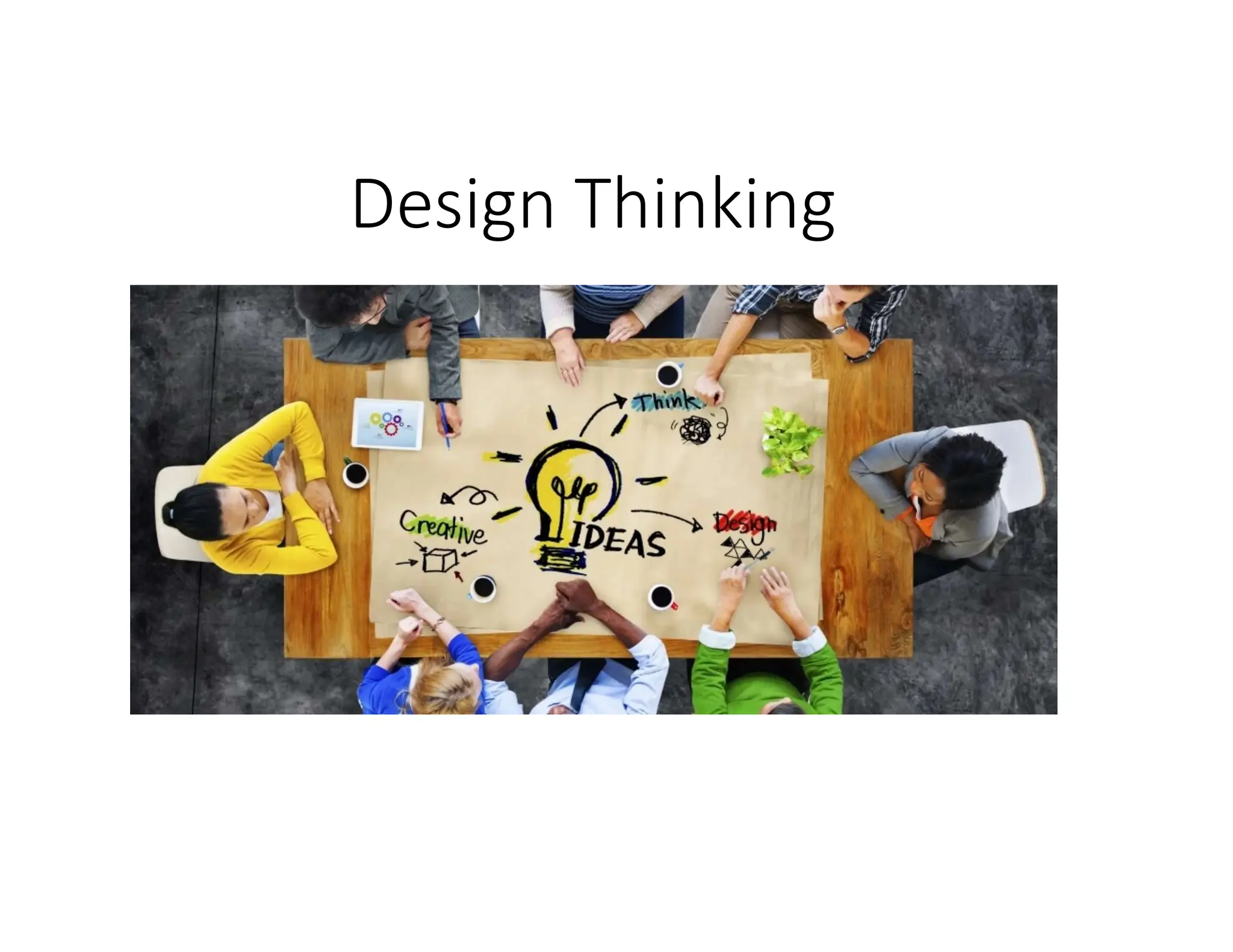
Design Thinking
โ€ข Not only for designers
โ€ข Engineering, Science, Literature, Arts, Music and Business
โ€ข โ€œA set of strategic, conceptual, and practical process, in which design
concepts are developed ( product proposal, structure, equipment,
communication etc.) โ€
Who are the Design Thinkers in the
organization ?
โ€ข Individual who has the concern for the
organization growth and knows about the working
challenges at the organization.
โ€ข Individuals who have the knowledge of the multi-
functionality of the organization.
โ€ข Vision for developing right process in the
organization
โ€ข Capability to understand the problems on the job
and ability to work on the problems related to job
Principles of Design Thinking
โ€ข Human Focused : The process that understands from the perspective of
human including the employees and customers. The deign thinker needs to
consider the individuals, belief, values and attitude.
โ€ข Diversity in work : Design thinking needs to consider individuals from
different background and train to work in a team.
โ€ข Comprehensive: The design thinkers must identify relationships, collaborations
and communication between seemingly different ideas
โ€ข Flexibility
โ€ข Communication Skills : Willingness to communicate and work in a variety of
ways :speech, visual, touch
Benefits of Design Thinking
โ€ข It helps to overcome creative challenges : Gives you a freedom to look
at the problem from numerous lenses.
โ€ข Helps to meet customer requirement effectively : developing
prototypes, testing and using consumer feedback.
โ€ข Helps to improve the knowledge of design thinking : The number
experiments and iterative methods an individual do, becomes trained
in design thinking.
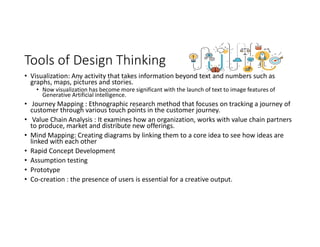
Tools of Design Thinking
โ€ข Visualization: Any activity that takes information beyond text and numbers such as
graphs, maps, pictures and stories.
โ€ข Now visualization has become more significant with the launch of text to image features of
Generative Artificial intelligence.
โ€ข Journey Mapping : Ethnographic research method that focuses on tracking a journey of
customer through various touch points in the customer journey.
โ€ข Value Chain Analysis : It examines how an organization, works with value chain partners
to produce, market and distribute new offerings.
โ€ข Mind Mapping: Creating diagrams by linking them to a core idea to see how ideas are
linked with each other
โ€ข Rapid Concept Development
โ€ข Assumption testing
โ€ข Prototype
โ€ข Co-creation : the presence of users is essential for a creative output.
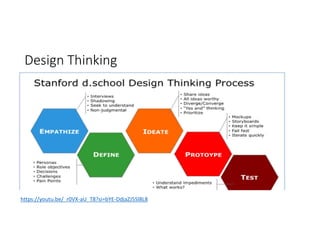
Design Thinking
https://youtu.be/_r0VX-aU_T8?si=bYE-DdjaZJ5Sl8L8
Types of innovation
โ€ข Jugaad (Ad-Hoc)
โ€ข Systematic (structured)
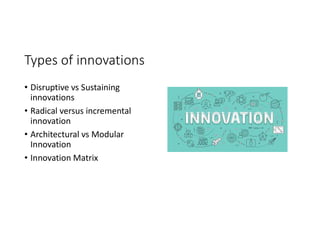
Types of innovations
โ€ข Disruptive vs Sustaining
innovations
โ€ข Radical versus incremental
innovation
โ€ข Architectural vs Modular
Innovation
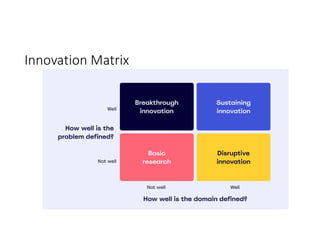
โ€ข Innovation Matrix
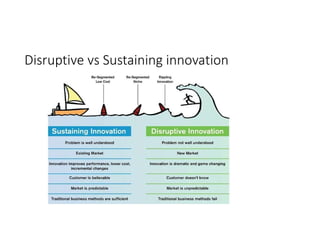
Disruptive vs Sustaining innovation
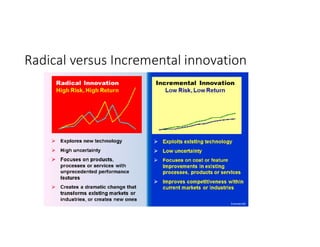
Radical versus Incremental innovation
Architectural vs
Modular Innovation
โ€ข ACHITECTURAL INNOVATION : It is described as the reconfiguration of
existing product technologies.
โ€ข MODULAR INNOVATION : one or more components of a product are
changed while the overall design stays the same.
Innovation Matrix
Frugal/Social/Co-creation innovation
โ€ข Frugal innovation is a way of developing products and services that
are affordable, simple, and effective.
โ€ข Frugal organizations donโ€™t seek to wow customers with technically
sophisticated products, but instead strive to create good quality
solutions that deliver greatest value to customers at the lowest cost.
Types of Innovation
โ€ข Product
โ€ข Process
โ€ข Customer Experience
โ€ข Business Model
Theories of thinking
โ€ข Analytical
โ€ข The process of separation of things from the visible relationships
โ€ข Judicial
โ€ข Comparing and making judgements based on in depth analysis in thinking
โ€ข Synthetic Thinking
โ€ข Combining two things and ideas with the intention of making new things
Theory of Creative blocks
โ€ข According to this theory, there are barriers to the creativity of the
individual, and the individual expresses an inability to access
creativity; hence, there is a block created in the process of creativity.
โ€ข THINKING
โ€ข SLOW AND FAST
โ€ข DIVERGENT AND CONVERGENT
โ€ข MICRO AND MACRO
โ€ข THIS AND THAT
Experimentation
โ€ข An experiment is planned activity to validate one or more
assumptions of an idea
โ€ข Assumptions:
โ€ข Need
โ€ข Technical
โ€ข Production
โ€ข Commercial
Outcome of experiment
โ€ข Success
โ€ข Failure
โ€ข Learning
โ€ข Try to design low cost experiment
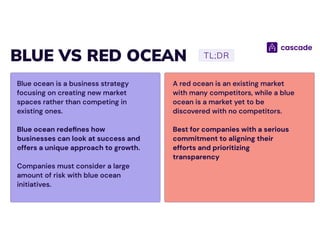
Blue ocean vs red ocean
design thinking, thiking theories and models.pdf

design thinking, thiking theories and models.pdf

  • 1.
  • 2.
    Design Thinking โ€ข Notonly for designers โ€ข Engineering, Science, Literature, Arts, Music and Business โ€ข โ€œA set of strategic, conceptual, and practical process, in which design concepts are developed ( product proposal, structure, equipment, communication etc.) โ€
  • 3.
    Who are theDesign Thinkers in the organization ? โ€ข Individual who has the concern for the organization growth and knows about the working challenges at the organization. โ€ข Individuals who have the knowledge of the multi- functionality of the organization. โ€ข Vision for developing right process in the organization โ€ข Capability to understand the problems on the job and ability to work on the problems related to job
  • 4.
    Principles of DesignThinking โ€ข Human Focused : The process that understands from the perspective of human including the employees and customers. The deign thinker needs to consider the individuals, belief, values and attitude. โ€ข Diversity in work : Design thinking needs to consider individuals from different background and train to work in a team. โ€ข Comprehensive: The design thinkers must identify relationships, collaborations and communication between seemingly different ideas โ€ข Flexibility โ€ข Communication Skills : Willingness to communicate and work in a variety of ways :speech, visual, touch
  • 5.
    Benefits of DesignThinking โ€ข It helps to overcome creative challenges : Gives you a freedom to look at the problem from numerous lenses. โ€ข Helps to meet customer requirement effectively : developing prototypes, testing and using consumer feedback. โ€ข Helps to improve the knowledge of design thinking : The number experiments and iterative methods an individual do, becomes trained in design thinking.
  • 6.
    Tools of DesignThinking โ€ข Visualization: Any activity that takes information beyond text and numbers such as graphs, maps, pictures and stories. โ€ข Now visualization has become more significant with the launch of text to image features of Generative Artificial intelligence. โ€ข Journey Mapping : Ethnographic research method that focuses on tracking a journey of customer through various touch points in the customer journey. โ€ข Value Chain Analysis : It examines how an organization, works with value chain partners to produce, market and distribute new offerings. โ€ข Mind Mapping: Creating diagrams by linking them to a core idea to see how ideas are linked with each other โ€ข Rapid Concept Development โ€ข Assumption testing โ€ข Prototype โ€ข Co-creation : the presence of users is essential for a creative output.
  • 7.
  • 8.
    Types of innovation โ€ขJugaad (Ad-Hoc) โ€ข Systematic (structured)
  • 9.
    Types of innovations โ€ขDisruptive vs Sustaining innovations โ€ข Radical versus incremental innovation โ€ข Architectural vs Modular Innovation โ€ข Innovation Matrix
  • 10.
  • 11.
  • 12.
    Architectural vs Modular Innovation โ€ขACHITECTURAL INNOVATION : It is described as the reconfiguration of existing product technologies. โ€ข MODULAR INNOVATION : one or more components of a product are changed while the overall design stays the same.
  • 13.
  • 14.
    Frugal/Social/Co-creation innovation โ€ข Frugalinnovation is a way of developing products and services that are affordable, simple, and effective. โ€ข Frugal organizations donโ€™t seek to wow customers with technically sophisticated products, but instead strive to create good quality solutions that deliver greatest value to customers at the lowest cost.
  • 15.
    Types of Innovation โ€ขProduct โ€ข Process โ€ข Customer Experience โ€ข Business Model
  • 16.
    Theories of thinking โ€ขAnalytical โ€ข The process of separation of things from the visible relationships โ€ข Judicial โ€ข Comparing and making judgements based on in depth analysis in thinking โ€ข Synthetic Thinking โ€ข Combining two things and ideas with the intention of making new things
  • 17.
    Theory of Creativeblocks โ€ข According to this theory, there are barriers to the creativity of the individual, and the individual expresses an inability to access creativity; hence, there is a block created in the process of creativity. โ€ข THINKING โ€ข SLOW AND FAST โ€ข DIVERGENT AND CONVERGENT โ€ข MICRO AND MACRO โ€ข THIS AND THAT
  • 18.
    Experimentation โ€ข An experimentis planned activity to validate one or more assumptions of an idea โ€ข Assumptions: โ€ข Need โ€ข Technical โ€ข Production โ€ข Commercial
  • 19.
    Outcome of experiment โ€ขSuccess โ€ข Failure โ€ข Learning โ€ข Try to design low cost experiment
  • 20.
    Blue ocean vsred ocean