Me
Researcher
Business Designer
Service Designer
Learning Designer
@studiothick
Slides available
after!
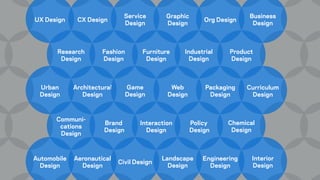
Designers are
everywhere.
UX Design CX Design
Service
Design
Graphic
Design
Org Design
Business
Design
Research
Design
Fashion
Design
Furniture
Design
Industrial
Design
Product
Design
Urban 

Design
Architectural

Design
Game 

Design
Web 

Design
Packaging
Design
Curriculum
Design
Communi-
cations 

Design
Brand

Design
Interaction
Design
Policy

Design
Chemical
Design
Automobile 

Design
Aeronautical
Design
Civil Design
Landscape
Design
Engineering

Design
Interior
Design
What are the
differences between
types of design?
Tools
Tools
Methods
Tools
Methods
Skills
Tools
Methods
Skills
Knowledge
Tools
Methods
Skills
Knowledge
Materials
Tools
Methods
Skills
Knowledge
Materials
Type of problems
What do all types
of design have in
common?
What defines the
practice of
Design?
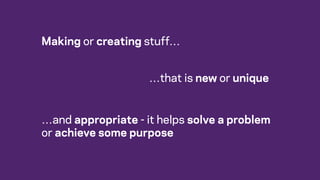
Making or creating stuff…
…that is new or unique
Making or creating stuff…
…that is new or unique
…and appropriate - it helps solve a problem
or achieve some purpose
Discussion in groups
What do you make
professionally that is:
- Different each time and
solves some sort of
problem?
Discussion
What do you design?
4 components of
design as creative
problem solving
Purpose
The largest
relevant vision,
goal or ideal
state
Ideal Actual
Problem
Constant comparisonPurpose
To have a health y
and beautiful
garden
we are called upon to act
when we realise there is
a discrepancy…
…between the world as it
exists and the world as
we want it to be.
To have a health y
and beautiful
garden
Ideal Actual
Why is there a gap?
Constant comparisonPurpose
To have a town
hall that will
impress the
community
Ideal Actual
Why is there a gap?
Constant comparisonPurpose
Ideal Actual
Why is there a gap?
Constant comparisonPurpose
To deliver
delightful service
to customers
Ideal Actual
Why is there a gap?
Constant comparisonPurpose
To make money +$2M -$500K
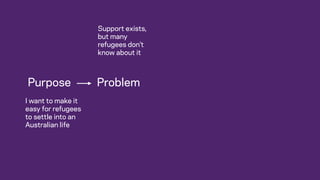
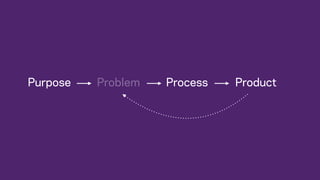
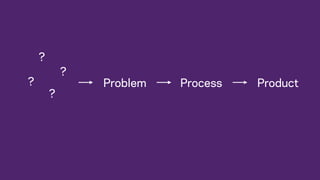
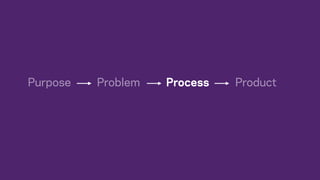
Purpose Problem
(Opportunity)
The largest
relevant vision,
goal or ideal
state
The discrepancy
between ideal
and actual
Purpose Problem
(Opportunity)
The largest
relevant vision,
goal or ideal
state
The discrepancy
between ideal
and actual
…and our
explanation or
diagnosis of
why!
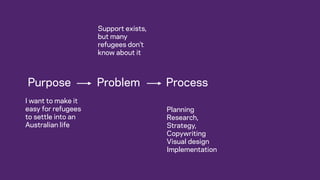
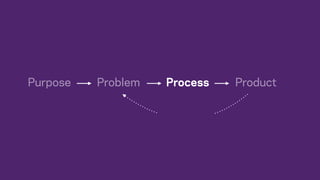
ProcessPurpose Problem
(Opportunity)
The largest
relevant vision,
goal or ideal
state
The discrepancy
between ideal
and actual
The process you
go through to
create a solution
…and our
explanation or
diagnosis of
why!
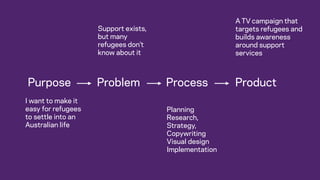
Process Solution
(Product)
Purpose Problem
(Opportunity)
The thing created
to solve the
problem or
capitalise on the
opportunity
The largest
relevant vision,
goal or ideal
state
The discrepancy
between ideal
and actual
The process you
go through to
create a solution
…and our
explanation or
diagnosis of
why!
Process Solution
(Product)
Purpose Problem
(Opportunity)
Moving closer to
our ideal state
Uncertainty
Process Solution
(Product)
Purpose Problem
(Opportunity)
Is there a gap?
What is the real
cause of the
gap?
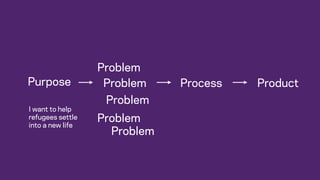
What if there is
more than one
cause?
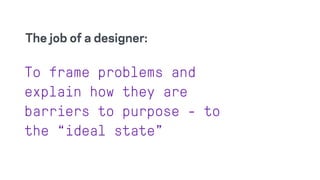
To identify and understand
problems and opportunities
by performing appropriate research
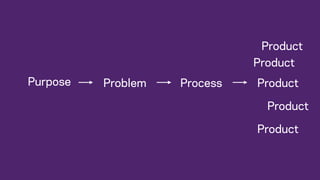
The job of a designer:
Process Solution
(Product)
Purpose Problem
(Opportunity)
What is ideal?
Do we need to
act?
To be agents of change by asking
others to reflect on the distance
between “real” and “ideal”.
The job of a designer:
Process Solution
(Product)
Purpose Problem
(Opportunity)
There are so
many possible
solutions!
Which one (s)
will work?
The job of a designer:
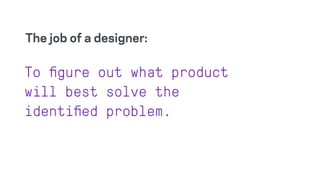
To figure out which solution
will best address the problem
by prototyping and testing
Process Solution
(Product)
Purpose Problem
(Opportunity)
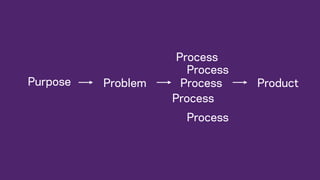
What is the best
path?
Process Solution
(Product)
Purpose Problem
(Opportunity)
X
Process Solution
(Product)
Purpose Problem
(Opportunity)
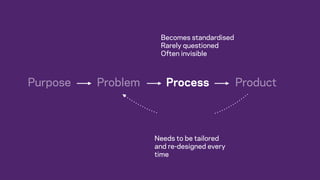
Becomes
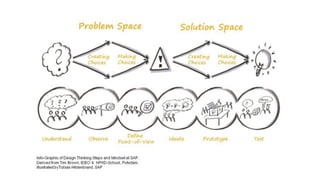
standardised
Rarely questioned
Often invisible
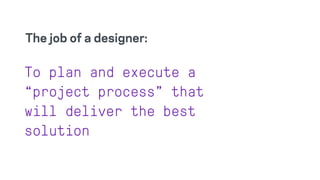
To tailor-make every design
process to be visible,
communicable and appropriate to
the challenge at hand.
The job of a designer:
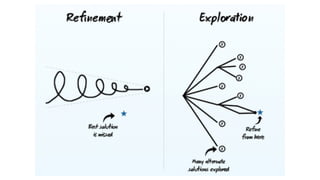
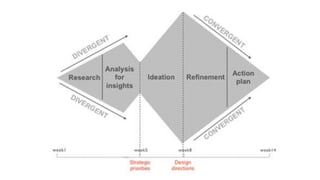
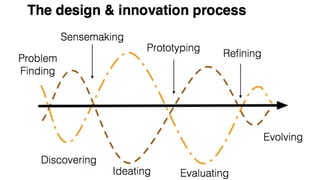
Exploring different
design processes
What sort of design problem
might your process be
appropriate for?
What is being emphasised in each
model? What is the modeller
trying to communicate?
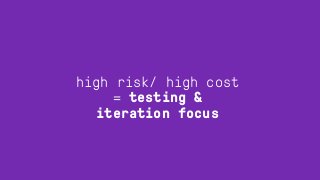
high risk/ high cost
= testing &
iteration focus
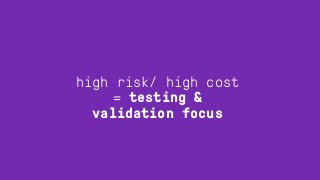
high risk/ high cost
= testing &
validation focus
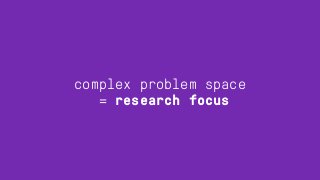
complex problem space
= research focus
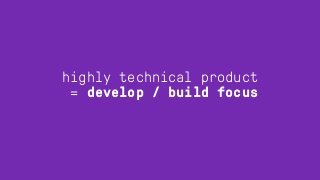
highly technical product
= develop / build focus
Evolving, dynamic problem
= evaluation, monitoring &
improvement focus
First learn to do design…
Then learn to tailor your
design process.
Who can share a gap
between “ideal” and
“real”?
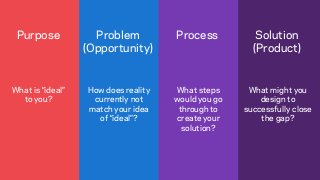
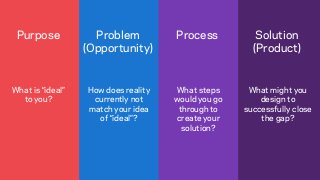
Process Solution
(Product)
Purpose Problem
(Opportunity)
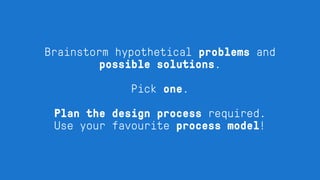
What might you
design to
successfully close
the gap?
What is “ideal”
to you?
How does reality
currently not
match your idea
of “ideal”?
What steps
would you go
through to
create your
solution?
Share
Pulling apart a case
study!
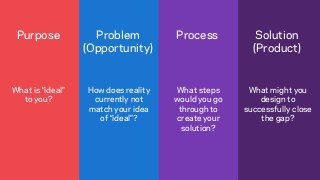
Process Solution
(Product)
Purpose Problem
(Opportunity)
What might you
design to
successfully close
the gap?
What is “ideal”
to you?
How does reality
currently not
match your idea
of “ideal”?
What steps
would you go
through to
create your
solution?
Share
Take aways!
Process Solution
(Product)
Purpose Problem
(Opportunity)
What might you
design to
successfully close
the gap?
What is “ideal”
to you?
How does reality
currently not
match your idea
of “ideal”?
What steps
would you go
through to
create your
solution?
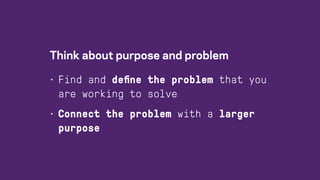
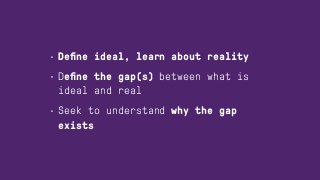
• Define ideal, learn about reality
• Define the gap(s) between what is
ideal and real
• Seek to understand why the gap
exists
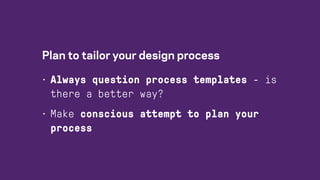
• Tailor your design process to suit
the problem or challenge at hand
• Make sure you can visualise and
communicate your process
• Test your solutions to find the best
one, and to figure out if it will
actually solve the problem… before
you spend time and $$ on a lost
cause
Design is not a
discipline. It is
a practice.
You can’t master
design through
study.
Me
Researcher
Business Designer
Service Designer
Learning Designer
@studiothick
Me
@ashleeriordan

Publications on Medium

Design thinking as a creative problem solving process - Part 1