1abdul shumz
2abdul shumz
Ashoka was one of the greatest rulers
known to history and on his instructions
inscriptions were carved on pillars, as well
as on rock surfaces.
Why his kingdom was called an empire?
3abdul shumz
The empire that Ashoka ruled was
founded by his grandfather,
Chandragupta Maurya, more than 2300
years ago. Chandragupta was supported
by a wise man named Chanakya or
Kautilya. Many of Chanakya’s ideas
were written down in a book called the
Arthashastra.
4abdul shumz
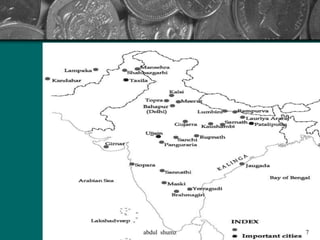
There were several cities in the empire-
the capital Pataliputra, Taxila, and
Ujjain. Taxila was a gateway to the
northwest, including Central Asia, while
Ujjain lay on the route from north to
south India. Merchants, officials and
crafts persons probably lived in these
cities.
5abdul shumz
In other areas there were villages of
farmers and herders. In central India, there
were forests where people gathered forest
produce and hunted animals for food.
People in different parts of the empire
spoke different languages. They probably
ate different kinds of food, and wore
different kinds of clothes as well.
6abdul shumz
7abdul shumz
How are empires different from
kingdoms?
• Emperors need more resources than
kings because empires are larger than
kingdoms, and need to be protected by
big armies.
• So also they need a larger number of
officials who collect taxes.
8abdul shumz
Ruling the empire
As the empire was so large, different parts were ruled
differently. The area around Pataliputra was under the
direct control of the emperor. The officials were
appointed to collect taxes from farmers, herders, crafts
persons and traders, who lived in villages and towns in
the area. Officials also punished those who disobeyed
the ruler’s orders. Many of these officials were given
salaries. Messengers went to and fro, and spies kept a
watch on the officials. The emperor supervised them all,
with the help of members of the royal family, and senior
ministers.
9abdul shumz
There were other areas or provinces.
Each of these was ruled from a
provincial capital such as Taxila or
Ujjain.
Royal princes were often sent as
governors.
10abdul shumz
The Mauryas tried to control roads and
rivers, which were important for transport,
and to collect whatever resources were
available as tax and tribute.
For example, the Arthashastra tells us that
the north-west was important for blankets,
and south India for its gold and precious
stones. These resources were collected as
tribute.
11abdul shumz
There were also the forested regions.
People living in these areas were more or
less independent, but may have been
expected to provide elephants, timber,
honey and wax to Mauryan officials.
12abdul shumz
Ashoka, a unique ruler
The most famous Mauryan ruler was
Ashoka. He was the first ruler who
tried to take his message to the people
through inscriptions. Most of Ashoka’s
inscriptions were in Prakrit and were
written in the Brahmi script.
13abdul shumz
Ashoka’s war in Kalinga
Kalinga is the ancient name of coastal Orissa.
Ashoka fought a war to conquer Kalinga. However,
he was so horrified when he saw the violence and
bloodshed that he decided not to fight any more
wars. He is the only king in the history of the world
who gave up conquest after winning a war.
14abdul shumz
What was Ashoka’s dhamma?
Ashoka’s dhamma did not involve worship
of a god, or performance of a sacrifice. He
felt that just as a father tries to teach his
children, he had a duty to instruct his
subjects.
He was also inspired by the teachings of the
Buddha
15abdul shumz
There were a number of problems that
troubled him. People in the empire followed
different religions, and this sometimes led to
conflict.
Animals were sacrificed. Slaves and servants
were ill treated. Besides, there were quarrels
in families and amongst neighbours. Ashoka
felt it was his duty to solve these problems.
16abdul shumz
So, he appointed officials, known as the
dhamma mahamatta who went from place
to place teaching people about dhamma.
Besides, Ashoka got his messages
inscribed on rocks and pillars, instructing
his officials to read his message to those
who could not read it themselves.
17abdul shumz
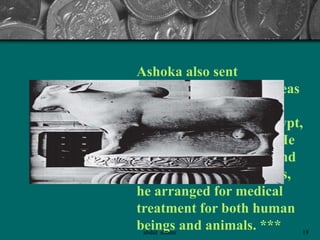
Ashoka also sent
messengers to spread ideas
about dhamma to other
lands, such as Syria, Egypt,
Greece and Sri Lanka. He
built roads, dug wells, and
built rest houses. Besides,
he arranged for medical
treatment for both human
beings and animals. *** 18abdul shumz
Let’s recall
1. Complete the following sentences:
(a) Officials collected ———————— from the area
under the direct control of the ruler.
(b) Royal princes often went to the provinces as ——— 83
􀂄
(c) The Mauryan rulers tried to control ————————
and ———————— which were important for
transport.
(d) People in forested regions provided the Mauryan
officials with ——————
19abdul shumz
3. State whether true or false:
(a) Ujjain was the gateway to the north-
west.
(c) Chandragupta’s ideas were written
down in the Arthashastra.
(d) Kalinga was the ancient name of
Bengal.
(e) Most Ashokan inscriptions are in the
Brahmi script.
20abdul shumz
Thank
You
Pl mail ur suggestions 2:
abdul.shumz@gmail.com
21abdul shumz

Ashoka History class 6 cbse

  • 1.
  • 2.
  • 3.
    Ashoka was oneof the greatest rulers known to history and on his instructions inscriptions were carved on pillars, as well as on rock surfaces. Why his kingdom was called an empire? 3abdul shumz
  • 4.
    The empire thatAshoka ruled was founded by his grandfather, Chandragupta Maurya, more than 2300 years ago. Chandragupta was supported by a wise man named Chanakya or Kautilya. Many of Chanakya’s ideas were written down in a book called the Arthashastra. 4abdul shumz
  • 5.
    There were severalcities in the empire- the capital Pataliputra, Taxila, and Ujjain. Taxila was a gateway to the northwest, including Central Asia, while Ujjain lay on the route from north to south India. Merchants, officials and crafts persons probably lived in these cities. 5abdul shumz
  • 6.
    In other areasthere were villages of farmers and herders. In central India, there were forests where people gathered forest produce and hunted animals for food. People in different parts of the empire spoke different languages. They probably ate different kinds of food, and wore different kinds of clothes as well. 6abdul shumz
  • 7.
  • 8.
    How are empiresdifferent from kingdoms? • Emperors need more resources than kings because empires are larger than kingdoms, and need to be protected by big armies. • So also they need a larger number of officials who collect taxes. 8abdul shumz
  • 9.
    Ruling the empire Asthe empire was so large, different parts were ruled differently. The area around Pataliputra was under the direct control of the emperor. The officials were appointed to collect taxes from farmers, herders, crafts persons and traders, who lived in villages and towns in the area. Officials also punished those who disobeyed the ruler’s orders. Many of these officials were given salaries. Messengers went to and fro, and spies kept a watch on the officials. The emperor supervised them all, with the help of members of the royal family, and senior ministers. 9abdul shumz
  • 10.
    There were otherareas or provinces. Each of these was ruled from a provincial capital such as Taxila or Ujjain. Royal princes were often sent as governors. 10abdul shumz
  • 11.
    The Mauryas triedto control roads and rivers, which were important for transport, and to collect whatever resources were available as tax and tribute. For example, the Arthashastra tells us that the north-west was important for blankets, and south India for its gold and precious stones. These resources were collected as tribute. 11abdul shumz
  • 12.
    There were alsothe forested regions. People living in these areas were more or less independent, but may have been expected to provide elephants, timber, honey and wax to Mauryan officials. 12abdul shumz
  • 13.
    Ashoka, a uniqueruler The most famous Mauryan ruler was Ashoka. He was the first ruler who tried to take his message to the people through inscriptions. Most of Ashoka’s inscriptions were in Prakrit and were written in the Brahmi script. 13abdul shumz
  • 14.
    Ashoka’s war inKalinga Kalinga is the ancient name of coastal Orissa. Ashoka fought a war to conquer Kalinga. However, he was so horrified when he saw the violence and bloodshed that he decided not to fight any more wars. He is the only king in the history of the world who gave up conquest after winning a war. 14abdul shumz
  • 15.
    What was Ashoka’sdhamma? Ashoka’s dhamma did not involve worship of a god, or performance of a sacrifice. He felt that just as a father tries to teach his children, he had a duty to instruct his subjects. He was also inspired by the teachings of the Buddha 15abdul shumz
  • 16.
    There were anumber of problems that troubled him. People in the empire followed different religions, and this sometimes led to conflict. Animals were sacrificed. Slaves and servants were ill treated. Besides, there were quarrels in families and amongst neighbours. Ashoka felt it was his duty to solve these problems. 16abdul shumz
  • 17.
    So, he appointedofficials, known as the dhamma mahamatta who went from place to place teaching people about dhamma. Besides, Ashoka got his messages inscribed on rocks and pillars, instructing his officials to read his message to those who could not read it themselves. 17abdul shumz
  • 18.
    Ashoka also sent messengersto spread ideas about dhamma to other lands, such as Syria, Egypt, Greece and Sri Lanka. He built roads, dug wells, and built rest houses. Besides, he arranged for medical treatment for both human beings and animals. *** 18abdul shumz
  • 19.
    Let’s recall 1. Completethe following sentences: (a) Officials collected ———————— from the area under the direct control of the ruler. (b) Royal princes often went to the provinces as ——— 83 􀂄 (c) The Mauryan rulers tried to control ———————— and ———————— which were important for transport. (d) People in forested regions provided the Mauryan officials with —————— 19abdul shumz
  • 20.
    3. State whethertrue or false: (a) Ujjain was the gateway to the north- west. (c) Chandragupta’s ideas were written down in the Arthashastra. (d) Kalinga was the ancient name of Bengal. (e) Most Ashokan inscriptions are in the Brahmi script. 20abdul shumz
  • 21.
    Thank You Pl mail ursuggestions 2: abdul.shumz@gmail.com 21abdul shumz