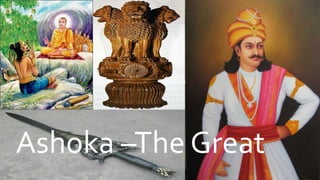
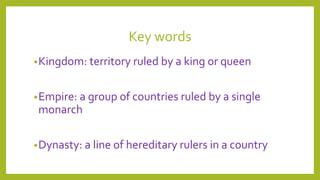
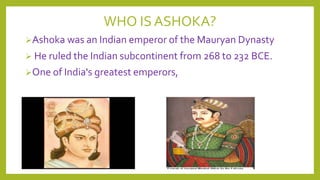
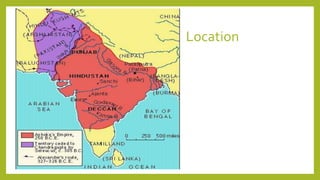
Ashoka was an emperor of the Mauryan Dynasty who ruled most of northern and central India from 268 to 232 BCE. After conquering the kingdom of Kalinga in a brutal war, Ashoka converted to Buddhism and renounced violence, instead following a policy of non-violence, tolerance, and respect. He erected pillars with edicts promoting dharma and established hospitals, rest houses, roads, and wells across his empire. The Mauryan Empire had a large administrative structure and military to govern its vast territories during Ashoka's reign.
Key words
•Kingdom: territoryruled by a king or queen
•Empire: a group of countries ruled by a single
monarch
•Dynasty: a line of hereditary rulers in a country
3.
WHO IS ASHOKA?
Ashokawas an Indian emperor of the Mauryan Dynasty
He ruled the Indian subcontinent from 268 to 232 BCE.
One of India's greatest emperors,
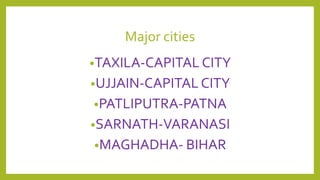
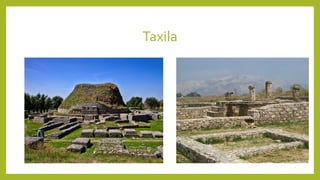
Taxila
•Taxila which means"City of Cut Stone’’
and is an important archaeological town.
It is situated in Pakistan. There are 5
small stupas in the city.
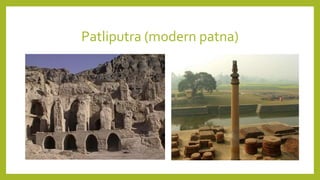
Patliputra
•Patliputra was theMauryan capital city.
•Present on the Ganga River.
•Largest city in the world during that era.
•Contained more than 500,000 residents
SARNATHVARANASI
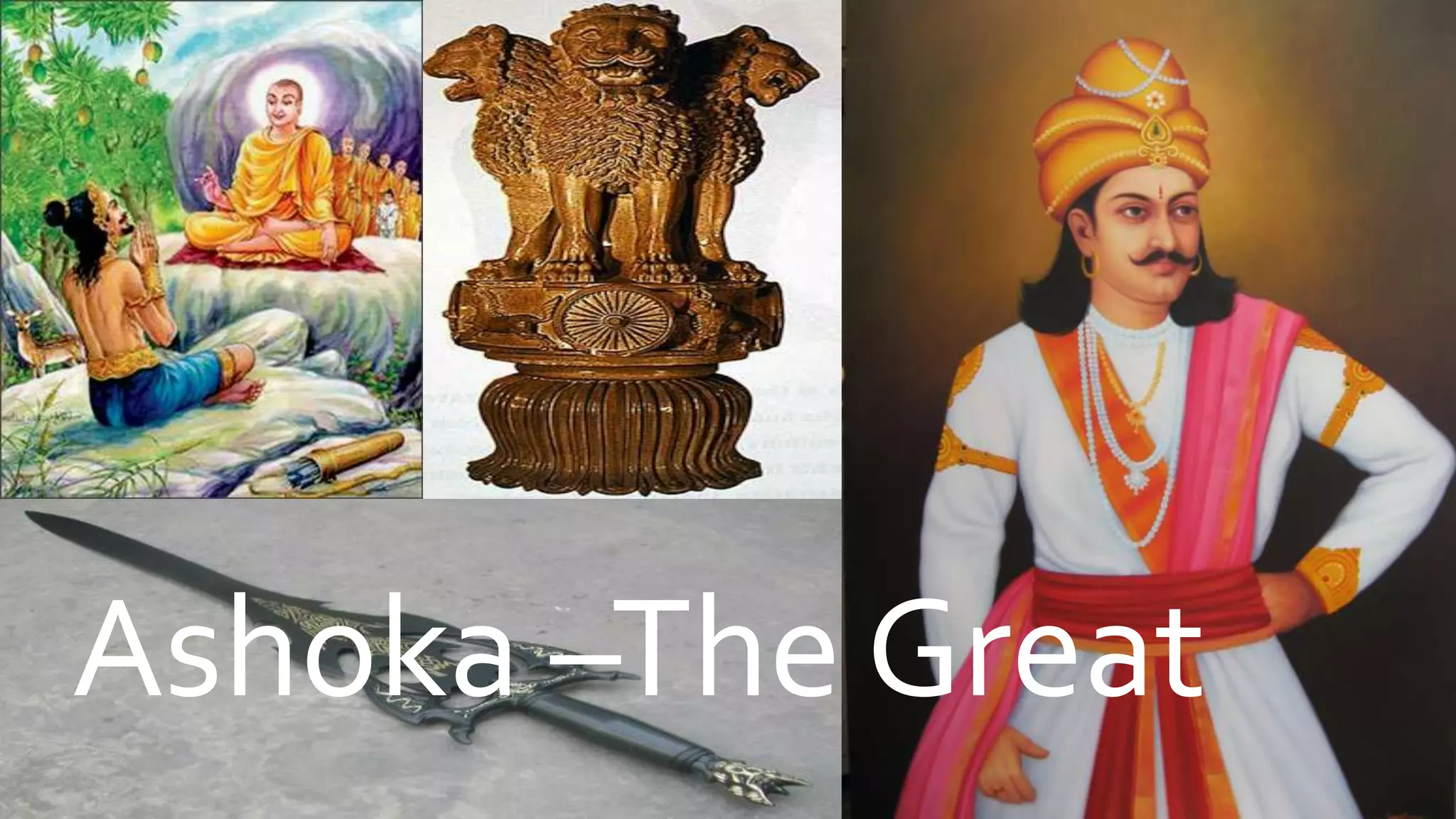
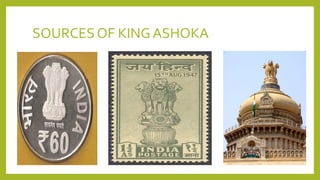
•The Ashoka Lioncapital or the
Sarnath lion capital is the national
symbol of India. The Sarnath pillar
bears one of the Edicts of Ashoka.
Magadha
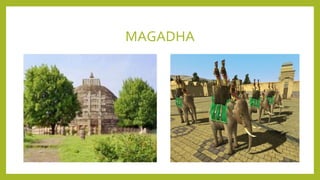
•The core ofthe kingdom was the area
of Bihar south of the Ganges; its first
capital was Rajagriha (modern Rajgir)
then Patliputra (modern Patna).
16.
Timeline on kingAshoka
• 300 BC- Ashoka Mauryawas born
• 284bce – MARRIDGE
• 272- the Reign begins
• 273 BC-Ashoka succeeded the throne
• 269 BC-He was crowned asthe king
• 264 BC-The war against KalingaKingdom happened
• 260 BC-Ashoka become a Buddhist monk
• 232 BC-He died
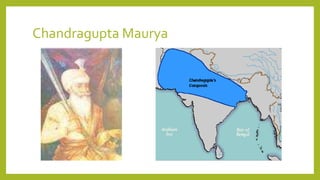
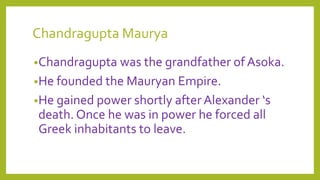
Chandragupta Maurya
•Chandragupta wasthe grandfather of Asoka.
•He founded the Mauryan Empire.
•He gained power shortly after Alexander ‘s
death. Once he was in power he forced all
Greek inhabitants to leave.
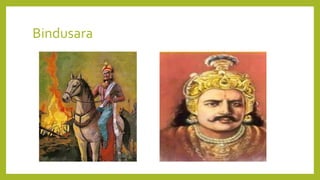
Bindusara
•Bindusara ( 297-273BC )
Chandragupta was succeeded by his son
Bindusara.
He defeated rulers of 16 Kingdoms.The Mauryan
Kingdom was spread across the whole Indian
Subcontinent, Except in Kalinga and the Southern
parts
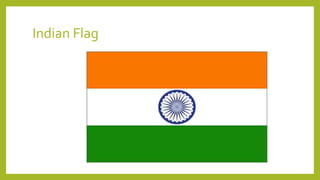
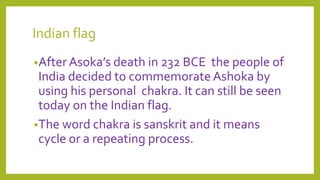
Indian flag
•After Asoka’sdeath in 232 BCE the people of
India decided to commemorate Ashoka by
using his personal chakra. It can still be seen
today on the Indian flag.
•The word chakra is sanskrit and it means
cycle or a repeating process.
24.
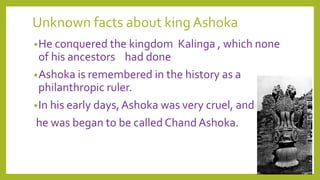
Unknown facts aboutking Ashoka
•He conquered the kingdom Kalinga , which none
of his ancestors had done
•Ashoka is remembered in the history as a
philanthropic ruler.
•In his early days,Ashoka was very cruel, and
he was began to be called Chand Ashoka.
25.
Unknown facts aboutKing ashoka
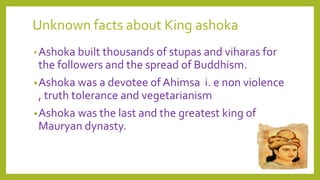
•Ashoka built thousands of stupas and viharas for
the followers and the spread of Buddhism.
•Ashoka was a devotee of Ahimsa i. e non violence
, truth tolerance and vegetarianism
•Ashoka was the last and the greatest king of
Mauryan dynasty.
26.
How are policiesof King Ashoka &the policies of UAE
Same?
• Ashoka gave up the policy of conquest through war and began to follow a
policy of conquest through dharma.
oEven in UAE the Ruler follows the principle of non-violence and gave up
war.
• The Emperor took all the main decisions and rules.
oIn UAE the laws are also governed by the Ruler.
• The Empires policy of accepting people in a Peaceful and respectful
manner.
oThe UAE also accepts all kinds of people from different parts of theWorld.
27.
Summary
• Chandragupta Mauryawas the first Mauryan emperor.
He conquered Magadha and then defeated Selecus
Nicator.
• Ashoka conquered Kalinga, After the Kalinga War,
he decided to give up war altogether.
• Ashoka’s policy of dhamma was based on the principles of
peace,tolerance,non-violence,co-existence,truth,charity and
respect for all. He issued edicts and appointed officers to spread
dhamma.
• Ashoka is famous for his public welfare measures. He built roads,
rest houses, hospitals and dug wells.
28.
Summary
• The Mauryashad a large administrative set-up.The empire was
divided into provinces, districts and villages. A committee of 30
members looked after the administrative of Pataliputra.
• The Mauryas had a large army and an efficient spy system.