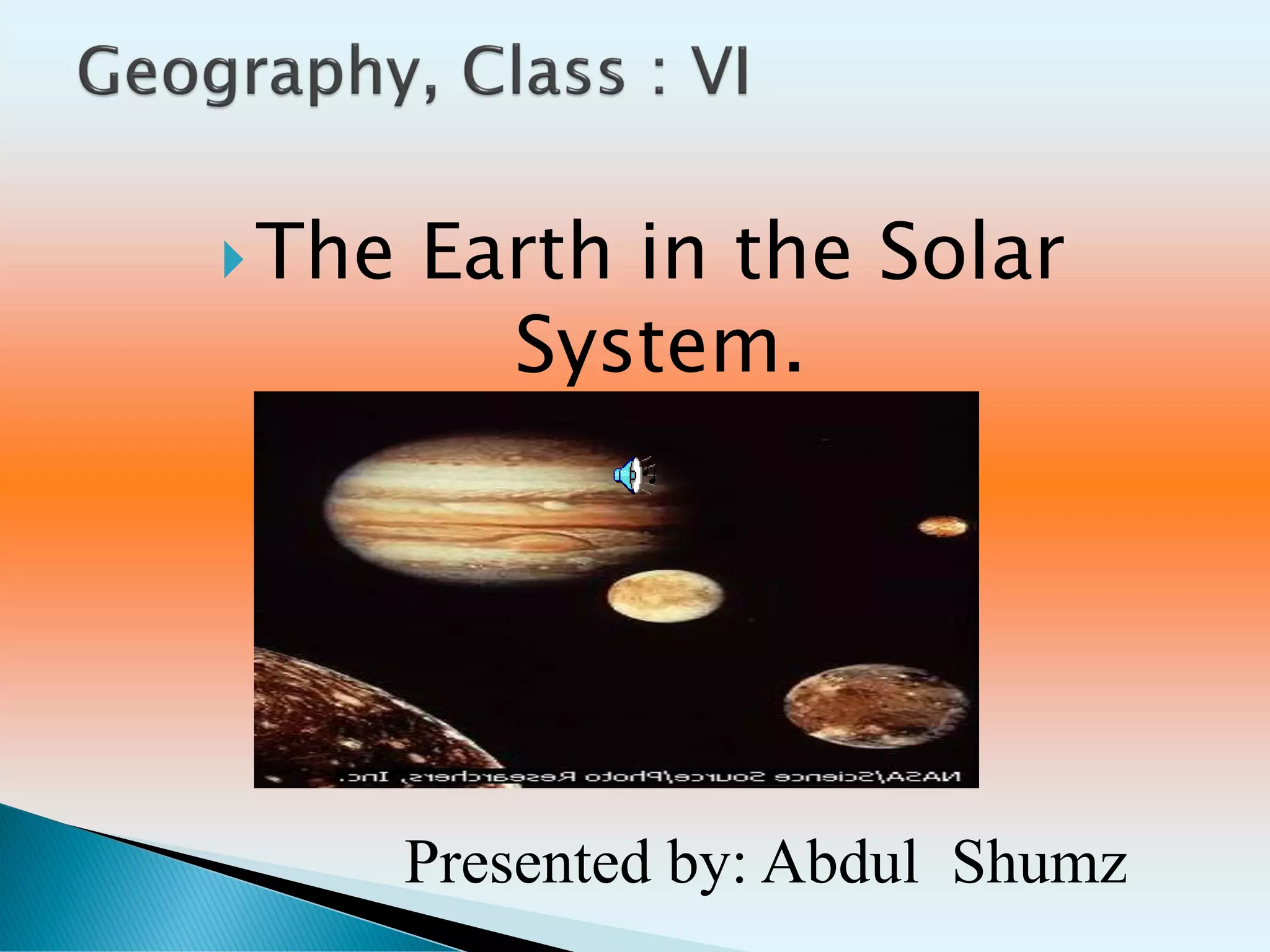
The Earth in the Solar
System.
Presented by: Abdul Shumz
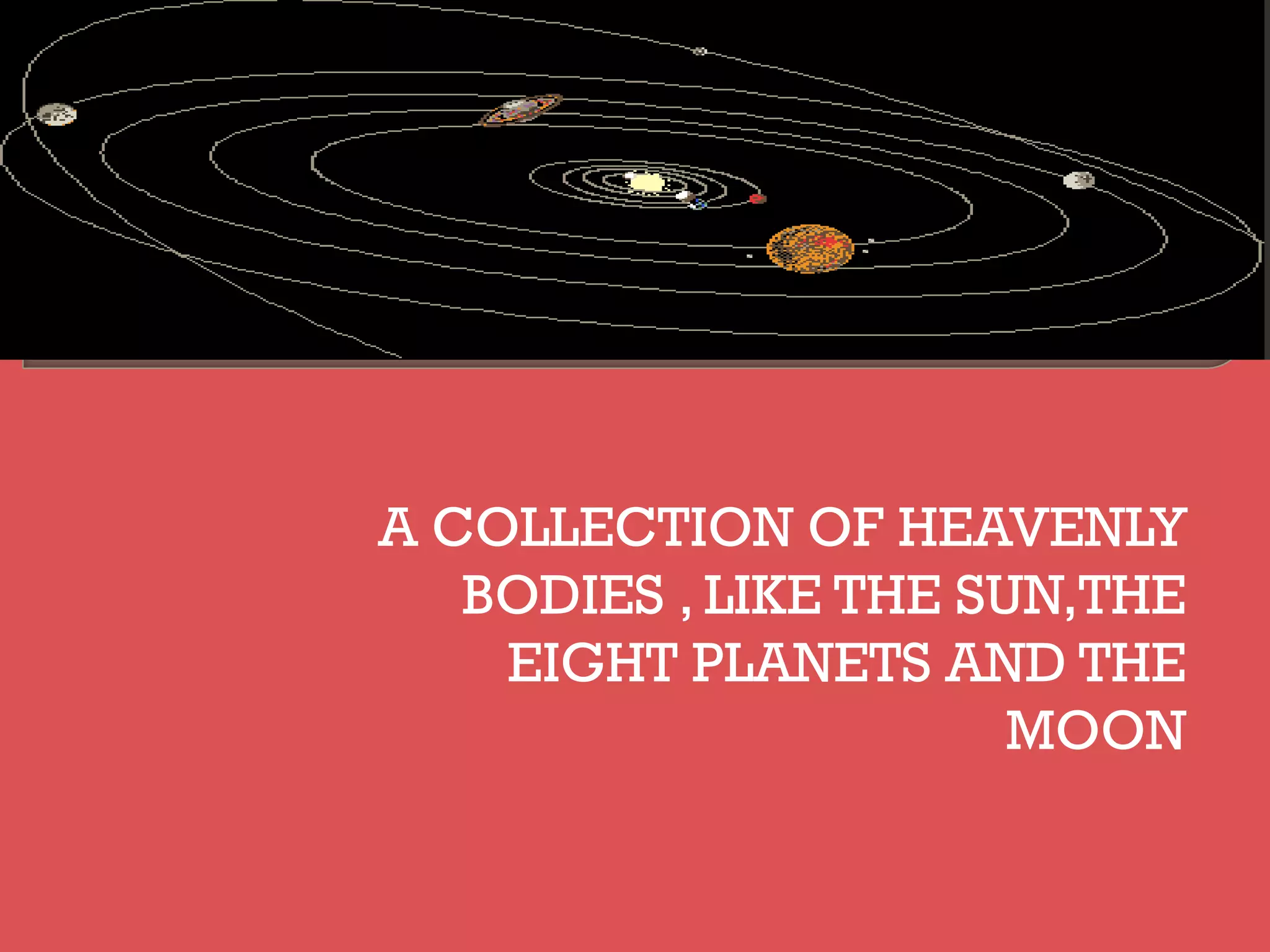
A COLLECTION OF HEAVENLY
BODIES , LIKE THE SUN,THE
EIGHT PLANETS AND THE
MOON
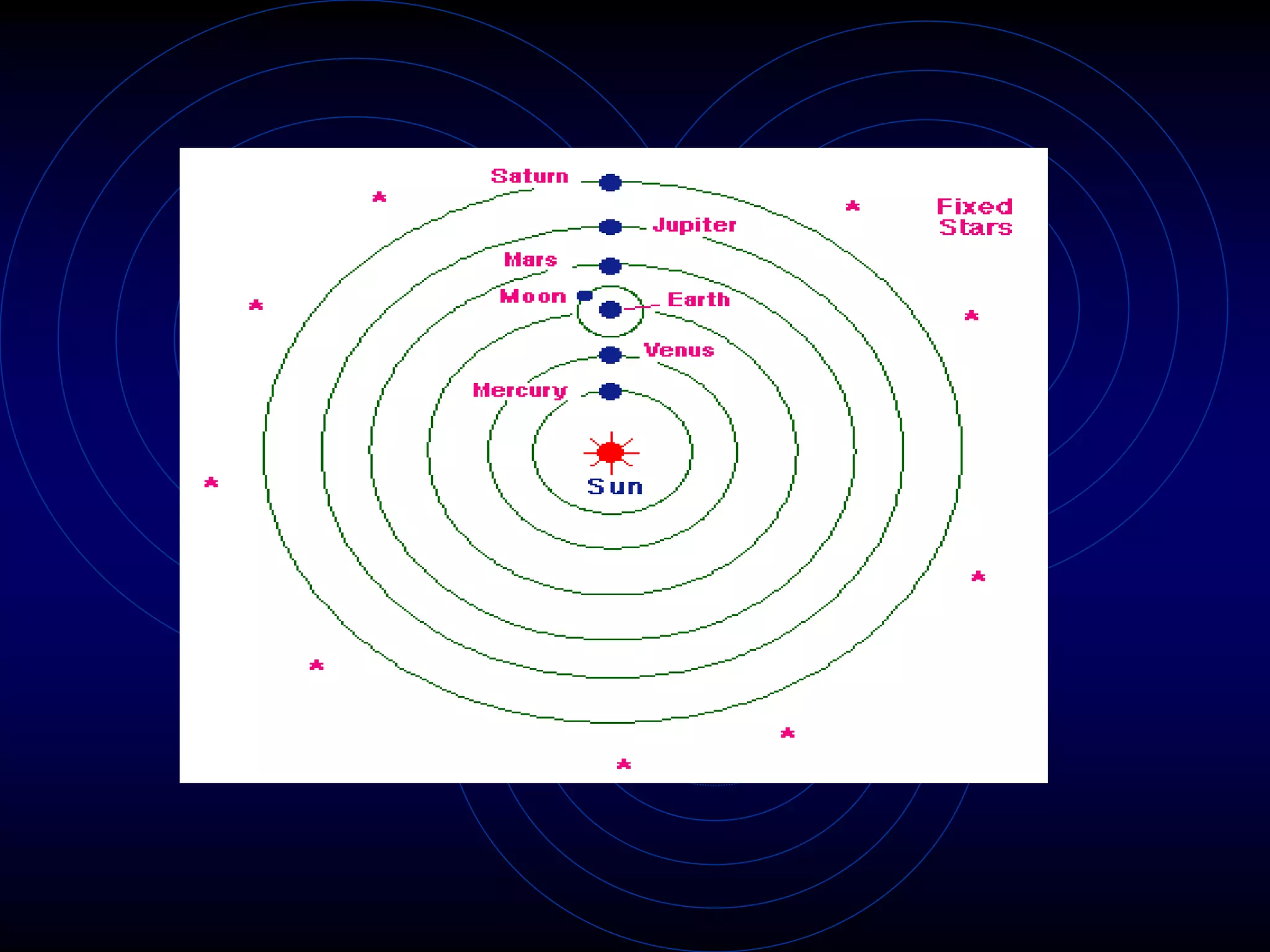
The sun and its eight members
along with their satellites
form the solar system.
the members are mercury, venus,earth,
mars, jupiter, saturn, uranus and
neptune.
CELESTIAL BODIES
THE SOLAR FAMILY CAN BE
REMEMBERED FROM THE
FOLLOWING SENTENCE
“MY VERY EAGER MOTHER
JUST SERVED US NINE
PIZZAS.”
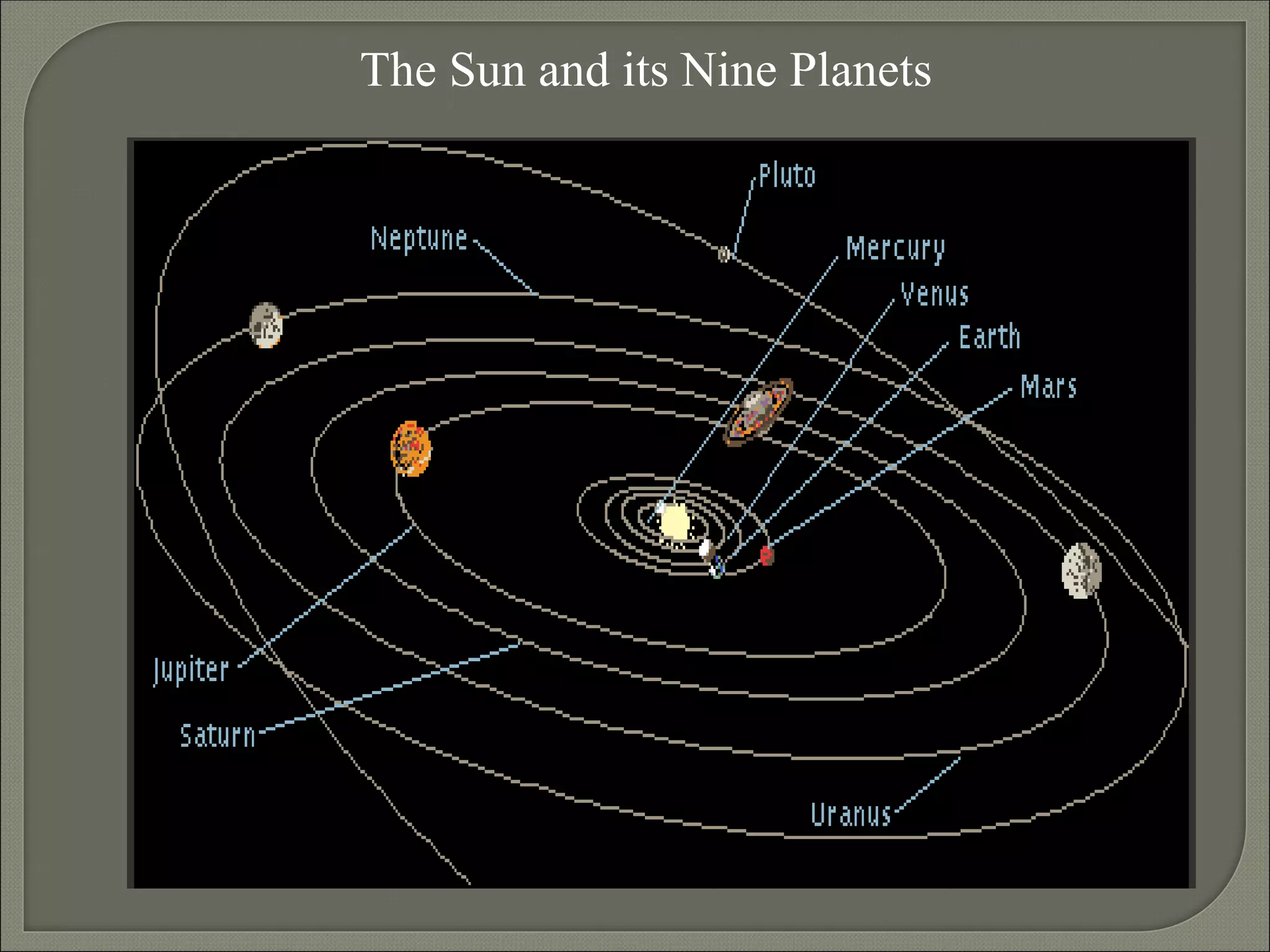
The Sun and its Nine Planets
THE SUN
• THE SUN IS A HUGE BALL OF FIRE
MADE UP OF HYDROGEN AND
HELIUM.THE SUN IS THE SOURCE OF
ALL HEAT AND ENERGY.
PLANETS
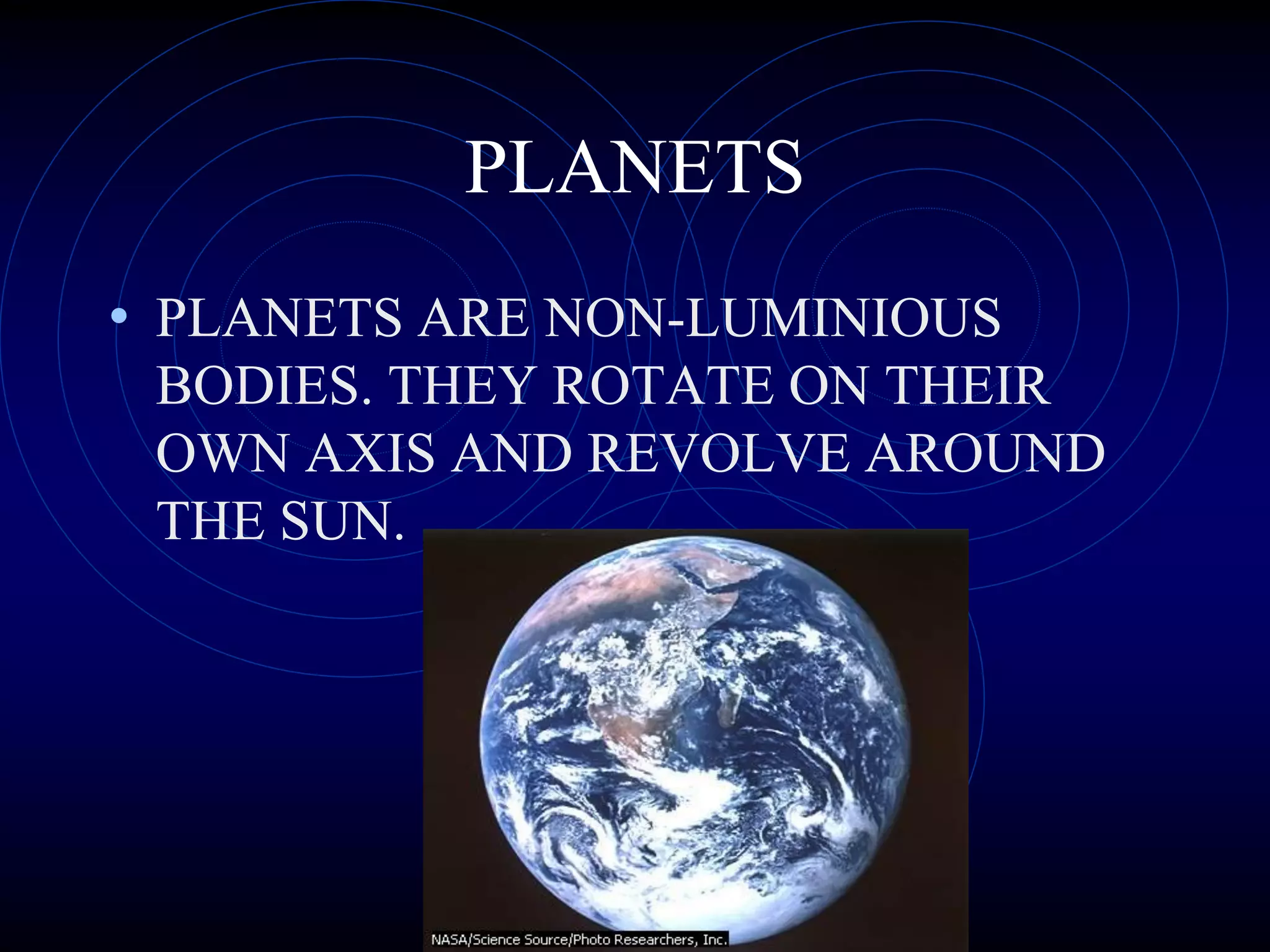
• PLANETS ARE NON-LUMINIOUS
BODIES. THEY ROTATE ON THEIR
OWN AXIS AND REVOLVE AROUND
THE SUN.
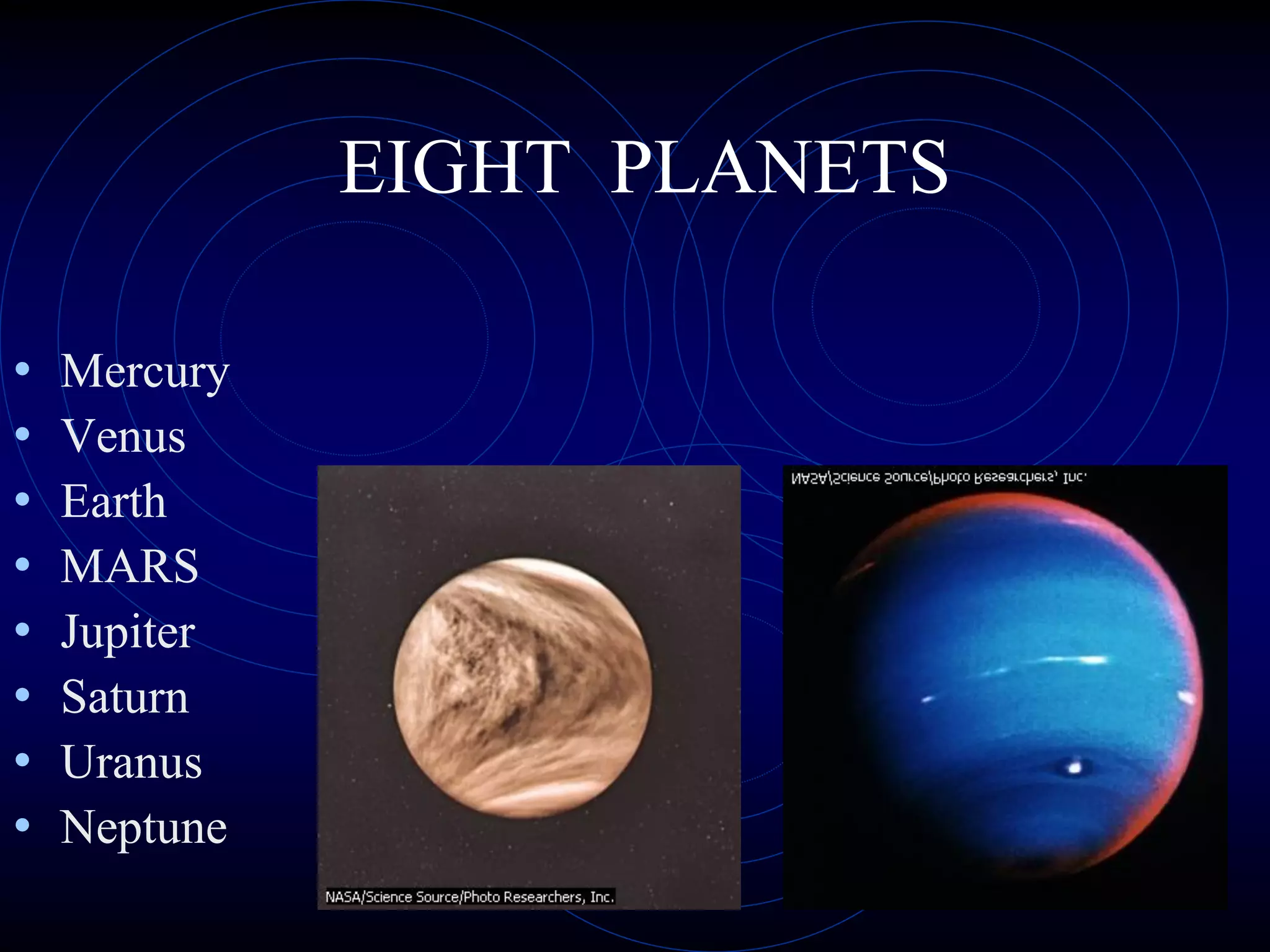
EIGHT PLANETS
• Mercury
• Venus
• Earth
• MARS
• Jupiter
• Saturn
• Uranus
• Neptune
Mercury and Venus
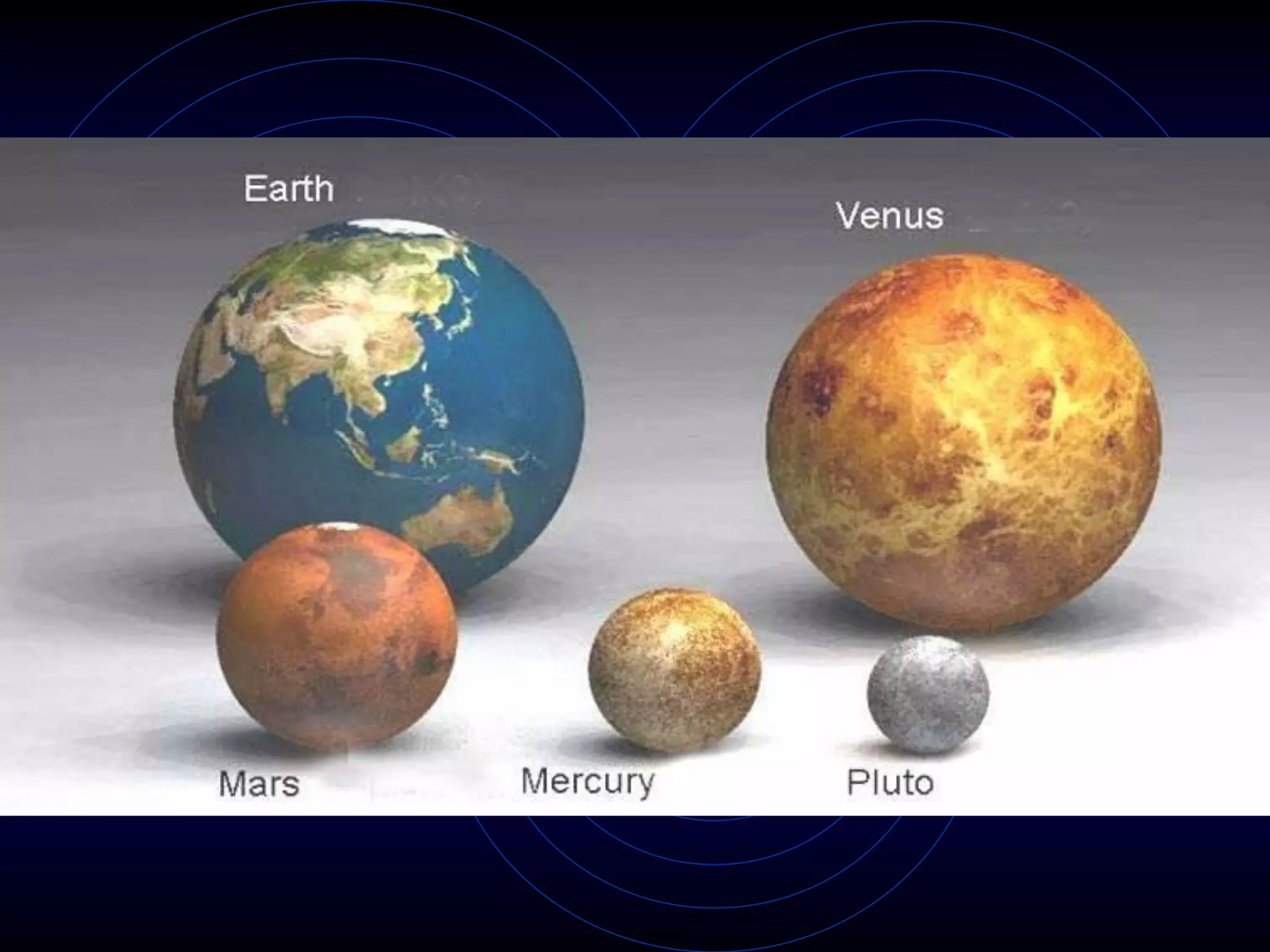
• Mercury is the nearest and the hottest
planet.
• Venus is the brightest planet. It is also
called the TWIN PLANET of the Earth.
THE UNIQUE PLANET- EARTH
• THE EARTH IS THE ONLY PLANET
WHERE LIFE IS POSSIBLE.
• DUE TO THE AVAILABILITY OF
AIR,WATER AND ITS DISTANCE
FROM THE SUN.
SATURN AND URANUS
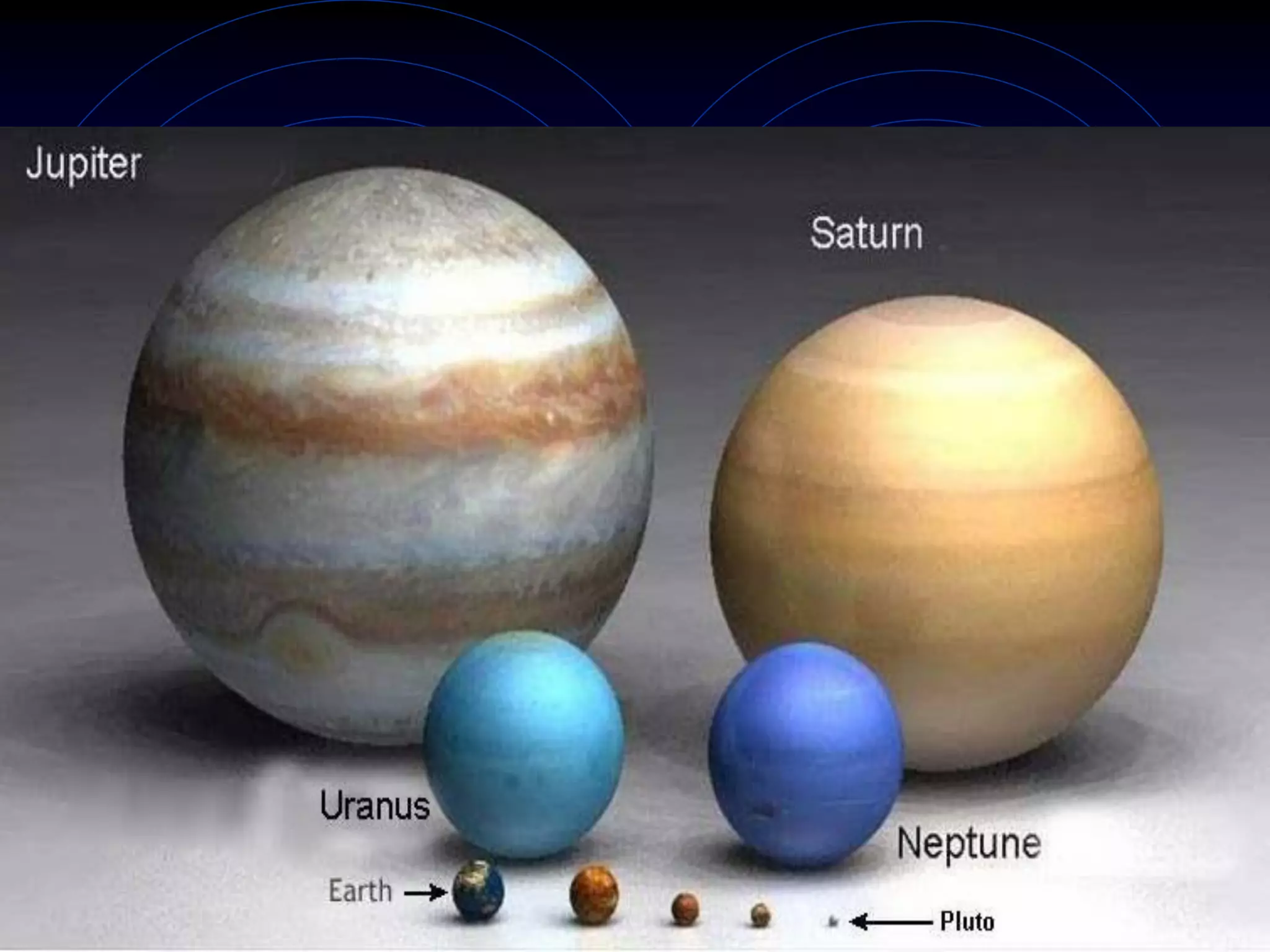
• SATURN IS A PLANET SURROUNDED
BY THREE RINGS.
• URANUS, NEPTUNE AND PLUTO ARE
THE OUTER PLANETS OF THE SOLAR
SYSTEM.
MARS AND JUPITER
• Mars is the red planet.
• Jupiter is the largest planet that can
accommodate thirteen earth’s
simultaneously.
THE MOON
• THE MOON IS THE EARTH’S ONLY
NATURAL SATELLITE.
• THE MOON IS ABOUT 384,400 KMS
AWAY FROM THE EARTH.
PHASES OF THE MOON.
• When the far side of the moon faces the
sun, that side is illuminated. Then we
cannot see the moon from the earth. This
situation is called the NEW MOON.
• Gradually from a slim crescent the shape
grows to FULL MOON, in fifteen days.
• ASSIGNMENT
• ANSWER THE FOLLOWING BRIEFLY
• 1. What are celestial bodies ?
• 2.What is milky way ?
• 3.What are meteorites?
• 4.Name the largest planet?
• FILL IN THE BLANKS.
• 1.The earth’s only natural satellite is----------.
• 2.The planet nearest to the sun-------------.
• *******
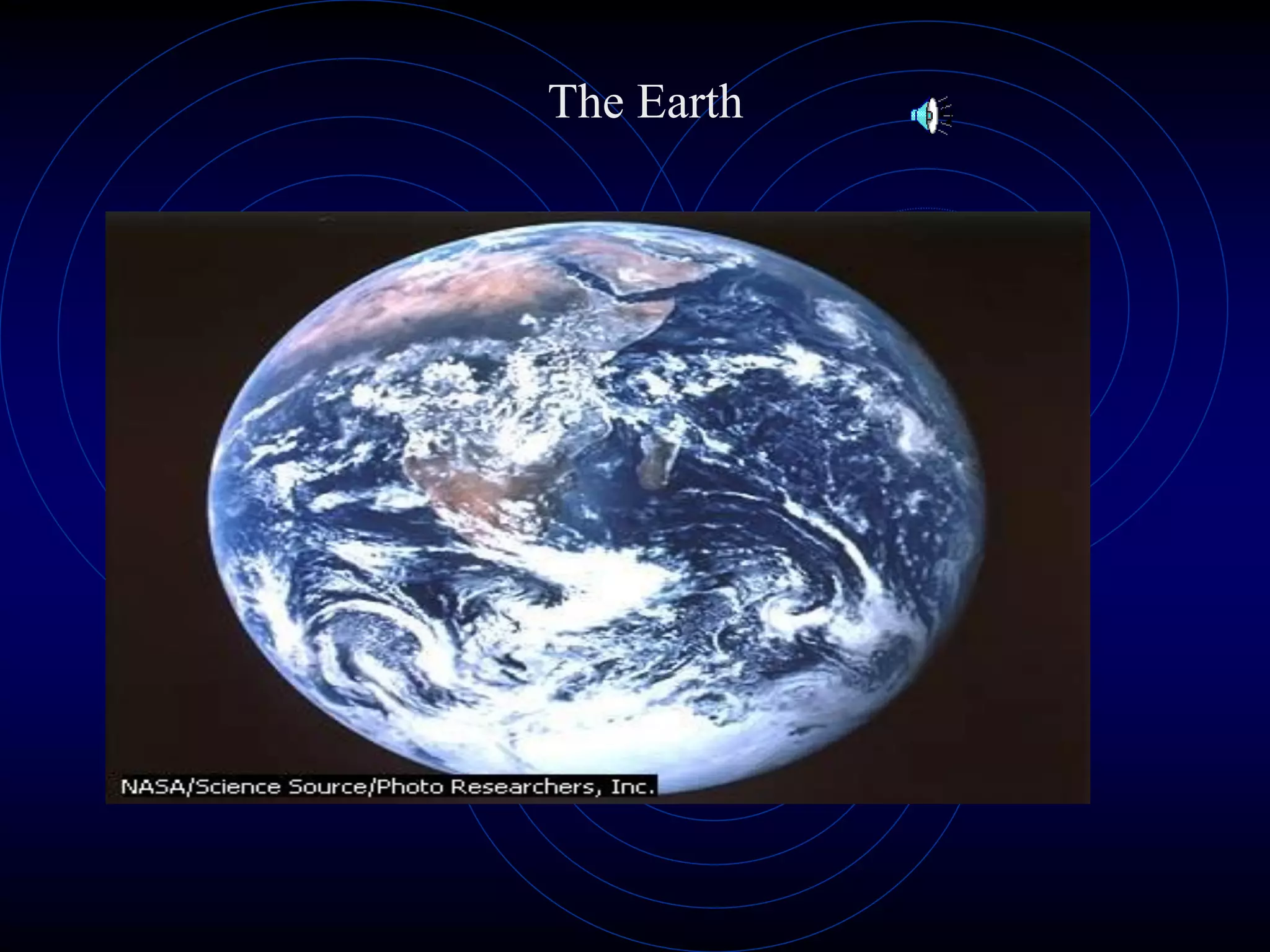
EARTH
The Earth
Our Neighbour Satellite - MOON
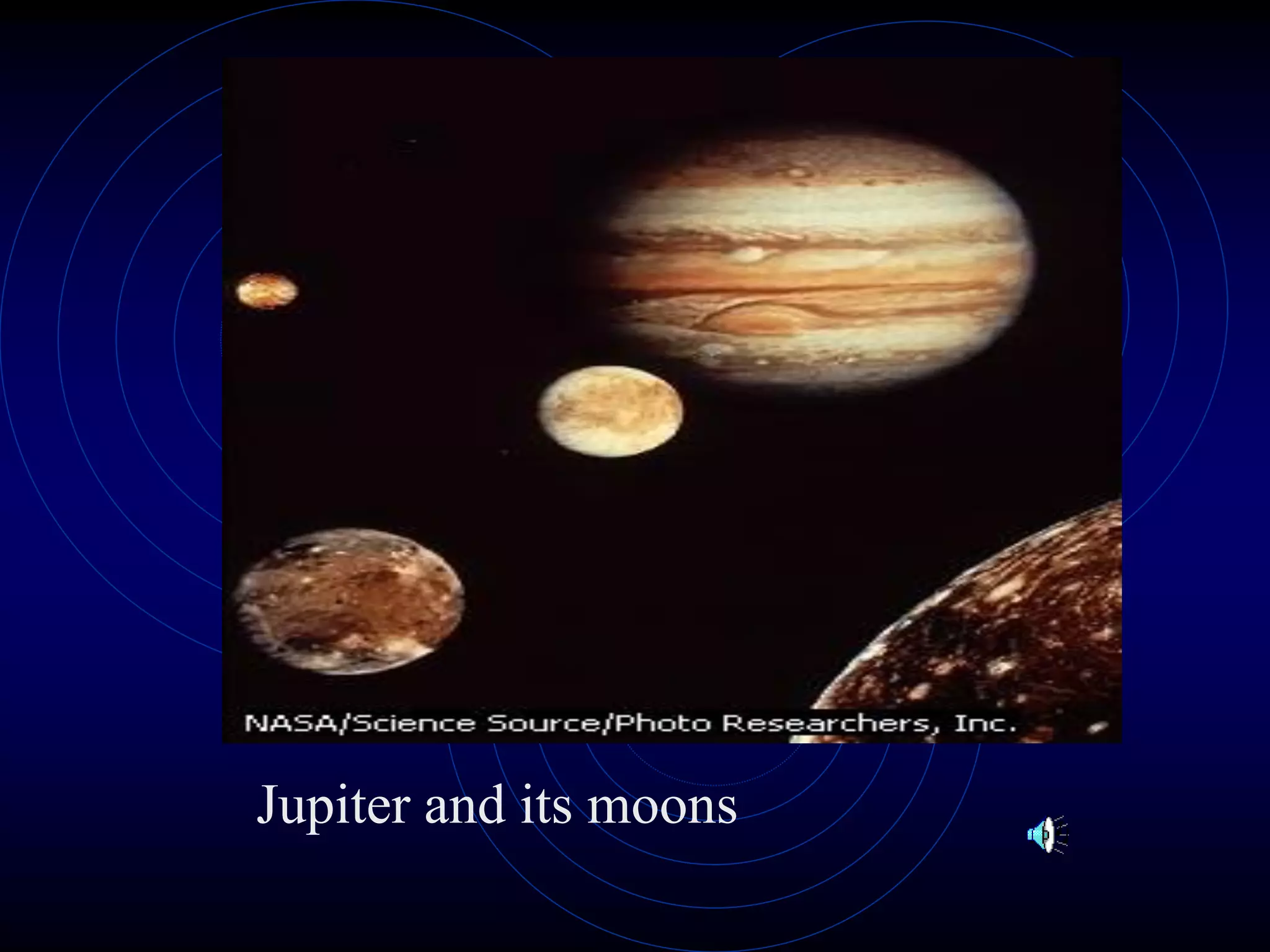
Jupiter and its moons
SATURN
CONSTELLATION
• A GROUP OF STARS FORMING
VARIOUS SHAPES IS CALLED
CONSTELLATION.
• EG. SAPTHARISHI.
GALAXY
• A HUGE SYSTEM OF STARS IS
CALLED GALAXY.
• OUR SOLAR SYSTEM BELONGS TO
MILKYWAY GALAXY.
• THE STARS ARE SO CLOSE THAT
THEY LOOK LIKE A WHITE
GLOWING PATH . EG AKASH GANGA
METEROITES ARE SMALL PIECES OF
ASTEROIDS WHICH COLLIDES AND BREAK
INTO SMALLER PIECES,WHILE REVOLVING
ROUND THE SUN.
METEORITES
ASTEROIDS
THE NUMEROUS TINY BODIES , WHICH REVOLVE
ROUND THE SUN.THESE BODIES ARE CALLED
ASTEROIDS.
ABDUL SHUMZ
KV KANJIKODE
abdul.shumz@gmail.com

THE EARTH IN THE SOLAR SYSTEM, GRADE 6, CBSE

  • 1.
    The Earth inthe Solar System. Presented by: Abdul Shumz
  • 2.
    A COLLECTION OFHEAVENLY BODIES , LIKE THE SUN,THE EIGHT PLANETS AND THE MOON
  • 3.
    The sun andits eight members along with their satellites form the solar system. the members are mercury, venus,earth, mars, jupiter, saturn, uranus and neptune. CELESTIAL BODIES
  • 4.
    THE SOLAR FAMILYCAN BE REMEMBERED FROM THE FOLLOWING SENTENCE “MY VERY EAGER MOTHER JUST SERVED US NINE PIZZAS.”
  • 5.
    The Sun andits Nine Planets
  • 6.
    THE SUN • THESUN IS A HUGE BALL OF FIRE MADE UP OF HYDROGEN AND HELIUM.THE SUN IS THE SOURCE OF ALL HEAT AND ENERGY.
  • 7.
    PLANETS • PLANETS ARENON-LUMINIOUS BODIES. THEY ROTATE ON THEIR OWN AXIS AND REVOLVE AROUND THE SUN.
  • 8.
    EIGHT PLANETS • Mercury •Venus • Earth • MARS • Jupiter • Saturn • Uranus • Neptune
  • 9.
    Mercury and Venus •Mercury is the nearest and the hottest planet. • Venus is the brightest planet. It is also called the TWIN PLANET of the Earth.
  • 10.
    THE UNIQUE PLANET-EARTH • THE EARTH IS THE ONLY PLANET WHERE LIFE IS POSSIBLE. • DUE TO THE AVAILABILITY OF AIR,WATER AND ITS DISTANCE FROM THE SUN.
  • 11.
    SATURN AND URANUS •SATURN IS A PLANET SURROUNDED BY THREE RINGS. • URANUS, NEPTUNE AND PLUTO ARE THE OUTER PLANETS OF THE SOLAR SYSTEM.
  • 12.
    MARS AND JUPITER •Mars is the red planet. • Jupiter is the largest planet that can accommodate thirteen earth’s simultaneously.
  • 13.
    THE MOON • THEMOON IS THE EARTH’S ONLY NATURAL SATELLITE. • THE MOON IS ABOUT 384,400 KMS AWAY FROM THE EARTH.
  • 14.
    PHASES OF THEMOON. • When the far side of the moon faces the sun, that side is illuminated. Then we cannot see the moon from the earth. This situation is called the NEW MOON. • Gradually from a slim crescent the shape grows to FULL MOON, in fifteen days.
  • 15.
    • ASSIGNMENT • ANSWERTHE FOLLOWING BRIEFLY • 1. What are celestial bodies ? • 2.What is milky way ? • 3.What are meteorites? • 4.Name the largest planet? • FILL IN THE BLANKS. • 1.The earth’s only natural satellite is----------. • 2.The planet nearest to the sun-------------. • *******
  • 20.
  • 21.
  • 22.
  • 23.
  • 24.
  • 25.
    CONSTELLATION • A GROUPOF STARS FORMING VARIOUS SHAPES IS CALLED CONSTELLATION. • EG. SAPTHARISHI.
  • 26.
    GALAXY • A HUGESYSTEM OF STARS IS CALLED GALAXY. • OUR SOLAR SYSTEM BELONGS TO MILKYWAY GALAXY. • THE STARS ARE SO CLOSE THAT THEY LOOK LIKE A WHITE GLOWING PATH . EG AKASH GANGA
  • 27.
    METEROITES ARE SMALLPIECES OF ASTEROIDS WHICH COLLIDES AND BREAK INTO SMALLER PIECES,WHILE REVOLVING ROUND THE SUN.
  • 28.
  • 29.
    ASTEROIDS THE NUMEROUS TINYBODIES , WHICH REVOLVE ROUND THE SUN.THESE BODIES ARE CALLED ASTEROIDS.
  • 31.