Chapter = 7
Tribal and Nomadic Communities
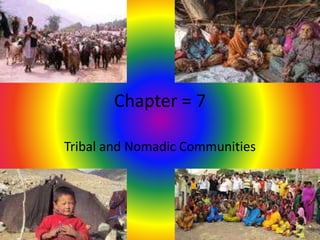
Characteristics of Tribal Society
• Some tribal groups led a nomadic lifestyle as
hunter-gatherers and animal herders.
• They reared animals such as cattle, goat,
camel or sheep or horses for livelihood.
• Such nomadic pastoralists lived on milk and
other products produced by their animals.
• They exchanged wool, ghee, etc. with people
in towns and villages for grains, clothes, salt,
utensils, etc.
• Certain pastoral tribes also used primitive
technology to practice shifting cultivation.
• Economically, they were self-sufficient.
• The tribal groups were distinguished by their
distinct lifestyle, customs, language and
culture and consciously preserved the same.
• Their political system was based upon family
or kinship ties and was headed by a tribal
chief.
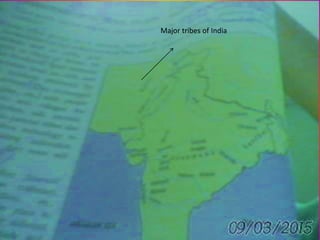
Major tribes of India
Administrative History
• After the decline of the Kaluchuris around
13th century, several Gond chieftains
established independent strongholds in
southern and western parts of the kaluchuri
kingdom.
• The capitals of the gondchiefs were usually
built near a hill or a river and were located at
deogarh, kherla, Mandela and Chanda.
Society
• The Gonds led simple lives.
• They built houses and cattle sheds of mud,
timber, bamboo and thatch.
• The village consisted of a headman and a
council which upheld Gond customs.
• The large Gond tribe was divided into many
clans and each clan had its own Raja or Rai.
• The Gonds were divided into four Sagas,
each with its own deity and priest.
Religion
• They had a distinct group of gods and spirits
whom they worshipped, along with Hindu
gods and goddesses.
• The Gonds worshipped a High God known as
Persa Pen, also referred to as Baradeo and
Sri Shambu Mahadeo.
• The village priests known as devari,
performed sacrifices and rituals for village
festivals.
Economy
• Gonds mostly practiced farming or worked in
the forest.
• Their staple food comprised two millets
known as kodo and kutki.
• The vegetables were either collected from
the forests or grown in the kitchen gardens.
• They gathered honey from the forests as
well.
Administration
• The Ahoms followed a centralized system of
administration.
• The Ahom kings, called Swargadeos (Lords of
the heaven), divided their kingdom into
provinces.
• Each province was kept under the control of
a governor called Bharpakhans.
Economy
• Wet rice cultivation was introduced by the
Ahoms in upper Assam.
• A combination of superior rice cultivation
technology, and a system of irrigation along with
reclamation of land using dykes and
embankment helped the Ahoms to establish the
initial state structures.
• During the 16th century, coins were introduced in
the Ahom kingdom and the kings also adopted
the Mughal system of land measurement.
Tribal and Nomadic Communities

Tribal and Nomadic Communities

  • 1.
    Chapter = 7 Tribaland Nomadic Communities
  • 2.
    Characteristics of TribalSociety • Some tribal groups led a nomadic lifestyle as hunter-gatherers and animal herders. • They reared animals such as cattle, goat, camel or sheep or horses for livelihood. • Such nomadic pastoralists lived on milk and other products produced by their animals. • They exchanged wool, ghee, etc. with people in towns and villages for grains, clothes, salt, utensils, etc.
  • 3.
    • Certain pastoraltribes also used primitive technology to practice shifting cultivation. • Economically, they were self-sufficient. • The tribal groups were distinguished by their distinct lifestyle, customs, language and culture and consciously preserved the same. • Their political system was based upon family or kinship ties and was headed by a tribal chief.
  • 4.
  • 6.
    Administrative History • Afterthe decline of the Kaluchuris around 13th century, several Gond chieftains established independent strongholds in southern and western parts of the kaluchuri kingdom. • The capitals of the gondchiefs were usually built near a hill or a river and were located at deogarh, kherla, Mandela and Chanda.
  • 7.
    Society • The Gondsled simple lives. • They built houses and cattle sheds of mud, timber, bamboo and thatch. • The village consisted of a headman and a council which upheld Gond customs. • The large Gond tribe was divided into many clans and each clan had its own Raja or Rai. • The Gonds were divided into four Sagas, each with its own deity and priest.
  • 8.
    Religion • They hada distinct group of gods and spirits whom they worshipped, along with Hindu gods and goddesses. • The Gonds worshipped a High God known as Persa Pen, also referred to as Baradeo and Sri Shambu Mahadeo. • The village priests known as devari, performed sacrifices and rituals for village festivals.
  • 9.
    Economy • Gonds mostlypracticed farming or worked in the forest. • Their staple food comprised two millets known as kodo and kutki. • The vegetables were either collected from the forests or grown in the kitchen gardens. • They gathered honey from the forests as well.
  • 11.
    Administration • The Ahomsfollowed a centralized system of administration. • The Ahom kings, called Swargadeos (Lords of the heaven), divided their kingdom into provinces. • Each province was kept under the control of a governor called Bharpakhans.
  • 12.
    Economy • Wet ricecultivation was introduced by the Ahoms in upper Assam. • A combination of superior rice cultivation technology, and a system of irrigation along with reclamation of land using dykes and embankment helped the Ahoms to establish the initial state structures. • During the 16th century, coins were introduced in the Ahom kingdom and the kings also adopted the Mughal system of land measurement.