Public Facilities
abdul shumz, kv kanjikode
abdul shumz kv kanjikode 1
Meaning of Public Facilities ?
abdul shumz kv kanjikode 2
Water and the People of Chennai
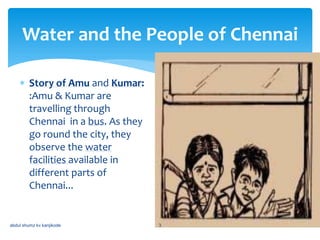
 Story of Amu and Kumar:
:Amu & Kumar are
travelling through
Chennai in a bus. As they
go round the city, they
observe the water
facilities available in
different parts of
Chennai...
abdul shumz kv kanjikode 3
abdul shumz kv kanjikode 4
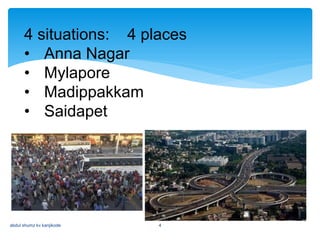
4 situations: 4 places
• Anna Nagar
• Mylapore
• Madippakkam
• Saidapet
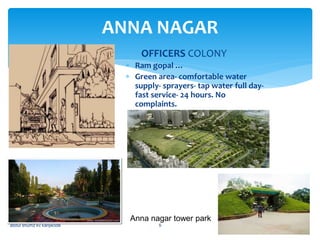
ANNA NAGAR
abdul shumz kv kanjikode 5
 Ram gopal …
 Green area- comfortable water
supply- sprayers- tap water full day-
fast service- 24 hours. No
complaints.
OFFICERS COLONY
Anna nagar tower park
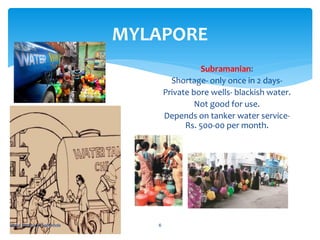
MYLAPORE
Subramanian:
Shortage- only once in 2 days-
Private bore wells- blackish water.
Not good for use.
Depends on tanker water service-
Rs. 500-00 per month.
abdul shumz kv kanjikode 6
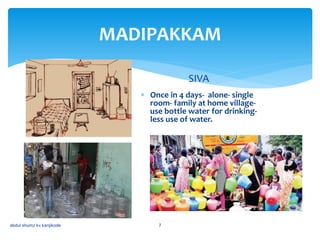
MADIPAKKAM
SIVA
 Once in 4 days- alone- single
room- family at home village-
use bottle water for drinking-
less use of water.
abdul shumz kv kanjikode 7
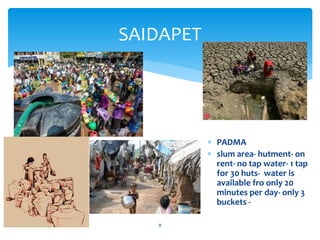
SAIDAPET
abdul shumz kv kanjikode 8
 PADMA
 slum area- hutment- on
rent- no tap water- 1 tap
for 30 huts- water is
available fro only 20
minutes per day- only 3
buckets -
Discussion:
Activity questions:
page no: 108
abdul shumz kv kanjikode 9
 Essential – safe water- diseases-India, largest nation
with water born diseases-
 Name some water born diseases: ?
 More than 1600 people dies, daily. - Many children
dies daily, below age 5-
 The Constitution of India recognises the right to
water as being a part of the Right to Life under
Article 21.
 In other words, there should be universal access to
water.
 Right to get water.
Water as Part of the
Fundamental Right.
abdul shumz kv kanjikode 10
Healthcare.
Sanitation.
Electricity.
Public transportation.
Schools and colleges etc.
These are known as public facilities.
Public Facilities ?
abdul shumz kv kanjikode 11
abdul shumz kv kanjikode 12
Important characteristics:
Once provided, benefits can be
shared by many.
Eg: a school
 A dam
A hospital
Private companies
OR
Government ?
Who will provide public facilities?
abdul shumz kv kanjikode 13
Why the government
(and only the government)
must bear this responsibility ?
abdul shumz kv kanjikode 14
 The Right to Life that the Constitution
guarantees is for all persons living in this
country.
 The responsibility to provide public
facilities, therefore, must be that of the
government.
 And Public facilities relate to people’s
basic needs.
The Government’s Role
abdul shumz kv kanjikode 15
 Non profitable services
 Private companies try always to make
profit
 They may charge high
 Only rich can afford
 Many will be neglected/ deprived.
abdul shumz kv kanjikode 16
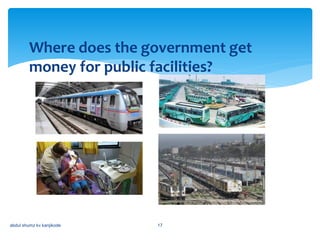
Where does the government get
money for public facilities?
abdul shumz kv kanjikode 17
 Great shortage- water reaches only 50%
of population- regular supply only in
some places-
 Closer to water tanks, less for distant
places.
 Poor people suffers-
 Middle class: depends on tanker/ bottle,
tube wells
abdul shumz kv kanjikode 18
Chennai water supply
 68 percent of the households in India have access
to drinking water and about 36 percent have access
to sanitation (toilet facilities within the premises of
residence).
 Sulabh, a non-government organisation, has been
working for three decades to address the problems
of sanitation facing low-caste, low-income people in
India.
 It has constructed more than 7,500 public toilet
blocks and 1.2 million private toilets, giving access
to sanitation to 10 million people.
Extending Sanitation Facilities
abdul shumz kv kanjikode 19
 Average consumption in cities:
per person- 135 litters per day-
(7 buckets)but in slums, 20 lit/
day (1 bucket)
 In luxury hotels: 80 buckets (
1600 litrs)
abdul shumz kv kanjikode 20
According to the Urban Water Commission,
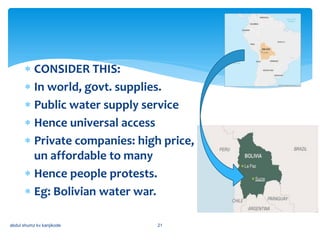
 CONSIDER THIS:
 In world, govt. supplies.
 Public water supply service
 Hence universal access
 Private companies: high price,
un affordable to many
 Hence people protests.
 Eg: Bolivian water war.
abdul shumz kv kanjikode 21
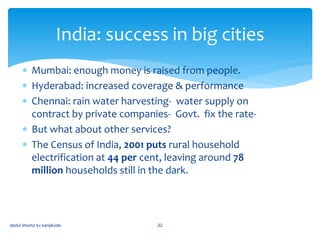
 Mumbai: enough money is raised from people.
 Hyderabad: increased coverage & performance
 Chennai: rain water harvesting- water supply on
contract by private companies- Govt. fix the rate-
 But what about other services?
 The Census of India, 2001 puts rural household
electrification at 44 per cent, leaving around 78
million households still in the dark.
India: success in big cities
abdul shumz kv kanjikode 22
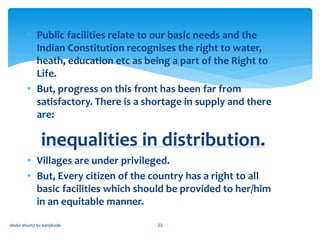
• Public facilities relate to our basic needs and the
Indian Constitution recognises the right to water,
heath, education etc as being a part of the Right to
Life.
• But, progress on this front has been far from
satisfactory. There is a shortage in supply and there
are:
inequalities in distribution.
• Villages are under privileged.
• But, Every citizen of the country has a right to all
basic facilities which should be provided to her/him
in an equitable manner.
abdul shumz kv kanjikode 23
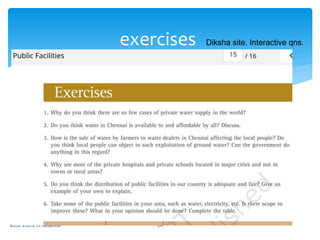
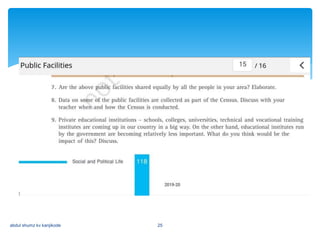
exercises
abdul shumz kv kanjikode 24
Diksha site. Interactive qns.
abdul shumz kv kanjikode 25
Pl. mail your suggestions to:
abdul.shumz@gmail.com
abdul shumz kv kanjikode 26

Public Facilities, Civics class 8, cbse

  • 1.
    Public Facilities abdul shumz,kv kanjikode abdul shumz kv kanjikode 1
  • 2.
    Meaning of PublicFacilities ? abdul shumz kv kanjikode 2
  • 3.
    Water and thePeople of Chennai  Story of Amu and Kumar: :Amu & Kumar are travelling through Chennai in a bus. As they go round the city, they observe the water facilities available in different parts of Chennai... abdul shumz kv kanjikode 3
  • 4.
    abdul shumz kvkanjikode 4 4 situations: 4 places • Anna Nagar • Mylapore • Madippakkam • Saidapet
  • 5.
    ANNA NAGAR abdul shumzkv kanjikode 5  Ram gopal …  Green area- comfortable water supply- sprayers- tap water full day- fast service- 24 hours. No complaints. OFFICERS COLONY Anna nagar tower park
  • 6.
    MYLAPORE Subramanian: Shortage- only oncein 2 days- Private bore wells- blackish water. Not good for use. Depends on tanker water service- Rs. 500-00 per month. abdul shumz kv kanjikode 6
  • 7.
    MADIPAKKAM SIVA  Once in4 days- alone- single room- family at home village- use bottle water for drinking- less use of water. abdul shumz kv kanjikode 7
  • 8.
    SAIDAPET abdul shumz kvkanjikode 8  PADMA  slum area- hutment- on rent- no tap water- 1 tap for 30 huts- water is available fro only 20 minutes per day- only 3 buckets -
  • 9.
    Discussion: Activity questions: page no:108 abdul shumz kv kanjikode 9
  • 10.
     Essential –safe water- diseases-India, largest nation with water born diseases-  Name some water born diseases: ?  More than 1600 people dies, daily. - Many children dies daily, below age 5-  The Constitution of India recognises the right to water as being a part of the Right to Life under Article 21.  In other words, there should be universal access to water.  Right to get water. Water as Part of the Fundamental Right. abdul shumz kv kanjikode 10
  • 11.
    Healthcare. Sanitation. Electricity. Public transportation. Schools andcolleges etc. These are known as public facilities. Public Facilities ? abdul shumz kv kanjikode 11
  • 12.
    abdul shumz kvkanjikode 12 Important characteristics: Once provided, benefits can be shared by many. Eg: a school  A dam A hospital
  • 13.
    Private companies OR Government ? Whowill provide public facilities? abdul shumz kv kanjikode 13
  • 14.
    Why the government (andonly the government) must bear this responsibility ? abdul shumz kv kanjikode 14
  • 15.
     The Rightto Life that the Constitution guarantees is for all persons living in this country.  The responsibility to provide public facilities, therefore, must be that of the government.  And Public facilities relate to people’s basic needs. The Government’s Role abdul shumz kv kanjikode 15
  • 16.
     Non profitableservices  Private companies try always to make profit  They may charge high  Only rich can afford  Many will be neglected/ deprived. abdul shumz kv kanjikode 16
  • 17.
    Where does thegovernment get money for public facilities? abdul shumz kv kanjikode 17
  • 18.
     Great shortage-water reaches only 50% of population- regular supply only in some places-  Closer to water tanks, less for distant places.  Poor people suffers-  Middle class: depends on tanker/ bottle, tube wells abdul shumz kv kanjikode 18 Chennai water supply
  • 19.
     68 percentof the households in India have access to drinking water and about 36 percent have access to sanitation (toilet facilities within the premises of residence).  Sulabh, a non-government organisation, has been working for three decades to address the problems of sanitation facing low-caste, low-income people in India.  It has constructed more than 7,500 public toilet blocks and 1.2 million private toilets, giving access to sanitation to 10 million people. Extending Sanitation Facilities abdul shumz kv kanjikode 19
  • 20.
     Average consumptionin cities: per person- 135 litters per day- (7 buckets)but in slums, 20 lit/ day (1 bucket)  In luxury hotels: 80 buckets ( 1600 litrs) abdul shumz kv kanjikode 20 According to the Urban Water Commission,
  • 21.
     CONSIDER THIS: In world, govt. supplies.  Public water supply service  Hence universal access  Private companies: high price, un affordable to many  Hence people protests.  Eg: Bolivian water war. abdul shumz kv kanjikode 21
  • 22.
     Mumbai: enoughmoney is raised from people.  Hyderabad: increased coverage & performance  Chennai: rain water harvesting- water supply on contract by private companies- Govt. fix the rate-  But what about other services?  The Census of India, 2001 puts rural household electrification at 44 per cent, leaving around 78 million households still in the dark. India: success in big cities abdul shumz kv kanjikode 22
  • 23.
    • Public facilitiesrelate to our basic needs and the Indian Constitution recognises the right to water, heath, education etc as being a part of the Right to Life. • But, progress on this front has been far from satisfactory. There is a shortage in supply and there are: inequalities in distribution. • Villages are under privileged. • But, Every citizen of the country has a right to all basic facilities which should be provided to her/him in an equitable manner. abdul shumz kv kanjikode 23
  • 24.
    exercises abdul shumz kvkanjikode 24 Diksha site. Interactive qns.
  • 25.
    abdul shumz kvkanjikode 25
  • 26.
    Pl. mail yoursuggestions to: abdul.shumz@gmail.com abdul shumz kv kanjikode 26