1
Review Article on
Artificial
Intelligence in
Healthcare
Presenter:
Nisha Yadav
MSc Nursing 2nd year
NINE, PGIMER
Chandigarh 2
OUTLINE
• History of Artificial Intelligence
• Domains of Artificial Intelligence
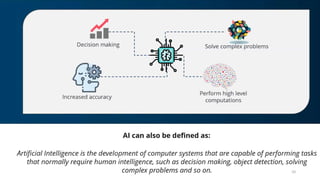
• What is Artificial Intelligence
• Stages of Artificial Intelligence
• Applications of Artificial Intelligence
• Artificial Intelligence in healthcare
• AI in Nursing
3
HISTORY OF ARTIFICIAL
INTELLIGENCE
4
Greek Mythology- Talos
Talos was a giant animated bronze warrior programmed to guard the island of Crete
created by Hephaestus
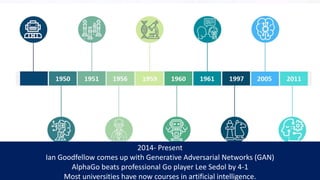
1950- Alan Turing
Alan Turing published a landmark paper in which he speculated about the possibility of
creating machines that think
1951
Christopher Strachey wrote a checkers program and Dietrich Prinz wrote one for
chess
1956- The birth of AI
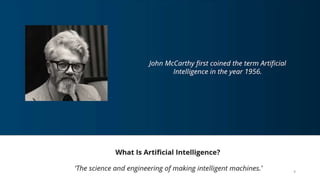
John McCarthy first coined the term “Artificial Intelligence” in 1956 at the
Dartmouth Conference.
5
2011- 2014
Personal assistants like Siri, Google Now, Cortana use speech recognition to
answer questions and perform simple tasks.
2014- Present
Ian Goodfellow comes up with Generative Adversarial Networks (GAN)
AlphaGo beats professional Go player Lee Sedol by 4-1
Most universities have now courses in artificial intelligence.
6
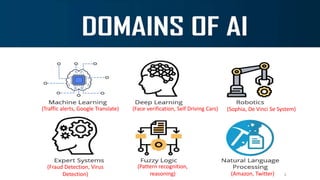
(Traffic alerts, Google Translate) (Face verification, Self Driving Cars) (Sophia, De Vinci Se System)
(Fraud Detection, Virus
Detection)
(Pattern recognition,
reasoning) (Amazon, Twitter)
Why are we talking
about AI now??
7
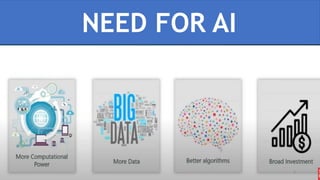
NEED FOR AI
8
9
10
STAGES OF ARTIFICIAL
INTELLIGENCE
11
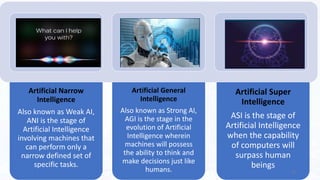
Artificial Narrow
Intelligence
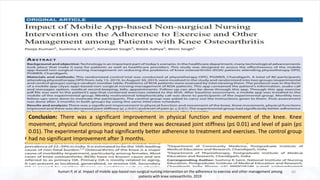
Also known as Weak AI,
ANI is the stage of
Artificial Intelligence
involving machines that
can perform only a
narrow defined set of
specific tasks.
Artificial General
Intelligence
Also known as Strong AI,
AGI is the stage in the
evolution of Artificial
Intelligence wherein
machines will possess
the ability to think and
make decisions just like
humans.
Artificial Super
Intelligence
ASI is the stage of
Artificial Intelligence
when the capability
of computers will
surpass human
beings
12
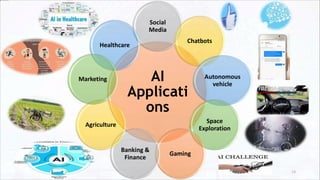
AI
Applicati
ons
Social
Media
Chatbots
Autonomous
vehicle
Space
Exploration
Gaming
Banking &
Finance
Agriculture
Healthcare
Marketing
13
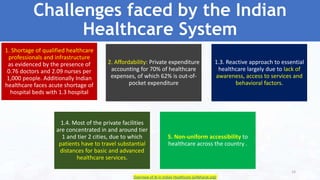
Challenges faced by the Indian
Healthcare System
1. Shortage of qualified healthcare
professionals and infrastructure
as evidenced by the presence of
0.76 doctors and 2.09 nurses per
1,000 people. Additionally Indian
healthcare faces acute shortage of
hospital beds with 1.3 hospital
2. Affordability: Private expenditure
accounting for 70% of healthcare
expenses, of which 62% is out-of-
pocket expenditure
1.3. Reactive approach to essential
healthcare largely due to lack of
awareness, access to services and
behavioral factors.
1.4. Most of the private facilities
are concentrated in and around tier
1 and tier 2 cities, due to which
patients have to travel substantial
distances for basic and advanced
healthcare services.
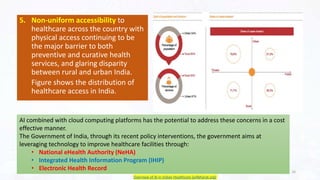
5. Non-uniform accessibility to
healthcare across the country .
14
Overview of AI in Indian Healthcare (ai4bharat.org)
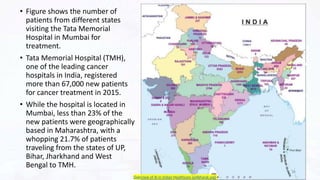
• Figure shows the number of
patients from different states
visiting the Tata Memorial
Hospital in Mumbai for
treatment.
• Tata Memorial Hospital (TMH),
one of the leading cancer
hospitals in India, registered
more than 67,000 new patients
for cancer treatment in 2015.
• While the hospital is located in
Mumbai, less than 23% of the
new patients were geographically
based in Maharashtra, with a
whopping 21.7% of patients
traveling from the states of UP,
Bihar, Jharkhand and West
Bengal to TMH.
15
Overview of AI in Indian Healthcare (ai4bharat.org)
5. Non-uniform accessibility to
healthcare across the country with
physical access continuing to be
the major barrier to both
preventive and curative health
services, and glaring disparity
between rural and urban India.
Figure shows the distribution of
healthcare access in India.
AI combined with cloud computing platforms has the potential to address these concerns in a cost
effective manner.
The Government of India, through its recent policy interventions, the government aims at
leveraging technology to improve healthcare facilities through:
• National eHealth Authority (NeHA)
• Integrated Health Information Program (IHIP)
• Electronic Health Record 16
Overview of AI in Indian Healthcare (ai4bharat.org)
 To save time ,energy and money
 To avoid unnecessary walk to hospital for minor ailments
 To avoid excessive physical burden on OPD /IPD at tertiary
care hospitals
 To provide specialist based care for rural population
 To avoid misguidance
 To provide necessary care to needed one
 To use e-referral system connects these peripheral hospital
with tertiary level hospital
WHY DO WE NEED AI IN
HEALTHCARE
17
APPLICATION OF AI
IN HEALTHCARE
18
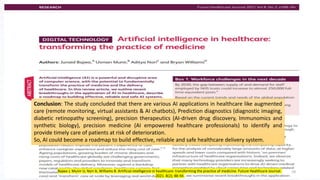
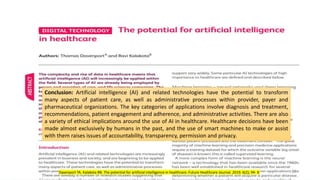
Conclusion: The study concluded that there are various AI applications in healthcare like augmented
care (remote monitoring, virtual assistants & AI chatbots), Prediction diagnostics (diagnostic imaging,
diabetic retinopathy screening), precision therapeutics (AI-driven drug discovery, Immunomics and
synthetic biology), precision medicine (AI empowered healthcare professionals) to identify and
provide timely care of patients at risk of deterioration.
So, AI could become a roadmap to build effective, reliable and safe healthcare delivery system.
19
Bajwa J, Munir U, Nori A, Williams B. Artificial intelligence in healthcare: transforming the practice of medicine. Future Healthcare Journal.
2021. 8(2); 88-94
Conclusion: Artificial intelligence (AI) and related technologies have the potential to transform
many aspects of patient care, as well as administrative processes within provider, payer and
pharmaceutical organizations. The key categories of applications involve diagnosis and treatment,
recommendations, patient engagement and adherence, and administrative activities. There are also
a variety of ethical implications around the use of AI in healthcare. Healthcare decisions have been
made almost exclusively by humans in the past, and the use of smart machines to make or assist
with them raises issues of accountability, transparency, permission and privacy.
20
Davenport TA. Kalakota RB. The potential for artificial intelligence in healthcare. Future Healthcare Journal. 2019. 6(2); 94- 8
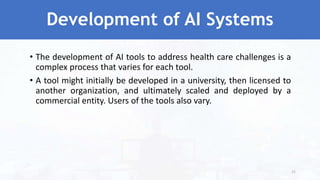
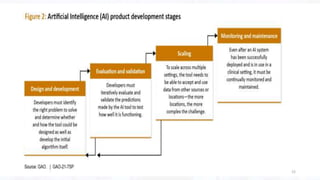
Development of AI Systems
• The development of AI tools to address health care challenges is a
complex process that varies for each tool.
• A tool might initially be developed in a university, then licensed to
another organization, and ultimately scaled and deployed by a
commercial entity. Users of the tools also vary.
21
22
23
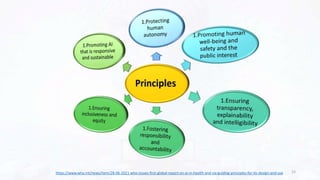
https://www.who.int/news/item/28-06-2021-who-issues-first-global-report-on-ai-in-health-and-six-guiding-principles-for-its-design-and-use
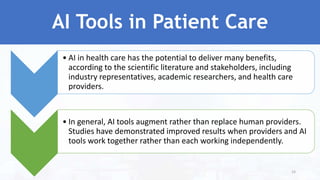
AI Tools in Patient Care
• AI in health care has the potential to deliver many benefits,
according to the scientific literature and stakeholders, including
industry representatives, academic researchers, and health care
providers.
• In general, AI tools augment rather than replace human providers.
Studies have demonstrated improved results when providers and AI
tools work together rather than each working independently.
24
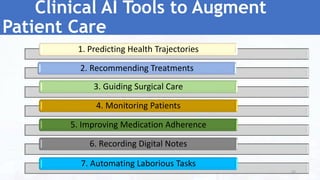
Clinical AI Tools to Augment
Patient Care
1. Predicting Health Trajectories
2. Recommending Treatments
3. Guiding Surgical Care
4. Monitoring Patients
5. Improving Medication Adherence
6. Recording Digital Notes
7. Automating Laborious Tasks
25
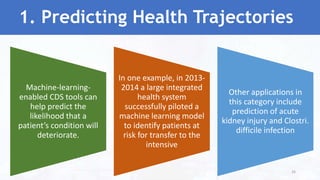
1. Predicting Health Trajectories
Machine-learning-
enabled CDS tools can
help predict the
likelihood that a
patient’s condition will
deteriorate.
In one example, in 2013-
2014 a large integrated
health system
successfully piloted a
machine learning model
to identify patients at
risk for transfer to the
intensive
Other applications in
this category include
prediction of acute
kidney injury and Clostri.
difficile infection
26
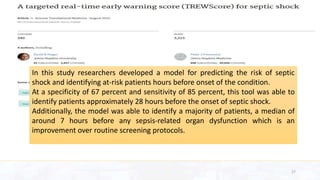
In this study researchers developed a model for predicting the risk of septic
shock and identifying at-risk patients hours before onset of the condition.
At a specificity of 67 percent and sensitivity of 85 percent, this tool was able to
identify patients approximately 28 hours before the onset of septic shock.
Additionally, the model was able to identify a majority of patients, a median of
around 7 hours before any sepsis-related organ dysfunction which is an
improvement over routine screening protocols.
27
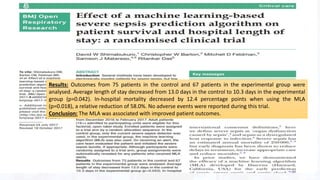
Results: Outcomes from 75 patients in the control and 67 patients in the experimental group were
analysed. Average length of stay decreased from 13.0 days in the control to 10.3 days in the experimental
group (p=0.042). In-hospital mortality decreased by 12.4 percentage points when using the MLA
(p=0.018), a relative reduction of 58.0%. No adverse events were reported during this trial.
Conclusion: The MLA was associated with improved patient outcomes.
28
2. Recommending Treatments
• AI-enabled CDS tools can also recommend treatments to health care
providers, potentially helping them make decisions more effective and
patient-specific.
• For example: Ventilators can be lifesaving, both prolonged use and
premature weaning are associated with complications, increased
mortality rates, and higher hospital costs.
• Deciding when to wean patients receiving ventilator treatment is an
essential aspect of their care.
• AI could predict when to successfully wean patients from ventilators.
29
Contd…
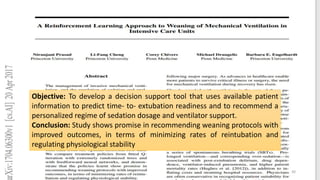
Objective: To develop a decision support tool that uses available patient
information to predict time- to- extubation readiness and to recommend a
personalized regime of sedation dosage and ventilator support.
Conclusion: Study shows promise in recommending weaning protocols with
improved outcomes, in terms of minimizing rates of reintubation and
regulating physiological stability
30
3. Guiding Surgical Care
• In the field of surgical care, planning and postoperative care are the
most mature applications for machine-learning-enabled CDS tools.
• Other applications, including real time CDS for surgery and AI-enabled
surgical robots, are also active areas of research.
• These robotic tools may alert a surgeon when their surgical time is
longer than average.
31
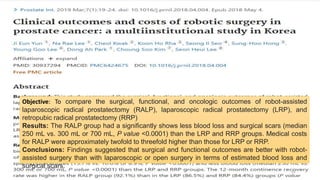
Objective: To compare the surgical, functional, and oncologic outcomes of robot-assisted
laparoscopic radical prostatectomy (RALP), laparoscopic radical prostatectomy (LRP), and
retropubic radical prostatectomy (RRP)
Results: The RALP group had a significantly shows less blood loss and surgical scars (median
250 mL vs. 300 mL or 700 mL, P value <0.0001) than the LRP and RRP groups. Medical costs
for RALP were approximately twofold to threefold higher than those for LRP or RRP.
Conclusions: Findings suggested that surgical and functional outcomes are better with robot-
assisted surgery than with laparoscopic or open surgery in terms of estimated blood loss and
surgical scars.
32
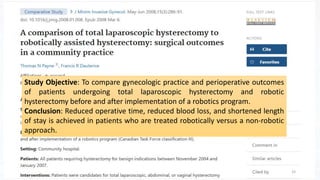
Study Objective: To compare gynecologic practice and perioperative outcomes
of patients undergoing total laparoscopic hysterectomy and robotic
hysterectomy before and after implementation of a robotics program.
Conclusion: Reduced operative time, reduced blood loss, and shortened length
of stay is achieved in patients who are treated robotically versus a non-robotic
approach.
33
34
4. Monitoring patients
• AI-enabled tools can use the increasing availability of health data,
including data from EHRs, wearables, and other sensors, to help
monitor patients in health care facilities.
• According to a recent review, patient monitoring is one of the areas
where AI is likely to have the greatest influence.
• For example, providers can use AI analysis of vital signs for
cardiovascular and respiratory monitoring in the ICU.
35
• Health care facilities can use AI-enabled monitoring tools in hospitals
to prevent patient falls and reduce provider burden.
• According to a 2015 report, hundreds of thousands of hospital patients
fall each year. Thirty to 50 percent of those falls result in injury, which
can increase the length and cost of the hospital stay or even result in
death.
• One commercial AI tool aiming to help providers address these issues
uses computer vision, Bluetooth, and sensors to analyze movements in
the patient’s room and alert the care team when a fall is predicted.
Contd…
36
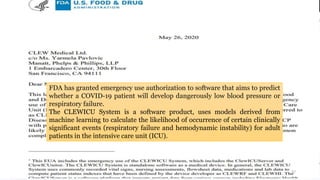
FDA has granted emergency use authorization to software that aims to predict
whether a COVID-19 patient will develop dangerously low blood pressure or
respiratory failure.
The CLEWICU System is a software product, uses models derived from
machine learning to calculate the likelihood of occurrence of certain clinically
significant events (respiratory failure and hemodynamic instability) for adult
patients in the intensive care unit (ICU).
37
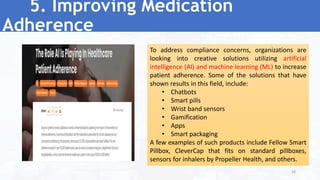
5. Improving Medication
Adherence
To address compliance concerns, organizations are
looking into creative solutions utilizing artificial
intelligence (AI) and machine learning (ML) to increase
patient adherence. Some of the solutions that have
shown results in this field, include:
• Chatbots
• Smart pills
• Wrist band sensors
• Gamification
• Apps
• Smart packaging
A few examples of such products include Fellow Smart
Pillbox, CleverCap that fits on standard pillboxes,
sensors for inhalers by Propeller Health, and others.
38
39
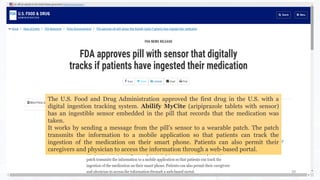
The U.S. Food and Drug Administration approved the first drug in the U.S. with a
digital ingestion tracking system. Abilify MyCite (aripiprazole tablets with sensor)
has an ingestible sensor embedded in the pill that records that the medication was
taken.
It works by sending a message from the pill’s sensor to a wearable patch. The patch
transmits the information to a mobile application so that patients can track the
ingestion of the medication on their smart phone. Patients can also permit their
caregivers and physician to access the information through a web-based portal.
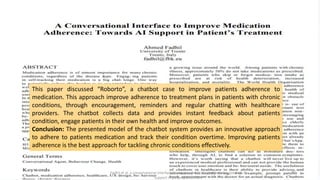
This paper discussed “Roborto”, a chatbot case to improve patients adherence to
medication. This approach improve adherence to treatment plans in patients with chronic
conditions, through encouragement, reminders and regular chatting with healthcare
providers. The chatbot collects data and provides instant feedback about patients
condition, engage patients in their own health and improve outcomes.
Conclusion: The presented model of the chatbot system provides an innovative approach
to adhere to patients medication and track their condition overtime. Improving patients
adherence is the best approach for tackling chronic conditions effectively.
40
Fadhil et al. a conversational interface to improve medication adherence: towards AI
support in patients treatment
6. Recording digital clinical
notes
• Providers are beginning to use speech recognition and natural
language processing technologies for recording digital notes into EHR
systems.
• Adoption of EHR systems, although it can reportedly improve care
coordination and decision making, has also been associated with
decreased provider satisfaction.
41
7. Automating laborious tasks
• AI can automate some tasks that are simple but labor-intensive, allowing
providers more time to spend with patients.
• Hospital nurses spent the majority of their time walking between patient
rooms and the nursing station.
• Surgical nurses walked an additional mile while on duty to obtain
supplies and equipment.
• Distractions and interruptions from non-nursing activities such as
gathering supplies present a risk to patient safety.
42
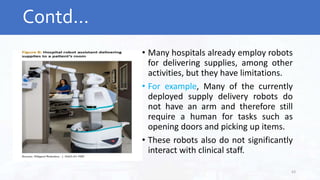
• Many hospitals already employ robots
for delivering supplies, among other
activities, but they have limitations.
• For example, Many of the currently
deployed supply delivery robots do
not have an arm and therefore still
require a human for tasks such as
opening doors and picking up items.
• These robots also do not significantly
interact with clinical staff.
Contd…
43
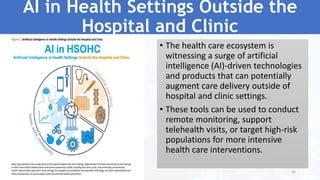
AI in Health Settings Outside the
Hospital and Clinic
• The health care ecosystem is
witnessing a surge of artificial
intelligence (AI)-driven technologies
and products that can potentially
augment care delivery outside of
hospital and clinic settings.
• These tools can be used to conduct
remote monitoring, support
telehealth visits, or target high-risk
populations for more intensive
health care interventions.
44
Telehealth
Remote
monitoring
AI in Health Settings Outside the
Hospital and Clinic
45
1. Telehealth and AI
• Telehealth has been a long-standing element of health care delivery,
but not until COVID-19 has it been considered vital to sustaining the
connection between patients and providers.
• AI triaging for telehealth uses conversational agents embedded in a
virtual or phone visit to stratify patients based on acuity level and
direct them accordingly to the most appropriate care setting.
• By reducing the risk of patient exposure, AI triaging platforms have
been especially advantageous during COVID-19, and a number of
health systems, retail clinics, and payers have implemented them to
continue the facilitation of care services and identify possible COVID-19
cases.
46
Contd…
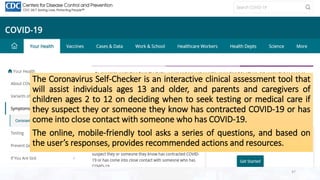
The Coronavirus Self-Checker is an interactive clinical assessment tool that
will assist individuals ages 13 and older, and parents and caregivers of
children ages 2 to 12 on deciding when to seek testing or medical care if
they suspect they or someone they know has contracted COVID-19 or has
come into close contact with someone who has COVID-19.
The online, mobile-friendly tool asks a series of questions, and based on
the user’s responses, provides recommended actions and resources.
47
2. Remote Technology Monitoring for
Promoting Cardiac Health
• Wearable and remote monitoring technology can assist in ushering
in the next era of health care data innovation by capturing
physiologic data in HSOHC
• Wearables can capture data from any location and transmit it back to
a hospital or clinic, moving a significant piece of the health care
enterprise to places where patients spend the bulk of their time.
• These measurements can then be coupled with machine learning
(ML) algorithms and a user interface to turn the data into relevant
information about an individual’s health-related behaviors and
physiological conditions.
48
• Wearable technology has been applied to many health care domains,
ranging from cardiology to mental health
• Prominent examples of technologies are those that incorporate
cardiac monitoring, such as HR and rhythm sensors, including the
Apple Watch, iRhythm, and Huawei devices.
• These devices are quite popular and, in the case of the Apple Watch,
have received FDA approval as a medical device to detect and alert
individuals of an irregular heart rhythm.
Contd…
49
Integrating AI into Population Health
Strategies
MHN is composed of ten federally qualified health
centers in Chicago and three health systems.
Altogether, responsible for the care management of
1,22,000 Medicaid beneficiaries.
In the case of COVID-19, MHN is leveraging AI to
identify patients at high risk of experiencing severe
respiratory infections or respiratory failure, a
particularly vulnerable group of people.
They used machine learning to identify which patients
had a high risk of admission for COVID, or for
unrelated complications from respiratory ailments.
The results showed that 4.4 percent of patients would
represent about half of those patients at risk. So instead
of calling all 122,000, they can focus on initial outreach
on that 4.4 percent of the adult population.
50
AI Efforts in Public and
Environmental Health
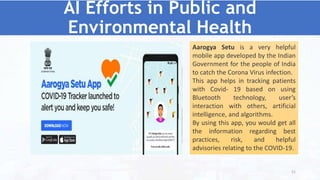
Aarogya Setu is a very helpful
mobile app developed by the Indian
Government for the people of India
to catch the Corona Virus infection.
This app helps in tracking patients
with Covid- 19 based on using
Bluetooth technology, user’s
interaction with others, artificial
intelligence, and algorithms.
By using this app, you would get all
the information regarding best
practices, risk, and helpful
advisories relating to the COVID-19.
51
Combating COVID-19 with AI Assisted
Technologies
Artificial Intelligence
(AI) applications for
COVID-19 pandemic
Raju Vaishya, Mohd
Javaid, Ibrahim
Haleem Khan, Abid
Haleem
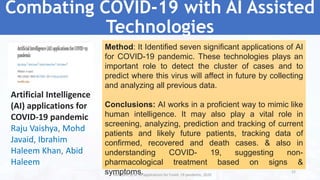
Method: It Identified seven significant applications of AI
for COVID-19 pandemic. These technologies plays an
important role to detect the cluster of cases and to
predict where this virus will affect in future by collecting
and analyzing all previous data.
Conclusions: AI works in a proficient way to mimic like
human intelligence. It may also play a vital role in
screening, analyzing, prediction and tracking of current
patients and likely future patients, tracking data of
confirmed, recovered and death cases. & also in
understanding COVID- 19, suggesting non-
pharmacological treatment based on signs &
symptoms. 52
Vaishya R, et al. AI applications for Covid- 19 pandemic. 2020
Initiative at PGIMER with Jiyyo
software
53
E-Referral management system for doctors
• It is an Artificial Intelligence Enabled Platform for Inter-Connecting
healthcare providers.
• It's an effective and inexpensive way to Generate, Track & Follow-Up
Referral Leads from far and wide.
• It effectively builds a seamless communication between doctors &
hospital.
Jiyyo’s features include facilitation
of
• Elaborated communication about patients referral between Primary,
secondary , tertiary care hospitals of the region
Digitization of patient’s data
Electronic communication between doctors at hospital and
patients /caregivers
For this e-referral system has to be installed to
track and manage patients moving between
PGI, GMCH-32,GMSH-16 , civil hospitals and
dispensaries in Chandigarh
54
• Easy administration and tracking of referred patients.
• Scalable way to communicate with many doctors simultaneously.
• Reach far-off doctors by the click of a button.
• Advanced notification to any hospital regarding emergency patient
arrival.
• Critically sick patients can be tagged for immediate attention to
better utilize the golden hour.
• Establishment of a standard communication channel between
referring and receiving hospital/department on a per patient basis.
• Back referrals of a stabilized patient in a proper communicated way.
Features of Jiyyo
55
AI applications in nursing
• Nurses impact every facet of patient care- from the cost of care to the
overall patient experience.
• Within this spectrum of responsibility lies the prospect for a number
of different technologies to use the computing power of AI to assist
with nursing care.
56
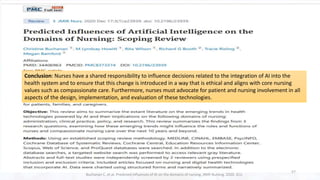
Conclusion: Nurses have a shared responsibility to influence decisions related to the integration of AI into the
health system and to ensure that this change is introduced in a way that is ethical and aligns with core nursing
values such as compassionate care. Furthermore, nurses must advocate for patient and nursing involvement in all
aspects of the design, implementation, and evaluation of these technologies.
57
Buchanan C, et al. Predicted influences of AI on the domains of nursing. JMIR Nursing. 2020. 3(1)
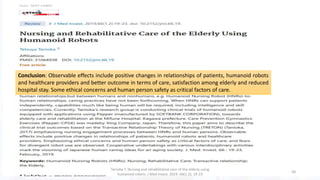
Conclusion: Observable effects include positive changes in relationships of patients, humanoid robots
and healthcare providers and better outcome in terms of care, satisfaction among elderly and reduced
hospital stay. Some ethical concerns and human person safety as critical factors of care.
58
Tanioka T. Nursing and rehabilitative care of the elderly using
humanoid robots. J Med Invest. 2019. 66(1.2); 19-23
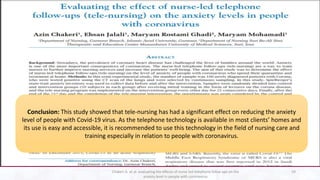
Conclusion: This study showed that tele-nursing has had a significant effect on reducing the anxiety
level of people with Covid-19 virus. As the telephone technology is available in most clients’ homes and
its use is easy and accessible, it is recommended to use this technology in the field of nursing care and
training especially in relation to people with coronavirus.
59
Chakeri A. et al. evaluating the effects of nurse led telephone folloe ups on the
anxiety level in people with coronavirus
60
Conclusion: There was a significant improvement in physical function and movement of the knee. Knee
movement, physical functions improved and there was decreased joint stiffness (p≤ 0.01) and level of pain (p≤
0.01). The experimental group had significantly better adherence to treatment and exercises. The control group
had no significant improvement after 3 months.
Kumari P, et al. Impact of mobile app-based non-surgical nursing intervention on the adherence to exercise and other management among
patients with knee osteoarthritis. 2019
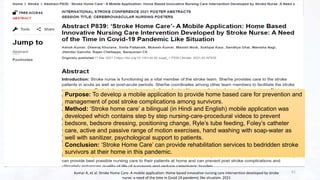
Kumar A, et al. Stroke Home Care- A mobile application: Home based innovative nursing care intervention developed by stroke
nurse: a need of the time in Covid 19 pandemic like situation. 2021
61
Purpose: To develop a mobile application to provide home based care for prevention and
management of post stroke complications among survivors.
Method: ‘Stroke home care’ a bilingual (in Hindi and English) mobile application was
developed which contains step by step nursing-care-procedural videos to prevent
bedsore, bedsore dressing, positioning change, Ryle’s tube feeding, Foley’s catheter
care, active and passive range of motion exercises, hand washing with soap-water as
well with sanitizer, psychological support to patients.
Conclusion: ‘Stroke Home Care’ can provide rehabilitation services to bedridden stroke
survivors at their home in this pandemic.
Cost incurred in development, maintenance and repair
Lack of human touch
Lack of own creativity
Lack of common sense
Abilities of human may diminish
Robot superseding humans
Human may became dependent on machine
Wrong hands causes destruction
62
LIMITATIONS
CONCLUSION
• Artificial intelligence in healthcare is an overarching term used to describe
the use of machine-learning algorithms and software, or artificial
intelligence (AI), to mimic human cognition in the analysis, presentation,
and comprehension of complex medical and health care data.
• The primary aim of health-related AI applications is to analyze relationships
between prevention or treatment techniques and patient outcomes.
• AI programs are applied to practices such as diagnosis, treatment
protocol development, drug development, personalized medicine,
and patient monitoring and care.
• AI algorithms can also be used to analyze large amounts of data through
electronic health records for disease prevention and diagnosis.
63
64
Can AI replace Human beings??????
AI can not replace human beings
BUT…..
Human beings can create wonders through AI
65
TAKE HOME MESSAGE………
Lets unite together in this digitalized world and
utilize AI
A step towards……
Better patient care everywhere,
Be it home or hospital
REFERENCES
1. Reimagining the possible in the Indian healthcare ecosystem with emerging technologies (pwc.in)
2. Overview of AI in Indian Healthcare (ai4bharat.org)
3. Tikkanen, R. and M. K. Abrams. 2020. U.S. Health Care from a Global Perspective, 2019: Higher Spending, Worse
Outcomes? The Commonwealth Fund. Available at: https://www.commonwealthfund.org/p ublications/issue-
briefs/2020/jan/ushealth-care-global-perspective-2019.
4. American Medical Association. 2019. Medicare’s major new primary care pay model: Know the facts. Available at:
https://www.ama-assn.org/practicemanagement/payment-deliverymodels/medicare-s-major-newprimary-care-
pay-model-know-facts.
5. American Association of Family Physicians. 2020. Chronic Care Management. Available at:
https://www.aafp.org/familyphysician/practice-and-career/gettingpaid/coding/chronic-caremanagement.html.
6. National Science and Technology Council, Committee on Technology, Executive Office of the President. 2016.
Preparing for the Future of Artificial Intelligence. Available at: https://obamawhitehouse.archives.gov
/sites/default/files/whitehouse_files/mi crosites/ostp/NSTC/preparing_for_the_ future_of_ai.pdf.
7. Bajwa J, Munir U, Nori A, Williams B. Artificial intelligence in healthcare: transforming the practice of medicine.
Future Healthcare Journal. 2021. 8(2); 88-94
8. Davenport TA. Kalakota RB. The potential for artificial intelligence in healthcare. Future Healthcare Journal. 2019.
6(2); 94- 8
66
9. https://www.who.int/news/item/28-06-2021-who-issues-first-global-report-on-ai-in-health-and-six-guiding-principles-
for-its-design-and-use
10. Henry KE, Hager DN, Pronovost PJ, Saria S. A targeted real-time early warning score (TREWScore) for septic shock.
Science Translational Medicine. 2015. 7(299); 1-9
11. Matheny, M., S. Thadaney Israni, M. Ahmed, and D. Whicher, Editors. 2019. Artificial Intelligence in Health Care: The
Hope, the Hype, the Promise, the Peril. NAM Special Publication. Washington, DC: National Academy of Medicine.
12. Institute of Medicine. 2012. The Role of Tele- health in an Evolving Health Care Environment: Workshop Summary.
Washington, DC: The National Academies Press. https://doi.org/10.17226/13466 .
13. Kuziemsky, C., A. J. Maeder, O. John, S. B. Gogia, A. Basu, S. Meher, and M. Ito. 2019. Role of Artificial Intelligence within
the Telehealth Domain. Yearbook of Medical Informatics 28(01): 035-040. https://doi.org/10.1055/s0039-1677897
14. Wosik, J., M. Fudim, B. Cameron, Z. F. Gellad, A. Cho, D. Phinney, S. Curtis, M. Roman, E. G. Poon, J. Ferranti, J. N. Katz,
and J. Tcheng. 2020. Telehealth transformation: COVID-19 and the rise of virtual care. Journal of the American Medical
Informatics Association 27(6): 957-962. https://doi.org/10.1093/jamia/ocaa067
15. Bitran, H. and J. Gabarra. 2020. Delivering information and eliminating bottlenecks with CDC’s COVID-19 assessment bot.
Available at: https://blogs.microsoft.com/blog/2020 /03/20/delivering-information-andeliminating-bottlenecks-with-
cdcscovid-19-assessment-bot/ .
16. Centers for Disease Control and Prevention. 2020. COVID-19 Testing Overview. Available at:
https://www.cdc.gov/coronavirus/2019 -ncov/symptoms-testing/testing.htm
REFERENCES
67
Review Club on
Maternal Role
Attainment Theory
Moderator –
Mrs. Anupama Choudhary
Tutor
NINE,PGIMER
Presenter –
Neetu Gujjar
MSc.(N) 2nd year
NINE,PGIMER
69

Artificial intelligence in nursing

  • 1.
  • 2.
    Review Article on Artificial Intelligencein Healthcare Presenter: Nisha Yadav MSc Nursing 2nd year NINE, PGIMER Chandigarh 2
  • 3.
    OUTLINE • History ofArtificial Intelligence • Domains of Artificial Intelligence • What is Artificial Intelligence • Stages of Artificial Intelligence • Applications of Artificial Intelligence • Artificial Intelligence in healthcare • AI in Nursing 3
  • 4.
  • 5.
    Greek Mythology- Talos Taloswas a giant animated bronze warrior programmed to guard the island of Crete created by Hephaestus 1950- Alan Turing Alan Turing published a landmark paper in which he speculated about the possibility of creating machines that think 1951 Christopher Strachey wrote a checkers program and Dietrich Prinz wrote one for chess 1956- The birth of AI John McCarthy first coined the term “Artificial Intelligence” in 1956 at the Dartmouth Conference. 5 2011- 2014 Personal assistants like Siri, Google Now, Cortana use speech recognition to answer questions and perform simple tasks. 2014- Present Ian Goodfellow comes up with Generative Adversarial Networks (GAN) AlphaGo beats professional Go player Lee Sedol by 4-1 Most universities have now courses in artificial intelligence.
  • 6.
    6 (Traffic alerts, GoogleTranslate) (Face verification, Self Driving Cars) (Sophia, De Vinci Se System) (Fraud Detection, Virus Detection) (Pattern recognition, reasoning) (Amazon, Twitter)
  • 7.
    Why are wetalking about AI now?? 7
  • 8.
  • 9.
  • 10.
  • 11.
  • 12.
    Artificial Narrow Intelligence Also knownas Weak AI, ANI is the stage of Artificial Intelligence involving machines that can perform only a narrow defined set of specific tasks. Artificial General Intelligence Also known as Strong AI, AGI is the stage in the evolution of Artificial Intelligence wherein machines will possess the ability to think and make decisions just like humans. Artificial Super Intelligence ASI is the stage of Artificial Intelligence when the capability of computers will surpass human beings 12
  • 13.
  • 14.
    Challenges faced bythe Indian Healthcare System 1. Shortage of qualified healthcare professionals and infrastructure as evidenced by the presence of 0.76 doctors and 2.09 nurses per 1,000 people. Additionally Indian healthcare faces acute shortage of hospital beds with 1.3 hospital 2. Affordability: Private expenditure accounting for 70% of healthcare expenses, of which 62% is out-of- pocket expenditure 1.3. Reactive approach to essential healthcare largely due to lack of awareness, access to services and behavioral factors. 1.4. Most of the private facilities are concentrated in and around tier 1 and tier 2 cities, due to which patients have to travel substantial distances for basic and advanced healthcare services. 5. Non-uniform accessibility to healthcare across the country . 14 Overview of AI in Indian Healthcare (ai4bharat.org)
  • 15.
    • Figure showsthe number of patients from different states visiting the Tata Memorial Hospital in Mumbai for treatment. • Tata Memorial Hospital (TMH), one of the leading cancer hospitals in India, registered more than 67,000 new patients for cancer treatment in 2015. • While the hospital is located in Mumbai, less than 23% of the new patients were geographically based in Maharashtra, with a whopping 21.7% of patients traveling from the states of UP, Bihar, Jharkhand and West Bengal to TMH. 15 Overview of AI in Indian Healthcare (ai4bharat.org)
  • 16.
    5. Non-uniform accessibilityto healthcare across the country with physical access continuing to be the major barrier to both preventive and curative health services, and glaring disparity between rural and urban India. Figure shows the distribution of healthcare access in India. AI combined with cloud computing platforms has the potential to address these concerns in a cost effective manner. The Government of India, through its recent policy interventions, the government aims at leveraging technology to improve healthcare facilities through: • National eHealth Authority (NeHA) • Integrated Health Information Program (IHIP) • Electronic Health Record 16 Overview of AI in Indian Healthcare (ai4bharat.org)
  • 17.
     To savetime ,energy and money  To avoid unnecessary walk to hospital for minor ailments  To avoid excessive physical burden on OPD /IPD at tertiary care hospitals  To provide specialist based care for rural population  To avoid misguidance  To provide necessary care to needed one  To use e-referral system connects these peripheral hospital with tertiary level hospital WHY DO WE NEED AI IN HEALTHCARE 17
  • 18.
    APPLICATION OF AI INHEALTHCARE 18
  • 19.
    Conclusion: The studyconcluded that there are various AI applications in healthcare like augmented care (remote monitoring, virtual assistants & AI chatbots), Prediction diagnostics (diagnostic imaging, diabetic retinopathy screening), precision therapeutics (AI-driven drug discovery, Immunomics and synthetic biology), precision medicine (AI empowered healthcare professionals) to identify and provide timely care of patients at risk of deterioration. So, AI could become a roadmap to build effective, reliable and safe healthcare delivery system. 19 Bajwa J, Munir U, Nori A, Williams B. Artificial intelligence in healthcare: transforming the practice of medicine. Future Healthcare Journal. 2021. 8(2); 88-94
  • 20.
    Conclusion: Artificial intelligence(AI) and related technologies have the potential to transform many aspects of patient care, as well as administrative processes within provider, payer and pharmaceutical organizations. The key categories of applications involve diagnosis and treatment, recommendations, patient engagement and adherence, and administrative activities. There are also a variety of ethical implications around the use of AI in healthcare. Healthcare decisions have been made almost exclusively by humans in the past, and the use of smart machines to make or assist with them raises issues of accountability, transparency, permission and privacy. 20 Davenport TA. Kalakota RB. The potential for artificial intelligence in healthcare. Future Healthcare Journal. 2019. 6(2); 94- 8
  • 21.
    Development of AISystems • The development of AI tools to address health care challenges is a complex process that varies for each tool. • A tool might initially be developed in a university, then licensed to another organization, and ultimately scaled and deployed by a commercial entity. Users of the tools also vary. 21
  • 22.
  • 23.
  • 24.
    AI Tools inPatient Care • AI in health care has the potential to deliver many benefits, according to the scientific literature and stakeholders, including industry representatives, academic researchers, and health care providers. • In general, AI tools augment rather than replace human providers. Studies have demonstrated improved results when providers and AI tools work together rather than each working independently. 24
  • 25.
    Clinical AI Toolsto Augment Patient Care 1. Predicting Health Trajectories 2. Recommending Treatments 3. Guiding Surgical Care 4. Monitoring Patients 5. Improving Medication Adherence 6. Recording Digital Notes 7. Automating Laborious Tasks 25
  • 26.
    1. Predicting HealthTrajectories Machine-learning- enabled CDS tools can help predict the likelihood that a patient’s condition will deteriorate. In one example, in 2013- 2014 a large integrated health system successfully piloted a machine learning model to identify patients at risk for transfer to the intensive Other applications in this category include prediction of acute kidney injury and Clostri. difficile infection 26
  • 27.
    In this studyresearchers developed a model for predicting the risk of septic shock and identifying at-risk patients hours before onset of the condition. At a specificity of 67 percent and sensitivity of 85 percent, this tool was able to identify patients approximately 28 hours before the onset of septic shock. Additionally, the model was able to identify a majority of patients, a median of around 7 hours before any sepsis-related organ dysfunction which is an improvement over routine screening protocols. 27
  • 28.
    Results: Outcomes from75 patients in the control and 67 patients in the experimental group were analysed. Average length of stay decreased from 13.0 days in the control to 10.3 days in the experimental group (p=0.042). In-hospital mortality decreased by 12.4 percentage points when using the MLA (p=0.018), a relative reduction of 58.0%. No adverse events were reported during this trial. Conclusion: The MLA was associated with improved patient outcomes. 28
  • 29.
    2. Recommending Treatments •AI-enabled CDS tools can also recommend treatments to health care providers, potentially helping them make decisions more effective and patient-specific. • For example: Ventilators can be lifesaving, both prolonged use and premature weaning are associated with complications, increased mortality rates, and higher hospital costs. • Deciding when to wean patients receiving ventilator treatment is an essential aspect of their care. • AI could predict when to successfully wean patients from ventilators. 29
  • 30.
    Contd… Objective: To developa decision support tool that uses available patient information to predict time- to- extubation readiness and to recommend a personalized regime of sedation dosage and ventilator support. Conclusion: Study shows promise in recommending weaning protocols with improved outcomes, in terms of minimizing rates of reintubation and regulating physiological stability 30
  • 31.
    3. Guiding SurgicalCare • In the field of surgical care, planning and postoperative care are the most mature applications for machine-learning-enabled CDS tools. • Other applications, including real time CDS for surgery and AI-enabled surgical robots, are also active areas of research. • These robotic tools may alert a surgeon when their surgical time is longer than average. 31
  • 32.
    Objective: To comparethe surgical, functional, and oncologic outcomes of robot-assisted laparoscopic radical prostatectomy (RALP), laparoscopic radical prostatectomy (LRP), and retropubic radical prostatectomy (RRP) Results: The RALP group had a significantly shows less blood loss and surgical scars (median 250 mL vs. 300 mL or 700 mL, P value <0.0001) than the LRP and RRP groups. Medical costs for RALP were approximately twofold to threefold higher than those for LRP or RRP. Conclusions: Findings suggested that surgical and functional outcomes are better with robot- assisted surgery than with laparoscopic or open surgery in terms of estimated blood loss and surgical scars. 32
  • 33.
    Study Objective: Tocompare gynecologic practice and perioperative outcomes of patients undergoing total laparoscopic hysterectomy and robotic hysterectomy before and after implementation of a robotics program. Conclusion: Reduced operative time, reduced blood loss, and shortened length of stay is achieved in patients who are treated robotically versus a non-robotic approach. 33
  • 34.
  • 35.
    4. Monitoring patients •AI-enabled tools can use the increasing availability of health data, including data from EHRs, wearables, and other sensors, to help monitor patients in health care facilities. • According to a recent review, patient monitoring is one of the areas where AI is likely to have the greatest influence. • For example, providers can use AI analysis of vital signs for cardiovascular and respiratory monitoring in the ICU. 35
  • 36.
    • Health carefacilities can use AI-enabled monitoring tools in hospitals to prevent patient falls and reduce provider burden. • According to a 2015 report, hundreds of thousands of hospital patients fall each year. Thirty to 50 percent of those falls result in injury, which can increase the length and cost of the hospital stay or even result in death. • One commercial AI tool aiming to help providers address these issues uses computer vision, Bluetooth, and sensors to analyze movements in the patient’s room and alert the care team when a fall is predicted. Contd… 36
  • 37.
    FDA has grantedemergency use authorization to software that aims to predict whether a COVID-19 patient will develop dangerously low blood pressure or respiratory failure. The CLEWICU System is a software product, uses models derived from machine learning to calculate the likelihood of occurrence of certain clinically significant events (respiratory failure and hemodynamic instability) for adult patients in the intensive care unit (ICU). 37
  • 38.
    5. Improving Medication Adherence Toaddress compliance concerns, organizations are looking into creative solutions utilizing artificial intelligence (AI) and machine learning (ML) to increase patient adherence. Some of the solutions that have shown results in this field, include: • Chatbots • Smart pills • Wrist band sensors • Gamification • Apps • Smart packaging A few examples of such products include Fellow Smart Pillbox, CleverCap that fits on standard pillboxes, sensors for inhalers by Propeller Health, and others. 38
  • 39.
    39 The U.S. Foodand Drug Administration approved the first drug in the U.S. with a digital ingestion tracking system. Abilify MyCite (aripiprazole tablets with sensor) has an ingestible sensor embedded in the pill that records that the medication was taken. It works by sending a message from the pill’s sensor to a wearable patch. The patch transmits the information to a mobile application so that patients can track the ingestion of the medication on their smart phone. Patients can also permit their caregivers and physician to access the information through a web-based portal.
  • 40.
    This paper discussed“Roborto”, a chatbot case to improve patients adherence to medication. This approach improve adherence to treatment plans in patients with chronic conditions, through encouragement, reminders and regular chatting with healthcare providers. The chatbot collects data and provides instant feedback about patients condition, engage patients in their own health and improve outcomes. Conclusion: The presented model of the chatbot system provides an innovative approach to adhere to patients medication and track their condition overtime. Improving patients adherence is the best approach for tackling chronic conditions effectively. 40 Fadhil et al. a conversational interface to improve medication adherence: towards AI support in patients treatment
  • 41.
    6. Recording digitalclinical notes • Providers are beginning to use speech recognition and natural language processing technologies for recording digital notes into EHR systems. • Adoption of EHR systems, although it can reportedly improve care coordination and decision making, has also been associated with decreased provider satisfaction. 41
  • 42.
    7. Automating laborioustasks • AI can automate some tasks that are simple but labor-intensive, allowing providers more time to spend with patients. • Hospital nurses spent the majority of their time walking between patient rooms and the nursing station. • Surgical nurses walked an additional mile while on duty to obtain supplies and equipment. • Distractions and interruptions from non-nursing activities such as gathering supplies present a risk to patient safety. 42
  • 43.
    • Many hospitalsalready employ robots for delivering supplies, among other activities, but they have limitations. • For example, Many of the currently deployed supply delivery robots do not have an arm and therefore still require a human for tasks such as opening doors and picking up items. • These robots also do not significantly interact with clinical staff. Contd… 43
  • 44.
    AI in HealthSettings Outside the Hospital and Clinic • The health care ecosystem is witnessing a surge of artificial intelligence (AI)-driven technologies and products that can potentially augment care delivery outside of hospital and clinic settings. • These tools can be used to conduct remote monitoring, support telehealth visits, or target high-risk populations for more intensive health care interventions. 44
  • 45.
    Telehealth Remote monitoring AI in HealthSettings Outside the Hospital and Clinic 45
  • 46.
    1. Telehealth andAI • Telehealth has been a long-standing element of health care delivery, but not until COVID-19 has it been considered vital to sustaining the connection between patients and providers. • AI triaging for telehealth uses conversational agents embedded in a virtual or phone visit to stratify patients based on acuity level and direct them accordingly to the most appropriate care setting. • By reducing the risk of patient exposure, AI triaging platforms have been especially advantageous during COVID-19, and a number of health systems, retail clinics, and payers have implemented them to continue the facilitation of care services and identify possible COVID-19 cases. 46
  • 47.
    Contd… The Coronavirus Self-Checkeris an interactive clinical assessment tool that will assist individuals ages 13 and older, and parents and caregivers of children ages 2 to 12 on deciding when to seek testing or medical care if they suspect they or someone they know has contracted COVID-19 or has come into close contact with someone who has COVID-19. The online, mobile-friendly tool asks a series of questions, and based on the user’s responses, provides recommended actions and resources. 47
  • 48.
    2. Remote TechnologyMonitoring for Promoting Cardiac Health • Wearable and remote monitoring technology can assist in ushering in the next era of health care data innovation by capturing physiologic data in HSOHC • Wearables can capture data from any location and transmit it back to a hospital or clinic, moving a significant piece of the health care enterprise to places where patients spend the bulk of their time. • These measurements can then be coupled with machine learning (ML) algorithms and a user interface to turn the data into relevant information about an individual’s health-related behaviors and physiological conditions. 48
  • 49.
    • Wearable technologyhas been applied to many health care domains, ranging from cardiology to mental health • Prominent examples of technologies are those that incorporate cardiac monitoring, such as HR and rhythm sensors, including the Apple Watch, iRhythm, and Huawei devices. • These devices are quite popular and, in the case of the Apple Watch, have received FDA approval as a medical device to detect and alert individuals of an irregular heart rhythm. Contd… 49
  • 50.
    Integrating AI intoPopulation Health Strategies MHN is composed of ten federally qualified health centers in Chicago and three health systems. Altogether, responsible for the care management of 1,22,000 Medicaid beneficiaries. In the case of COVID-19, MHN is leveraging AI to identify patients at high risk of experiencing severe respiratory infections or respiratory failure, a particularly vulnerable group of people. They used machine learning to identify which patients had a high risk of admission for COVID, or for unrelated complications from respiratory ailments. The results showed that 4.4 percent of patients would represent about half of those patients at risk. So instead of calling all 122,000, they can focus on initial outreach on that 4.4 percent of the adult population. 50
  • 51.
    AI Efforts inPublic and Environmental Health Aarogya Setu is a very helpful mobile app developed by the Indian Government for the people of India to catch the Corona Virus infection. This app helps in tracking patients with Covid- 19 based on using Bluetooth technology, user’s interaction with others, artificial intelligence, and algorithms. By using this app, you would get all the information regarding best practices, risk, and helpful advisories relating to the COVID-19. 51
  • 52.
    Combating COVID-19 withAI Assisted Technologies Artificial Intelligence (AI) applications for COVID-19 pandemic Raju Vaishya, Mohd Javaid, Ibrahim Haleem Khan, Abid Haleem Method: It Identified seven significant applications of AI for COVID-19 pandemic. These technologies plays an important role to detect the cluster of cases and to predict where this virus will affect in future by collecting and analyzing all previous data. Conclusions: AI works in a proficient way to mimic like human intelligence. It may also play a vital role in screening, analyzing, prediction and tracking of current patients and likely future patients, tracking data of confirmed, recovered and death cases. & also in understanding COVID- 19, suggesting non- pharmacological treatment based on signs & symptoms. 52 Vaishya R, et al. AI applications for Covid- 19 pandemic. 2020
  • 53.
    Initiative at PGIMERwith Jiyyo software 53 E-Referral management system for doctors • It is an Artificial Intelligence Enabled Platform for Inter-Connecting healthcare providers. • It's an effective and inexpensive way to Generate, Track & Follow-Up Referral Leads from far and wide. • It effectively builds a seamless communication between doctors & hospital.
  • 54.
    Jiyyo’s features includefacilitation of • Elaborated communication about patients referral between Primary, secondary , tertiary care hospitals of the region Digitization of patient’s data Electronic communication between doctors at hospital and patients /caregivers For this e-referral system has to be installed to track and manage patients moving between PGI, GMCH-32,GMSH-16 , civil hospitals and dispensaries in Chandigarh 54
  • 55.
    • Easy administrationand tracking of referred patients. • Scalable way to communicate with many doctors simultaneously. • Reach far-off doctors by the click of a button. • Advanced notification to any hospital regarding emergency patient arrival. • Critically sick patients can be tagged for immediate attention to better utilize the golden hour. • Establishment of a standard communication channel between referring and receiving hospital/department on a per patient basis. • Back referrals of a stabilized patient in a proper communicated way. Features of Jiyyo 55
  • 56.
    AI applications innursing • Nurses impact every facet of patient care- from the cost of care to the overall patient experience. • Within this spectrum of responsibility lies the prospect for a number of different technologies to use the computing power of AI to assist with nursing care. 56
  • 57.
    Conclusion: Nurses havea shared responsibility to influence decisions related to the integration of AI into the health system and to ensure that this change is introduced in a way that is ethical and aligns with core nursing values such as compassionate care. Furthermore, nurses must advocate for patient and nursing involvement in all aspects of the design, implementation, and evaluation of these technologies. 57 Buchanan C, et al. Predicted influences of AI on the domains of nursing. JMIR Nursing. 2020. 3(1)
  • 58.
    Conclusion: Observable effectsinclude positive changes in relationships of patients, humanoid robots and healthcare providers and better outcome in terms of care, satisfaction among elderly and reduced hospital stay. Some ethical concerns and human person safety as critical factors of care. 58 Tanioka T. Nursing and rehabilitative care of the elderly using humanoid robots. J Med Invest. 2019. 66(1.2); 19-23
  • 59.
    Conclusion: This studyshowed that tele-nursing has had a significant effect on reducing the anxiety level of people with Covid-19 virus. As the telephone technology is available in most clients’ homes and its use is easy and accessible, it is recommended to use this technology in the field of nursing care and training especially in relation to people with coronavirus. 59 Chakeri A. et al. evaluating the effects of nurse led telephone folloe ups on the anxiety level in people with coronavirus
  • 60.
    60 Conclusion: There wasa significant improvement in physical function and movement of the knee. Knee movement, physical functions improved and there was decreased joint stiffness (p≤ 0.01) and level of pain (p≤ 0.01). The experimental group had significantly better adherence to treatment and exercises. The control group had no significant improvement after 3 months. Kumari P, et al. Impact of mobile app-based non-surgical nursing intervention on the adherence to exercise and other management among patients with knee osteoarthritis. 2019
  • 61.
    Kumar A, etal. Stroke Home Care- A mobile application: Home based innovative nursing care intervention developed by stroke nurse: a need of the time in Covid 19 pandemic like situation. 2021 61 Purpose: To develop a mobile application to provide home based care for prevention and management of post stroke complications among survivors. Method: ‘Stroke home care’ a bilingual (in Hindi and English) mobile application was developed which contains step by step nursing-care-procedural videos to prevent bedsore, bedsore dressing, positioning change, Ryle’s tube feeding, Foley’s catheter care, active and passive range of motion exercises, hand washing with soap-water as well with sanitizer, psychological support to patients. Conclusion: ‘Stroke Home Care’ can provide rehabilitation services to bedridden stroke survivors at their home in this pandemic.
  • 62.
    Cost incurred indevelopment, maintenance and repair Lack of human touch Lack of own creativity Lack of common sense Abilities of human may diminish Robot superseding humans Human may became dependent on machine Wrong hands causes destruction 62 LIMITATIONS
  • 63.
    CONCLUSION • Artificial intelligencein healthcare is an overarching term used to describe the use of machine-learning algorithms and software, or artificial intelligence (AI), to mimic human cognition in the analysis, presentation, and comprehension of complex medical and health care data. • The primary aim of health-related AI applications is to analyze relationships between prevention or treatment techniques and patient outcomes. • AI programs are applied to practices such as diagnosis, treatment protocol development, drug development, personalized medicine, and patient monitoring and care. • AI algorithms can also be used to analyze large amounts of data through electronic health records for disease prevention and diagnosis. 63
  • 64.
    64 Can AI replaceHuman beings?????? AI can not replace human beings BUT….. Human beings can create wonders through AI
  • 65.
    65 TAKE HOME MESSAGE……… Letsunite together in this digitalized world and utilize AI A step towards…… Better patient care everywhere, Be it home or hospital
  • 66.
    REFERENCES 1. Reimagining thepossible in the Indian healthcare ecosystem with emerging technologies (pwc.in) 2. Overview of AI in Indian Healthcare (ai4bharat.org) 3. Tikkanen, R. and M. K. Abrams. 2020. U.S. Health Care from a Global Perspective, 2019: Higher Spending, Worse Outcomes? The Commonwealth Fund. Available at: https://www.commonwealthfund.org/p ublications/issue- briefs/2020/jan/ushealth-care-global-perspective-2019. 4. American Medical Association. 2019. Medicare’s major new primary care pay model: Know the facts. Available at: https://www.ama-assn.org/practicemanagement/payment-deliverymodels/medicare-s-major-newprimary-care- pay-model-know-facts. 5. American Association of Family Physicians. 2020. Chronic Care Management. Available at: https://www.aafp.org/familyphysician/practice-and-career/gettingpaid/coding/chronic-caremanagement.html. 6. National Science and Technology Council, Committee on Technology, Executive Office of the President. 2016. Preparing for the Future of Artificial Intelligence. Available at: https://obamawhitehouse.archives.gov /sites/default/files/whitehouse_files/mi crosites/ostp/NSTC/preparing_for_the_ future_of_ai.pdf. 7. Bajwa J, Munir U, Nori A, Williams B. Artificial intelligence in healthcare: transforming the practice of medicine. Future Healthcare Journal. 2021. 8(2); 88-94 8. Davenport TA. Kalakota RB. The potential for artificial intelligence in healthcare. Future Healthcare Journal. 2019. 6(2); 94- 8 66
  • 67.
    9. https://www.who.int/news/item/28-06-2021-who-issues-first-global-report-on-ai-in-health-and-six-guiding-principles- for-its-design-and-use 10. HenryKE, Hager DN, Pronovost PJ, Saria S. A targeted real-time early warning score (TREWScore) for septic shock. Science Translational Medicine. 2015. 7(299); 1-9 11. Matheny, M., S. Thadaney Israni, M. Ahmed, and D. Whicher, Editors. 2019. Artificial Intelligence in Health Care: The Hope, the Hype, the Promise, the Peril. NAM Special Publication. Washington, DC: National Academy of Medicine. 12. Institute of Medicine. 2012. The Role of Tele- health in an Evolving Health Care Environment: Workshop Summary. Washington, DC: The National Academies Press. https://doi.org/10.17226/13466 . 13. Kuziemsky, C., A. J. Maeder, O. John, S. B. Gogia, A. Basu, S. Meher, and M. Ito. 2019. Role of Artificial Intelligence within the Telehealth Domain. Yearbook of Medical Informatics 28(01): 035-040. https://doi.org/10.1055/s0039-1677897 14. Wosik, J., M. Fudim, B. Cameron, Z. F. Gellad, A. Cho, D. Phinney, S. Curtis, M. Roman, E. G. Poon, J. Ferranti, J. N. Katz, and J. Tcheng. 2020. Telehealth transformation: COVID-19 and the rise of virtual care. Journal of the American Medical Informatics Association 27(6): 957-962. https://doi.org/10.1093/jamia/ocaa067 15. Bitran, H. and J. Gabarra. 2020. Delivering information and eliminating bottlenecks with CDC’s COVID-19 assessment bot. Available at: https://blogs.microsoft.com/blog/2020 /03/20/delivering-information-andeliminating-bottlenecks-with- cdcscovid-19-assessment-bot/ . 16. Centers for Disease Control and Prevention. 2020. COVID-19 Testing Overview. Available at: https://www.cdc.gov/coronavirus/2019 -ncov/symptoms-testing/testing.htm REFERENCES 67
  • 68.
    Review Club on MaternalRole Attainment Theory Moderator – Mrs. Anupama Choudhary Tutor NINE,PGIMER Presenter – Neetu Gujjar MSc.(N) 2nd year NINE,PGIMER
  • 69.