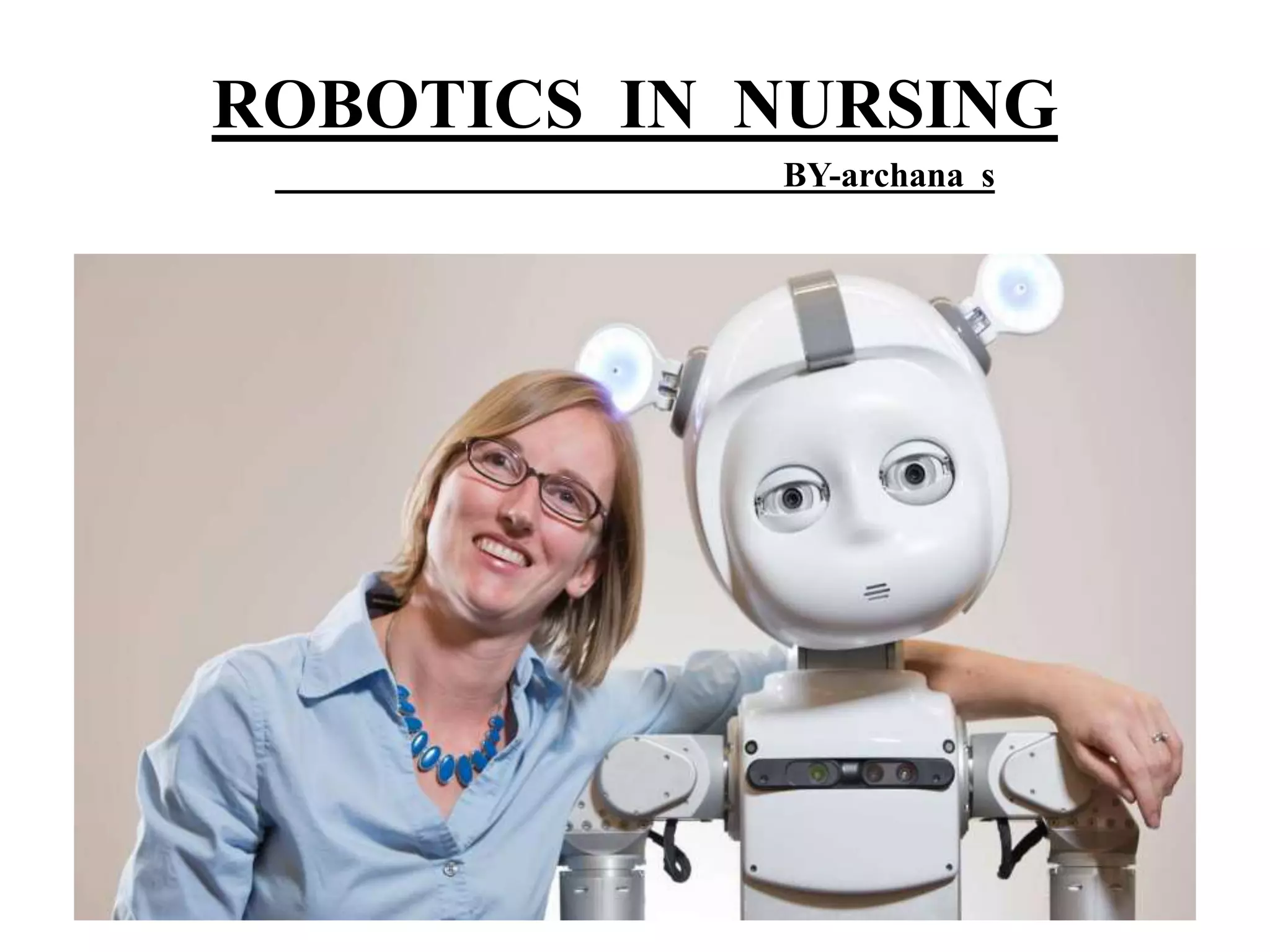
ROBOTICS IN NURSING
BY-archana s
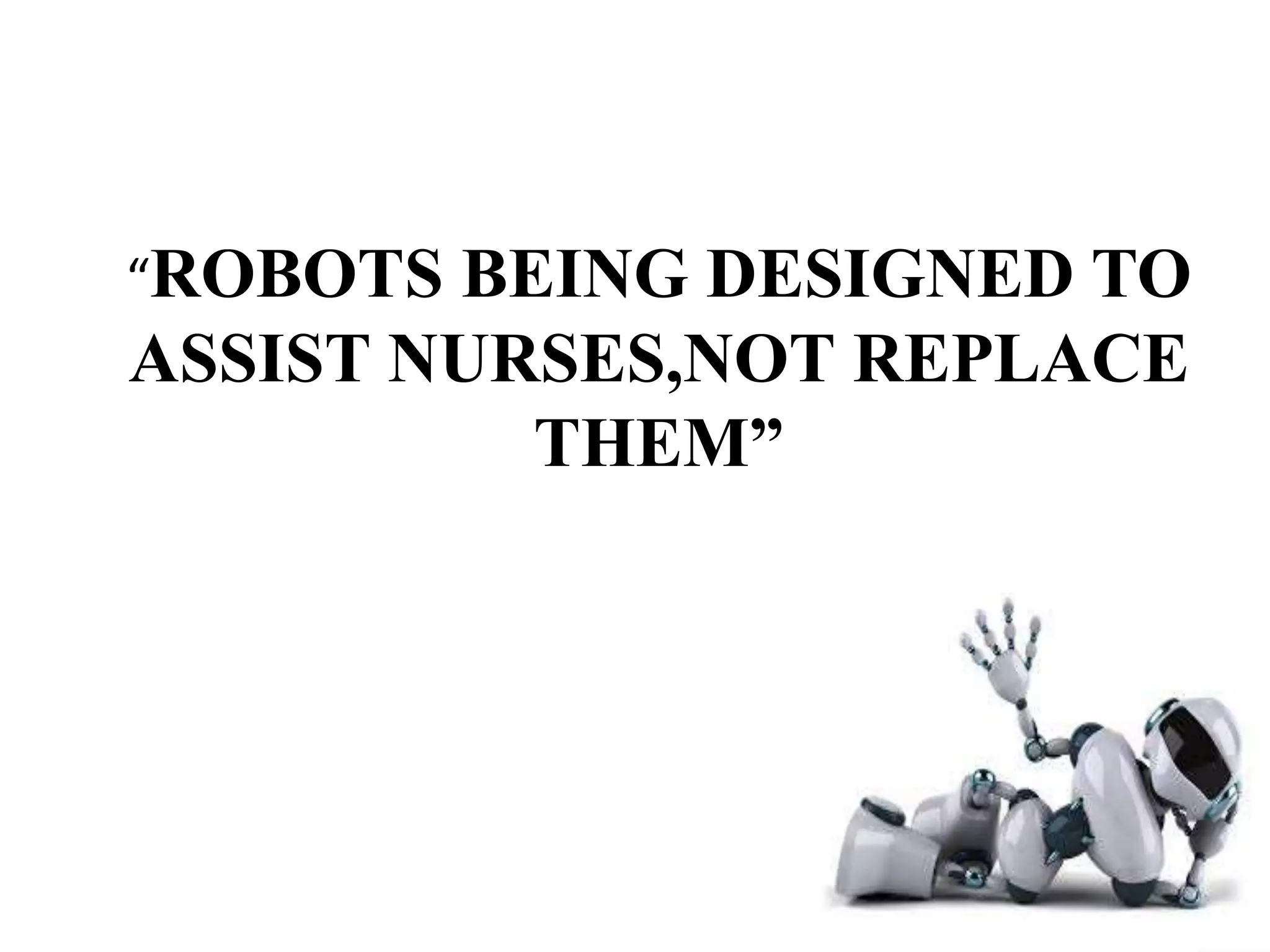
“ROBOTS BEING DESIGNED TO
ASSIST NURSES,NOT REPLACE
THEM”
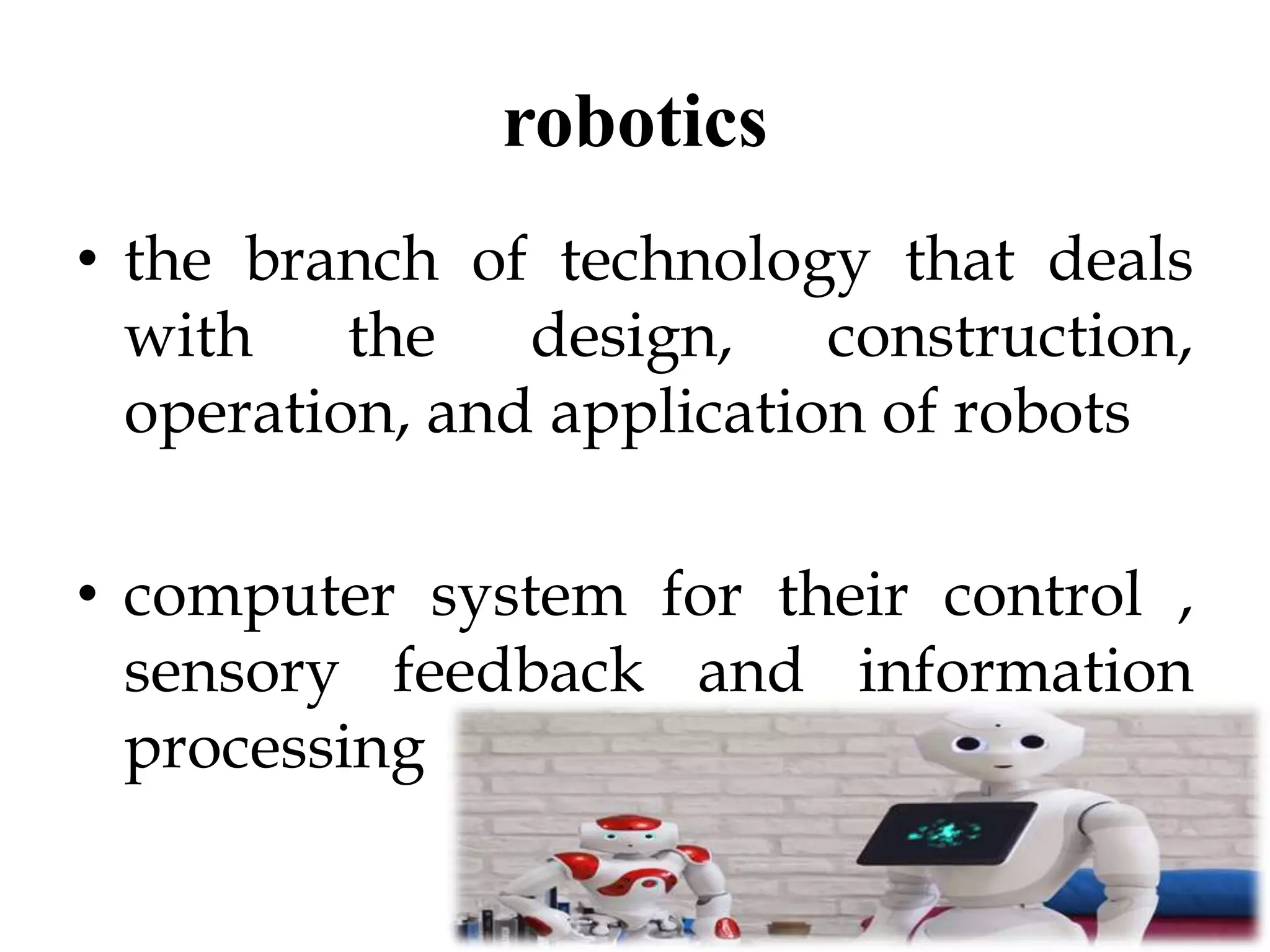
robotics
• the branch of technology that deals
with the design, construction,
operation, and application of robots
• computer system for their control ,
sensory feedback and information
processing
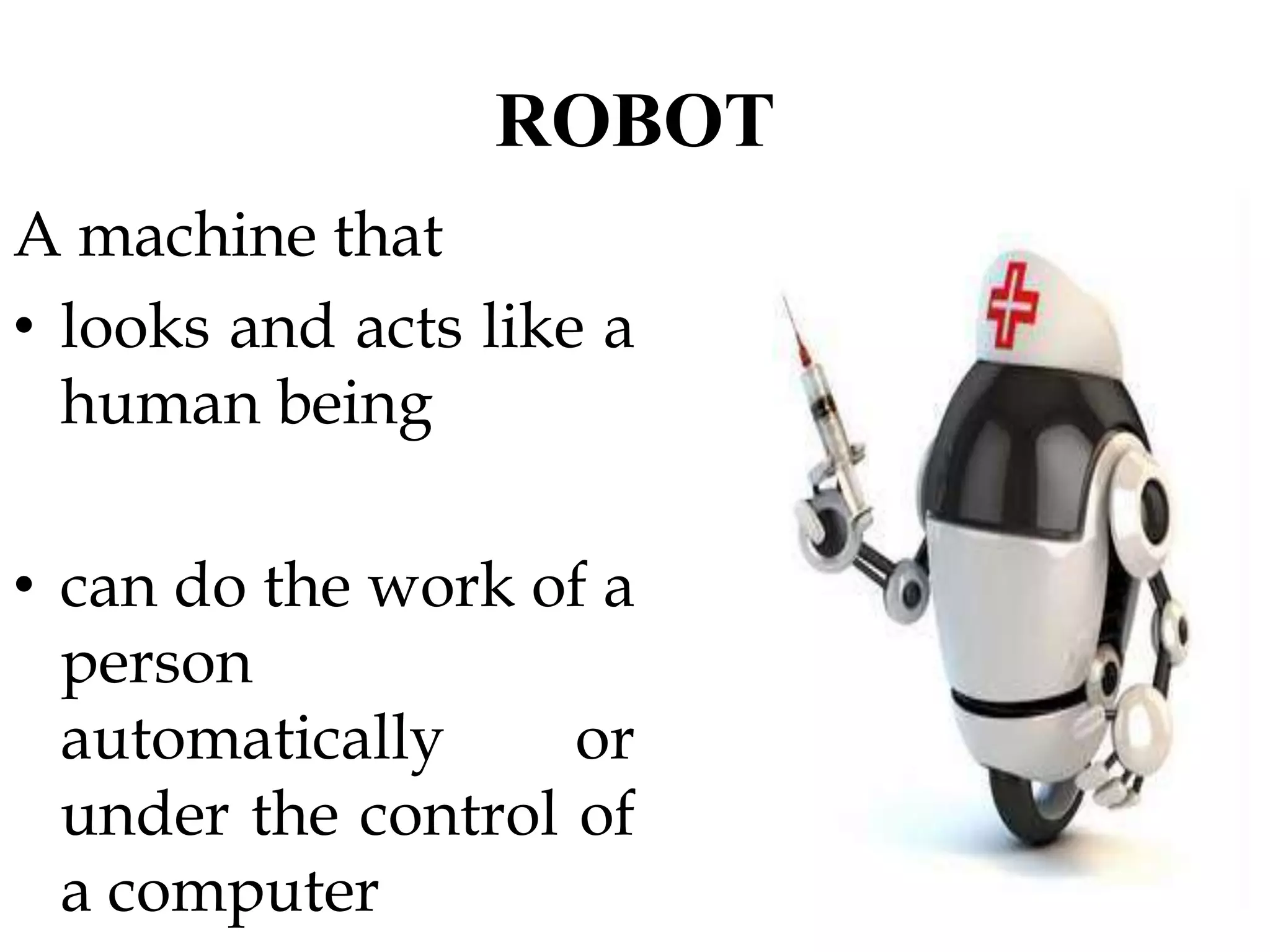
ROBOT
A machine that
• looks and acts like a
human being
• can do the work of a
person
automatically or
under the control of
a computer
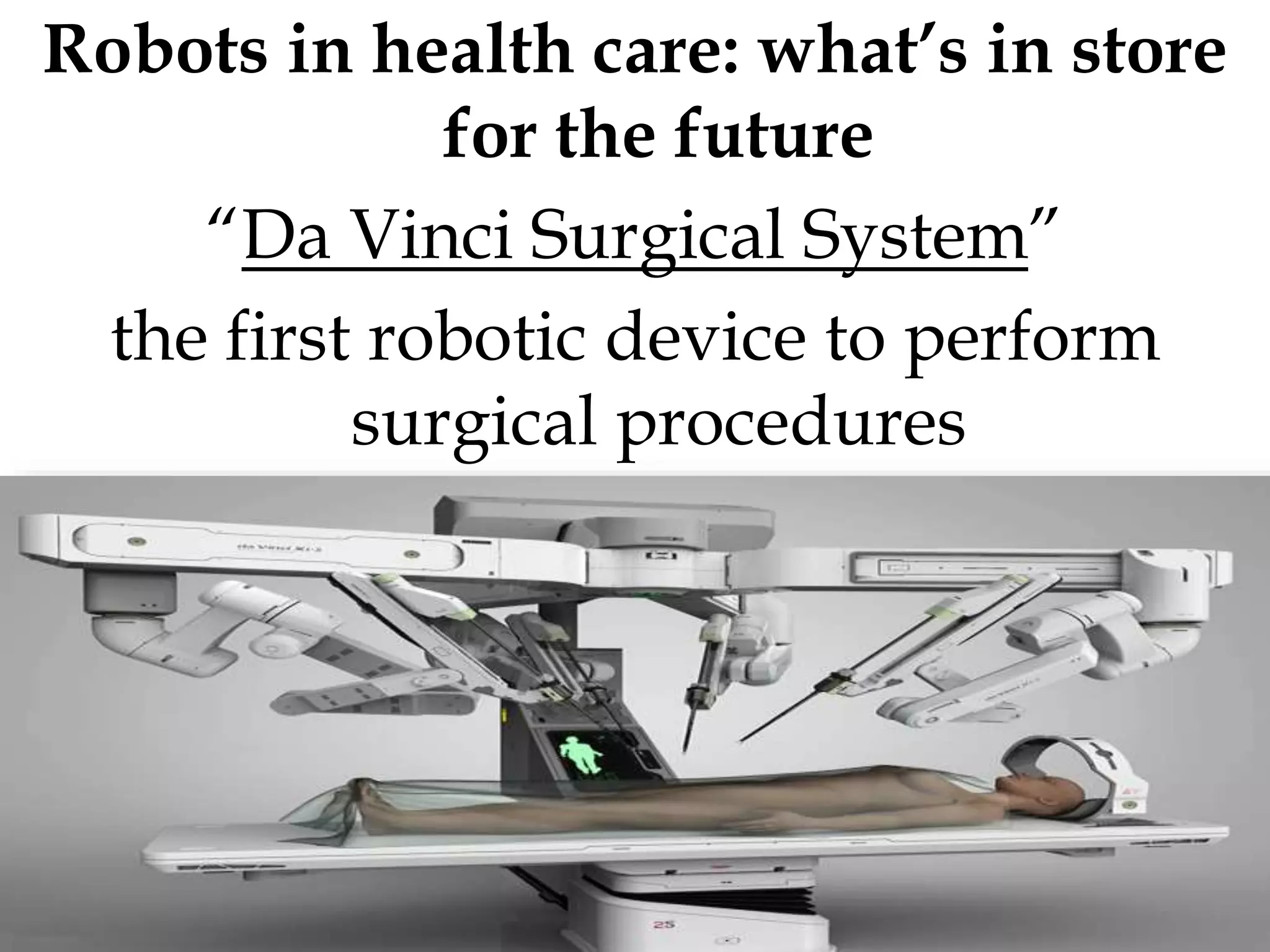
Robots in health care: what’s in store
for the future
“Da Vinci Surgical System”
the first robotic device to perform
surgical procedures
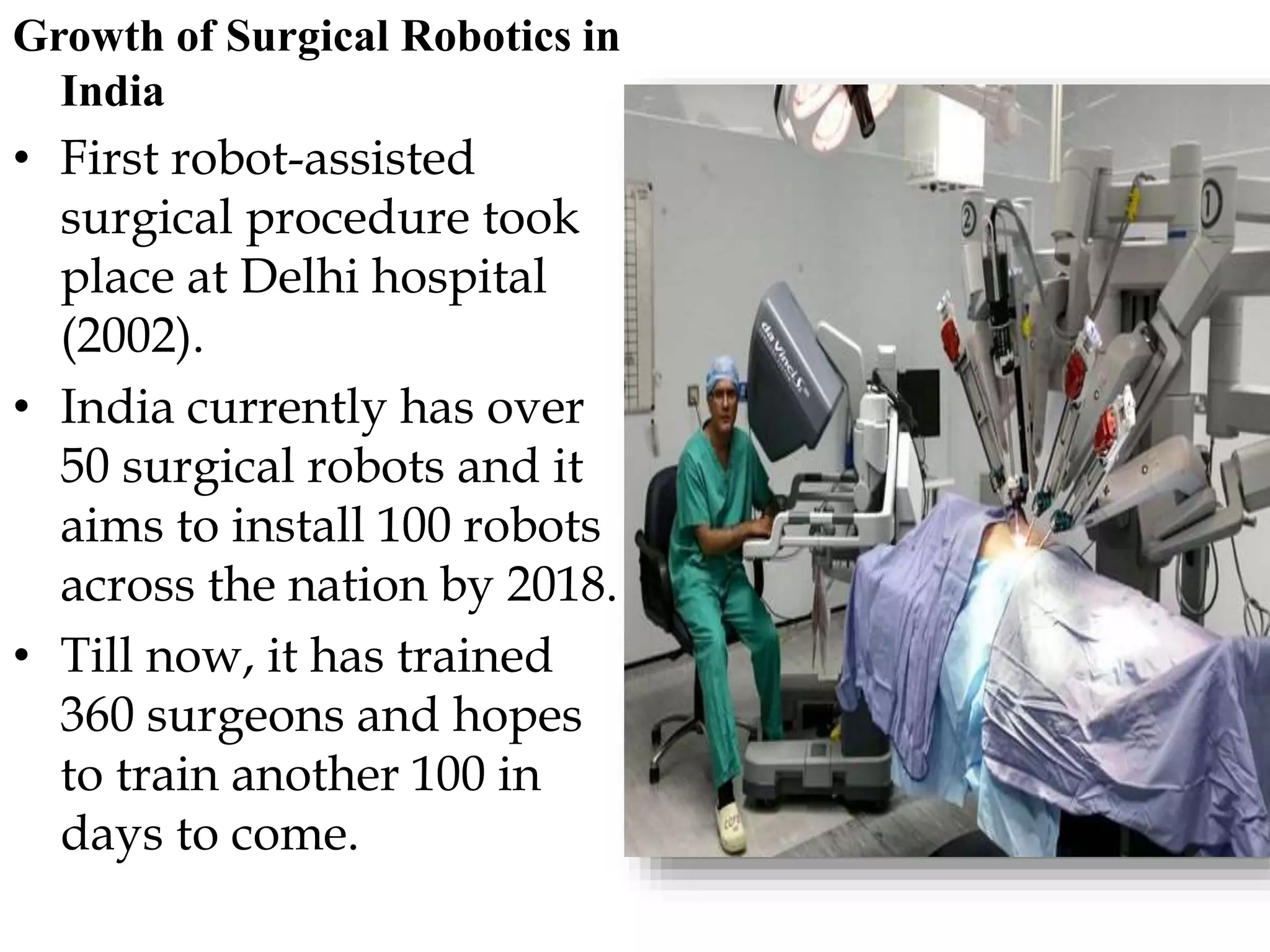
Growth of Surgical Robotics in
India
• First robot-assisted
surgical procedure took
place at Delhi hospital
(2002).
• India currently has over
50 surgical robots and it
aims to install 100 robots
across the nation by 2018.
• Till now, it has trained
360 surgeons and hopes
to train another 100 in
days to come.
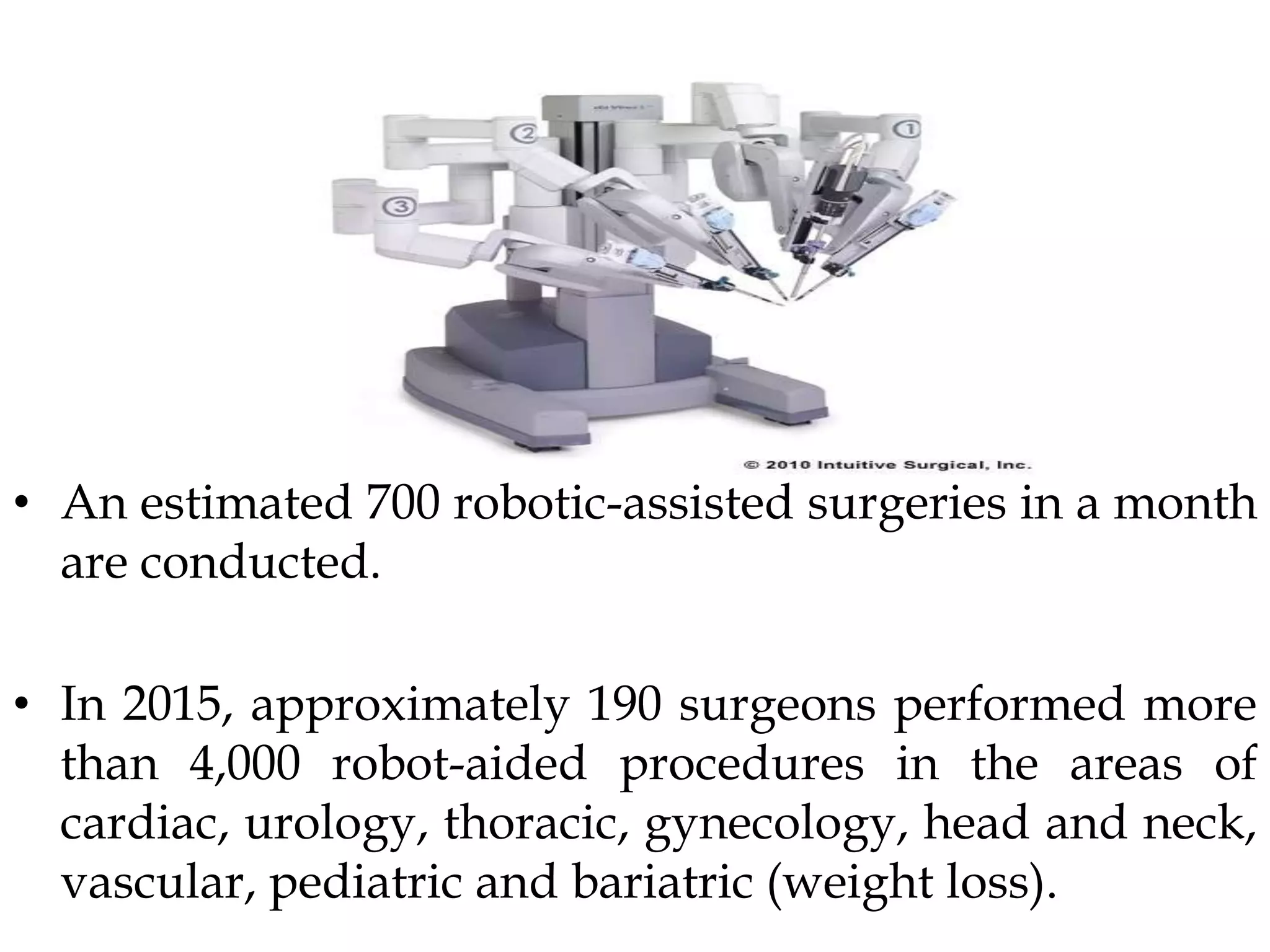
• An estimated 700 robotic-assisted surgeries in a month
are conducted.
• In 2015, approximately 190 surgeons performed more
than 4,000 robot-aided procedures in the areas of
cardiac, urology, thoracic, gynecology, head and neck,
vascular, pediatric and bariatric (weight loss).
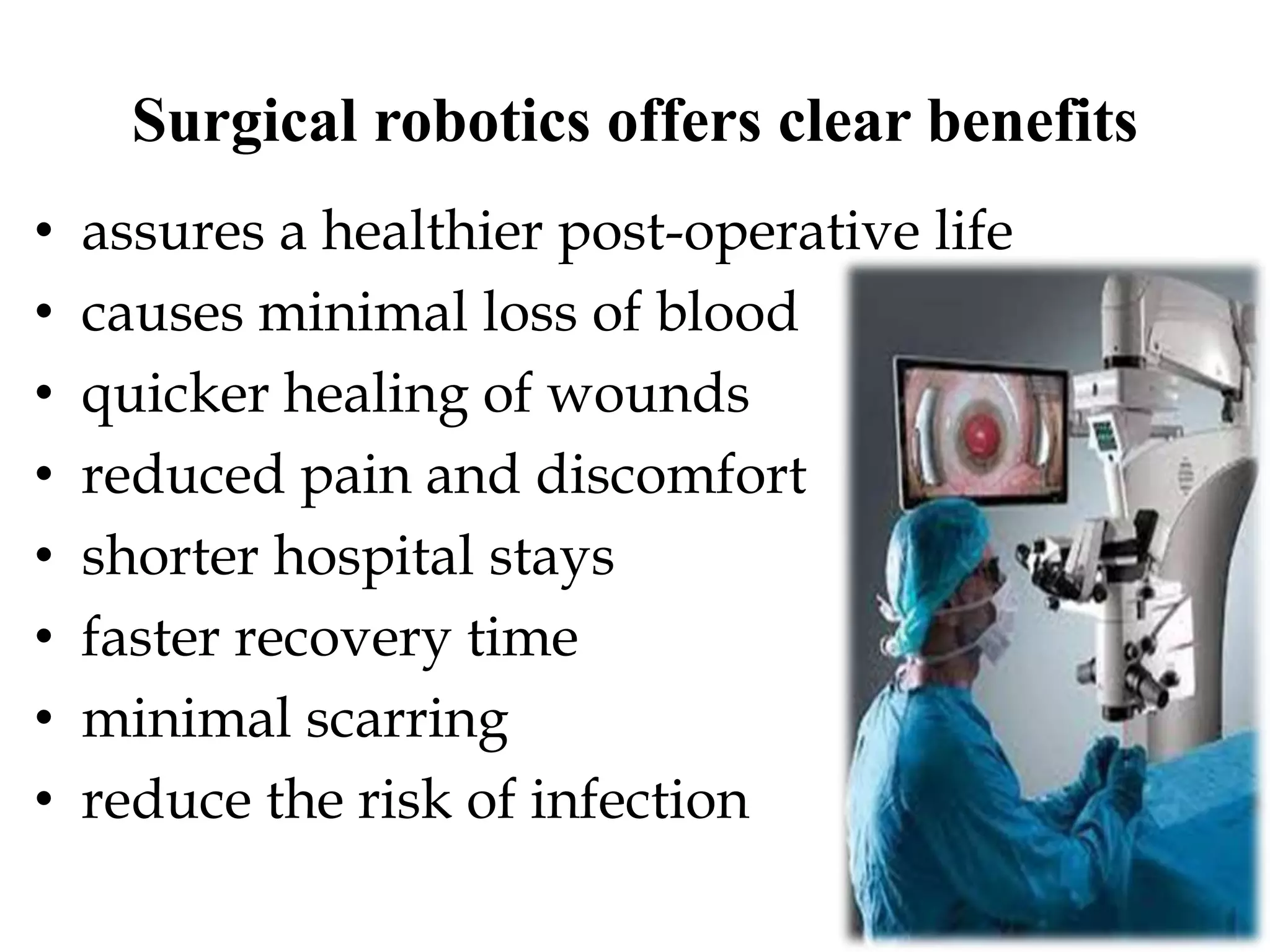
Surgical robotics offers clear benefits
• assures a healthier post-operative life
• causes minimal loss of blood
• quicker healing of wounds
• reduced pain and discomfort
• shorter hospital stays
• faster recovery time
• minimal scarring
• reduce the risk of infection
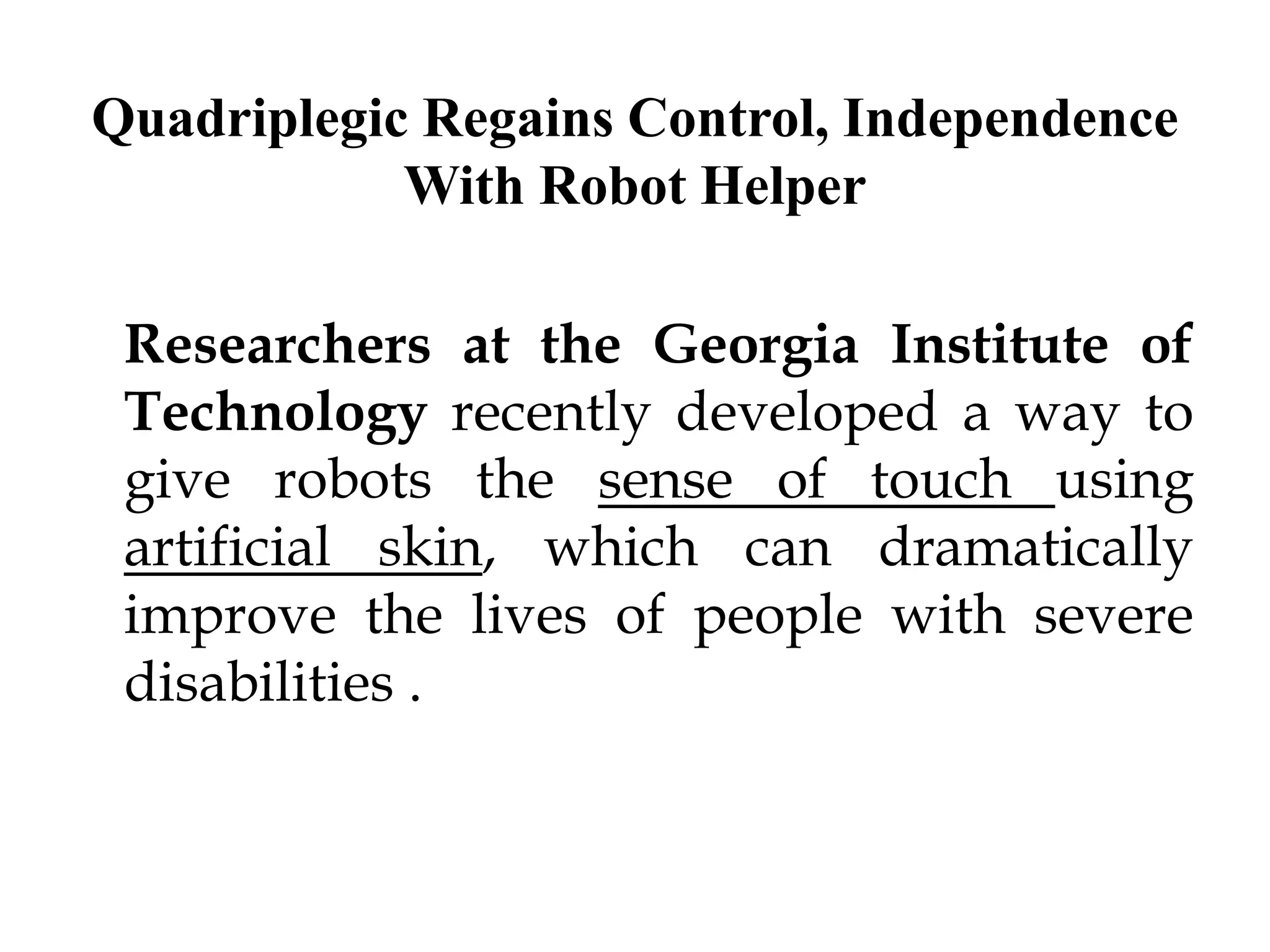
Quadriplegic Regains Control, Independence
With Robot Helper
Researchers at the Georgia Institute of
Technology recently developed a way to
give robots the sense of touch using
artificial skin, which can dramatically
improve the lives of people with severe
disabilities .
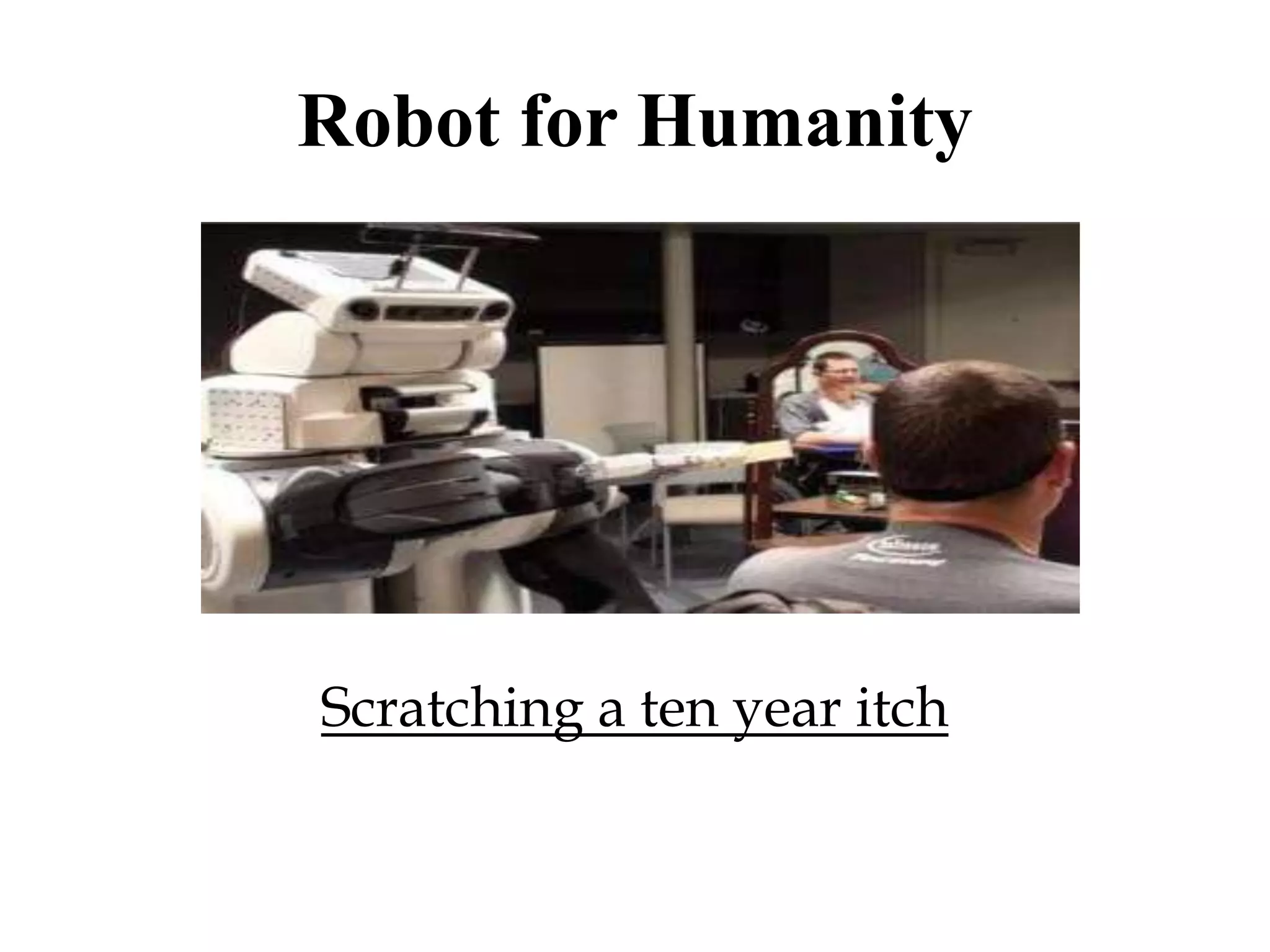
Robot for Humanity
Scratching a ten year itch
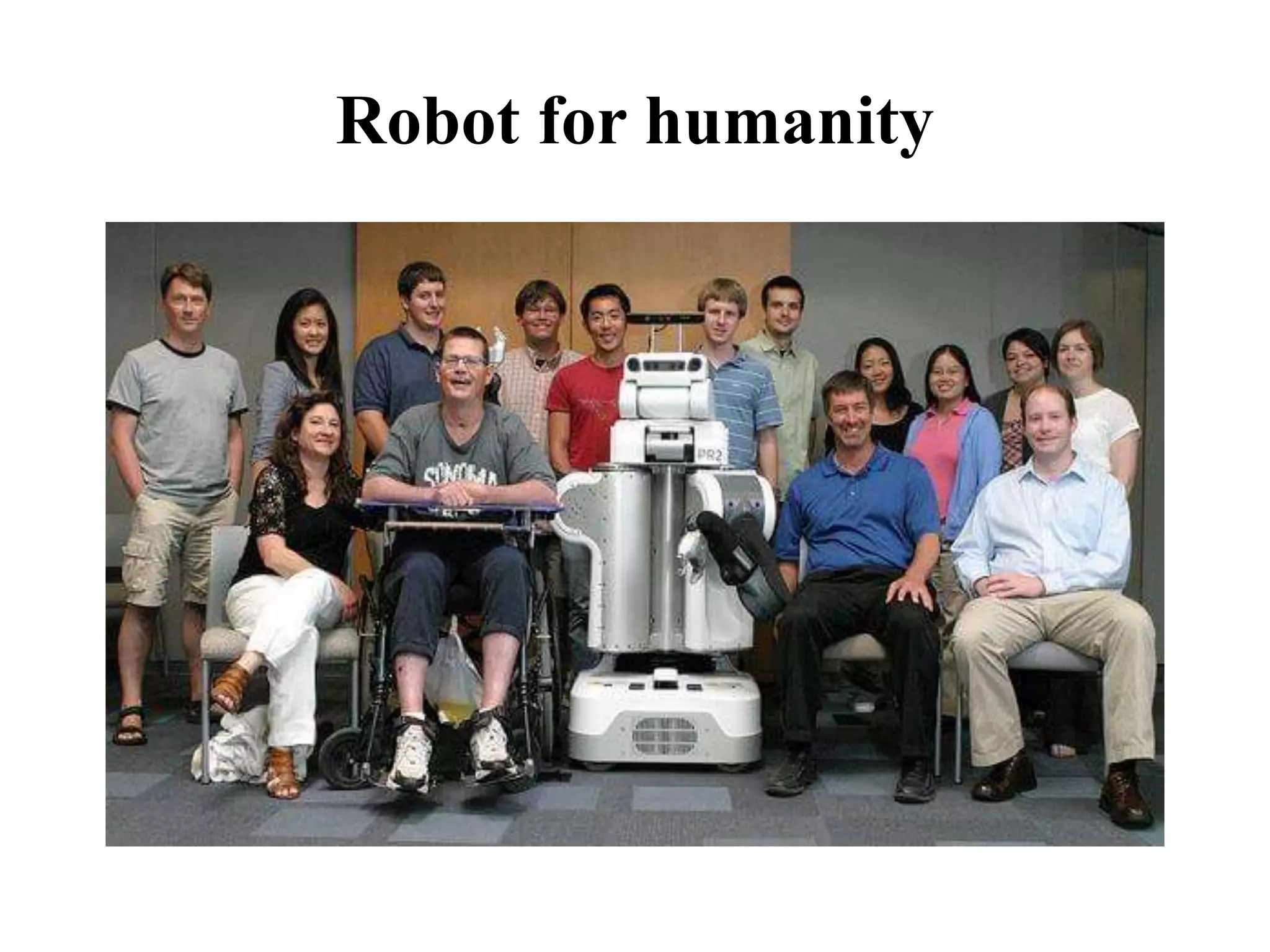
Robot for humanity
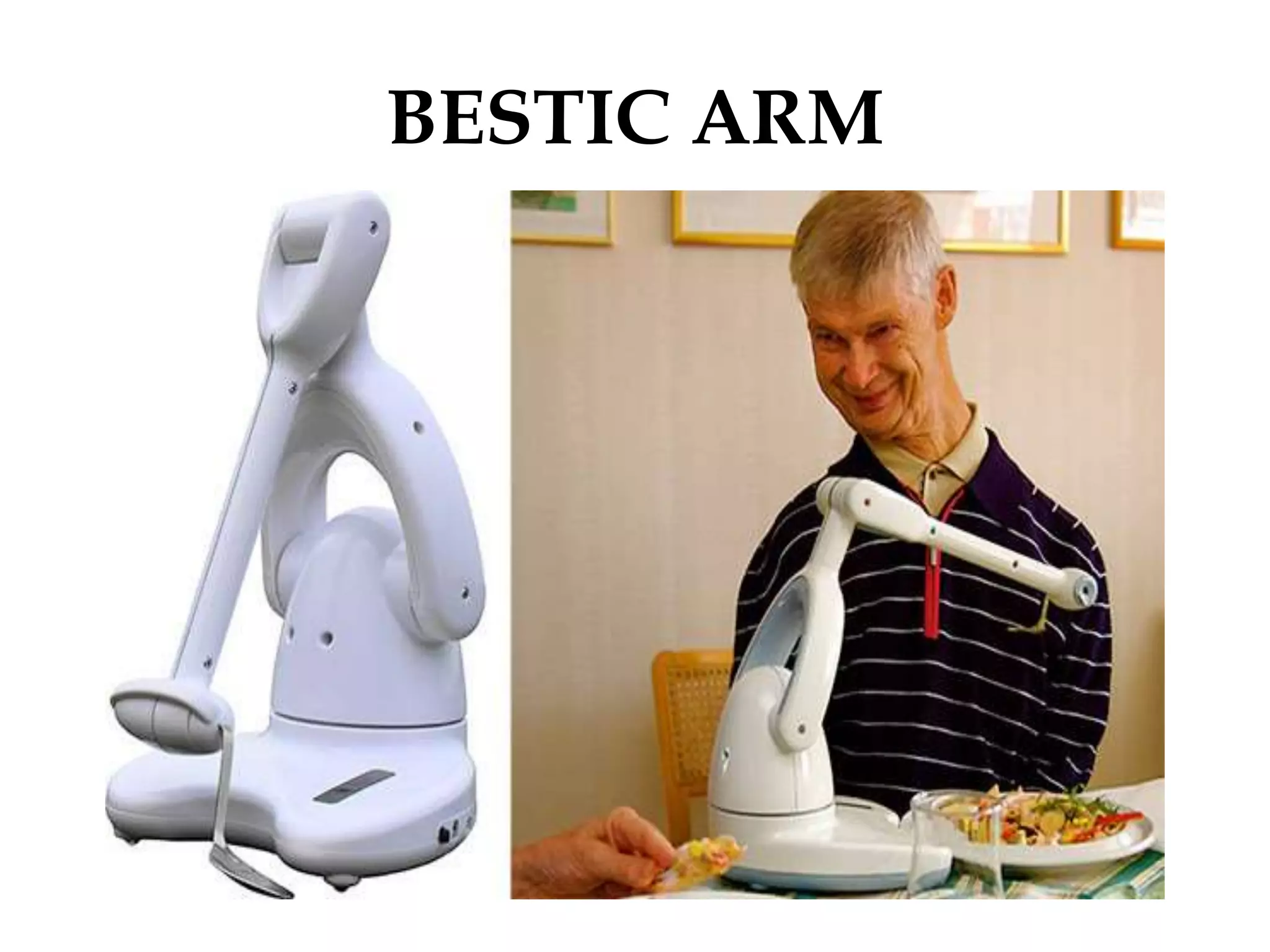
BESTIC ARM
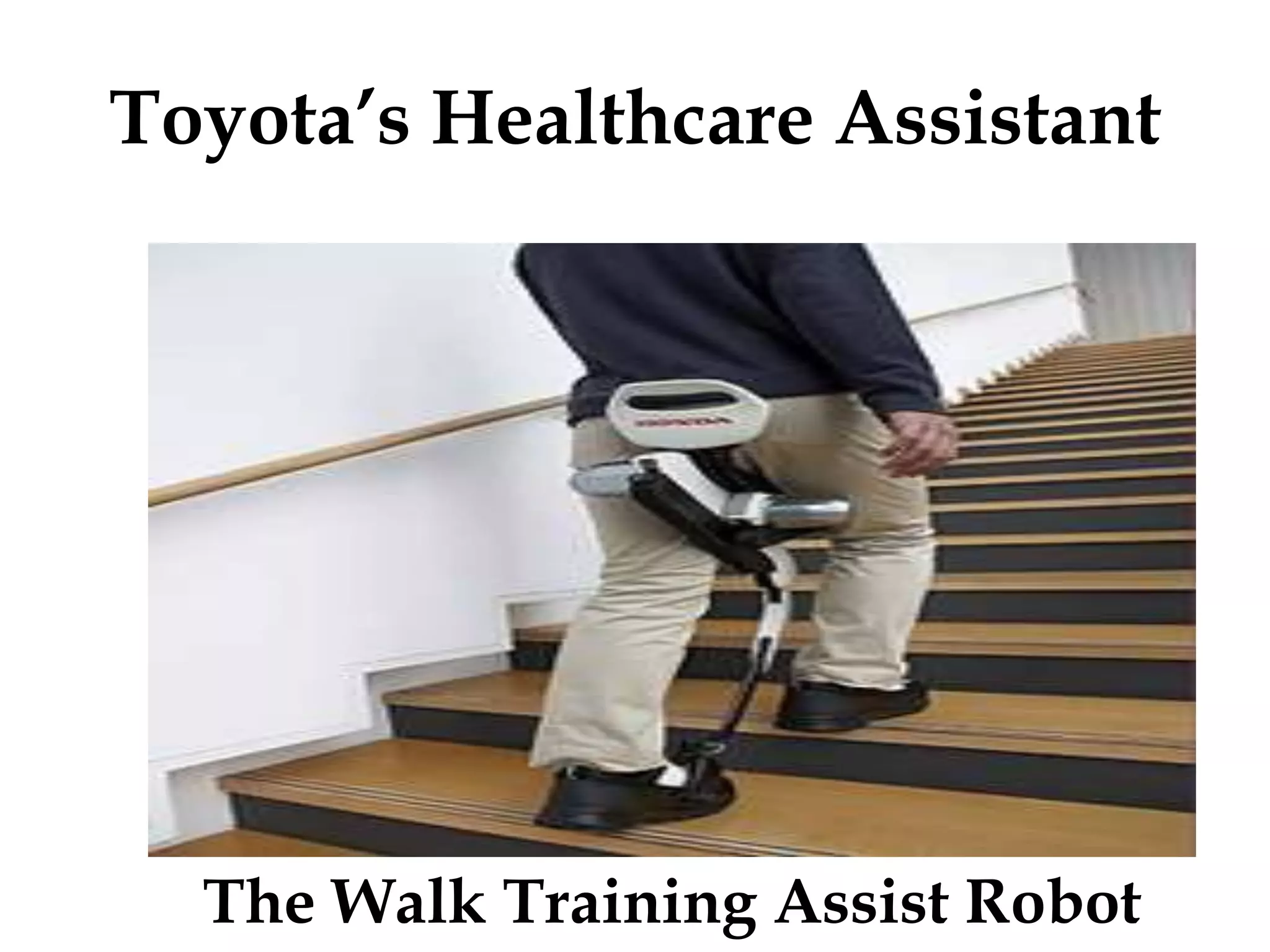
Toyota’s Healthcare Assistant
The Walk Training Assist Robot
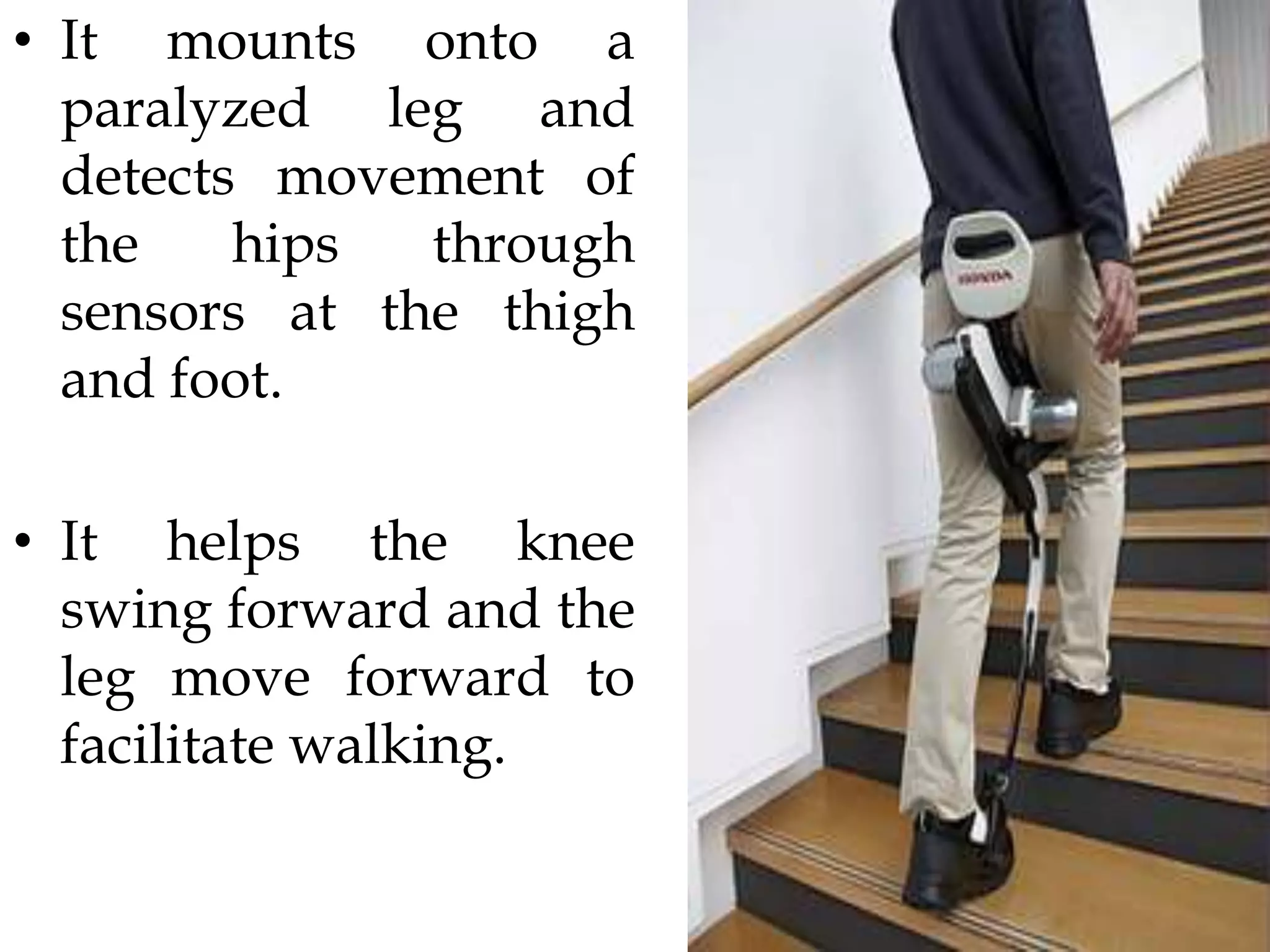
• It mounts onto a
paralyzed leg and
detects movement of
the hips through
sensors at the thigh
and foot.
• It helps the knee
swing forward and the
leg move forward to
facilitate walking.
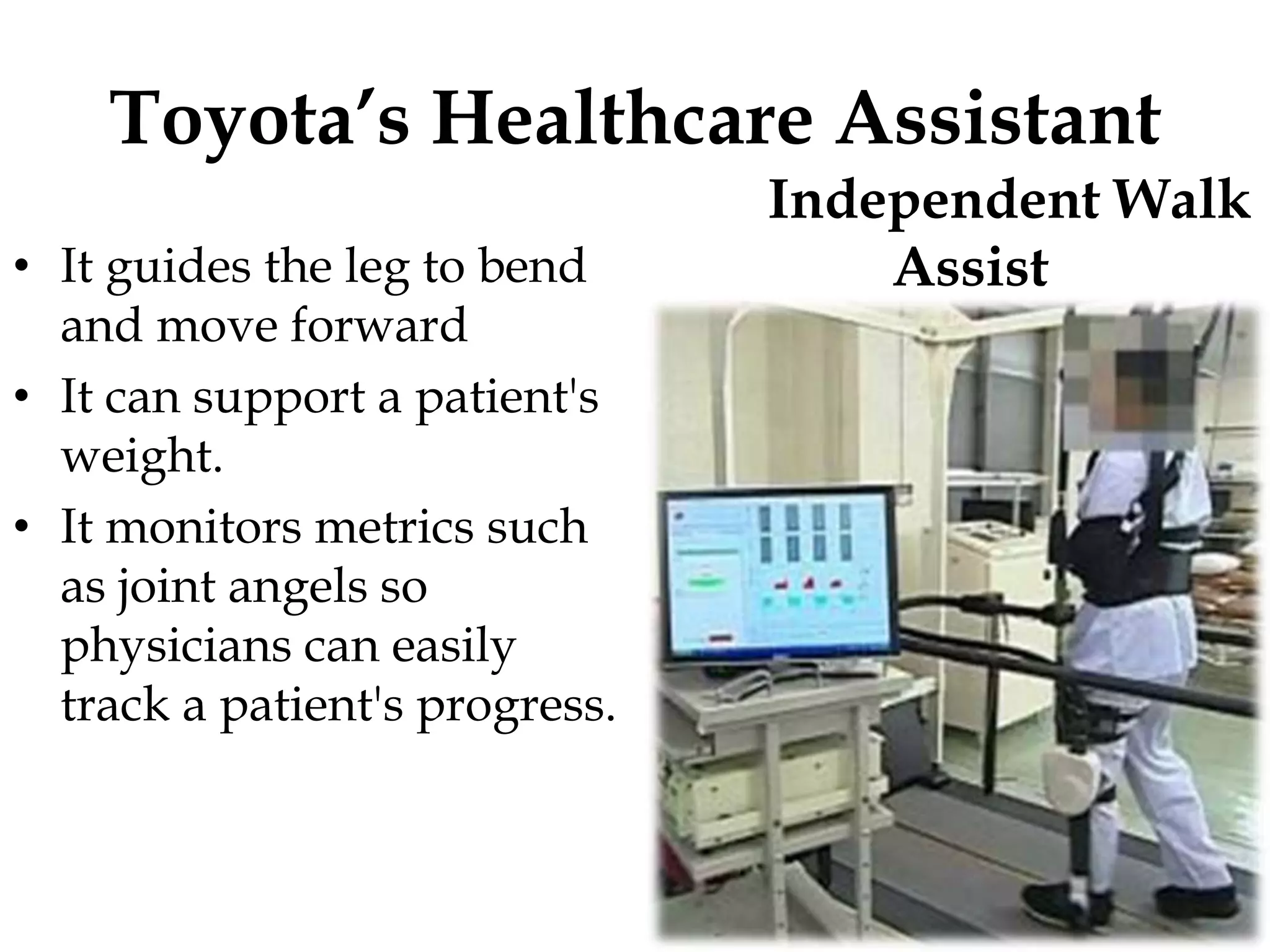
Toyota’s Healthcare Assistant
• It guides the leg to bend
and move forward
• It can support a patient's
weight.
• It monitors metrics such
as joint angels so
physicians can easily
track a patient's progress.
Independent Walk
Assist
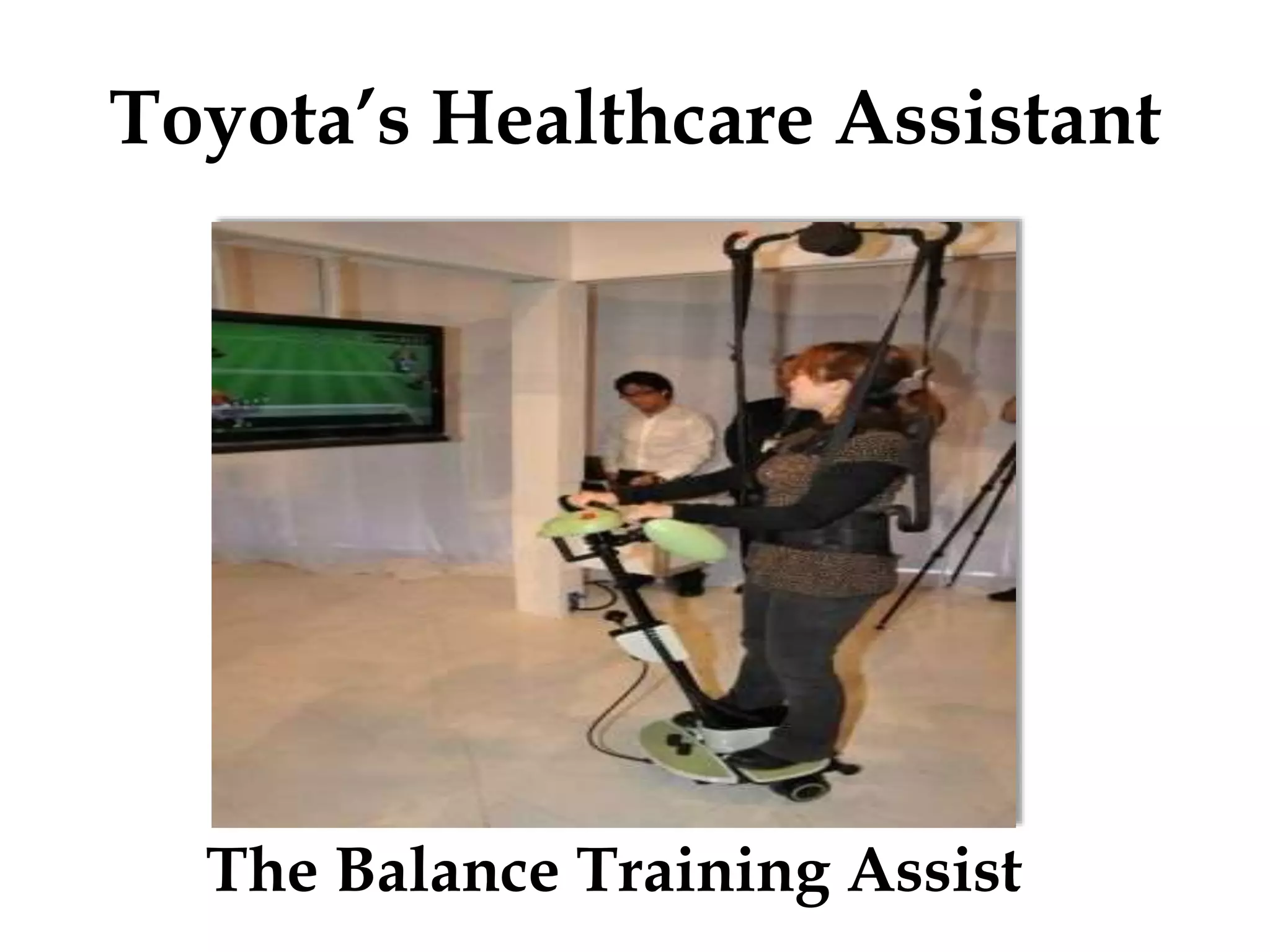
Toyota’s Healthcare Assistant
The Balance Training Assist
• It is a two-wheeled balancing game
• It displays one of three games (tennis,
soccer or basketball) on a monitor
• The patient makes moves in the
game by shifting his or her weight on
the robot.
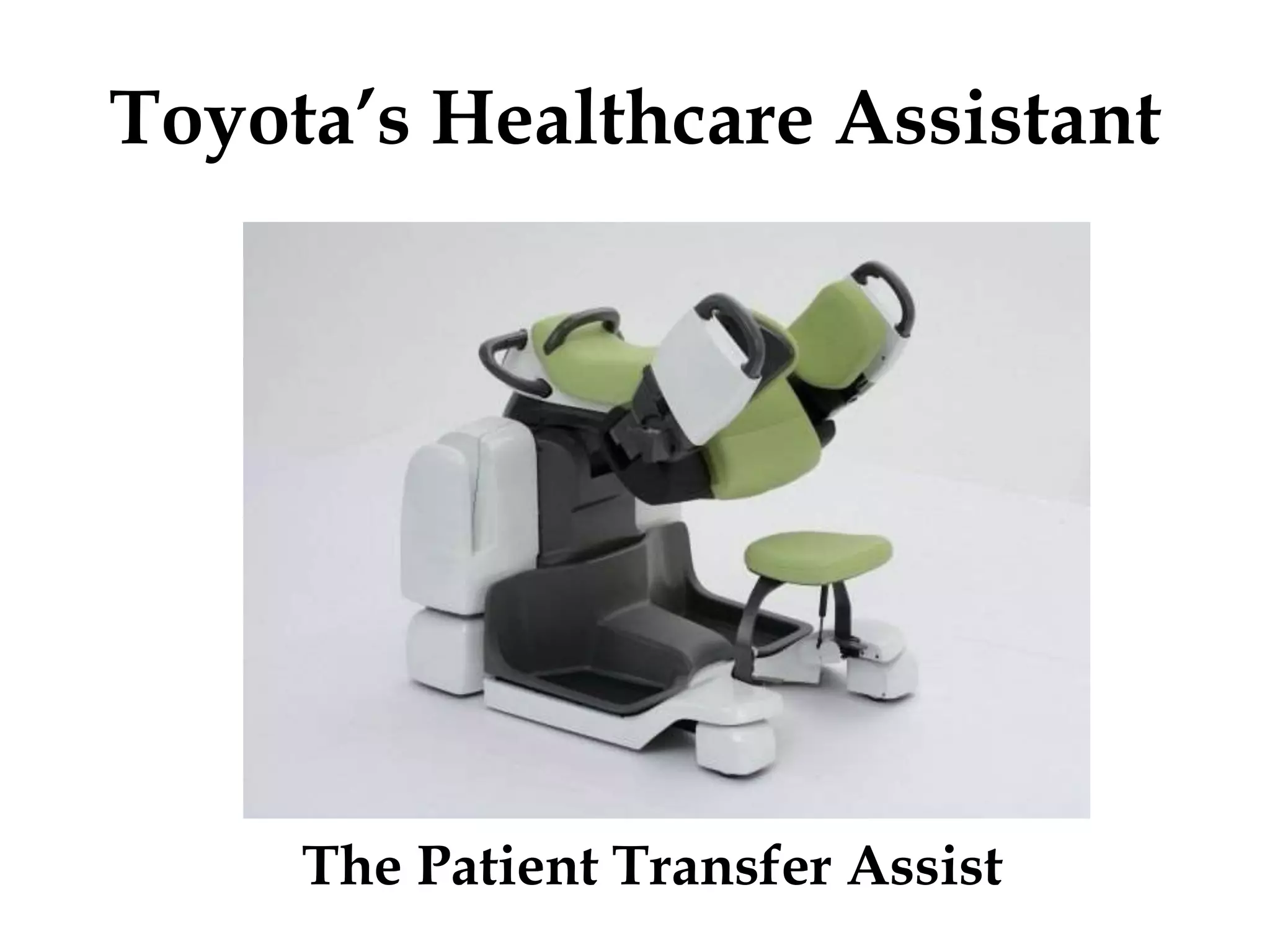
Toyota’s Healthcare Assistant
The Patient Transfer Assist
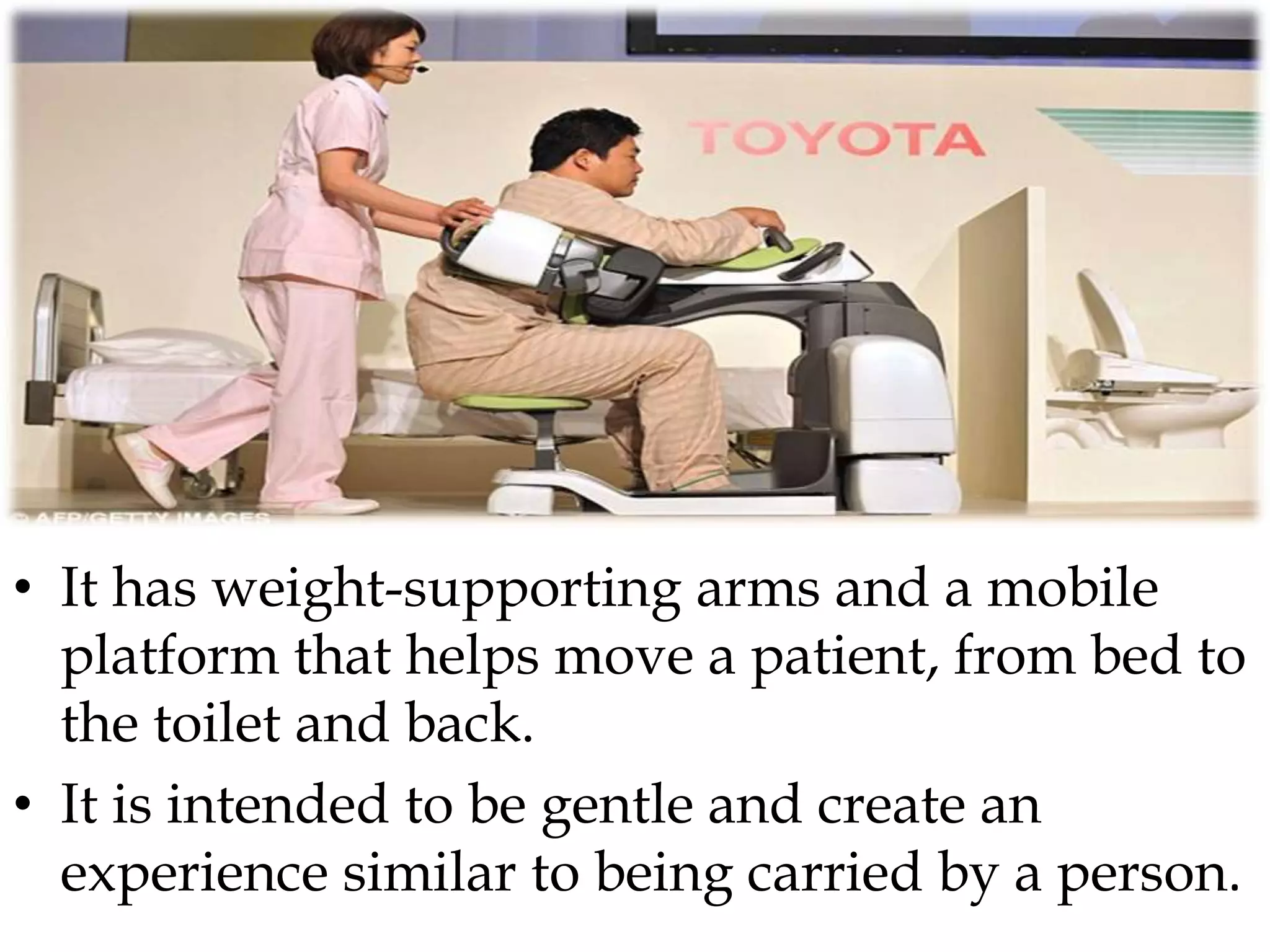
• It has weight-supporting arms and a mobile
platform that helps move a patient, from bed to
the toilet and back.
• It is intended to be gentle and create an
experience similar to being carried by a person.
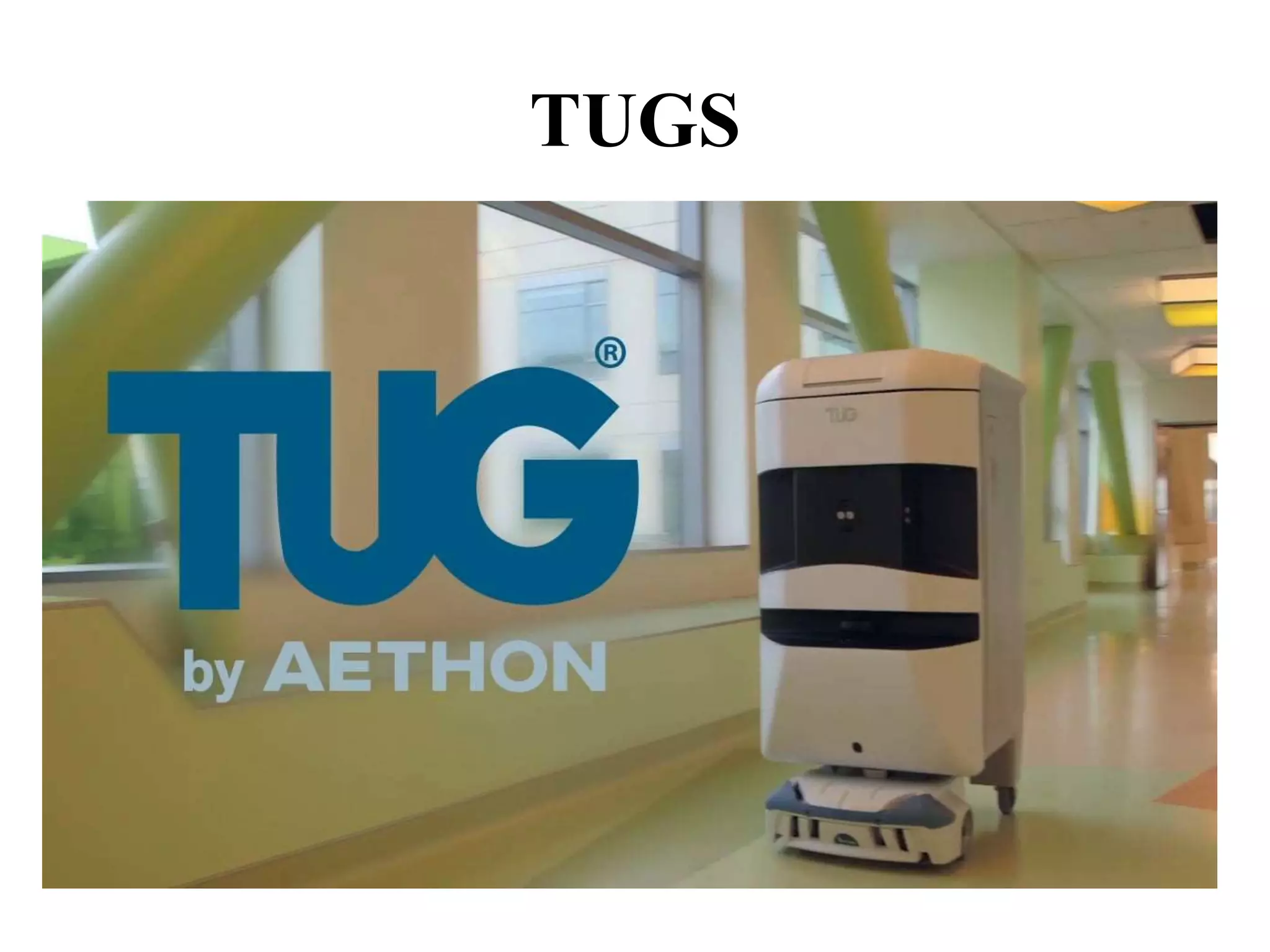
TUGS
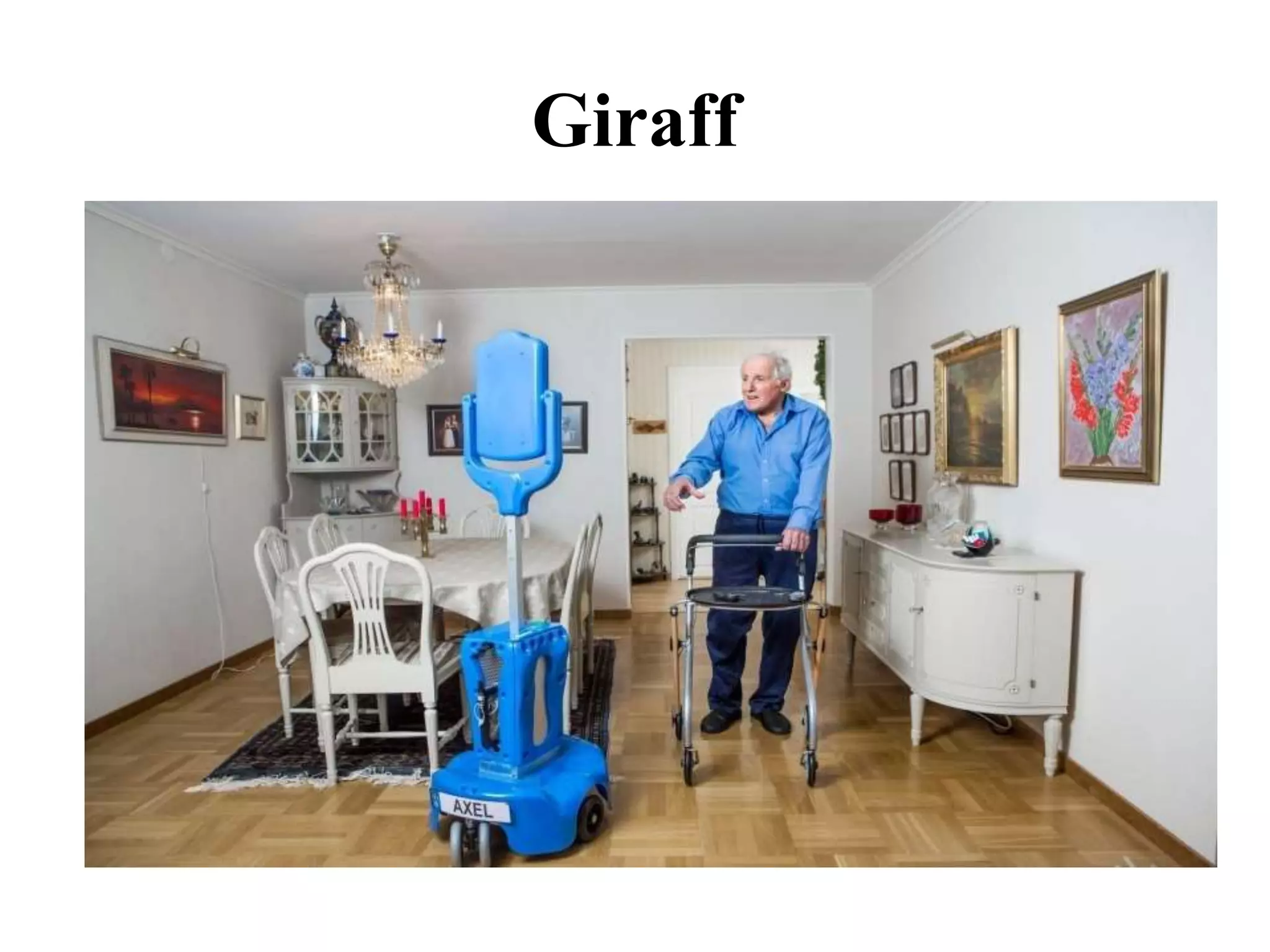
Giraff
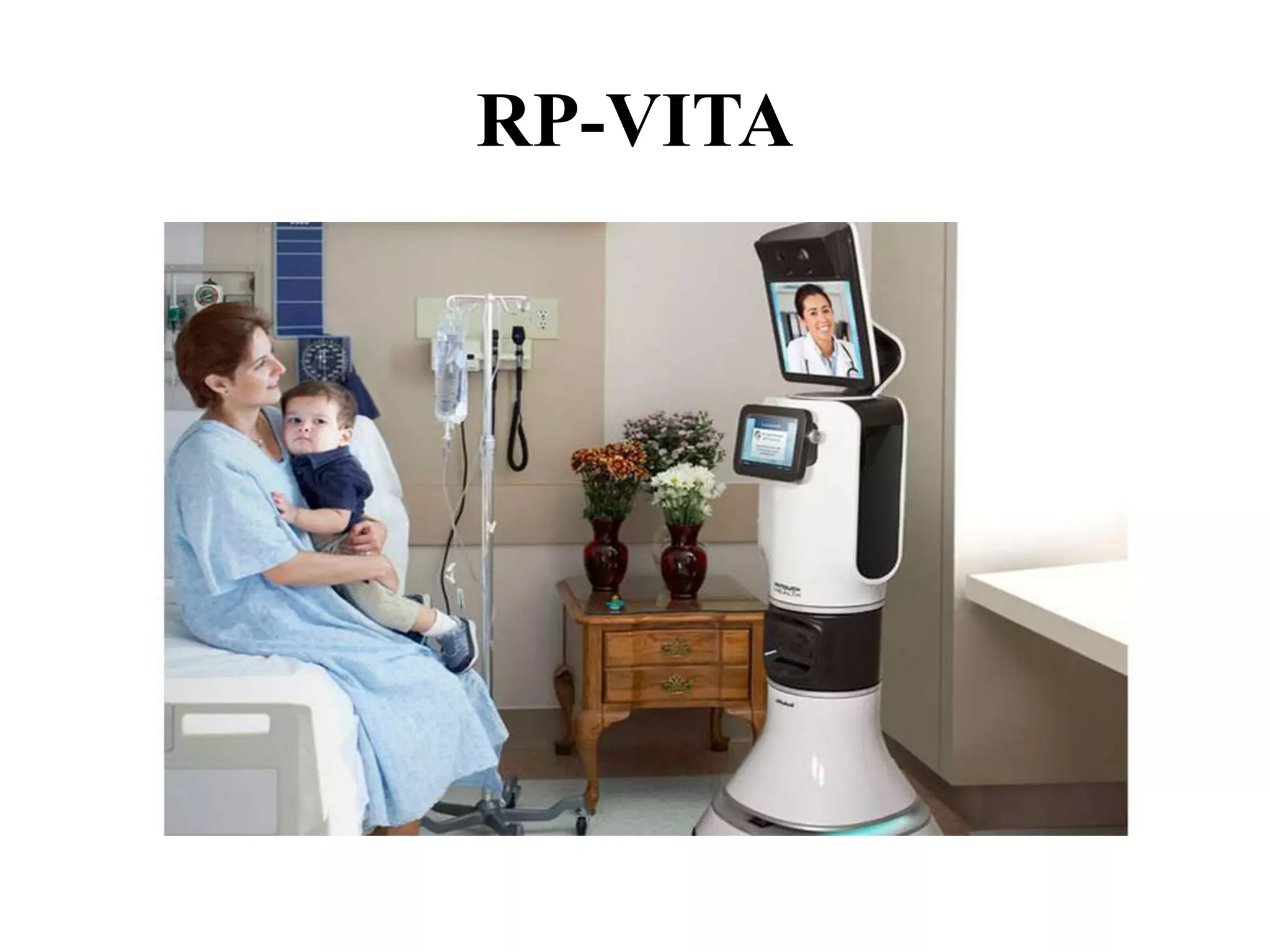
RP-VITA
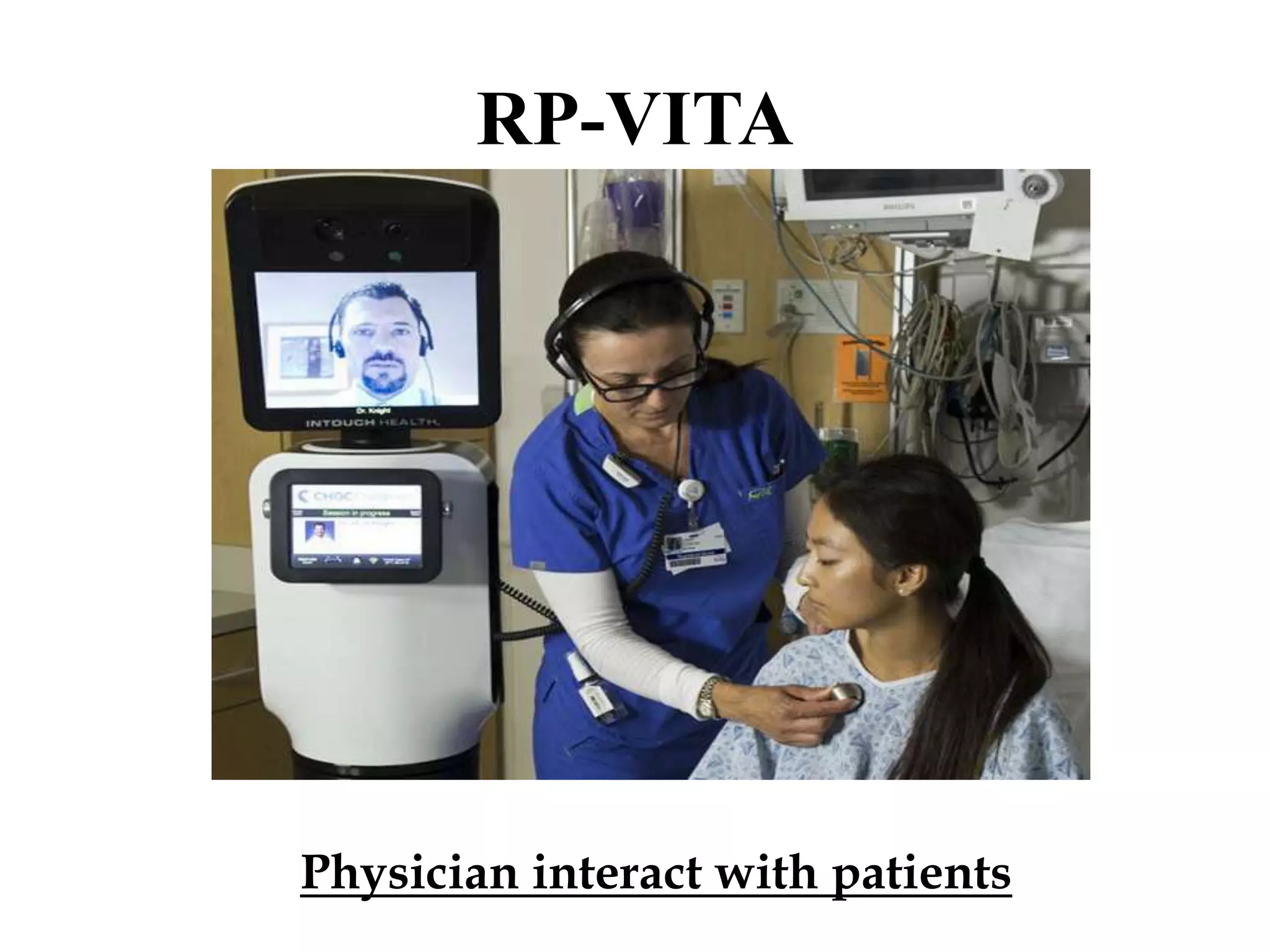
RP-VITA
Physician interact with patients
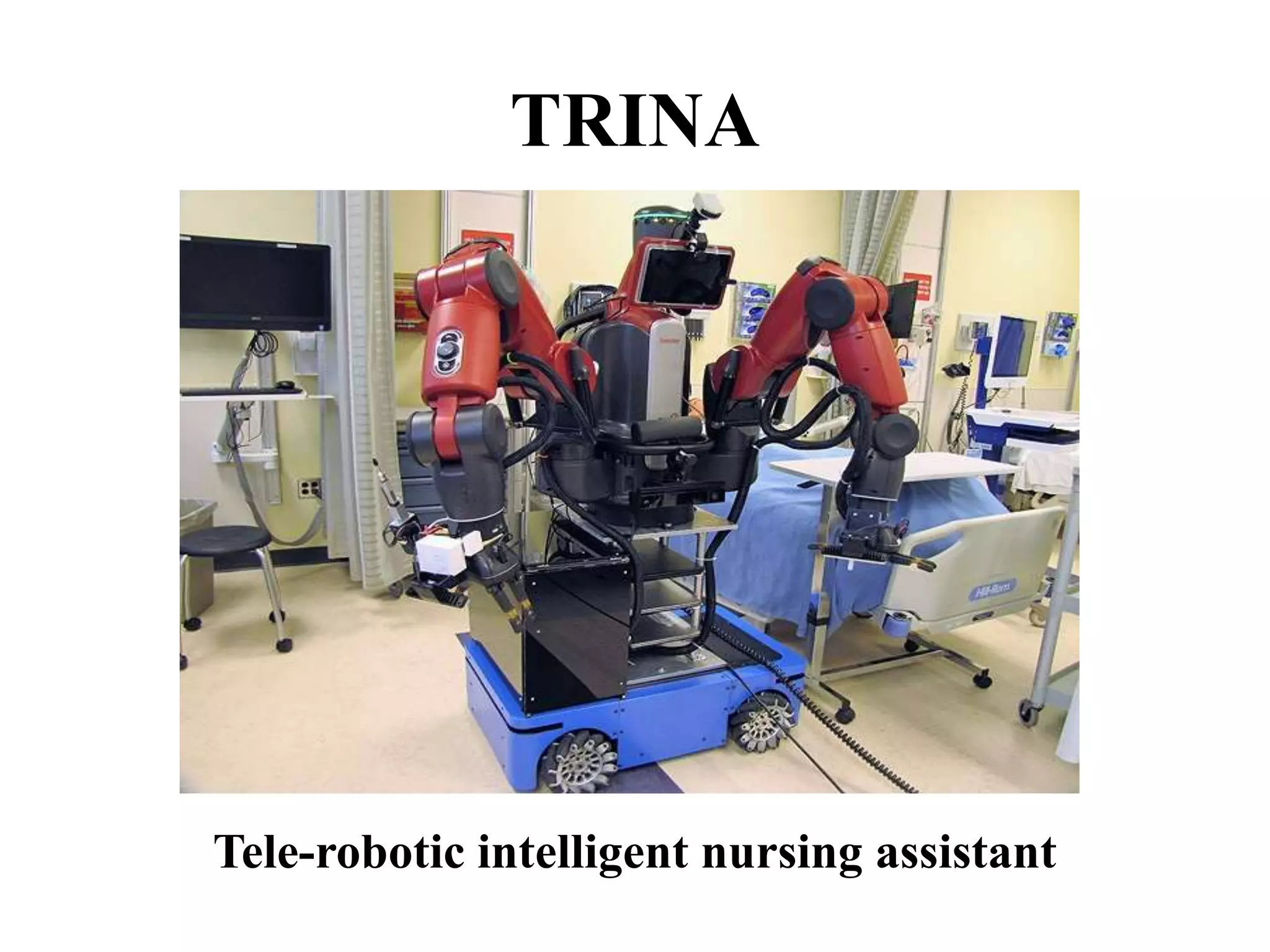
TRINA
Tele-robotic intelligent nursing assistant
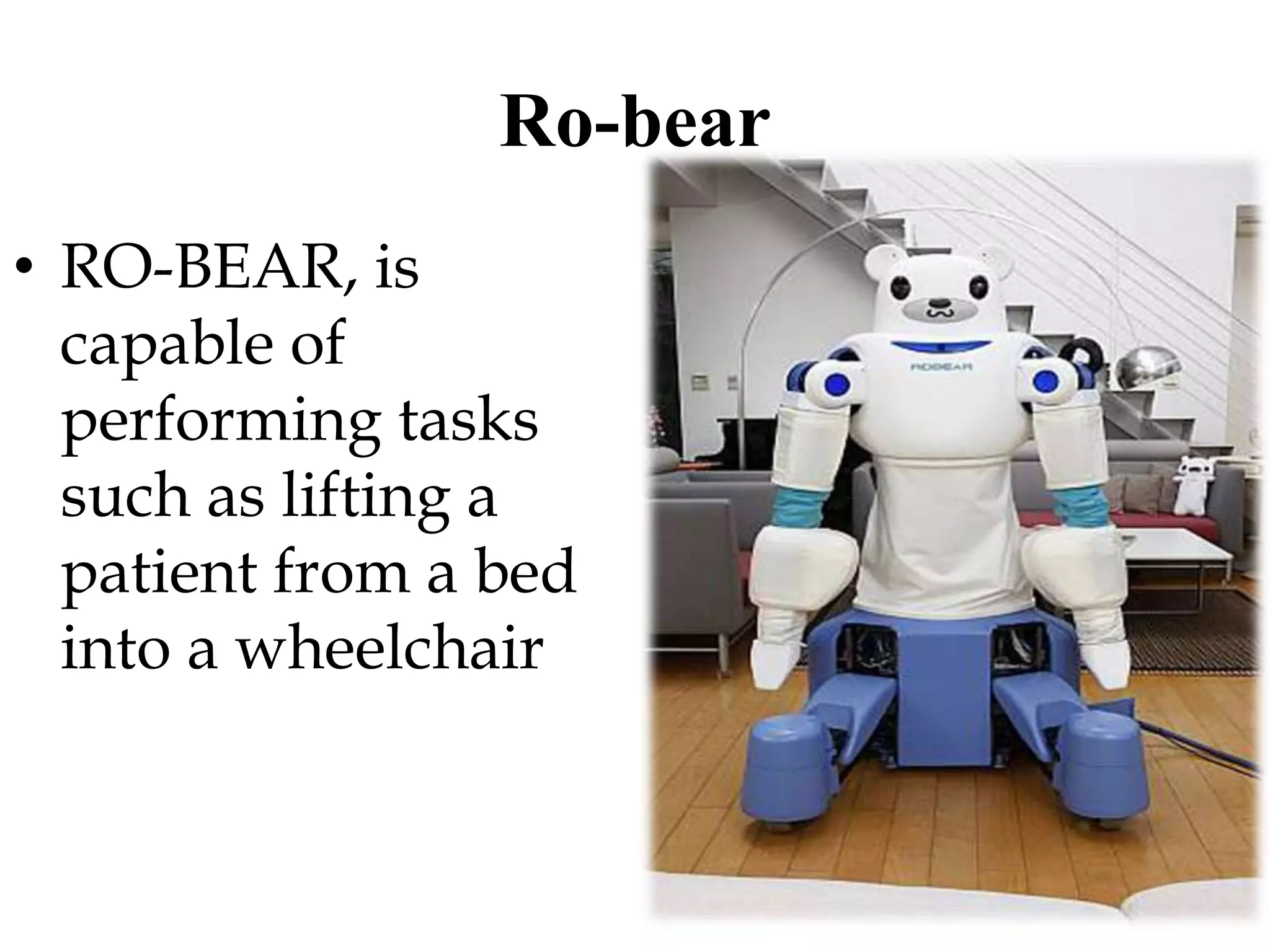
Ro-bear
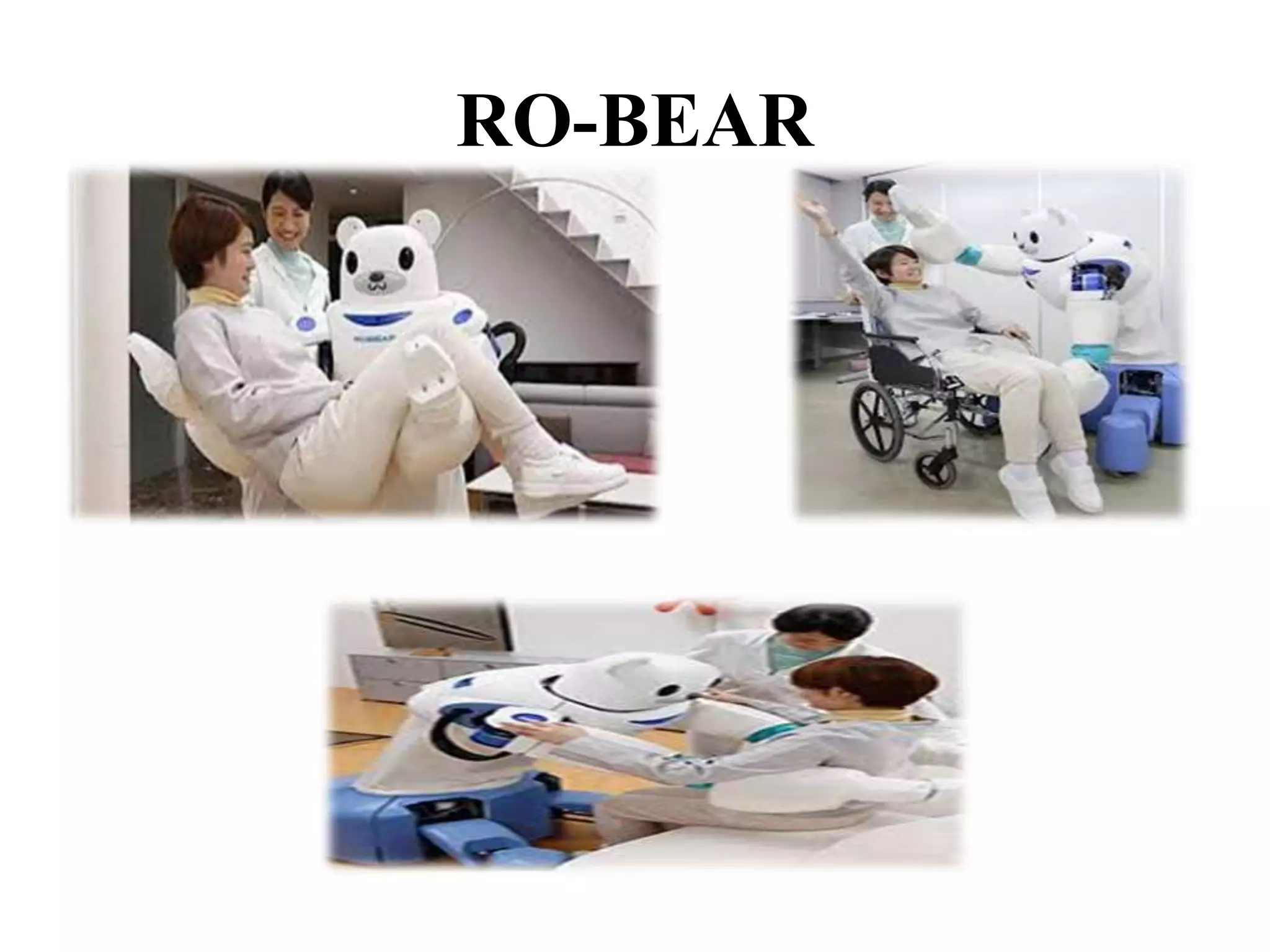
• RO-BEAR, is
capable of
performing tasks
such as lifting a
patient from a bed
into a wheelchair
RO-BEAR
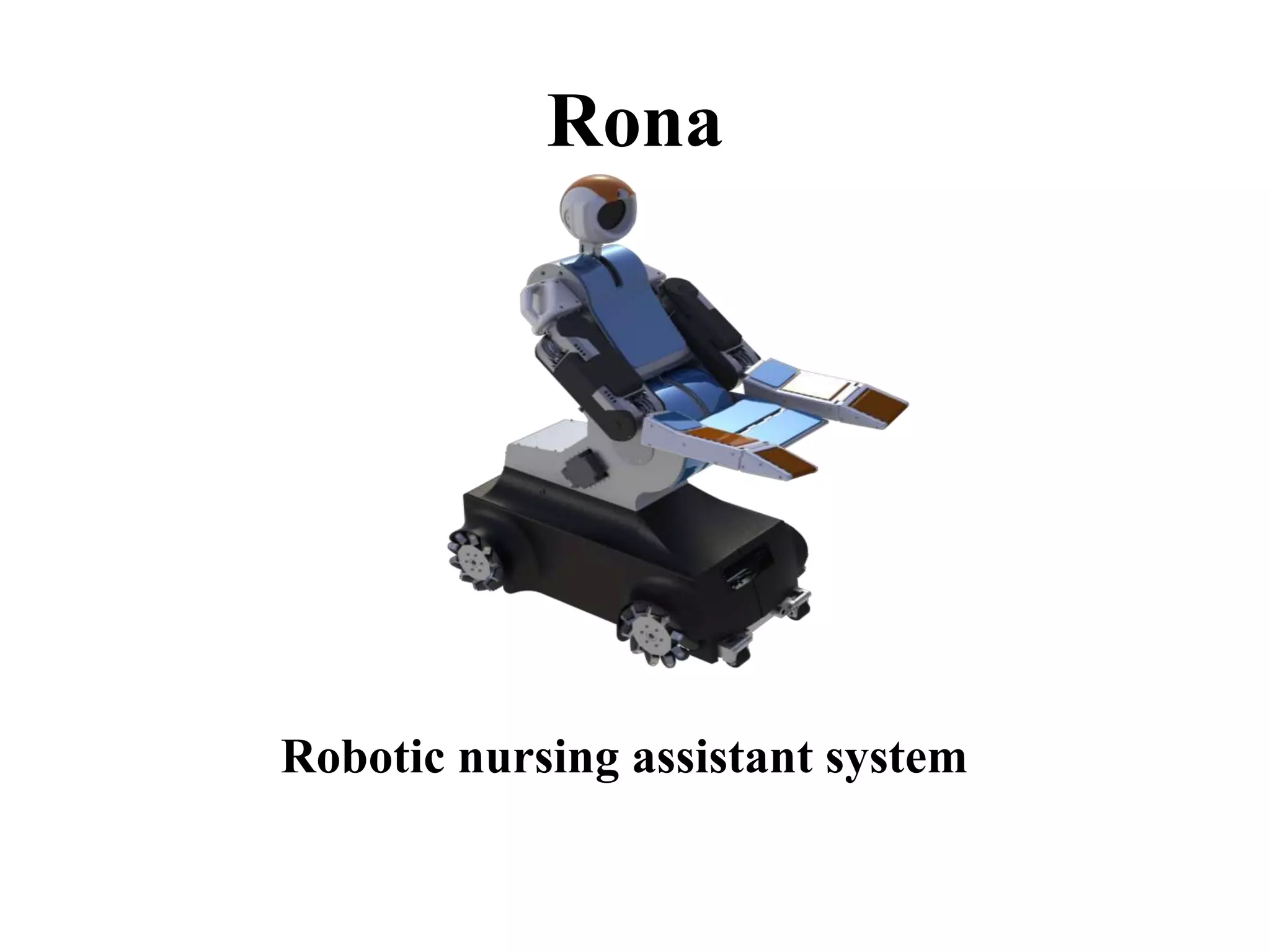
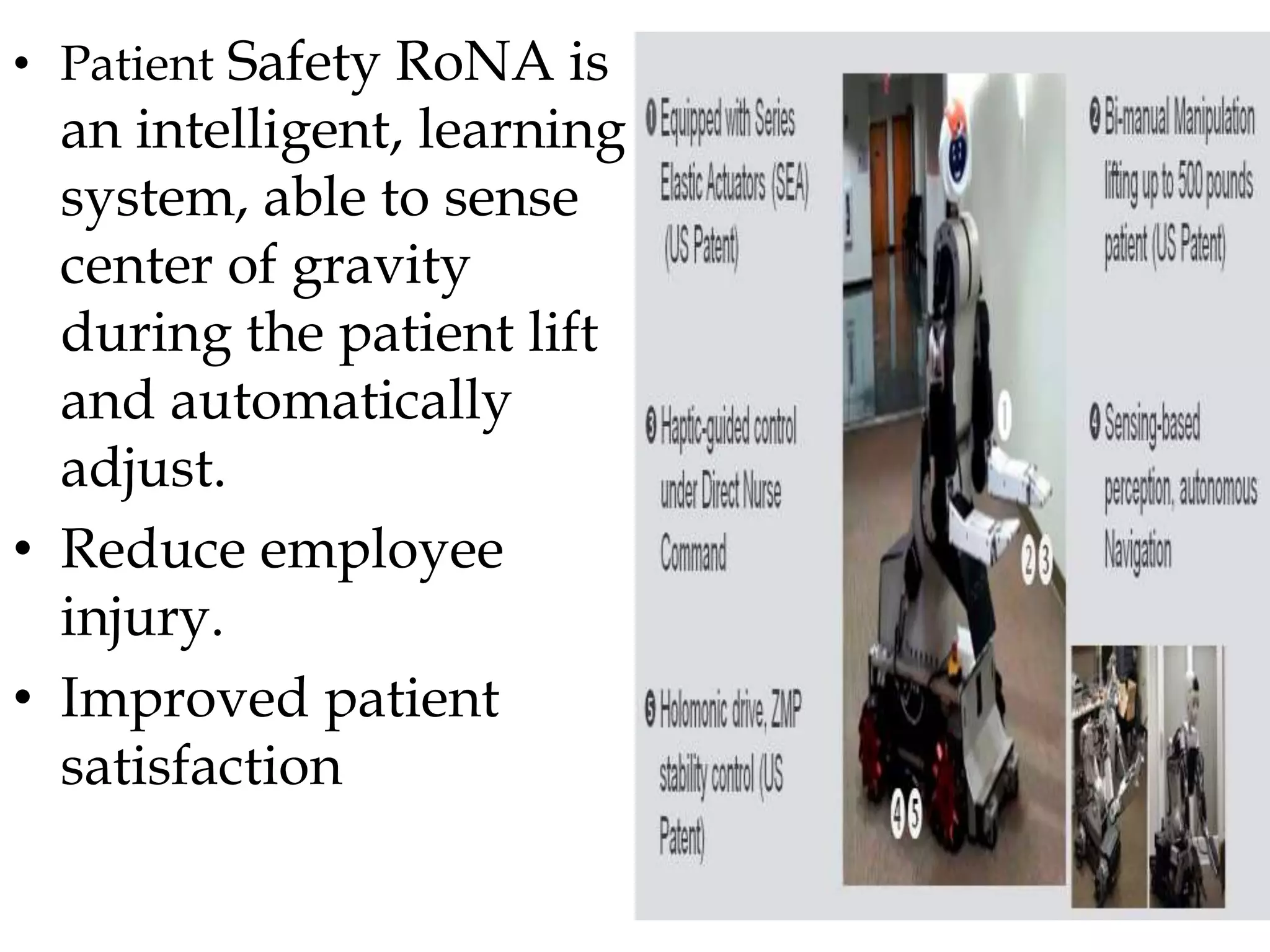
Rona
Robotic nursing assistant system
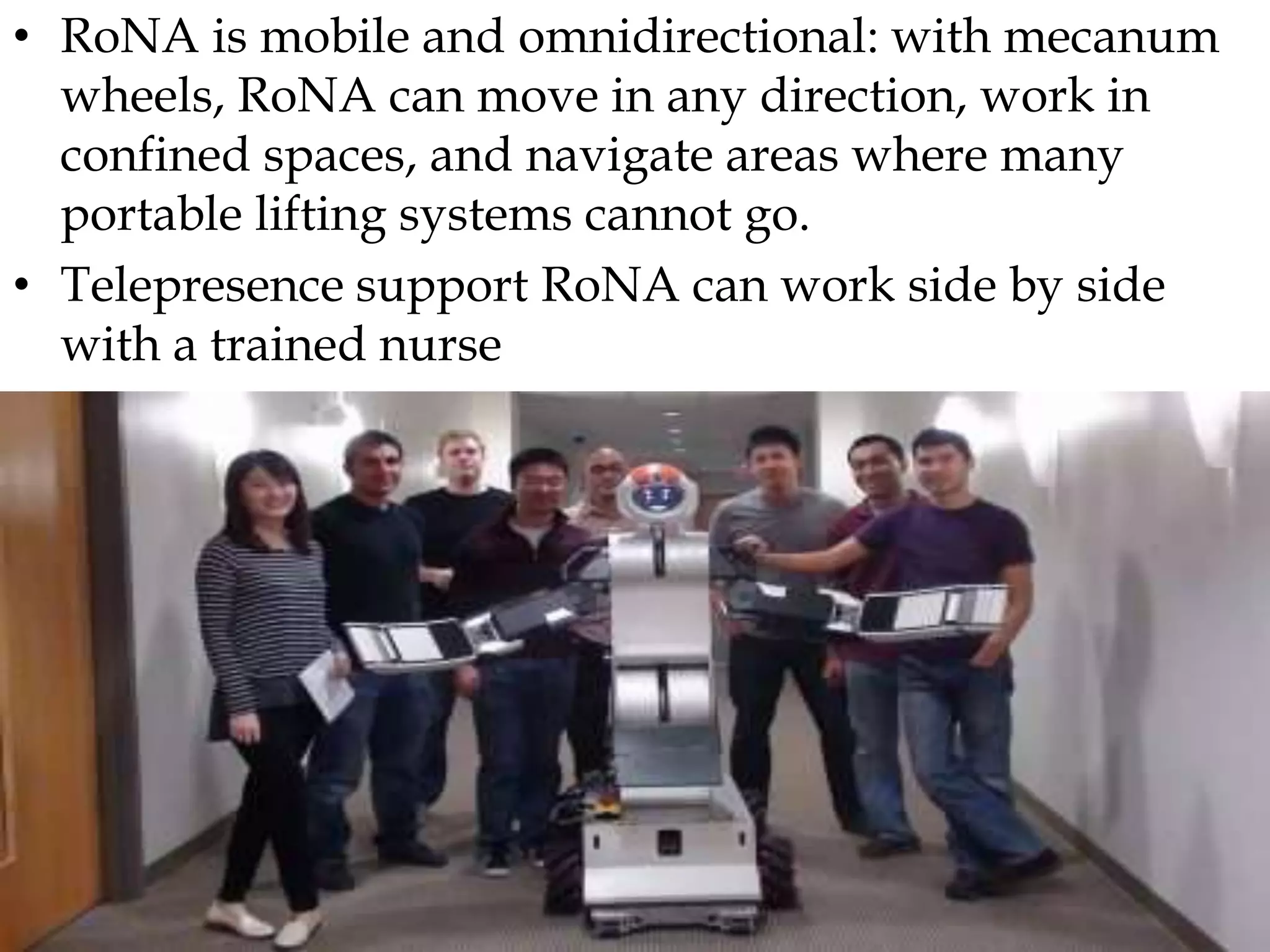
• RoNA is mobile and omnidirectional: with mecanum
wheels, RoNA can move in any direction, work in
confined spaces, and navigate areas where many
portable lifting systems cannot go.
• Telepresence support RoNA can work side by side
with a trained nurse
• Patient Safety RoNA is
an intelligent, learning
system, able to sense
center of gravity
during the patient lift
and automatically
adjust.
• Reduce employee
injury.
• Improved patient
satisfaction
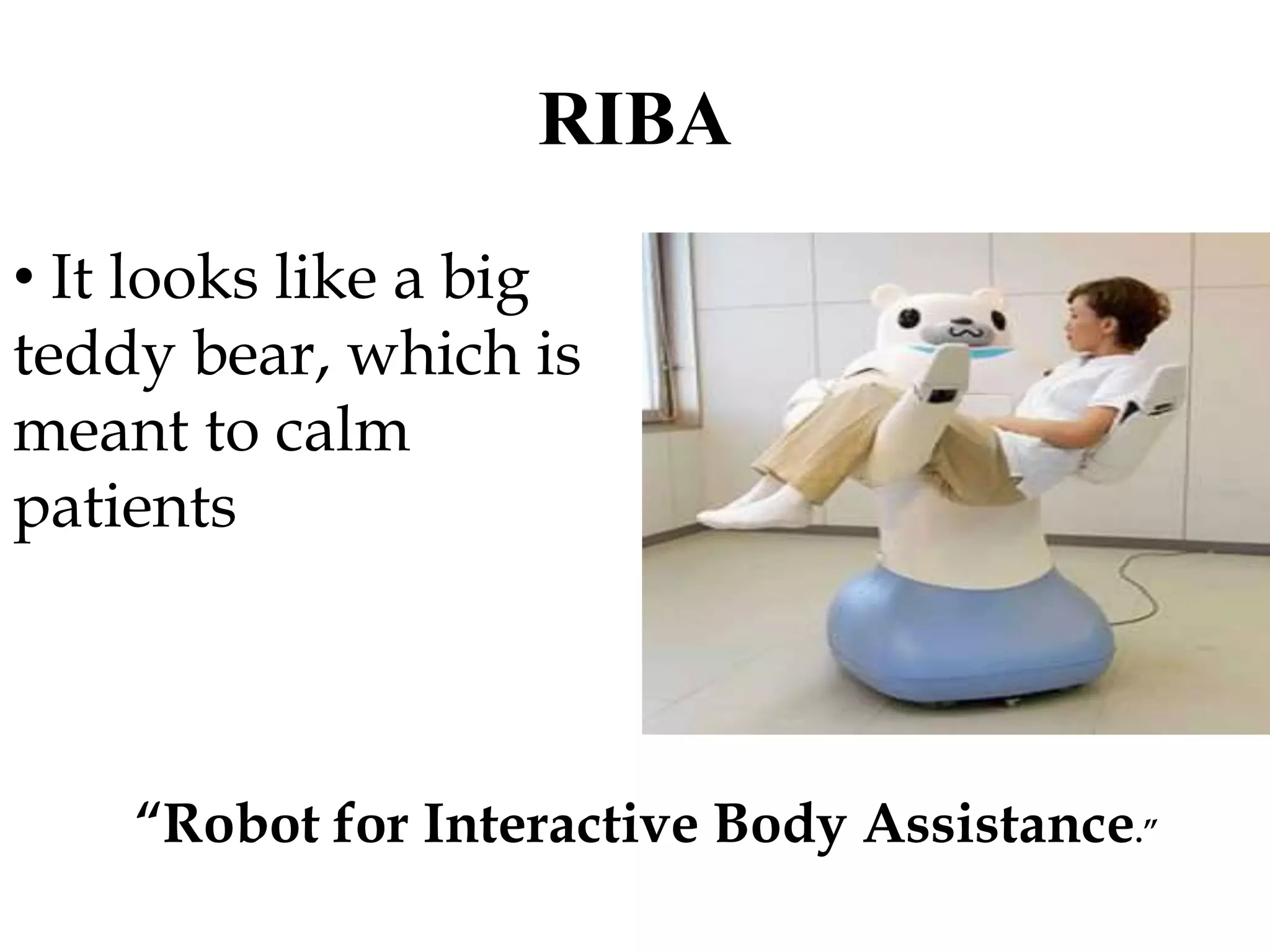
RIBA
“Robot for Interactive Body Assistance.”
• It looks like a big
teddy bear, which is
meant to calm
patients
RIBA
• RIBA can lift a person up to 60 kg from a lying
or sitting position and move them to another
location.
• Has strong arms with advanced tactile sensors
that prevent slipping.
• Is equipped with two cameras and two
microphones so it can follow cues from an
operator.
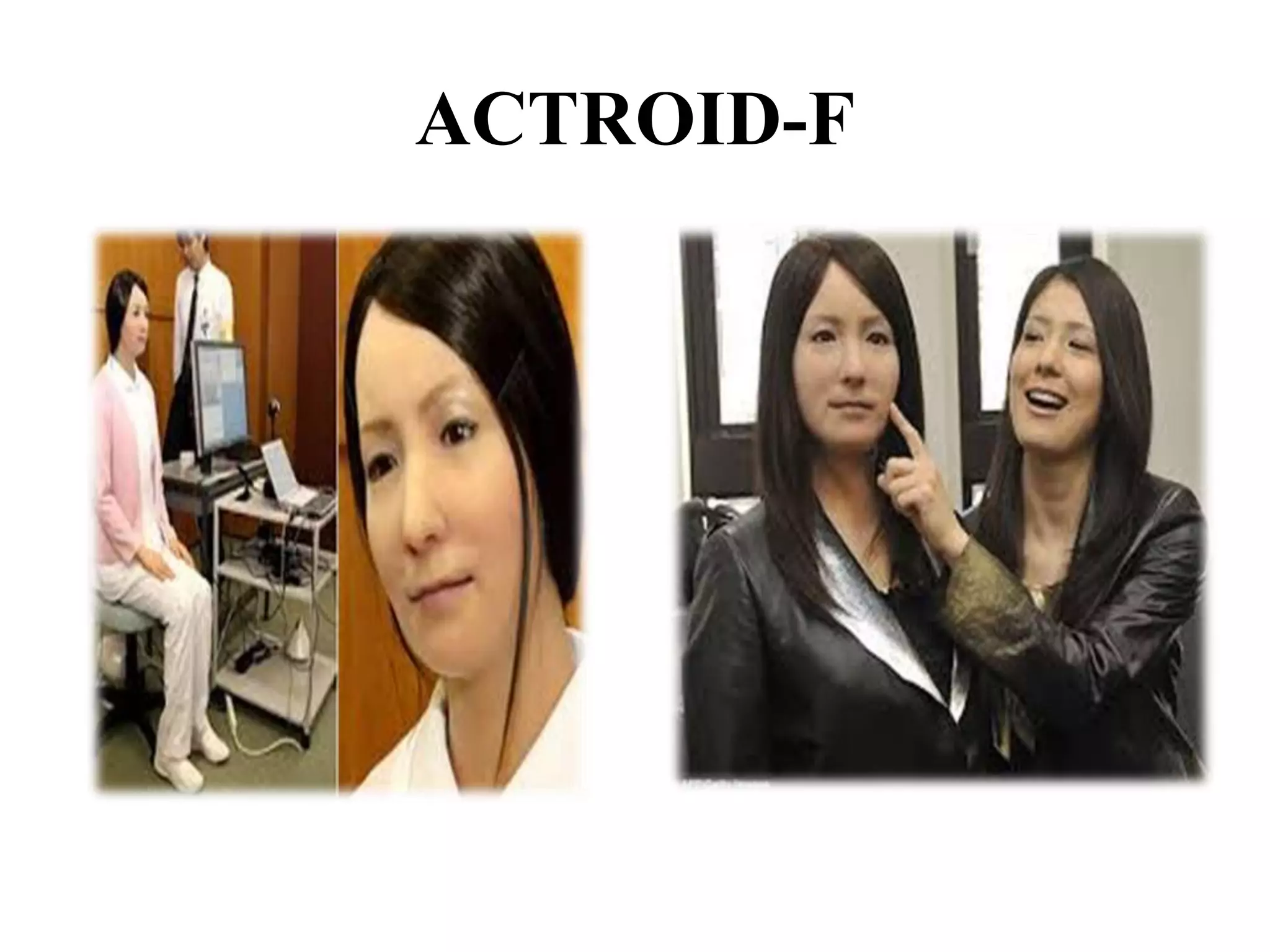
ACTROID-F
• This robot is modeled after a human female
and can move its eyes, eyebrows, mouth,
head, neck.
• It interacts with patients as a human.
• It can help patients combat loneliness
• The female version is so realistic that, when
tested, some subjects couldn’t tell the
difference between Actroid-F and the human
sitting next to her at first.
ACTROID-F
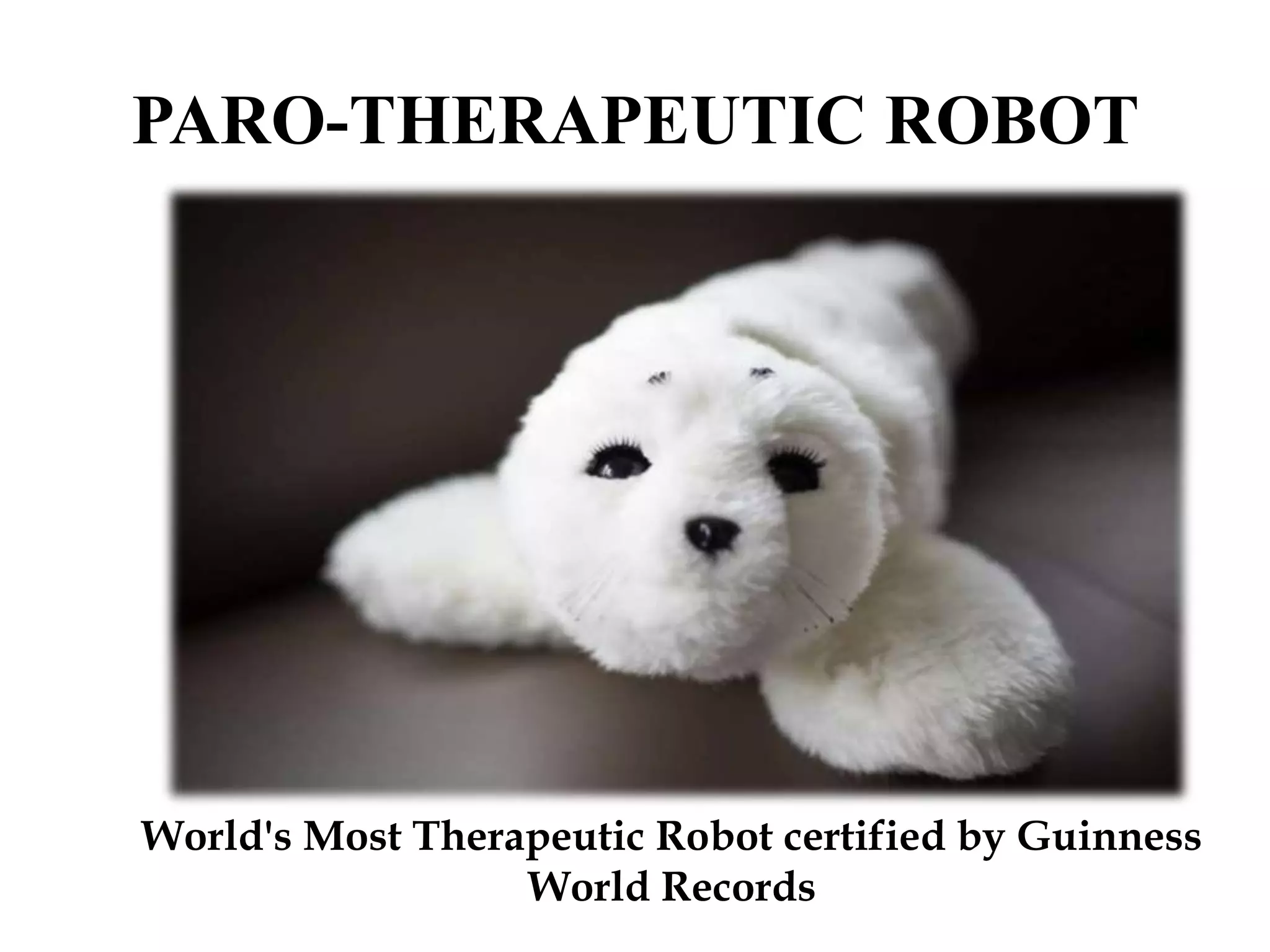
PARO-THERAPEUTIC ROBOT
World's Most Therapeutic Robot certified by Guinness
World Records
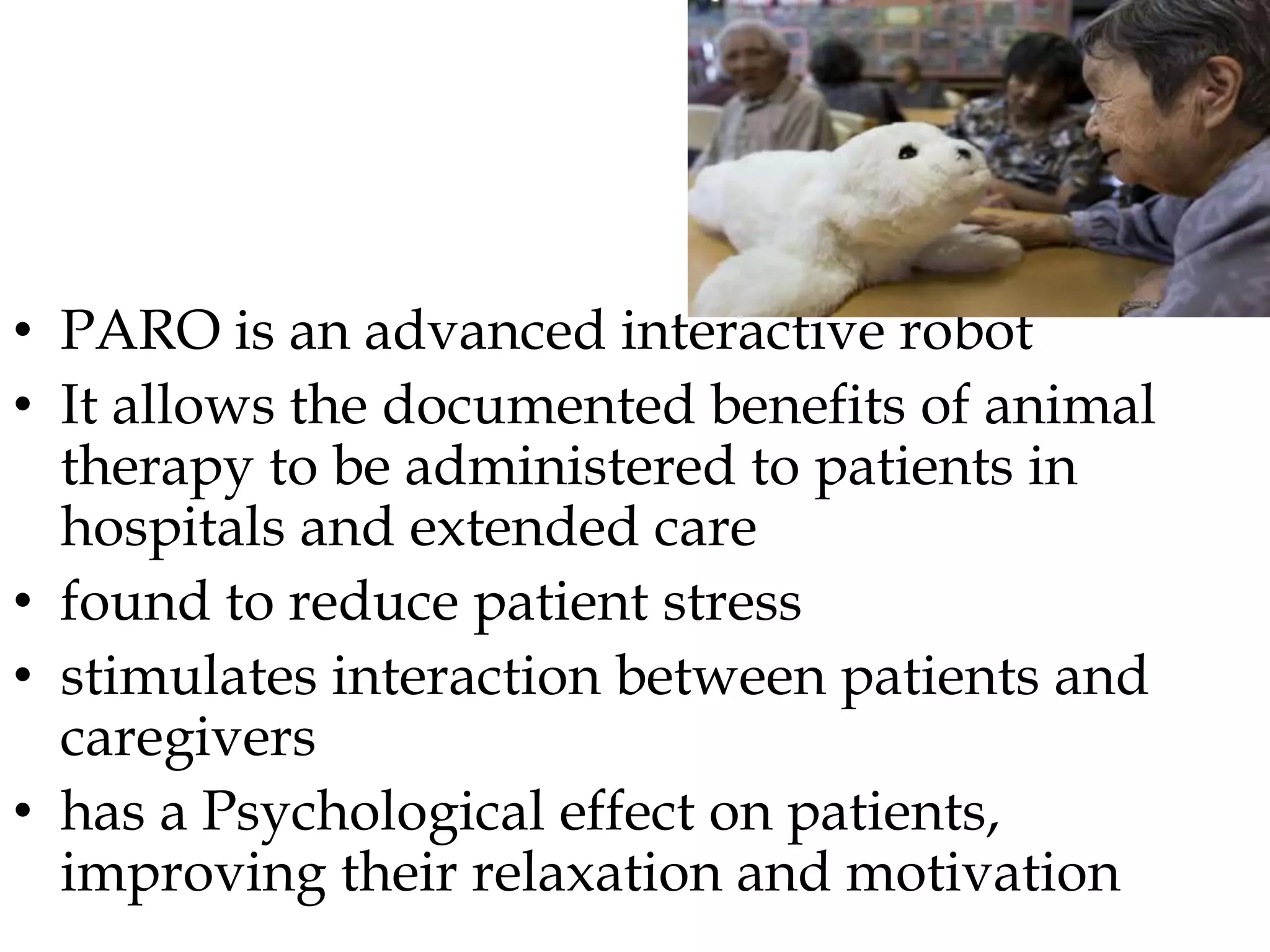
• PARO is an advanced interactive robot
• It allows the documented benefits of animal
therapy to be administered to patients in
hospitals and extended care
• found to reduce patient stress
• stimulates interaction between patients and
caregivers
• has a Psychological effect on patients,
improving their relaxation and motivation
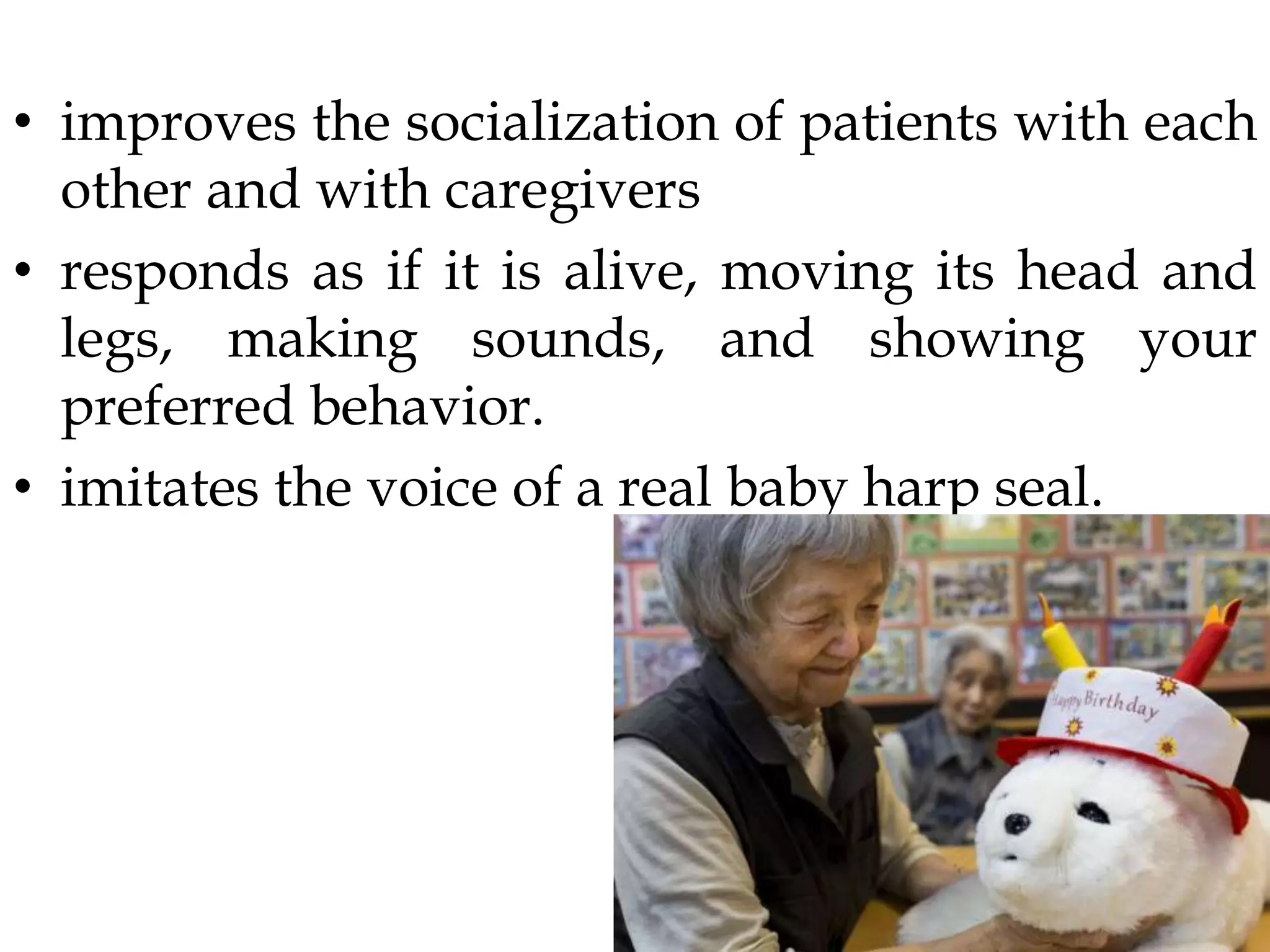
• improves the socialization of patients with each
other and with caregivers
• responds as if it is alive, moving its head and
legs, making sounds, and showing your
preferred behavior.
• imitates the voice of a real baby harp seal.
• PARO has five kinds of sensors: tactile, light,
audition, temperature, and posture sensors,
with which it can perceive people and its
environment.
• can learn to behave in a way that the user
prefers, and to respond to its new name.
• For example, if you stroke it every time you
touch it, PARO will remember your previous
action and try to repeat that action to be
stroked. If you hit it, PARO remembers its
previous action and tries not to do that action.
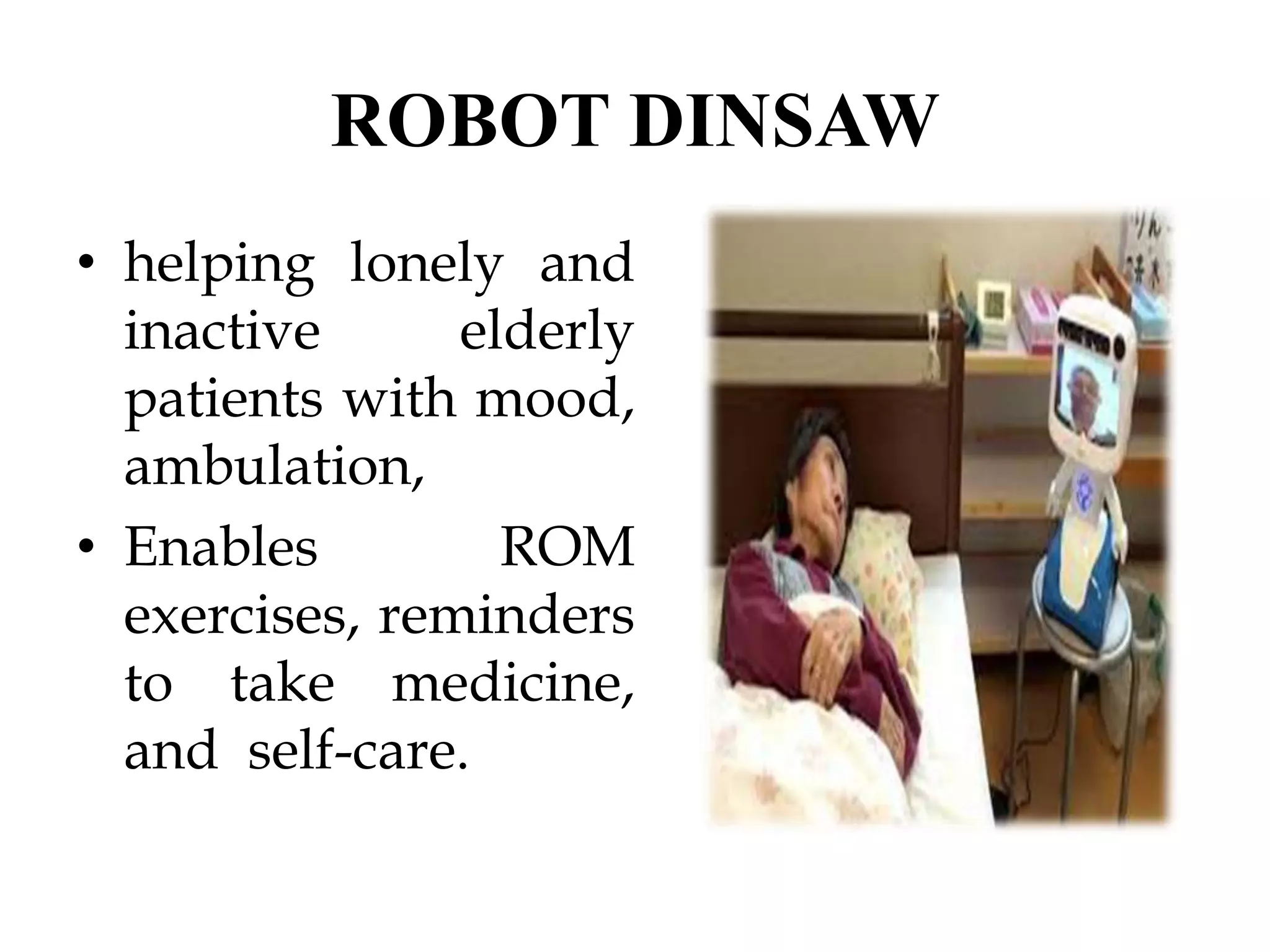
ROBOT DINSAW
• helping lonely and
inactive elderly
patients with mood,
ambulation,
• Enables ROM
exercises, reminders
to take medicine,
and self-care.
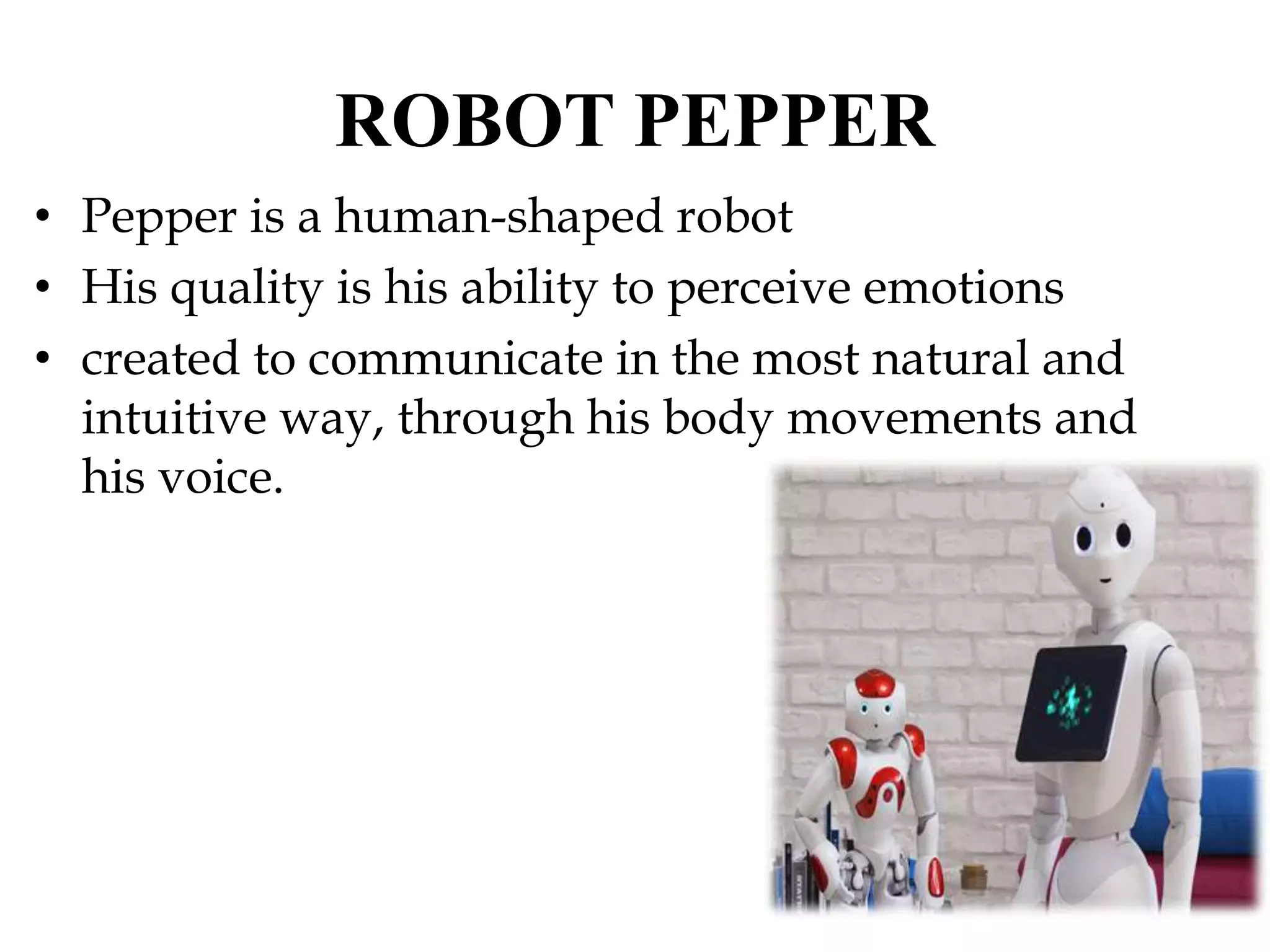
ROBOT PEPPER
• Pepper is a human-shaped robot
• His quality is his ability to perceive emotions
• created to communicate in the most natural and
intuitive way, through his body movements and
his voice.
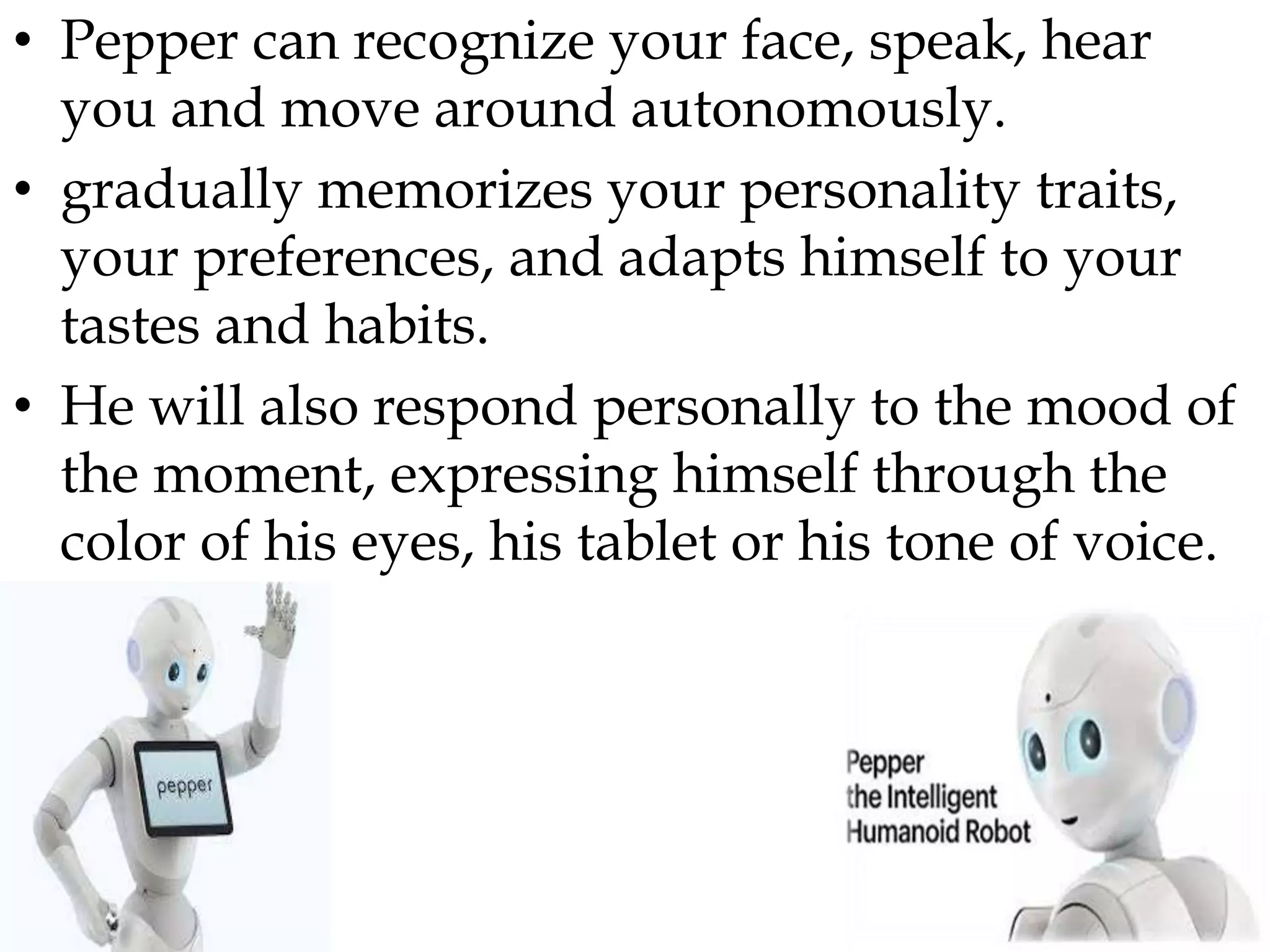
• Pepper can recognize your face, speak, hear
you and move around autonomously.
• gradually memorizes your personality traits,
your preferences, and adapts himself to your
tastes and habits.
• He will also respond personally to the mood of
the moment, expressing himself through the
color of his eyes, his tablet or his tone of voice.
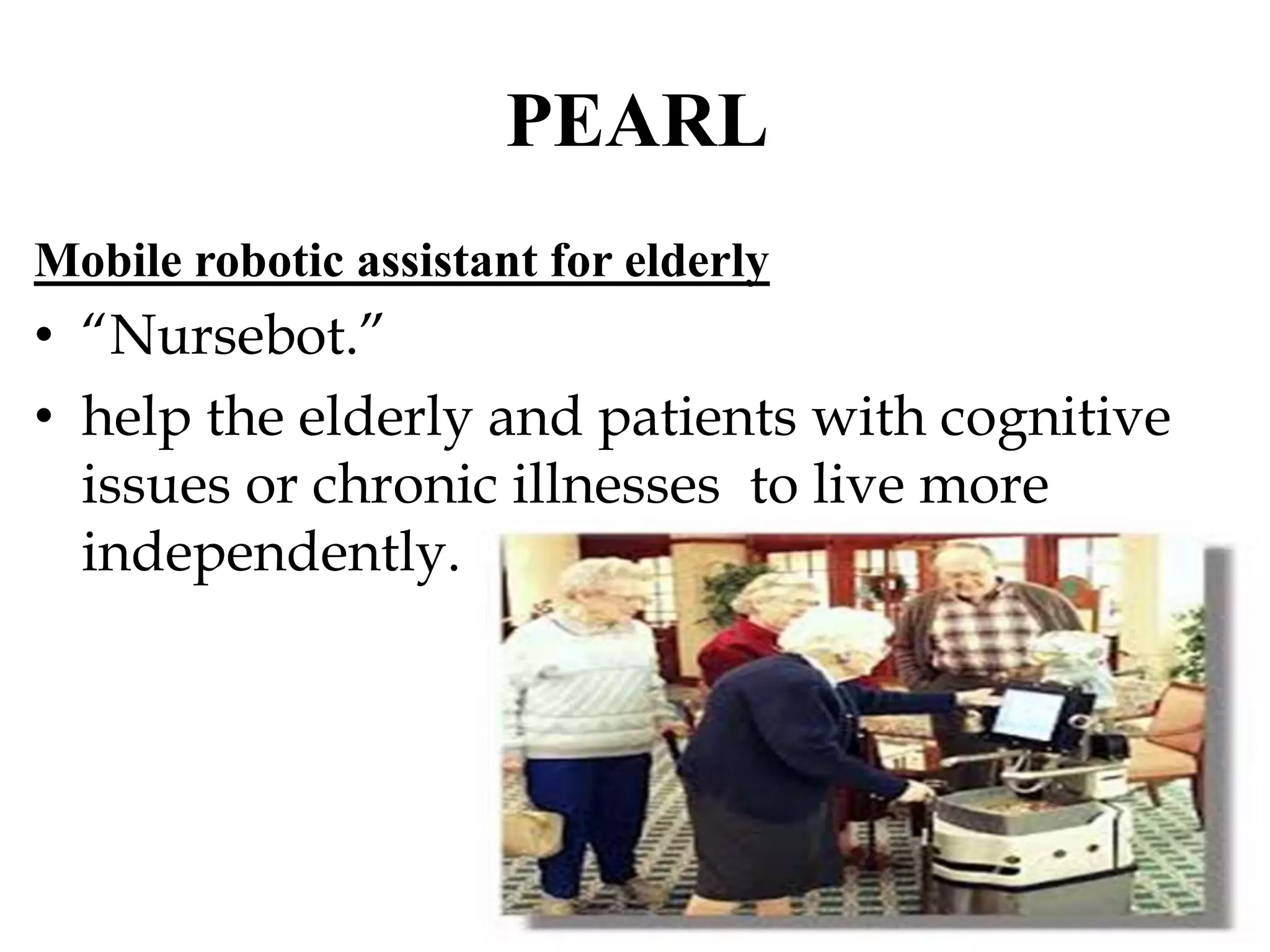
PEARL
Mobile robotic assistant for elderly
• “Nursebot.”
• help the elderly and patients with cognitive
issues or chronic illnesses to live more
independently.
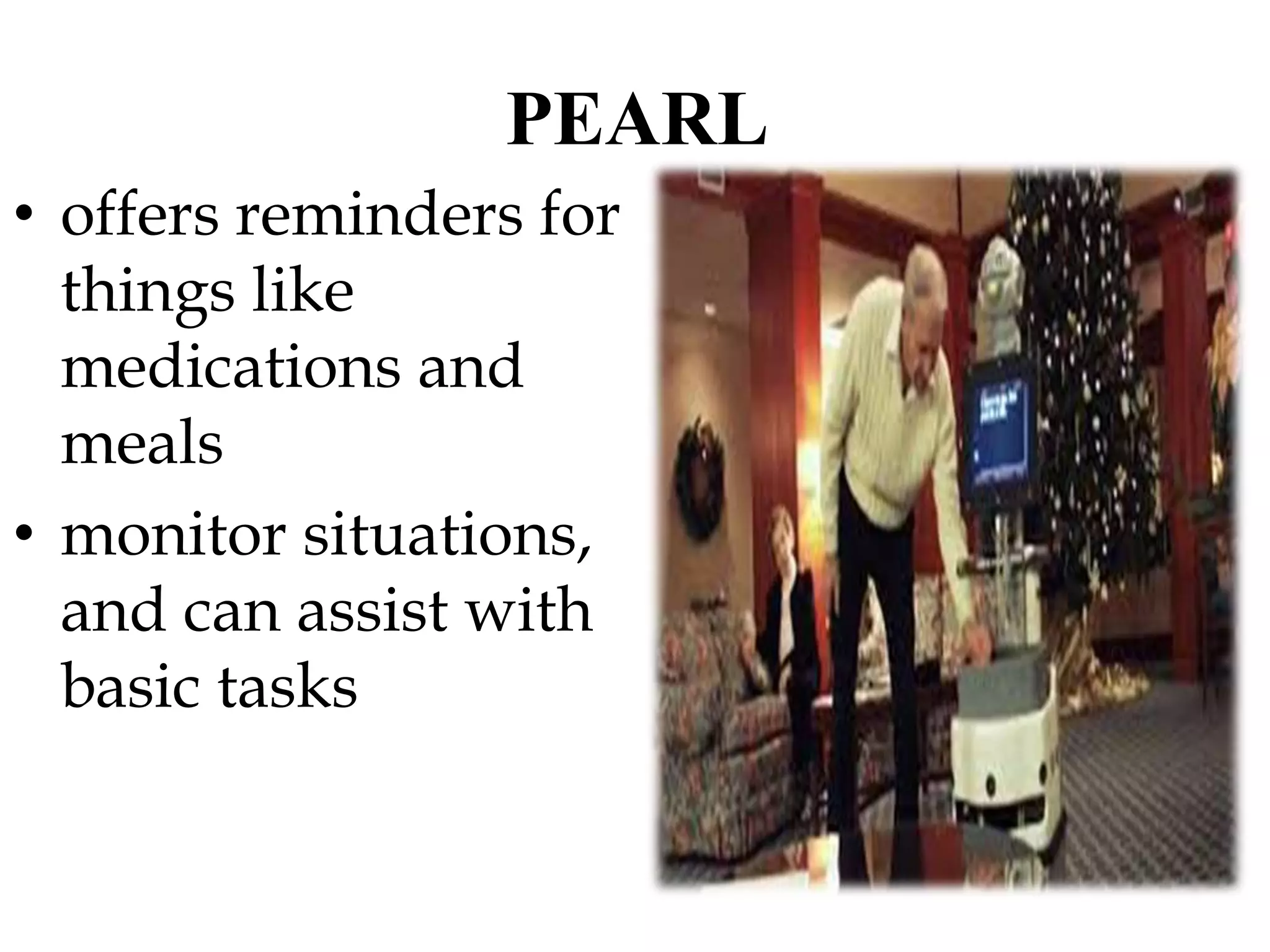
PEARL
• offers reminders for
things like
medications and
meals
• monitor situations,
and can assist with
basic tasks
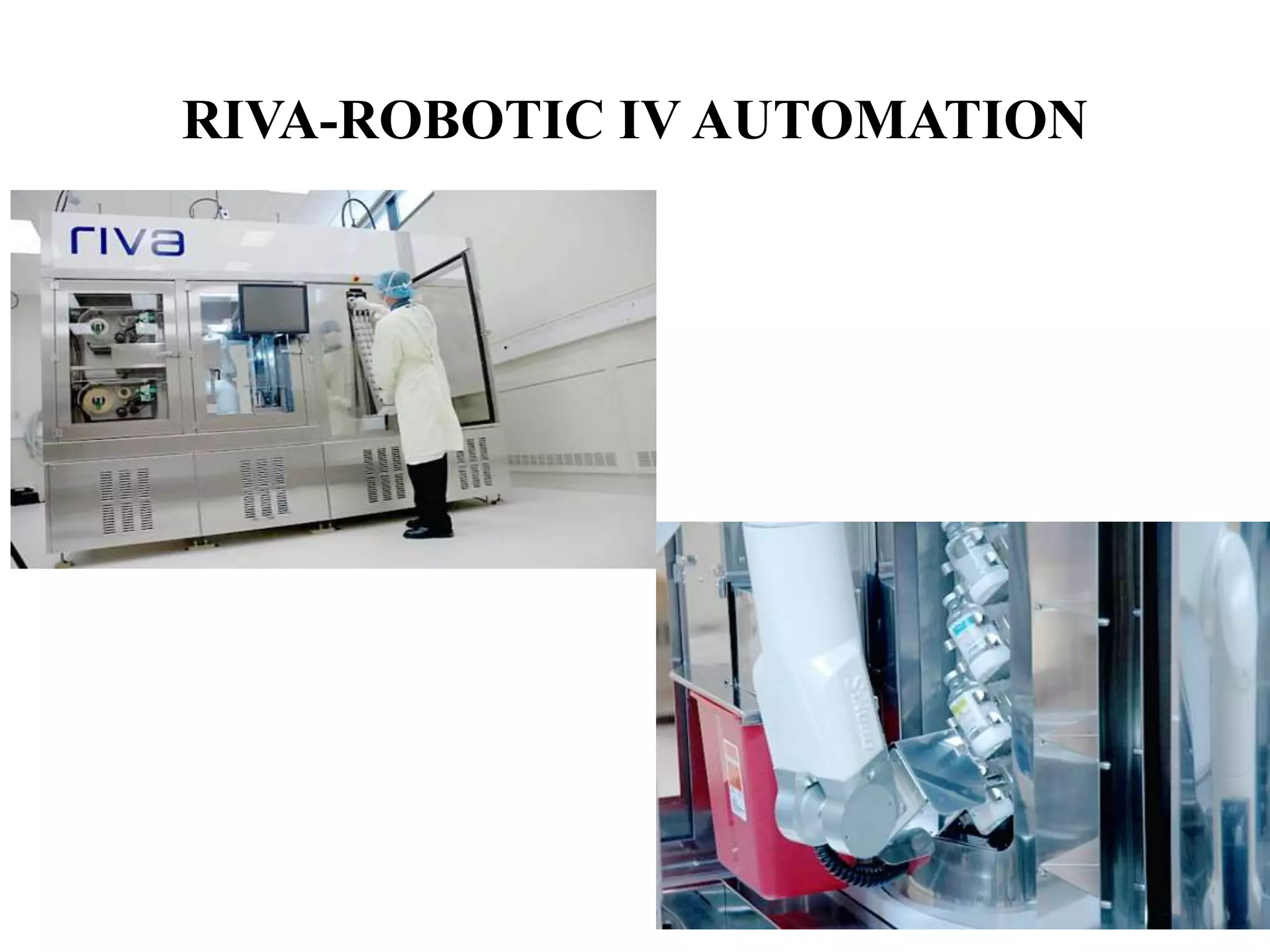
RIVA-ROBOTIC IV AUTOMATION
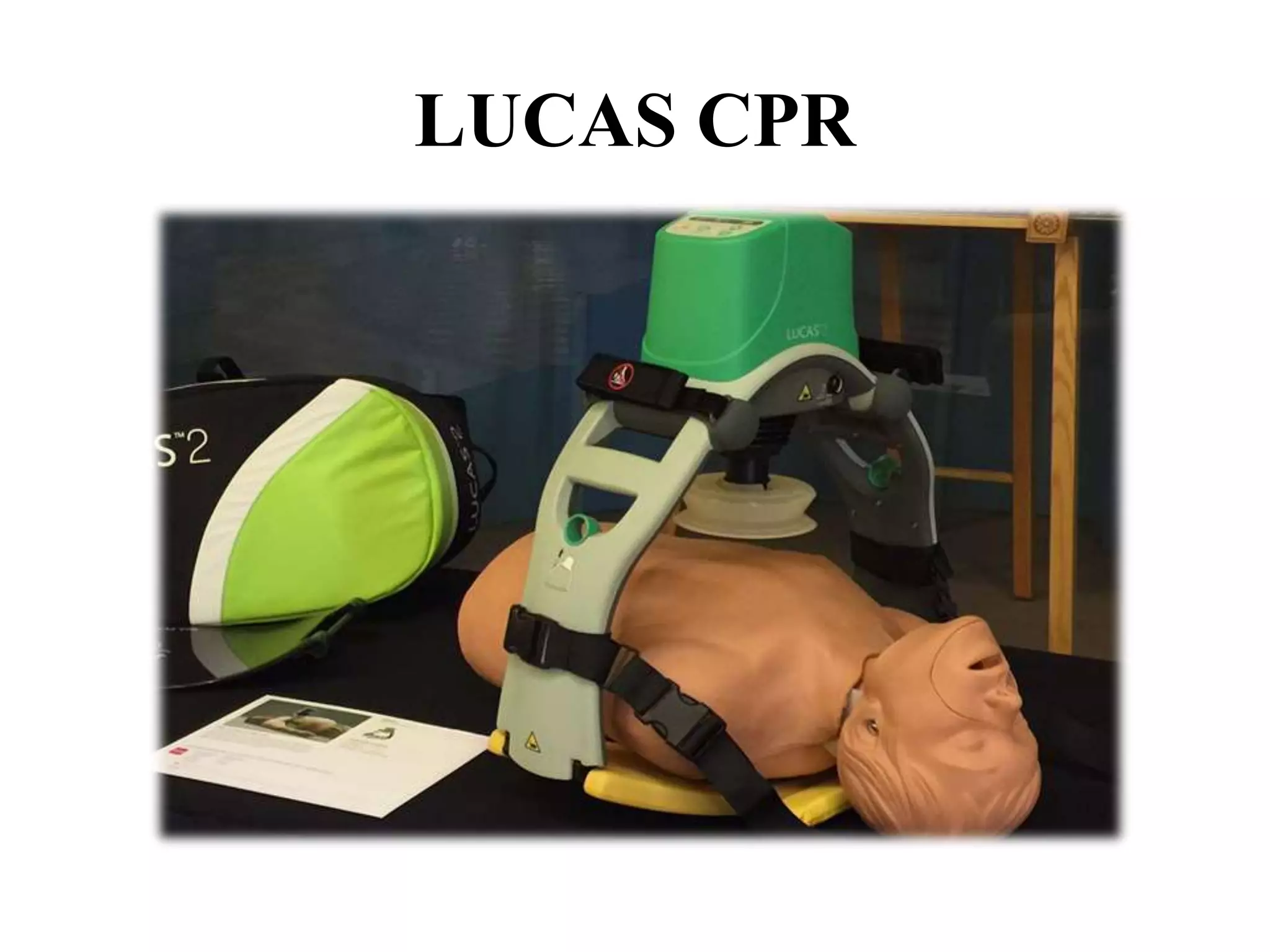
LUCAS CPR
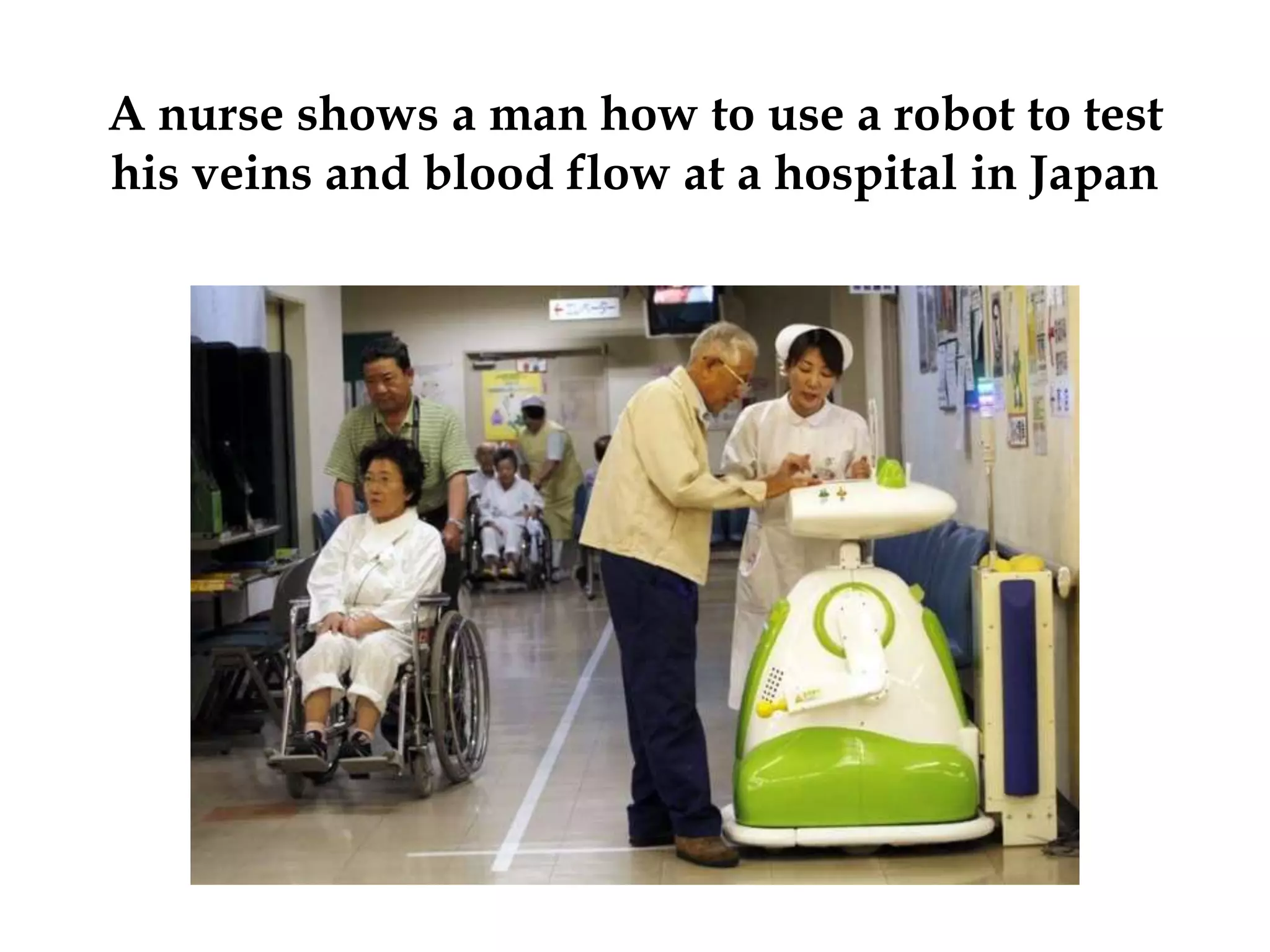
A nurse shows a man how to use a robot to test
his veins and blood flow at a hospital in Japan
Benefits Of Robot Caregivers
• Help with heavy lifting.
• Serve as a communication tool.
• Provide reminders.
• Help with monitoring.
• Preserve dignity.
• Promote independence.
• Decrease burden on family and friends.
• Fill care gaps.
• Offer endless patience.
• Provide companionship.
Here are a few things to think about
Would you welcome the assistance
of a robotic nurse?
Can Robots Replace the Company of a
Nurse??
Robots are Not the cure for Chronic
Loneliness
Do nurses of the future need to
embrace high-tech?
Are Robots The Future Of Nursing?
“Technology in health care inspires
creative solutions”
“ROBOTS BEING DESIGNED TO
ASSIST NURSES,NOT REPLACE
THEM”
Robotics in nursing

Robotics in nursing

  • 4.
  • 5.
    “ROBOTS BEING DESIGNEDTO ASSIST NURSES,NOT REPLACE THEM”
  • 6.
    robotics • the branchof technology that deals with the design, construction, operation, and application of robots • computer system for their control , sensory feedback and information processing
  • 7.
    ROBOT A machine that •looks and acts like a human being • can do the work of a person automatically or under the control of a computer
  • 8.
    Robots in healthcare: what’s in store for the future “Da Vinci Surgical System” the first robotic device to perform surgical procedures
  • 9.
    Growth of SurgicalRobotics in India • First robot-assisted surgical procedure took place at Delhi hospital (2002). • India currently has over 50 surgical robots and it aims to install 100 robots across the nation by 2018. • Till now, it has trained 360 surgeons and hopes to train another 100 in days to come.
  • 10.
    • An estimated700 robotic-assisted surgeries in a month are conducted. • In 2015, approximately 190 surgeons performed more than 4,000 robot-aided procedures in the areas of cardiac, urology, thoracic, gynecology, head and neck, vascular, pediatric and bariatric (weight loss).
  • 11.
    Surgical robotics offersclear benefits • assures a healthier post-operative life • causes minimal loss of blood • quicker healing of wounds • reduced pain and discomfort • shorter hospital stays • faster recovery time • minimal scarring • reduce the risk of infection
  • 13.
    Quadriplegic Regains Control,Independence With Robot Helper Researchers at the Georgia Institute of Technology recently developed a way to give robots the sense of touch using artificial skin, which can dramatically improve the lives of people with severe disabilities .
  • 14.
  • 15.
  • 16.
  • 17.
    Toyota’s Healthcare Assistant TheWalk Training Assist Robot
  • 18.
    • It mountsonto a paralyzed leg and detects movement of the hips through sensors at the thigh and foot. • It helps the knee swing forward and the leg move forward to facilitate walking.
  • 19.
    Toyota’s Healthcare Assistant •It guides the leg to bend and move forward • It can support a patient's weight. • It monitors metrics such as joint angels so physicians can easily track a patient's progress. Independent Walk Assist
  • 20.
  • 21.
    • It isa two-wheeled balancing game • It displays one of three games (tennis, soccer or basketball) on a monitor • The patient makes moves in the game by shifting his or her weight on the robot.
  • 22.
  • 23.
    • It hasweight-supporting arms and a mobile platform that helps move a patient, from bed to the toilet and back. • It is intended to be gentle and create an experience similar to being carried by a person.
  • 24.
  • 25.
  • 26.
  • 27.
  • 28.
  • 29.
    Ro-bear • RO-BEAR, is capableof performing tasks such as lifting a patient from a bed into a wheelchair
  • 30.
  • 31.
  • 32.
    • RoNA ismobile and omnidirectional: with mecanum wheels, RoNA can move in any direction, work in confined spaces, and navigate areas where many portable lifting systems cannot go. • Telepresence support RoNA can work side by side with a trained nurse
  • 33.
    • Patient SafetyRoNA is an intelligent, learning system, able to sense center of gravity during the patient lift and automatically adjust. • Reduce employee injury. • Improved patient satisfaction
  • 34.
    RIBA “Robot for InteractiveBody Assistance.” • It looks like a big teddy bear, which is meant to calm patients
  • 35.
    RIBA • RIBA canlift a person up to 60 kg from a lying or sitting position and move them to another location. • Has strong arms with advanced tactile sensors that prevent slipping. • Is equipped with two cameras and two microphones so it can follow cues from an operator.
  • 36.
    ACTROID-F • This robotis modeled after a human female and can move its eyes, eyebrows, mouth, head, neck. • It interacts with patients as a human. • It can help patients combat loneliness • The female version is so realistic that, when tested, some subjects couldn’t tell the difference between Actroid-F and the human sitting next to her at first.
  • 37.
  • 38.
    PARO-THERAPEUTIC ROBOT World's MostTherapeutic Robot certified by Guinness World Records
  • 39.
    • PARO isan advanced interactive robot • It allows the documented benefits of animal therapy to be administered to patients in hospitals and extended care • found to reduce patient stress • stimulates interaction between patients and caregivers • has a Psychological effect on patients, improving their relaxation and motivation
  • 40.
    • improves thesocialization of patients with each other and with caregivers • responds as if it is alive, moving its head and legs, making sounds, and showing your preferred behavior. • imitates the voice of a real baby harp seal.
  • 41.
    • PARO hasfive kinds of sensors: tactile, light, audition, temperature, and posture sensors, with which it can perceive people and its environment. • can learn to behave in a way that the user prefers, and to respond to its new name. • For example, if you stroke it every time you touch it, PARO will remember your previous action and try to repeat that action to be stroked. If you hit it, PARO remembers its previous action and tries not to do that action.
  • 42.
    ROBOT DINSAW • helpinglonely and inactive elderly patients with mood, ambulation, • Enables ROM exercises, reminders to take medicine, and self-care.
  • 43.
    ROBOT PEPPER • Pepperis a human-shaped robot • His quality is his ability to perceive emotions • created to communicate in the most natural and intuitive way, through his body movements and his voice.
  • 44.
    • Pepper canrecognize your face, speak, hear you and move around autonomously. • gradually memorizes your personality traits, your preferences, and adapts himself to your tastes and habits. • He will also respond personally to the mood of the moment, expressing himself through the color of his eyes, his tablet or his tone of voice.
  • 45.
    PEARL Mobile robotic assistantfor elderly • “Nursebot.” • help the elderly and patients with cognitive issues or chronic illnesses to live more independently.
  • 46.
    PEARL • offers remindersfor things like medications and meals • monitor situations, and can assist with basic tasks
  • 47.
  • 48.
  • 49.
    A nurse showsa man how to use a robot to test his veins and blood flow at a hospital in Japan
  • 50.
    Benefits Of RobotCaregivers • Help with heavy lifting. • Serve as a communication tool. • Provide reminders. • Help with monitoring. • Preserve dignity. • Promote independence. • Decrease burden on family and friends. • Fill care gaps. • Offer endless patience. • Provide companionship.
  • 51.
    Here are afew things to think about
  • 52.
    Would you welcomethe assistance of a robotic nurse?
  • 53.
    Can Robots Replacethe Company of a Nurse??
  • 54.
    Robots are Notthe cure for Chronic Loneliness
  • 55.
    Do nurses ofthe future need to embrace high-tech?
  • 56.
    Are Robots TheFuture Of Nursing?
  • 57.
    “Technology in healthcare inspires creative solutions”
  • 58.
    “ROBOTS BEING DESIGNEDTO ASSIST NURSES,NOT REPLACE THEM”