CREATED BY: DIBYANSHU KUMAR
 Introduction to ARTIFICIAL INTELLIGENCE
 Definition
 Categories
 Comparision between Human and A.I
 Advantages
 Disadvantages
 Application
 Future of A.I
 Conclusion
INTELLIGENCE
Intelligence is the capacity to learn and solve
problem.
ARTIFICIAL INTELLIGENCE
A.I is the intelligence exhibited by machine or
software. It is the science and engineering of
making intelligent machines, especially
intelligent computer program.
A.I (pronounced AYE-EYE) is the simulation of
human intelligence processes by machine,
especially computer system.
Software technologies that make a computer or
robot perform equal to or better than normal
human computational ability in accuracy,
capacity and speed.
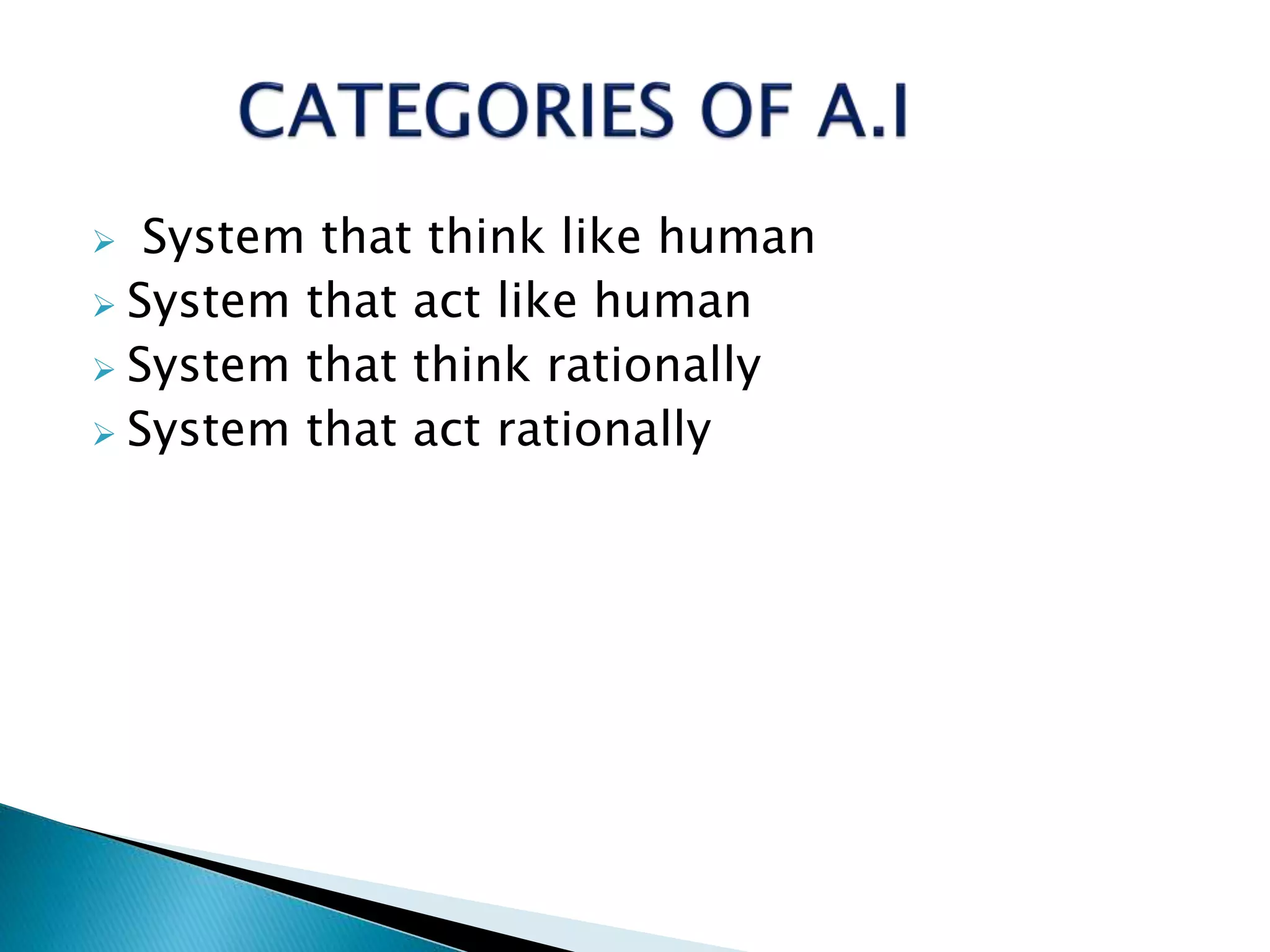
 System that think like human
 System that act like human
 System that think rationally
 System that act rationally
 Brains are analog, computers are digital
 The brain uses content addressable memory
 Processing speed is not fixed in the brain, there
is no system clock
 The brain is a self organizing system
 The brain is much, much bigger than any
[current] Computer
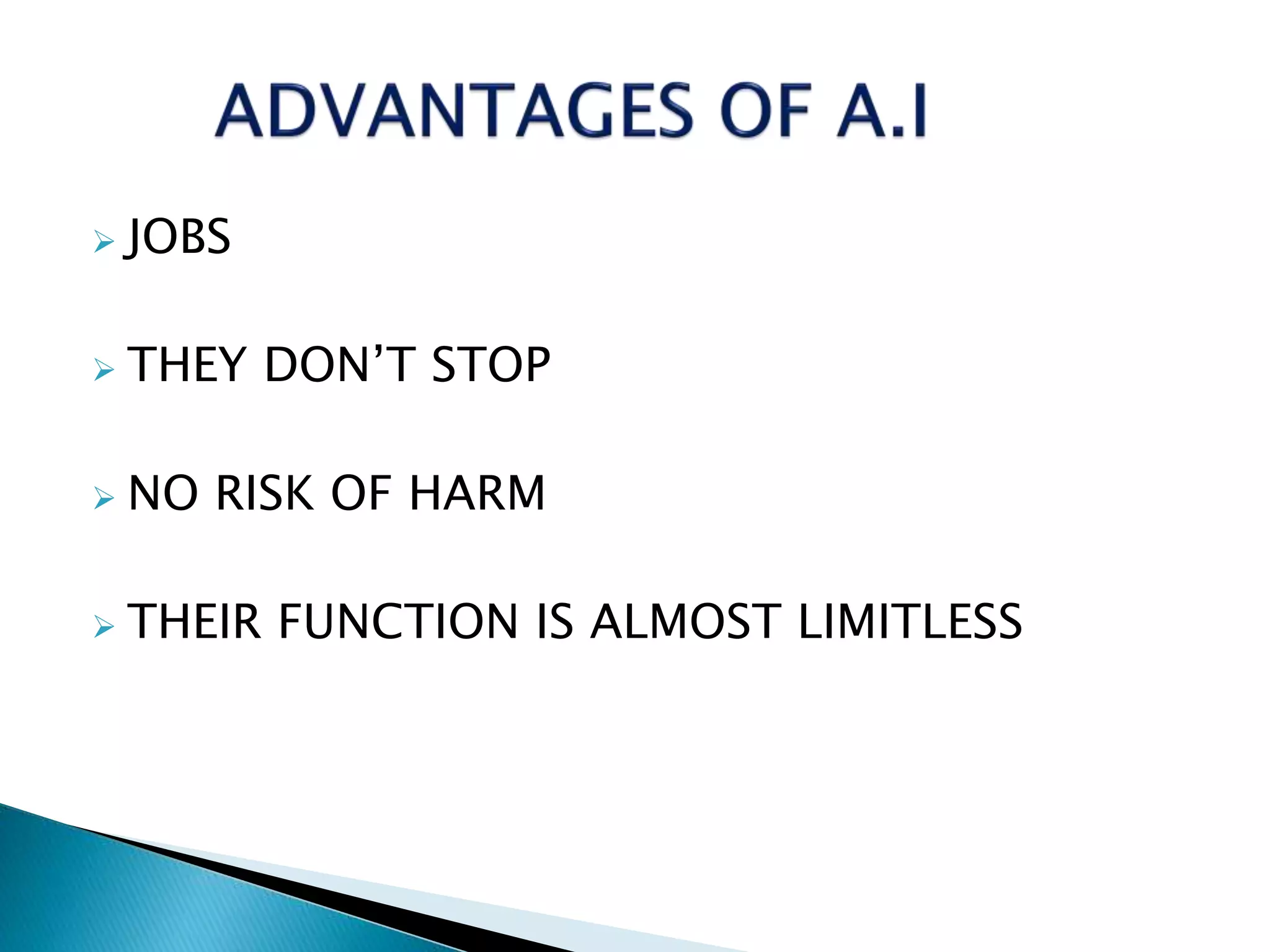
 JOBS
 THEY DON’T STOP
 NO RISK OF HARM
 THEIR FUNCTION IS ALMOST LIMITLESS
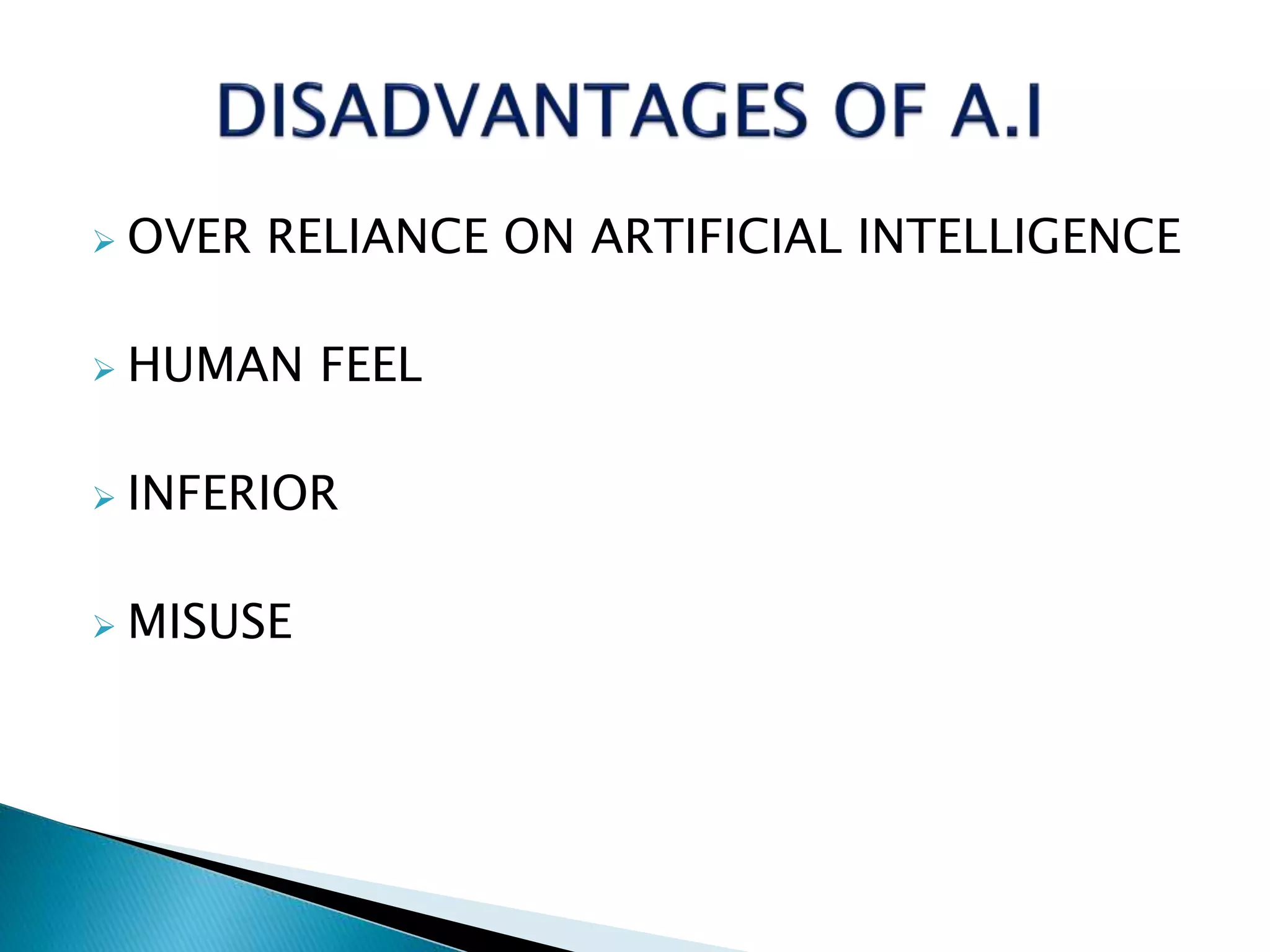
 OVER RELIANCE ON ARTIFICIAL INTELLIGENCE
 HUMAN FEEL
 INFERIOR
 MISUSE
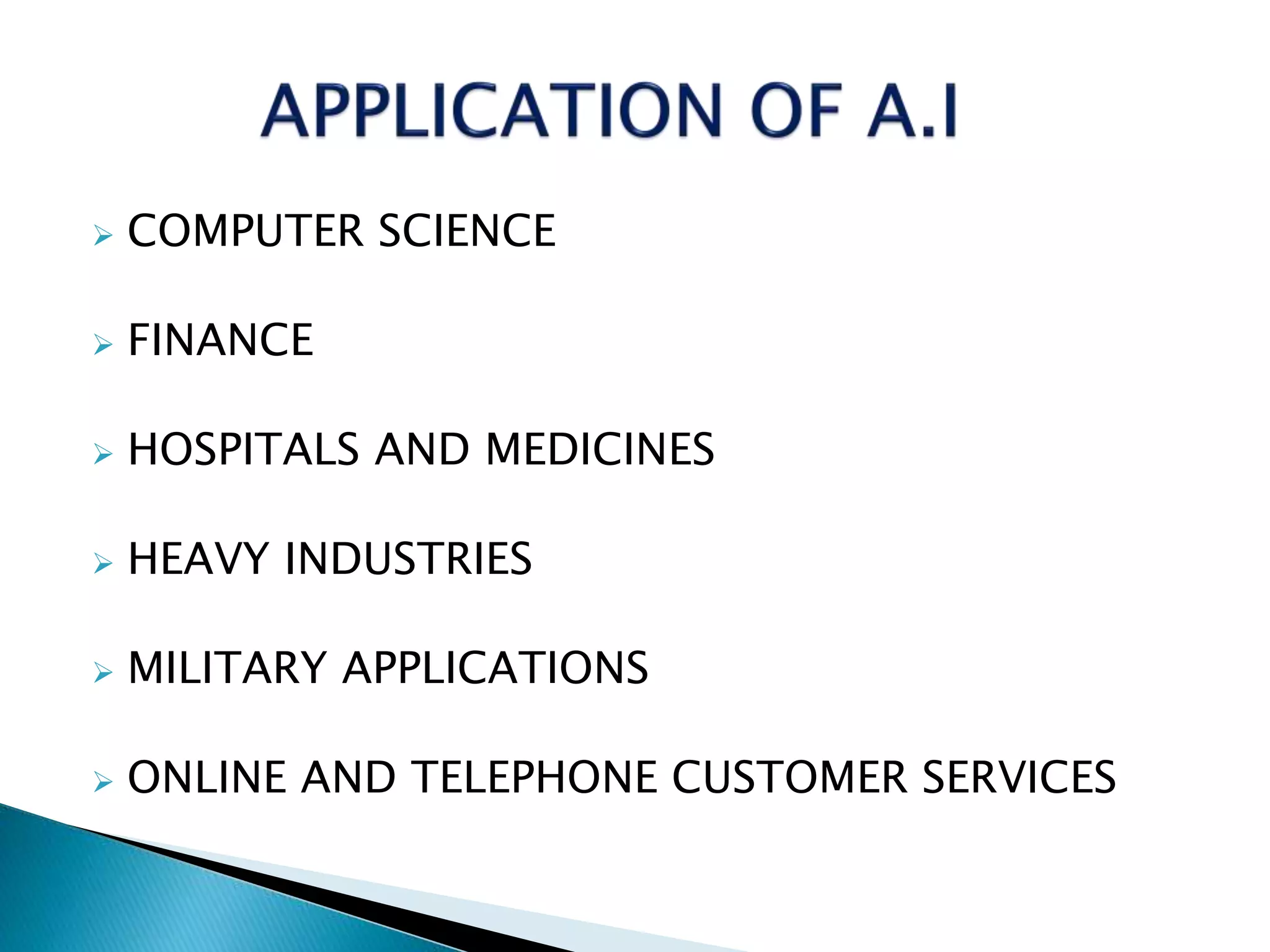
 COMPUTER SCIENCE
 FINANCE
 HOSPITALS AND MEDICINES
 HEAVY INDUSTRIES
 MILITARY APPLICATIONS
 ONLINE AND TELEPHONE CUSTOMER SERVICES
 In the next 10 years technologies in narrow field
such as speech recognition will continue to
improve and will reach human level.
 In 10 years A.I will be able to communicate with
human in unstructered English using text or
voice.
 However the field of artificial consciousness
remains in its infancy.
 The early years of 21st century should see
dramatic strides forward in this area.
We conclude that if the machine could
successfully pretend to be human to a
knowledgeable observer then you certainly
should consider it intelligent. A.I system are
now in routine use in various field such as
economics, medicines, engineering and the
military, as well as being built into many
common home computer software
applications, traditional strategy games etc.
Artificial intelligence

Artificial intelligence

  • 1.
  • 2.
     Introduction toARTIFICIAL INTELLIGENCE  Definition  Categories  Comparision between Human and A.I  Advantages  Disadvantages  Application  Future of A.I  Conclusion
  • 3.
    INTELLIGENCE Intelligence is thecapacity to learn and solve problem. ARTIFICIAL INTELLIGENCE A.I is the intelligence exhibited by machine or software. It is the science and engineering of making intelligent machines, especially intelligent computer program.
  • 4.
    A.I (pronounced AYE-EYE)is the simulation of human intelligence processes by machine, especially computer system. Software technologies that make a computer or robot perform equal to or better than normal human computational ability in accuracy, capacity and speed.
  • 5.
     System thatthink like human  System that act like human  System that think rationally  System that act rationally
  • 6.
     Brains areanalog, computers are digital  The brain uses content addressable memory  Processing speed is not fixed in the brain, there is no system clock  The brain is a self organizing system  The brain is much, much bigger than any [current] Computer
  • 7.
     JOBS  THEYDON’T STOP  NO RISK OF HARM  THEIR FUNCTION IS ALMOST LIMITLESS
  • 8.
     OVER RELIANCEON ARTIFICIAL INTELLIGENCE  HUMAN FEEL  INFERIOR  MISUSE
  • 9.
     COMPUTER SCIENCE FINANCE  HOSPITALS AND MEDICINES  HEAVY INDUSTRIES  MILITARY APPLICATIONS  ONLINE AND TELEPHONE CUSTOMER SERVICES
  • 10.
     In thenext 10 years technologies in narrow field such as speech recognition will continue to improve and will reach human level.  In 10 years A.I will be able to communicate with human in unstructered English using text or voice.  However the field of artificial consciousness remains in its infancy.  The early years of 21st century should see dramatic strides forward in this area.
  • 11.
    We conclude thatif the machine could successfully pretend to be human to a knowledgeable observer then you certainly should consider it intelligent. A.I system are now in routine use in various field such as economics, medicines, engineering and the military, as well as being built into many common home computer software applications, traditional strategy games etc.