SYSTEMETIC OF PLANTS,ANATOMY AND
DEVELOPMENT
PRESENTED TO : MISS MADEEHA
PRESENTED BY : MUBAIKA SEHER
ARTIFICIAL CLASSIFICATION SYSTEM
 CONTENTS
 Definition
 Types
 History
 Examples
 Artificial classification system
 Linnaeus classification system
 Merits
 Demerits
ARTIFICIAL CLASSIFICATION SYSTEM
• CLASSIFICATION SYSTEM
• Definition
• “The arrangement of plants into groups and sub groups on the basis of similarities
is called classification . The characters which are uses as basis of classification are
called criteria of classification.”
• TYPES
1. Artificial classification system
2. Natural classification system
3. Phylogenetic classification system
ARTIFICIAL CLASSIFICATION SYSTEM
• Definition:
• “The classification system based only one or two morphological characters for the
identification of plants is called artificial classification system.”
• OR
• “The ordering of organisms into groups on the basis of non-evolutionary features;
e.g,the grouping together of plants according to the number and situation of their
stamens,style and stigma rather than their evolutionary relationship.”
• EXAMPLE
• Linnaeus system is the example of artificial classification system.
HISTORY
• It is considered the earliest classification system, plants are classified on the basis of
one or very few specially choosen characters.
Theophrastus ;
divided the plants on the basis of form and texture – Herbs, Shrubs, Under shrubs and
Trees. He gave names and description to about 480 plants in his book ‘Historia plantarum’ which is
the oldest botanical work in existence.
John Ray
a British botanist divided plants into Imperfectae (non- flowering) and Perfectea
(seed- plants).
Carolus Linnaeus
regarded as the “Father of Systematic Botany”‘, published artificial system
based exclusively on floral characters.
CLASSIFICATION SYSTEM OF CARLOUS LINNAEUS
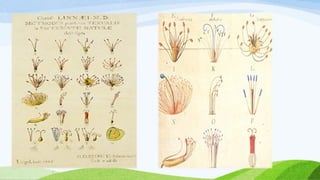
• The classification system of Linnaeus was based on floral characters .He chiefly used
characters of stamens.Therefore,his system is called sexual system.
• This system is very convenient for the identification of plants .He presented his
classification system into two books.
1. Species Plantarun
2. Genera Plantarum
• SCHEME OF LINNAEUS SYSTEM
• He formed 24 classes of plants on the basis characters of stamens,he placed many
unrelated plants in a single group due to common characters of stamens.
He also used the condition of perigynous,hypogynous,dynamous,filaments fused or
not,anther attachment,presence of male and female flowers.
• Monodria ( Flower with 1 stamen)
• Diandria ( flower with 2 stamens)
• Triandra ( flower with 3 stamens)
• Tetrandria (flower with 4 stamens)
• Pentrandria (flower with 5 stamens)
• Hexandria (flower with 6 stamens)
• Heptandria (flower with 7 stamens)
• Octandria (flower with 8 stamens)
• Enneandria (flower with 9 stamens)
• Decandria (flower with 10 stamens)
• Dodecandria (flowers with 12 stamens)
• Isoandria (flower with more than 20 stamens and hypogynous condition)
• Polyandria (flowers with more than 20 stamens with hypogynous condition)
•
• Didynamia (Stamens didynamous)
• Tetradynamia (stamens tetradynamous)
• Monadelphia ( fused stamens monadelphous)
• Diadelphia (stamens diadelphous)
• Polyadelphia (stamens polyadelphous)
• Syngenesia (stamens syngenesious)
• Gynandria (stamens fused to their pistil)
• Monoacia (they have male and female flowers on same plants)
• Dioecia (they ha)
• Polygamia (plants polygamous
• Cryptogamia (non -flowering plants i.e,cryptogams which include
algae,fungi,mosses and ferns)
•
MERITS
• Linnaeus was first who introduced some system of classification.
• It gave some basic knowledge of classification.So it was widely
accepted by the texanomist of that time.
• It provided a reference work.He gave clear cut concept of species .
This system is still used today.
• The merit of this system is the quick and easy identification of plants
based on one or a few characteristics.
DEMERITS
1. Only a few characters are considered
2. Members of different groups are usually not similar in hereditary pattern
3. Stable classification system
4. Provide only limited information
5. Cannot add new work
6. Difficult for identifying a particular specie or genera
7. Not related phylogenetically
Artificial classification system

Artificial classification system

  • 2.
    SYSTEMETIC OF PLANTS,ANATOMYAND DEVELOPMENT PRESENTED TO : MISS MADEEHA PRESENTED BY : MUBAIKA SEHER
  • 3.
    ARTIFICIAL CLASSIFICATION SYSTEM CONTENTS  Definition  Types  History  Examples  Artificial classification system  Linnaeus classification system  Merits  Demerits
  • 4.
    ARTIFICIAL CLASSIFICATION SYSTEM •CLASSIFICATION SYSTEM • Definition • “The arrangement of plants into groups and sub groups on the basis of similarities is called classification . The characters which are uses as basis of classification are called criteria of classification.” • TYPES 1. Artificial classification system 2. Natural classification system 3. Phylogenetic classification system
  • 5.
    ARTIFICIAL CLASSIFICATION SYSTEM •Definition: • “The classification system based only one or two morphological characters for the identification of plants is called artificial classification system.” • OR • “The ordering of organisms into groups on the basis of non-evolutionary features; e.g,the grouping together of plants according to the number and situation of their stamens,style and stigma rather than their evolutionary relationship.” • EXAMPLE • Linnaeus system is the example of artificial classification system.
  • 6.
    HISTORY • It isconsidered the earliest classification system, plants are classified on the basis of one or very few specially choosen characters. Theophrastus ; divided the plants on the basis of form and texture – Herbs, Shrubs, Under shrubs and Trees. He gave names and description to about 480 plants in his book ‘Historia plantarum’ which is the oldest botanical work in existence. John Ray a British botanist divided plants into Imperfectae (non- flowering) and Perfectea (seed- plants). Carolus Linnaeus regarded as the “Father of Systematic Botany”‘, published artificial system based exclusively on floral characters.
  • 7.
    CLASSIFICATION SYSTEM OFCARLOUS LINNAEUS • The classification system of Linnaeus was based on floral characters .He chiefly used characters of stamens.Therefore,his system is called sexual system. • This system is very convenient for the identification of plants .He presented his classification system into two books. 1. Species Plantarun 2. Genera Plantarum • SCHEME OF LINNAEUS SYSTEM • He formed 24 classes of plants on the basis characters of stamens,he placed many unrelated plants in a single group due to common characters of stamens.
  • 8.
    He also usedthe condition of perigynous,hypogynous,dynamous,filaments fused or not,anther attachment,presence of male and female flowers. • Monodria ( Flower with 1 stamen) • Diandria ( flower with 2 stamens) • Triandra ( flower with 3 stamens) • Tetrandria (flower with 4 stamens) • Pentrandria (flower with 5 stamens) • Hexandria (flower with 6 stamens) • Heptandria (flower with 7 stamens) • Octandria (flower with 8 stamens) • Enneandria (flower with 9 stamens) • Decandria (flower with 10 stamens) • Dodecandria (flowers with 12 stamens) • Isoandria (flower with more than 20 stamens and hypogynous condition) • Polyandria (flowers with more than 20 stamens with hypogynous condition) •
  • 9.
    • Didynamia (Stamensdidynamous) • Tetradynamia (stamens tetradynamous) • Monadelphia ( fused stamens monadelphous) • Diadelphia (stamens diadelphous) • Polyadelphia (stamens polyadelphous) • Syngenesia (stamens syngenesious) • Gynandria (stamens fused to their pistil) • Monoacia (they have male and female flowers on same plants) • Dioecia (they ha) • Polygamia (plants polygamous • Cryptogamia (non -flowering plants i.e,cryptogams which include algae,fungi,mosses and ferns) •
  • 11.
    MERITS • Linnaeus wasfirst who introduced some system of classification. • It gave some basic knowledge of classification.So it was widely accepted by the texanomist of that time. • It provided a reference work.He gave clear cut concept of species . This system is still used today. • The merit of this system is the quick and easy identification of plants based on one or a few characteristics.
  • 12.
    DEMERITS 1. Only afew characters are considered 2. Members of different groups are usually not similar in hereditary pattern 3. Stable classification system 4. Provide only limited information 5. Cannot add new work 6. Difficult for identifying a particular specie or genera 7. Not related phylogenetically