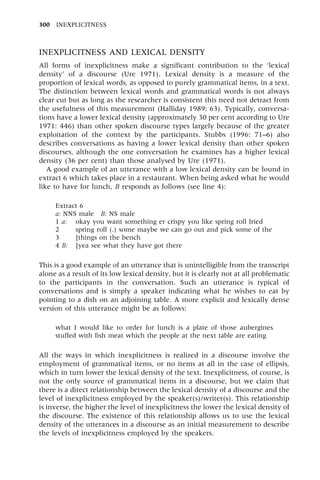
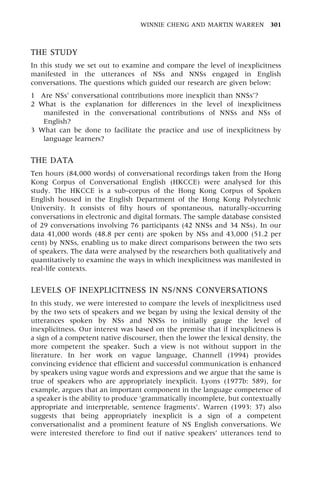
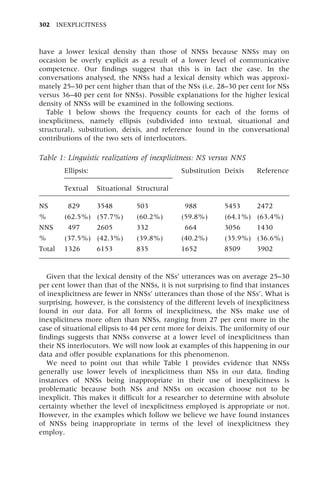
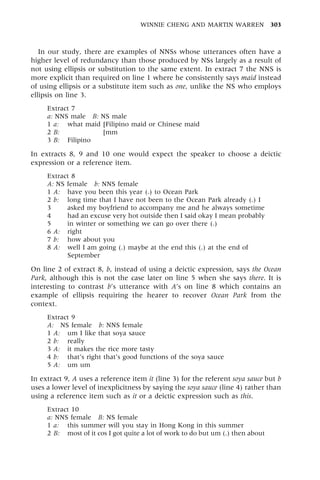
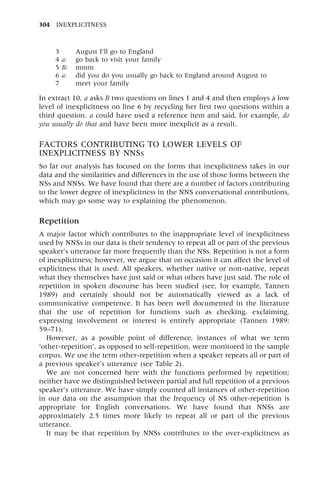
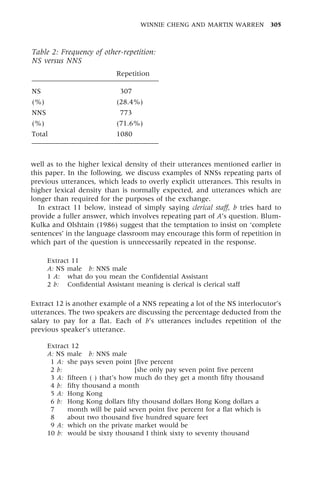
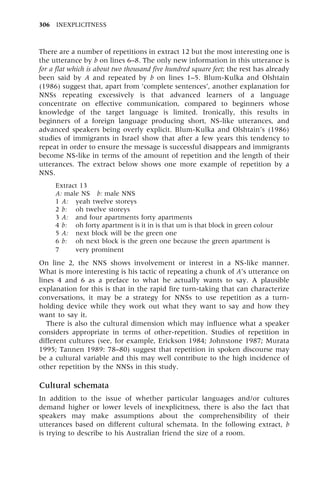
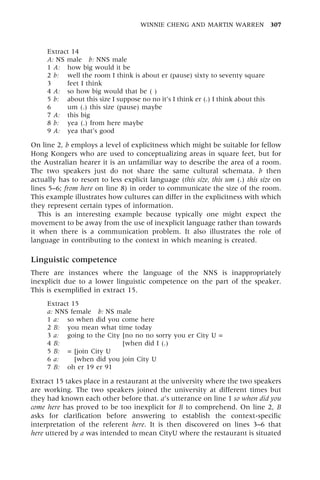
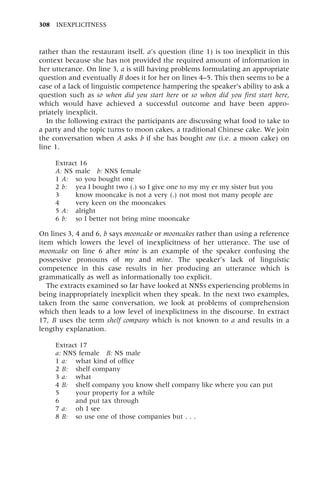
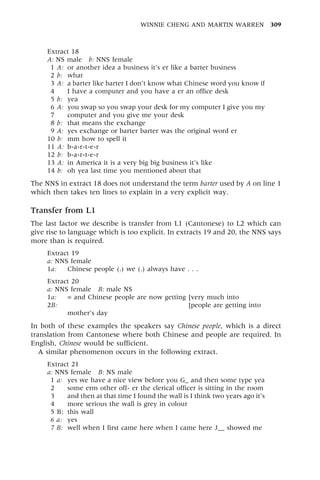
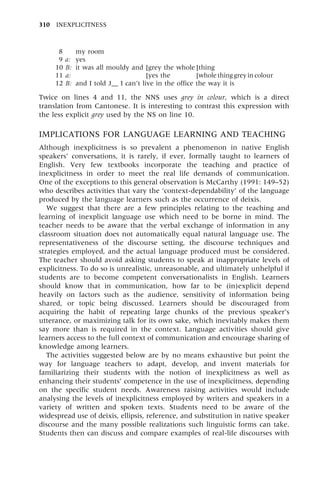
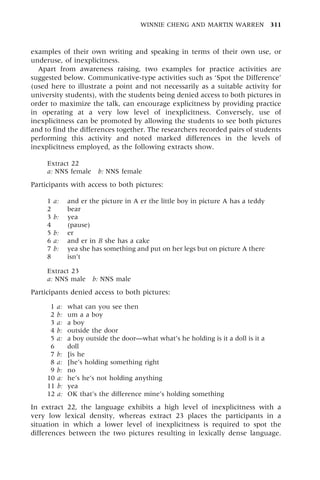
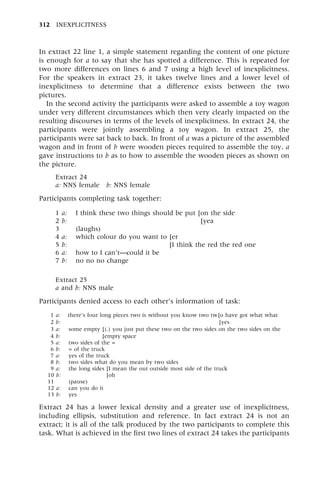
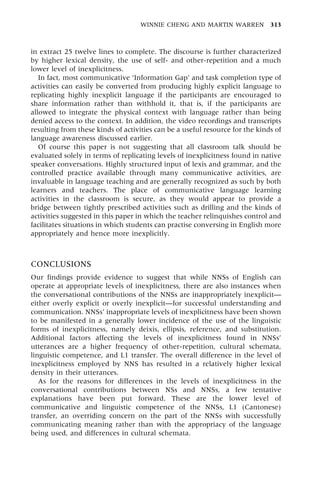
This document discusses the concept of inexplicitness in spoken language. It defines inexplicitness as the extent to which linguistic expressions rely on context to convey meaning. The document analyzes examples from conversations between native and non-native English speakers to show how inexplicit language uses ellipsis, substitution, deixis, and reference to contextual cues. It argues that judicious use of inexplicitness allows speakers to communicate the optimal level of information required in a conversation, as posited by Grice's maxims of quantity and manner. However, inappropriate levels of inexplicitness can hinder non-native speakers' communicative competence.