Class 5.1
FORMAL ANALYSIS
Formal Analysis
You are going to examine this object closely in
terms of:
• line
• color
• shape
• pattern
• light
• texture
• size
• orientation
KEEP IN MIND
Not all of these will apply equally to every work of
art. Based upon the actual work you are analyzing,
you will choose a few of these to focus your
energies on.
LINE and COLOR Are considered the two most
basic elements of two-
dimensional art
SHAPE
organic (or biomorphic) vs. geometric
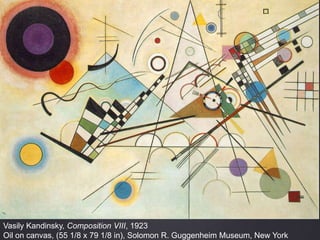
Vasily Kandinsky, Composition VIII, 1923
Oil on canvas, (55 1/8 x 79 1/8 in), Solomon R. Guggenheim Museum, New York
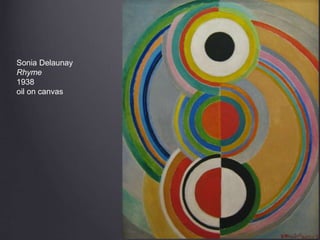
Sonia Delaunay
Rhyme
1938
oil on canvas
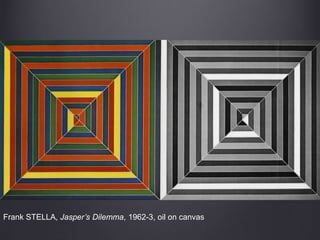
Frank STELLA, Jasper’s Dilemma, 1962-3, oil on canvas
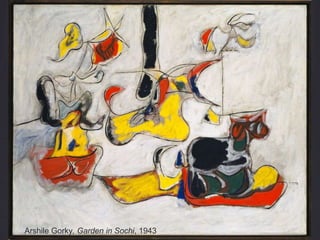
Arshile Gorky, Garden in Sochi, 1943
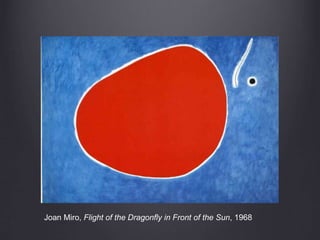
Joan Miro, Flight of the Dragonfly in Front of the Sun, 1968
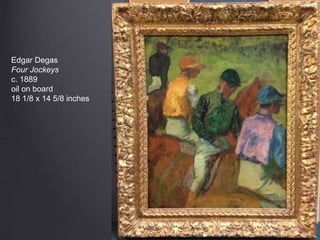
Edgar Degas
Four Jockeys
c. 1889
oil on board
18 1/8 x 14 5/8 inches
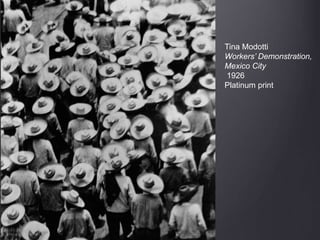
Tina Modotti
Workers’ Demonstration,
Mexico City
1926
Platinum print
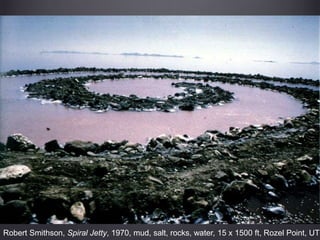
Robert Smithson, Spiral Jetty, 1970, mud, salt, rocks, water, 15 x 1500 ft, Rozel Point, UT
PATTERN
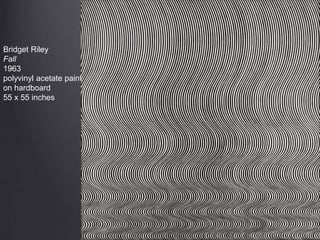
Bridget Riley
Fall
1963
polyvinyl acetate paint
on hardboard
55 x 55 inches
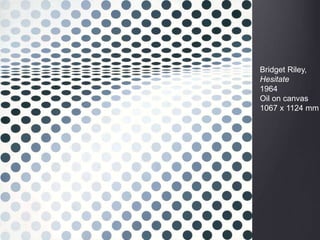
Bridget Riley,
Hesitate
1964
Oil on canvas
1067 x 1124 mm
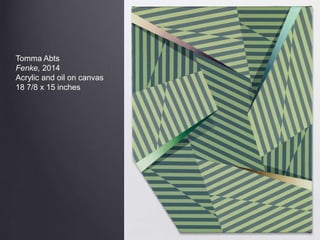
Tomma Abts
Fenke, 2014
Acrylic and oil on canvas
18 7/8 x 15 inches
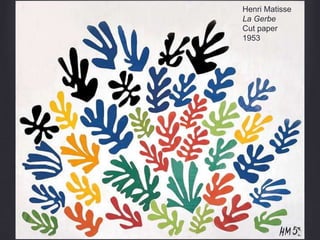
Henri Matisse
La Gerbe
Cut paper
1953
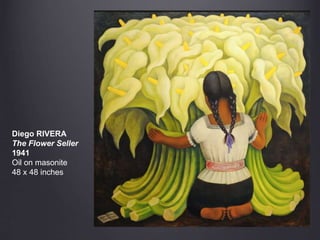
Diego RIVERA
The Flower Seller
1941
Oil on masonite
48 x 48 inches
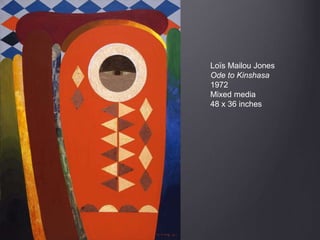
Loïs Mailou Jones
Ode to Kinshasa
1972
Mixed media
48 x 36 inches
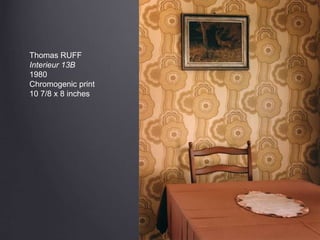
Thomas RUFF
Interieur 13B
1980
Chromogenic print
10 7/8 x 8 inches
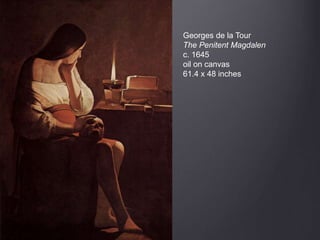
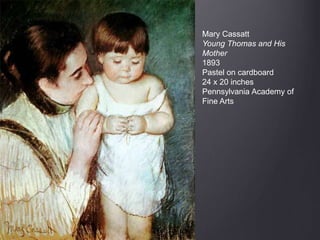
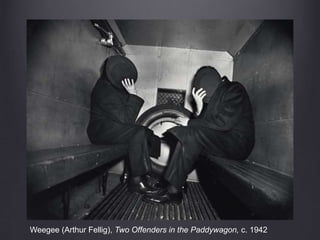
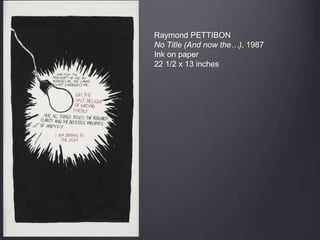
LIGHT
is light evenly distributed across the picture plane or
concentrated in one place for dramatic effect?
where is the light source and how does it create emphasis?
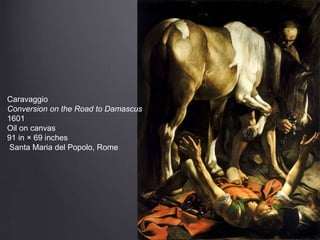
Caravaggio
Conversion on the Road to Damascus
1601
Oil on canvas
91 in × 69 inches
Santa Maria del Popolo, Rome
Georges de la Tour
The Penitent Magdalen
c. 1645
oil on canvas
61.4 x 48 inches
Mary Cassatt
Young Thomas and His
Mother
1893
Pastel on cardboard
24 x 20 inches
Pennsylvania Academy of
Fine Arts
Weegee (Arthur Fellig), Two Offenders in the Paddywagon, c. 1942
Raymond PETTIBON
No Title (And now the…), 1987
Ink on paper
22 1/2 x 13 inches
TEXTURE/MATERIALS
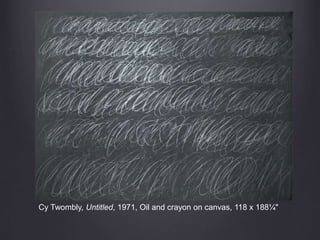
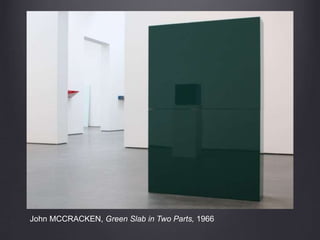
• texture can be a quality of a two-dimensional surface—it is
most noticeable at the extremes of roughness and
smoothness
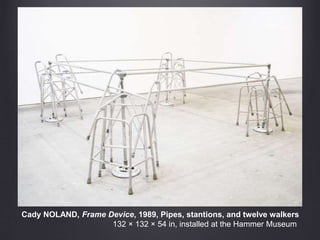
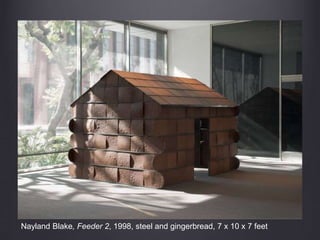
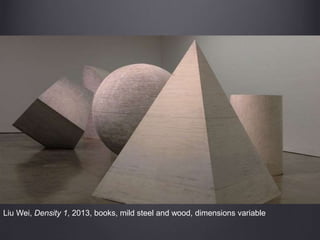
• it can also be a more literal—a choice of unusual
materials that seem to carry a symbolic charge
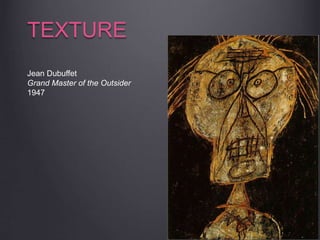
TEXTURE
Jean Dubuffet
Grand Master of the Outsider
1947
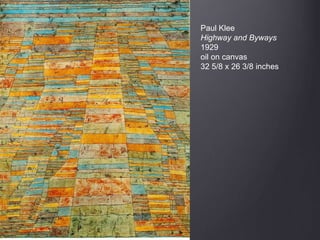
Paul Klee
Highway and Byways
1929
oil on canvas
32 5/8 x 26 3/8 inches
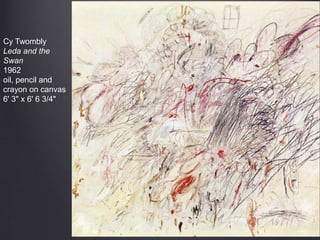
Cy Twombly
Leda and the
Swan
1962
oil, pencil and
crayon on canvas
6' 3" x 6' 6 3/4"
Cy Twombly, Untitled, 1971, Oil and crayon on canvas, 118 x 188¼"
John MCCRACKEN, Green Slab in Two Parts, 1966
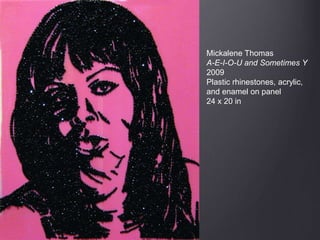
Mickalene Thomas
A-E-I-O-U and Sometimes Y
2009
Plastic rhinestones, acrylic,
and enamel on panel
24 x 20 in
Cady NOLAND, Frame Device, 1989, Pipes, stantions, and twelve walkers
132 × 132 × 54 in, installed at the Hammer Museum
Nayland Blake, Feeder 2, 1998, steel and gingerbread, 7 x 10 x 7 feet
Liu Wei, Density 1, 2013, books, mild steel and wood, dimensions variable
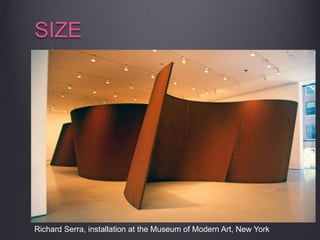
SIZE
Richard Serra, installation at the Museum of Modern Art, New York
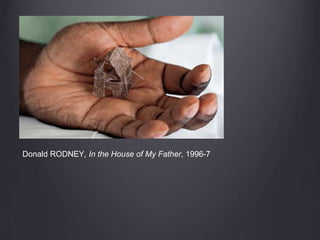
Donald RODNEY, In the House of My Father, 1996-7
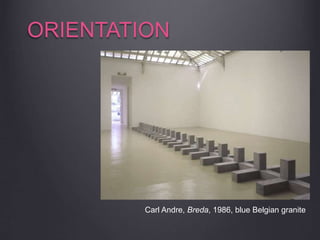
ORIENTATION
Carl Andre, Breda, 1986, blue Belgian granite
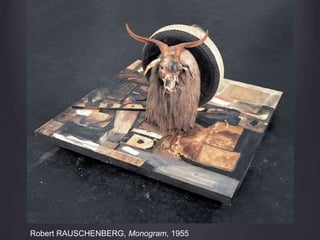
Robert RAUSCHENBERG, Monogram, 1955
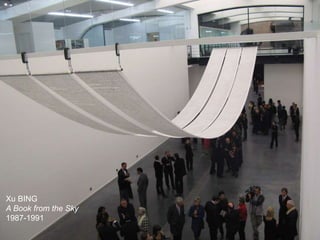
Xu BING
A Book from the Sky
1987-1991
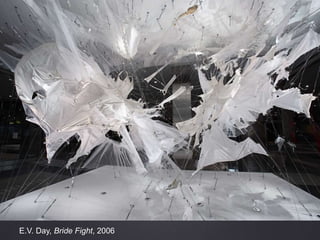
E.V. Day, Bride Fight, 2006

Art100 fall2016 class5.1_formal_analysisstepbystep

Editor's Notes

  • #17 Bridget Riley, Hesitate, 1964 Oil paint on canvas Dimensions Support: 1067 x 1124 mm
  • #42 Robert Rauschenberg, Monogram, 1955