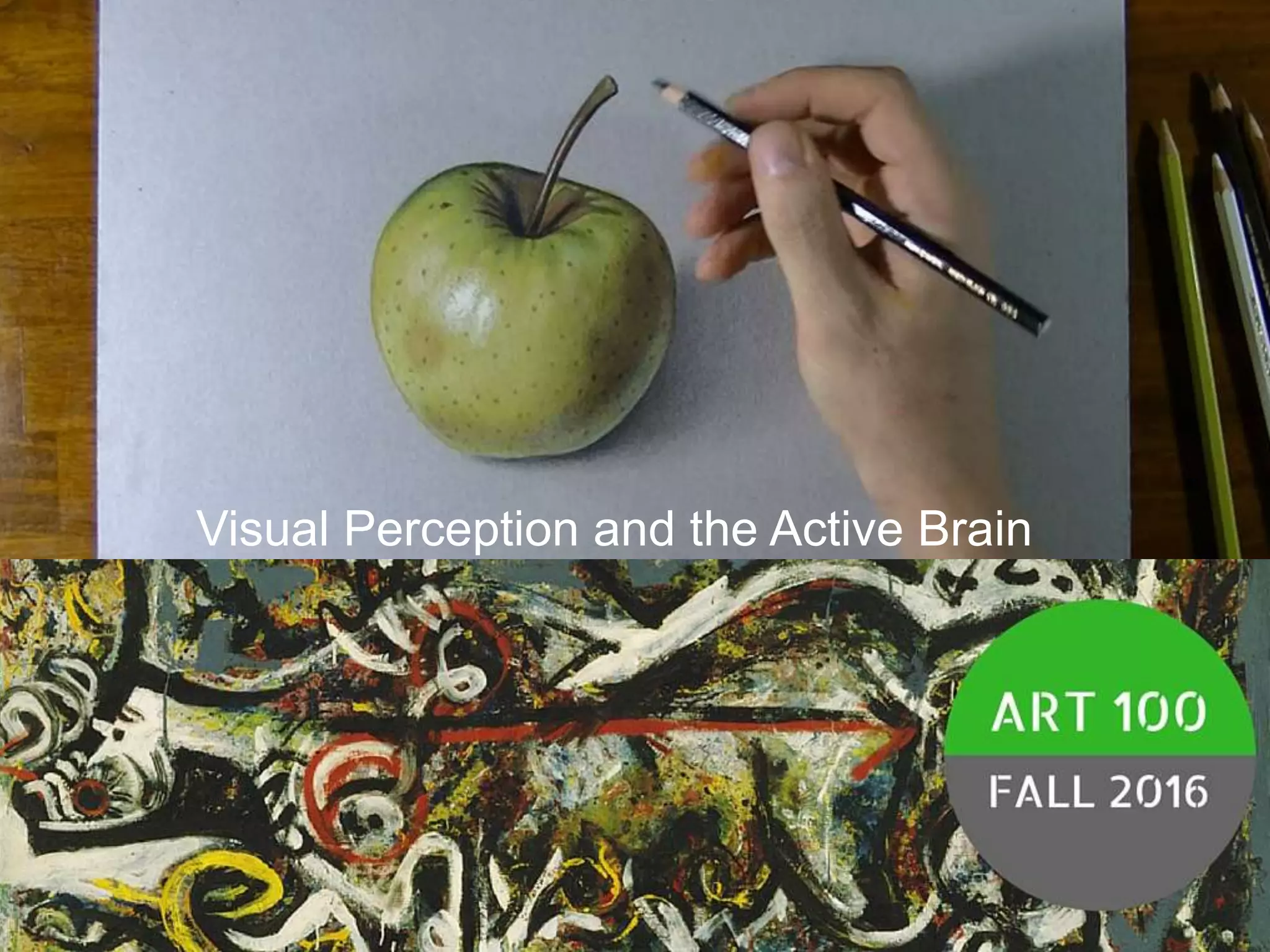
Class 2
VISUAL ATTENTION
Visual Perception and the Active Brain
agenda 9.6.16
• how eye and brain work together to create vision
• the active, constructed nature of vision
• what we see is an interpretive construction of the data our
brain receives from the eye
In general in this course, we are interested not
in the “nature” of vision, but in its culture; in
other words, how humans have developed
languages of visual communication given
our status as sighted creatures.
So this session is a bit
of a departure.
Today we study the eye, the brain and
the dynamic process of visual
perception, to understand how our
perception works.
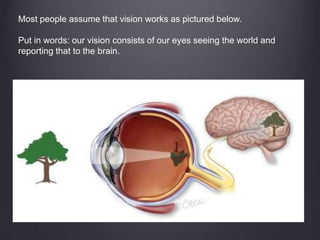
Most people assume that vision works as pictured below.
Put in words: our vision consists of our eyes seeing the world and
reporting that to the brain.
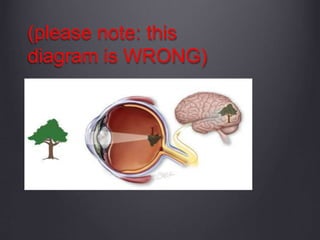
(please note: this
diagram is WRONG)
why is the eye/camera analogy wrong?
There is no “image,” or picture of any
sort in the eye.
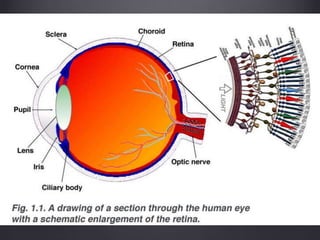
In the eye, light admitted through the pupil and focused
through the lens differentially stimulates the neuron-rich
tissue at the back of the eye (the retina), sending chemical
signals to the brain (specifically to the visual cortex), where
those signals must be processed and interpreted to create
our visual field.
“the eye is [not] like a camera”
The analogy holds up to a point.
The point at which it no longer holds
is the retina.
Please note: this diagram is TRUE up to a
point and then becomes FALSE.
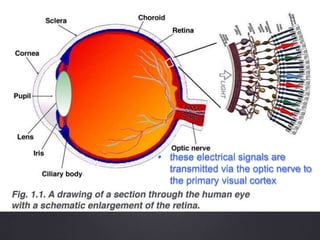
what happens in the retina?
Light is converted into electrical impulses in the
retinal photoreceptors via a light-sensitive protein
called rhodopsin.
transduction
Transduction is the process by which electrical impulses are
converted to chemical form. This occurs differently in rods and
cones.
cones vs. rods
• cones: large range of intensities, color vision, work quickly,
very sensitive to small changes, concentrated in center
• rods: evolutionarily more recent, but outnumber cones 20
to only work in very low light, evenly distributed across the
retina
• these electrical signals are
transmitted via the optic nerve to
the primary visual cortex
but that's not all...
The signaling mechanism is sophisticated. It optimizes the
information transmitted from the retina by using “lateral
inhibition” to reduce the signal in certain areas (thus boosting
the rest).
lateral inhibition
• “About 60 years ago, scientists discovered that each vision cell’s
receptive field is activated when light hits a tiny region in the center
of the field and inhibited when light hits the area surrounding the
center. If light covers the entire receptive field, the cell responds
weakly.”
• Another way to put this is: “the visual process begins by
comparing the amount of light striking any small region of
the retina with the amount of surrounding light.”
• This is known as “lateral inhibition,” in which all but the very
strongest signals are filtered out by the retina before even
reaching the brain. (Creates strong edges around objects,
allowing us to perceive space.)
http://www.brainfacts.org/sensing-thinking-behaving/senses-and-
perception/articles/2012/vision-processing-information/
now, what happens in the
visual cortex?
This is where matters get really complicated!
There is evidence that there are THREE separate systems
that process these signals.
3 different pathways
process these signals
• shape: the general outline of something, allowing us to
recognize its form
• position/location/movement: where the object is relative to
us, and in what direction it is moving
• color
These elements seem to be processed via discrete mechanisms
in the visual cortex and coordinated into a coherent visual field.
animal + human evidence for 3
discrete processing systems
“Although the visual processing mechanisms are not yet completely
understood, recent findings from anatomical and physiological
studies in monkeys suggest that visual signals are fed into at least
three separate processing systems. One system appears to
process information mainly about shape; a second, mainly about
color; and a third, movement, location, and spatial organization.”
Human psychological studies support the findings obtained through
animal research. These studies show that the perception of
movement, depth, perspective, the relative size of objects, the
relative movement of objects, shading, and gradations in texture all
depend primarily on contrasts in light intensity rather than on color.”
SOURCE: http://www.brainfacts.org/sensing-thinking-behaving/senses-and-
perception/articles/2012/vision-processing-information/
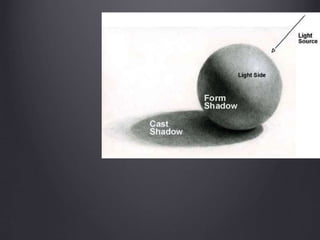
3 separate systems
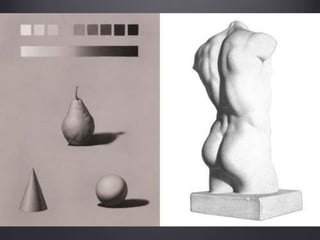
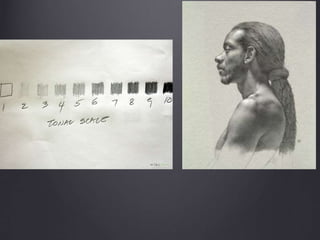
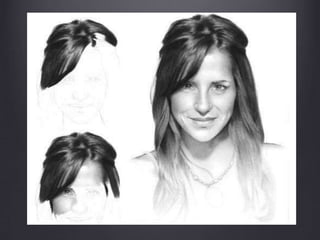
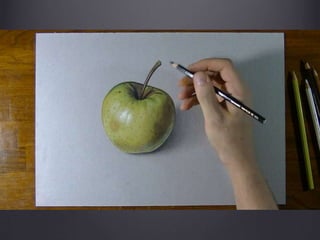
This helps us to understand why black and white drawings
appear every bit as convincing in the illusion they produce of
objects in space as colored ones.
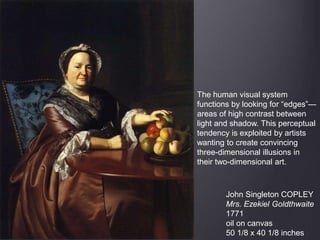
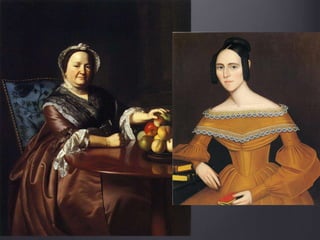
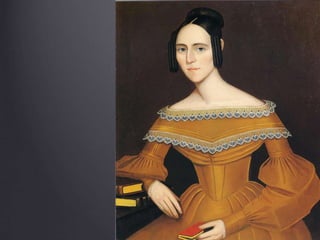
John Singleton COPLEY
Mrs. Ezekiel Goldthwaite
1771
oil on canvas
50 1/8 x 40 1/8 inches
The human visual system
functions by looking for “edges”—
areas of high contrast between
light and shadow. This perceptual
tendency is exploited by artists
wanting to create convincing
three-dimensional illusions in
their two-dimensional art.
summary 1
The brain constructs your field of vision from electrico-
chemical impulses sent by your eyes.
The eye collects data on:
• shape
• position/location/movement
• color
These elements seem to be processed via discrete mechanisms
in the visual cortex and coordinated into a coherent visual field.
3 different pathways
process these signals
• shape: the general outline of something, allowing us to
recognize its form
• color
• position/location/movement: where the object is relative to
us, and in what direction it is moving
These elements are processed separately and somehow
assembled into a field of vision we experience as continuous
and coherent.
• Our ability to, judge distance, move through space, avoid
obstacles,—these are all INFERENCES drawn from
information about contrasts between light intensity rather
than actual visual data—even though we perceive them
as properties of our vision.
• The brain can adjust for relative brightness/darkness;
provide motion stabilization; even reverse the visual field if
trained to do so.
• This is ANOTHER REASON why the eye/camera idea is
completely misleading.
summary 2
The brain can adjust for relative brightness/darkness; provide
motion stabilization; even reverse the visual field if trained to
do so.
summary 2
This is yet another reason why the eye/camera idea is
completely misleading.
summary 2
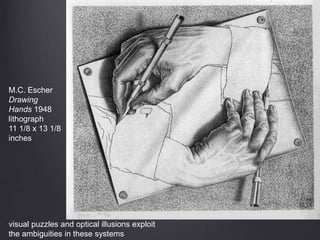
M.C. Escher
Drawing
Hands 1948
lithograph
11 1/8 x 13 1/8
inches
visual puzzles and optical illusions exploit
the ambiguities in these systems
short assignment
POST: Blindspot Exercise on Compass. Due by start of next
class (Thurs, 9.8 at 2 PM)
GO TO THESE LINKS:
http://serendip.brynmawr.edu/bb/blindspot1.html
http://serendip.brynmawr.edu/bb/blindspot/
TECHNICAL NOTE: To run the content at these links, you must have Java
installed on your computer. If you need to update Java, it is available at
this link: https://java.com/en/download/ If you cannot get Java to work
properly, you can use the old-school paper version of the blindspot test,
which is on p. 20 on the Breitmeyer "Blindspots" reading.
ASSIGNMENT: Once you have finished these activities, take
a moment to reflect. Writing in complete sentences please
answer both of these questions:
1. Describe what you experienced visually when you did the
exercises.
2. What conclusion(s) do you draw from this experience?

UVC100_Fall16_Class3.1

  • 1.
    Class 2 VISUAL ATTENTION VisualPerception and the Active Brain
  • 2.
    agenda 9.6.16 • howeye and brain work together to create vision • the active, constructed nature of vision • what we see is an interpretive construction of the data our brain receives from the eye
  • 3.
    In general inthis course, we are interested not in the “nature” of vision, but in its culture; in other words, how humans have developed languages of visual communication given our status as sighted creatures.
  • 4.
    So this sessionis a bit of a departure. Today we study the eye, the brain and the dynamic process of visual perception, to understand how our perception works.
  • 5.
    Most people assumethat vision works as pictured below. Put in words: our vision consists of our eyes seeing the world and reporting that to the brain.
  • 6.
  • 7.
    why is theeye/camera analogy wrong? There is no “image,” or picture of any sort in the eye. In the eye, light admitted through the pupil and focused through the lens differentially stimulates the neuron-rich tissue at the back of the eye (the retina), sending chemical signals to the brain (specifically to the visual cortex), where those signals must be processed and interpreted to create our visual field.
  • 8.
    “the eye is[not] like a camera” The analogy holds up to a point. The point at which it no longer holds is the retina. Please note: this diagram is TRUE up to a point and then becomes FALSE.
  • 10.
    what happens inthe retina? Light is converted into electrical impulses in the retinal photoreceptors via a light-sensitive protein called rhodopsin.
  • 11.
    transduction Transduction is theprocess by which electrical impulses are converted to chemical form. This occurs differently in rods and cones.
  • 12.
    cones vs. rods •cones: large range of intensities, color vision, work quickly, very sensitive to small changes, concentrated in center • rods: evolutionarily more recent, but outnumber cones 20 to only work in very low light, evenly distributed across the retina
  • 13.
    • these electricalsignals are transmitted via the optic nerve to the primary visual cortex
  • 14.
    but that's notall... The signaling mechanism is sophisticated. It optimizes the information transmitted from the retina by using “lateral inhibition” to reduce the signal in certain areas (thus boosting the rest).
  • 15.
    lateral inhibition • “About60 years ago, scientists discovered that each vision cell’s receptive field is activated when light hits a tiny region in the center of the field and inhibited when light hits the area surrounding the center. If light covers the entire receptive field, the cell responds weakly.” • Another way to put this is: “the visual process begins by comparing the amount of light striking any small region of the retina with the amount of surrounding light.” • This is known as “lateral inhibition,” in which all but the very strongest signals are filtered out by the retina before even reaching the brain. (Creates strong edges around objects, allowing us to perceive space.) http://www.brainfacts.org/sensing-thinking-behaving/senses-and- perception/articles/2012/vision-processing-information/
  • 16.
    now, what happensin the visual cortex? This is where matters get really complicated! There is evidence that there are THREE separate systems that process these signals.
  • 17.
    3 different pathways processthese signals • shape: the general outline of something, allowing us to recognize its form • position/location/movement: where the object is relative to us, and in what direction it is moving • color These elements seem to be processed via discrete mechanisms in the visual cortex and coordinated into a coherent visual field.
  • 18.
    animal + humanevidence for 3 discrete processing systems “Although the visual processing mechanisms are not yet completely understood, recent findings from anatomical and physiological studies in monkeys suggest that visual signals are fed into at least three separate processing systems. One system appears to process information mainly about shape; a second, mainly about color; and a third, movement, location, and spatial organization.” Human psychological studies support the findings obtained through animal research. These studies show that the perception of movement, depth, perspective, the relative size of objects, the relative movement of objects, shading, and gradations in texture all depend primarily on contrasts in light intensity rather than on color.” SOURCE: http://www.brainfacts.org/sensing-thinking-behaving/senses-and- perception/articles/2012/vision-processing-information/
  • 19.
    3 separate systems Thishelps us to understand why black and white drawings appear every bit as convincing in the illusion they produce of objects in space as colored ones.
  • 27.
    John Singleton COPLEY Mrs.Ezekiel Goldthwaite 1771 oil on canvas 50 1/8 x 40 1/8 inches The human visual system functions by looking for “edges”— areas of high contrast between light and shadow. This perceptual tendency is exploited by artists wanting to create convincing three-dimensional illusions in their two-dimensional art.
  • 30.
    summary 1 The brainconstructs your field of vision from electrico- chemical impulses sent by your eyes. The eye collects data on: • shape • position/location/movement • color These elements seem to be processed via discrete mechanisms in the visual cortex and coordinated into a coherent visual field.
  • 31.
    3 different pathways processthese signals • shape: the general outline of something, allowing us to recognize its form • color • position/location/movement: where the object is relative to us, and in what direction it is moving These elements are processed separately and somehow assembled into a field of vision we experience as continuous and coherent.
  • 32.
    • Our abilityto, judge distance, move through space, avoid obstacles,—these are all INFERENCES drawn from information about contrasts between light intensity rather than actual visual data—even though we perceive them as properties of our vision. • The brain can adjust for relative brightness/darkness; provide motion stabilization; even reverse the visual field if trained to do so. • This is ANOTHER REASON why the eye/camera idea is completely misleading. summary 2
  • 33.
    The brain canadjust for relative brightness/darkness; provide motion stabilization; even reverse the visual field if trained to do so. summary 2
  • 34.
    This is yetanother reason why the eye/camera idea is completely misleading. summary 2
  • 35.
    M.C. Escher Drawing Hands 1948 lithograph 111/8 x 13 1/8 inches visual puzzles and optical illusions exploit the ambiguities in these systems
  • 36.
    short assignment POST: BlindspotExercise on Compass. Due by start of next class (Thurs, 9.8 at 2 PM) GO TO THESE LINKS: http://serendip.brynmawr.edu/bb/blindspot1.html http://serendip.brynmawr.edu/bb/blindspot/ TECHNICAL NOTE: To run the content at these links, you must have Java installed on your computer. If you need to update Java, it is available at this link: https://java.com/en/download/ If you cannot get Java to work properly, you can use the old-school paper version of the blindspot test, which is on p. 20 on the Breitmeyer "Blindspots" reading.
  • 37.
    ASSIGNMENT: Once youhave finished these activities, take a moment to reflect. Writing in complete sentences please answer both of these questions: 1. Describe what you experienced visually when you did the exercises. 2. What conclusion(s) do you draw from this experience?