



Class 13.1
The Rise of a
Commercial
Culture
A r t 1 0 0
U n d e r s t a n d i n g V i s u a l C u l t u r e
agenda 11.15.2016
• early communications media
• arrival of print
• early print media
• print culture and the public sphere
• technological changes in the 1820s
• new print media: ephemera, magazines, newspapers,
books and prints
• the birth of graphic design
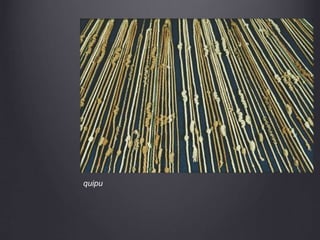
quipu
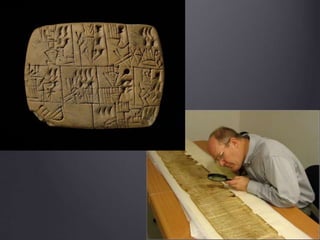
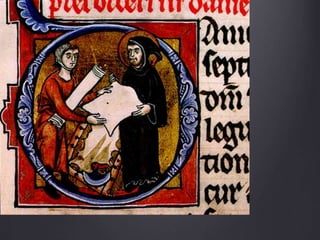
from handwritten manuscripts
on parchment to printed
paper...
• print permits a greater degree of standardization and
modularization
• more information can be exchanged more quickly
• linked to rise of science, ongoing development of human
rights
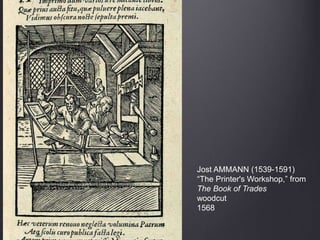
Jost AMMANN (1539-1591)
“The Printer's Workshop,” from
The Book of Trades
woodcut
1568
early printed formats
 broadsheet/broadside:
 a single sheet that was used to print announcements or
notices on one side only.
 posted publicly and read/viewed by all
 the printer made the design decisions
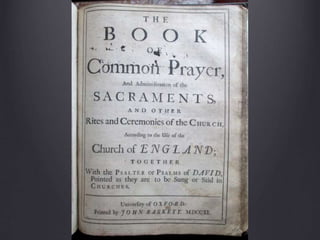
 Bibles and other religious texts such as prayerbooks
 some treatises on science, law, government, etc. but this
will increase later
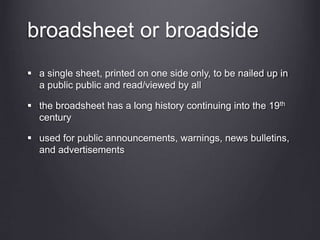
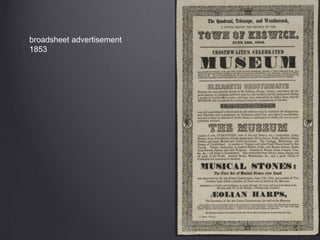
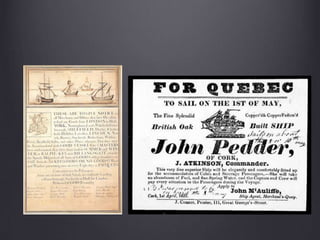
broadsheet or broadside
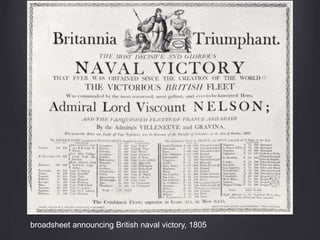
 a single sheet, printed on one side only, to be nailed up in
a public public and read/viewed by all
 the broadsheet has a long history continuing into the 19th
century
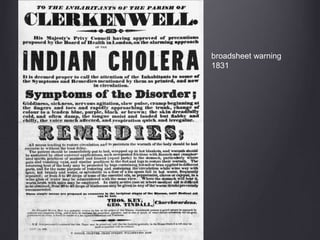
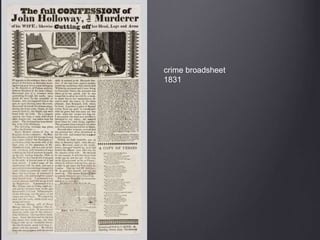
 used for public announcements, warnings, news bulletins,
and advertisements
broadsheet announcing British naval victory, 1805
broadsheet warning
1831
crime broadsheet
1831
broadsheet advertisement
1853
how does print matter?
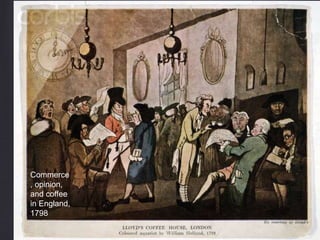
Commerce
, opinion,
and coffee
in England,
1798
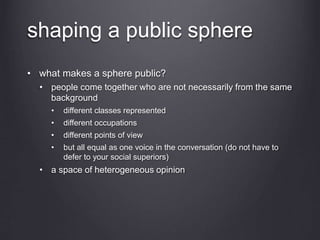
shaping a public sphere
• what makes a sphere public?
• people come together who are not necessarily from the same
background
• different classes represented
• different occupations
• different points of view
• but all equal as one voice in the conversation (do not have to
defer to your social superiors)
• a space of heterogeneous opinion
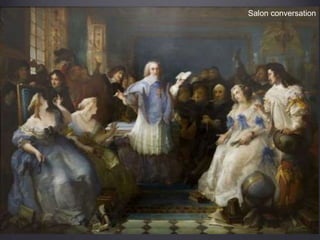
Salon conversation
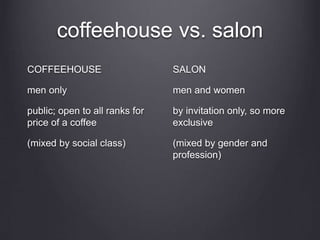
coffeehouse vs. salon
COFFEEHOUSE
men only
public; open to all ranks for
price of a coffee
(mixed by social class)
SALON
men and women
by invitation only, so more
exclusive
(mixed by gender and
profession)
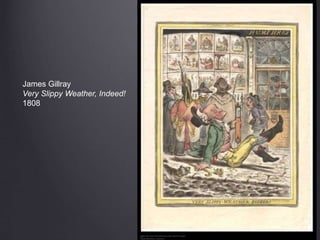
James Gillray
Very Slippy Weather, Indeed!
1808
Vicesimus Knox, "On the Effects of Caricatures
exhibited at the Windows of Printsellers,"
Winter Evenings (London: 2 vols. Charles
Dilly, 3d. ed., 1795): 139-144.
“The lower classes in London, it might be
supposed, have not time, inclination, or ability,
to read much, but their minds are filled with
ideas, not only by the multitude of occurrences,
but also by the prints that are obtruded on their
notice, in the windows of shops conspicuously
situated in the most frequented streets. And I
believe, they often receive impressions, either
favourable, or unfavourable, to their honesty
and happiness as they loiter at a window, with a
burden on their backs, and gape, unmindful of
their toil, at the comical productions of the
ingenious designer.”
Vicesimus Knox, "On the Effects of Caricatures
exhibited at the Windows of Printsellers,"
Winter Evenings (London: 2 vols. Charles
Dilly, 3d. ed., 1795): 139-144.
“ The mode of ridiculing by prints has
some advantages over that by writing and
argument. Its effect is instantaneous; and
they who cannot read, or have not sense
enough to comprehend, a refined piece of
raillery, are able to see a good caricature,
and to receive a powerful impression from
it.”
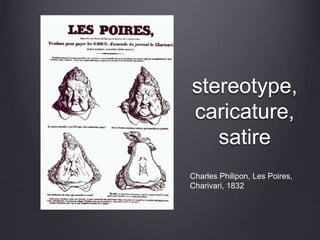
stereotype,
caricature,
satire
Charles Philipon, Les Poires,
Charivari, 1832
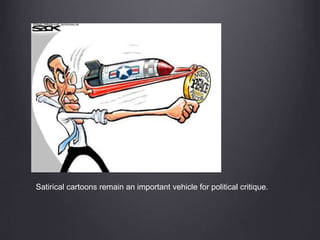
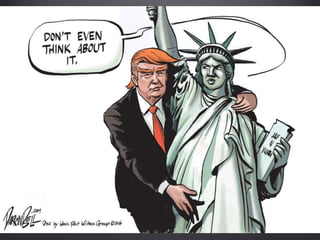
Satirical cartoons remain an important vehicle for political critique.
new combination of
technologies in the 1820s
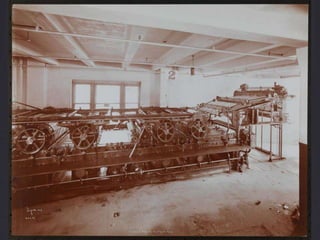
steam power
iron presses
higher pressure for reproduction of images
larger printing area
endgrain wood engraving (produces harder, smoother
surface that can hold finer lines)
These technological improvements led to an explosion of printe
materials in the 19th century.
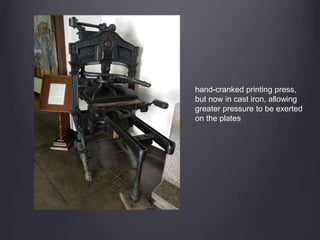
hand-cranked printing press,
but now in cast iron, allowing
greater pressure to be exerted
on the plates
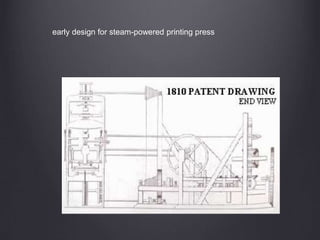
early design for steam-powered printing press
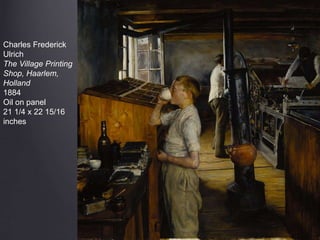
Charles Frederick
Ulrich
The Village Printing
Shop, Haarlem,
Holland
1884
Oil on panel
21 1/4 x 22 15/16
inches
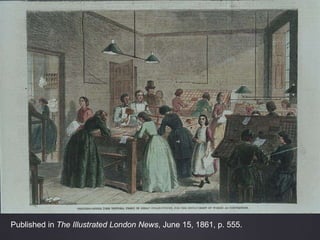
Published in The Illustrated London News, June 15, 1861, p. 555.
what happens when print is
mechanized?
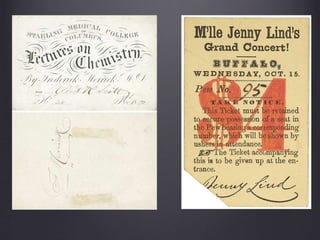
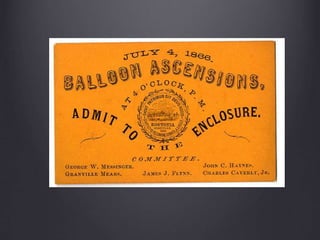
• Ephemera: printed paper meant to be thrown away:
tickets, menus, billheads, public notices and posters
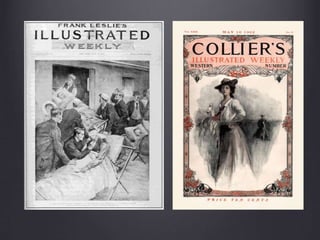
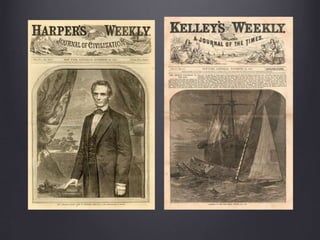
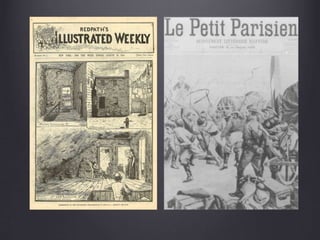
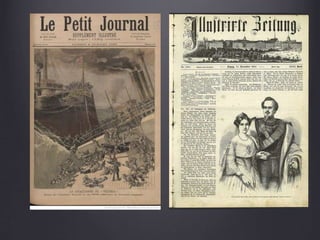
• Illustrated weekly magazines begin publication.
• There is enough work for skilled designers,
illustrators, caricaturists, beginning of advertising
profession.
• Also impacted publication of books and prints,
increasing print runs and opening up a mass market.
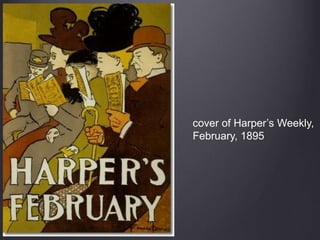
cover of Harper’s Weekly,
February, 1895
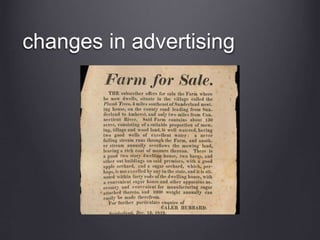
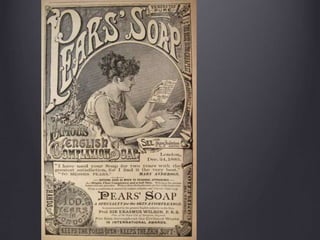
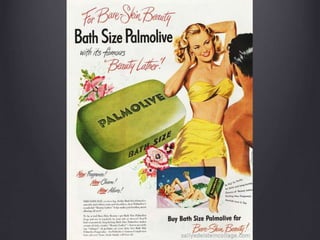
changes in advertising
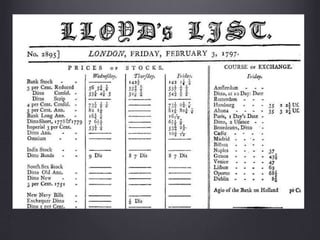
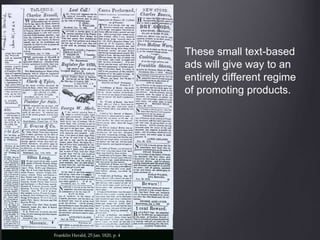
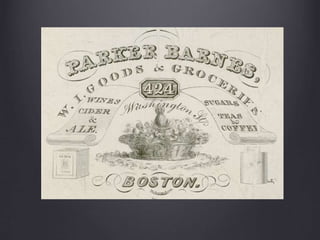
These small text-based
ads will give way to an
entirely different regime
of promoting products.
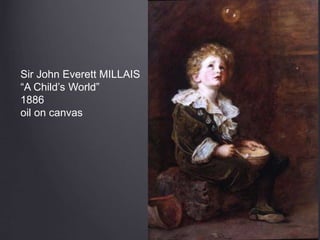
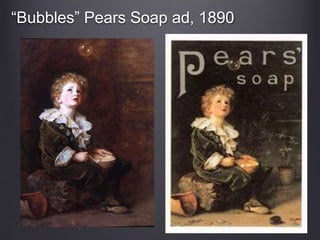
Sir John Everett MILLAIS
“A Child’s World”
1886
oil on canvas
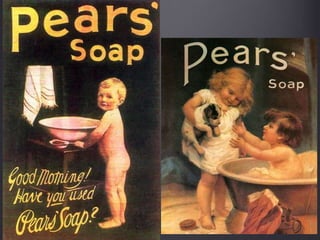
“Bubbles” Pears Soap ad, 1890
what is graphic design?
visual communication using combinations of text and images,
organized to produce maximum impact
a modern design field of relatively recent origin, arising as
mass print communications reached ever wider audiences
earlier, the printer would design the printed material, choose
the font, etc.
1820 to present, the graphic designer handles only the
design aspects, the printer handles only the production
aspects
so, graphic design today is a profession, but if you've ever
made a flyer or a sign for a garage sale, you have done it
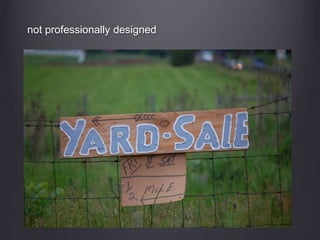
not professionally designed
birth of graphic design
• ongoing innovation in production methods continues to
increase volume and variety of printed media
• communicating through print comes to be expected
• every single sheet of paper produced has to be designed,
by someone, at some point
• commercial artists separate into a distinct category
separate from fine artists
• trade publications and advertisements for graphic design
services demonstrate the rise of a professional group
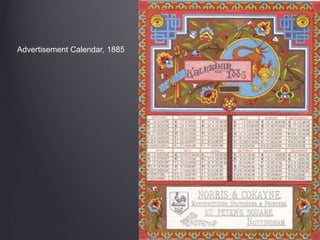
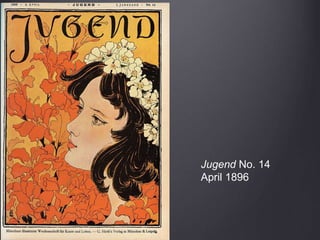
1880s-1910s
• as industrialization progresses, a craft revival gets
underway
• valuing the traditions of the handmade and the singular
vs. mass-produced items in quantity
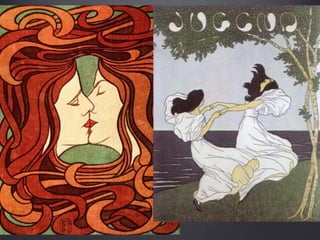
• stylistically, folk and historical motifs coexist with abstract
forms (both geometric and organic)
Advertisement Calendar, 1885
Jugend No. 14
April 1896
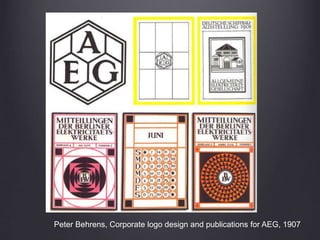
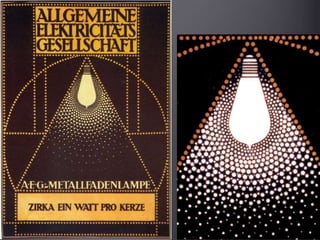
Peter Behrens, Corporate logo design and publications for AEG, 1907
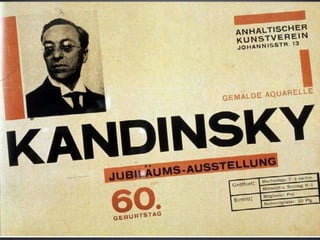
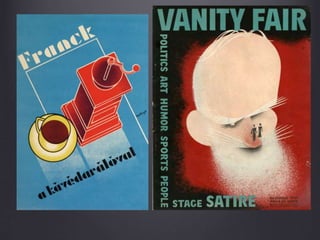
1910-1930
• new modern world demands new modern forms—in
architecture, product design, and graphic design as well
• Bauhaus revolutionized design thinking and design
education
• designers have a significant role in the creation of social
protest art and propaganda
• graphic design is a key player in the rise of consumer
culture; rise of brands
• commercial artists and layout designers are joined by art
directors as the profession becomes increasingly
differentiated
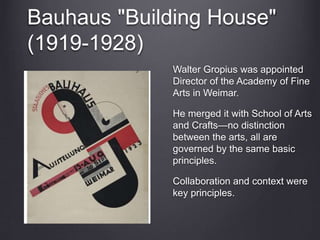
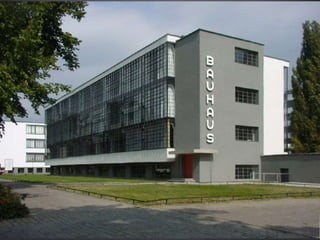
Bauhaus "Building House"
(1919-1928)
Walter Gropius was appointed
Director of the Academy of Fine
Arts in Weimar.
He merged it with School of Arts
and Crafts—no distinction
between the arts, all are
governed by the same basic
principles.
Collaboration and context were
key principles.
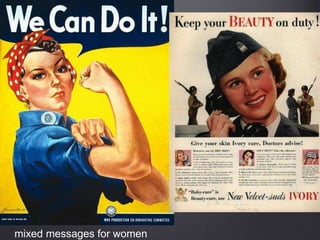
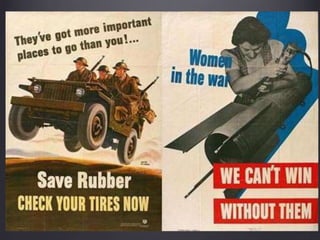
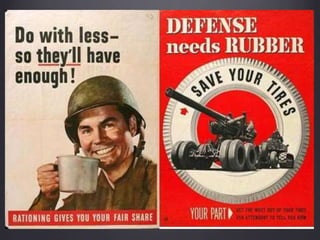
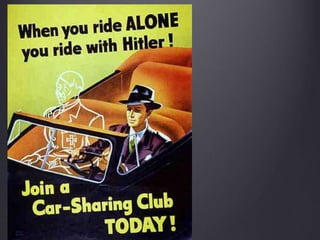
1930s and 1940s
• wartime imagery
• propaganda
• public service campaigns
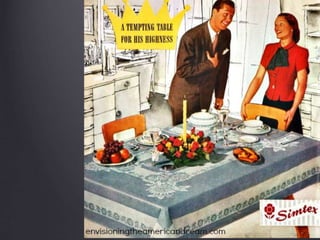
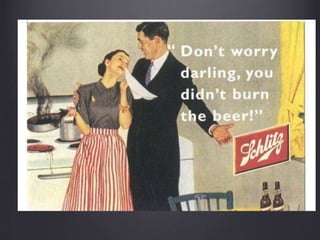
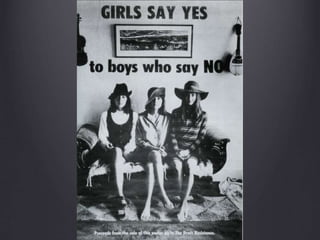
mixed messages for women
1960s
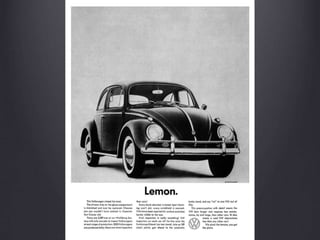
• Pop, protest, and counterculture complicated the picture
• rise of humor and anti-advertising
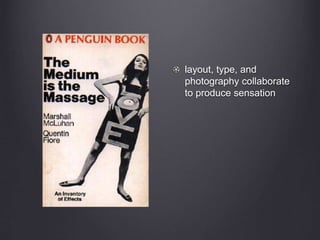
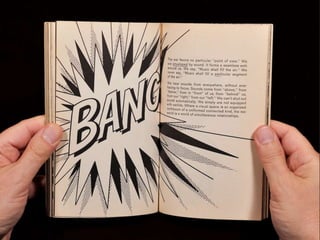
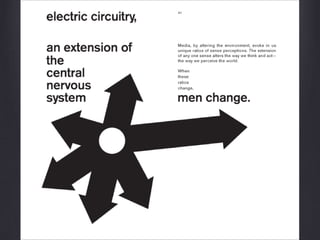
• era of McLuhan's Understanding Media (1964): analysis of
different communications media and their impacts on our
human existence
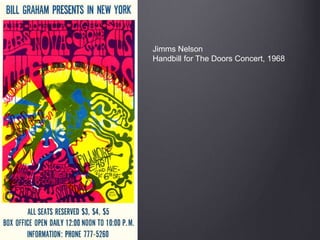
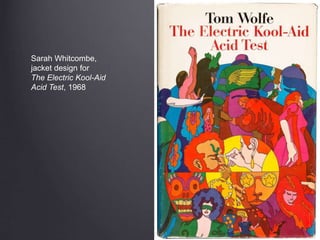
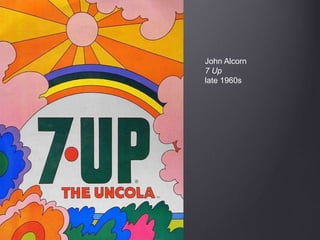
layout, type, and
photography collaborate
to produce sensation
Jimms Nelson
Handbill for The Doors Concert, 1968
Sarah Whitcombe,
jacket design for
The Electric Kool-Aid
Acid Test, 1968
John Alcorn
7 Up
late 1960s
1970s
• graphic designer's role expands from composing and
styling specific messages to creating total brand identities
• corporate logos drew on Bauhaus principles of universal
design
• television means brand identity must be coordinated
across a variety of platforms
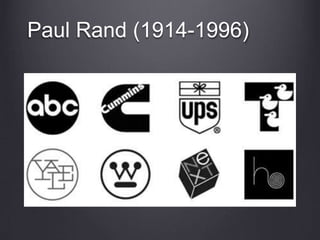
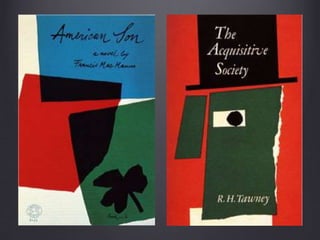
Paul Rand (1914-1996)
Rand's impact
“He almost singlehandedly convinced business that design
was an effective tool. [. . .] Anyone designing in the 1950s
and 1960s owed much to Rand, who largely made it possible
for us to work. He more than anyone else made the
profession reputable. We went from being commercial artists
to being graphic designers largely on his merits.”
—Louis Danziger, 1996
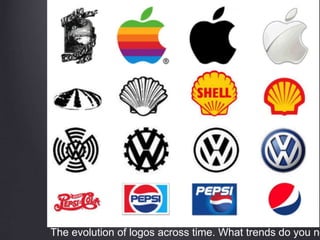
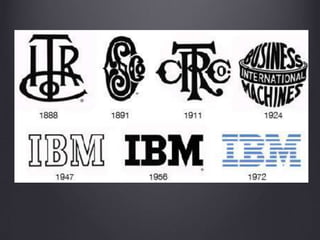
The evolution of logos across time. What trends do you no
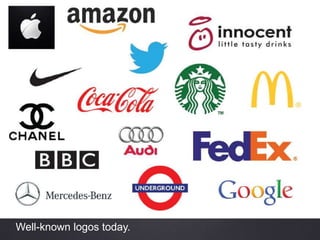
Well-known logos today.

ART100_Fall2016_Class13.1

  • 1.
    Class 13.1 The Riseof a Commercial Culture A r t 1 0 0 U n d e r s t a n d i n g V i s u a l C u l t u r e
  • 2.
    agenda 11.15.2016 • earlycommunications media • arrival of print • early print media • print culture and the public sphere • technological changes in the 1820s • new print media: ephemera, magazines, newspapers, books and prints • the birth of graphic design
  • 4.
  • 6.
    from handwritten manuscripts onparchment to printed paper... • print permits a greater degree of standardization and modularization • more information can be exchanged more quickly • linked to rise of science, ongoing development of human rights
  • 7.
    Jost AMMANN (1539-1591) “ThePrinter's Workshop,” from The Book of Trades woodcut 1568
  • 8.
    early printed formats broadsheet/broadside:  a single sheet that was used to print announcements or notices on one side only.  posted publicly and read/viewed by all  the printer made the design decisions  Bibles and other religious texts such as prayerbooks  some treatises on science, law, government, etc. but this will increase later
  • 10.
    broadsheet or broadside a single sheet, printed on one side only, to be nailed up in a public public and read/viewed by all  the broadsheet has a long history continuing into the 19th century  used for public announcements, warnings, news bulletins, and advertisements
  • 11.
    broadsheet announcing Britishnaval victory, 1805
  • 12.
  • 13.
  • 14.
  • 15.
  • 16.
  • 19.
    shaping a publicsphere • what makes a sphere public? • people come together who are not necessarily from the same background • different classes represented • different occupations • different points of view • but all equal as one voice in the conversation (do not have to defer to your social superiors) • a space of heterogeneous opinion
  • 20.
  • 21.
    coffeehouse vs. salon COFFEEHOUSE menonly public; open to all ranks for price of a coffee (mixed by social class) SALON men and women by invitation only, so more exclusive (mixed by gender and profession)
  • 22.
    James Gillray Very SlippyWeather, Indeed! 1808
  • 23.
    Vicesimus Knox, "Onthe Effects of Caricatures exhibited at the Windows of Printsellers," Winter Evenings (London: 2 vols. Charles Dilly, 3d. ed., 1795): 139-144. “The lower classes in London, it might be supposed, have not time, inclination, or ability, to read much, but their minds are filled with ideas, not only by the multitude of occurrences, but also by the prints that are obtruded on their notice, in the windows of shops conspicuously situated in the most frequented streets. And I believe, they often receive impressions, either favourable, or unfavourable, to their honesty and happiness as they loiter at a window, with a burden on their backs, and gape, unmindful of their toil, at the comical productions of the ingenious designer.”
  • 25.
    Vicesimus Knox, "Onthe Effects of Caricatures exhibited at the Windows of Printsellers," Winter Evenings (London: 2 vols. Charles Dilly, 3d. ed., 1795): 139-144. “ The mode of ridiculing by prints has some advantages over that by writing and argument. Its effect is instantaneous; and they who cannot read, or have not sense enough to comprehend, a refined piece of raillery, are able to see a good caricature, and to receive a powerful impression from it.”
  • 26.
  • 27.
    Satirical cartoons remainan important vehicle for political critique.
  • 29.
    new combination of technologiesin the 1820s steam power iron presses higher pressure for reproduction of images larger printing area endgrain wood engraving (produces harder, smoother surface that can hold finer lines) These technological improvements led to an explosion of printe materials in the 19th century.
  • 30.
    hand-cranked printing press, butnow in cast iron, allowing greater pressure to be exerted on the plates
  • 31.
    early design forsteam-powered printing press
  • 32.
    Charles Frederick Ulrich The VillagePrinting Shop, Haarlem, Holland 1884 Oil on panel 21 1/4 x 22 15/16 inches
  • 33.
    Published in TheIllustrated London News, June 15, 1861, p. 555.
  • 35.
    what happens whenprint is mechanized? • Ephemera: printed paper meant to be thrown away: tickets, menus, billheads, public notices and posters • Illustrated weekly magazines begin publication. • There is enough work for skilled designers, illustrators, caricaturists, beginning of advertising profession. • Also impacted publication of books and prints, increasing print runs and opening up a mass market.
  • 42.
    cover of Harper’sWeekly, February, 1895
  • 43.
  • 44.
    These small text-based adswill give way to an entirely different regime of promoting products.
  • 47.
    Sir John EverettMILLAIS “A Child’s World” 1886 oil on canvas
  • 48.
  • 53.
    what is graphicdesign? visual communication using combinations of text and images, organized to produce maximum impact a modern design field of relatively recent origin, arising as mass print communications reached ever wider audiences earlier, the printer would design the printed material, choose the font, etc. 1820 to present, the graphic designer handles only the design aspects, the printer handles only the production aspects so, graphic design today is a profession, but if you've ever made a flyer or a sign for a garage sale, you have done it
  • 54.
  • 55.
    birth of graphicdesign • ongoing innovation in production methods continues to increase volume and variety of printed media • communicating through print comes to be expected • every single sheet of paper produced has to be designed, by someone, at some point • commercial artists separate into a distinct category separate from fine artists • trade publications and advertisements for graphic design services demonstrate the rise of a professional group
  • 56.
    1880s-1910s • as industrializationprogresses, a craft revival gets underway • valuing the traditions of the handmade and the singular vs. mass-produced items in quantity • stylistically, folk and historical motifs coexist with abstract forms (both geometric and organic)
  • 57.
  • 58.
  • 60.
    Peter Behrens, Corporatelogo design and publications for AEG, 1907
  • 62.
    1910-1930 • new modernworld demands new modern forms—in architecture, product design, and graphic design as well • Bauhaus revolutionized design thinking and design education • designers have a significant role in the creation of social protest art and propaganda • graphic design is a key player in the rise of consumer culture; rise of brands • commercial artists and layout designers are joined by art directors as the profession becomes increasingly differentiated
  • 63.
    Bauhaus "Building House" (1919-1928) WalterGropius was appointed Director of the Academy of Fine Arts in Weimar. He merged it with School of Arts and Crafts—no distinction between the arts, all are governed by the same basic principles. Collaboration and context were key principles.
  • 68.
    1930s and 1940s •wartime imagery • propaganda • public service campaigns
  • 69.
  • 75.
    1960s • Pop, protest,and counterculture complicated the picture • rise of humor and anti-advertising • era of McLuhan's Understanding Media (1964): analysis of different communications media and their impacts on our human existence
  • 78.
    layout, type, and photographycollaborate to produce sensation
  • 81.
    Jimms Nelson Handbill forThe Doors Concert, 1968
  • 82.
    Sarah Whitcombe, jacket designfor The Electric Kool-Aid Acid Test, 1968
  • 83.
  • 84.
    1970s • graphic designer'srole expands from composing and styling specific messages to creating total brand identities • corporate logos drew on Bauhaus principles of universal design • television means brand identity must be coordinated across a variety of platforms
  • 85.
  • 89.
    Rand's impact “He almostsinglehandedly convinced business that design was an effective tool. [. . .] Anyone designing in the 1950s and 1960s owed much to Rand, who largely made it possible for us to work. He more than anyone else made the profession reputable. We went from being commercial artists to being graphic designers largely on his merits.” —Louis Danziger, 1996
  • 90.
    The evolution oflogos across time. What trends do you no
  • 91.

Editor's Notes

  • #23 “Poison may be converted into medicine; and ridicule, which, when directed against morality and religion, operates like a pestilence, may be used to expose vice and folly with peculiar efficacy.” “ The mode of ridiculing by prints has some advantages over that by writing and argument. Its effect is instantaneous; and they who cannot read, or have not sense enough to comprehend, a refined piece of raillery, are able to see a good caricature, and to receive a powerful impression from it.” “The lower classes in London, it might be supposed, have not time, inclination, or ability, to read much, but their minds are filled with ideas, not only by the multitude of occurrences, but also by the prints that are obtruded on their notice, in the windows of shops conspicuously situated in the most frequented streets. And I believe, they often receive impressions, either favourable, or unfavourable, to their honesty and happiness as they loiter at a window, with a burden on their backs, and gape, unmindful of their toil, at the comical productions of the ingenious designer.”