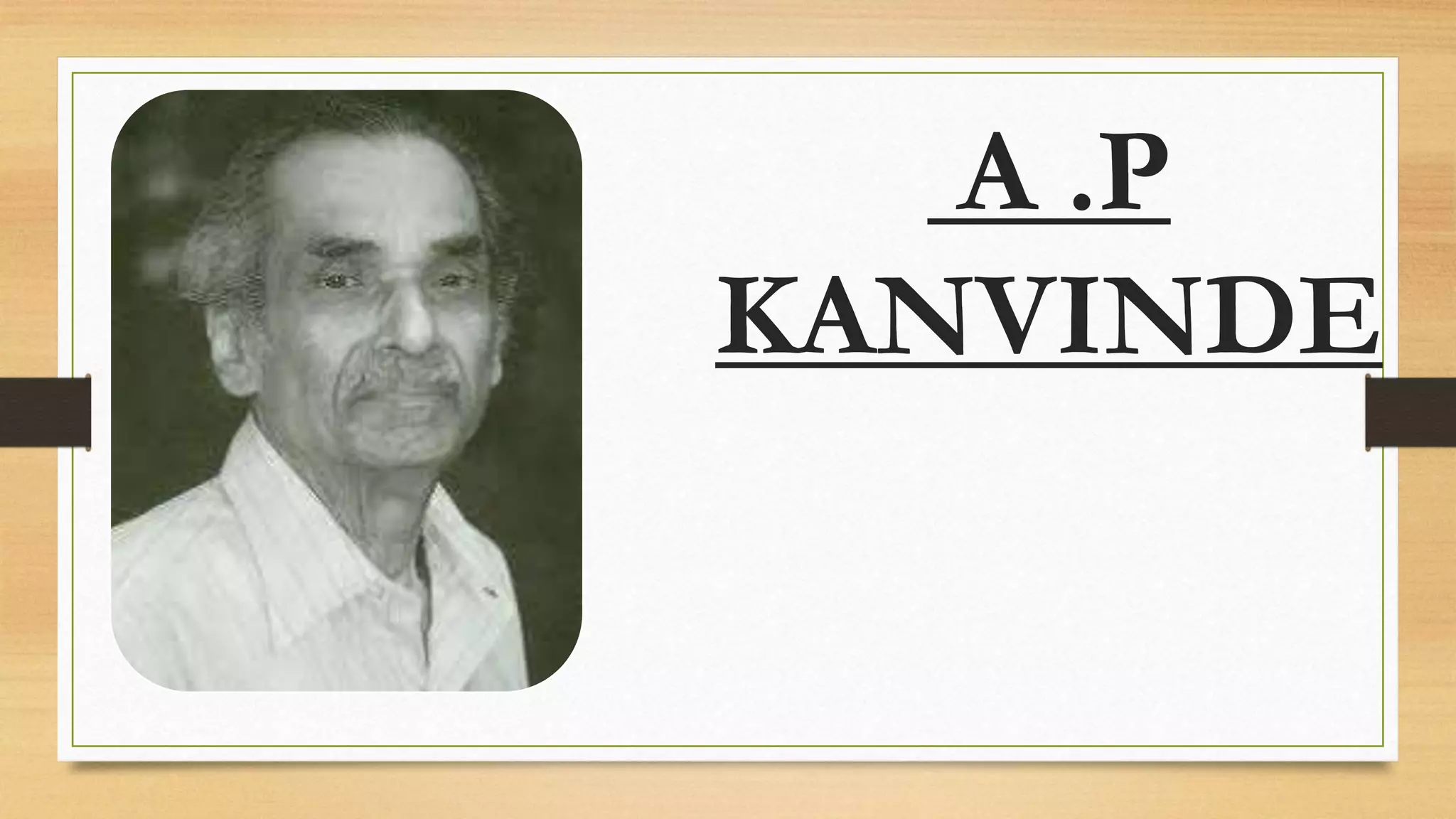
A .P
KANVINDE
LIFE HISTORY From 1916 to 2002. Ar.
A.P. Kanvinde belonged to the very small village
of Sindhudurg district in Maharashtra. He
graduated architecture from the “J.J. School of
Arts”, Mumbai, in 1942. He was then sent by the
government of India to study at “Harvard
University”. There he worked under Walter
Gropous and was influenced by his thinking and
teaching. He was also influenced by his father, who
was portrait and landscape painter.
LIFETIME ACHIEVEMENTS • Awarded
Padma Shree in 1976. • President IIA (1974-
75) • Co-Authored book “Campus Design in
India”. • IIA’s Babu Rao Mhatre Gold Medal
for life time achievement in 1985 • Great
Masters Award from JK Industries Ltd. in
1993. • Was also a part of the jury on the
competition for the Indira Gandhi National
Center for Arts, along with B.V. Doshi.
THOUGHT
ARCHITECTURE IS NOT A MUSEUM OF
MATERIAL.
DESIGN CONCEPT
• An art can be to nourish the senses. Art is
purely an aesthetic exercise.
• He believed that a grid of columns forming a
matrix giving structural and spatial aspect
would turn a design to more sophisticated and
faceted.
• He treated his building with VASTUSHASTRA
PHILOS0PHY
ALL HIS CREATIONS WERE BASED ON THIS THREE
PRINCIPLES
1. FUNCTIONALISM
2. MODERN ARCHITECTURE AND BRUTALISM
3. REGIONALISM
FUNCTIONALSIM
• THERE STRUCTURES WERE ALWAYS CONCIEVED WITH
THE FIRST PRIORITY GIVEN TO ITS FUNCTION .
• SOCIAL VALUES WHEN DESIGNING SPACES.
• HE REJECTED SYMMETRY.
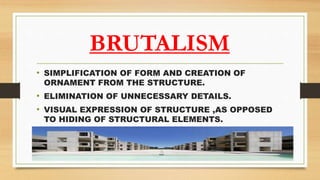
BRUTALISM
• SIMPLIFICATION OF FORM AND CREATION OF
ORNAMENT FROM THE STRUCTURE.
• ELIMINATION OF UNNECESSARY DETAILS.
• VISUAL EXPRESSION OF STRUCTURE ,AS OPPOSED
TO HIDING OF STRUCTURAL ELEMENTS.
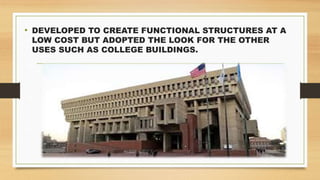
• DEVELOPED TO CREATE FUNCTIONAL STRUCTURES AT A
LOW COST BUT ADOPTED THE LOOK FOR THE OTHER
USES SUCH AS COLLEGE BUILDINGS.
REGIONALISM
• LOCAL CLIMATE
• BUILDING MATERIALS
• AND SOCIAL CONDITIONS
• SOUND CLIMATOLOGICAL PRINCIPLES
• KANVINDE plays with space and forms.
His designs are slender, balanced,
proportionate, neat and well crafted.
• The building is important but most
important is the gate of the user.
• He gave much more importance to the
natural light. He gave such a form to the
building that it can solve the problem of
ventilation as well as excessive heat .
LIST OF ALL HIS PROJECTS
• ISKON TEMPLE NEW DELHI .
• LAL BAHADUR SHASTRI NATIONAL ACADEMY OF ADMINISTRATION MUSSOORIE.
• IIT KANPUR.
• IIT DELHI.
• V.I.P LOUNGE.
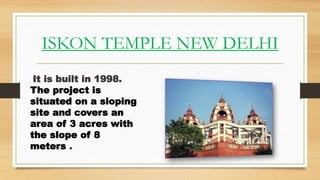
ISKON TEMPLE NEW DELHI
It is built in 1998.
The project is
situated on a sloping
site and covers an
area of 3 acres with
the slope of 8
meters .
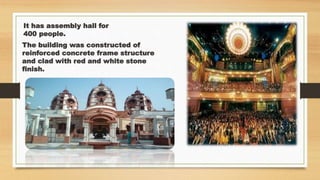
It has assembly hall for
400 people.
The building was constructed of
reinforced concrete frame structure
and clad with red and white stone
finish.
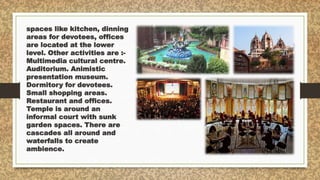
spaces like kitchen, dinning
areas for devotees, offices
are located at the lower
level. Other activities are :-
Multimedia cultural centre.
Auditorium. Animistic
presentation museum.
Dormitory for devotees.
Small shopping areas.
Restaurant and offices.
Temple is around an
informal court with sunk
garden spaces. There are
cascades all around and
waterfalls to create
ambience.
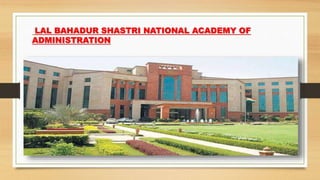
LAL BAHADUR SHASTRI NATIONAL ACADEMY OF
ADMINISTRATION
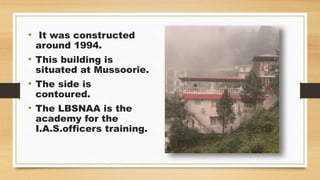
• It was constructed
around 1994.
• This building is
situated at Mussoorie.
• The side is
contoured.
• The LBSNAA is the
academy for the
I.A.S.officers training.
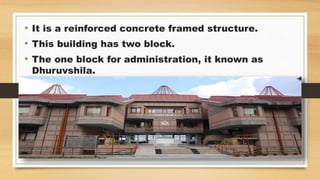
• It is a reinforced concrete framed structure.
• This building has two block.
• The one block for administration, it known as
Dhuruvshila.
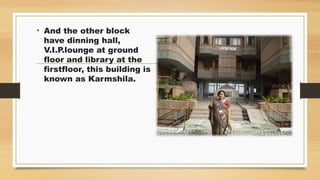
• And the other block
have dinning hall,
V.I.P.lounge at ground
floor and library at the
firstfloor, this building is
known as Karmshila.
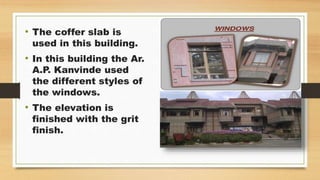
• The coffer slab is
used in this building.
• In this building the Ar.
A.P. Kanvinde used
the different styles of
the windows.
• The elevation is
finished with the grit
finish.
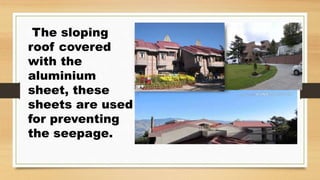
The sloping
roof covered
with the
aluminium
sheet, these
sheets are used
for preventing
the seepage.
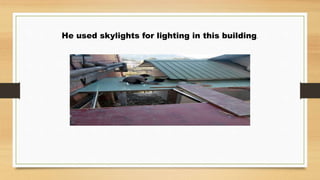
He used skylights for lighting in this building.
• Kanvinde’s expressive architecture was
variously interpreted as "an architectural
expression that reflected the culture and
aspirations“.
• Expressed Concrete structure in combination
with brick became the dynamic determinant of
form and order.
CONCLUSION
• His works are generally raw and unemotional.
Yet he managed to make his designs appealing
and welcoming. His designs were distinct and
unique yet having one thing similar-
functionalism.
THANK YOU
• 161110031

Ar kanvinde

  • 1.
  • 2.
    LIFE HISTORY From1916 to 2002. Ar. A.P. Kanvinde belonged to the very small village of Sindhudurg district in Maharashtra. He graduated architecture from the “J.J. School of Arts”, Mumbai, in 1942. He was then sent by the government of India to study at “Harvard University”. There he worked under Walter Gropous and was influenced by his thinking and teaching. He was also influenced by his father, who was portrait and landscape painter.
  • 3.
    LIFETIME ACHIEVEMENTS •Awarded Padma Shree in 1976. • President IIA (1974- 75) • Co-Authored book “Campus Design in India”. • IIA’s Babu Rao Mhatre Gold Medal for life time achievement in 1985 • Great Masters Award from JK Industries Ltd. in 1993. • Was also a part of the jury on the competition for the Indira Gandhi National Center for Arts, along with B.V. Doshi.
  • 4.
    THOUGHT ARCHITECTURE IS NOTA MUSEUM OF MATERIAL.
  • 5.
    DESIGN CONCEPT • Anart can be to nourish the senses. Art is purely an aesthetic exercise. • He believed that a grid of columns forming a matrix giving structural and spatial aspect would turn a design to more sophisticated and faceted. • He treated his building with VASTUSHASTRA
  • 6.
    PHILOS0PHY ALL HIS CREATIONSWERE BASED ON THIS THREE PRINCIPLES 1. FUNCTIONALISM 2. MODERN ARCHITECTURE AND BRUTALISM 3. REGIONALISM
  • 7.
    FUNCTIONALSIM • THERE STRUCTURESWERE ALWAYS CONCIEVED WITH THE FIRST PRIORITY GIVEN TO ITS FUNCTION . • SOCIAL VALUES WHEN DESIGNING SPACES. • HE REJECTED SYMMETRY.
  • 8.
    BRUTALISM • SIMPLIFICATION OFFORM AND CREATION OF ORNAMENT FROM THE STRUCTURE. • ELIMINATION OF UNNECESSARY DETAILS. • VISUAL EXPRESSION OF STRUCTURE ,AS OPPOSED TO HIDING OF STRUCTURAL ELEMENTS.
  • 9.
    • DEVELOPED TOCREATE FUNCTIONAL STRUCTURES AT A LOW COST BUT ADOPTED THE LOOK FOR THE OTHER USES SUCH AS COLLEGE BUILDINGS.
  • 10.
    REGIONALISM • LOCAL CLIMATE •BUILDING MATERIALS • AND SOCIAL CONDITIONS • SOUND CLIMATOLOGICAL PRINCIPLES
  • 11.
    • KANVINDE playswith space and forms. His designs are slender, balanced, proportionate, neat and well crafted. • The building is important but most important is the gate of the user. • He gave much more importance to the natural light. He gave such a form to the building that it can solve the problem of ventilation as well as excessive heat .
  • 12.
    LIST OF ALLHIS PROJECTS • ISKON TEMPLE NEW DELHI . • LAL BAHADUR SHASTRI NATIONAL ACADEMY OF ADMINISTRATION MUSSOORIE. • IIT KANPUR. • IIT DELHI. • V.I.P LOUNGE.
  • 13.
    ISKON TEMPLE NEWDELHI It is built in 1998. The project is situated on a sloping site and covers an area of 3 acres with the slope of 8 meters .
  • 14.
    It has assemblyhall for 400 people. The building was constructed of reinforced concrete frame structure and clad with red and white stone finish.
  • 15.
    spaces like kitchen,dinning areas for devotees, offices are located at the lower level. Other activities are :- Multimedia cultural centre. Auditorium. Animistic presentation museum. Dormitory for devotees. Small shopping areas. Restaurant and offices. Temple is around an informal court with sunk garden spaces. There are cascades all around and waterfalls to create ambience.
  • 16.
    LAL BAHADUR SHASTRINATIONAL ACADEMY OF ADMINISTRATION
  • 17.
    • It wasconstructed around 1994. • This building is situated at Mussoorie. • The side is contoured. • The LBSNAA is the academy for the I.A.S.officers training.
  • 18.
    • It isa reinforced concrete framed structure. • This building has two block. • The one block for administration, it known as Dhuruvshila.
  • 19.
    • And theother block have dinning hall, V.I.P.lounge at ground floor and library at the firstfloor, this building is known as Karmshila.
  • 20.
    • The cofferslab is used in this building. • In this building the Ar. A.P. Kanvinde used the different styles of the windows. • The elevation is finished with the grit finish.
  • 21.
    The sloping roof covered withthe aluminium sheet, these sheets are used for preventing the seepage.
  • 22.
    He used skylightsfor lighting in this building.
  • 23.
    • Kanvinde’s expressivearchitecture was variously interpreted as "an architectural expression that reflected the culture and aspirations“. • Expressed Concrete structure in combination with brick became the dynamic determinant of form and order.
  • 24.
    CONCLUSION • His worksare generally raw and unemotional. Yet he managed to make his designs appealing and welcoming. His designs were distinct and unique yet having one thing similar- functionalism.
  • 25.