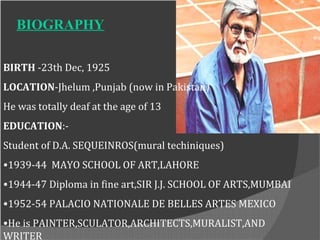
BIRTH -23th Dec, 1925
LOCATION-Jhelum ,Punjab (now in Pakistan)
He was totally deaf at the age of 13
EDUCATION:-
Student of D.A. SEQUEINROS(mural techiniques)
•1939-44 MAYO SCHOOL OF ART,LAHORE
•1944-47 Diploma in fine art,SIR J.J. SCHOOL OF ARTS,MUMBAI
•1952-54 PALACIO NATIONALE DE BELLES ARTES MEXICO
•He is PAINTER,SCULATOR,ARCHITECTS,MURALIST,AND
WRITER
BIOGRAPHY
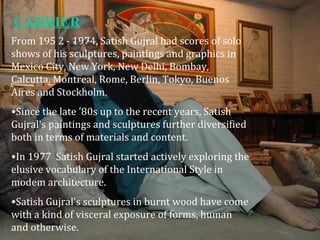
From 195 2 - 1974, Satish Gujral had scores of solo
shows of his sculptures, paintings and graphics in
Mexico City, New York, New Delhi, Bombay,
Calcutta, Montreal, Rome, Berlin, Tokyo, Buenos
Aires and Stockholm.
•Since the late '80s up to the recent years, Satish
Gujral's paintings and sculptures further diversified
both in terms of materials and content.
•In 1977 Satish Gujral started actively exploring the
elusive vocabulary of the International Style in
modem architecture.
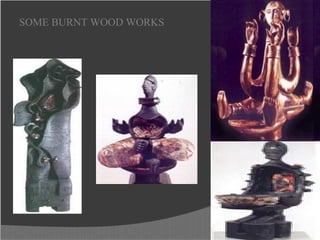
•Satish Gujral's sculptures in burnt wood have come
with a kind of visceral exposure of forms, human
and otherwise.
CARRIER
AWARDS AND HONOR
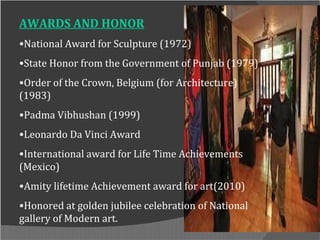
•National Award for Sculpture (1972)
•State Honor from the Government of Punjab (1979)
•Order of the Crown, Belgium (for Architecture)
(1983)
•Padma Vibhushan (1999)
•Leonardo Da Vinci Award
•International award for Life Time Achievements
(Mexico)
•Amity lifetime Achievement award for art(2010)
•Honored at golden jubilee celebration of National
gallery of Modern art.
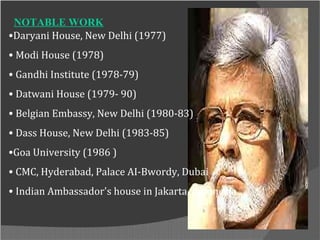
•Daryani House, New Delhi (1977)
• Modi House (1978)
• Gandhi Institute (1978-79)
• Datwani House (1979- 90)
• Belgian Embassy, New Delhi (1980-83)
• Dass House, New Delhi (1983-85)
•Goa University (1986 )
• CMC, Hyderabad, Palace AI-Bwordy, Dubai
• Indian Ambassador's house in Jakarta, Indonesia.
NOTABLE WORK
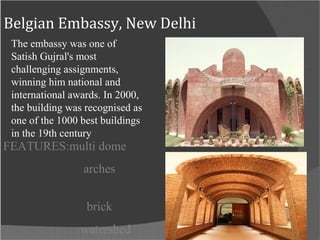
Belgian Embassy, New Delhi
FEATURES:multi dome
arches
brick
watershed
The embassy was one of
Satish Gujral's most
challenging assignments,
winning him national and
international awards. In 2000,
the building was recognised as
one of the 1000 best buildings
in the 19th century
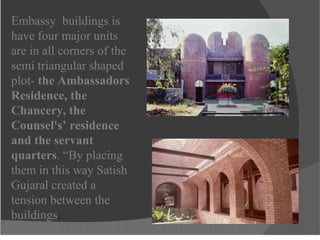
Embassy buildings is
have four major units
are in all corners of the
semi triangular shaped
plot- the Ambassadors
Residence, the
Chancery, the
Counsel's’ residence
and the servant
quarters. “By placing
them in this way Satish
Gujaral created a
tension between the
buildings.
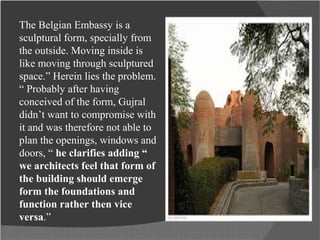
The Belgian Embassy is a
sculptural form, specially from
the outside. Moving inside is
like moving through sculptured
space.” Herein lies the problem.
“ Probably after having
conceived of the form, Gujral
didn’t want to compromise with
it and was therefore not able to
plan the openings, windows and
doors, “ he clarifies adding “
we architects feel that form of
the building should emerge
form the foundations and
function rather then vice
versa.”
The front facade consists of
two large cupolas with a
central fold above the
entrance.[4]
The entrance
opens into a courtyard with
stone masonry and greenery
within. The building is
constructed with red bricks.
The ubiquitous red brick
construction of the building
has been compared to early
architectural forms prevalent
in Mohenjo-daroand the
buddhist architecture in
Sanchi and Nalanda.
SOME OF HIS
MASTERPIECE ART WORKS
SOME BURNT WOOD WORKS
THANK YOU
BY;
PREETI KUMARI
BARCH/15034/12

Satish gujaral

  • 2.
    BIRTH -23th Dec,1925 LOCATION-Jhelum ,Punjab (now in Pakistan) He was totally deaf at the age of 13 EDUCATION:- Student of D.A. SEQUEINROS(mural techiniques) •1939-44 MAYO SCHOOL OF ART,LAHORE •1944-47 Diploma in fine art,SIR J.J. SCHOOL OF ARTS,MUMBAI •1952-54 PALACIO NATIONALE DE BELLES ARTES MEXICO •He is PAINTER,SCULATOR,ARCHITECTS,MURALIST,AND WRITER BIOGRAPHY
  • 3.
    From 195 2- 1974, Satish Gujral had scores of solo shows of his sculptures, paintings and graphics in Mexico City, New York, New Delhi, Bombay, Calcutta, Montreal, Rome, Berlin, Tokyo, Buenos Aires and Stockholm. •Since the late '80s up to the recent years, Satish Gujral's paintings and sculptures further diversified both in terms of materials and content. •In 1977 Satish Gujral started actively exploring the elusive vocabulary of the International Style in modem architecture. •Satish Gujral's sculptures in burnt wood have come with a kind of visceral exposure of forms, human and otherwise. CARRIER
  • 4.
    AWARDS AND HONOR •NationalAward for Sculpture (1972) •State Honor from the Government of Punjab (1979) •Order of the Crown, Belgium (for Architecture) (1983) •Padma Vibhushan (1999) •Leonardo Da Vinci Award •International award for Life Time Achievements (Mexico) •Amity lifetime Achievement award for art(2010) •Honored at golden jubilee celebration of National gallery of Modern art.
  • 5.
    •Daryani House, NewDelhi (1977) • Modi House (1978) • Gandhi Institute (1978-79) • Datwani House (1979- 90) • Belgian Embassy, New Delhi (1980-83) • Dass House, New Delhi (1983-85) •Goa University (1986 ) • CMC, Hyderabad, Palace AI-Bwordy, Dubai • Indian Ambassador's house in Jakarta, Indonesia. NOTABLE WORK
  • 6.
    Belgian Embassy, NewDelhi FEATURES:multi dome arches brick watershed The embassy was one of Satish Gujral's most challenging assignments, winning him national and international awards. In 2000, the building was recognised as one of the 1000 best buildings in the 19th century
  • 7.
    Embassy buildings is havefour major units are in all corners of the semi triangular shaped plot- the Ambassadors Residence, the Chancery, the Counsel's’ residence and the servant quarters. “By placing them in this way Satish Gujaral created a tension between the buildings.
  • 8.
    The Belgian Embassyis a sculptural form, specially from the outside. Moving inside is like moving through sculptured space.” Herein lies the problem. “ Probably after having conceived of the form, Gujral didn’t want to compromise with it and was therefore not able to plan the openings, windows and doors, “ he clarifies adding “ we architects feel that form of the building should emerge form the foundations and function rather then vice versa.”
  • 9.
    The front facadeconsists of two large cupolas with a central fold above the entrance.[4] The entrance opens into a courtyard with stone masonry and greenery within. The building is constructed with red bricks. The ubiquitous red brick construction of the building has been compared to early architectural forms prevalent in Mohenjo-daroand the buddhist architecture in Sanchi and Nalanda.
  • 10.
  • 11.
  • 12.