TRNASGENIC FISH
BY Sreeremya.s
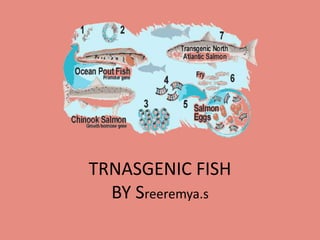
TRANSGENIC FISH
• Transgenic fish or genetically modified
fish(GM fish) are genetically modified
organism. The DNA of the fish is modified
using genetic engineering techniques.
• Aim is to introduce a new trait to fish
• GM fish has been approved by FDA
• Generally genetic modification entails
manipulation of DNA . The process is known as
cisgenesis when a gene is transferred
between organisms that could be
conventionally bred , or transgenesis when a
gene from one species is added to a different
species. Gene transfer in to the genome of the
desired organism ,as for fish in this case ,
requires a vector like lentivirusor mechanical
/ physical insertion of the altered genes
into the nucleus of the host by means of
amicro syringe or a gene gun.
The first recorded instance of
transgenic fish being created date from the
early 1980 s. As of 2003, over species had
been genetically engineered in research
laboratories
TYPES
• SALMON:
It belongs to salmonidae family,includes
salmon and trout.
• spawn lives in fresh water and matured ones
are in sea ,this life style is anadromous
• Predators - feed on small crustaceans,aquatic
insects and smaller fish
• GM atlantic
• Species of interest
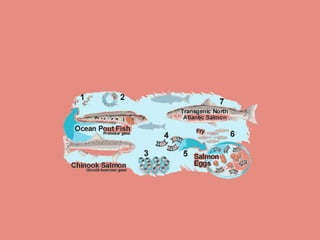
Transgenic fish have been produced for numerous species
of fish including non-commercialmodel species such as the
loach, Misgurnus anguilIicaudtis medaka,
• Oryzias latipes, topminnows and zebrafish, although have
developed transgenic rainbow zebrafish for the ornamental
fish industry. Several experiments have evaluated
transgenic farmed fish species including goldfish common
carp,silver carp, mud loach, rainbow trout Atlantic salmon,
coho salmon,chinook salmon, channel catfish and Nile
tilapia
• Additionally, gene transfer has been accomplished in some
fishes majorly in salmon, zebra fish
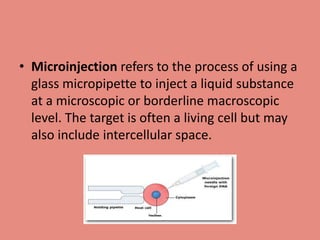
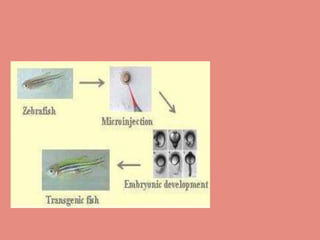
• Microinjection refers to the process of using a
glass micropipette to inject a liquid substance
at a microscopic or borderline macroscopic
level. The target is often a living cell but may
also include intercellular space.
Trnasgenic fish
Trnasgenic fish

Trnasgenic fish

  • 1.
  • 2.
    TRANSGENIC FISH • Transgenicfish or genetically modified fish(GM fish) are genetically modified organism. The DNA of the fish is modified using genetic engineering techniques. • Aim is to introduce a new trait to fish • GM fish has been approved by FDA
  • 3.
    • Generally geneticmodification entails manipulation of DNA . The process is known as cisgenesis when a gene is transferred between organisms that could be conventionally bred , or transgenesis when a gene from one species is added to a different species. Gene transfer in to the genome of the desired organism ,as for fish in this case ,
  • 4.
    requires a vectorlike lentivirusor mechanical / physical insertion of the altered genes into the nucleus of the host by means of amicro syringe or a gene gun. The first recorded instance of transgenic fish being created date from the early 1980 s. As of 2003, over species had
  • 5.
    been genetically engineeredin research laboratories
  • 6.
    TYPES • SALMON: It belongsto salmonidae family,includes salmon and trout. • spawn lives in fresh water and matured ones are in sea ,this life style is anadromous • Predators - feed on small crustaceans,aquatic insects and smaller fish
  • 7.
  • 8.
    • Species ofinterest Transgenic fish have been produced for numerous species of fish including non-commercialmodel species such as the loach, Misgurnus anguilIicaudtis medaka, • Oryzias latipes, topminnows and zebrafish, although have developed transgenic rainbow zebrafish for the ornamental fish industry. Several experiments have evaluated transgenic farmed fish species including goldfish common carp,silver carp, mud loach, rainbow trout Atlantic salmon, coho salmon,chinook salmon, channel catfish and Nile tilapia • Additionally, gene transfer has been accomplished in some fishes majorly in salmon, zebra fish
  • 10.
    • Microinjection refersto the process of using a glass micropipette to inject a liquid substance at a microscopic or borderline macroscopic level. The target is often a living cell but may also include intercellular space.