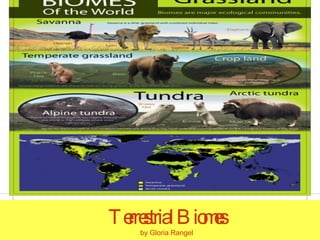
T e s B io e
  rretrial ms
   by Gloria Rangel
Introduction
The learning intention is to help students
 familiarize themselves with the different
 terrestrial biomes around the world. Our
 quest is to identify characteristics of
 different biomes to find the most
 suitable one for the fictional organism
 “grolly mahoot”
Desert
•   Water: Less than 10” per year and a
    very high evaporation rate
•   Temperature: hot or cold
•   Soil: poor
•   Plants: Sparse with succulents like
    cactus, some trees
•   Animals: Few, mostly insects,
    arachnids,reptiles and birds. Majority
    being nocturnal
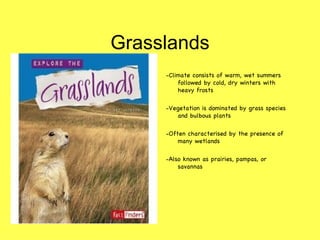
Grasslands
     -Climate consists of warm, wet summers
         followed by cold, dry winters with
         heavy frosts

     -Vegetation is dominated by grass species
        and bulbous plants

     -Often characterised by the presence of
         many wetlands

     -Also known as prairies, pampas, or
         savannas
Tundra
   • 1.Extremely cold climate
   • 2.Low biotic diversity
   • 3.Simple vegetation
     structure
   • 4.Limitation of drainage
   • 5.Short season of growth
     and reproduction
   • 6.Energy and nutrients in
     the form of dead organic
     material
Tropical Rainforest


The tropical rain forest is a forest of tall trees in a region of year-
round warmth. An average of 50 to 260 inches (125 to 660 cm.)
of rain falls yearly.Rain forests belong to the tropical wet climate
group. The temperature in a rain forest rarely gets higher than 93
ー F (34 ー C) or drops below 68 ー F (20 ー C); average humidity is
between 77 and 88%; rainfall is often more than 100 inches a
year. There is usually a brief season of less rain.. Almost all rain
forests lie near the equator.
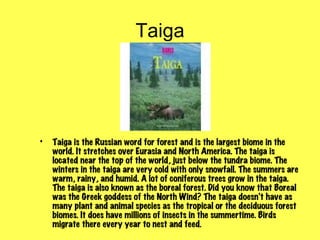
Taiga


•   Taiga is the Russian word for forest and is the largest biome in the
    world. It stretches over Eurasia and North America. The taiga is
    located near the top of the world, just below the tundra biome. The
    winters in the taiga are very cold with only snowfall. The summers are
    warm, rainy, and humid. A lot of coniferous trees grow in the taiga.
    The taiga is also known as the boreal forest. Did you know that Boreal
    was the Greek goddess of the North Wind? The taiga doesn't have as
    many plant and animal species as the tropical or the deciduous forest
    biomes. It does have millions of insects in the summertime. Birds
    migrate there every year to nest and feed.
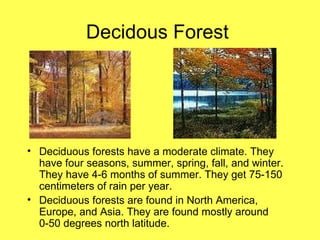
Decidous Forest


• Deciduous forests have a moderate climate. They
  have four seasons, summer, spring, fall, and winter.
  They have 4-6 months of summer. They get 75-150
  centimeters of rain per year.
• Deciduous forests are found in North America,
  Europe, and Asia. They are found mostly around
  0-50 degrees north latitude.
• Within your group, make a list of
  questions you may have to find out
  which biome is best suitable for the
      “Grolly Mahoot”
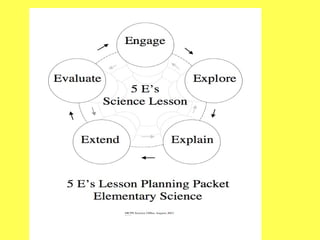
Exte nd
• Research and Share all about
  Aquatic Biomes and create your
  own fictional aquatic organism
  (flora/fauna)

Terrestrial Biomes

  • 1.
    T e sB io e rretrial ms by Gloria Rangel
  • 2.
    Introduction The learning intentionis to help students familiarize themselves with the different terrestrial biomes around the world. Our quest is to identify characteristics of different biomes to find the most suitable one for the fictional organism “grolly mahoot”
  • 4.
    Desert • Water: Less than 10” per year and a very high evaporation rate • Temperature: hot or cold • Soil: poor • Plants: Sparse with succulents like cactus, some trees • Animals: Few, mostly insects, arachnids,reptiles and birds. Majority being nocturnal
  • 5.
    Grasslands -Climate consists of warm, wet summers followed by cold, dry winters with heavy frosts -Vegetation is dominated by grass species and bulbous plants -Often characterised by the presence of many wetlands -Also known as prairies, pampas, or savannas
  • 6.
    Tundra • 1.Extremely cold climate • 2.Low biotic diversity • 3.Simple vegetation structure • 4.Limitation of drainage • 5.Short season of growth and reproduction • 6.Energy and nutrients in the form of dead organic material
  • 7.
    Tropical Rainforest The tropicalrain forest is a forest of tall trees in a region of year- round warmth. An average of 50 to 260 inches (125 to 660 cm.) of rain falls yearly.Rain forests belong to the tropical wet climate group. The temperature in a rain forest rarely gets higher than 93 ー F (34 ー C) or drops below 68 ー F (20 ー C); average humidity is between 77 and 88%; rainfall is often more than 100 inches a year. There is usually a brief season of less rain.. Almost all rain forests lie near the equator.
  • 8.
    Taiga • Taiga is the Russian word for forest and is the largest biome in the world. It stretches over Eurasia and North America. The taiga is located near the top of the world, just below the tundra biome. The winters in the taiga are very cold with only snowfall. The summers are warm, rainy, and humid. A lot of coniferous trees grow in the taiga. The taiga is also known as the boreal forest. Did you know that Boreal was the Greek goddess of the North Wind? The taiga doesn't have as many plant and animal species as the tropical or the deciduous forest biomes. It does have millions of insects in the summertime. Birds migrate there every year to nest and feed.
  • 9.
    Decidous Forest • Deciduousforests have a moderate climate. They have four seasons, summer, spring, fall, and winter. They have 4-6 months of summer. They get 75-150 centimeters of rain per year. • Deciduous forests are found in North America, Europe, and Asia. They are found mostly around 0-50 degrees north latitude.
  • 10.
    • Within yourgroup, make a list of questions you may have to find out which biome is best suitable for the “Grolly Mahoot”
  • 12.
    Exte nd • Researchand Share all about Aquatic Biomes and create your own fictional aquatic organism (flora/fauna)