College of Fisheries Science
Kamdhenu University
Department of Aquaculture
Sub: Aquaculture Ecosystem Management and Climate Change (AQC 603)
Submitted By
Rajesh V. Chudasama,
Reg. No. 231303002, Ph.D. (AQC),
1st Sem. COF-VRL, KU.
Submitted To
Dr. N. H. Joshi,
Associated Professor,
COF-VRL, KU.
1
Aquaculture and Ecosystem Relationship:
Biotic and Abiotic Relationship,
Marine Ecosystem and Environment
• Aquaculture is the fastest growing food production industry (FAO, 2020).
• It is a significant contributor to supplying essential macro-and micro-nutrients for the
global population.
• Aquaculture aims to improve livelihoods, promote economic development, reduce
poverty, and ensure human food security.
• However, the development of global aquaculture, faces challenges such as
environmental pollution, excessive resource consumption, and impacts of climate
change.
3
• Aquaculture ecology is the science focused on studying the interactions between
commercial aquatic organisms, their farming activities, and the environment.
• Ecosystems are self-sustaining networks of biotic and abiotic elements that interact to
sustain life.
• Ecosystems consist of communities plus abiotic factors.
• Ecosystems are the basic unit of study in ecology, coined by A. G. Tansley in 1935, where
"eco" refers to environment and "system" implies a complex of coordinated units.
4
• Biological equilibrium in ecosystems where various components of aquaculture interact to
maintain stability (Homeostasis).
• Carrying capacity, recycling capacity, density, pollution, habitat stress, disease
Aquaculture and Ecosystem Relationship
5
• As one component of the ecosystem changes, it influences other components, leading
to adjustments to maintain balance.
• Positive feedback - increased plant population leads to increased herbivore
population, which further increases predator populations.
• Negative feedback - increased predator population reduces herbivore population,
stabilizing plant populations.
6
• Increased demand for aquaculture products leads to expansion and intensification of
aquaculture activities.
• Aquaculture activities affect the environment through waste discharge, habitat
alteration, and nutrient cycling. Conversely, environmental changes also impact
aquaculture operations.
• Examples: Waste discharge from fish farming can lead to eutrophication and oxygen
depletion in water bodies. Seaweed cultivation can absorb excess nutrients, mitigating
eutrophication.
Interactive Relationships
7
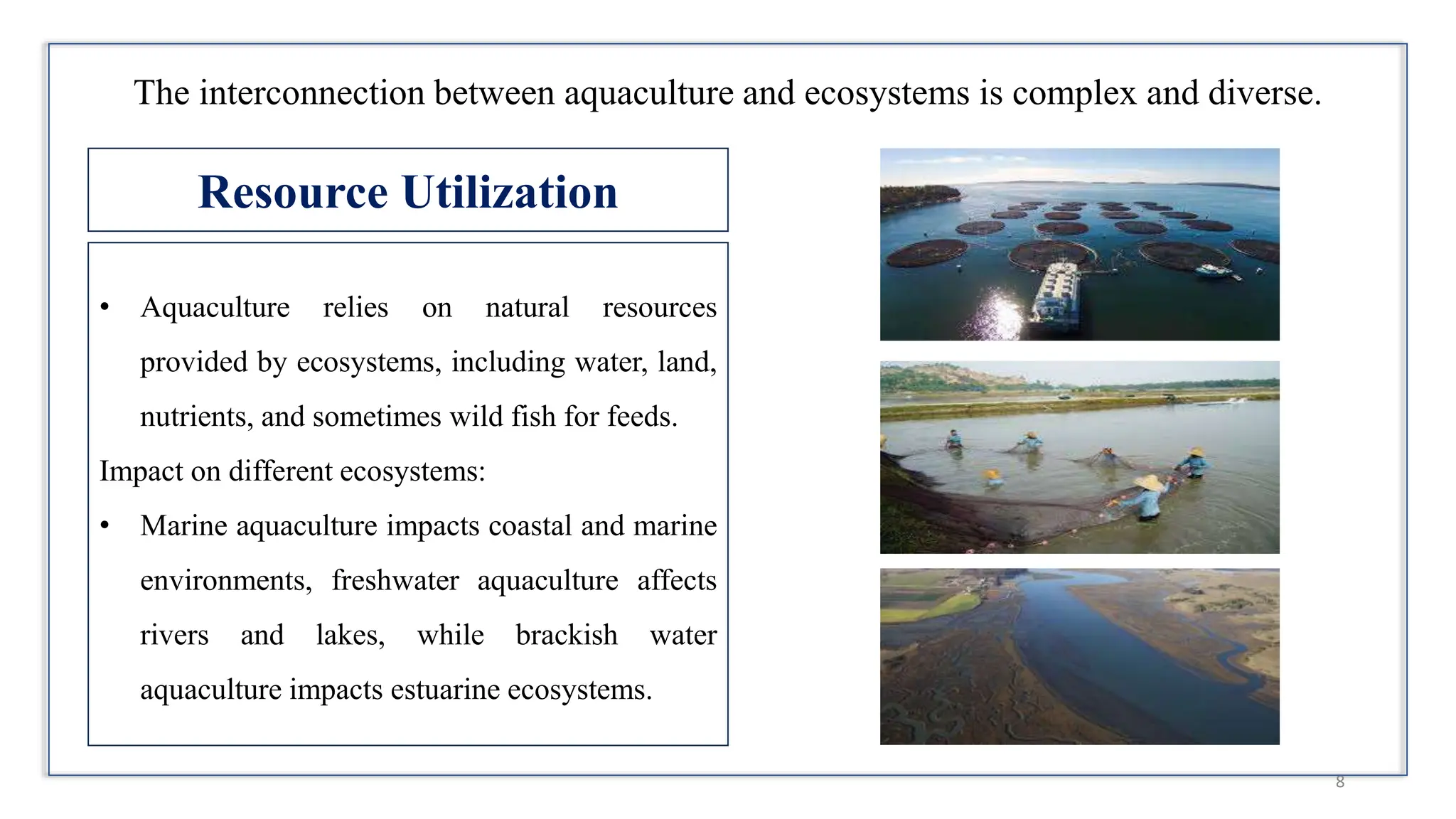
The interconnection between aquaculture and ecosystems is complex and diverse.
• Aquaculture relies on natural resources
provided by ecosystems, including water, land,
nutrients, and sometimes wild fish for feeds.
Impact on different ecosystems:
• Marine aquaculture impacts coastal and marine
environments, freshwater aquaculture affects
rivers and lakes, while brackish water
aquaculture impacts estuarine ecosystems.
Resource Utilization
8
• Construction of aquaculture facilities alters
physical and chemical characteristics of
ecosystems, including water flow patterns,
sedimentation rates, and nutrient dynamics.
• Effects on habitat: Changes in habitat structure
can disrupt natural processes and affect native
species.
Habitat Alteration
9
• Aquaculture introduces nutrients into
ecosystems through feed and waste, affecting
nutrient cycling and primary production.
• Excessive nutrient inputs can lead to
eutrophication, harmful algal blooms, and
oxygen depletion, disrupting ecosystem balance
and biodiversity.
Nutrient Cycling
10
• Introduction of non-native species for
aquaculture can lead to biodiversity loss and
genetic pollution if these species escape into the
wild and outcompete native species.
• Predation and competition between farmed and
wild species can alter ecosystem dynamics and
biodiversity patterns.
Biodiversity Impact
11
• Aquaculture is like fish farming. It
helps clean water and stores carbon, but
if done wrong, it can harm nature.
• So, using sustainable practices is
crucial to keep the environment healthy
and support fish production.
Ecosystem Services
12
• Aquaculture systems are vulnerable to climate
change impacts, including rising temperatures,
ocean acidification, and extreme weather
events.
• Sustainable aquaculture practices can help
mitigate climate change by sequestering carbon,
providing alternative protein sources, and
supporting coastal resilience.
Climate Change Resilience
13
Regulations should be in place to ensure
responsible aquaculture practices and minimize
environmental degradation.
Regulation and Management
14
Biotic and Abiotic Interaction
• Aquaculture involves interactions
between living organisms (biotic)
and non-living factors (abiotic).
• Understanding these interactions
is crucial for maintaining
ecological balance in aquaculture
systems.
15
Biotic Interactions
• Relationships between different living
organisms within aquaculture systems.
• Co-culturing carnivorous and
herbivorous species creates predator-prey
dynamics similar to natural ecosystems.
16
• Intensive aquaculture practices can lead to
competition for resources such as food and space.
Competition
• Aquaculture facilities can serve as reservoirs for
pathogens, which may be transmitted to wild
populations.
• Detrimental effects on cultured and wild species,
highlighting interconnectedness of aquaculture and
ecosystem health.
Pathogen Transmission
17
• Escapees from aquaculture facilities can interbreed
with wild populations, leading to genetic
introgression.
• Altered genetic diversity and adaptability of wild
populations.
Genetic Interactions
• Aquaculture systems such as polyculture and
integrated multitrophic aquaculture (IMTA) promote
symbiotic relationships between species.
• Enhance ecosystem resilience and productivity.
Ecological Engineering
18
Abiotic Interactions
Relationships between
aquaculture and non-living factors such
as water quality, habitat alteration,
pollution, climate change resilience,
energy and resource use, and spatial
planning.
19
• Aquaculture activities release pollutants such as
antibiotics, pesticides, and fecal matter into the
environment.
• Accumulation in sediments and biota, posing risks to
ecosystem health and human well-being.
Pollution
• Aquaculture systems are vulnerable to climate
change impacts.
• Developing adaptive strategies to mitigate risks and
ensure long-term sustainability.
Climate Change Resilience
20
• Aquaculture operations require significant inputs of
energy, water, and feed resources.
• Optimizing resource use efficiency and transitioning
towards renewable energy sources.
Energy and Resource Use
• Effective spatial planning and zoning policies can
minimize conflicts and negative interactions with
ecosystems.
• Locating aquaculture facilities in areas with minimal
ecological sensitivity and maximizing co-location
opportunities.
Spatial Planning and Zoning
21
Interplay Between Aquaculture and Marine Ecosystems
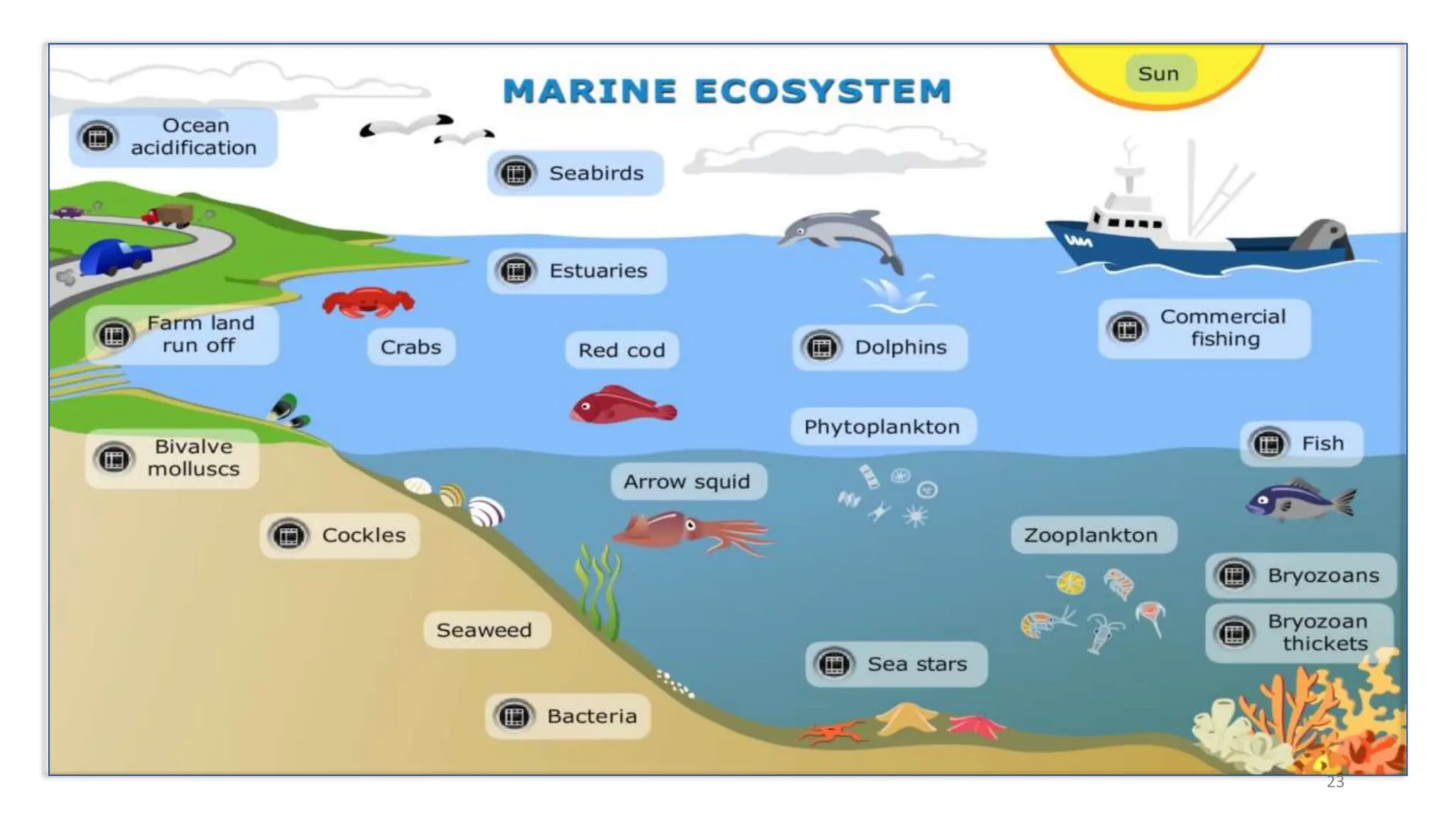
• Marine ecosystems is for importance their biodiversity, food
security, and climate regulation.
• Marine ecosystem include oceans, seas, estuaries, coral
reefs, and coastal areas, each with unique biodiversity and
ecological processes.
• Marine ecosystems encompass a vast array of life forms and
habitats, from the colourful coral reefs to the deepest ocean
depths.
• However, the rapid expansion of aquaculture, driven by
increasing seafood demand, has raised concerns about its
potential impacts on marine environments.
22
23
Components of Marine Ecosystems
• Biotic Components: Overview of living
organisms within marine ecosystems, including
phytoplankton, fish, marine mammals, and
coral reefs.
• Abiotic Components: Non-living factors such
as water, sunlight, temperature, and nutrients
that influence ecosystem dynamics.
24
Interactions Between Marine Ecosystems and Environment
Marine environments play a crucial role in regulating the
• Earth's climate,
• Primarily through processes such as carbon sequestration,
• Temperature regulation, and
• Nutrient cycling.
25
26
Carbon Sequestration
• Oceans absorb a significant amount of carbon
dioxide (CO2) from the atmosphere, acting as a
vital carbon sink.
• Phytoplankton, marine plants, and other
organisms play a crucial role in this process
through photosynthesis, where they absorb CO2
and release oxygen.
• Additionally, carbon is stored in the deep ocean
through processes like the biological pump,
where organic matter sinks to the ocean floor.
Impact of Climate Change
• Increasing levels of CO2 in the
atmosphere lead to ocean acidification,
which occurs when seawater absorbs
CO2, resulting in lower pH levels.
• This acidification can harm marine
organisms, particularly those with
calcium carbonate shells or skeletons,
such as corals, mollusks, and some
plankton species.
27
28
Temperature Regulation
• Oceans help regulate global temperatures
by absorbing heat from the sun and
distributing it around the globe through
ocean currents.
• This process influences weather patterns
and climate systems on both regional and
global scales.
Impact of Climate Change:
• Rising global temperatures lead to thermal stress
in marine ecosystems, causing coral bleaching
events and affecting the distribution and behavior
of marine species.
• Changes in temperature can also disrupt ocean
currents, affecting nutrient transport and
productivity in marine ecosystems.
29
30
Nutrient Cycling
• Marine ecosystems play a crucial role in
nutrient cycling, where various
organisms recycle nutrients like
nitrogen, phosphorus, and sulfur.
• These nutrients are essential for the
growth of marine plants and
phytoplankton, forming the base of the
marine food web.
31
Impact of Climate Change:
• Changes in ocean temperature and circulation
patterns can alter nutrient availability and
distribution in marine ecosystems, affecting
the productivity and composition of marine
communities.
• Additionally, increased nutrient runoff from
human activities can lead to eutrophication,
causing algal blooms and oxygen depletion in
coastal waters.
32
Biodiversity and Functioning
• Marine biodiversity encompasses a
wide range of species, from
microscopic plankton to large marine
mammals, and plays a crucial role in
ecosystem functioning and resilience.
• Biodiverse marine ecosystems provide
various ecosystem services, such as
food provision, coastal protection, and
recreational opportunities.
33
Impact of Climate Change:
• Climate change poses significant threats to marine
biodiversity, including habitat loss, species range
shifts, and increased extinction risk.
34
35
36
Impacts of Aquaculture on
Marine Ecosystems
• Habitat Modification: Aquaculture operations
can affect marine habitats through
infrastructure development.
• Introduction of Non-Native Species: Risks
associated with introducing non-native species
into marine environments.
37
• Pollution: Pollution from aquaculture
activities, including nutrient runoff and
chemical discharge.
• Disease Outbreaks: Disease risks
associated with aquaculture and their
potential impacts on ecosystem health.
Sustainable Aquaculture Practices
38
• Sustainable aquaculture means farming aquatic organisms responsibly
to protect the environment, support communities, and ensure long-term
food security.
• Its goals include conserving natural resources, promoting biodiversity,
and adopting efficient, socially responsible practices.
• This involves minimizing environmental impacts, optimizing resource
use, and prioritizing food safety and social equity.
39
I
M
T
A
40
Aquaculture Stewardship Council
(ASC)
• ASC certification sets standards for responsible
aquaculture practices, covering environmental,
social, and economic aspects.
• It ensures that seafood is produced in a manner
that minimizes environmental impact, respects
workers' rights, and contributes to local
communities' welfare.
• Products bearing the ASC logo are traceable
and meet stringent criteria for sustainability.
Marine Protected Areas (MPAs)
41
Marine Protected Areas (MPAs) play a
crucial role in conserving biodiversity and
promoting sustainable fisheries by establishing
designated areas where human activities are
regulated or restricted to protect marine
ecosystems and species.
Biodiversity Conservation:
• MPAs help conserve biodiversity by safeguarding critical habitats, such as coral reefs, seagrass beds,
and mangrove forests, which serve as nurseries, feeding grounds, and shelter for numerous marine
species.
• By limiting fishing, habitat destruction, and other harmful activities within their boundaries, MPAs
provide refuge for vulnerable species, preserve genetic diversity, and maintain ecosystem resilience.
42
Fisheries Management:
• MPAs serve as important tools for fisheries
management by replenishing fish stocks,
enhancing reproductive success.
• By protecting breeding and spawning areas,
MPAs contribute to the recruitment and
sustainable harvest of fish populations, helping
to maintain healthy fisheries and prevent
overexploitation.
43
Ecosystem Functioning:
• MPAs promote healthy ecosystem functioning
by maintaining ecological processes and
interactions among species.
• By preserving intact ecosystems and reducing
human disturbances, MPAs support natural
predator-prey relationships, nutrient cycling,
and trophic dynamics, which are essential for
maintaining the balance and productivity of
marine ecosystems.
44
45
• MPAs enhance climate resilience by providing refuges for species and protecting healthy,
biodiverse habitats from climate change impacts like ocean warming and acidification.
• They also offer socioeconomic benefits through ecotourism, recreation, and sustainable
fisheries, supporting local economies and fostering conservation efforts.
The rapid growth of aquaculture has become a significant contributor to global food production,
supporting livelihoods, economic development, and food security. However, this expansion poses challenges
such as environmental pollution, resource depletion, and vulnerability to climate change impacts. Addressing
these challenges is crucial for ensuring the sustainability of aquaculture and securing future food security.
Understanding the complex relationship between aquaculture and ecosystems is essential for developing
effective management strategies. Sustainable aquaculture practices, including site selection, integrated
systems, and responsible resource management, are key to minimizing negative environmental impacts while
maximizing social and economic benefits. Conservation and management efforts, such as Marine Protected
Areas and sustainable resource management practices, play a vital role in safeguarding marine biodiversity
and ecosystem resilience. Additionally, addressing climate change through mitigation and adaptation
measures is critical for ensuring the long-term viability of aquaculture operations and marine ecosystems.
Conclusion
46
Barnes, R. S. K., & Hughes, R. N. (1999). An introduction to marine ecology. John Wiley & Sons.
Costa-Pierce, B. A. (2021). The principles and practices of ecological aquaculture and the ecosystem approach to
aquaculture. World Aquac, 52(1), 25-31.
Davenport, J., Black, K. D., Burnell, G., Cross, T., Culloty, S., Ekaratne, S., Furness, B., Mulcahy, M. & Thetmeyer, H.
(2009). Aquaculture: the ecological issues. John Wiley & Sons.
Dong L. S., Tian L. X., Gao F. Q., Dong, W. Y. (2023). Aquaculture Ecology. Springer Singapore. https://doi.org/10.1007/978-
981-19-5486-3
Folke, C., & Kautsky, N. (1992). Aquaculture with its environment: prospects for sustainability. Ocean & coastal
management, 17(1), 5-24.
Kaiser, M. J. (2011). Marine ecology: processes, systems, and impacts. Oxford University Press, USA.
Medialdea, J. M. (2012). Ecosystem approach to Aquaculture management and biodiversity conservation in a Mediterranean
coastal wetland: case study of Doniana marshes (Andalucia, Spain). United Nations Environment Programme, Tech. Rep.
References
47
48
Thank You !!
rajesh.chudasamaa@gmail.com

Aquaculture and Ecosystem Relationship.pptx

  • 1.
    College of FisheriesScience Kamdhenu University Department of Aquaculture Sub: Aquaculture Ecosystem Management and Climate Change (AQC 603) Submitted By Rajesh V. Chudasama, Reg. No. 231303002, Ph.D. (AQC), 1st Sem. COF-VRL, KU. Submitted To Dr. N. H. Joshi, Associated Professor, COF-VRL, KU. 1
  • 2.
    Aquaculture and EcosystemRelationship: Biotic and Abiotic Relationship, Marine Ecosystem and Environment
  • 3.
    • Aquaculture isthe fastest growing food production industry (FAO, 2020). • It is a significant contributor to supplying essential macro-and micro-nutrients for the global population. • Aquaculture aims to improve livelihoods, promote economic development, reduce poverty, and ensure human food security. • However, the development of global aquaculture, faces challenges such as environmental pollution, excessive resource consumption, and impacts of climate change. 3
  • 4.
    • Aquaculture ecologyis the science focused on studying the interactions between commercial aquatic organisms, their farming activities, and the environment. • Ecosystems are self-sustaining networks of biotic and abiotic elements that interact to sustain life. • Ecosystems consist of communities plus abiotic factors. • Ecosystems are the basic unit of study in ecology, coined by A. G. Tansley in 1935, where "eco" refers to environment and "system" implies a complex of coordinated units. 4
  • 5.
    • Biological equilibriumin ecosystems where various components of aquaculture interact to maintain stability (Homeostasis). • Carrying capacity, recycling capacity, density, pollution, habitat stress, disease Aquaculture and Ecosystem Relationship 5
  • 6.
    • As onecomponent of the ecosystem changes, it influences other components, leading to adjustments to maintain balance. • Positive feedback - increased plant population leads to increased herbivore population, which further increases predator populations. • Negative feedback - increased predator population reduces herbivore population, stabilizing plant populations. 6
  • 7.
    • Increased demandfor aquaculture products leads to expansion and intensification of aquaculture activities. • Aquaculture activities affect the environment through waste discharge, habitat alteration, and nutrient cycling. Conversely, environmental changes also impact aquaculture operations. • Examples: Waste discharge from fish farming can lead to eutrophication and oxygen depletion in water bodies. Seaweed cultivation can absorb excess nutrients, mitigating eutrophication. Interactive Relationships 7
  • 8.
    The interconnection betweenaquaculture and ecosystems is complex and diverse. • Aquaculture relies on natural resources provided by ecosystems, including water, land, nutrients, and sometimes wild fish for feeds. Impact on different ecosystems: • Marine aquaculture impacts coastal and marine environments, freshwater aquaculture affects rivers and lakes, while brackish water aquaculture impacts estuarine ecosystems. Resource Utilization 8
  • 9.
    • Construction ofaquaculture facilities alters physical and chemical characteristics of ecosystems, including water flow patterns, sedimentation rates, and nutrient dynamics. • Effects on habitat: Changes in habitat structure can disrupt natural processes and affect native species. Habitat Alteration 9
  • 10.
    • Aquaculture introducesnutrients into ecosystems through feed and waste, affecting nutrient cycling and primary production. • Excessive nutrient inputs can lead to eutrophication, harmful algal blooms, and oxygen depletion, disrupting ecosystem balance and biodiversity. Nutrient Cycling 10
  • 11.
    • Introduction ofnon-native species for aquaculture can lead to biodiversity loss and genetic pollution if these species escape into the wild and outcompete native species. • Predation and competition between farmed and wild species can alter ecosystem dynamics and biodiversity patterns. Biodiversity Impact 11
  • 12.
    • Aquaculture islike fish farming. It helps clean water and stores carbon, but if done wrong, it can harm nature. • So, using sustainable practices is crucial to keep the environment healthy and support fish production. Ecosystem Services 12
  • 13.
    • Aquaculture systemsare vulnerable to climate change impacts, including rising temperatures, ocean acidification, and extreme weather events. • Sustainable aquaculture practices can help mitigate climate change by sequestering carbon, providing alternative protein sources, and supporting coastal resilience. Climate Change Resilience 13
  • 14.
    Regulations should bein place to ensure responsible aquaculture practices and minimize environmental degradation. Regulation and Management 14
  • 15.
    Biotic and AbioticInteraction • Aquaculture involves interactions between living organisms (biotic) and non-living factors (abiotic). • Understanding these interactions is crucial for maintaining ecological balance in aquaculture systems. 15
  • 16.
    Biotic Interactions • Relationshipsbetween different living organisms within aquaculture systems. • Co-culturing carnivorous and herbivorous species creates predator-prey dynamics similar to natural ecosystems. 16
  • 17.
    • Intensive aquaculturepractices can lead to competition for resources such as food and space. Competition • Aquaculture facilities can serve as reservoirs for pathogens, which may be transmitted to wild populations. • Detrimental effects on cultured and wild species, highlighting interconnectedness of aquaculture and ecosystem health. Pathogen Transmission 17
  • 18.
    • Escapees fromaquaculture facilities can interbreed with wild populations, leading to genetic introgression. • Altered genetic diversity and adaptability of wild populations. Genetic Interactions • Aquaculture systems such as polyculture and integrated multitrophic aquaculture (IMTA) promote symbiotic relationships between species. • Enhance ecosystem resilience and productivity. Ecological Engineering 18
  • 19.
    Abiotic Interactions Relationships between aquacultureand non-living factors such as water quality, habitat alteration, pollution, climate change resilience, energy and resource use, and spatial planning. 19
  • 20.
    • Aquaculture activitiesrelease pollutants such as antibiotics, pesticides, and fecal matter into the environment. • Accumulation in sediments and biota, posing risks to ecosystem health and human well-being. Pollution • Aquaculture systems are vulnerable to climate change impacts. • Developing adaptive strategies to mitigate risks and ensure long-term sustainability. Climate Change Resilience 20
  • 21.
    • Aquaculture operationsrequire significant inputs of energy, water, and feed resources. • Optimizing resource use efficiency and transitioning towards renewable energy sources. Energy and Resource Use • Effective spatial planning and zoning policies can minimize conflicts and negative interactions with ecosystems. • Locating aquaculture facilities in areas with minimal ecological sensitivity and maximizing co-location opportunities. Spatial Planning and Zoning 21
  • 22.
    Interplay Between Aquacultureand Marine Ecosystems • Marine ecosystems is for importance their biodiversity, food security, and climate regulation. • Marine ecosystem include oceans, seas, estuaries, coral reefs, and coastal areas, each with unique biodiversity and ecological processes. • Marine ecosystems encompass a vast array of life forms and habitats, from the colourful coral reefs to the deepest ocean depths. • However, the rapid expansion of aquaculture, driven by increasing seafood demand, has raised concerns about its potential impacts on marine environments. 22
  • 23.
  • 24.
    Components of MarineEcosystems • Biotic Components: Overview of living organisms within marine ecosystems, including phytoplankton, fish, marine mammals, and coral reefs. • Abiotic Components: Non-living factors such as water, sunlight, temperature, and nutrients that influence ecosystem dynamics. 24
  • 25.
    Interactions Between MarineEcosystems and Environment Marine environments play a crucial role in regulating the • Earth's climate, • Primarily through processes such as carbon sequestration, • Temperature regulation, and • Nutrient cycling. 25
  • 26.
    26 Carbon Sequestration • Oceansabsorb a significant amount of carbon dioxide (CO2) from the atmosphere, acting as a vital carbon sink. • Phytoplankton, marine plants, and other organisms play a crucial role in this process through photosynthesis, where they absorb CO2 and release oxygen. • Additionally, carbon is stored in the deep ocean through processes like the biological pump, where organic matter sinks to the ocean floor.
  • 27.
    Impact of ClimateChange • Increasing levels of CO2 in the atmosphere lead to ocean acidification, which occurs when seawater absorbs CO2, resulting in lower pH levels. • This acidification can harm marine organisms, particularly those with calcium carbonate shells or skeletons, such as corals, mollusks, and some plankton species. 27
  • 28.
    28 Temperature Regulation • Oceanshelp regulate global temperatures by absorbing heat from the sun and distributing it around the globe through ocean currents. • This process influences weather patterns and climate systems on both regional and global scales.
  • 29.
    Impact of ClimateChange: • Rising global temperatures lead to thermal stress in marine ecosystems, causing coral bleaching events and affecting the distribution and behavior of marine species. • Changes in temperature can also disrupt ocean currents, affecting nutrient transport and productivity in marine ecosystems. 29
  • 30.
    30 Nutrient Cycling • Marineecosystems play a crucial role in nutrient cycling, where various organisms recycle nutrients like nitrogen, phosphorus, and sulfur. • These nutrients are essential for the growth of marine plants and phytoplankton, forming the base of the marine food web.
  • 31.
    31 Impact of ClimateChange: • Changes in ocean temperature and circulation patterns can alter nutrient availability and distribution in marine ecosystems, affecting the productivity and composition of marine communities. • Additionally, increased nutrient runoff from human activities can lead to eutrophication, causing algal blooms and oxygen depletion in coastal waters.
  • 32.
    32 Biodiversity and Functioning •Marine biodiversity encompasses a wide range of species, from microscopic plankton to large marine mammals, and plays a crucial role in ecosystem functioning and resilience. • Biodiverse marine ecosystems provide various ecosystem services, such as food provision, coastal protection, and recreational opportunities.
  • 33.
    33 Impact of ClimateChange: • Climate change poses significant threats to marine biodiversity, including habitat loss, species range shifts, and increased extinction risk.
  • 34.
  • 35.
  • 36.
    36 Impacts of Aquacultureon Marine Ecosystems • Habitat Modification: Aquaculture operations can affect marine habitats through infrastructure development. • Introduction of Non-Native Species: Risks associated with introducing non-native species into marine environments.
  • 37.
    37 • Pollution: Pollutionfrom aquaculture activities, including nutrient runoff and chemical discharge. • Disease Outbreaks: Disease risks associated with aquaculture and their potential impacts on ecosystem health.
  • 38.
    Sustainable Aquaculture Practices 38 •Sustainable aquaculture means farming aquatic organisms responsibly to protect the environment, support communities, and ensure long-term food security. • Its goals include conserving natural resources, promoting biodiversity, and adopting efficient, socially responsible practices. • This involves minimizing environmental impacts, optimizing resource use, and prioritizing food safety and social equity.
  • 39.
  • 40.
    40 Aquaculture Stewardship Council (ASC) •ASC certification sets standards for responsible aquaculture practices, covering environmental, social, and economic aspects. • It ensures that seafood is produced in a manner that minimizes environmental impact, respects workers' rights, and contributes to local communities' welfare. • Products bearing the ASC logo are traceable and meet stringent criteria for sustainability.
  • 41.
    Marine Protected Areas(MPAs) Marine Protected Areas (MPAs) 41 Marine Protected Areas (MPAs) play a crucial role in conserving biodiversity and promoting sustainable fisheries by establishing designated areas where human activities are regulated or restricted to protect marine ecosystems and species.
  • 42.
    Biodiversity Conservation: • MPAshelp conserve biodiversity by safeguarding critical habitats, such as coral reefs, seagrass beds, and mangrove forests, which serve as nurseries, feeding grounds, and shelter for numerous marine species. • By limiting fishing, habitat destruction, and other harmful activities within their boundaries, MPAs provide refuge for vulnerable species, preserve genetic diversity, and maintain ecosystem resilience. 42
  • 43.
    Fisheries Management: • MPAsserve as important tools for fisheries management by replenishing fish stocks, enhancing reproductive success. • By protecting breeding and spawning areas, MPAs contribute to the recruitment and sustainable harvest of fish populations, helping to maintain healthy fisheries and prevent overexploitation. 43
  • 44.
    Ecosystem Functioning: • MPAspromote healthy ecosystem functioning by maintaining ecological processes and interactions among species. • By preserving intact ecosystems and reducing human disturbances, MPAs support natural predator-prey relationships, nutrient cycling, and trophic dynamics, which are essential for maintaining the balance and productivity of marine ecosystems. 44
  • 45.
    45 • MPAs enhanceclimate resilience by providing refuges for species and protecting healthy, biodiverse habitats from climate change impacts like ocean warming and acidification. • They also offer socioeconomic benefits through ecotourism, recreation, and sustainable fisheries, supporting local economies and fostering conservation efforts.
  • 46.
    The rapid growthof aquaculture has become a significant contributor to global food production, supporting livelihoods, economic development, and food security. However, this expansion poses challenges such as environmental pollution, resource depletion, and vulnerability to climate change impacts. Addressing these challenges is crucial for ensuring the sustainability of aquaculture and securing future food security. Understanding the complex relationship between aquaculture and ecosystems is essential for developing effective management strategies. Sustainable aquaculture practices, including site selection, integrated systems, and responsible resource management, are key to minimizing negative environmental impacts while maximizing social and economic benefits. Conservation and management efforts, such as Marine Protected Areas and sustainable resource management practices, play a vital role in safeguarding marine biodiversity and ecosystem resilience. Additionally, addressing climate change through mitigation and adaptation measures is critical for ensuring the long-term viability of aquaculture operations and marine ecosystems. Conclusion 46
  • 47.
    Barnes, R. S.K., & Hughes, R. N. (1999). An introduction to marine ecology. John Wiley & Sons. Costa-Pierce, B. A. (2021). The principles and practices of ecological aquaculture and the ecosystem approach to aquaculture. World Aquac, 52(1), 25-31. Davenport, J., Black, K. D., Burnell, G., Cross, T., Culloty, S., Ekaratne, S., Furness, B., Mulcahy, M. & Thetmeyer, H. (2009). Aquaculture: the ecological issues. John Wiley & Sons. Dong L. S., Tian L. X., Gao F. Q., Dong, W. Y. (2023). Aquaculture Ecology. Springer Singapore. https://doi.org/10.1007/978- 981-19-5486-3 Folke, C., & Kautsky, N. (1992). Aquaculture with its environment: prospects for sustainability. Ocean & coastal management, 17(1), 5-24. Kaiser, M. J. (2011). Marine ecology: processes, systems, and impacts. Oxford University Press, USA. Medialdea, J. M. (2012). Ecosystem approach to Aquaculture management and biodiversity conservation in a Mediterranean coastal wetland: case study of Doniana marshes (Andalucia, Spain). United Nations Environment Programme, Tech. Rep. References 47
  • 48.