
Jayanta SubhashTiple
B.F.Sc. 3rd year.
Enll.No.F/15/061
College of Fishery Science,Udgir.dt.Latur
USE OF ANESTHETICS IN FISH BREEDING & TRANSPORT
Introduction
Anesthesia is the act of providing sensation free relief from pain-
producing procedures.
Fish are easily stressed by handling and transport and stress can
result in immuno-suppression physical injury or even death.
In aquaculture anesthetic are used during breeding and
transportation to prevent physical injury and reduce metabolism.
FACTORS AFFECTTHE ACTIVITYOF ANESTHETICS:-
 Species
 Strain
 Sex
 Age
 Nutritional status
 Disease status
 Relative body size
 Disposition
 distress
FISHES ARE TRANSPORTED MAINLY FOR 3 PURPOSE:-
1.For breeding purposes.
2.Stoking in nursery pond.
3.For selling/marketing purposes.
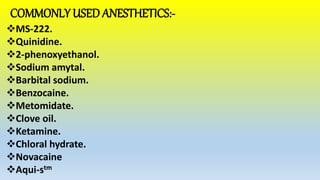
COMMONLY USED ANESTHETICS:-
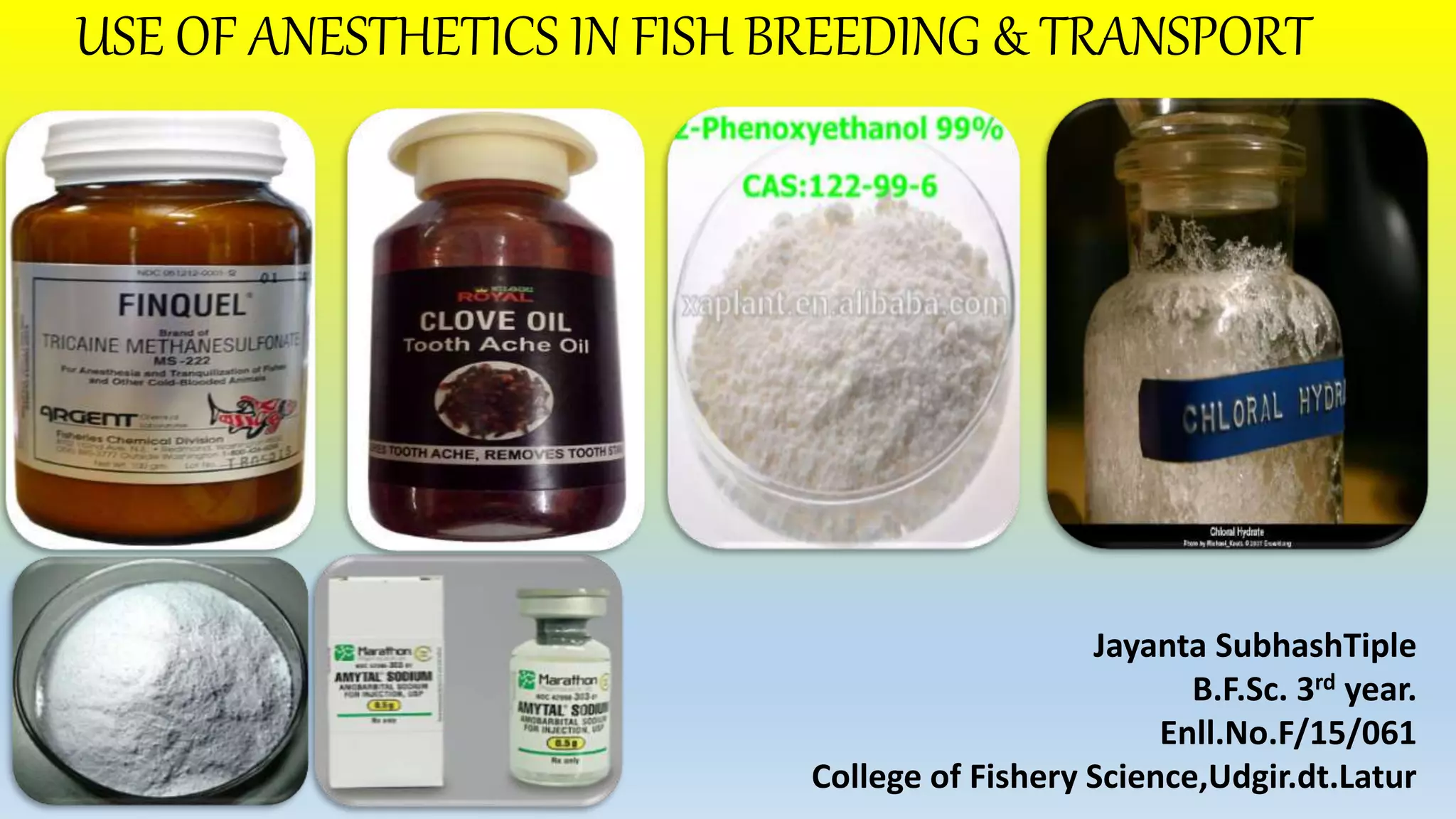
MS-222.
Quinidine.
2-phenoxyethanol.
Sodium amytal.
Barbital sodium.
Benzocaine.
Metomidate.
Clove oil.
Ketamine.
Chloral hydrate.
Novacaine
Aqui-stm
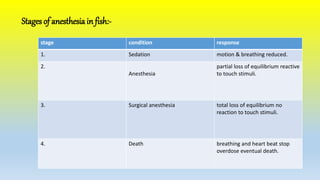
stage condition response
1. Sedation motion & breathing reduced.
2.
Anesthesia
partial loss of equilibrium reactive
to touch stimuli.
3. Surgical anesthesia total loss of equilibrium no
reaction to touch stimuli.
4. Death breathing and heart beat stop
overdose eventual death.
Stages of anesthesia in fish:-
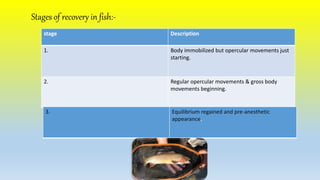
stage Description
1. Body immobilized but opercular movements just
starting.
2. Regular opercular movements & gross body
movements beginning.
3. Equilibrium regained and pre-anesthetic
appearance.
Stages of recovery in fish:-
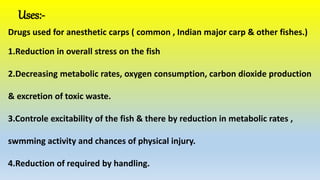
Uses:-
Drugs used for anesthetic carps ( common , Indian major carp & other fishes.)
1.Reduction in overall stress on the fish
2.Decreasing metabolic rates, oxygen consumption, carbon dioxide production
& excretion of toxic waste.
3.Controle excitability of the fish & there by reduction in metabolic rates ,
swmming activity and chances of physical injury.
4.Reduction of required by handling.
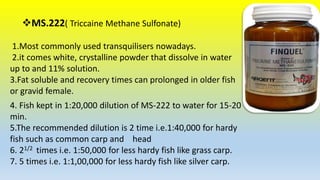
MS.222( Triccaine Methane Sulfonate)
1.Most commonly used transquilisers nowadays.
2.it comes white, crystalline powder that dissolve in water
up to and 11% solution.
3.Fat soluble and recovery times can prolonged in older fish
or gravid female.
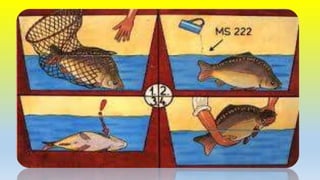
4. Fish kept in 1:20,000 dilution of MS-222 to water for 15-20
min.
5.The recommended dilution is 2 time i.e.1:40,000 for hardy
fish such as common carp and head
6. 21/2 times i.e. 1:50,000 for less hardy fish like grass carp.
7. 5 times i.e. 1:1,00,000 for less hardy fish like silver carp.
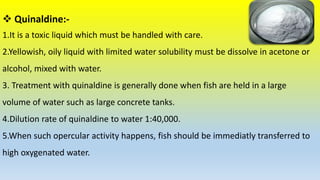
 Quinaldine:-
1.It is a toxic liquid which must be handled with care.
2.Yellowish, oily liquid with limited water solubility must be dissolve in acetone or
alcohol, mixed with water.
3. Treatment with quinaldine is generally done when fish are held in a large
volume of water such as large concrete tanks.
4.Dilution rate of quinaldine to water 1:40,000.
5.When such opercular activity happens, fish should be immediatly transferred to
high oxygenated water.
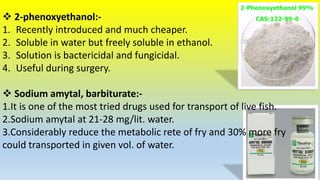
 2-phenoxyethanol:-
1. Recently introduced and much cheaper.
2. Soluble in water but freely soluble in ethanol.
3. Solution is bactericidal and fungicidal.
4. Useful during surgery.
 Sodium amytal, barbiturate:-
1.It is one of the most tried drugs used for transport of live fish.
2.Sodium amytal at 21-28 mg/lit. water.
3.Considerably reduce the metabolic rete of fry and 30% more fry
could transported in given vol. of water.
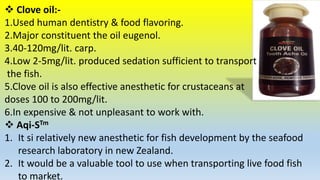
 Clove oil:-
1.Used human dentistry & food flavoring.
2.Major constituent the oil eugenol.
3.40-120mg/lit. carp.
4.Low 2-5mg/lit. produced sedation sufficient to transport
the fish.
5.Clove oil is also effective anesthetic for crustaceans at
doses 100 to 200mg/lit.
6.In expensive & not unpleasant to work with.
 Aqi-STm
1. It si relatively new anesthetic for fish development by the seafood
research laboratory in new Zealand.
2. It would be a valuable tool to use when transporting live food fish
to market.
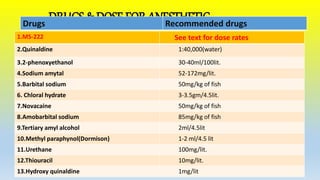
DRUGS & DOSE FOR ANESTHETIC
1.MS-222 See text for dose rates
2.Quinaldine 1:40,000(water)
3.2-phenoxyethanol 30-40ml/100lit.
4.Sodium amytal 52-172mg/lit.
5.Barbital sodium 50mg/kg of fish
6. Chloral hydrate 3-3.5gm/4.5lit.
7.Novacaine 50mg/kg of fish
8.Amobarbital sodium 85mg/kg of fish
9.Tertiary amyl alcohol 2ml/4.5lit
10.Methyl paraphynol(Dormison) 1-2 ml/4.5 lit
11.Urethane 100mg/lit.
12.Thiouracil 10mg/lit.
13.Hydroxy quinaldine 1mg/lit
Drugs Recommended drugs
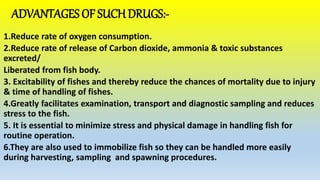
ADVANTAGES OF SUCHDRUGS:-
1.Reduce rate of oxygen consumption.
2.Reduce rate of release of Carbon dioxide, ammonia & toxic substances
excreted/
Liberated from fish body.
3. Excitability of fishes and thereby reduce the chances of mortality due to injury
& time of handling of fishes.
4.Greatly facilitates examination, transport and diagnostic sampling and reduces
stress to the fish.
5. It is essential to minimize stress and physical damage in handling fish for
routine operation.
6.They are also used to immobilize fish so they can be handled more easily
during harvesting, sampling and spawning procedures.
REFERENCE
1.Anesthesia and types of drugs @pdf
Author:- A.Donald, L.neiffer & M.Andrew stamper
2.Anesthetics in aquaculture @pdf
Author :- Shawn, coyle, Robert & james
3. Brackish water aquaculture
Author:-P.K.Ghosh
4.fish and fisheries of india
Author:- V.G.jhingram.
5.Transportation of live finfishes and shellfishes
Author:- M.peer Mohamed & M.devaraj.
Different anashetics

Different anashetics

  • 1.
    Jayanta SubhashTiple B.F.Sc. 3rdyear. Enll.No.F/15/061 College of Fishery Science,Udgir.dt.Latur USE OF ANESTHETICS IN FISH BREEDING & TRANSPORT
  • 2.
    Introduction Anesthesia is theact of providing sensation free relief from pain- producing procedures. Fish are easily stressed by handling and transport and stress can result in immuno-suppression physical injury or even death. In aquaculture anesthetic are used during breeding and transportation to prevent physical injury and reduce metabolism.
  • 3.
    FACTORS AFFECTTHE ACTIVITYOFANESTHETICS:-  Species  Strain  Sex  Age  Nutritional status  Disease status  Relative body size  Disposition  distress
  • 4.
    FISHES ARE TRANSPORTEDMAINLY FOR 3 PURPOSE:- 1.For breeding purposes. 2.Stoking in nursery pond. 3.For selling/marketing purposes.
  • 5.
    COMMONLY USED ANESTHETICS:- MS-222. Quinidine. 2-phenoxyethanol. Sodiumamytal. Barbital sodium. Benzocaine. Metomidate. Clove oil. Ketamine. Chloral hydrate. Novacaine Aqui-stm
  • 6.
    stage condition response 1.Sedation motion & breathing reduced. 2. Anesthesia partial loss of equilibrium reactive to touch stimuli. 3. Surgical anesthesia total loss of equilibrium no reaction to touch stimuli. 4. Death breathing and heart beat stop overdose eventual death. Stages of anesthesia in fish:-
  • 7.
    stage Description 1. Bodyimmobilized but opercular movements just starting. 2. Regular opercular movements & gross body movements beginning. 3. Equilibrium regained and pre-anesthetic appearance. Stages of recovery in fish:-
  • 8.
    Uses:- Drugs used foranesthetic carps ( common , Indian major carp & other fishes.) 1.Reduction in overall stress on the fish 2.Decreasing metabolic rates, oxygen consumption, carbon dioxide production & excretion of toxic waste. 3.Controle excitability of the fish & there by reduction in metabolic rates , swmming activity and chances of physical injury. 4.Reduction of required by handling.
  • 9.
    MS.222( Triccaine MethaneSulfonate) 1.Most commonly used transquilisers nowadays. 2.it comes white, crystalline powder that dissolve in water up to and 11% solution. 3.Fat soluble and recovery times can prolonged in older fish or gravid female. 4. Fish kept in 1:20,000 dilution of MS-222 to water for 15-20 min. 5.The recommended dilution is 2 time i.e.1:40,000 for hardy fish such as common carp and head 6. 21/2 times i.e. 1:50,000 for less hardy fish like grass carp. 7. 5 times i.e. 1:1,00,000 for less hardy fish like silver carp.
  • 11.
     Quinaldine:- 1.It isa toxic liquid which must be handled with care. 2.Yellowish, oily liquid with limited water solubility must be dissolve in acetone or alcohol, mixed with water. 3. Treatment with quinaldine is generally done when fish are held in a large volume of water such as large concrete tanks. 4.Dilution rate of quinaldine to water 1:40,000. 5.When such opercular activity happens, fish should be immediatly transferred to high oxygenated water.
  • 12.
     2-phenoxyethanol:- 1. Recentlyintroduced and much cheaper. 2. Soluble in water but freely soluble in ethanol. 3. Solution is bactericidal and fungicidal. 4. Useful during surgery.  Sodium amytal, barbiturate:- 1.It is one of the most tried drugs used for transport of live fish. 2.Sodium amytal at 21-28 mg/lit. water. 3.Considerably reduce the metabolic rete of fry and 30% more fry could transported in given vol. of water.
  • 13.
     Clove oil:- 1.Usedhuman dentistry & food flavoring. 2.Major constituent the oil eugenol. 3.40-120mg/lit. carp. 4.Low 2-5mg/lit. produced sedation sufficient to transport the fish. 5.Clove oil is also effective anesthetic for crustaceans at doses 100 to 200mg/lit. 6.In expensive & not unpleasant to work with.  Aqi-STm 1. It si relatively new anesthetic for fish development by the seafood research laboratory in new Zealand. 2. It would be a valuable tool to use when transporting live food fish to market.
  • 14.
    DRUGS & DOSEFOR ANESTHETIC 1.MS-222 See text for dose rates 2.Quinaldine 1:40,000(water) 3.2-phenoxyethanol 30-40ml/100lit. 4.Sodium amytal 52-172mg/lit. 5.Barbital sodium 50mg/kg of fish 6. Chloral hydrate 3-3.5gm/4.5lit. 7.Novacaine 50mg/kg of fish 8.Amobarbital sodium 85mg/kg of fish 9.Tertiary amyl alcohol 2ml/4.5lit 10.Methyl paraphynol(Dormison) 1-2 ml/4.5 lit 11.Urethane 100mg/lit. 12.Thiouracil 10mg/lit. 13.Hydroxy quinaldine 1mg/lit Drugs Recommended drugs
  • 15.
    ADVANTAGES OF SUCHDRUGS:- 1.Reducerate of oxygen consumption. 2.Reduce rate of release of Carbon dioxide, ammonia & toxic substances excreted/ Liberated from fish body. 3. Excitability of fishes and thereby reduce the chances of mortality due to injury & time of handling of fishes. 4.Greatly facilitates examination, transport and diagnostic sampling and reduces stress to the fish. 5. It is essential to minimize stress and physical damage in handling fish for routine operation. 6.They are also used to immobilize fish so they can be handled more easily during harvesting, sampling and spawning procedures.
  • 16.
    REFERENCE 1.Anesthesia and typesof drugs @pdf Author:- A.Donald, L.neiffer & M.Andrew stamper 2.Anesthetics in aquaculture @pdf Author :- Shawn, coyle, Robert & james 3. Brackish water aquaculture Author:-P.K.Ghosh 4.fish and fisheries of india Author:- V.G.jhingram. 5.Transportation of live finfishes and shellfishes Author:- M.peer Mohamed & M.devaraj.