Download to read offline

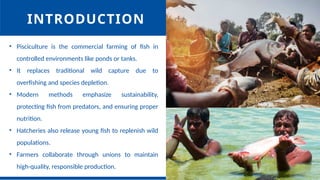
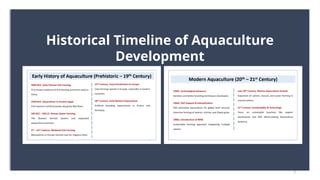
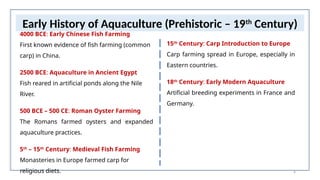
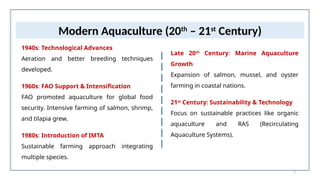
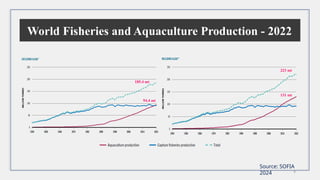
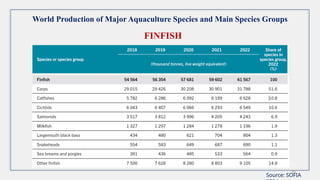
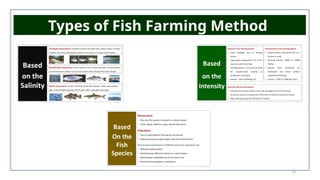
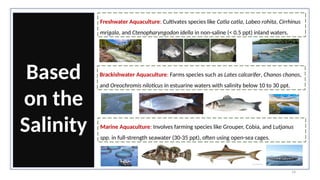
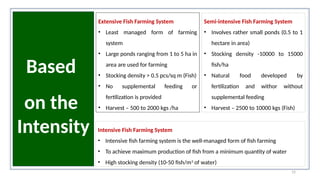
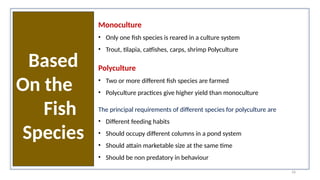
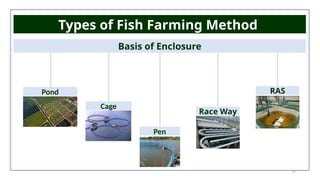
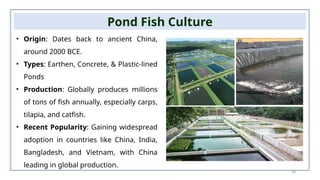
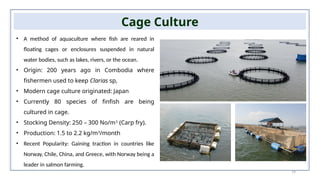
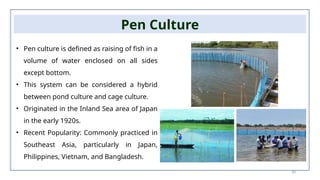
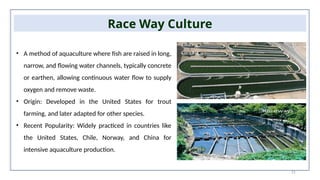
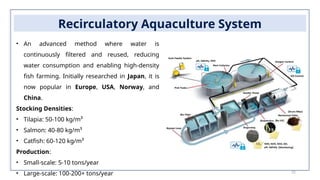
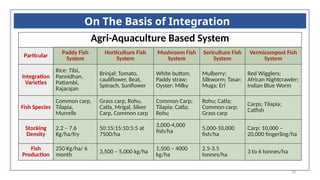
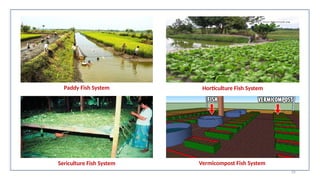
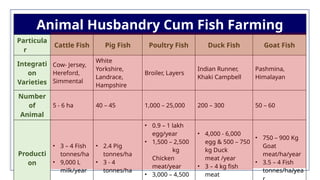
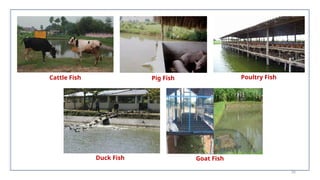
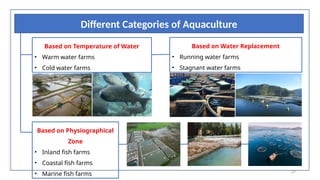
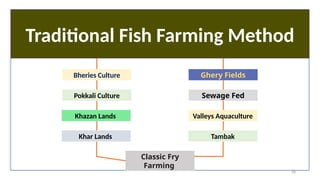
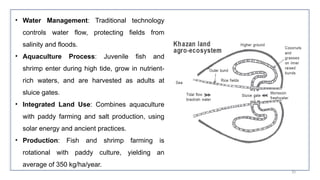
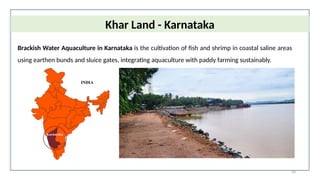
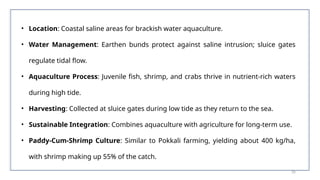
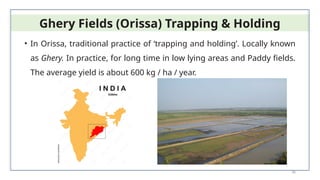
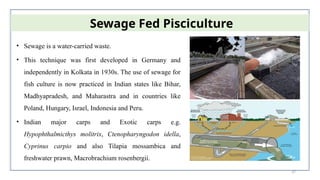
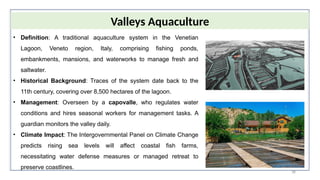
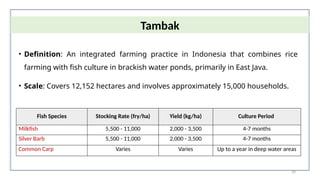
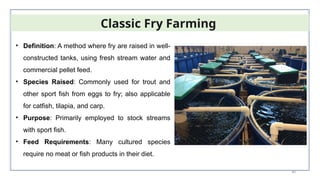
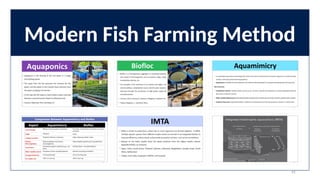
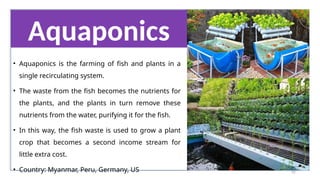
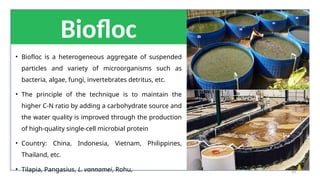
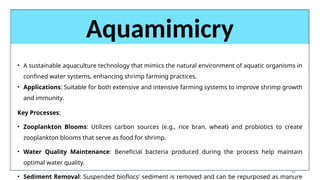
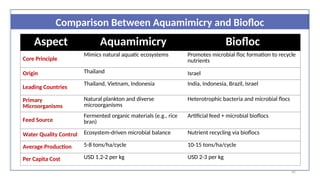
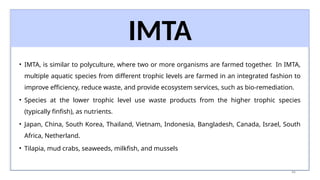
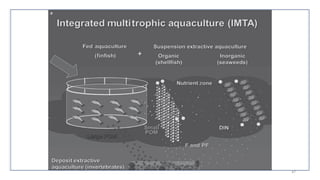
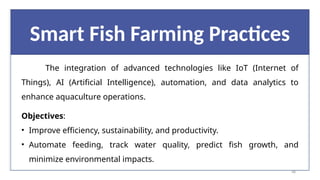
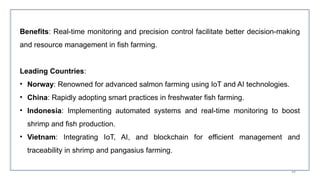
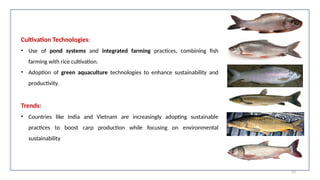
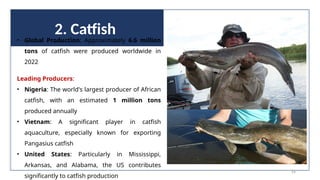
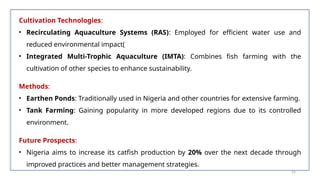
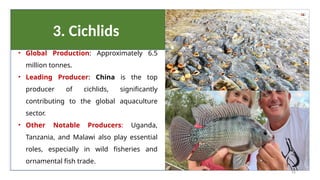
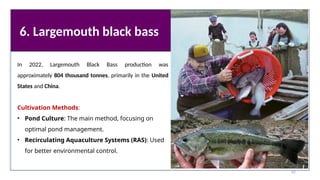
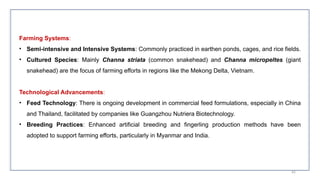
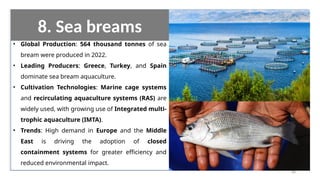
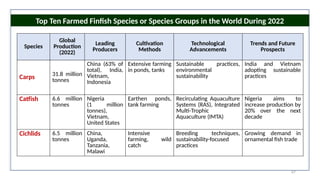
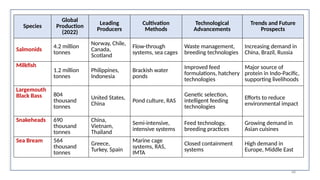
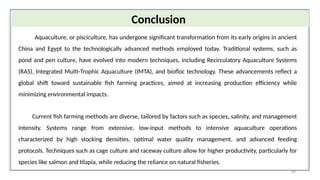
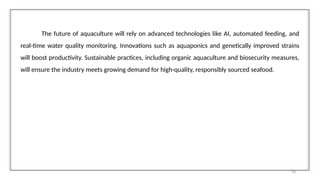


Aquaculture, or pisciculture, has undergone significant transformation from its early origins in ancient China and Egypt to the technologically advanced methods employed today. Traditional systems, such as pond and pen culture, have evolved into modern techniques, including Recirculatory Aquaculture Systems (RAS), Integrated Multi-Trophic Aquaculture (IMTA), and biofloc technology. These advancements reflect a global shift toward sustainable fish farming practices, aimed at increasing production efficiency while minimizing environmental impacts. Current fish farming methods are diverse, tailored by factors such as species, salinity, and management intensity. Systems range from extensive, low-input methods to intensive aquaculture operations characterized by high stocking densities, optimal water quality management, and advanced feeding protocols. Techniques such as cage culture and raceway culture allow for higher productivity, particularly for species like salmon and tilapia, while reducing the reliance on natural fisheries. The future of aquaculture will rely on advanced technologies like AI, automated feeding, and real-time water quality monitoring. Innovations such as aquaponics and genetically improved strains will boost productivity. Sustainable practices, including organic aquaculture and biosecurity measures, will ensure the industry meets growing demand for high-quality, responsibly sourced seafood.


