The Code of Conduct for
Responsible Fisheries
(CCRF)
Fisheries Department
FOOD AND AGRICULTURE ORGANIZATION
OF THE UNITED NATIONS
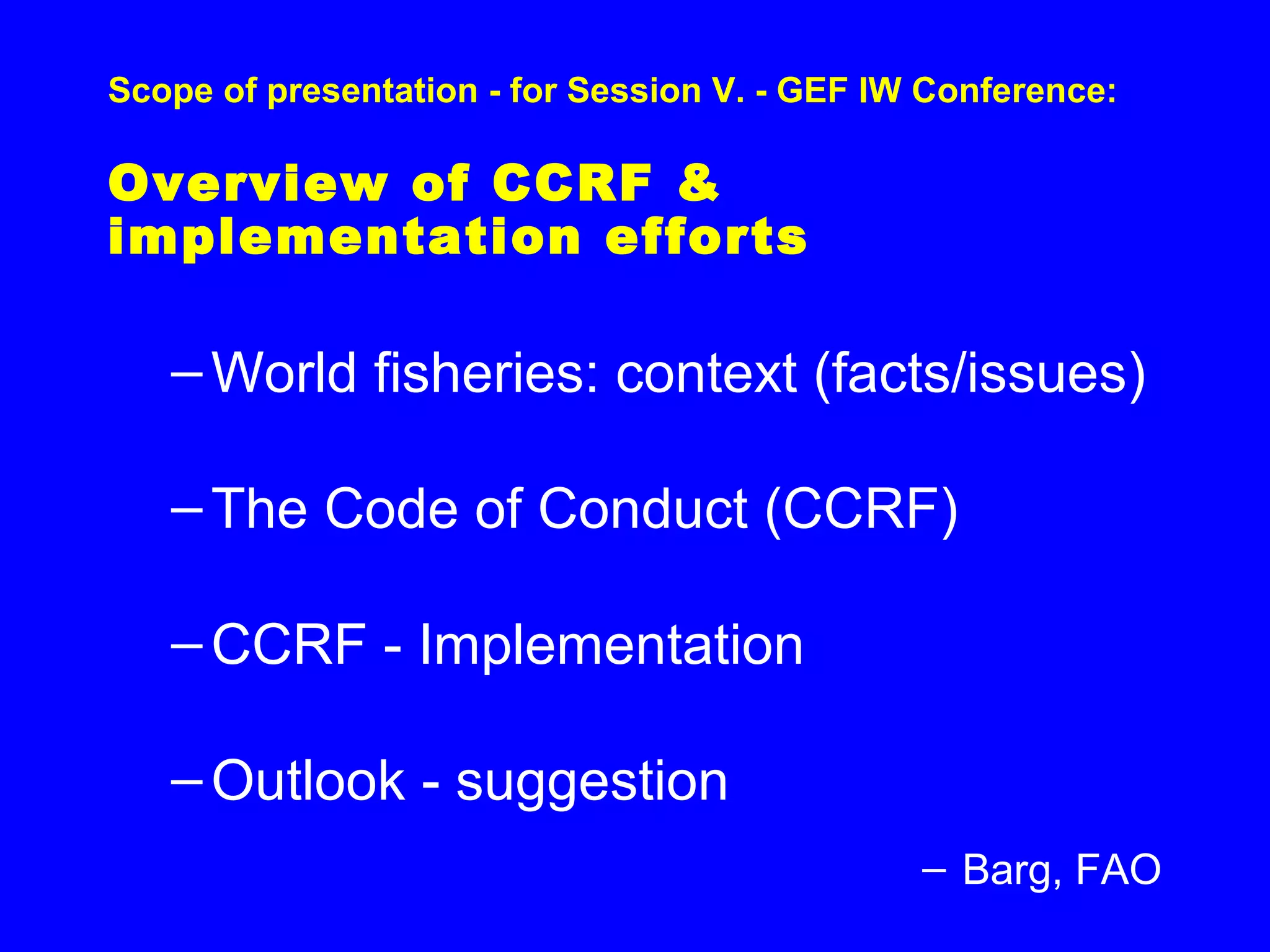
Scope of presentation - for Session V. - GEF IW Conference:
Overview of CCRF &
implementation efforts
–World fisheries: context (facts/issues)
–The Code of Conduct (CCRF)
–CCRF - Implementation
–Outlook - suggestion
– Barg, FAO
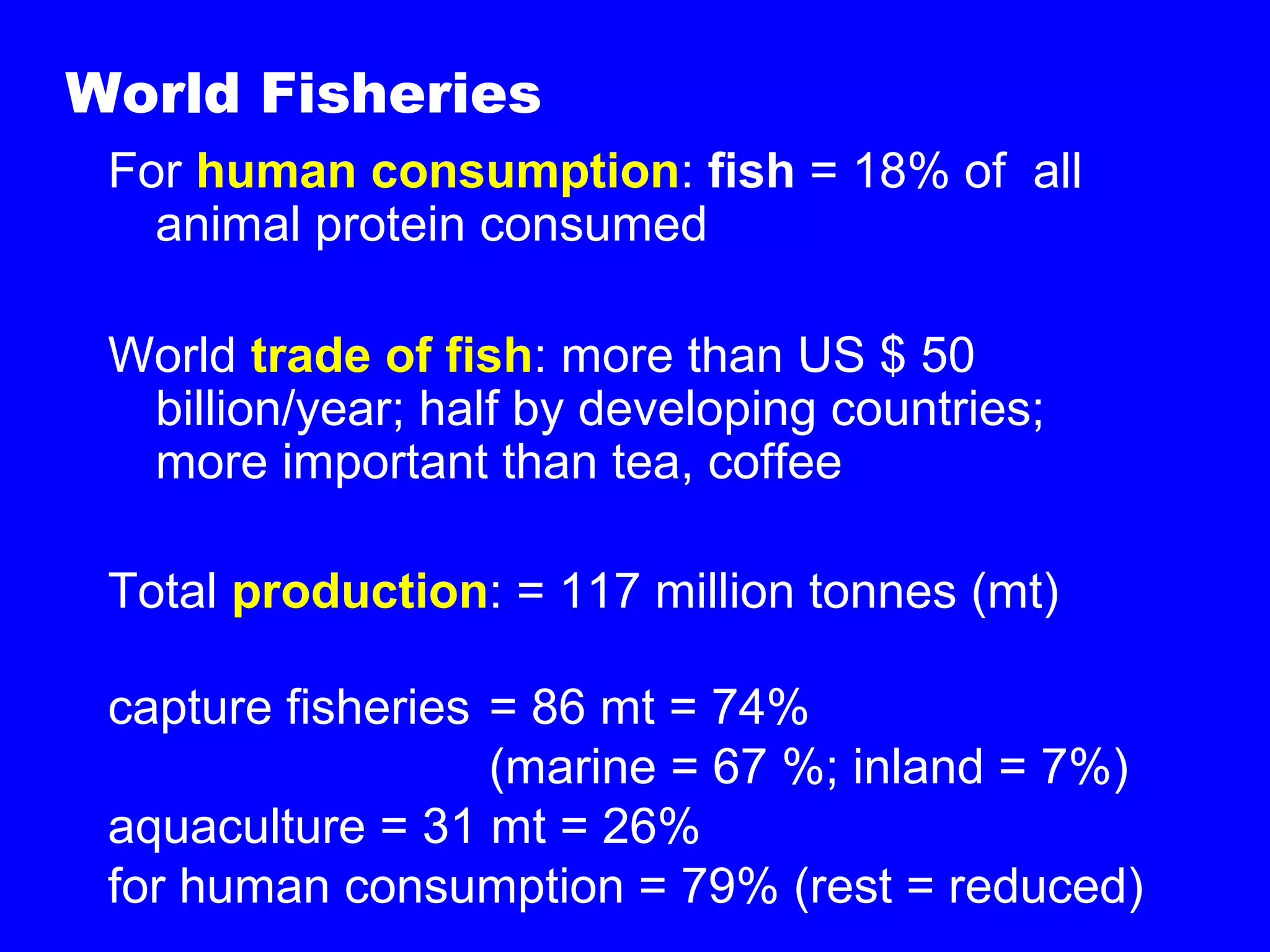
World Fisheries
For human consumption: fish = 18% of all
animal protein consumed
World trade of fish: more than US $ 50
billion/year; half by developing countries;
more important than tea, coffee
Total production: = 117 million tonnes (mt)
capture fisheries = 86 mt = 74%
(marine = 67 %; inland = 7%)
aquaculture = 31 mt = 26%
for human consumption = 79% (rest = reduced)
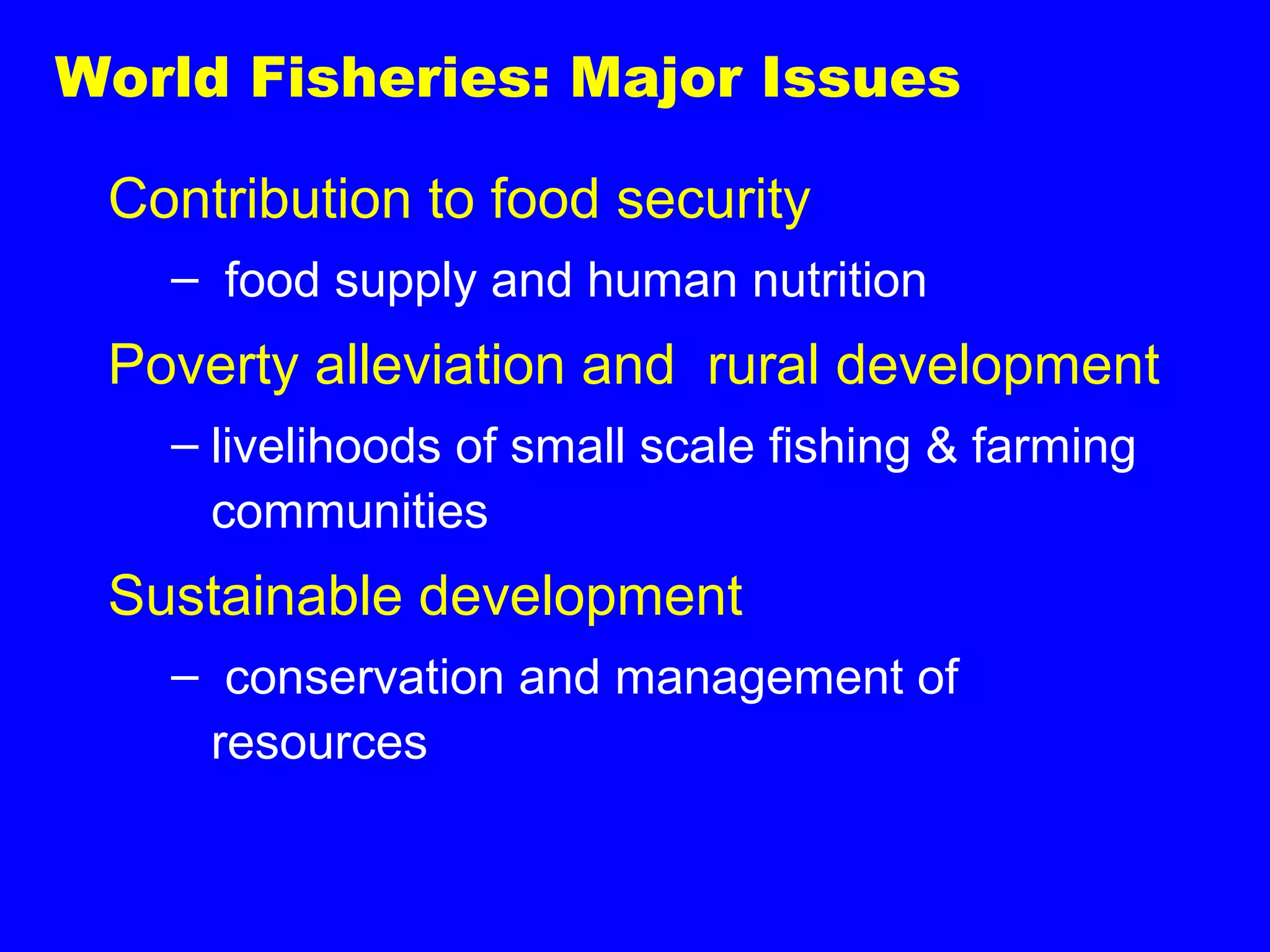
World Fisheries: Major Issues
Contribution to food security
– food supply and human nutrition
Poverty alleviation and rural development
– livelihoods of small scale fishing & farming
communities
Sustainable development
– conservation and management of
resources
World Fisheries: Major Issues
Over-fishing & excess capacity of fishing
effort
Environmental effects of fishing: habitat
degradation
By-catch, discards
Environmental impacts (pollution, habitat
degradation) ON fishery resources:
inland waters, also coastal waters
The Code of
Conduct for
Responsible
Fisheries
(FAO, 1995)
The CCRF: Its Origins
FAO Committee of Fisheries meeting 1991: call
for more responsible practice, better
management
1992 Cancún Conference on Responsible
Fishing called on FAO to prepare a Code of
Conduct
Technical Consultations 1992-1995 lead to
adoption of CCRF by FAO Conference
Member Governments
The CCRF: Its Goals
sustainable benefits from fisheries in
terms of food, employment, trade and
economic well-being for people throughout
the world
provides principles and standards
applicable to the conservation,
management and development of all
fisheries
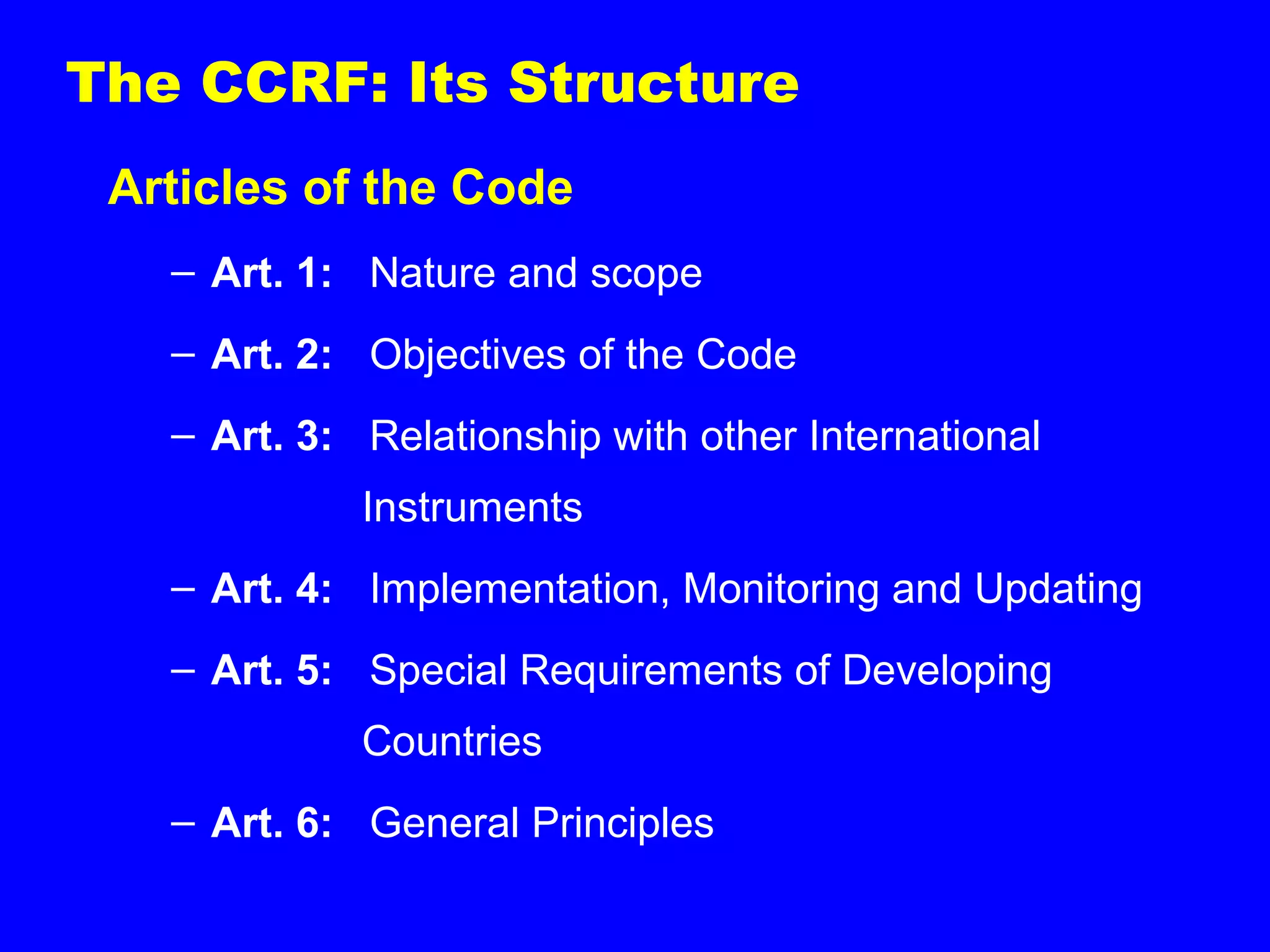
The CCRF: Its Structure
Articles of the Code
– Art. 1: Nature and scope
– Art. 2: Objectives of the Code
– Art. 3: Relationship with other International
Instruments
– Art. 4: Implementation, Monitoring and Updating
– Art. 5: Special Requirements of Developing
Countries
– Art. 6: General Principles
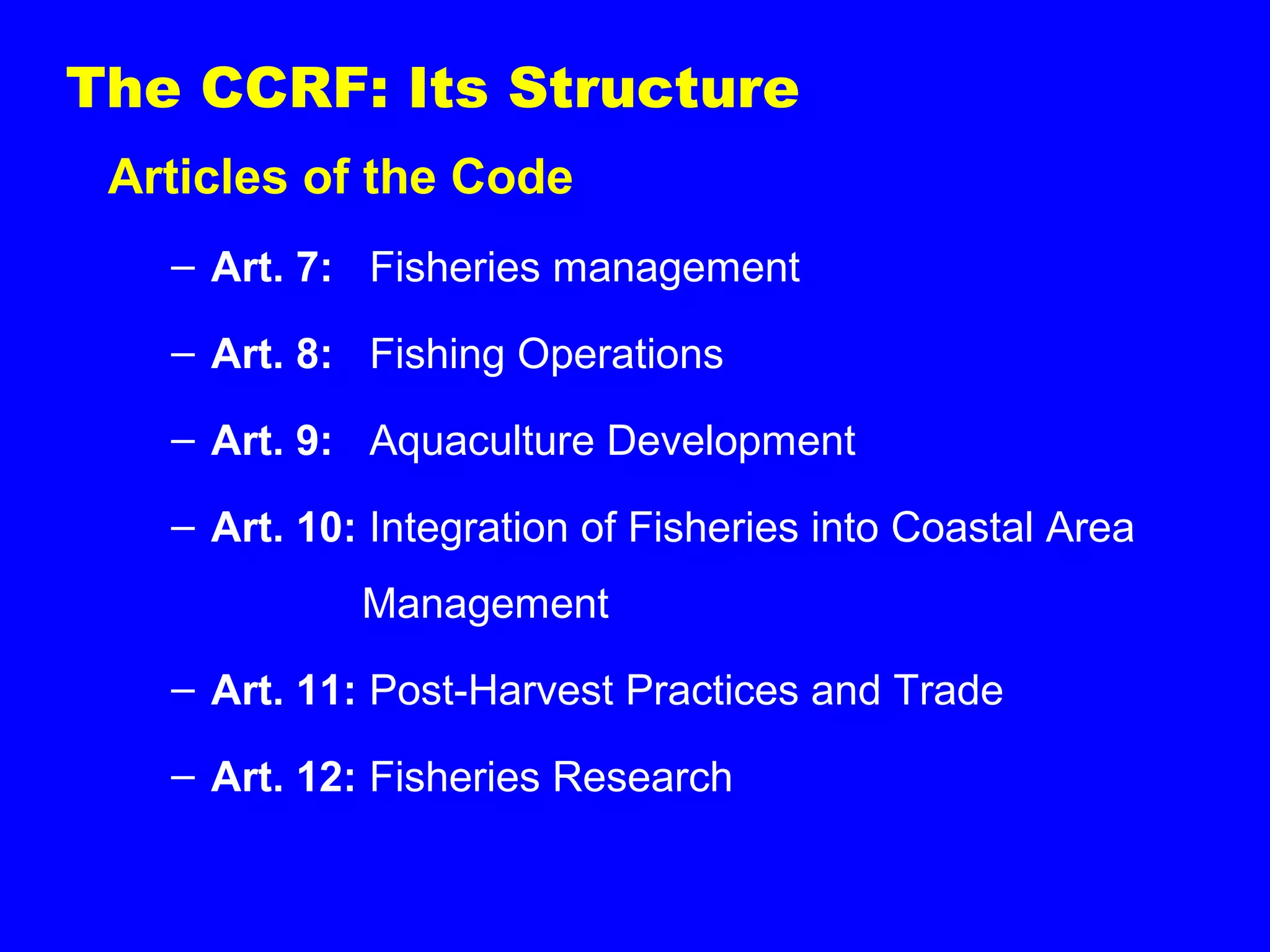
The CCRF: Its Structure
Articles of the Code
– Art. 7: Fisheries management
– Art. 8: Fishing Operations
– Art. 9: Aquaculture Development
– Art. 10: Integration of Fisheries into Coastal Area
Management
– Art. 11: Post-Harvest Practices and Trade
– Art. 12: Fisheries Research
CCRF : Actors
All members and non-members of FAO,
Fishing entities, sub-regional, regional and
global organisations, governmental or
non-governmental,
and
All other interested stakeholders
concerned with fisheries resources and
fish trade
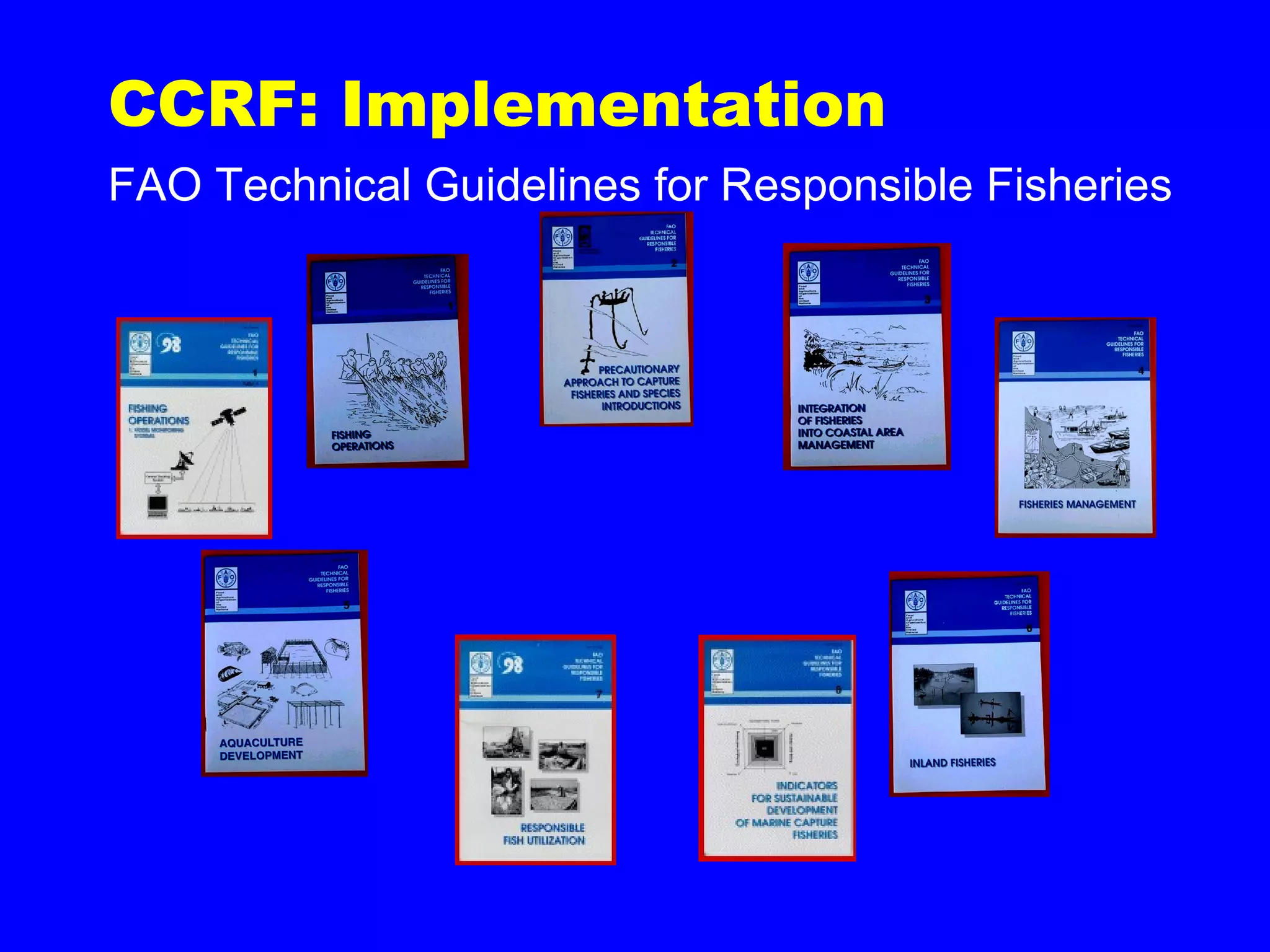
CCRF: Implementation
FAO Technical Guidelines for Responsible Fisheries
CCRF: Implementation
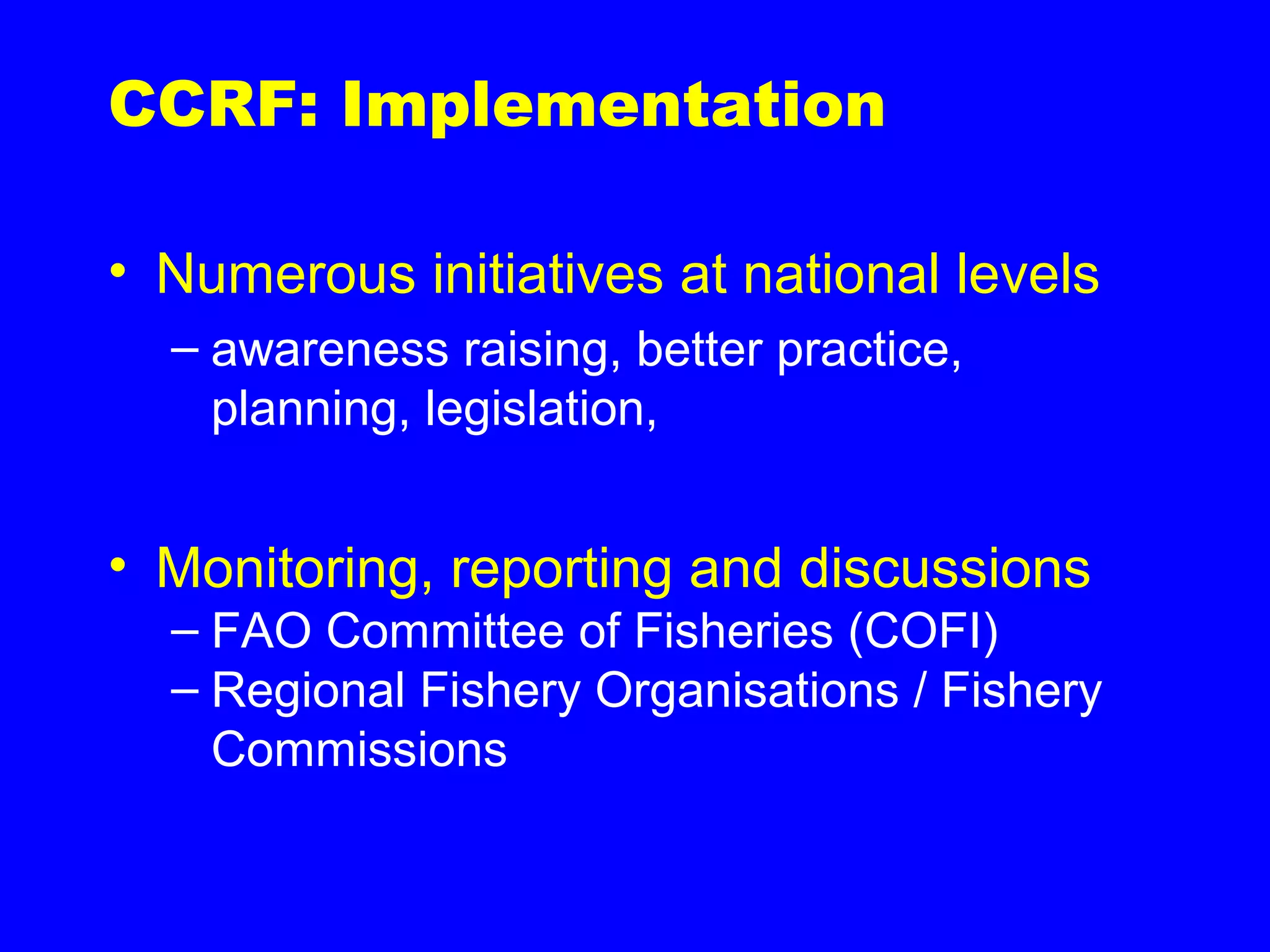
• Numerous initiatives at national levels
– awareness raising, better practice,
planning, legislation,
• Monitoring, reporting and discussions
– FAO Committee of Fisheries (COFI)
– Regional Fishery Organisations / Fishery
Commissions
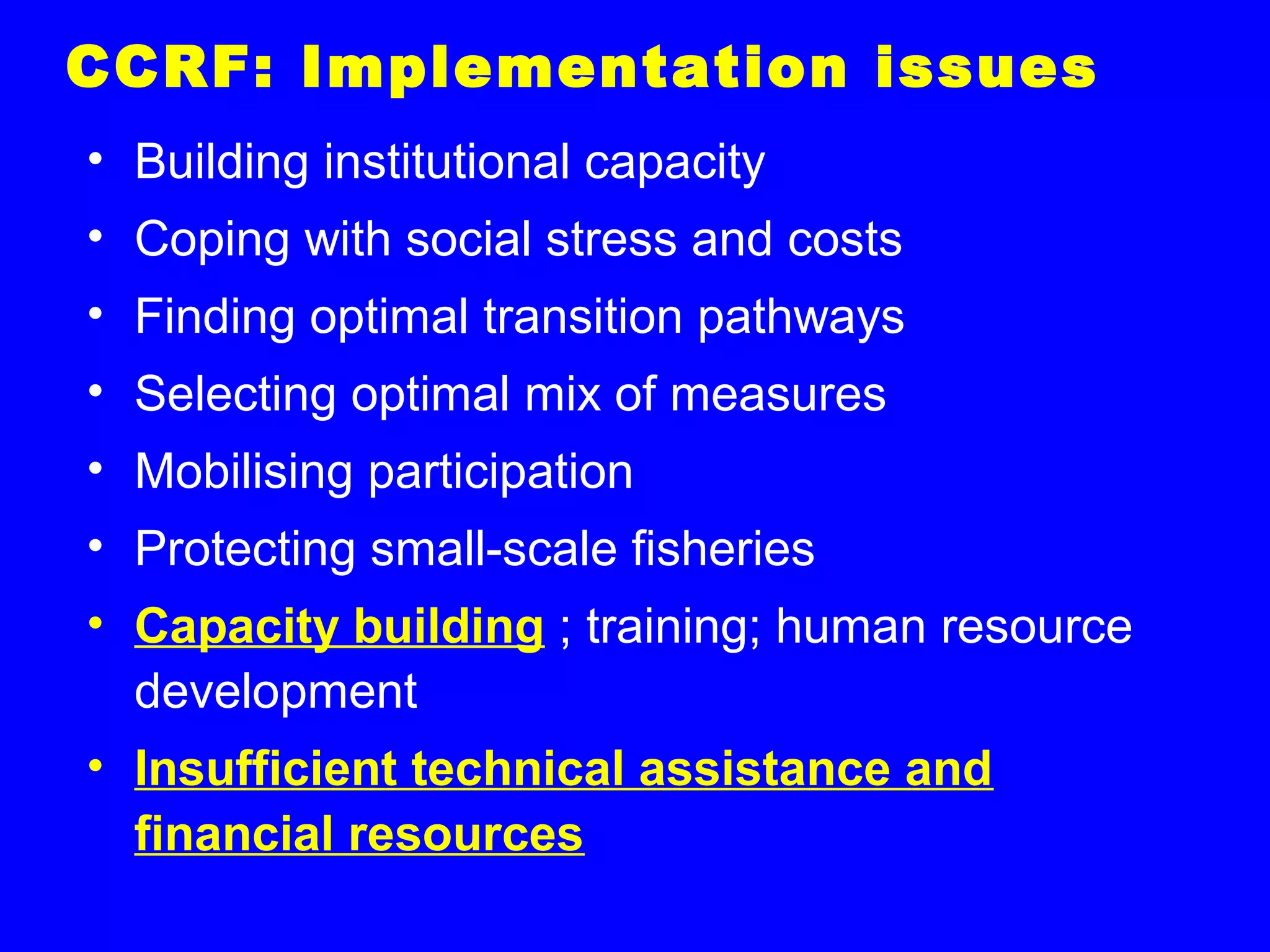
CCRF: Implementation issues
• Building institutional capacity
• Coping with social stress and costs
• Finding optimal transition pathways
• Selecting optimal mix of measures
• Mobilising participation
• Protecting small-scale fisheries
• Capacity building ; training; human resource
development
• Insufficient technical assistance and
financial resources
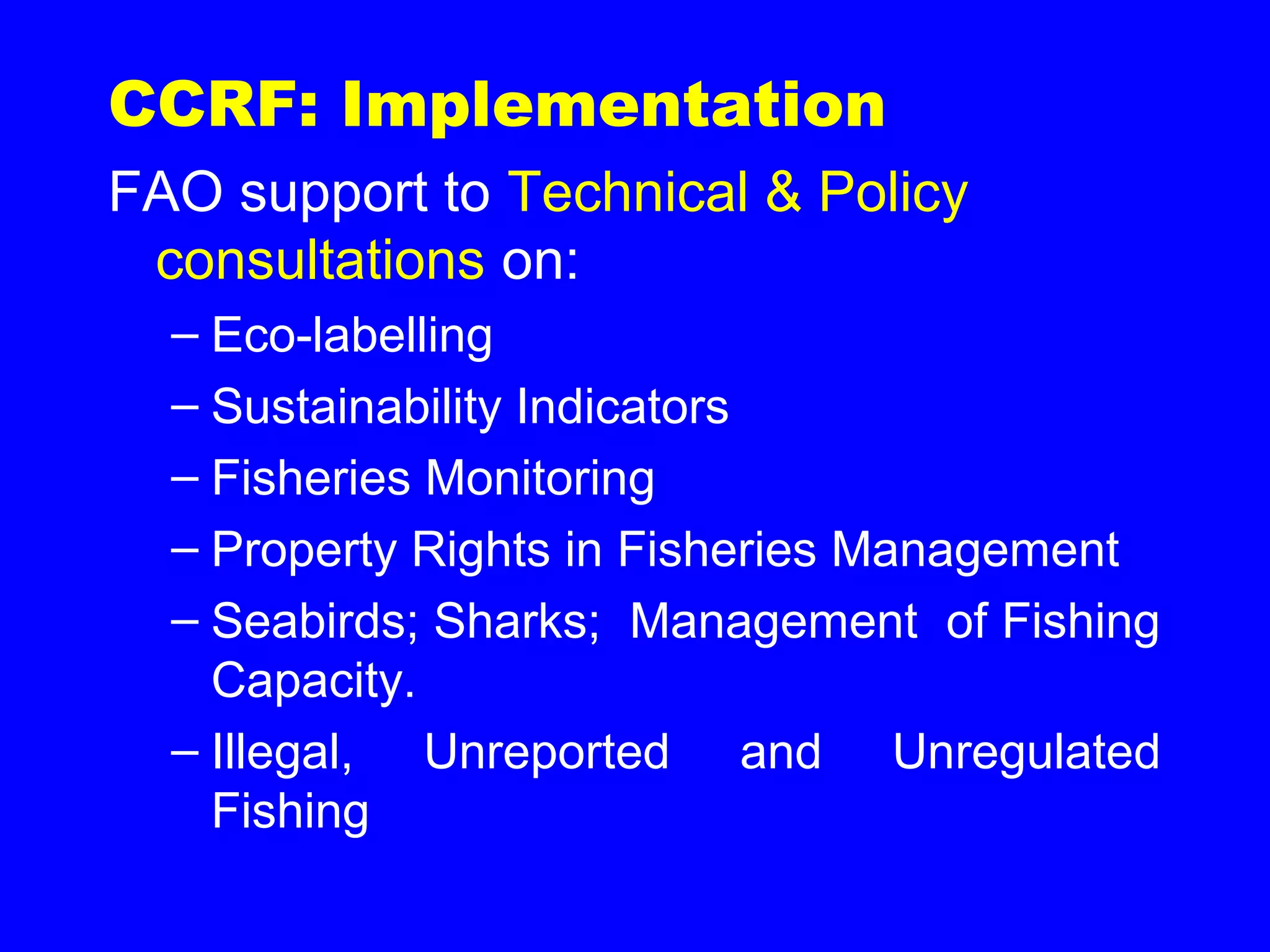
CCRF: Implementation
FAO support to Technical & Policy
consultations on:
– Eco-labelling
– Sustainability Indicators
– Fisheries Monitoring
– Property Rights in Fisheries Management
– Seabirds; Sharks; Management of Fishing
Capacity.
– Illegal, Unreported and Unregulated
Fishing
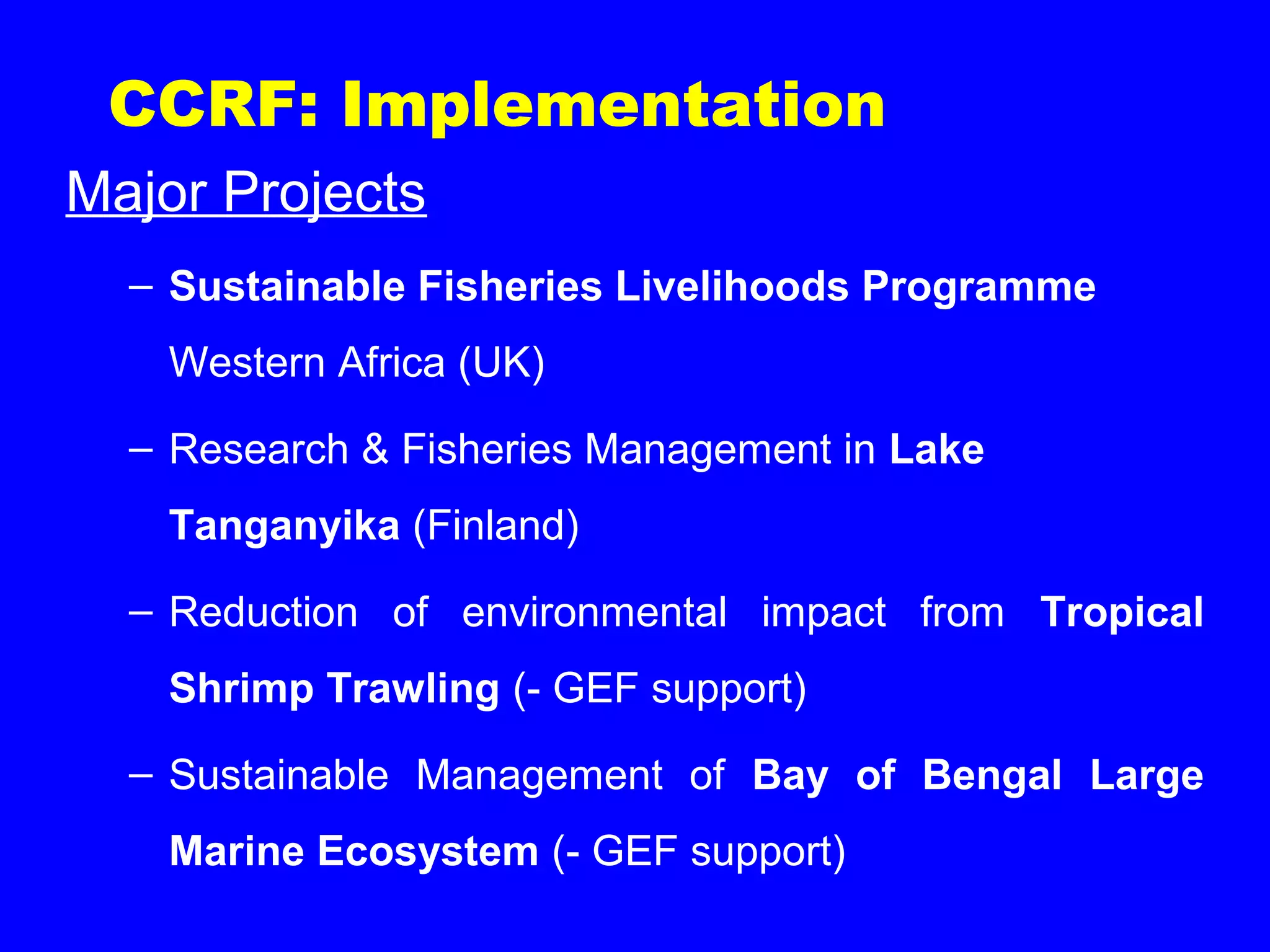
CCRF: Implementation
Major Projects
– Sustainable Fisheries Livelihoods Programme
Western Africa (UK)
– Research & Fisheries Management in Lake
Tanganyika (Finland)
– Reduction of environmental impact from Tropical
Shrimp Trawling (- GEF support)
– Sustainable Management of Bay of Bengal Large
Marine Ecosystem (- GEF support)
CCRF: Implementation
Major Projects
Inter-regional Programme for the Assistance to
Developing Countries for the Implementation of
the CCRF, components :
– Monitoring, Control, and Surveillance (MCS), and
Scientific Advice for Fisheries Management (Norway)
Components awaiting support:
– Compliance Agreement; Statistics; Fishing Operations;
Resource Surveys; Policy, Planning and Management;
Fleet Restructuring Policies; Post-Harvest Practices &
Trade; Support to NGOs
CCRF: Implementation
International Consensus-building: next major
FAO Expert Meetings:
– Economic Incentives and Responsible
Fisheries (incl. subsidies)
– Strategies & Investment Needs for the
Transition to Responsible Fisheries in Asia
– Management of Shared Stocks
– Reduction of Fishing Capacity
– Responsible Fisheries in the Marine
Ecosystem
CCRF: Implementation
Enhancing Major Information Resources - Facts,
Strategic Advice and Networking for Sustainable World
Fisheries:
– FAO FISHSTAT PLUS Data Base
– UN Atlas of the Oceans
– FAO Fisheries Atlas
– FAO Fisheries Global Information System
(FIGIS)
– GLOBEFISH markets and trade
– ONEFISH - Internet Portal for Fisheries
Research
Outlook: CCRF - Call for support
The FAO Conference called on States,
International Organisations, whether
Governmental or Non-Governmental, and
all those involved in fisheries to
collaborate in the fulfilment and
implementation of the CCRF.
The FAO Fisheries Department welcomes
continued co-operation in support of
implementation of the CCRF.
Outlook: CCRF - Call for support
In Your GEF International Waters
Projects, please,
THINK OF
FISH and FISHERIES
INVOLVE
“FISH PEOPLE”

The Code of Conduct for Responsible Fisheries (CCRF)

  • 1.
    The Code ofConduct for Responsible Fisheries (CCRF) Fisheries Department FOOD AND AGRICULTURE ORGANIZATION OF THE UNITED NATIONS
  • 2.
    Scope of presentation- for Session V. - GEF IW Conference: Overview of CCRF & implementation efforts –World fisheries: context (facts/issues) –The Code of Conduct (CCRF) –CCRF - Implementation –Outlook - suggestion – Barg, FAO
  • 3.
    World Fisheries For humanconsumption: fish = 18% of all animal protein consumed World trade of fish: more than US $ 50 billion/year; half by developing countries; more important than tea, coffee Total production: = 117 million tonnes (mt) capture fisheries = 86 mt = 74% (marine = 67 %; inland = 7%) aquaculture = 31 mt = 26% for human consumption = 79% (rest = reduced)
  • 4.
    World Fisheries: MajorIssues Contribution to food security – food supply and human nutrition Poverty alleviation and rural development – livelihoods of small scale fishing & farming communities Sustainable development – conservation and management of resources
  • 5.
    World Fisheries: MajorIssues Over-fishing & excess capacity of fishing effort Environmental effects of fishing: habitat degradation By-catch, discards Environmental impacts (pollution, habitat degradation) ON fishery resources: inland waters, also coastal waters
  • 6.
    The Code of Conductfor Responsible Fisheries (FAO, 1995)
  • 7.
    The CCRF: ItsOrigins FAO Committee of Fisheries meeting 1991: call for more responsible practice, better management 1992 Cancún Conference on Responsible Fishing called on FAO to prepare a Code of Conduct Technical Consultations 1992-1995 lead to adoption of CCRF by FAO Conference Member Governments
  • 8.
    The CCRF: ItsGoals sustainable benefits from fisheries in terms of food, employment, trade and economic well-being for people throughout the world provides principles and standards applicable to the conservation, management and development of all fisheries
  • 9.
    The CCRF: ItsStructure Articles of the Code – Art. 1: Nature and scope – Art. 2: Objectives of the Code – Art. 3: Relationship with other International Instruments – Art. 4: Implementation, Monitoring and Updating – Art. 5: Special Requirements of Developing Countries – Art. 6: General Principles
  • 10.
    The CCRF: ItsStructure Articles of the Code – Art. 7: Fisheries management – Art. 8: Fishing Operations – Art. 9: Aquaculture Development – Art. 10: Integration of Fisheries into Coastal Area Management – Art. 11: Post-Harvest Practices and Trade – Art. 12: Fisheries Research
  • 11.
    CCRF : Actors Allmembers and non-members of FAO, Fishing entities, sub-regional, regional and global organisations, governmental or non-governmental, and All other interested stakeholders concerned with fisheries resources and fish trade
  • 12.
    CCRF: Implementation FAO TechnicalGuidelines for Responsible Fisheries
  • 13.
    CCRF: Implementation • Numerousinitiatives at national levels – awareness raising, better practice, planning, legislation, • Monitoring, reporting and discussions – FAO Committee of Fisheries (COFI) – Regional Fishery Organisations / Fishery Commissions
  • 14.
    CCRF: Implementation issues •Building institutional capacity • Coping with social stress and costs • Finding optimal transition pathways • Selecting optimal mix of measures • Mobilising participation • Protecting small-scale fisheries • Capacity building ; training; human resource development • Insufficient technical assistance and financial resources
  • 15.
    CCRF: Implementation FAO supportto Technical & Policy consultations on: – Eco-labelling – Sustainability Indicators – Fisheries Monitoring – Property Rights in Fisheries Management – Seabirds; Sharks; Management of Fishing Capacity. – Illegal, Unreported and Unregulated Fishing
  • 16.
    CCRF: Implementation Major Projects –Sustainable Fisheries Livelihoods Programme Western Africa (UK) – Research & Fisheries Management in Lake Tanganyika (Finland) – Reduction of environmental impact from Tropical Shrimp Trawling (- GEF support) – Sustainable Management of Bay of Bengal Large Marine Ecosystem (- GEF support)
  • 17.
    CCRF: Implementation Major Projects Inter-regionalProgramme for the Assistance to Developing Countries for the Implementation of the CCRF, components : – Monitoring, Control, and Surveillance (MCS), and Scientific Advice for Fisheries Management (Norway) Components awaiting support: – Compliance Agreement; Statistics; Fishing Operations; Resource Surveys; Policy, Planning and Management; Fleet Restructuring Policies; Post-Harvest Practices & Trade; Support to NGOs
  • 18.
    CCRF: Implementation International Consensus-building:next major FAO Expert Meetings: – Economic Incentives and Responsible Fisheries (incl. subsidies) – Strategies & Investment Needs for the Transition to Responsible Fisheries in Asia – Management of Shared Stocks – Reduction of Fishing Capacity – Responsible Fisheries in the Marine Ecosystem
  • 19.
    CCRF: Implementation Enhancing MajorInformation Resources - Facts, Strategic Advice and Networking for Sustainable World Fisheries: – FAO FISHSTAT PLUS Data Base – UN Atlas of the Oceans – FAO Fisheries Atlas – FAO Fisheries Global Information System (FIGIS) – GLOBEFISH markets and trade – ONEFISH - Internet Portal for Fisheries Research
  • 20.
    Outlook: CCRF -Call for support The FAO Conference called on States, International Organisations, whether Governmental or Non-Governmental, and all those involved in fisheries to collaborate in the fulfilment and implementation of the CCRF. The FAO Fisheries Department welcomes continued co-operation in support of implementation of the CCRF.
  • 21.
    Outlook: CCRF -Call for support In Your GEF International Waters Projects, please, THINK OF FISH and FISHERIES INVOLVE “FISH PEOPLE”

Editor's Notes

  • #9 <number>