Dr M.Sanjeevappa
M.D.(Paeds)
Asst.Professor,
Dept. of Paediatrics
Govt.Medical College
Ananthapuramu.
Dr M.Sanjeevappa
M.D.(Paeds)
Asst.Professor,
Dept. of Paediatrics
Govt. Medical College
Ananthapuramu.
 Definition: Hemostasis is a protective
response of the body to limit and reverse loss of
vascular integrity and prevent excessive blood
loss.
 primary stage of hemostasis: formation of a
“platelet plug”
 platelet adhesion.
 platelet activation.
 platelet aggregation.
 secondary stage of hemostasis: activation
of coagulation cascades.
 Intrinsic pathway.
 Extrinsic pathway.
HISTORY:
 Exaggerated bleeding responses to
commonly encountered events are
suggestive of an underlying bleeding
disorder.
Examples :
 Epistaxis lasting for more than 15 minutes
despite pressure application on the side of
the nostril.
 Significant blood loss from a dental
procedure lasting more than 24 hours or
requiring blood transfusion.
 Bruising out of proportion to inflicted trauma.
 Menorrhagia characterized by heavy
menstrual bleeding lasting for 7 days or loss
of more than 80 mL of blood per cycle.
 X-linked disorders : detailed history of
bleeding problems in the maternal
grandfather, uncles, and cousins.
Eg : Hemophilia A.
 Autosomal recessive conditions : history
of consanguinity is important.
Eg : FXIII deficiency.
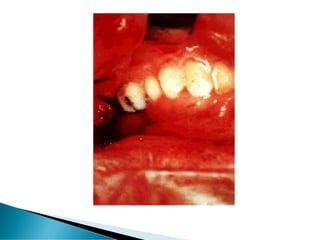
 Mucosal and subcutaneous bleeding :
involving gums or nasal mucosa,
petechiae, and bruising suggestive of
disorders of platelets and blood vessels or
vWD.
 spontaneous or excessive bleeding: into
soft tissues, muscles, joint and delayed
surgical bleeding suggestive of disorders
of coagulation factors.
 Acquired disorders such as immune
thrombocytopenic purpura (ITP) present
over days.
 vWD or hemophilia present over months
to years.
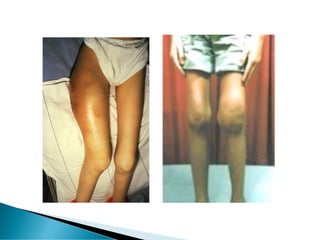
 A male infant presenting with painful bleeding in
the joint after a fall suggestive of hemophilia.
 Healthy child with purpuric rash following a viral
syndrome suggestive of ITP.
 A teenage girl with excessive menstrual bleeding
and pallor suggestive of vWD.
 Petechial rash and severe circulatory collapse in
a teenager suuggestive of vasculitis or DIC from
meningococcemia or sepsis.
Screening Tests :
 Complete blood count (CBC).
 Peripheral blood smear (PBS).
 Prothrombin time (PT).
 Activated partial thromboplastin time
(aPTT).
 Bleeding time.
 Platelet function analyzers (PFAs).
 To determine platelet count.
 Presence of anemia the microcytic
hypochromic type.
 suppression of all blood cell lines-
suggestive of malignancies such as
leukemia and lymphoma.
 To confirm thrombocytopenia.
 Platelet morphology :
Giant platelets – Bernard-Soulier disease.
Normal and large platelets – ITP
Smaller than normal platelets
-Wiskott -Aldrich syndrome.
 To identify abnormal cells such as blasts.
 PT evaluates the function of the extrinsic and
common pathways of coagulation.
 So PT measures the functioning of TF, FVII
and FX, FV, prothrombin, and fibrinogen.
 PT also indicate integrity of the vitamin K-
dependent coagulation factors (II, VII, & X).
 aPTT measures the functioning of
intrinsic and common pathways of
coagulation.
 so, sensitive to deficiencies of factors
XII, XI, IX, and VIII, X, V, II, and I as
well as their inhibitors such as
heparin.
 Defects in the primary phase of
hemostasis (vWD and platelet
dysfunction).
 Defects in the secondary phase
(FXIII deficiency).
 Defects in the fibrinolytic pathway.
Case Scenario 2: A Child With
Significant Bleeding,
Normal PT,
Prolonged aPTT,
Normal platelet count.
 Possibility of deficiency of factors in the
intrinsic pathway, especially FVIII, FIX,
and FXI.
 Inhibitors such as lupus anticoagulant and
heparin contamination.
 Secondary FVIII deficiency caused by
vWD can also present with these
laboratory findings.
Case Scenario 3: A Child With
Significant Bleeding History
With Prolonged PT,
Normal aPTT, and
Normal Platelet Count
 suggestive of FVII dysfunction.
Isolated FVII deficiency is a rare
entity
Case Scenario 4: A Child
With Significant History of
Bleeding,
With Prolongation of PT
as Well as aPTT and
a Normal Platelet Count
 scenario is the hallmark of vitamin K
deficiency.
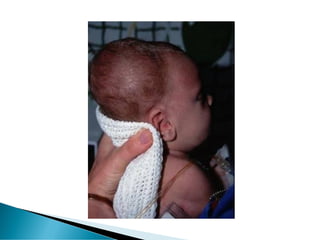
Case Scenario 5: Child With
Significant Bleeding and
Prolongation of PT and aPTT
and Thrombocytopenia
 This scenario is seen in DIC or
consumptive coagulopathy.
Case Scenario 6: Child Presenting
With Skin or Mucosal Petechiae and
Thrombocytopenia,
With Normal PT and aPTT
 immune thrombocytopenic purpura.
THANK YOU

Approach to bleeding child

  • 1.
    Dr M.Sanjeevappa M.D.(Paeds) Asst.Professor, Dept. ofPaediatrics Govt.Medical College Ananthapuramu.
  • 2.
    Dr M.Sanjeevappa M.D.(Paeds) Asst.Professor, Dept. ofPaediatrics Govt. Medical College Ananthapuramu.
  • 3.
     Definition: Hemostasisis a protective response of the body to limit and reverse loss of vascular integrity and prevent excessive blood loss.  primary stage of hemostasis: formation of a “platelet plug”  platelet adhesion.  platelet activation.  platelet aggregation.
  • 4.
     secondary stageof hemostasis: activation of coagulation cascades.  Intrinsic pathway.  Extrinsic pathway.
  • 7.
    HISTORY:  Exaggerated bleedingresponses to commonly encountered events are suggestive of an underlying bleeding disorder. Examples :  Epistaxis lasting for more than 15 minutes despite pressure application on the side of the nostril.
  • 8.
     Significant bloodloss from a dental procedure lasting more than 24 hours or requiring blood transfusion.  Bruising out of proportion to inflicted trauma.  Menorrhagia characterized by heavy menstrual bleeding lasting for 7 days or loss of more than 80 mL of blood per cycle.
  • 9.
     X-linked disorders: detailed history of bleeding problems in the maternal grandfather, uncles, and cousins. Eg : Hemophilia A.  Autosomal recessive conditions : history of consanguinity is important. Eg : FXIII deficiency.
  • 10.
     Mucosal andsubcutaneous bleeding : involving gums or nasal mucosa, petechiae, and bruising suggestive of disorders of platelets and blood vessels or vWD.  spontaneous or excessive bleeding: into soft tissues, muscles, joint and delayed surgical bleeding suggestive of disorders of coagulation factors.
  • 11.
     Acquired disorderssuch as immune thrombocytopenic purpura (ITP) present over days.  vWD or hemophilia present over months to years.
  • 12.
     A maleinfant presenting with painful bleeding in the joint after a fall suggestive of hemophilia.  Healthy child with purpuric rash following a viral syndrome suggestive of ITP.  A teenage girl with excessive menstrual bleeding and pallor suggestive of vWD.  Petechial rash and severe circulatory collapse in a teenager suuggestive of vasculitis or DIC from meningococcemia or sepsis.
  • 13.
    Screening Tests : Complete blood count (CBC).  Peripheral blood smear (PBS).  Prothrombin time (PT).  Activated partial thromboplastin time (aPTT).  Bleeding time.  Platelet function analyzers (PFAs).
  • 14.
     To determineplatelet count.  Presence of anemia the microcytic hypochromic type.  suppression of all blood cell lines- suggestive of malignancies such as leukemia and lymphoma.
  • 15.
     To confirmthrombocytopenia.  Platelet morphology : Giant platelets – Bernard-Soulier disease. Normal and large platelets – ITP Smaller than normal platelets -Wiskott -Aldrich syndrome.  To identify abnormal cells such as blasts.
  • 16.
     PT evaluatesthe function of the extrinsic and common pathways of coagulation.  So PT measures the functioning of TF, FVII and FX, FV, prothrombin, and fibrinogen.  PT also indicate integrity of the vitamin K- dependent coagulation factors (II, VII, & X).
  • 17.
     aPTT measuresthe functioning of intrinsic and common pathways of coagulation.  so, sensitive to deficiencies of factors XII, XI, IX, and VIII, X, V, II, and I as well as their inhibitors such as heparin.
  • 19.
     Defects inthe primary phase of hemostasis (vWD and platelet dysfunction).  Defects in the secondary phase (FXIII deficiency).  Defects in the fibrinolytic pathway.
  • 21.
    Case Scenario 2:A Child With Significant Bleeding, Normal PT, Prolonged aPTT, Normal platelet count.
  • 22.
     Possibility ofdeficiency of factors in the intrinsic pathway, especially FVIII, FIX, and FXI.  Inhibitors such as lupus anticoagulant and heparin contamination.  Secondary FVIII deficiency caused by vWD can also present with these laboratory findings.
  • 24.
    Case Scenario 3:A Child With Significant Bleeding History With Prolonged PT, Normal aPTT, and Normal Platelet Count
  • 25.
     suggestive ofFVII dysfunction. Isolated FVII deficiency is a rare entity
  • 26.
    Case Scenario 4:A Child With Significant History of Bleeding, With Prolongation of PT as Well as aPTT and a Normal Platelet Count
  • 27.
     scenario isthe hallmark of vitamin K deficiency.
  • 29.
    Case Scenario 5:Child With Significant Bleeding and Prolongation of PT and aPTT and Thrombocytopenia
  • 30.
     This scenariois seen in DIC or consumptive coagulopathy.
  • 31.
    Case Scenario 6:Child Presenting With Skin or Mucosal Petechiae and Thrombocytopenia, With Normal PT and aPTT
  • 32.
  • 33.