December, 9th,2012

By : Ahmed Bahamid
Pediatric resident @ Alsabeen
hospital
-

-

-

19 months-old Yemeni boy from Dhamar
C/O;
Generalized body swelling
months

3
- History of present illness started
- 3 months earlier
- Gradual onset swelling
- 1st in the eyelids (puffy eyes) & LL
- Progressive in course
- Seen in private clinics several times but no
settled dx where made
- Ŕ by diuretics with temporary relief of
edema.
-

-

The swelling eventually involve the entire
body
Face + abdomen + genetalia + LL
Last 2 weeks
Yellowish discoloration of the sclera
Associated with low-grade fever

-

-

-

-

Positive hx & Negative hx
General; decreased activity, poor feeding,
& Wt gain
Skin; yellowish discoloration, itching of
the scalp + hands + umbilicus,
Cardiac; sweating and tiring with feeding,
dyspnea started @ 3 months of age
Respiratory; prolonged cough started @ 3
months of age and subsided with the start
of recent complain
-

-

-

GIT; anorexia, nausea, vomiting, No
diarrhea with normal daily bowel motion
and normal color.

Genito-urinary; No difficulty with
urination, No hematuria, No frothy urine,
ONLY decreased urine output
CNS; only irritability, NO abnormal
movement, NO fits, or seizures, or
weakness
- Hematological; only pallor, NO hx of skin
rash, bruises or bleeding

- Musculoskeletal; No joint swelling or pain
-

-

-

No hx of similar attack
Hx of fever with skin rash twice @ age of
3 months & 6 months
Hx of prolonged cough since 3 months of
age treated several times @ private clinics
as chest infections but no admissions
No hx of operations, trauma, allergy or
ch. Medical diseases
-

-

-

Product of FT, NSVD @ hospital.
Pregnancy with antenatal care with no
major problems
No perinatal complications
Average birth weight
No cyanosis or jaundice, NO neonatal
resuscitation or admissions
-

-

-

Exclusive breast feeding in 1st 3 months
Bottle feeding started @ 4 months of age
with adequate amount &
concentration(fabimilk formula 1 & 2)
besides breast feeding ( till 9 months)
Formula changed to Nido milk & 10 months
of age
Weaning started @ 8 months of age with
rice, cheese, & biscuits.
-

-

Immunization hx up-to-date except the
last measles dose
Developmental hx appropriate as his
previous siblings (but motor development
decreased markedly with the recent
disease)
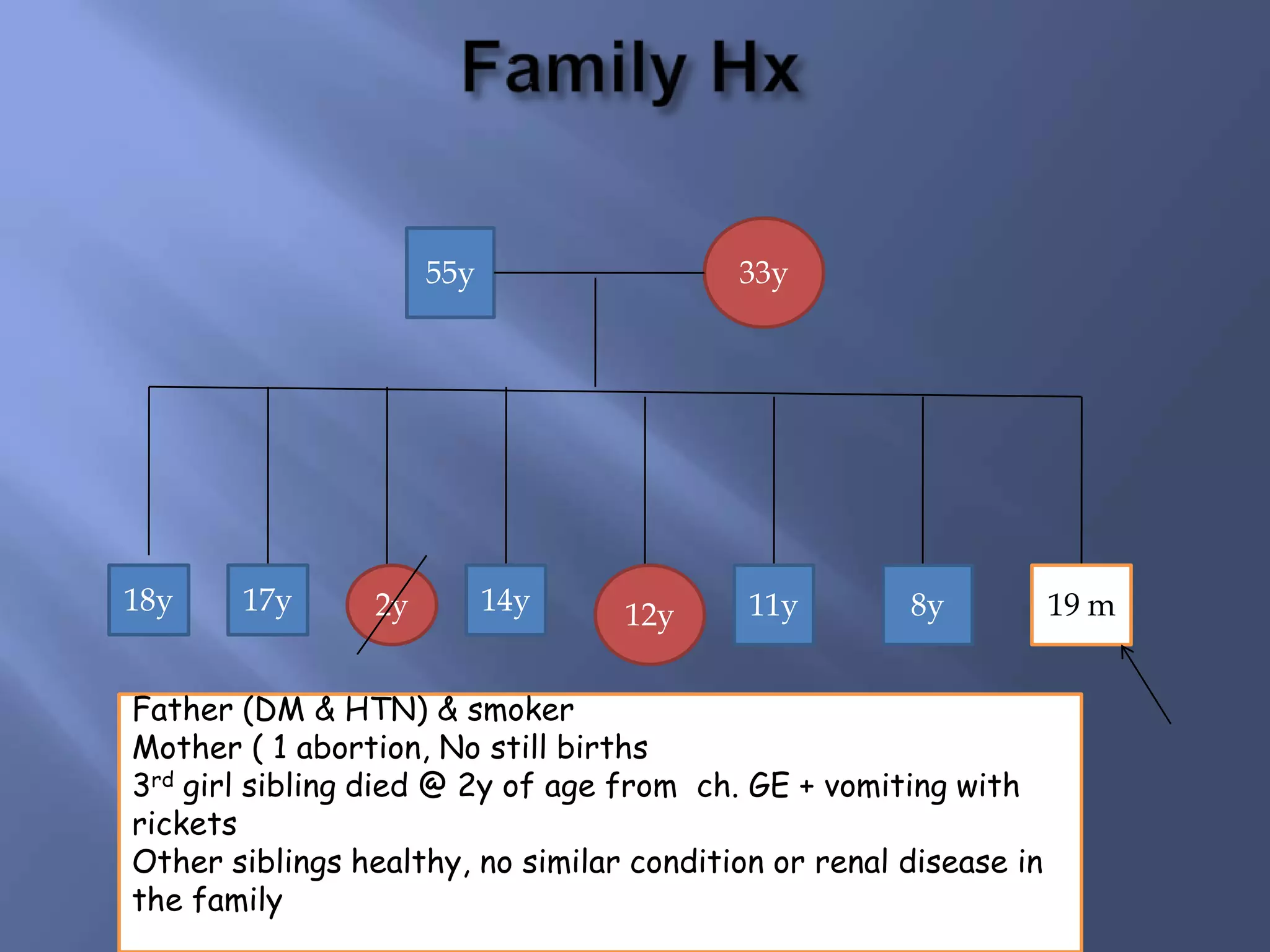
55y

18y

17y

2y

33y

14y

12y

11y

8y

Father (DM & HTN) & smoker
Mother ( 1 abortion, No still births
3rd girl sibling died @ 2y of age from ch. GE + vomiting with
rickets
Other siblings healthy, no similar condition or renal disease in
the family

19 m
•
•
•
•
-

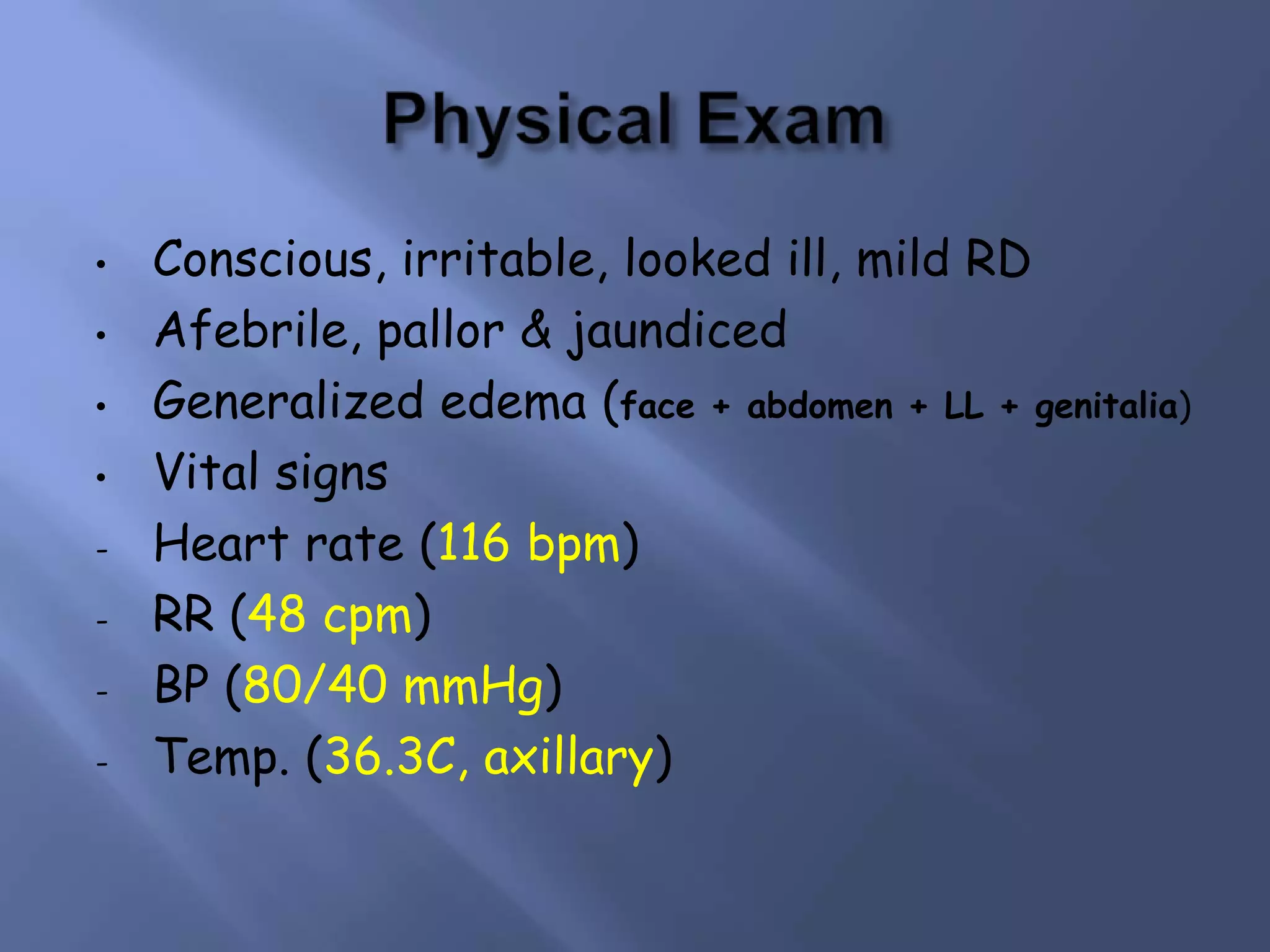
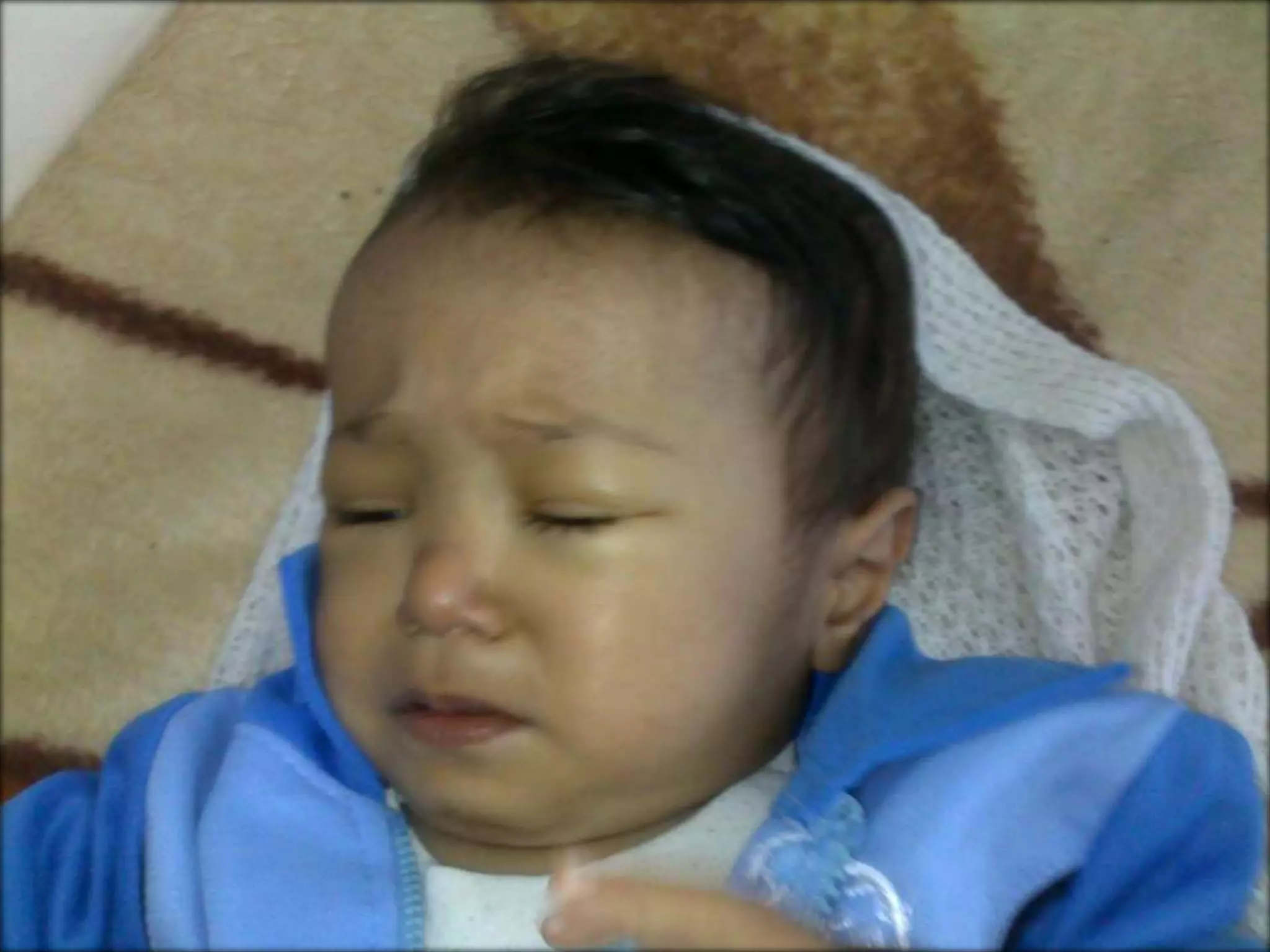
Conscious, irritable, looked ill, mild RD
Afebrile, pallor & jaundiced
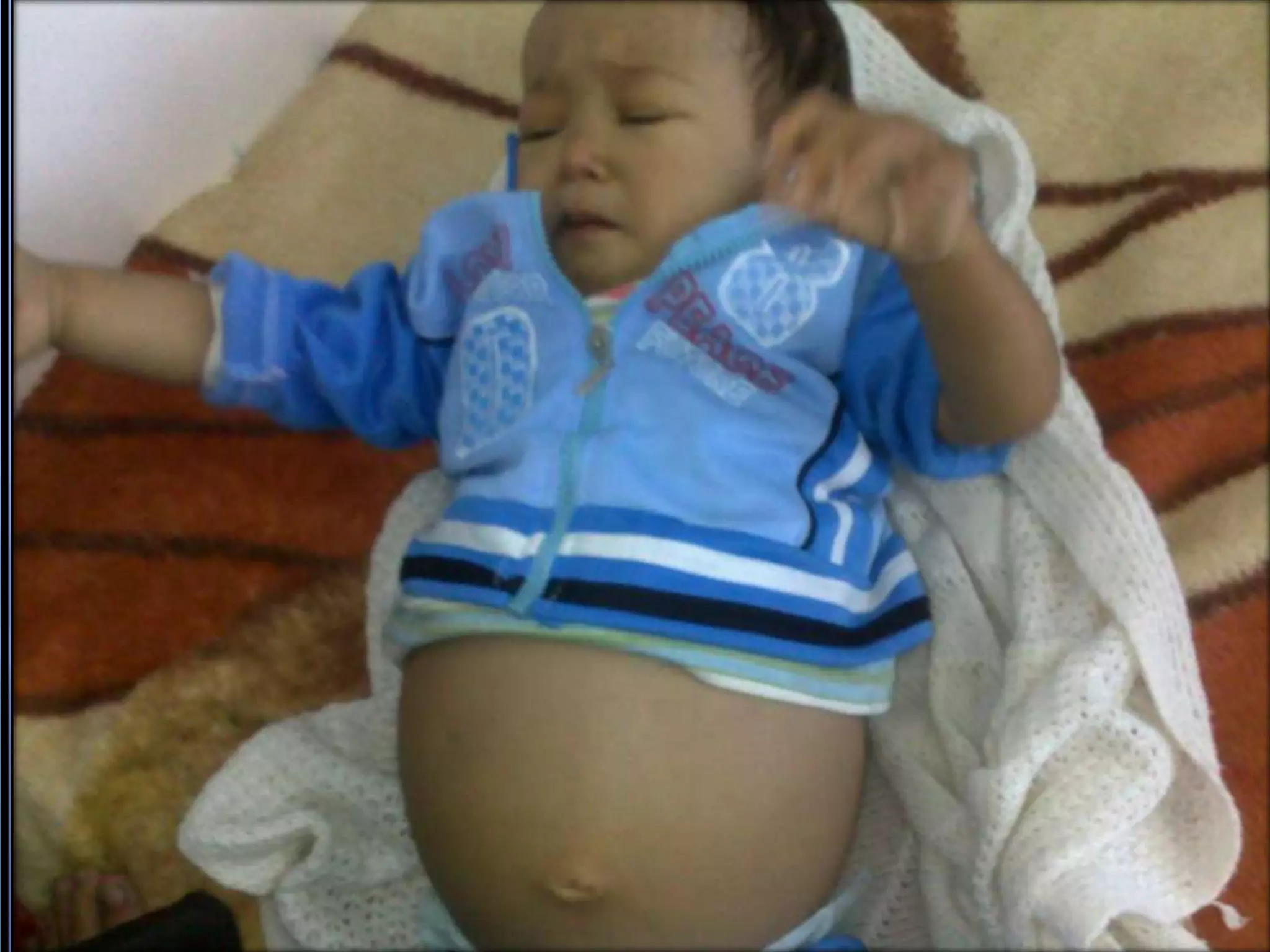
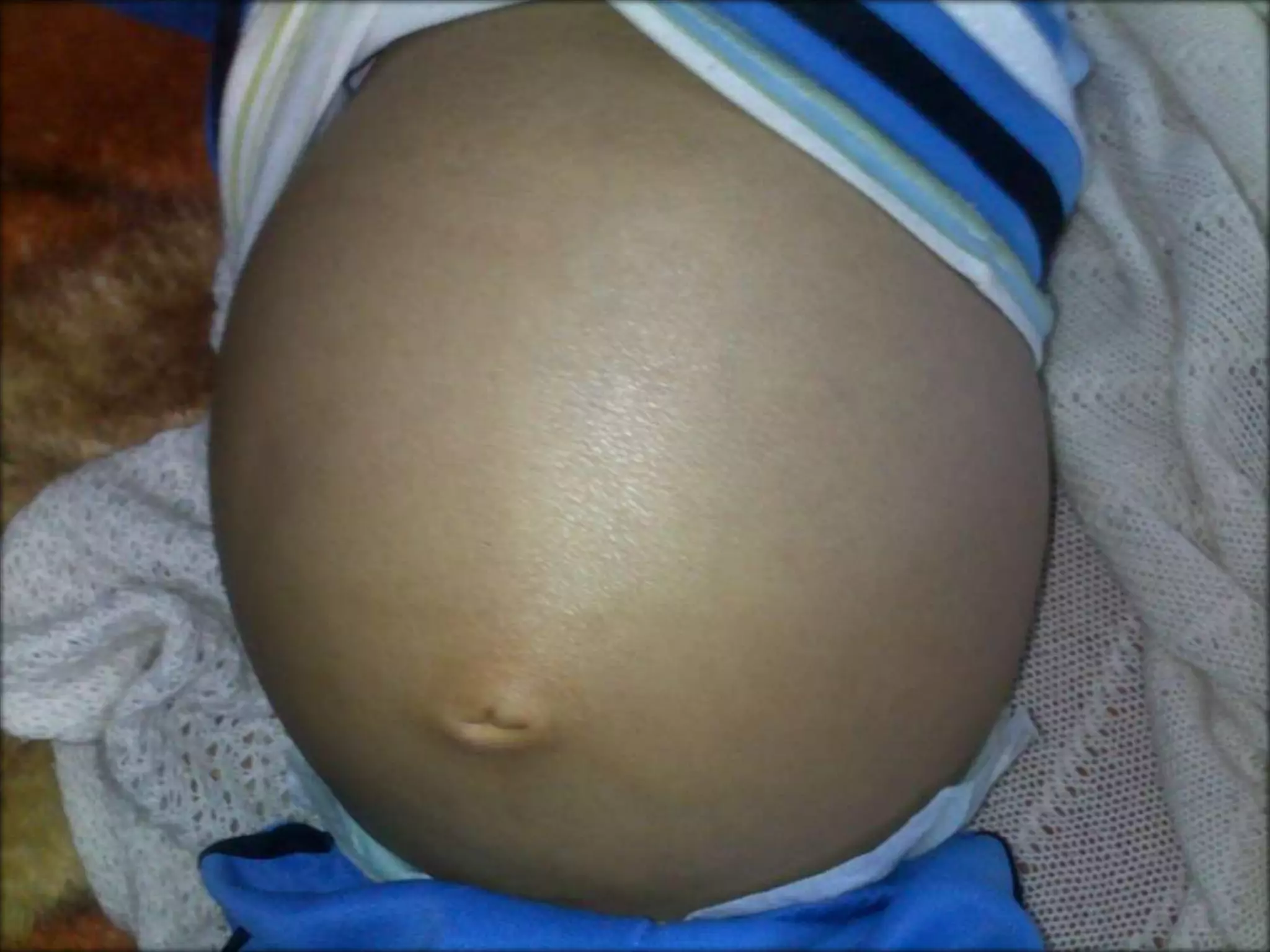
Generalized edema (face + abdomen + LL + genitalia)
Vital signs
Heart rate (116 bpm)
RR (48 cpm)
BP (80/40 mmHg)
Temp. (36.3C, axillary)
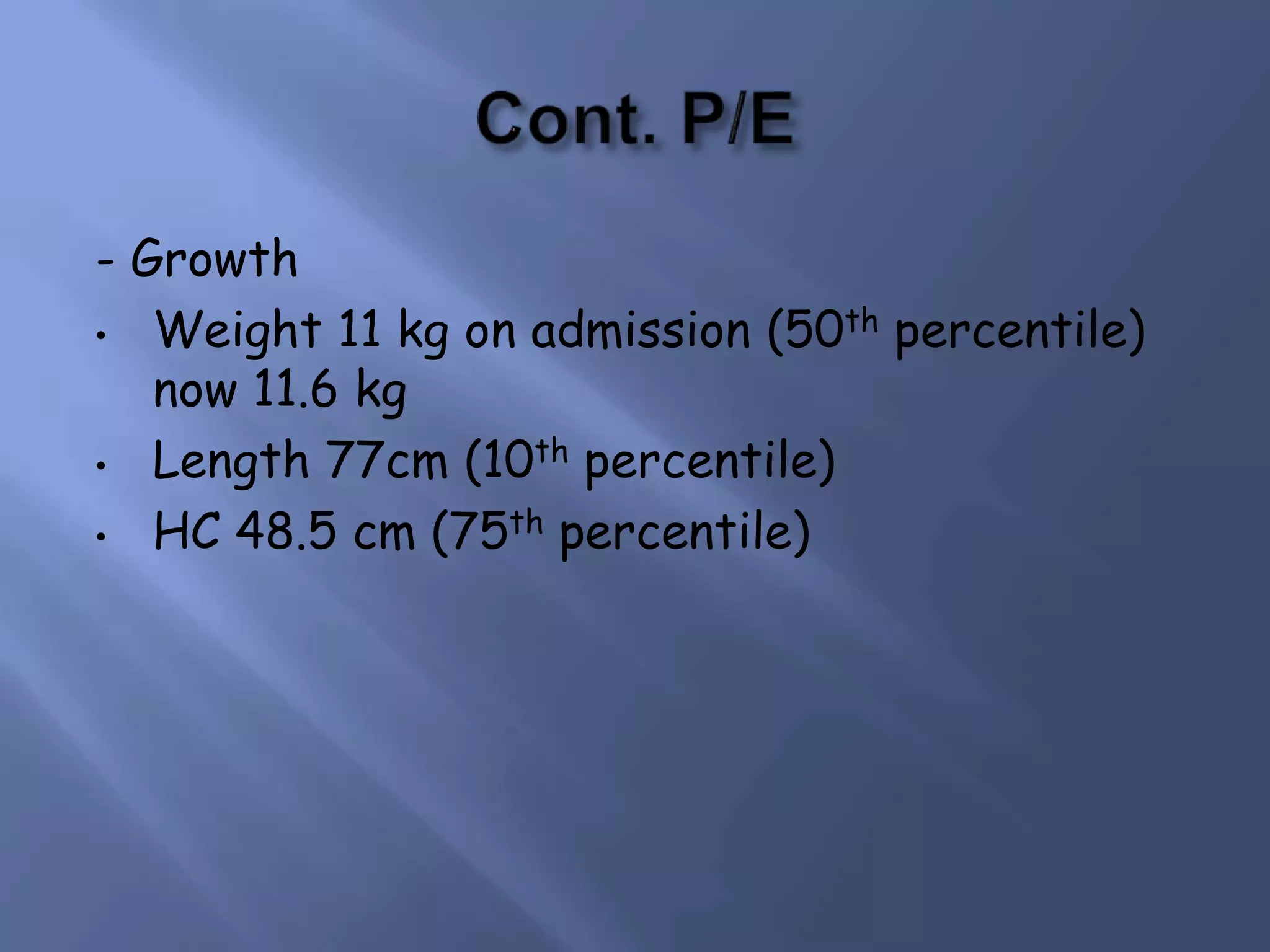
- Growth
• Weight 11 kg on admission (50th percentile)
now 11.6 kg
• Length 77cm (10th percentile)
• HC 48.5 cm (75th percentile)
•
•

•
-

HEENT
Head; Closed Ant. Fontanelle
Eyes; yellowish sclera + pale conjunctiva,
puffy eyes
ENT; NAD
Neck; diffuse swelling of soft tissues but no

congested neck veins., no significant LN
enlargement
Chest: normal shape, good air entry bilaterally,
normal vesicular breathing, no added sounds.
CVS: not visible apex beat?? & barely palpable,
S1 + S2+ distant heart sounds
- pulses: rapid weak pulses, equal
- Capillary refill 4 seconds with cold
extremities
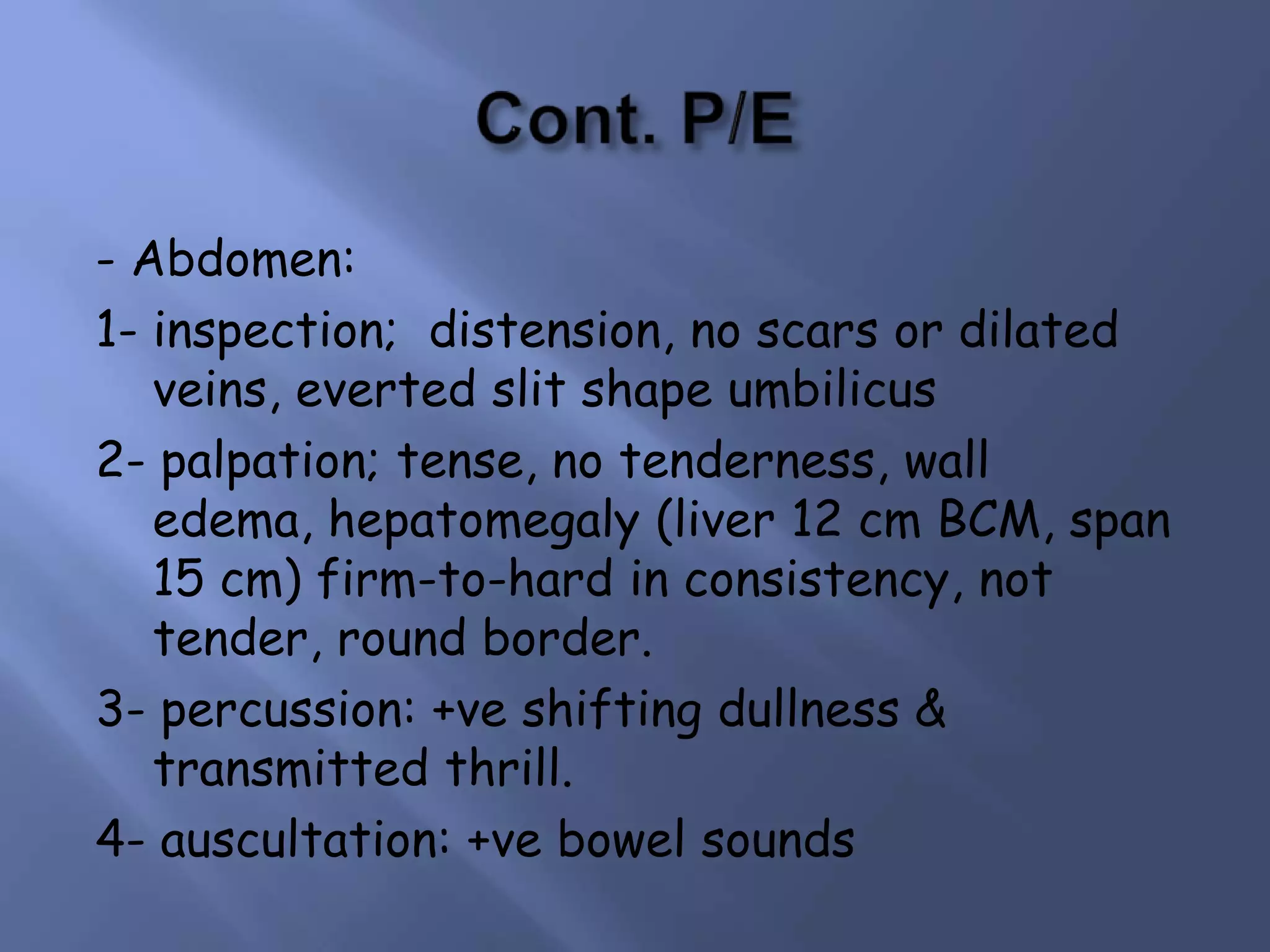
- Abdomen:
1- inspection; distension, no scars or dilated
veins, everted slit shape umbilicus
2- palpation; tense, no tenderness, wall
edema, hepatomegaly (liver 12 cm BCM, span
15 cm) firm-to-hard in consistency, not
tender, round border.
3- percussion: +ve shifting dullness &
transmitted thrill.
4- auscultation: +ve bowel sounds
-

-

-

-

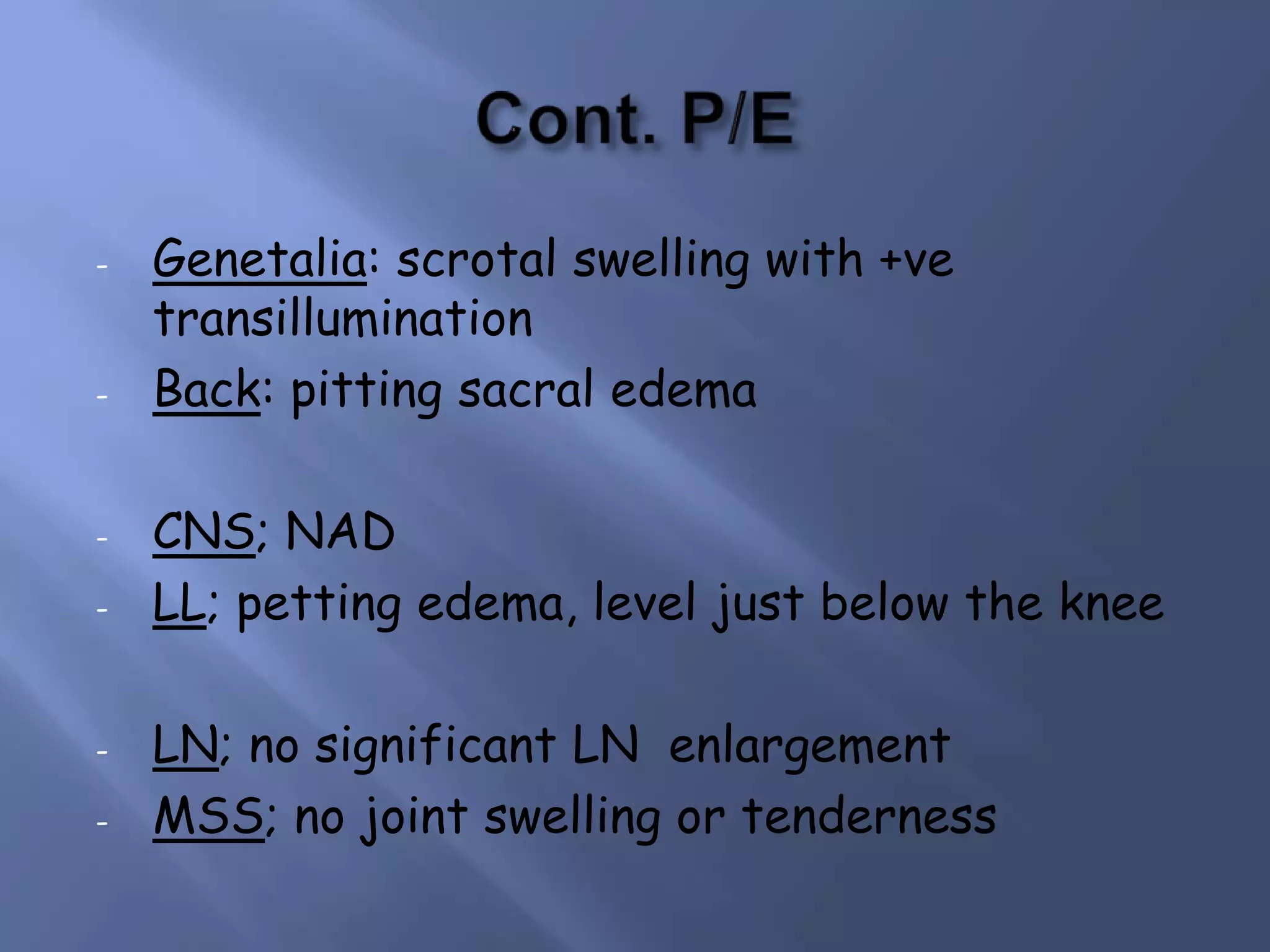
Genetalia: scrotal swelling with +ve
transillumination
Back: pitting sacral edema
CNS; NAD
LL; petting edema, level just below the knee
LN; no significant LN enlargement
MSS; no joint swelling or tenderness
-

-

-

-

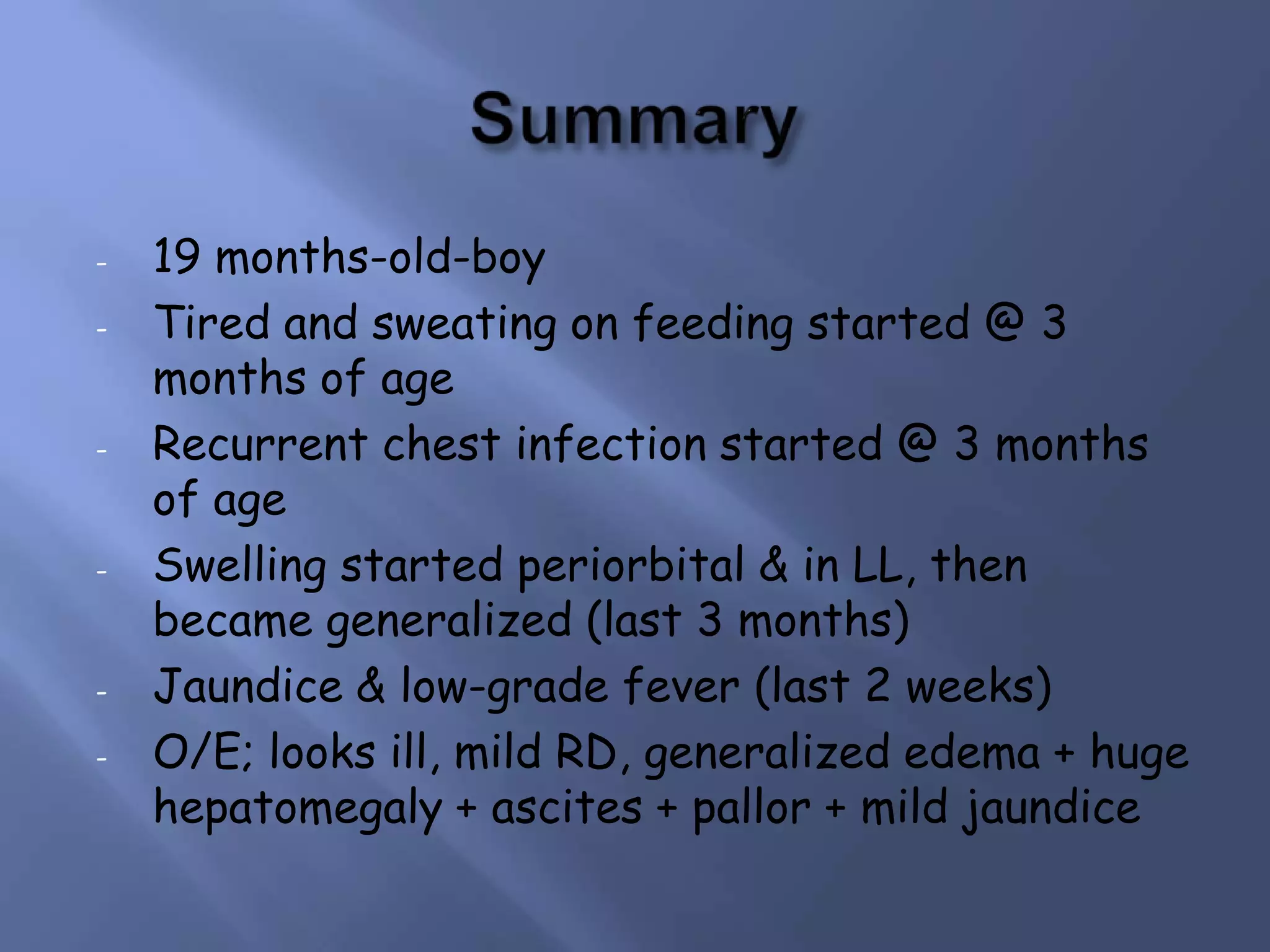
19 months-old-boy
Tired and sweating on feeding started @ 3
months of age
Recurrent chest infection started @ 3 months
of age
Swelling started periorbital & in LL, then
became generalized (last 3 months)
Jaundice & low-grade fever (last 2 weeks)
O/E; looks ill, mild RD, generalized edema + huge
hepatomegaly + ascites + pallor + mild jaundice
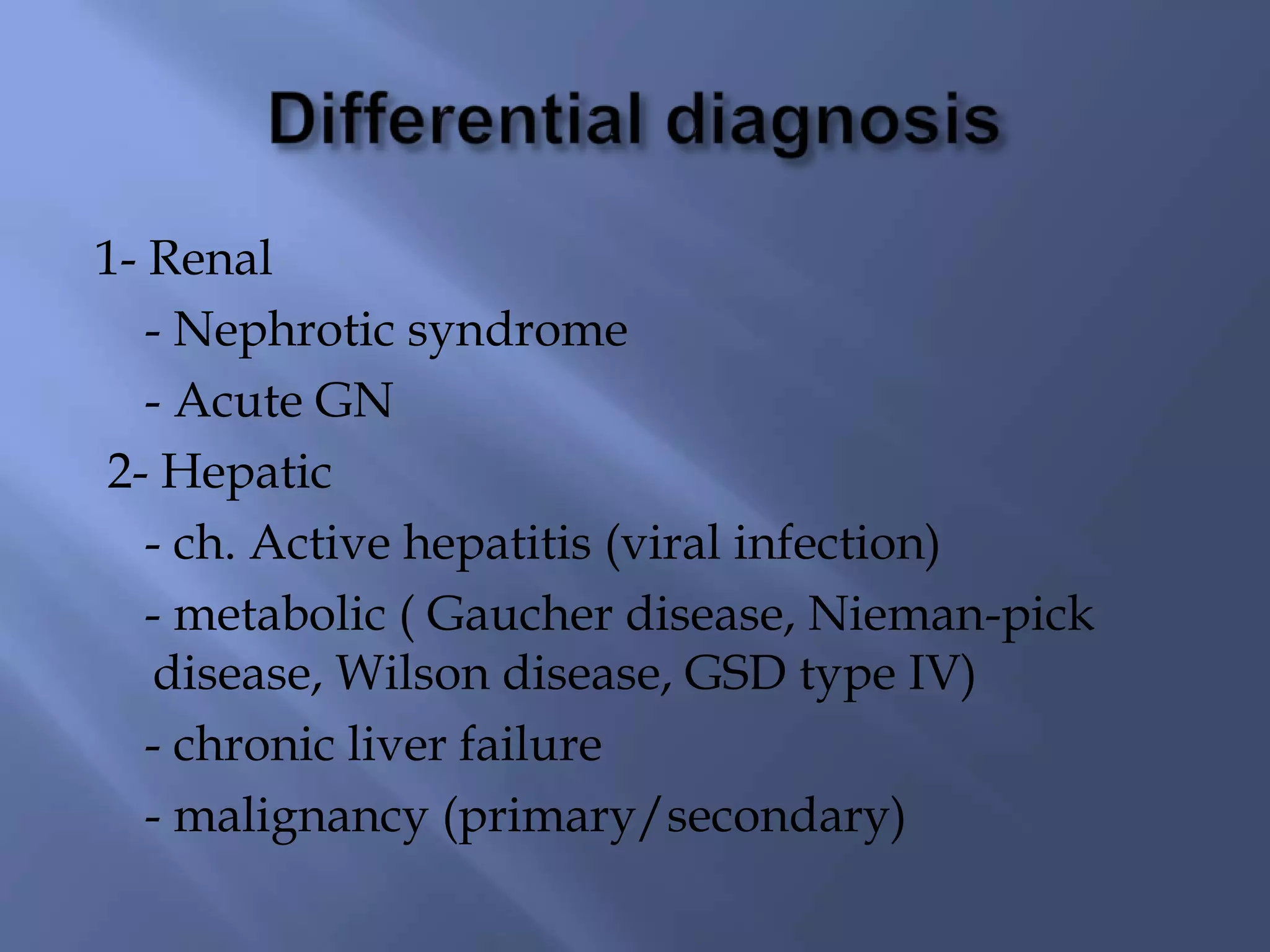
1- Renal
- Nephrotic syndrome
- Acute GN
2- Hepatic
- ch. Active hepatitis (viral infection)
- metabolic ( Gaucher disease, Nieman-pick
disease, Wilson disease, GSD type IV)
- chronic liver failure
- malignancy (primary/secondary)
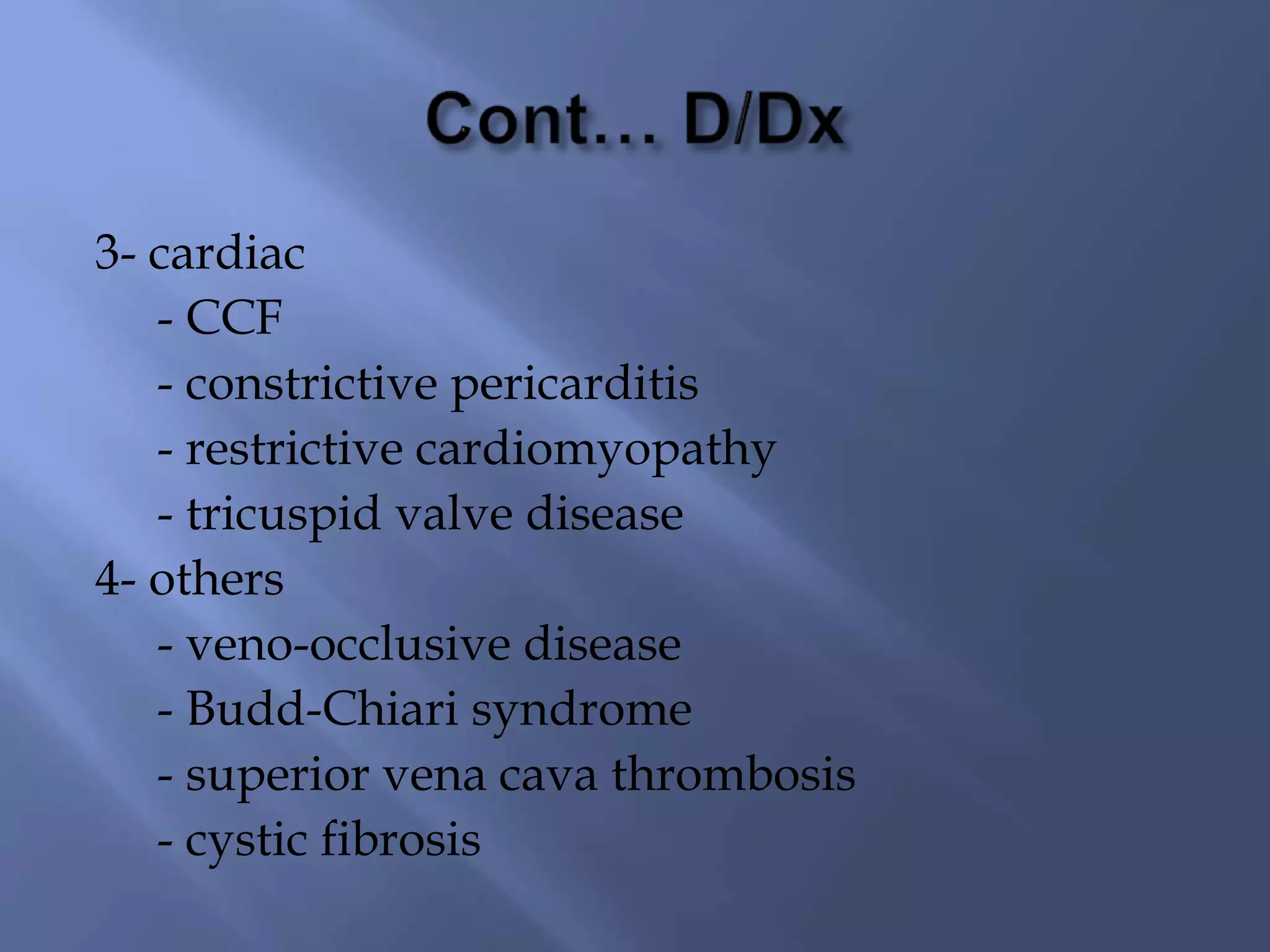
3- cardiac
- CCF
- constrictive pericarditis
- restrictive cardiomyopathy
- tricuspid valve disease
4- others
- veno-occlusive disease
- Budd-Chiari syndrome
- superior vena cava thrombosis
- cystic fibrosis
-

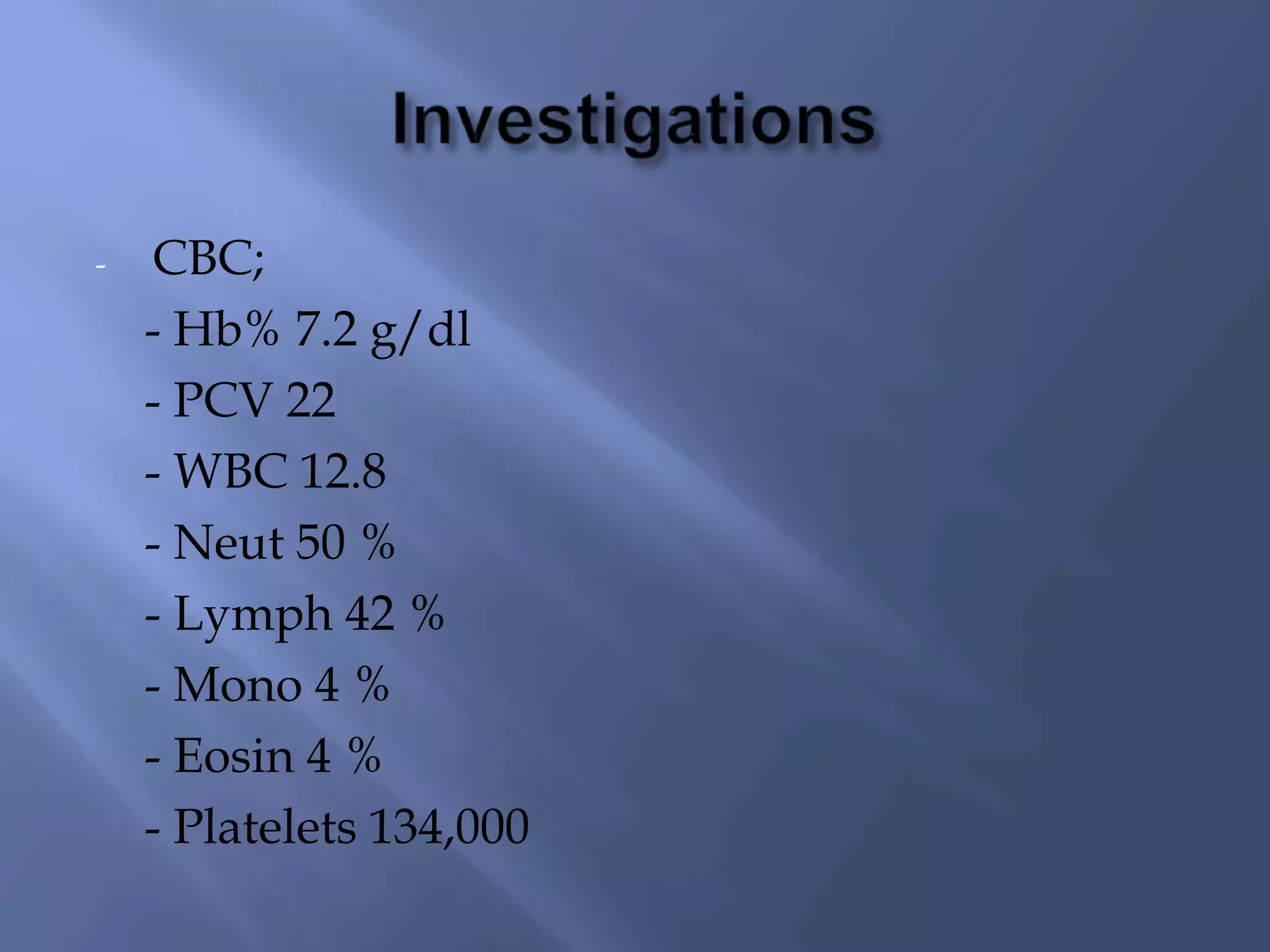
CBC;
- Hb% 7.2 g/dl
- PCV 22
- WBC 12.8
- Neut 50 %
- Lymph 42 %
- Mono 4 %
- Eosin 4 %
- Platelets 134,000
-

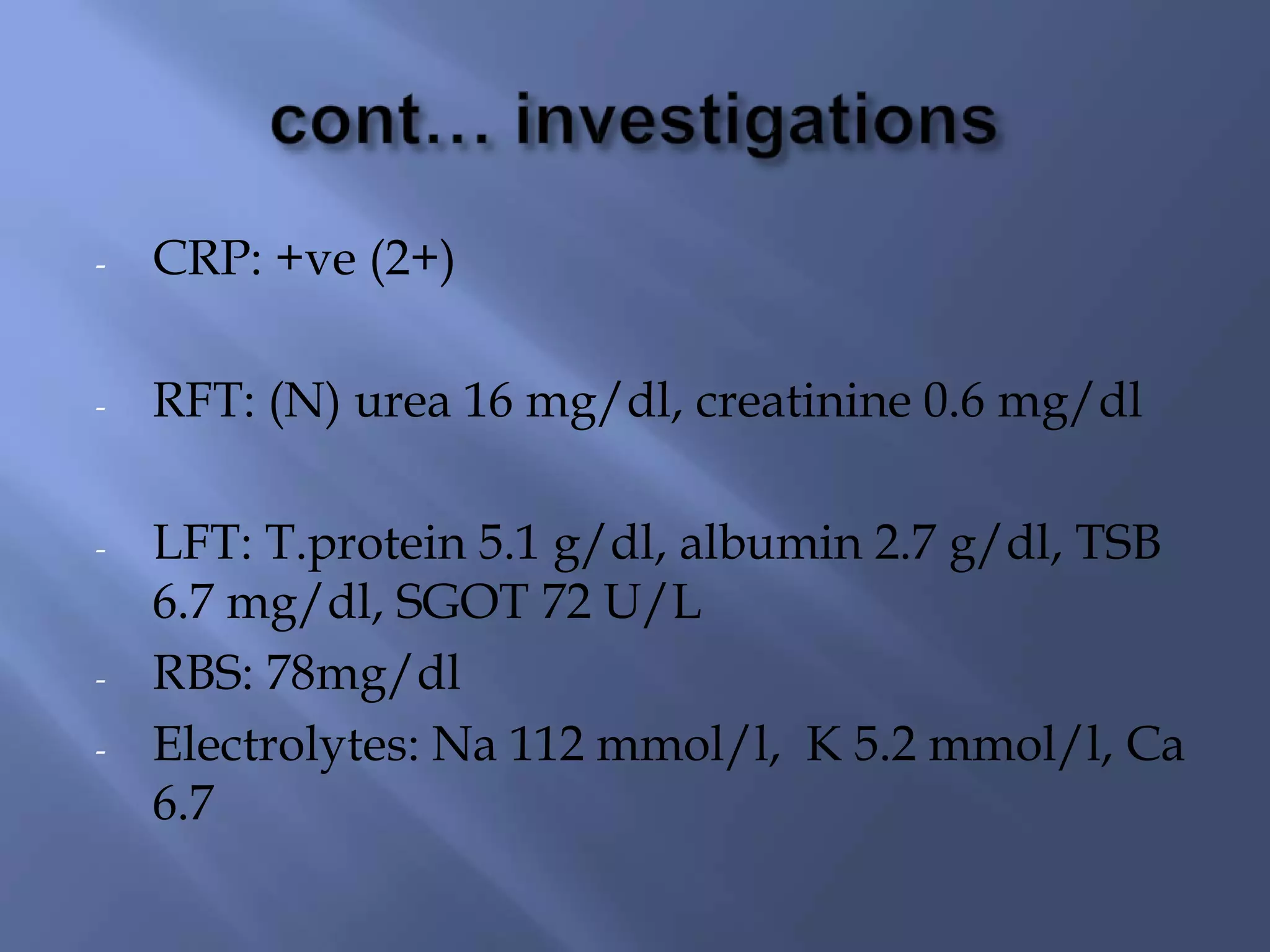
CRP: +ve (2+)

-

RFT: (N) urea 16 mg/dl, creatinine 0.6 mg/dl

-

LFT: T.protein 5.1 g/dl, albumin 2.7 g/dl, TSB
6.7 mg/dl, SGOT 72 U/L
RBS: 78mg/dl
Electrolytes: Na 112 mmol/l, K 5.2 mmol/l, Ca
6.7

-
-

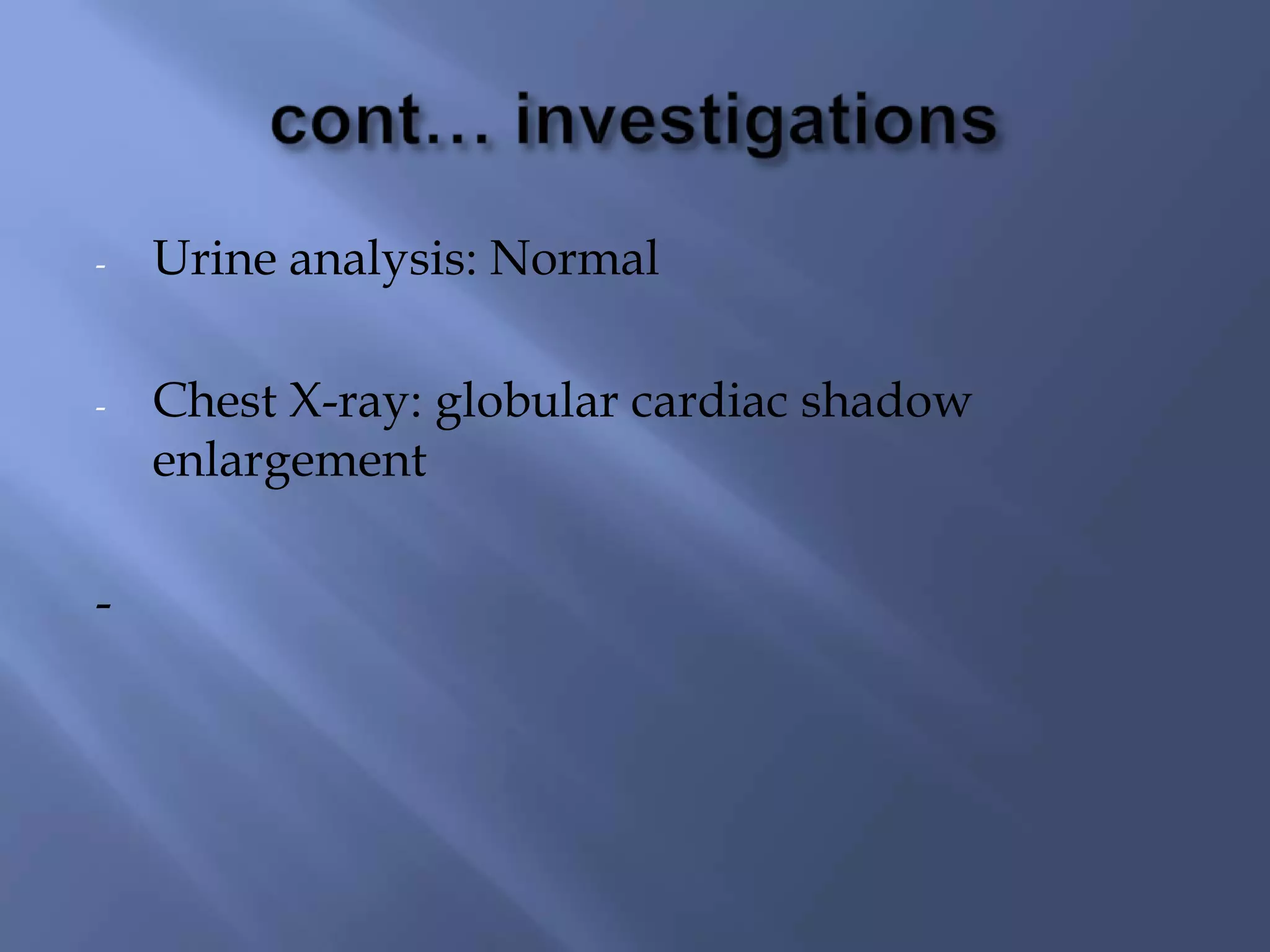
Urine analysis: Normal

-

Chest X-ray: globular cardiac shadow
enlargement

-
1- cardiac
- CCF
- restrictive cardiomyopathy
- constrictive pericarditis
2- hepatic
- ch. Active hepatitis (viral infection)
- metabolic ( Gaucher disease, Nieman-pick
disease, Wilson disease, GSD type IV)
- chronic liver failure
- malignancy (primary/secondary)
3- Renal
- Nephrotic syndrome
- Acute GN

4- others
- veno-occlusive disease
- Budd-Chiari syndrome
- superior vena cava thrombosis
- cystic fibrosis
- Marked hepatomegaly, smooth surface, no focal
lesion
- Signs of dilated IVC & hepatic veins
- Bilateral pleural effusion
- Partial collapse of Rt. Lower lobe
- Marked pericardial effusion
- Marked ascites
-

-

Markedly enlarged liver
Retrograde filling of dilated IVC & hepatic
veins, with no signs of thrombotic changes or
obstructing agent, reflecting passive hepatic
congestion related to cardiac cause
Large amount of ascites
Prominent dilatation of both atrium with
relatively small ventricles & mild to moderate
Rt. Sided pleural effusion
Cardiac
1- restrictive cardiomyopathy?
2- constrictive pericarditis?
Picture of restrictive cardiomyopathy with
congestive heart failure
-

Ampicillin , IV 500mg QID
Captopril, oral, 6.25 mg BID
Lasix, IV, 10 mg BID
Vitamin K, IV, 5mg single dose

-

Definitive treatment: heart transplantation

-
Definition & background
 Pathophysiology
 Causes
 Clinical approach
 investigations
 Management of edema



Accumulation of excess interstitial fluid and
could be localized or generalized.




Edema results from either excess salt &
water retention or from increased transfer
of fluid across the capillary membranes.




Understanding of the Pathophysiology of
edema is important in the clinical approach
and management of this condition in children.
Distribution:
1- Anasarca; gross, generalized edema with
profound subcutaneous tissue swelling.
2- Localized edema; does not reflect a sustained
impairment in the ability to maintain normal Na
balance.
3- Special forms of fluid collections in the
different body cavities
 Hydrothorax (in pleural cavity)
 Hydropericardium (in pericardial cavity)
 Ascites (in peritoneal cavity)





Generalized edema can arise via two
different processes;
Reduced intravascular volume leading to Na
& water retention → under-filling edema




Na & water retention secondary to expanded
plasma & intracellular tissue fluid volume
accompanied by lack of natriuresis → overfilling edema.







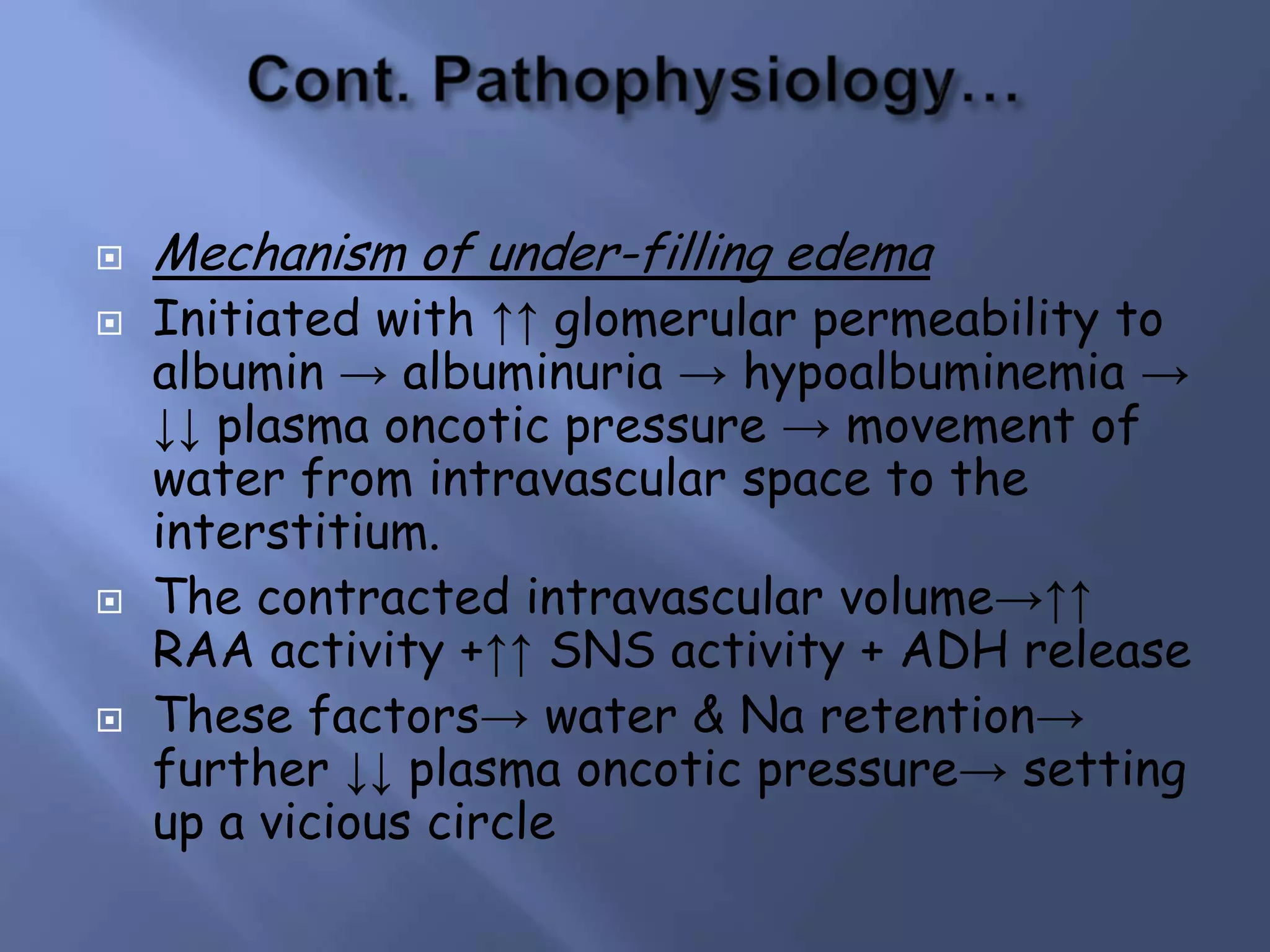
Mechanism of under-filling edema

Initiated with ↑↑ glomerular permeability to
albumin → albuminuria → hypoalbuminemia →
↓↓ plasma oncotic pressure → movement of
water from intravascular space to the
interstitium.
The contracted intravascular volume→↑↑
RAA activity +↑↑ SNS activity + ADH release
These factors→ water & Na retention→
further ↓↓ plasma oncotic pressure→ setting
up a vicious circle






Mechanism of over-filling edema
Resulting from expanded extracellular
volume that results from primary renal
Na retention, possibly secondary to
the renal damage.
In over-filling edema the RAA system
& SNS & ADH secretion are
depressed.









Causes of edema according to physiological
changes:
Increased hydrostatic pressure
Decreased plasma oncotic pressure
(hypoproteinemic states)
Increased capillary leakage
Impaired lymphatic flow
Impaired venous flow
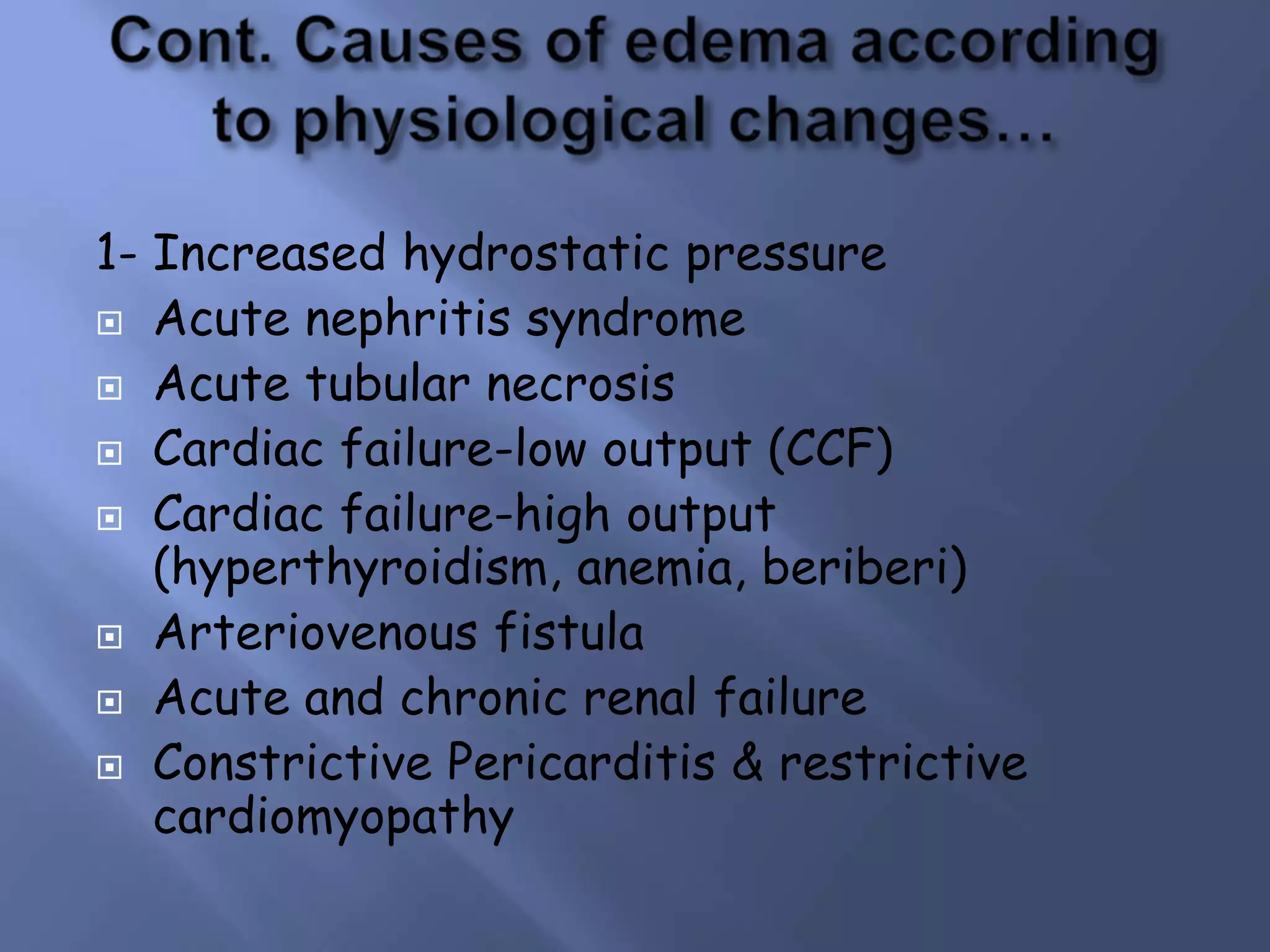
1- Increased hydrostatic pressure
 Acute nephritis syndrome
 Acute tubular necrosis
 Cardiac failure-low output (CCF)
 Cardiac failure-high output
(hyperthyroidism, anemia, beriberi)
 Arteriovenous fistula
 Acute and chronic renal failure
 Constrictive Pericarditis & restrictive
cardiomyopathy
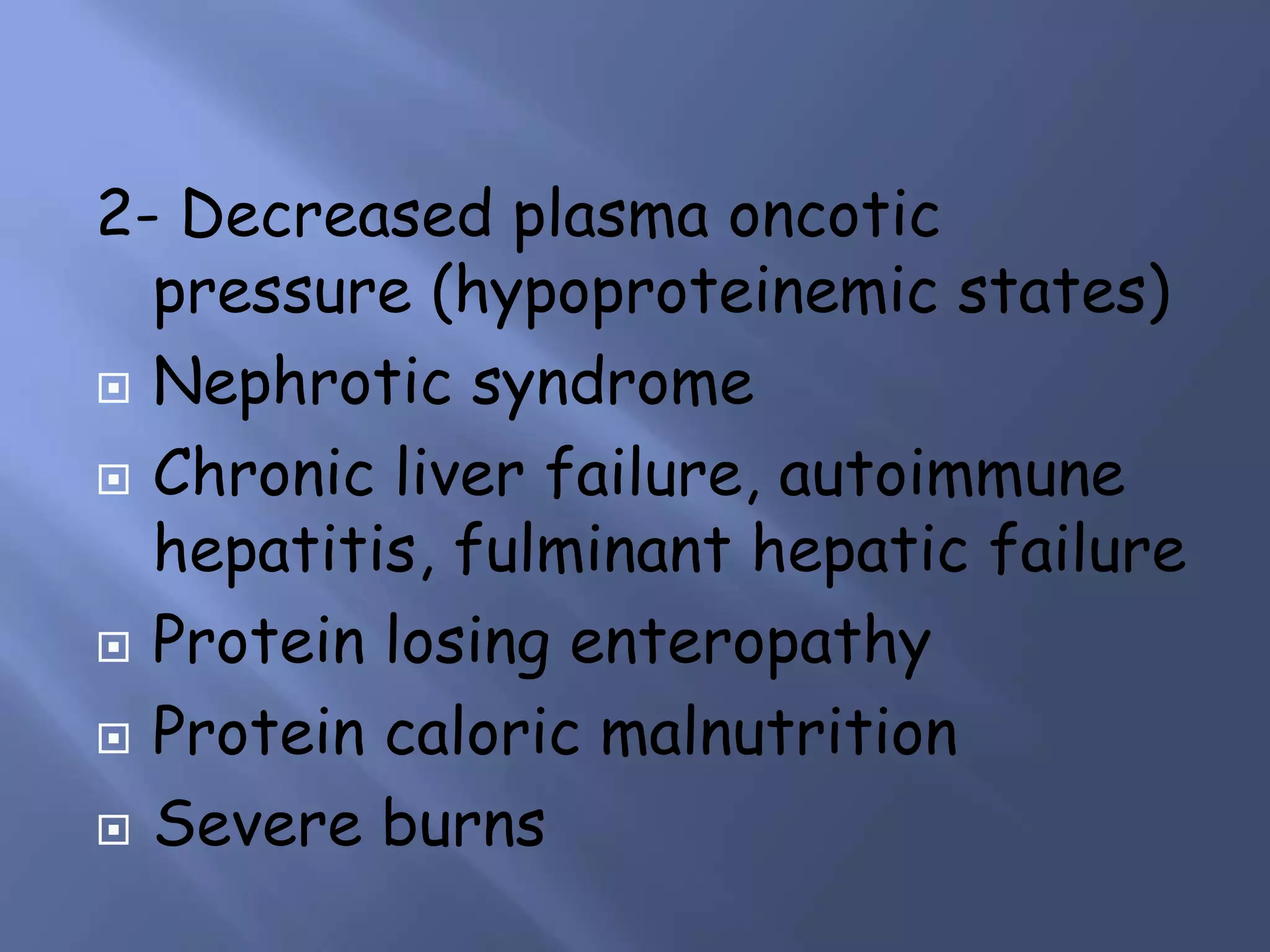
2- Decreased plasma oncotic
pressure (hypoproteinemic states)
 Nephrotic syndrome
 Chronic liver failure, autoimmune
hepatitis, fulminant hepatic failure
 Protein losing enteropathy
 Protein caloric malnutrition
 Severe burns
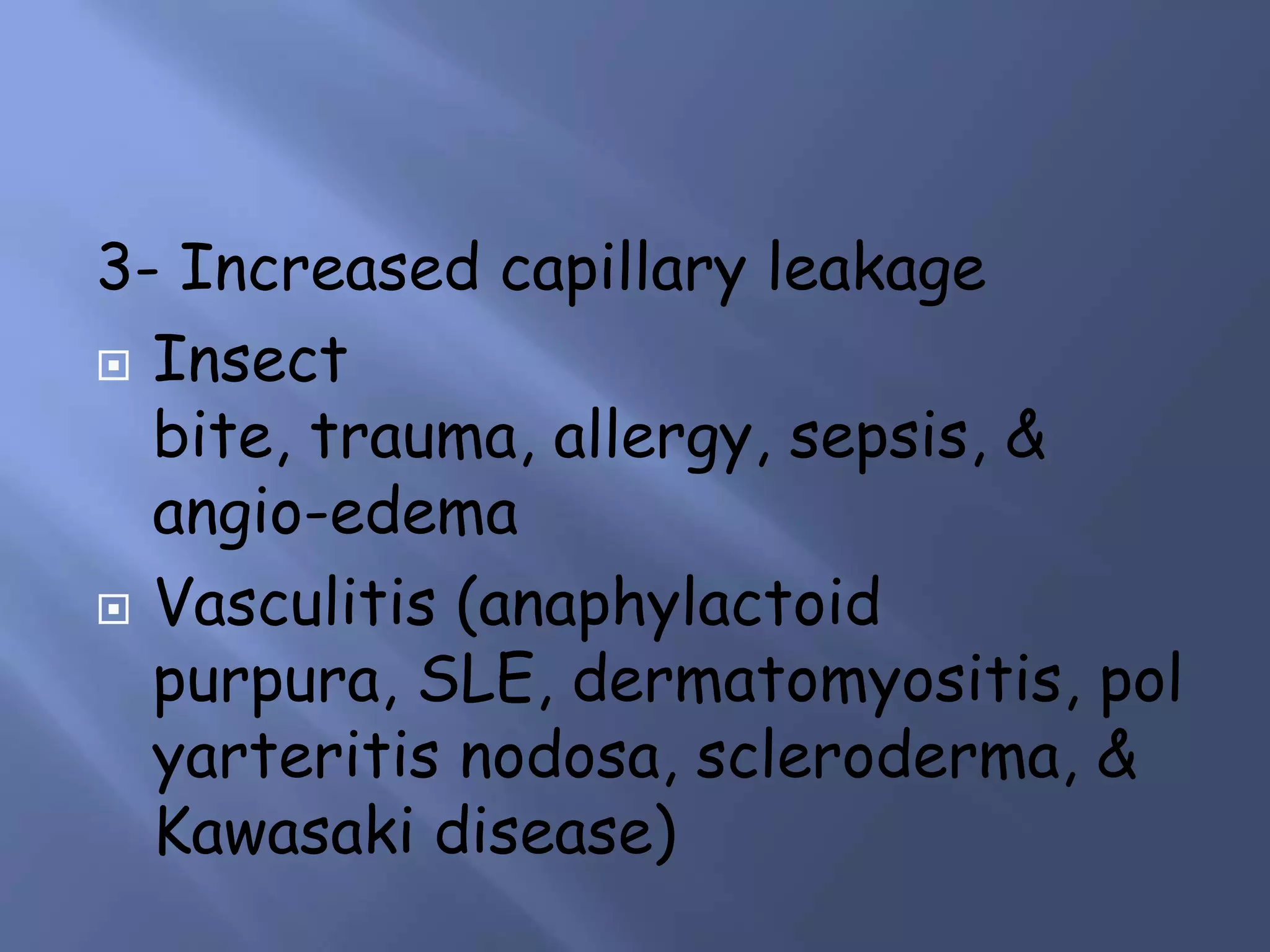
3- Increased capillary leakage
 Insect
bite, trauma, allergy, sepsis, &
angio-edema
 Vasculitis (anaphylactoid
purpura, SLE, dermatomyositis, pol
yarteritis nodosa, scleroderma, &
Kawasaki disease)
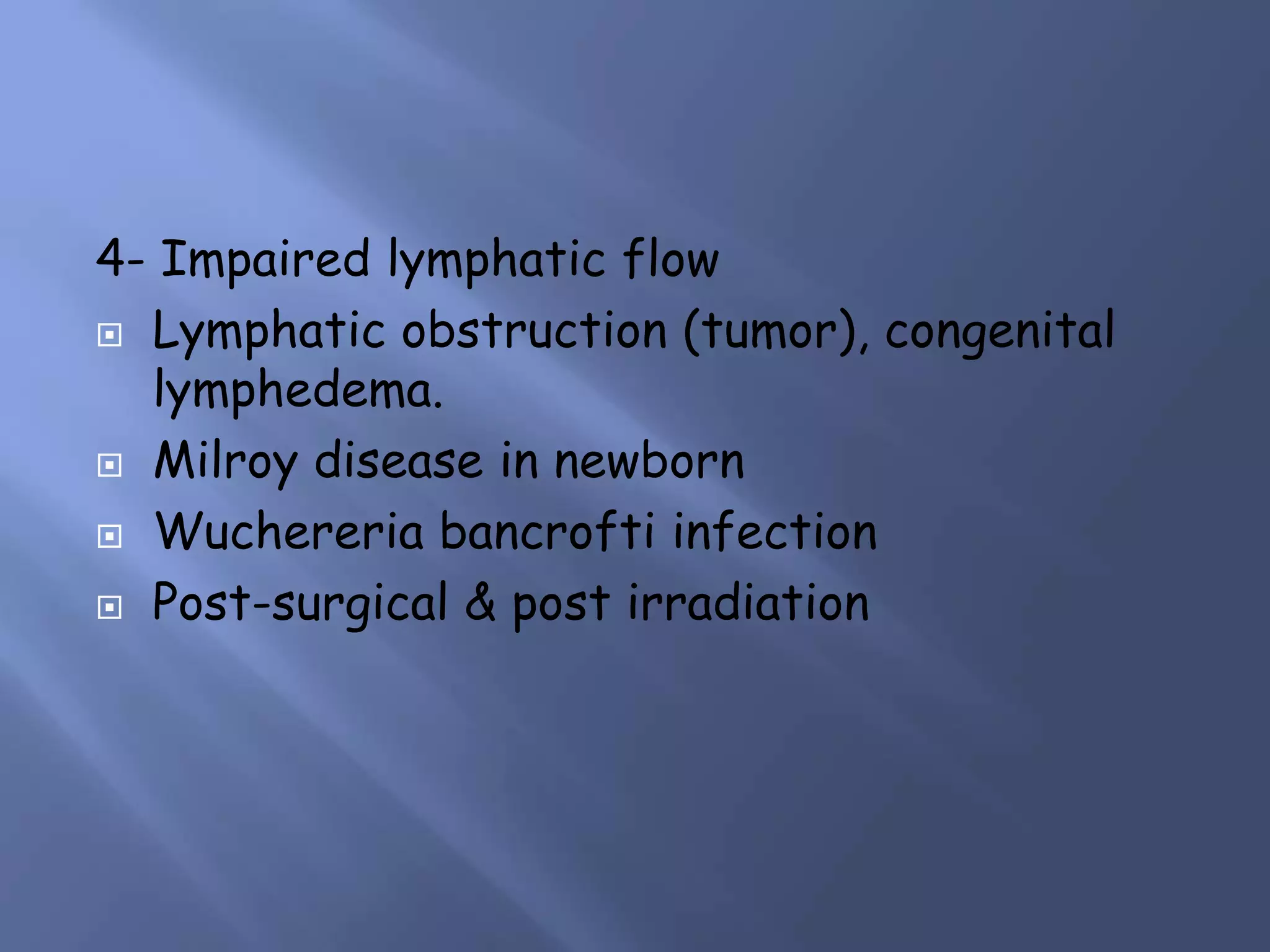
4- Impaired lymphatic flow
 Lymphatic obstruction (tumor), congenital
lymphedema.
 Milroy disease in newborn
 Wuchereria bancrofti infection
 Post-surgical & post irradiation
5- Impaired venous flow
 Hepatic venous outflow obstruction,
superior/inferior vena cava obstruction
6- Others
 Myxedema, Hydrops fetalis, drugs like
NSAIDs, steroids, vasodilators etc…






Confirm edema
Assess distribution of edema:
generalized VS localized edema
Detailed history and physical
examination to assess severity,
associated complications, and
underlying cause of edema.




Assess distribution of edema

generalized VS localized edema
In generalized edema look for
pretibial, sacral, scrotal, vulval
edema other than periorbital
edema and ascites.








Localized edema
Hx. Of trauma, insect bite, or
infection
Peripheral lymphedema in female
newborn  to exclude Turner’s
syndrome
Acute edema of the face and neck 
to exclude superior vena cava
obstruction syndrome.
B- Generalized edema
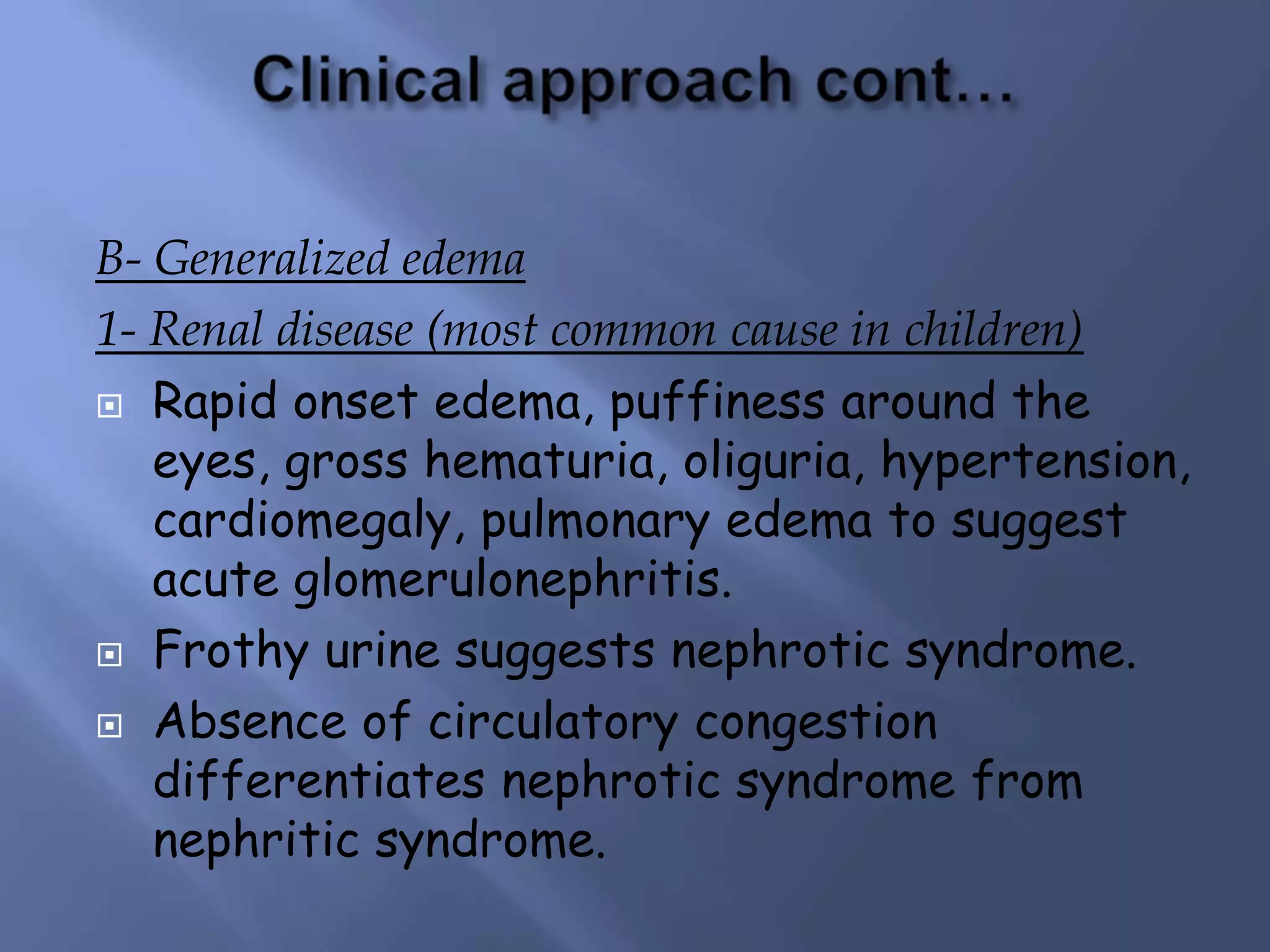
1- Renal disease (most common cause in children)
 Rapid onset edema, puffiness around the
eyes, gross hematuria, oliguria, hypertension,
cardiomegaly, pulmonary edema to suggest
acute glomerulonephritis.
 Frothy urine suggests nephrotic syndrome.
 Absence of circulatory congestion
differentiates nephrotic syndrome from
nephritic syndrome.






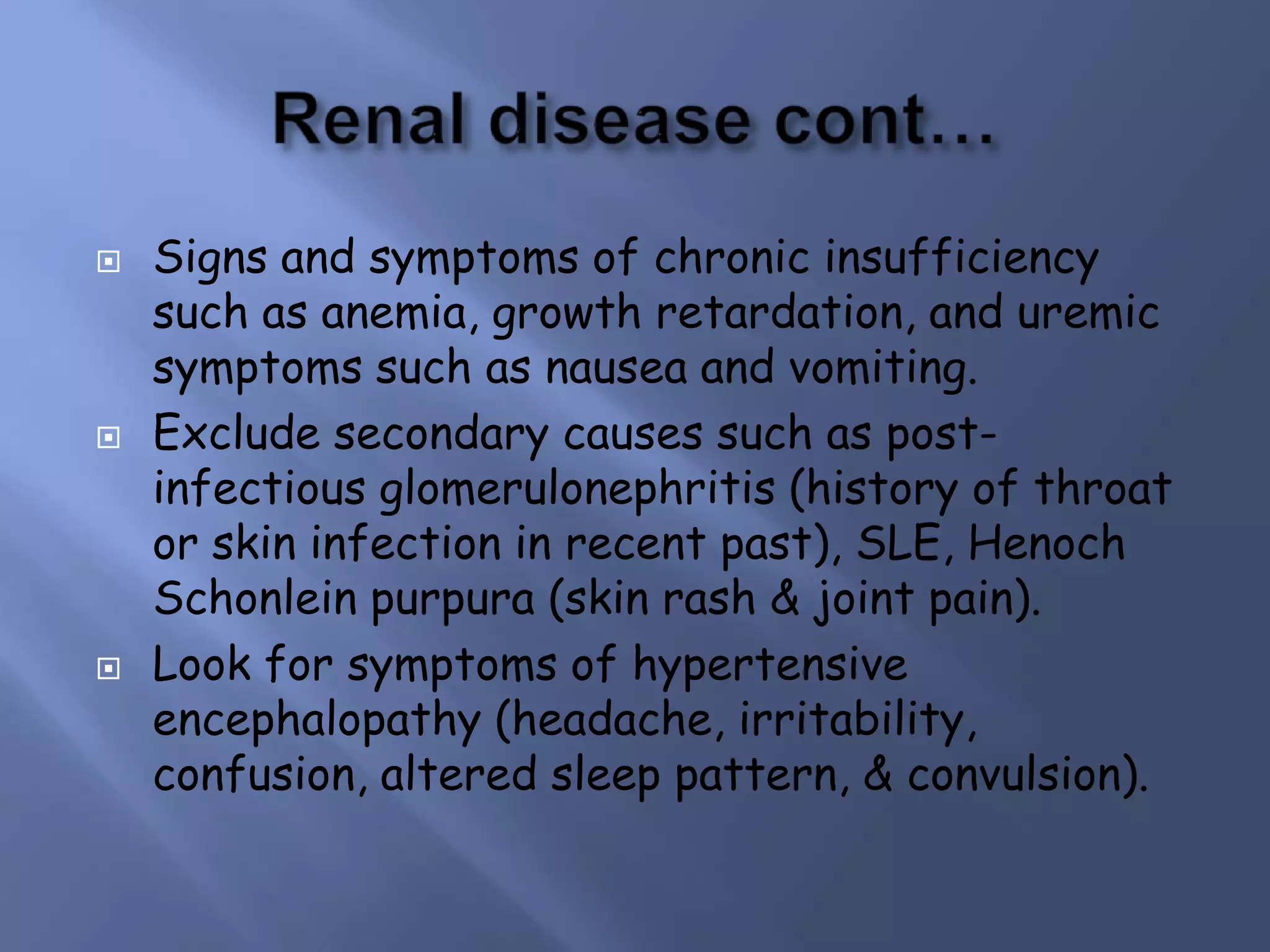
Signs and symptoms of chronic insufficiency
such as anemia, growth retardation, and uremic
symptoms such as nausea and vomiting.
Exclude secondary causes such as postinfectious glomerulonephritis (history of throat
or skin infection in recent past), SLE, Henoch
Schonlein purpura (skin rash & joint pain).
Look for symptoms of hypertensive
encephalopathy (headache, irritability,
confusion, altered sleep pattern, & convulsion).








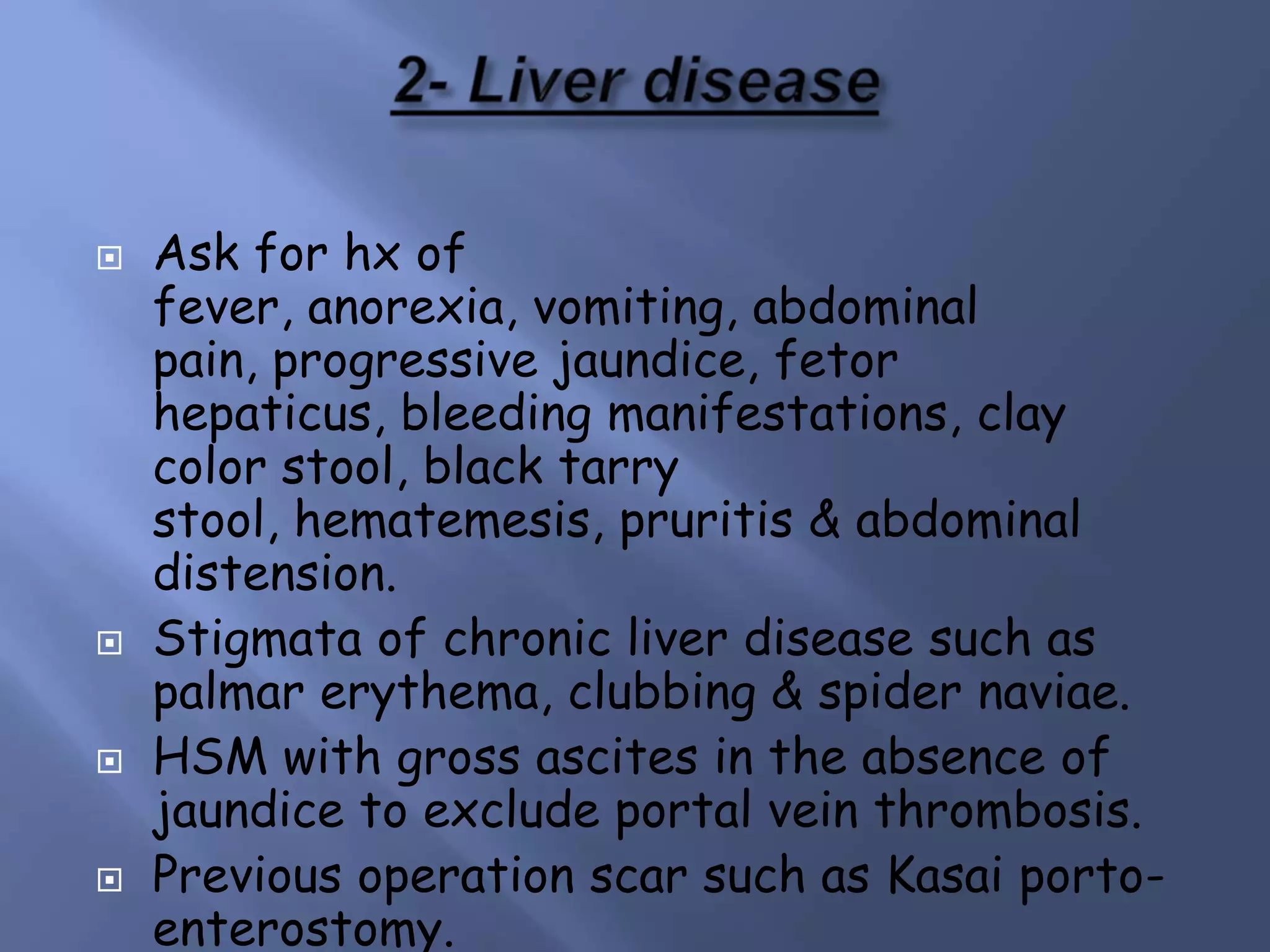
Ask for hx of
fever, anorexia, vomiting, abdominal
pain, progressive jaundice, fetor
hepaticus, bleeding manifestations, clay
color stool, black tarry
stool, hematemesis, pruritis & abdominal
distension.
Stigmata of chronic liver disease such as
palmar erythema, clubbing & spider naviae.
HSM with gross ascites in the absence of
jaundice to exclude portal vein thrombosis.
Previous operation scar such as Kasai portoenterostomy.








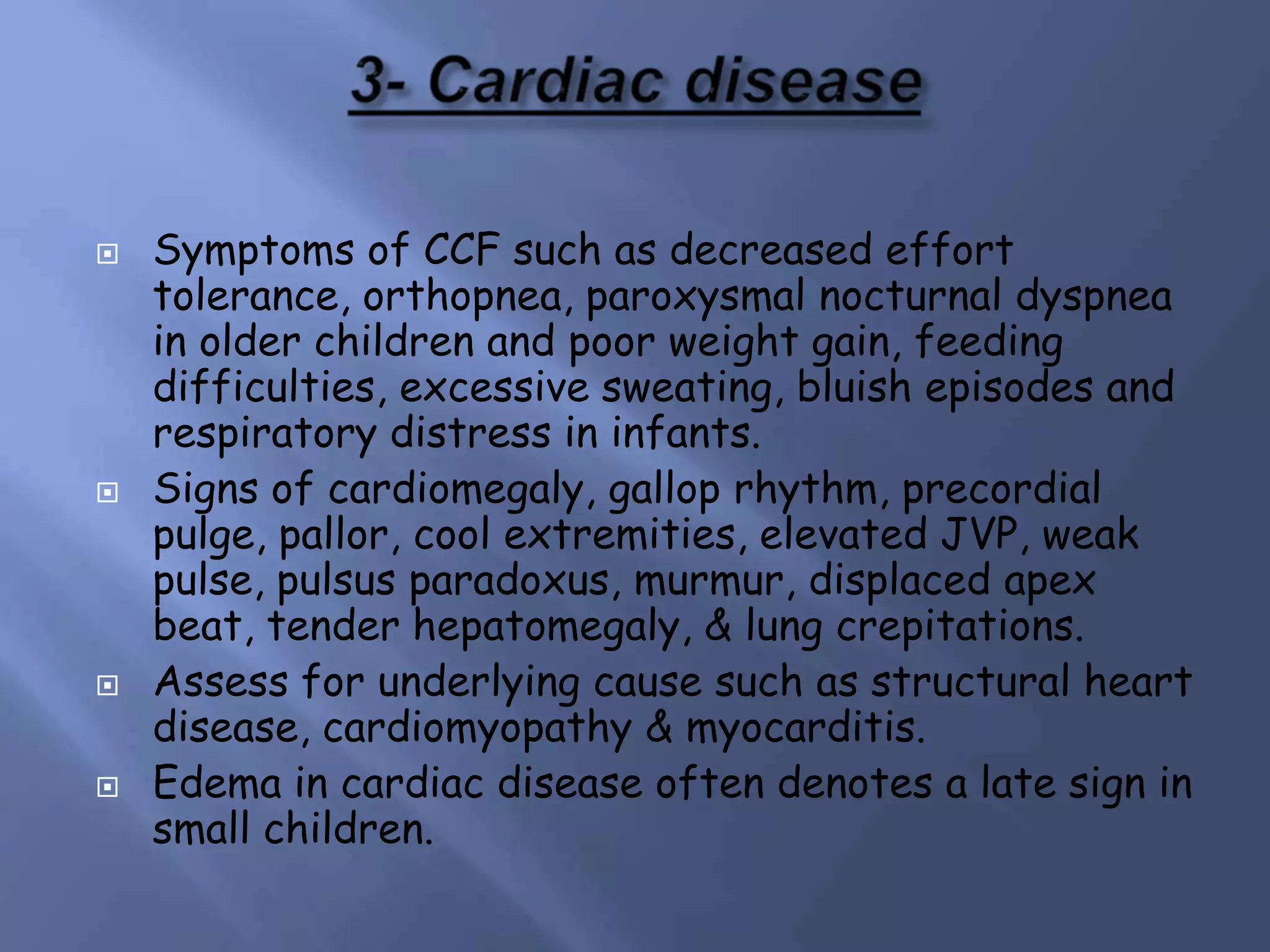
Symptoms of CCF such as decreased effort
tolerance, orthopnea, paroxysmal nocturnal dyspnea
in older children and poor weight gain, feeding
difficulties, excessive sweating, bluish episodes and
respiratory distress in infants.
Signs of cardiomegaly, gallop rhythm, precordial
pulge, pallor, cool extremities, elevated JVP, weak
pulse, pulsus paradoxus, murmur, displaced apex
beat, tender hepatomegaly, & lung crepitations.
Assess for underlying cause such as structural heart
disease, cardiomyopathy & myocarditis.
Edema in cardiac disease often denotes a late sign in
small children.








Hx of chronic diarrhea, steatorrhea, foul
stools, FTT, repeated infections &
redcurrant abdominal pain.
Detailed dietary history for possible cow
milk allergy and gluten hypersensitivity
Assess for complications of anemia,
malnutrition and vitamin deficiency
This condition should be considered in every
case of unexplained edema (even without
diarrhea) especially when it is associated
with hypoproteinemia.




Hx of anorexia, lethargy, diarrhea, vomiting,
FTT, susceptibility to infections, night
blindness, inadequate or inappropriate
dietary hx especially prolonged lack of
protein.
In examination; growth parameters, pallor,
apathy, irritability, skin changes, hair
changes, & signs & symptoms of
micronutrient deficiency.






Edema usually mild, commonly periorbital.
Hx of allergen exposure such as medications,
animal dander, food preservatives and
coloring.
Associated rashes such as urticarial.
Assess for Steven-Johnson reaction.
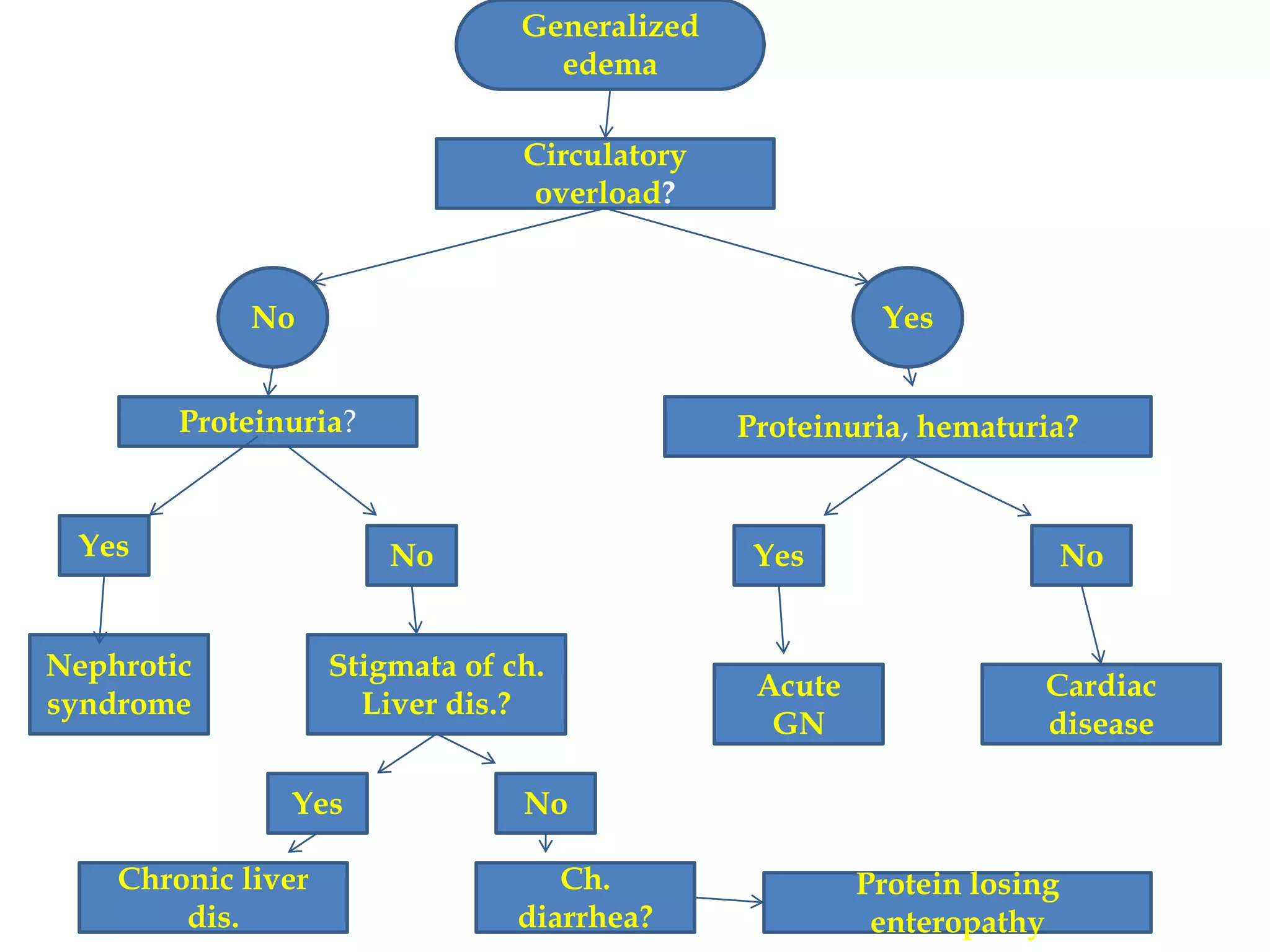
Generalized
edema
Circulatory
overload?

No

Yes

Proteinuria?

Proteinuria, hematuria?

Yes

No

Nephrotic
syndrome

Yes

Stigmata of ch.
Liver dis.?
Yes

Chronic liver
dis.

Acute
GN

No

Cardiac
disease

No
Ch.
diarrhea?

Protein losing
enteropathy
A- Urine dipstick & microscopy
 Proteinuria, hematuria, & casts are
indicative of renal disease

B- RFT
 Raised serum urea & creatinine are
indicative of renal disease
C- Full blood count
 Normochromic Normocytic anemia
suggest chronic disease
 Hypochromic microcytic anemia
suggest IDA from occult GIT bleeding
e.g. cow’s milk allergy
 Megaloblastic anemia suggests B12 and
folate deficiency from small bowel
disease
D- LFT
 Hypoalbuminemia in the absence of
circulatory overload suggests
hypoproteinemic states
 Hyperbilirubinemia and elevated liver
enzymes suggests liver disease
E- Chest X-ray and ECG
 Cardiomegaly with prominent perihilar
vascular markings/upper lobe diversion
and left ventricular hypertrophy
confirms intravascular fluid overload







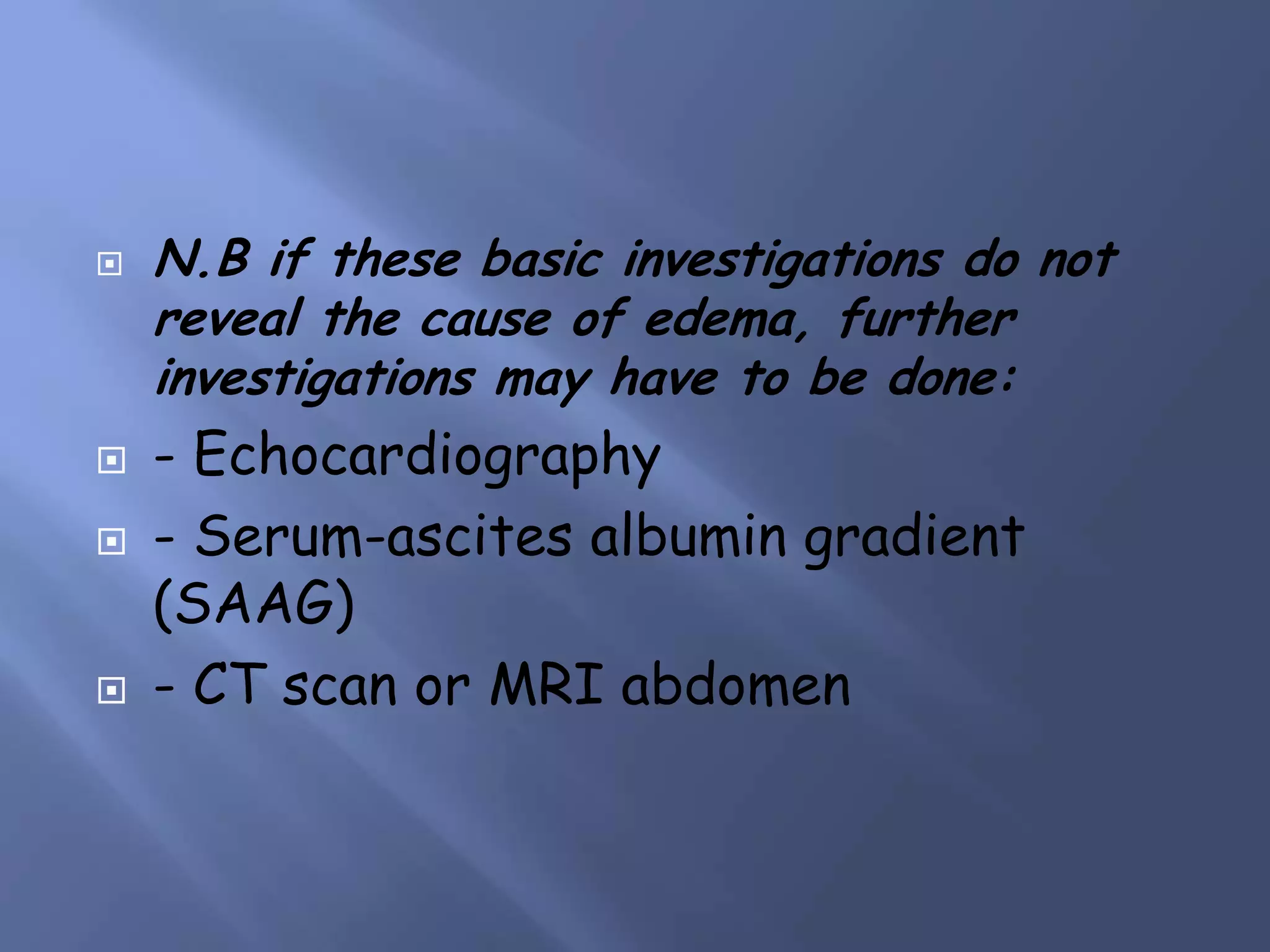
N.B if these basic investigations do not
reveal the cause of edema, further
investigations may have to be done:

- Echocardiography
- Serum-ascites albumin gradient
(SAAG)
- CT scan or MRI abdomen
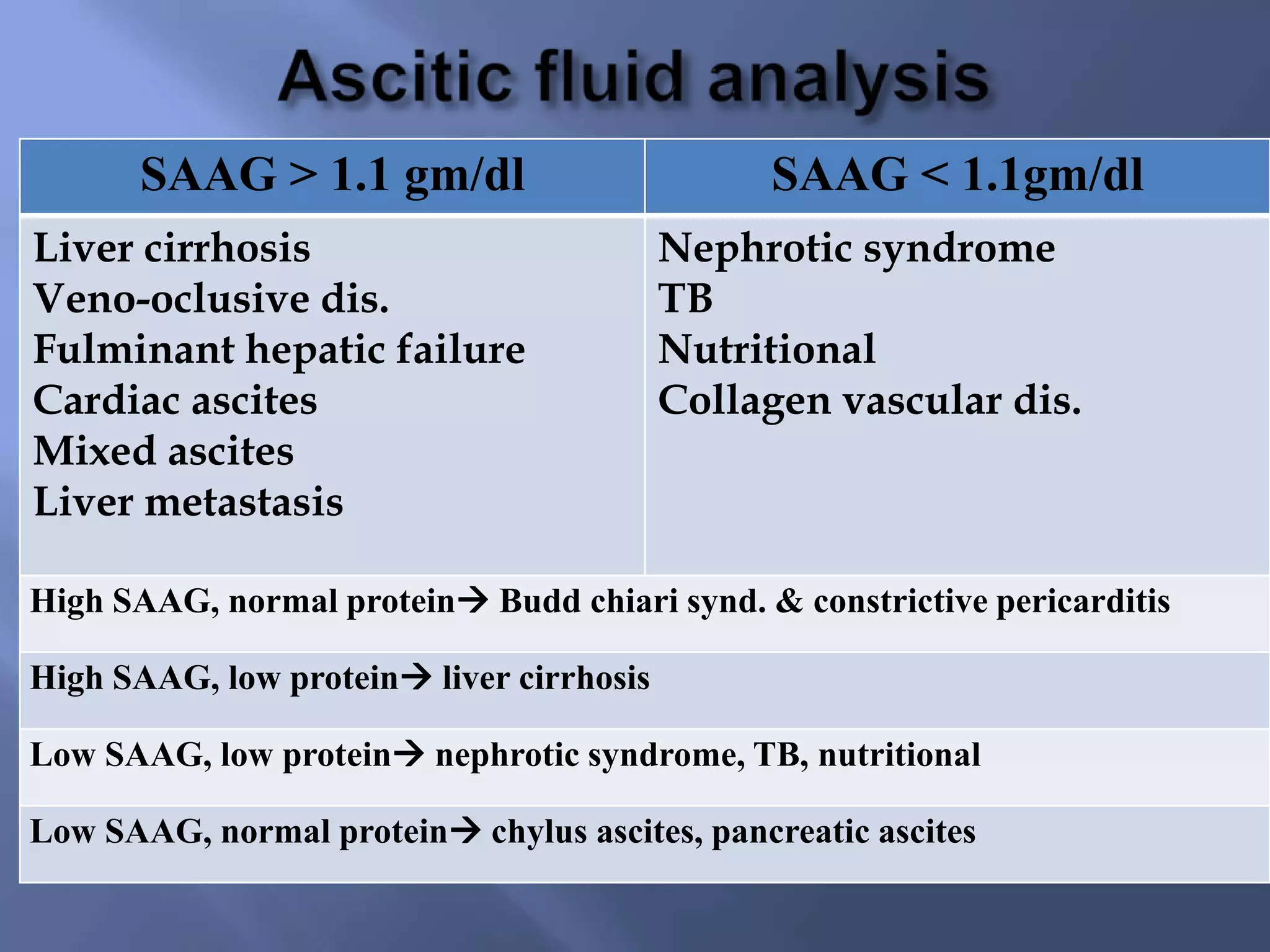
SAAG > 1.1 gm/dl
Liver cirrhosis
Veno-oclusive dis.
Fulminant hepatic failure
Cardiac ascites
Mixed ascites
Liver metastasis

SAAG < 1.1gm/dl
Nephrotic syndrome
TB
Nutritional
Collagen vascular dis.

High SAAG, normal protein Budd chiari synd. & constrictive pericarditis

High SAAG, low protein liver cirrhosis
Low SAAG, low protein nephrotic syndrome, TB, nutritional
Low SAAG, normal protein chylus ascites, pancreatic ascites
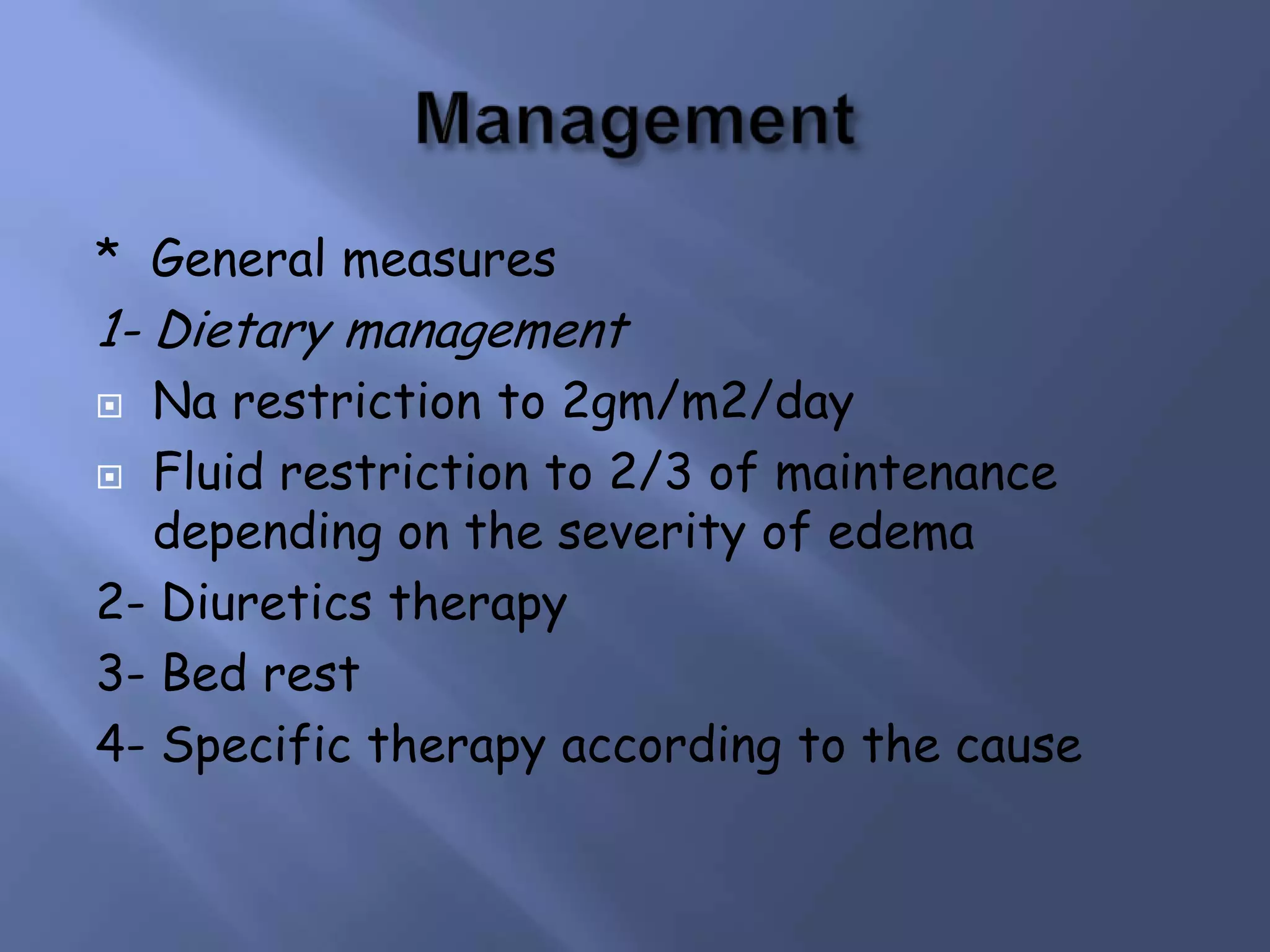
* General measures

1- Dietary management
Na restriction to 2gm/m2/day
 Fluid restriction to 2/3 of maintenance
depending on the severity of edema
2- Diuretics therapy
3- Bed rest
4- Specific therapy according to the cause









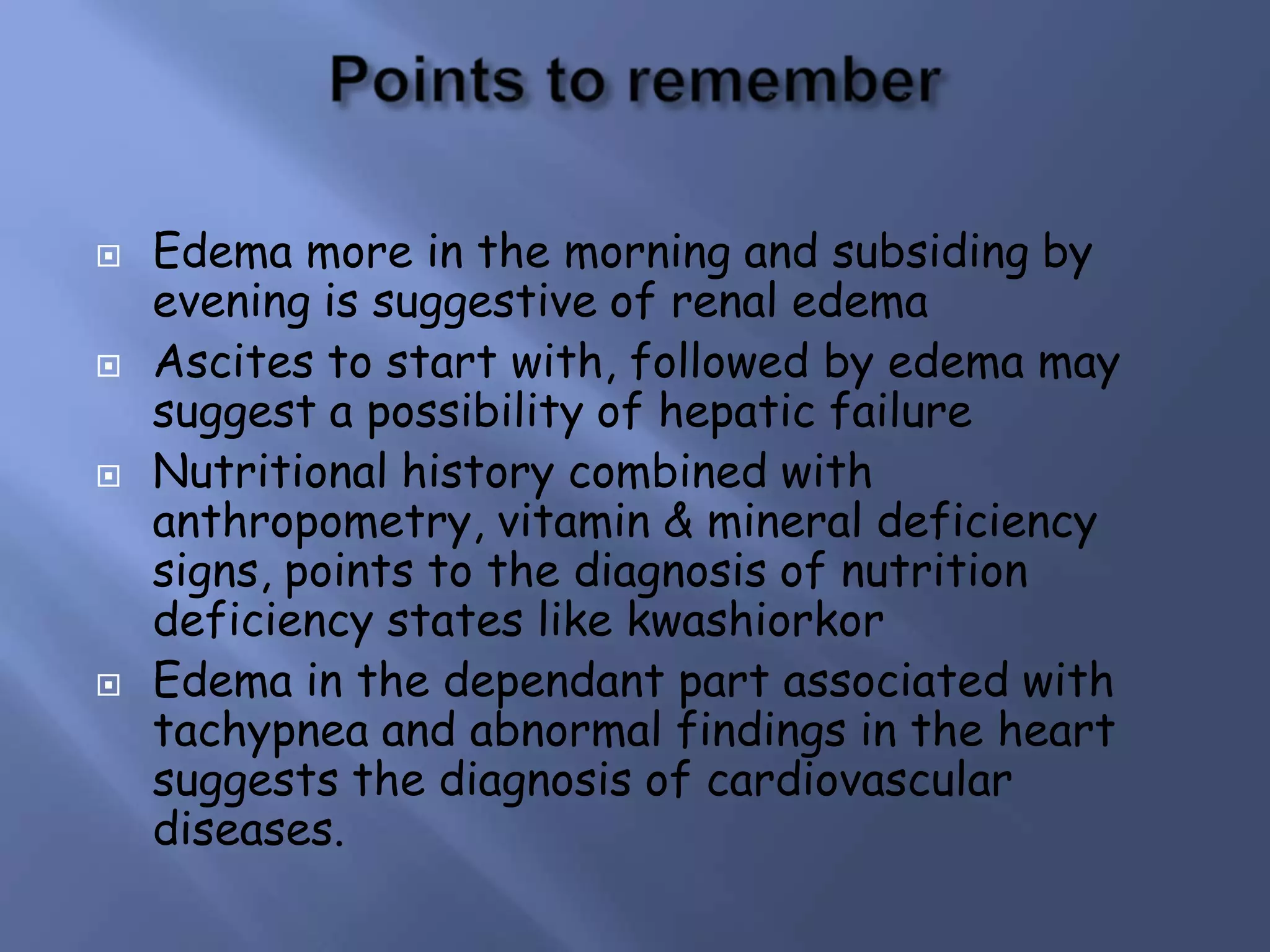
Edema more in the morning and subsiding by
evening is suggestive of renal edema
Ascites to start with, followed by edema may
suggest a possibility of hepatic failure
Nutritional history combined with
anthropometry, vitamin & mineral deficiency
signs, points to the diagnosis of nutrition
deficiency states like kwashiorkor
Edema in the dependant part associated with
tachypnea and abnormal findings in the heart
suggests the diagnosis of cardiovascular
diseases.
Approach to child with generalized edema

Approach to child with generalized edema

  • 1.
    December, 9th,2012 By :Ahmed Bahamid Pediatric resident @ Alsabeen hospital
  • 2.
    - - - 19 months-old Yemeniboy from Dhamar C/O; Generalized body swelling months 3
  • 3.
    - History ofpresent illness started - 3 months earlier - Gradual onset swelling - 1st in the eyelids (puffy eyes) & LL - Progressive in course - Seen in private clinics several times but no settled dx where made - Ŕ by diuretics with temporary relief of edema.
  • 4.
    - - The swelling eventuallyinvolve the entire body Face + abdomen + genetalia + LL Last 2 weeks Yellowish discoloration of the sclera Associated with low-grade fever
  • 5.
     - - - - Positive hx &Negative hx General; decreased activity, poor feeding, & Wt gain Skin; yellowish discoloration, itching of the scalp + hands + umbilicus, Cardiac; sweating and tiring with feeding, dyspnea started @ 3 months of age Respiratory; prolonged cough started @ 3 months of age and subsided with the start of recent complain
  • 6.
    - - - GIT; anorexia, nausea,vomiting, No diarrhea with normal daily bowel motion and normal color. Genito-urinary; No difficulty with urination, No hematuria, No frothy urine, ONLY decreased urine output CNS; only irritability, NO abnormal movement, NO fits, or seizures, or weakness
  • 7.
    - Hematological; onlypallor, NO hx of skin rash, bruises or bleeding - Musculoskeletal; No joint swelling or pain
  • 8.
    - - - No hx ofsimilar attack Hx of fever with skin rash twice @ age of 3 months & 6 months Hx of prolonged cough since 3 months of age treated several times @ private clinics as chest infections but no admissions No hx of operations, trauma, allergy or ch. Medical diseases
  • 9.
    - - - Product of FT,NSVD @ hospital. Pregnancy with antenatal care with no major problems No perinatal complications Average birth weight No cyanosis or jaundice, NO neonatal resuscitation or admissions
  • 10.
    - - - Exclusive breast feedingin 1st 3 months Bottle feeding started @ 4 months of age with adequate amount & concentration(fabimilk formula 1 & 2) besides breast feeding ( till 9 months) Formula changed to Nido milk & 10 months of age Weaning started @ 8 months of age with rice, cheese, & biscuits.
  • 11.
    - - Immunization hx up-to-dateexcept the last measles dose Developmental hx appropriate as his previous siblings (but motor development decreased markedly with the recent disease)
  • 12.
    55y 18y 17y 2y 33y 14y 12y 11y 8y Father (DM &HTN) & smoker Mother ( 1 abortion, No still births 3rd girl sibling died @ 2y of age from ch. GE + vomiting with rickets Other siblings healthy, no similar condition or renal disease in the family 19 m
  • 13.
    • • • • - Conscious, irritable, lookedill, mild RD Afebrile, pallor & jaundiced Generalized edema (face + abdomen + LL + genitalia) Vital signs Heart rate (116 bpm) RR (48 cpm) BP (80/40 mmHg) Temp. (36.3C, axillary)
  • 14.
    - Growth • Weight11 kg on admission (50th percentile) now 11.6 kg • Length 77cm (10th percentile) • HC 48.5 cm (75th percentile)
  • 19.
    • • • - HEENT Head; Closed Ant.Fontanelle Eyes; yellowish sclera + pale conjunctiva, puffy eyes ENT; NAD Neck; diffuse swelling of soft tissues but no congested neck veins., no significant LN enlargement
  • 20.
    Chest: normal shape,good air entry bilaterally, normal vesicular breathing, no added sounds. CVS: not visible apex beat?? & barely palpable, S1 + S2+ distant heart sounds - pulses: rapid weak pulses, equal - Capillary refill 4 seconds with cold extremities
  • 21.
    - Abdomen: 1- inspection;distension, no scars or dilated veins, everted slit shape umbilicus 2- palpation; tense, no tenderness, wall edema, hepatomegaly (liver 12 cm BCM, span 15 cm) firm-to-hard in consistency, not tender, round border. 3- percussion: +ve shifting dullness & transmitted thrill. 4- auscultation: +ve bowel sounds
  • 22.
    - - - - Genetalia: scrotal swellingwith +ve transillumination Back: pitting sacral edema CNS; NAD LL; petting edema, level just below the knee LN; no significant LN enlargement MSS; no joint swelling or tenderness
  • 23.
    - - - - 19 months-old-boy Tired andsweating on feeding started @ 3 months of age Recurrent chest infection started @ 3 months of age Swelling started periorbital & in LL, then became generalized (last 3 months) Jaundice & low-grade fever (last 2 weeks) O/E; looks ill, mild RD, generalized edema + huge hepatomegaly + ascites + pallor + mild jaundice
  • 24.
    1- Renal - Nephroticsyndrome - Acute GN 2- Hepatic - ch. Active hepatitis (viral infection) - metabolic ( Gaucher disease, Nieman-pick disease, Wilson disease, GSD type IV) - chronic liver failure - malignancy (primary/secondary)
  • 25.
    3- cardiac - CCF -constrictive pericarditis - restrictive cardiomyopathy - tricuspid valve disease 4- others - veno-occlusive disease - Budd-Chiari syndrome - superior vena cava thrombosis - cystic fibrosis
  • 26.
    - CBC; - Hb% 7.2g/dl - PCV 22 - WBC 12.8 - Neut 50 % - Lymph 42 % - Mono 4 % - Eosin 4 % - Platelets 134,000
  • 27.
    - CRP: +ve (2+) - RFT:(N) urea 16 mg/dl, creatinine 0.6 mg/dl - LFT: T.protein 5.1 g/dl, albumin 2.7 g/dl, TSB 6.7 mg/dl, SGOT 72 U/L RBS: 78mg/dl Electrolytes: Na 112 mmol/l, K 5.2 mmol/l, Ca 6.7 -
  • 28.
    - Urine analysis: Normal - ChestX-ray: globular cardiac shadow enlargement -
  • 29.
    1- cardiac - CCF -restrictive cardiomyopathy - constrictive pericarditis 2- hepatic - ch. Active hepatitis (viral infection) - metabolic ( Gaucher disease, Nieman-pick disease, Wilson disease, GSD type IV) - chronic liver failure - malignancy (primary/secondary)
  • 30.
    3- Renal - Nephroticsyndrome - Acute GN 4- others - veno-occlusive disease - Budd-Chiari syndrome - superior vena cava thrombosis - cystic fibrosis
  • 31.
    - Marked hepatomegaly,smooth surface, no focal lesion - Signs of dilated IVC & hepatic veins - Bilateral pleural effusion - Partial collapse of Rt. Lower lobe - Marked pericardial effusion - Marked ascites
  • 32.
    - - Markedly enlarged liver Retrogradefilling of dilated IVC & hepatic veins, with no signs of thrombotic changes or obstructing agent, reflecting passive hepatic congestion related to cardiac cause Large amount of ascites Prominent dilatation of both atrium with relatively small ventricles & mild to moderate Rt. Sided pleural effusion
  • 33.
  • 34.
    Picture of restrictivecardiomyopathy with congestive heart failure
  • 35.
    - Ampicillin , IV500mg QID Captopril, oral, 6.25 mg BID Lasix, IV, 10 mg BID Vitamin K, IV, 5mg single dose - Definitive treatment: heart transplantation -
  • 36.
    Definition & background Pathophysiology  Causes  Clinical approach  investigations  Management of edema 
  • 37.
     Accumulation of excessinterstitial fluid and could be localized or generalized.   Edema results from either excess salt & water retention or from increased transfer of fluid across the capillary membranes.   Understanding of the Pathophysiology of edema is important in the clinical approach and management of this condition in children.
  • 38.
    Distribution: 1- Anasarca; gross,generalized edema with profound subcutaneous tissue swelling. 2- Localized edema; does not reflect a sustained impairment in the ability to maintain normal Na balance. 3- Special forms of fluid collections in the different body cavities  Hydrothorax (in pleural cavity)  Hydropericardium (in pericardial cavity)  Ascites (in peritoneal cavity) 
  • 39.
      Generalized edema canarise via two different processes; Reduced intravascular volume leading to Na & water retention → under-filling edema   Na & water retention secondary to expanded plasma & intracellular tissue fluid volume accompanied by lack of natriuresis → overfilling edema.
  • 40.
        Mechanism of under-fillingedema Initiated with ↑↑ glomerular permeability to albumin → albuminuria → hypoalbuminemia → ↓↓ plasma oncotic pressure → movement of water from intravascular space to the interstitium. The contracted intravascular volume→↑↑ RAA activity +↑↑ SNS activity + ADH release These factors→ water & Na retention→ further ↓↓ plasma oncotic pressure→ setting up a vicious circle
  • 41.
       Mechanism of over-fillingedema Resulting from expanded extracellular volume that results from primary renal Na retention, possibly secondary to the renal damage. In over-filling edema the RAA system & SNS & ADH secretion are depressed.
  • 42.
          Causes of edemaaccording to physiological changes: Increased hydrostatic pressure Decreased plasma oncotic pressure (hypoproteinemic states) Increased capillary leakage Impaired lymphatic flow Impaired venous flow
  • 43.
    1- Increased hydrostaticpressure  Acute nephritis syndrome  Acute tubular necrosis  Cardiac failure-low output (CCF)  Cardiac failure-high output (hyperthyroidism, anemia, beriberi)  Arteriovenous fistula  Acute and chronic renal failure  Constrictive Pericarditis & restrictive cardiomyopathy
  • 44.
    2- Decreased plasmaoncotic pressure (hypoproteinemic states)  Nephrotic syndrome  Chronic liver failure, autoimmune hepatitis, fulminant hepatic failure  Protein losing enteropathy  Protein caloric malnutrition  Severe burns
  • 45.
    3- Increased capillaryleakage  Insect bite, trauma, allergy, sepsis, & angio-edema  Vasculitis (anaphylactoid purpura, SLE, dermatomyositis, pol yarteritis nodosa, scleroderma, & Kawasaki disease)
  • 46.
    4- Impaired lymphaticflow  Lymphatic obstruction (tumor), congenital lymphedema.  Milroy disease in newborn  Wuchereria bancrofti infection  Post-surgical & post irradiation
  • 47.
    5- Impaired venousflow  Hepatic venous outflow obstruction, superior/inferior vena cava obstruction 6- Others  Myxedema, Hydrops fetalis, drugs like NSAIDs, steroids, vasodilators etc…
  • 48.
       Confirm edema Assess distributionof edema: generalized VS localized edema Detailed history and physical examination to assess severity, associated complications, and underlying cause of edema.
  • 49.
      Assess distribution ofedema generalized VS localized edema In generalized edema look for pretibial, sacral, scrotal, vulval edema other than periorbital edema and ascites.
  • 50.
        Localized edema Hx. Oftrauma, insect bite, or infection Peripheral lymphedema in female newborn  to exclude Turner’s syndrome Acute edema of the face and neck  to exclude superior vena cava obstruction syndrome.
  • 51.
    B- Generalized edema 1-Renal disease (most common cause in children)  Rapid onset edema, puffiness around the eyes, gross hematuria, oliguria, hypertension, cardiomegaly, pulmonary edema to suggest acute glomerulonephritis.  Frothy urine suggests nephrotic syndrome.  Absence of circulatory congestion differentiates nephrotic syndrome from nephritic syndrome.
  • 52.
       Signs and symptomsof chronic insufficiency such as anemia, growth retardation, and uremic symptoms such as nausea and vomiting. Exclude secondary causes such as postinfectious glomerulonephritis (history of throat or skin infection in recent past), SLE, Henoch Schonlein purpura (skin rash & joint pain). Look for symptoms of hypertensive encephalopathy (headache, irritability, confusion, altered sleep pattern, & convulsion).
  • 53.
        Ask for hxof fever, anorexia, vomiting, abdominal pain, progressive jaundice, fetor hepaticus, bleeding manifestations, clay color stool, black tarry stool, hematemesis, pruritis & abdominal distension. Stigmata of chronic liver disease such as palmar erythema, clubbing & spider naviae. HSM with gross ascites in the absence of jaundice to exclude portal vein thrombosis. Previous operation scar such as Kasai portoenterostomy.
  • 54.
        Symptoms of CCFsuch as decreased effort tolerance, orthopnea, paroxysmal nocturnal dyspnea in older children and poor weight gain, feeding difficulties, excessive sweating, bluish episodes and respiratory distress in infants. Signs of cardiomegaly, gallop rhythm, precordial pulge, pallor, cool extremities, elevated JVP, weak pulse, pulsus paradoxus, murmur, displaced apex beat, tender hepatomegaly, & lung crepitations. Assess for underlying cause such as structural heart disease, cardiomyopathy & myocarditis. Edema in cardiac disease often denotes a late sign in small children.
  • 55.
        Hx of chronicdiarrhea, steatorrhea, foul stools, FTT, repeated infections & redcurrant abdominal pain. Detailed dietary history for possible cow milk allergy and gluten hypersensitivity Assess for complications of anemia, malnutrition and vitamin deficiency This condition should be considered in every case of unexplained edema (even without diarrhea) especially when it is associated with hypoproteinemia.
  • 56.
      Hx of anorexia,lethargy, diarrhea, vomiting, FTT, susceptibility to infections, night blindness, inadequate or inappropriate dietary hx especially prolonged lack of protein. In examination; growth parameters, pallor, apathy, irritability, skin changes, hair changes, & signs & symptoms of micronutrient deficiency.
  • 57.
        Edema usually mild,commonly periorbital. Hx of allergen exposure such as medications, animal dander, food preservatives and coloring. Associated rashes such as urticarial. Assess for Steven-Johnson reaction.
  • 58.
    Generalized edema Circulatory overload? No Yes Proteinuria? Proteinuria, hematuria? Yes No Nephrotic syndrome Yes Stigmata ofch. Liver dis.? Yes Chronic liver dis. Acute GN No Cardiac disease No Ch. diarrhea? Protein losing enteropathy
  • 59.
    A- Urine dipstick& microscopy  Proteinuria, hematuria, & casts are indicative of renal disease B- RFT  Raised serum urea & creatinine are indicative of renal disease
  • 60.
    C- Full bloodcount  Normochromic Normocytic anemia suggest chronic disease  Hypochromic microcytic anemia suggest IDA from occult GIT bleeding e.g. cow’s milk allergy  Megaloblastic anemia suggests B12 and folate deficiency from small bowel disease
  • 61.
    D- LFT  Hypoalbuminemiain the absence of circulatory overload suggests hypoproteinemic states  Hyperbilirubinemia and elevated liver enzymes suggests liver disease
  • 62.
    E- Chest X-rayand ECG  Cardiomegaly with prominent perihilar vascular markings/upper lobe diversion and left ventricular hypertrophy confirms intravascular fluid overload
  • 63.
        N.B if thesebasic investigations do not reveal the cause of edema, further investigations may have to be done: - Echocardiography - Serum-ascites albumin gradient (SAAG) - CT scan or MRI abdomen
  • 64.
    SAAG > 1.1gm/dl Liver cirrhosis Veno-oclusive dis. Fulminant hepatic failure Cardiac ascites Mixed ascites Liver metastasis SAAG < 1.1gm/dl Nephrotic syndrome TB Nutritional Collagen vascular dis. High SAAG, normal protein Budd chiari synd. & constrictive pericarditis High SAAG, low protein liver cirrhosis Low SAAG, low protein nephrotic syndrome, TB, nutritional Low SAAG, normal protein chylus ascites, pancreatic ascites
  • 65.
    * General measures 1-Dietary management Na restriction to 2gm/m2/day  Fluid restriction to 2/3 of maintenance depending on the severity of edema 2- Diuretics therapy 3- Bed rest 4- Specific therapy according to the cause 
  • 66.
        Edema more inthe morning and subsiding by evening is suggestive of renal edema Ascites to start with, followed by edema may suggest a possibility of hepatic failure Nutritional history combined with anthropometry, vitamin & mineral deficiency signs, points to the diagnosis of nutrition deficiency states like kwashiorkor Edema in the dependant part associated with tachypnea and abnormal findings in the heart suggests the diagnosis of cardiovascular diseases.