How To Approach A 
child with Bleeding 
Disorder 
DR. KAMRAN AKBAR 
PGR PEDIATRICS 
UNIT 2
Approach includes: 
History 
Clinical Examination 
Laboratory Findings
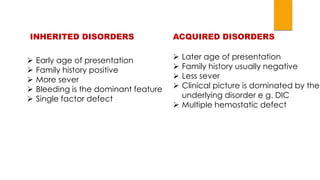
INHERITED DISORDERS ACQUIRED DISORDERS 
 Early age of presentation 
 Family history positive 
 More sever 
 Bleeding is the dominant feature 
 Single factor defect 
 Later age of presentation 
 Family history usually negative 
 Less sever 
 Clinical picture is dominated by the 
underlying disorder e g. DIC 
 Multiple hemostatic defect
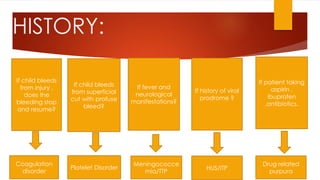
HISTORY: 
If child bleeds 
from superficial 
cut with profuse 
bleed? 
If fever and 
neurological 
manifestations? 
If history of viral 
prodrome ? 
Drug related 
purpura 
Meningococce 
mia/TTP 
If patient taking 
aspirin , 
ibuprofen 
,antibiotics. 
Coagulation 
disorder 
Platelet Disorder HUS/ITP 
If child bleeds 
from injury , 
does the 
bleeding stop 
and resume?
If patient is 
neonate , 
with history of 
traumatic 
delivery or 
low APGAR. 
If patient is 
neonate , and 
mother took 
phenytoin . 
If patient 
receive 
multiple 
blood 
transfusions in 
the past. 
If other family members 
have similar problem of 
abnormal bleeding or if 
repeated episodes of 
bleeding gums , prolonged 
bleeding as a result of 
circumcision. 
DIC 
Vitamin K 
Deficiency 
Congenital Disorder 
Post transfusional 
purpura or 
alloimunizational 
HISTORY: continued
Clinical Examination 
The examination should determine the presence of : 
 petechiae, 
 ecchymosis, 
 hematomas, 
 hemarthroses, 
or mucous membrane bleeding.
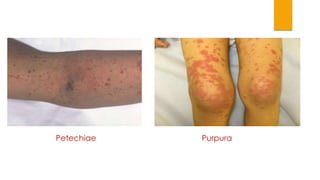
Petechiae Purpura
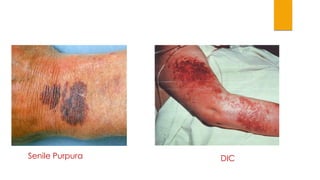
Senile Purpura DIC
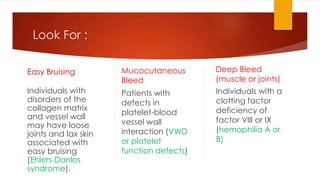
Look For : 
Easy Bruising 
Individuals with 
disorders of the 
collagen matrix 
and vessel wall 
may have loose 
joints and lax skin 
associated with 
easy bruising 
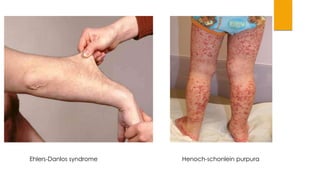
(Ehlers-Danlos 
syndrome). 
Mucocutaneous 
Bleed 
Patients with 
defects in 
platelet-blood 
vessel wall 
interaction (VWD 
or platelet 
function defects) 
Deep Bleed 
(muscle or joints) 
Individuals with a 
clotting factor 
deficiency of 
factor VIII or IX 
(hemophilia A or 
B)
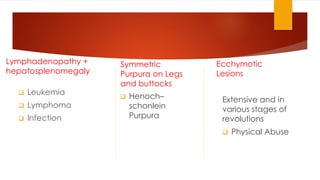
Lymphadenopathy + 
hepatosplenomegaly 
 Leukemia 
 Lymphoma 
 Infection 
Symmetric 
Purpura on Legs 
and buttocks 
 Henoch– 
schonlein 
Purpura 
Ecchymotic 
Lesions 
Extensive and in 
various stages of 
revolutions 
 Physical Abuse
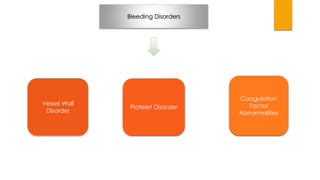
Bleeding Disorders 
Vessel Wall 
Disorder 
Platelet Disorder 
Coagulation 
Factor 
Abnormalities
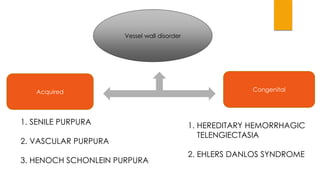
Vessel wall disorder 
Acquired Congenital 
1. SENILE PURPURA 
2. VASCULAR PURPURA 
3. HENOCH SCHONLEIN PURPURA 
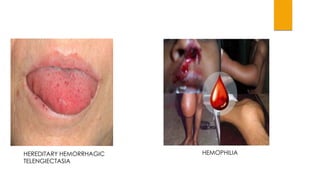
1. HEREDITARY HEMORRHAGIC 
TELENGIECTASIA 
2. EHLERS DANLOS SYNDROME
Ehlers-Danlos syndrome Henoch-schonlein purpura
HEREDITARY HEMORRHAGIC 
TELENGIECTASIA 
HEMOPHILIA
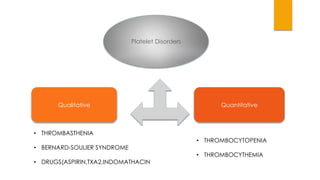
Platelet Disorders 
Qualitative Quantitative 
• THROMBASTHENIA 
• BERNARD-SOULIER SYNDROME 
• DRUGS(ASPIRIN,TXA2,INDOMATHACIN 
• THROMBOCYTOPENIA 
• THROMBOCYTHEMIA
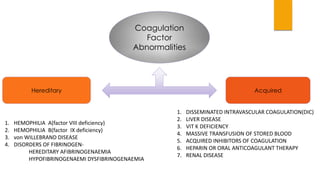
Coagulation 
Factor 
Abnormalities 
Hereditary Acquired 
1. HEMOPHILIA A(factor VIII deficiency) 
2. HEMOPHILIA B(factor IX deficiency) 
3. von WILLEBRAND DISEASE 
4. DISORDERS OF FIBRINOGEN-HEREDITARY 
AFIBRINOGENAEMIA 
HYPOFIBRINOGENAEMI DYSFIBRINOGENAEMIA 
1. DISSEMINATED INTRAVASCULAR COAGULATION(DIC) 
2. LIVER DISEASE 
3. VIT K DEFICIENCY 
4. MASSIVE TRANSFUSION OF STORED BLOOD 
5. ACQUIRED INHIBITORS OF COAGULATION 
6. HEPARIN OR ORAL ANTICOAGULANT THERAPY 
7. RENAL DISEASE
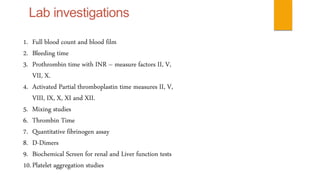
1. Full blood count and blood film 
2. Bleeding time 
3. Prothrombin time with INR – measure factors II, V, 
VII, X. 
4. Activated Partial thromboplastin time measures II, V, 
VIII, IX, X, XI and XII. 
5. Mixing studies 
6. Thrombin Time 
7. Quantitative fibrinogen assay 
8. D-Dimers 
9. Biochemical Screen for renal and Liver function tests 
10. Platelet aggregation studies
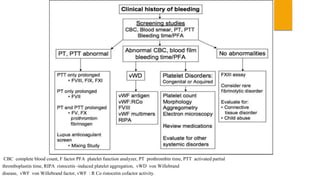
CBC complete blood count, F factor PFA platelet function analyzer, PT prothrombin time, PTT activated partial 
thromboplastin time, RIPA ristocetin -induced platelet aggregation, vWD von Willebrand 
disease, vWF von Willebrand factor, vWF : R Co ristocetin cofactor activity.
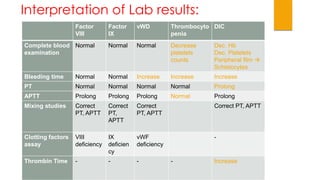
Interpretation of Lab results: 
Factor 
VIII 
Factor 
IX 
vWD Thrombocyto 
penia 
DIC 
Complete blood 
examination 
Normal Normal Normal Decrease 
platelets 
counts 
Dec. Hb 
Dec. Platelets 
Peripheral film  
Schistocytes 
Bleeding time Normal Normal Increase Increase Increase 
PT Normal Normal Normal Normal Prolong 
APTT Prolong Prolong Prolong Normal Prolong 
Mixing studies Correct 
PT, APTT 
Correct 
PT, 
APTT 
Correct 
PT, APTT 
Correct PT, APTT 
Clotting factors 
assay 
VIII 
deficiency 
IX 
deficien 
cy 
vWF 
deficiency 
- 
Thrombin Time - - - - Increase
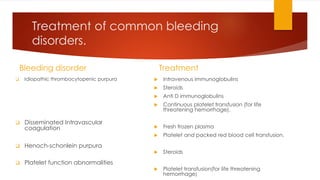
Treatment of common bleeding 
disorders. 
Bleeding disorder 
 Idiopathic thrombocytopenic purpura 
 Disseminated Intravascular 
coagulation 
 Henoch-schonlein purpura 
 Platelet function abnormalities 
Treatment 
 Intravenous immunoglobulins 
 Steroids 
 Anti D immunoglobulins 
 Continuous platelet transfusion (for life 
threatening hemorrhage). 
 Fresh frozen plasma 
 Platelet and packed red blood cell transfusion. 
 Steroids 
 Platelet transfusion(for life threatening 
hemorrhage)
Treatment of common bleeding 
disorders (continued) 
Bleeding disorder 
 Von willebrand 
disease (vWD) 
Treatment 
 Desmopressin acetate (DDAVP)
How to approach a child with bleeding disorder

How to approach a child with bleeding disorder

  • 2.
    How To ApproachA child with Bleeding Disorder DR. KAMRAN AKBAR PGR PEDIATRICS UNIT 2
  • 3.
    Approach includes: History Clinical Examination Laboratory Findings
  • 4.
    INHERITED DISORDERS ACQUIREDDISORDERS  Early age of presentation  Family history positive  More sever  Bleeding is the dominant feature  Single factor defect  Later age of presentation  Family history usually negative  Less sever  Clinical picture is dominated by the underlying disorder e g. DIC  Multiple hemostatic defect
  • 5.
    HISTORY: If childbleeds from superficial cut with profuse bleed? If fever and neurological manifestations? If history of viral prodrome ? Drug related purpura Meningococce mia/TTP If patient taking aspirin , ibuprofen ,antibiotics. Coagulation disorder Platelet Disorder HUS/ITP If child bleeds from injury , does the bleeding stop and resume?
  • 6.
    If patient is neonate , with history of traumatic delivery or low APGAR. If patient is neonate , and mother took phenytoin . If patient receive multiple blood transfusions in the past. If other family members have similar problem of abnormal bleeding or if repeated episodes of bleeding gums , prolonged bleeding as a result of circumcision. DIC Vitamin K Deficiency Congenital Disorder Post transfusional purpura or alloimunizational HISTORY: continued
  • 7.
    Clinical Examination Theexamination should determine the presence of :  petechiae,  ecchymosis,  hematomas,  hemarthroses, or mucous membrane bleeding.
  • 8.
  • 9.
  • 10.
    Look For : Easy Bruising Individuals with disorders of the collagen matrix and vessel wall may have loose joints and lax skin associated with easy bruising (Ehlers-Danlos syndrome). Mucocutaneous Bleed Patients with defects in platelet-blood vessel wall interaction (VWD or platelet function defects) Deep Bleed (muscle or joints) Individuals with a clotting factor deficiency of factor VIII or IX (hemophilia A or B)
  • 11.
    Lymphadenopathy + hepatosplenomegaly  Leukemia  Lymphoma  Infection Symmetric Purpura on Legs and buttocks  Henoch– schonlein Purpura Ecchymotic Lesions Extensive and in various stages of revolutions  Physical Abuse
  • 12.
    Bleeding Disorders VesselWall Disorder Platelet Disorder Coagulation Factor Abnormalities
  • 13.
    Vessel wall disorder Acquired Congenital 1. SENILE PURPURA 2. VASCULAR PURPURA 3. HENOCH SCHONLEIN PURPURA 1. HEREDITARY HEMORRHAGIC TELENGIECTASIA 2. EHLERS DANLOS SYNDROME
  • 14.
  • 15.
  • 16.
    Platelet Disorders QualitativeQuantitative • THROMBASTHENIA • BERNARD-SOULIER SYNDROME • DRUGS(ASPIRIN,TXA2,INDOMATHACIN • THROMBOCYTOPENIA • THROMBOCYTHEMIA
  • 17.
    Coagulation Factor Abnormalities Hereditary Acquired 1. HEMOPHILIA A(factor VIII deficiency) 2. HEMOPHILIA B(factor IX deficiency) 3. von WILLEBRAND DISEASE 4. DISORDERS OF FIBRINOGEN-HEREDITARY AFIBRINOGENAEMIA HYPOFIBRINOGENAEMI DYSFIBRINOGENAEMIA 1. DISSEMINATED INTRAVASCULAR COAGULATION(DIC) 2. LIVER DISEASE 3. VIT K DEFICIENCY 4. MASSIVE TRANSFUSION OF STORED BLOOD 5. ACQUIRED INHIBITORS OF COAGULATION 6. HEPARIN OR ORAL ANTICOAGULANT THERAPY 7. RENAL DISEASE
  • 18.
    1. Full bloodcount and blood film 2. Bleeding time 3. Prothrombin time with INR – measure factors II, V, VII, X. 4. Activated Partial thromboplastin time measures II, V, VIII, IX, X, XI and XII. 5. Mixing studies 6. Thrombin Time 7. Quantitative fibrinogen assay 8. D-Dimers 9. Biochemical Screen for renal and Liver function tests 10. Platelet aggregation studies
  • 19.
    CBC complete bloodcount, F factor PFA platelet function analyzer, PT prothrombin time, PTT activated partial thromboplastin time, RIPA ristocetin -induced platelet aggregation, vWD von Willebrand disease, vWF von Willebrand factor, vWF : R Co ristocetin cofactor activity.
  • 20.
    Interpretation of Labresults: Factor VIII Factor IX vWD Thrombocyto penia DIC Complete blood examination Normal Normal Normal Decrease platelets counts Dec. Hb Dec. Platelets Peripheral film  Schistocytes Bleeding time Normal Normal Increase Increase Increase PT Normal Normal Normal Normal Prolong APTT Prolong Prolong Prolong Normal Prolong Mixing studies Correct PT, APTT Correct PT, APTT Correct PT, APTT Correct PT, APTT Clotting factors assay VIII deficiency IX deficien cy vWF deficiency - Thrombin Time - - - - Increase
  • 21.
    Treatment of commonbleeding disorders. Bleeding disorder  Idiopathic thrombocytopenic purpura  Disseminated Intravascular coagulation  Henoch-schonlein purpura  Platelet function abnormalities Treatment  Intravenous immunoglobulins  Steroids  Anti D immunoglobulins  Continuous platelet transfusion (for life threatening hemorrhage).  Fresh frozen plasma  Platelet and packed red blood cell transfusion.  Steroids  Platelet transfusion(for life threatening hemorrhage)
  • 22.
    Treatment of commonbleeding disorders (continued) Bleeding disorder  Von willebrand disease (vWD) Treatment  Desmopressin acetate (DDAVP)