APPROACH TO
BLEEDING DISORDERS
PRESENTED BY:
DR. GREESHMA GOPINATH
JUNIOR RESIDENT
AIIMS PATNA
MODERATOR:
DR. SURABHI
ASST. PROFESSOR
AIIMS PATNA
OVERVIEW
 NORMAL HEMOSTASIS & ITS COMPONENTS
 BLEEDING DISORDERS CLASSIFICATION
 APPROACH TO BLEEDING DISORDERS
 HISTORY & CLINICAL EXAMINATION
 LABORATORY TESTS
 CASE DISCUSSION
 SUMMARY
COMPONENTS OF NORMAL HEMOSTASIS
• Blood vessels
• Platelets
• Coagulation pathways
• Fibrinolytic pathway
PRIMARY HEMOSTASIS:
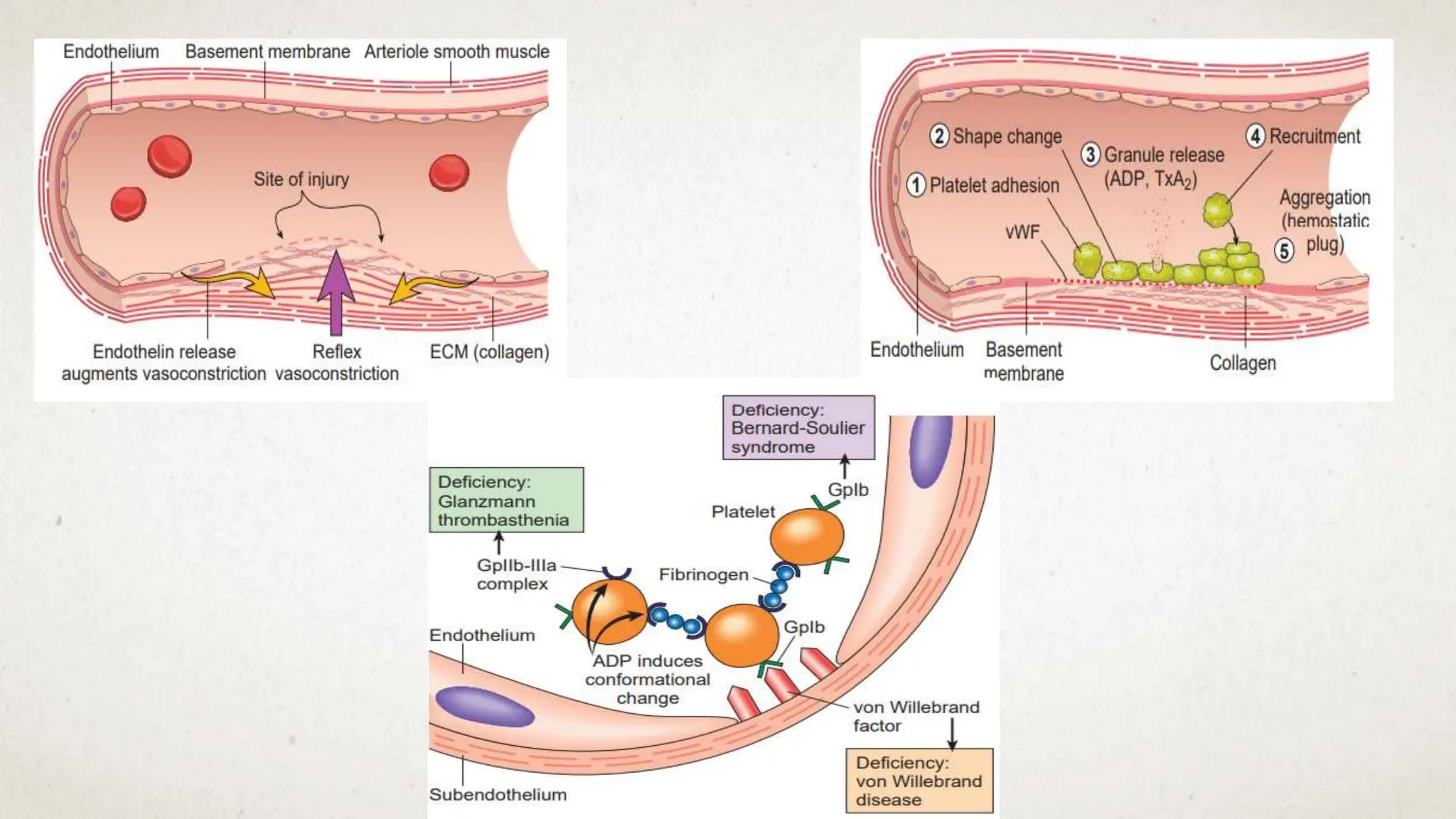
Refers to the role of blood vessels and platelets in the initial response to a vascular injury
SECONDARY HEMOSTASIS:
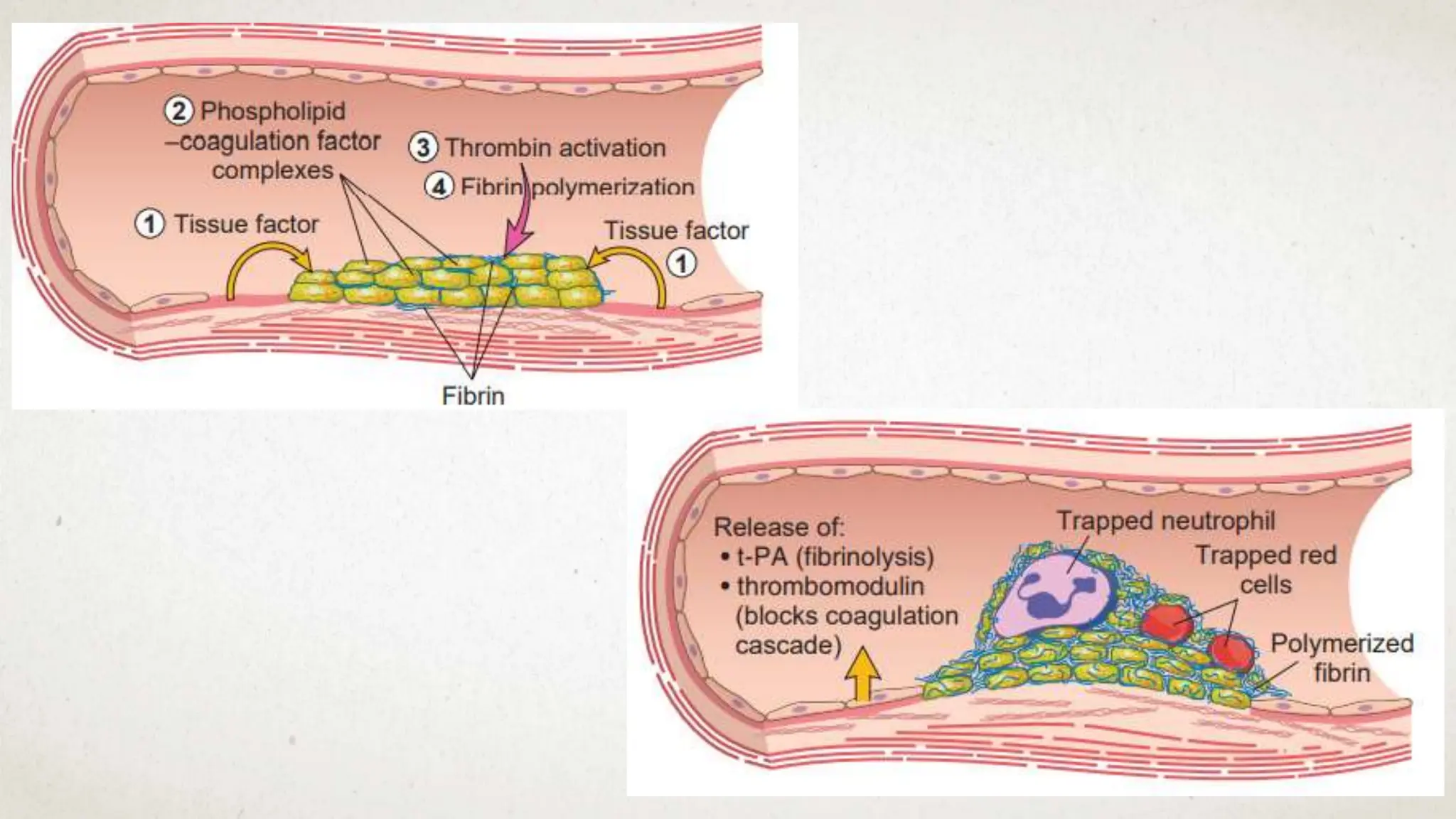
Describes the activation of a series of coagulation proteins in the plasma to form a fibrin clot
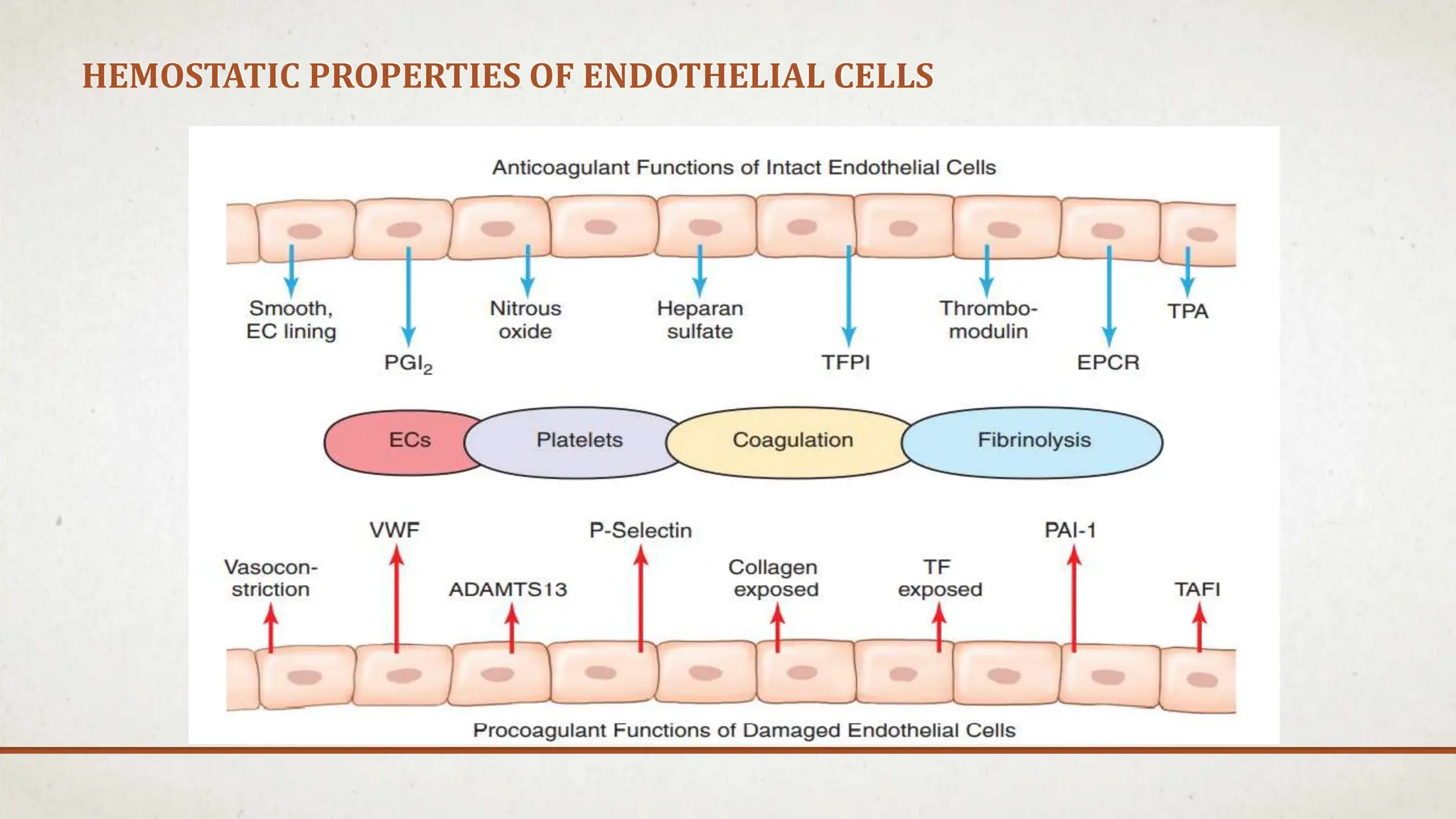
HEMOSTATIC PROPERTIES OF ENDOTHELIAL CELLS
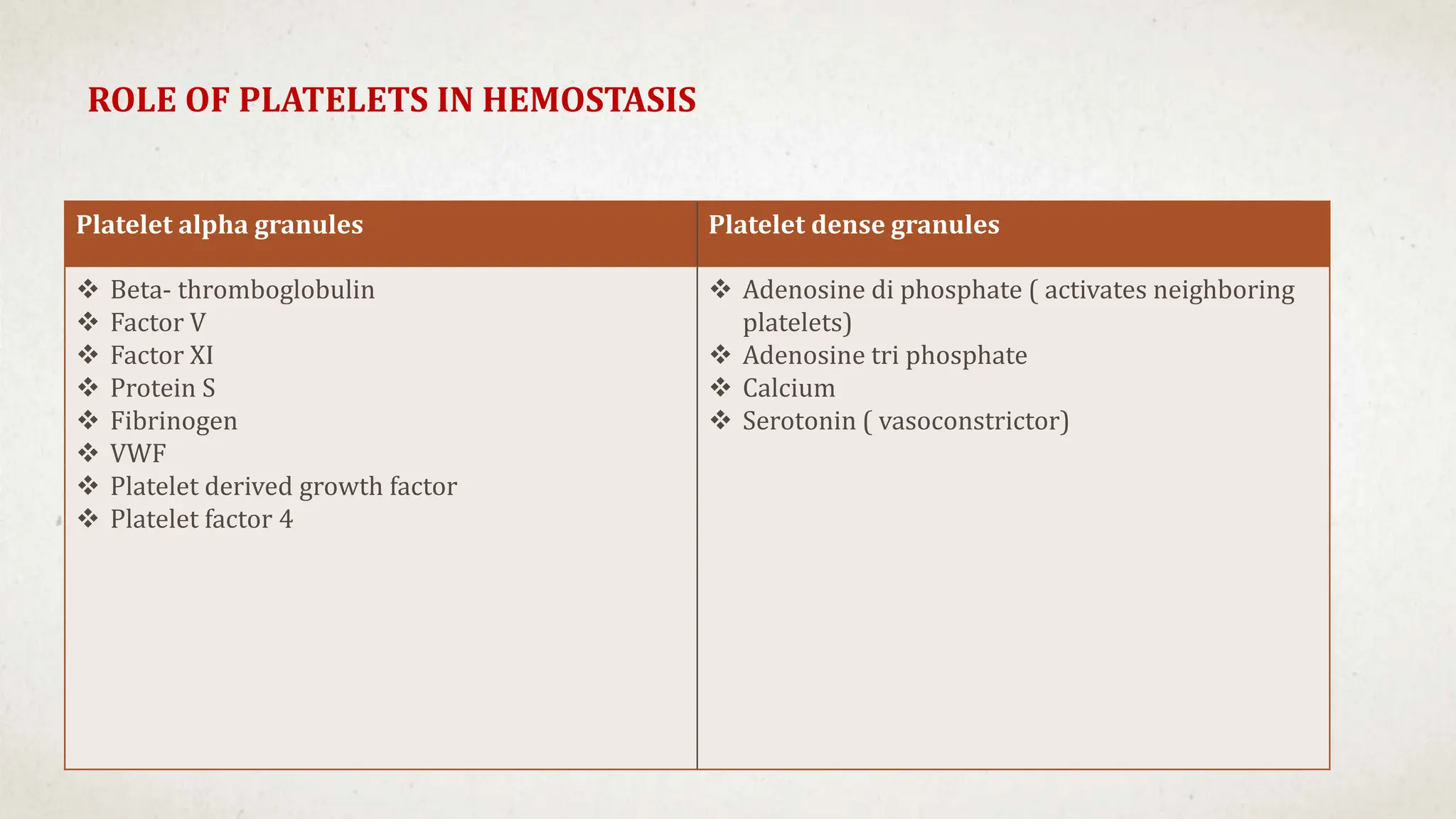
ROLE OF PLATELETS IN HEMOSTASIS
FUNCTION CHARACTERISTICS
ADHESION: Platelets roll and cling to non-platelet
surfaces
• Reversible
• In arteries & arterioles VWF necessary
• VWF binds with platelet through GP Ib/IX
AGGREGATION: Platelets adhere to each other. • Irreversible
• Requires fibrinogen
• Fibrinogen binds to GP IIb/IIIa receptors on
adjacent platelets and joins them together in
presence of calcium.
SECRETION: Platelets discharge the contents of
their granules.
• Irreversible
• Occurs during adhesion & aggregation
Platelet alpha granules Platelet dense granules
 Beta- thromboglobulin
 Factor V
 Factor XI
 Protein S
 Fibrinogen
 VWF
 Platelet derived growth factor
 Platelet factor 4
 Adenosine di phosphate ( activates neighboring
platelets)
 Adenosine tri phosphate
 Calcium
 Serotonin ( vasoconstrictor)
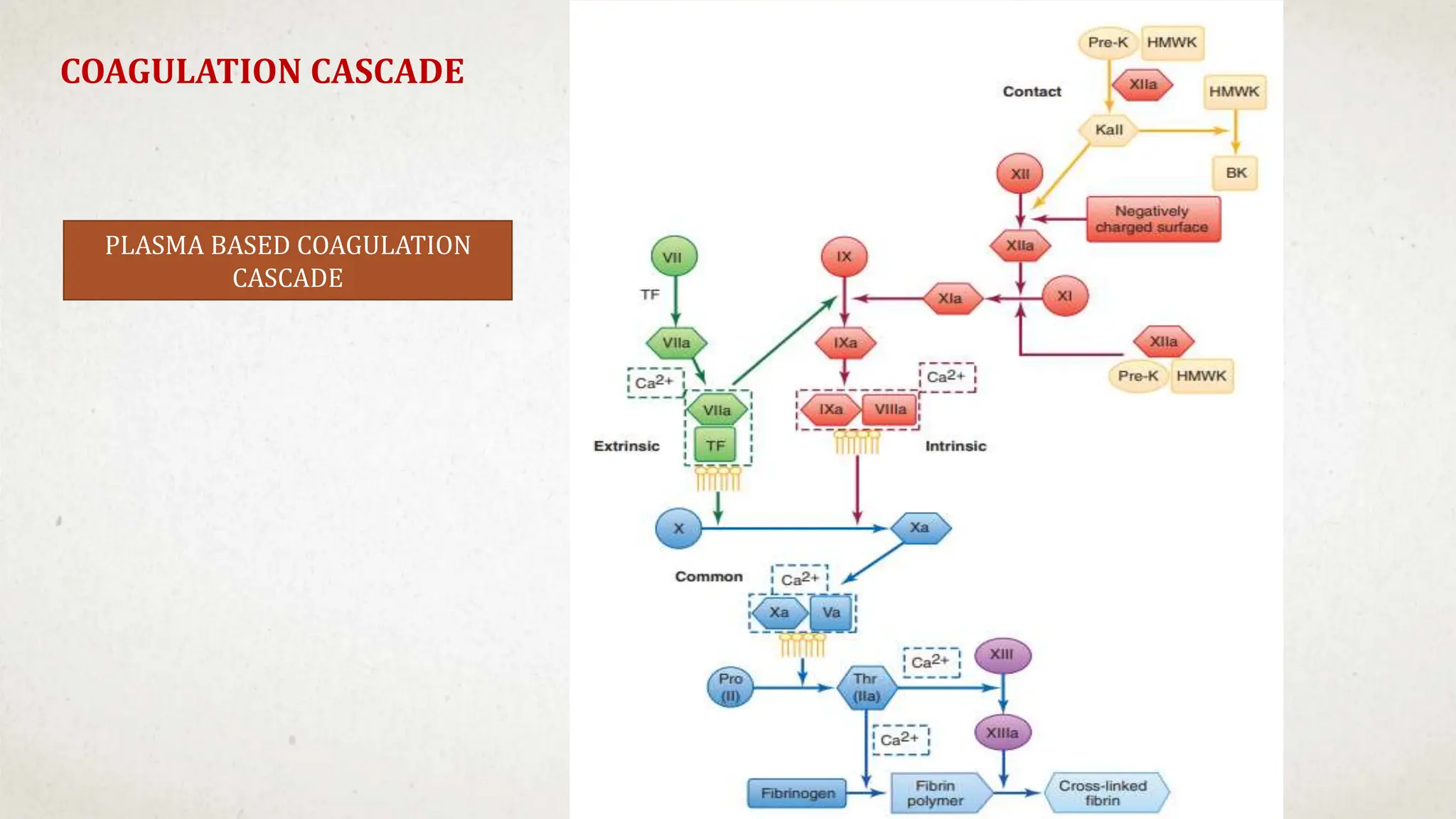
COAGULATION CASCADE
PLASMA BASED COAGULATION
CASCADE
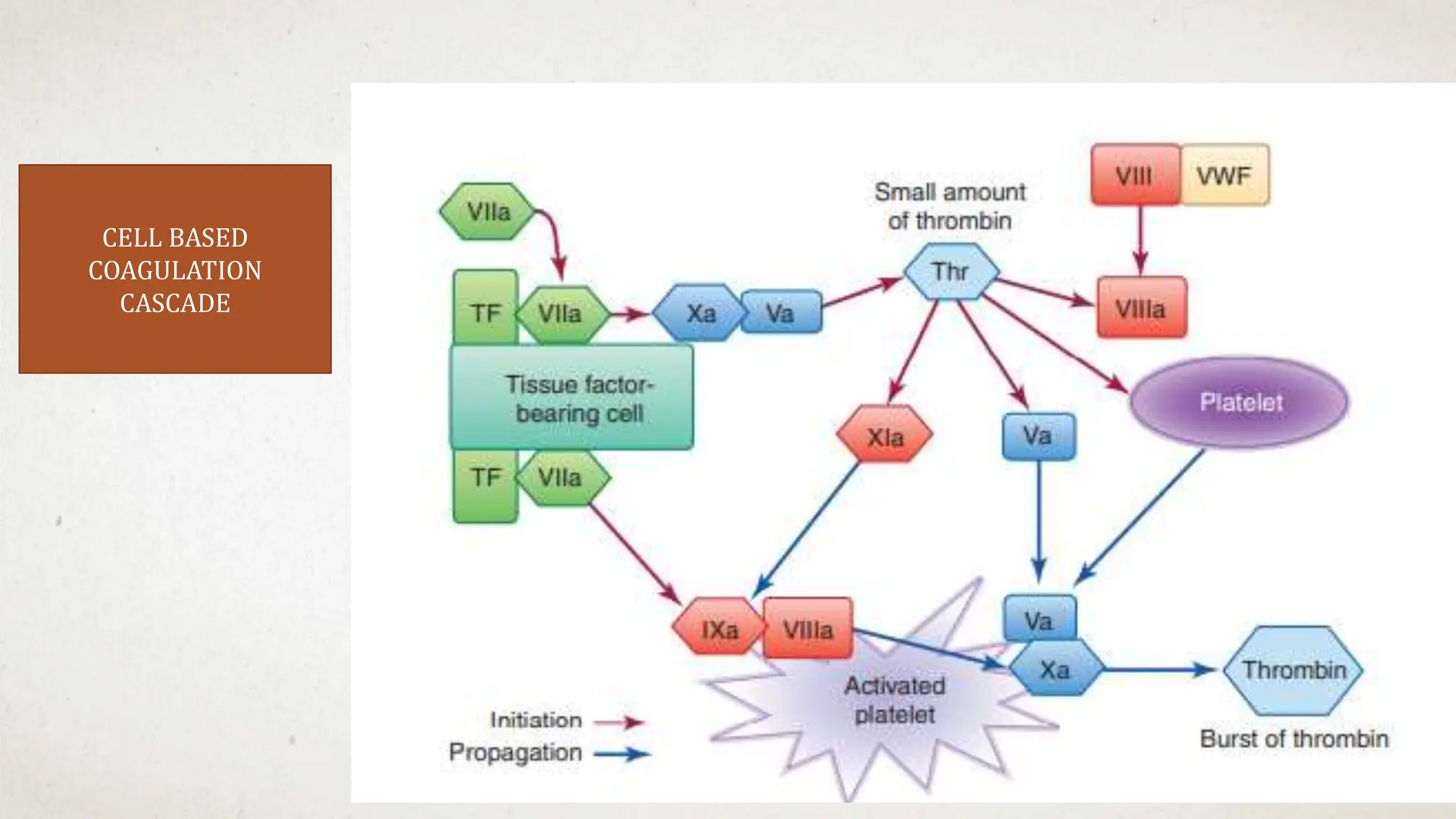
CELL BASED
COAGULATION
CASCADE
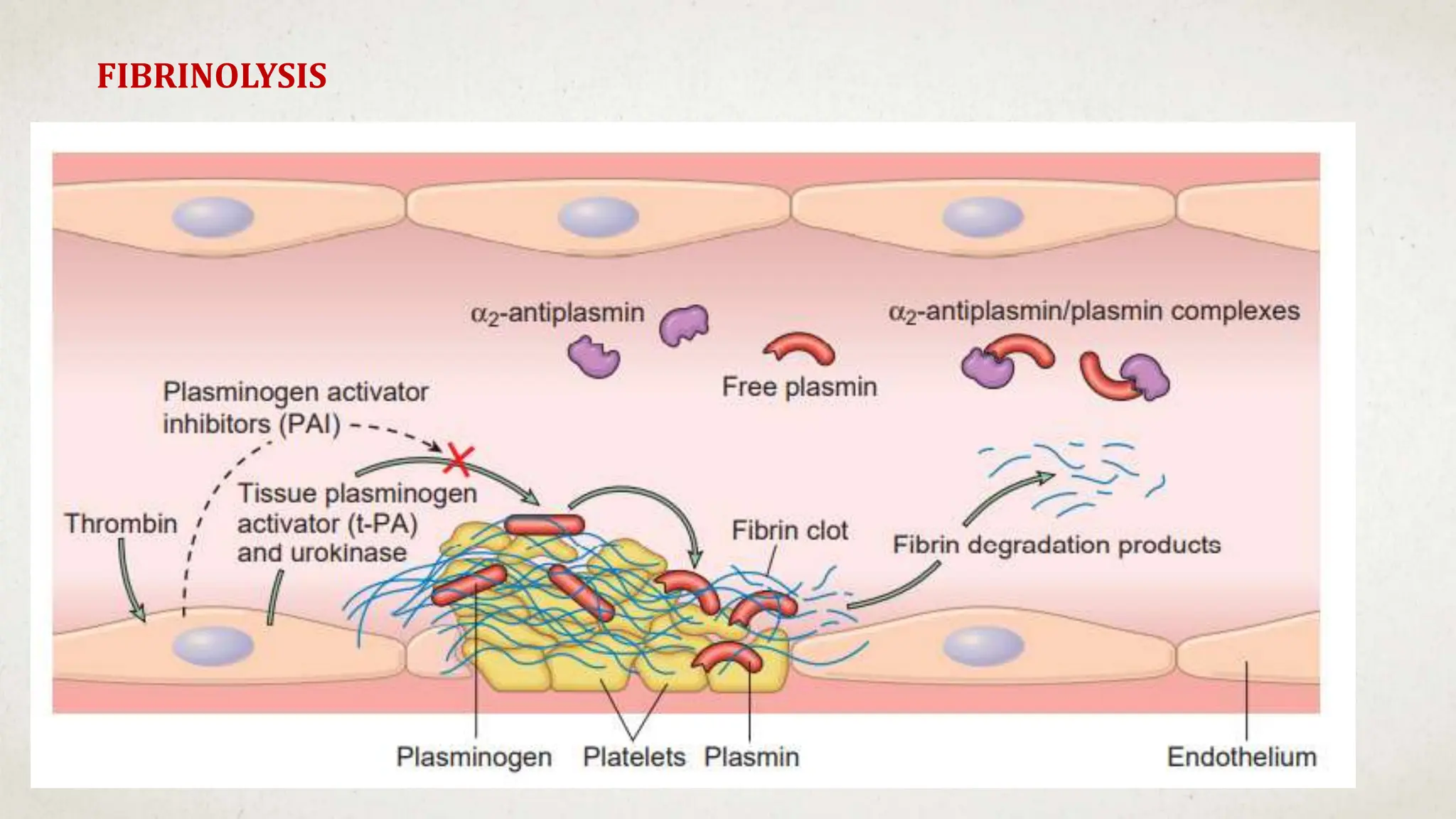
FIBRINOLYSIS
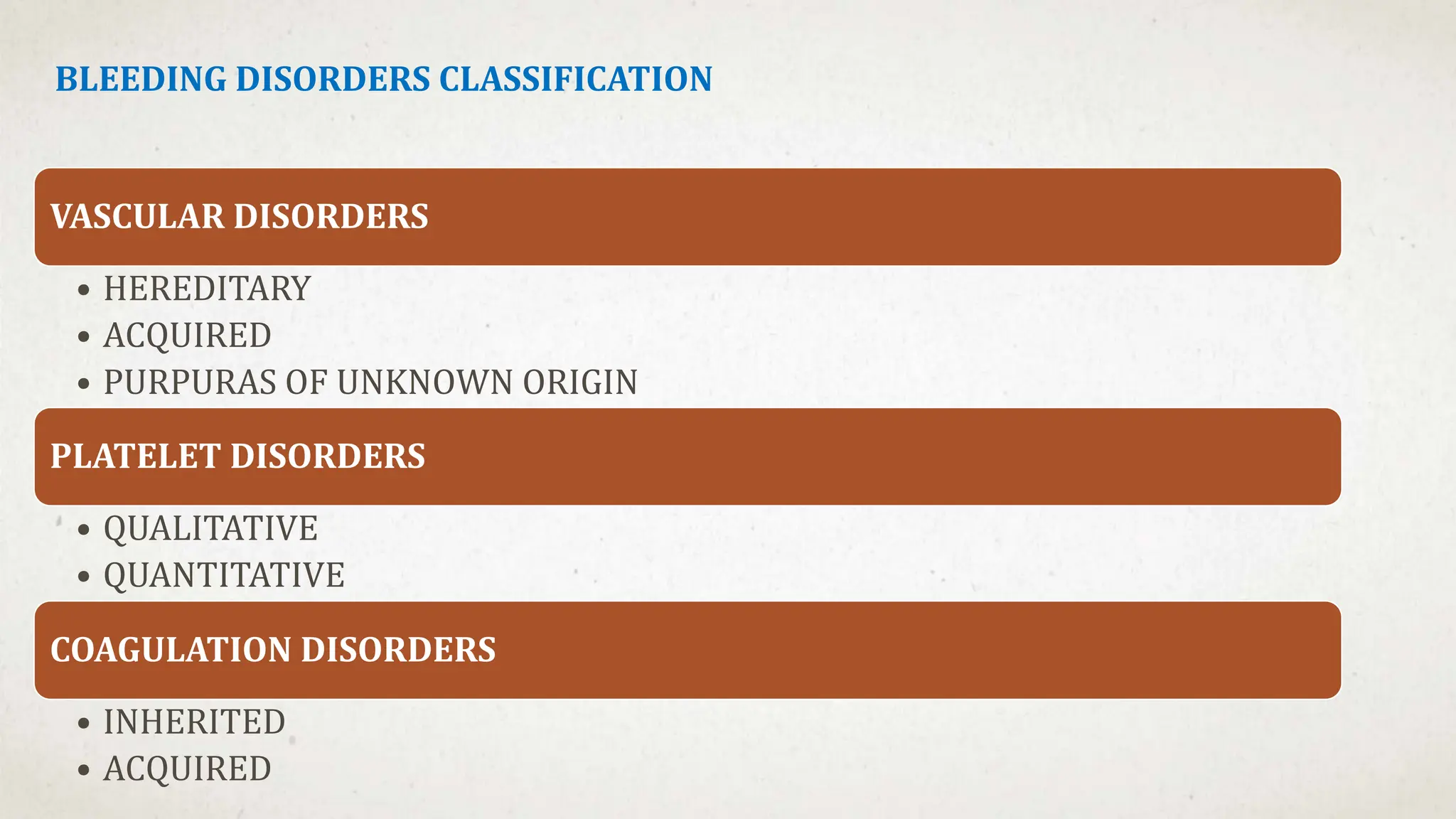
VASCULAR DISORDERS
• HEREDITARY
• ACQUIRED
• PURPURAS OF UNKNOWN ORIGIN
PLATELET DISORDERS
• QUALITATIVE
• QUANTITATIVE
COAGULATION DISORDERS
• INHERITED
• ACQUIRED
BLEEDING DISORDERS CLASSIFICATION
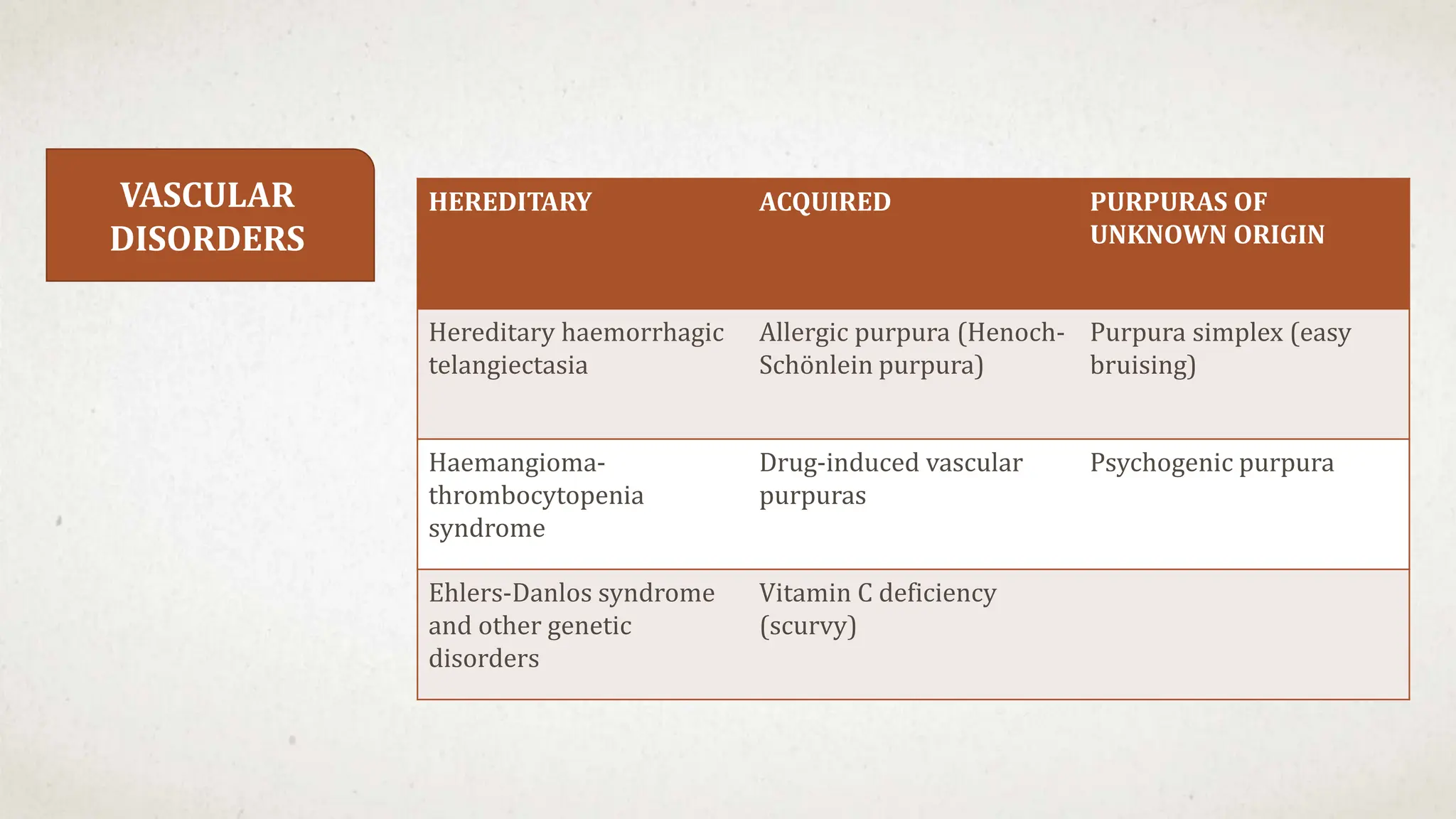
VASCULAR
DISORDERS
HEREDITARY ACQUIRED PURPURAS OF
UNKNOWN ORIGIN
Hereditary haemorrhagic
telangiectasia
Allergic purpura (Henoch-
Schönlein purpura)
Purpura simplex (easy
bruising)
Haemangioma-
thrombocytopenia
syndrome
Drug-induced vascular
purpuras
Psychogenic purpura
Ehlers-Danlos syndrome
and other genetic
disorders
Vitamin C deficiency
(scurvy)
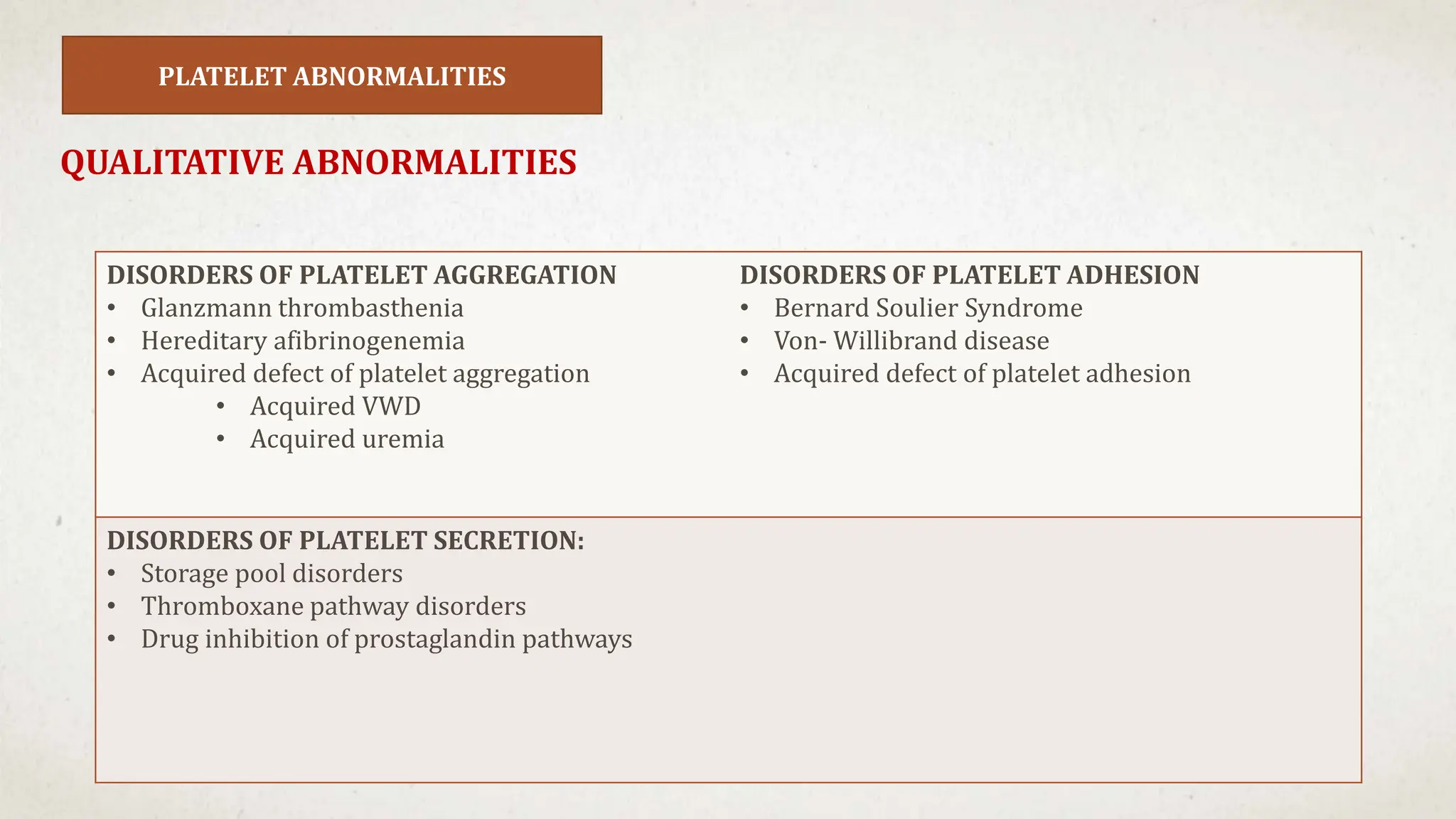
PLATELET ABNORMALITIES
QUALITATIVE ABNORMALITIES
DISORDERS OF PLATELET AGGREGATION
• Glanzmann thrombasthenia
• Hereditary afibrinogenemia
• Acquired defect of platelet aggregation
• Acquired VWD
• Acquired uremia
DISORDERS OF PLATELET ADHESION
• Bernard Soulier Syndrome
• Von- Willibrand disease
• Acquired defect of platelet adhesion
DISORDERS OF PLATELET SECRETION:
• Storage pool disorders
• Thromboxane pathway disorders
• Drug inhibition of prostaglandin pathways
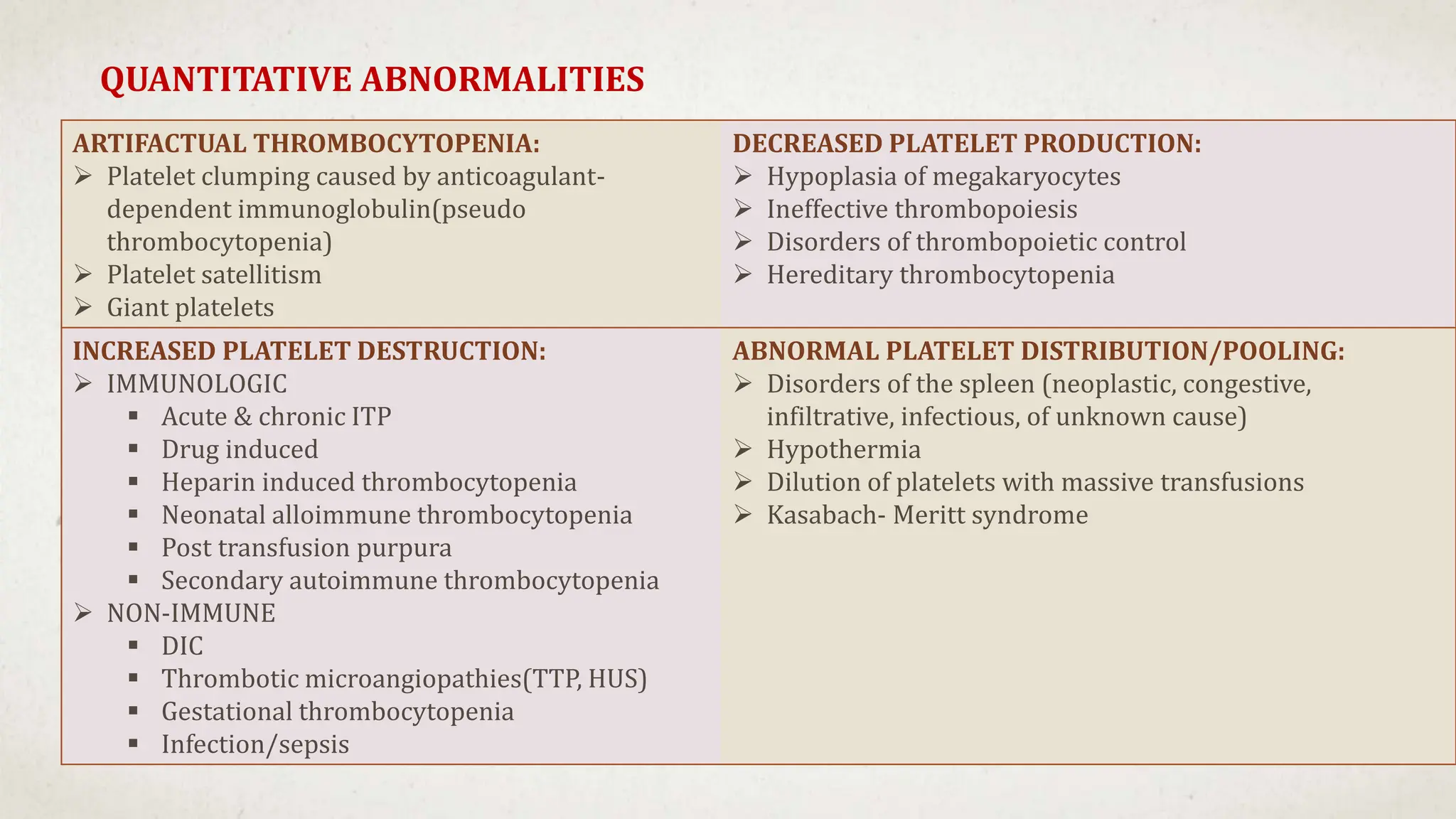
ARTIFACTUAL THROMBOCYTOPENIA:
 Platelet clumping caused by anticoagulant-
dependent immunoglobulin(pseudo
thrombocytopenia)
 Platelet satellitism
 Giant platelets
DECREASED PLATELET PRODUCTION:
 Hypoplasia of megakaryocytes
 Ineffective thrombopoiesis
 Disorders of thrombopoietic control
 Hereditary thrombocytopenia
INCREASED PLATELET DESTRUCTION:
 IMMUNOLOGIC
 Acute & chronic ITP
 Drug induced
 Heparin induced thrombocytopenia
 Neonatal alloimmune thrombocytopenia
 Post transfusion purpura
 Secondary autoimmune thrombocytopenia
 NON-IMMUNE
 DIC
 Thrombotic microangiopathies(TTP, HUS)
 Gestational thrombocytopenia
 Infection/sepsis
ABNORMAL PLATELET DISTRIBUTION/POOLING:
 Disorders of the spleen (neoplastic, congestive,
infiltrative, infectious, of unknown cause)
 Hypothermia
 Dilution of platelets with massive transfusions
 Kasabach- Meritt syndrome
QUANTITATIVE ABNORMALITIES
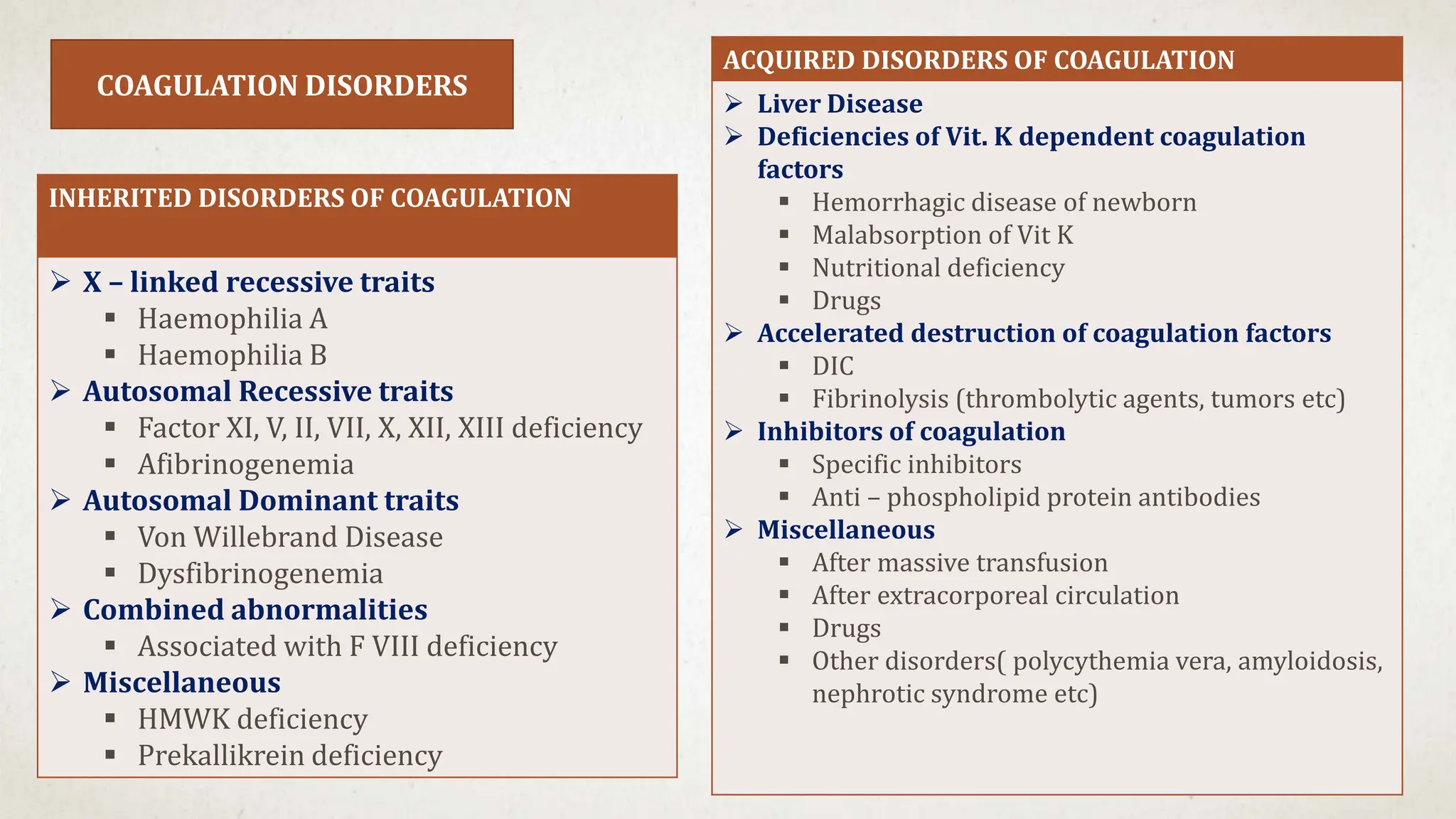
COAGULATION DISORDERS
INHERITED DISORDERS OF COAGULATION
 X – linked recessive traits
 Haemophilia A
 Haemophilia B
 Autosomal Recessive traits
 Factor XI, V, II, VII, X, XII, XIII deficiency
 Afibrinogenemia
 Autosomal Dominant traits
 Von Willebrand Disease
 Dysfibrinogenemia
 Combined abnormalities
 Associated with F VIII deficiency
 Miscellaneous
 HMWK deficiency
 Prekallikrein deficiency
ACQUIRED DISORDERS OF COAGULATION
 Liver Disease
 Deficiencies of Vit. K dependent coagulation
factors
 Hemorrhagic disease of newborn
 Malabsorption of Vit K
 Nutritional deficiency
 Drugs
 Accelerated destruction of coagulation factors
 DIC
 Fibrinolysis (thrombolytic agents, tumors etc)
 Inhibitors of coagulation
 Specific inhibitors
 Anti – phospholipid protein antibodies
 Miscellaneous
 After massive transfusion
 After extracorporeal circulation
 Drugs
 Other disorders( polycythemia vera, amyloidosis,
nephrotic syndrome etc)
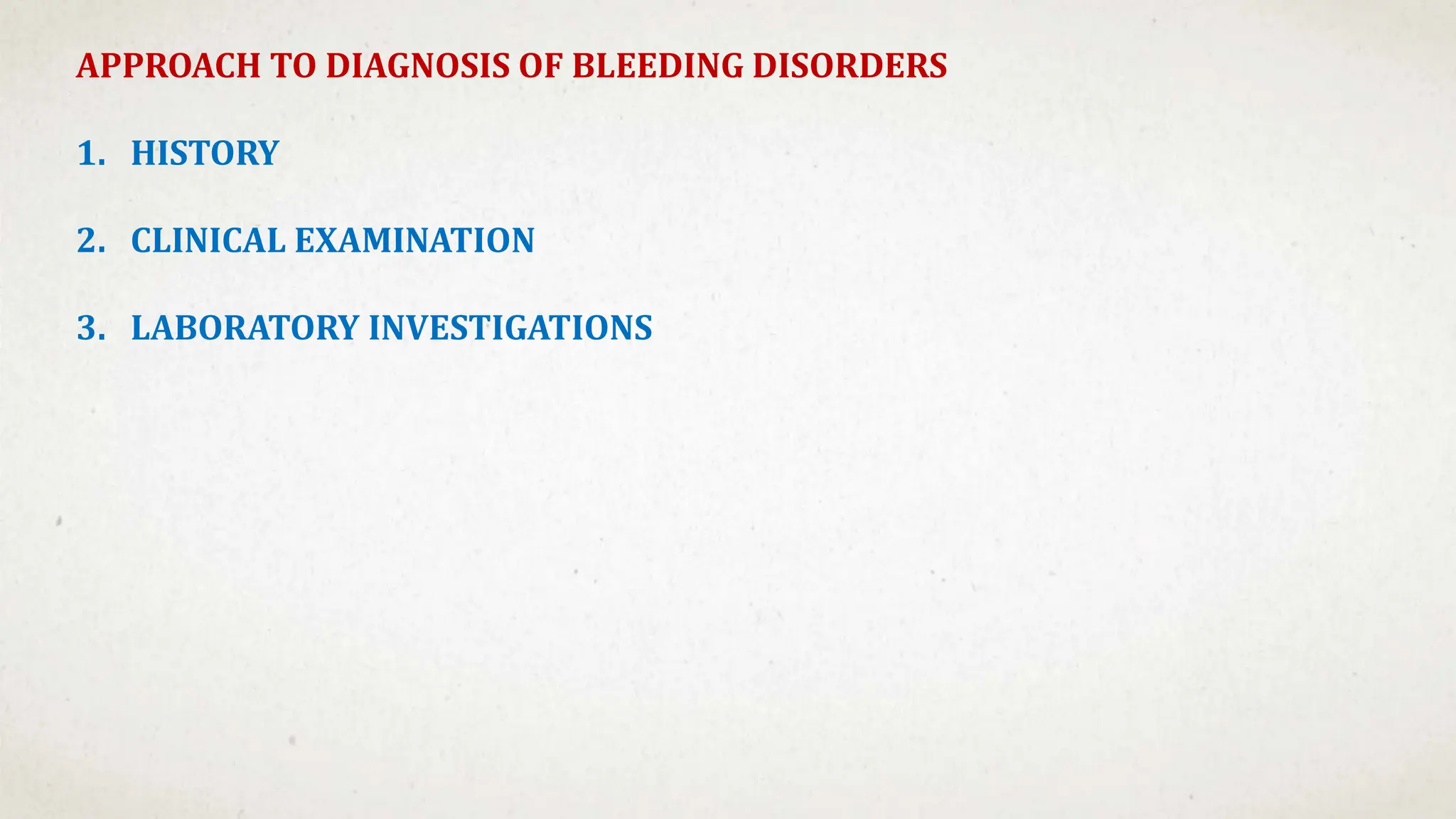
APPROACH TO DIAGNOSIS OF BLEEDING DISORDERS
1. HISTORY
2. CLINICAL EXAMINATION
3. LABORATORY INVESTIGATIONS
WHO SHOULD BE
INVESTIGATED???
Bleeding from umbilical stump
Newborn/ infant with intracranial bleed
Hematomas/ hemarthrosis
Mucocutaneous purpura
Bleeding after circumcision
Recurrent / severe epistaxis
Bleeding gums not explained by dental
hygiene
Menorrhagia in absence of any uterine
anomalies
Serious hemorrhagic complication after
a surgery
WHERE??
WHO????
WHEN?
?
WHAT???
WHO???
Patient’s age, sex, family history of bleeding disorder
WHEN???
Any association with a disease state, trauma, surgery or drug ingestion
WHERE???
The site/ sites of bleeding – skin/ mucous membrane/ GI tract / joints / muscles
WHAT???
The physical characteristics of bleeding – petechiae/ purpura/ ecchymosis/
hematoma
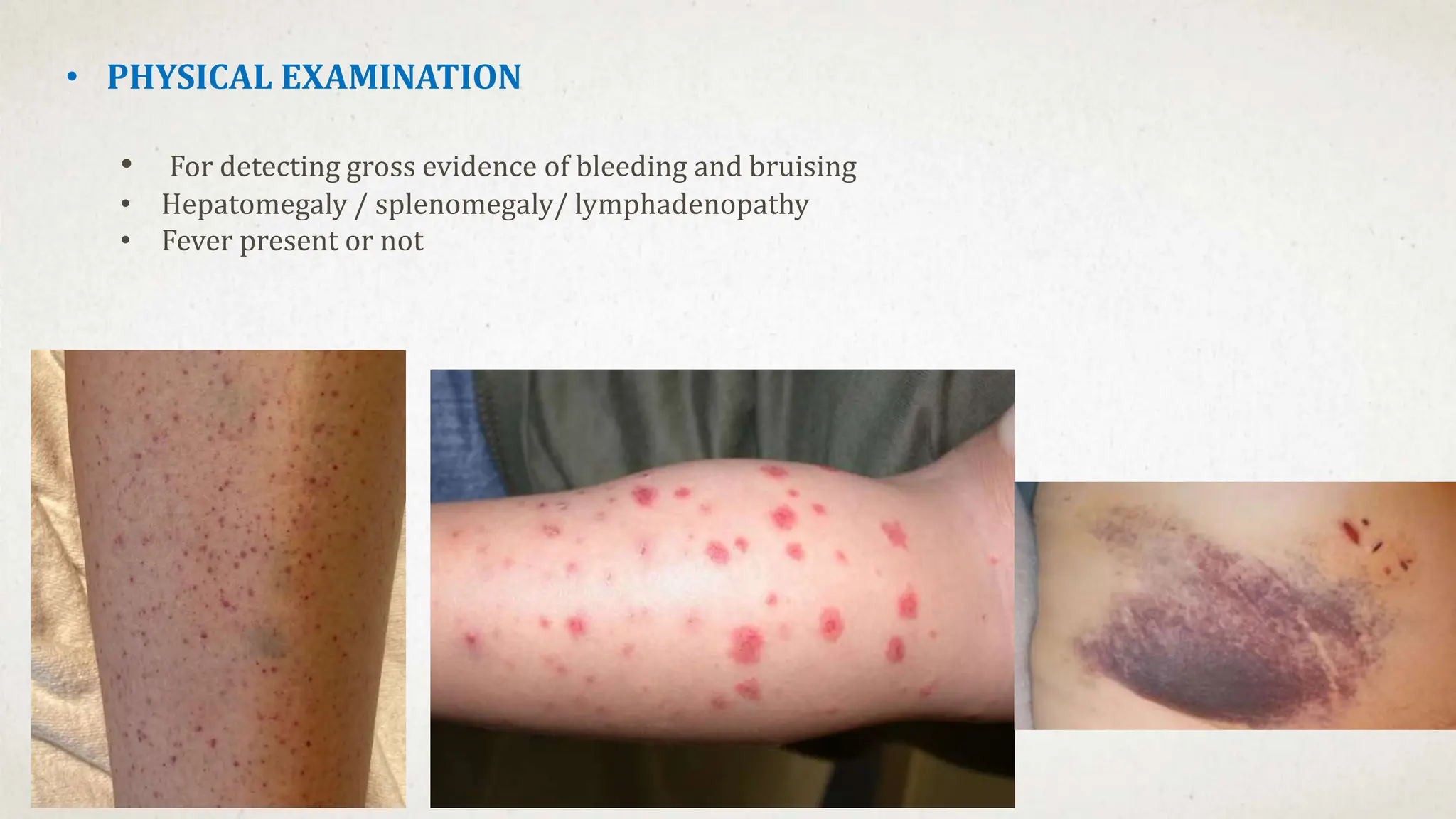
• PHYSICAL EXAMINATION
• For detecting gross evidence of bleeding and bruising
• Hepatomegaly / splenomegaly/ lymphadenopathy
• Fever present or not
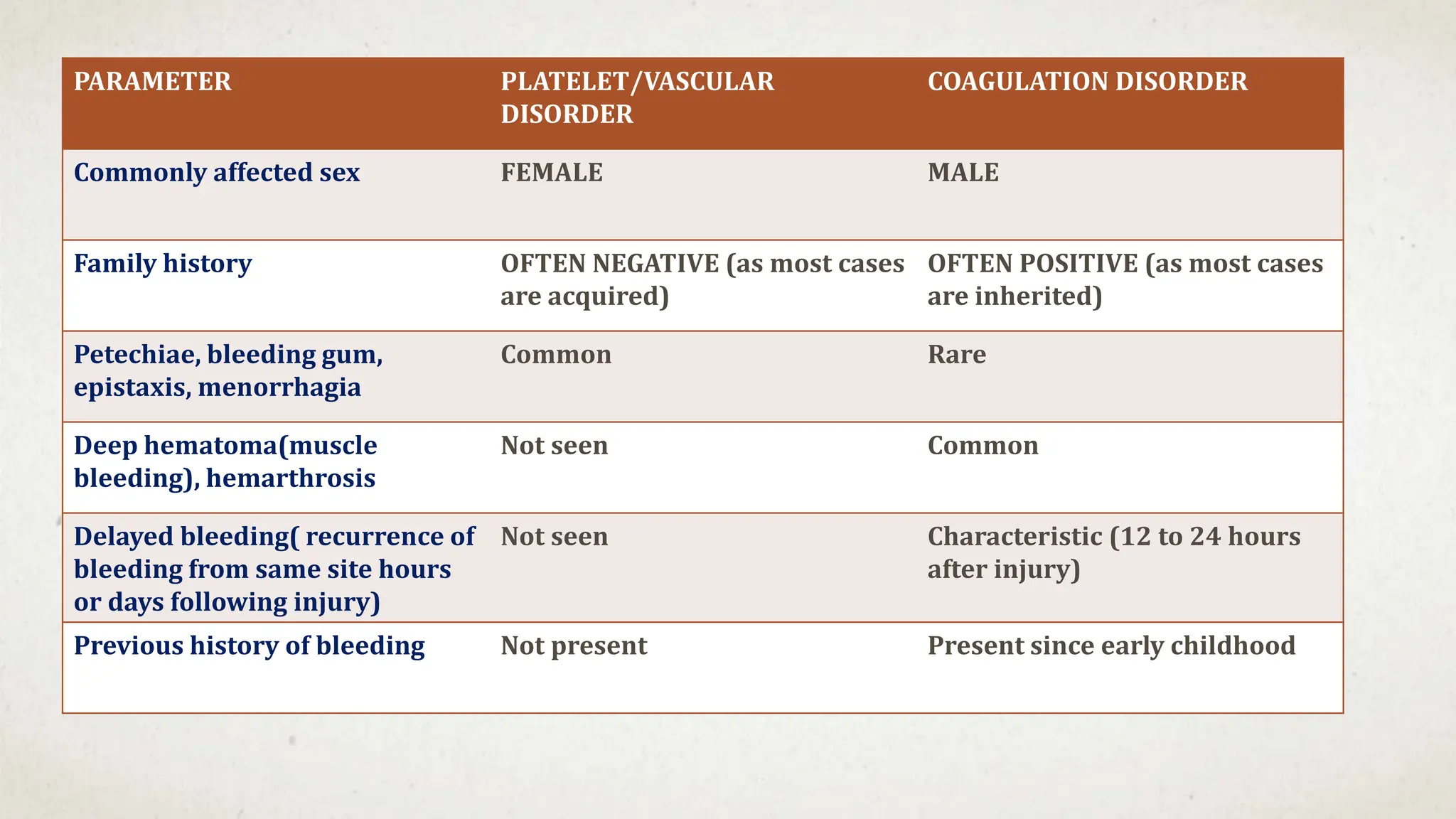
PARAMETER PLATELET/VASCULAR
DISORDER
COAGULATION DISORDER
Commonly affected sex FEMALE MALE
Family history OFTEN NEGATIVE (as most cases
are acquired)
OFTEN POSITIVE (as most cases
are inherited)
Petechiae, bleeding gum,
epistaxis, menorrhagia
Common Rare
Deep hematoma(muscle
bleeding), hemarthrosis
Not seen Common
Delayed bleeding( recurrence of
bleeding from same site hours
or days following injury)
Not seen Characteristic (12 to 24 hours
after injury)
Previous history of bleeding Not present Present since early childhood
• LABORATORY INVESTIGATIONS
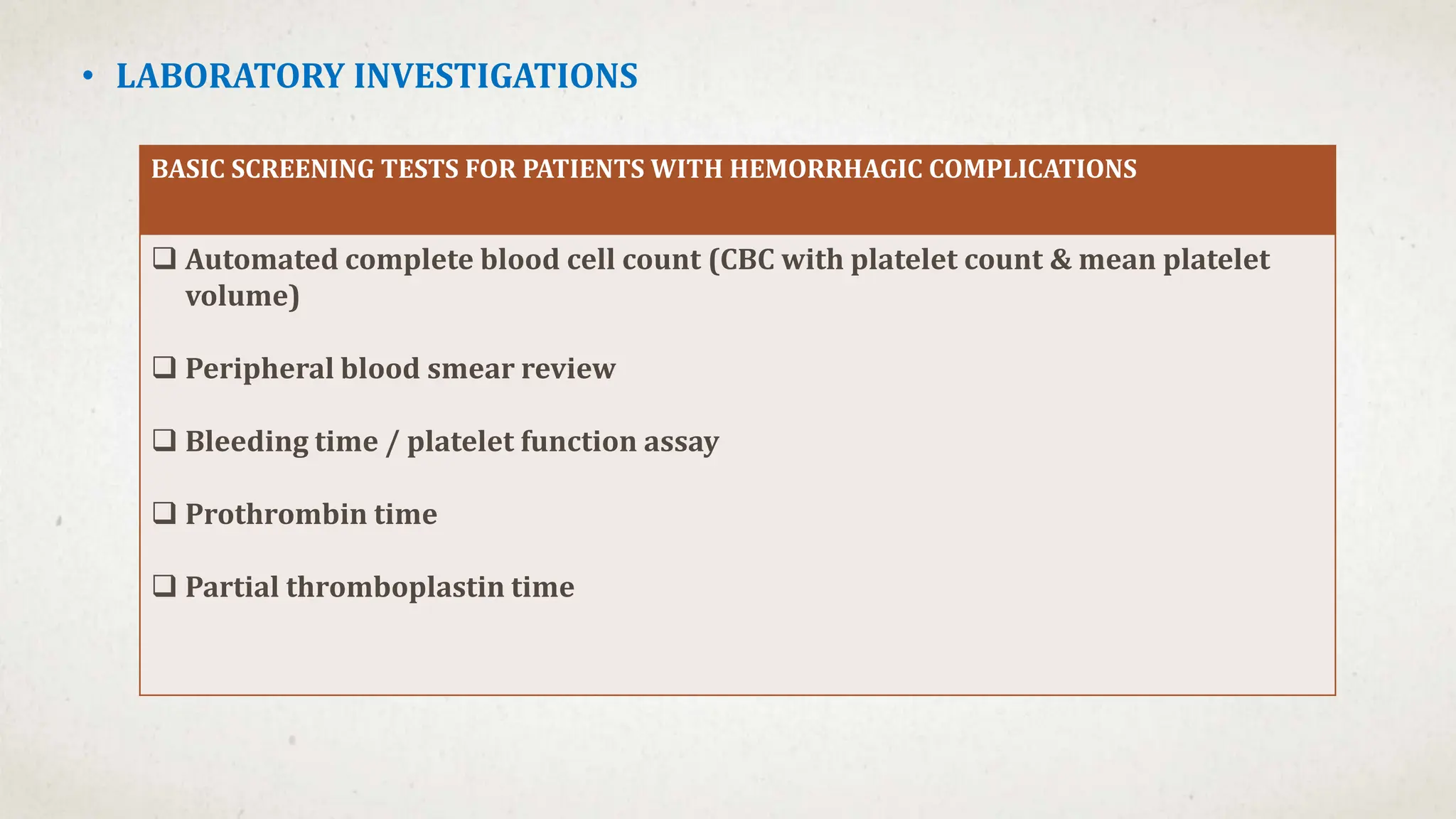
BASIC SCREENING TESTS FOR PATIENTS WITH HEMORRHAGIC COMPLICATIONS
 Automated complete blood cell count (CBC with platelet count & mean platelet
volume)
 Peripheral blood smear review
 Bleeding time / platelet function assay
 Prothrombin time
 Partial thromboplastin time
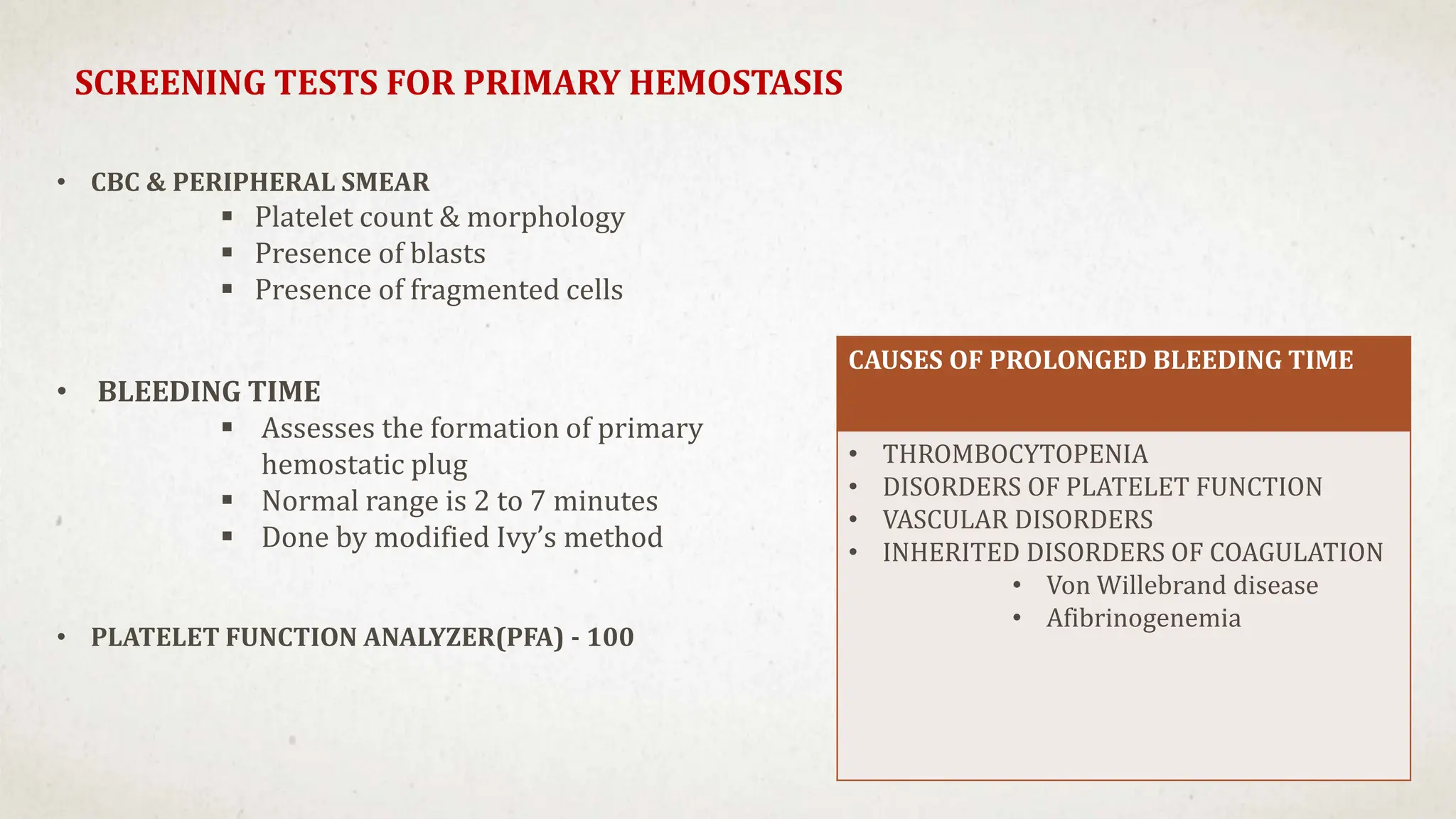
SCREENING TESTS FOR PRIMARY HEMOSTASIS
CAUSES OF PROLONGED BLEEDING TIME
• THROMBOCYTOPENIA
• DISORDERS OF PLATELET FUNCTION
• VASCULAR DISORDERS
• INHERITED DISORDERS OF COAGULATION
• Von Willebrand disease
• Afibrinogenemia
• CBC & PERIPHERAL SMEAR
 Platelet count & morphology
 Presence of blasts
 Presence of fragmented cells
• BLEEDING TIME
 Assesses the formation of primary
hemostatic plug
 Normal range is 2 to 7 minutes
 Done by modified Ivy’s method
• PLATELET FUNCTION ANALYZER(PFA) - 100
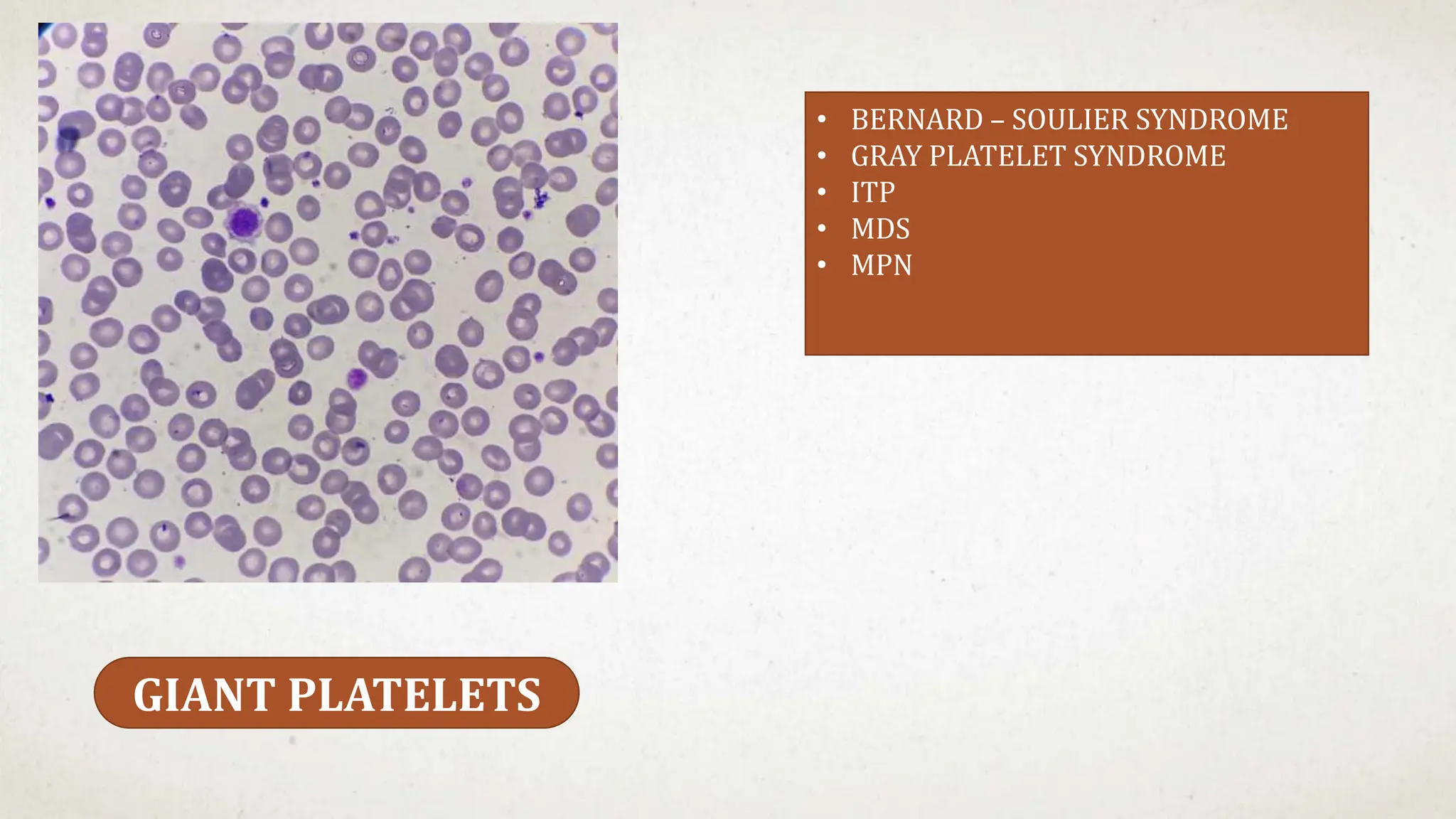
GIANT PLATELETS
• BERNARD – SOULIER SYNDROME
• GRAY PLATELET SYNDROME
• ITP
• MDS
• MPN
SPECIFIC TESTS FOR PLATELET FUNCTION
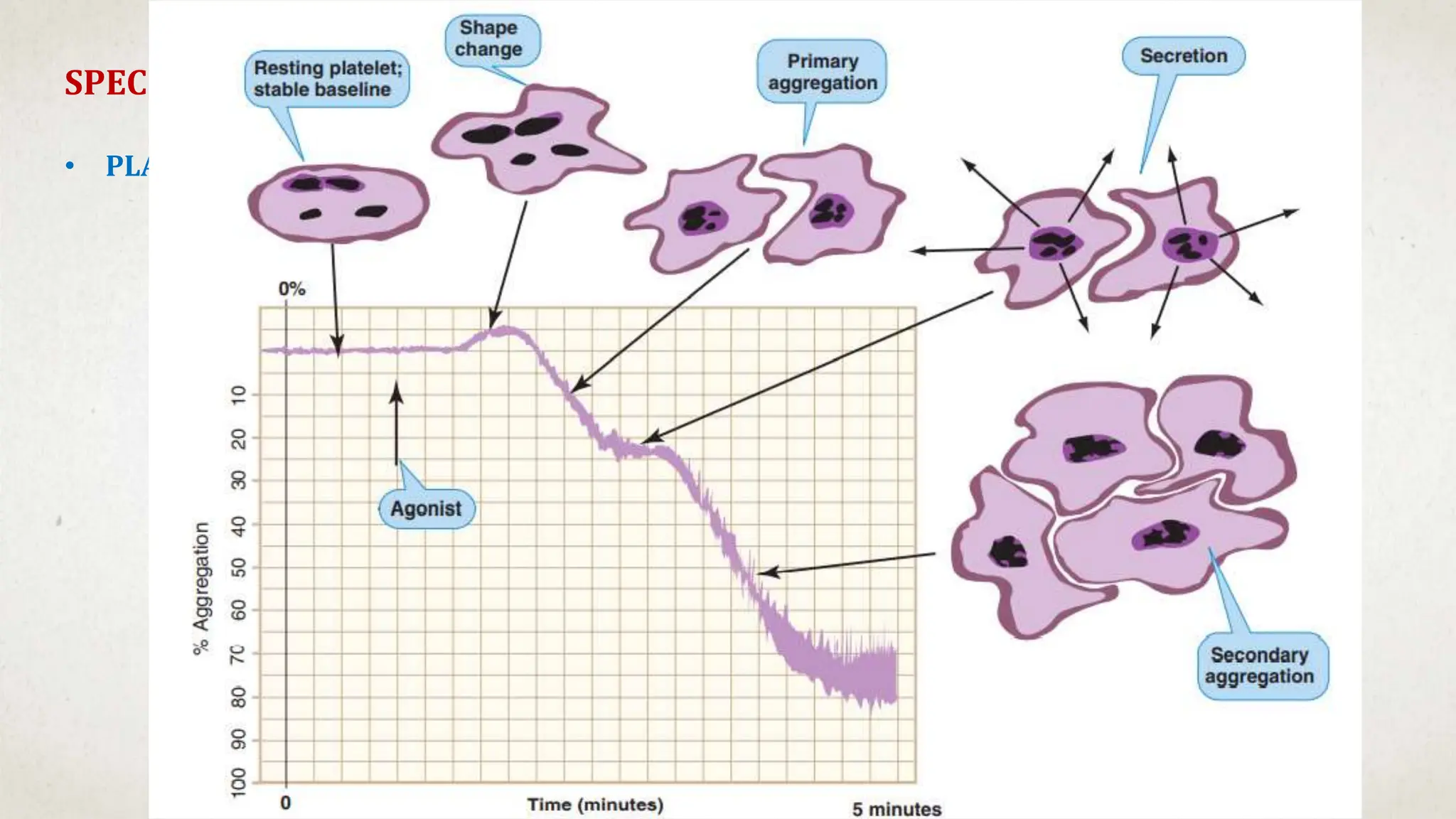
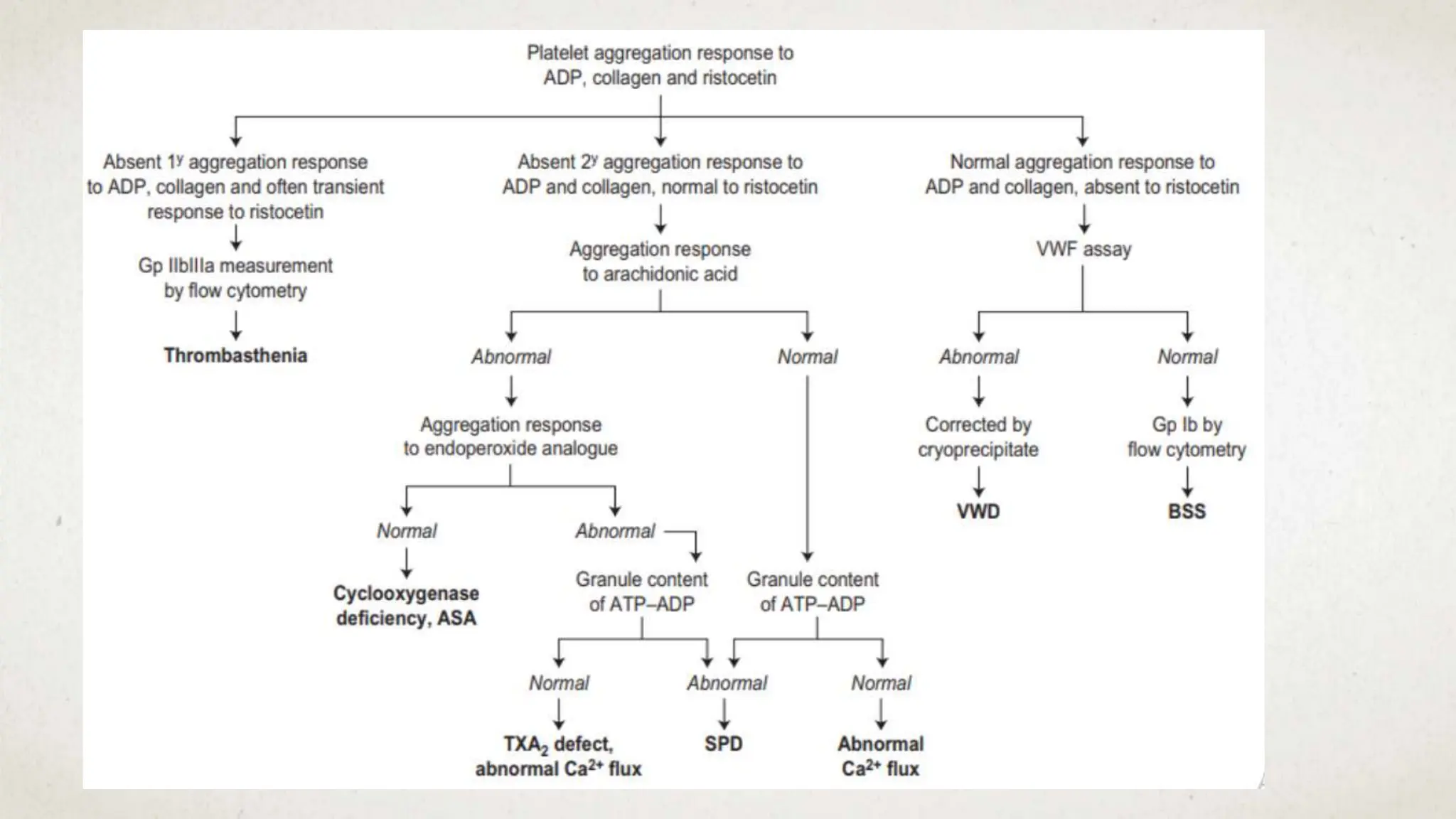
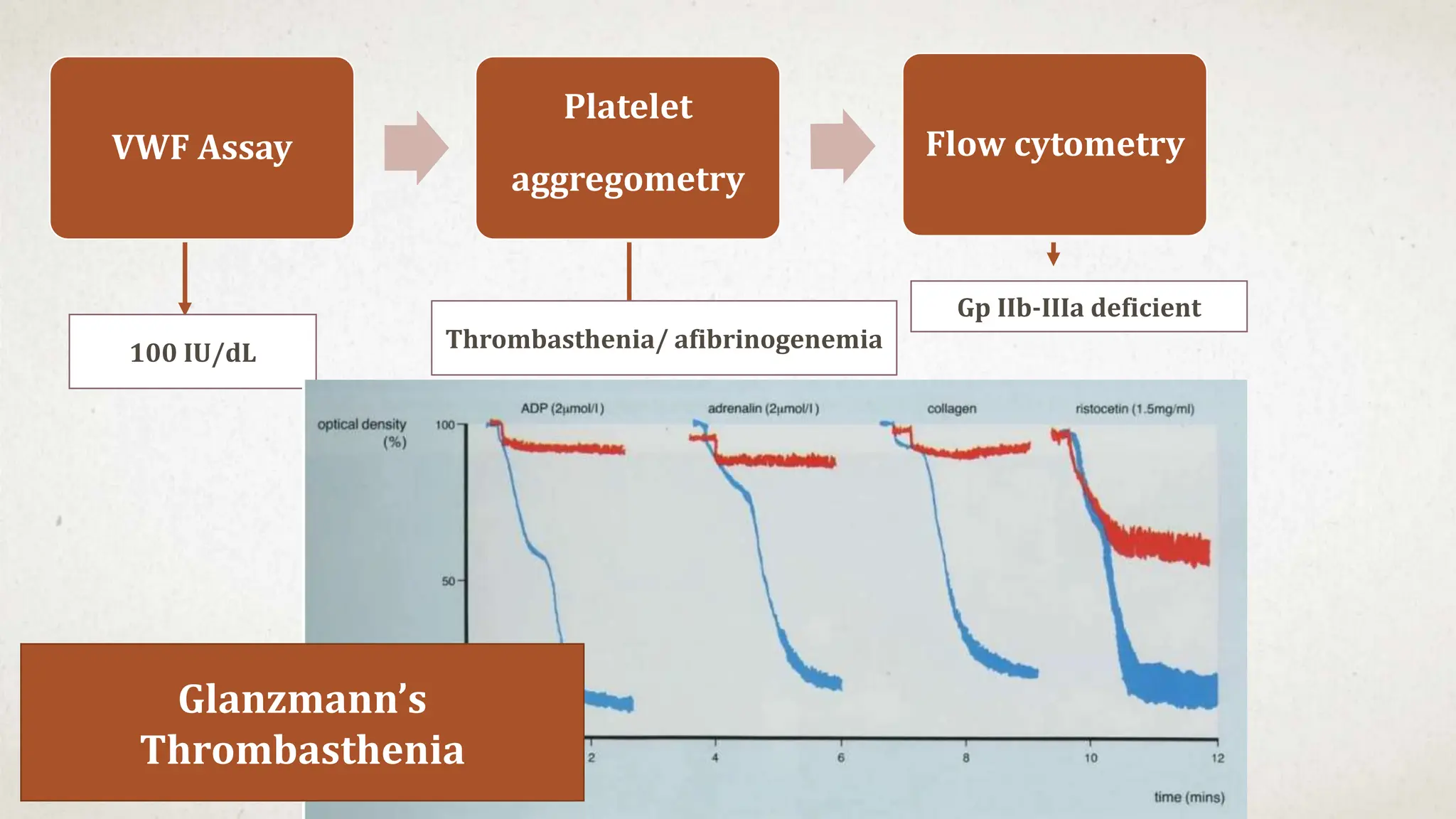
• PLATELET AGGREGOMETRY
 Diagnosis of inherited/acquired platelet function defects
 Performed using a specialized photometer called a light transmittance
aggregometer
 PRINCIPLE: change in light transmission after addition of a panel of agonists
• FLOW CYTOMETRY
 Measurement of platelet glycoproteins and activation
markers
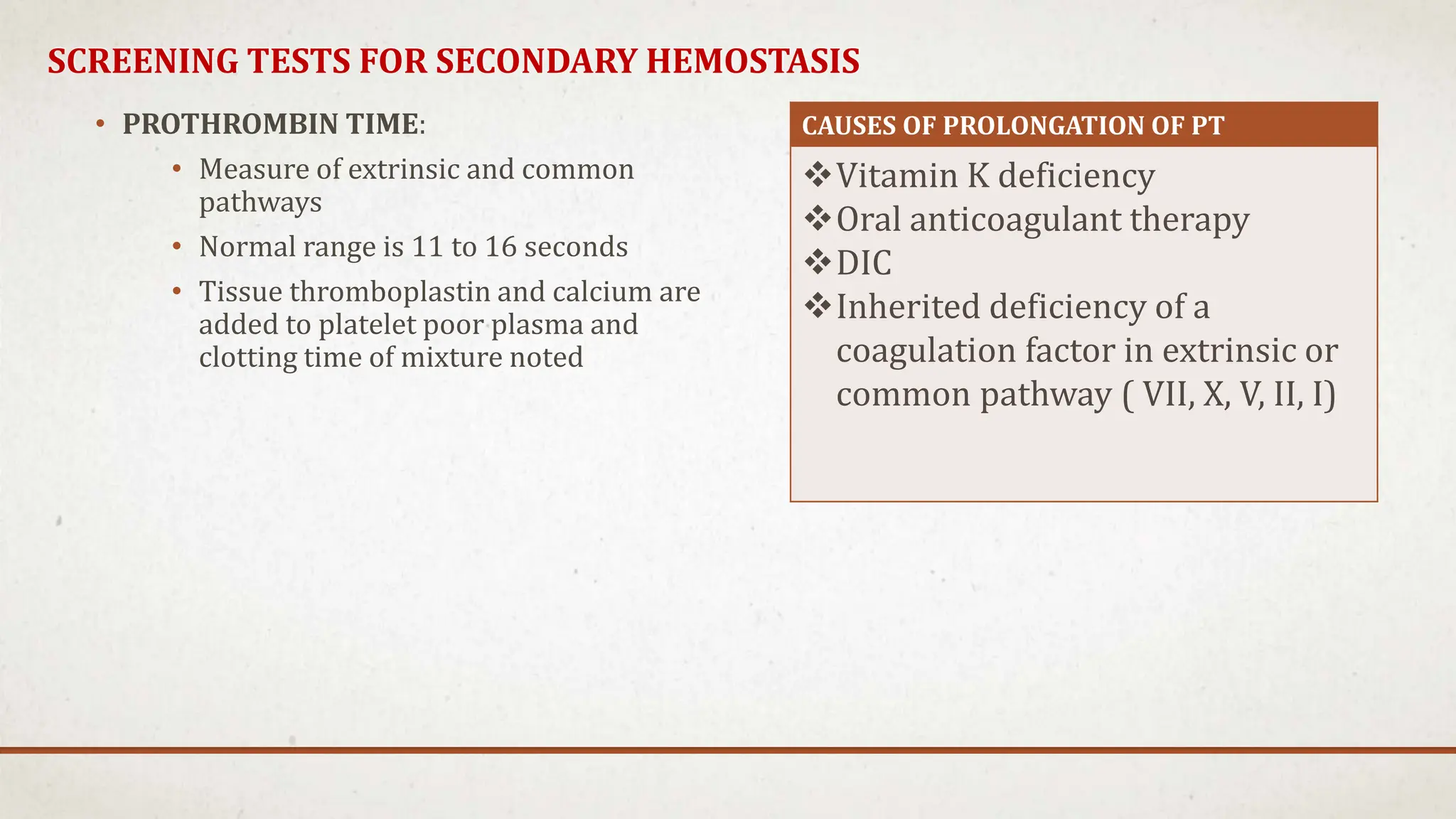
SCREENING TESTS FOR SECONDARY HEMOSTASIS
• PROTHROMBIN TIME:
• Measure of extrinsic and common
pathways
• Normal range is 11 to 16 seconds
• Tissue thromboplastin and calcium are
added to platelet poor plasma and
clotting time of mixture noted
CAUSES OF PROLONGATION OF PT
Vitamin K deficiency
Oral anticoagulant therapy
DIC
Inherited deficiency of a
coagulation factor in extrinsic or
common pathway ( VII, X, V, II, I)
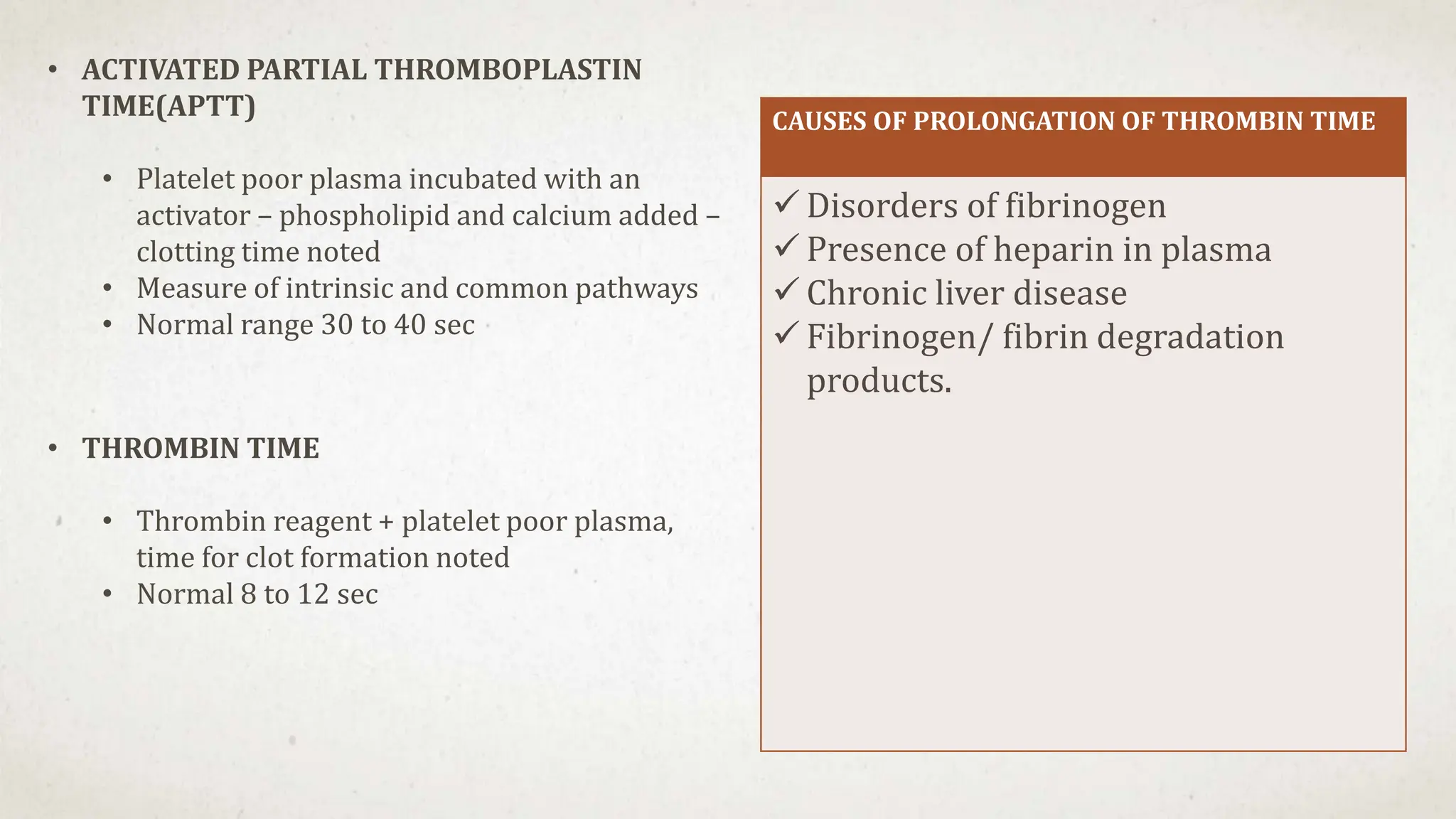
• ACTIVATED PARTIAL THROMBOPLASTIN
TIME(APTT)
• Platelet poor plasma incubated with an
activator – phospholipid and calcium added –
clotting time noted
• Measure of intrinsic and common pathways
• Normal range 30 to 40 sec
CAUSES OF PROLONGATION OF APTT
Inherited deficiency of factor VIII or
IX & other coagulation factors in
intrinsic and common pathways
Circulating inhibitors
DIC
Heparin
Liver disease
Vitamin K deficiency
• THROMBIN TIME
• Thrombin reagent + platelet poor plasma,
time for clot formation noted
• Normal 8 to 12 sec
CAUSES OF PROLONGATION OF THROMBIN TIME
 Disorders of fibrinogen
 Presence of heparin in plasma
 Chronic liver disease
 Fibrinogen/ fibrin degradation
products.
SPECIFIC TESTS FOR COAGULATION PHASE
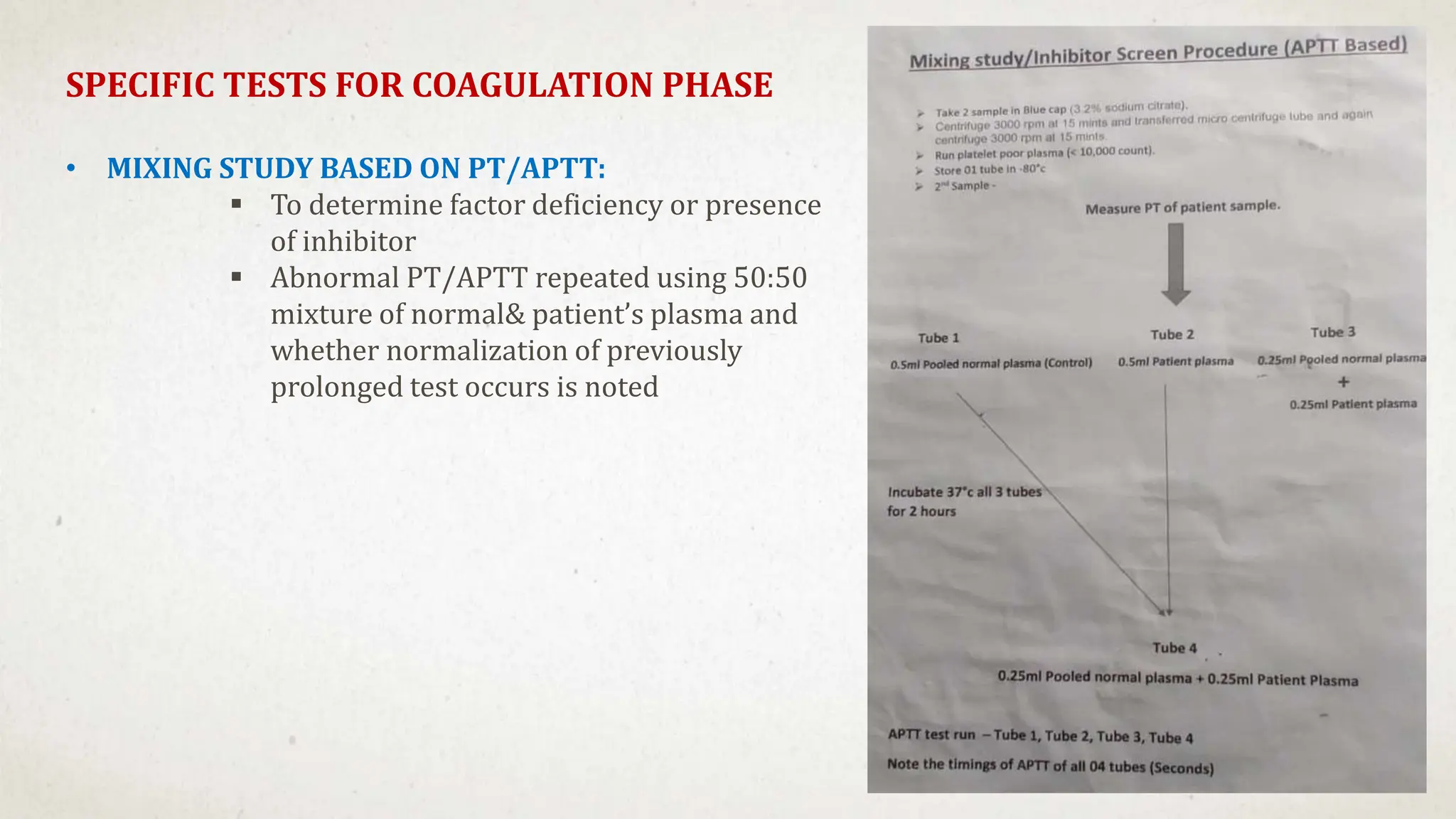
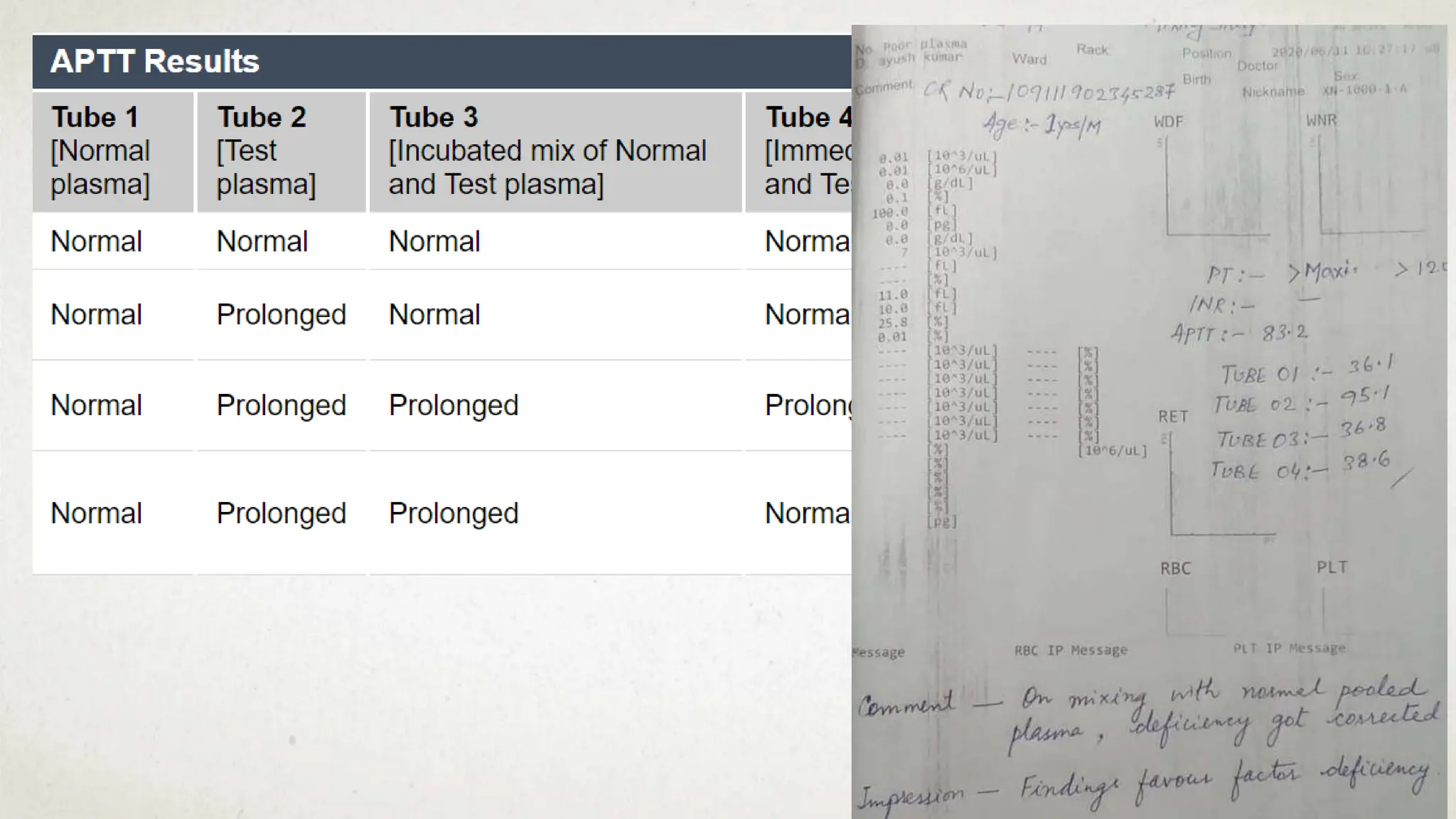
• MIXING STUDY BASED ON PT/APTT:
 To determine factor deficiency or presence
of inhibitor
 Abnormal PT/APTT repeated using 50:50
mixture of normal& patient’s plasma and
whether normalization of previously
prolonged test occurs is noted
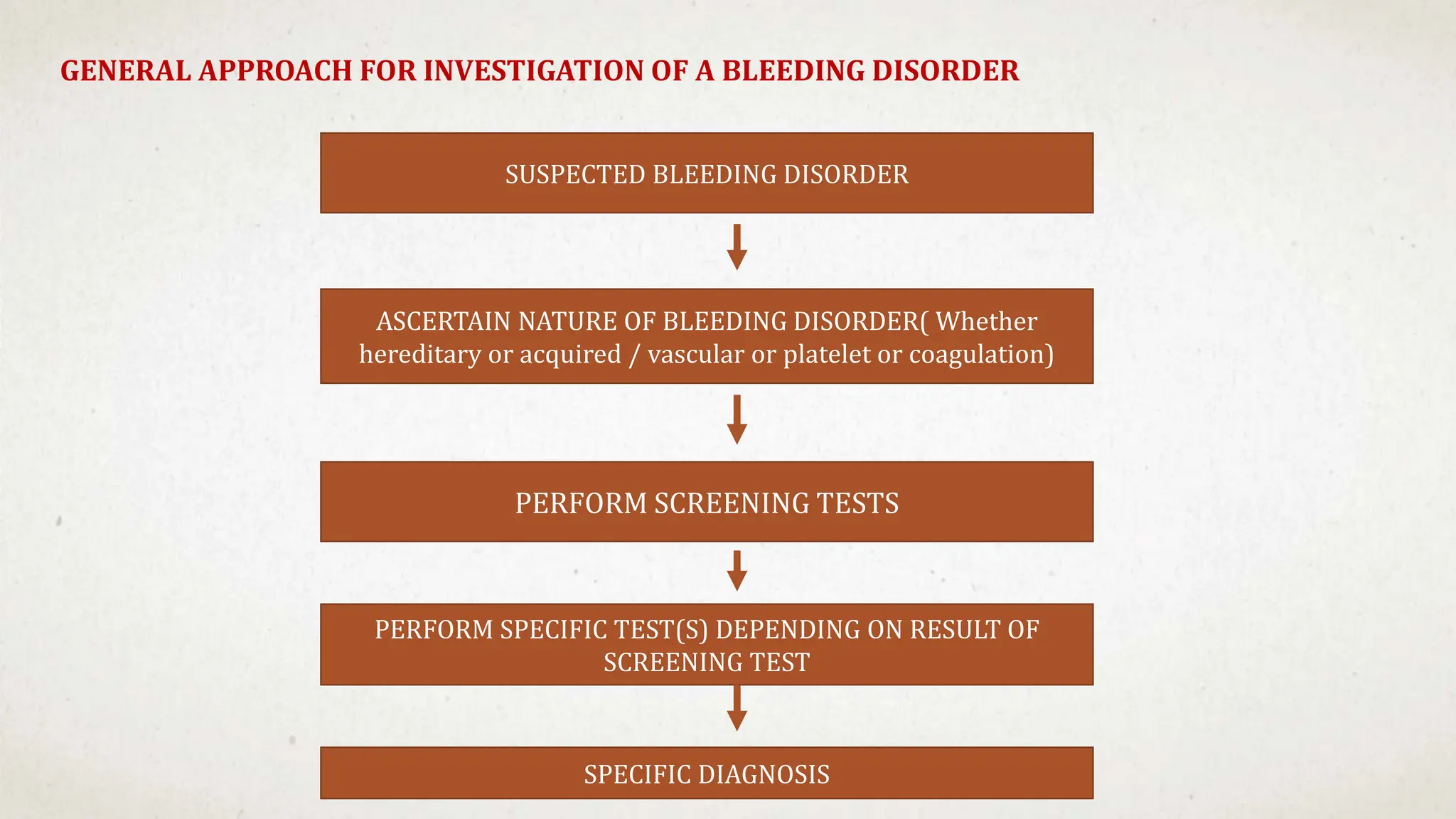
GENERAL APPROACH FOR INVESTIGATION OF A BLEEDING DISORDER
SUSPECTED BLEEDING DISORDER
ASCERTAIN NATURE OF BLEEDING DISORDER( Whether
hereditary or acquired / vascular or platelet or coagulation)
PERFORM SCREENING TESTS
PERFORM SPECIFIC TEST(S) DEPENDING ON RESULT OF
SCREENING TEST
SPECIFIC DIAGNOSIS
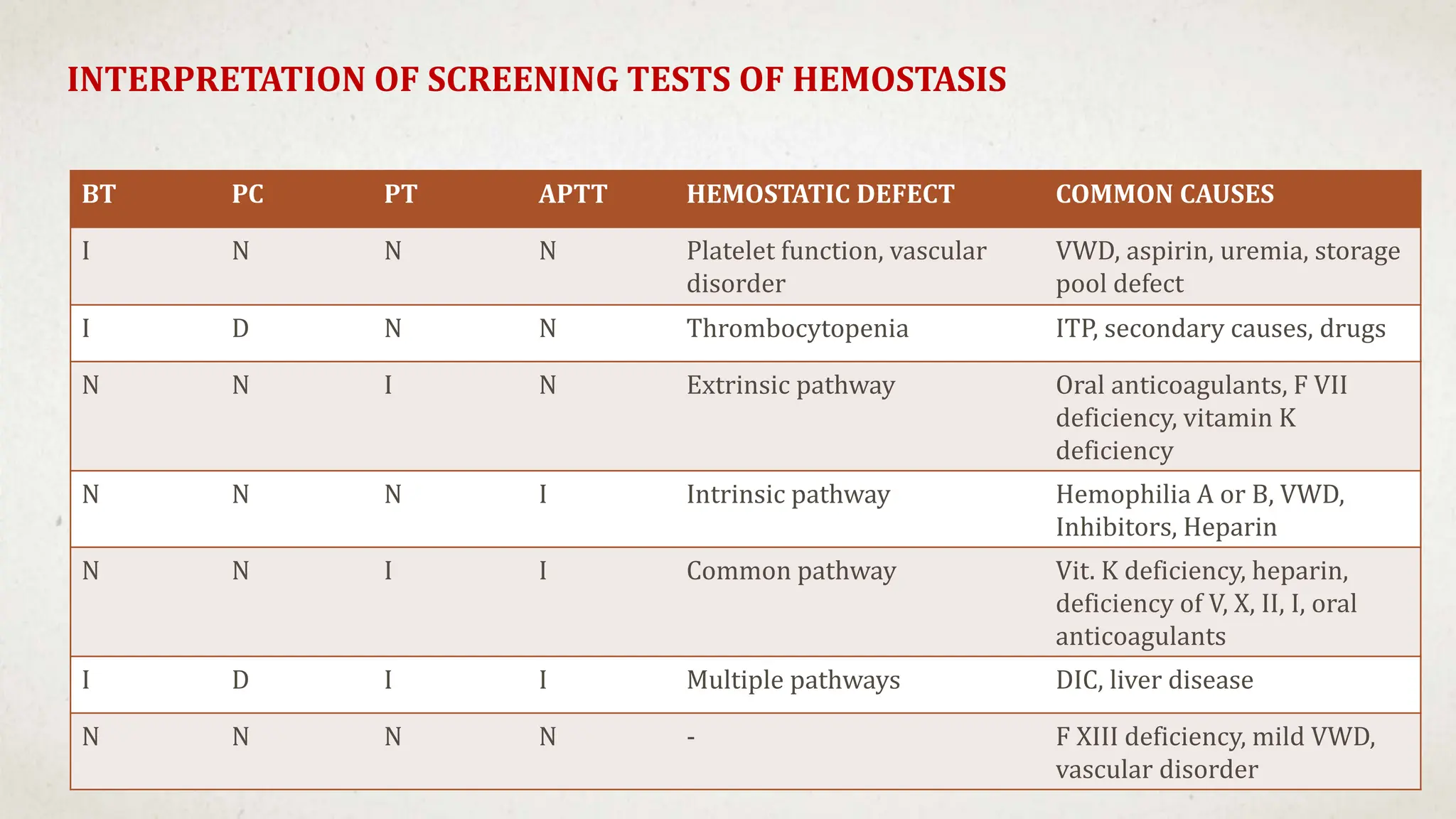
INTERPRETATION OF SCREENING TESTS OF HEMOSTASIS
BT PC PT APTT HEMOSTATIC DEFECT COMMON CAUSES
I N N N Platelet function, vascular
disorder
VWD, aspirin, uremia, storage
pool defect
I D N N Thrombocytopenia ITP, secondary causes, drugs
N N I N Extrinsic pathway Oral anticoagulants, F VII
deficiency, vitamin K
deficiency
N N N I Intrinsic pathway Hemophilia A or B, VWD,
Inhibitors, Heparin
N N I I Common pathway Vit. K deficiency, heparin,
deficiency of V, X, II, I, oral
anticoagulants
I D I I Multiple pathways DIC, liver disease
N N N N - F XIII deficiency, mild VWD,
vascular disorder
CASE 1
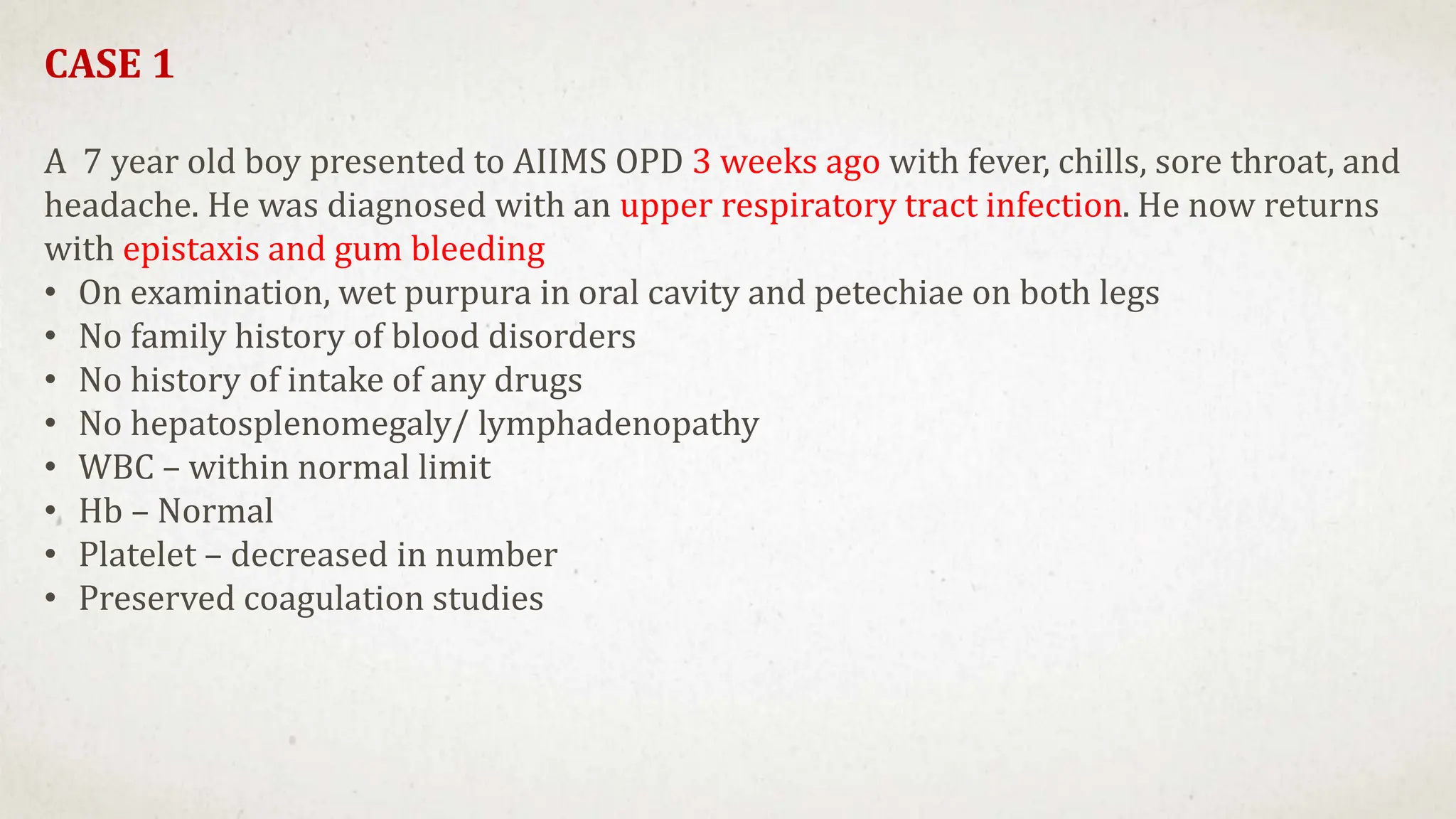
A 7 year old boy presented to AIIMS OPD 3 weeks ago with fever, chills, sore throat, and
headache. He was diagnosed with an upper respiratory tract infection. He now returns
with epistaxis and gum bleeding
• On examination, wet purpura in oral cavity and petechiae on both legs
• No family history of blood disorders
• No history of intake of any drugs
• No hepatosplenomegaly/ lymphadenopathy
• WBC – within normal limit
• Hb – Normal
• Platelet – decreased in number
• Preserved coagulation studies
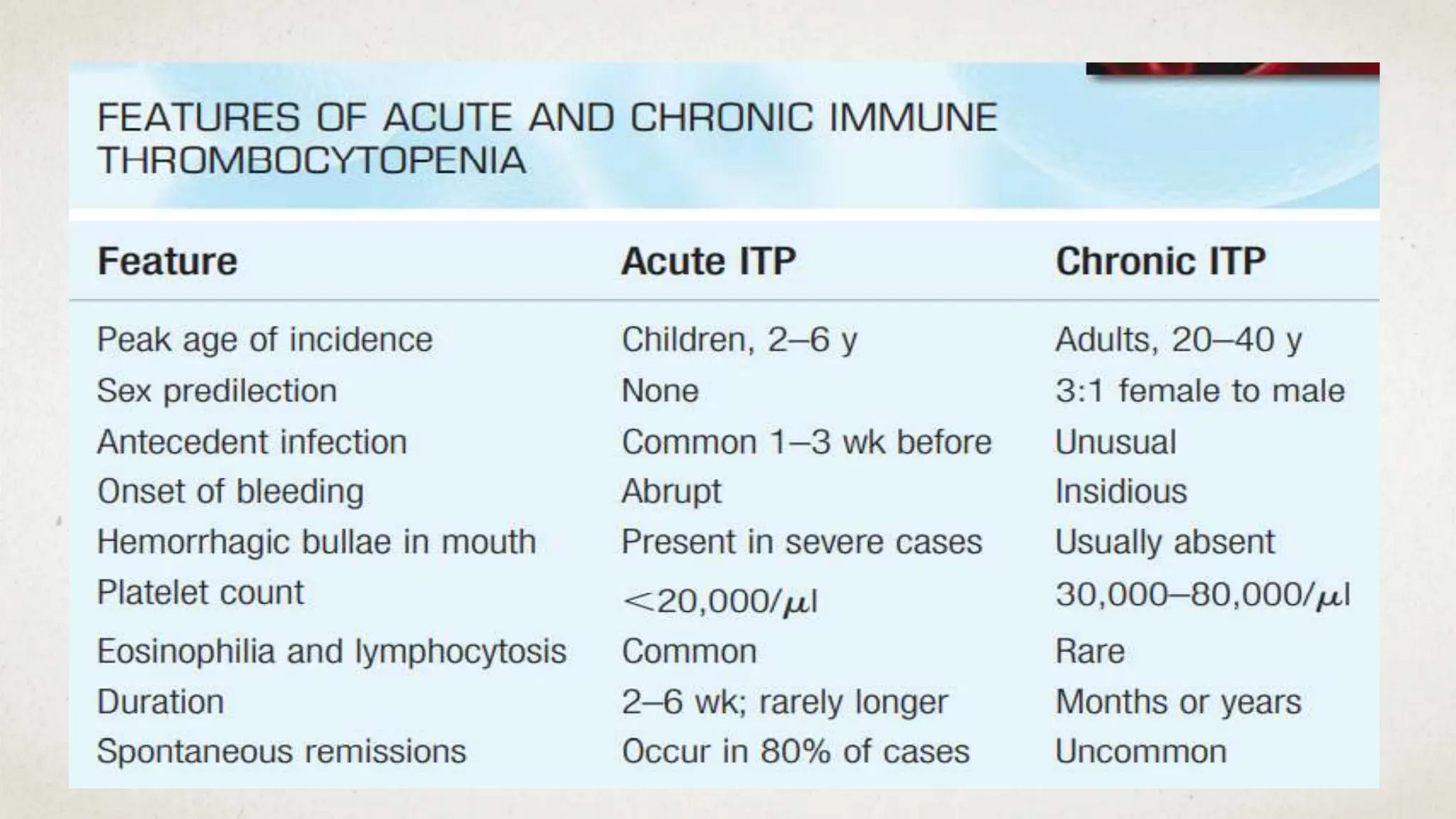
IMMUNE THROMBOCYTOPENIC PURPURA
• Occurs when platelets undergo premature destruction as a result of
autoantibody or immune complex deposition on their membranes.
• Diagnosis of exclusion.
• Characterized by peripheral thrombocytopenia, with a normal or increased
number of megakaryocytes present on bone marrow examination, and absence
of splenomegaly.
• Primary ITP refers to thrombocytopenia in which apparent exogenous etiologic
factors are lacking and in which diseases known to be associated with secondary
thrombocytopenia have been excluded.
• Secondary ITP causes include infections, lymphoproliferative disorders,
collagen vascular disorders etc.
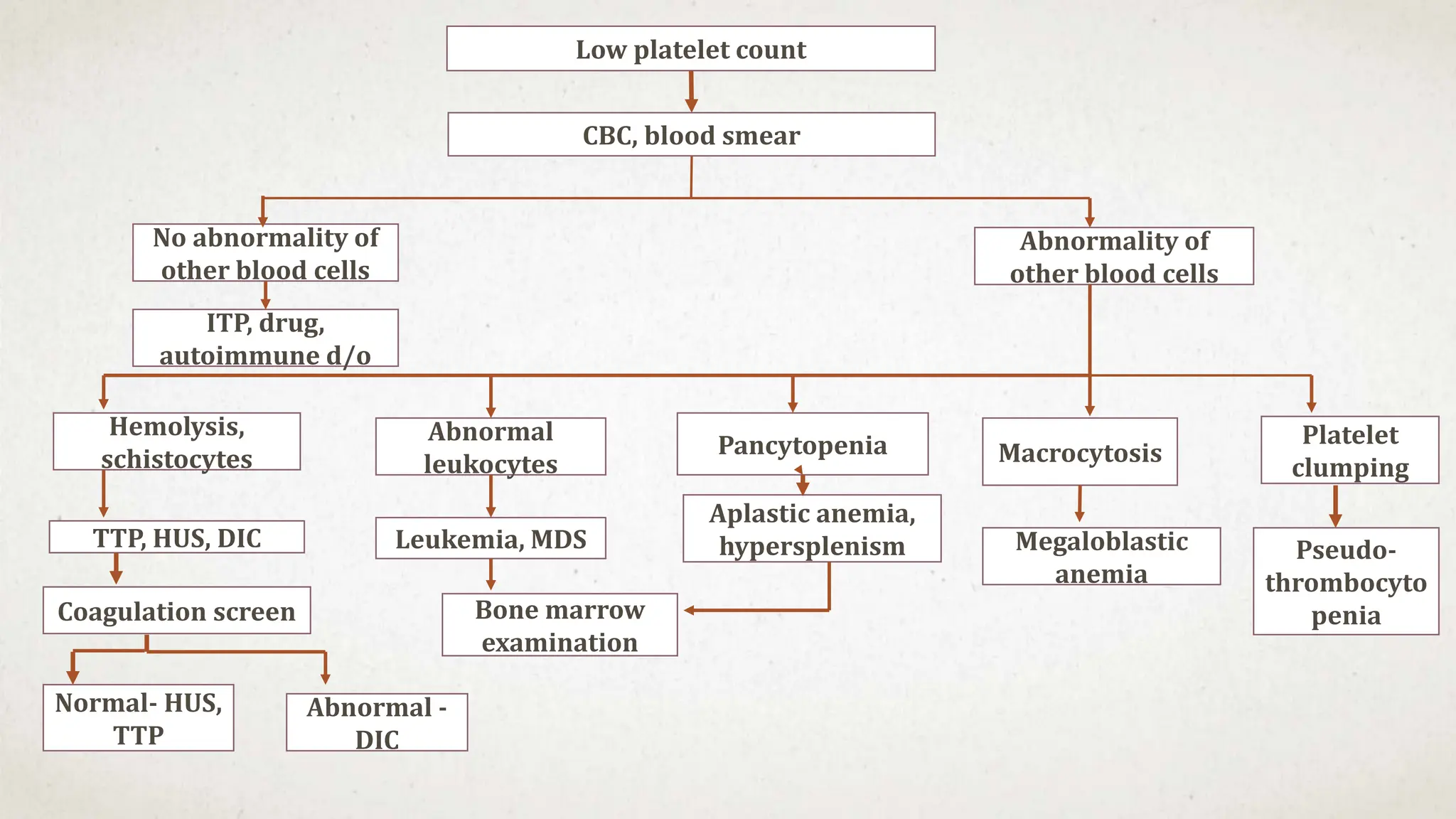
Low platelet count
CBC, blood smear
No abnormality of
other blood cells
Abnormality of
other blood cells
ITP, drug,
autoimmune d/o
Hemolysis,
schistocytes
Abnormal
leukocytes
Pancytopenia Macrocytosis
Platelet
clumping
TTP, HUS, DIC
Coagulation screen
Normal- HUS,
TTP
Leukemia, MDS
Aplastic anemia,
hypersplenism Megaloblastic
anemia
Pseudo-
thrombocyto
penia
Abnormal -
DIC
Bone marrow
examination
CASE 2
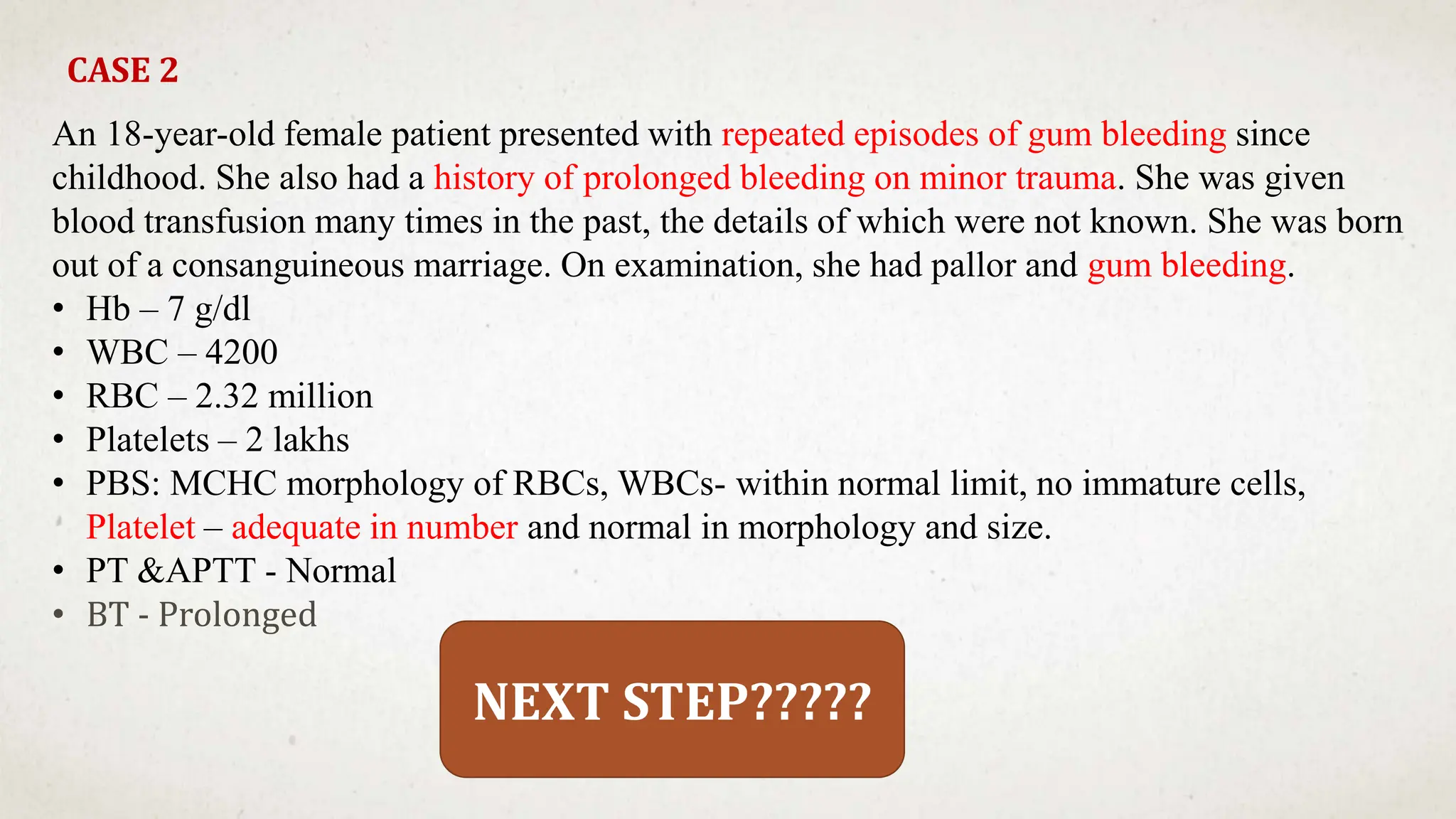
An 18-year-old female patient presented with repeated episodes of gum bleeding since
childhood. She also had a history of prolonged bleeding on minor trauma. She was given
blood transfusion many times in the past, the details of which were not known. She was born
out of a consanguineous marriage. On examination, she had pallor and gum bleeding.
• Hb – 7 g/dl
• WBC – 4200
• RBC – 2.32 million
• Platelets – 2 lakhs
• PBS: MCHC morphology of RBCs, WBCs- within normal limit, no immature cells,
Platelet – adequate in number and normal in morphology and size.
• PT &APTT - Normal
• BT - Prolonged
NEXT STEP?????
VWF Assay
Platelet
aggregometry
Flow cytometry
100 IU/dL
Gp IIb-IIIa deficient
Glanzmann’s
Thrombasthenia
Thrombasthenia/ afibrinogenemia
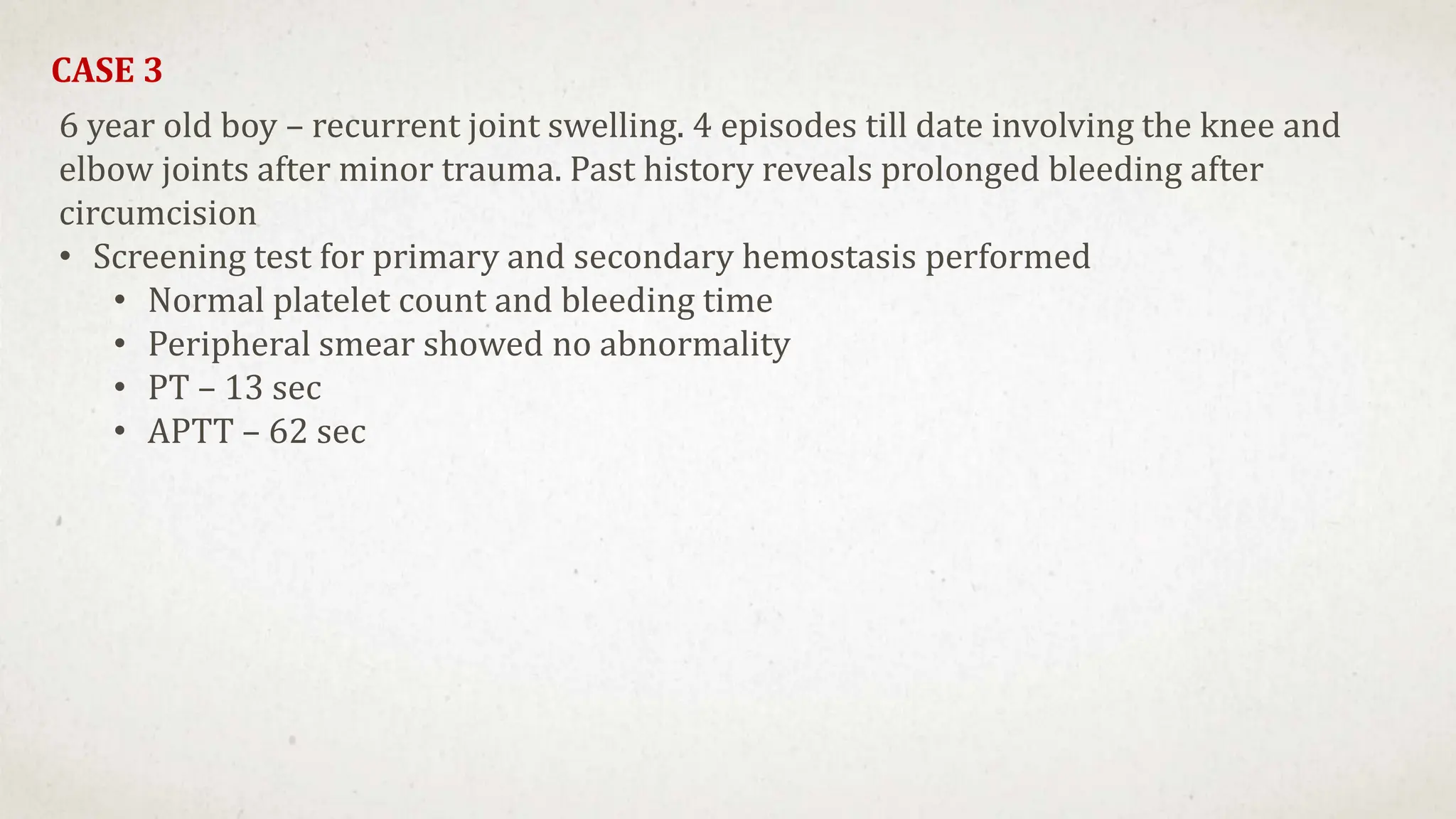
CASE 3
6 year old boy – recurrent joint swelling. 4 episodes till date involving the knee and
elbow joints after minor trauma. Past history reveals prolonged bleeding after
circumcision
• Screening test for primary and secondary hemostasis performed
• Normal platelet count and bleeding time
• Peripheral smear showed no abnormality
• PT – 13 sec
• APTT – 62 sec
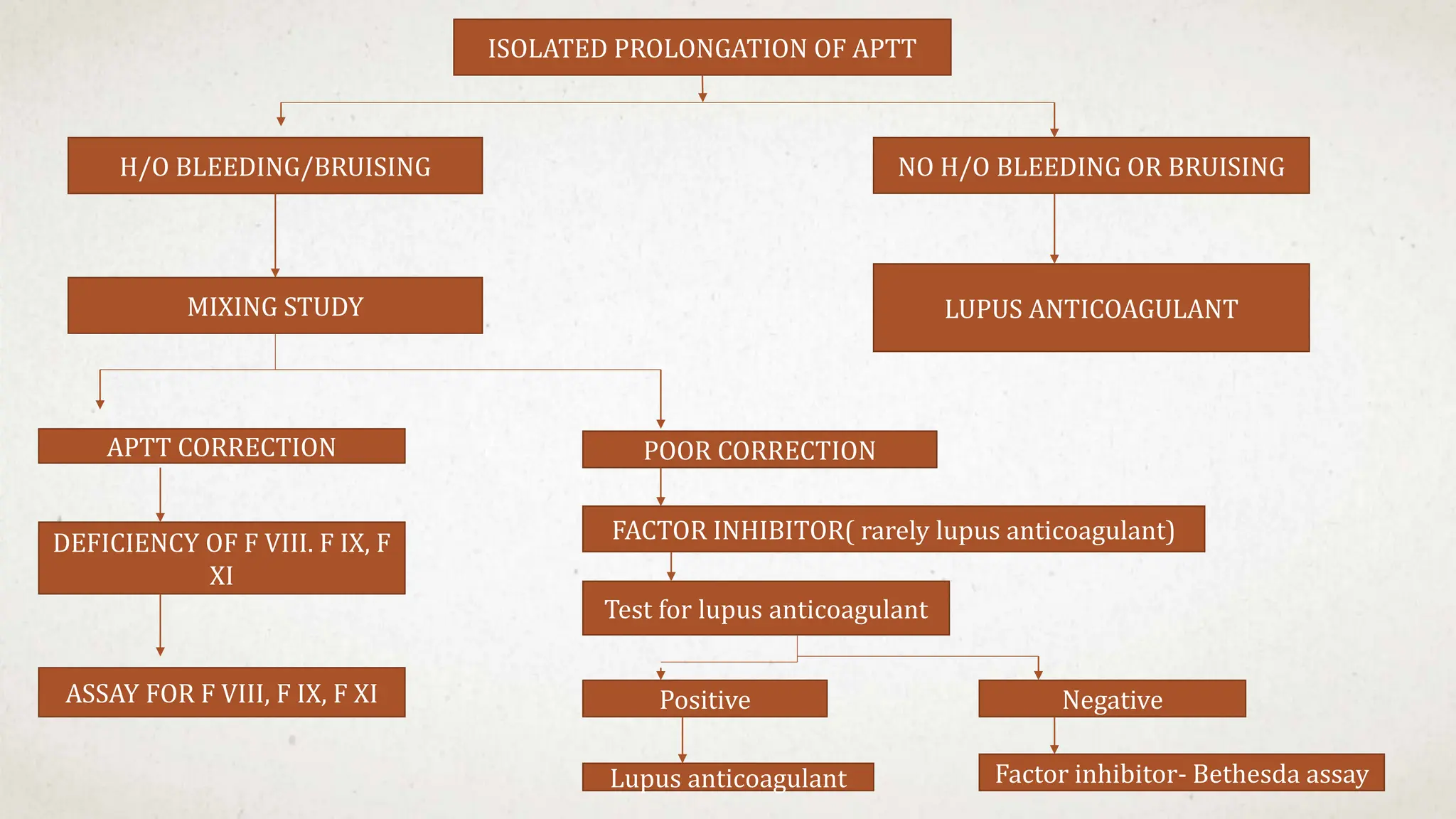
ISOLATED PROLONGATION OF APTT
H/O BLEEDING/BRUISING NO H/O BLEEDING OR BRUISING
MIXING STUDY LUPUS ANTICOAGULANT
APTT CORRECTION POOR CORRECTION
DEFICIENCY OF F VIII. F IX, F
XI
ASSAY FOR F VIII, F IX, F XI
FACTOR INHIBITOR( rarely lupus anticoagulant)
Test for lupus anticoagulant
Positive Negative
Factor inhibitor- Bethesda assay
Lupus anticoagulant
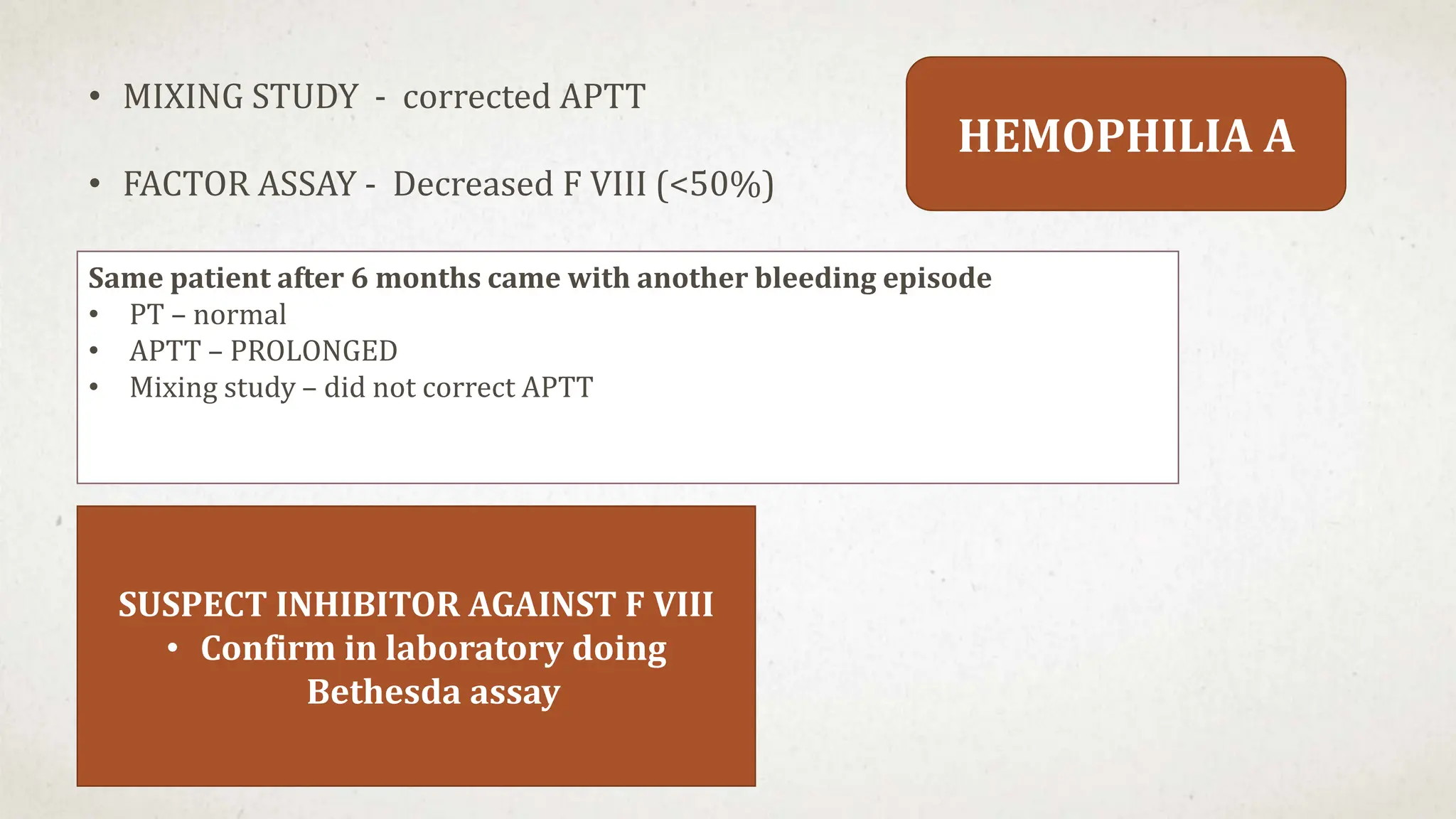
• MIXING STUDY - corrected APTT
• FACTOR ASSAY - Decreased F VIII (<50%)
HEMOPHILIA A
Same patient after 6 months came with another bleeding episode
• PT – normal
• APTT – PROLONGED
• Mixing study – did not correct APTT
SUSPECT INHIBITOR AGAINST F VIII
• Confirm in laboratory doing
Bethesda assay
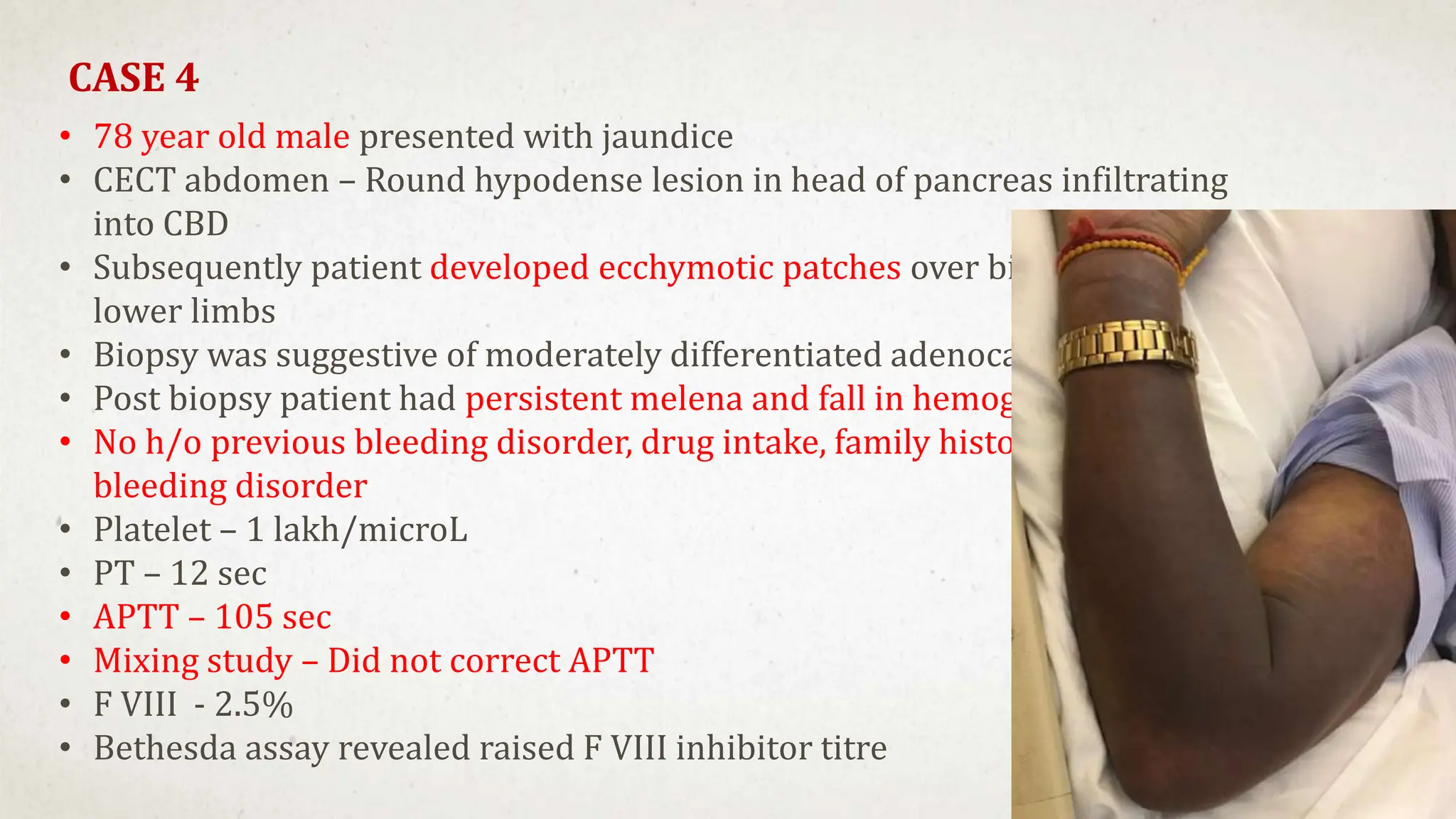
CASE 4
• 78 year old male presented with jaundice
• CECT abdomen – Round hypodense lesion in head of pancreas infiltrating
into CBD
• Subsequently patient developed ecchymotic patches over bilateral upper and
lower limbs
• Biopsy was suggestive of moderately differentiated adenocarcinoma
• Post biopsy patient had persistent melena and fall in hemoglobin
• No h/o previous bleeding disorder, drug intake, family history of any
bleeding disorder
• Platelet – 1 lakh/microL
• PT – 12 sec
• APTT – 105 sec
• Mixing study – Did not correct APTT
• F VIII - 2.5%
• Bethesda assay revealed raised F VIII inhibitor titre
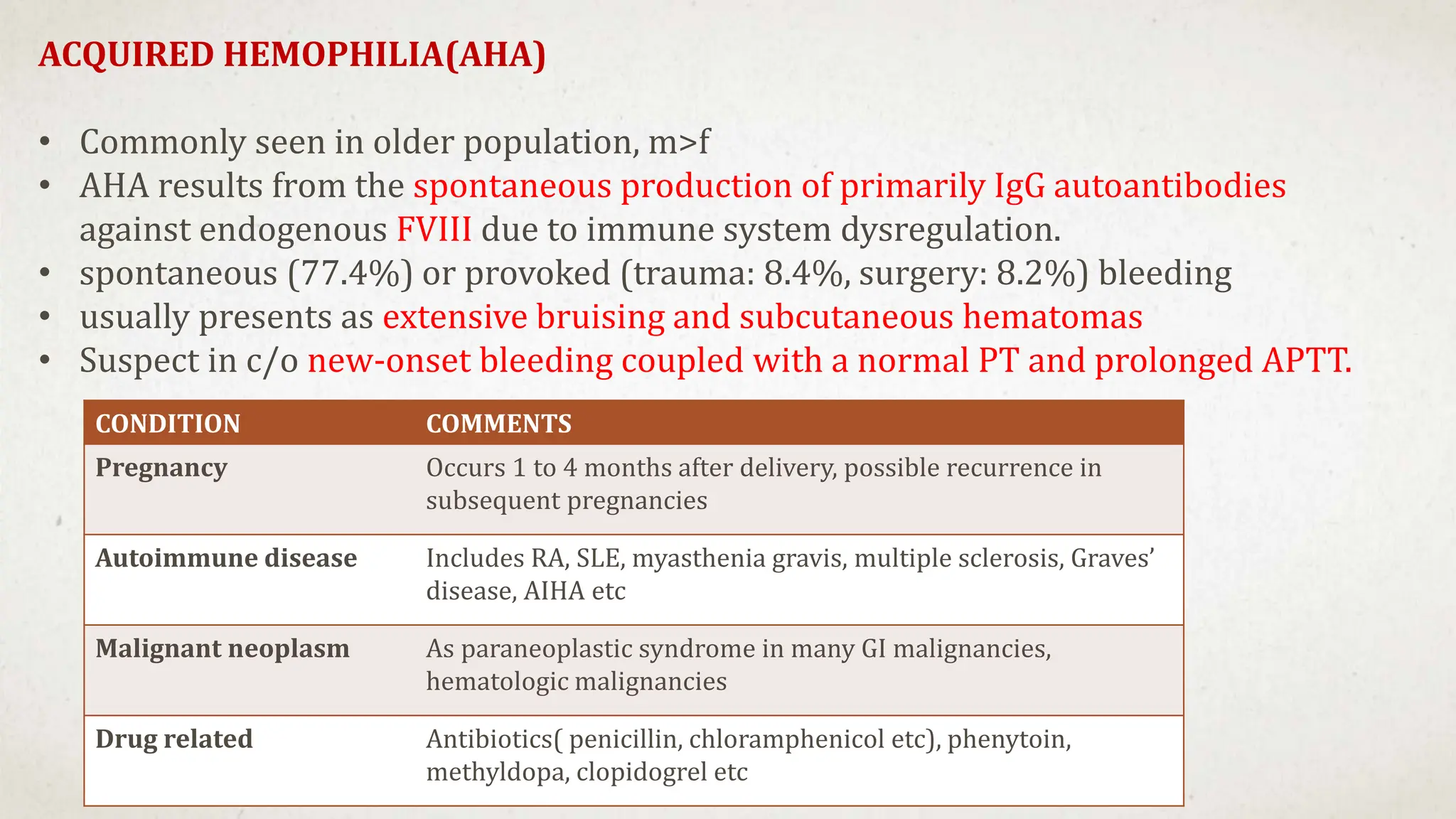
ACQUIRED HEMOPHILIA(AHA)
• Commonly seen in older population, m>f
• AHA results from the spontaneous production of primarily IgG autoantibodies
against endogenous FVIII due to immune system dysregulation.
• spontaneous (77.4%) or provoked (trauma: 8.4%, surgery: 8.2%) bleeding
• usually presents as extensive bruising and subcutaneous hematomas
• Suspect in c/o new-onset bleeding coupled with a normal PT and prolonged APTT.
CONDITION COMMENTS
Pregnancy Occurs 1 to 4 months after delivery, possible recurrence in
subsequent pregnancies
Autoimmune disease Includes RA, SLE, myasthenia gravis, multiple sclerosis, Graves’
disease, AIHA etc
Malignant neoplasm As paraneoplastic syndrome in many GI malignancies,
hematologic malignancies
Drug related Antibiotics( penicillin, chloramphenicol etc), phenytoin,
methyldopa, clopidogrel etc
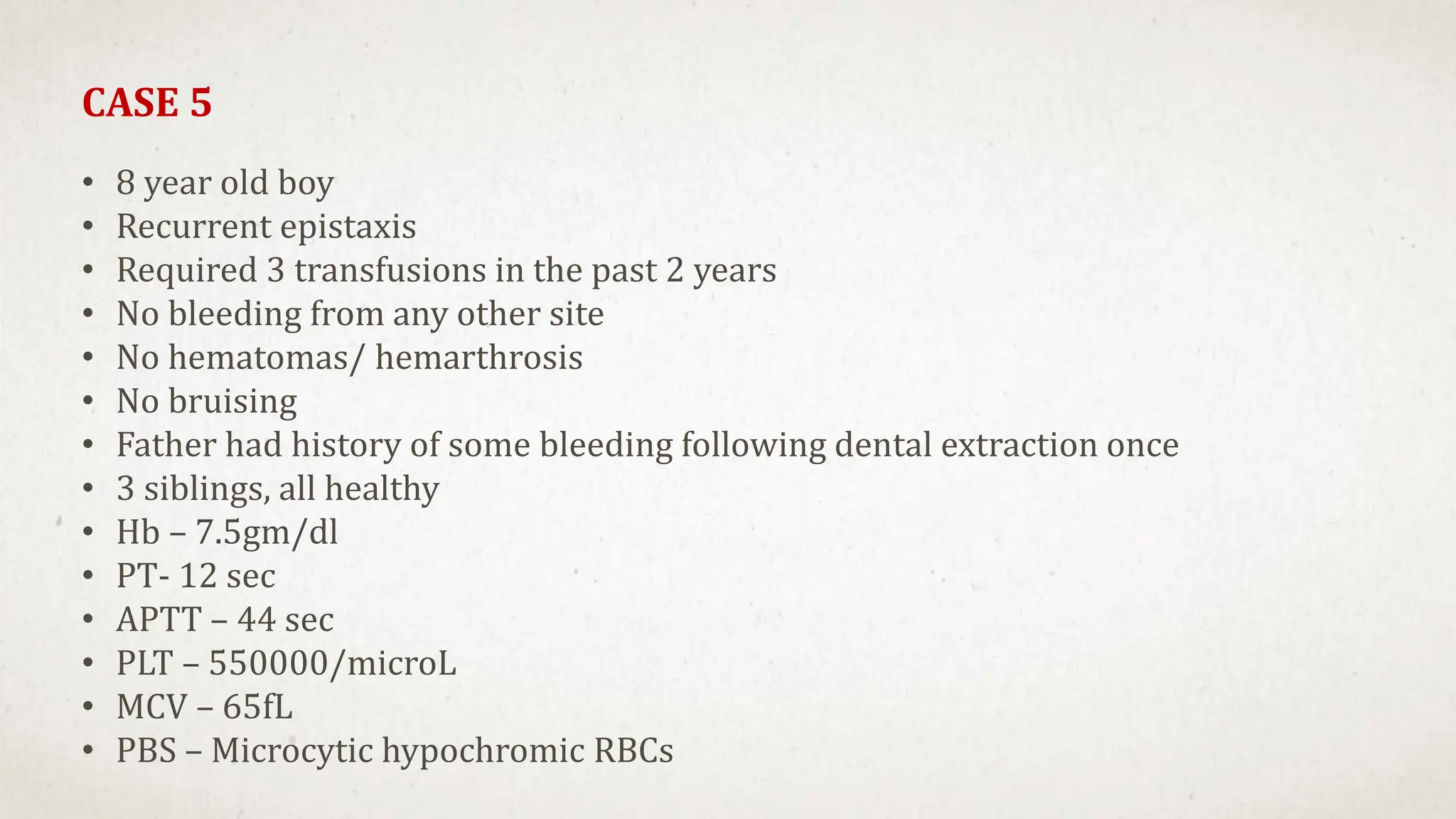
CASE 5
• 8 year old boy
• Recurrent epistaxis
• Required 3 transfusions in the past 2 years
• No bleeding from any other site
• No hematomas/ hemarthrosis
• No bruising
• Father had history of some bleeding following dental extraction once
• 3 siblings, all healthy
• Hb – 7.5gm/dl
• PT- 12 sec
• APTT – 44 sec
• PLT – 550000/microL
• MCV – 65fL
• PBS – Microcytic hypochromic RBCs
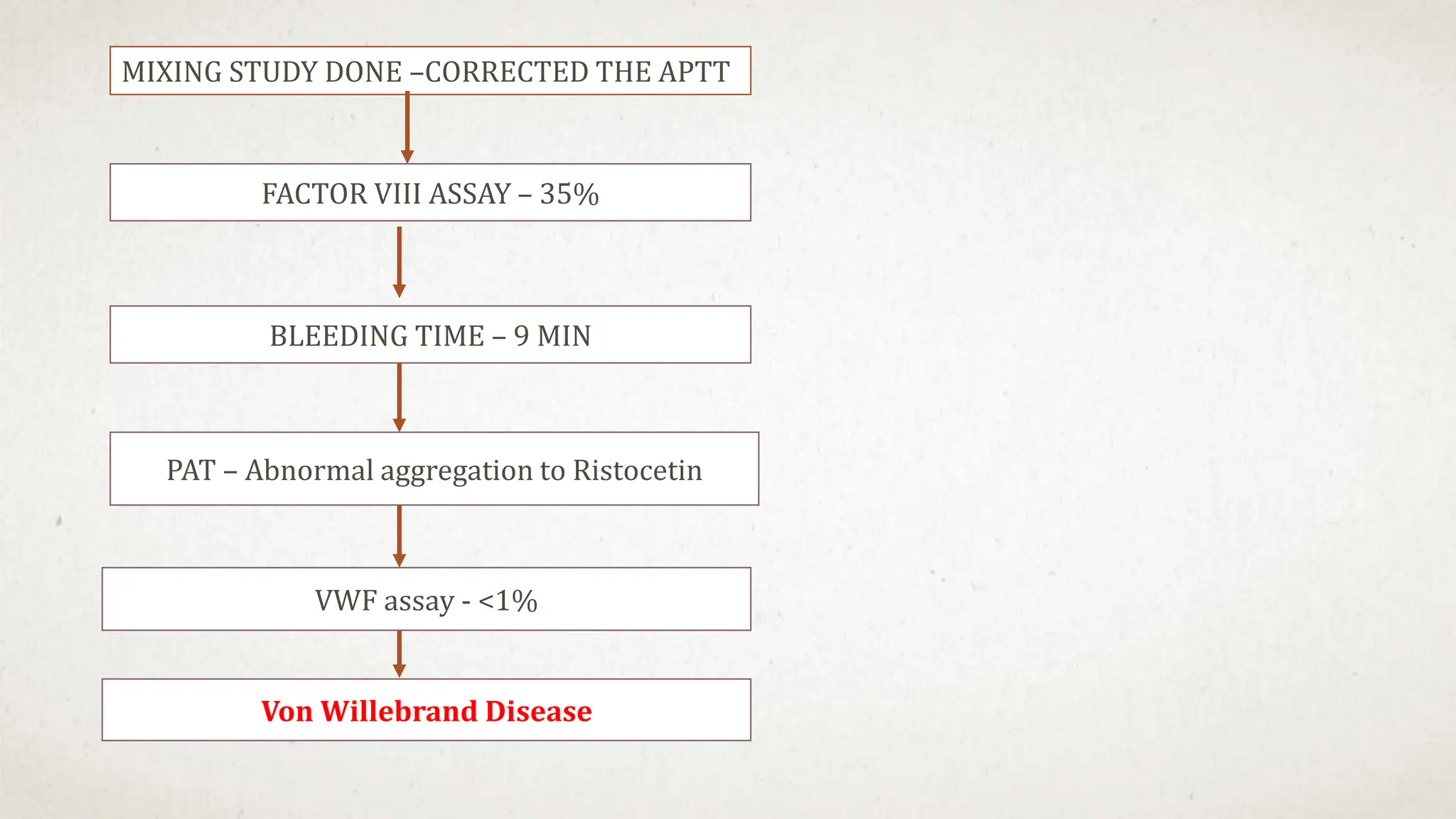
MIXING STUDY DONE –CORRECTED THE APTT
FACTOR VIII ASSAY – 35%
BLEEDING TIME – 9 MIN
PAT – Abnormal aggregation to Ristocetin
VWF assay - <1%
Von Willebrand Disease
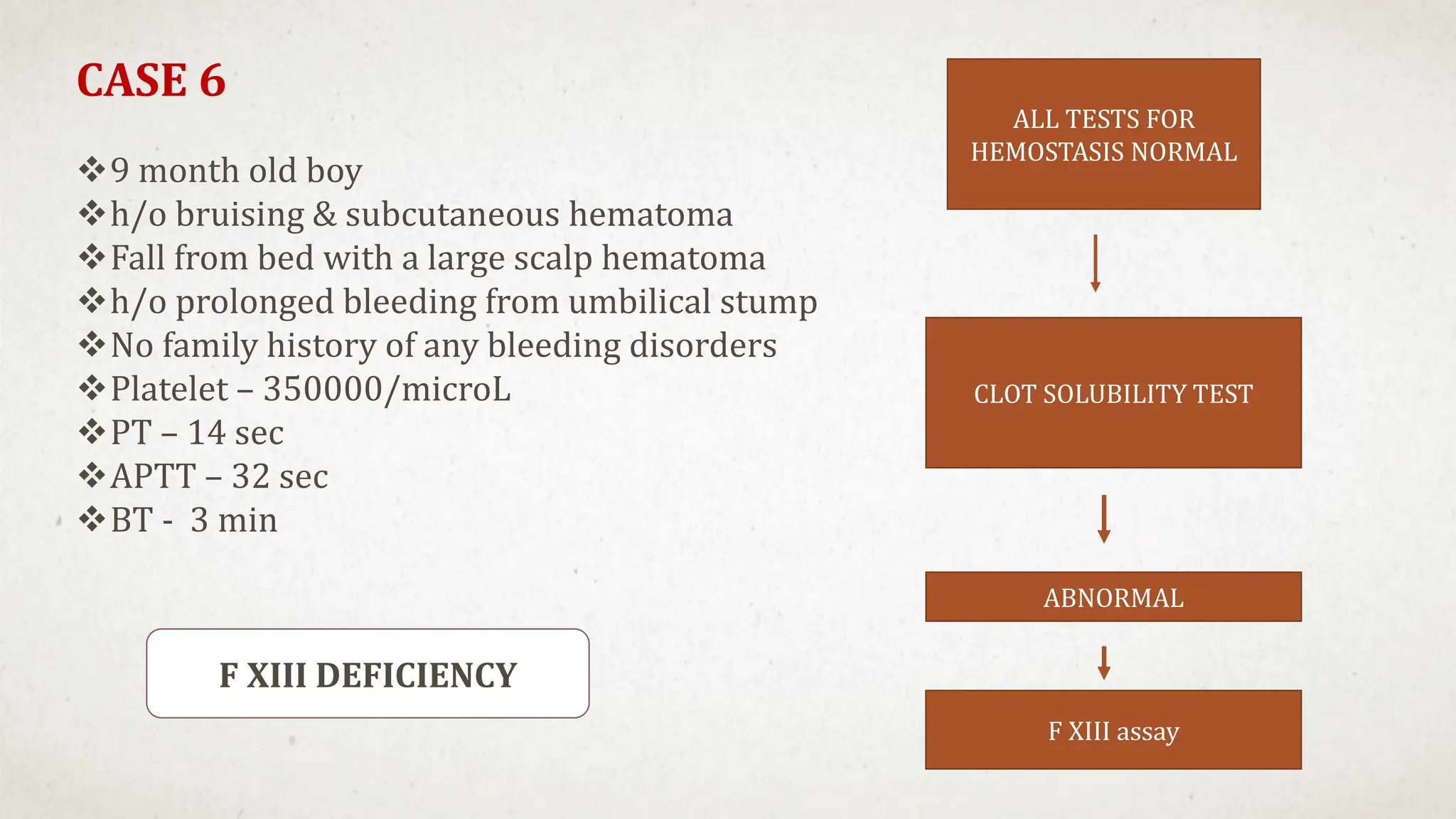
CASE 6
9 month old boy
h/o bruising & subcutaneous hematoma
Fall from bed with a large scalp hematoma
h/o prolonged bleeding from umbilical stump
No family history of any bleeding disorders
Platelet – 350000/microL
PT – 14 sec
APTT – 32 sec
BT - 3 min
ALL TESTS FOR
HEMOSTASIS NORMAL
CLOT SOLUBILITY TEST
ABNORMAL
F XIII assay
F XIII DEFICIENCY
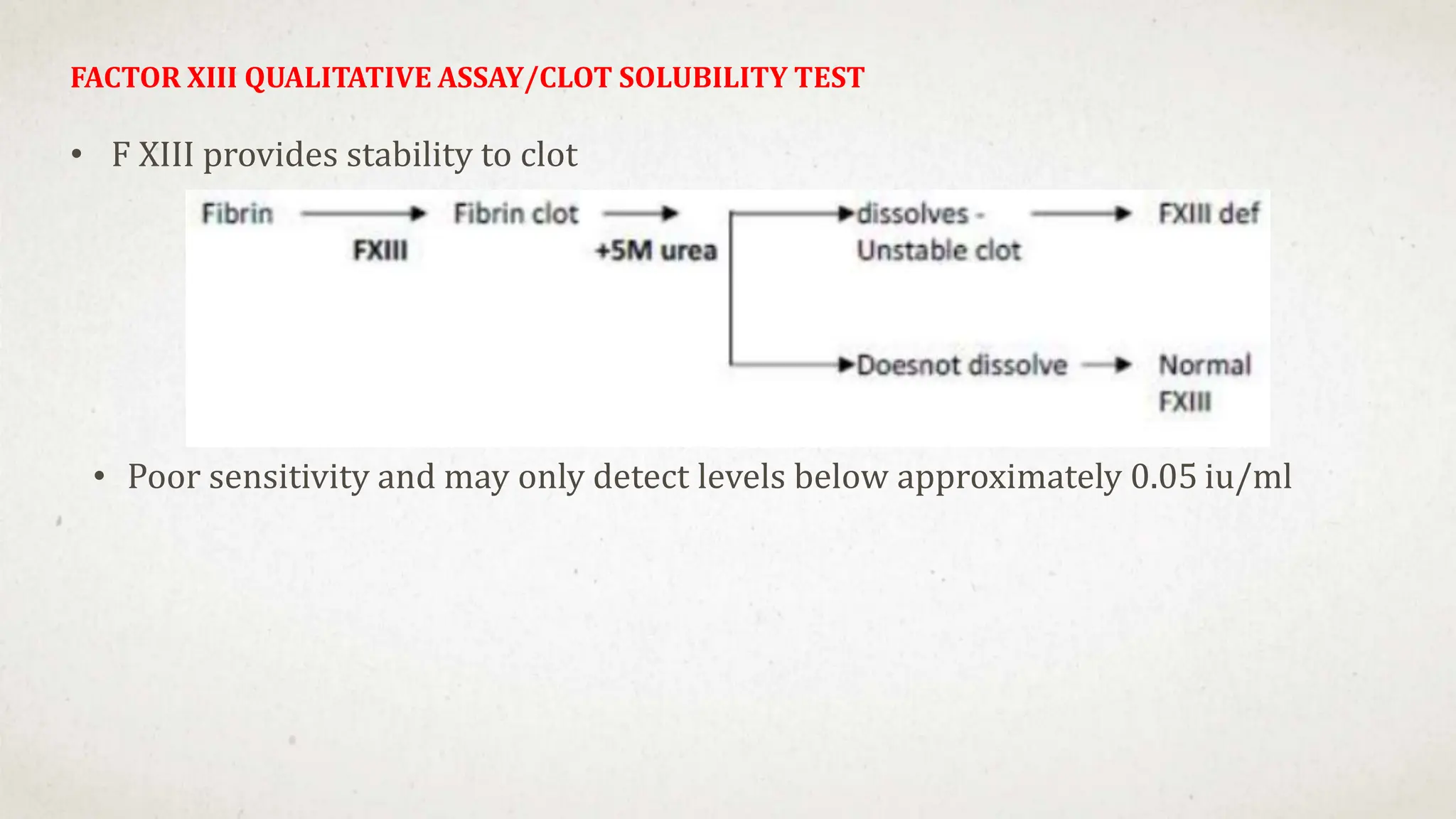
FACTOR XIII QUALITATIVE ASSAY/CLOT SOLUBILITY TEST
• F XIII provides stability to clot
• Poor sensitivity and may only detect levels below approximately 0.05 iu/ml
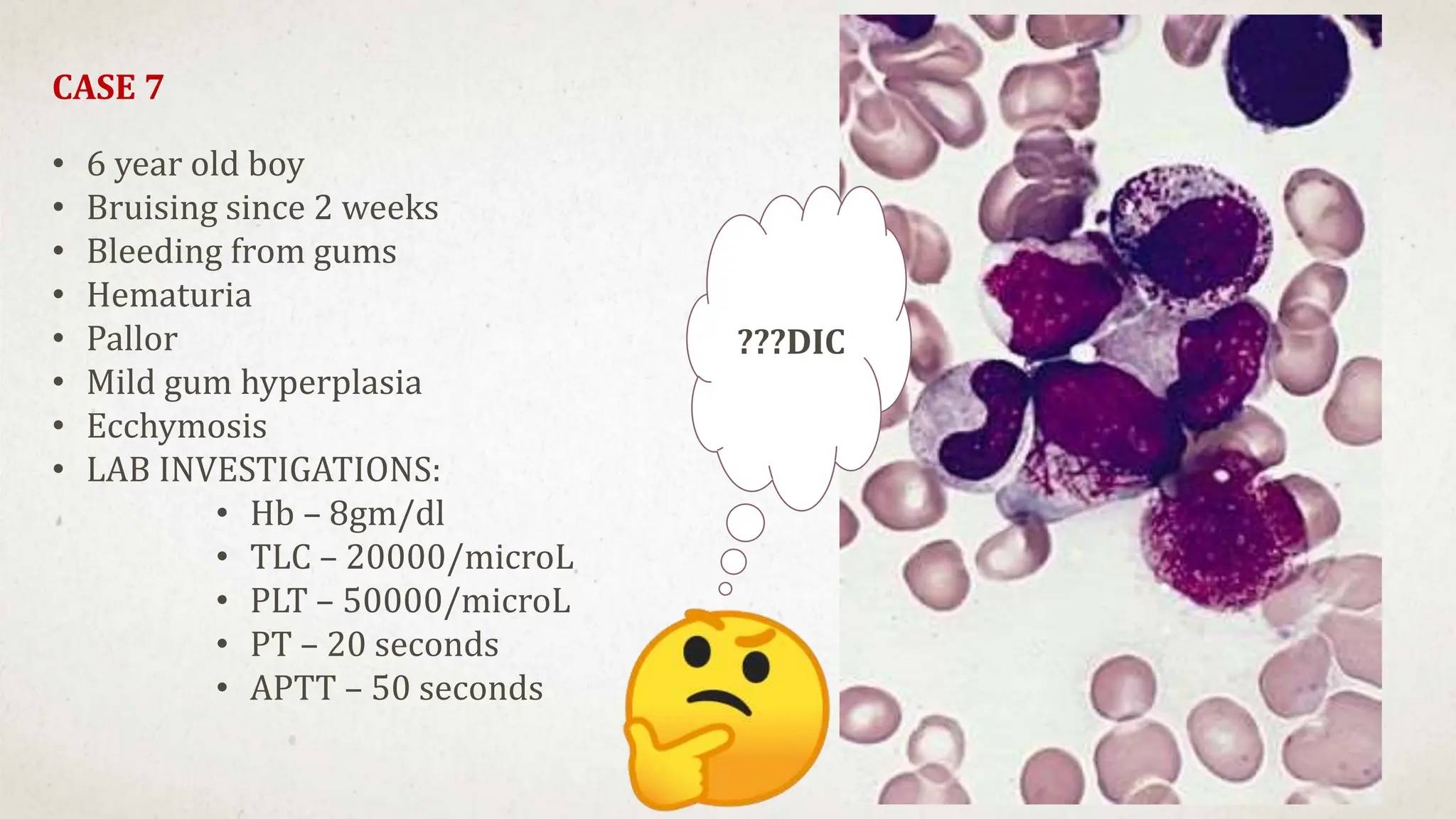
CASE 7
• 6 year old boy
• Bruising since 2 weeks
• Bleeding from gums
• Hematuria
• Pallor
• Mild gum hyperplasia
• Ecchymosis
• LAB INVESTIGATIONS:
• Hb – 8gm/dl
• TLC – 20000/microL
• PLT – 50000/microL
• PT – 20 seconds
• APTT – 50 seconds
???DIC
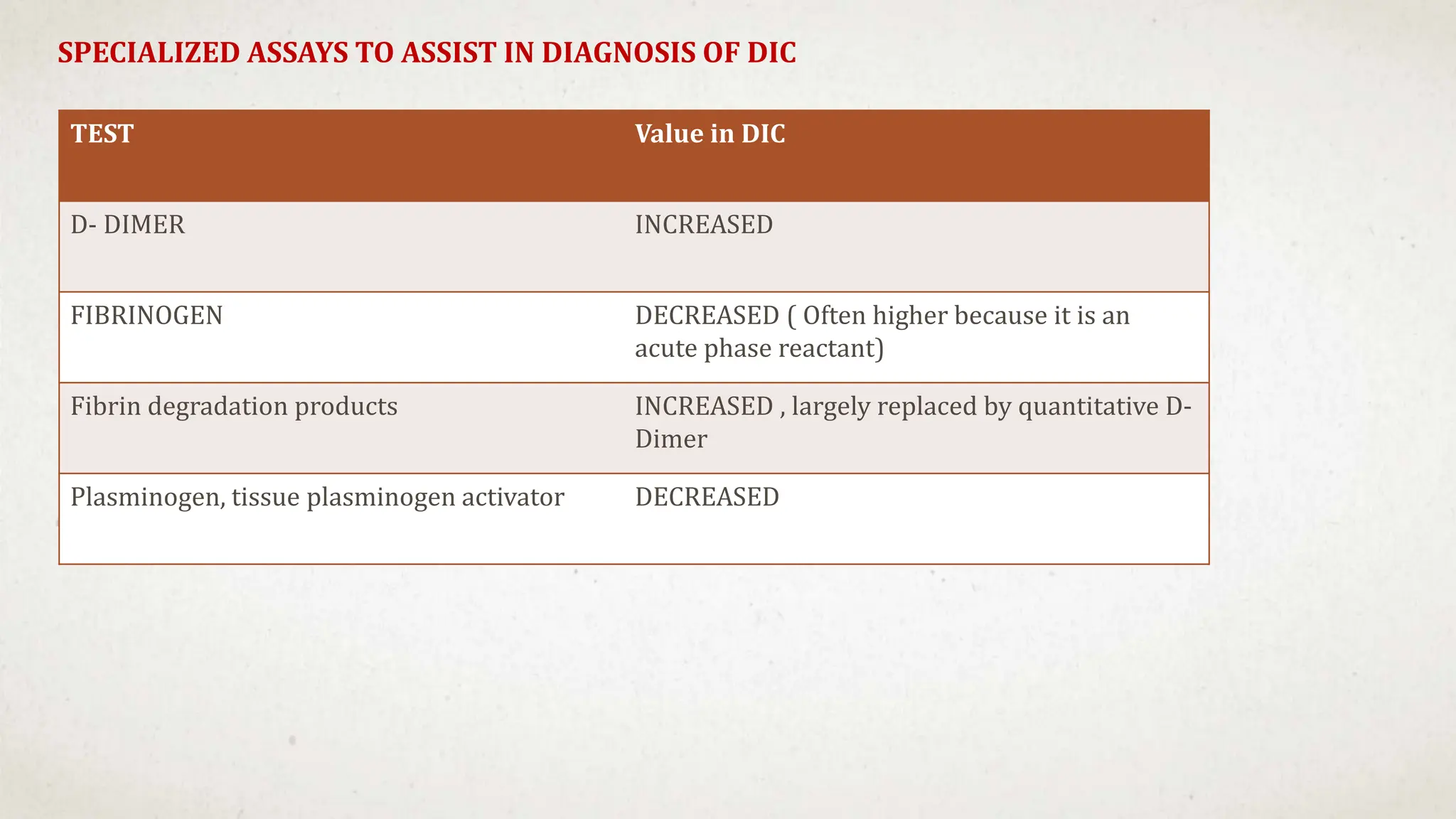
TEST Value in DIC
D- DIMER INCREASED
FIBRINOGEN DECREASED ( Often higher because it is an
acute phase reactant)
Fibrin degradation products INCREASED , largely replaced by quantitative D-
Dimer
Plasminogen, tissue plasminogen activator DECREASED
SPECIALIZED ASSAYS TO ASSIST IN DIAGNOSIS OF DIC
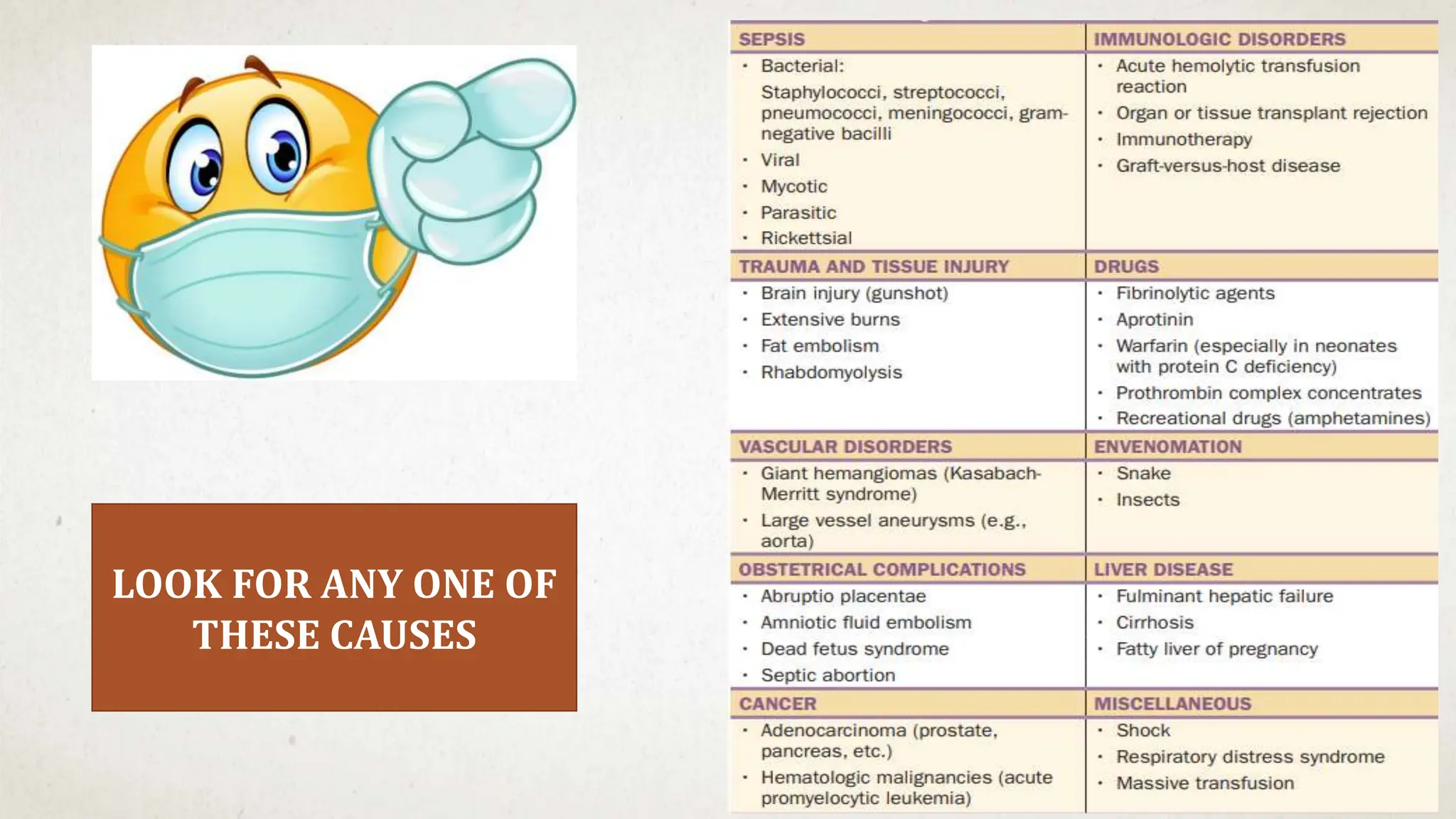
LOOK FOR ANY ONE OF
THESE CAUSES
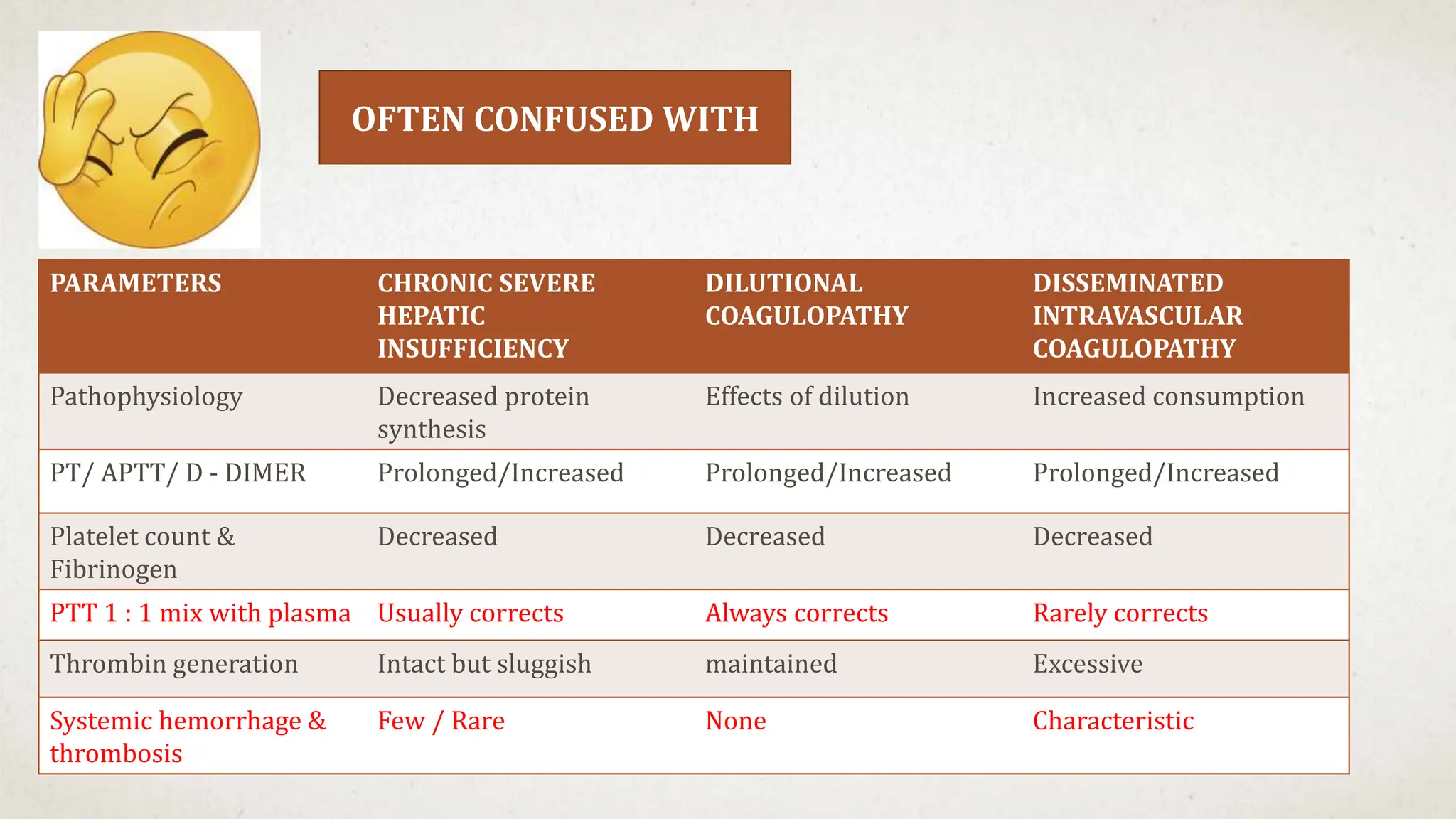
OFTEN CONFUSED WITH
PARAMETERS CHRONIC SEVERE
HEPATIC
INSUFFICIENCY
DILUTIONAL
COAGULOPATHY
DISSEMINATED
INTRAVASCULAR
COAGULOPATHY
Pathophysiology Decreased protein
synthesis
Effects of dilution Increased consumption
PT/ APTT/ D - DIMER Prolonged/Increased Prolonged/Increased Prolonged/Increased
Platelet count &
Fibrinogen
Decreased Decreased Decreased
PTT 1 : 1 mix with plasma Usually corrects Always corrects Rarely corrects
Thrombin generation Intact but sluggish maintained Excessive
Systemic hemorrhage &
thrombosis
Few / Rare None Characteristic
SUMMARY
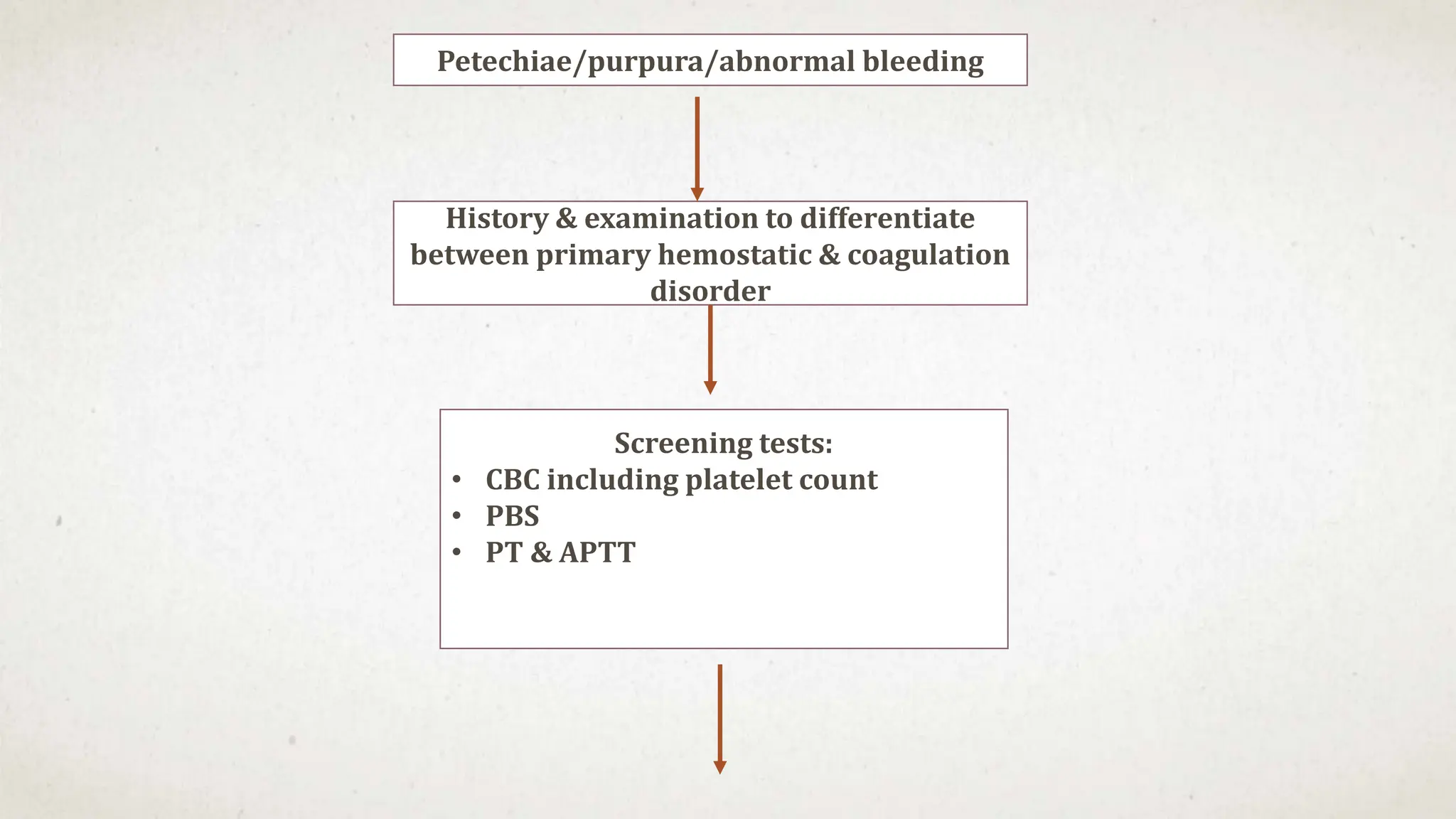
Petechiae/purpura/abnormal bleeding
History & examination to differentiate
between primary hemostatic & coagulation
disorder
Screening tests:
• CBC including platelet count
• PBS
• PT & APTT
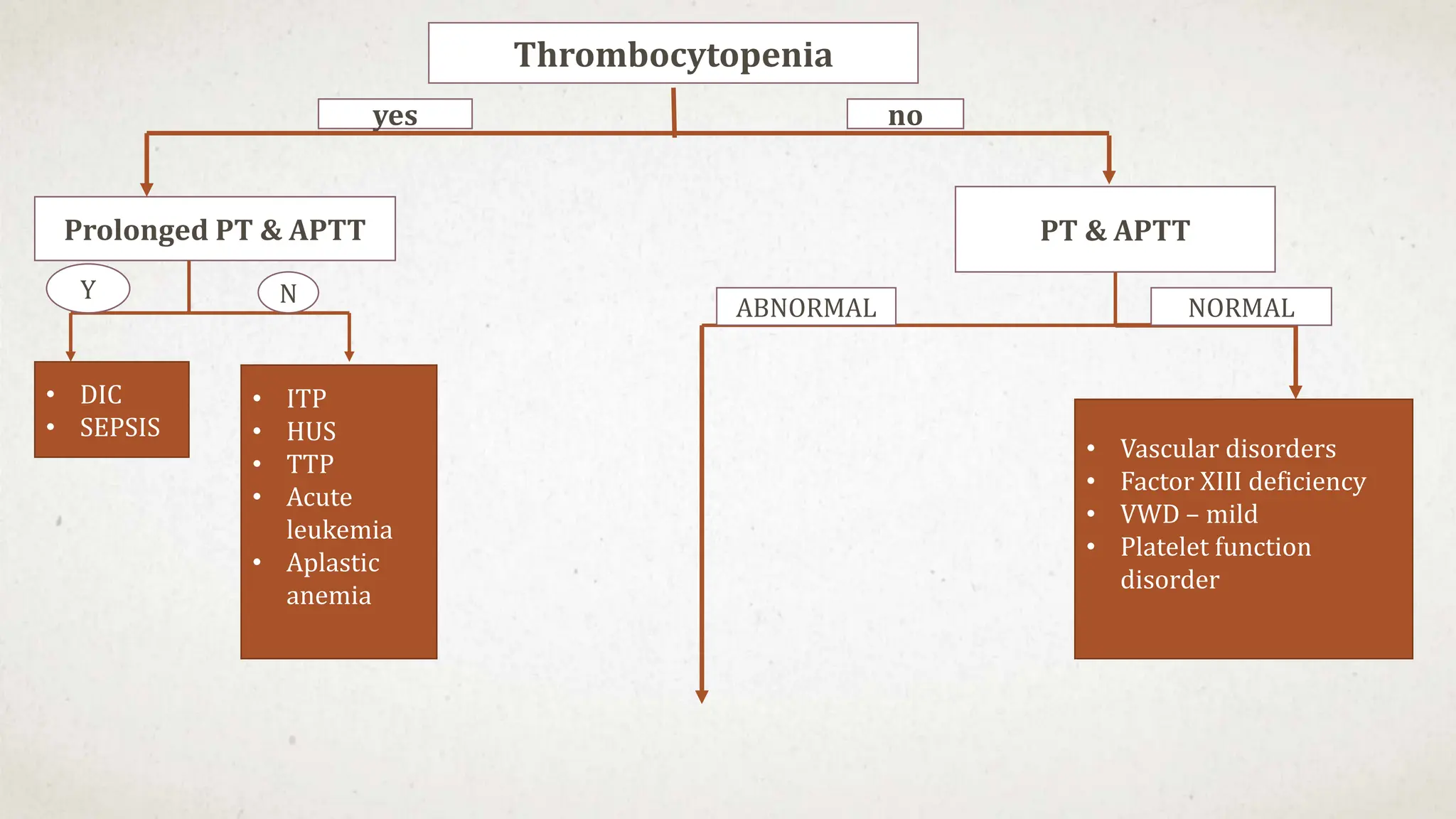
Thrombocytopenia
yes no
Prolonged PT & APTT
Y N
• DIC
• SEPSIS
• ITP
• HUS
• TTP
• Acute
leukemia
• Aplastic
anemia
PT & APTT
NORMAL
• Vascular disorders
• Factor XIII deficiency
• VWD – mild
• Platelet function
disorder
ABNORMAL
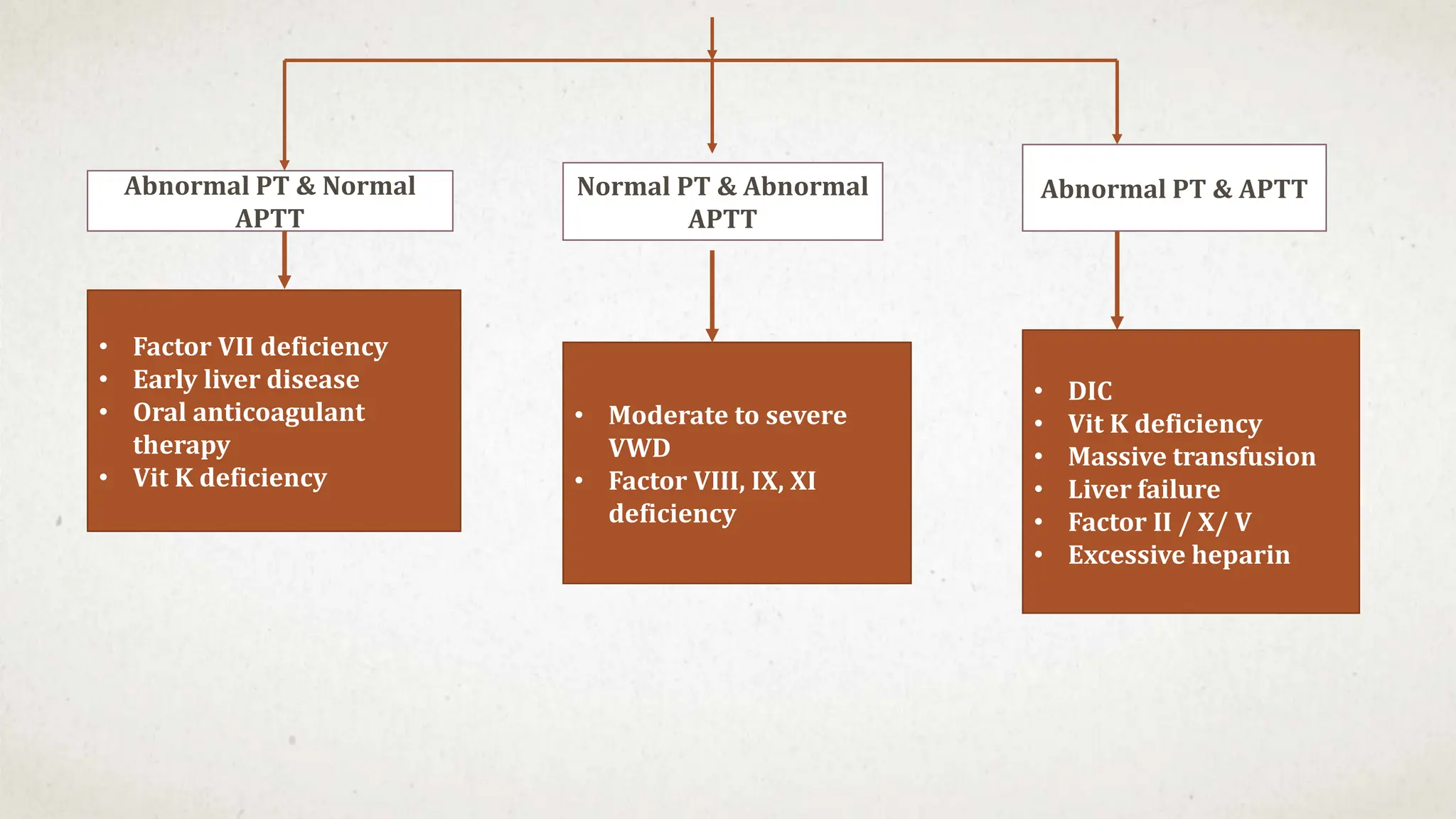
Abnormal PT & Normal
APTT
Normal PT & Abnormal
APTT
• Factor VII deficiency
• Early liver disease
• Oral anticoagulant
therapy
• Vit K deficiency
• Moderate to severe
VWD
• Factor VIII, IX, XI
deficiency
Abnormal PT & APTT
• DIC
• Vit K deficiency
• Massive transfusion
• Liver failure
• Factor II / X/ V
• Excessive heparin
THANK
YOU

APPROACH TO BLEEDING DISORDERS/PLATELET DISORDERS.pptx

  • 1.
    APPROACH TO BLEEDING DISORDERS PRESENTEDBY: DR. GREESHMA GOPINATH JUNIOR RESIDENT AIIMS PATNA MODERATOR: DR. SURABHI ASST. PROFESSOR AIIMS PATNA
  • 2.
    OVERVIEW  NORMAL HEMOSTASIS& ITS COMPONENTS  BLEEDING DISORDERS CLASSIFICATION  APPROACH TO BLEEDING DISORDERS  HISTORY & CLINICAL EXAMINATION  LABORATORY TESTS  CASE DISCUSSION  SUMMARY
  • 3.
    COMPONENTS OF NORMALHEMOSTASIS • Blood vessels • Platelets • Coagulation pathways • Fibrinolytic pathway PRIMARY HEMOSTASIS: Refers to the role of blood vessels and platelets in the initial response to a vascular injury SECONDARY HEMOSTASIS: Describes the activation of a series of coagulation proteins in the plasma to form a fibrin clot
  • 4.
    HEMOSTATIC PROPERTIES OFENDOTHELIAL CELLS
  • 5.
    ROLE OF PLATELETSIN HEMOSTASIS FUNCTION CHARACTERISTICS ADHESION: Platelets roll and cling to non-platelet surfaces • Reversible • In arteries & arterioles VWF necessary • VWF binds with platelet through GP Ib/IX AGGREGATION: Platelets adhere to each other. • Irreversible • Requires fibrinogen • Fibrinogen binds to GP IIb/IIIa receptors on adjacent platelets and joins them together in presence of calcium. SECRETION: Platelets discharge the contents of their granules. • Irreversible • Occurs during adhesion & aggregation Platelet alpha granules Platelet dense granules  Beta- thromboglobulin  Factor V  Factor XI  Protein S  Fibrinogen  VWF  Platelet derived growth factor  Platelet factor 4  Adenosine di phosphate ( activates neighboring platelets)  Adenosine tri phosphate  Calcium  Serotonin ( vasoconstrictor)
  • 8.
  • 9.
  • 10.
  • 11.
    VASCULAR DISORDERS • HEREDITARY •ACQUIRED • PURPURAS OF UNKNOWN ORIGIN PLATELET DISORDERS • QUALITATIVE • QUANTITATIVE COAGULATION DISORDERS • INHERITED • ACQUIRED BLEEDING DISORDERS CLASSIFICATION
  • 12.
    VASCULAR DISORDERS HEREDITARY ACQUIRED PURPURASOF UNKNOWN ORIGIN Hereditary haemorrhagic telangiectasia Allergic purpura (Henoch- Schönlein purpura) Purpura simplex (easy bruising) Haemangioma- thrombocytopenia syndrome Drug-induced vascular purpuras Psychogenic purpura Ehlers-Danlos syndrome and other genetic disorders Vitamin C deficiency (scurvy)
  • 13.
    PLATELET ABNORMALITIES QUALITATIVE ABNORMALITIES DISORDERSOF PLATELET AGGREGATION • Glanzmann thrombasthenia • Hereditary afibrinogenemia • Acquired defect of platelet aggregation • Acquired VWD • Acquired uremia DISORDERS OF PLATELET ADHESION • Bernard Soulier Syndrome • Von- Willibrand disease • Acquired defect of platelet adhesion DISORDERS OF PLATELET SECRETION: • Storage pool disorders • Thromboxane pathway disorders • Drug inhibition of prostaglandin pathways
  • 14.
    ARTIFACTUAL THROMBOCYTOPENIA:  Plateletclumping caused by anticoagulant- dependent immunoglobulin(pseudo thrombocytopenia)  Platelet satellitism  Giant platelets DECREASED PLATELET PRODUCTION:  Hypoplasia of megakaryocytes  Ineffective thrombopoiesis  Disorders of thrombopoietic control  Hereditary thrombocytopenia INCREASED PLATELET DESTRUCTION:  IMMUNOLOGIC  Acute & chronic ITP  Drug induced  Heparin induced thrombocytopenia  Neonatal alloimmune thrombocytopenia  Post transfusion purpura  Secondary autoimmune thrombocytopenia  NON-IMMUNE  DIC  Thrombotic microangiopathies(TTP, HUS)  Gestational thrombocytopenia  Infection/sepsis ABNORMAL PLATELET DISTRIBUTION/POOLING:  Disorders of the spleen (neoplastic, congestive, infiltrative, infectious, of unknown cause)  Hypothermia  Dilution of platelets with massive transfusions  Kasabach- Meritt syndrome QUANTITATIVE ABNORMALITIES
  • 15.
    COAGULATION DISORDERS INHERITED DISORDERSOF COAGULATION  X – linked recessive traits  Haemophilia A  Haemophilia B  Autosomal Recessive traits  Factor XI, V, II, VII, X, XII, XIII deficiency  Afibrinogenemia  Autosomal Dominant traits  Von Willebrand Disease  Dysfibrinogenemia  Combined abnormalities  Associated with F VIII deficiency  Miscellaneous  HMWK deficiency  Prekallikrein deficiency ACQUIRED DISORDERS OF COAGULATION  Liver Disease  Deficiencies of Vit. K dependent coagulation factors  Hemorrhagic disease of newborn  Malabsorption of Vit K  Nutritional deficiency  Drugs  Accelerated destruction of coagulation factors  DIC  Fibrinolysis (thrombolytic agents, tumors etc)  Inhibitors of coagulation  Specific inhibitors  Anti – phospholipid protein antibodies  Miscellaneous  After massive transfusion  After extracorporeal circulation  Drugs  Other disorders( polycythemia vera, amyloidosis, nephrotic syndrome etc)
  • 16.
    APPROACH TO DIAGNOSISOF BLEEDING DISORDERS 1. HISTORY 2. CLINICAL EXAMINATION 3. LABORATORY INVESTIGATIONS
  • 17.
    WHO SHOULD BE INVESTIGATED??? Bleedingfrom umbilical stump Newborn/ infant with intracranial bleed Hematomas/ hemarthrosis Mucocutaneous purpura Bleeding after circumcision Recurrent / severe epistaxis Bleeding gums not explained by dental hygiene Menorrhagia in absence of any uterine anomalies Serious hemorrhagic complication after a surgery
  • 18.
  • 19.
    WHO??? Patient’s age, sex,family history of bleeding disorder WHEN??? Any association with a disease state, trauma, surgery or drug ingestion WHERE??? The site/ sites of bleeding – skin/ mucous membrane/ GI tract / joints / muscles WHAT??? The physical characteristics of bleeding – petechiae/ purpura/ ecchymosis/ hematoma
  • 20.
    • PHYSICAL EXAMINATION •For detecting gross evidence of bleeding and bruising • Hepatomegaly / splenomegaly/ lymphadenopathy • Fever present or not
  • 21.
    PARAMETER PLATELET/VASCULAR DISORDER COAGULATION DISORDER Commonlyaffected sex FEMALE MALE Family history OFTEN NEGATIVE (as most cases are acquired) OFTEN POSITIVE (as most cases are inherited) Petechiae, bleeding gum, epistaxis, menorrhagia Common Rare Deep hematoma(muscle bleeding), hemarthrosis Not seen Common Delayed bleeding( recurrence of bleeding from same site hours or days following injury) Not seen Characteristic (12 to 24 hours after injury) Previous history of bleeding Not present Present since early childhood
  • 22.
    • LABORATORY INVESTIGATIONS BASICSCREENING TESTS FOR PATIENTS WITH HEMORRHAGIC COMPLICATIONS  Automated complete blood cell count (CBC with platelet count & mean platelet volume)  Peripheral blood smear review  Bleeding time / platelet function assay  Prothrombin time  Partial thromboplastin time
  • 23.
    SCREENING TESTS FORPRIMARY HEMOSTASIS CAUSES OF PROLONGED BLEEDING TIME • THROMBOCYTOPENIA • DISORDERS OF PLATELET FUNCTION • VASCULAR DISORDERS • INHERITED DISORDERS OF COAGULATION • Von Willebrand disease • Afibrinogenemia • CBC & PERIPHERAL SMEAR  Platelet count & morphology  Presence of blasts  Presence of fragmented cells • BLEEDING TIME  Assesses the formation of primary hemostatic plug  Normal range is 2 to 7 minutes  Done by modified Ivy’s method • PLATELET FUNCTION ANALYZER(PFA) - 100
  • 24.
    GIANT PLATELETS • BERNARD– SOULIER SYNDROME • GRAY PLATELET SYNDROME • ITP • MDS • MPN
  • 25.
    SPECIFIC TESTS FORPLATELET FUNCTION • PLATELET AGGREGOMETRY  Diagnosis of inherited/acquired platelet function defects  Performed using a specialized photometer called a light transmittance aggregometer  PRINCIPLE: change in light transmission after addition of a panel of agonists
  • 26.
    • FLOW CYTOMETRY Measurement of platelet glycoproteins and activation markers
  • 27.
    SCREENING TESTS FORSECONDARY HEMOSTASIS • PROTHROMBIN TIME: • Measure of extrinsic and common pathways • Normal range is 11 to 16 seconds • Tissue thromboplastin and calcium are added to platelet poor plasma and clotting time of mixture noted CAUSES OF PROLONGATION OF PT Vitamin K deficiency Oral anticoagulant therapy DIC Inherited deficiency of a coagulation factor in extrinsic or common pathway ( VII, X, V, II, I)
  • 28.
    • ACTIVATED PARTIALTHROMBOPLASTIN TIME(APTT) • Platelet poor plasma incubated with an activator – phospholipid and calcium added – clotting time noted • Measure of intrinsic and common pathways • Normal range 30 to 40 sec CAUSES OF PROLONGATION OF APTT Inherited deficiency of factor VIII or IX & other coagulation factors in intrinsic and common pathways Circulating inhibitors DIC Heparin Liver disease Vitamin K deficiency • THROMBIN TIME • Thrombin reagent + platelet poor plasma, time for clot formation noted • Normal 8 to 12 sec CAUSES OF PROLONGATION OF THROMBIN TIME  Disorders of fibrinogen  Presence of heparin in plasma  Chronic liver disease  Fibrinogen/ fibrin degradation products.
  • 29.
    SPECIFIC TESTS FORCOAGULATION PHASE • MIXING STUDY BASED ON PT/APTT:  To determine factor deficiency or presence of inhibitor  Abnormal PT/APTT repeated using 50:50 mixture of normal& patient’s plasma and whether normalization of previously prolonged test occurs is noted
  • 31.
    GENERAL APPROACH FORINVESTIGATION OF A BLEEDING DISORDER SUSPECTED BLEEDING DISORDER ASCERTAIN NATURE OF BLEEDING DISORDER( Whether hereditary or acquired / vascular or platelet or coagulation) PERFORM SCREENING TESTS PERFORM SPECIFIC TEST(S) DEPENDING ON RESULT OF SCREENING TEST SPECIFIC DIAGNOSIS
  • 32.
    INTERPRETATION OF SCREENINGTESTS OF HEMOSTASIS BT PC PT APTT HEMOSTATIC DEFECT COMMON CAUSES I N N N Platelet function, vascular disorder VWD, aspirin, uremia, storage pool defect I D N N Thrombocytopenia ITP, secondary causes, drugs N N I N Extrinsic pathway Oral anticoagulants, F VII deficiency, vitamin K deficiency N N N I Intrinsic pathway Hemophilia A or B, VWD, Inhibitors, Heparin N N I I Common pathway Vit. K deficiency, heparin, deficiency of V, X, II, I, oral anticoagulants I D I I Multiple pathways DIC, liver disease N N N N - F XIII deficiency, mild VWD, vascular disorder
  • 33.
    CASE 1 A 7year old boy presented to AIIMS OPD 3 weeks ago with fever, chills, sore throat, and headache. He was diagnosed with an upper respiratory tract infection. He now returns with epistaxis and gum bleeding • On examination, wet purpura in oral cavity and petechiae on both legs • No family history of blood disorders • No history of intake of any drugs • No hepatosplenomegaly/ lymphadenopathy • WBC – within normal limit • Hb – Normal • Platelet – decreased in number • Preserved coagulation studies
  • 34.
    IMMUNE THROMBOCYTOPENIC PURPURA •Occurs when platelets undergo premature destruction as a result of autoantibody or immune complex deposition on their membranes. • Diagnosis of exclusion. • Characterized by peripheral thrombocytopenia, with a normal or increased number of megakaryocytes present on bone marrow examination, and absence of splenomegaly. • Primary ITP refers to thrombocytopenia in which apparent exogenous etiologic factors are lacking and in which diseases known to be associated with secondary thrombocytopenia have been excluded. • Secondary ITP causes include infections, lymphoproliferative disorders, collagen vascular disorders etc.
  • 35.
    Low platelet count CBC,blood smear No abnormality of other blood cells Abnormality of other blood cells ITP, drug, autoimmune d/o Hemolysis, schistocytes Abnormal leukocytes Pancytopenia Macrocytosis Platelet clumping TTP, HUS, DIC Coagulation screen Normal- HUS, TTP Leukemia, MDS Aplastic anemia, hypersplenism Megaloblastic anemia Pseudo- thrombocyto penia Abnormal - DIC Bone marrow examination
  • 36.
    CASE 2 An 18-year-oldfemale patient presented with repeated episodes of gum bleeding since childhood. She also had a history of prolonged bleeding on minor trauma. She was given blood transfusion many times in the past, the details of which were not known. She was born out of a consanguineous marriage. On examination, she had pallor and gum bleeding. • Hb – 7 g/dl • WBC – 4200 • RBC – 2.32 million • Platelets – 2 lakhs • PBS: MCHC morphology of RBCs, WBCs- within normal limit, no immature cells, Platelet – adequate in number and normal in morphology and size. • PT &APTT - Normal • BT - Prolonged NEXT STEP?????
  • 37.
    VWF Assay Platelet aggregometry Flow cytometry 100IU/dL Gp IIb-IIIa deficient Glanzmann’s Thrombasthenia Thrombasthenia/ afibrinogenemia
  • 38.
    CASE 3 6 yearold boy – recurrent joint swelling. 4 episodes till date involving the knee and elbow joints after minor trauma. Past history reveals prolonged bleeding after circumcision • Screening test for primary and secondary hemostasis performed • Normal platelet count and bleeding time • Peripheral smear showed no abnormality • PT – 13 sec • APTT – 62 sec
  • 39.
    ISOLATED PROLONGATION OFAPTT H/O BLEEDING/BRUISING NO H/O BLEEDING OR BRUISING MIXING STUDY LUPUS ANTICOAGULANT APTT CORRECTION POOR CORRECTION DEFICIENCY OF F VIII. F IX, F XI ASSAY FOR F VIII, F IX, F XI FACTOR INHIBITOR( rarely lupus anticoagulant) Test for lupus anticoagulant Positive Negative Factor inhibitor- Bethesda assay Lupus anticoagulant
  • 40.
    • MIXING STUDY- corrected APTT • FACTOR ASSAY - Decreased F VIII (<50%) HEMOPHILIA A Same patient after 6 months came with another bleeding episode • PT – normal • APTT – PROLONGED • Mixing study – did not correct APTT SUSPECT INHIBITOR AGAINST F VIII • Confirm in laboratory doing Bethesda assay
  • 41.
    CASE 4 • 78year old male presented with jaundice • CECT abdomen – Round hypodense lesion in head of pancreas infiltrating into CBD • Subsequently patient developed ecchymotic patches over bilateral upper and lower limbs • Biopsy was suggestive of moderately differentiated adenocarcinoma • Post biopsy patient had persistent melena and fall in hemoglobin • No h/o previous bleeding disorder, drug intake, family history of any bleeding disorder • Platelet – 1 lakh/microL • PT – 12 sec • APTT – 105 sec • Mixing study – Did not correct APTT • F VIII - 2.5% • Bethesda assay revealed raised F VIII inhibitor titre
  • 42.
    ACQUIRED HEMOPHILIA(AHA) • Commonlyseen in older population, m>f • AHA results from the spontaneous production of primarily IgG autoantibodies against endogenous FVIII due to immune system dysregulation. • spontaneous (77.4%) or provoked (trauma: 8.4%, surgery: 8.2%) bleeding • usually presents as extensive bruising and subcutaneous hematomas • Suspect in c/o new-onset bleeding coupled with a normal PT and prolonged APTT. CONDITION COMMENTS Pregnancy Occurs 1 to 4 months after delivery, possible recurrence in subsequent pregnancies Autoimmune disease Includes RA, SLE, myasthenia gravis, multiple sclerosis, Graves’ disease, AIHA etc Malignant neoplasm As paraneoplastic syndrome in many GI malignancies, hematologic malignancies Drug related Antibiotics( penicillin, chloramphenicol etc), phenytoin, methyldopa, clopidogrel etc
  • 43.
    CASE 5 • 8year old boy • Recurrent epistaxis • Required 3 transfusions in the past 2 years • No bleeding from any other site • No hematomas/ hemarthrosis • No bruising • Father had history of some bleeding following dental extraction once • 3 siblings, all healthy • Hb – 7.5gm/dl • PT- 12 sec • APTT – 44 sec • PLT – 550000/microL • MCV – 65fL • PBS – Microcytic hypochromic RBCs
  • 44.
    MIXING STUDY DONE–CORRECTED THE APTT FACTOR VIII ASSAY – 35% BLEEDING TIME – 9 MIN PAT – Abnormal aggregation to Ristocetin VWF assay - <1% Von Willebrand Disease
  • 46.
    CASE 6 9 monthold boy h/o bruising & subcutaneous hematoma Fall from bed with a large scalp hematoma h/o prolonged bleeding from umbilical stump No family history of any bleeding disorders Platelet – 350000/microL PT – 14 sec APTT – 32 sec BT - 3 min ALL TESTS FOR HEMOSTASIS NORMAL CLOT SOLUBILITY TEST ABNORMAL F XIII assay F XIII DEFICIENCY
  • 47.
    FACTOR XIII QUALITATIVEASSAY/CLOT SOLUBILITY TEST • F XIII provides stability to clot • Poor sensitivity and may only detect levels below approximately 0.05 iu/ml
  • 48.
    CASE 7 • 6year old boy • Bruising since 2 weeks • Bleeding from gums • Hematuria • Pallor • Mild gum hyperplasia • Ecchymosis • LAB INVESTIGATIONS: • Hb – 8gm/dl • TLC – 20000/microL • PLT – 50000/microL • PT – 20 seconds • APTT – 50 seconds ???DIC
  • 49.
    TEST Value inDIC D- DIMER INCREASED FIBRINOGEN DECREASED ( Often higher because it is an acute phase reactant) Fibrin degradation products INCREASED , largely replaced by quantitative D- Dimer Plasminogen, tissue plasminogen activator DECREASED SPECIALIZED ASSAYS TO ASSIST IN DIAGNOSIS OF DIC
  • 50.
    LOOK FOR ANYONE OF THESE CAUSES
  • 51.
    OFTEN CONFUSED WITH PARAMETERSCHRONIC SEVERE HEPATIC INSUFFICIENCY DILUTIONAL COAGULOPATHY DISSEMINATED INTRAVASCULAR COAGULOPATHY Pathophysiology Decreased protein synthesis Effects of dilution Increased consumption PT/ APTT/ D - DIMER Prolonged/Increased Prolonged/Increased Prolonged/Increased Platelet count & Fibrinogen Decreased Decreased Decreased PTT 1 : 1 mix with plasma Usually corrects Always corrects Rarely corrects Thrombin generation Intact but sluggish maintained Excessive Systemic hemorrhage & thrombosis Few / Rare None Characteristic
  • 52.
  • 53.
    Petechiae/purpura/abnormal bleeding History &examination to differentiate between primary hemostatic & coagulation disorder Screening tests: • CBC including platelet count • PBS • PT & APTT
  • 54.
    Thrombocytopenia yes no Prolonged PT& APTT Y N • DIC • SEPSIS • ITP • HUS • TTP • Acute leukemia • Aplastic anemia PT & APTT NORMAL • Vascular disorders • Factor XIII deficiency • VWD – mild • Platelet function disorder ABNORMAL
  • 55.
    Abnormal PT &Normal APTT Normal PT & Abnormal APTT • Factor VII deficiency • Early liver disease • Oral anticoagulant therapy • Vit K deficiency • Moderate to severe VWD • Factor VIII, IX, XI deficiency Abnormal PT & APTT • DIC • Vit K deficiency • Massive transfusion • Liver failure • Factor II / X/ V • Excessive heparin
  • 56.