 Dysphagia means difficulty in swallowing.
Causes of dysphagia
i. Mechanical obstruction of esophagus due to
tumor, strictures, diverticular hernia (out
pouching of the wall), etc.
ii. Decreased movement of esophagus due to
neurological disorders such as parkinsonism
iii. Muscular disorders leading to difficulty in
swallowing during oral stage or esophageal
stage.
Dysphagia
 Voiding of feces is known as defecation.
 Feces is formed in the large intestine and
stored in sigmoid colon.
 By the influence of an appropriate stimulus, it
is expelled out through the anus.
 This is prevented by tonic constriction of anal
sphincters, in the absence of the stimulus.
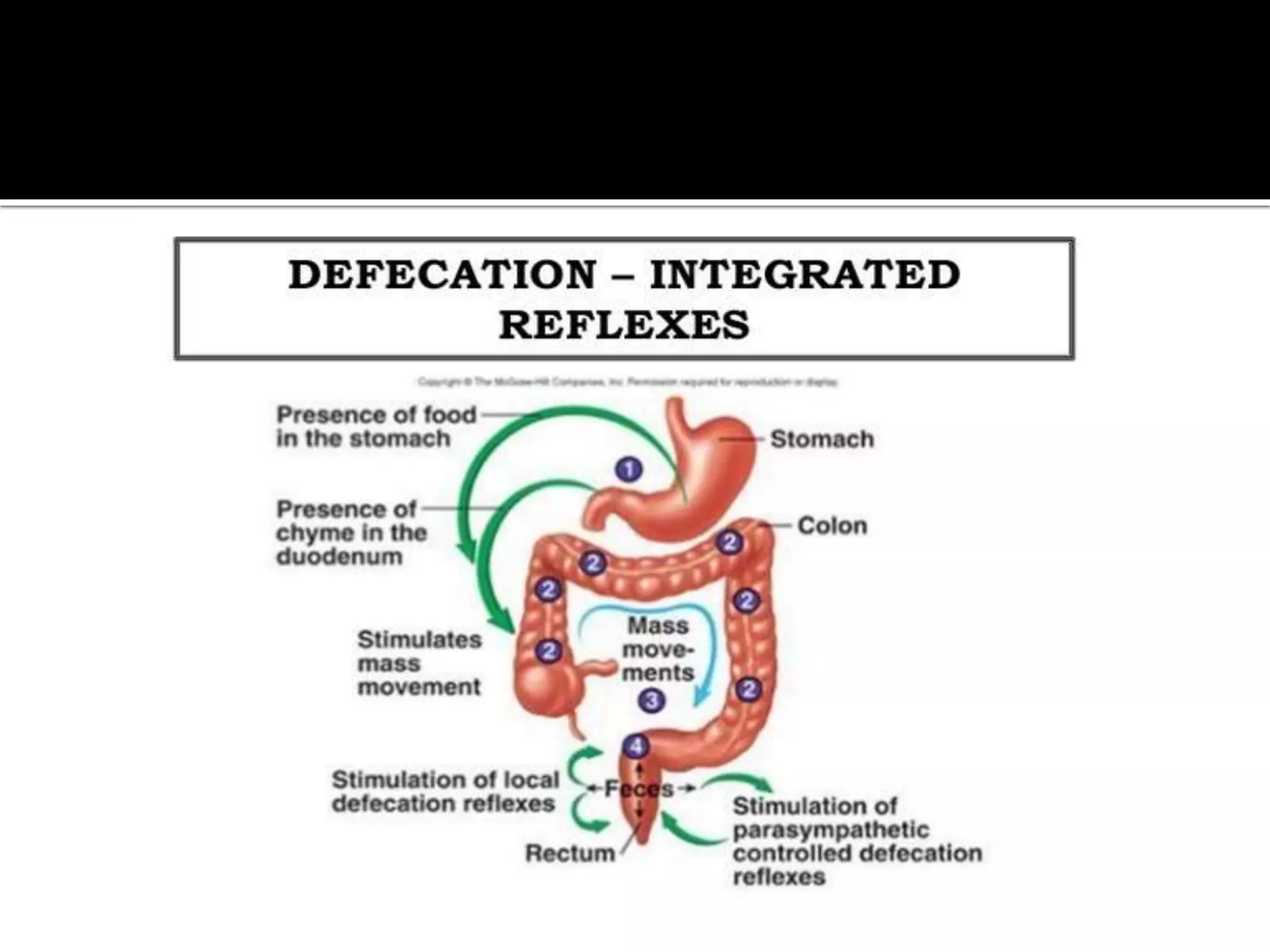
 Mass movement drives the feces into sigmoid or
pelvic colon.
 In the sigmoid colon, the feces is stored.
 The desire for defecation occurs when some
feces enters rectum due to the mass movement.
 Usually, the desire for defecation is elicited by an
increase in the intrarectal pressure to about 20
to 25 cm H2 O.
 Usual stimulus for defecation is intake of liquid
like coffee or tea or water.
 But it differs from person to person.
 Act of defecation is preceded by voluntary
efforts like assuming an appropriate posture,
voluntary relaxation of external sphincter and
the compression of abdominal contents by
voluntary contraction of abdominal muscles.
 The process of defecation involves the
contraction of rectum and relaxation of
internal and external anal sphincters.
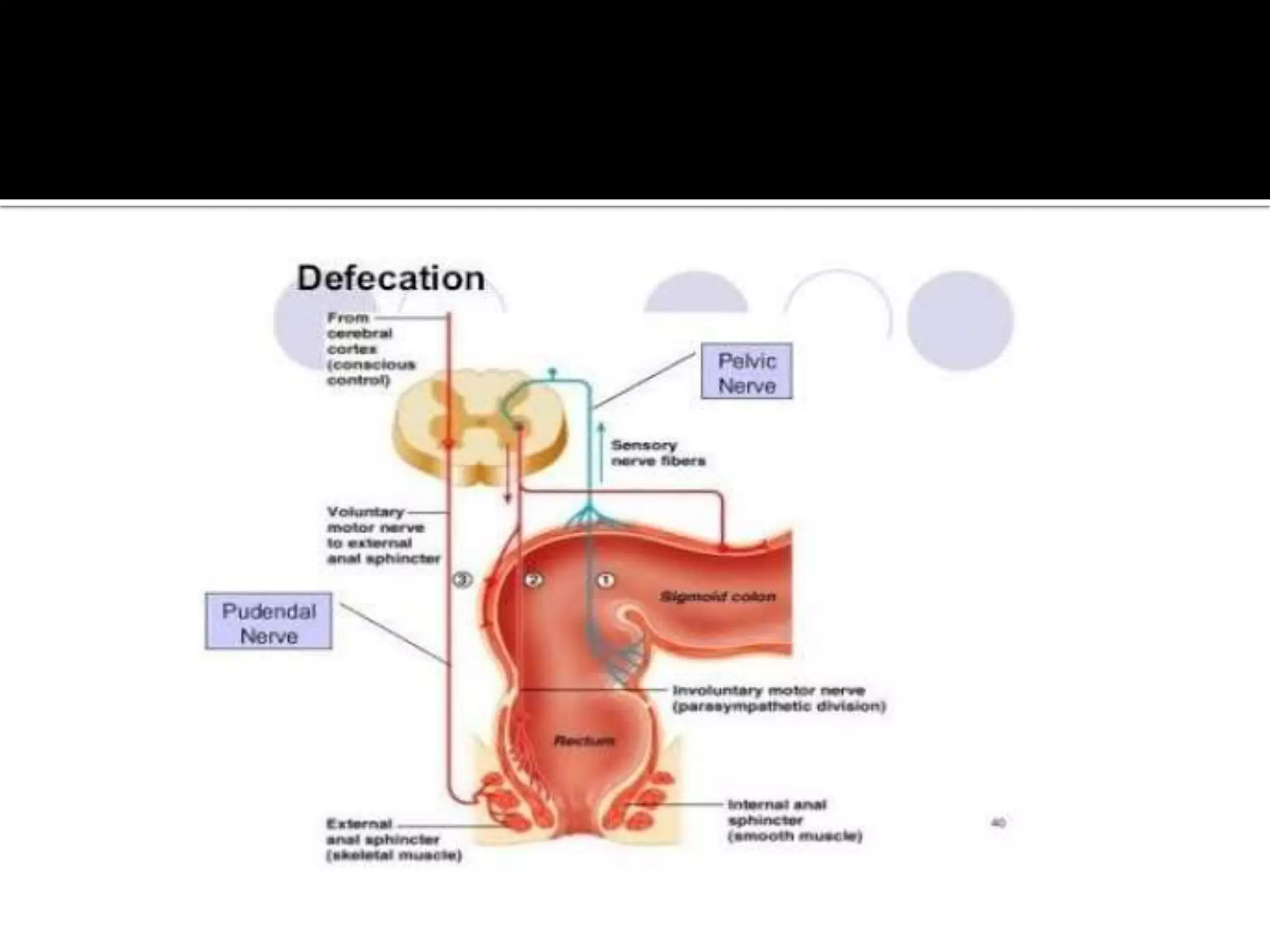
 Pudendal nerve always keeps the external
sphincter constricted and the sphincter can relax
only when the pudendal nerve is inhibited.
Gastrocolic Reflex
 Gastrocolic reflex is the contraction of rectum,
followed by the desire for defecation caused by
distention of stomach by food.
 It is mediated by intrinsic nerve fibers of GI
tract.
 This reflex causes only a weak contraction of
rectum. But, it initiates defecation reflex.
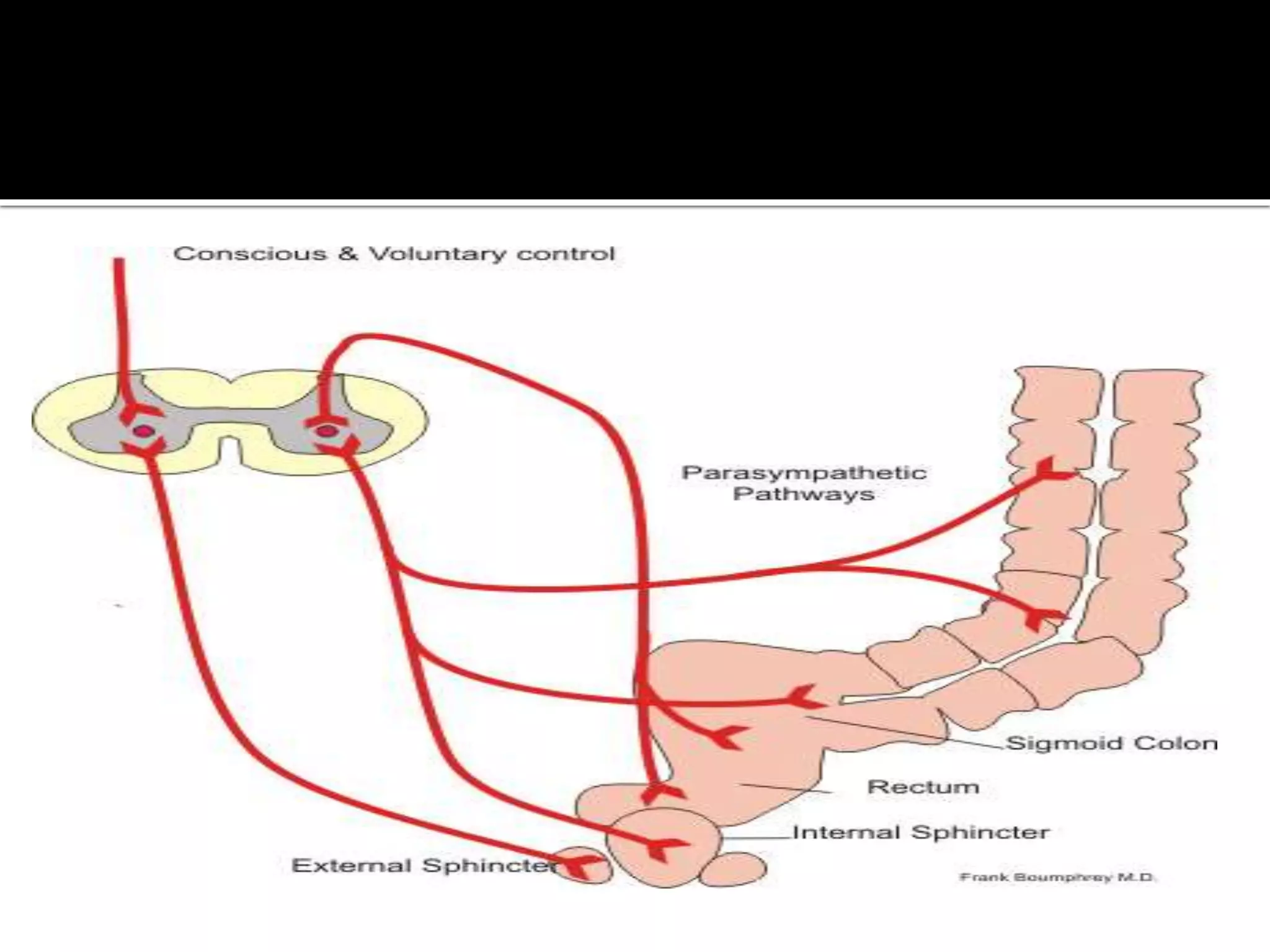
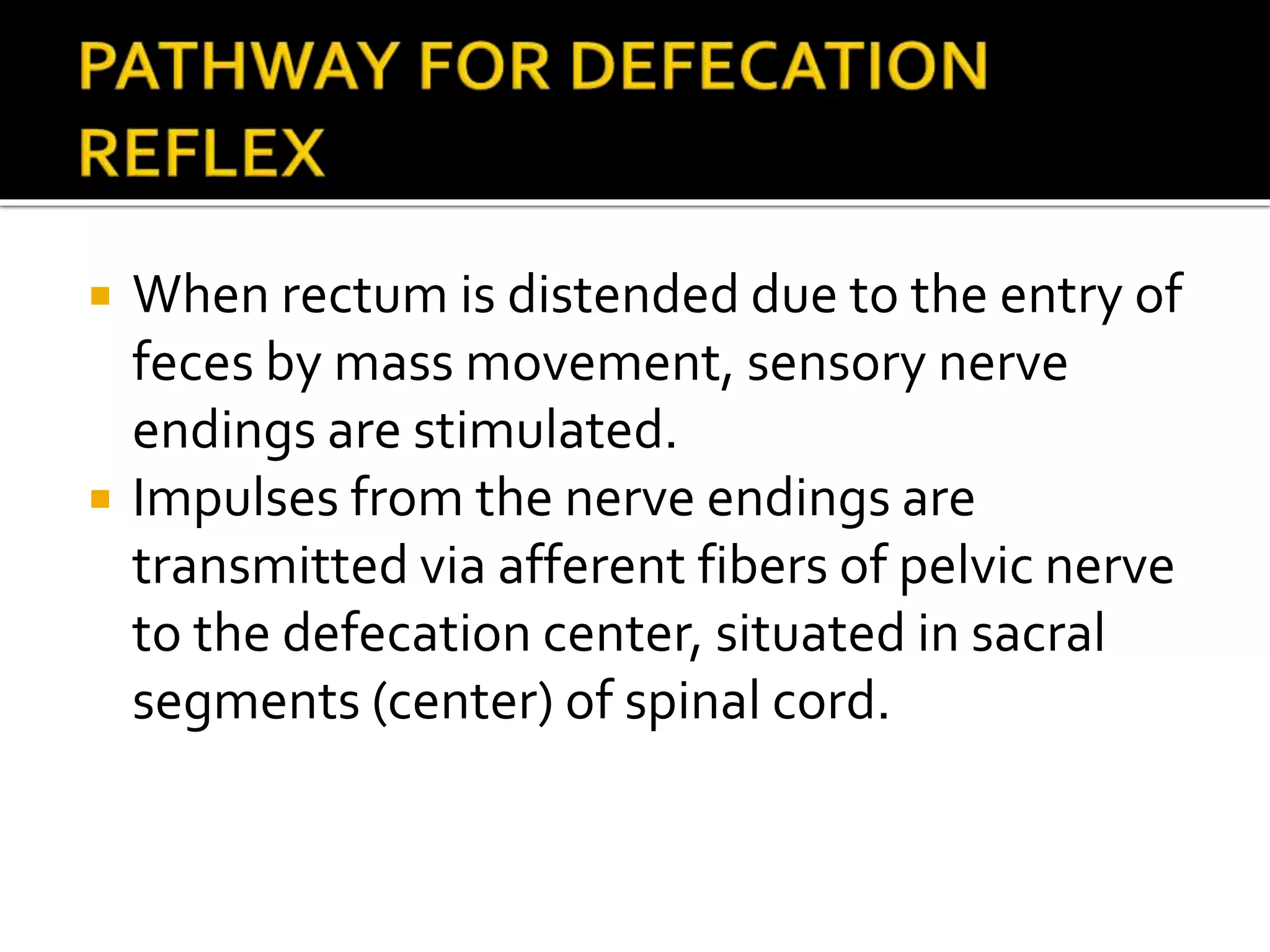
 When rectum is distended due to the entry of
feces by mass movement, sensory nerve
endings are stimulated.
 Impulses from the nerve endings are
transmitted via afferent fibers of pelvic nerve
to the defecation center, situated in sacral
segments (center) of spinal cord.
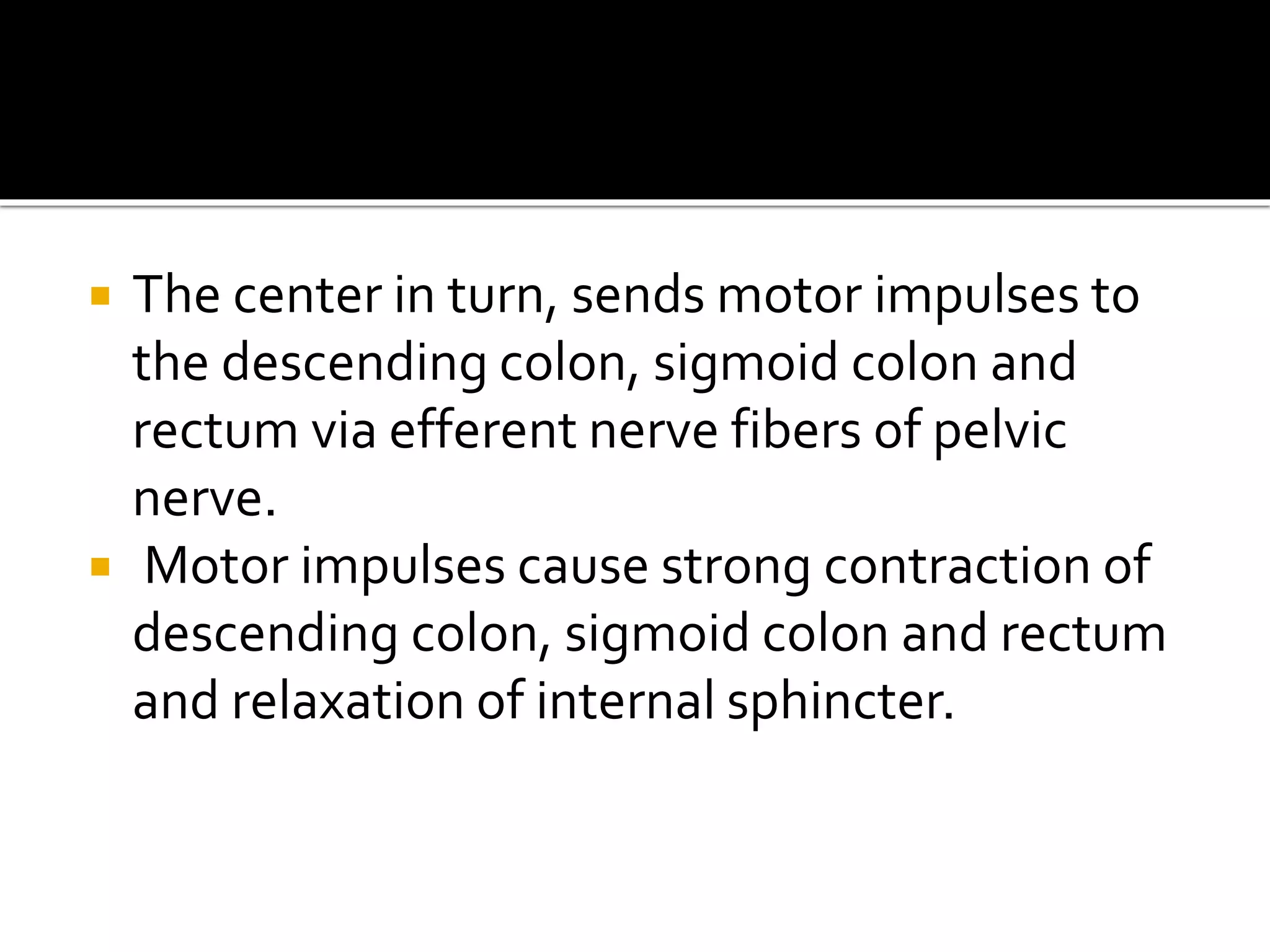
 The center in turn, sends motor impulses to
the descending colon, sigmoid colon and
rectum via efferent nerve fibers of pelvic
nerve.
 Motor impulses cause strong contraction of
descending colon, sigmoid colon and rectum
and relaxation of internal sphincter.
 Simultaneously, voluntary relaxation of
external sphincter occurs. It is due to the
inhibition of pudendal nerve, by impulses
arising from cerebral cortex.
 Diarrhea is the frequent and profuse
discharge of intestinal contents in loose and
fluid form.
 It occurs due to the increased movement of
intestine. It may be acute or chronic.
 Normally, when digested food passes
through colon, large portion of fluid is
absorbed and only a semisolid stool remains.
 In diarrhea, the fluid is not absorbed
sufficiently, resulting in watery bowel
discharge.
 Acute diarrhea may be caused by temporary
problems like infection and chronic diarrhea
may be due to disorders of intestinal mucosa.
Thus, the general causes of diarrhea are:
1. Dietary abuse: Diarrhea is caused by intake of
contaminated water or food, artificial
sweeteners found in food, spicy food, etc.
2. Food intolerance: Acute diarrhea is caused
mainly by indigestion of food substances,
particularly lactose, a sugar present in milk and
milk products may not be digested easily
3. Infections by:
i. Bacteria such as Escherichia coli, Salmonella,
Shigella, etc.
ii.Viruses like rotavirus, hepatitis virus, etc.
iii. Parasites like Entamoeba histolytica, etc
4. Reaction to medicines such as:
i. Antibiotics
ii. Antihypertensive drugs
iii. Antacids containing magnesium
iv. Laxatives
5. Intestinal diseases:
 Chronic diarrhea occurs during
inflammation of intestine, irritable bowel
syndrome and abnormal motility of the
intestine.
 Severe diarrhea results in loss of excess water
and electrolytes.
 This leads to dehydration and electrolyte
imbalance.
 Chronic diarrhea results in hypokalemia and
metabolic acidosis.
 Other features of diarrhea are abdominal
pain, nausea and bloating (a condition in
which the subject feels the abdomen full and
tight due to excess intestinal gas).
 Failure of voiding of feces, which produces
discomfort is known as constipation.
 It is due to the lack of movements necessary
for defecation.
 Due to the absence of mass movement in
colon, feces remain in the large intestine for a
long time, resulting in absorption of fluid.
 So the feces become hard and dry
1. Dietary causes
 Lack of fiber or lack of liquids in diet causes
constipation.
1. Irregular bowel habit
 Irregular bowel habit is most common
cause for constipation. It causes
constipation by inhibiting the normal
defecation reflexes.
3. Spasm of sigmoid colon
 Spasm in the sigmoid colon (spastic colon)
prevents its motility, resulting in
constipation.
4. Diseases
 Constipation is common in many types of
diseases.
5. Dysfunction of myenteric plexus in large
intestine – megacolon
 Megacolon is the condition characterized by
distension and hypertrophy of colon,
associated with constipation.
 It is caused by the absence or damage of
ganglionic cells in myenteric plexus, which
causes dysfunction of myenteric plexus.
 It leads to accumulation of large quantity of
feces in colon.
 The colon is distended to a diameter of 4 to 5
inch.
 It also results in hypertrophy of colon.
 Congenital development of megacolon is
called Hirschsprung disease.
6. Drugs
 The drugs like diuretics, pain relievers
(narcotics), antihypertensive drugs (calcium
channel blockers), anti parkinson drugs,
antidepressants and the anticonvulsants
cause constipation.
 Ulcer means the erosion of the surface of any
organ due to shedding or sloughing of
inflamed necrotic tissue that lines the organ.
 Peptic ulcer means an ulcer in the wall of
stomach or duodenum, caused by digestive
action of gastric juice.
 If peptic ulcer is found in stomach, it is called
gastric ulcer and if found in duodenum, it is
called duodenal ulcer
i. Increased peptic activity due to excessive
secretion of pepsin in gastric juice
ii. Hyperacidity of gastric juice
iii. Reduced alkalinity of duodenal content
iv. Decreased mucin content in gastric juice or
decreased protective activity in stomach or
duodenum
v. Constant physical or emotional stress
vi. Food with excess spices or smoking (classical
causes of ulcers)
vii. Longterm use of NSAIDs such as Aspirin,
Ibuprofen and Naproxen
viii. Chronic inflammation due to Helicobacter
pylori.
 Most common feature of peptic ulcer is
severe burning pain in epigastric region.
 In gastric ulcer, pain occurs while eating or
drinking.
 In duodenal ulcer, pain is felt 1 or 2 hours
after food intake and during night.
Other symptoms accompanying pain are:
i. Nausea
ii.Vomiting
iii. Hematemesis (vomiting blood)
iv. Heartburn (burning pain in chest due to
regurgitation of acid from stomach into
esophagus)
v. Anorexia (loss of appetite)
vi. Loss of weight.

applied physiology of git

  • 2.
     Dysphagia meansdifficulty in swallowing. Causes of dysphagia i. Mechanical obstruction of esophagus due to tumor, strictures, diverticular hernia (out pouching of the wall), etc. ii. Decreased movement of esophagus due to neurological disorders such as parkinsonism iii. Muscular disorders leading to difficulty in swallowing during oral stage or esophageal stage. Dysphagia
  • 3.
     Voiding offeces is known as defecation.  Feces is formed in the large intestine and stored in sigmoid colon.  By the influence of an appropriate stimulus, it is expelled out through the anus.  This is prevented by tonic constriction of anal sphincters, in the absence of the stimulus.
  • 5.
     Mass movementdrives the feces into sigmoid or pelvic colon.  In the sigmoid colon, the feces is stored.  The desire for defecation occurs when some feces enters rectum due to the mass movement.  Usually, the desire for defecation is elicited by an increase in the intrarectal pressure to about 20 to 25 cm H2 O.  Usual stimulus for defecation is intake of liquid like coffee or tea or water.  But it differs from person to person.
  • 7.
     Act ofdefecation is preceded by voluntary efforts like assuming an appropriate posture, voluntary relaxation of external sphincter and the compression of abdominal contents by voluntary contraction of abdominal muscles.  The process of defecation involves the contraction of rectum and relaxation of internal and external anal sphincters.
  • 8.
     Pudendal nervealways keeps the external sphincter constricted and the sphincter can relax only when the pudendal nerve is inhibited. Gastrocolic Reflex  Gastrocolic reflex is the contraction of rectum, followed by the desire for defecation caused by distention of stomach by food.  It is mediated by intrinsic nerve fibers of GI tract.  This reflex causes only a weak contraction of rectum. But, it initiates defecation reflex.
  • 10.
     When rectumis distended due to the entry of feces by mass movement, sensory nerve endings are stimulated.  Impulses from the nerve endings are transmitted via afferent fibers of pelvic nerve to the defecation center, situated in sacral segments (center) of spinal cord.
  • 11.
     The centerin turn, sends motor impulses to the descending colon, sigmoid colon and rectum via efferent nerve fibers of pelvic nerve.  Motor impulses cause strong contraction of descending colon, sigmoid colon and rectum and relaxation of internal sphincter.
  • 12.
     Simultaneously, voluntaryrelaxation of external sphincter occurs. It is due to the inhibition of pudendal nerve, by impulses arising from cerebral cortex.
  • 13.
     Diarrhea isthe frequent and profuse discharge of intestinal contents in loose and fluid form.  It occurs due to the increased movement of intestine. It may be acute or chronic.
  • 14.
     Normally, whendigested food passes through colon, large portion of fluid is absorbed and only a semisolid stool remains.  In diarrhea, the fluid is not absorbed sufficiently, resulting in watery bowel discharge.  Acute diarrhea may be caused by temporary problems like infection and chronic diarrhea may be due to disorders of intestinal mucosa.
  • 15.
    Thus, the generalcauses of diarrhea are: 1. Dietary abuse: Diarrhea is caused by intake of contaminated water or food, artificial sweeteners found in food, spicy food, etc. 2. Food intolerance: Acute diarrhea is caused mainly by indigestion of food substances, particularly lactose, a sugar present in milk and milk products may not be digested easily 3. Infections by: i. Bacteria such as Escherichia coli, Salmonella, Shigella, etc. ii.Viruses like rotavirus, hepatitis virus, etc. iii. Parasites like Entamoeba histolytica, etc
  • 16.
    4. Reaction tomedicines such as: i. Antibiotics ii. Antihypertensive drugs iii. Antacids containing magnesium iv. Laxatives 5. Intestinal diseases:  Chronic diarrhea occurs during inflammation of intestine, irritable bowel syndrome and abnormal motility of the intestine.
  • 17.
     Severe diarrhearesults in loss of excess water and electrolytes.  This leads to dehydration and electrolyte imbalance.  Chronic diarrhea results in hypokalemia and metabolic acidosis.  Other features of diarrhea are abdominal pain, nausea and bloating (a condition in which the subject feels the abdomen full and tight due to excess intestinal gas).
  • 18.
     Failure ofvoiding of feces, which produces discomfort is known as constipation.  It is due to the lack of movements necessary for defecation.  Due to the absence of mass movement in colon, feces remain in the large intestine for a long time, resulting in absorption of fluid.  So the feces become hard and dry
  • 19.
    1. Dietary causes Lack of fiber or lack of liquids in diet causes constipation. 1. Irregular bowel habit  Irregular bowel habit is most common cause for constipation. It causes constipation by inhibiting the normal defecation reflexes.
  • 20.
    3. Spasm ofsigmoid colon  Spasm in the sigmoid colon (spastic colon) prevents its motility, resulting in constipation. 4. Diseases  Constipation is common in many types of diseases.
  • 21.
    5. Dysfunction ofmyenteric plexus in large intestine – megacolon  Megacolon is the condition characterized by distension and hypertrophy of colon, associated with constipation.  It is caused by the absence or damage of ganglionic cells in myenteric plexus, which causes dysfunction of myenteric plexus.
  • 22.
     It leadsto accumulation of large quantity of feces in colon.  The colon is distended to a diameter of 4 to 5 inch.  It also results in hypertrophy of colon.  Congenital development of megacolon is called Hirschsprung disease.
  • 23.
    6. Drugs  Thedrugs like diuretics, pain relievers (narcotics), antihypertensive drugs (calcium channel blockers), anti parkinson drugs, antidepressants and the anticonvulsants cause constipation.
  • 24.
     Ulcer meansthe erosion of the surface of any organ due to shedding or sloughing of inflamed necrotic tissue that lines the organ.  Peptic ulcer means an ulcer in the wall of stomach or duodenum, caused by digestive action of gastric juice.  If peptic ulcer is found in stomach, it is called gastric ulcer and if found in duodenum, it is called duodenal ulcer
  • 25.
    i. Increased pepticactivity due to excessive secretion of pepsin in gastric juice ii. Hyperacidity of gastric juice iii. Reduced alkalinity of duodenal content iv. Decreased mucin content in gastric juice or decreased protective activity in stomach or duodenum v. Constant physical or emotional stress
  • 26.
    vi. Food withexcess spices or smoking (classical causes of ulcers) vii. Longterm use of NSAIDs such as Aspirin, Ibuprofen and Naproxen viii. Chronic inflammation due to Helicobacter pylori.
  • 27.
     Most commonfeature of peptic ulcer is severe burning pain in epigastric region.  In gastric ulcer, pain occurs while eating or drinking.  In duodenal ulcer, pain is felt 1 or 2 hours after food intake and during night.
  • 28.
    Other symptoms accompanyingpain are: i. Nausea ii.Vomiting iii. Hematemesis (vomiting blood) iv. Heartburn (burning pain in chest due to regurgitation of acid from stomach into esophagus) v. Anorexia (loss of appetite) vi. Loss of weight.