Dr. Maria Idrees: PT
MS (RIU)
DPT (TUF)
 Hormones secreted from the thyroid gland are
involved in controlling metabolism; they also work
synergistically with other hormones to promote
normal growth and development.
 The parathyroid glands are essential in regulating
calcium homeostasis and are important in
maintaining proper bone mineralization.
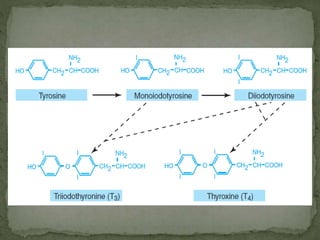
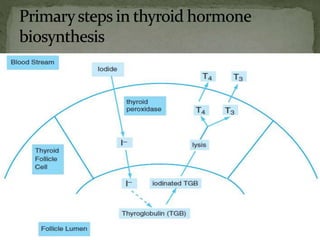
 thyroid hormones are synthesized first by adding
iodine to residues of the amino acid tyrosine.
 Addition of one iodine atom creates
monoiodotyrosine, and the addition of a second iodine
creates diiodotyrosine.
 Two of these iodinated tyrosines are then combined to
complete the thyroid hormone.
 The combination of a monoiodotyrosine and a
diiodotyrosine yields triiodothyronine, and the
combination of two diiodotyrosines yields thyroxine
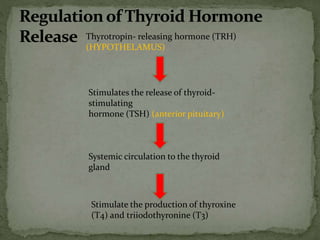
Thyrotropin- releasing hormone (TRH)
(HYPOTHELAMUS)
Stimulates the release of thyroid-
stimulating
hormone (TSH) (anterior pituitary)
Systemic circulation to the thyroid
gland
Stimulate the production of thyroxine
(T4) and triiodothyronine (T3)
 Increased circulating levels of the thyroid hormones
(T4, T3) serve to limit their own production by
inhibiting TRH release from the hypothalamus and
TSH release from the anterior pituitary.
 This negative feedback control prevents peripheral
levels of thyroid hormones from becoming excessively
high.
 Thermogenesis. T4 and T3 increase the basal
metabolic rate and subsequent heat production from
the body, which are important in maintaining
adequate body temperature during exposure to cold
environments.
 Growth and Development. Thyroid hormones
facilitate normal growth and development by
stimulating the release of growth hormone and by
enhancing the effects of growth hormone on
peripheral tissues. Thyroid hormones also directly
enhance the development of many physiologic
systems, especially the skeletal system and central
nervous system (CNS).
 Cardiovascular Effects. Thyroid hormones appear to
increase heart rate and myocardial contractility, thus
leading to an increase in cardiac output.
 Metabolic Effects. Thyroid hormones affect energy
substrate utilization in a number of ways. For instance,
these hormones increase intestinal glucose absorption
and increase the activity of several enzymes involved
in carbohydrate metabolism. Thyroid hormones
enhance lipolysis by increasing the response of fat cells
to other lipolytic hormones.
 Thyroid hormones enter the cell and bind to specific
receptors located within the cell’s nucleus.
 When activated by the thyroid hormone, thyroid
receptors induce transcription of specific DNA gene
segments, which ultimately results in altered protein
synthesis within the cell
 Thyroid hormones may act through nuclear DNA
transcription to stimulate the synthesis of a particular
enzymatic protein. Such a protein may increase the
transport of specific substances (e.g., amino acids,
glucose, sodium) across the cell membrane, or the
newly synthesized protein may be directly involved in
a metabolic pathway
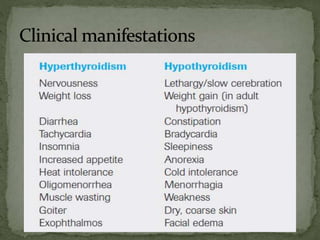
 Thyroid disorders can be divided into two primary
categories:
1. Conditions that increase thyroid function
(hyperthyroidism) and
2. Conditions that decrease thyroid function
(hypothyroidism)
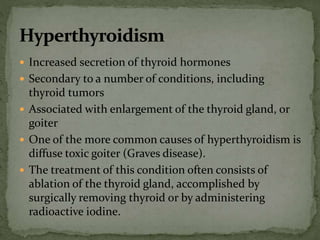
 Increased secretion of thyroid hormones
 Secondary to a number of conditions, including
thyroid tumors
 Associated with enlargement of the thyroid gland, or
goiter
 One of the more common causes of hyperthyroidism is
diffuse toxic goiter (Graves disease).
 The treatment of this condition often consists of
ablation of the thyroid gland, accomplished by
surgically removing thyroid or by administering
radioactive iodine.
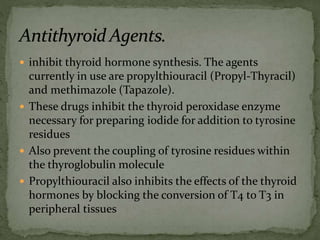
 inhibit thyroid hormone synthesis. The agents
currently in use are propylthiouracil (Propyl-Thyracil)
and methimazole (Tapazole).
 These drugs inhibit the thyroid peroxidase enzyme
necessary for preparing iodide for addition to tyrosine
residues
 Also prevent the coupling of tyrosine residues within
the thyroglobulin molecule
 Propylthiouracil also inhibits the effects of the thyroid
hormones by blocking the conversion of T4 to T3 in
peripheral tissues
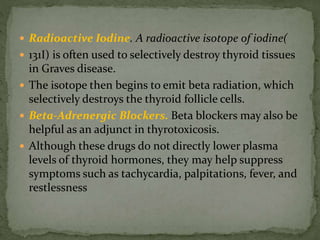
 Radioactive Iodine. A radioactive isotope of iodine(
 131I) is often used to selectively destroy thyroid tissues
in Graves disease.
 The isotope then begins to emit beta radiation, which
selectively destroys the thyroid follicle cells.
 Beta-Adrenergic Blockers. Beta blockers may also be
helpful as an adjunct in thyrotoxicosis.
 Although these drugs do not directly lower plasma
levels of thyroid hormones, they may help suppress
symptoms such as tachycardia, palpitations, fever, and
restlessness
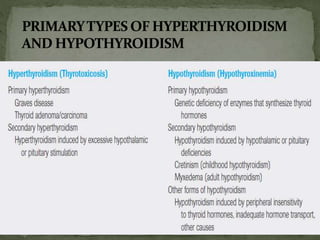
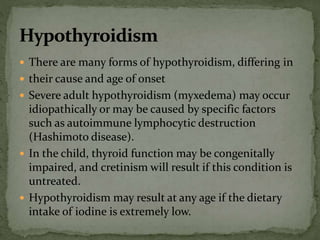
 There are many forms of hypothyroidism, differing in
 their cause and age of onset
 Severe adult hypothyroidism (myxedema) may occur
idiopathically or may be caused by specific factors
such as autoimmune lymphocytic destruction
(Hashimoto disease).
 In the child, thyroid function may be congenitally
impaired, and cretinism will result if this condition is
untreated.
 Hypothyroidism may result at any age if the dietary
intake of iodine is extremely low.
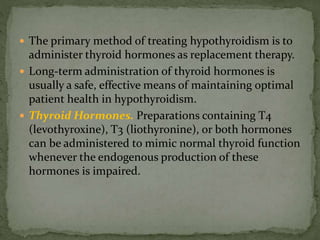
 The primary method of treating hypothyroidism is to
administer thyroid hormones as replacement therapy.
 Long-term administration of thyroid hormones is
usually a safe, effective means of maintaining optimal
patient health in hypothyroidism.
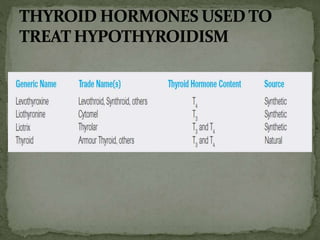
 Thyroid Hormones. Preparations containing T4
(levothyroxine), T3 (liothyronine), or both hormones
can be administered to mimic normal thyroid function
whenever the endogenous production of these
hormones is impaired.
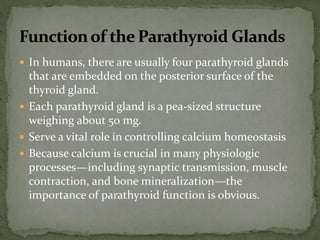
 In humans, there are usually four parathyroid glands
that are embedded on the posterior surface of the
thyroid gland.
 Each parathyroid gland is a pea-sized structure
weighing about 50 mg.
 Serve a vital role in controlling calcium homeostasis
 Because calcium is crucial in many physiologic
processes—including synaptic transmission, muscle
contraction, and bone mineralization—the
importance of parathyroid function is obvious.
 In fact, removal of the parathyroid glands results in
convulsions and death because of inadequate plasma
calcium levels.
 PTH is a polypeptide hormone
 Primary factor controlling the release of PTH is the
amount of calcium in the bloodstream
 A calcium sensing receptor is located on the outer
surface of the parathyroid cell membrane, and this
receptor monitors plasma calcium levels.
 A decrease in plasma calcium activates this receptor
and causes increased release of PTH. As blood calcium
levels increase, the receptor is inhibited, and PTH
release is reduced.
 The primary physiologic effect of PTH is to increase
blood calcium levels by altering calcium metabolism
in three primary tissues:
1. bone,
2. kidney, and the
3. gastrointestinal tract
 High levels of PTH appear to enhance the
development and action of cells (osteoclasts) that
break down skeletal tissues.
 Increased osteoclast activity degrades the collagen
matrix within the bone, thus releasing calcium into
the bloodstream.
 Bone serves two primary functions:
1. to provide a rigid framework for the body and
2. to provide a readily available and easily interchangeable
calcium pool.
 To serve both functions simultaneously, an appropriate
balance must exist between bone formation and bone
resorption.
 The primary minerals that enable bone to maintain its
rigidity are calcium and phosphate.
 Excessive resorption of these minerals will result in bone
demineralization, and the skeletal system will undergo
failure (fracture
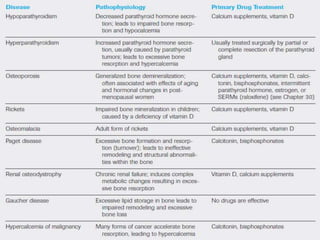
 The primary hormones involved in regulating bone
mineral homeostasis are described below:
Parathyroid Hormone
 The role of the parathyroid gland and PTH in controlling
calcium metabolism
 A prolonged or continuous increase in the secretion of
PTH increases blood calcium levels by several methods,
including increased resorption of calcium from bone.
 High levels of PTH accelerate bone breakdown (catabolic
effect) to mobilize calcium for other physiologic needs
 intermittent release of moderate amounts of PTH can
stimulate osteoblast activity and promote bone formation
(anabolic effect).
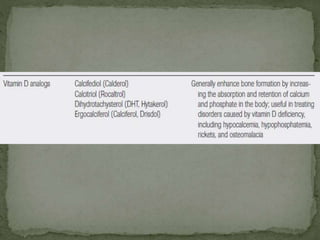
Vitamin D
 Vitamin D is a steroidlike hormone that can be
obtained from dietary sources or synthesized in the
skin from cholesterol derivatives in the presence of
ultraviolet light.
 Vitamin D derivatives such as 1,25 dihydroxyvitamin
D3 increase serum calcium and phosphate levels by
increasing intestinal calcium and phosphate
absorption and by decreasing renal calcium and
phosphate excretion
 Enhance bone formation by increasing the supply of
the two primary minerals needed for bone formation
(calcium and phosphate).
Calcitonin
 Calcitonin is a hormone secreted by cells located in
the thyroid gland. These calcitoninsecreting cells (also
known as parafollicular or C cells) are interspersed
between follicles that produce thyroid hormones.
Calcitonin can be considered the physiologic
antagonist of PTH.
 Increasing the incorporation of calcium into skeletal
storage
 The action of calcitonin also enhances the
incorporation of phosphate into bone.
Other Hormones
 A number of other hormones influence bone mineral
content.10 Glucocorticoids produce a general catabolic
effect on bone and other supporting tissues.
 Certain prostaglandins are also potent stimulators of
bone resorption.
 A number of hormones, such as estrogens, androgens,
growth hormone, insulin, and the thyroid hormones,
generally enhance bone formation
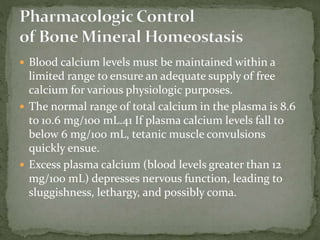
 Blood calcium levels must be maintained within a
limited range to ensure an adequate supply of free
calcium for various physiologic purposes.
 The normal range of total calcium in the plasma is 8.6
to 10.6 mg/100 mL.41 If plasma calcium levels fall to
below 6 mg/100 mL, tetanic muscle convulsions
quickly ensue.
 Excess plasma calcium (blood levels greater than 12
mg/100 mL) depresses nervous function, leading to
sluggishness, lethargy, and possibly coma.
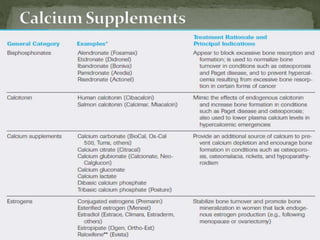
 A woman, for example, who is postmenopausal and
ingests 500 to 600 mg of dietary calcium per day would
need a supplemental dosage of approximately 800
mg/d because the recommended dietary allowance
(RDA) guideline for women after menopause is 1200 to
1500 mg/d

thyroid and parathyroid.pptx

  • 1.
    Dr. Maria Idrees:PT MS (RIU) DPT (TUF)
  • 2.
     Hormones secretedfrom the thyroid gland are involved in controlling metabolism; they also work synergistically with other hormones to promote normal growth and development.  The parathyroid glands are essential in regulating calcium homeostasis and are important in maintaining proper bone mineralization.
  • 3.
     thyroid hormonesare synthesized first by adding iodine to residues of the amino acid tyrosine.  Addition of one iodine atom creates monoiodotyrosine, and the addition of a second iodine creates diiodotyrosine.  Two of these iodinated tyrosines are then combined to complete the thyroid hormone.  The combination of a monoiodotyrosine and a diiodotyrosine yields triiodothyronine, and the combination of two diiodotyrosines yields thyroxine
  • 6.
    Thyrotropin- releasing hormone(TRH) (HYPOTHELAMUS) Stimulates the release of thyroid- stimulating hormone (TSH) (anterior pituitary) Systemic circulation to the thyroid gland Stimulate the production of thyroxine (T4) and triiodothyronine (T3)
  • 7.
     Increased circulatinglevels of the thyroid hormones (T4, T3) serve to limit their own production by inhibiting TRH release from the hypothalamus and TSH release from the anterior pituitary.  This negative feedback control prevents peripheral levels of thyroid hormones from becoming excessively high.
  • 8.
     Thermogenesis. T4and T3 increase the basal metabolic rate and subsequent heat production from the body, which are important in maintaining adequate body temperature during exposure to cold environments.  Growth and Development. Thyroid hormones facilitate normal growth and development by stimulating the release of growth hormone and by enhancing the effects of growth hormone on peripheral tissues. Thyroid hormones also directly enhance the development of many physiologic systems, especially the skeletal system and central nervous system (CNS).
  • 9.
     Cardiovascular Effects.Thyroid hormones appear to increase heart rate and myocardial contractility, thus leading to an increase in cardiac output.  Metabolic Effects. Thyroid hormones affect energy substrate utilization in a number of ways. For instance, these hormones increase intestinal glucose absorption and increase the activity of several enzymes involved in carbohydrate metabolism. Thyroid hormones enhance lipolysis by increasing the response of fat cells to other lipolytic hormones.
  • 10.
     Thyroid hormonesenter the cell and bind to specific receptors located within the cell’s nucleus.  When activated by the thyroid hormone, thyroid receptors induce transcription of specific DNA gene segments, which ultimately results in altered protein synthesis within the cell  Thyroid hormones may act through nuclear DNA transcription to stimulate the synthesis of a particular enzymatic protein. Such a protein may increase the transport of specific substances (e.g., amino acids, glucose, sodium) across the cell membrane, or the newly synthesized protein may be directly involved in a metabolic pathway
  • 12.
     Thyroid disorderscan be divided into two primary categories: 1. Conditions that increase thyroid function (hyperthyroidism) and 2. Conditions that decrease thyroid function (hypothyroidism)
  • 14.
     Increased secretionof thyroid hormones  Secondary to a number of conditions, including thyroid tumors  Associated with enlargement of the thyroid gland, or goiter  One of the more common causes of hyperthyroidism is diffuse toxic goiter (Graves disease).  The treatment of this condition often consists of ablation of the thyroid gland, accomplished by surgically removing thyroid or by administering radioactive iodine.
  • 15.
     inhibit thyroidhormone synthesis. The agents currently in use are propylthiouracil (Propyl-Thyracil) and methimazole (Tapazole).  These drugs inhibit the thyroid peroxidase enzyme necessary for preparing iodide for addition to tyrosine residues  Also prevent the coupling of tyrosine residues within the thyroglobulin molecule  Propylthiouracil also inhibits the effects of the thyroid hormones by blocking the conversion of T4 to T3 in peripheral tissues
  • 16.
     Radioactive Iodine.A radioactive isotope of iodine(  131I) is often used to selectively destroy thyroid tissues in Graves disease.  The isotope then begins to emit beta radiation, which selectively destroys the thyroid follicle cells.  Beta-Adrenergic Blockers. Beta blockers may also be helpful as an adjunct in thyrotoxicosis.  Although these drugs do not directly lower plasma levels of thyroid hormones, they may help suppress symptoms such as tachycardia, palpitations, fever, and restlessness
  • 17.
     There aremany forms of hypothyroidism, differing in  their cause and age of onset  Severe adult hypothyroidism (myxedema) may occur idiopathically or may be caused by specific factors such as autoimmune lymphocytic destruction (Hashimoto disease).  In the child, thyroid function may be congenitally impaired, and cretinism will result if this condition is untreated.  Hypothyroidism may result at any age if the dietary intake of iodine is extremely low.
  • 18.
     The primarymethod of treating hypothyroidism is to administer thyroid hormones as replacement therapy.  Long-term administration of thyroid hormones is usually a safe, effective means of maintaining optimal patient health in hypothyroidism.  Thyroid Hormones. Preparations containing T4 (levothyroxine), T3 (liothyronine), or both hormones can be administered to mimic normal thyroid function whenever the endogenous production of these hormones is impaired.
  • 20.
     In humans,there are usually four parathyroid glands that are embedded on the posterior surface of the thyroid gland.  Each parathyroid gland is a pea-sized structure weighing about 50 mg.  Serve a vital role in controlling calcium homeostasis  Because calcium is crucial in many physiologic processes—including synaptic transmission, muscle contraction, and bone mineralization—the importance of parathyroid function is obvious.
  • 21.
     In fact,removal of the parathyroid glands results in convulsions and death because of inadequate plasma calcium levels.
  • 22.
     PTH isa polypeptide hormone  Primary factor controlling the release of PTH is the amount of calcium in the bloodstream  A calcium sensing receptor is located on the outer surface of the parathyroid cell membrane, and this receptor monitors plasma calcium levels.  A decrease in plasma calcium activates this receptor and causes increased release of PTH. As blood calcium levels increase, the receptor is inhibited, and PTH release is reduced.
  • 23.
     The primaryphysiologic effect of PTH is to increase blood calcium levels by altering calcium metabolism in three primary tissues: 1. bone, 2. kidney, and the 3. gastrointestinal tract  High levels of PTH appear to enhance the development and action of cells (osteoclasts) that break down skeletal tissues.  Increased osteoclast activity degrades the collagen matrix within the bone, thus releasing calcium into the bloodstream.
  • 24.
     Bone servestwo primary functions: 1. to provide a rigid framework for the body and 2. to provide a readily available and easily interchangeable calcium pool.  To serve both functions simultaneously, an appropriate balance must exist between bone formation and bone resorption.  The primary minerals that enable bone to maintain its rigidity are calcium and phosphate.  Excessive resorption of these minerals will result in bone demineralization, and the skeletal system will undergo failure (fracture
  • 25.
     The primaryhormones involved in regulating bone mineral homeostasis are described below: Parathyroid Hormone  The role of the parathyroid gland and PTH in controlling calcium metabolism  A prolonged or continuous increase in the secretion of PTH increases blood calcium levels by several methods, including increased resorption of calcium from bone.  High levels of PTH accelerate bone breakdown (catabolic effect) to mobilize calcium for other physiologic needs  intermittent release of moderate amounts of PTH can stimulate osteoblast activity and promote bone formation (anabolic effect).
  • 26.
    Vitamin D  VitaminD is a steroidlike hormone that can be obtained from dietary sources or synthesized in the skin from cholesterol derivatives in the presence of ultraviolet light.  Vitamin D derivatives such as 1,25 dihydroxyvitamin D3 increase serum calcium and phosphate levels by increasing intestinal calcium and phosphate absorption and by decreasing renal calcium and phosphate excretion  Enhance bone formation by increasing the supply of the two primary minerals needed for bone formation (calcium and phosphate).
  • 27.
    Calcitonin  Calcitonin isa hormone secreted by cells located in the thyroid gland. These calcitoninsecreting cells (also known as parafollicular or C cells) are interspersed between follicles that produce thyroid hormones. Calcitonin can be considered the physiologic antagonist of PTH.  Increasing the incorporation of calcium into skeletal storage  The action of calcitonin also enhances the incorporation of phosphate into bone.
  • 28.
    Other Hormones  Anumber of other hormones influence bone mineral content.10 Glucocorticoids produce a general catabolic effect on bone and other supporting tissues.  Certain prostaglandins are also potent stimulators of bone resorption.  A number of hormones, such as estrogens, androgens, growth hormone, insulin, and the thyroid hormones, generally enhance bone formation
  • 29.
     Blood calciumlevels must be maintained within a limited range to ensure an adequate supply of free calcium for various physiologic purposes.  The normal range of total calcium in the plasma is 8.6 to 10.6 mg/100 mL.41 If plasma calcium levels fall to below 6 mg/100 mL, tetanic muscle convulsions quickly ensue.  Excess plasma calcium (blood levels greater than 12 mg/100 mL) depresses nervous function, leading to sluggishness, lethargy, and possibly coma.
  • 33.
     A woman,for example, who is postmenopausal and ingests 500 to 600 mg of dietary calcium per day would need a supplemental dosage of approximately 800 mg/d because the recommended dietary allowance (RDA) guideline for women after menopause is 1200 to 1500 mg/d