SEMINAR ON BASIC PRINCIPLES OF
ENDOVASCULAR SURGERY
PRESENTER : Dr. BISWAJIT DEKA
PGT, DEPTT. OF SURGERY
SILCHAR MEDICAL COLLEGE
INTRODUCTION
• Endovascular surgery is an intra-arterial
method that uses catheter guided devices
to assist restoration of blood flow in an
occluded vessel.
• This is accomplished either by providing a
thrombolytic agent directly to the clot or
removing the clot mechanically from the
site of vessel occlusion or both.
HISTORICAL IMPORTANCE
• Ivan Seldinger, a swedish radiologist ,was the
1st physician to describe a unique method of
establishing arterial access using a guidewire
technique in 1953, which heralded an
evolution from diagnostic to therapeutic
angiography.
• A decade later, Fogarty detailed the use of a
balloon-tipped catheter to extract thrombus.
• Dotter & Judkin in 1964 described a method of
dilating an arterial occlusion using a rigid
Teflon catheter to improve arterial circulation.
• In the field of venous intervention, catheter
based vena caval filters were introduced by
Greenfield in 1973 and have revolutionized the
current approach in the prevention of
pulmonary embolism.
• The technique of balloon angioplasty was
introduced by Gruntzig,who performed the 1st
coronary artery intervention in 1974.
. 1st intravascular balloon expandable stent was
developed by Palmaz et al in 1985.
• Several years later, Parodi,an Argentinean vascular
surgeon, combined both a Dacron graft & balloon
expandable stent technology to creat a stent graft,
which was successfully used to exclude an
abdominal aortic aneurysm.
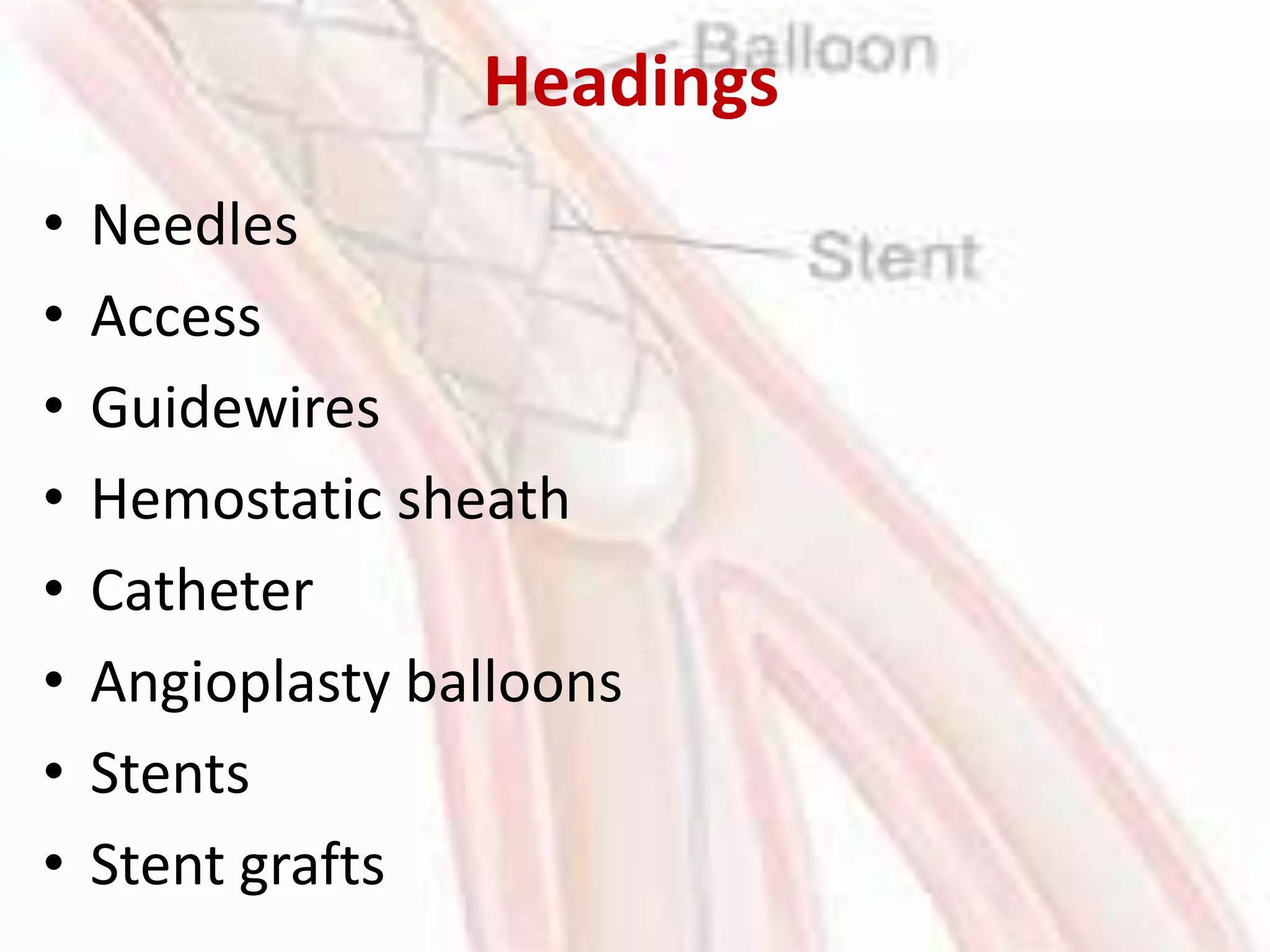
Headings
• Needles
• Access
• Guidewires
• Hemostatic sheath
• Catheter
• Angioplasty balloons
• Stents
• Stent grafts
NEEDLES
• Used to achieve percutaneous vascular
access.
• Size – dictated by diameter of guidewire
• Most often 18G needle used – accept a
0.035 inch guidewire.
• 21G micropuncture needle- accept a
0.018 inch guidewire.
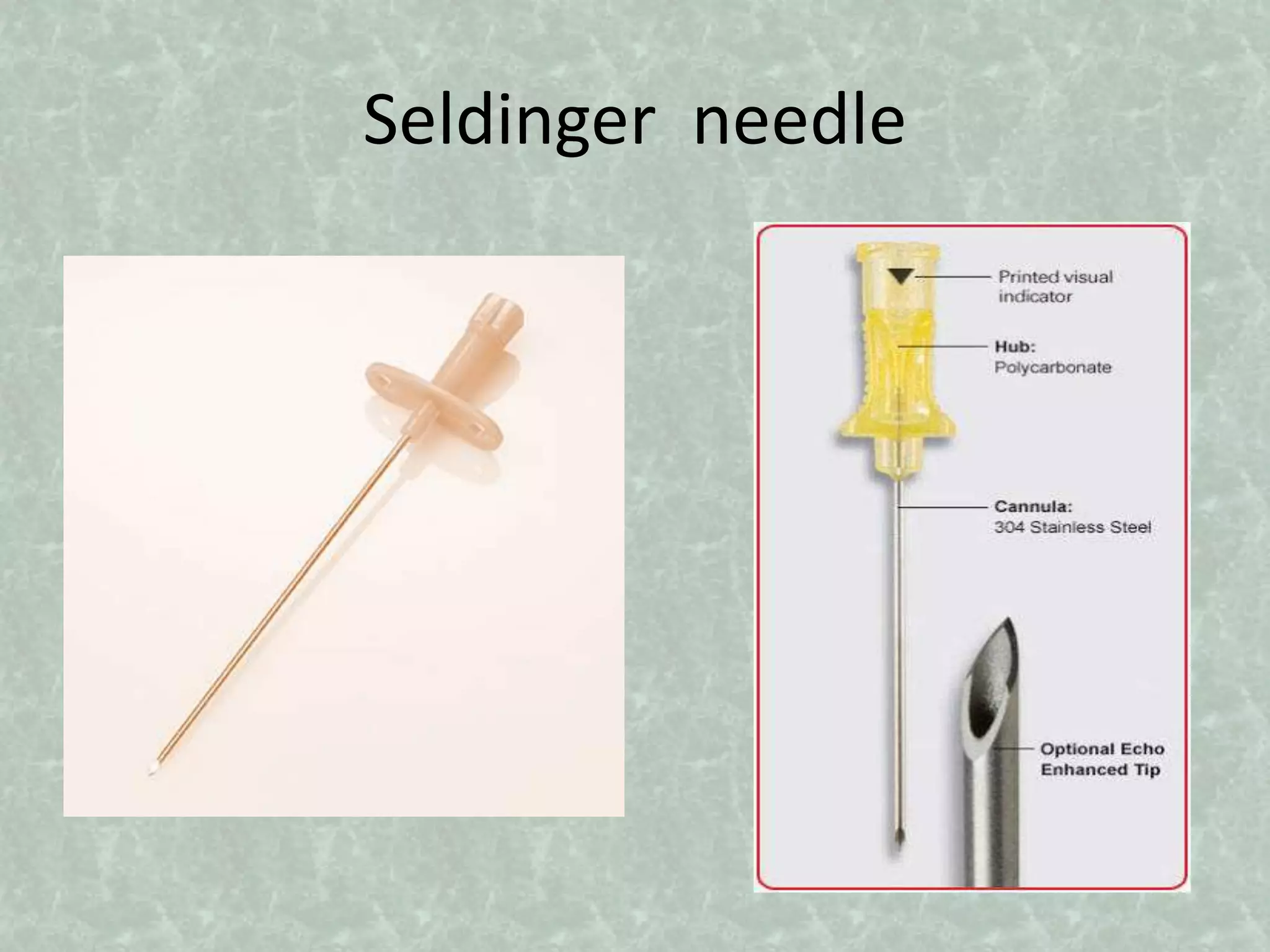
• Seldinger needle- most popular , used for
single & double wall puncture
techniques.
Seldinger needle
ACCESS
• Femoral arterial puncture – most common site
• Common femoral artery(CFA)- punctured over
medial third of femoral head , landmarked using
fluoroscopy.
• Retrograde femoral access - most common
– Size & fixed position of common femoral artery
– Ease of compression against the femoral head
• Single wall puncture technique
→ needle with sharp beveled tip & no central
stylet
→ anterior wall of vessel punctured
→ intraluminal position indicated by pulsatile
back bleeding
→ useful for : graft puncture
abnormal clotting profile
if thrombolytic therapy needed
• Double wall puncture technique
–Blunt needle with removable inner cannula
–Puncture both walls of artery
–Withdrawn until bleeding is obtained to
confirm intraluminal position prior to
advancing a guidewire
–Disadvantage: bleeding from posterior wall.
• Avoid puncturing external iliac artery
- Retroperitoneal hemorrhage
• Puncturing low,at/below CFA bifurcation
–Thrombosis
–Pseudo-aneurysm of superficial femoral
or profunda femoris artery .
GUIDEWIRE
• Used to introduce, positon & exchange
catheters
• Has a flexible & stiff end
• Flexible end- placed in the vessel
• Composed of a stiff inner core & an
outer tightly coiled spring that allows a
catheter to track over the guidewire
• 5 Essential characteristics of guidewires
–Size
–length
–Stiffness
–Coating
–Tip configuration
Size:
–Max transverse diameter: 0.011 to 0.038
inches
–Most aortoiliac procedure: 0.035 inch used
–Smaller diameter 0.018inch: small vessel
angiography (infrageniculate / carotid)
Length:
–180 to 260 cm
–Increased length: difficult to handle
: risk of contamination
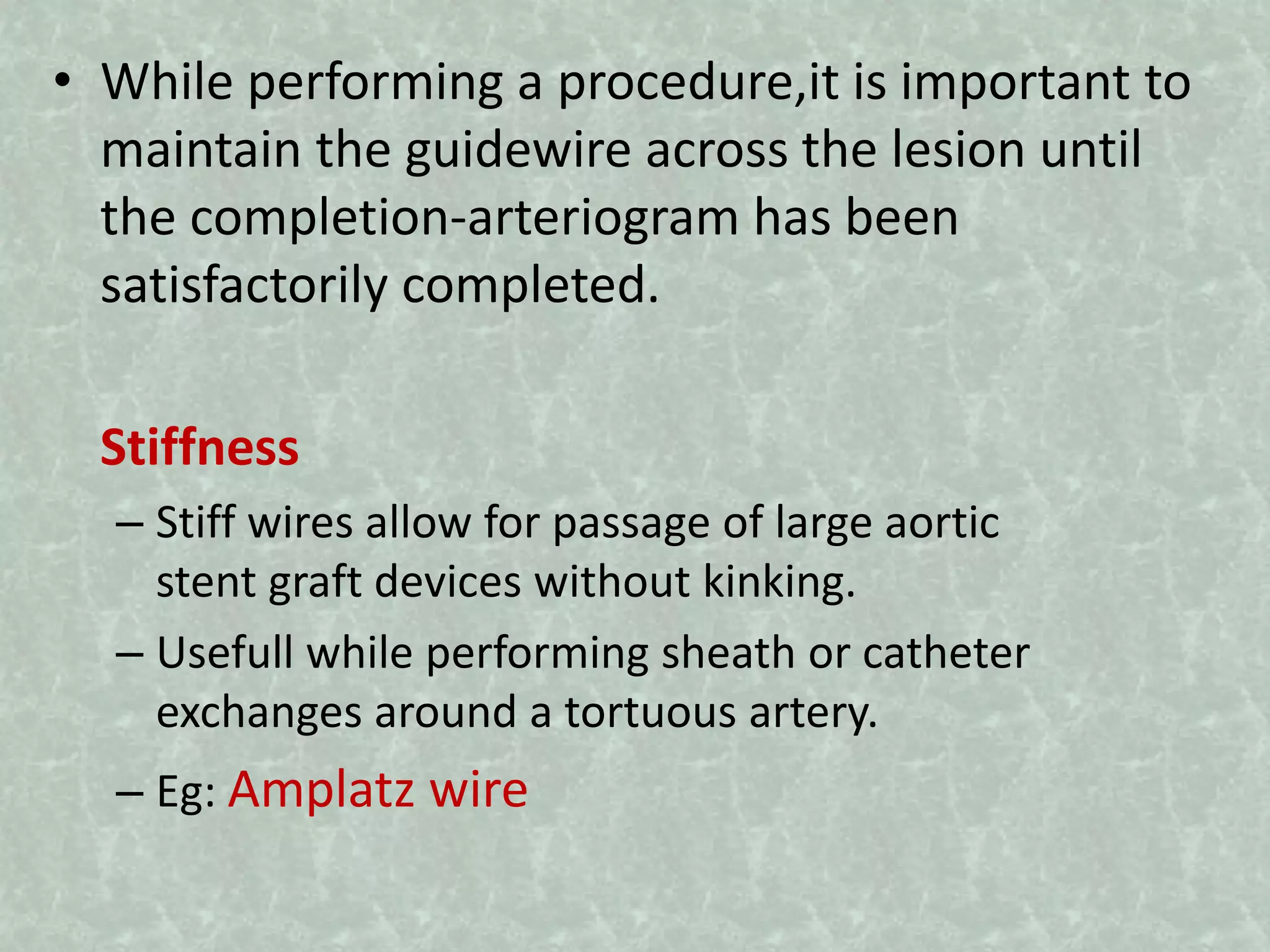
• While performing a procedure,it is important to
maintain the guidewire across the lesion until
the completion-arteriogram has been
satisfactorily completed.
Stiffness
– Stiff wires allow for passage of large aortic
stent graft devices without kinking.
– Usefull while performing sheath or catheter
exchanges around a tortuous artery.
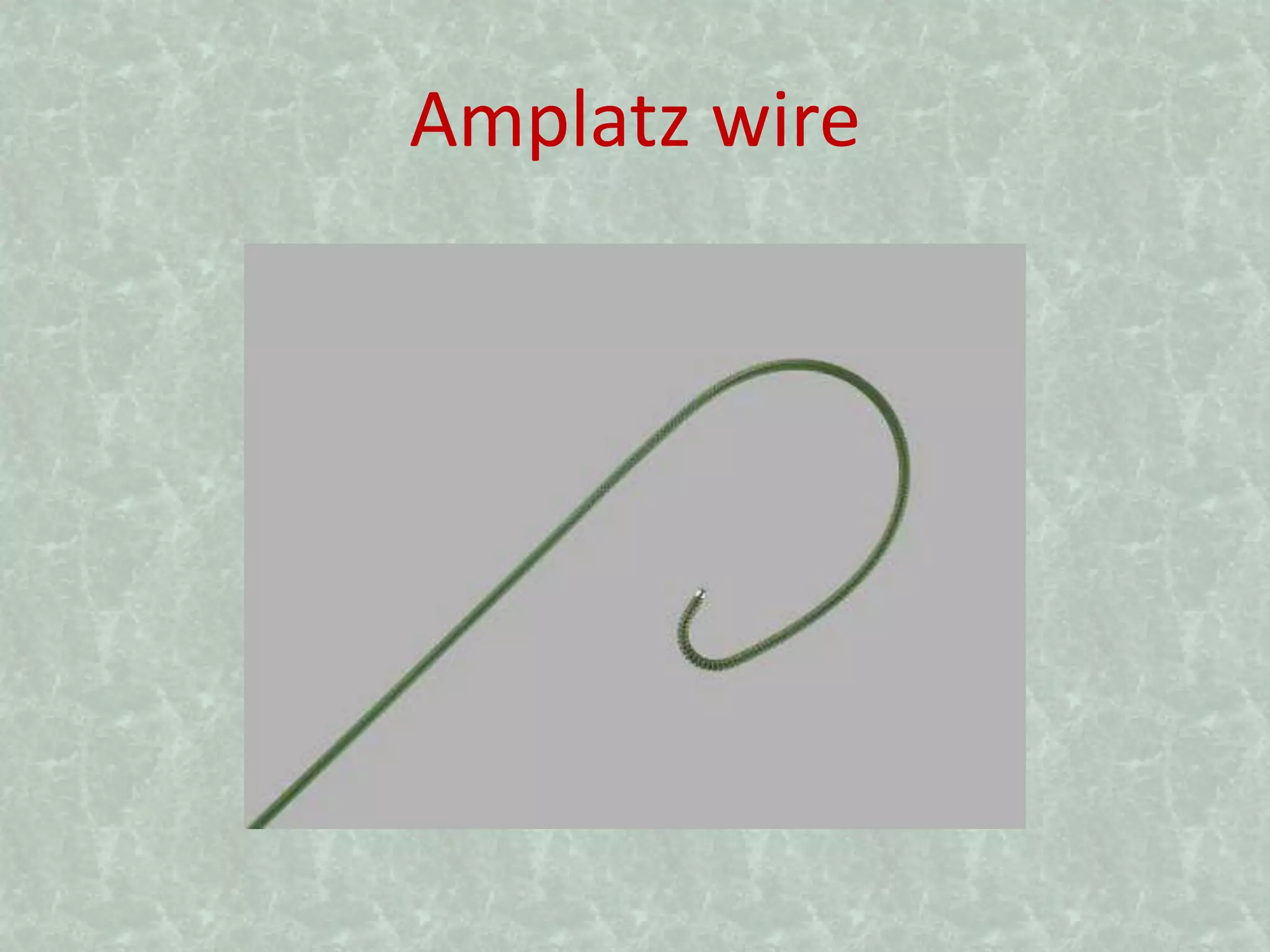
– Eg: Amplatz wire
Amplatz wire
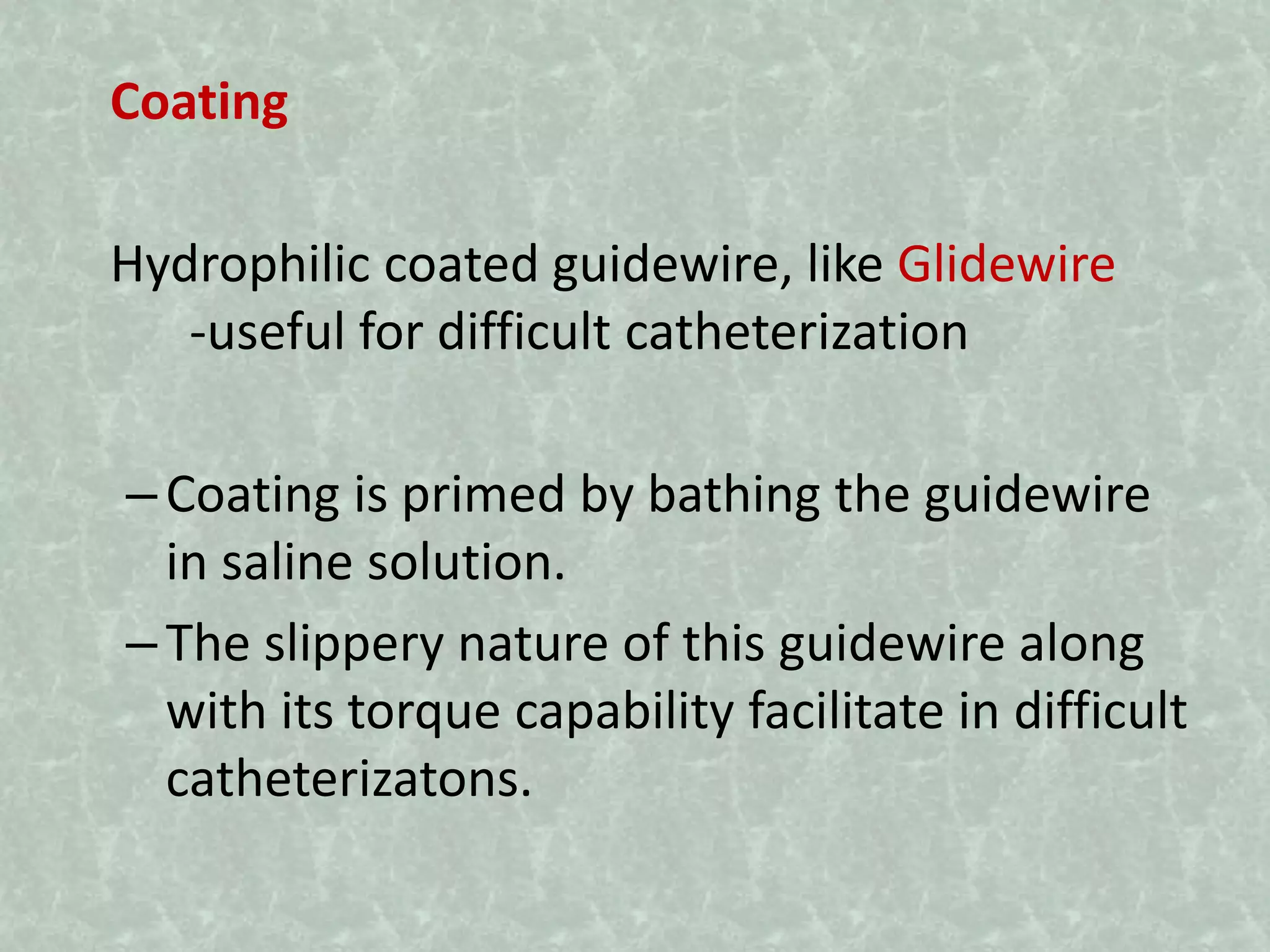
Coating
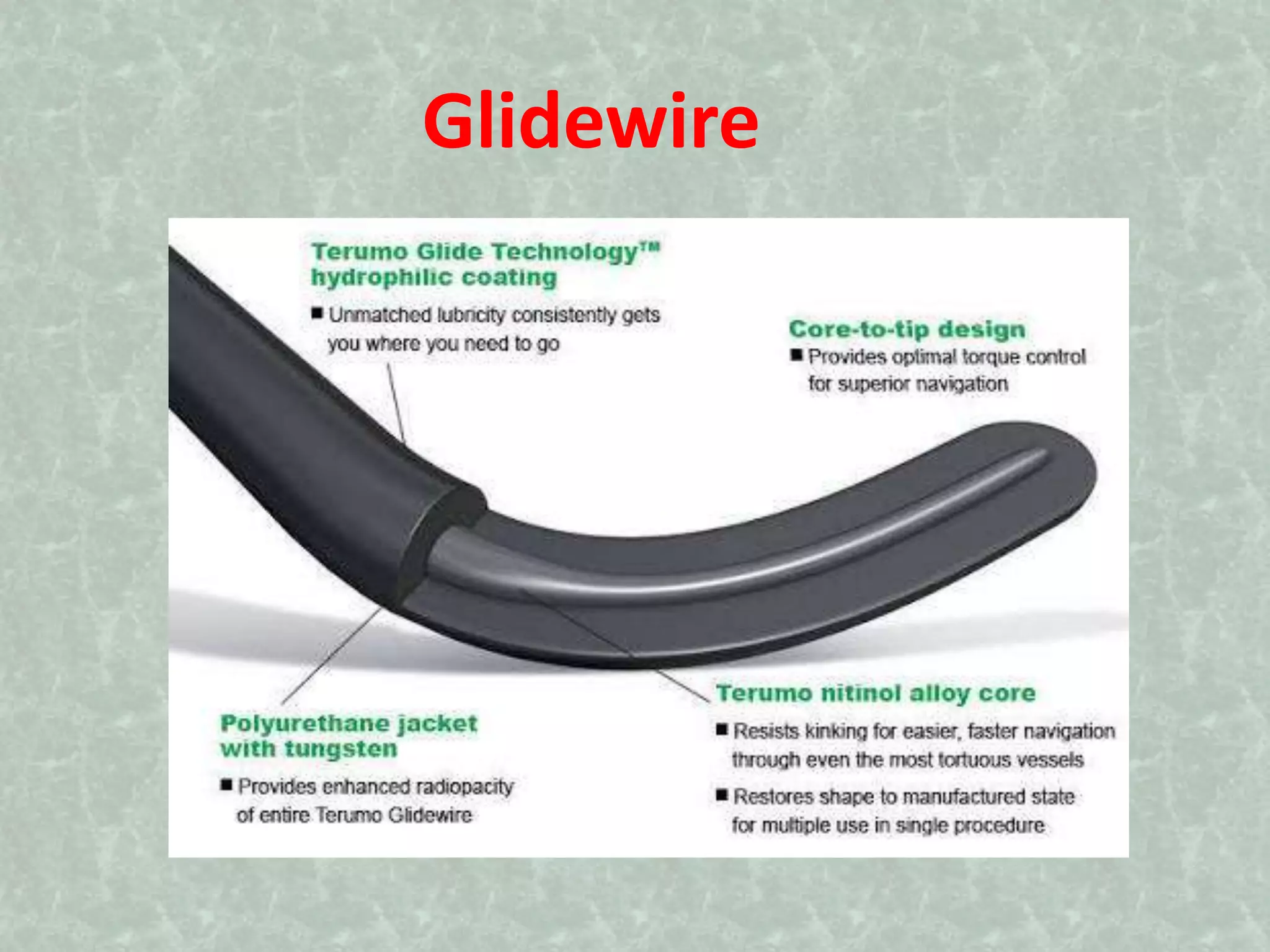
Hydrophilic coated guidewire, like Glidewire
-useful for difficult catheterization
–Coating is primed by bathing the guidewire
in saline solution.
–The slippery nature of this guidewire along
with its torque capability facilitate in difficult
catheterizatons.
Glidewire
Tip configuration
–Angled tip wires like angled Glidewire can be
steered to manipulate a catheter across a
tight stenosis or to select a specific br. of a
vessel
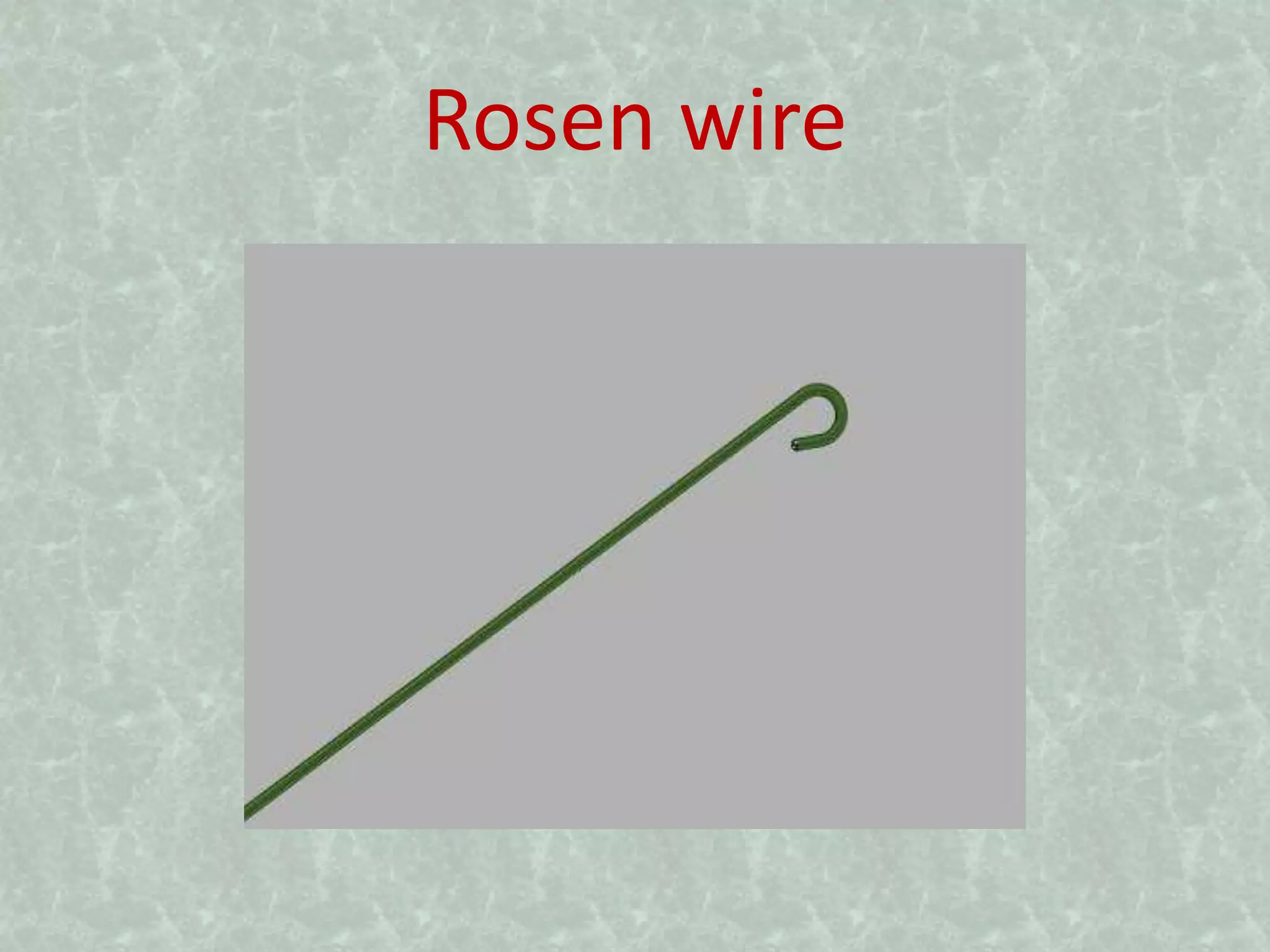
–The Rosen wire has a soft curled end- makes
it ideal for renal artery stenting
• Its soft curl prevents it from perforating
small renal branch vessels
Rosen wire
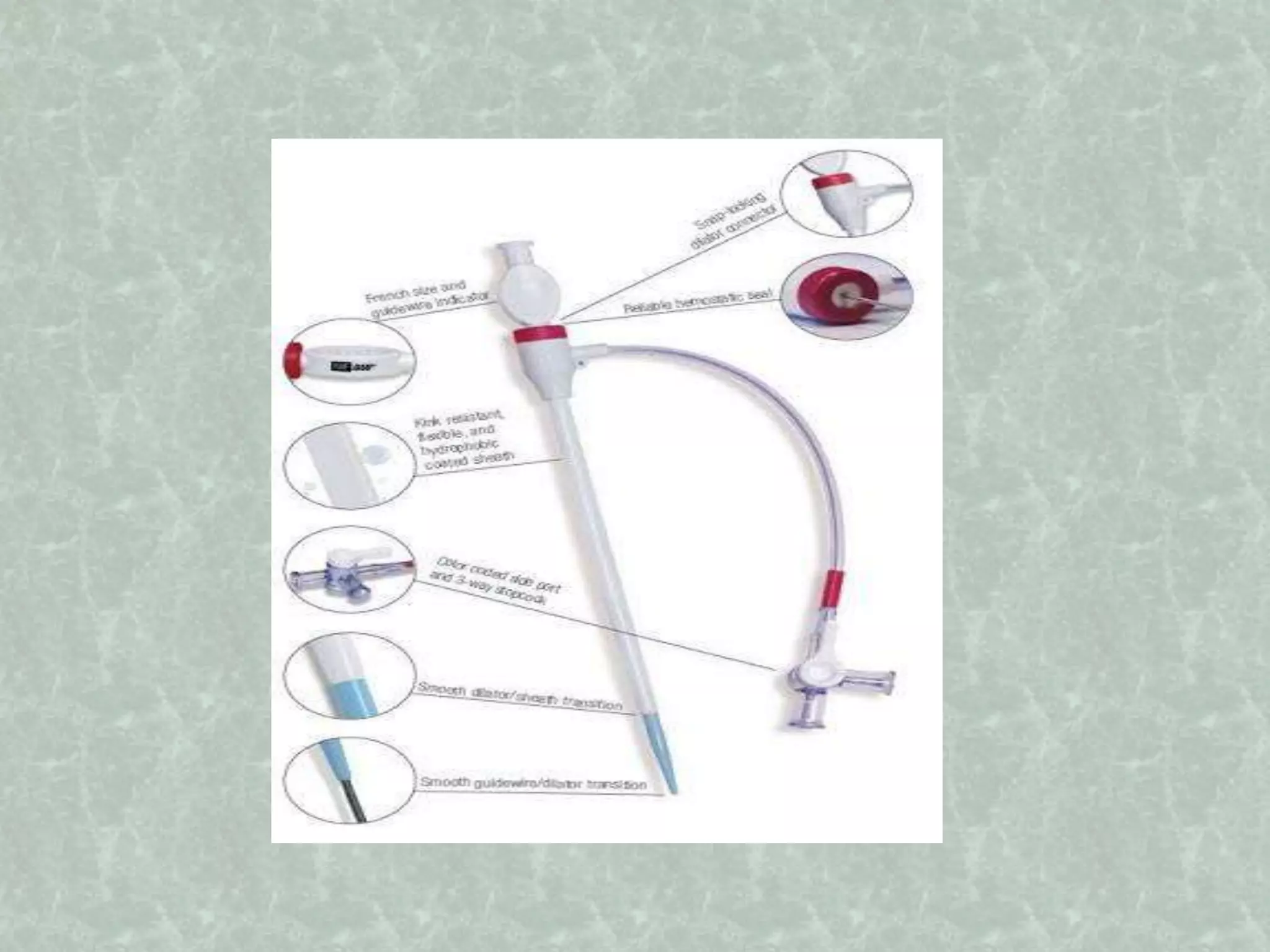
Hemostatic Sheaths
• Device through which endovascular
procedures are performed.
• Protect the vessel from injury as wires &
catheters are introduced.
• One way valve: prevents bleeding.
• Side-port: to administer heparin / contrast.
• Commonly used for percutaneous access have
a 5 to 9F inner diameter.
Catheter
• A wide variety of catheter exist that differ
primarily in the configuration of the tip.
• Multiple shapes permit access to vessels
of varying dimensions and angulations.
• Used to perform angiography & protect
the passage of balloons and stents
• Used to direct the guidewire through tight
stenoses or tortuous vessels.
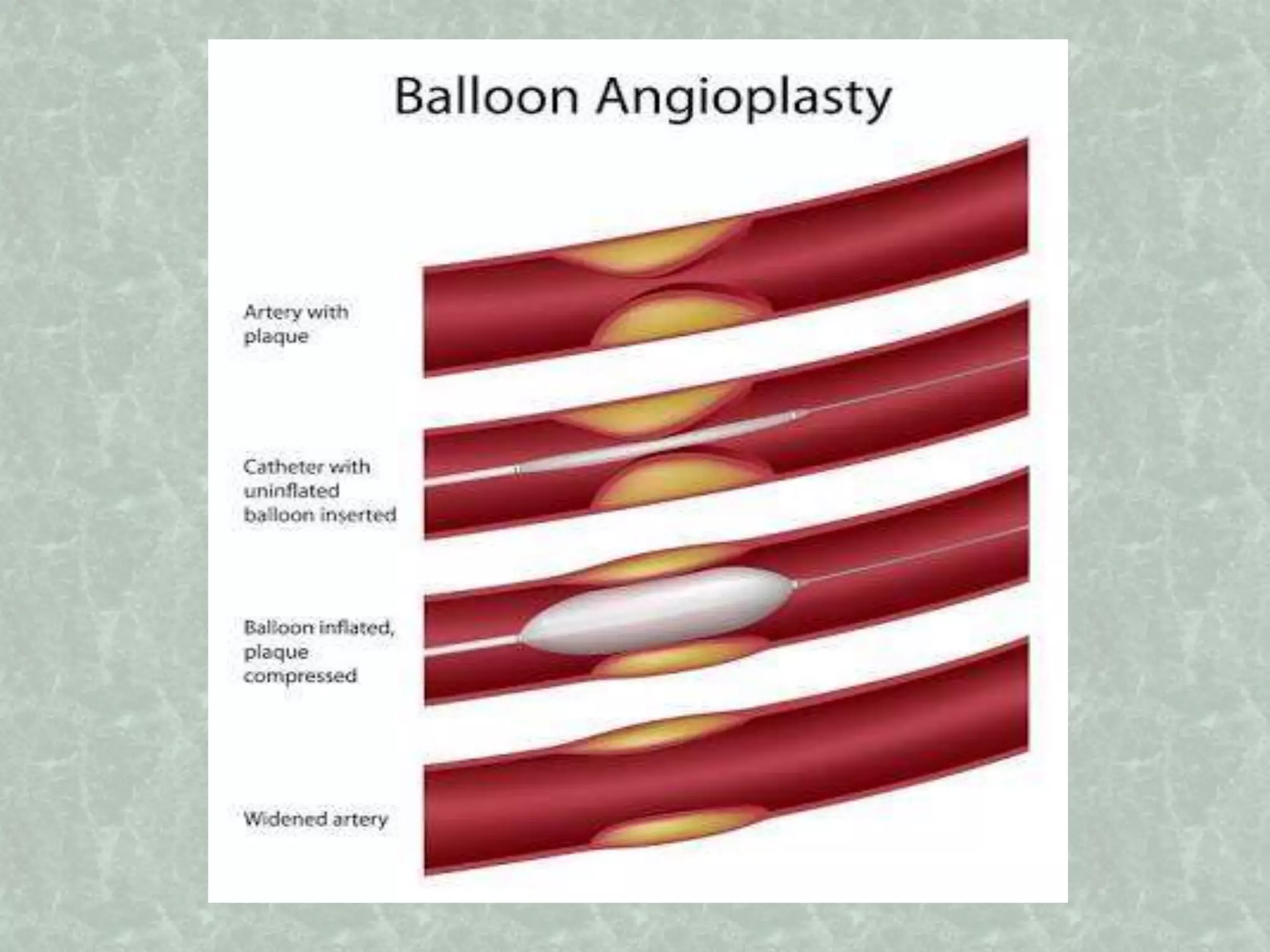
Angioplasty Balloons
• Differ primarily in their length, diameter & the
length of the catheter shaft.
• With advanced technology – lower profiles
have been manufactured(i.e.,the size that the
balloon assumes upon deflation)
• Used to : perform angioplasty on vascular
stenoses
: deploy stents
: assist with additional expansion after
insertion of self expanding stents
• Noncomplaint & low-compliance balloons tend
to be inflated to their present diameter & offer
greater dilating force at the site of stenosis.
• Low-compliance balloons: mainstay for
peripheral intervention.
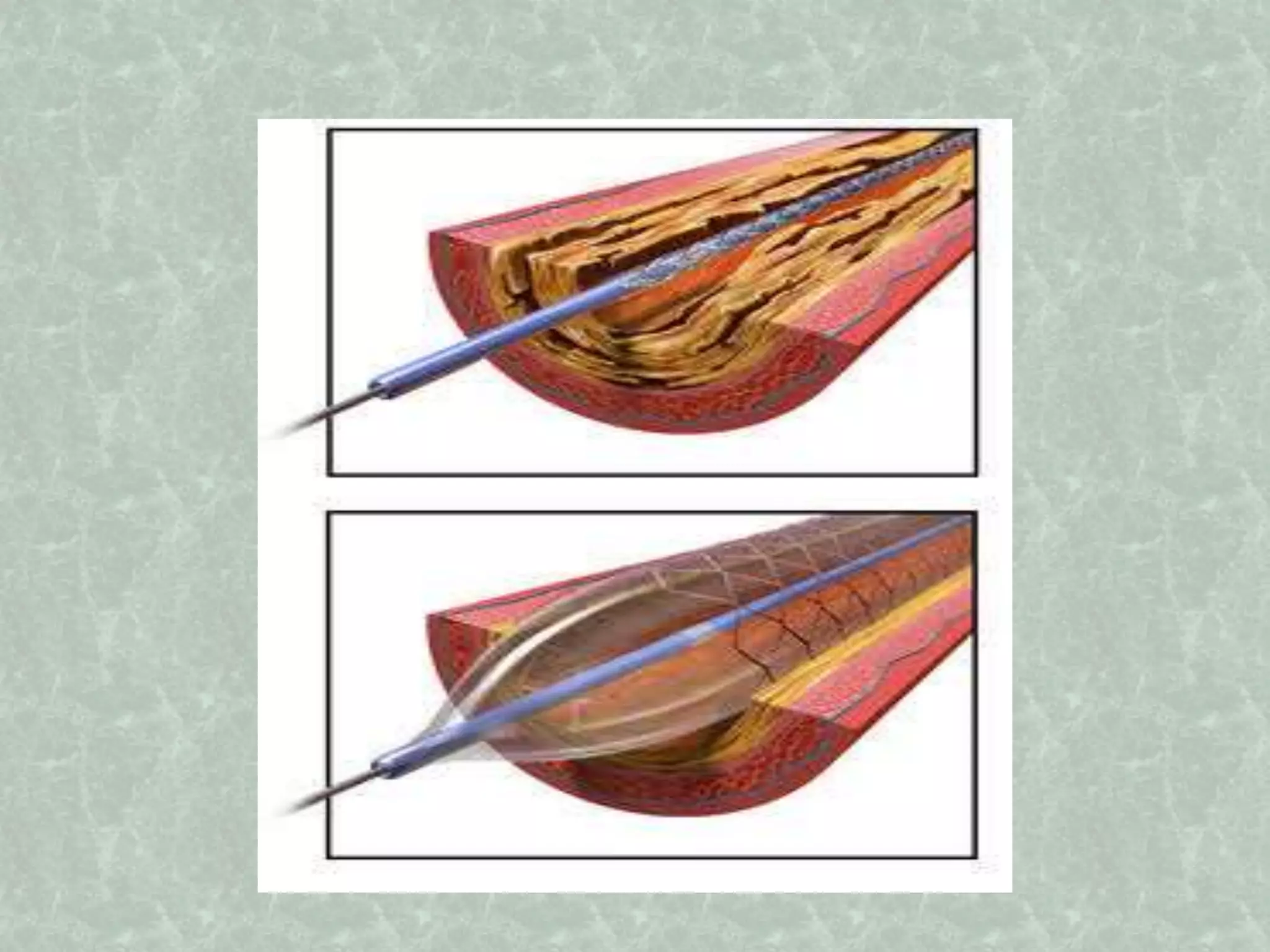
• Under fluoroscopic guidance, balloon inflation
is performed until the waist of the
atherosclerotic lesion disappears & the balloon
is at the full profile.
• Trackability, pushability, and crossability of a
balloon should be considered when choosing a
particular balloon.
• Shoulder length: important factor to consider
when choosing a balloon because of the
potential to cause injury during performance of
PTA(percutaneous transluminal angioplasty) in
adjacent arterial segment.
• There is always risk of causing dissection or
rupture during PTA, thus a completion
angiogram is performed while the wire is still in
place.
• Leaving the wire in place provides access for
repeating the procedure,placing a stent or stent
graft if warranted.
Stents
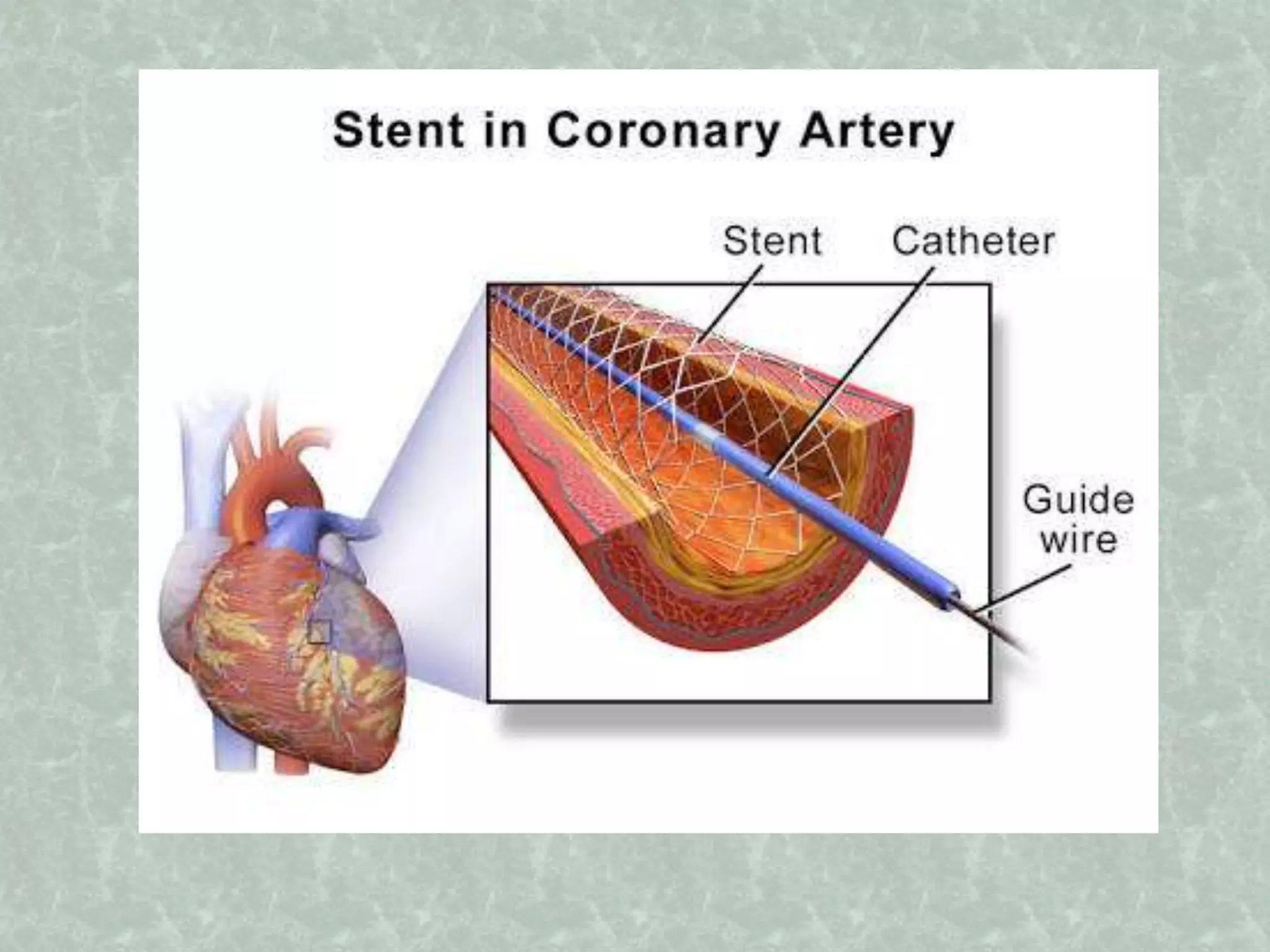
• Used after an inadequate angioplasty with
dissection or elastic recoil of an arterial stenosis.
• Serve to buttress collapsible vessels & help
prevent atherosclerotic restenosis.
• Manufactured from: stainless steel
tantalum
cobalt based alloy
nitinol
→Classified into self expanding & balloon
expandable stents
Self expanding stents
• Deployed by retracing a restraining sheath
• Come in longer length than balloon
expandable stents.
• Used to treat long & tortuous lesion
• Ability to continually expand after delivery
allows them to accomodate adjacent vessels
of different size.
• Ideal for internal carotid artery
• Oversized by 1 to 2mm relative to the largest
diameter of normal vessel adjacent to the
lesion – to prevent immediate migration.
• Consist of : Elgiloy (cobalt+chromium+nickel )
Nitinol (nickel + titanium)
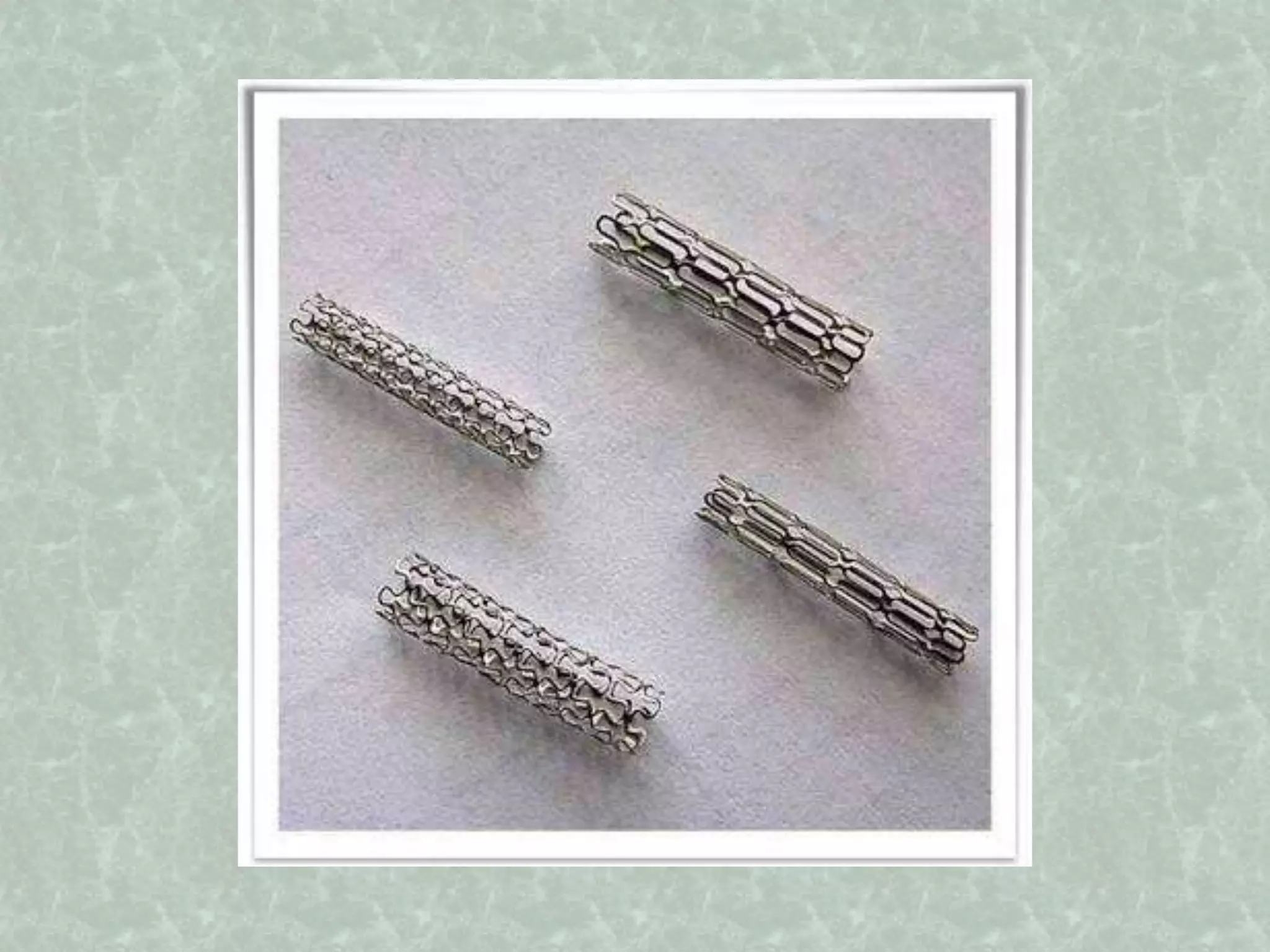
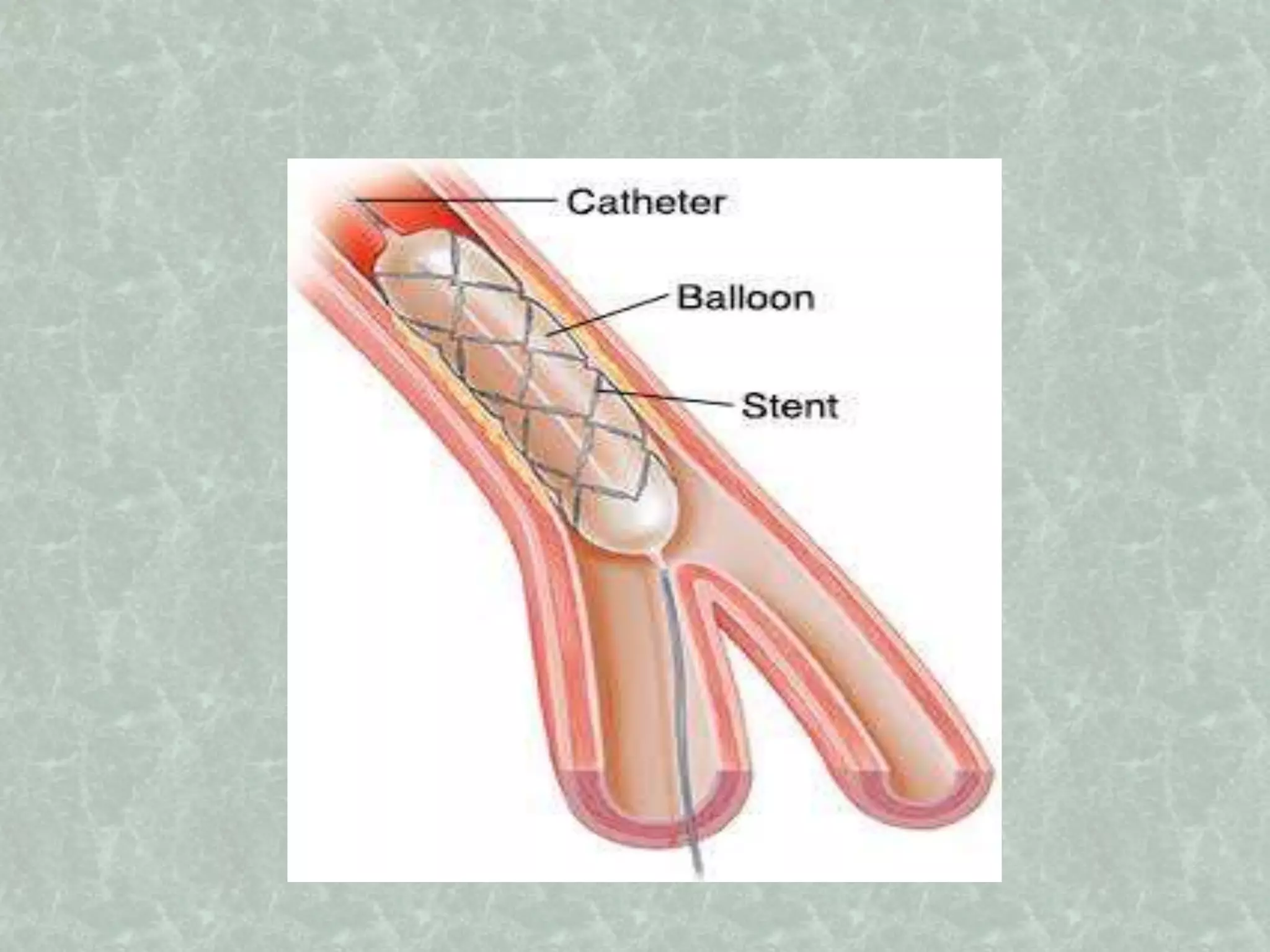
Balloon expandable stents
• Stainless steel
• Mounted on angioplasty balloon
• Deployed by balloon inflation
• Shorten in length during deployment,which
depends on stent geometry & diameter to
which balloon is expanded.
• More rigid & limited flexibility
• Ideal for short segment/ostial lesions.
Drug eluting stents
• Recent development
• Nitinol with anti-inflammatory drugs
• Prevent restenosis
• Beneficial in coronary arterial lesion,
peripheral arterial disease.
Stent grafts
Initiated by Parodi in 1991
• Metal stent covered with fabric
• Used in traumatic vascular lesion--arterial
disruption, AV fistulas.
• Eg :
– AneuRx device
– Gore excluder device
– Endologix powerlink device
– Zenith device
– Talent device
– Endurant device
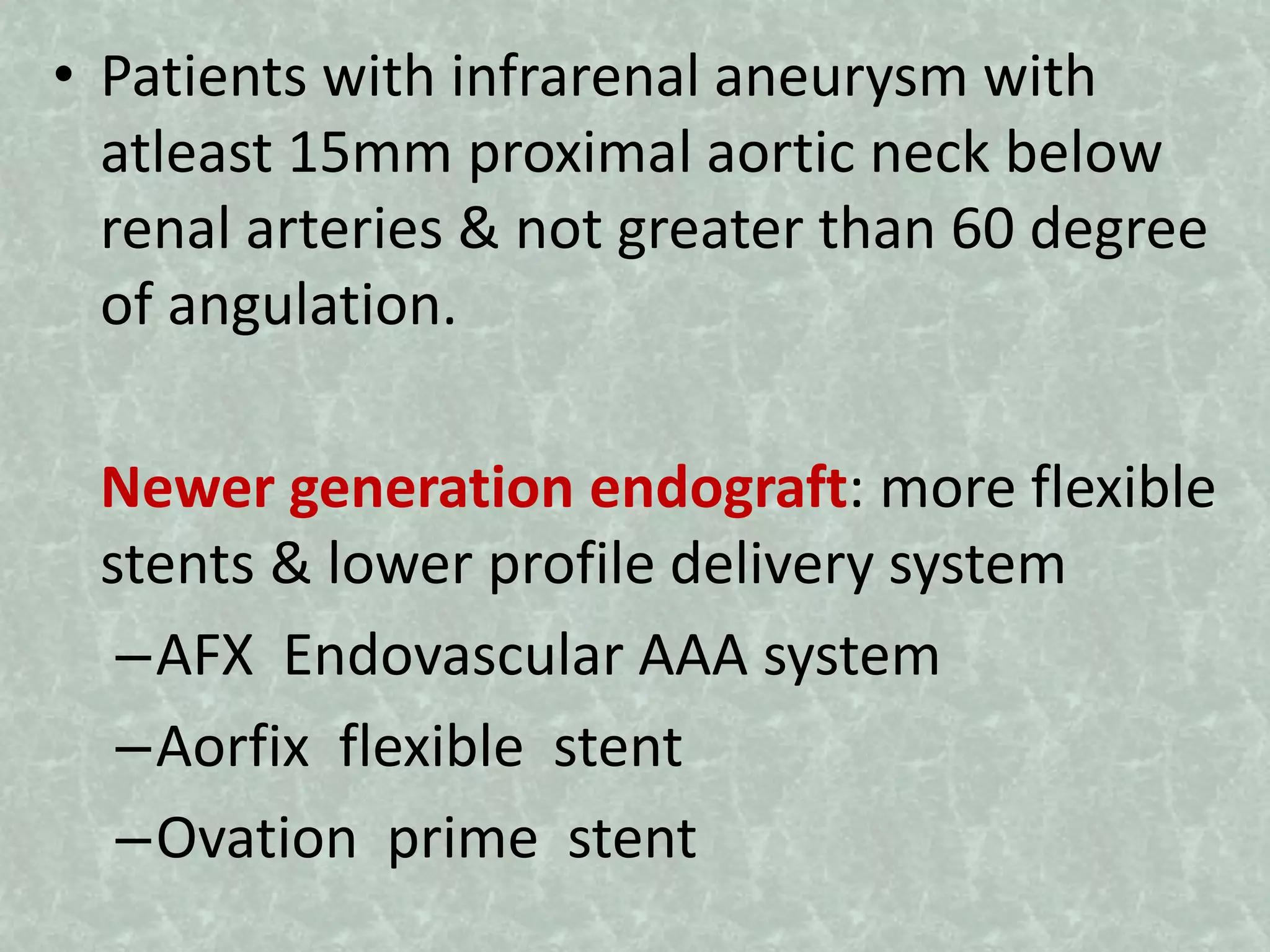
• Patients with infrarenal aneurysm with
atleast 15mm proximal aortic neck below
renal arteries & not greater than 60 degree
of angulation.
Newer generation endograft: more flexible
stents & lower profile delivery system
–AFX Endovascular AAA system
–Aorfix flexible stent
–Ovation prime stent
Complication
• Periprocedural hemorrhage--most common
• Access site hematoma, GI hemorrhage
• Retroperitoneal hemorrhage
• Cardiac- arrhythmia,hypotension.
• Contrast related- allergy , ARF
• Perforation, dissection
• Embolization
• pseudoaneurysm
THANK YOU

Seminar on basic principles of endovascular surgery

  • 1.
    SEMINAR ON BASICPRINCIPLES OF ENDOVASCULAR SURGERY PRESENTER : Dr. BISWAJIT DEKA PGT, DEPTT. OF SURGERY SILCHAR MEDICAL COLLEGE
  • 2.
    INTRODUCTION • Endovascular surgeryis an intra-arterial method that uses catheter guided devices to assist restoration of blood flow in an occluded vessel. • This is accomplished either by providing a thrombolytic agent directly to the clot or removing the clot mechanically from the site of vessel occlusion or both.
  • 3.
    HISTORICAL IMPORTANCE • IvanSeldinger, a swedish radiologist ,was the 1st physician to describe a unique method of establishing arterial access using a guidewire technique in 1953, which heralded an evolution from diagnostic to therapeutic angiography. • A decade later, Fogarty detailed the use of a balloon-tipped catheter to extract thrombus.
  • 4.
    • Dotter &Judkin in 1964 described a method of dilating an arterial occlusion using a rigid Teflon catheter to improve arterial circulation. • In the field of venous intervention, catheter based vena caval filters were introduced by Greenfield in 1973 and have revolutionized the current approach in the prevention of pulmonary embolism.
  • 5.
    • The techniqueof balloon angioplasty was introduced by Gruntzig,who performed the 1st coronary artery intervention in 1974. . 1st intravascular balloon expandable stent was developed by Palmaz et al in 1985. • Several years later, Parodi,an Argentinean vascular surgeon, combined both a Dacron graft & balloon expandable stent technology to creat a stent graft, which was successfully used to exclude an abdominal aortic aneurysm.
  • 6.
    Headings • Needles • Access •Guidewires • Hemostatic sheath • Catheter • Angioplasty balloons • Stents • Stent grafts
  • 7.
    NEEDLES • Used toachieve percutaneous vascular access. • Size – dictated by diameter of guidewire • Most often 18G needle used – accept a 0.035 inch guidewire.
  • 8.
    • 21G micropunctureneedle- accept a 0.018 inch guidewire. • Seldinger needle- most popular , used for single & double wall puncture techniques.
  • 9.
  • 10.
    ACCESS • Femoral arterialpuncture – most common site • Common femoral artery(CFA)- punctured over medial third of femoral head , landmarked using fluoroscopy. • Retrograde femoral access - most common – Size & fixed position of common femoral artery – Ease of compression against the femoral head
  • 11.
    • Single wallpuncture technique → needle with sharp beveled tip & no central stylet → anterior wall of vessel punctured → intraluminal position indicated by pulsatile back bleeding → useful for : graft puncture abnormal clotting profile if thrombolytic therapy needed
  • 12.
    • Double wallpuncture technique –Blunt needle with removable inner cannula –Puncture both walls of artery –Withdrawn until bleeding is obtained to confirm intraluminal position prior to advancing a guidewire –Disadvantage: bleeding from posterior wall.
  • 13.
    • Avoid puncturingexternal iliac artery - Retroperitoneal hemorrhage • Puncturing low,at/below CFA bifurcation –Thrombosis –Pseudo-aneurysm of superficial femoral or profunda femoris artery .
  • 14.
    GUIDEWIRE • Used tointroduce, positon & exchange catheters • Has a flexible & stiff end • Flexible end- placed in the vessel • Composed of a stiff inner core & an outer tightly coiled spring that allows a catheter to track over the guidewire
  • 15.
    • 5 Essentialcharacteristics of guidewires –Size –length –Stiffness –Coating –Tip configuration
  • 16.
    Size: –Max transverse diameter:0.011 to 0.038 inches –Most aortoiliac procedure: 0.035 inch used –Smaller diameter 0.018inch: small vessel angiography (infrageniculate / carotid) Length: –180 to 260 cm –Increased length: difficult to handle : risk of contamination
  • 17.
    • While performinga procedure,it is important to maintain the guidewire across the lesion until the completion-arteriogram has been satisfactorily completed. Stiffness – Stiff wires allow for passage of large aortic stent graft devices without kinking. – Usefull while performing sheath or catheter exchanges around a tortuous artery. – Eg: Amplatz wire
  • 18.
  • 19.
    Coating Hydrophilic coated guidewire,like Glidewire -useful for difficult catheterization –Coating is primed by bathing the guidewire in saline solution. –The slippery nature of this guidewire along with its torque capability facilitate in difficult catheterizatons.
  • 20.
  • 21.
    Tip configuration –Angled tipwires like angled Glidewire can be steered to manipulate a catheter across a tight stenosis or to select a specific br. of a vessel –The Rosen wire has a soft curled end- makes it ideal for renal artery stenting • Its soft curl prevents it from perforating small renal branch vessels
  • 22.
  • 23.
    Hemostatic Sheaths • Devicethrough which endovascular procedures are performed. • Protect the vessel from injury as wires & catheters are introduced. • One way valve: prevents bleeding. • Side-port: to administer heparin / contrast. • Commonly used for percutaneous access have a 5 to 9F inner diameter.
  • 25.
    Catheter • A widevariety of catheter exist that differ primarily in the configuration of the tip. • Multiple shapes permit access to vessels of varying dimensions and angulations. • Used to perform angiography & protect the passage of balloons and stents • Used to direct the guidewire through tight stenoses or tortuous vessels.
  • 26.
    Angioplasty Balloons • Differprimarily in their length, diameter & the length of the catheter shaft. • With advanced technology – lower profiles have been manufactured(i.e.,the size that the balloon assumes upon deflation) • Used to : perform angioplasty on vascular stenoses : deploy stents : assist with additional expansion after insertion of self expanding stents
  • 28.
    • Noncomplaint &low-compliance balloons tend to be inflated to their present diameter & offer greater dilating force at the site of stenosis. • Low-compliance balloons: mainstay for peripheral intervention. • Under fluoroscopic guidance, balloon inflation is performed until the waist of the atherosclerotic lesion disappears & the balloon is at the full profile. • Trackability, pushability, and crossability of a balloon should be considered when choosing a particular balloon.
  • 29.
    • Shoulder length:important factor to consider when choosing a balloon because of the potential to cause injury during performance of PTA(percutaneous transluminal angioplasty) in adjacent arterial segment. • There is always risk of causing dissection or rupture during PTA, thus a completion angiogram is performed while the wire is still in place. • Leaving the wire in place provides access for repeating the procedure,placing a stent or stent graft if warranted.
  • 30.
    Stents • Used afteran inadequate angioplasty with dissection or elastic recoil of an arterial stenosis. • Serve to buttress collapsible vessels & help prevent atherosclerotic restenosis. • Manufactured from: stainless steel tantalum cobalt based alloy nitinol →Classified into self expanding & balloon expandable stents
  • 31.
    Self expanding stents •Deployed by retracing a restraining sheath • Come in longer length than balloon expandable stents. • Used to treat long & tortuous lesion • Ability to continually expand after delivery allows them to accomodate adjacent vessels of different size. • Ideal for internal carotid artery
  • 32.
    • Oversized by1 to 2mm relative to the largest diameter of normal vessel adjacent to the lesion – to prevent immediate migration. • Consist of : Elgiloy (cobalt+chromium+nickel ) Nitinol (nickel + titanium)
  • 33.
    Balloon expandable stents •Stainless steel • Mounted on angioplasty balloon • Deployed by balloon inflation • Shorten in length during deployment,which depends on stent geometry & diameter to which balloon is expanded. • More rigid & limited flexibility • Ideal for short segment/ostial lesions.
  • 34.
    Drug eluting stents •Recent development • Nitinol with anti-inflammatory drugs • Prevent restenosis • Beneficial in coronary arterial lesion, peripheral arterial disease.
  • 39.
    Stent grafts Initiated byParodi in 1991 • Metal stent covered with fabric • Used in traumatic vascular lesion--arterial disruption, AV fistulas. • Eg : – AneuRx device – Gore excluder device – Endologix powerlink device – Zenith device – Talent device – Endurant device
  • 40.
    • Patients withinfrarenal aneurysm with atleast 15mm proximal aortic neck below renal arteries & not greater than 60 degree of angulation. Newer generation endograft: more flexible stents & lower profile delivery system –AFX Endovascular AAA system –Aorfix flexible stent –Ovation prime stent
  • 41.
    Complication • Periprocedural hemorrhage--mostcommon • Access site hematoma, GI hemorrhage • Retroperitoneal hemorrhage • Cardiac- arrhythmia,hypotension. • Contrast related- allergy , ARF • Perforation, dissection • Embolization • pseudoaneurysm
  • 42.