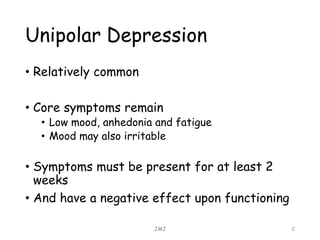
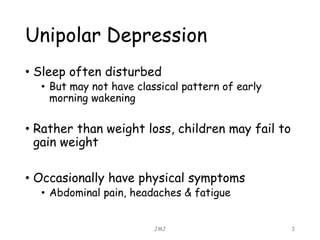
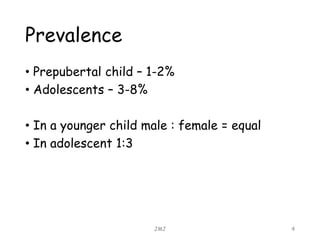
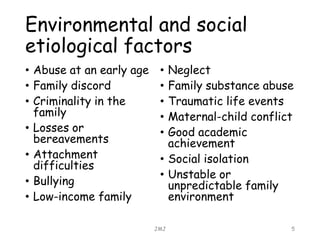
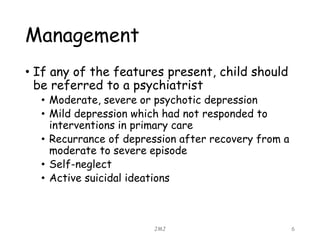
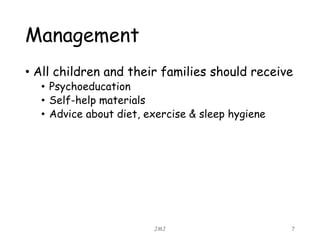
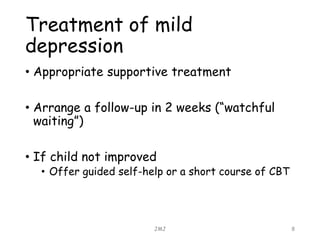
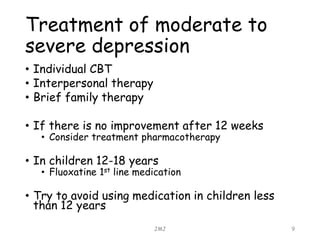
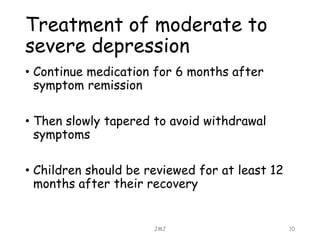


Unipolar depression in childhood is relatively common and characterized by core symptoms of low mood, anhedonia, and fatigue that persist for at least two weeks and negatively impact functioning. Sleep is often disturbed and children may fail to gain weight rather than lose it. Risk factors include abuse, family discord, losses or bereavements, bullying, low socioeconomic status, neglect, substance abuse in the family, and traumatic life events. Treatment involves psychoeducation, supportive care, cognitive behavioral therapy, interpersonal therapy, or brief family therapy. For moderate to severe cases, fluoxetine may be used for children 12-18 years old.


![CTEV [ clubfoot] DR ARUN LAL ,DR MOHAMED ASHRAF travancore medical college k...](https://cdn.slidesharecdn.com/ss_thumbnails/ctevclubfootdrarunlaldrmohamedashraftravancoremedicalcollegekollamkeralaindia-260208063247-18fc466c-thumbnail.jpg?width=640&height=640&fit=bounds)


![PERI-PROSTHETIC FRACTURE NAIL-PLATE CONSTRUCT [NPC].pptx](https://cdn.slidesharecdn.com/ss_thumbnails/drarunkumardrmohamedashrafperiprostheticfrasturenail-plateconstructnpc-260209164459-7e9d15a1-thumbnail.jpg?width=640&height=640&fit=bounds)


