Deepa kumari karn
B pharm 6th sem
Department of pharmaceutical sciences
8/3/2012 1
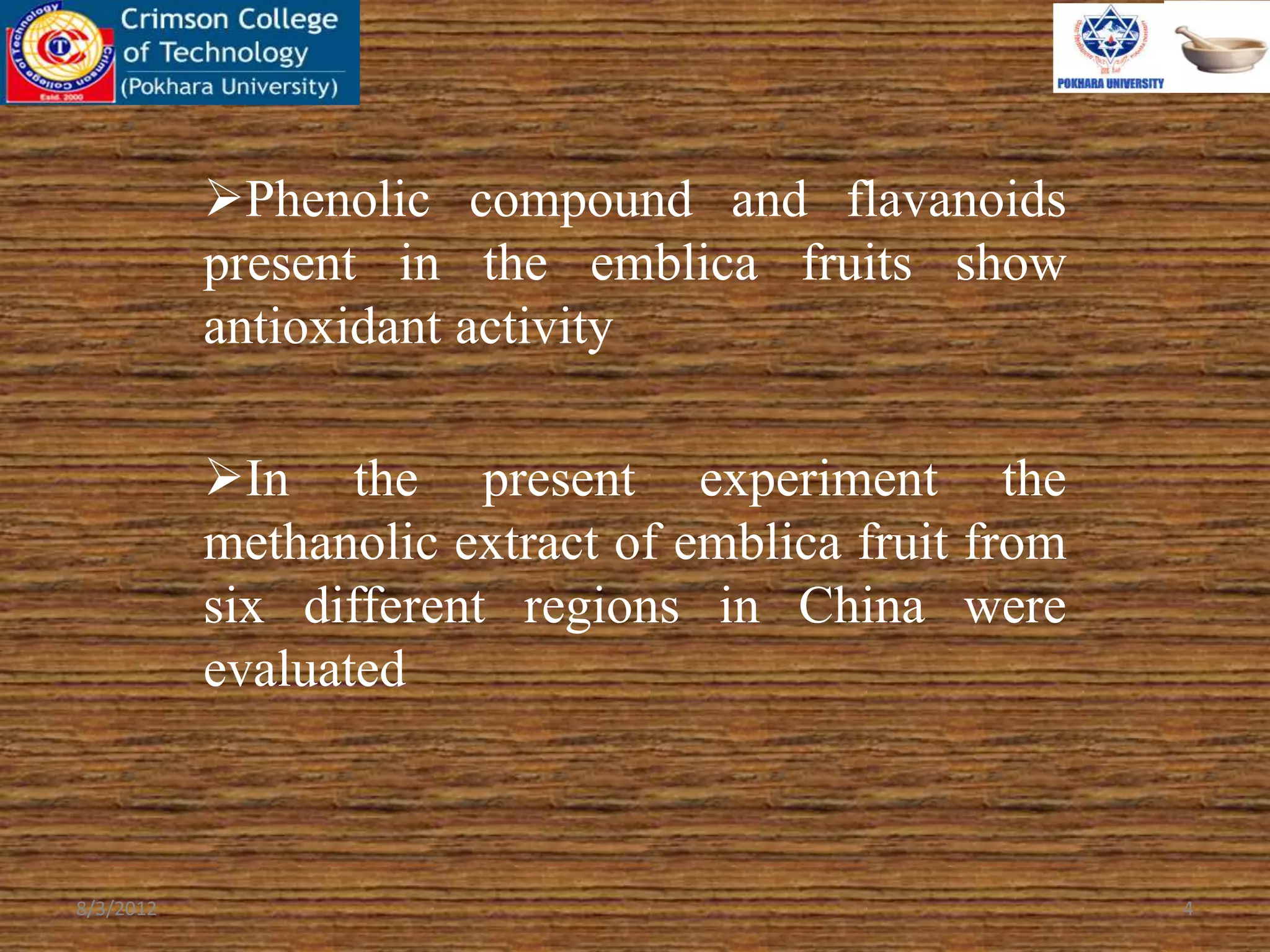
Antioxidant activity of methanolic extract of
emblica fruit (Phyllanthus emblica L.) from
six regions in China
INTRODUCTION
Phyllanthus emblica belong to family
Euphorbiaceae
Widely distributed in subtropical and
tropical areas of China, India, Indonesia,
and Malaysia
8/3/2012 2
Emblica fruits are reported to have
hypolipidemic,hypoglycemic,
hepatoprotective activities
Widely used as antimicrobial,
antitumor, anti-inflammatory agent and
improve the metal induced clastogenic
effect
8/3/2012 3
Phenolic compound and flavanoids
present in the emblica fruits show
antioxidant activity
In the present experiment the
methanolic extract of emblica fruit from
six different regions in China were
evaluated
8/3/2012 4
MATERIALAND METHODS
Plant material:-
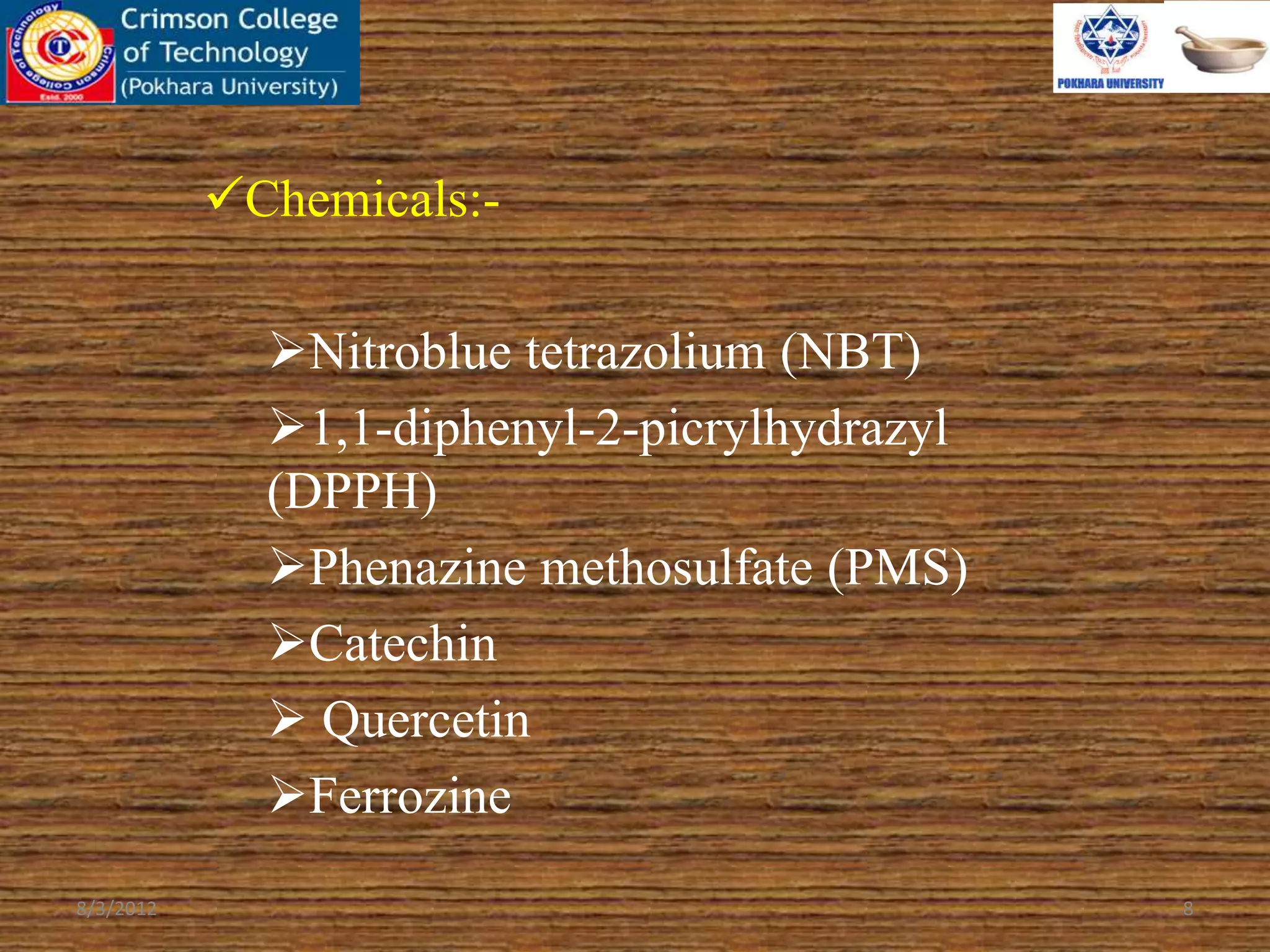
Fresh fruits of emblica were gathers
from six regions in China
Guangzhou
Huizhou
Liuzhou
Chuxiong
Putian8/3/2012 5
The weather of the sampling regions
were:-
Sub tropical to monsoon for
Liuzhou and Chuxiong
Subtropical oceanic climate for
Guangzhou, Huizhou, Putian
8/3/2012 6
Tropical oceanic for Haikou
The fruits were stored at 4ºC till
analysis
8/3/2012 7
Chemicals:-
Nitroblue tetrazolium (NBT)
1,1-diphenyl-2-picrylhydrazyl
(DPPH)
Phenazine methosulfate (PMS)
Catechin
 Quercetin
Ferrozine
8/3/2012 8
All the chemical were purchased from
sigma chemicals Co. (St. Louis, MO,
USA)
All other chemical and reagents were
of analytical grade
8/3/2012 9
Preparation of methanolic extract:-
Fresh emblica fleshes were air dried in
an oven at 40ºC for 8h
Pulverized to 0.2 to 0.4 mm particle in
the cutting mill
8/3/2012 10
Powder 10 g was extracted for 24 h
with 100ml of methanol in a glass
conical flask using a shaker at 25º C
 Filtered through 0.45µ filter paper
Residue was then extracted twice with
100ml methanol
8/3/2012 11
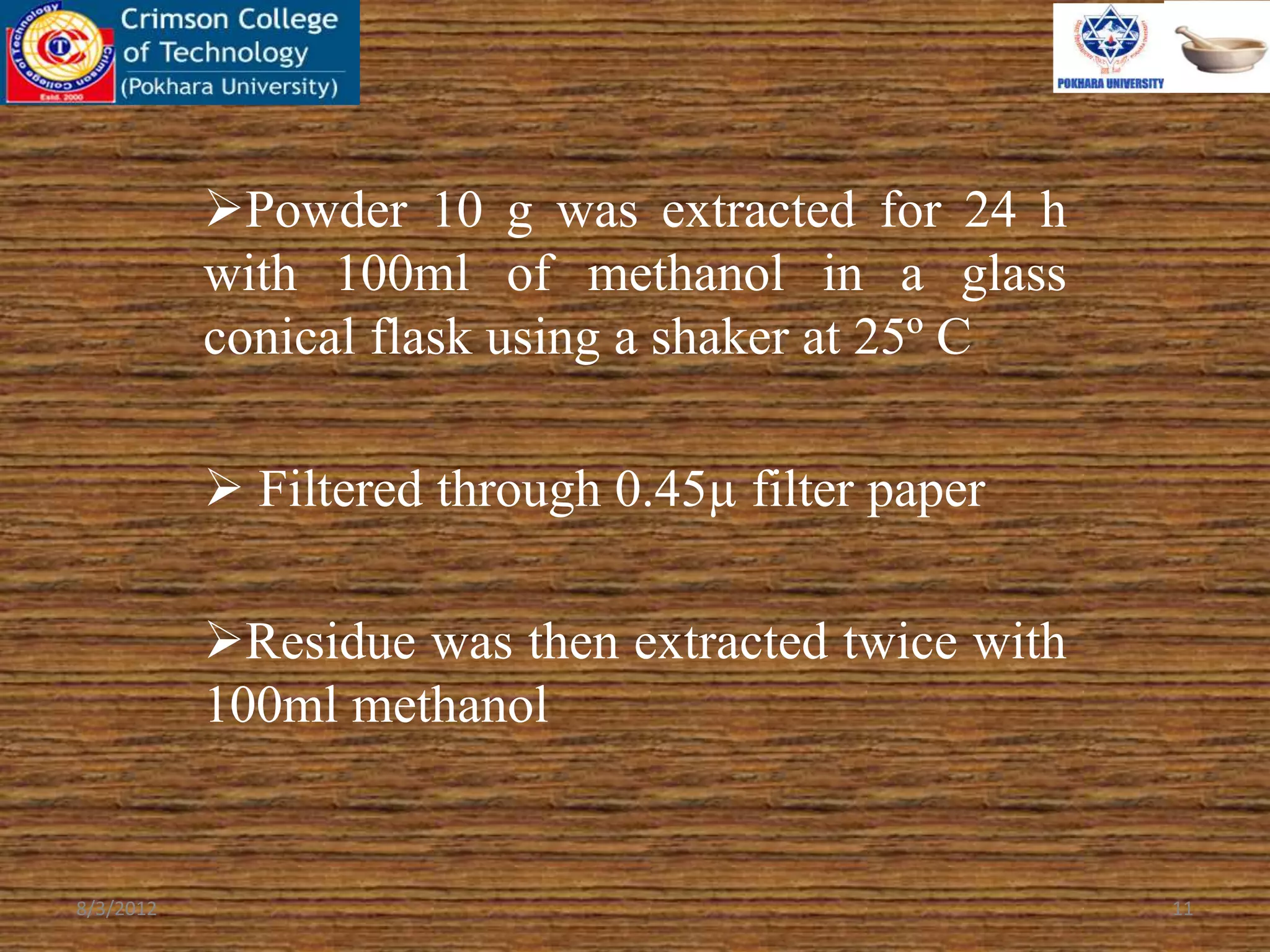
Combined methanolic extract were
concentrated at 40ºC, using a rotary
evaporator under low pressure
Residue was freeze- dried and then
stored in amber color container at 4ºC
8/3/2012 12
Determination of total phenolic,
flavonoids and proanthocyanidin
content:-
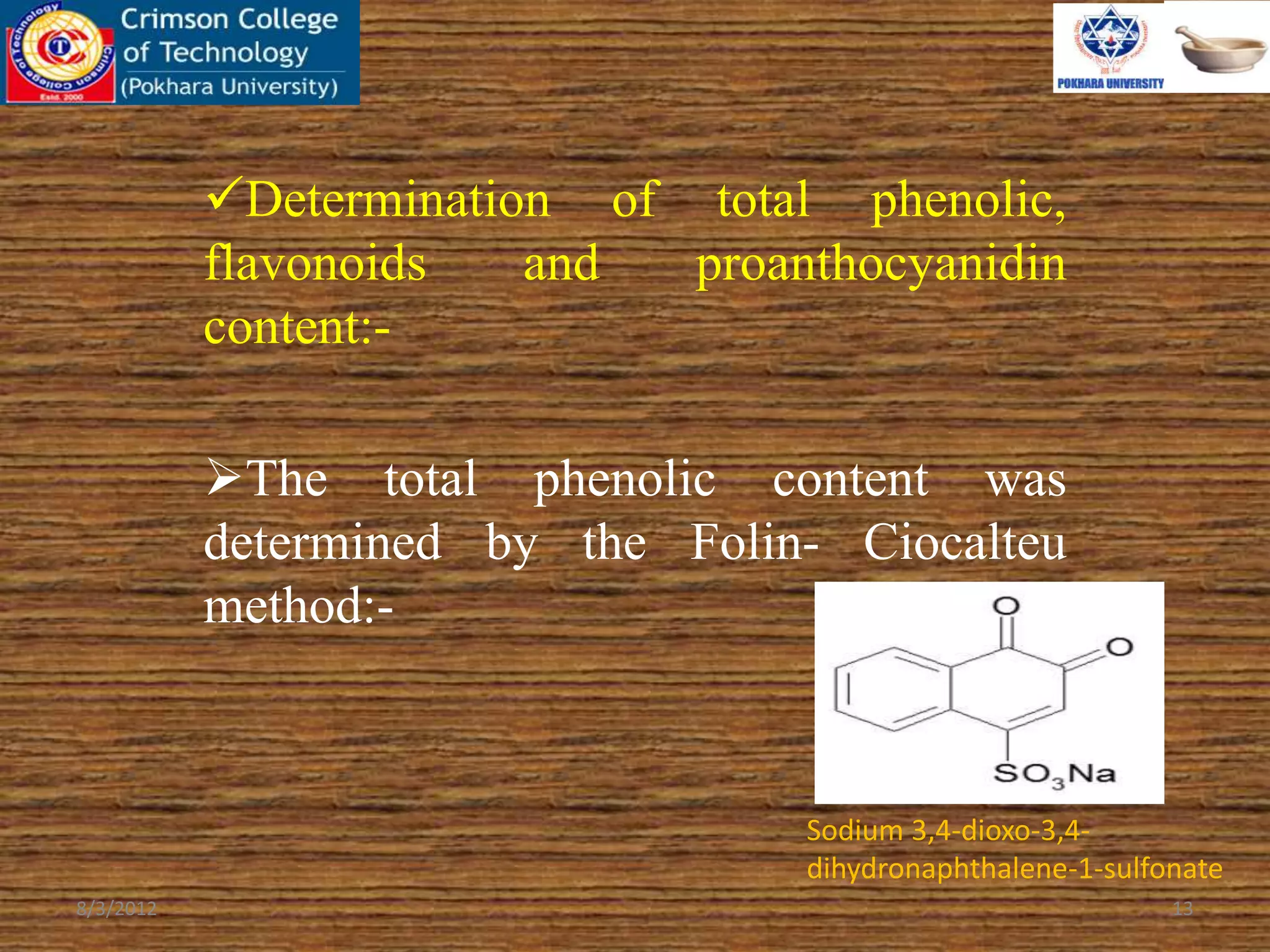
The total phenolic content was
determined by the Folin- Ciocalteu
method:-
8/3/2012 13
Sodium 3,4-dioxo-3,4-
dihydronaphthalene-1-sulfonate
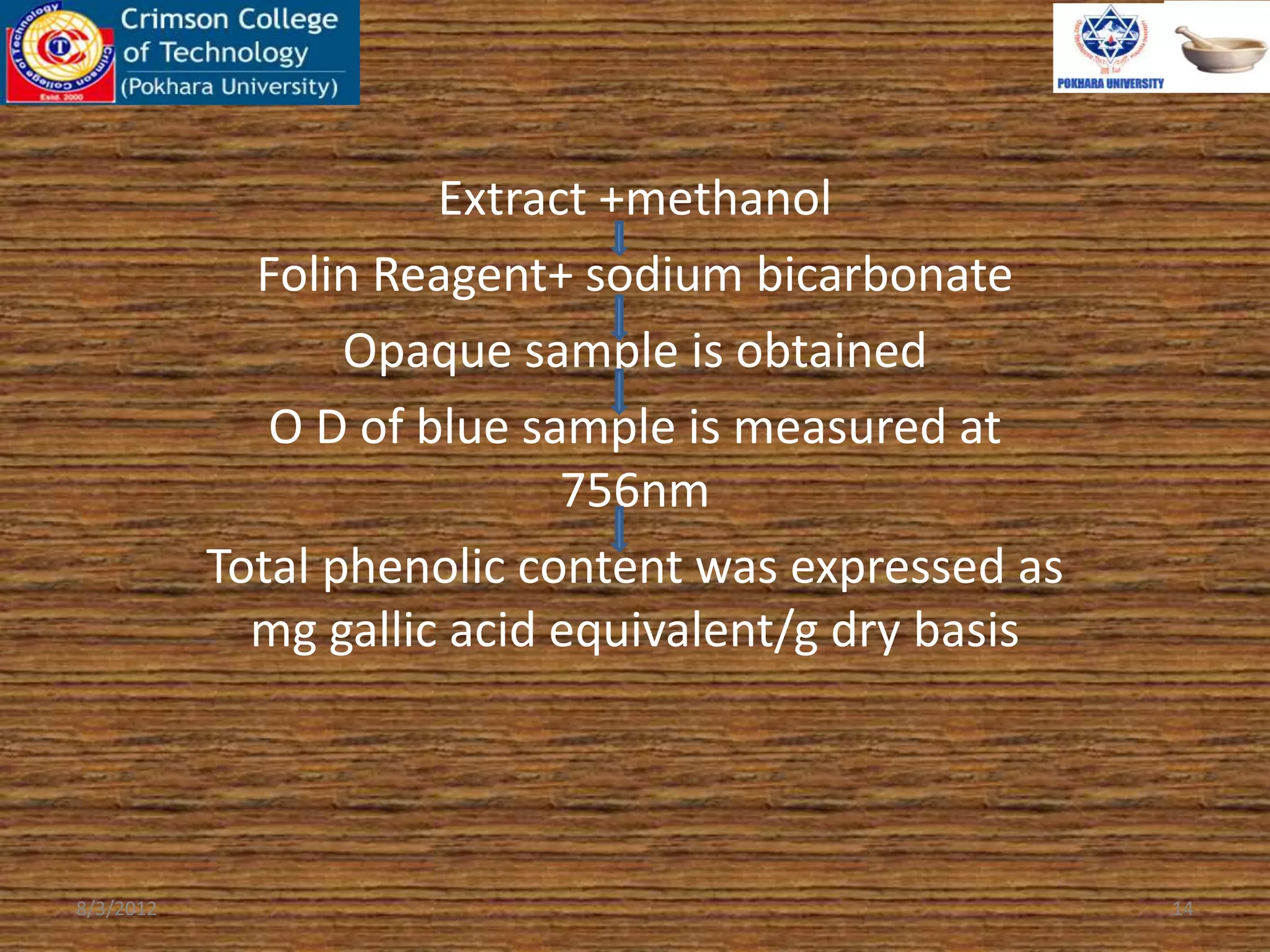
Extract +methanol
Folin Reagent+ sodium bicarbonate
Opaque sample is obtained
O D of blue sample is measured at
756nm
Total phenolic content was expressed as
mg gallic acid equivalent/g dry basis
8/3/2012 14
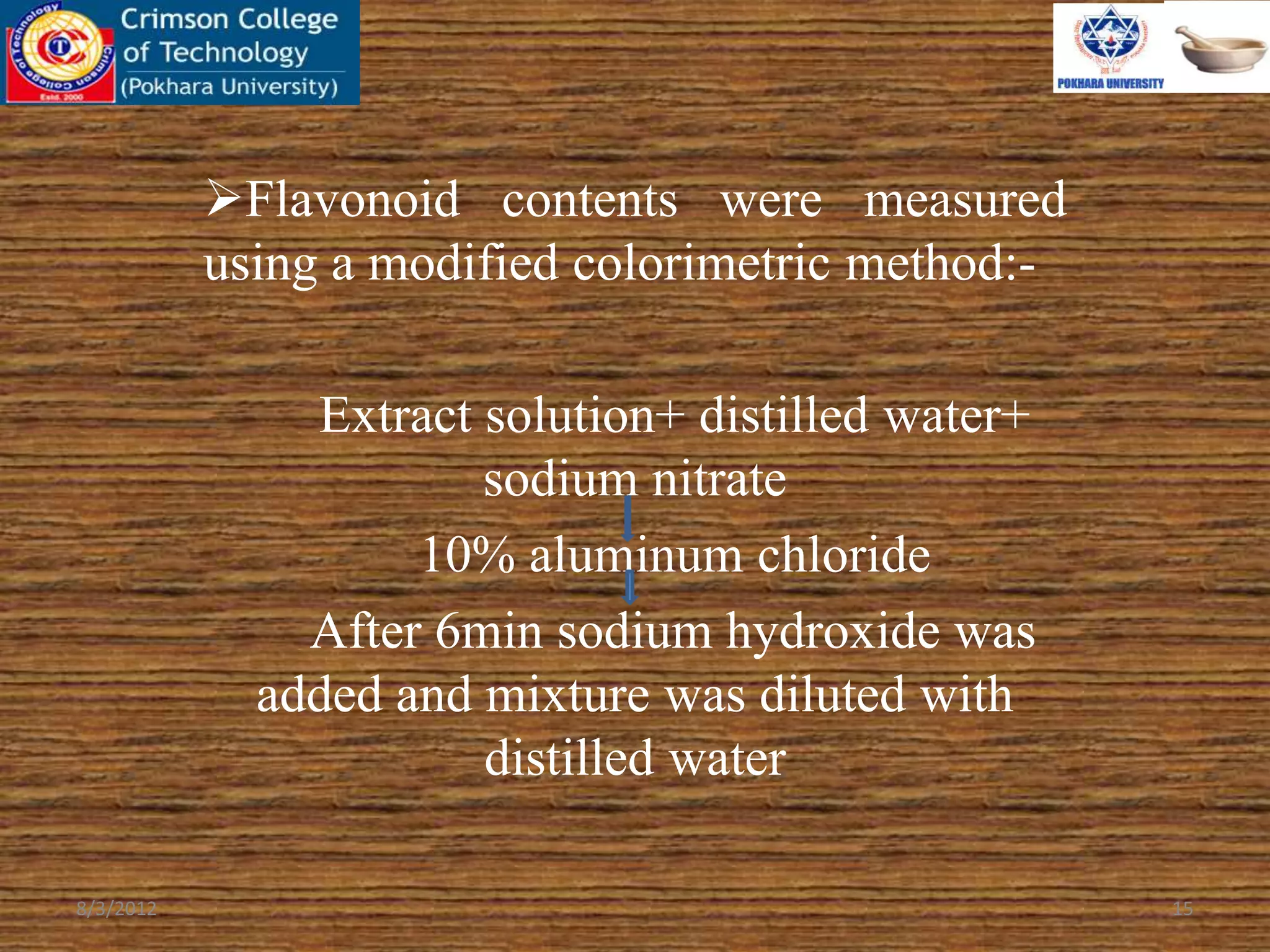
Flavonoid contents were measured
using a modified colorimetric method:-
Extract solution+ distilled water+
sodium nitrate
10% aluminum chloride
After 6min sodium hydroxide was
added and mixture was diluted with
distilled water
8/3/2012 15
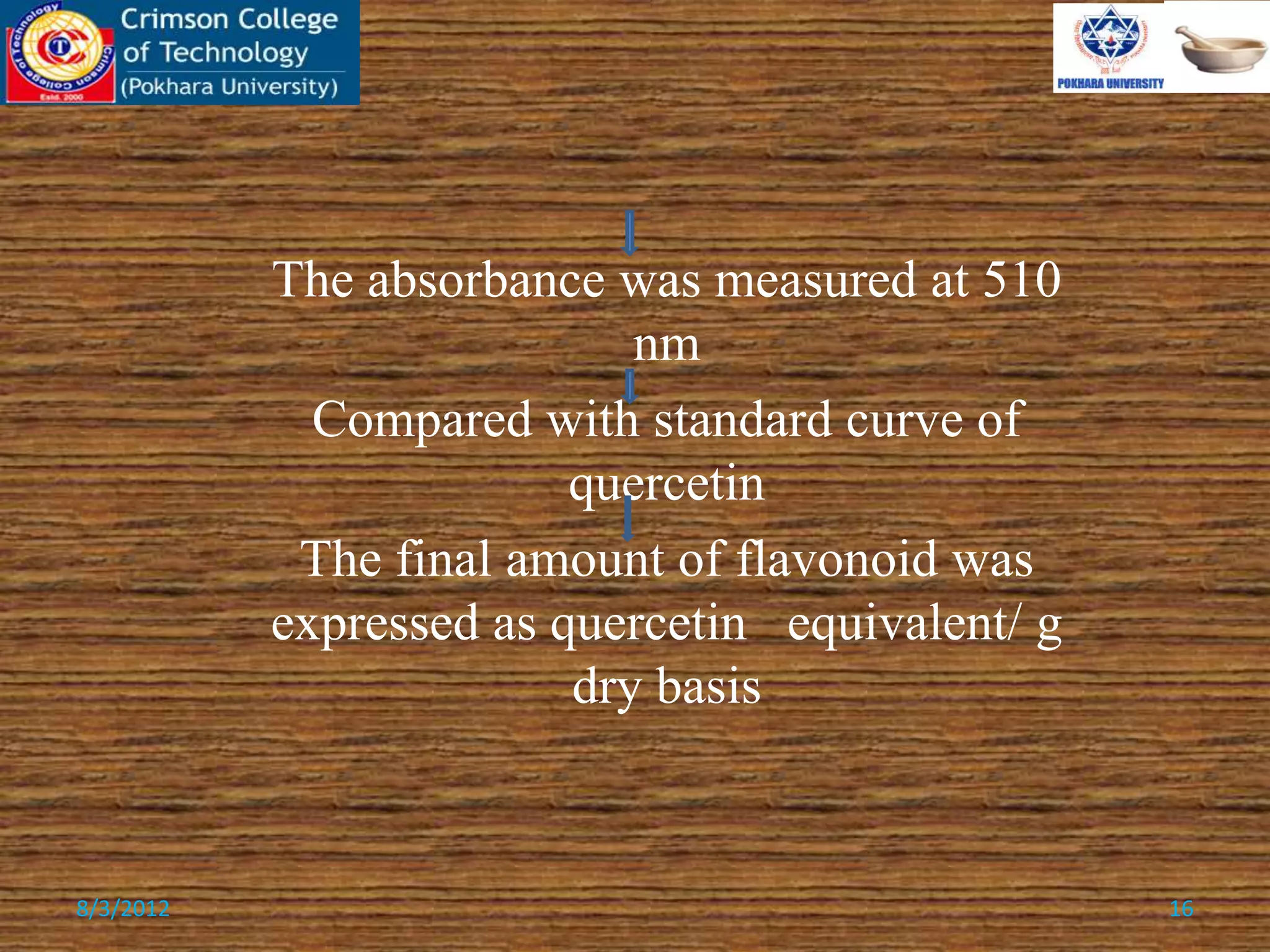
The absorbance was measured at 510
nm
Compared with standard curve of
quercetin
The final amount of flavonoid was
expressed as quercetin equivalent/ g
dry basis
8/3/2012 16
Content of proanthocyanidins was
determined by the procedure of Sun et
al:-
Extract + vanillin-methanol solution
+ Hcl
After absorbance was determined at
500nm
Result was expressed as Catechin
eq/g dry basis
8/3/2012 17
Determination of DPPH radical
scavenging activity:-
The free radical scavenging was
determined by the method of Shimada et
al and Yang et al
Various concentration of methanolic
extract 200, 100,80,60,40,20 µg/ml
was prepared
8/3/2012 18
Extract solution+ methanolic solution
containing DPPH radical
Shaken vigorously and maintained
for 30 min in dark
Absorbance was measured at 517nm
8/3/2012 19
Determination of reducing power:-
Determined according to method of
Oyaizce
Extract solution+ phosphate buffer
+potassium ferricyanide
Incubated at 50ºC for 20m
Trichloroacetic acid was added to the
mixture
8/3/2012 20
Above mixture+ distilled water+
0.1% ferric chloride
After 10 min absorbance was
measured at 700nm
Increased absorbance indicated high
reducing power
8/3/2012 21
Determination of superoxide anion
radical scavenging activity:-
The assay for superoxide anion radical
scavenging activity was based on the
riboflavin-light NBT system
Phosphate buffer+ riboflavin+ PMS+
NBT+ methanolic extract of different
concentration
8/3/2012 22
Incubate for 20 min
Absorbance was measured at
560nm
The absorbance of control
was determined by replacing the sample
with methanol
8/3/2012 23
Determination of hydroxyl radical
scavenging activity:-
Assayed by the method of Halliwell
and Gutteridge
2-deoxyribose+ Potassium
phosphate buffer+ permixed EDTA +
hydrogenperoxide + extract solution
8/3/2012 24
Add ascorbate and incubate for 1 h at
37ºC
Add TBA+ NaOH+ TCA
Heat for 15m on boiling water bath and
then cooled
Absorbance measured at 532nm
Absorbance of control was determine
by replacing sample with methanol
8/3/2012 25
Inhibition of lipid peroxide formation
induced by Fe++ ascorbate system:-
Lipid peroxidation assay of rat
microsomal was carried out as reported
earlier by Sabu and Kuttan
8/3/2012 26
Extract solution at various
concentration+ rat liver homogenate+
Hcl buffer+ ascorbic acid + ferrous iron
Incubate for 1h at 37ºC
Absorbance of organic layer was
measured at 532nm
Result of test is compared with that of
control sample without extract solution
% of inhibition was determined
8/3/2012 27
Ability of chelating ferrous iron:-
Measured by the ferrous iron-ferrozine
complex method
Various concentration of methanolic
extract+ Fecl2 +ferrozine
Incubate for 10 min at 25±2ºC
Absorbance was measured at 256nm
8/3/2012 28
Absorbance of control was determined
by replacing the sample with methanol
8/3/2012 29
Statistical analysis:-
Data were presented as mean ±
standard deviation
Statistical analyzer was performed
using a one way analysis of variance
Difference were considered
significant of at P<0.05
8/3/2012 30
The EC50 values were calculated by
liner regression analysis
Results were calculated by employing
the statistical software (SPPS, version
13.0, SPSS Inc., Chicago, USA)
8/3/2012 31
RESULT AND DISCUSSION
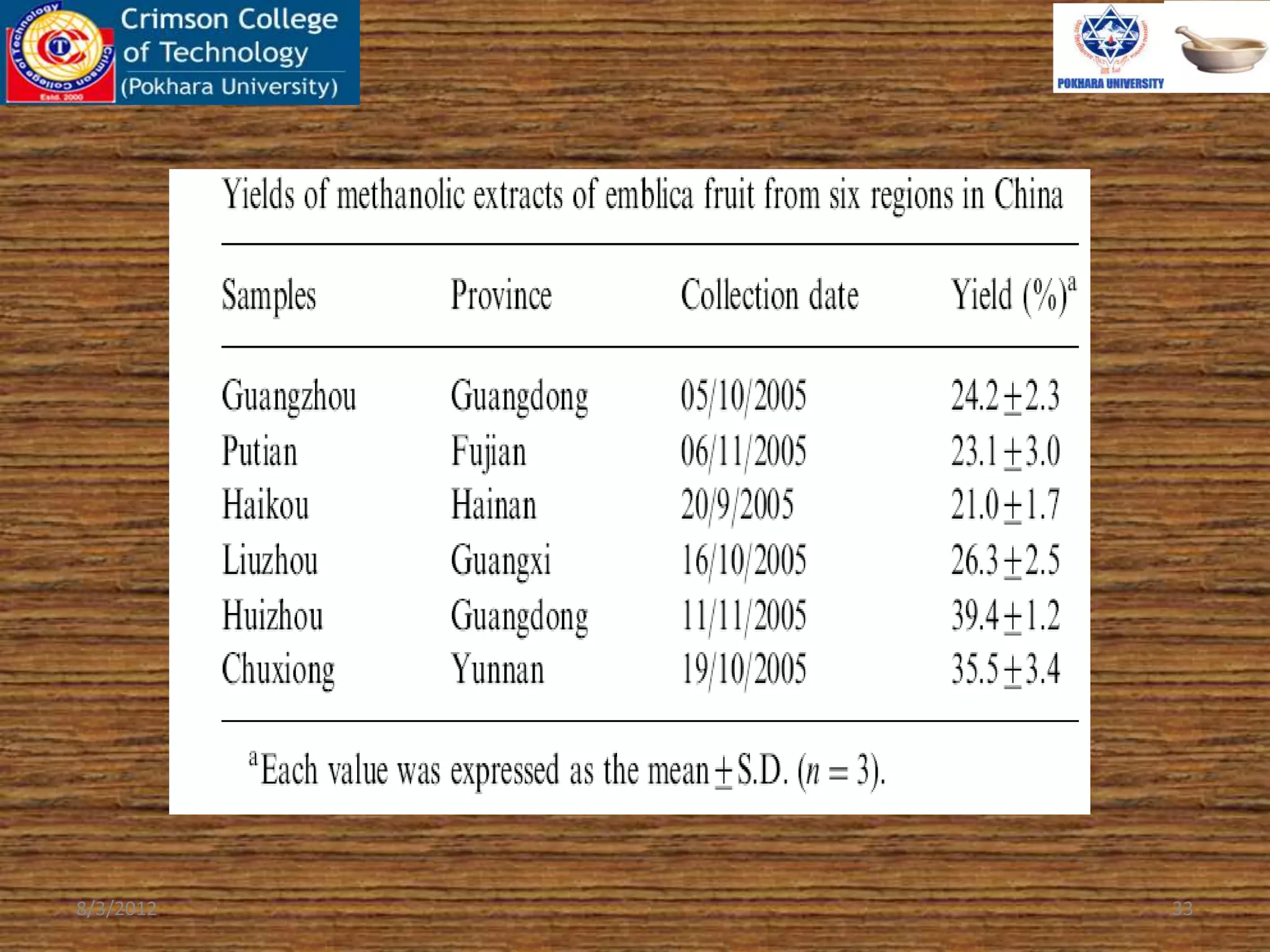
Extractive yields:-
The extraction yields of these samples
from six various regions varied from
21.0% to 39.4%
The data of extractive yields value is
given below
8/3/2012 32
8/3/2012 33
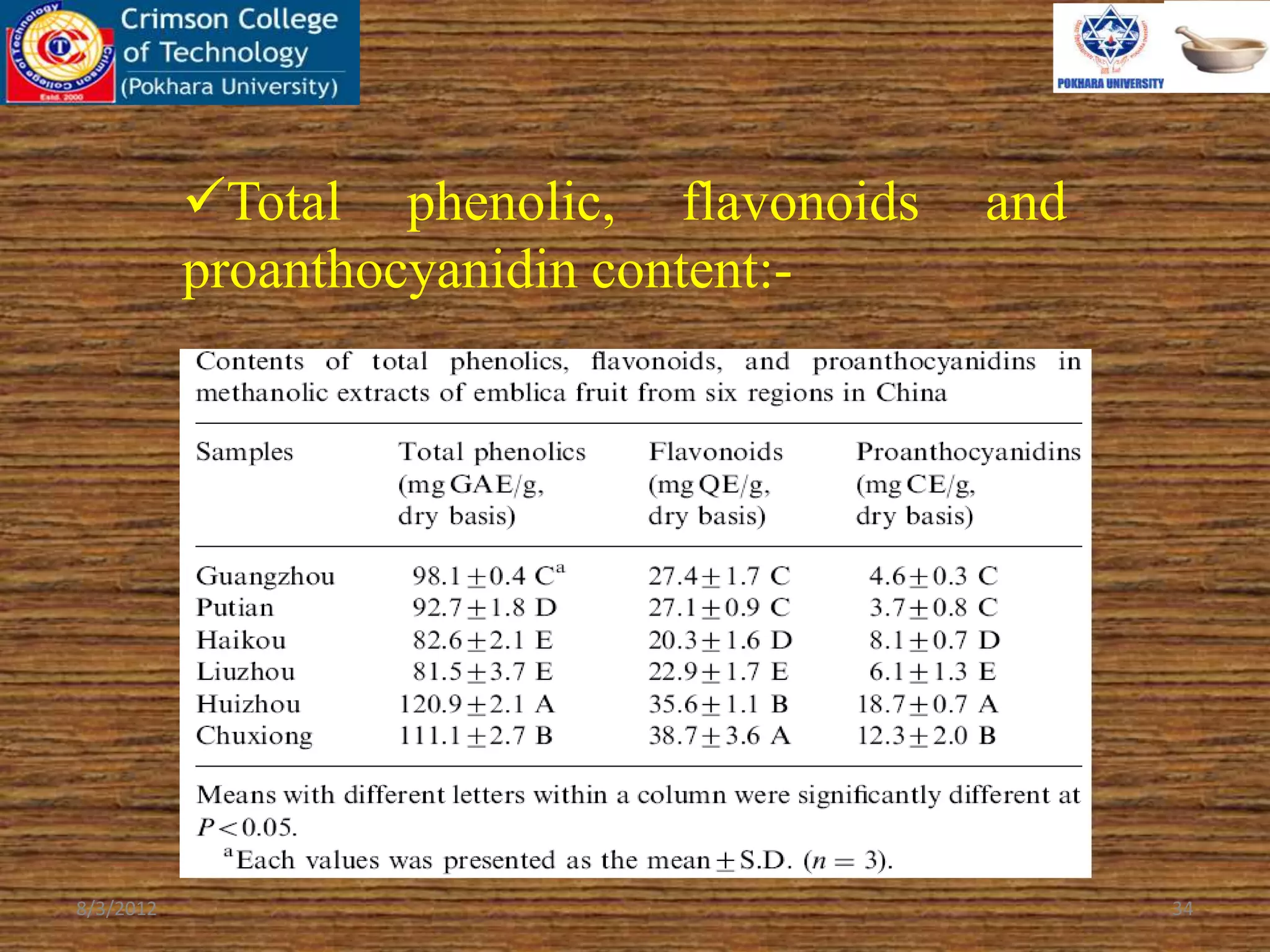
Total phenolic, flavonoids and
proanthocyanidin content:-
8/3/2012 34
Various stage of maturation and
growing condition such as a temperature
and rainfall affect the content of
phenolic compound
8/3/2012 35
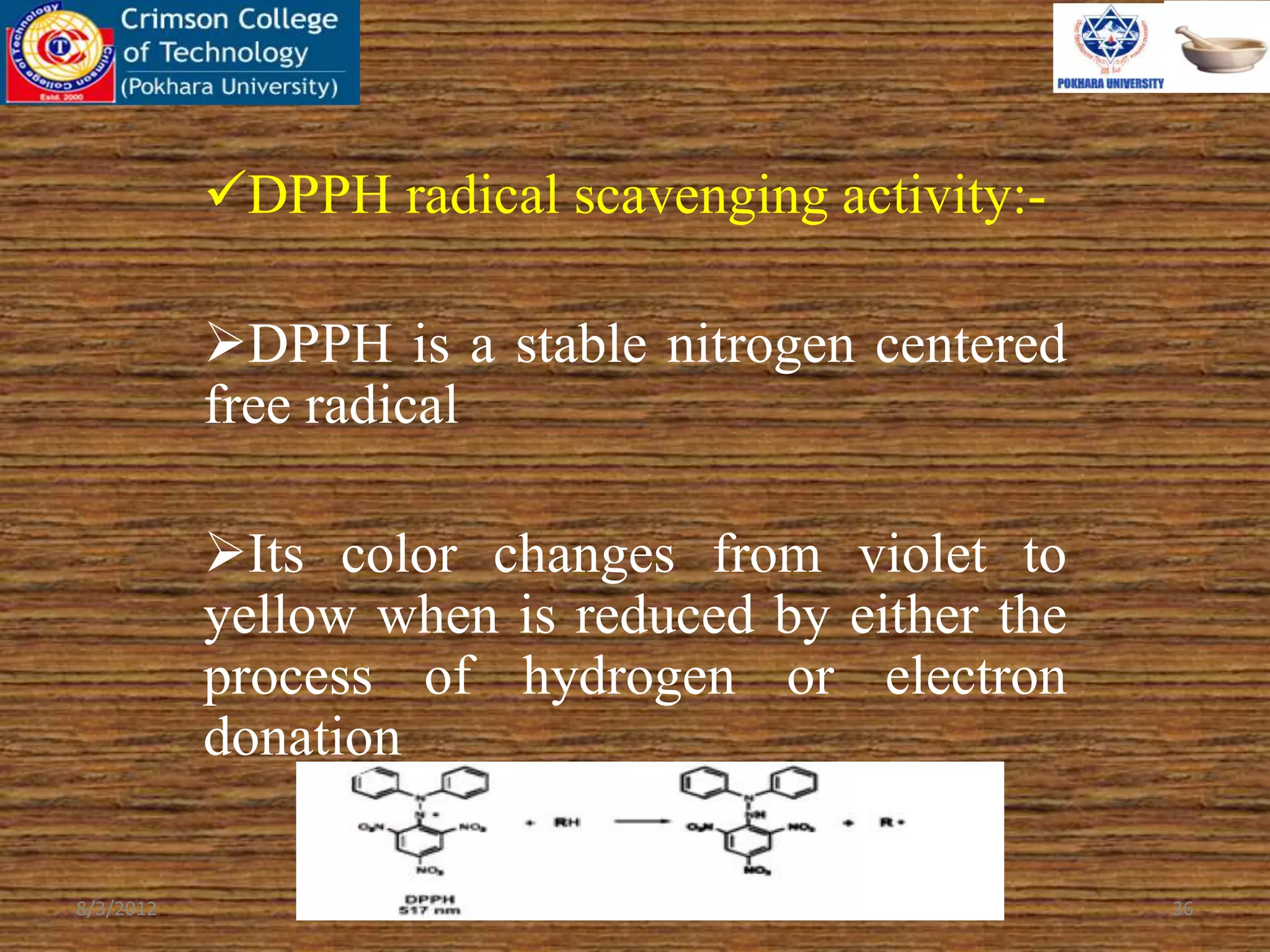
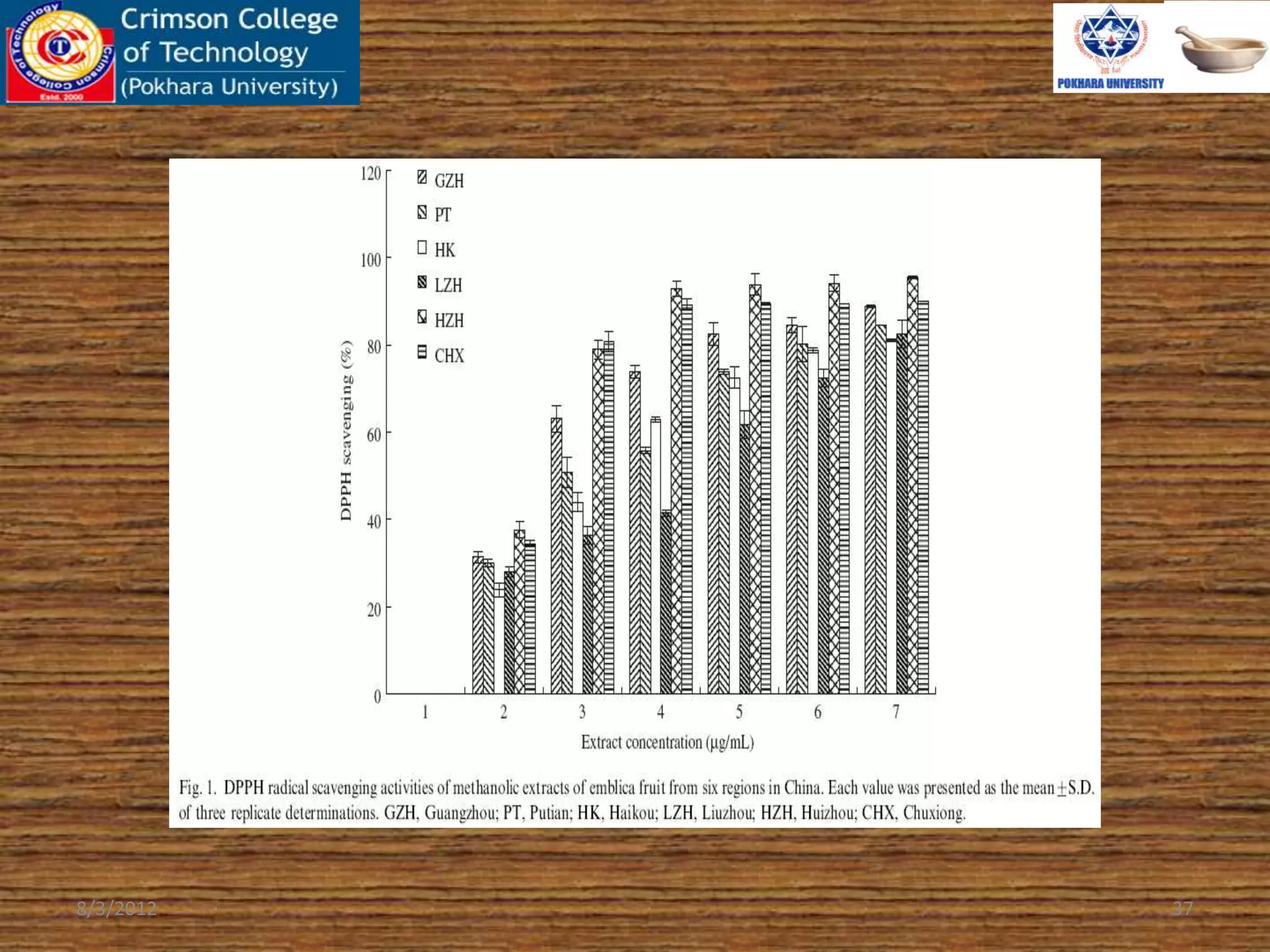
DPPH radical scavenging activity:-
DPPH is a stable nitrogen centered
free radical
Its color changes from violet to
yellow when is reduced by either the
process of hydrogen or electron
donation
8/3/2012 36
8/3/2012 37
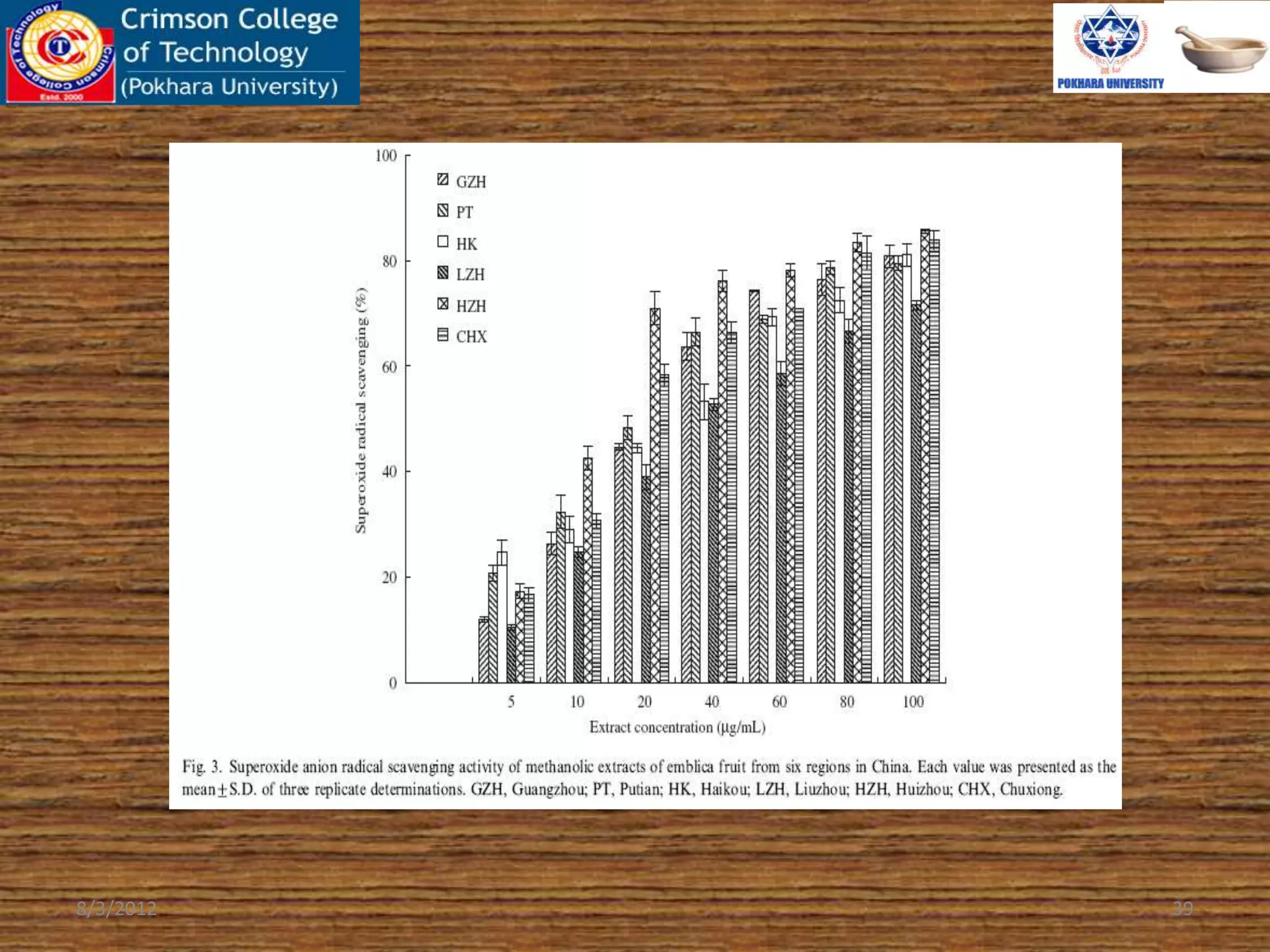
Superoxide anion radical scavenging
activity:-
Although superoxide anion is a weak
oxidant, it gives rise to the generation of
powerful and dangerous hydroxyl radical
as well as singlet oxygen
Both of which contribute to the
oxidative stress
8/3/2012 38
8/3/2012 39
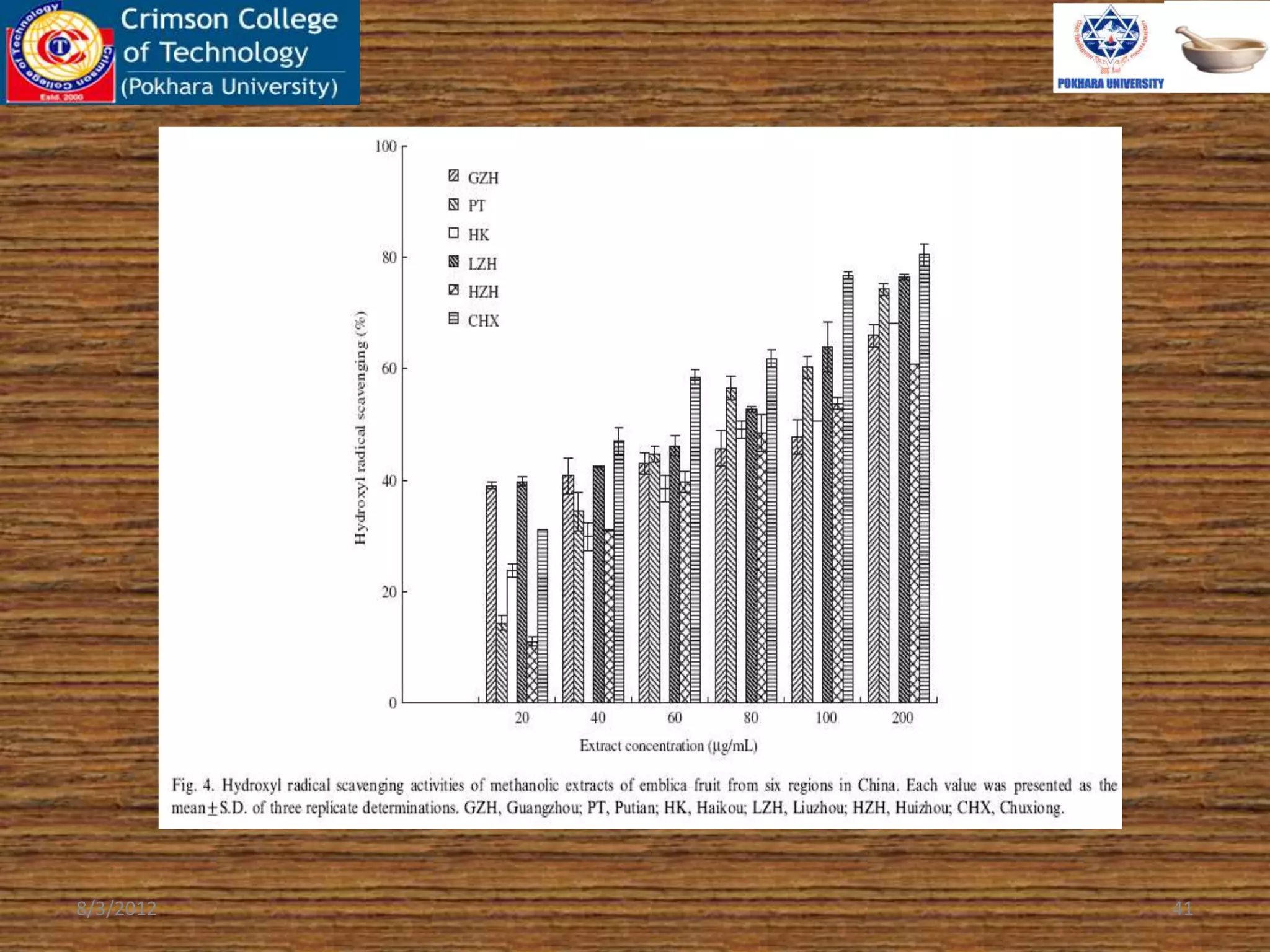
Hydroxyl radical scavenging activity:-
Hydroxyl radical is extremely
reactive in biological system
Capable of damaging biomolecule
of the living system
8/3/2012 40
8/3/2012 41
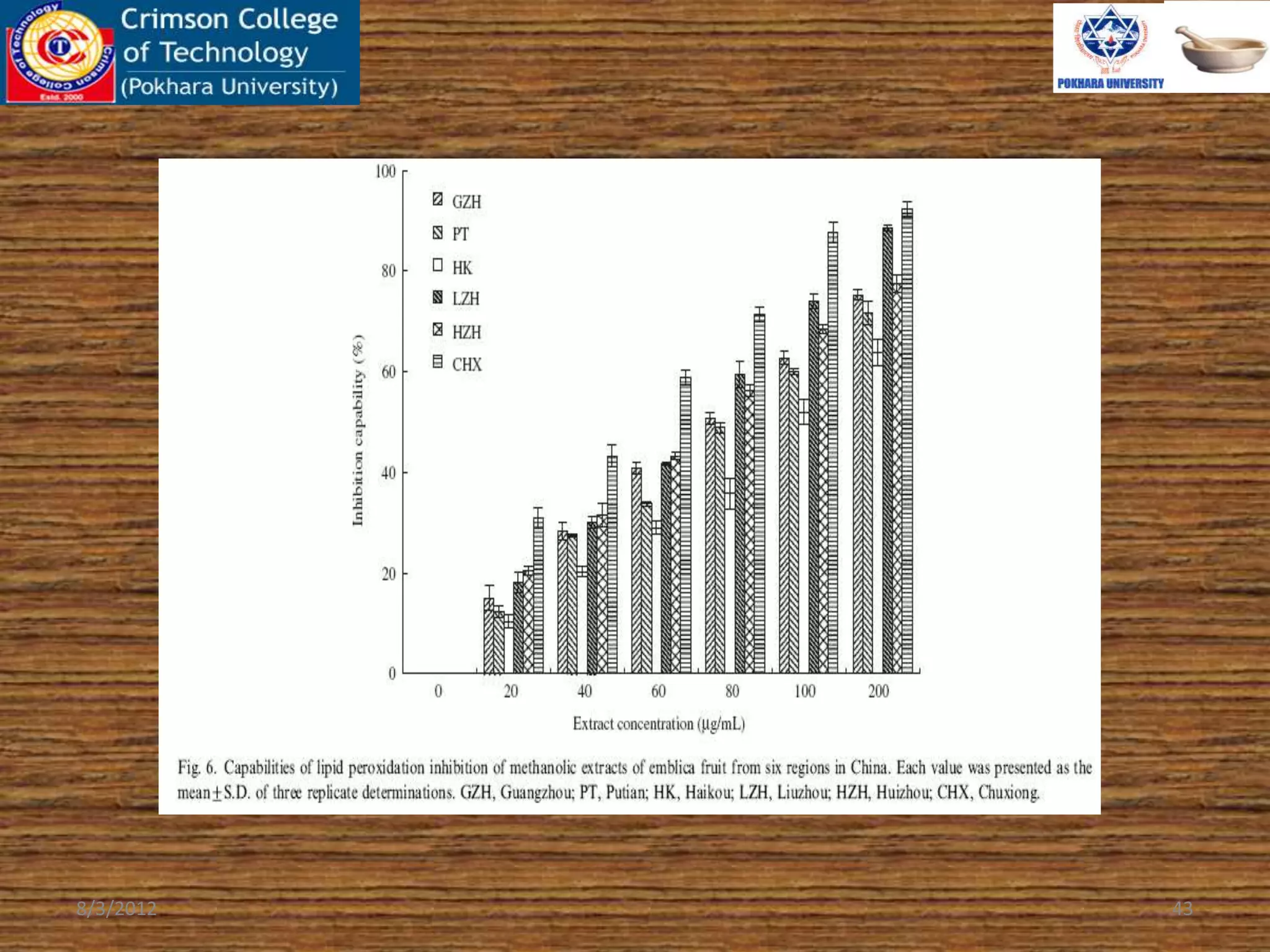
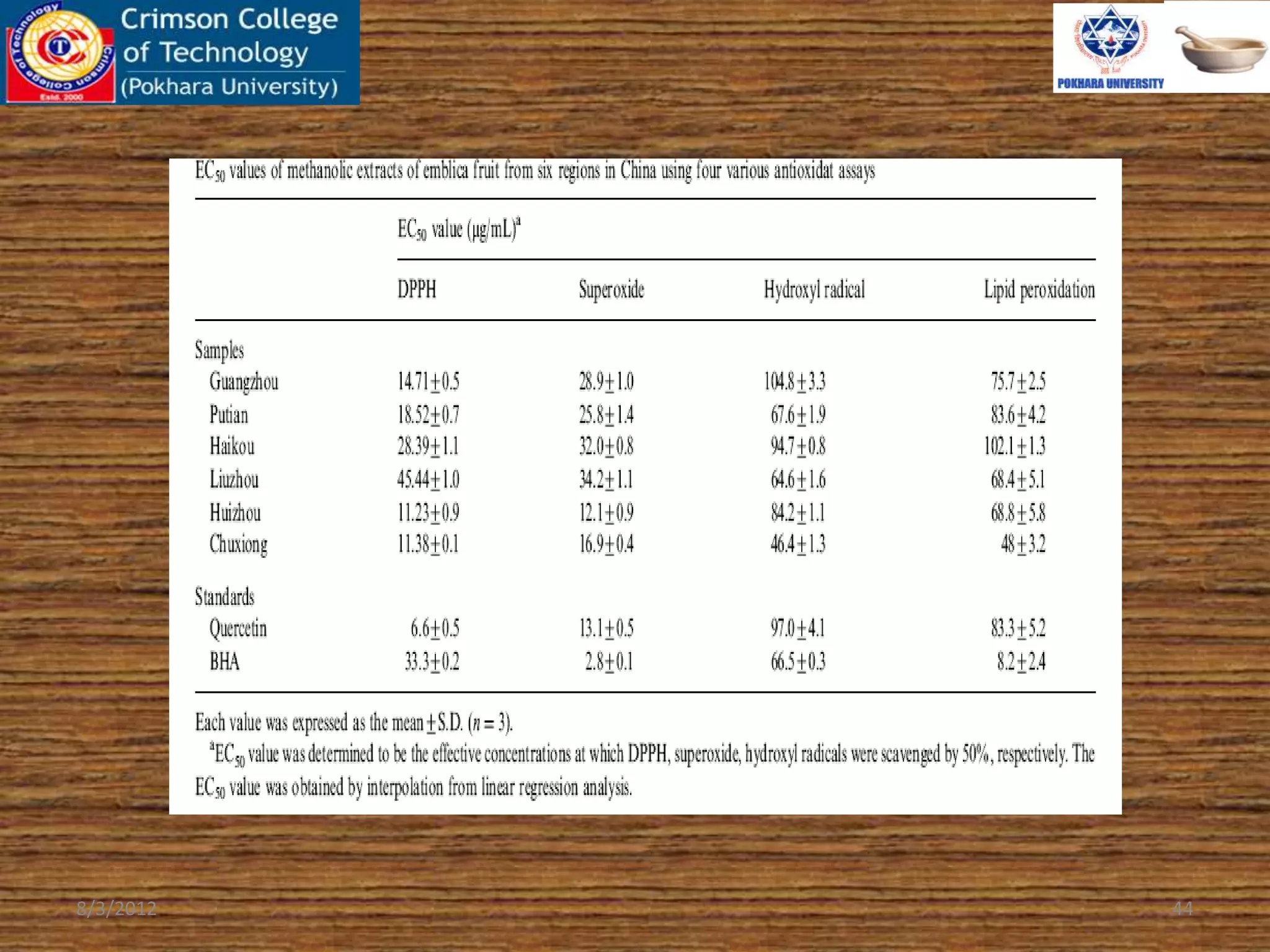
Determination of capacity of lipid
peroxidation inhibition:-
Lipid peroxidation can inactivate
cellular component and plays an
important role in oxidative stress in
biological system
8/3/2012 42
8/3/2012 43
8/3/2012 44
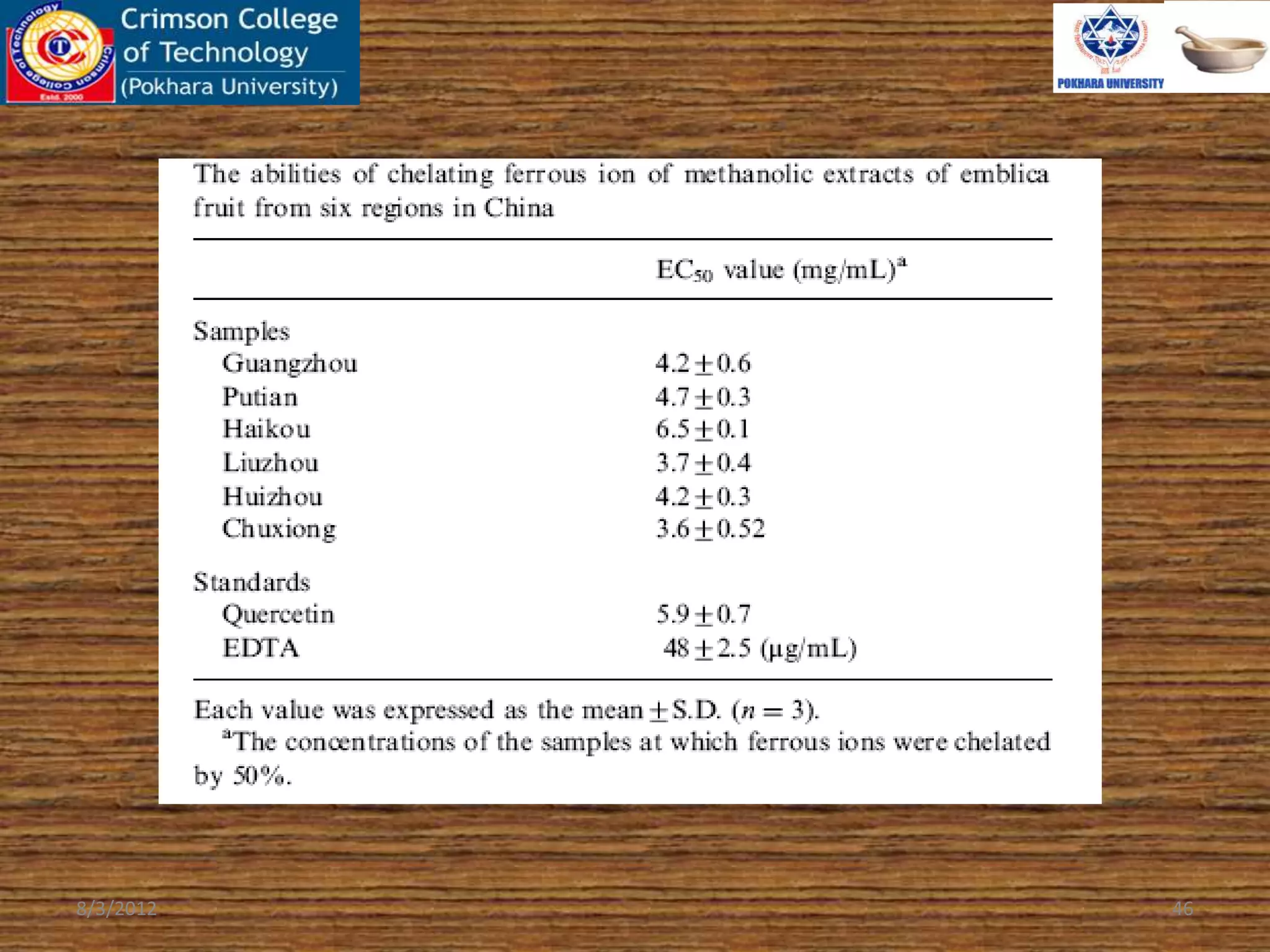
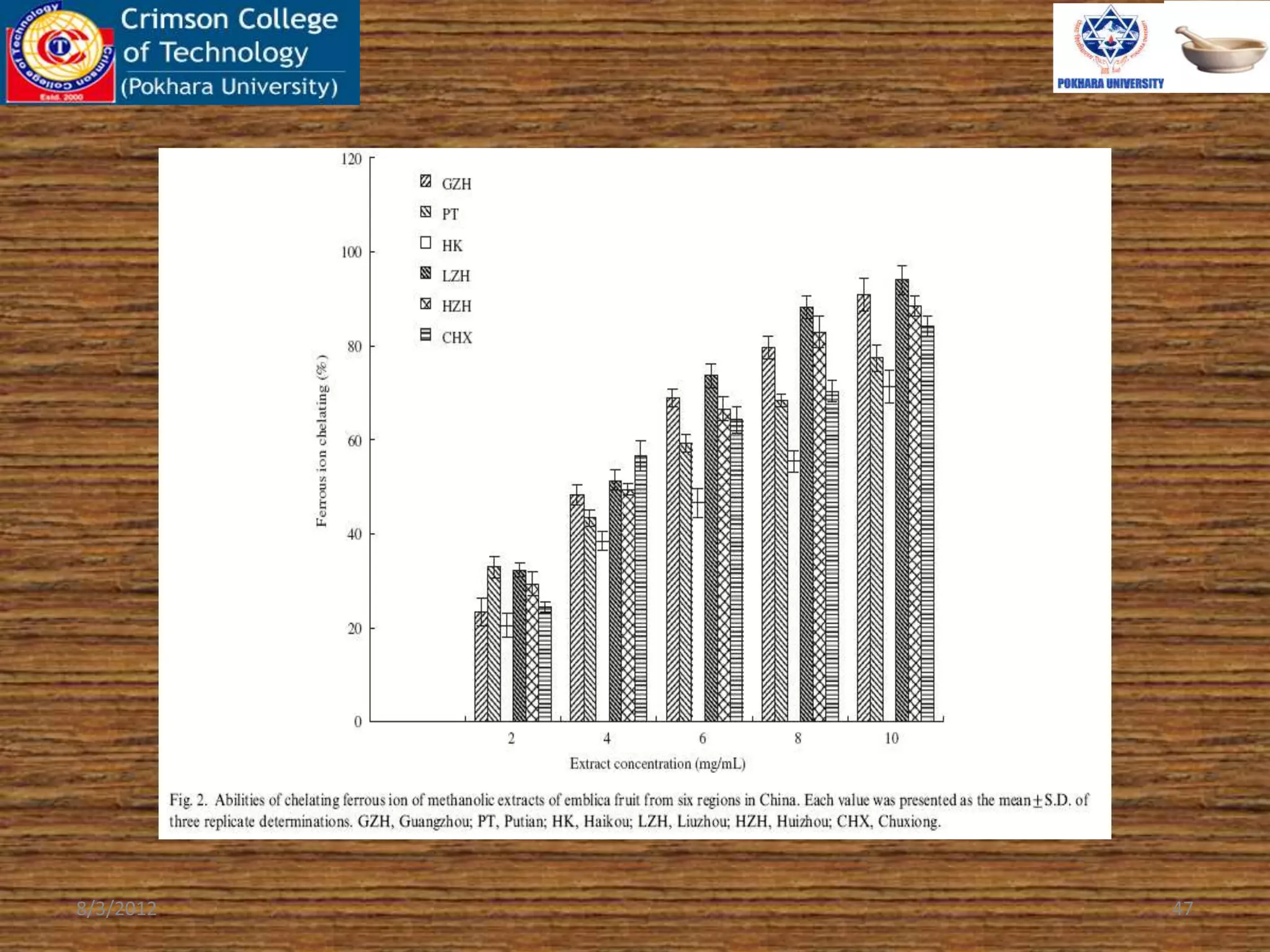
Ability of chelating ferrous iron:-
Ferrous ion, commonly existed in food
system is well known as an effective pro-
oxidant
8/3/2012 45
8/3/2012 46
8/3/2012 47
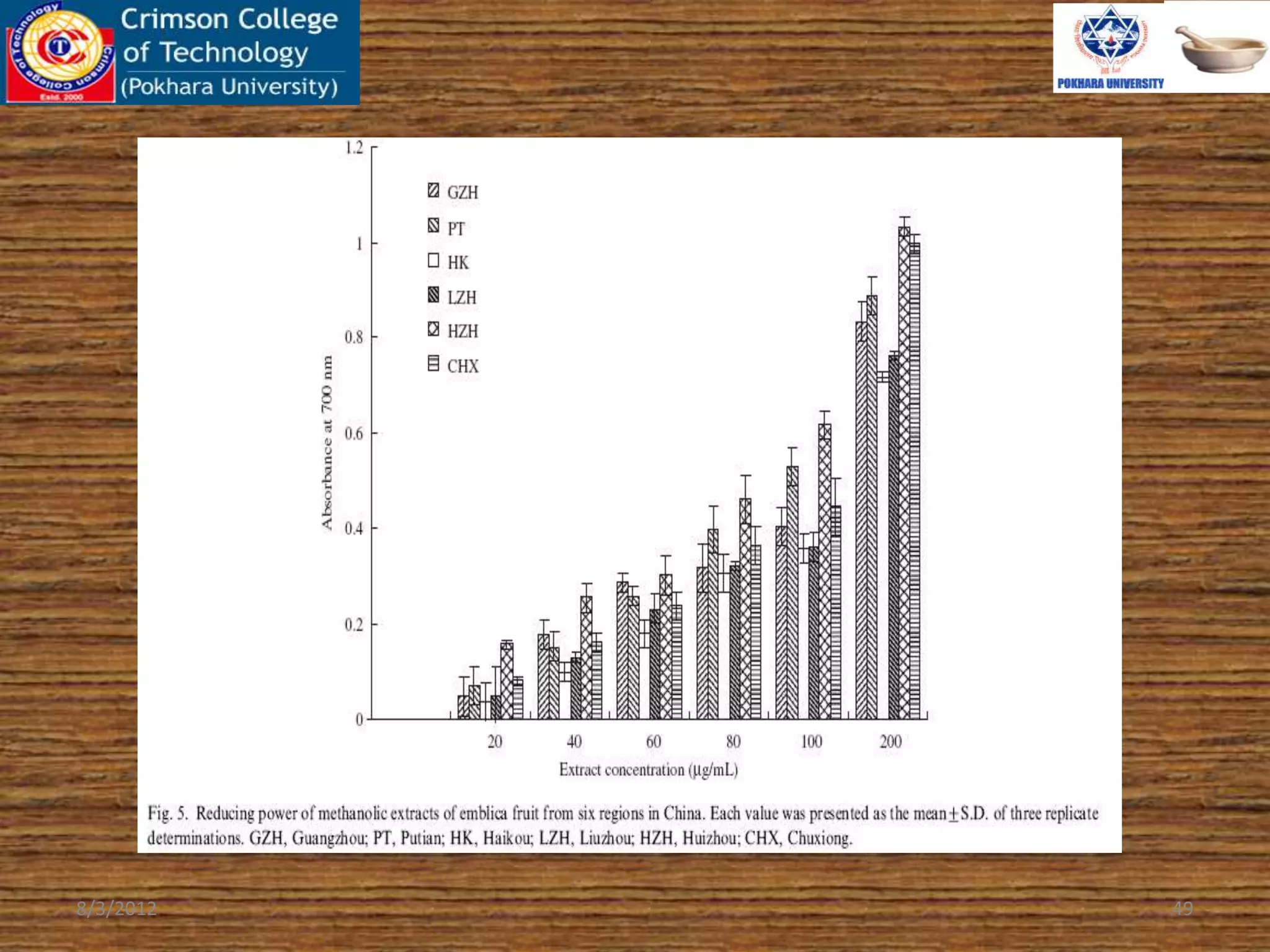
Reducing power:-
Reducing power has been used as one
of important antioxidant capability for
medicinal herbs
The reducing power of emblica extract
is dose dependent
8/3/2012 48
8/3/2012 49
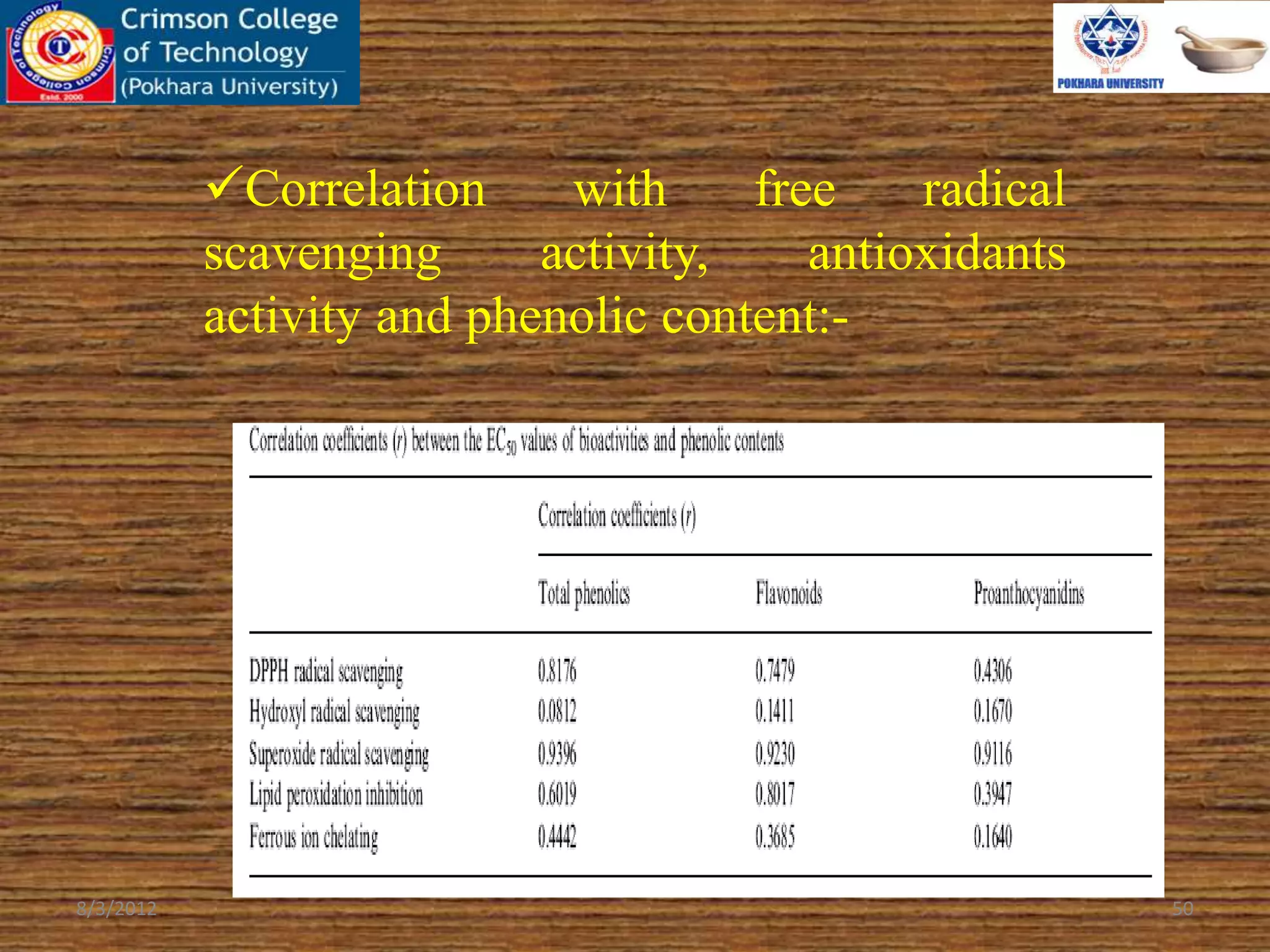
Correlation with free radical
scavenging activity, antioxidants
activity and phenolic content:-
8/3/2012 50
CONCLUSION
Huizhou sample had higher content of
total phenolic, flavonoids and
proanthocyanidins than other sample
The Chuxiong and Huizhou samples
exhibited quite strong antioxidant and
radical scavenging activities in
comparison to the reference compound
BHM and quercetin
8/3/2012 51
The results indicated that regions
could leads to significant differences
both in the content of bioactive
compounds and their bioactivities
The phenolic component might be the
major active component responsible for
the strong antioxidant activity
8/3/2012 52
Thus emblica fruits can be a source of
plant antioxidants, with a potential use in
food, cosmetic and pharmaceutical fields
8/3/2012 53
REFERENCE
8/3/2012 54
Liv Xiaoli, Zhao Mouming et al
(2008), Antioxidant activity of
methanolic extract of emblica fruit
(Phyllanthus emblica L) from six
regions in China, Journal of Food
composition and analysis 21,219-228
8/3/2012 55

Antioxidant activity of methanolic extract of emblica fruit (Phyllanthus emblica L.) from six regions in China

  • 1.
    Deepa kumari karn Bpharm 6th sem Department of pharmaceutical sciences 8/3/2012 1 Antioxidant activity of methanolic extract of emblica fruit (Phyllanthus emblica L.) from six regions in China
  • 2.
    INTRODUCTION Phyllanthus emblica belongto family Euphorbiaceae Widely distributed in subtropical and tropical areas of China, India, Indonesia, and Malaysia 8/3/2012 2
  • 3.
    Emblica fruits arereported to have hypolipidemic,hypoglycemic, hepatoprotective activities Widely used as antimicrobial, antitumor, anti-inflammatory agent and improve the metal induced clastogenic effect 8/3/2012 3
  • 4.
    Phenolic compound andflavanoids present in the emblica fruits show antioxidant activity In the present experiment the methanolic extract of emblica fruit from six different regions in China were evaluated 8/3/2012 4
  • 5.
    MATERIALAND METHODS Plant material:- Freshfruits of emblica were gathers from six regions in China Guangzhou Huizhou Liuzhou Chuxiong Putian8/3/2012 5
  • 6.
    The weather ofthe sampling regions were:- Sub tropical to monsoon for Liuzhou and Chuxiong Subtropical oceanic climate for Guangzhou, Huizhou, Putian 8/3/2012 6
  • 7.
    Tropical oceanic forHaikou The fruits were stored at 4ºC till analysis 8/3/2012 7
  • 8.
    Chemicals:- Nitroblue tetrazolium (NBT) 1,1-diphenyl-2-picrylhydrazyl (DPPH) Phenazinemethosulfate (PMS) Catechin  Quercetin Ferrozine 8/3/2012 8
  • 9.
    All the chemicalwere purchased from sigma chemicals Co. (St. Louis, MO, USA) All other chemical and reagents were of analytical grade 8/3/2012 9
  • 10.
    Preparation of methanolicextract:- Fresh emblica fleshes were air dried in an oven at 40ºC for 8h Pulverized to 0.2 to 0.4 mm particle in the cutting mill 8/3/2012 10
  • 11.
    Powder 10 gwas extracted for 24 h with 100ml of methanol in a glass conical flask using a shaker at 25º C  Filtered through 0.45µ filter paper Residue was then extracted twice with 100ml methanol 8/3/2012 11
  • 12.
    Combined methanolic extractwere concentrated at 40ºC, using a rotary evaporator under low pressure Residue was freeze- dried and then stored in amber color container at 4ºC 8/3/2012 12
  • 13.
    Determination of totalphenolic, flavonoids and proanthocyanidin content:- The total phenolic content was determined by the Folin- Ciocalteu method:- 8/3/2012 13 Sodium 3,4-dioxo-3,4- dihydronaphthalene-1-sulfonate
  • 14.
    Extract +methanol Folin Reagent+sodium bicarbonate Opaque sample is obtained O D of blue sample is measured at 756nm Total phenolic content was expressed as mg gallic acid equivalent/g dry basis 8/3/2012 14
  • 15.
    Flavonoid contents weremeasured using a modified colorimetric method:- Extract solution+ distilled water+ sodium nitrate 10% aluminum chloride After 6min sodium hydroxide was added and mixture was diluted with distilled water 8/3/2012 15
  • 16.
    The absorbance wasmeasured at 510 nm Compared with standard curve of quercetin The final amount of flavonoid was expressed as quercetin equivalent/ g dry basis 8/3/2012 16
  • 17.
    Content of proanthocyanidinswas determined by the procedure of Sun et al:- Extract + vanillin-methanol solution + Hcl After absorbance was determined at 500nm Result was expressed as Catechin eq/g dry basis 8/3/2012 17
  • 18.
    Determination of DPPHradical scavenging activity:- The free radical scavenging was determined by the method of Shimada et al and Yang et al Various concentration of methanolic extract 200, 100,80,60,40,20 µg/ml was prepared 8/3/2012 18
  • 19.
    Extract solution+ methanolicsolution containing DPPH radical Shaken vigorously and maintained for 30 min in dark Absorbance was measured at 517nm 8/3/2012 19
  • 20.
    Determination of reducingpower:- Determined according to method of Oyaizce Extract solution+ phosphate buffer +potassium ferricyanide Incubated at 50ºC for 20m Trichloroacetic acid was added to the mixture 8/3/2012 20
  • 21.
    Above mixture+ distilledwater+ 0.1% ferric chloride After 10 min absorbance was measured at 700nm Increased absorbance indicated high reducing power 8/3/2012 21
  • 22.
    Determination of superoxideanion radical scavenging activity:- The assay for superoxide anion radical scavenging activity was based on the riboflavin-light NBT system Phosphate buffer+ riboflavin+ PMS+ NBT+ methanolic extract of different concentration 8/3/2012 22
  • 23.
    Incubate for 20min Absorbance was measured at 560nm The absorbance of control was determined by replacing the sample with methanol 8/3/2012 23
  • 24.
    Determination of hydroxylradical scavenging activity:- Assayed by the method of Halliwell and Gutteridge 2-deoxyribose+ Potassium phosphate buffer+ permixed EDTA + hydrogenperoxide + extract solution 8/3/2012 24
  • 25.
    Add ascorbate andincubate for 1 h at 37ºC Add TBA+ NaOH+ TCA Heat for 15m on boiling water bath and then cooled Absorbance measured at 532nm Absorbance of control was determine by replacing sample with methanol 8/3/2012 25
  • 26.
    Inhibition of lipidperoxide formation induced by Fe++ ascorbate system:- Lipid peroxidation assay of rat microsomal was carried out as reported earlier by Sabu and Kuttan 8/3/2012 26
  • 27.
    Extract solution atvarious concentration+ rat liver homogenate+ Hcl buffer+ ascorbic acid + ferrous iron Incubate for 1h at 37ºC Absorbance of organic layer was measured at 532nm Result of test is compared with that of control sample without extract solution % of inhibition was determined 8/3/2012 27
  • 28.
    Ability of chelatingferrous iron:- Measured by the ferrous iron-ferrozine complex method Various concentration of methanolic extract+ Fecl2 +ferrozine Incubate for 10 min at 25±2ºC Absorbance was measured at 256nm 8/3/2012 28
  • 29.
    Absorbance of controlwas determined by replacing the sample with methanol 8/3/2012 29
  • 30.
    Statistical analysis:- Data werepresented as mean ± standard deviation Statistical analyzer was performed using a one way analysis of variance Difference were considered significant of at P<0.05 8/3/2012 30
  • 31.
    The EC50 valueswere calculated by liner regression analysis Results were calculated by employing the statistical software (SPPS, version 13.0, SPSS Inc., Chicago, USA) 8/3/2012 31
  • 32.
    RESULT AND DISCUSSION Extractiveyields:- The extraction yields of these samples from six various regions varied from 21.0% to 39.4% The data of extractive yields value is given below 8/3/2012 32
  • 33.
  • 34.
    Total phenolic, flavonoidsand proanthocyanidin content:- 8/3/2012 34
  • 35.
    Various stage ofmaturation and growing condition such as a temperature and rainfall affect the content of phenolic compound 8/3/2012 35
  • 36.
    DPPH radical scavengingactivity:- DPPH is a stable nitrogen centered free radical Its color changes from violet to yellow when is reduced by either the process of hydrogen or electron donation 8/3/2012 36
  • 37.
  • 38.
    Superoxide anion radicalscavenging activity:- Although superoxide anion is a weak oxidant, it gives rise to the generation of powerful and dangerous hydroxyl radical as well as singlet oxygen Both of which contribute to the oxidative stress 8/3/2012 38
  • 39.
  • 40.
    Hydroxyl radical scavengingactivity:- Hydroxyl radical is extremely reactive in biological system Capable of damaging biomolecule of the living system 8/3/2012 40
  • 41.
  • 42.
    Determination of capacityof lipid peroxidation inhibition:- Lipid peroxidation can inactivate cellular component and plays an important role in oxidative stress in biological system 8/3/2012 42
  • 43.
  • 44.
  • 45.
    Ability of chelatingferrous iron:- Ferrous ion, commonly existed in food system is well known as an effective pro- oxidant 8/3/2012 45
  • 46.
  • 47.
  • 48.
    Reducing power:- Reducing powerhas been used as one of important antioxidant capability for medicinal herbs The reducing power of emblica extract is dose dependent 8/3/2012 48
  • 49.
  • 50.
    Correlation with freeradical scavenging activity, antioxidants activity and phenolic content:- 8/3/2012 50
  • 51.
    CONCLUSION Huizhou sample hadhigher content of total phenolic, flavonoids and proanthocyanidins than other sample The Chuxiong and Huizhou samples exhibited quite strong antioxidant and radical scavenging activities in comparison to the reference compound BHM and quercetin 8/3/2012 51
  • 52.
    The results indicatedthat regions could leads to significant differences both in the content of bioactive compounds and their bioactivities The phenolic component might be the major active component responsible for the strong antioxidant activity 8/3/2012 52
  • 53.
    Thus emblica fruitscan be a source of plant antioxidants, with a potential use in food, cosmetic and pharmaceutical fields 8/3/2012 53
  • 54.
    REFERENCE 8/3/2012 54 Liv Xiaoli,Zhao Mouming et al (2008), Antioxidant activity of methanolic extract of emblica fruit (Phyllanthus emblica L) from six regions in China, Journal of Food composition and analysis 21,219-228
  • 55.