Dr. Areej Mufti
MD, FRCPC, ABMM, FCCM
Consultant Microbiology- KAMC;WR
Assist. Professor- KSUHS
 41 years old lady admitted with aplastic
anemia and fever.
 Started on cefotaxime
 Week 1:Blood cultures +
 E.coli isolates R TO amp/ narrow spectrum
cephalosporines.
 Week2-4: persistent fever and bacterimia
 ? Other suspected organism..no, only EC
 Varieties of antimicrobial: genta, ticarcillin,
cefotaxime, ceftazidime, vanco, clinda..
 Patient was not improved…micro lab
contacted..
AJIC Tenover et al, 2006
 Why is antimicrobial resistance a concern?
 How do antimicrobial agents work?
 How to detect Antimicrobial susceptibility
 Mechanisms of resistance to antimicrobial
agents(some case scenarios)
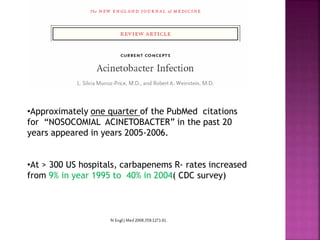
•Approximately one quarter of the PubMed citations
for “NOSOCOMIAL ACINETOBACTER” in the past 20
years appeared in years 2005-2006.
•At > 300 US hospitals, carbapenems R- rates increased
from 9% in year 1995 to 40% in 2004( CDC survey)
The prevalence of
hospital-acquired
superbugs has
reached an all-
time high,
claiming the lives
of as many as
70,000 people per
year.
 08 Jul 2011
By Paul G. Ambrose
 More treatment failures..
 More mortality rate.
 More financial cost.
 More toxicities from antimicrobials exposure.
 Prolonged therapy may lead to the development of
low level resistance that:
a. compromise the therapy.
b. may not be detected by routine susceptibility
testing methods used in hospital labs.
 54 years old male diagnosed with diabetic
foot.
 swabs from the wound revealed
polymicrobial causing organisms including SA,
Kleb. pne.
 Decision was made to start daptomycin..
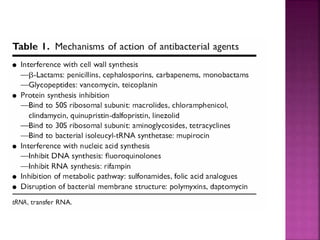
a. Interference with cell wall.
b. Protein synthesis inhibition.
c. Interference with nucleic acid synthesis.
d. Inhibition of metabolic pathway
e. Disruption of bacterial membrane structure
 Why is resistance a concern?
 How do antimicrobial agents work?
 How to detect Antimicrobial susceptibility
 Mechanisms of resistance to antimicrobial
agents(some case scenarios)
How to detect Antimicrobial
susceptibility
 Minimum inhibitory concentration [MIC]
 The smallest concentration of antibiotic that inhibits the
growth of organism.
 Liquid media (dilution) allows MIC estimation
 Solid media (diffusion)
 Disk diffusion (Kirby-Bauer)
 E-tests
 Allows MIC estimation
 Beta lactamase production: quick screening method
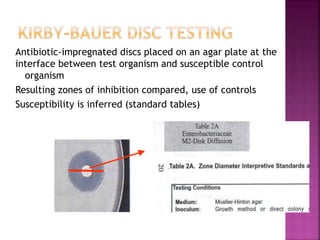
Antibiotic-impregnated discs placed on an agar plate at the
interface between test organism and susceptible control
organism
Resulting zones of inhibition compared, use of controls
Susceptibility is inferred (standard tables)
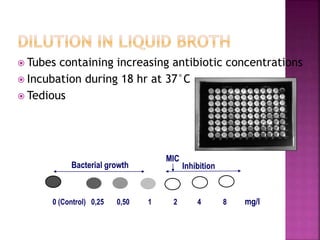
 Tubes containing increasing antibiotic concentrations
 Incubation during 18 hr at 37°C
 Tedious
0 (Control) 0,25 0,50 1 2 4 8 mg/l
MIC
Bacterial growth Inhibition
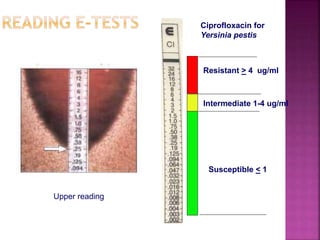
Susceptible < 1
Resistant > 4 ug/ml
Ciprofloxacin for
Yersinia pestis
Intermediate 1-4 ug/ml
Upper reading
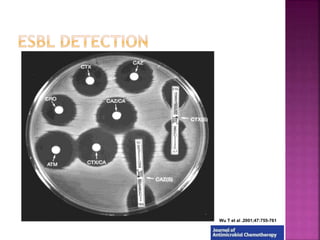
Wu T et al .2001;47:755-761
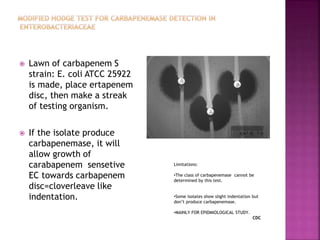
 Lawn of carbapenem S
strain: E. coli ATCC 25922
is made, place ertapenem
disc, then make a streak
of testing organism.
 If the isolate produce
carbapenemase, it will
allow growth of
carabapenem sensetive
EC towards carbapenem
disc=cloverleave like
indentation.
Limitations:
•The class of carbapenemase cannot be
determined by this test.
•Some isolates show slight indentation but
don’t produce carbapenemase.
•MAINLY FOR EPIDMIOLOGICAL STUDY.
CDC
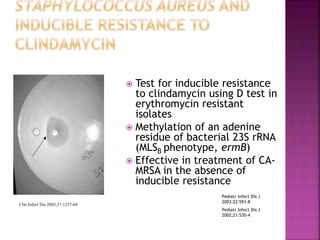
 Test for inducible resistance
to clindamycin using D test in
erythromycin resistant
isolates
 Methylation of an adenine
residue of bacterial 23S rRNA
(MLSB phenotype, ermB)
 Effective in treatment of CA-
MRSA in the absence of
inducible resistance
Clin Infect Dis 2003;37:1257-60
Pediatr Infect Dis J
2003;22:593-8
Pediatr Infect Dis J
2002;21:530-4
 12 years old boy, diabetic, quadriplegic secondary to car
accident 2 years ago, on permanent urinary catheter,
noticed to have turbid foul smelling urine. You saw him as
an outpatient.
 Urine culture was sent: + for pseudomonas with the
following sensitivity profile:
-Ceftazidime: S
- Ciprofloxacin: R
-Gentamicin: S
- trimethoprim- sulfamethoxazole: S
- Nitrofurantoin: S
WHAT IS YOUR DECISION….?
 Why is antimicrobial resistance a concern?
 How do antimicrobial agents work?
 How to detect Antimicrobial susceptibility
 Mechanisms of resistance to antimicrobial
agents(some case scenarios)
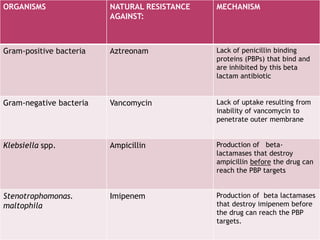
Natural resistance
 Chromosomic genetic
support.
 Affect almost all
species strains.
 Existed before
antibiotic use
(Enterobacter sp. -
amoxicillin)
Acquired resistance
 Chromosomic,
plasmidic or
transposon genetic
support.
 Affects a fraction of
strains.
 Increased with
antibiotic use
(extended spectrum
beta-lactamase
producing E. coli)
ORGANISMS NATURAL RESISTANCE
AGAINST:
MECHANISM
Gram-positive bacteria Aztreonam Lack of penicillin binding
proteins (PBPs) that bind and
are inhibited by this beta
lactam antibiotic
Gram-negative bacteria Vancomycin Lack of uptake resulting from
inability of vancomycin to
penetrate outer membrane
Klebsiella spp. Ampicillin Production of beta-
lactamases that destroy
ampicillin before the drug can
reach the PBP targets
Stenotrophomonas.
maltophila
Imipenem Production of beta lactamases
that destroy imipenem before
the drug can reach the PBP
targets.
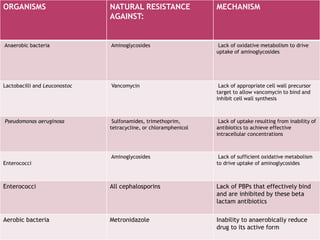
ORGANISMS NATURAL RESISTANCE
AGAINST:
MECHANISM
Anaerobic bacteria Aminoglycosides Lack of oxidative metabolism to drive
uptake of aminoglycosides
Lactobacilli and Leuconostoc Vancomycin Lack of appropriate cell wall precursor
target to allow vancomycin to bind and
inhibit cell wall synthesis
Pseudomonas aeruginosa Sulfonamides, trimethoprim,
tetracycline, or chloramphenicol
Lack of uptake resulting from inability of
antibiotics to achieve effective
intracellular concentrations
Enterococci
Aminoglycosides Lack of sufficient oxidative metabolism
to drive uptake of aminoglycosides
Enterococci All cephalosporins Lack of PBPs that effectively bind
and are inhibited by these beta
lactam antibiotics
Aerobic bacteria Metronidazole Inability to anaerobically reduce
drug to its active form
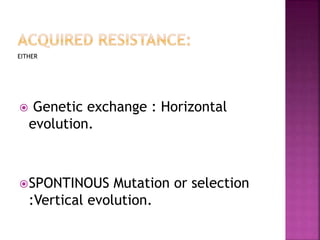
EITHER
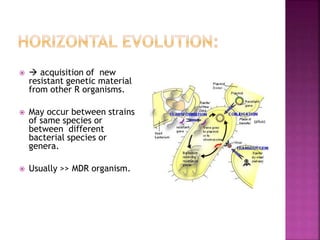
 Genetic exchange : Horizontal
evolution.
SPONTINOUS Mutation or selection
:Vertical evolution.
  acquisition of new
resistant genetic material
from other R organisms.
 May occur between strains
of same species or
between different
bacterial species or
genera.
 Usually >> MDR organism.
(pilus)
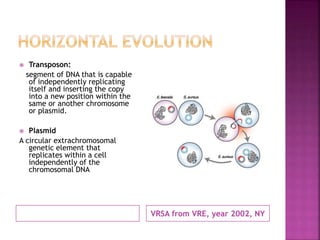
VRSA from VRE, year 2002, NY
 Transposon:
segment of DNA that is capable
of independently replicating
itself and inserting the copy
into a new position within the
same or another chromosome
or plasmid.
 Plasmid
A circular extrachromosomal
genetic element that
replicates within a cell
independently of the
chromosomal DNA
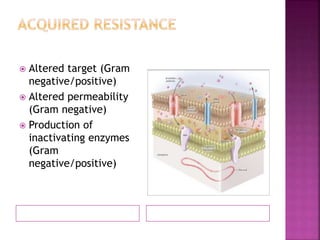
 Altered target (Gram
negative/positive)
 Altered permeability
(Gram negative)
 Production of
inactivating enzymes
(Gram
negative/positive)
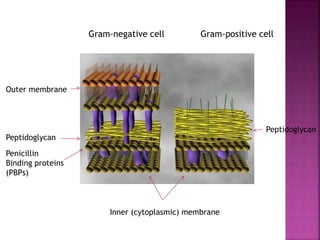
Gram-negative cell Gram-positive cell
Outer membrane
Peptidoglycan
Peptidoglycan
Penicillin
Binding proteins
(PBPs)
Inner (cytoplasmic) membrane
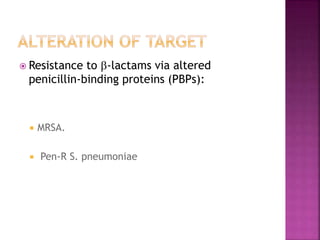
 Resistance to -lactams via altered
penicillin-binding proteins (PBPs):
 MRSA.
 Pen-R S. pneumoniae
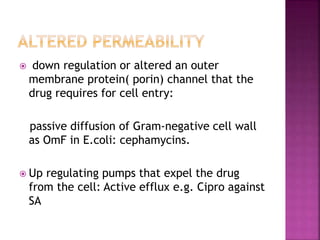
 down regulation or altered an outer
membrane protein( porin) channel that the
drug requires for cell entry:
passive diffusion of Gram-negative cell wall
as OmF in E.coli: cephamycins.
 Up regulating pumps that expel the drug
from the cell: Active efflux e.g. Cipro against
SA
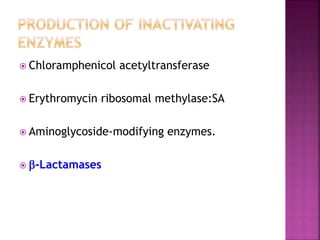
 Chloramphenicol acetyltransferase
 Erythromycin ribosomal methylase:SA
 Aminoglycoside-modifying enzymes.
 -Lactamases
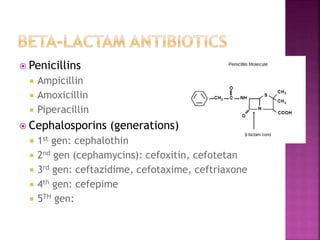
 Penicillins
 Ampicillin
 Amoxicillin
 Piperacillin
 Cephalosporins (generations)
 1st gen: cephalothin
 2nd gen (cephamycins): cefoxitin, cefotetan
 3rd gen: ceftazidime, cefotaxime, ceftriaxone
 4th gen: cefepime
 5TH gen:
 Monobactam: aztreonam
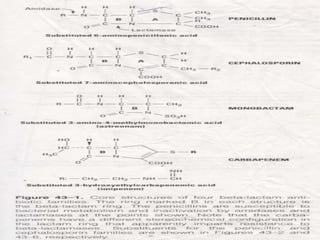
 Carbapenems:
 Imipenem
 Meropenem
 Ertapenem
 Inhibitors
 Sulbactam (ampicillin/sulbactam: Unasyn)
 Tazobactam (piperacillin/tazobactam: Zosyn)
 Clavulanate (amoxicillin/clavulanate: Augmentin)
 Definition.
 Varieties.
 Laboratory detection..
 enzymes that confer resistance to most beta-
lactam antibiotics, including penicillins,
cephalosporins(3rd/4th), and the monobactam
aztreonam.
 Do not affect cephamycins (2nd gen ceph) or
carbapenems.
 Remain susceptible to beta-lactamase inhibitors
( in vitro)
 First -lactamase identified: AmpC beta-
lactamase
 1940, Escherichia coli
 1940, penicillinase, Staphylococcus aureus.
 First plasmid-mediated -lactamase: TEM-1
 1965, Escherichia coli, Greece
1. . It was named TEM after the patient from
whom it was isolated :UTI not treated with
Ampicillin(Temoniera, Greece).
2. Subsequently, a closely related enzyme was
discovered and named TEM-2( differs from
TEM-1) by a single amino acid.
 The most common plasmid-mediated ß-
lactamases in Enterobacteriaceae are TEM-1,
TEM-2, and SHV-1
 SHV: Klebsiella pneumoniae
 “Sulfhydryl variant”; amino acids in the enzyme that
cross-link with other molecules
 “Classical” ESBLs are derived from TEM and
SHV enzymes
 “Non-classical” ESBLs are derived from
enzymes other than TEM or SHV
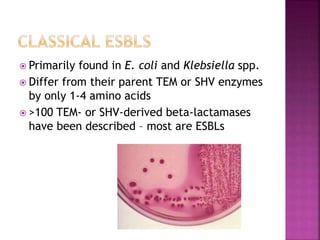
 Primarily found in E. coli and Klebsiella spp.
 Differ from their parent TEM or SHV enzymes
by only 1-4 amino acids
 >100 TEM- or SHV-derived beta-lactamases
have been described – most are ESBLs
 Many described, but less common than
classical ESBLs
 CTX-M
 Found in multiple genera of Enterobacteriaceae
 Preferentially hydrolyze cefotaxime
 U.S., Europe, South America, Japan, Canada
 OXA
 Mainly in P. aeruginosa
 Primarily hydrolyze ceftazidime
 France, Turkey
Despite appearing susceptible to one or
more penicillins, cephalosporins, or
aztreonam in vitro, the use of these
agents to treat infections due to ESBL-
producers has been associated with poor
clinical outcome
 ESBL genes are often carried on plasmids
that also encode resistance to multiple
classes of antimicrobials
 Aminoglycosides, Fluoroquinolones
 Trimethoprim/Sulfamethoxazole
 Treatment experience is largely based on
classical ESBL producers
 Carbapenems
 ß-lactam/inhibitor combinations
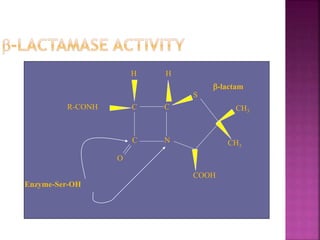
C C
C N
H H
R-CONH
S
COOH
CH3
CH3
O
Enzyme-Ser-OH
-lactam
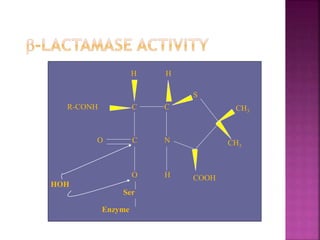
C C
C N
H H
R-CONH
S
COOH
CH3
CH3
O
HO
Ser
Enzyme
HOH
 Well over 340 different enzymes.
 Extended spectrum -lactamases:ESBLs
 AmpC -lactamases :
 Chromosomal
 Plasmid-mediated
 Carbapenemases
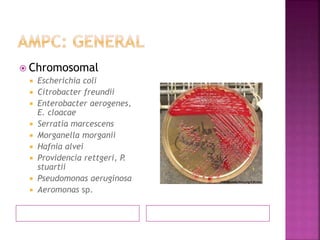
 Chromosomal
 Escherichia coli
 Citrobacter freundii
 Enterobacter aerogenes,
E. cloacae
 Serratia marcescens
 Morganella morganii
 Hafnia alvei
 Providencia rettgeri, P.
stuartii
 Pseudomonas aeruginosa
 Aeromonas sp.
 Are not inhibited by -lactamase inhibitors.
 Normally are repressed, so produced at low
levels.
 Chromosomal: inducible
 In the presence of certain -lactam antibiotics
 Normally, produced at low levels.
 Plasmid-mediated also reported.
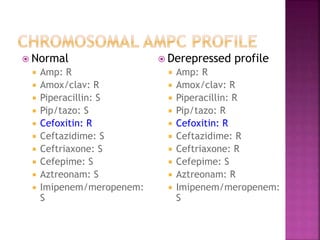
 Normal
 Amp: R
 Amox/clav: R
 Piperacillin: S
 Pip/tazo: S
 Cefoxitin: R
 Ceftazidime: S
 Ceftriaxone: S
 Cefepime: S
 Aztreonam: S
 Imipenem/meropenem:
S
 Derepressed profile
 Amp: R
 Amox/clav: R
 Piperacillin: R
 Pip/tazo: R
 Cefoxitin: R
 Ceftazidime: R
 Ceftriaxone: R
 Cefepime: S
 Aztreonam: R
 Imipenem/meropenem:
S
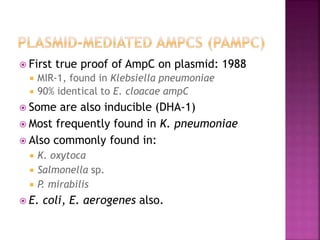
 First true proof of AmpC on plasmid: 1988
 MIR-1, found in Klebsiella pneumoniae
 90% identical to E. cloacae ampC
 Some are also inducible (DHA-1)
 Most frequently found in K. pneumoniae
 Also commonly found in:
 K. oxytoca
 Salmonella sp.
 P. mirabilis
 E. coli, E. aerogenes also.
 Is induction clinically relevant?
 True danger—mutation in induction pathway:
 “Derepressed mutant”
 150-1000 fold more enzyme produced than
normal
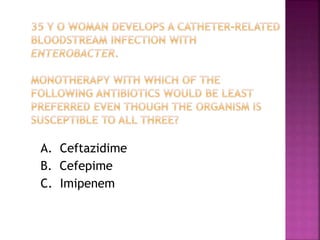
A. Ceftazidime
B. Cefepime
C. Imipenem
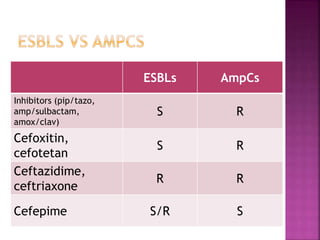
ESBLs AmpCs
Inhibitors (pip/tazo,
amp/sulbactam,
amox/clav)
S R
Cefoxitin,
cefotetan
S R
Ceftazidime,
ceftriaxone
R R
Cefepime S/R S
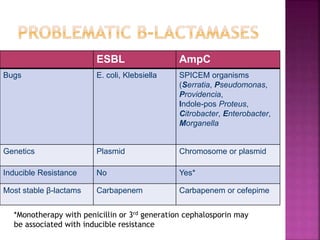
ESBL AmpC
Bugs E. coli, Klebsiella SPICEM organisms
(Serratia, Pseudomonas,
Providencia,
Indole-pos Proteus,
Citrobacter, Enterobacter,
Morganella
Genetics Plasmid Chromosome or plasmid
Inducible Resistance No Yes*
Most stable β-lactams Carbapenem Carbapenem or cefepime
*Monotherapy with penicillin or 3rd generation cephalosporin may
be associated with inducible resistance
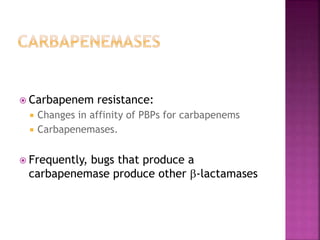
 Carbapenem resistance:
 Changes in affinity of PBPs for carbapenems
 Carbapenemases.
 Frequently, bugs that produce a
carbapenemase produce other -lactamases
 KPC (plasmid, K. pneumoniae)
 “Klebsiella pneumoniae carbapenemase”
 IMI-1 (plasmid, E. cloacae)
 Nmc-A (plasmid, E. cloacae)
 Sme-1 (plasmid S. marcescens)
 IMP-1 (plasmid, S. marcescens, P.
aeruginosa)
 L-1 (chromosomal, Stenotrophomonas
maltophilia)
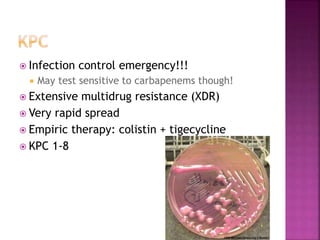
 Infection control emergency!!!
 May test sensitive to carbapenems though!
 Extensive multidrug resistance (XDR)
 Very rapid spread
 Empiric therapy: colistin + tigecycline
 KPC 1-8
 R to carbapenems, penicillins,
cephalosporins.
 S or R to aztreonam, depending on enzyme.
 So the key:
 Look for S with high MIC, intermediate or R to
imipenem or meropenem!
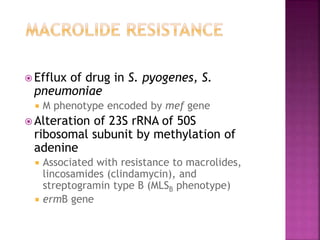
 Efflux of drug in S. pyogenes, S.
pneumoniae
 M phenotype encoded by mef gene
 Alteration of 23S rRNA of 50S
ribosomal subunit by methylation of
adenine
 Associated with resistance to macrolides,
lincosamides (clindamycin), and
streptogramin type B (MLSB phenotype)
 ermB gene
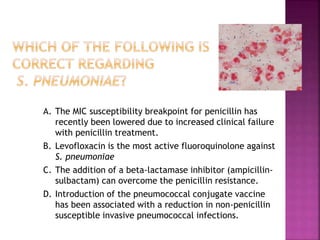
A. The MIC susceptibility breakpoint for penicillin has
recently been lowered due to increased clinical failure
with penicillin treatment.
B. Levofloxacin is the most active fluoroquinolone against
S. pneumoniae
C. The addition of a beta-lactamase inhibitor (ampicillin-
sulbactam) can overcome the penicillin resistance.
D. Introduction of the pneumococcal conjugate vaccine
has been associated with a reduction in non-penicillin
susceptible invasive pneumococcal infections.
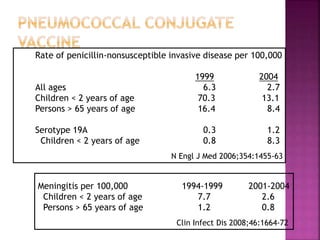
Rate of penicillin-nonsusceptible invasive disease per 100,000
1999 2004
All ages 6.3 2.7
Children < 2 years of age 70.3 13.1
Persons > 65 years of age 16.4 8.4
Serotype 19A 0.3 1.2
Children < 2 years of age 0.8 8.3
Meningitis per 100,000 1994-1999 2001-2004
Children < 2 years of age 7.7 2.6
Persons > 65 years of age 1.2 0.8
N Engl J Med 2006;354:1455-63
Clin Infect Dis 2008;46:1664-72
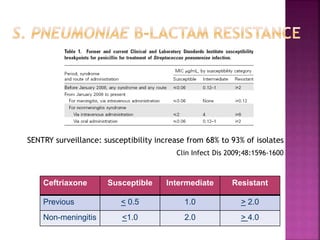
Clin Infect Dis 2009;48:1596-1600
SENTRY surveillance: susceptibility increase from 68% to 93% of isolates
Ceftriaxone Susceptible Intermediate Resistant
Previous < 0.5 1.0 > 2.0
Non-meningitis <1.0 2.0 > 4.0
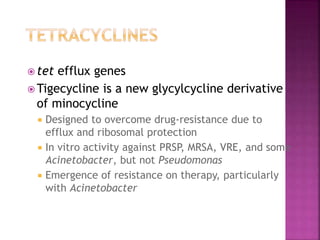
 tet efflux genes
 Tigecycline is a new glycylcycline derivative
of minocycline
 Designed to overcome drug-resistance due to
efflux and ribosomal protection
 In vitro activity against PRSP, MRSA, VRE, and some
Acinetobacter, but not Pseudomonas
 Emergence of resistance on therapy, particularly
with Acinetobacter
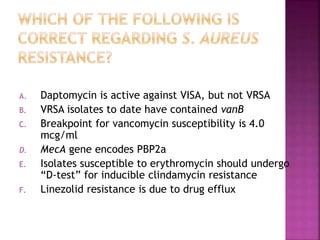
A. Daptomycin is active against VISA, but not VRSA
B. VRSA isolates to date have contained vanB
C. Breakpoint for vancomycin susceptibility is 4.0
mcg/ml
D. MecA gene encodes PBP2a
E. Isolates susceptible to erythromycin should undergo
“D-test” for inducible clindamycin resistance
F. Linezolid resistance is due to drug efflux
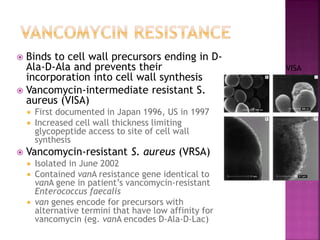
 Binds to cell wall precursors ending in D-
Ala-D-Ala and prevents their
incorporation into cell wall synthesis
 Vancomycin-intermediate resistant S.
aureus (VISA)
 First documented in Japan 1996, US in 1997
 Increased cell wall thickness limiting
glycopeptide access to site of cell wall
synthesis
 Vancomycin-resistant S. aureus (VRSA)
 Isolated in June 2002
 Contained vanA resistance gene identical to
vanA gene in patient’s vancomycin-resistant
Enterococcus faecalis
 van genes encode for precursors with
alternative termini that have low affinity for
vancomycin (eg. vanA encodes D-Ala-D-Lac)
VISA
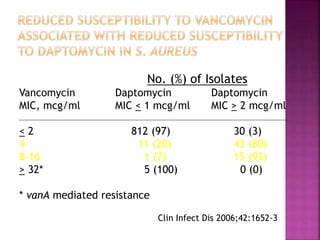
No. (%) of Isolates
Vancomycin Daptomycin Daptomycin
MIC, mcg/ml MIC < 1 mcg/ml MIC > 2 mcg/ml
< 2 812 (97) 30 (3)
4 11 (20) 43 (80)
8-16 1 (7) 15 (93)
> 32* 5 (100) 0 (0)
* vanA mediated resistance
Clin Infect Dis 2006;42:1652-3
 4 years old girl admitted with aplastic
anemia and fever.
 Started on cefotaxime
 Week 1:Blood cultures +
 E.coli isolates R TO amp/ narrow spectrum
cephalosporines.
 Week2-4: persistent fever and bacterimia
 ? Other suspected organism..no, only EC
 Varieties of antimicrobial: genta, ticarcillin,
cefotaxime, ceftazidime, vanco, clinda..
 Patient was not improved…micro lab
contacted..
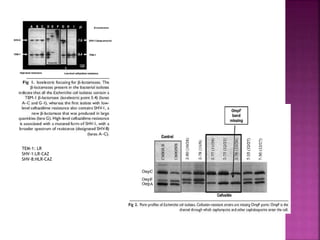
TEM-1: LR
SHV-1:LR-CAZ
SHV-8:HLR-CAZ
During a period of <2 months in the blood stream of 4 years
old patient, an EC strain :
•acquired a new beta lactamase gene that mediated R 3rd
ceph(SHV-1)…
•mutated the gene to increase the level of ceph-R(SHV-8) …
•and down regulating its cell wall porins(OmpF) to increase
R not only to cephalosporins but cephamycins as well….
 Development of antimicrobial
resistance is directly related
to improper antimicrobial
choice, dose, and duration.
 Understanding antimicrobial
pharmacokinetics/dynamics
and resistance mechanisms
can help guide appropriate
usage.
 Knowledge of local
susceptibility patterns is
essential.
 Paucity of new antimicrobial
agents in pipeline
Antimicrobial resistance

Antimicrobial resistance

  • 1.
    Dr. Areej Mufti MD,FRCPC, ABMM, FCCM Consultant Microbiology- KAMC;WR Assist. Professor- KSUHS
  • 2.
     41 yearsold lady admitted with aplastic anemia and fever.  Started on cefotaxime  Week 1:Blood cultures +  E.coli isolates R TO amp/ narrow spectrum cephalosporines.  Week2-4: persistent fever and bacterimia  ? Other suspected organism..no, only EC  Varieties of antimicrobial: genta, ticarcillin, cefotaxime, ceftazidime, vanco, clinda..  Patient was not improved…micro lab contacted.. AJIC Tenover et al, 2006
  • 3.
     Why isantimicrobial resistance a concern?  How do antimicrobial agents work?  How to detect Antimicrobial susceptibility  Mechanisms of resistance to antimicrobial agents(some case scenarios)
  • 6.
    •Approximately one quarterof the PubMed citations for “NOSOCOMIAL ACINETOBACTER” in the past 20 years appeared in years 2005-2006. •At > 300 US hospitals, carbapenems R- rates increased from 9% in year 1995 to 40% in 2004( CDC survey)
  • 7.
    The prevalence of hospital-acquired superbugshas reached an all- time high, claiming the lives of as many as 70,000 people per year.  08 Jul 2011 By Paul G. Ambrose
  • 8.
     More treatmentfailures..  More mortality rate.  More financial cost.  More toxicities from antimicrobials exposure.  Prolonged therapy may lead to the development of low level resistance that: a. compromise the therapy. b. may not be detected by routine susceptibility testing methods used in hospital labs.
  • 10.
     54 yearsold male diagnosed with diabetic foot.  swabs from the wound revealed polymicrobial causing organisms including SA, Kleb. pne.  Decision was made to start daptomycin..
  • 11.
    a. Interference withcell wall. b. Protein synthesis inhibition. c. Interference with nucleic acid synthesis. d. Inhibition of metabolic pathway e. Disruption of bacterial membrane structure
  • 13.
     Why isresistance a concern?  How do antimicrobial agents work?  How to detect Antimicrobial susceptibility  Mechanisms of resistance to antimicrobial agents(some case scenarios)
  • 14.
    How to detectAntimicrobial susceptibility
  • 15.
     Minimum inhibitoryconcentration [MIC]  The smallest concentration of antibiotic that inhibits the growth of organism.  Liquid media (dilution) allows MIC estimation  Solid media (diffusion)  Disk diffusion (Kirby-Bauer)  E-tests  Allows MIC estimation  Beta lactamase production: quick screening method
  • 16.
    Antibiotic-impregnated discs placedon an agar plate at the interface between test organism and susceptible control organism Resulting zones of inhibition compared, use of controls Susceptibility is inferred (standard tables)
  • 17.
     Tubes containingincreasing antibiotic concentrations  Incubation during 18 hr at 37°C  Tedious 0 (Control) 0,25 0,50 1 2 4 8 mg/l MIC Bacterial growth Inhibition
  • 18.
    Susceptible < 1 Resistant> 4 ug/ml Ciprofloxacin for Yersinia pestis Intermediate 1-4 ug/ml Upper reading
  • 19.
    Wu T etal .2001;47:755-761
  • 20.
     Lawn ofcarbapenem S strain: E. coli ATCC 25922 is made, place ertapenem disc, then make a streak of testing organism.  If the isolate produce carbapenemase, it will allow growth of carabapenem sensetive EC towards carbapenem disc=cloverleave like indentation. Limitations: •The class of carbapenemase cannot be determined by this test. •Some isolates show slight indentation but don’t produce carbapenemase. •MAINLY FOR EPIDMIOLOGICAL STUDY. CDC
  • 21.
     Test forinducible resistance to clindamycin using D test in erythromycin resistant isolates  Methylation of an adenine residue of bacterial 23S rRNA (MLSB phenotype, ermB)  Effective in treatment of CA- MRSA in the absence of inducible resistance Clin Infect Dis 2003;37:1257-60 Pediatr Infect Dis J 2003;22:593-8 Pediatr Infect Dis J 2002;21:530-4
  • 22.
     12 yearsold boy, diabetic, quadriplegic secondary to car accident 2 years ago, on permanent urinary catheter, noticed to have turbid foul smelling urine. You saw him as an outpatient.  Urine culture was sent: + for pseudomonas with the following sensitivity profile: -Ceftazidime: S - Ciprofloxacin: R -Gentamicin: S - trimethoprim- sulfamethoxazole: S - Nitrofurantoin: S WHAT IS YOUR DECISION….?
  • 23.
     Why isantimicrobial resistance a concern?  How do antimicrobial agents work?  How to detect Antimicrobial susceptibility  Mechanisms of resistance to antimicrobial agents(some case scenarios)
  • 25.
    Natural resistance  Chromosomicgenetic support.  Affect almost all species strains.  Existed before antibiotic use (Enterobacter sp. - amoxicillin) Acquired resistance  Chromosomic, plasmidic or transposon genetic support.  Affects a fraction of strains.  Increased with antibiotic use (extended spectrum beta-lactamase producing E. coli)
  • 27.
    ORGANISMS NATURAL RESISTANCE AGAINST: MECHANISM Gram-positivebacteria Aztreonam Lack of penicillin binding proteins (PBPs) that bind and are inhibited by this beta lactam antibiotic Gram-negative bacteria Vancomycin Lack of uptake resulting from inability of vancomycin to penetrate outer membrane Klebsiella spp. Ampicillin Production of beta- lactamases that destroy ampicillin before the drug can reach the PBP targets Stenotrophomonas. maltophila Imipenem Production of beta lactamases that destroy imipenem before the drug can reach the PBP targets.
  • 28.
    ORGANISMS NATURAL RESISTANCE AGAINST: MECHANISM Anaerobicbacteria Aminoglycosides Lack of oxidative metabolism to drive uptake of aminoglycosides Lactobacilli and Leuconostoc Vancomycin Lack of appropriate cell wall precursor target to allow vancomycin to bind and inhibit cell wall synthesis Pseudomonas aeruginosa Sulfonamides, trimethoprim, tetracycline, or chloramphenicol Lack of uptake resulting from inability of antibiotics to achieve effective intracellular concentrations Enterococci Aminoglycosides Lack of sufficient oxidative metabolism to drive uptake of aminoglycosides Enterococci All cephalosporins Lack of PBPs that effectively bind and are inhibited by these beta lactam antibiotics Aerobic bacteria Metronidazole Inability to anaerobically reduce drug to its active form
  • 29.
    EITHER  Genetic exchange: Horizontal evolution. SPONTINOUS Mutation or selection :Vertical evolution.
  • 30.
      acquisitionof new resistant genetic material from other R organisms.  May occur between strains of same species or between different bacterial species or genera.  Usually >> MDR organism. (pilus)
  • 31.
    VRSA from VRE,year 2002, NY  Transposon: segment of DNA that is capable of independently replicating itself and inserting the copy into a new position within the same or another chromosome or plasmid.  Plasmid A circular extrachromosomal genetic element that replicates within a cell independently of the chromosomal DNA
  • 32.
     Altered target(Gram negative/positive)  Altered permeability (Gram negative)  Production of inactivating enzymes (Gram negative/positive)
  • 33.
    Gram-negative cell Gram-positivecell Outer membrane Peptidoglycan Peptidoglycan Penicillin Binding proteins (PBPs) Inner (cytoplasmic) membrane
  • 34.
     Resistance to-lactams via altered penicillin-binding proteins (PBPs):  MRSA.  Pen-R S. pneumoniae
  • 35.
     down regulationor altered an outer membrane protein( porin) channel that the drug requires for cell entry: passive diffusion of Gram-negative cell wall as OmF in E.coli: cephamycins.  Up regulating pumps that expel the drug from the cell: Active efflux e.g. Cipro against SA
  • 36.
     Chloramphenicol acetyltransferase Erythromycin ribosomal methylase:SA  Aminoglycoside-modifying enzymes.  -Lactamases
  • 38.
     Penicillins  Ampicillin Amoxicillin  Piperacillin  Cephalosporins (generations)  1st gen: cephalothin  2nd gen (cephamycins): cefoxitin, cefotetan  3rd gen: ceftazidime, cefotaxime, ceftriaxone  4th gen: cefepime  5TH gen:
  • 39.
     Monobactam: aztreonam Carbapenems:  Imipenem  Meropenem  Ertapenem  Inhibitors  Sulbactam (ampicillin/sulbactam: Unasyn)  Tazobactam (piperacillin/tazobactam: Zosyn)  Clavulanate (amoxicillin/clavulanate: Augmentin)
  • 40.
     Definition.  Varieties. Laboratory detection..
  • 41.
     enzymes thatconfer resistance to most beta- lactam antibiotics, including penicillins, cephalosporins(3rd/4th), and the monobactam aztreonam.  Do not affect cephamycins (2nd gen ceph) or carbapenems.  Remain susceptible to beta-lactamase inhibitors ( in vitro)
  • 42.
     First -lactamaseidentified: AmpC beta- lactamase  1940, Escherichia coli  1940, penicillinase, Staphylococcus aureus.  First plasmid-mediated -lactamase: TEM-1  1965, Escherichia coli, Greece 1. . It was named TEM after the patient from whom it was isolated :UTI not treated with Ampicillin(Temoniera, Greece). 2. Subsequently, a closely related enzyme was discovered and named TEM-2( differs from TEM-1) by a single amino acid.
  • 43.
     The mostcommon plasmid-mediated ß- lactamases in Enterobacteriaceae are TEM-1, TEM-2, and SHV-1  SHV: Klebsiella pneumoniae  “Sulfhydryl variant”; amino acids in the enzyme that cross-link with other molecules  “Classical” ESBLs are derived from TEM and SHV enzymes  “Non-classical” ESBLs are derived from enzymes other than TEM or SHV
  • 44.
     Primarily foundin E. coli and Klebsiella spp.  Differ from their parent TEM or SHV enzymes by only 1-4 amino acids  >100 TEM- or SHV-derived beta-lactamases have been described – most are ESBLs
  • 45.
     Many described,but less common than classical ESBLs  CTX-M  Found in multiple genera of Enterobacteriaceae  Preferentially hydrolyze cefotaxime  U.S., Europe, South America, Japan, Canada  OXA  Mainly in P. aeruginosa  Primarily hydrolyze ceftazidime  France, Turkey
  • 46.
    Despite appearing susceptibleto one or more penicillins, cephalosporins, or aztreonam in vitro, the use of these agents to treat infections due to ESBL- producers has been associated with poor clinical outcome
  • 47.
     ESBL genesare often carried on plasmids that also encode resistance to multiple classes of antimicrobials  Aminoglycosides, Fluoroquinolones  Trimethoprim/Sulfamethoxazole  Treatment experience is largely based on classical ESBL producers  Carbapenems  ß-lactam/inhibitor combinations
  • 48.
    C C C N HH R-CONH S COOH CH3 CH3 O Enzyme-Ser-OH -lactam
  • 49.
    C C C N HH R-CONH S COOH CH3 CH3 O HO Ser Enzyme HOH
  • 50.
     Well over340 different enzymes.  Extended spectrum -lactamases:ESBLs  AmpC -lactamases :  Chromosomal  Plasmid-mediated  Carbapenemases
  • 51.
     Chromosomal  Escherichiacoli  Citrobacter freundii  Enterobacter aerogenes, E. cloacae  Serratia marcescens  Morganella morganii  Hafnia alvei  Providencia rettgeri, P. stuartii  Pseudomonas aeruginosa  Aeromonas sp.
  • 52.
     Are notinhibited by -lactamase inhibitors.  Normally are repressed, so produced at low levels.  Chromosomal: inducible  In the presence of certain -lactam antibiotics  Normally, produced at low levels.  Plasmid-mediated also reported.
  • 53.
     Normal  Amp:R  Amox/clav: R  Piperacillin: S  Pip/tazo: S  Cefoxitin: R  Ceftazidime: S  Ceftriaxone: S  Cefepime: S  Aztreonam: S  Imipenem/meropenem: S  Derepressed profile  Amp: R  Amox/clav: R  Piperacillin: R  Pip/tazo: R  Cefoxitin: R  Ceftazidime: R  Ceftriaxone: R  Cefepime: S  Aztreonam: R  Imipenem/meropenem: S
  • 54.
     First trueproof of AmpC on plasmid: 1988  MIR-1, found in Klebsiella pneumoniae  90% identical to E. cloacae ampC  Some are also inducible (DHA-1)  Most frequently found in K. pneumoniae  Also commonly found in:  K. oxytoca  Salmonella sp.  P. mirabilis  E. coli, E. aerogenes also.
  • 55.
     Is inductionclinically relevant?  True danger—mutation in induction pathway:  “Derepressed mutant”  150-1000 fold more enzyme produced than normal
  • 56.
  • 57.
    ESBLs AmpCs Inhibitors (pip/tazo, amp/sulbactam, amox/clav) SR Cefoxitin, cefotetan S R Ceftazidime, ceftriaxone R R Cefepime S/R S
  • 58.
    ESBL AmpC Bugs E.coli, Klebsiella SPICEM organisms (Serratia, Pseudomonas, Providencia, Indole-pos Proteus, Citrobacter, Enterobacter, Morganella Genetics Plasmid Chromosome or plasmid Inducible Resistance No Yes* Most stable β-lactams Carbapenem Carbapenem or cefepime *Monotherapy with penicillin or 3rd generation cephalosporin may be associated with inducible resistance
  • 59.
     Carbapenem resistance: Changes in affinity of PBPs for carbapenems  Carbapenemases.  Frequently, bugs that produce a carbapenemase produce other -lactamases
  • 60.
     KPC (plasmid,K. pneumoniae)  “Klebsiella pneumoniae carbapenemase”  IMI-1 (plasmid, E. cloacae)  Nmc-A (plasmid, E. cloacae)  Sme-1 (plasmid S. marcescens)  IMP-1 (plasmid, S. marcescens, P. aeruginosa)  L-1 (chromosomal, Stenotrophomonas maltophilia)
  • 62.
     Infection controlemergency!!!  May test sensitive to carbapenems though!  Extensive multidrug resistance (XDR)  Very rapid spread  Empiric therapy: colistin + tigecycline  KPC 1-8
  • 63.
     R tocarbapenems, penicillins, cephalosporins.  S or R to aztreonam, depending on enzyme.  So the key:  Look for S with high MIC, intermediate or R to imipenem or meropenem!
  • 64.
     Efflux ofdrug in S. pyogenes, S. pneumoniae  M phenotype encoded by mef gene  Alteration of 23S rRNA of 50S ribosomal subunit by methylation of adenine  Associated with resistance to macrolides, lincosamides (clindamycin), and streptogramin type B (MLSB phenotype)  ermB gene
  • 65.
    A. The MICsusceptibility breakpoint for penicillin has recently been lowered due to increased clinical failure with penicillin treatment. B. Levofloxacin is the most active fluoroquinolone against S. pneumoniae C. The addition of a beta-lactamase inhibitor (ampicillin- sulbactam) can overcome the penicillin resistance. D. Introduction of the pneumococcal conjugate vaccine has been associated with a reduction in non-penicillin susceptible invasive pneumococcal infections.
  • 66.
    Rate of penicillin-nonsusceptibleinvasive disease per 100,000 1999 2004 All ages 6.3 2.7 Children < 2 years of age 70.3 13.1 Persons > 65 years of age 16.4 8.4 Serotype 19A 0.3 1.2 Children < 2 years of age 0.8 8.3 Meningitis per 100,000 1994-1999 2001-2004 Children < 2 years of age 7.7 2.6 Persons > 65 years of age 1.2 0.8 N Engl J Med 2006;354:1455-63 Clin Infect Dis 2008;46:1664-72
  • 67.
    Clin Infect Dis2009;48:1596-1600 SENTRY surveillance: susceptibility increase from 68% to 93% of isolates Ceftriaxone Susceptible Intermediate Resistant Previous < 0.5 1.0 > 2.0 Non-meningitis <1.0 2.0 > 4.0
  • 68.
     tet effluxgenes  Tigecycline is a new glycylcycline derivative of minocycline  Designed to overcome drug-resistance due to efflux and ribosomal protection  In vitro activity against PRSP, MRSA, VRE, and some Acinetobacter, but not Pseudomonas  Emergence of resistance on therapy, particularly with Acinetobacter
  • 69.
    A. Daptomycin isactive against VISA, but not VRSA B. VRSA isolates to date have contained vanB C. Breakpoint for vancomycin susceptibility is 4.0 mcg/ml D. MecA gene encodes PBP2a E. Isolates susceptible to erythromycin should undergo “D-test” for inducible clindamycin resistance F. Linezolid resistance is due to drug efflux
  • 70.
     Binds tocell wall precursors ending in D- Ala-D-Ala and prevents their incorporation into cell wall synthesis  Vancomycin-intermediate resistant S. aureus (VISA)  First documented in Japan 1996, US in 1997  Increased cell wall thickness limiting glycopeptide access to site of cell wall synthesis  Vancomycin-resistant S. aureus (VRSA)  Isolated in June 2002  Contained vanA resistance gene identical to vanA gene in patient’s vancomycin-resistant Enterococcus faecalis  van genes encode for precursors with alternative termini that have low affinity for vancomycin (eg. vanA encodes D-Ala-D-Lac) VISA
  • 71.
    No. (%) ofIsolates Vancomycin Daptomycin Daptomycin MIC, mcg/ml MIC < 1 mcg/ml MIC > 2 mcg/ml < 2 812 (97) 30 (3) 4 11 (20) 43 (80) 8-16 1 (7) 15 (93) > 32* 5 (100) 0 (0) * vanA mediated resistance Clin Infect Dis 2006;42:1652-3
  • 72.
     4 yearsold girl admitted with aplastic anemia and fever.  Started on cefotaxime  Week 1:Blood cultures +  E.coli isolates R TO amp/ narrow spectrum cephalosporines.  Week2-4: persistent fever and bacterimia  ? Other suspected organism..no, only EC  Varieties of antimicrobial: genta, ticarcillin, cefotaxime, ceftazidime, vanco, clinda..  Patient was not improved…micro lab contacted..
  • 73.
  • 74.
    During a periodof <2 months in the blood stream of 4 years old patient, an EC strain : •acquired a new beta lactamase gene that mediated R 3rd ceph(SHV-1)… •mutated the gene to increase the level of ceph-R(SHV-8) … •and down regulating its cell wall porins(OmpF) to increase R not only to cephalosporins but cephamycins as well….
  • 75.
     Development ofantimicrobial resistance is directly related to improper antimicrobial choice, dose, and duration.  Understanding antimicrobial pharmacokinetics/dynamics and resistance mechanisms can help guide appropriate usage.  Knowledge of local susceptibility patterns is essential.  Paucity of new antimicrobial agents in pipeline