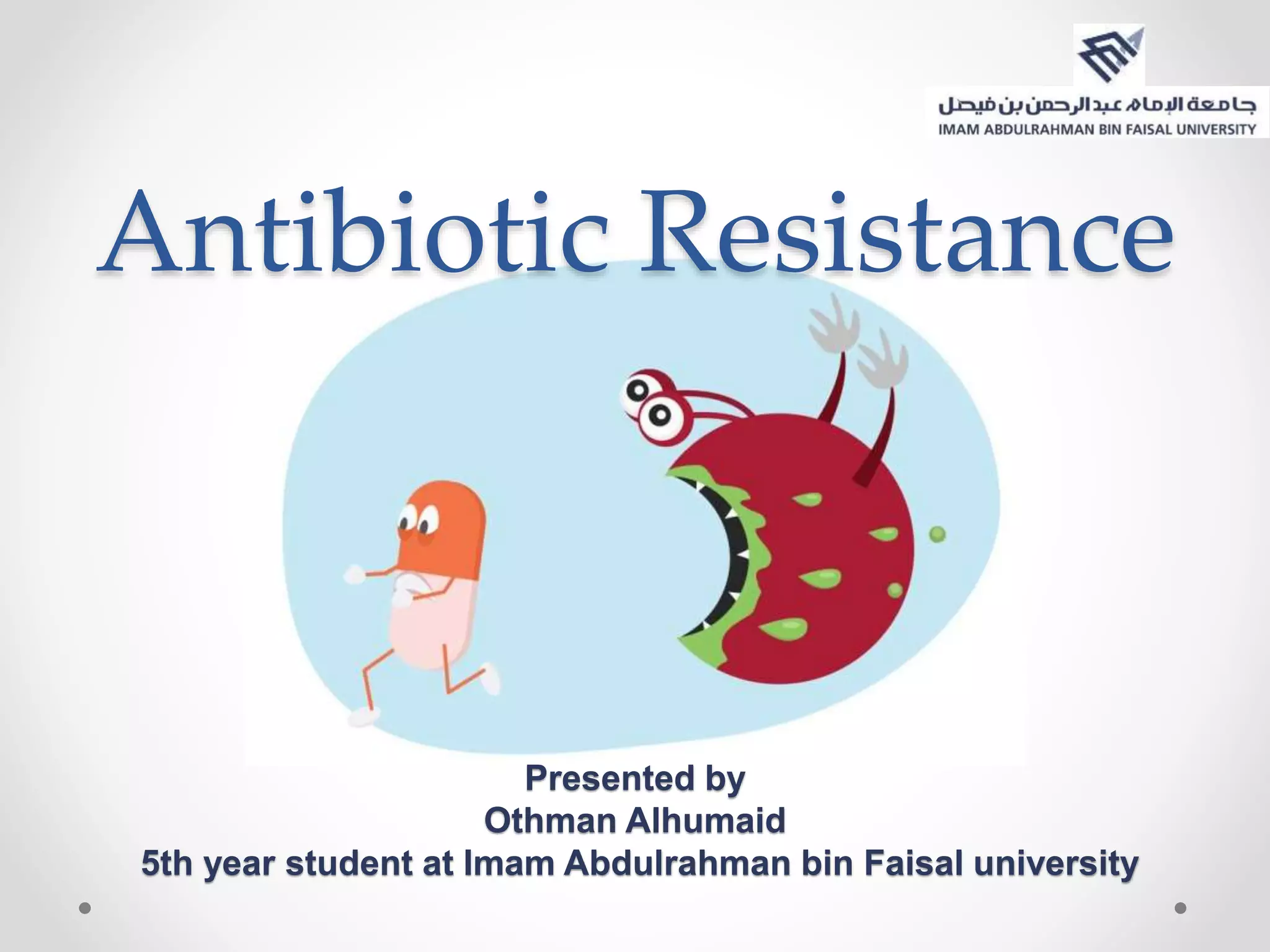
Antibiotic Resistance
Presented by
Othman Alhumaid
5th year student at Imam Abdulrahman bin Faisal university
Outline
• Introduction
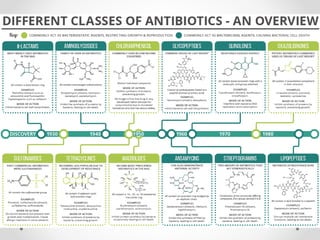
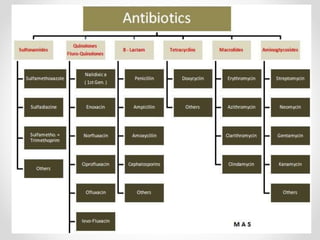
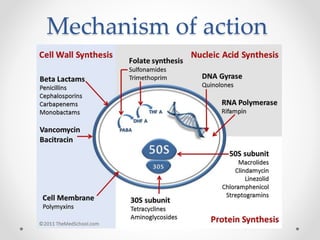
• Types of antibiotics and there mechanism of
action
• Antibiotic resistance
- Mechanism of resistance
- Causes of resistance
- Example of “Superbugs” (MSRA,VRSA,VRE..)
• Solution to minimize resistance
Introduction
• Antibiotics are natural antimicrobial agent used to
treat or prevent some types of bacterial infection.
They work by killing bacteria (cidal) or preventing
them from reproducing and spreading (static).
• Antibiotics don't work for viral infections such as
colds and flu, and most coughs and sore throats.
• Many mild bacterial infections also get better on
their own without using antibiotics.
First antibiotic
• Alexander Fleming. His best-known discover
the world's first antibiotic substance
benzylpenicillin (Penicillin G) from the mould
Penicillium notatum in 1928 by an accident and
then isolation of penicillin, marks the start of
modern antibiotics golden age.
Mechanism of action
Video
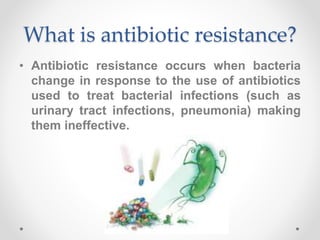
What is antibiotic resistance?
• Antibiotic resistance occurs when bacteria
change in response to the use of antibiotics
used to treat bacterial infections (such as
urinary tract infections, pneumonia) making
them ineffective.
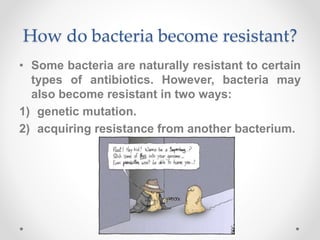
How do bacteria become resistant?
• Some bacteria are naturally resistant to certain
types of antibiotics. However, bacteria may
also become resistant in two ways:
1) genetic mutation.
2) acquiring resistance from another bacterium.
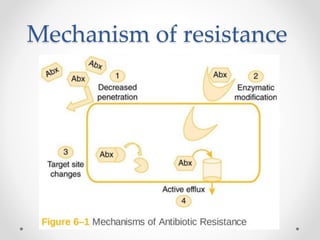
Mechanism of resistance
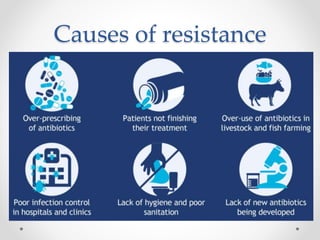
Causes of resistance
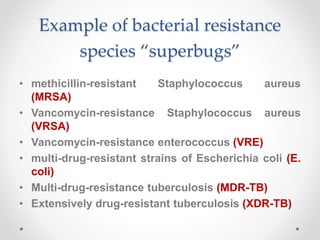
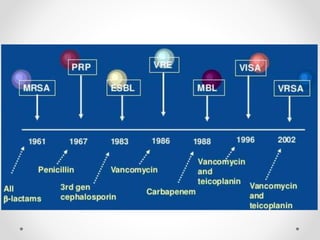
Example of bacterial resistance
species “superbugs”
• methicillin-resistant Staphylococcus aureus
(MRSA)
• Vancomycin-resistance Staphylococcus aureus
(VRSA)
• Vancomycin-resistance enterococcus (VRE)
• multi-drug-resistant strains of Escherichia coli (E.
coli)
• Multi-drug-resistance tuberculosis (MDR-TB)
• Extensively drug-resistant tuberculosis (XDR-TB)
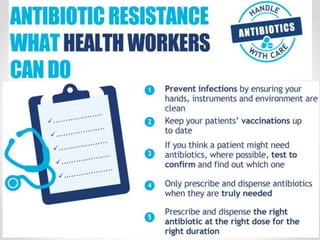
Now ..
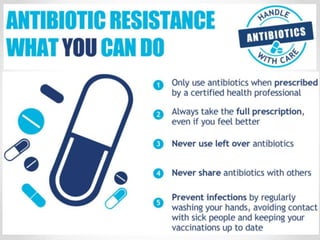
How we can minimize the
spread of bacterial resistance?
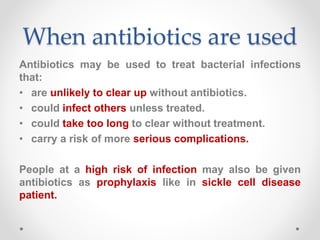
When antibiotics are used
Antibiotics may be used to treat bacterial infections
that:
• are unlikely to clear up without antibiotics.
• could infect others unless treated.
• could take too long to clear without treatment.
• carry a risk of more serious complications.
People at a high risk of infection may also be given
antibiotics as prophylaxis like in sickle cell disease
patient.
Reference
• Antibiotic essential 14th edition by Burke A. Cunha, MD,
MACP
• Reveiw of most applicable antibiotics
• Antibiotics simlefied 4th edition by Jason C.ghallegar and
Conan MacDougall
• http://www.nhs.uk/conditions/Antibiotics-
penicillins/Pages/Introduction.aspx
• http://www.who.int/mediacentre/events/2015/world-
antibiotic-awareness-week/infographics/en/
• http://www.idsociety.org/Index.aspx
• https://www.ncbi.nlm.nih.gov/pmc/articles/PMC4378521/
• http://emerald.tufts.edu/med/apua/about_issue/about_ant
ibioticres.shtml

Antibiotic resistance

  • 1.
    Antibiotic Resistance Presented by OthmanAlhumaid 5th year student at Imam Abdulrahman bin Faisal university
  • 2.
    Outline • Introduction • Typesof antibiotics and there mechanism of action • Antibiotic resistance - Mechanism of resistance - Causes of resistance - Example of “Superbugs” (MSRA,VRSA,VRE..) • Solution to minimize resistance
  • 3.
    Introduction • Antibiotics arenatural antimicrobial agent used to treat or prevent some types of bacterial infection. They work by killing bacteria (cidal) or preventing them from reproducing and spreading (static). • Antibiotics don't work for viral infections such as colds and flu, and most coughs and sore throats. • Many mild bacterial infections also get better on their own without using antibiotics.
  • 4.
    First antibiotic • AlexanderFleming. His best-known discover the world's first antibiotic substance benzylpenicillin (Penicillin G) from the mould Penicillium notatum in 1928 by an accident and then isolation of penicillin, marks the start of modern antibiotics golden age.
  • 7.
  • 8.
  • 9.
    What is antibioticresistance? • Antibiotic resistance occurs when bacteria change in response to the use of antibiotics used to treat bacterial infections (such as urinary tract infections, pneumonia) making them ineffective.
  • 10.
    How do bacteriabecome resistant? • Some bacteria are naturally resistant to certain types of antibiotics. However, bacteria may also become resistant in two ways: 1) genetic mutation. 2) acquiring resistance from another bacterium.
  • 11.
  • 12.
  • 13.
    Example of bacterialresistance species “superbugs” • methicillin-resistant Staphylococcus aureus (MRSA) • Vancomycin-resistance Staphylococcus aureus (VRSA) • Vancomycin-resistance enterococcus (VRE) • multi-drug-resistant strains of Escherichia coli (E. coli) • Multi-drug-resistance tuberculosis (MDR-TB) • Extensively drug-resistant tuberculosis (XDR-TB)
  • 15.
    Now .. How wecan minimize the spread of bacterial resistance?
  • 18.
    When antibiotics areused Antibiotics may be used to treat bacterial infections that: • are unlikely to clear up without antibiotics. • could infect others unless treated. • could take too long to clear without treatment. • carry a risk of more serious complications. People at a high risk of infection may also be given antibiotics as prophylaxis like in sickle cell disease patient.
  • 20.
    Reference • Antibiotic essential14th edition by Burke A. Cunha, MD, MACP • Reveiw of most applicable antibiotics • Antibiotics simlefied 4th edition by Jason C.ghallegar and Conan MacDougall • http://www.nhs.uk/conditions/Antibiotics- penicillins/Pages/Introduction.aspx • http://www.who.int/mediacentre/events/2015/world- antibiotic-awareness-week/infographics/en/ • http://www.idsociety.org/Index.aspx • https://www.ncbi.nlm.nih.gov/pmc/articles/PMC4378521/ • http://emerald.tufts.edu/med/apua/about_issue/about_ant ibioticres.shtml