
Seminar on
Antimicrobial resistance: Current scenario, future challenges and mitigating strategies
in Nepalese context
Theme: Issue in public health
Under cardinal guidance of
Dr. Hari Prasad Kaphle
Assistant Professor
SHAS, PU
By
Ashrita Subedi
2015-1-37-0007
At
School of health and allied Science
Pokhara University, Dhungepatan, Pokhara
2019
9/28/2019
1
Introduction
Antimicrobial resistance (AMR) is the ability of a microorganism
(bacteria, viruses and some parasites) to stop an antimicrobial
(antibiotics, antivirals,antimalarials) from working agents it.
Standard treatment become ineffective, infections persist and may
spread to others.
9/28/2019
2
Cond….
This is responsible for millions of death worldwide and is
considered as a major public health concern nowadays.
Antimicrobial resistance (AMR) threatens the effective
prevention and treatment of an ever increasing range of
infections caused by the microbes
The cost of health care for patients with resistant
infections is higher
9/28/2019
3
Examples of AMR
Bacteria that are resistance to antibiotic include
methicillin-resistance, Staphylococcus aureus
(MRSA), Penicillin-resistance Enterococcus, and
multidrug-resistance Mycobacterium tuberculosis
(MDR-TB), which is resistance to tuberculosis
drugs, Isoniazid and rifampicin
9/28/2019
4
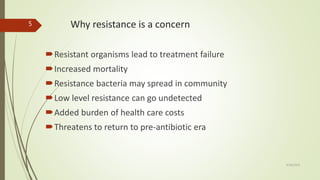
Why resistance is a concern
Resistant organisms lead to treatment failure
Increased mortality
Resistance bacteria may spread in community
Low level resistance can go undetected
Added burden of health care costs
Threatens to return to pre-antibiotic era
9/28/2019
5
9/28/2019
6
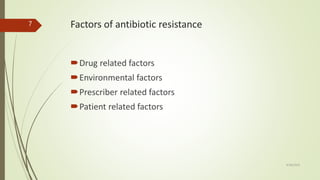
Factors of antibiotic resistance
Drug related factors
Environmental factors
Prescriber related factors
Patient related factors
9/28/2019
7
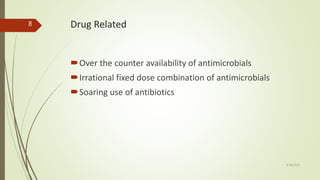
Drug Related
Over the counter availability of antimicrobials
Irrational fixed dose combination of antimicrobials
Soaring use of antibiotics
9/28/2019
8
Environmental factors
Huge populations and overcrowding
Rapid spread by better transport facility
Poor sanitation
Increased community acquired resistance
Ineffective infection control program
Widespread use of antibiotics in animal husbandry and
agriculture and as medication cleansing products
9/28/2019
9
Patient Related
Poor knowledge of dosage regimens
Poverty
Lack of sanitation concept
Self- medication
Misconception
9/28/2019
10
Prescriber Related
Inappropriate use of available drugs
Increased empiric poly-antimicrobial use
Overuse of antimicrobials
Inadequate dosing
Lack of current Knowledge and training
9/28/2019
11
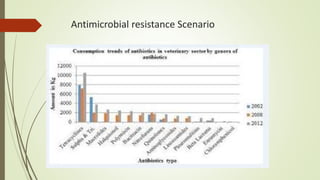
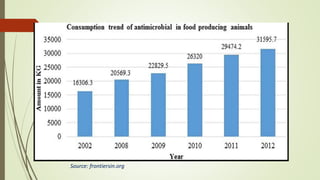
Antimicrobial resistance Scenario
Source: frontiersin.org
Challenges of Antimicrobial resistance
emergence of newer MDR organisms pose newer
diagnostic and therapeutic challenges
poverty, illiteracy, overcrowding and malnutrition further
compound the situation
Lack of awareness about infectious diseases
self-prescription of antimicrobial agents
Low doctor to patient and nurse to patient ratios
9/28/2019
14
Contd…
rise in the pharmaceutical sector increase waste from
companies
lack of strict supervisory and legal actions
Use of antimicrobial agents as pesticides and insecticides
in the agriculture industry
Uncontrolled sale in many low or middle income
countries
9/28/2019
15
Condt…
36% of individuals with cold or an upper respiratory
infections were given prescription for antibiotic
9/28/2019
16
Mitigation strategies
WHO recommended that farmers and food industry stop
using antibiotics
Preserve the effectiveness of antibiotics by reducing their
unnecessary use in animals
Strong sustained action across all sectors is vital if we are
to turn back the tide of antimicrobial resistance.
Consumers and supliers drive the major food chains
adopting antibiotic-free policies.
9/28/2019
17
Condt…
Alternative options to using antibiotics for disease
prevention in animals
Preserve the effectiveness of the most critical antibiotics
for medicine
Use of antibiotics only when prescribed by a doctors
No sharing of antibiotic with others or using lefeover
prescriptions
9/28/2019
18
Condt…
Nepal has made important advances in reducing mortality
and morbidity and increase health coverage, but has not
yet taken steps to address antibiotic resistance.
9/28/2019
19
References
Adhikari s.,saud b, Paudel G. Emergence of Antimicrobial
Drug Resistance Bacteria in Nepal: A current Scenario
February 2019;10(8).
World Health Organization: Antimicrobial resistance,2016-
Geneva,swizerland.
Acharya KR. Antimicrobial residue and Prevalence of
Indicators bacteria Having Antimicrobial Resistance
Isolated from Marked poultry in Kathmandu, Nepal.(2011)
9/28/2019
20
Condt…
Shrestha k. Potential Antimicrobial Resistance Threat-
Nepal.(Accessed july 22, 2018)
VSDAO 2067/68 B.s. Annual Technical Report.
(2016)(accessed january19,2018)
9/28/2019
21
Thank You!!!
9/28/2019
22

Antimicrobial resistance

  • 1.
    Seminar on Antimicrobial resistance:Current scenario, future challenges and mitigating strategies in Nepalese context Theme: Issue in public health Under cardinal guidance of Dr. Hari Prasad Kaphle Assistant Professor SHAS, PU By Ashrita Subedi 2015-1-37-0007 At School of health and allied Science Pokhara University, Dhungepatan, Pokhara 2019 9/28/2019 1
  • 2.
    Introduction Antimicrobial resistance (AMR)is the ability of a microorganism (bacteria, viruses and some parasites) to stop an antimicrobial (antibiotics, antivirals,antimalarials) from working agents it. Standard treatment become ineffective, infections persist and may spread to others. 9/28/2019 2
  • 3.
    Cond…. This is responsiblefor millions of death worldwide and is considered as a major public health concern nowadays. Antimicrobial resistance (AMR) threatens the effective prevention and treatment of an ever increasing range of infections caused by the microbes The cost of health care for patients with resistant infections is higher 9/28/2019 3
  • 4.
    Examples of AMR Bacteriathat are resistance to antibiotic include methicillin-resistance, Staphylococcus aureus (MRSA), Penicillin-resistance Enterococcus, and multidrug-resistance Mycobacterium tuberculosis (MDR-TB), which is resistance to tuberculosis drugs, Isoniazid and rifampicin 9/28/2019 4
  • 5.
    Why resistance isa concern Resistant organisms lead to treatment failure Increased mortality Resistance bacteria may spread in community Low level resistance can go undetected Added burden of health care costs Threatens to return to pre-antibiotic era 9/28/2019 5
  • 6.
  • 7.
    Factors of antibioticresistance Drug related factors Environmental factors Prescriber related factors Patient related factors 9/28/2019 7
  • 8.
    Drug Related Over thecounter availability of antimicrobials Irrational fixed dose combination of antimicrobials Soaring use of antibiotics 9/28/2019 8
  • 9.
    Environmental factors Huge populationsand overcrowding Rapid spread by better transport facility Poor sanitation Increased community acquired resistance Ineffective infection control program Widespread use of antibiotics in animal husbandry and agriculture and as medication cleansing products 9/28/2019 9
  • 10.
    Patient Related Poor knowledgeof dosage regimens Poverty Lack of sanitation concept Self- medication Misconception 9/28/2019 10
  • 11.
    Prescriber Related Inappropriate useof available drugs Increased empiric poly-antimicrobial use Overuse of antimicrobials Inadequate dosing Lack of current Knowledge and training 9/28/2019 11
  • 12.
  • 13.
  • 14.
    Challenges of Antimicrobialresistance emergence of newer MDR organisms pose newer diagnostic and therapeutic challenges poverty, illiteracy, overcrowding and malnutrition further compound the situation Lack of awareness about infectious diseases self-prescription of antimicrobial agents Low doctor to patient and nurse to patient ratios 9/28/2019 14
  • 15.
    Contd… rise in thepharmaceutical sector increase waste from companies lack of strict supervisory and legal actions Use of antimicrobial agents as pesticides and insecticides in the agriculture industry Uncontrolled sale in many low or middle income countries 9/28/2019 15
  • 16.
    Condt… 36% of individualswith cold or an upper respiratory infections were given prescription for antibiotic 9/28/2019 16
  • 17.
    Mitigation strategies WHO recommendedthat farmers and food industry stop using antibiotics Preserve the effectiveness of antibiotics by reducing their unnecessary use in animals Strong sustained action across all sectors is vital if we are to turn back the tide of antimicrobial resistance. Consumers and supliers drive the major food chains adopting antibiotic-free policies. 9/28/2019 17
  • 18.
    Condt… Alternative options tousing antibiotics for disease prevention in animals Preserve the effectiveness of the most critical antibiotics for medicine Use of antibiotics only when prescribed by a doctors No sharing of antibiotic with others or using lefeover prescriptions 9/28/2019 18
  • 19.
    Condt… Nepal has madeimportant advances in reducing mortality and morbidity and increase health coverage, but has not yet taken steps to address antibiotic resistance. 9/28/2019 19
  • 20.
    References Adhikari s.,saud b,Paudel G. Emergence of Antimicrobial Drug Resistance Bacteria in Nepal: A current Scenario February 2019;10(8). World Health Organization: Antimicrobial resistance,2016- Geneva,swizerland. Acharya KR. Antimicrobial residue and Prevalence of Indicators bacteria Having Antimicrobial Resistance Isolated from Marked poultry in Kathmandu, Nepal.(2011) 9/28/2019 20
  • 21.
    Condt… Shrestha k. PotentialAntimicrobial Resistance Threat- Nepal.(Accessed july 22, 2018) VSDAO 2067/68 B.s. Annual Technical Report. (2016)(accessed january19,2018) 9/28/2019 21
  • 22.