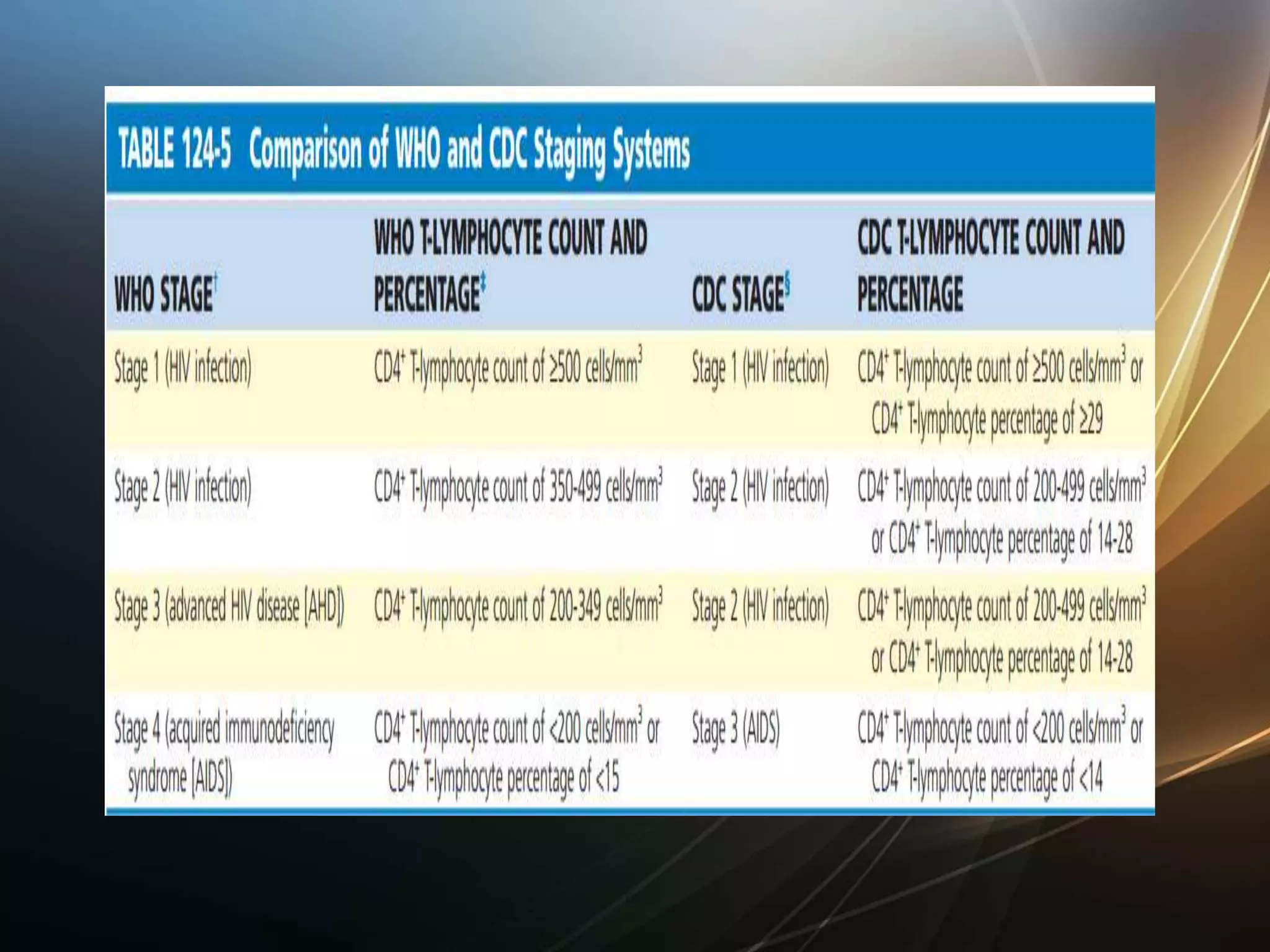


HIV infection
Nisreen Bajnaid
* Family retroviridae, subfamily Lentivirinae,
genus Lentivirus
*single strand, positive sense RNA virus
*Former names of the virus include:
Human T cell lymphotrophic virus (HTLV-III)
Lymphadenopathy associated virus (LAV)
AIDS associated retrovirus (ARV)
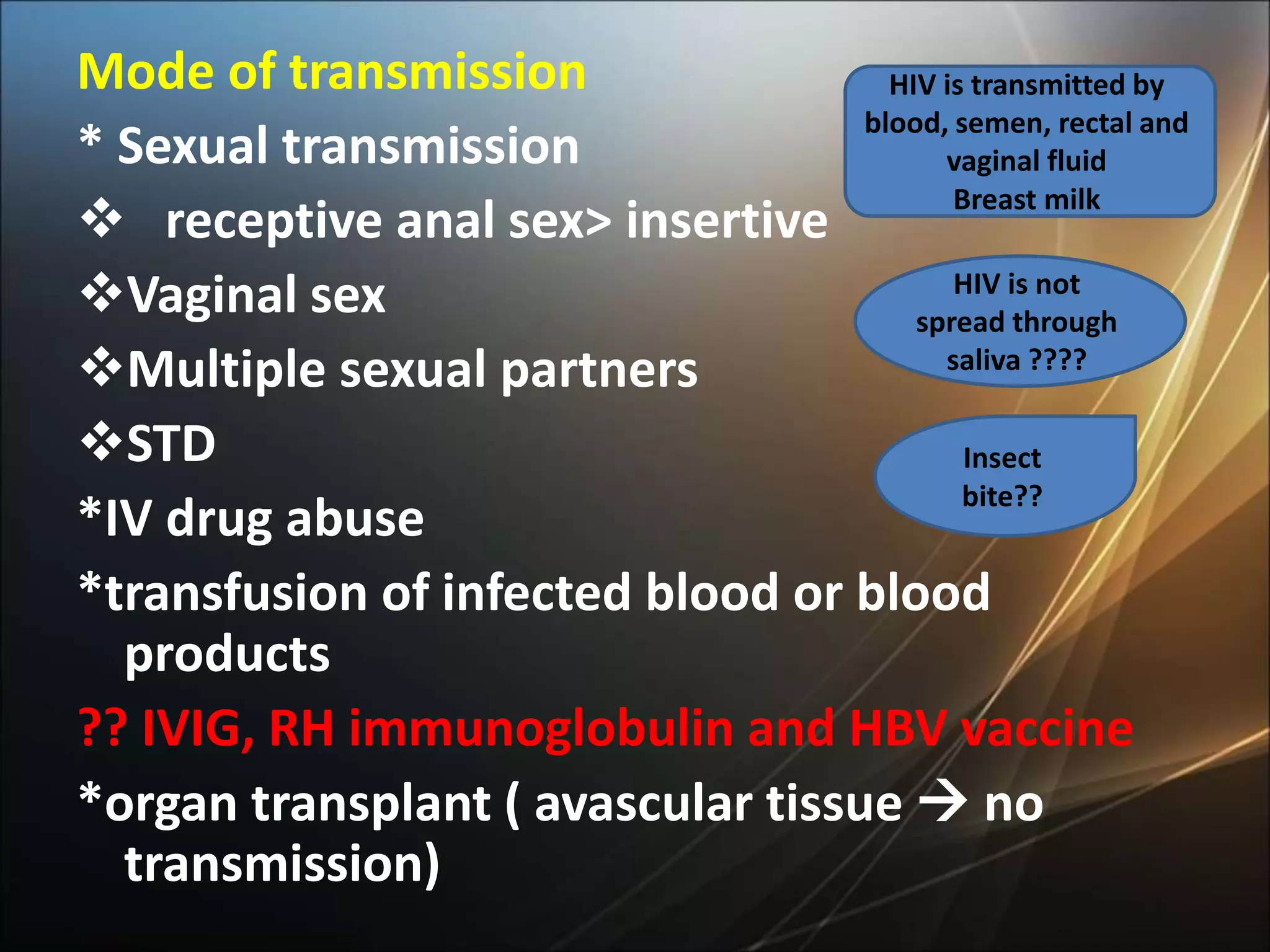
Mode of transmission
* Sexual transmission
 receptive anal sex> insertive
Vaginal sex
Multiple sexual partners
STD
*IV drug abuse
*transfusion of infected blood or blood
products
?? IVIG, RH immunoglobulin and HBV vaccine
*organ transplant ( avascular tissue  no
transmission)
HIV is transmitted by
blood, semen, rectal and
vaginal fluid
Breast milk
HIV is not
spread through
saliva ????
Insect
bite??
*MTCT (mother to child transmission)
• HIV infected infant with negative PCR at birth??
• factors that increase the risk include :
chorioamnionitis
preterm labor
prolonged rupture of the membrane >4h
use of illicit drug during pregnancy
low antenatal CD4 count
low birth weight
*occupational transmission
Patient to HCW
HCW to patient
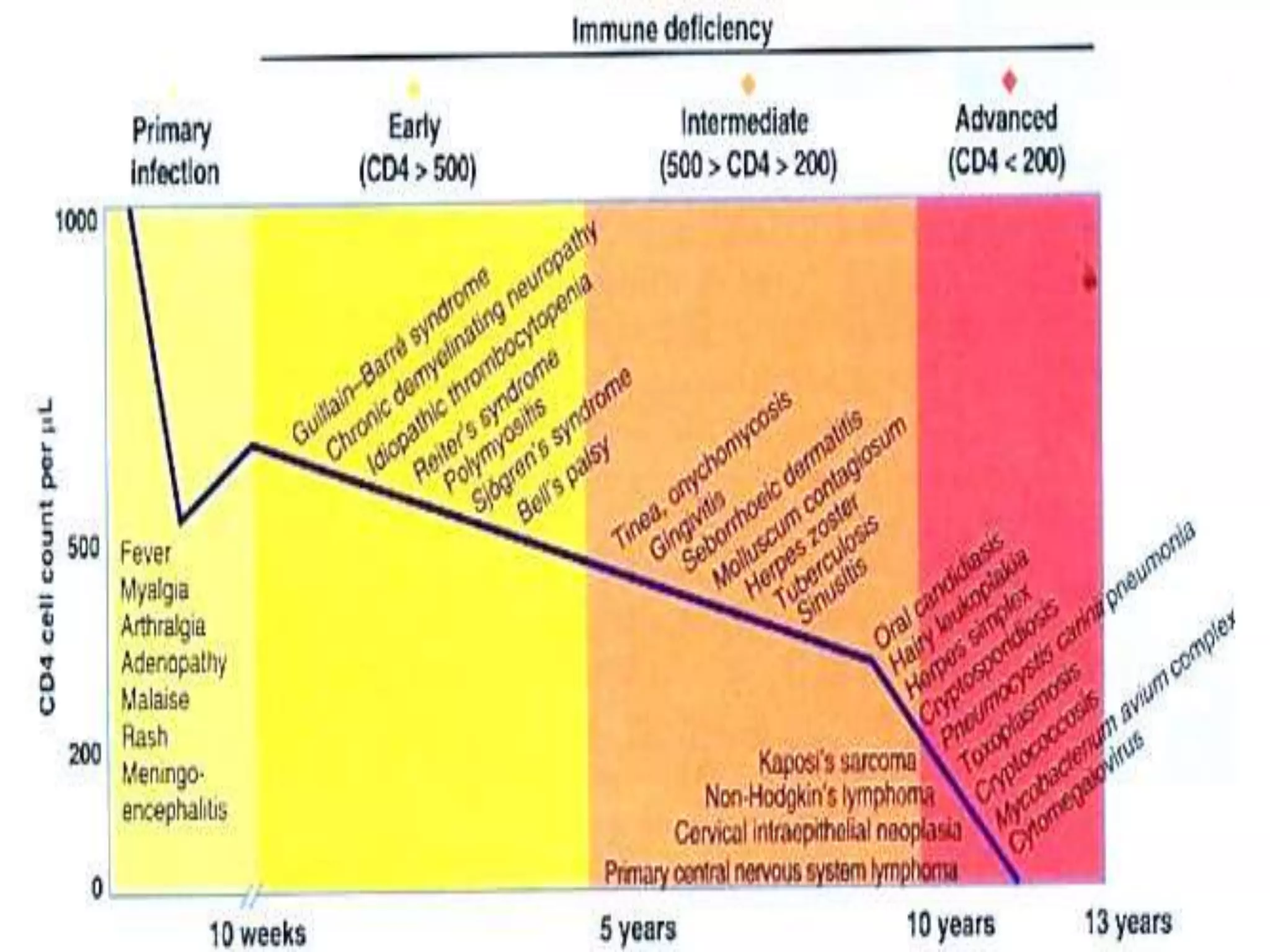
Progression of HIV
acute infection
Acute Seroconversion
Asymptomatic HIV (Clinical latency)
Symptomatic HIV
Acquired Immune Deficiency Syndrome (AIDS)
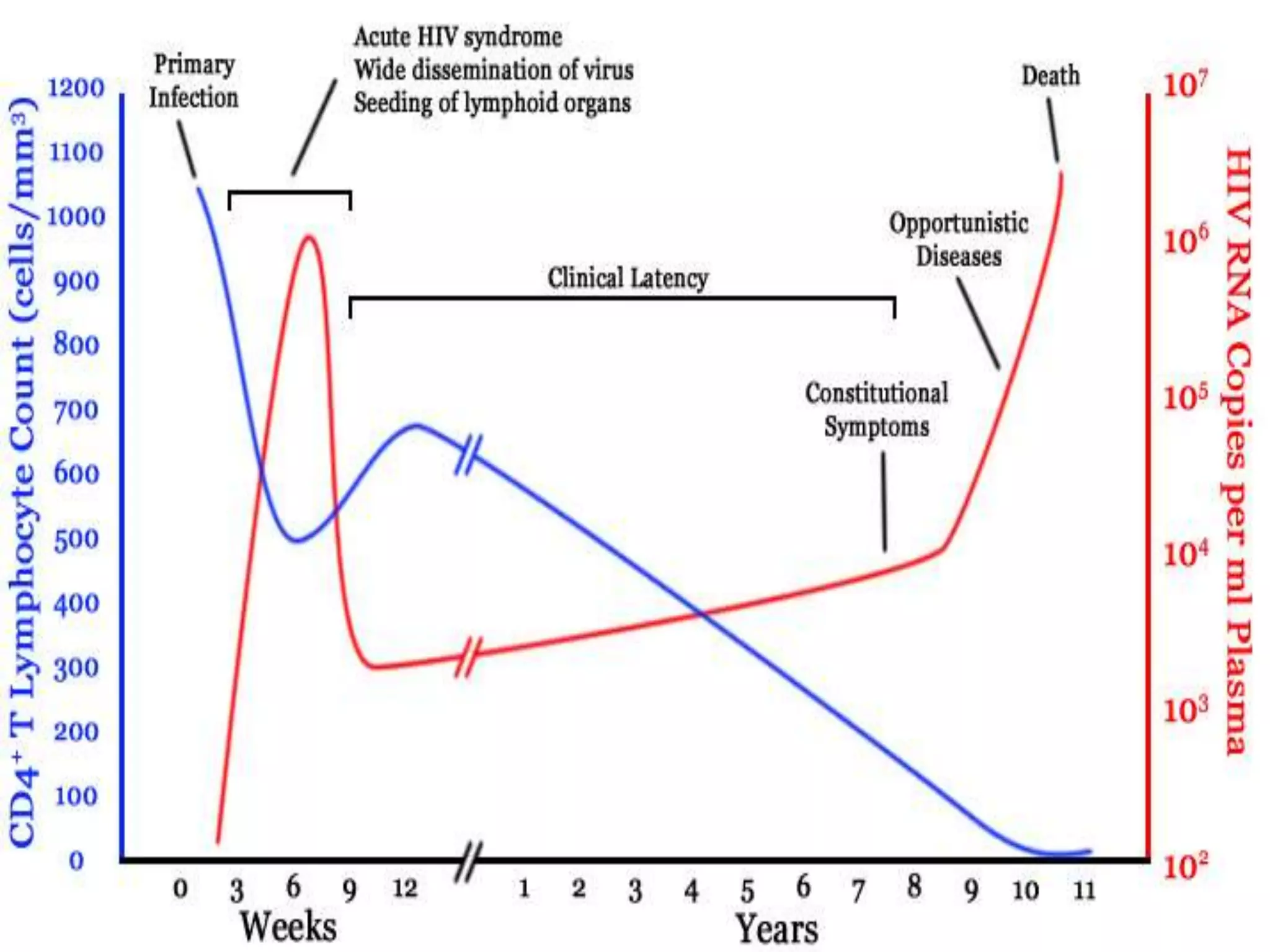
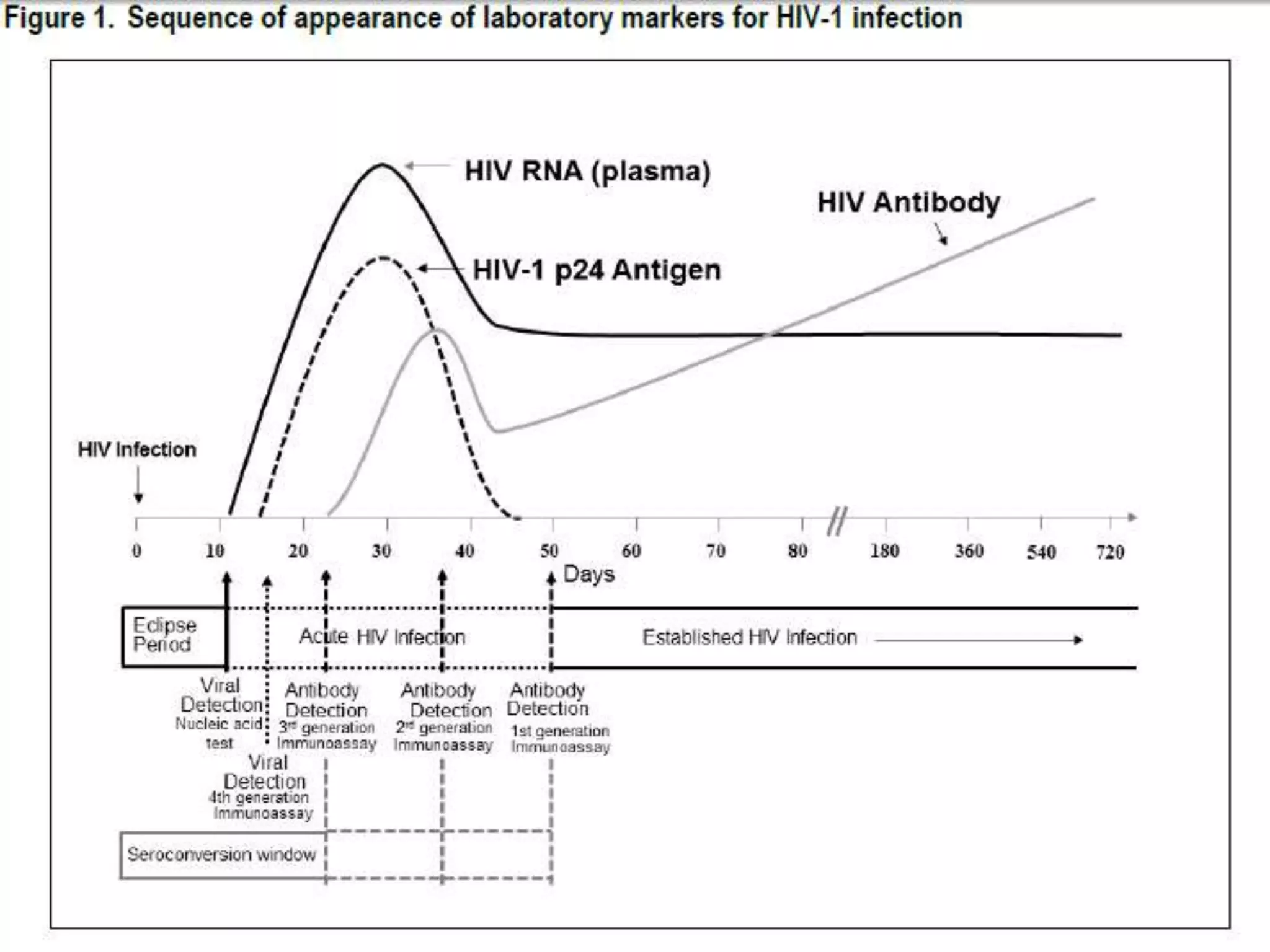
Acute HIV infection
*the phase of HIV disease immediately after
infection during which the initial burst of
viremia in newly infected patients occurs
*anti-HIV antibodies are undetectable at this time
while HIV RNA or p24 antigen are present
*the viral RNA level is typically very high
(eg, >100,000 copies/mL)
*the CD4 cell count can drop transiently.
*symptoms occur in 50-90% of patients within
1-4 weeks of infection
* characterized by fever, lymphadenopathy,
pharyngitis, skin rash,
myalgias/arthralgias, headache, diarrhea,
oral ulcers, leucopenia, thrombocytopenia,
transaminase elevation and other symptoms
*can be asymptomatic
*severity and number of symptoms associated
with peak HIV RNA level
Seroconversion
*the development of detectable antibodies
against HIV antigens.
*The timing of seroconversion following
infection with HIV depends upon the
sensitivity of the serologic test
Pattern of HIV progression
*typical progressors
*slow progressors
*rapid progressors
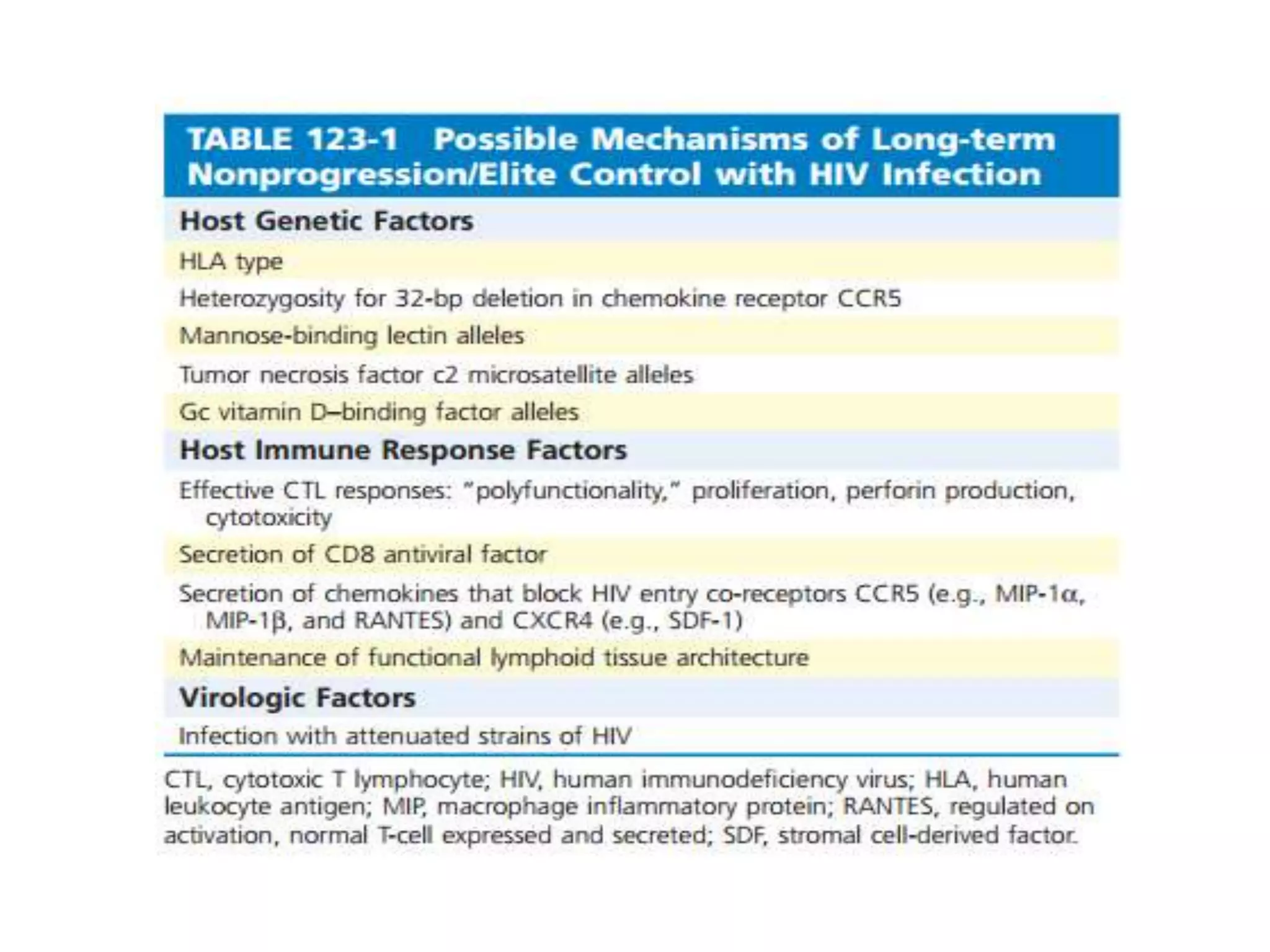
*long term non progressors, ellite controller
HIV infected patient with normal CD4 and viral
load less than 50 copies/ml
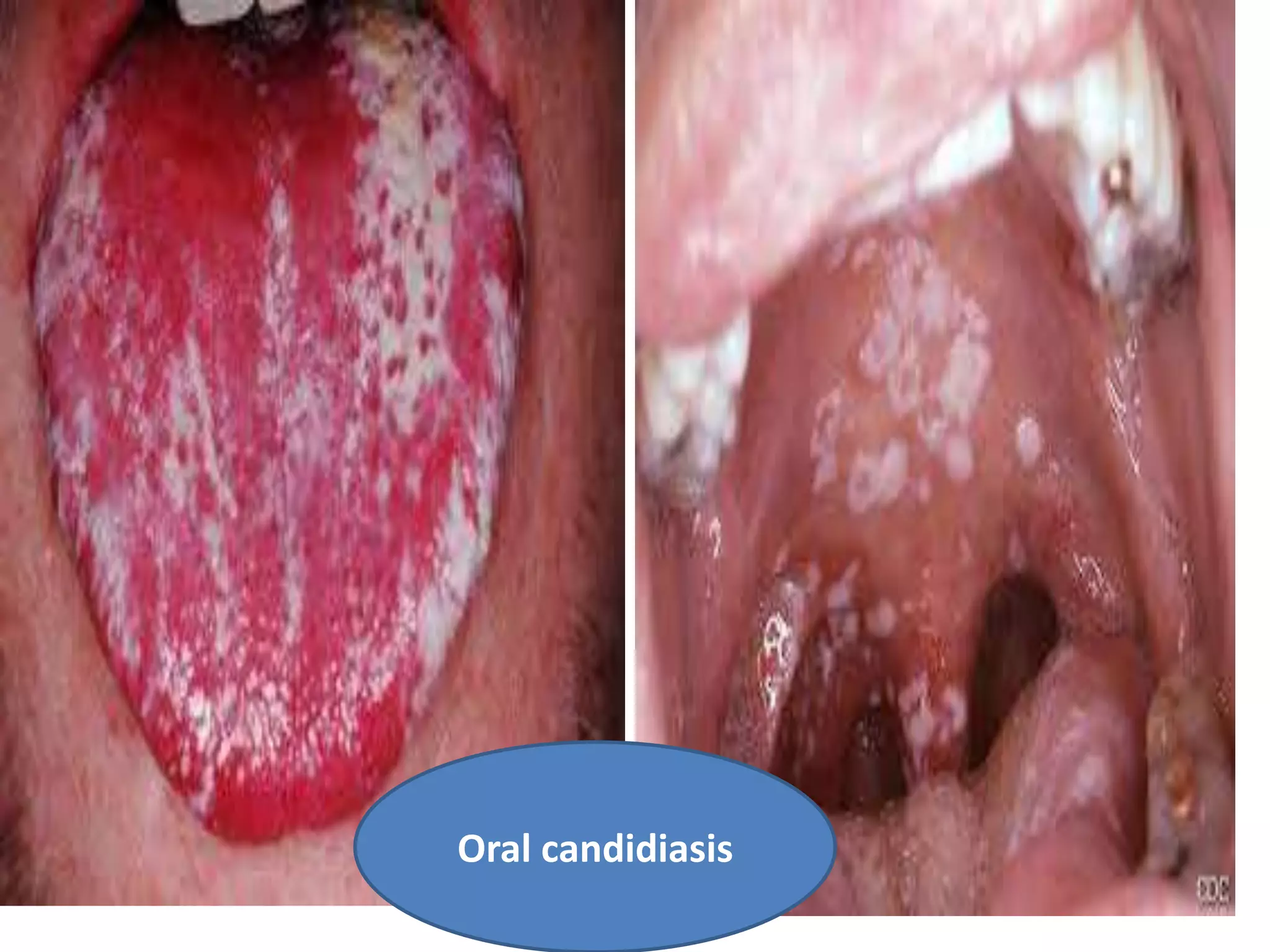
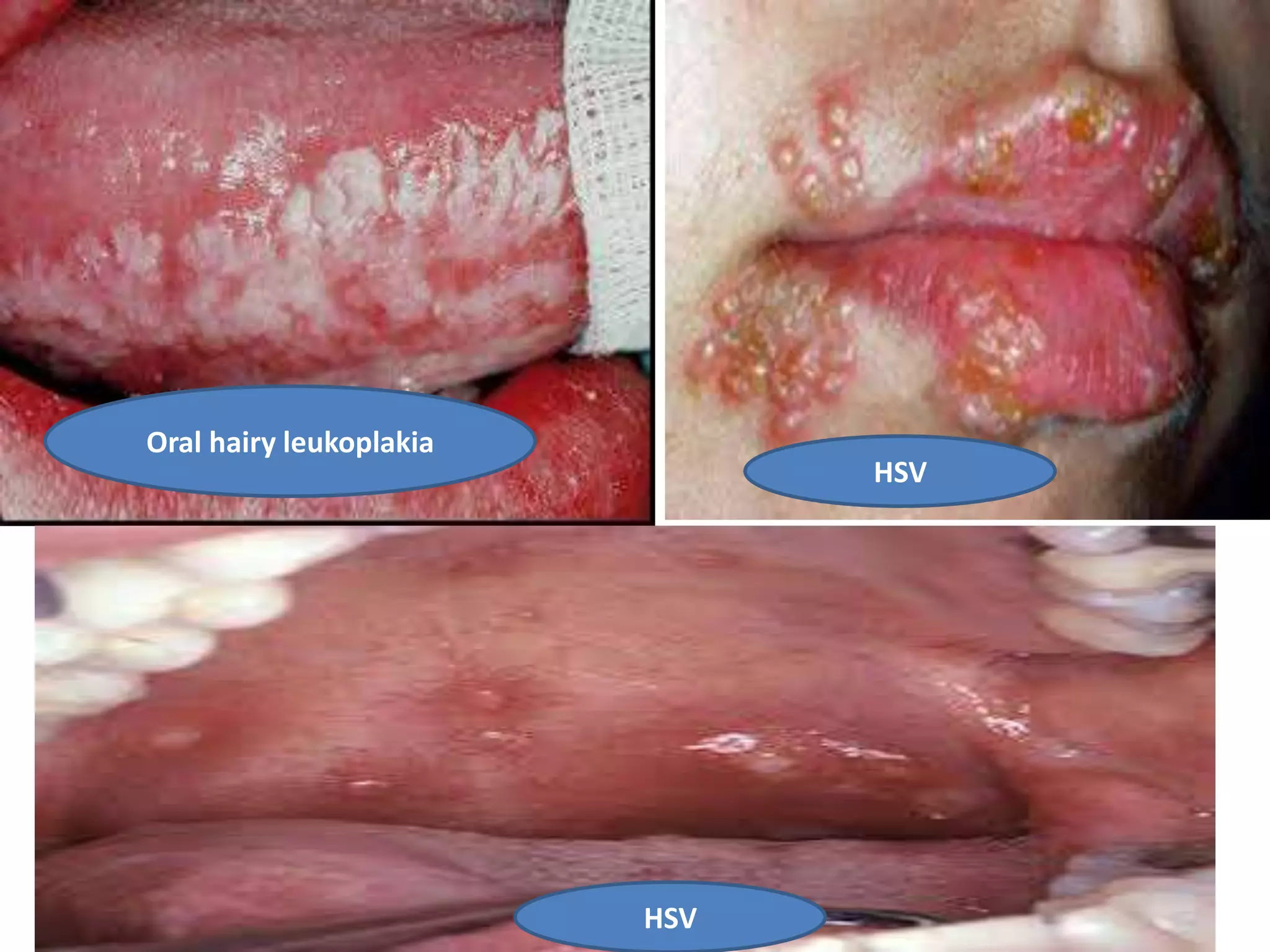
Oral candidiasis
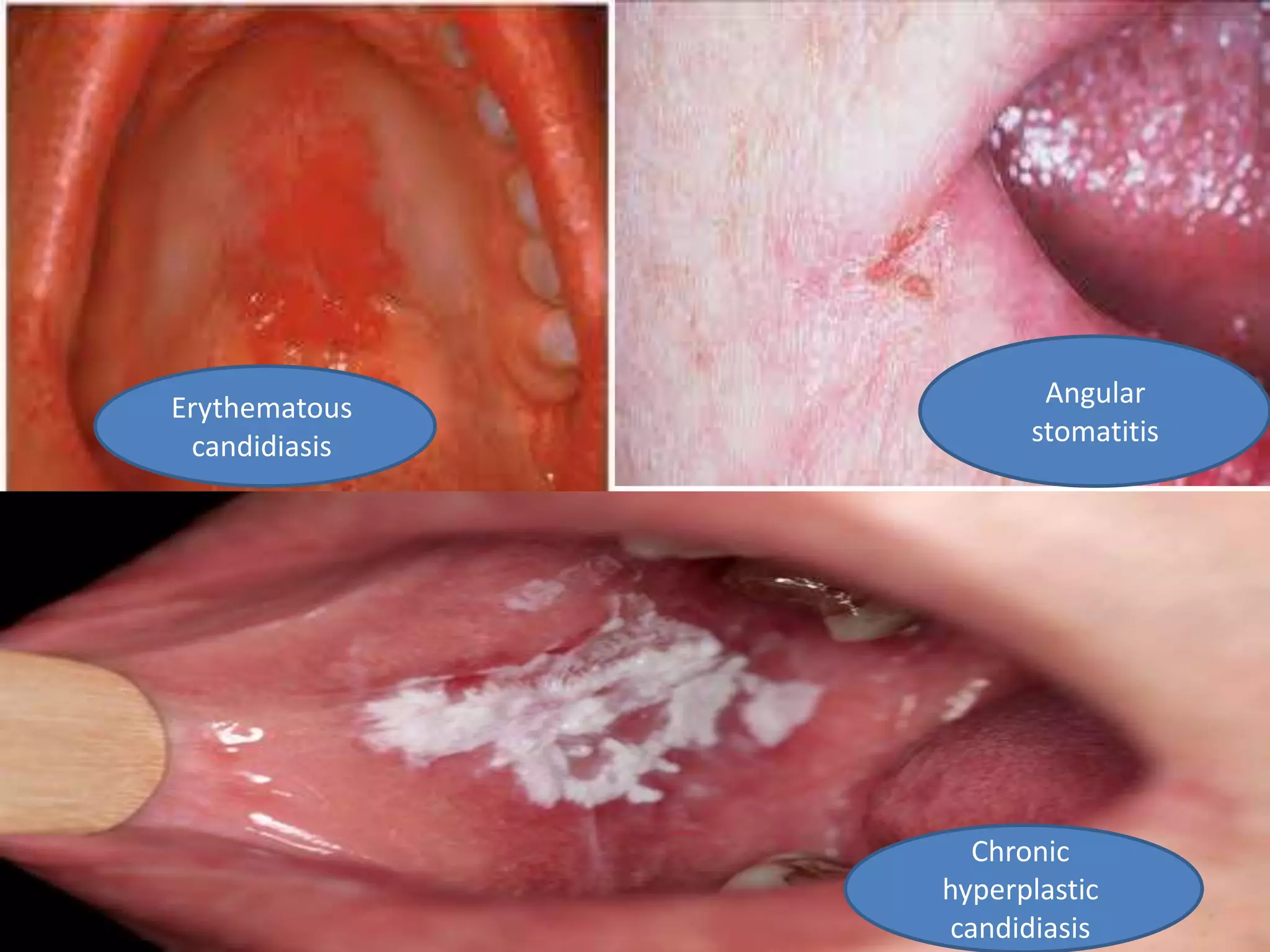
Erythematous
candidiasis
Angular
stomatitis
Chronic
hyperplastic
candidiasis
Oral hairy leukoplakia
HSV
HSV
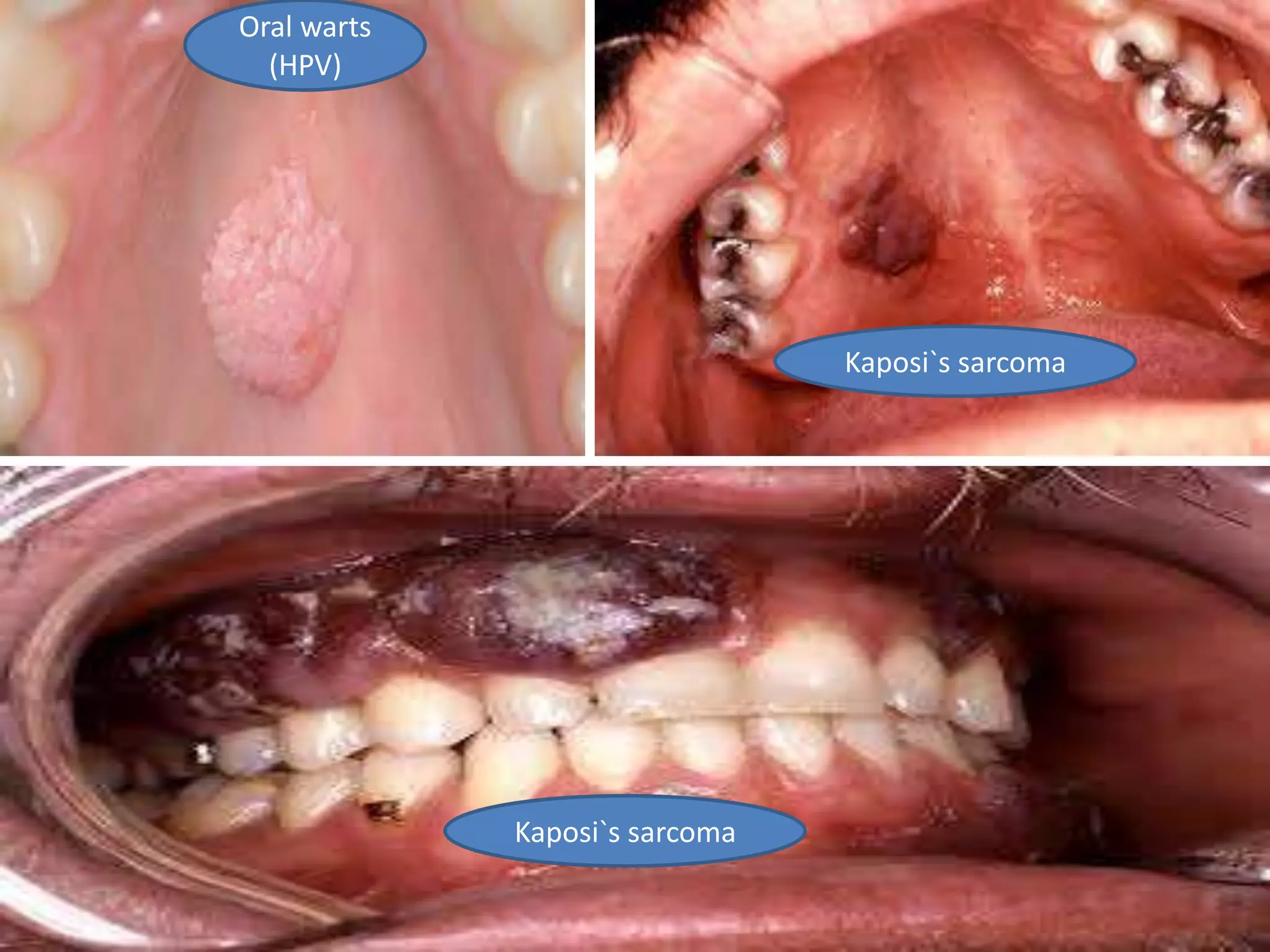
Oral warts
(HPV)
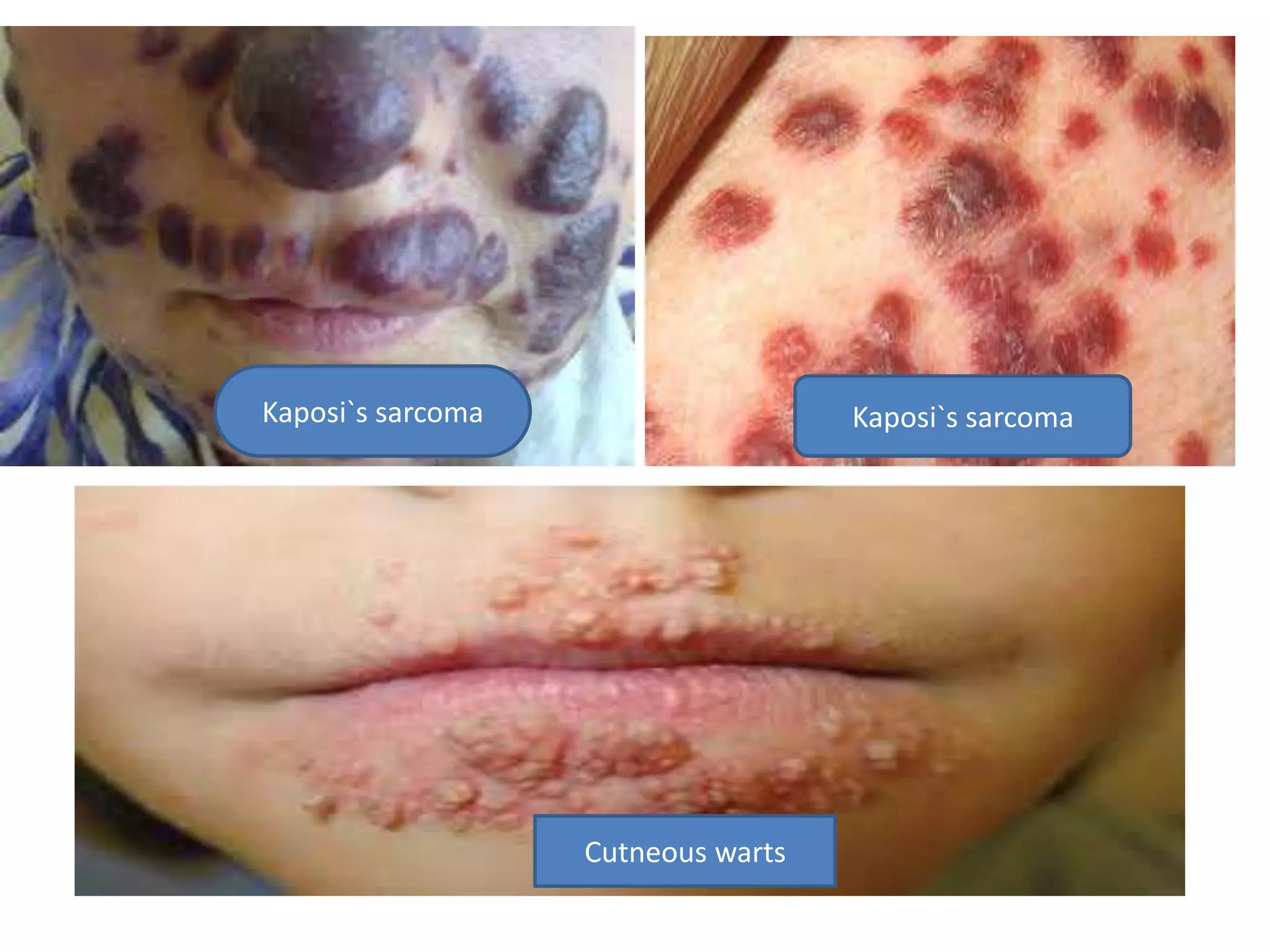
Kaposi`s sarcoma
Kaposi`s sarcoma
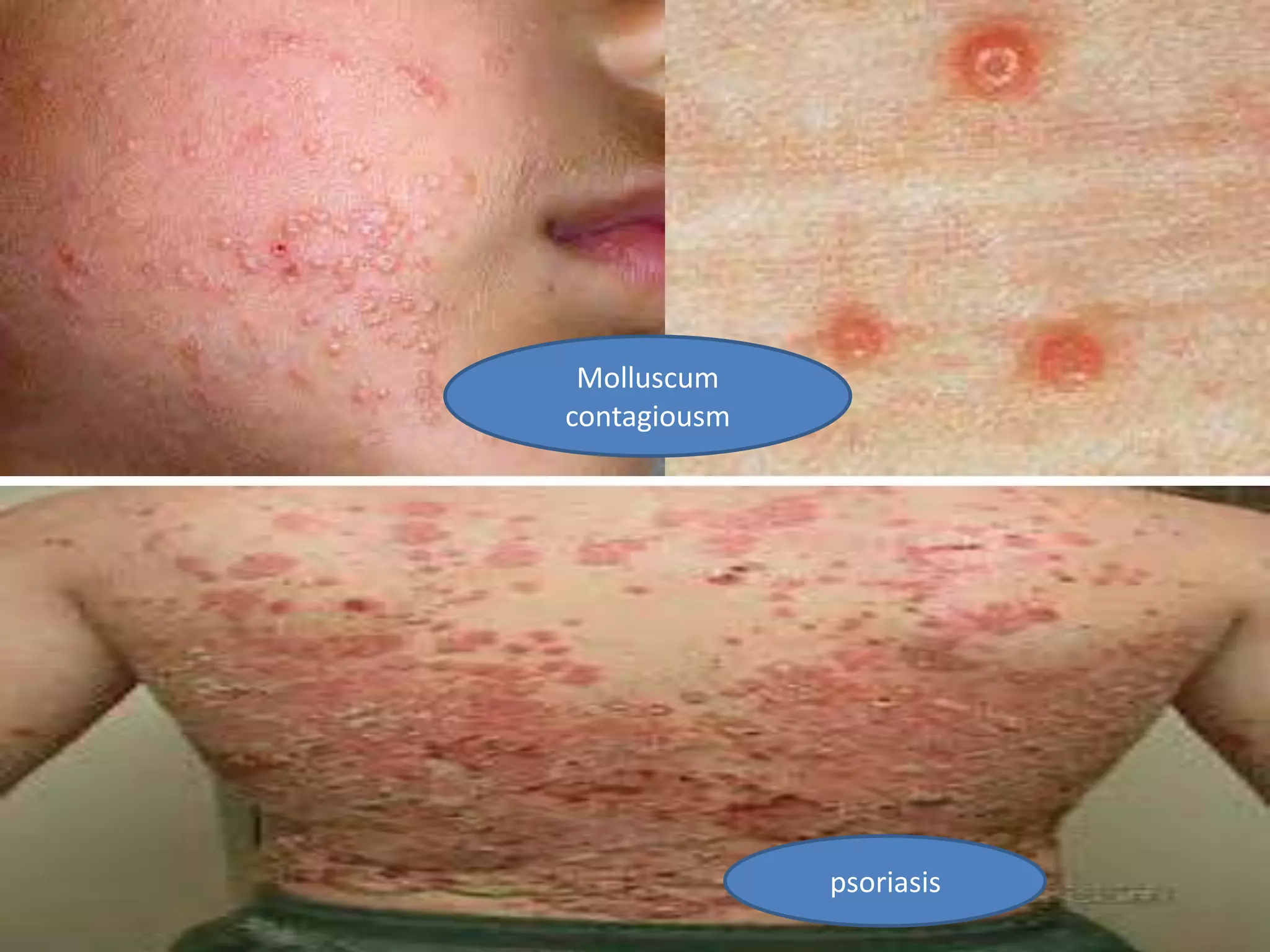
Molluscum
contagiousm
psoriasis
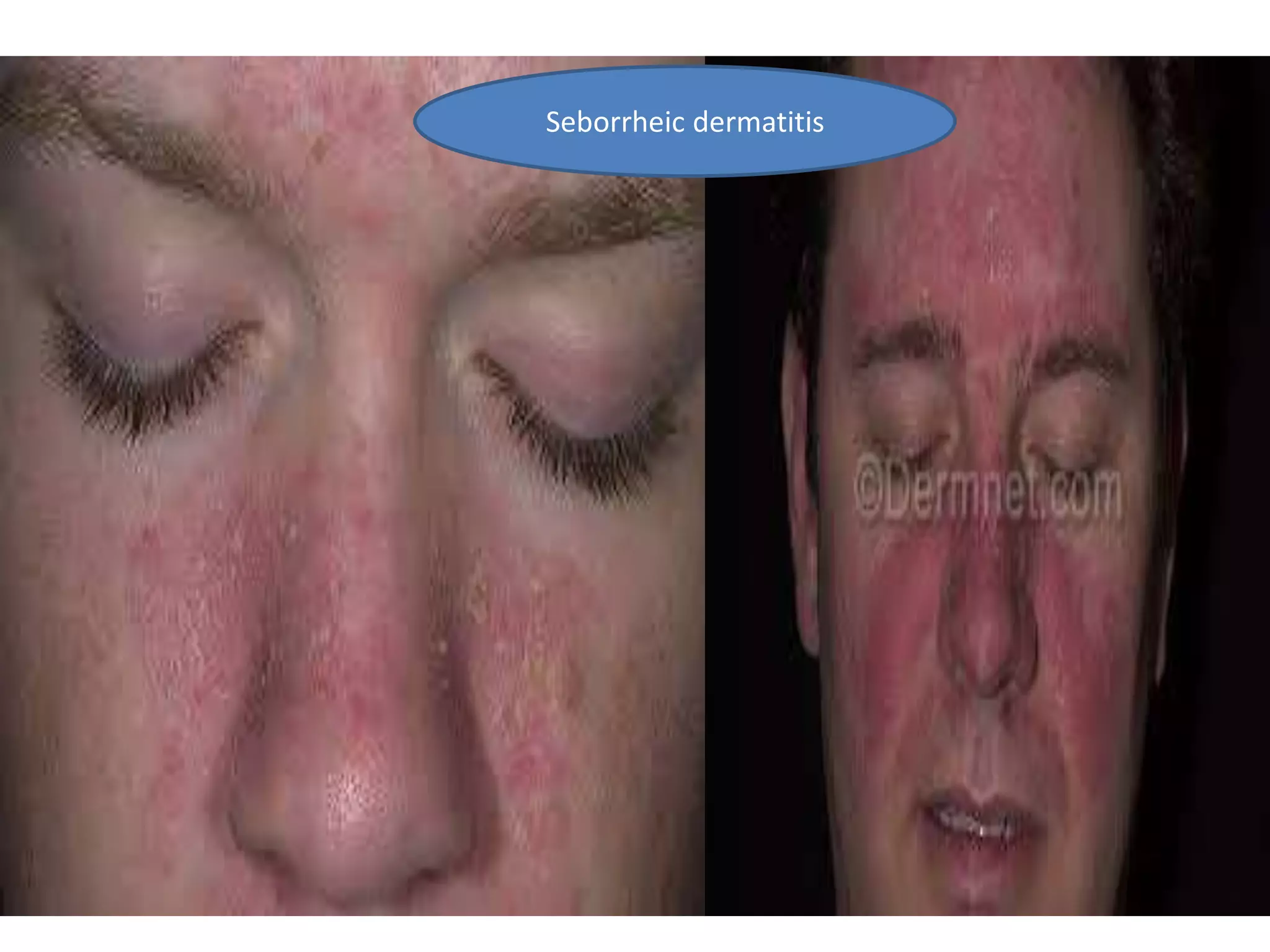
Seborrheic dermatitis
Kaposi`s sarcomaKaposi`s sarcoma
Cutneous warts
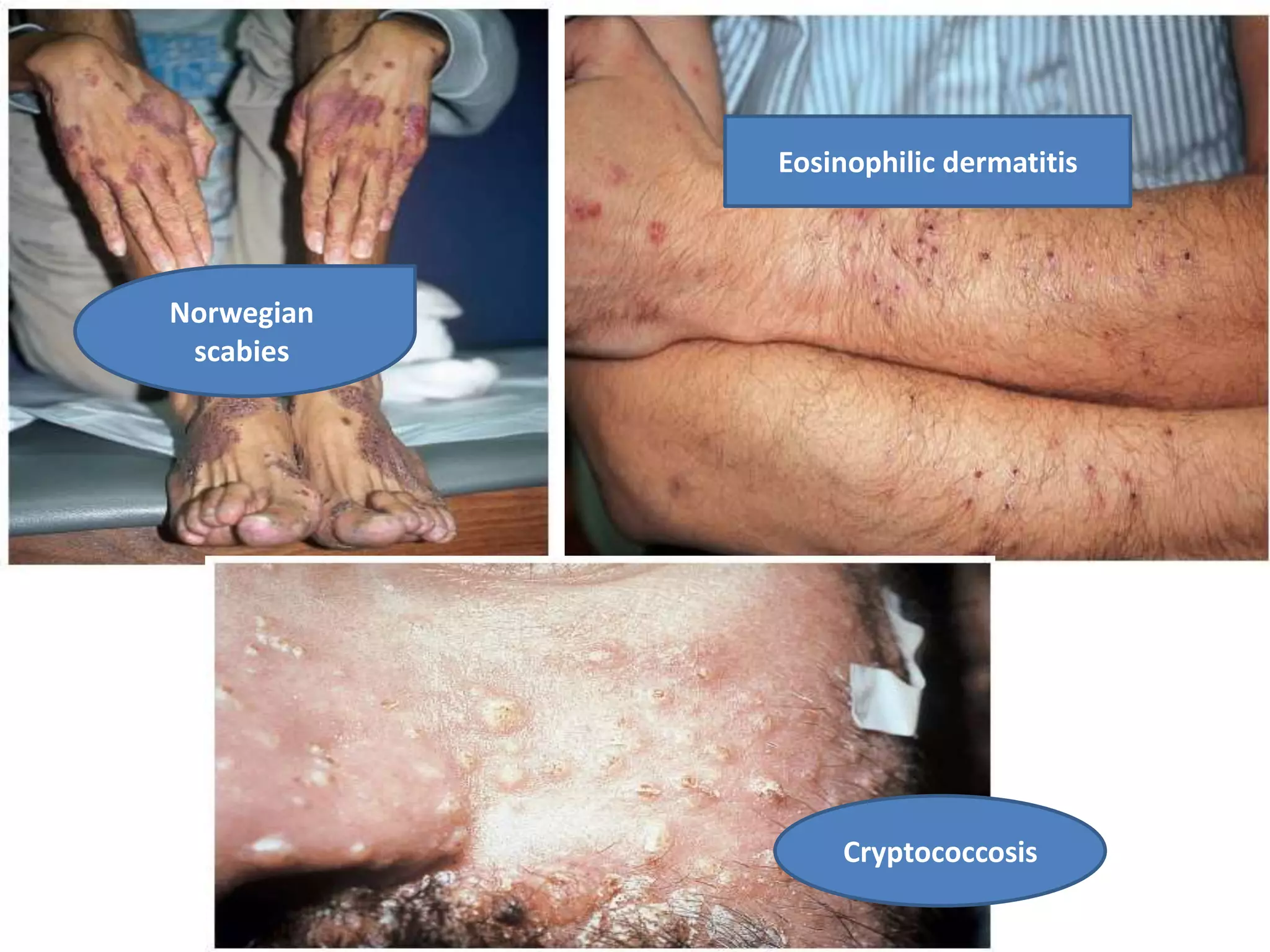
Eosinophilic dermatitis
Norwegian
scabies
Cryptococcosis
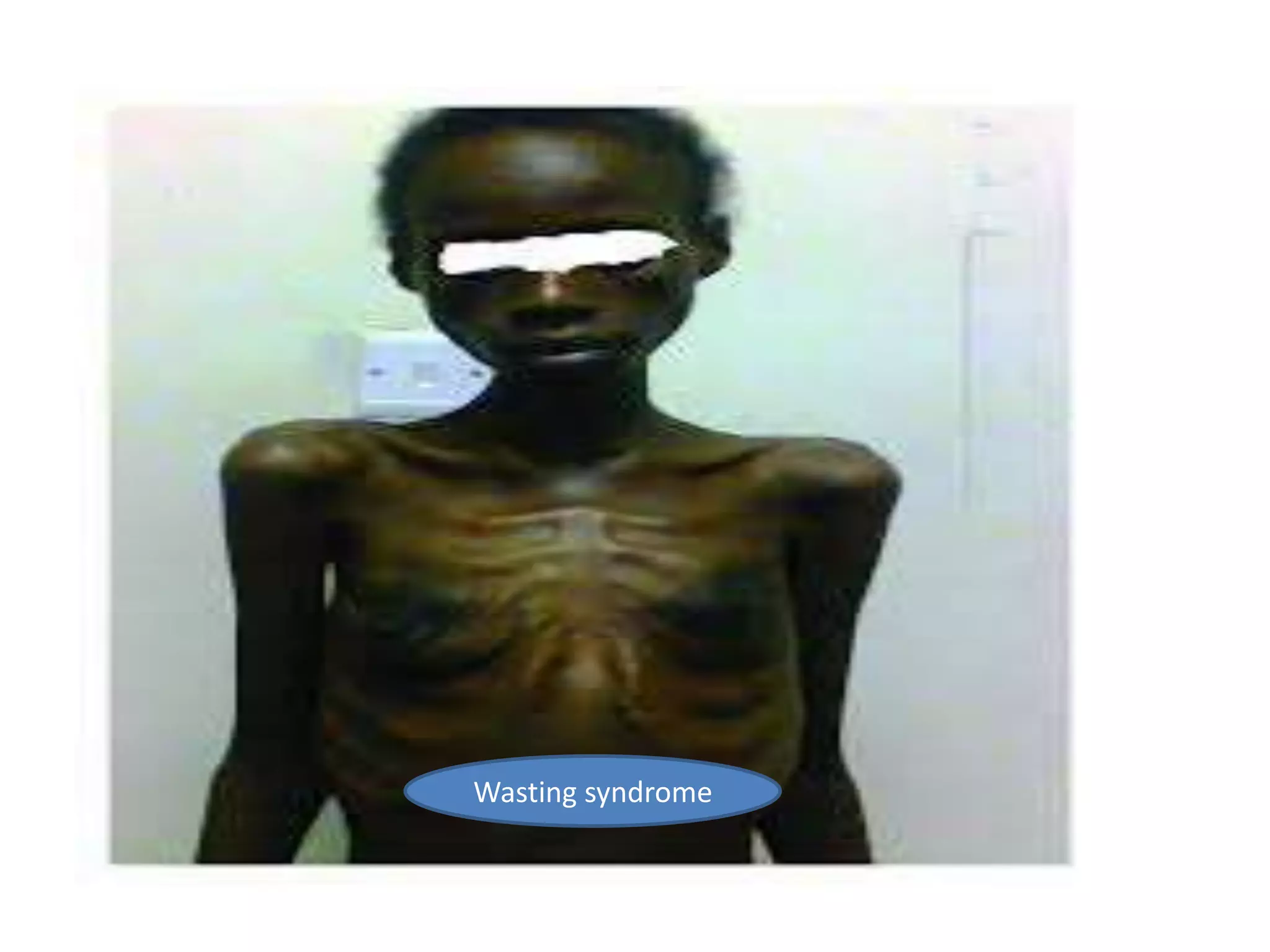
Wasting syndrome
Laboratory testing
Viral load
Quantitative molecular assay measures amount of
HIV RNA in blood
Used to:
Predict disease progression
Monitors response to anti-retrovirals
P24
Core protein of the virus
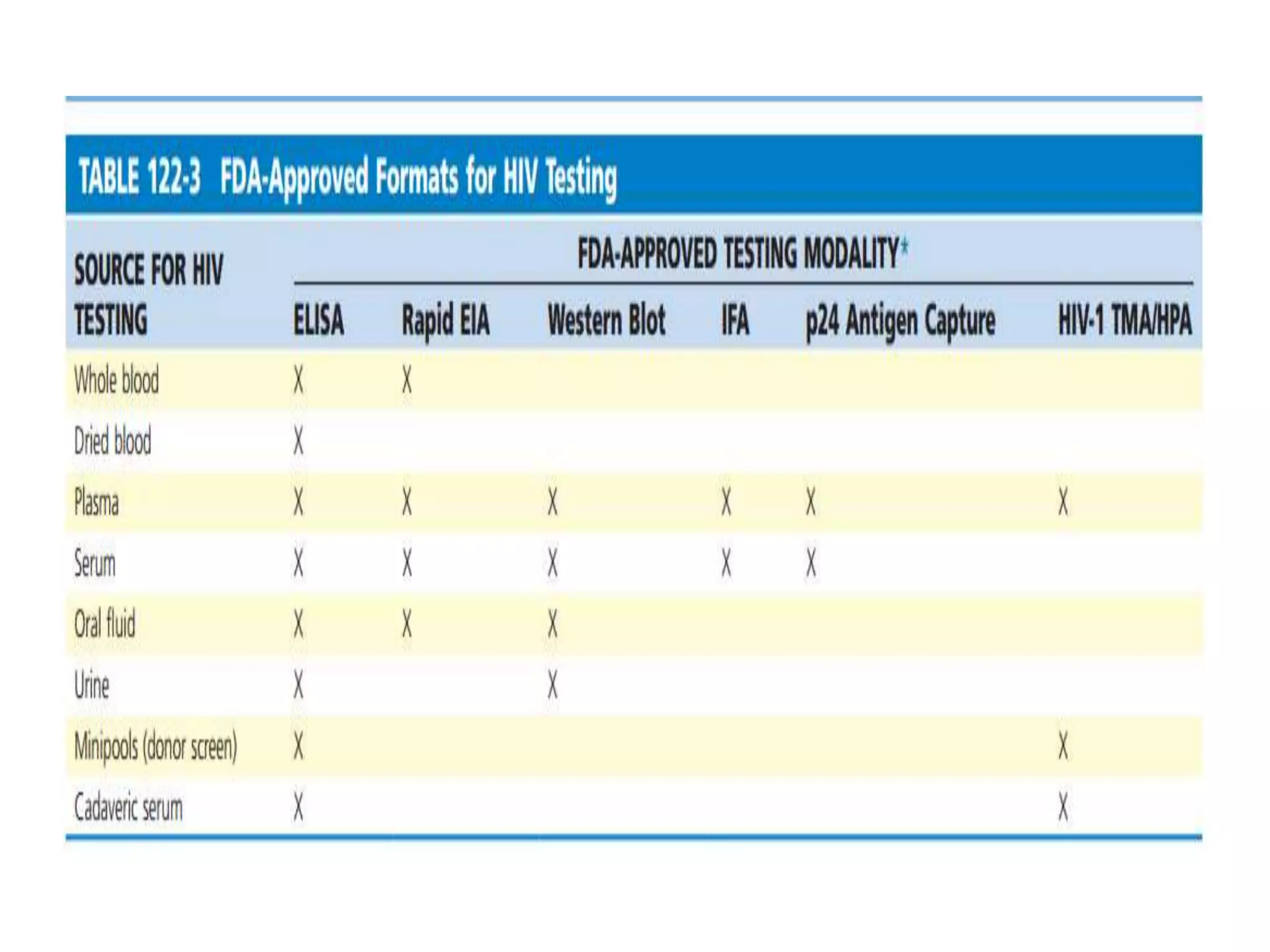
p24-antigen screening assay is an EIA performed on
serum or plasma
P24 antigen only present for short time, disappears
when antibody to p24 appears
EIA detects p24 antigen before antibody can be
detected
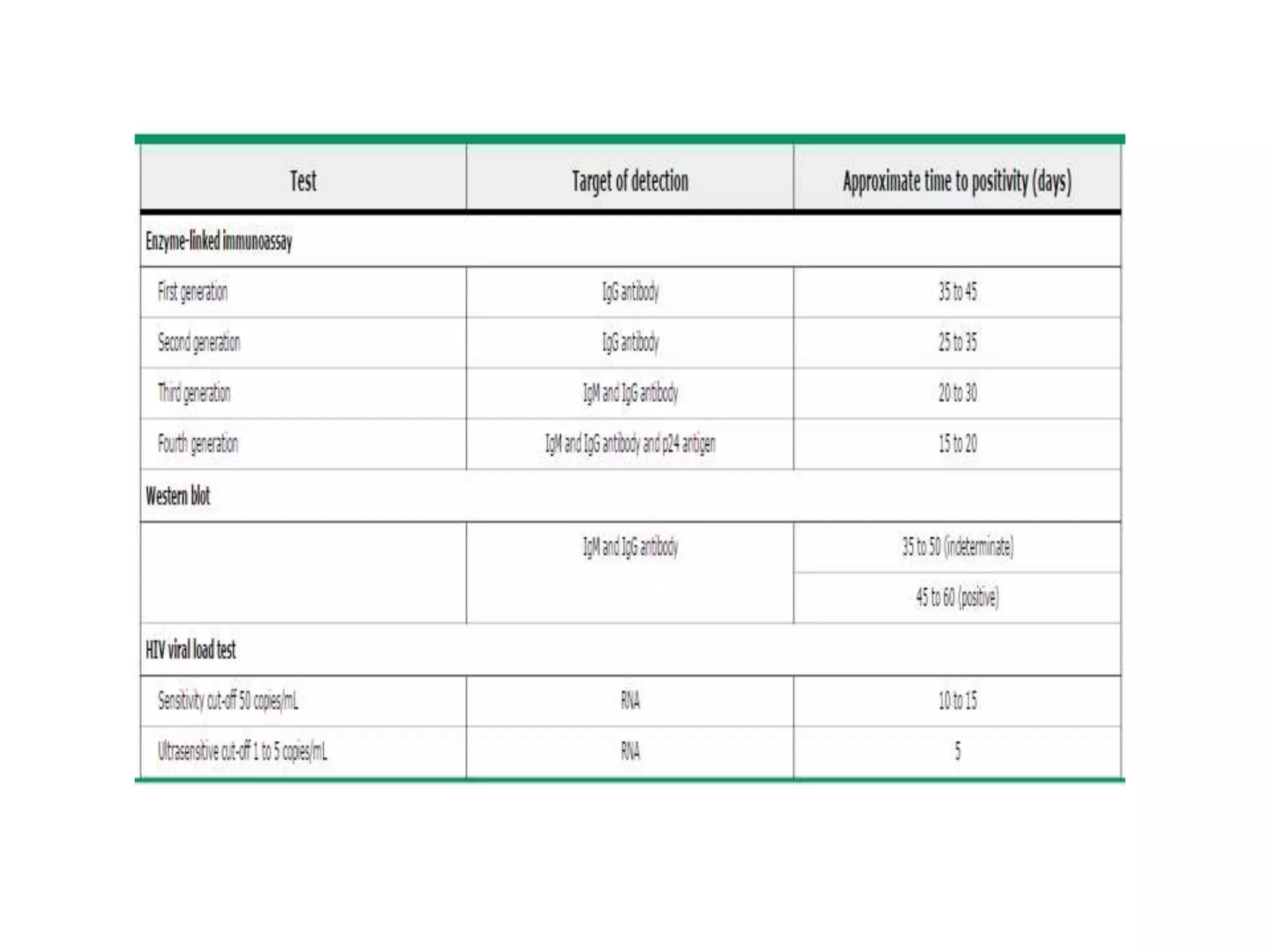
Detected 2 to 3 weeks after HIV infection
Detected about 6 days before antibody tests become
reactive
Used for:
Diagnosis of pediatric HIV-1 infections
Blood bank safety (high incidence countries)
HIV EIA
*reactive / non reactive
* reactive  repeat testing
FALSE +ve:
*autoimmune disorders
*multiple myloma
*vaccination(HBV,rabies)
*infections(malaria,dengue)
*multiparity
FALSE –ve
*window period
*immunosupression
*CVI
*replacement transfusion
*malignancy
*transplant
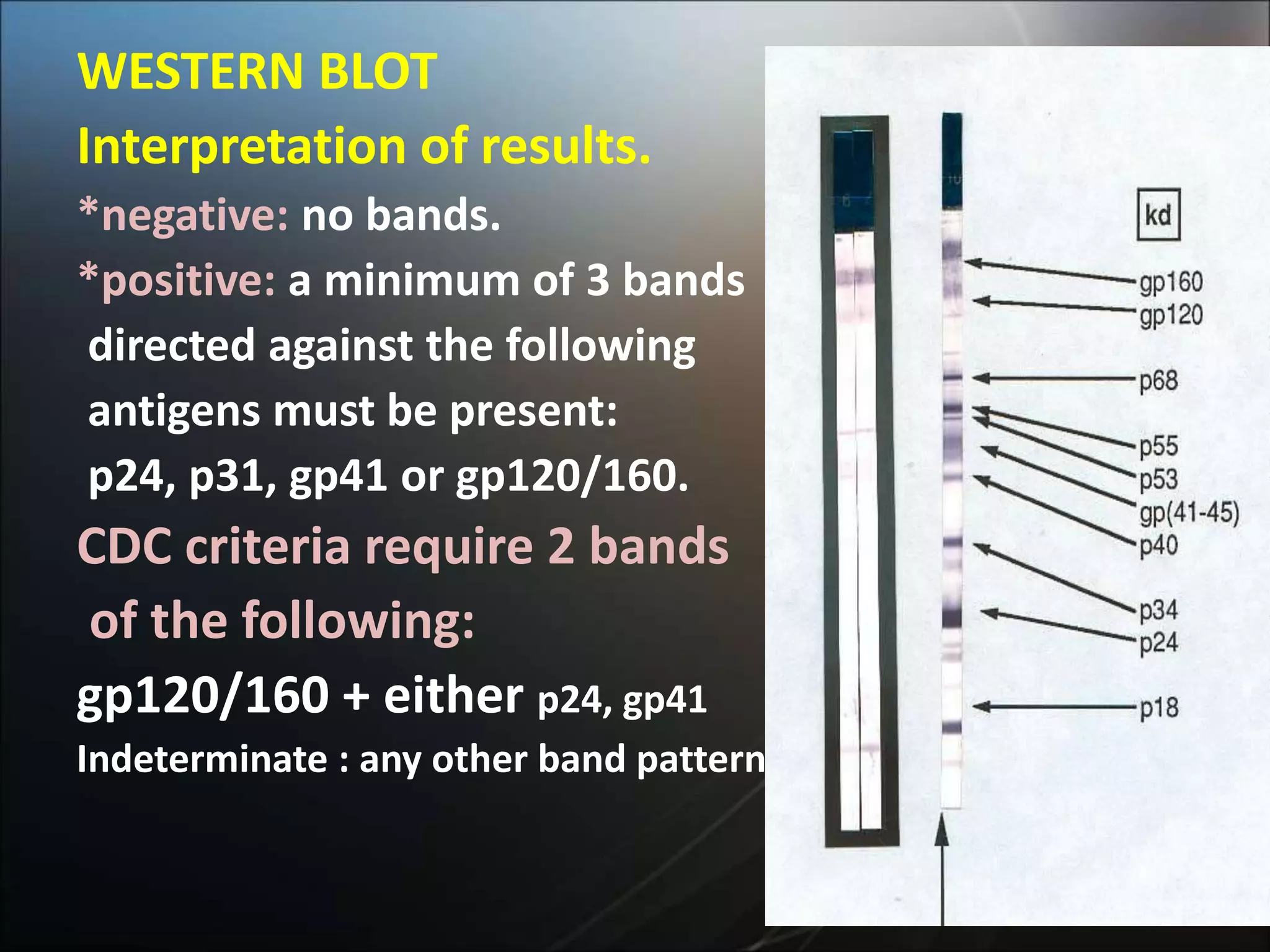
WESTERN BLOT
Interpretation of results.
*negative: no bands.
*positive: a minimum of 3 bands
directed against the following
antigens must be present:
p24, p31, gp41 or gp120/160.
CDC criteria require 2 bands
of the following:
gp120/160 + either p24, gp41
Indeterminate : any other band pattern
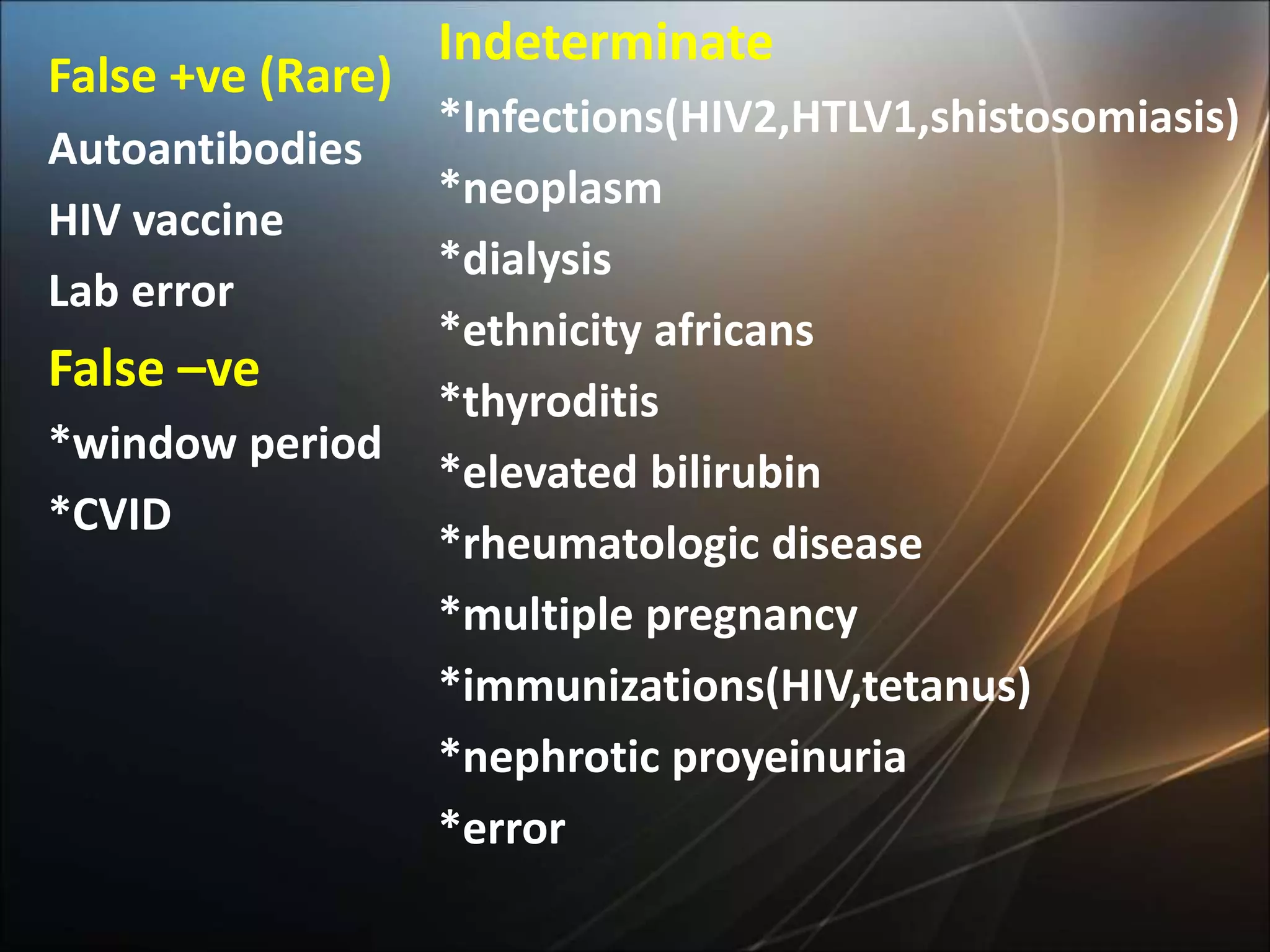
False +ve (Rare)
Autoantibodies
HIV vaccine
Lab error
False –ve
*window period
*CVID
Indeterminate
*Infections(HIV2,HTLV1,shistosomiasis)
*neoplasm
*dialysis
*ethnicity africans
*thyroditis
*elevated bilirubin
*rheumatologic disease
*multiple pregnancy
*immunizations(HIV,tetanus)
*nephrotic proyeinuria
*error
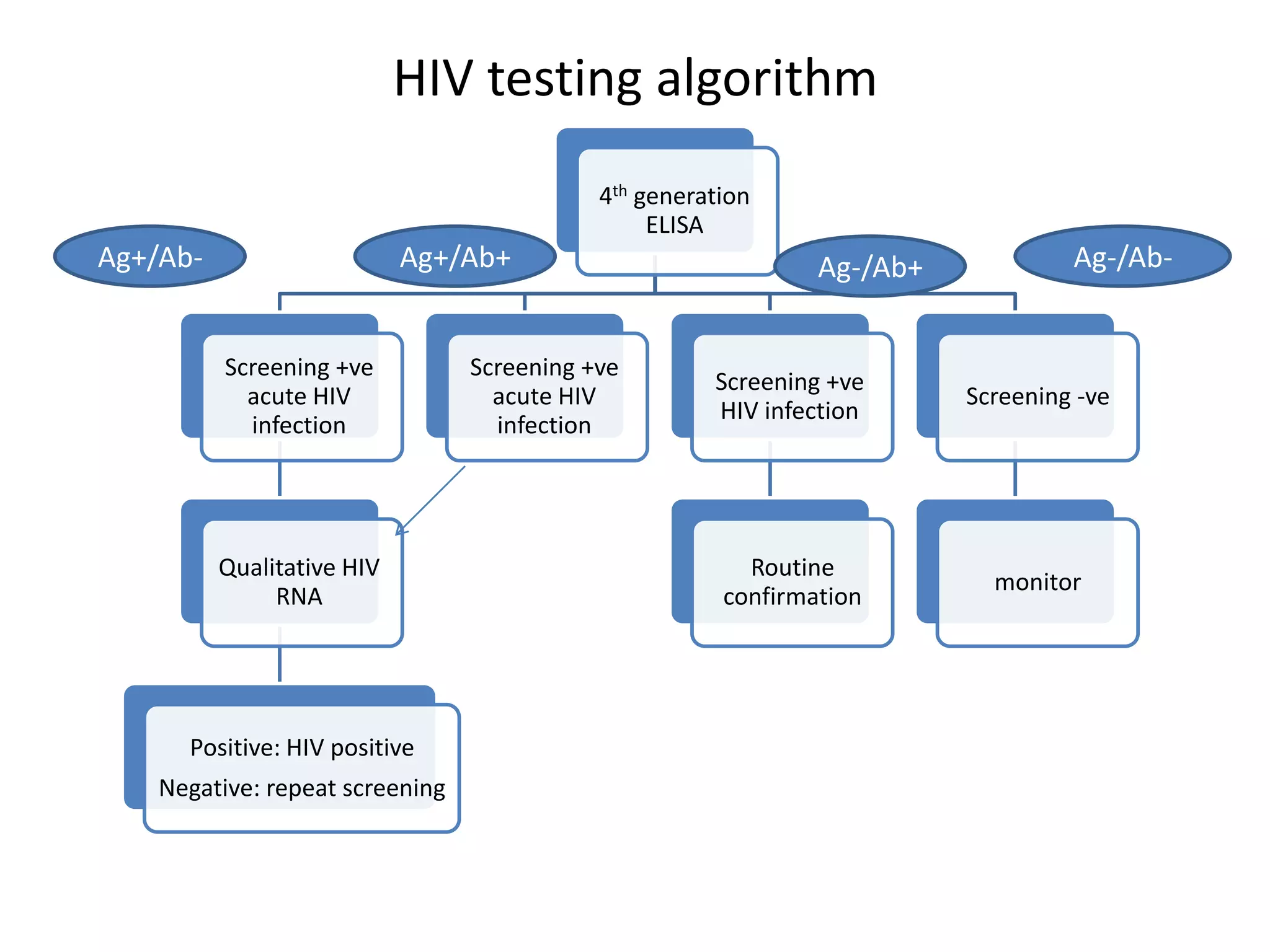
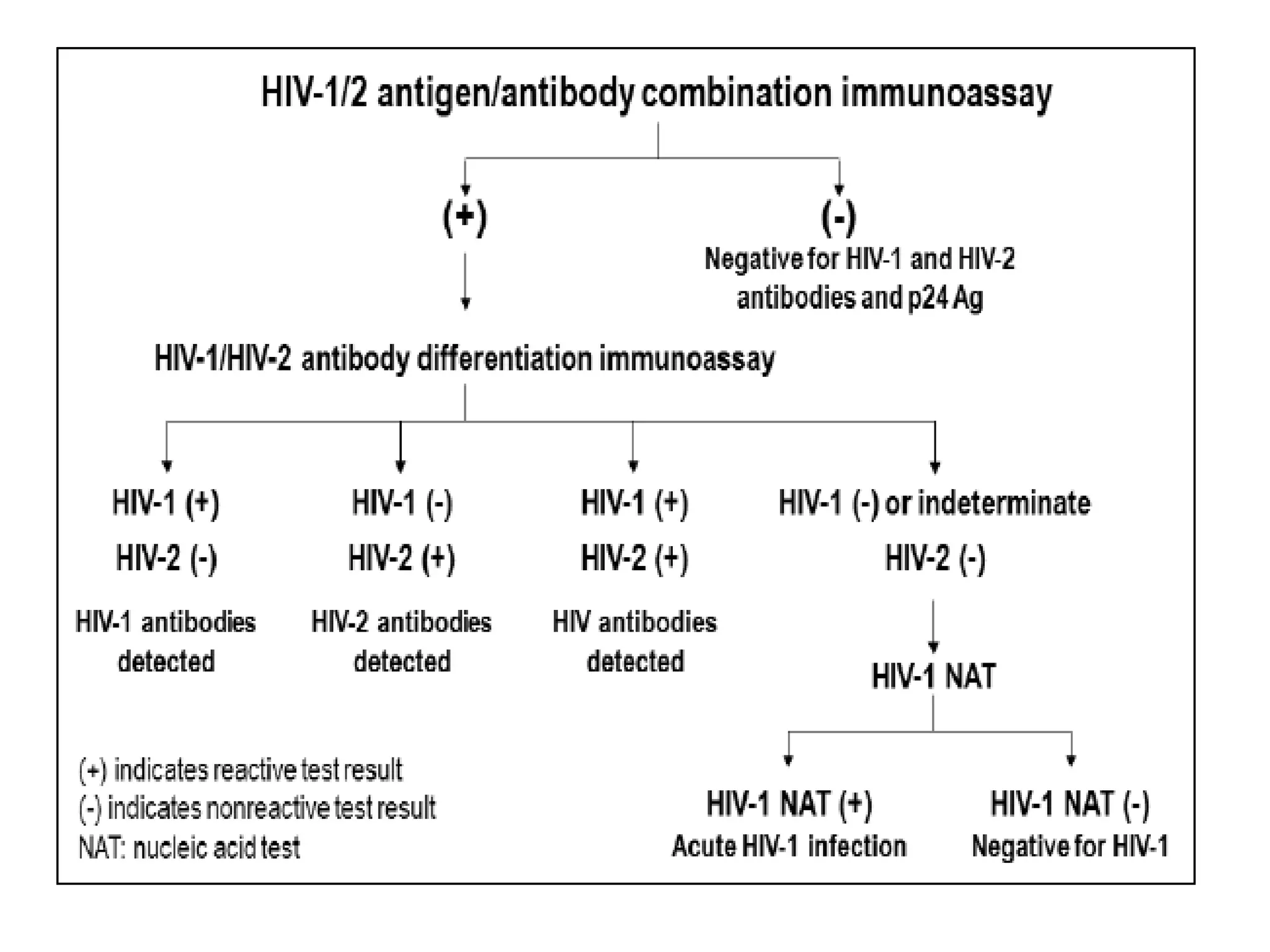
HIV testing algorithm
4th generation
ELISA
Screening +ve
acute HIV
infection
Qualitative HIV
RNA
Positive: HIV positive
Negative: repeat screening
Screening +ve
acute HIV
infection
Screening +ve
HIV infection
Routine
confirmation
Screening -ve
monitor
Ag+/Ab- Ag+/Ab+ Ag-/Ab-Ag-/Ab+
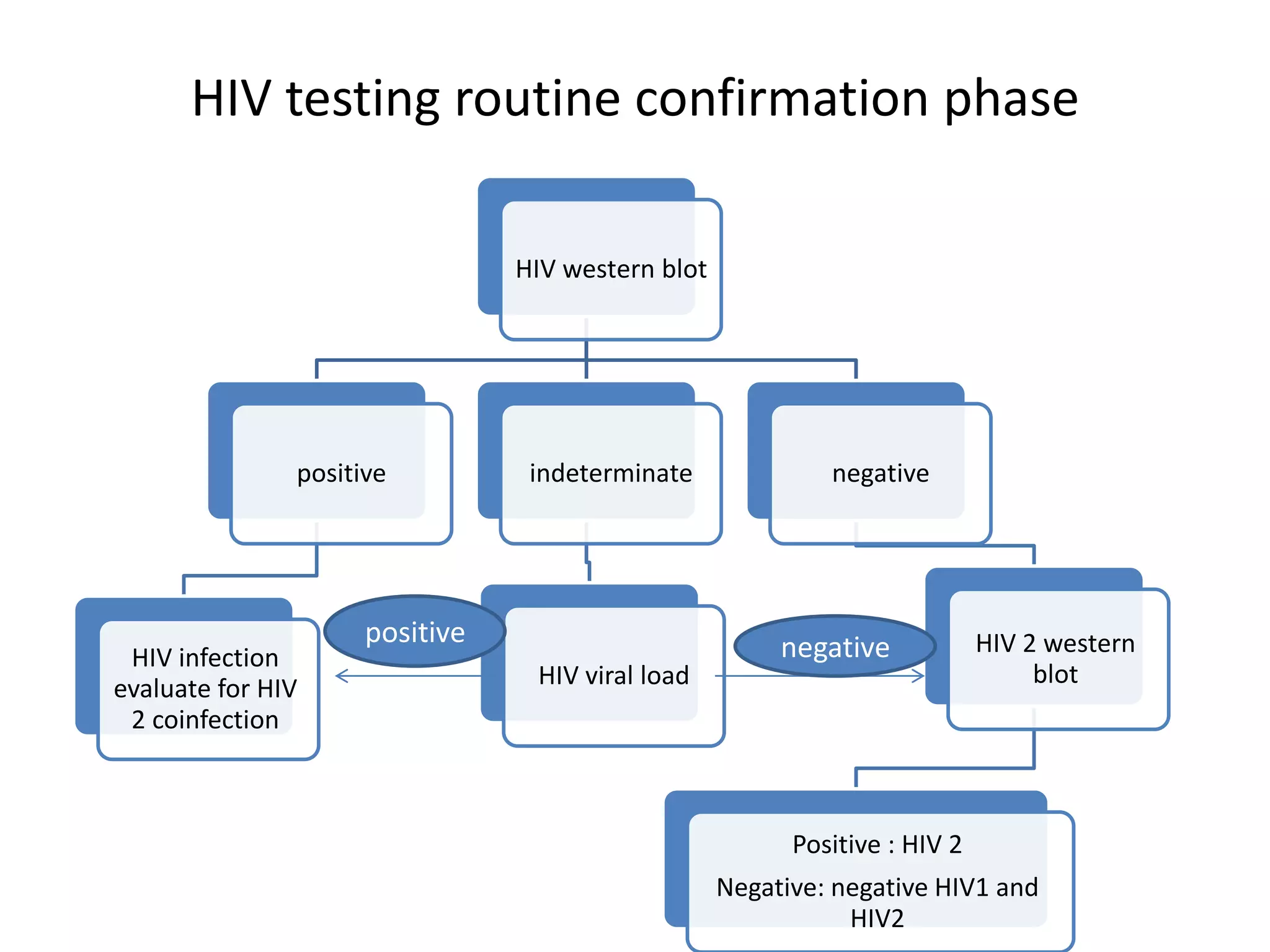
HIV testing routine confirmation phase
HIV western blot
positive
HIV infection
evaluate for HIV
2 coinfection
indeterminate
HIV viral load
negative
HIV 2 western
blot
Positive : HIV 2
Negative: negative HIV1 and
HIV2
positive negative
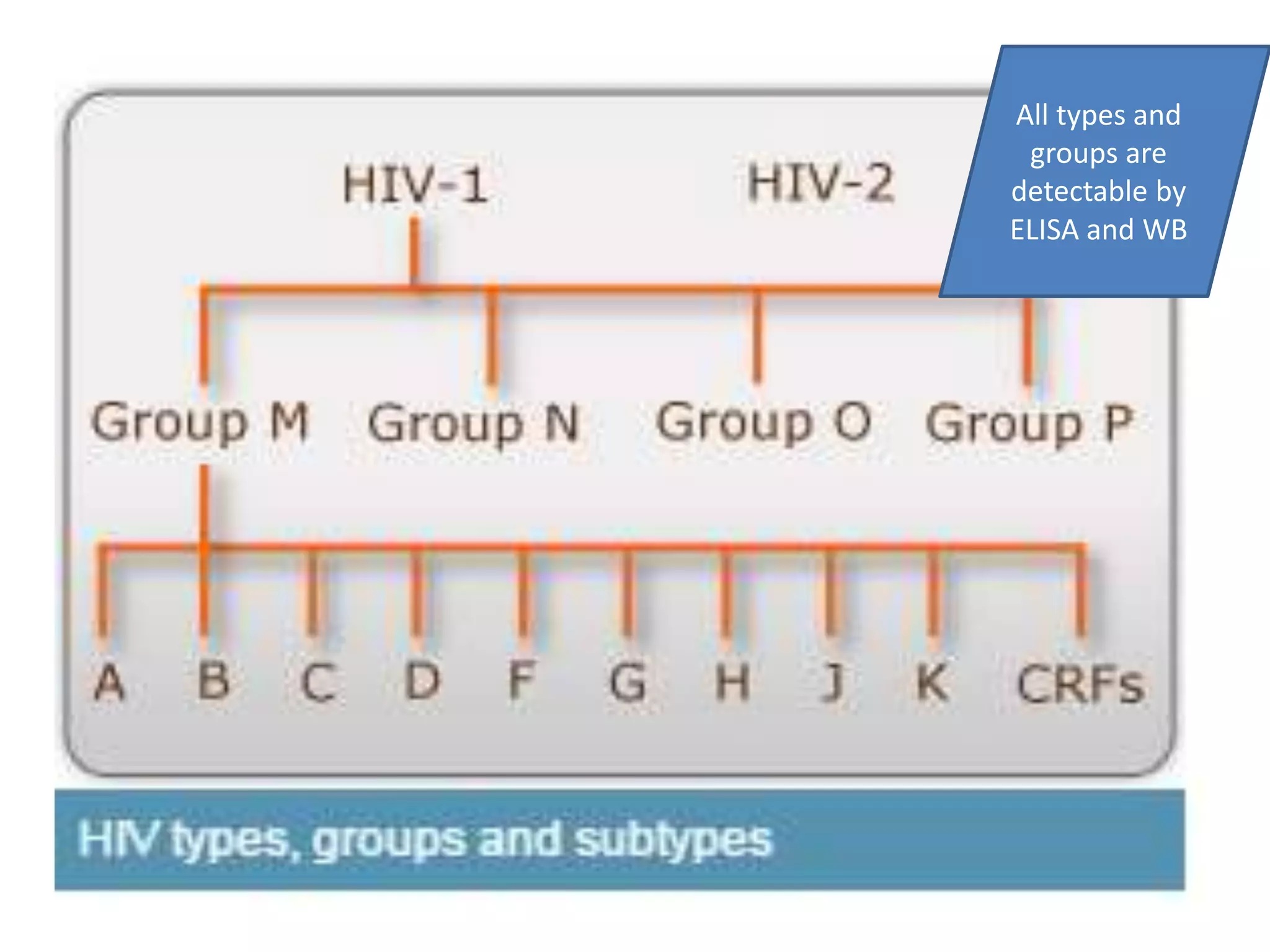
All types and
groups are
detectable by
ELISA and WB
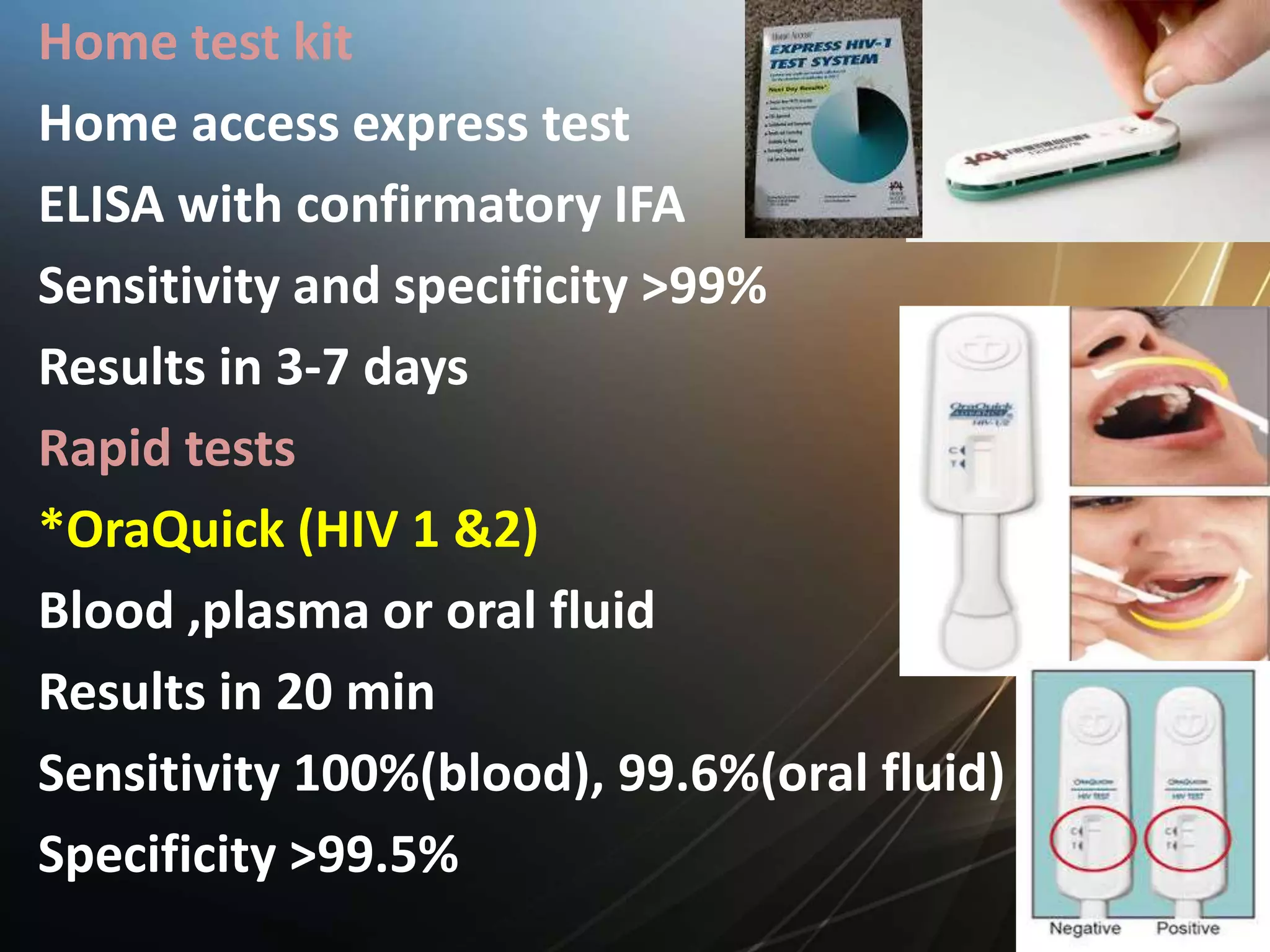
Home test kit
Home access express test
ELISA with confirmatory IFA
Sensitivity and specificity >99%
Results in 3-7 days
Rapid tests
*OraQuick (HIV 1 &2)
Blood ,plasma or oral fluid
Results in 20 min
Sensitivity 100%(blood), 99.6%(oral fluid)
Specificity >99.5%
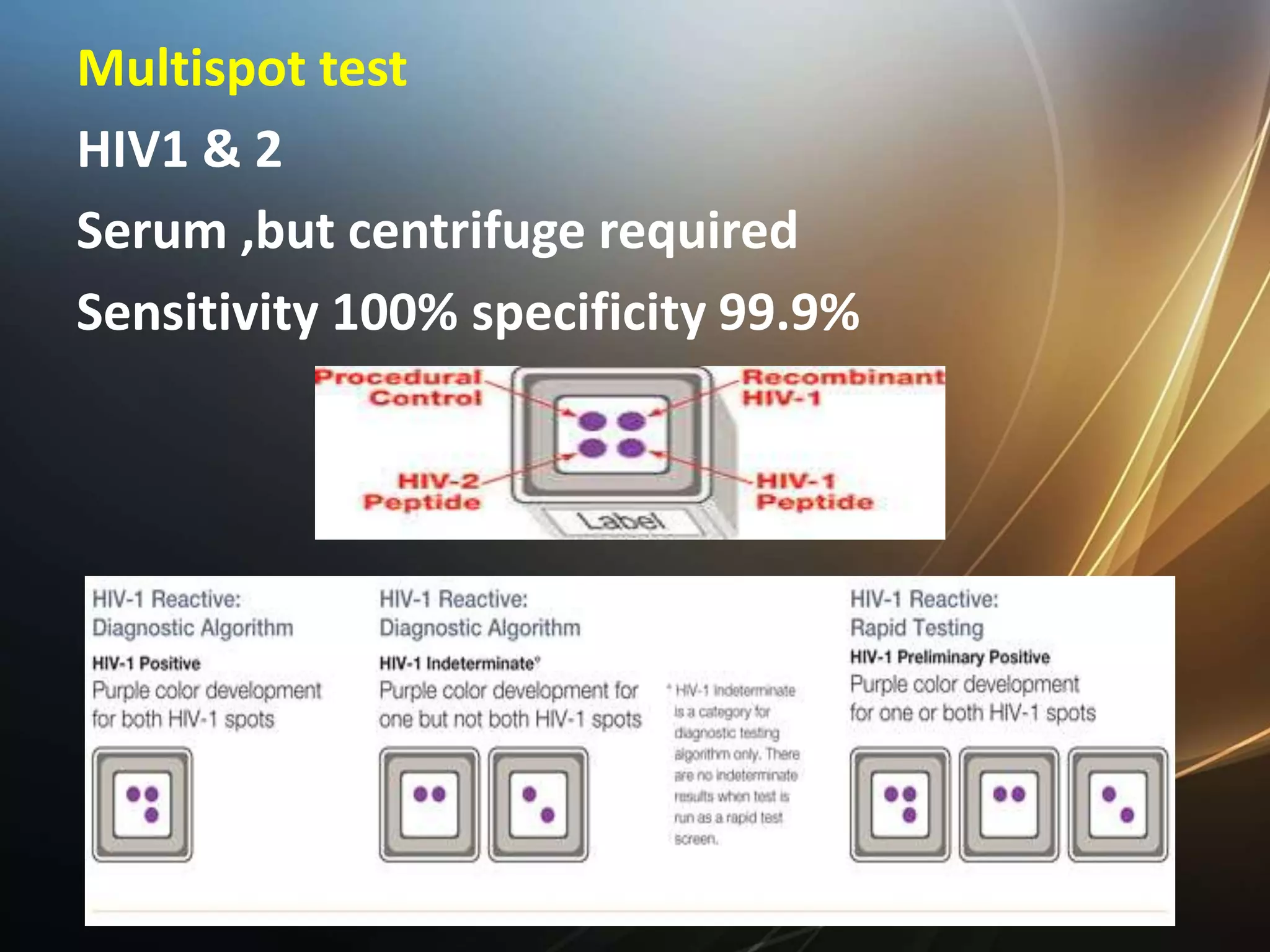
Multispot test
HIV1 & 2
Serum ,but centrifuge required
Sensitivity 100% specificity 99.9%
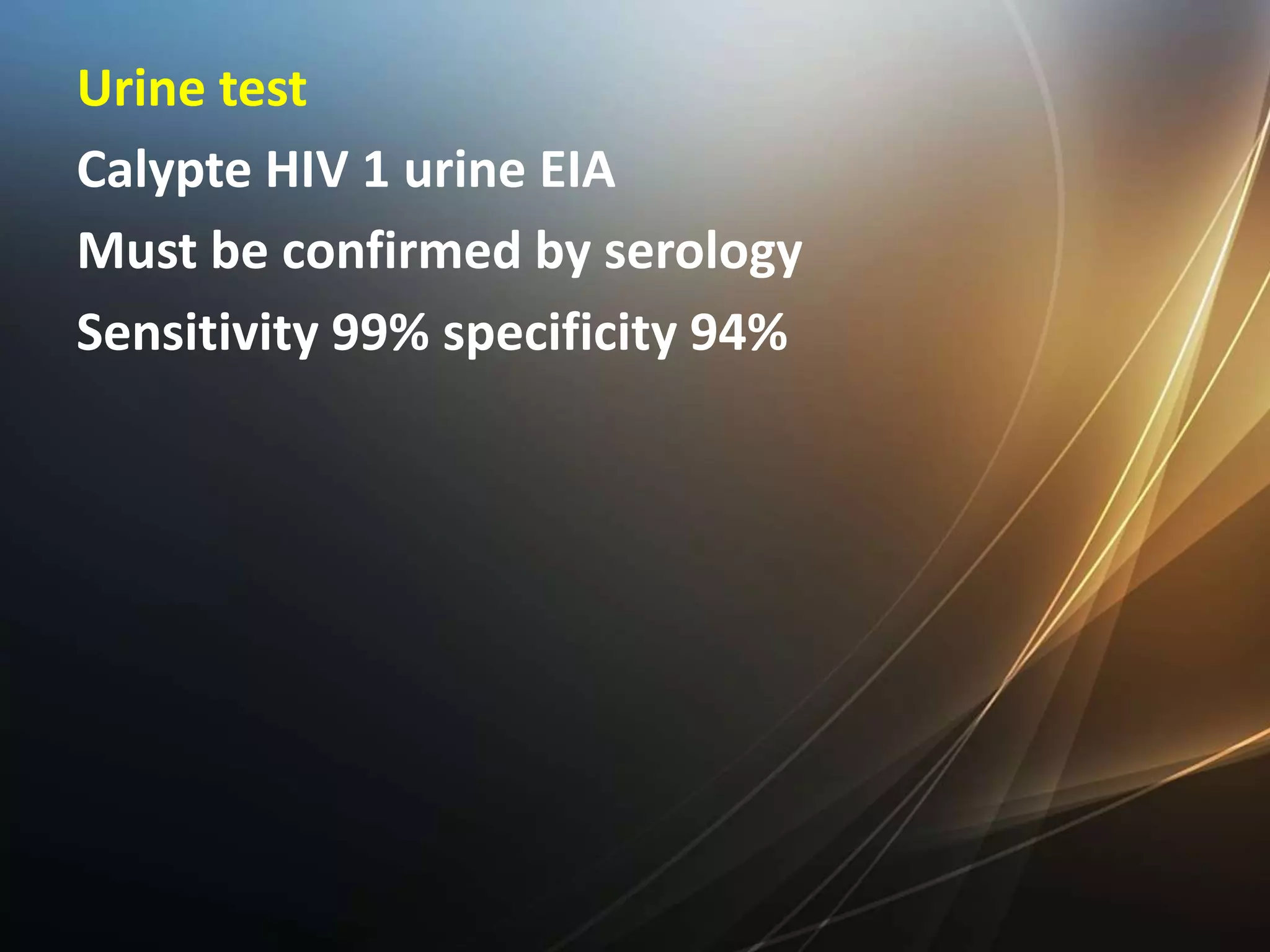
Urine test
Calypte HIV 1 urine EIA
Must be confirmed by serology
Sensitivity 99% specificity 94%
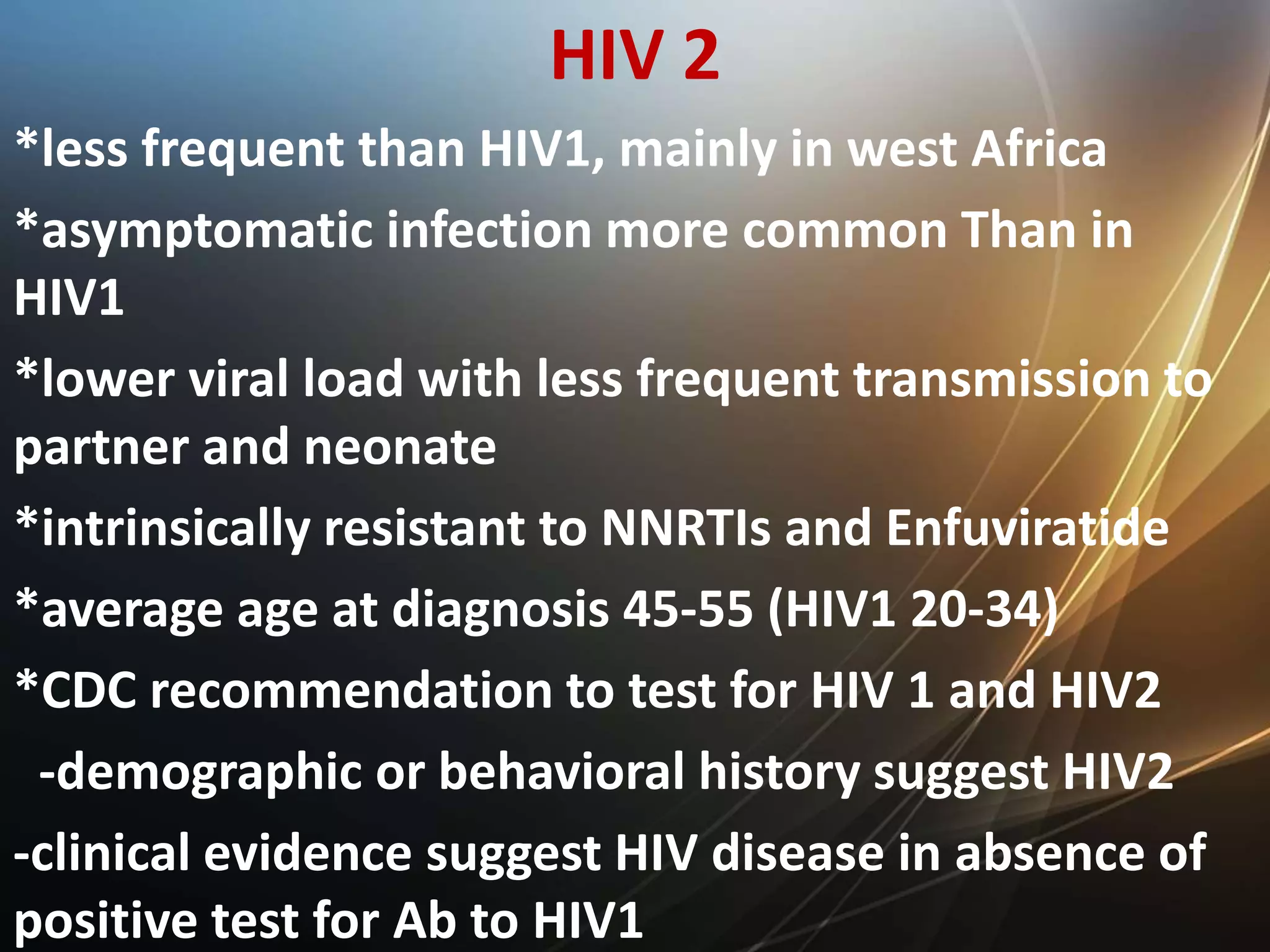
HIV 2
*less frequent than HIV1, mainly in west Africa
*asymptomatic infection more common Than in
HIV1
*lower viral load with less frequent transmission to
partner and neonate
*intrinsically resistant to NNRTIs and Enfuviratide
*average age at diagnosis 45-55 (HIV1 20-34)
*CDC recommendation to test for HIV 1 and HIV2
-demographic or behavioral history suggest HIV2
-clinical evidence suggest HIV disease in absence of
positive test for Ab to HIV1
•treatment
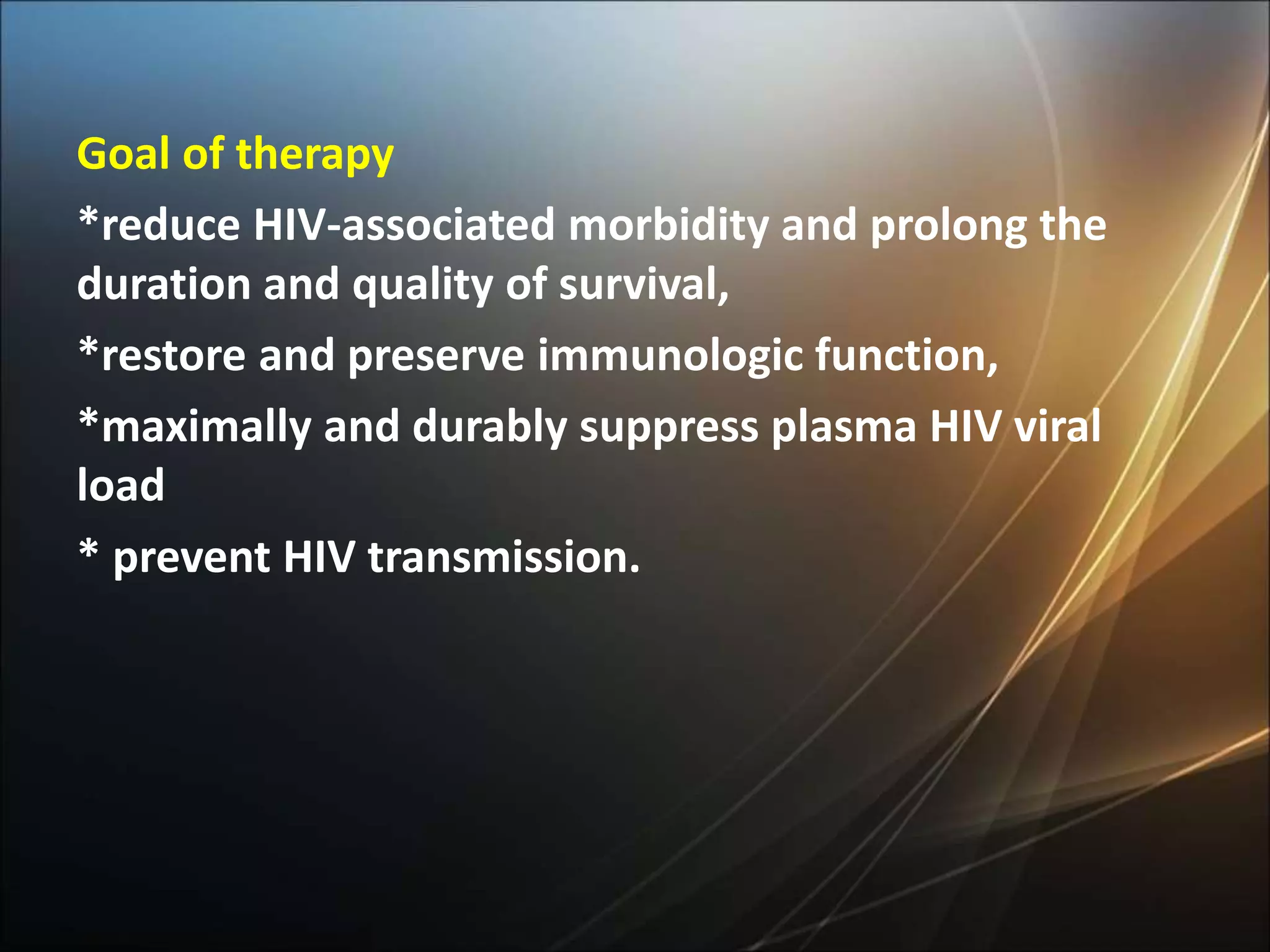
Goal of therapy
*reduce HIV-associated morbidity and prolong the
duration and quality of survival,
*restore and preserve immunologic function,
*maximally and durably suppress plasma HIV viral
load
* prevent HIV transmission.
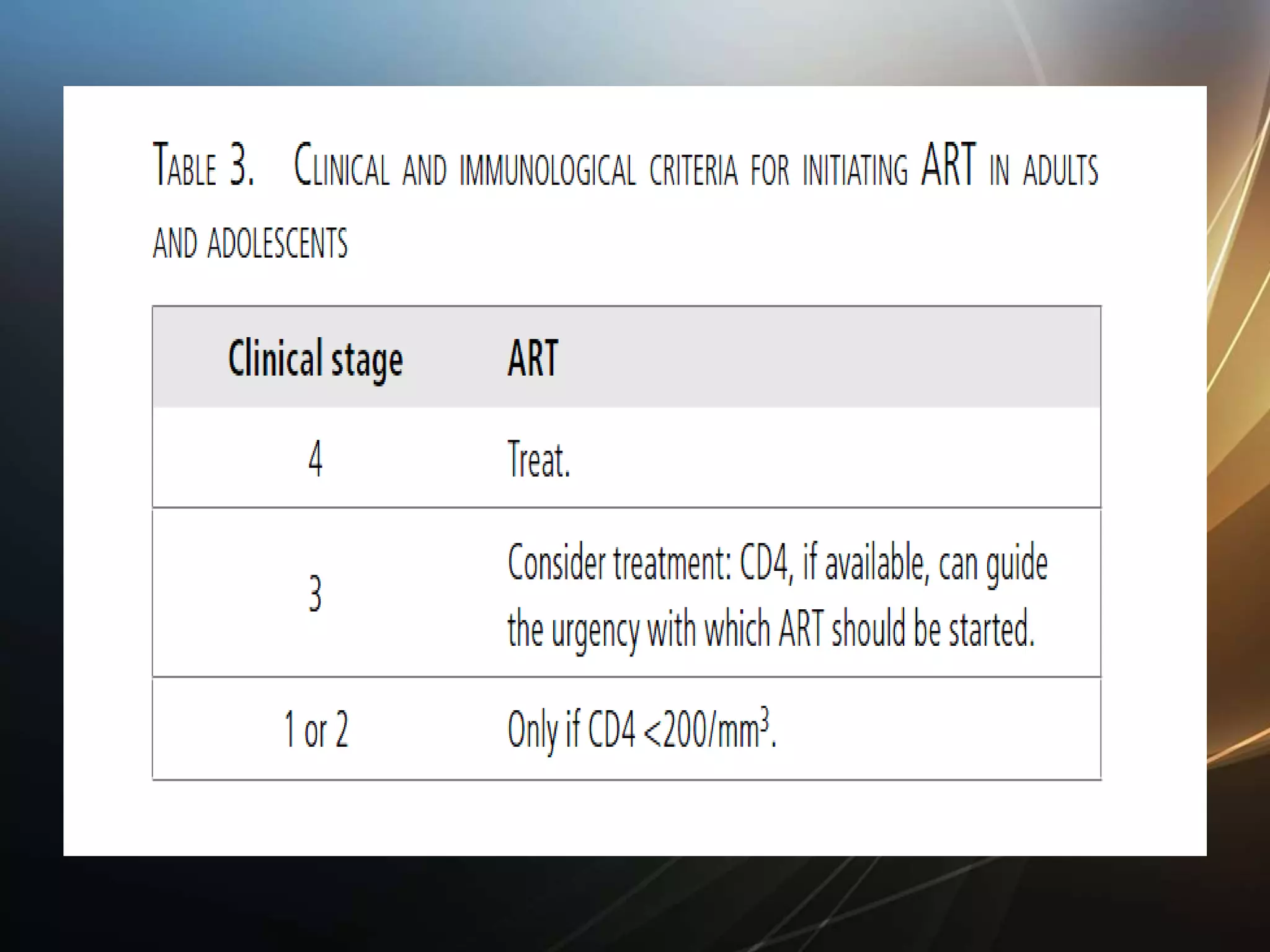
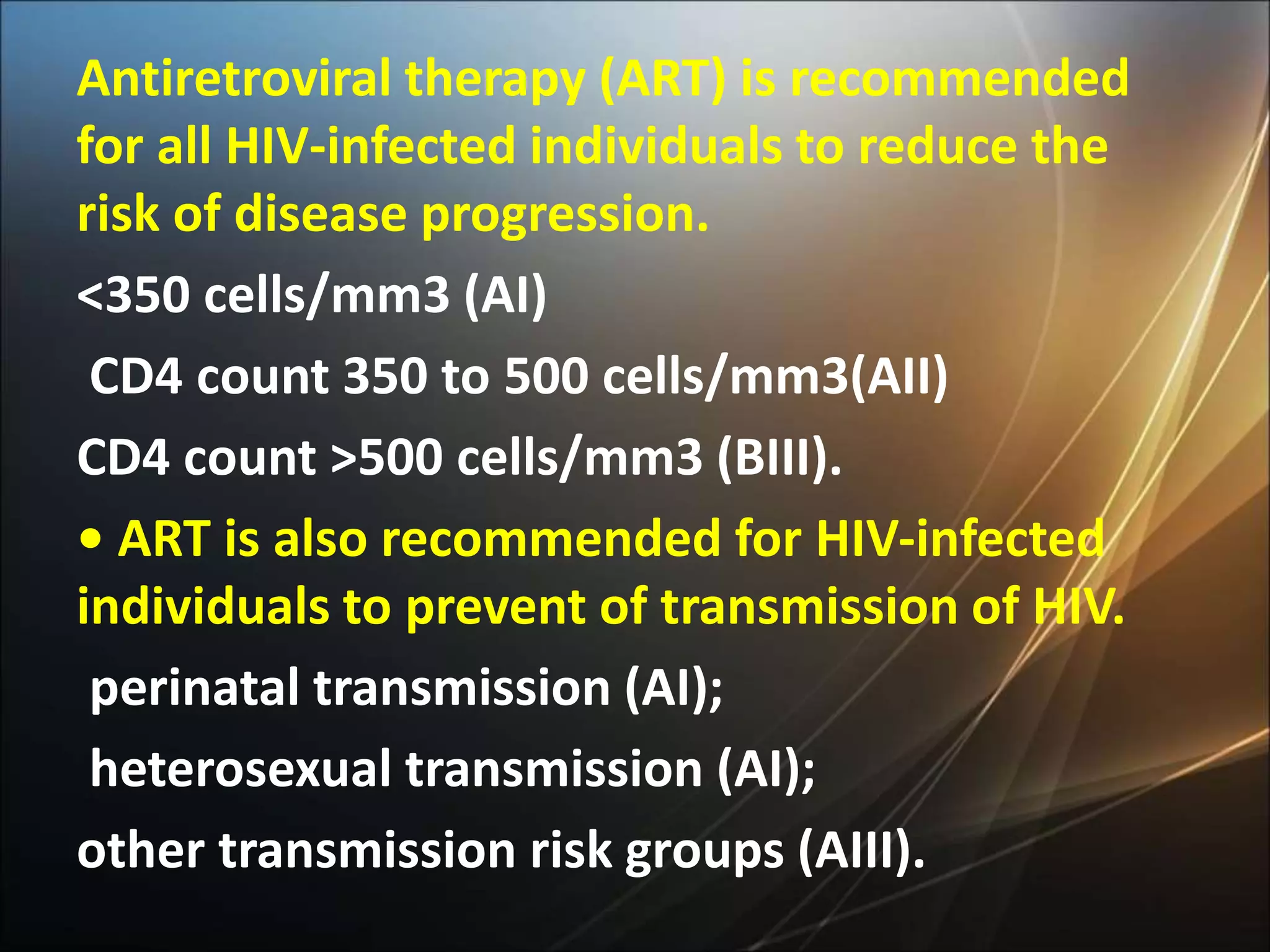
Antiretroviral therapy (ART) is recommended
for all HIV-infected individuals to reduce the
risk of disease progression.
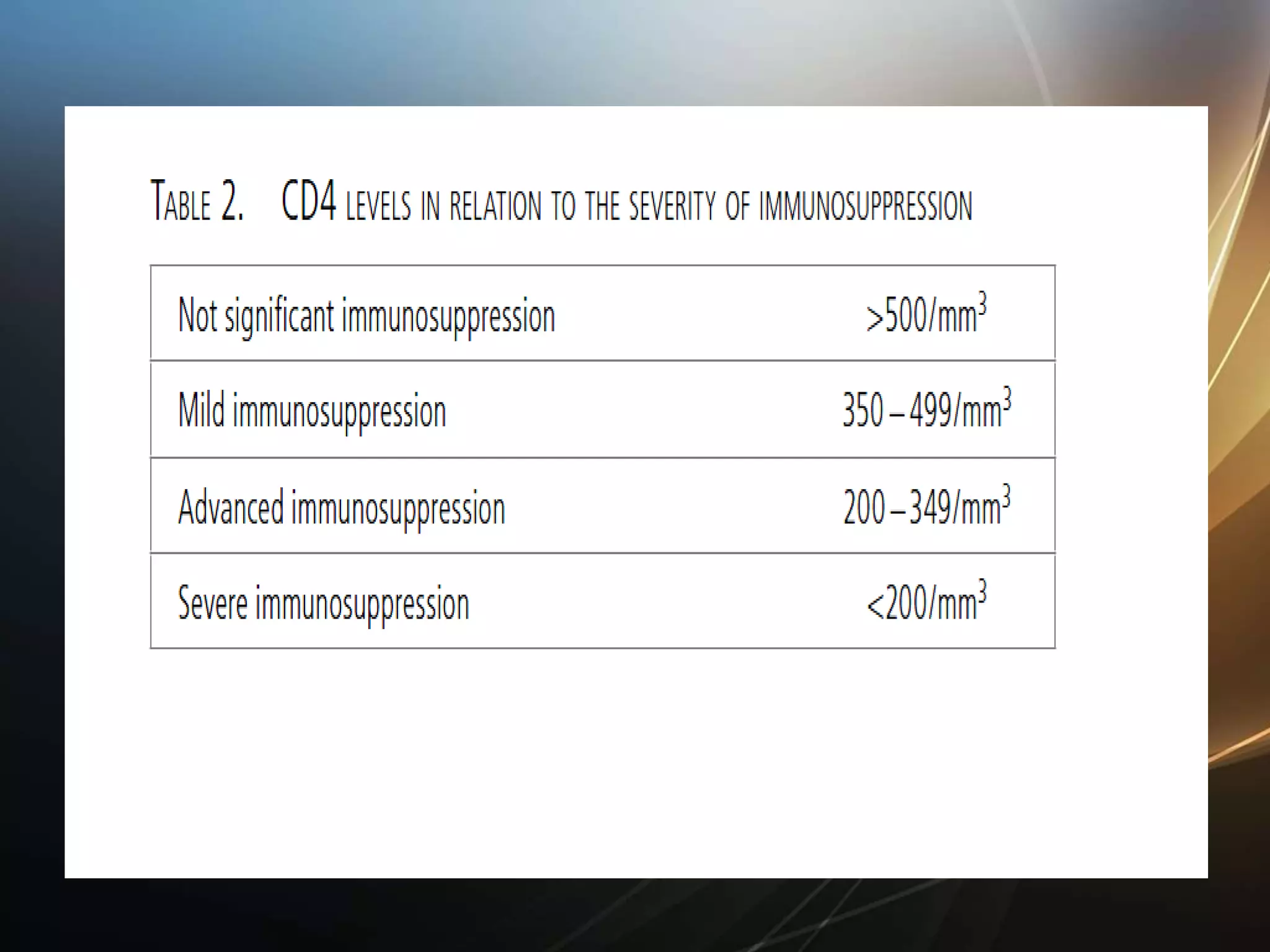
<350 cells/mm3 (AI)
CD4 count 350 to 500 cells/mm3(AII)
CD4 count >500 cells/mm3 (BIII).
• ART is also recommended for HIV-infected
individuals to prevent of transmission of HIV.
perinatal transmission (AI);
heterosexual transmission (AI);
other transmission risk groups (AIII).
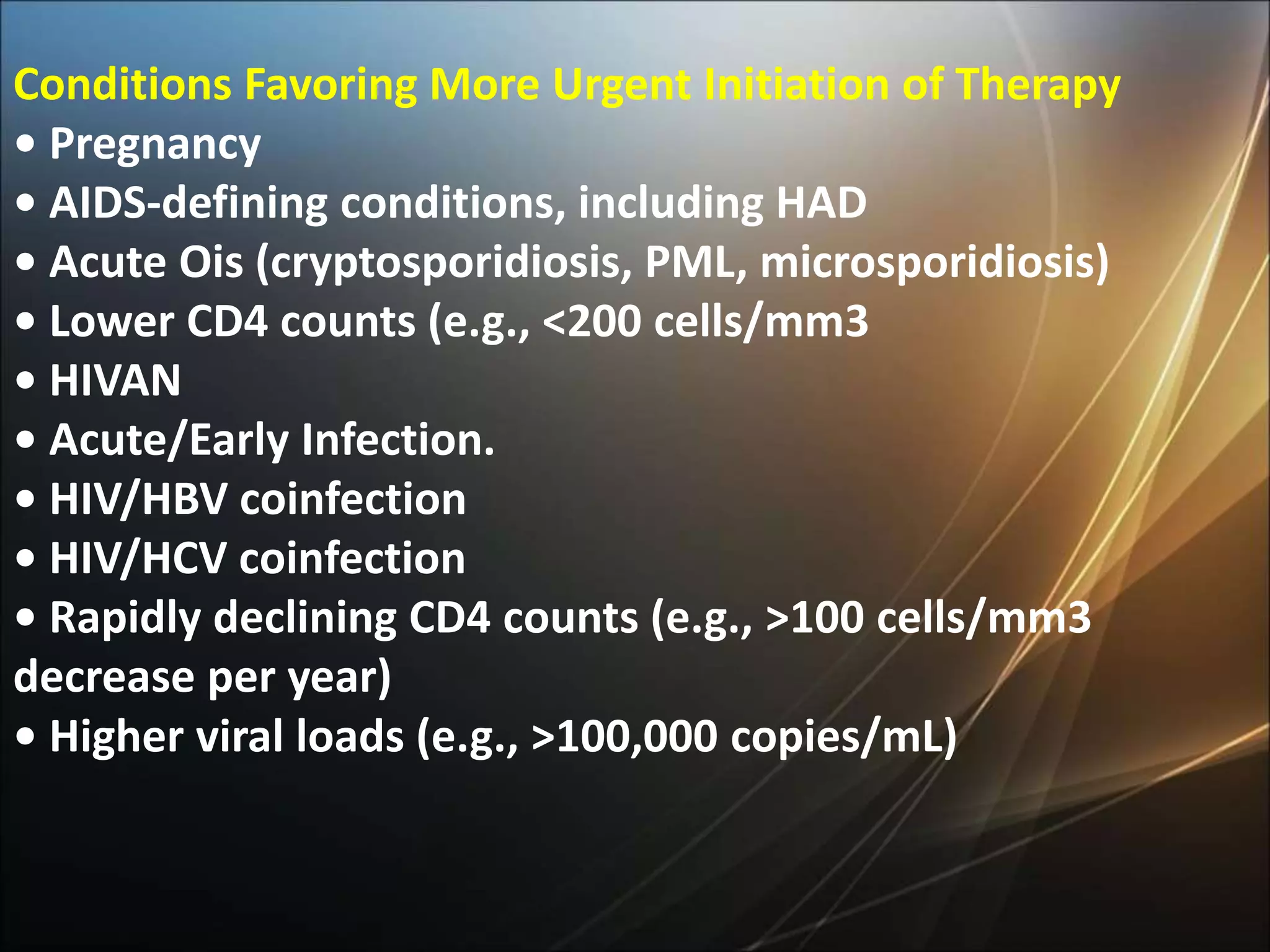
Conditions Favoring More Urgent Initiation of Therapy
• Pregnancy
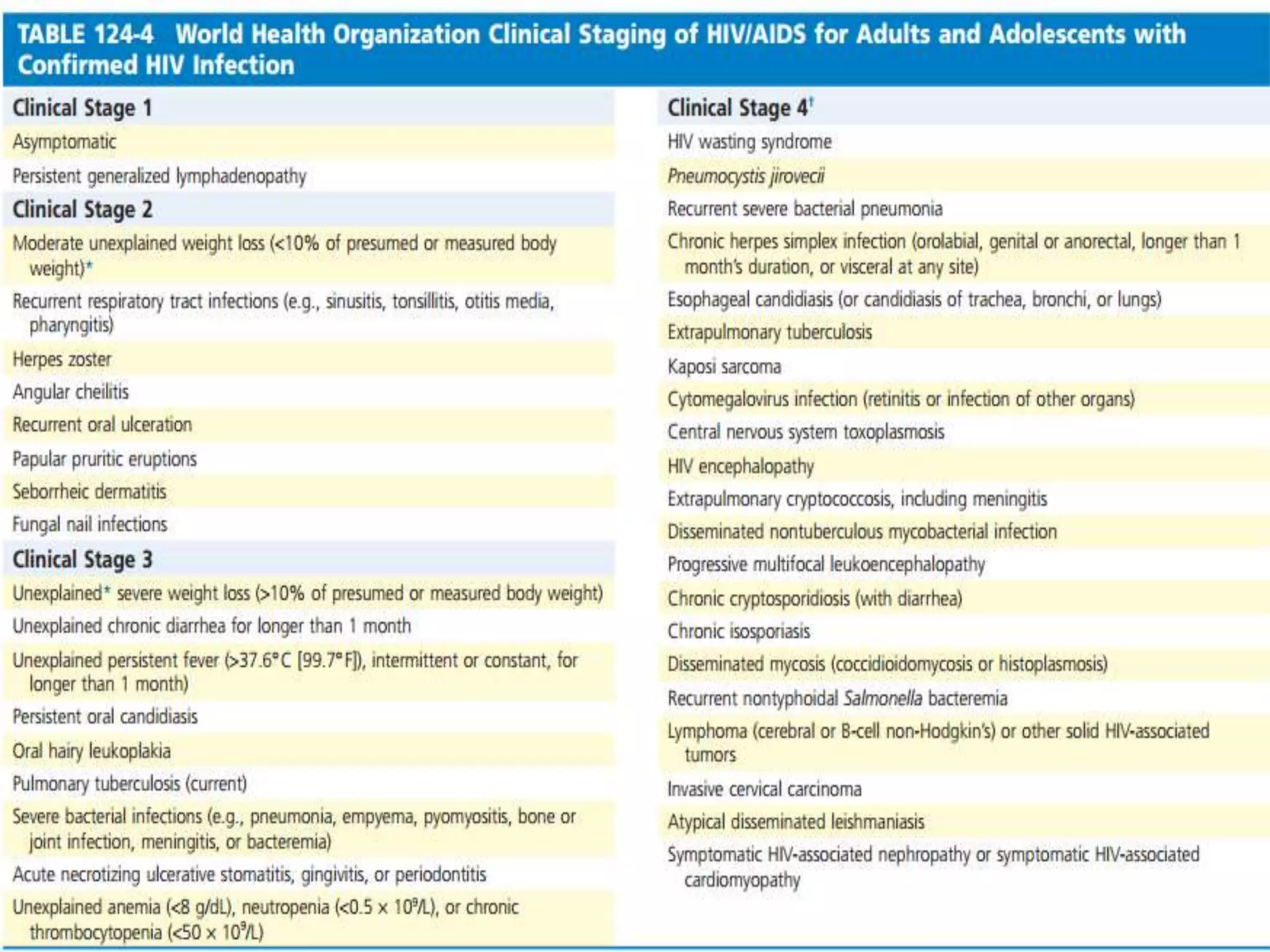
• AIDS-defining conditions, including HAD
• Acute Ois (cryptosporidiosis, PML, microsporidiosis)
• Lower CD4 counts (e.g., <200 cells/mm3
• HIVAN
• Acute/Early Infection.
• HIV/HBV coinfection
• HIV/HCV coinfection
• Rapidly declining CD4 counts (e.g., >100 cells/mm3
decrease per year)
• Higher viral loads (e.g., >100,000 copies/mL)
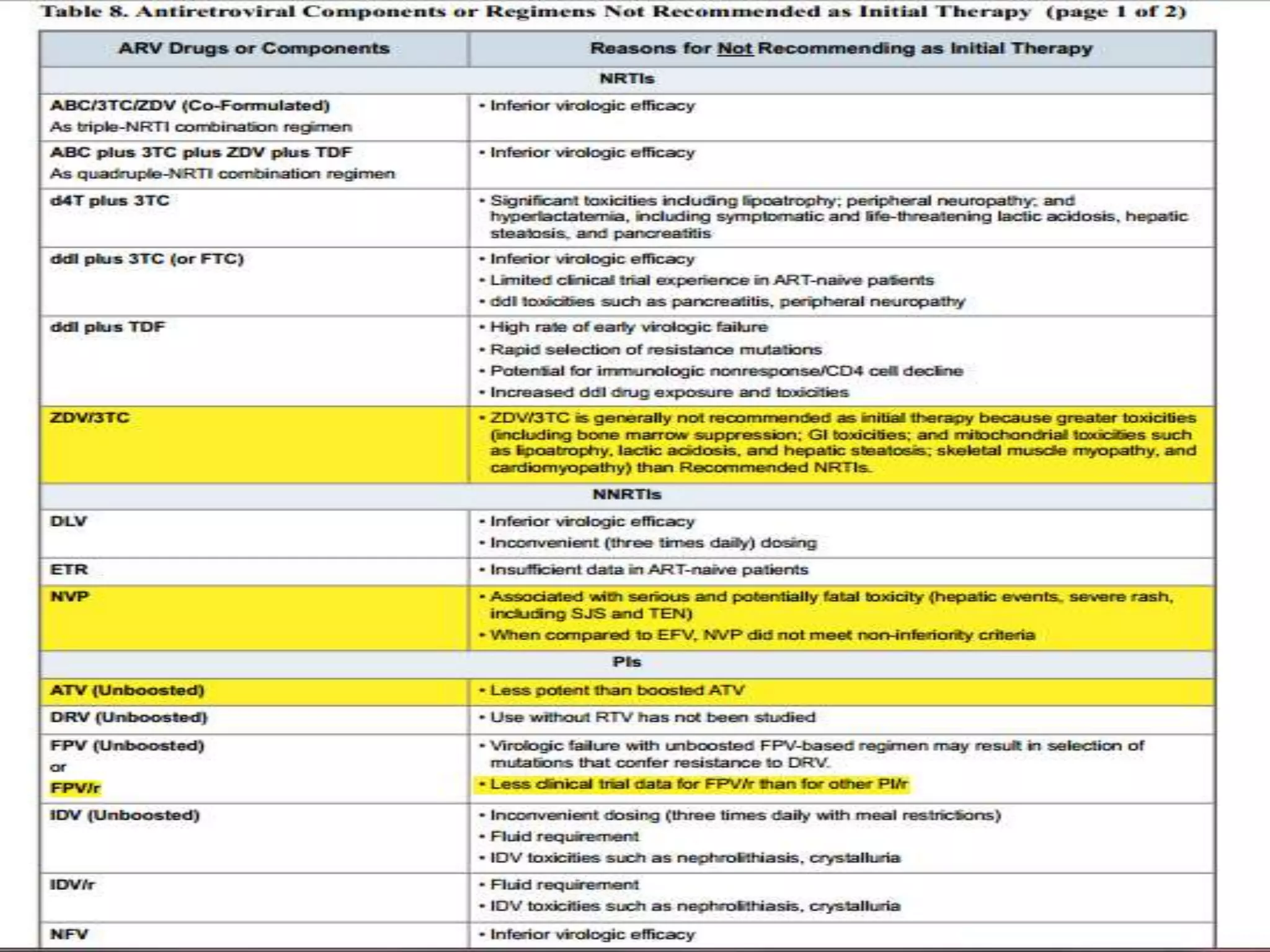
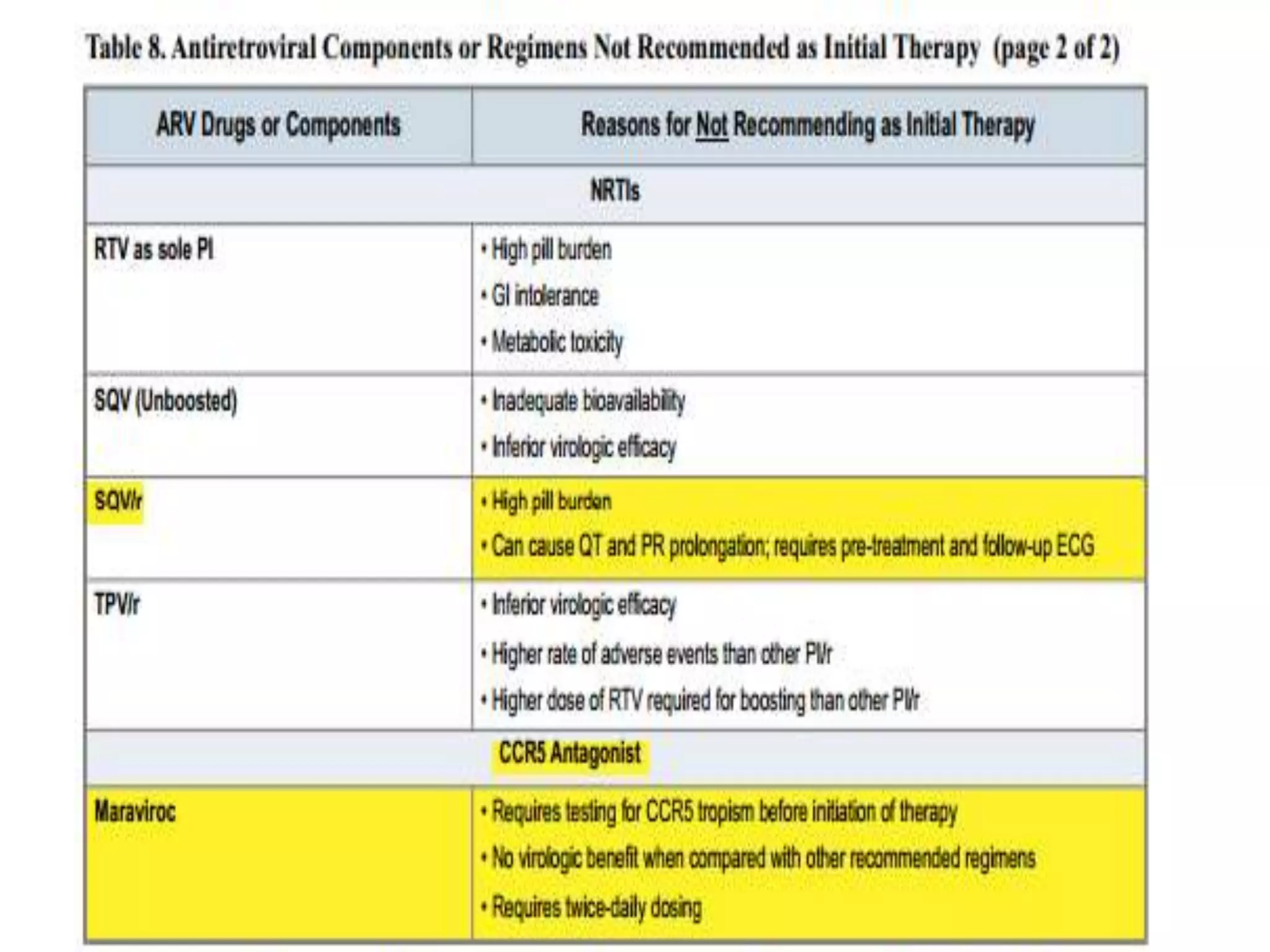
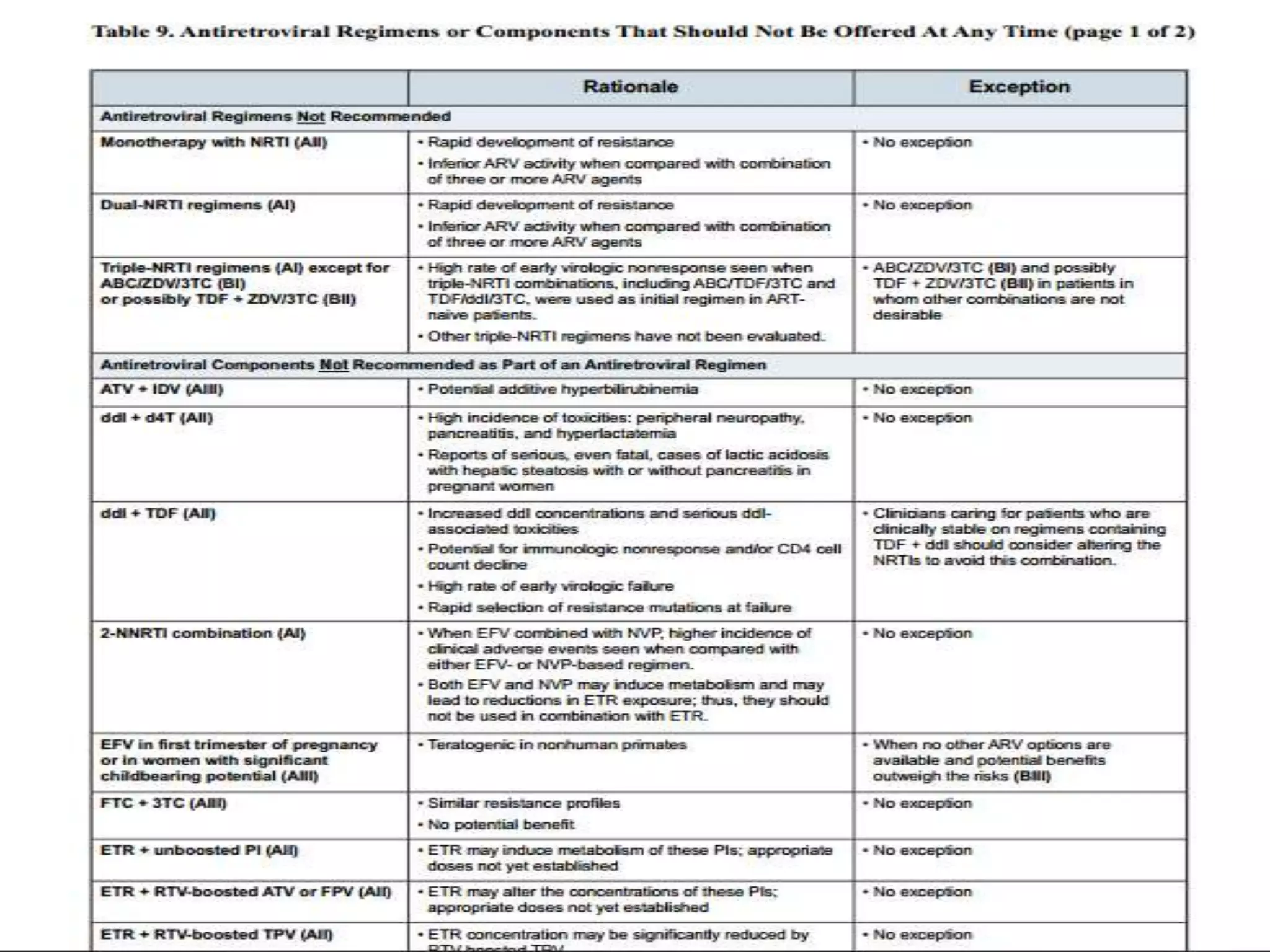
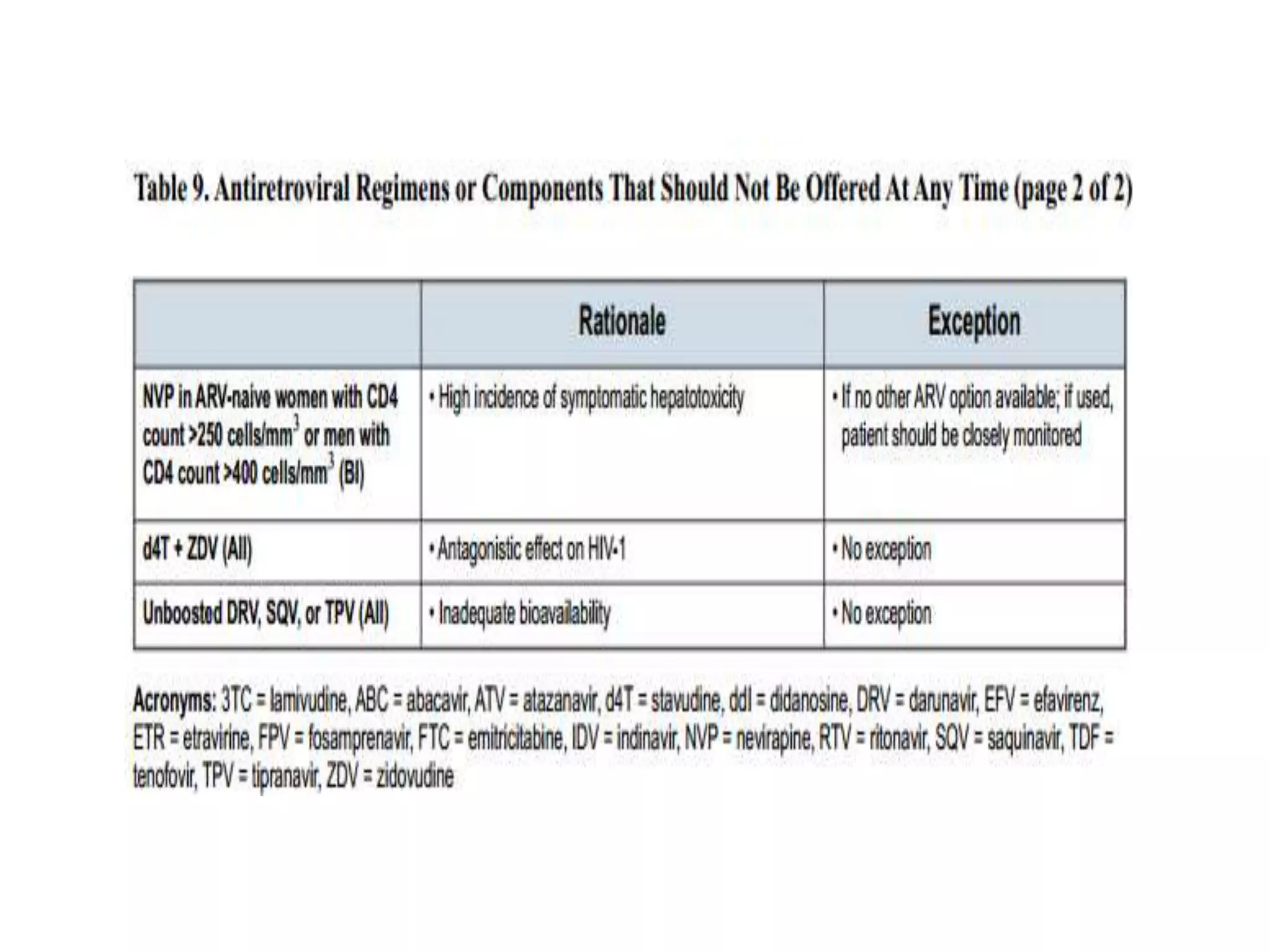
What to start??
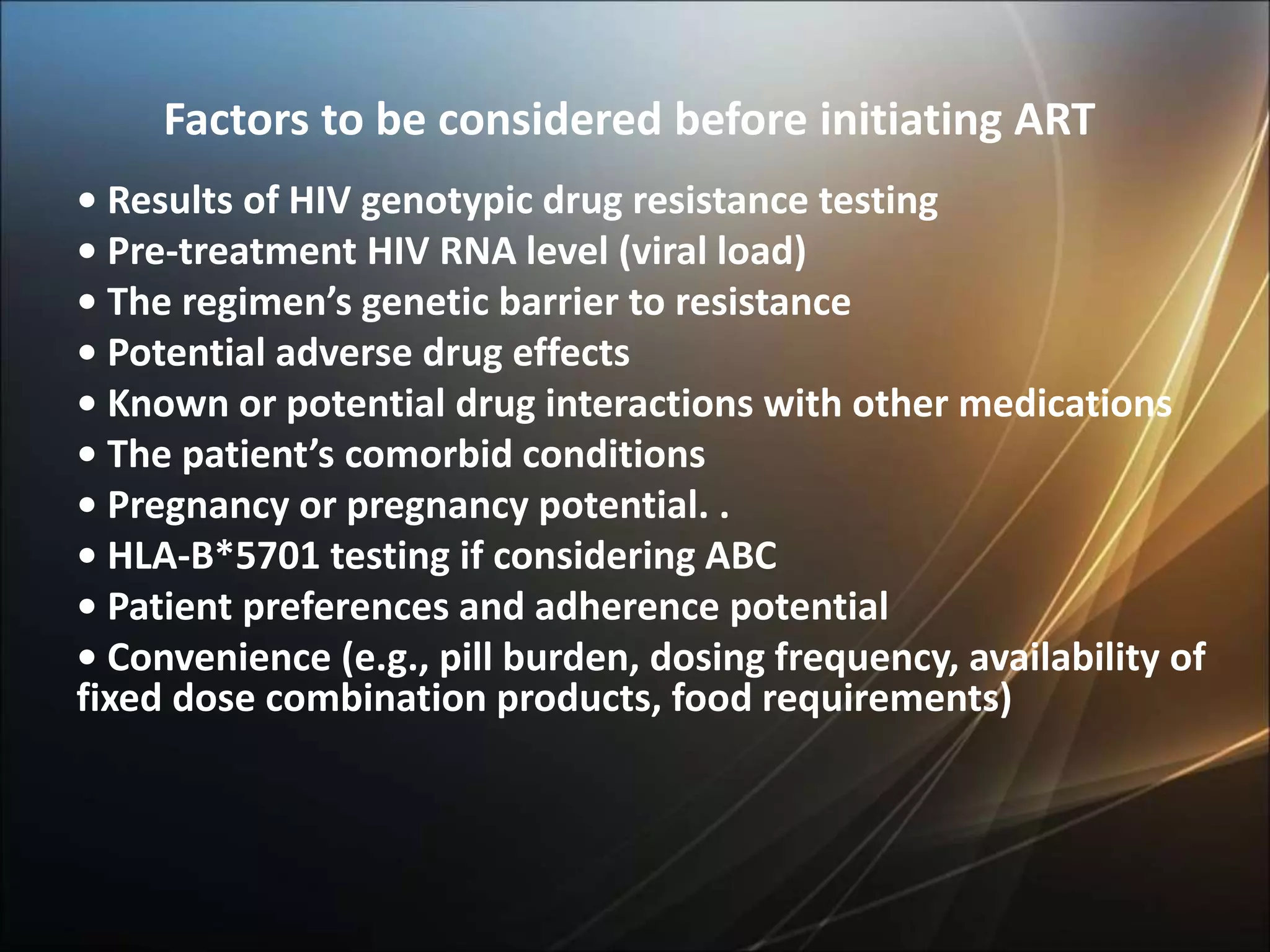
Factors to be considered before initiating ART
• Results of HIV genotypic drug resistance testing
• Pre-treatment HIV RNA level (viral load)
• The regimen’s genetic barrier to resistance
• Potential adverse drug effects
• Known or potential drug interactions with other medications
• The patient’s comorbid conditions
• Pregnancy or pregnancy potential. .
• HLA-B*5701 testing if considering ABC
• Patient preferences and adherence potential
• Convenience (e.g., pill burden, dosing frequency, availability of
fixed dose combination products, food requirements)
Response to ART
*clinical response
*virologic response
*immunologic response
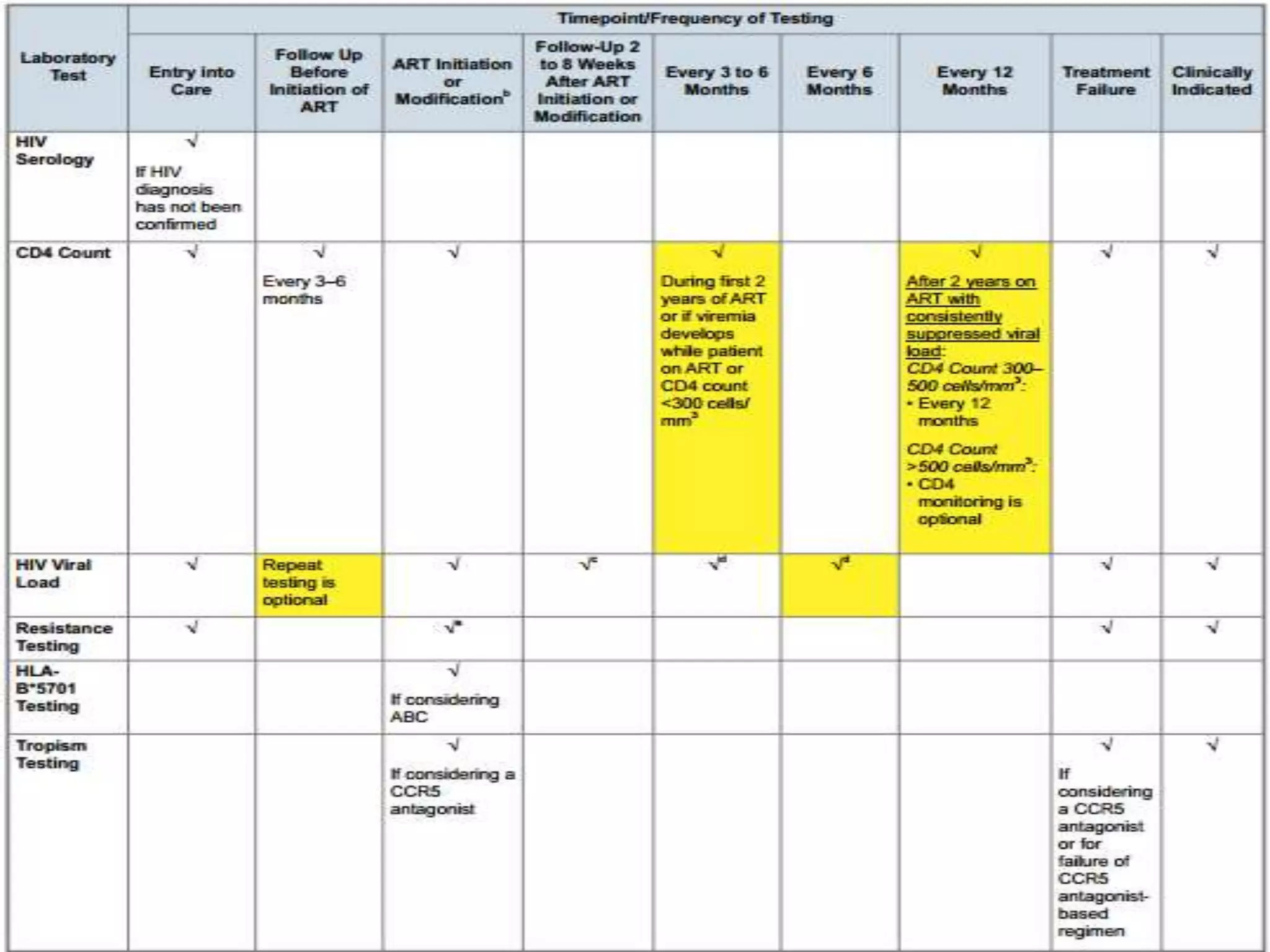
*VL should be decreased by >1 log by 2-8 weeks of
starting the ART
Predictors of virologic success include:
• high potency of ARV regimen
• excellent adherence to treatment regimen
• low baseline viremia
• higher baseline CD4 count (>200 cells/mm3)
• rapid reduction of viremia in response to treatment
Incomplete Virologic Response: Two consecutive plasma
HIV RNA levels ≥200 copies/mL after 24 weeks of ART.
Depend on Baseline HIV RNA and the selected regimens
Virologic Rebound: Confirmed HIV RNA ≥200 copies/mL
after virologic suppression.
Virologic Blip: After virologic suppression, an isolated
detectable HIV RNA level that is followed by a
return to virologic suppression
*virologic failure: confirmed VL > 200 after 24
weeks of starting ART
Patient-Related Factors:
• Higher pretreatment or baseline HIV RNA level
• Lower pretreatment or nadir CD4 T-cell count
• Comorbidities (e.g., active substance abuse, psychiatric
disease, neurocognitive deficits)
• Presence of drug-resistant virus, either transmitted or
acquired
• Prior treatment failure
• Incomplete medication adherence and missed clinic
appointments
ARV Regimen-Related Factors:
• Drug adverse effects and toxicities
• Suboptimal pharmacokinetics (variable absorption,
metabolism, or, theoretically, penetration into
reservoirs)
• Suboptimal virologic potency
• Prior exposure to suboptimal regimens (e.g.,
functional monotherapy)
• Food requirements
• High pill burden and/or dosing frequency
• drug-drug interactions
• Prescription errors
Causes of immunologic failure
CD4 count <200/mm3 at initiation of ART
• Older age
• Coinfection (e.g., [HCV], HIV-2,[HTLV-1], HTLV-2)
• ARVs (e.g., zidovudine [ZDV], tenofovir disoproxil
fumarate [TDF] + didanosine [ddI]) and other
medications
• Persistent immune activation
• Loss of regenerative potential of the immune
system
• Concomitant medical conditions
Hiv lecture

Hiv lecture

  • 1.
  • 2.
    * Family retroviridae,subfamily Lentivirinae, genus Lentivirus *single strand, positive sense RNA virus *Former names of the virus include: Human T cell lymphotrophic virus (HTLV-III) Lymphadenopathy associated virus (LAV) AIDS associated retrovirus (ARV)
  • 5.
    Mode of transmission *Sexual transmission  receptive anal sex> insertive Vaginal sex Multiple sexual partners STD *IV drug abuse *transfusion of infected blood or blood products ?? IVIG, RH immunoglobulin and HBV vaccine *organ transplant ( avascular tissue  no transmission) HIV is transmitted by blood, semen, rectal and vaginal fluid Breast milk HIV is not spread through saliva ???? Insect bite??
  • 6.
    *MTCT (mother tochild transmission) • HIV infected infant with negative PCR at birth?? • factors that increase the risk include : chorioamnionitis preterm labor prolonged rupture of the membrane >4h use of illicit drug during pregnancy low antenatal CD4 count low birth weight *occupational transmission Patient to HCW HCW to patient
  • 7.
    Progression of HIV acuteinfection Acute Seroconversion Asymptomatic HIV (Clinical latency) Symptomatic HIV Acquired Immune Deficiency Syndrome (AIDS)
  • 9.
    Acute HIV infection *thephase of HIV disease immediately after infection during which the initial burst of viremia in newly infected patients occurs *anti-HIV antibodies are undetectable at this time while HIV RNA or p24 antigen are present *the viral RNA level is typically very high (eg, >100,000 copies/mL) *the CD4 cell count can drop transiently.
  • 10.
    *symptoms occur in50-90% of patients within 1-4 weeks of infection * characterized by fever, lymphadenopathy, pharyngitis, skin rash, myalgias/arthralgias, headache, diarrhea, oral ulcers, leucopenia, thrombocytopenia, transaminase elevation and other symptoms *can be asymptomatic *severity and number of symptoms associated with peak HIV RNA level
  • 11.
    Seroconversion *the development ofdetectable antibodies against HIV antigens. *The timing of seroconversion following infection with HIV depends upon the sensitivity of the serologic test
  • 12.
    Pattern of HIVprogression *typical progressors *slow progressors *rapid progressors *long term non progressors, ellite controller HIV infected patient with normal CD4 and viral load less than 50 copies/ml
  • 20.
  • 21.
  • 22.
  • 23.
  • 24.
  • 25.
  • 26.
  • 27.
  • 28.
  • 31.
  • 34.
    Viral load Quantitative molecularassay measures amount of HIV RNA in blood Used to: Predict disease progression Monitors response to anti-retrovirals
  • 35.
    P24 Core protein ofthe virus p24-antigen screening assay is an EIA performed on serum or plasma P24 antigen only present for short time, disappears when antibody to p24 appears EIA detects p24 antigen before antibody can be detected Detected 2 to 3 weeks after HIV infection Detected about 6 days before antibody tests become reactive Used for: Diagnosis of pediatric HIV-1 infections Blood bank safety (high incidence countries)
  • 36.
    HIV EIA *reactive /non reactive * reactive  repeat testing FALSE +ve: *autoimmune disorders *multiple myloma *vaccination(HBV,rabies) *infections(malaria,dengue) *multiparity FALSE –ve *window period *immunosupression *CVI *replacement transfusion *malignancy *transplant
  • 37.
    WESTERN BLOT Interpretation ofresults. *negative: no bands. *positive: a minimum of 3 bands directed against the following antigens must be present: p24, p31, gp41 or gp120/160. CDC criteria require 2 bands of the following: gp120/160 + either p24, gp41 Indeterminate : any other band pattern
  • 38.
    False +ve (Rare) Autoantibodies HIVvaccine Lab error False –ve *window period *CVID Indeterminate *Infections(HIV2,HTLV1,shistosomiasis) *neoplasm *dialysis *ethnicity africans *thyroditis *elevated bilirubin *rheumatologic disease *multiple pregnancy *immunizations(HIV,tetanus) *nephrotic proyeinuria *error
  • 40.
    HIV testing algorithm 4thgeneration ELISA Screening +ve acute HIV infection Qualitative HIV RNA Positive: HIV positive Negative: repeat screening Screening +ve acute HIV infection Screening +ve HIV infection Routine confirmation Screening -ve monitor Ag+/Ab- Ag+/Ab+ Ag-/Ab-Ag-/Ab+
  • 41.
    HIV testing routineconfirmation phase HIV western blot positive HIV infection evaluate for HIV 2 coinfection indeterminate HIV viral load negative HIV 2 western blot Positive : HIV 2 Negative: negative HIV1 and HIV2 positive negative
  • 43.
    All types and groupsare detectable by ELISA and WB
  • 44.
    Home test kit Homeaccess express test ELISA with confirmatory IFA Sensitivity and specificity >99% Results in 3-7 days Rapid tests *OraQuick (HIV 1 &2) Blood ,plasma or oral fluid Results in 20 min Sensitivity 100%(blood), 99.6%(oral fluid) Specificity >99.5%
  • 45.
    Multispot test HIV1 &2 Serum ,but centrifuge required Sensitivity 100% specificity 99.9%
  • 46.
    Urine test Calypte HIV1 urine EIA Must be confirmed by serology Sensitivity 99% specificity 94%
  • 47.
    HIV 2 *less frequentthan HIV1, mainly in west Africa *asymptomatic infection more common Than in HIV1 *lower viral load with less frequent transmission to partner and neonate *intrinsically resistant to NNRTIs and Enfuviratide *average age at diagnosis 45-55 (HIV1 20-34) *CDC recommendation to test for HIV 1 and HIV2 -demographic or behavioral history suggest HIV2 -clinical evidence suggest HIV disease in absence of positive test for Ab to HIV1
  • 49.
  • 51.
    Goal of therapy *reduceHIV-associated morbidity and prolong the duration and quality of survival, *restore and preserve immunologic function, *maximally and durably suppress plasma HIV viral load * prevent HIV transmission.
  • 52.
    Antiretroviral therapy (ART)is recommended for all HIV-infected individuals to reduce the risk of disease progression. <350 cells/mm3 (AI) CD4 count 350 to 500 cells/mm3(AII) CD4 count >500 cells/mm3 (BIII). • ART is also recommended for HIV-infected individuals to prevent of transmission of HIV. perinatal transmission (AI); heterosexual transmission (AI); other transmission risk groups (AIII).
  • 53.
    Conditions Favoring MoreUrgent Initiation of Therapy • Pregnancy • AIDS-defining conditions, including HAD • Acute Ois (cryptosporidiosis, PML, microsporidiosis) • Lower CD4 counts (e.g., <200 cells/mm3 • HIVAN • Acute/Early Infection. • HIV/HBV coinfection • HIV/HCV coinfection • Rapidly declining CD4 counts (e.g., >100 cells/mm3 decrease per year) • Higher viral loads (e.g., >100,000 copies/mL)
  • 54.
  • 55.
    Factors to beconsidered before initiating ART • Results of HIV genotypic drug resistance testing • Pre-treatment HIV RNA level (viral load) • The regimen’s genetic barrier to resistance • Potential adverse drug effects • Known or potential drug interactions with other medications • The patient’s comorbid conditions • Pregnancy or pregnancy potential. . • HLA-B*5701 testing if considering ABC • Patient preferences and adherence potential • Convenience (e.g., pill burden, dosing frequency, availability of fixed dose combination products, food requirements)
  • 63.
    Response to ART *clinicalresponse *virologic response *immunologic response
  • 64.
    *VL should bedecreased by >1 log by 2-8 weeks of starting the ART Predictors of virologic success include: • high potency of ARV regimen • excellent adherence to treatment regimen • low baseline viremia • higher baseline CD4 count (>200 cells/mm3) • rapid reduction of viremia in response to treatment
  • 65.
    Incomplete Virologic Response:Two consecutive plasma HIV RNA levels ≥200 copies/mL after 24 weeks of ART. Depend on Baseline HIV RNA and the selected regimens Virologic Rebound: Confirmed HIV RNA ≥200 copies/mL after virologic suppression. Virologic Blip: After virologic suppression, an isolated detectable HIV RNA level that is followed by a return to virologic suppression
  • 66.
    *virologic failure: confirmedVL > 200 after 24 weeks of starting ART Patient-Related Factors: • Higher pretreatment or baseline HIV RNA level • Lower pretreatment or nadir CD4 T-cell count • Comorbidities (e.g., active substance abuse, psychiatric disease, neurocognitive deficits) • Presence of drug-resistant virus, either transmitted or acquired • Prior treatment failure • Incomplete medication adherence and missed clinic appointments
  • 67.
    ARV Regimen-Related Factors: •Drug adverse effects and toxicities • Suboptimal pharmacokinetics (variable absorption, metabolism, or, theoretically, penetration into reservoirs) • Suboptimal virologic potency • Prior exposure to suboptimal regimens (e.g., functional monotherapy) • Food requirements • High pill burden and/or dosing frequency • drug-drug interactions • Prescription errors
  • 68.
    Causes of immunologicfailure CD4 count <200/mm3 at initiation of ART • Older age • Coinfection (e.g., [HCV], HIV-2,[HTLV-1], HTLV-2) • ARVs (e.g., zidovudine [ZDV], tenofovir disoproxil fumarate [TDF] + didanosine [ddI]) and other medications • Persistent immune activation • Loss of regenerative potential of the immune system • Concomitant medical conditions

Editor's Notes

  • #3  Positive-sense viral RNA is similar to mRNA and thus can be immediately translated by the host cell. Negative-sense viral RNA is complementary to mRNA and thus must be converted to positive-sense RNA by an RNA polymerase before translation.
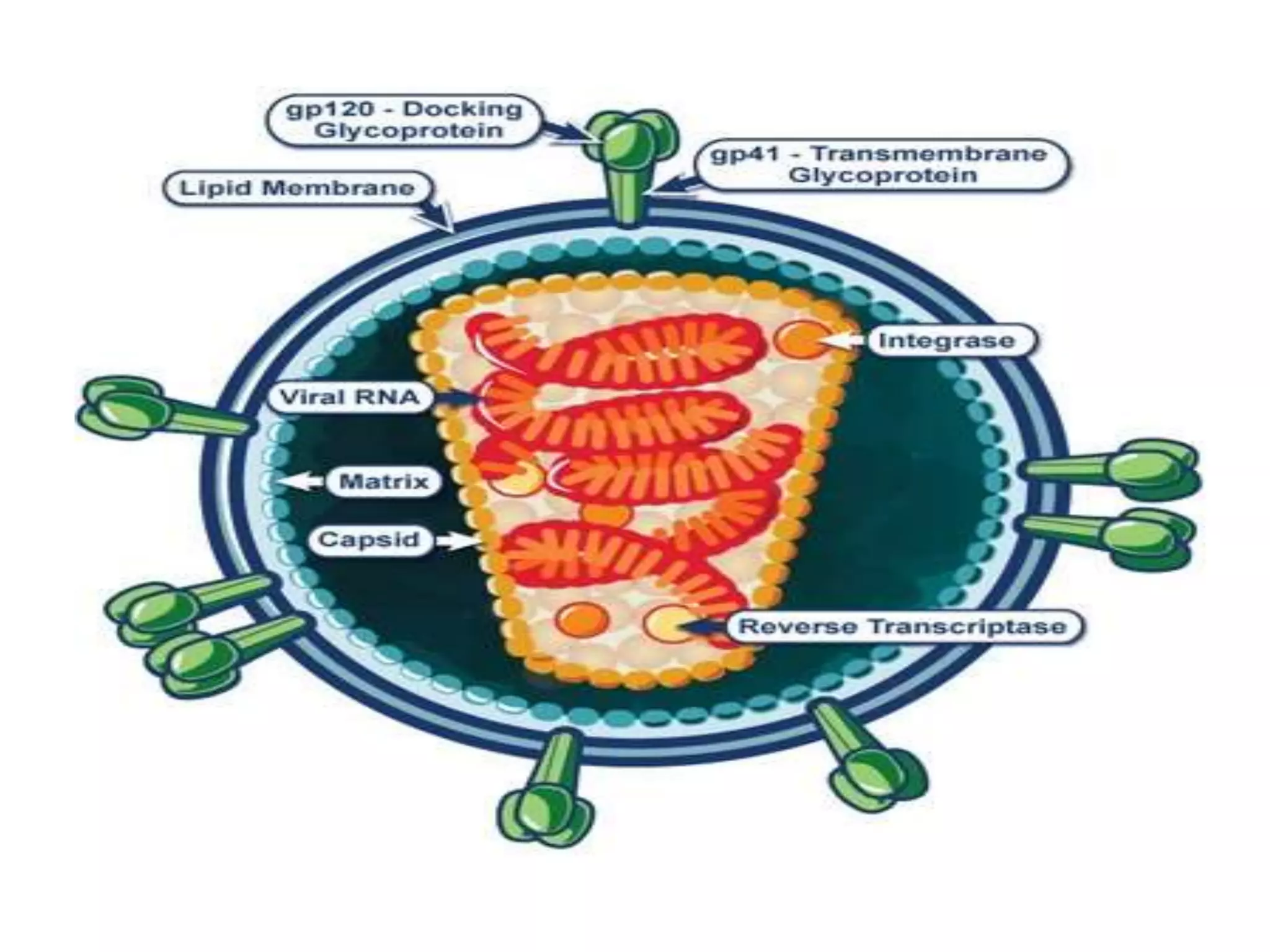
  • #4 The outer shell of the virus is known as the Viral enevlope. Embedded in the viral envelope is a complex protein known as env which consists of an outer protruding cap glycoprotein (gp) 120, and a stem gp14. Within the viral envelope is an HIV protein called p17(matrix), and within this is the viral core or capsid, which is made of another viral protein p24(core antigen).
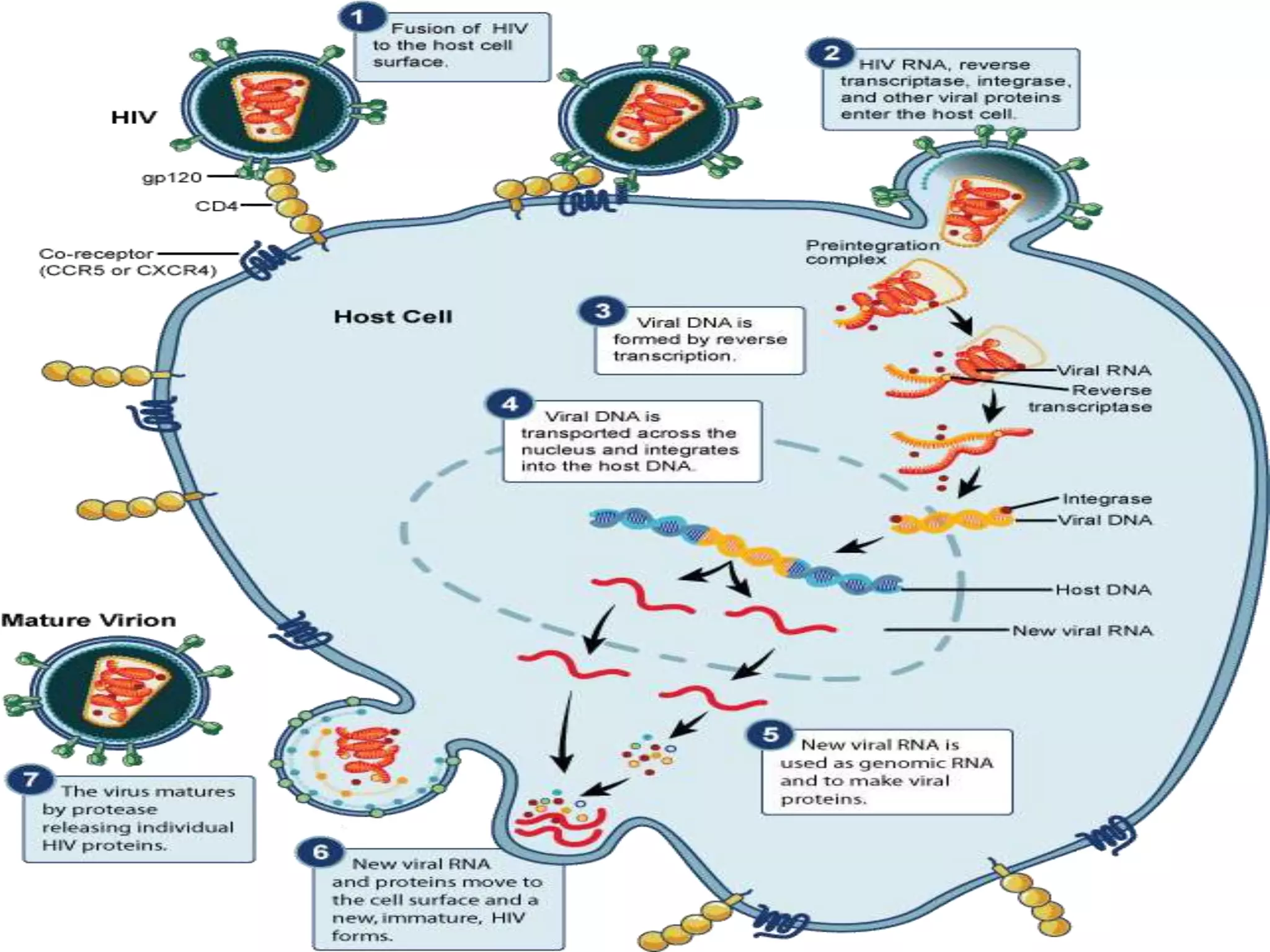
  • #5 CD4 found on helper T cells,macrophages, monocytes, B cells, microglial brain cells and intestinal cells In early phase HIV infection, initial viruses are M-tropic. Their envelope glycoprotein gp120 is able to bind to CD4 molecules and chemokine receptors called CCR5 found on macrophages In late phase HIV infection, most of the viruses are T-tropic, having gp120 capable of binding to CD4 and CXCR4 found on T4-lymphocytes
  • #6 -Only certain fluids—blood, semen, pre-seminal fluid, rectal fluids, vaginal fluids, and breast milk—from an HIV-infected person can transmit HIV. These fluids must come in contact with a mucous membrane or damaged tissue or be directly injected into the bloodstream (from a needle or syringe) for transmission to possibly occur. The index partener viral load is the strongest predictor of transmission at each stage of infection Study was conducted in Africa shows no cases of seroconversion among heterosexual couples when the infected partner has viral load less than 1500 THE RISK INCREASE BY 2.5 EACH TIME THE VIRAL LOAD INCRESE BY FACTOR OF 10 -HIV is spread mainly by Having sex with someone who has HIV. Anal sex is the highest-risk sexual behavior. Receptive anal sex (bottoming) is riskier than insertive anal sex (topping). Vaginal sex is the second highest-risk sexual behavior. -Having multiple sex partners or having other sexually transmitted infections can increase the risk of infection through sex. Sharing needles, syringes, rinse water, or other equipment (works) used to prepare injection drugs with someone who has HIV *Less commonly, HIV may be spread by -Being born to an infected mother. HIV can be passed from mother to child during pregnancy, birth, or breastfeeding. -Being stuck with an HIV-contaminated needle or other sharp object. This is a risk mainly for health care workers. *Receiving blood transfusions, blood products, or organ/tissue transplants that are contaminated with HIV. This risk is extremely small because of rigorous testing of the US blood supply and donated organs and tissues. *Eating food that has been pre-chewed by an HIV-infected person. The contamination occurs when infected blood from a caregiver’s mouth mixes with food while chewing, and is very rare. *Being bitten by a person with HIV. Each of the very small number of documented cases has involved severe trauma with extensive tissue damage and the presence of blood. There is no risk of transmission if the skin is not broken. *Oral sex—using the mouth to stimulate the penis, vagina, or anus (fellatio, cunnilingus, and rimming). Giving fellatio (mouth to penis oral sex) and having the person ejaculate (cum) in your mouth is riskier than other types of oral sex. *Contact between broken skin, wounds, or mucous membranes and HIV-infected blood or blood-contaminated body fluids. These reports have also been extremely rare. Deep, open-mouth kissing if the person with HIV has sores or bleeding gums and blood is exchanged. HIV is not spread through saliva. Transmission through kissing alone is extremely rare. ?? IVIG, RH immunoglobulin and HBV vaccine, prepared by process that inactivate HIV no risk of transmission The low risk of saliva-mediated HIV transmission is probably attributable to the very low concentrations of HIV in the saliva of infected persons261,262 as well as the presence of HIV inhibitory activity in saliva. .
  • #7 HIV infected infant with negative PCR at birth?? Infection late in pregnancy or at intrapartum period (needlestick injury 0.3% vs MM and cutaneous exposure0.09%
  • #11 Extremely high levels of infectious virus become detectable in serum and genital secretions during acute HIV-1 infection and persist for 10–12 weeks.77-79 Models based on data from cohort studies suggest that the rate of sexual transmission during acute infection is 26 times as high as that during established HIV-1 infection.20 Acute HIV-1 infection, despite its short duration, can account for 10%–50% of all new HIV-1 transmissions, especially in persons who have multiple concurrent sex partners or high rates of partner change
  • #12 . As serologic tests are becoming more sensitive, most HIV-infected patients have documented seroconversion during early infection, ie, within the first six months after infection
  • #13 The difference in the rate of progression can be due to route of infection , the size of the inoculum , the pathogenicity of the infecting viral strain or the immunologic status of the host: The progression to AIDS among individuals is variable. No evidence prove the association between coinfection with other viruses, tobacco use, IDU with the acceleration of HIV Single Best predictor of progression to AIDS and death is viral load Following infection with HIV, some people progress rapidly (within 1-2 years) to a low CD4 count, become ill and, without treatment, die. Other people may become infected and remain healthy with relatively normal CD4 counts for many years (>10). Reader’s Notes: Typical progressors have a drop of 35-50 CD4 cells/year. Rapid progressors ("CD4 crash") have a drop of 50 CD4cells per month after seroconversion. Slow Progressors have a CD4 decline that is very slow compared to the typical progressors. Long term non-progressors have CD4 counts that are stable at a baseline for many years.
  • #22 Other oral manifestations: xerostomia, Necrotizing Ulcerative Periodontitis
  • #24 Kaposi’s sarcoma (shown) is a rare cancer of the blood vessels that is associated with HIV. It manifests as bluish-red oval-shaped patches that may eventually become thickened. Lesions may appear singly or in clusters.
  • #25 Other manifestations: erythema nodsum, xerosis, acne
  • #28 is an inflammatory condition associated with raised pruritic nodules with a pustular head on an erythematous base; it is similar to bacterial folliculitis. Biopsy specimens of these lesions reveal intense infiltration of eosinophils and absence of polymorphonuclear cells and organism Sarcoptes scabiei var. humanus is the mite responsible for this common ectoparasitic infestation in HIV-infected persons. Scaly pruritic papules or hyperkeratotic plaques may occur on the palms, soles, trunk, or extremities. Characteristic burrows between the fingers and on the wrists are not always seen. Norwegian (crusted) scabies is a severe and highly contagious manifestation of this disease, seen particularly with advanced immunosuppression.291 Permethrin 5% cream and ivermectin are effective therapies.
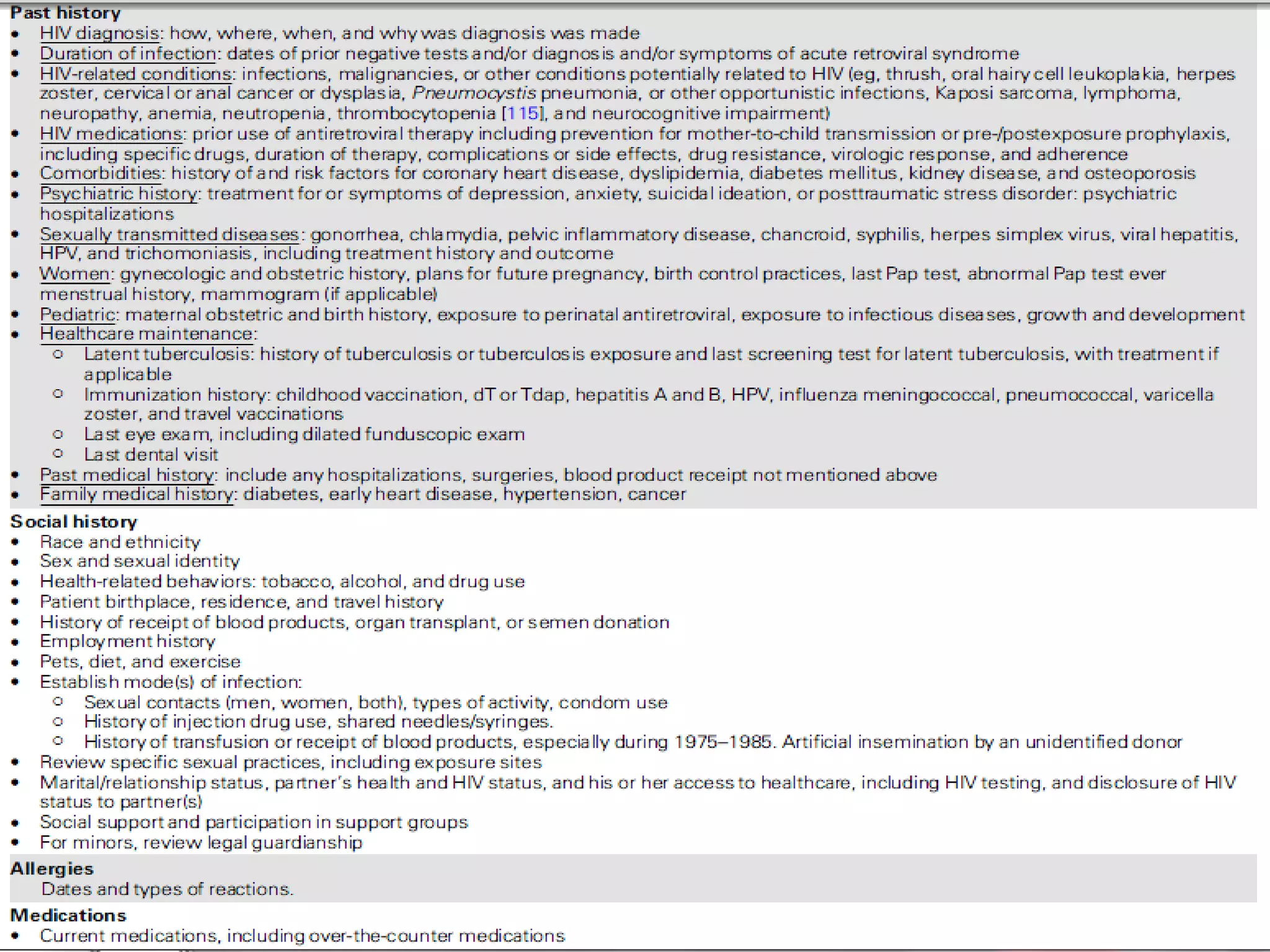
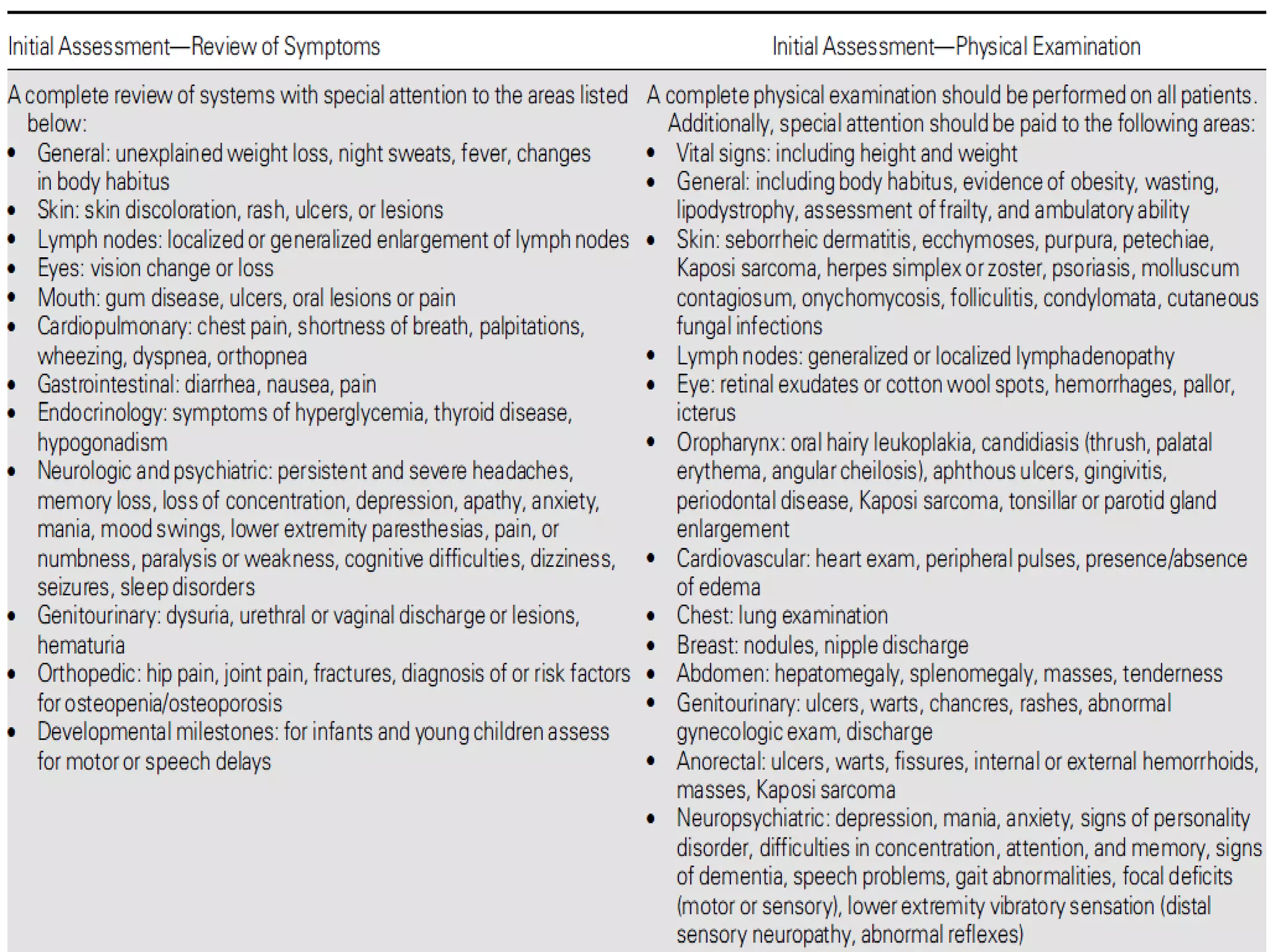
  • #30 if the patient already on ART , take history of -medication and adverse effect -base line and latest VL and CD4 -History of prior OIs (opportunistic infections) Counseling should focus on reduction of risk of HIV transmission to others, “superinfection,” and infection with other sexually transmitted pathogens Patients should also be asked about their partners, sexual practices (including Table 4. Initial Assessment: History—Present and Past Past history • HIV diagnosis: how, where, when, and why was diagnosis was made • Duration of infection: dates of prior negative tests and/or diagnosis and/or symptoms of acute retroviral syndrome • HIV-related conditions: infections, malignancies, or other conditions potentially related to HIV (eg, thrush, oral hairy cell leukoplakia, herpes zoster, cervical or anal cancer or dysplasia, Pneumocystis pneumonia, or other opportunistic infections, Kaposi sarcoma, lymphoma, neuropathy, anemia, neutropenia, thrombocytopenia [115], and neurocognitive impairment) • HIV medications: prior use of antiretroviral therapy including prevention for mother-to-child transmission or pre-/postexposure prophylaxis, including specific drugs, duration of therapy, complications or side effects, drug resistance, virologic response, and adherence • Comorbidities: history of and risk factors for coronary heart disease, dyslipidemia, diabetes mellitus, kidney disease, and osteoporosis • Psychiatric history: treatment for or symptoms of depression, anxiety, suicidal ideation, or posttraumatic stress disorder: psychiatric hospitalizations • Sexually transmitted diseases: gonorrhea, chlamydia, pelvic inflammatory disease, chancroid, syphilis, herpes simplex virus, viral hepatitis, HPV, and trichomoniasis, including treatment history and outcome • Women: gynecologic and obstetric history, plans for future pregnancy, birth control practices, last Pap test, abnormal Pap test ever menstrual history, mammogram (if applicable) • Pediatric: maternal obstetric and birth history, exposure to perinatal antiretroviral, exposure to infectious diseases, growth and development • Healthcare maintenance: ○ Latent tuberculosis: history of tuberculosis or tuberculosis exposure and last screening test for latent tuberculosis, with treatment if applicable ○ Immunization history: childhood vaccination, dT or Tdap, hepatitis A and B, HPV, influenza meningococcal, pneumococcal, varicella zoster, and travel vaccinations ○ Last eye exam, including dilated funduscopic exam ○ Last dental visit • Past medical history: include any hospitalizations, surgeries, blood product receipt not mentioned above • Family medical history: diabetes, early heart disease, hypertension, cancer Social history • Race and ethnicity • Sex and sexual identity • Health-related behaviors: tobacco, alcohol, and drug use • Patient birthplace, residence, and travel history • History of receipt of blood products, organ transplant, or semen donation • Employment history • Pets, diet, and exercise • Establish mode(s) of infection: ○ Sexual contacts (men, women, both), types of activity, condom use ○ History of injection drug use, shared needles/syringes. ○ History of transfusion or receipt of blood products, especially during 1975–1985. Artificial insemination by an unidentified donor • Review specific sexual practices, including exposure sites • Marital/relationship status, partner’s health and HIV status, and his or her access to healthcare, including HIV testing, and disclosure of HIV status to partner(s) • Social support and participation in support groups • For minors, review legal guardianship Allergies Dates and types of reactions. Medications • Current medications, including over-the-counter medications • Use of complementary or alternative therapy or treatment Abbreviations: HPV, human papillomavirus; HIV, human immunodeficiency virus; dT, diphtheria-tetanus; dTap, tetanus, diphtheria, and pertussis. 12 • CID • Aberg et al Downloaded from http://cid.oxfordjournals.org/ at IDSA member on December 19, 2014 all exposure sites, condom and contraceptive use), status of their partners, and whether their partner(s) have been informed of their HIV infection.
  • #33 p24 antigen detection is transient because, as antibodies begin to develop, they bind to the p24 antigen and form immune complexes that interfere with p24 assay detection unless the assay includes steps to disrupt the antigen-antibody complexes. The pattern of emergence of laboratory markers is highly consistent and allows classification of HIV infection into distinct laboratory stages48,64: • The eclipse period is the initial interval after infection with HIV when no laboratory markers are consistently detectable. • The seroconversion window period is the interval between infection with HIV and the first detection of antibodies. Its duration depends on the design of the antibody immunoassay and the sensitivity of the immunoassay during seroconversion. • Acute HIV infection is the interval between the appearance of detectable HIV RNA and the first detection of antibodies. Its duration also depends on the design of the antibody immunoassay and the sensitivity of the immunoassay during seroconversion. • Established HIV infection is the stage characterized by a fully developed IgG antibody response sufficient to meet the interpretive criteria for a positive Western blot or IFA.1,
  • #39 n indeterminate WB result should be followed up with qualitative NAT if early seroconversion is suspected, with a repeat immunoassay and WB analysis performed in 2–4 weeks. Although the US Food and Drug Administration has not cleared the use of quantitative viral load for HIV diagnosis, the viral load is unlikely to be <5000 copies/mL during acute HIV infection. Persistent reactivity of the antibody screening assay with a simultaneous lack of any change in the WB pattern suggests the absence of HIV infection.
  • #43 Laboratories should conduct initial testing for HIV with an FDA-approved antigen/antibody combination immunoassaya that detects HIV-1 and HIV-2 antibodies and HIV-1 p24 antigen to screen for established infection with HIV-1 or HIV-2 and for acute HIV-1 infection. No further testing is required for specimens that are nonreactive on the initial immunoassay Specimens with a reactive antigen/antibody combination immunoassay result (or repeatedly reactive, if repeat testing is recommended by the manufacturer or required by regulatory authorities) should be tested with an FDA-approved antibody immunoassay that differentiates HIV-1 antibodies from HIV-2 antibodies. Reactive results on the initial antigen/antibody combination immunoassay and the HIV-1/HIV-2 antibody differentiation immunoassay should be interpreted as positive for HIV-1 antibodies, HIV-2 antibodies, or HIV antibodies, undifferentiated. 3. Specimens that are reactive on the initial antigen/antibody combination immunoassay and nonreactive or indeterminate on the HIV-1/HIV-2 antibody differentiation immunoassay should be tested with an FDA-approved HIV-1 nucleic acid test (NAT). • A reactive HIV-1 NAT result and nonreactive HIV-1/HIV-2 antibody differentiation immunoassay result indicates laboratory evidence for acute HIV-1 infection. • A reactive HIV-1 NAT result and indeterminate HIV-1/HIV-2 antibody differentiation immunoassay result indicates the presence of HIV-1 infection confirmed by HIV-1 NAT. • A negative HIV-1 NAT result and nonreactive or indeterminate HIV-1/HIV-2 antibody differentiation immunoassay result indicates a false-positive result on the initial immunoassay.b 4. Laboratories should use this same testing algorithm, beginning with an antigen/antibody combination immunoassay, with serum or plasma specimens submitted for testing after a reactive (preliminary positive) result from any rapid HIV test.
  • #44 he "major" group M, the "outlier" group O and two new groups, N and P. These four groups may represent four separate introductions of simian immunodeficiency virus into humans Group O appears to be restricted to west-central Africa and group N - a strain discovered in 1998 in Cameroon - is extremely rare. In 2009 a new strain closely relating to gorilla simian immunodeficiency virus was discovered in a Cameroonian woman. It was designated HIV-1 group P. 1 More than 90 percent of HIV-1 infections belong to HIV-1 group M and, unless specified, the rest of this page will relate to HIV-1 group M only.
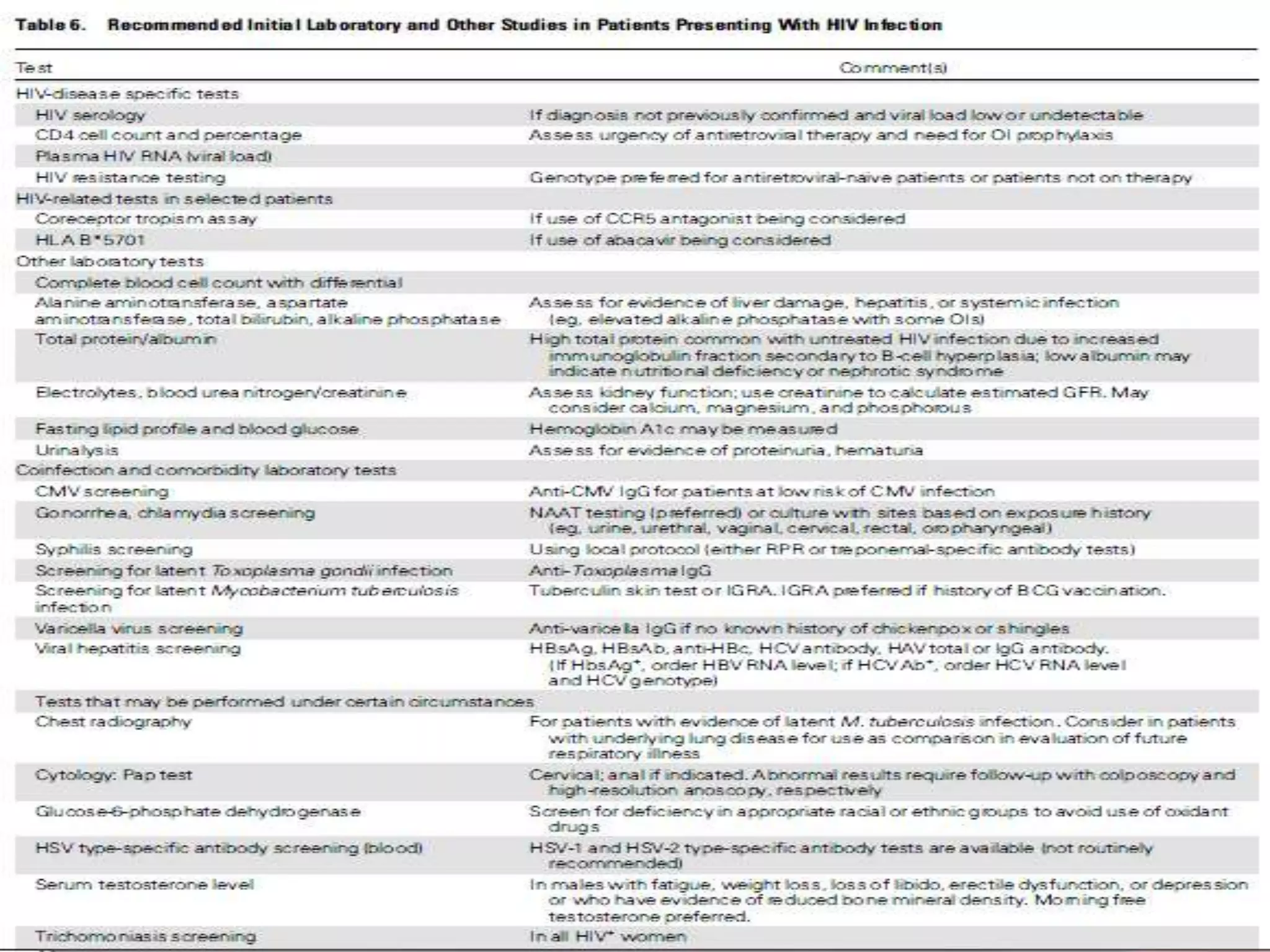
  • #49 G6PD deficiency are dapsone, primaquine, and sulfonamides. A negative HLA test result does not rule out the possibility of a hypersensitivity reaction but makes it extremely unlikely Urinalysis and calculated creatinine clearance assay should also be performed prior to initiating drugs such as tenofovir or indinavir that have the potential for nephrotoxicity All patients should be screened for syphilis upon initiation of care and periodically thereafter, depending on risk (strong recommendation, high quality evidence). 34. A lumbar puncture should always be performed for patients with a reactive syphilis serology who have neurologic or ocular symptoms or signs, irrespective of past syphilis treatment history (strong recommendation, high quality evidence). 35. A lumbar puncture should be performed in patients who experience serologic treatment failure (ie, whose nontreponemal titers fail to decline 4-fold after stage-appropriate therapy, or whose titers increase 4-fold if reinfection is ruled out) (weak recommendation, low quality evidence.
  • #53 The recommendation to initiate ART in individuals with high CD4 cell counts—whose short-term risk for death and development of AIDS-defining illness is low6,7—is based on growing evidence that untreated HIV infection or uncontrolled viremia is associated with development of non-AIDS-defining diseases, including cardiovascular disease (CVD), kidney disease, liver disease, neurologic complications, and malignancies. Furthermore, newer ART regimens are more effective, more convenient, and better tolerated than regimens used in the past