Combination &
De-escalation of
Antibiotics
DR GHALEB ALMEKHLAFI
Combination Antibiotics vs.
monotherapy
History of Combination Therapy
Mortality rate
• Combination therapy (27%)
• Monotherapy (47%) (p<0.02)
• Monotherapy was often an aminoglycoside
Hilf M, Yu VL, Sharp J, Zuravleff JJ, Korvick JA, Muder RR. Antibiotic therapy for
Pseudomonas aeruginosa bacteremia: outcome correlations in a
prospective study of 200 patients. Am J Med 1989 Nov; 87(5):540-5.
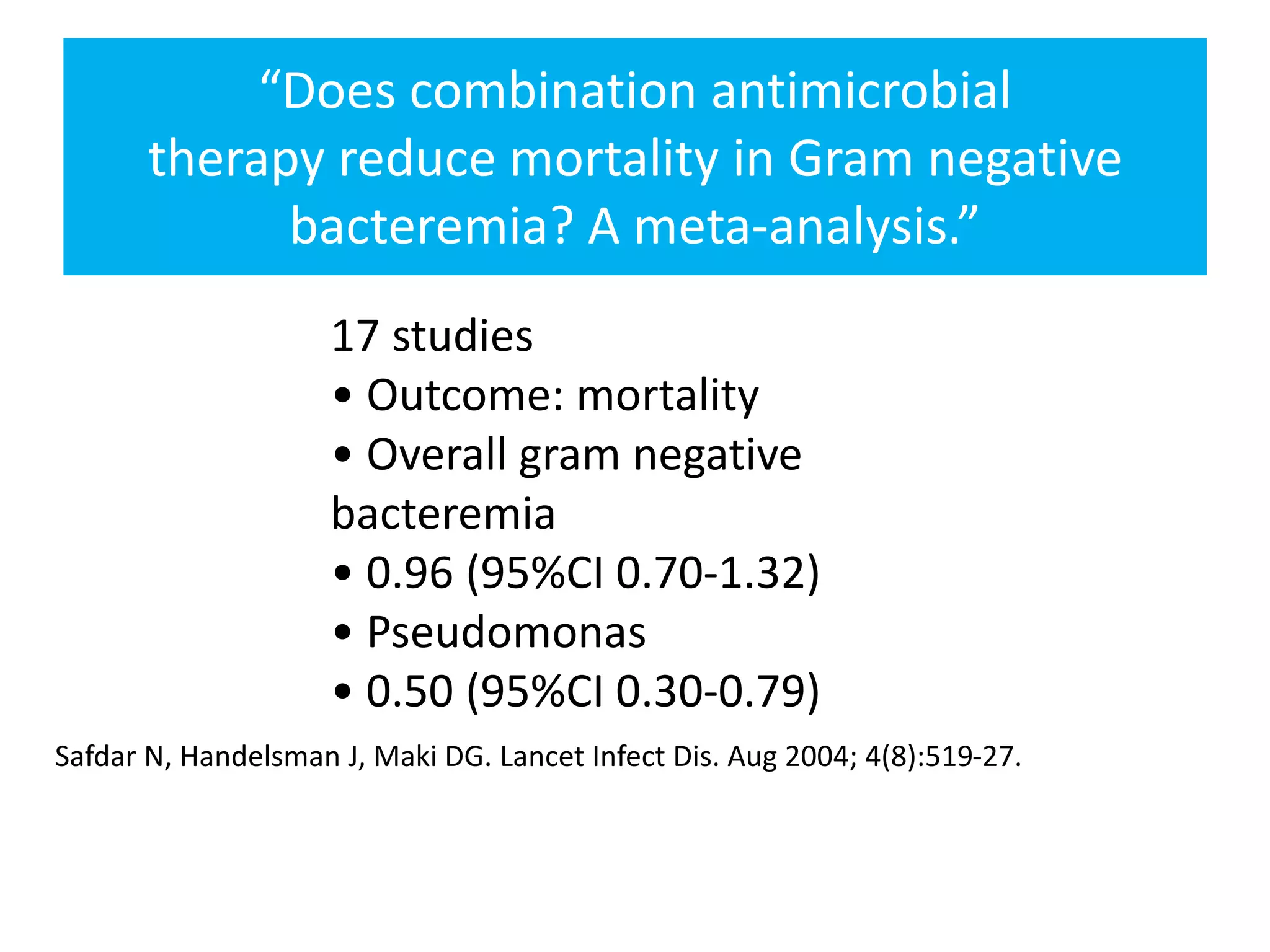
“Does combination antimicrobial
therapy reduce mortality in Gram negative
bacteremia? A meta-analysis.”
17 studies
• Outcome: mortality
• Overall gram negative
bacteremia
• 0.96 (95%CI 0.70-1.32)
• Pseudomonas
• 0.50 (95%CI 0.30-0.79)
Safdar N, Handelsman J, Maki DG. Lancet Infect Dis. Aug 2004; 4(8):519-27.
Factors influencing decision
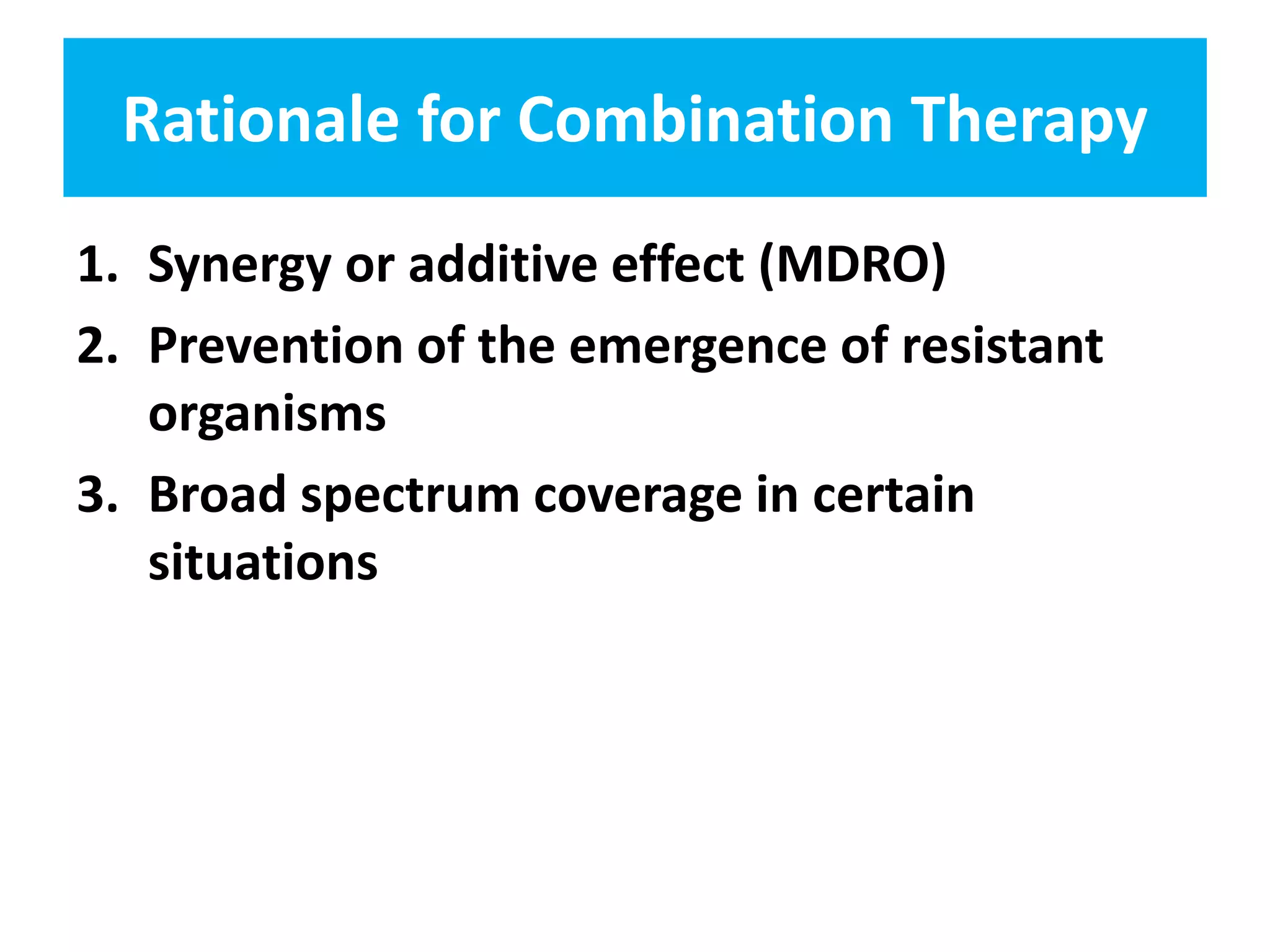
Rationale for Combination Therapy
1. Synergy or additive effect (MDRO)
2. Prevention of the emergence of resistant
organisms
3. Broad spectrum coverage in certain
situations
In Vitro Results of Combination
Therapy
Synergistic: whole is > sum
Additive: whole is the sum
Antagonistic: whole is < sum
Chemical interaction between agents
Synergism
Enhanced Uptake of Aminoglycoside when Combined
with -lactam agents
Usually different classes with cidal activity
• enterococcal endocarditis: ampicillin and
gentamicin
• Viridans streptococcal endocarditis: penicillin
and gentamicin
• Staphylococcal bacteremia: vancomycin and
gentamicin
• Treatment of pseudomonas infections: -
lactam agent and aminoglycosides
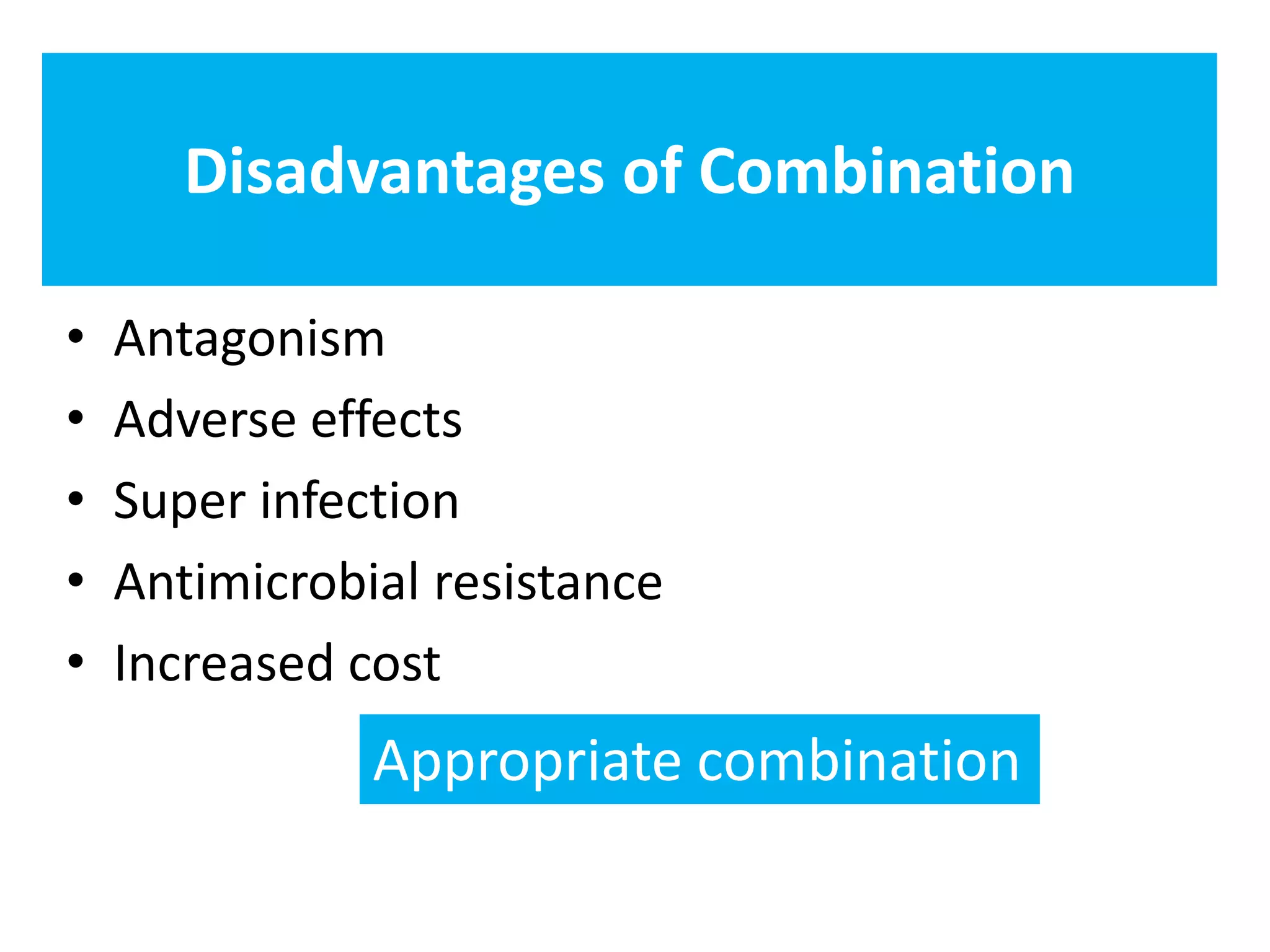
Disadvantages of Combination
• Antagonism
• Adverse effects
• Super infection
• Antimicrobial resistance
• Increased cost
Appropriate combination
Antagonism
• When Bactericidal agents with bacteriostatic
• More prominent in
- immunocompromised patients
- in infections where localized host defenses
may be inadequate such as meningitis and
endocarditis
• combinations of 21
different antibiotics
• strong antagonistic
interactions among
combinations of
bacteriostatic and
bactericidal drugs
Conclusion: In contrast to their synergistic effect against
carbapenem-resistant A. baumannii isolates, colistin and tigecycline
were highly antagonistic to carbapenem-resistant A. baumannii
strains isolated from patients with VAP when the drugs were
administered together.
Therefore, alternative treatment options should be used during the
treatment of VAP attributed to A. baumannii.
Antagonism in 80% indifference in 20%
Combination prevent resistance
• Decreased resistant mycobacterium
tuberculosis with combination treatment of
• Reduction of -lactamase induction with
combination -lactam agents and
aminoglycosides
• HIV treatment
Clinical Indications of combination
• Polymicrobial infection
• Specific sites(IE, meningitis, pnumonia)
• Specific organisms(TB, legionella)
• Initial/Empirical therapy for severe
infection
• MDRO
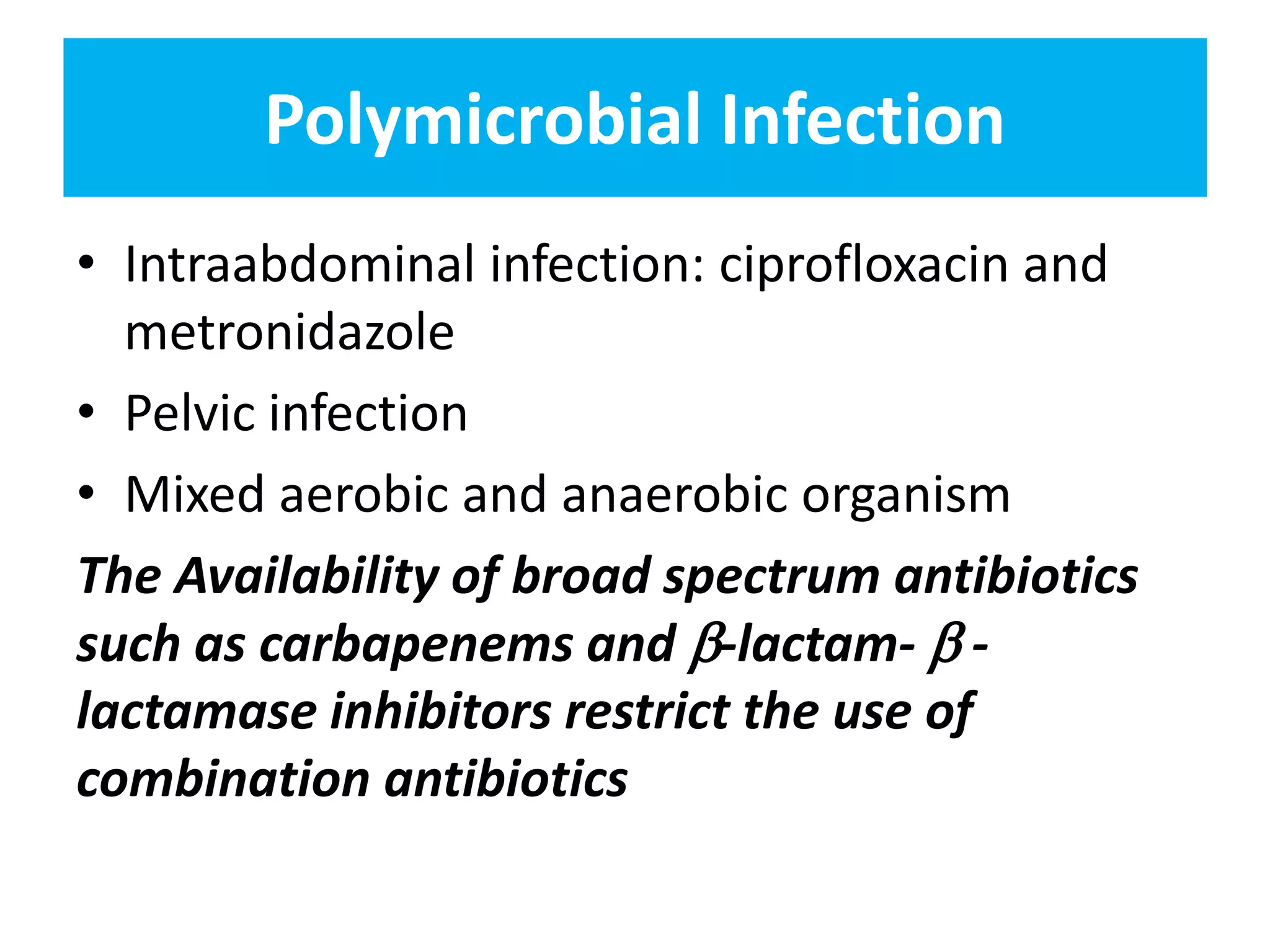
Polymicrobial Infection
• Intraabdominal infection: ciprofloxacin and
metronidazole
• Pelvic infection
• Mixed aerobic and anaerobic organism
The Availability of broad spectrum antibiotics
such as carbapenems and -lactam-  -
lactamase inhibitors restrict the use of
combination antibiotics
Initial / Empiric broad
spectrum/combination antibiotics
• Severe sepsis (organ impairment / shock)
• Hospital Acquired /Health-Care Associated
Infection
• Multiple co-morbidities
• Immunosuppressed
• Exposures to multiple broad spectrum antibiotics
in the last 90 days
• Recent procedures or patient has devices insitu
• Elderly > 65 years
• Colonized with MDROs
Important Antimicrobial
Combinations
and target organisms
Double -Lactams
Overview of synergy with reference to double -
lactam combination
• Mostly additive effects
• Rarely synergistic effect
• Sometimes antagonistic effect
• Antagonism was seen mainly when treating
enterobacter or pseudomonas infections
DICP 1991 Sep;25(9):972-7
meropenem plus ertapenem
Aminoglycoside plus B-lactam
• Rationale:
– Synergy in vitro
– Improved survival
– Prevent emergence resistance
“Beta lactam monotherapy versus beta lactam-
aminoglycoside combination therapy for sepsis in
immunocompetent patients: systematic review and
metaanalysis of randomized trials”
64 trials with 7586 patients
• No difference in all-cause mortality
(0.90, 95% CI 0.77-1.06)
• Subset of Pseudomonas infections (426 patients)
No difference in all-cause mortality
(1.50, 95% CI 0.07-32.84)
Paul M, Benuri-Silbinger I, Soares-Welser K, Levbovici L. BMJ 2004 Mar 20;328(7441):668.
-Lactam & Aminoglycosides
Evaluation of bactericidal activity of cefpirome-aminoglycoside
combination agaist pseudomonas aeruginosa strains with
intermediate sensitivity to cefpirome and in various phenotypes of
beta-lactam resistance
• Combination of cefpirome and
aminoglycosides is bactericidal and showed
synergistic effect
Pathol Biol (Paris) 1997 May;45(5):420-3
Anti Pseudomonas
• Antipseudomonal
beta lactam
• • Piperacillin
• • Ceftazidime
• • Cefepime
• • Imipenem
• • Aztreonam
Aminoglycoside
• Tobramycin
• Gentamycin
• Amikacin
OR
• Fluoroquinolones
• Ciprofloxacin
• Levofloxacin
+
Anti P. aeruginosa combination
• Empirical therapy
• Combine 2 active drugs:
–B-lactam+aminoglycoside
–B-lactam+quinolone
HAP due to P. aeruginosa
• Mortality high (>50%)
• Monotherapy inadequate
–High rate of failure or relapse
–Emergence of resistance
Bacteremia due to P. aeruginosa
Antibiotic Rx Combined Mono
Mortality rates
Pneumonia 7/20 (35%) 7/8 (88%)
Critically ill 18/37 (47%) 11/12 (92%)
All patients 38/143 (27%) 20/43 (47%)
Hilf, Am J Med 1989:87;540
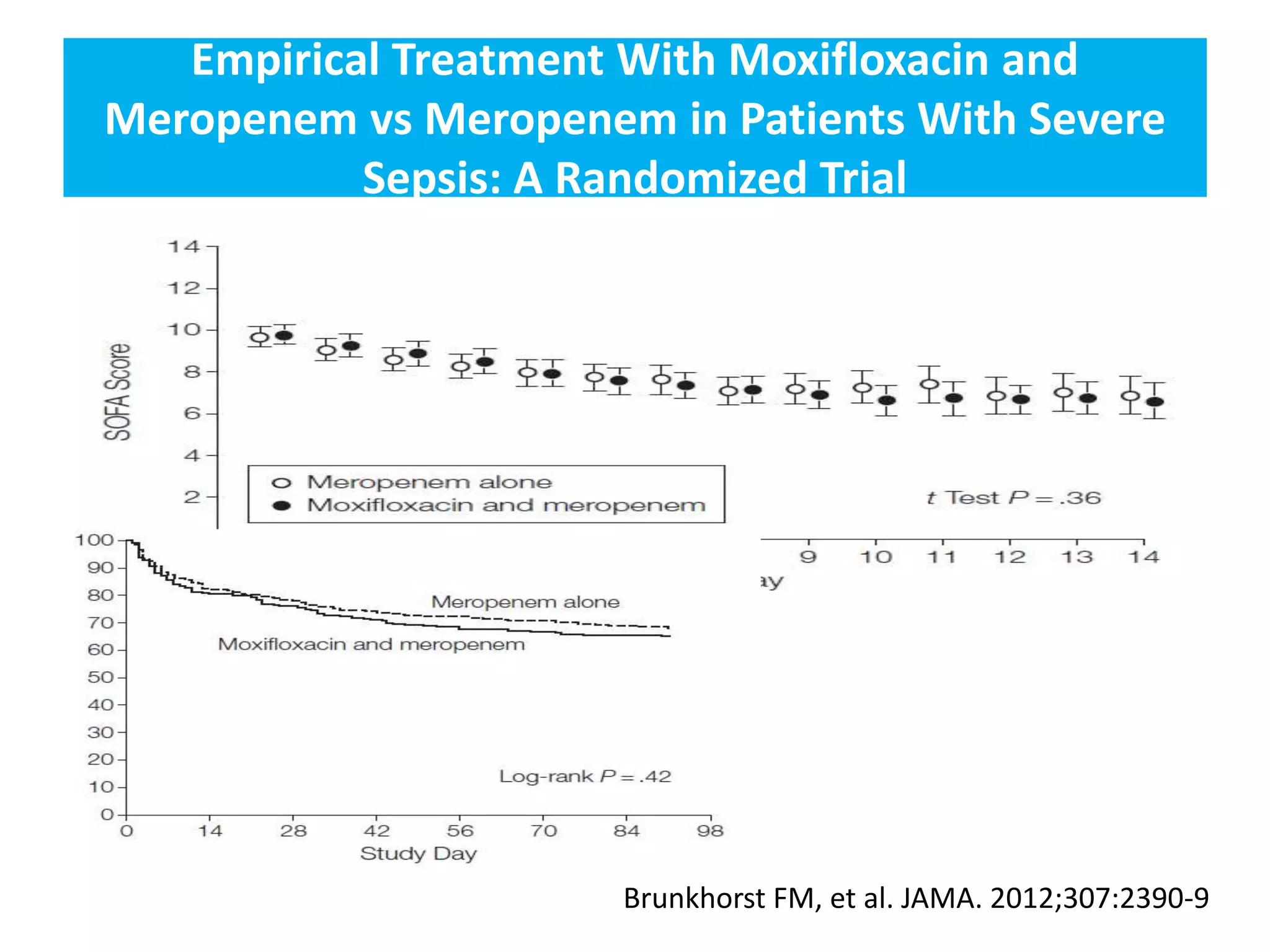
Empirical Treatment With Moxifloxacin and
Meropenem vs Meropenem in Patients With Severe
Sepsis: A Randomized Trial
Brunkhorst FM, et al. JAMA. 2012;307:2390-9
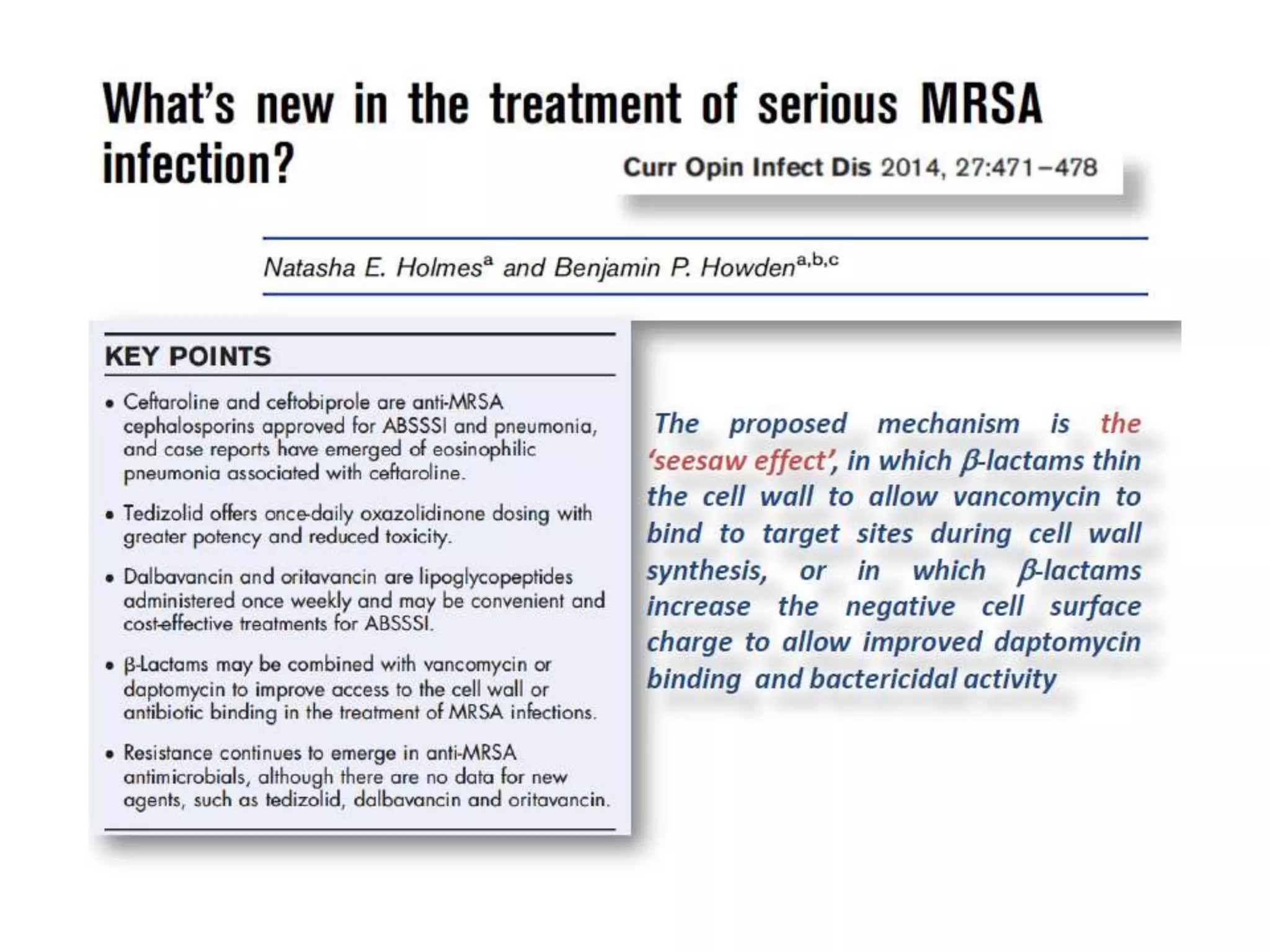
triple β-lactam
combination
meropenem-
piperacillin-tazobactam
(ME/PI/TZ) acts
synergistically and is
bactericidal against
MRSA subspecies
At present colistin and tigecycline remain drugs
of choice for MDRAB infections.
Tigecycline should not be used in combination
with piperacillin-tazobactam for MDR-Ab
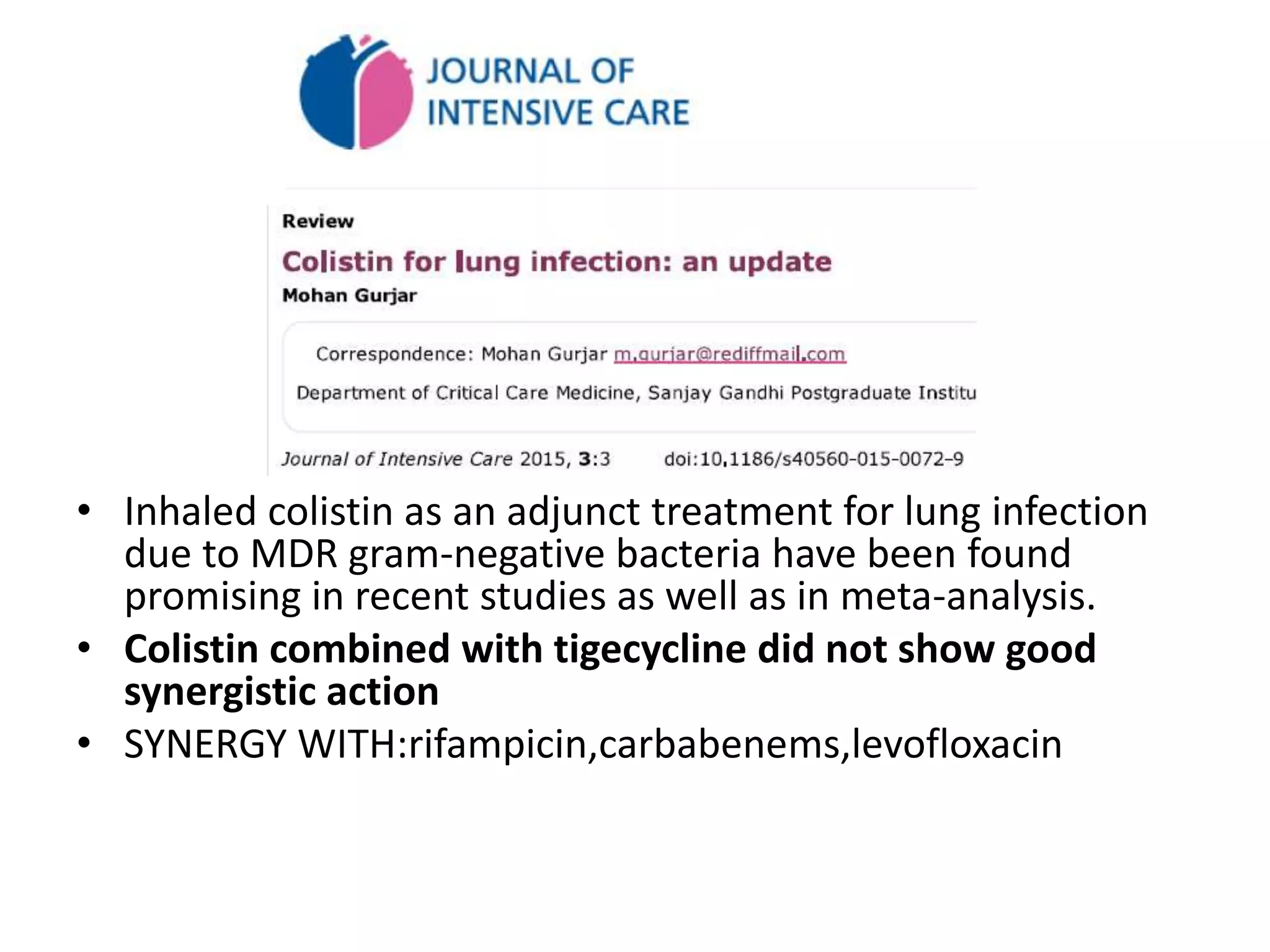
• Inhaled colistin as an adjunct treatment for lung infection
due to MDR gram-negative bacteria have been found
promising in recent studies as well as in meta-analysis.
• Colistin combined with tigecycline did not show good
synergistic action
• SYNERGY WITH:rifampicin,carbabenems,levofloxacin
Gram-negative MDR bacteria:Carbapenem-
resistant Acinetobacter.and Klebsiella
pneumoniae.
(SD group: 50 mg every 12 hours) (HD group:
100 mg every 12 hours)
Enterococcus faecalis and
Enterococcus faecalis
• All daptomycin
containing regimens
demonstrated
significantly greater
kill (decrease in
CFU/g) than all
linezolid-containing
regimens. (p<0.0o1)
Conclusion
• Combination antibiotics has clear cut (as well
as borderline) indications
• Inappropriate use of antimicrobial
combinations may have deleterious effect
De-escalation
Antimicrobial Stewardship
1.Rapid identification of patients with bacterial
infections, while reducing the numbers of patients
treated unnecessarily.
2.Appropriate empirical treatment selection.
3.Using PK–PD characteristics to optimize
antimicrobial dosing and administration modalities.
4.De-escalation once culture results become
available.
5.Shortening therapy duration.
What is De-escalation and why?
the practice of changing antibiotics from initial
broad spectrum agent to a narrower, more
focused spectrum when the pathogen
identified.
Why?
De-escalation is one of the most important
strategies in reducing antibiotic resistance and
has shown to improve patient outcome.
General principles of de-escalation
Include assessing the need for antibiotics
everyday based on:
• Clinical improvement
• Adequate source control
• Appropriate culture and sensitivity results
de-escalation success
• De-escalation is feasible in
~50% of the patients. It is
influenced by initial
microbiologic results and type
of initial antibiotherapy.
Antibiotic De-escalation in the ICU: A
Five-Step Policy
• 1.Stopping antibiotics in patients without
documented bacterial infection
• 2.Stopping vancomycine or linezolid if no MRSA is
identified
• 3.Broad-spectrum beta lactams restricted to
infection caused by pathogens only susceptible to
these agents
• 4.Switching to Monotheraphy after 3 days
• 5.Antibiotics stopped ASAP (after a maximum of
8 days in most cases)
Step #1
Stopping Antibiotics in ICU Patients Without Documented Bacterial Infection
• Obtaining specimens for cultures before
antimicrobial administration is essential and
enable therapy de-escalation
• All antibiotic therapy in the ICU should be re-
evaluated on days 2 or 3, based on the clinical
course of the disease and microbiological
culture results
Step #2
Stopping vancomycin or linezolid if no MRSA is identified
• Vancomycin and linezolid should
be stopped if no MRSA is
identified
• Infections caused by MSSA should
be treated with oxacillin, except
in case of allergy
Step #3
Streamlining Antibiotic Therapy Once Culture Results Are Available
• Restrict use of very broad-spectrum agents, such
as carbapenems, pip./taz., and cefepime, to
infections caused by pathogens only susceptible
to these agents:
• Treat infections caused by Enterobacteriaceae
with a 3rd-gen. cephalosporin (except ESBL-
producing strains and Group 3 GNB)
• Treat P. aeruginosa infections caused by
piperacillin-S strains with this specific antibiotic
• Restrict use of ciprofloxacin to pts allergic to ß-
lactams.
Step #4
Switching to Monotheraphy after 3-5 Days
• Therapy can and should be switched to
Monotheraphy in most patients after 3-5 days,
provided that:
‒initial therapy was appropriate,
‒clinical course appears favorable,
‒and that microbiological data exclude a very
difficult-to-treat microorganism, with a very high in
vitro MIC, as it can be observed with some
nonfermenting-GNB and/or carbapenemase-
producing GNB.
Step #5
Shortening Duration of Therapy
• A too long duration of treatment may favor
the emergence of MDR or pandrug-resistant
strains, exposes to antibiotic toxicity, and
increases costs, and NOT necessarily improves
outcome
How to carry out de‐escalation
1. Target broad spectrum antimicrobials that are used
empirically
2. Review at :
i. 72 hours after antimicrobial initiation or;
ii. Once a week review of a specific ward, unit, hospital
3. Identify de‐escalation opportunities
i. Were appropriate cultures taken initially?
ii. Has there been any growth from the cultures?
iii. If there is no growth, can the antimicrobial be
stopped?
iv. If there is growth, can the antimicrobial be
de‐escalated
Conclusions: As part of a global management of empiric antibiotherapy in
an intensive care unit, de-escalation might be safe and feasible in a large
proportion of patients.
In the EPIC study
• diagnostic results for both bacteria and viruses were
available for 2259 adults
• (97%) with radiographic evidence of pneumonia.
• A pathogen was detected in 853 of these patients
(38%).
• Viruses were detected in 27% and
• bacteria in 14%.
N Engl J Med 2015;373:415-27
•questions?

Combination and deescalation of antibiotics

  • 1.
  • 2.
  • 3.
    History of CombinationTherapy Mortality rate • Combination therapy (27%) • Monotherapy (47%) (p<0.02) • Monotherapy was often an aminoglycoside Hilf M, Yu VL, Sharp J, Zuravleff JJ, Korvick JA, Muder RR. Antibiotic therapy for Pseudomonas aeruginosa bacteremia: outcome correlations in a prospective study of 200 patients. Am J Med 1989 Nov; 87(5):540-5.
  • 4.
    “Does combination antimicrobial therapyreduce mortality in Gram negative bacteremia? A meta-analysis.” 17 studies • Outcome: mortality • Overall gram negative bacteremia • 0.96 (95%CI 0.70-1.32) • Pseudomonas • 0.50 (95%CI 0.30-0.79) Safdar N, Handelsman J, Maki DG. Lancet Infect Dis. Aug 2004; 4(8):519-27.
  • 6.
  • 7.
    Rationale for CombinationTherapy 1. Synergy or additive effect (MDRO) 2. Prevention of the emergence of resistant organisms 3. Broad spectrum coverage in certain situations
  • 8.
    In Vitro Resultsof Combination Therapy Synergistic: whole is > sum Additive: whole is the sum Antagonistic: whole is < sum Chemical interaction between agents
  • 9.
    Synergism Enhanced Uptake ofAminoglycoside when Combined with -lactam agents Usually different classes with cidal activity • enterococcal endocarditis: ampicillin and gentamicin • Viridans streptococcal endocarditis: penicillin and gentamicin • Staphylococcal bacteremia: vancomycin and gentamicin • Treatment of pseudomonas infections: - lactam agent and aminoglycosides
  • 10.
    Disadvantages of Combination •Antagonism • Adverse effects • Super infection • Antimicrobial resistance • Increased cost Appropriate combination
  • 11.
    Antagonism • When Bactericidalagents with bacteriostatic • More prominent in - immunocompromised patients - in infections where localized host defenses may be inadequate such as meningitis and endocarditis
  • 12.
    • combinations of21 different antibiotics • strong antagonistic interactions among combinations of bacteriostatic and bactericidal drugs
  • 13.
    Conclusion: In contrastto their synergistic effect against carbapenem-resistant A. baumannii isolates, colistin and tigecycline were highly antagonistic to carbapenem-resistant A. baumannii strains isolated from patients with VAP when the drugs were administered together. Therefore, alternative treatment options should be used during the treatment of VAP attributed to A. baumannii. Antagonism in 80% indifference in 20%
  • 14.
    Combination prevent resistance •Decreased resistant mycobacterium tuberculosis with combination treatment of • Reduction of -lactamase induction with combination -lactam agents and aminoglycosides • HIV treatment
  • 15.
    Clinical Indications ofcombination • Polymicrobial infection • Specific sites(IE, meningitis, pnumonia) • Specific organisms(TB, legionella) • Initial/Empirical therapy for severe infection • MDRO
  • 16.
    Polymicrobial Infection • Intraabdominalinfection: ciprofloxacin and metronidazole • Pelvic infection • Mixed aerobic and anaerobic organism The Availability of broad spectrum antibiotics such as carbapenems and -lactam-  - lactamase inhibitors restrict the use of combination antibiotics
  • 20.
    Initial / Empiricbroad spectrum/combination antibiotics • Severe sepsis (organ impairment / shock) • Hospital Acquired /Health-Care Associated Infection • Multiple co-morbidities • Immunosuppressed • Exposures to multiple broad spectrum antibiotics in the last 90 days • Recent procedures or patient has devices insitu • Elderly > 65 years • Colonized with MDROs
  • 21.
  • 23.
    Double -Lactams Overview ofsynergy with reference to double - lactam combination • Mostly additive effects • Rarely synergistic effect • Sometimes antagonistic effect • Antagonism was seen mainly when treating enterobacter or pseudomonas infections DICP 1991 Sep;25(9):972-7
  • 24.
  • 26.
    Aminoglycoside plus B-lactam •Rationale: – Synergy in vitro – Improved survival – Prevent emergence resistance
  • 27.
    “Beta lactam monotherapyversus beta lactam- aminoglycoside combination therapy for sepsis in immunocompetent patients: systematic review and metaanalysis of randomized trials” 64 trials with 7586 patients • No difference in all-cause mortality (0.90, 95% CI 0.77-1.06) • Subset of Pseudomonas infections (426 patients) No difference in all-cause mortality (1.50, 95% CI 0.07-32.84) Paul M, Benuri-Silbinger I, Soares-Welser K, Levbovici L. BMJ 2004 Mar 20;328(7441):668.
  • 28.
    -Lactam & Aminoglycosides Evaluationof bactericidal activity of cefpirome-aminoglycoside combination agaist pseudomonas aeruginosa strains with intermediate sensitivity to cefpirome and in various phenotypes of beta-lactam resistance • Combination of cefpirome and aminoglycosides is bactericidal and showed synergistic effect Pathol Biol (Paris) 1997 May;45(5):420-3
  • 29.
    Anti Pseudomonas • Antipseudomonal betalactam • • Piperacillin • • Ceftazidime • • Cefepime • • Imipenem • • Aztreonam Aminoglycoside • Tobramycin • Gentamycin • Amikacin OR • Fluoroquinolones • Ciprofloxacin • Levofloxacin +
  • 30.
    Anti P. aeruginosacombination • Empirical therapy • Combine 2 active drugs: –B-lactam+aminoglycoside –B-lactam+quinolone
  • 31.
    HAP due toP. aeruginosa • Mortality high (>50%) • Monotherapy inadequate –High rate of failure or relapse –Emergence of resistance
  • 32.
    Bacteremia due toP. aeruginosa Antibiotic Rx Combined Mono Mortality rates Pneumonia 7/20 (35%) 7/8 (88%) Critically ill 18/37 (47%) 11/12 (92%) All patients 38/143 (27%) 20/43 (47%) Hilf, Am J Med 1989:87;540
  • 34.
    Empirical Treatment WithMoxifloxacin and Meropenem vs Meropenem in Patients With Severe Sepsis: A Randomized Trial Brunkhorst FM, et al. JAMA. 2012;307:2390-9
  • 38.
  • 40.
    At present colistinand tigecycline remain drugs of choice for MDRAB infections. Tigecycline should not be used in combination with piperacillin-tazobactam for MDR-Ab
  • 41.
    • Inhaled colistinas an adjunct treatment for lung infection due to MDR gram-negative bacteria have been found promising in recent studies as well as in meta-analysis. • Colistin combined with tigecycline did not show good synergistic action • SYNERGY WITH:rifampicin,carbabenems,levofloxacin
  • 42.
    Gram-negative MDR bacteria:Carbapenem- resistantAcinetobacter.and Klebsiella pneumoniae. (SD group: 50 mg every 12 hours) (HD group: 100 mg every 12 hours)
  • 43.
    Enterococcus faecalis and Enterococcusfaecalis • All daptomycin containing regimens demonstrated significantly greater kill (decrease in CFU/g) than all linezolid-containing regimens. (p<0.0o1)
  • 44.
    Conclusion • Combination antibioticshas clear cut (as well as borderline) indications • Inappropriate use of antimicrobial combinations may have deleterious effect
  • 45.
  • 46.
    Antimicrobial Stewardship 1.Rapid identificationof patients with bacterial infections, while reducing the numbers of patients treated unnecessarily. 2.Appropriate empirical treatment selection. 3.Using PK–PD characteristics to optimize antimicrobial dosing and administration modalities. 4.De-escalation once culture results become available. 5.Shortening therapy duration.
  • 47.
    What is De-escalationand why? the practice of changing antibiotics from initial broad spectrum agent to a narrower, more focused spectrum when the pathogen identified. Why? De-escalation is one of the most important strategies in reducing antibiotic resistance and has shown to improve patient outcome.
  • 48.
    General principles ofde-escalation Include assessing the need for antibiotics everyday based on: • Clinical improvement • Adequate source control • Appropriate culture and sensitivity results
  • 49.
    de-escalation success • De-escalationis feasible in ~50% of the patients. It is influenced by initial microbiologic results and type of initial antibiotherapy.
  • 50.
    Antibiotic De-escalation inthe ICU: A Five-Step Policy • 1.Stopping antibiotics in patients without documented bacterial infection • 2.Stopping vancomycine or linezolid if no MRSA is identified • 3.Broad-spectrum beta lactams restricted to infection caused by pathogens only susceptible to these agents • 4.Switching to Monotheraphy after 3 days • 5.Antibiotics stopped ASAP (after a maximum of 8 days in most cases)
  • 51.
    Step #1 Stopping Antibioticsin ICU Patients Without Documented Bacterial Infection • Obtaining specimens for cultures before antimicrobial administration is essential and enable therapy de-escalation • All antibiotic therapy in the ICU should be re- evaluated on days 2 or 3, based on the clinical course of the disease and microbiological culture results
  • 52.
    Step #2 Stopping vancomycinor linezolid if no MRSA is identified • Vancomycin and linezolid should be stopped if no MRSA is identified • Infections caused by MSSA should be treated with oxacillin, except in case of allergy
  • 53.
    Step #3 Streamlining AntibioticTherapy Once Culture Results Are Available • Restrict use of very broad-spectrum agents, such as carbapenems, pip./taz., and cefepime, to infections caused by pathogens only susceptible to these agents: • Treat infections caused by Enterobacteriaceae with a 3rd-gen. cephalosporin (except ESBL- producing strains and Group 3 GNB) • Treat P. aeruginosa infections caused by piperacillin-S strains with this specific antibiotic • Restrict use of ciprofloxacin to pts allergic to ß- lactams.
  • 54.
    Step #4 Switching toMonotheraphy after 3-5 Days • Therapy can and should be switched to Monotheraphy in most patients after 3-5 days, provided that: ‒initial therapy was appropriate, ‒clinical course appears favorable, ‒and that microbiological data exclude a very difficult-to-treat microorganism, with a very high in vitro MIC, as it can be observed with some nonfermenting-GNB and/or carbapenemase- producing GNB.
  • 55.
    Step #5 Shortening Durationof Therapy • A too long duration of treatment may favor the emergence of MDR or pandrug-resistant strains, exposes to antibiotic toxicity, and increases costs, and NOT necessarily improves outcome
  • 56.
    How to carryout de‐escalation 1. Target broad spectrum antimicrobials that are used empirically 2. Review at : i. 72 hours after antimicrobial initiation or; ii. Once a week review of a specific ward, unit, hospital 3. Identify de‐escalation opportunities i. Were appropriate cultures taken initially? ii. Has there been any growth from the cultures? iii. If there is no growth, can the antimicrobial be stopped? iv. If there is growth, can the antimicrobial be de‐escalated
  • 57.
    Conclusions: As partof a global management of empiric antibiotherapy in an intensive care unit, de-escalation might be safe and feasible in a large proportion of patients.
  • 58.
    In the EPICstudy • diagnostic results for both bacteria and viruses were available for 2259 adults • (97%) with radiographic evidence of pneumonia. • A pathogen was detected in 853 of these patients (38%). • Viruses were detected in 27% and • bacteria in 14%. N Engl J Med 2015;373:415-27
  • 60.