
Name: Purshotam Kumar Sah Kanu
Roll No.: MB 1318/075
Level: M.Sc Microbiology (3rd Sem)
Central Department of Microbiology
Tribhuvan University, Kirtipur
Kathmandu, Nepal
MB 609 Systemic and Diagnostic
Mycology
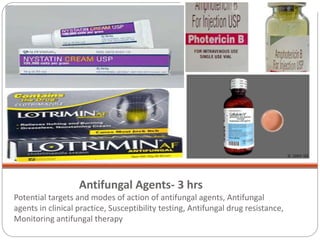
Antifungal Agents- 3 hrs
Potential targets and modes of action of antifungal agents, Antifungal
agents in clinical practice, Susceptibility testing, Antifungal drug resistance,
Monitoring antifungal therapy
Introduction
 Fungi are also called mycoses
 They are eukaryotic organisms and possess cell
wall
 Fungal cell wall is made up of chitin (NAG)
 Cell membrane is made up of Ergosterol
 In 1950s the incidence of fungal infections were
predominant
 Fungal infections are iatrogenic/ drug induced
 Infections majority occur in immunocompromised
people receiving immunosuppressants
Cont..
 Similar to animals, fungi are heterotrophs, that is, they
acquire their food by absorbing dissolved molecules,
typically by secreting digestive enzymes into their
environment
 The discipline of biology devoted to the study of fungi
is known as mycology
 Fungal cells contain membrane bound nuclei with
chromosomes that contain DNA with noncoding
regions called introns and coding regions called
exons. Fungi have membrane bound cytoplasmic
organelles such as mitochondria, Sterol containing
membranes, and ribosomes of the 80s type
Cont..
 Fungi lacks chloroplasts
 Fungi have a cell wall and vacuoles. They
reproduce by both sexual and asexual means,
and like basal plant groups ( such as ferns and
mosses) produce spores.
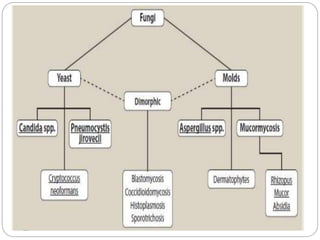
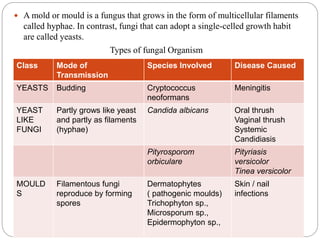
 A mold or mould is a fungus that grows in the form of multicellular filaments
called hyphae. In contrast, fungi that can adopt a single-celled growth habit
are called yeasts.
Types of fungal Organism
Class Mode of
Transmission
Species Involved Disease Caused
YEASTS Budding Cryptococcus
neoformans
Meningitis
YEAST
LIKE
FUNGI
Partly grows like yeast
and partly as filaments
(hyphae)
Candida albicans Oral thrush
Vaginal thrush
Systemic
Candidiasis
Pityrosporom
orbiculare
Pityriasis
versicolor
Tinea versicolor
MOULD
S
Filamentous fungi
reproduce by forming
spores
Dermatophytes
( pathogenic moulds)
Trichophyton sp.,
Microsporum sp.,
Epidermophyton sp.,
Skin / nail
infections
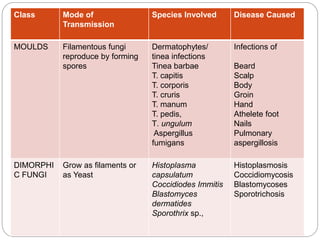
Class Mode of
Transmission
Species Involved Disease Caused
MOULDS Filamentous fungi
reproduce by forming
spores
Dermatophytes/
tinea infections
Tinea barbae
T. capitis
T. corporis
T. cruris
T. manum
T. pedis,
T. ungulum
Aspergillus
fumigans
Infections of
Beard
Scalp
Body
Groin
Hand
Athelete foot
Nails
Pulmonary
aspergillosis
DIMORPHI
C FUNGI
Grow as filaments or
as Yeast
Histoplasma
capsulatum
Coccidiodes Immitis
Blastomyces
dermatides
Sporothrix sp.,
Histoplasmosis
Coccidiomycosis
Blastomycoses
Sporotrichosis
Cont..
 Cryptococcus neoformans and Cryptococcus
gattii are significant pathogens of
immunocompromised people. They are the
species primarily responsible for Cryptococcossis,
a fungal disease that occurs in about one million
HIV/AIDS patients, causing over 600,000 deaths
annually.
 The cells of these yeasts are surrounded by a
rigid polysaccharide capsule, which helps to
prevent them from being recognized and engulfed
by white blood cells in the human body
Cont..
 Yeasts of the candida genus, another group of
opportunistic pathogens, cause oral and vaginal
infections in humans, known as candidiasis.
 Candida is commonly found as a commensal
yeast in the mucous membranes of humans and
other warm-blooded animals.
 Aspergillosis is the group of diseases caused by
Aspergillus. The most common subtype among
paranasal sinus infections associated with
aspergillosis is A. fumigatus.
Cont..
 The symptoms include fever, cough, chest pain,
or breathlessness, which also occur in many
other illnesses, so diagnosis can be difficult.
 Usually, only patients with already weakened
immune systems or who suffer other lung
conditions are susceptible
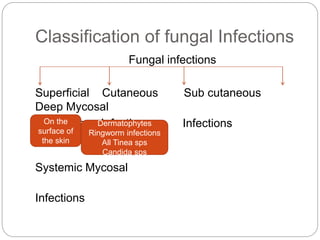
Classification of fungal Infections
Fungal infections
Superficial Cutaneous Sub cutaneous
Deep Mycosal
Infections Infections Infections
Infections or
Systemic Mycosal
Infections
On the
surface of
the skin
Dermatophytes
Ringworm infections
All Tinea sps
Candida sps
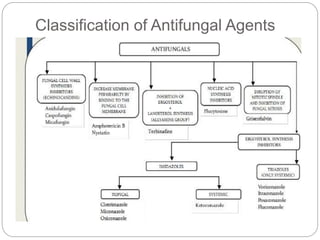
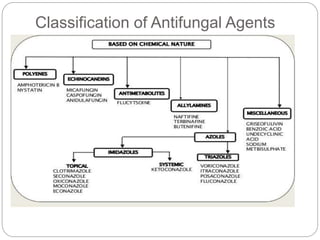
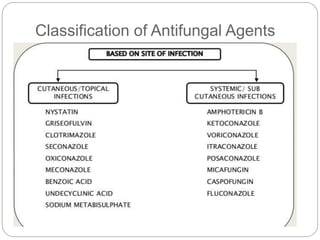
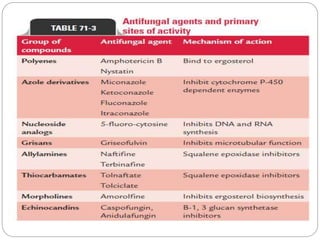
Classification of Antifungal Agents
Antifungal Agents
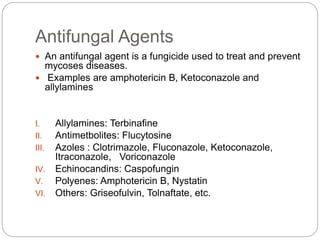
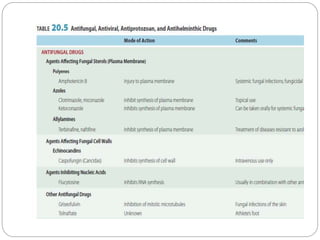
 An antifungal agent is a fungicide used to treat and prevent
mycoses diseases.
 Examples are amphotericin B, Ketoconazole and
allylamines
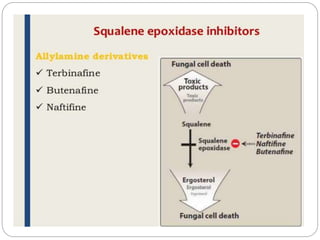
I. Allylamines: Terbinafine
II. Antimetbolites: Flucytosine
III. Azoles : Clotrimazole, Fluconazole, Ketoconazole,
Itraconazole, Voriconazole
IV. Echinocandins: Caspofungin
V. Polyenes: Amphotericin B, Nystatin
VI. Others: Griseofulvin, Tolnaftate, etc.
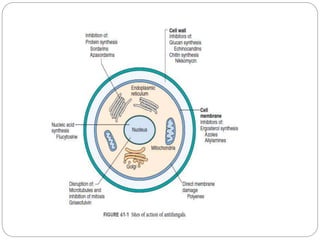
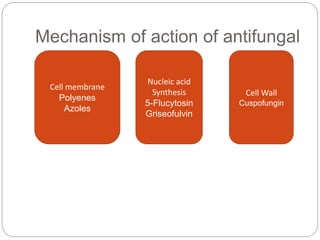
Mechanism of action of antifungal
Cell membrane
Polyenes
Azoles
Nucleic acid
Synthesis
5-Flucytosin
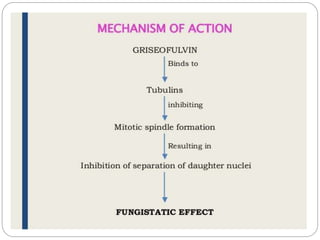
Griseofulvin
Cell Wall
Cuspofungin
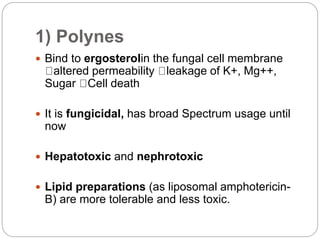
1) Polynes
 Bind to ergosterolin the fungal cell membrane
altered permeability leakage of K+, Mg++,
Sugar Cell death
 It is fungicidal, has broad Spectrum usage until
now
 Hepatotoxic and nephrotoxic
 Lipid preparations (as liposomal amphotericin-
B) are more tolerable and less toxic.
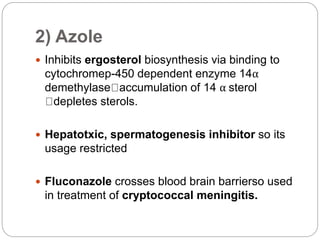
2) Azole
 Inhibits ergosterol biosynthesis via binding to
cytochromep-450 dependent enzyme 14α
demethylase accumulation of 14 α sterol
depletes sterols.
 Hepatotxic, spermatogenesis inhibitor so its
usage restricted
 Fluconazole crosses blood brain barrierso used
in treatment of cryptococcal meningitis.
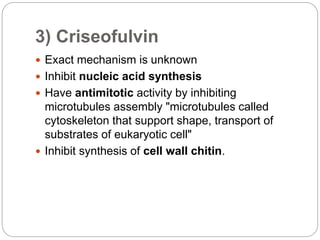
3) Criseofulvin
 Exact mechanism is unknown
 Inhibit nucleic acid synthesis
 Have antimitotic activity by inhibiting
microtubules assembly "microtubules called
cytoskeleton that support shape, transport of
substrates of eukaryotic cell"
 Inhibit synthesis of cell wall chitin.
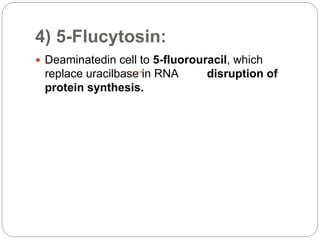
4) 5-Flucytosin:
 Deaminatedin cell to 5-fluorouracil, which
replace uracilbase in RNA disruption of
protein synthesis.
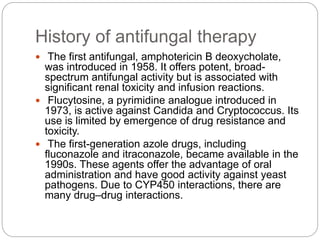
History of antifungal therapy
 The first antifungal, amphotericin B deoxycholate,
was introduced in 1958. It offers potent, broad-
spectrum antifungal activity but is associated with
significant renal toxicity and infusion reactions.
 Flucytosine, a pyrimidine analogue introduced in
1973, is active against Candida and Cryptococcus. Its
use is limited by emergence of drug resistance and
toxicity.
 The first-generation azole drugs, including
fluconazole and itraconazole, became available in the
1990s. These agents offer the advantage of oral
administration and have good activity against yeast
pathogens. Due to CYP450 interactions, there are
many drug–drug interactions.
Cont….
 Lipid-based amphotericin B formulations were
introduced in the 1990s and maintain the potent,
broad-spectrum activity of the deoxycholate
formulation with less toxicity.
 The echinocandin drugs became available in the
2000s and offer excellent activity against Candida
with few drug–drug interactions; however, they are
available in parenteral form only.
 The second-generation of azole drugs, including
voriconazole, posaconazole, and isavuconazole, were
brought to market beginning in the 2000s. The major
advantage of these agents is the extended spectrum
of activity against filamentous fungi.
POLYENE ANTIBIOTICS: AMPHOTERICIN B
 Amphotericin B is a naturally occuring polyene
antifungal produced by Streptomyces nodosus. In
spite of its toxic potential, amphotericin B remains the
drug of choice for the treatment of several life-
threatening mycoses.
 It is a macromolecule and consists of both lipophilic
and hydrophilic groups i.e., it is amphiphilic in nature.
 Conjugated nature is responsible for lipophilicity and
OH group is responsible for hydrophilicity
 The amphiphilicity of the drug is responsible for its
unique mechanism of action
PHARMACOKINETICS
 Yellowish colour powder
 Unstable in aqueous solutions
 Given through IV route in salt form along with
AMPHOTERICIN DESOXYCHOLATE
 Metabolized in liver
 t1/2- 15 days
It is extensively bound to plasma proteins and is
distributed throughout the body
Cont…
Inflamation favors penetration into various body
fluids, but little of the drug is found in the CSF,
Vitreous humor, or amniotic fluid. However,
amphotericin B does cross the placenta.
Accumulates in renal cells causing nephrotoxicity
leading to Azotemia characterized by decreased
GFR, Urinary output, Crcl and increased Scr and
BUN
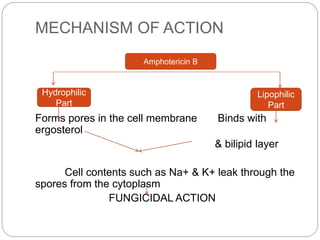
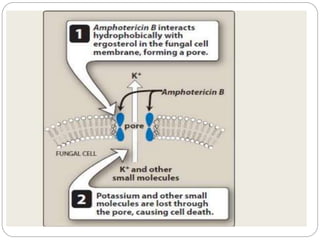
MECHANISM OF ACTION
Forms pores in the cell membrane Binds with
ergosterol
& bilipid layer
Cell contents such as Na+ & K+ leak through the
spores from the cytoplasm
FUNGICIDAL ACTION
Amphotericin B
Hydrophilic
Part
Lipophilic
Part
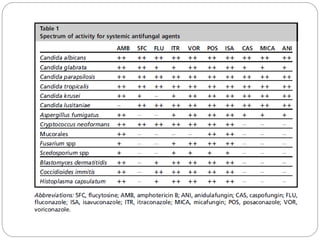
Antifungal Spectrum:
 It is effective against a wide range of fungi,
including
 Candida albicans
 Histoplasma capsulatum
 Cryptococcus neoformans
 Coccidiodes immitis
 Blastomyces dermatitidis
 Aspergillus
Amphotericin B is also used in the treatment of
the protozoal infection Leishmaniasis.
DOSE:
 Amphotericin B has a low therapeutic index.
 The total adult daily dose of the conventional
formulation should not exceed 1.5 mg/kg/d,
whereas lipid formulations have been given safely
in doses up to 10 mg/kg/d.
Adverse effects:
 Fever and chills:
These occurs most commonly 1 to 3 hours after starting
the IV administration but usually subside with repeated
administration of the drug. Premedication with a
corticosteroid or an antipyretic helps to prevent this
problem.
 Renal impairment:
 Patients may exhibit a decrease in glomerular
filtration rate and renal tubular function.
 Serum creatinine may increase, Creatinine clearance
can decrease, and potassium and magnesium are
lost.
Cont…
 Renal function usually returns with
discontinuation of the drug, but residual damage
is likely at high doses.
 To minimize nephrotoxicity, sodium loading with
infusions of normal saline and the lipid based
ampotericin B products can be used.
• Hypotension:
 A shock-like fall in blood pressure accompanied
by hypokalemia may occur, requiring potassium
supplementation.
Cont…
 Care must be exercised in patients taking digoxin
and other drugs that can cause potassium
fluctuations.
• Thrombophlebitis:
 Adding heparin to the infusion can alleviate this
problem.
Therapeutic Uses
 Intestinal candidiasis
 Tropical candidiasis
 Febrile neutropenia
 Leishmaniasis- Kala azar
 Limited use in systemic infections because of
increased toxicity
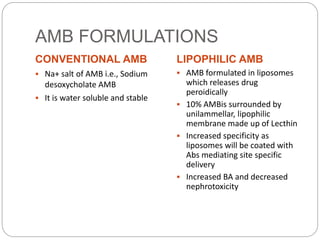
AMB FORMULATIONS
CONVENTIONAL AMB LIPOPHILIC AMB
 Na+ salt of AMB i.e., Sodium
desoxycholate AMB
 It is water soluble and stable
 AMB formulated in liposomes
which releases drug
peroidically
 10% AMBis surrounded by
unilammellar, lipophilic
membrane made up of Lecthin
 Increased specificity as
liposomes will be coated with
Abs mediating site specific
delivery
 Increased BA and decreased
nephrotoxicity
POLYENE ANTIBIOTICS: NYSTATIN
 Posses very high systemic toxicity
 Not given in IV
 Used to treat topical infections
 Earlier it was used to treat moniliasis
It is administered as an oral agent (“swish and
swallow” or “swish and spit”) for the treatment of-
 Oropharyngeal candidiasis (thrush)
 Intravaginally for vulvovaginal candidiasis
 Topically for cutaneous candidiasis
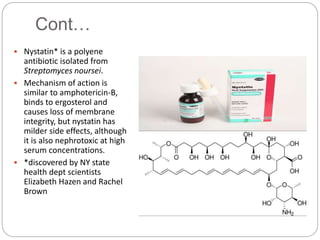
Cont…
 Nystatin* is a polyene
antibiotic isolated from
Streptomyces noursei.
 Mechanism of action is
similar to amphotericin-B,
binds to ergosterol and
causes loss of membrane
integrity, but nystatin has
milder side effects, although
it is also nephrotoxic at high
serum concentrations.
 *discovered by NY state
health dept scientists
Elizabeth Hazen and Rachel
Brown
ANTIMETABOLITES:
FLUCYTOSINE
 FLUCYTOSINE is a cytosine moiety
 It is a pyrimidine analogue
 6 membered ring structure
 Posses 2 `N` atoms
 Earlier used as an Anticancer agent
 But was proved to have potent action against
Cryptococcus sp., and Candida sp.,
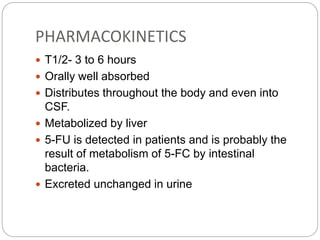
PHARMACOKINETICS
 T1/2- 3 to 6 hours
 Orally well absorbed
 Distributes throughout the body and even into
CSF.
 Metabolized by liver
 5-FU is detected in patients and is probably the
result of metabolism of 5-FC by intestinal
bacteria.
 Excreted unchanged in urine
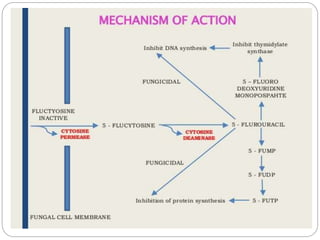
MECHANISM OF ACTION
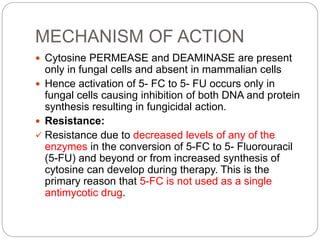
 Cytosine PERMEASE and DEAMINASE are present
only in fungal cells and absent in mammalian cells
 Hence activation of 5- FC to 5- FU occurs only in
fungal cells causing inhibition of both DNA and protein
synthesis resulting in fungicidal action.
 Resistance:
 Resistance due to decreased levels of any of the
enzymes in the conversion of 5-FC to 5- Fluorouracil
(5-FU) and beyond or from increased synthesis of
cytosine can develop during therapy. This is the
primary reason that 5-FC is not used as a single
antimycotic drug.
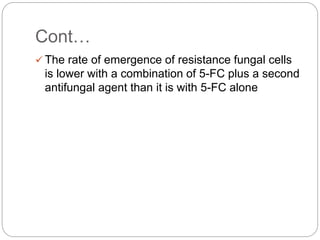
Cont…
 The rate of emergence of resistance fungal cells
is lower with a combination of 5-FC plus a second
antifungal agent than it is with 5-FC alone
Cont…
ADRS THERAPEUTIC USES
 Bone marrow
supression
 Hepatotoxicity
 5-FC administration in
excess stimulate
intestinal colonic
bacteria which
produce Cytosine
deamiase
 Synergistic with
AMPHOTERICIN as it
increases
permeability in to
fungal cells by
formation of pores in
the cell membrane.
 Cryptococcosis
 candidiasis
ECHINOCANDINS
 Newer antifungal agents that inhibit the fungal cell
wall synthesis
 Discovered serendipitously
 During fermentation process, some metabolites
were found to inhibit Candida sp., and they were
named ECHINOCANDINS
 The echinocandins have potent activity agains
Aspergillus and most candida species, including
those species resistant to azoles. However, they
have minimal activity agaist other fungi.
Cont…
 One of the first echinocandins, discovered in
1974, echinocandins B, could not be used
clinically due to risk of high degree of hemolysis.
 Caspofundin, micafungin, and anidulafungin are
semisynthetic echinocandin derivatives with
clinical use due to their solubility, antifungal
spectrum, and pharmacokinetic properties.
 All these preparations so far have low oral
bioavailability, so must be given intravenously
only.
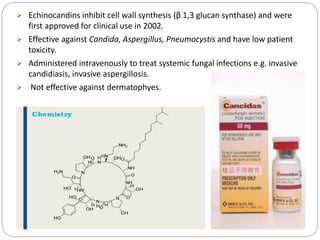
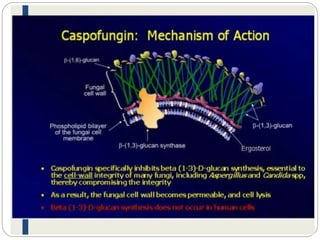
 Echinocandins inhibit cell wall synthesis (β 1,3 glucan synthase) and were
first approved for clinical use in 2002.
 Effective against Candida, Aspergillus, Pneumocystis and have low patient
toxicity.
 Administered intravenously to treat systemic fungal infections e.g. invasive
candidiasis, invasive aspergillosis.
 Not effective against dermatophyes.
Chemistry
 The present day clinically used echinocandins are
semisynthetic pneumocandins, which are
chemically lipopeptide in nature, consisting of
large cyclic (Hexa) peptoid.
 Caspofundin, micafungin, and anidulafungin are
similar cyclic hexapeptide antibiotics linked to
long modified N_linked acyl fatty acid chains.
 The chains act as anchors on the fungal cell
membrane to help facilitate antifungal activity
MECHANISM OF ACTION
 Inhibits the synthesis of ß 1,3 – D- glucan via
noncompetitive inhibition of the enzyme 1,3-ß
glucan synthase and are thus called “penicillin of
antifungals” resulting in the inhibition of cell wall,
leading to lysis and death.
PHARMACOKINETICS
 Due to the large molecular weight of
echinocandins, they have poor oral bioavailability
and are administered by intravenous infusion.
 In addition, their large structures limit penetration
into cerebrospinal fluid, urine, and eyes. In
plasma, echinocandins have a high affinity to
serum proteins.
 Echinocandins do not have primary interactions
with CYP450 or P- glycoprotein pumps.
Cont…
 Resistance:
 Echinocandin resistance is rare
 Resistance include alterations in the glucan
synthase and overexpression of efflux pumps
Advantages of echinocandins:
 Broad range (especially against all candida), thus can
be given empirically in febrile neutropenia and stem
cell transplant.
 Can be used in case of azole-resistance candida or
use as a second-line agent for refractory aspergillosis
 Long half-life (polyphasic elimination: alpha phase 1-2
hours+ beta phase 9-11 hours+ gamma phase 40-50
hours)
 Not an inhibitor, inducer, or substrate of the
cytochrome P450 system, or P-glycoprotein, thus
minimal drug interactions
Cont…
 No dose adjustment is necessary based on age,
gender, race better (or no less effective) than
amphotericin B and fluconazole against yeast
infections
 Low toxicity: Only histamine release (3%), fever
(2.9%), nausea and vomiting (2.9%), and
phlebitis at the injection site (2.9%), very rarely
allergy and anaphylaxis
Disadvantages of echinocandins:
 Embryotoxic (Category C) thus should be avoided
if possible in pregnancy
 Needs dose adjustment in liver disease
 Poor ocular penetration in fungal endophthalmitis
CASPOFUNGIN
 Caspofungin is a first-line option for patients with
invasive candidiasis, including candidemia, and a
second-line option for invasive aspergillosis in
patients who have failed or can not tolerate
amphotericin B or an azole.
 Caspofungin has triphasic nonlinear
pharmacokinetics.
 Micafungin (hepatically metabolized by arylsulfatase,
catechol O-methyltransferase, and hydroxylation) and
anidulafungin (degraded spontaneously in the system
and excreted mostly as a metabolite in the urine)
have linear elimination.
Cont…
 Micafungin and Anidulafungin:
Micafungin and Anidulafungin are first-line options
for the treatment of invasive candidiasis, including
candidemia.
Micafungin is alsoindicated for the prophylaxis of
invasive Candida infections in patients who are
undergoing hematopoietic stem cell transplantation.
AZOLE ANTIFUNGALS
 Azole antifungals are made up of two different
classes of drugs
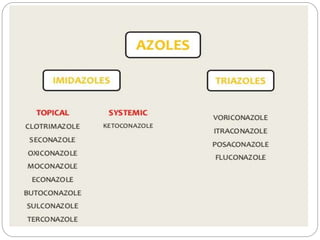
 Imidazoles
 Triazoles
Although these drugs have similar mechanisms of
action and spectra of activity, their
pharmacokinetics and therapeutic uses vary
significantly.
Cont…
 Imidazoles are given topically for cutaneous
infections.
 Triazoles are given systemically for the treatment
or prophylaxis of cutaneous and systemic fungal
infections
AZOLE ANTIFUNGALS
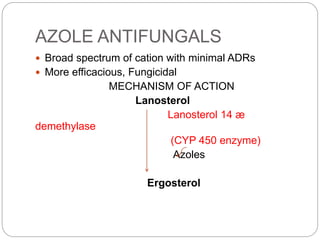
 Broad spectrum of cation with minimal ADRs
 More efficacious, Fungicidal
MECHANISM OF ACTION
Lanosterol
Lanosterol 14 æ
demethylase
(CYP 450 enzyme)
Azoles
Ergosterol
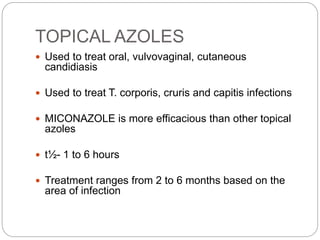
TOPICAL AZOLES
 Used to treat oral, vulvovaginal, cutaneous
candidiasis
 Used to treat T. corporis, cruris and capitis infections
 MICONAZOLE is more efficacious than other topical
azoles
 t½- 1 to 6 hours
 Treatment ranges from 2 to 6 months based on the
area of infection
SYSTEMIC AZOLES:
KETOCONAZOLE
 Oral KETOCONAZOLE has historically been used for
the treatment of systemic fungal infections but is
rarely used today due to the risk for severe liver injury,
adrenal insufficiency, and adverse drug interactions.
PHARMACOKINETICS
 Orally well absorbed
 Metabolised by liver
 Well absorbed through out the body does not enter CSF
 It is a potent CYP 450 enzyme inhibitor
PHARMACOKINETICS
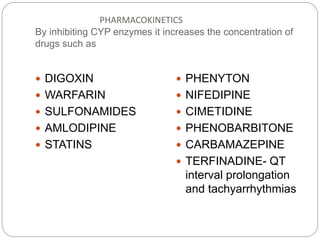
By inhibiting CYP enzymes it increases the concentration of
drugs such as
 DIGOXIN
 WARFARIN
 SULFONAMIDES
 AMLODIPINE
 STATINS
 PHENYTON
 NIFEDIPINE
 CIMETIDINE
 PHENOBARBITONE
 CARBAMAZEPINE
 TERFINADINE- QT
interval prolongation
and tachyarrhythmias
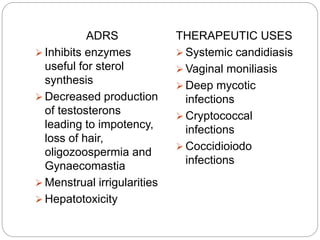
ADRS
 Inhibits enzymes
useful for sterol
synthesis
 Decreased production
of testosterons
leading to impotency,
loss of hair,
oligozoospermia and
Gynaecomastia
 Menstrual irrigularities
 Hepatotoxicity
THERAPEUTIC USES
 Systemic candidiasis
 Vaginal moniliasis
 Deep mycotic
infections
 Cryptococcal
infections
 Coccidioiodo
infections
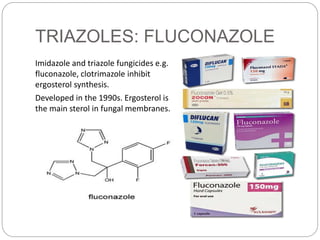
TRIAZOLES: FLUCONAZOLE
Imidazole and triazole fungicides e.g.
fluconazole, clotrimazole inhibit
ergosterol synthesis.
Developed in the 1990s. Ergosterol is
the main sterol in fungal membranes.
TRIAZOLES: FLUCONAZOLE
 Most of its spectrum limited to yeasts and some
dimorphic fungi.
 Available in oral and IV formulations.
PHARMACOKINETICS
 Orally well absorbed
 Excreated unchanged in urine upto 90%
 Crossed BBB
 Has increased affinity towards fungal lanosterol
Cont…
 Infective against:
 Aspergillosis
 Histoplasmosis
 Blastomycoses
INDICATIONS
 It is used for prophylaxis against invasive fungal
infections in recipients of bone marrow
transplants.
Cont….
 It is the drug of choice for Cryptococcus
neoformans after induction therapy with
amphotericin B and flucytosine and is used for
the treatment of candidemia and
coccidioidomycosis.
 It is commonly used as a single-dose oral
treatment for vulvovaginal candidiasis.
TRIAZOLES: ITRACONAZOLE
 Orally well absorbed
 IV can be given in serious infections
 Not effective against fungal meningitis
 Adverse effects include nausea, vomiting, rash,
hypokalemia, hypertension, edema, and
headache, hepatotoxicity
 It has a negative inotropic effect and should be
avoided in patients with evidence of ventricular
dysfunction, such as heart failure.
INDICATIONS
 FLUCONAZOLE resistance fungal meningitis
 Histoplasmosis
 Blastomycoses
 Sporotrichosis
ITRACONAZOLE is the
drug of
 Mucormycosis choice
 Coccidioidomycosis
 Paracoccidioidomycosis
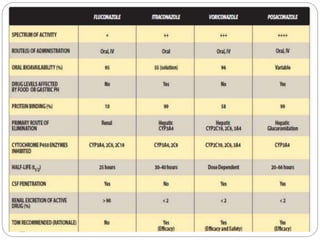
POSACONAZOLE
 Newer and most costliest of all the azoles
 Limited use due to increased cost
 It is available as an oral suspension, oral tablet,
or IV formulation
 It is commonly used for the treatment and
prophylaxis of invasive Candida and Aspergillus
infections in severe immunocompromised
patients.
 CYP inhibitor
VORICONAZOLE
 It has replaced amphotericin B as the drug of
choice for invasive Aspergillosis.
 It is also approved for treatment of invasive
Candidiasis, as well as serious infections caused
by Scedosporium and Fusarium species.
 Adverse effects are similar to those of the other
azoles; however high trough concentrations are
associated with visual and auditory hallucinations
and an increased incidence of hepatotoxicity.
All azoles are teratogenic hence contraindicated in
pregnant and lactating women
DRUGS FOR CUTANEOUS
MYCOTIC INFECTIONS
 Mold- like fungi that cause cutaneous infections
are called dermatophytes or tinea
 Common dermatomycoses, such as tinea
infections that appear as rings or round red
patches with clear centers, are often reffered to
as “ringworm.” This is a misnomer because fungi
rather than worms cause the disease.
 Trichophyton, Microsporum, and
Epidermophyton.
Terbinafine
 Oral terbinafine is the dru of choice for treating
dermatophyte onychomycoses (fungal infections
of nails, therapy requires 3 months)
 Tropical terbinafine (1% cream, gel or solution) is
used to
treat tinea pedis, tinea corporis (ringworm), and
tinea curis
(infection of the groin).Duration of treatment is
usually 1 week.
PHARMACOKINETICS
 Terbinafine is available for oral and topical
administration, although its bioavailability is only
40% due to first-pass metabolism
 It is highly protein bound and is deposited in the
skin, nails, and adipose tissue.
 It accumulates in breast milk and should not be
given to nourising mothers.
 A prologed terminal half-life of 200 to 400 hours
may reflect the slow release from these tissues.
Adverse effects:
 Common adverse effects of terbinafine include
gastrointestinal disturbances (diarrhea,
dyspepsia, and nausea), headache, and rash.
 Taste and visual disturbances have been
reported, as well as transient elevations in serum
hepatic traaansaminases.
Terbinafine is an inhibitor of the CYP450 2D6
isoenzyme.
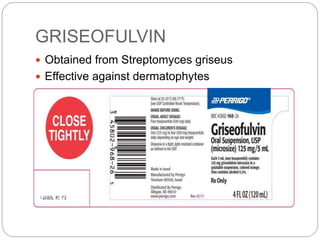
GRISEOFULVIN
 Obtained from Streptomyces griseus
 Effective against dermatophytes
Cont…
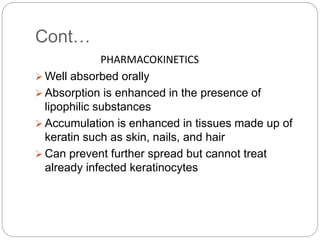
PHARMACOKINETICS
 Well absorbed orally
 Absorption is enhanced in the presence of
lipophilic substances
 Accumulation is enhanced in tissues made up of
keratin such as skin, nails, and hair
 Can prevent further spread but cannot treat
already infected keratinocytes
Antifungal Susceptibility Testing
 Antifungal susceptibility tests are designed to provide
information that helps the physician select the
appropriate antifungal agent to treat a specific
infection.
 Although antifungal susceptibility testing perhaps has
not advanced as far as methods for determining the
susceptibility of bacteria to antimicrobial agents,
significant progress has been made.
 Substantial efforts have attempted to develop a
standardized method that is reproducible among
different laboratories.
 All of the technical variables in the testing process
have been standardized, and the reference methods
are now well established.
Cont…
 The Clinical Laboratory Standards Institute (CLSI)
sets the standards for antifungal susceptibility testing.
 The current guidelines for these tests are provided in
the following four documents, which are available on
the CLSI website (www.clsi.org):
 It must be emphasized that the methodology and
interpretation of antifungal susceptibility tests continue
to
evolve, and the laboratory should check for updated
standards on a regular basis.
Cont…
 Antifungal susceptibility tests are costly and time-
consuming, but they may have value in the
following circumstances:
• Determining antibiograms for isolates in an
institution
• Aid in the management of patients with
refractory oropharyngeal candidiasis
• Aid in the management of patients with invasive
candidiasis
caused by non-albicans Candida spp. when the
use of the azoles is in question
Cont…
 The interpretative breakpoints for fluconazole,
itraconazole,
and flucytosine are based on experience in treating patients
with mucosal infections, but they also appear to be
consistent with information assembled for invasive infections
 Problems that complicate the interpretative guidelines
include the following:
• Patient’s physical condition (i.e., immunologic status)
• Type of infection and the drug’s ability to penetrate a closed
space (in the case of an abscess)
• Dose of the drug and its pharmacokinetics
• Susceptibility testing method used and serum level of drug
administered
How to select proper antifungal
drug?
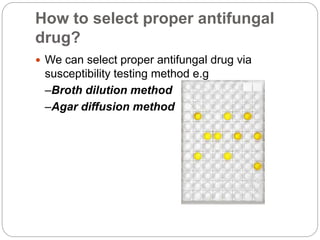
 We can select proper antifungal drug via
susceptibility testing method e.g
–Broth dilution method
–Agar diffusion method
Susceptibility Testing for Candida
species
 The methods to determine antifungal susceptibility
against the Candida species considering the
availability of definitive data — both CLSI and
EUCAST have standardised disc
diffusion and broth microdilution methodologies and
breakpoints (clinical or epidemiological cut-offs).
Disc Diffusion Method:
 On an agar plate, colonies of fungal isolate are tested
against antifungals. Clear zones around each disk
(zones of inhibition) are measured to determine
susceptibility and MICs.
Prerequisites
 Müller-Hinton agar plate supplemented with 0.5
μg/ml methylene blue and 2% dextrose.
 Glass tube with 0.85% sterile saline solution.
 Isolated yeast colonies from a 20-24 hours old
culture grown on an antibiotic-free medium (SBA,
SDA or PDA).
Procedure
 Make a suspension of 0.5 McFarland turbidity in 0.85% saline with a few
colonies from a 20-24 hours old culture of Candida species on an antibiotic-free
medium.
 Soak a sterile cotton swab in the suspension, rolling it along the glass wall of the
tube to get rid of the excess moisture.
 Make lawn on MHA supplemented with methylene blue and 2% dextrose.
 Using sterile forceps place antifungal discs on the agar surface and incubate the
plates at 35+1°C for 20-24 hours in ambient air.
 Measure zone diameters for each antifungal:
 For azoles measure zones from where there is 50-80% inhibition of growth.
 For caspofungin measure zones from where there is complete inhibition of
growth.
 Interpret readings according to the specific Candida species (Table 4.1).
 Compare with QC ranges for the recommended ATCC strains (Table 4.2)
Cont…
 Minimum Inhibitory Concentration Method –
E-test:
 A plastic strip is impregnated with gradually
decreasing concentration of a particular antibiotic.
The method is convenient but costly since a new
strip is needed for each antibiotic. Breakpoints of
broth microdilution method are applied, although
not yet approved for E-test.
Prerequisites
 RPMI agar with phenol red and 2% dextrose. For
RPMI media preparation, refer to EUCAST
guidelines on antifungal susceptibility testing.
 Glass tube with 0.85% sterile saline solution.
 Isolated yeast colonies from a 20-24 hours old
culture grown on an antibiotic-free medium (SBA,
SDA or PDA).
Procedure
 Make a suspension of 0.5 McFarland turbidity with a few colonies from a
20-24 hours old culture of Candida species on an antibiotic-free medium
in 0.85% saline.
 Soak a sterile cotton swab in the suspension, rolling it along the glass
wall of the tube to get rid of excess moisture.
 Make lawn on RPMI agar.
 Use sterile forceps to place E-test strips on the surface of the agar
taking care not to move the strip and ensuring there are no air bubbles
between the strip and the agar surface.
 Incubate the plates at 35+1°C for 20-24 hours in ambient air.
 For azoles measure MICs where there is 50-80% inhibition of growth.
 For amphotericin B and echinocandins measure MICs where there is
complete inhibition of growth.
 Interpret readings according to specific Candida species (Table 4.1).
 Compare with QC ranges for the recommended ATCC strains (Table
4.2).
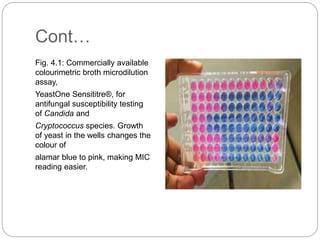
Minimum Inhibitory Concentration
Method – Broth Microdilution
 This is considered gold standard in antifungal
susceptibility testing. Detailed methodology is
beyond the scope of this book but is available in
CLSI M24-A4 and EUCAST (online). Commercial
variations of the conventional broth microdilution
method are also available from various
manufacturers. These products are user-friendly
and results
are comparable to the standard method.
Cont…
Fig. 4.1: Commercially available
colourimetric broth microdilution
assay,
YeastOne Sensititre®, for
antifungal susceptibility testing
of Candida and
Cryptococcus species. Growth
of yeast in the wells changes the
colour of
alamar blue to pink, making MIC
reading easier.
Cont…
 Recently developed & standardized
 Performed in referral centres & special
laboratories
 Expensive
 Not routine in small labs
How do doctors select antifungal agents for
treatment?
Empirical Antifungal
 Early treatment:
Better prognosis, chance of recovery
 Improved diagnostic techniques
Rapid, accurate diagnosis
Antifungal sensitivity testing
Need for empirical antifungal therapy?
Monitoring Antifungal Therapy
Role Of Laboratory:
 Mycology consultation service
 Advice on antifungal therapy
 Rapid, accurate diagnosis
 Team Work
 Follow up on outcome
 Research & training
Cont…
Role Of Clinician:
 Utilization of new diagnostic tools
 Communication with laboratory staff
 Development of consensus guidelines
 Implementation of the above
Antifungal agents
Antifungal agents

Antifungal agents

  • 1.
    Name: Purshotam KumarSah Kanu Roll No.: MB 1318/075 Level: M.Sc Microbiology (3rd Sem) Central Department of Microbiology Tribhuvan University, Kirtipur Kathmandu, Nepal MB 609 Systemic and Diagnostic Mycology
  • 2.
    Antifungal Agents- 3hrs Potential targets and modes of action of antifungal agents, Antifungal agents in clinical practice, Susceptibility testing, Antifungal drug resistance, Monitoring antifungal therapy
  • 3.
    Introduction  Fungi arealso called mycoses  They are eukaryotic organisms and possess cell wall  Fungal cell wall is made up of chitin (NAG)  Cell membrane is made up of Ergosterol  In 1950s the incidence of fungal infections were predominant  Fungal infections are iatrogenic/ drug induced  Infections majority occur in immunocompromised people receiving immunosuppressants
  • 4.
    Cont..  Similar toanimals, fungi are heterotrophs, that is, they acquire their food by absorbing dissolved molecules, typically by secreting digestive enzymes into their environment  The discipline of biology devoted to the study of fungi is known as mycology  Fungal cells contain membrane bound nuclei with chromosomes that contain DNA with noncoding regions called introns and coding regions called exons. Fungi have membrane bound cytoplasmic organelles such as mitochondria, Sterol containing membranes, and ribosomes of the 80s type
  • 5.
    Cont..  Fungi lackschloroplasts  Fungi have a cell wall and vacuoles. They reproduce by both sexual and asexual means, and like basal plant groups ( such as ferns and mosses) produce spores.
  • 7.
     A moldor mould is a fungus that grows in the form of multicellular filaments called hyphae. In contrast, fungi that can adopt a single-celled growth habit are called yeasts. Types of fungal Organism Class Mode of Transmission Species Involved Disease Caused YEASTS Budding Cryptococcus neoformans Meningitis YEAST LIKE FUNGI Partly grows like yeast and partly as filaments (hyphae) Candida albicans Oral thrush Vaginal thrush Systemic Candidiasis Pityrosporom orbiculare Pityriasis versicolor Tinea versicolor MOULD S Filamentous fungi reproduce by forming spores Dermatophytes ( pathogenic moulds) Trichophyton sp., Microsporum sp., Epidermophyton sp., Skin / nail infections
  • 8.
    Class Mode of Transmission SpeciesInvolved Disease Caused MOULDS Filamentous fungi reproduce by forming spores Dermatophytes/ tinea infections Tinea barbae T. capitis T. corporis T. cruris T. manum T. pedis, T. ungulum Aspergillus fumigans Infections of Beard Scalp Body Groin Hand Athelete foot Nails Pulmonary aspergillosis DIMORPHI C FUNGI Grow as filaments or as Yeast Histoplasma capsulatum Coccidiodes Immitis Blastomyces dermatides Sporothrix sp., Histoplasmosis Coccidiomycosis Blastomycoses Sporotrichosis
  • 9.
    Cont..  Cryptococcus neoformansand Cryptococcus gattii are significant pathogens of immunocompromised people. They are the species primarily responsible for Cryptococcossis, a fungal disease that occurs in about one million HIV/AIDS patients, causing over 600,000 deaths annually.  The cells of these yeasts are surrounded by a rigid polysaccharide capsule, which helps to prevent them from being recognized and engulfed by white blood cells in the human body
  • 10.
    Cont..  Yeasts ofthe candida genus, another group of opportunistic pathogens, cause oral and vaginal infections in humans, known as candidiasis.  Candida is commonly found as a commensal yeast in the mucous membranes of humans and other warm-blooded animals.  Aspergillosis is the group of diseases caused by Aspergillus. The most common subtype among paranasal sinus infections associated with aspergillosis is A. fumigatus.
  • 11.
    Cont..  The symptomsinclude fever, cough, chest pain, or breathlessness, which also occur in many other illnesses, so diagnosis can be difficult.  Usually, only patients with already weakened immune systems or who suffer other lung conditions are susceptible
  • 12.
    Classification of fungalInfections Fungal infections Superficial Cutaneous Sub cutaneous Deep Mycosal Infections Infections Infections Infections or Systemic Mycosal Infections On the surface of the skin Dermatophytes Ringworm infections All Tinea sps Candida sps
  • 13.
  • 14.
  • 15.
  • 17.
    Antifungal Agents  Anantifungal agent is a fungicide used to treat and prevent mycoses diseases.  Examples are amphotericin B, Ketoconazole and allylamines I. Allylamines: Terbinafine II. Antimetbolites: Flucytosine III. Azoles : Clotrimazole, Fluconazole, Ketoconazole, Itraconazole, Voriconazole IV. Echinocandins: Caspofungin V. Polyenes: Amphotericin B, Nystatin VI. Others: Griseofulvin, Tolnaftate, etc.
  • 18.
    Mechanism of actionof antifungal Cell membrane Polyenes Azoles Nucleic acid Synthesis 5-Flucytosin Griseofulvin Cell Wall Cuspofungin
  • 19.
    1) Polynes  Bindto ergosterolin the fungal cell membrane altered permeability leakage of K+, Mg++, Sugar Cell death  It is fungicidal, has broad Spectrum usage until now  Hepatotoxic and nephrotoxic  Lipid preparations (as liposomal amphotericin- B) are more tolerable and less toxic.
  • 20.
    2) Azole  Inhibitsergosterol biosynthesis via binding to cytochromep-450 dependent enzyme 14α demethylase accumulation of 14 α sterol depletes sterols.  Hepatotxic, spermatogenesis inhibitor so its usage restricted  Fluconazole crosses blood brain barrierso used in treatment of cryptococcal meningitis.
  • 21.
    3) Criseofulvin  Exactmechanism is unknown  Inhibit nucleic acid synthesis  Have antimitotic activity by inhibiting microtubules assembly "microtubules called cytoskeleton that support shape, transport of substrates of eukaryotic cell"  Inhibit synthesis of cell wall chitin.
  • 22.
    4) 5-Flucytosin:  Deaminatedincell to 5-fluorouracil, which replace uracilbase in RNA disruption of protein synthesis.
  • 24.
    History of antifungaltherapy  The first antifungal, amphotericin B deoxycholate, was introduced in 1958. It offers potent, broad- spectrum antifungal activity but is associated with significant renal toxicity and infusion reactions.  Flucytosine, a pyrimidine analogue introduced in 1973, is active against Candida and Cryptococcus. Its use is limited by emergence of drug resistance and toxicity.  The first-generation azole drugs, including fluconazole and itraconazole, became available in the 1990s. These agents offer the advantage of oral administration and have good activity against yeast pathogens. Due to CYP450 interactions, there are many drug–drug interactions.
  • 25.
    Cont….  Lipid-based amphotericinB formulations were introduced in the 1990s and maintain the potent, broad-spectrum activity of the deoxycholate formulation with less toxicity.  The echinocandin drugs became available in the 2000s and offer excellent activity against Candida with few drug–drug interactions; however, they are available in parenteral form only.  The second-generation of azole drugs, including voriconazole, posaconazole, and isavuconazole, were brought to market beginning in the 2000s. The major advantage of these agents is the extended spectrum of activity against filamentous fungi.
  • 26.
    POLYENE ANTIBIOTICS: AMPHOTERICINB  Amphotericin B is a naturally occuring polyene antifungal produced by Streptomyces nodosus. In spite of its toxic potential, amphotericin B remains the drug of choice for the treatment of several life- threatening mycoses.  It is a macromolecule and consists of both lipophilic and hydrophilic groups i.e., it is amphiphilic in nature.  Conjugated nature is responsible for lipophilicity and OH group is responsible for hydrophilicity  The amphiphilicity of the drug is responsible for its unique mechanism of action
  • 27.
    PHARMACOKINETICS  Yellowish colourpowder  Unstable in aqueous solutions  Given through IV route in salt form along with AMPHOTERICIN DESOXYCHOLATE  Metabolized in liver  t1/2- 15 days It is extensively bound to plasma proteins and is distributed throughout the body
  • 28.
    Cont… Inflamation favors penetrationinto various body fluids, but little of the drug is found in the CSF, Vitreous humor, or amniotic fluid. However, amphotericin B does cross the placenta. Accumulates in renal cells causing nephrotoxicity leading to Azotemia characterized by decreased GFR, Urinary output, Crcl and increased Scr and BUN
  • 29.
    MECHANISM OF ACTION Formspores in the cell membrane Binds with ergosterol & bilipid layer Cell contents such as Na+ & K+ leak through the spores from the cytoplasm FUNGICIDAL ACTION Amphotericin B Hydrophilic Part Lipophilic Part
  • 31.
    Antifungal Spectrum:  Itis effective against a wide range of fungi, including  Candida albicans  Histoplasma capsulatum  Cryptococcus neoformans  Coccidiodes immitis  Blastomyces dermatitidis  Aspergillus Amphotericin B is also used in the treatment of the protozoal infection Leishmaniasis.
  • 32.
    DOSE:  Amphotericin Bhas a low therapeutic index.  The total adult daily dose of the conventional formulation should not exceed 1.5 mg/kg/d, whereas lipid formulations have been given safely in doses up to 10 mg/kg/d.
  • 33.
    Adverse effects:  Feverand chills: These occurs most commonly 1 to 3 hours after starting the IV administration but usually subside with repeated administration of the drug. Premedication with a corticosteroid or an antipyretic helps to prevent this problem.  Renal impairment:  Patients may exhibit a decrease in glomerular filtration rate and renal tubular function.  Serum creatinine may increase, Creatinine clearance can decrease, and potassium and magnesium are lost.
  • 34.
    Cont…  Renal functionusually returns with discontinuation of the drug, but residual damage is likely at high doses.  To minimize nephrotoxicity, sodium loading with infusions of normal saline and the lipid based ampotericin B products can be used. • Hypotension:  A shock-like fall in blood pressure accompanied by hypokalemia may occur, requiring potassium supplementation.
  • 35.
    Cont…  Care mustbe exercised in patients taking digoxin and other drugs that can cause potassium fluctuations. • Thrombophlebitis:  Adding heparin to the infusion can alleviate this problem.
  • 36.
    Therapeutic Uses  Intestinalcandidiasis  Tropical candidiasis  Febrile neutropenia  Leishmaniasis- Kala azar  Limited use in systemic infections because of increased toxicity
  • 37.
    AMB FORMULATIONS CONVENTIONAL AMBLIPOPHILIC AMB  Na+ salt of AMB i.e., Sodium desoxycholate AMB  It is water soluble and stable  AMB formulated in liposomes which releases drug peroidically  10% AMBis surrounded by unilammellar, lipophilic membrane made up of Lecthin  Increased specificity as liposomes will be coated with Abs mediating site specific delivery  Increased BA and decreased nephrotoxicity
  • 38.
    POLYENE ANTIBIOTICS: NYSTATIN Posses very high systemic toxicity  Not given in IV  Used to treat topical infections  Earlier it was used to treat moniliasis It is administered as an oral agent (“swish and swallow” or “swish and spit”) for the treatment of-  Oropharyngeal candidiasis (thrush)  Intravaginally for vulvovaginal candidiasis  Topically for cutaneous candidiasis
  • 39.
    Cont…  Nystatin* isa polyene antibiotic isolated from Streptomyces noursei.  Mechanism of action is similar to amphotericin-B, binds to ergosterol and causes loss of membrane integrity, but nystatin has milder side effects, although it is also nephrotoxic at high serum concentrations.  *discovered by NY state health dept scientists Elizabeth Hazen and Rachel Brown
  • 40.
    ANTIMETABOLITES: FLUCYTOSINE  FLUCYTOSINE isa cytosine moiety  It is a pyrimidine analogue  6 membered ring structure  Posses 2 `N` atoms  Earlier used as an Anticancer agent  But was proved to have potent action against Cryptococcus sp., and Candida sp.,
  • 41.
    PHARMACOKINETICS  T1/2- 3to 6 hours  Orally well absorbed  Distributes throughout the body and even into CSF.  Metabolized by liver  5-FU is detected in patients and is probably the result of metabolism of 5-FC by intestinal bacteria.  Excreted unchanged in urine
  • 43.
    MECHANISM OF ACTION Cytosine PERMEASE and DEAMINASE are present only in fungal cells and absent in mammalian cells  Hence activation of 5- FC to 5- FU occurs only in fungal cells causing inhibition of both DNA and protein synthesis resulting in fungicidal action.  Resistance:  Resistance due to decreased levels of any of the enzymes in the conversion of 5-FC to 5- Fluorouracil (5-FU) and beyond or from increased synthesis of cytosine can develop during therapy. This is the primary reason that 5-FC is not used as a single antimycotic drug.
  • 44.
    Cont…  The rateof emergence of resistance fungal cells is lower with a combination of 5-FC plus a second antifungal agent than it is with 5-FC alone
  • 45.
    Cont… ADRS THERAPEUTIC USES Bone marrow supression  Hepatotoxicity  5-FC administration in excess stimulate intestinal colonic bacteria which produce Cytosine deamiase  Synergistic with AMPHOTERICIN as it increases permeability in to fungal cells by formation of pores in the cell membrane.  Cryptococcosis  candidiasis
  • 46.
    ECHINOCANDINS  Newer antifungalagents that inhibit the fungal cell wall synthesis  Discovered serendipitously  During fermentation process, some metabolites were found to inhibit Candida sp., and they were named ECHINOCANDINS  The echinocandins have potent activity agains Aspergillus and most candida species, including those species resistant to azoles. However, they have minimal activity agaist other fungi.
  • 47.
    Cont…  One ofthe first echinocandins, discovered in 1974, echinocandins B, could not be used clinically due to risk of high degree of hemolysis.  Caspofundin, micafungin, and anidulafungin are semisynthetic echinocandin derivatives with clinical use due to their solubility, antifungal spectrum, and pharmacokinetic properties.  All these preparations so far have low oral bioavailability, so must be given intravenously only.
  • 48.
     Echinocandins inhibitcell wall synthesis (β 1,3 glucan synthase) and were first approved for clinical use in 2002.  Effective against Candida, Aspergillus, Pneumocystis and have low patient toxicity.  Administered intravenously to treat systemic fungal infections e.g. invasive candidiasis, invasive aspergillosis.  Not effective against dermatophyes.
  • 49.
    Chemistry  The presentday clinically used echinocandins are semisynthetic pneumocandins, which are chemically lipopeptide in nature, consisting of large cyclic (Hexa) peptoid.  Caspofundin, micafungin, and anidulafungin are similar cyclic hexapeptide antibiotics linked to long modified N_linked acyl fatty acid chains.  The chains act as anchors on the fungal cell membrane to help facilitate antifungal activity
  • 50.
    MECHANISM OF ACTION Inhibits the synthesis of ß 1,3 – D- glucan via noncompetitive inhibition of the enzyme 1,3-ß glucan synthase and are thus called “penicillin of antifungals” resulting in the inhibition of cell wall, leading to lysis and death.
  • 51.
    PHARMACOKINETICS  Due tothe large molecular weight of echinocandins, they have poor oral bioavailability and are administered by intravenous infusion.  In addition, their large structures limit penetration into cerebrospinal fluid, urine, and eyes. In plasma, echinocandins have a high affinity to serum proteins.  Echinocandins do not have primary interactions with CYP450 or P- glycoprotein pumps.
  • 52.
    Cont…  Resistance:  Echinocandinresistance is rare  Resistance include alterations in the glucan synthase and overexpression of efflux pumps
  • 53.
    Advantages of echinocandins: Broad range (especially against all candida), thus can be given empirically in febrile neutropenia and stem cell transplant.  Can be used in case of azole-resistance candida or use as a second-line agent for refractory aspergillosis  Long half-life (polyphasic elimination: alpha phase 1-2 hours+ beta phase 9-11 hours+ gamma phase 40-50 hours)  Not an inhibitor, inducer, or substrate of the cytochrome P450 system, or P-glycoprotein, thus minimal drug interactions
  • 54.
    Cont…  No doseadjustment is necessary based on age, gender, race better (or no less effective) than amphotericin B and fluconazole against yeast infections  Low toxicity: Only histamine release (3%), fever (2.9%), nausea and vomiting (2.9%), and phlebitis at the injection site (2.9%), very rarely allergy and anaphylaxis
  • 55.
    Disadvantages of echinocandins: Embryotoxic (Category C) thus should be avoided if possible in pregnancy  Needs dose adjustment in liver disease  Poor ocular penetration in fungal endophthalmitis
  • 56.
    CASPOFUNGIN  Caspofungin isa first-line option for patients with invasive candidiasis, including candidemia, and a second-line option for invasive aspergillosis in patients who have failed or can not tolerate amphotericin B or an azole.  Caspofungin has triphasic nonlinear pharmacokinetics.  Micafungin (hepatically metabolized by arylsulfatase, catechol O-methyltransferase, and hydroxylation) and anidulafungin (degraded spontaneously in the system and excreted mostly as a metabolite in the urine) have linear elimination.
  • 57.
    Cont…  Micafungin andAnidulafungin: Micafungin and Anidulafungin are first-line options for the treatment of invasive candidiasis, including candidemia. Micafungin is alsoindicated for the prophylaxis of invasive Candida infections in patients who are undergoing hematopoietic stem cell transplantation.
  • 59.
    AZOLE ANTIFUNGALS  Azoleantifungals are made up of two different classes of drugs  Imidazoles  Triazoles Although these drugs have similar mechanisms of action and spectra of activity, their pharmacokinetics and therapeutic uses vary significantly.
  • 60.
    Cont…  Imidazoles aregiven topically for cutaneous infections.  Triazoles are given systemically for the treatment or prophylaxis of cutaneous and systemic fungal infections
  • 62.
    AZOLE ANTIFUNGALS  Broadspectrum of cation with minimal ADRs  More efficacious, Fungicidal MECHANISM OF ACTION Lanosterol Lanosterol 14 æ demethylase (CYP 450 enzyme) Azoles Ergosterol
  • 63.
    TOPICAL AZOLES  Usedto treat oral, vulvovaginal, cutaneous candidiasis  Used to treat T. corporis, cruris and capitis infections  MICONAZOLE is more efficacious than other topical azoles  t½- 1 to 6 hours  Treatment ranges from 2 to 6 months based on the area of infection
  • 64.
    SYSTEMIC AZOLES: KETOCONAZOLE  OralKETOCONAZOLE has historically been used for the treatment of systemic fungal infections but is rarely used today due to the risk for severe liver injury, adrenal insufficiency, and adverse drug interactions. PHARMACOKINETICS  Orally well absorbed  Metabolised by liver  Well absorbed through out the body does not enter CSF  It is a potent CYP 450 enzyme inhibitor
  • 65.
    PHARMACOKINETICS By inhibiting CYPenzymes it increases the concentration of drugs such as  DIGOXIN  WARFARIN  SULFONAMIDES  AMLODIPINE  STATINS  PHENYTON  NIFEDIPINE  CIMETIDINE  PHENOBARBITONE  CARBAMAZEPINE  TERFINADINE- QT interval prolongation and tachyarrhythmias
  • 66.
    ADRS  Inhibits enzymes usefulfor sterol synthesis  Decreased production of testosterons leading to impotency, loss of hair, oligozoospermia and Gynaecomastia  Menstrual irrigularities  Hepatotoxicity THERAPEUTIC USES  Systemic candidiasis  Vaginal moniliasis  Deep mycotic infections  Cryptococcal infections  Coccidioiodo infections
  • 67.
    TRIAZOLES: FLUCONAZOLE Imidazole andtriazole fungicides e.g. fluconazole, clotrimazole inhibit ergosterol synthesis. Developed in the 1990s. Ergosterol is the main sterol in fungal membranes.
  • 68.
    TRIAZOLES: FLUCONAZOLE  Mostof its spectrum limited to yeasts and some dimorphic fungi.  Available in oral and IV formulations. PHARMACOKINETICS  Orally well absorbed  Excreated unchanged in urine upto 90%  Crossed BBB  Has increased affinity towards fungal lanosterol
  • 69.
    Cont…  Infective against: Aspergillosis  Histoplasmosis  Blastomycoses INDICATIONS  It is used for prophylaxis against invasive fungal infections in recipients of bone marrow transplants.
  • 70.
    Cont….  It isthe drug of choice for Cryptococcus neoformans after induction therapy with amphotericin B and flucytosine and is used for the treatment of candidemia and coccidioidomycosis.  It is commonly used as a single-dose oral treatment for vulvovaginal candidiasis.
  • 71.
    TRIAZOLES: ITRACONAZOLE  Orallywell absorbed  IV can be given in serious infections  Not effective against fungal meningitis  Adverse effects include nausea, vomiting, rash, hypokalemia, hypertension, edema, and headache, hepatotoxicity  It has a negative inotropic effect and should be avoided in patients with evidence of ventricular dysfunction, such as heart failure.
  • 72.
    INDICATIONS  FLUCONAZOLE resistancefungal meningitis  Histoplasmosis  Blastomycoses  Sporotrichosis ITRACONAZOLE is the drug of  Mucormycosis choice  Coccidioidomycosis  Paracoccidioidomycosis
  • 73.
    POSACONAZOLE  Newer andmost costliest of all the azoles  Limited use due to increased cost  It is available as an oral suspension, oral tablet, or IV formulation  It is commonly used for the treatment and prophylaxis of invasive Candida and Aspergillus infections in severe immunocompromised patients.  CYP inhibitor
  • 74.
    VORICONAZOLE  It hasreplaced amphotericin B as the drug of choice for invasive Aspergillosis.  It is also approved for treatment of invasive Candidiasis, as well as serious infections caused by Scedosporium and Fusarium species.  Adverse effects are similar to those of the other azoles; however high trough concentrations are associated with visual and auditory hallucinations and an increased incidence of hepatotoxicity. All azoles are teratogenic hence contraindicated in pregnant and lactating women
  • 76.
    DRUGS FOR CUTANEOUS MYCOTICINFECTIONS  Mold- like fungi that cause cutaneous infections are called dermatophytes or tinea  Common dermatomycoses, such as tinea infections that appear as rings or round red patches with clear centers, are often reffered to as “ringworm.” This is a misnomer because fungi rather than worms cause the disease.  Trichophyton, Microsporum, and Epidermophyton.
  • 78.
    Terbinafine  Oral terbinafineis the dru of choice for treating dermatophyte onychomycoses (fungal infections of nails, therapy requires 3 months)  Tropical terbinafine (1% cream, gel or solution) is used to treat tinea pedis, tinea corporis (ringworm), and tinea curis (infection of the groin).Duration of treatment is usually 1 week.
  • 79.
    PHARMACOKINETICS  Terbinafine isavailable for oral and topical administration, although its bioavailability is only 40% due to first-pass metabolism  It is highly protein bound and is deposited in the skin, nails, and adipose tissue.  It accumulates in breast milk and should not be given to nourising mothers.  A prologed terminal half-life of 200 to 400 hours may reflect the slow release from these tissues.
  • 80.
    Adverse effects:  Commonadverse effects of terbinafine include gastrointestinal disturbances (diarrhea, dyspepsia, and nausea), headache, and rash.  Taste and visual disturbances have been reported, as well as transient elevations in serum hepatic traaansaminases. Terbinafine is an inhibitor of the CYP450 2D6 isoenzyme.
  • 81.
    GRISEOFULVIN  Obtained fromStreptomyces griseus  Effective against dermatophytes
  • 82.
    Cont… PHARMACOKINETICS  Well absorbedorally  Absorption is enhanced in the presence of lipophilic substances  Accumulation is enhanced in tissues made up of keratin such as skin, nails, and hair  Can prevent further spread but cannot treat already infected keratinocytes
  • 85.
    Antifungal Susceptibility Testing Antifungal susceptibility tests are designed to provide information that helps the physician select the appropriate antifungal agent to treat a specific infection.  Although antifungal susceptibility testing perhaps has not advanced as far as methods for determining the susceptibility of bacteria to antimicrobial agents, significant progress has been made.  Substantial efforts have attempted to develop a standardized method that is reproducible among different laboratories.  All of the technical variables in the testing process have been standardized, and the reference methods are now well established.
  • 86.
    Cont…  The ClinicalLaboratory Standards Institute (CLSI) sets the standards for antifungal susceptibility testing.  The current guidelines for these tests are provided in the following four documents, which are available on the CLSI website (www.clsi.org):  It must be emphasized that the methodology and interpretation of antifungal susceptibility tests continue to evolve, and the laboratory should check for updated standards on a regular basis.
  • 87.
    Cont…  Antifungal susceptibilitytests are costly and time- consuming, but they may have value in the following circumstances: • Determining antibiograms for isolates in an institution • Aid in the management of patients with refractory oropharyngeal candidiasis • Aid in the management of patients with invasive candidiasis caused by non-albicans Candida spp. when the use of the azoles is in question
  • 88.
    Cont…  The interpretativebreakpoints for fluconazole, itraconazole, and flucytosine are based on experience in treating patients with mucosal infections, but they also appear to be consistent with information assembled for invasive infections  Problems that complicate the interpretative guidelines include the following: • Patient’s physical condition (i.e., immunologic status) • Type of infection and the drug’s ability to penetrate a closed space (in the case of an abscess) • Dose of the drug and its pharmacokinetics • Susceptibility testing method used and serum level of drug administered
  • 89.
    How to selectproper antifungal drug?  We can select proper antifungal drug via susceptibility testing method e.g –Broth dilution method –Agar diffusion method
  • 90.
    Susceptibility Testing forCandida species  The methods to determine antifungal susceptibility against the Candida species considering the availability of definitive data — both CLSI and EUCAST have standardised disc diffusion and broth microdilution methodologies and breakpoints (clinical or epidemiological cut-offs). Disc Diffusion Method:  On an agar plate, colonies of fungal isolate are tested against antifungals. Clear zones around each disk (zones of inhibition) are measured to determine susceptibility and MICs.
  • 91.
    Prerequisites  Müller-Hinton agarplate supplemented with 0.5 μg/ml methylene blue and 2% dextrose.  Glass tube with 0.85% sterile saline solution.  Isolated yeast colonies from a 20-24 hours old culture grown on an antibiotic-free medium (SBA, SDA or PDA).
  • 92.
    Procedure  Make asuspension of 0.5 McFarland turbidity in 0.85% saline with a few colonies from a 20-24 hours old culture of Candida species on an antibiotic-free medium.  Soak a sterile cotton swab in the suspension, rolling it along the glass wall of the tube to get rid of the excess moisture.  Make lawn on MHA supplemented with methylene blue and 2% dextrose.  Using sterile forceps place antifungal discs on the agar surface and incubate the plates at 35+1°C for 20-24 hours in ambient air.  Measure zone diameters for each antifungal:  For azoles measure zones from where there is 50-80% inhibition of growth.  For caspofungin measure zones from where there is complete inhibition of growth.  Interpret readings according to the specific Candida species (Table 4.1).  Compare with QC ranges for the recommended ATCC strains (Table 4.2)
  • 93.
    Cont…  Minimum InhibitoryConcentration Method – E-test:  A plastic strip is impregnated with gradually decreasing concentration of a particular antibiotic. The method is convenient but costly since a new strip is needed for each antibiotic. Breakpoints of broth microdilution method are applied, although not yet approved for E-test.
  • 94.
    Prerequisites  RPMI agarwith phenol red and 2% dextrose. For RPMI media preparation, refer to EUCAST guidelines on antifungal susceptibility testing.  Glass tube with 0.85% sterile saline solution.  Isolated yeast colonies from a 20-24 hours old culture grown on an antibiotic-free medium (SBA, SDA or PDA).
  • 95.
    Procedure  Make asuspension of 0.5 McFarland turbidity with a few colonies from a 20-24 hours old culture of Candida species on an antibiotic-free medium in 0.85% saline.  Soak a sterile cotton swab in the suspension, rolling it along the glass wall of the tube to get rid of excess moisture.  Make lawn on RPMI agar.  Use sterile forceps to place E-test strips on the surface of the agar taking care not to move the strip and ensuring there are no air bubbles between the strip and the agar surface.  Incubate the plates at 35+1°C for 20-24 hours in ambient air.  For azoles measure MICs where there is 50-80% inhibition of growth.  For amphotericin B and echinocandins measure MICs where there is complete inhibition of growth.  Interpret readings according to specific Candida species (Table 4.1).  Compare with QC ranges for the recommended ATCC strains (Table 4.2).
  • 96.
    Minimum Inhibitory Concentration Method– Broth Microdilution  This is considered gold standard in antifungal susceptibility testing. Detailed methodology is beyond the scope of this book but is available in CLSI M24-A4 and EUCAST (online). Commercial variations of the conventional broth microdilution method are also available from various manufacturers. These products are user-friendly and results are comparable to the standard method.
  • 97.
    Cont… Fig. 4.1: Commerciallyavailable colourimetric broth microdilution assay, YeastOne Sensititre®, for antifungal susceptibility testing of Candida and Cryptococcus species. Growth of yeast in the wells changes the colour of alamar blue to pink, making MIC reading easier.
  • 98.
    Cont…  Recently developed& standardized  Performed in referral centres & special laboratories  Expensive  Not routine in small labs How do doctors select antifungal agents for treatment?
  • 99.
    Empirical Antifungal  Earlytreatment: Better prognosis, chance of recovery  Improved diagnostic techniques Rapid, accurate diagnosis Antifungal sensitivity testing Need for empirical antifungal therapy?
  • 100.
    Monitoring Antifungal Therapy RoleOf Laboratory:  Mycology consultation service  Advice on antifungal therapy  Rapid, accurate diagnosis  Team Work  Follow up on outcome  Research & training
  • 101.
    Cont… Role Of Clinician: Utilization of new diagnostic tools  Communication with laboratory staff  Development of consensus guidelines  Implementation of the above