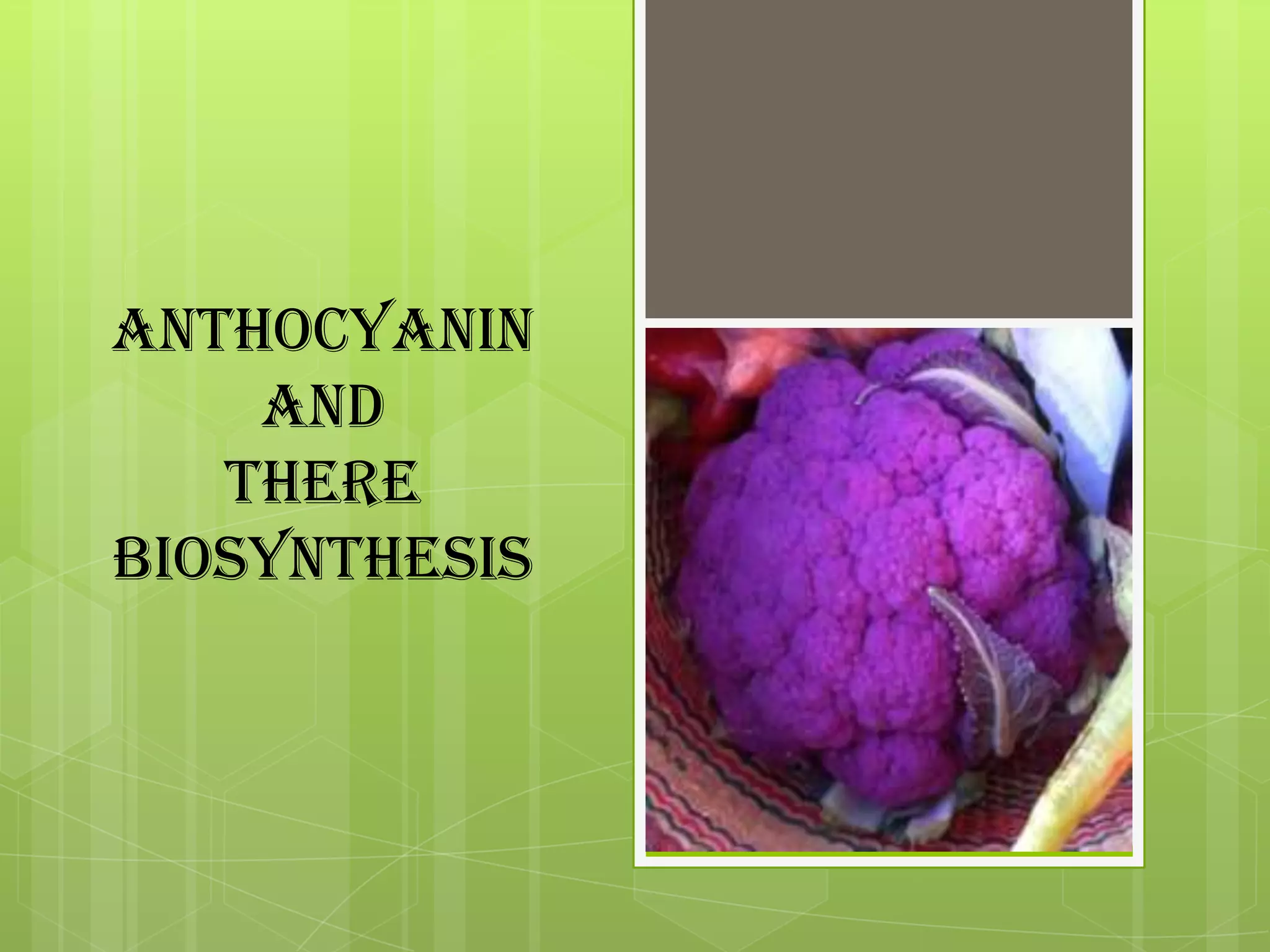

Anthocyanin and there biosynthesis by saurabh seth
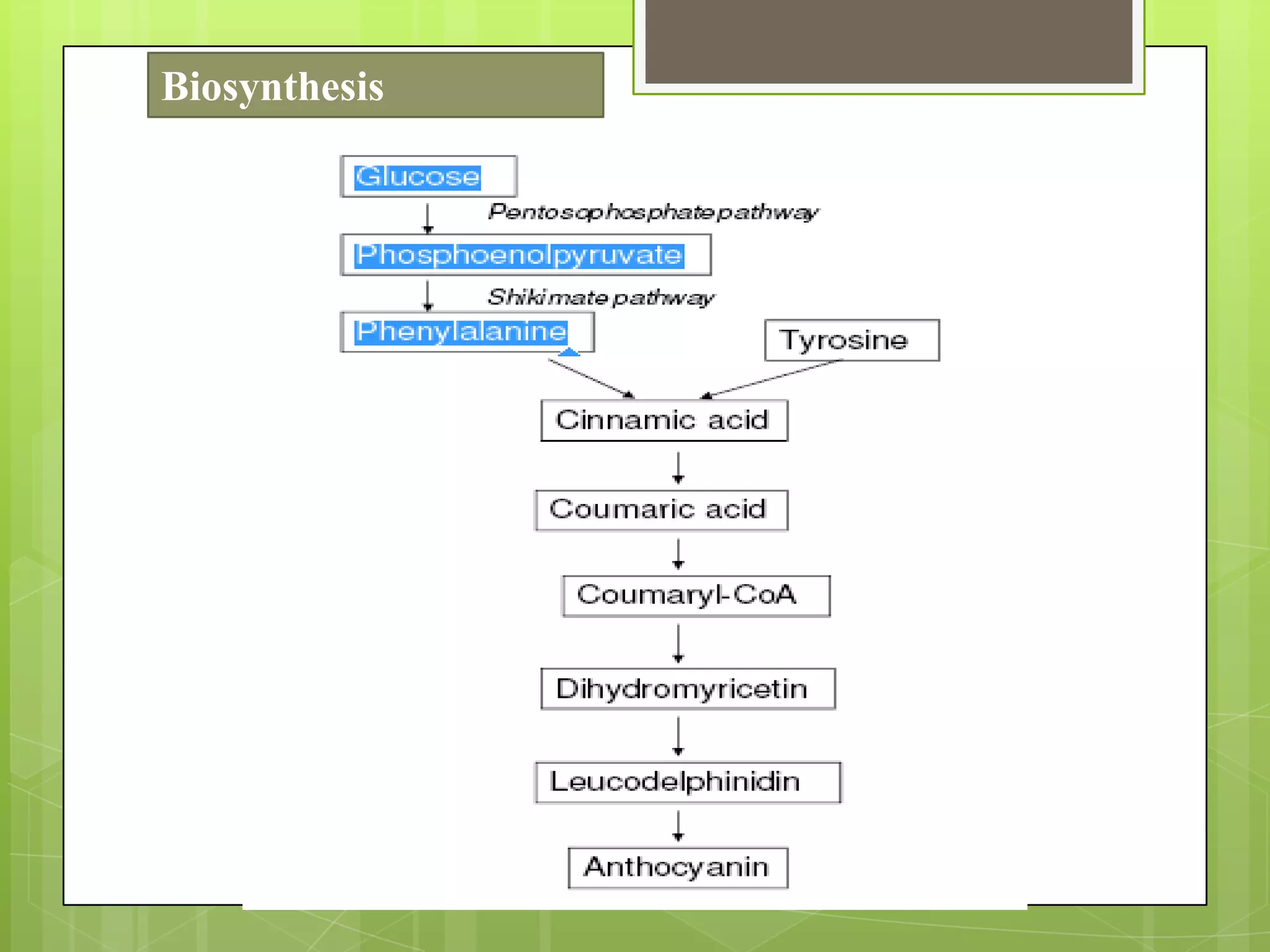
Anthocyanins are water-soluble plant pigments that provide color to fruits, vegetables, flowers, and other plant tissues. They have antioxidant properties and may provide protective effects against cardiovascular diseases, cancer, diabetes, and UV radiation damage. Anthocyanins exist as glycosides in plants and are derived from anthocyanidins, which are heterocyclic compounds produced through the plant's anthocyanin biosynthesis pathway. The amount of anthocyanins can vary based on genetic and environmental factors.
In this document
Powered by AI
Anthocyanins are water-soluble pigments providing color to plants, with antioxidant properties against various diseases.
Aglycones, or anthocyanidins, are unstable derivatives found in small amounts. Common types include pelargonidin, delphinidin, and cyanidin.
Anthocyanin content varies based on genetic differences, environmental conditions, and agronomic practices.
Anthocyanins protect against DNA damage, attract pollinators, disperse seeds, and serve as sunscreens in plants.
Thank you for your attention on anthocyanins and their significance in plants.
Introduction
Plant pigment whichprovide
color to plant
They are water soluble pigment
important group of highly
hydrosoluble pigments in most
species of plants.
In fruits and vegetables
anthocyanins are present in the
form of glycosides.
It has antioxidant
properties, protective
cardiovascular
diseases, cancer, diabetes, visual
disturbances, liver damage, or
UV-B radiation.
3.
The aglyconalso know as anthocyanidin is a
heterocyclic derivative derived from a-cromen or
a-benzopyran.
The aglycones are found in very small amounts in
fresh plants, as they are quite unstable.
The most common aglycones of anthocyanins
are:-
pelargonidin,
delphinidin,
cyanidin, peonidin,
petunidin and malvidin.
4.
The amount ofanthocyanin in plants varies
according to the following factors:
- genetic differences between different
plant species
- environmental factors acting during the
plant development (light,temperature)
- agronomic factors (methods of cultivation)
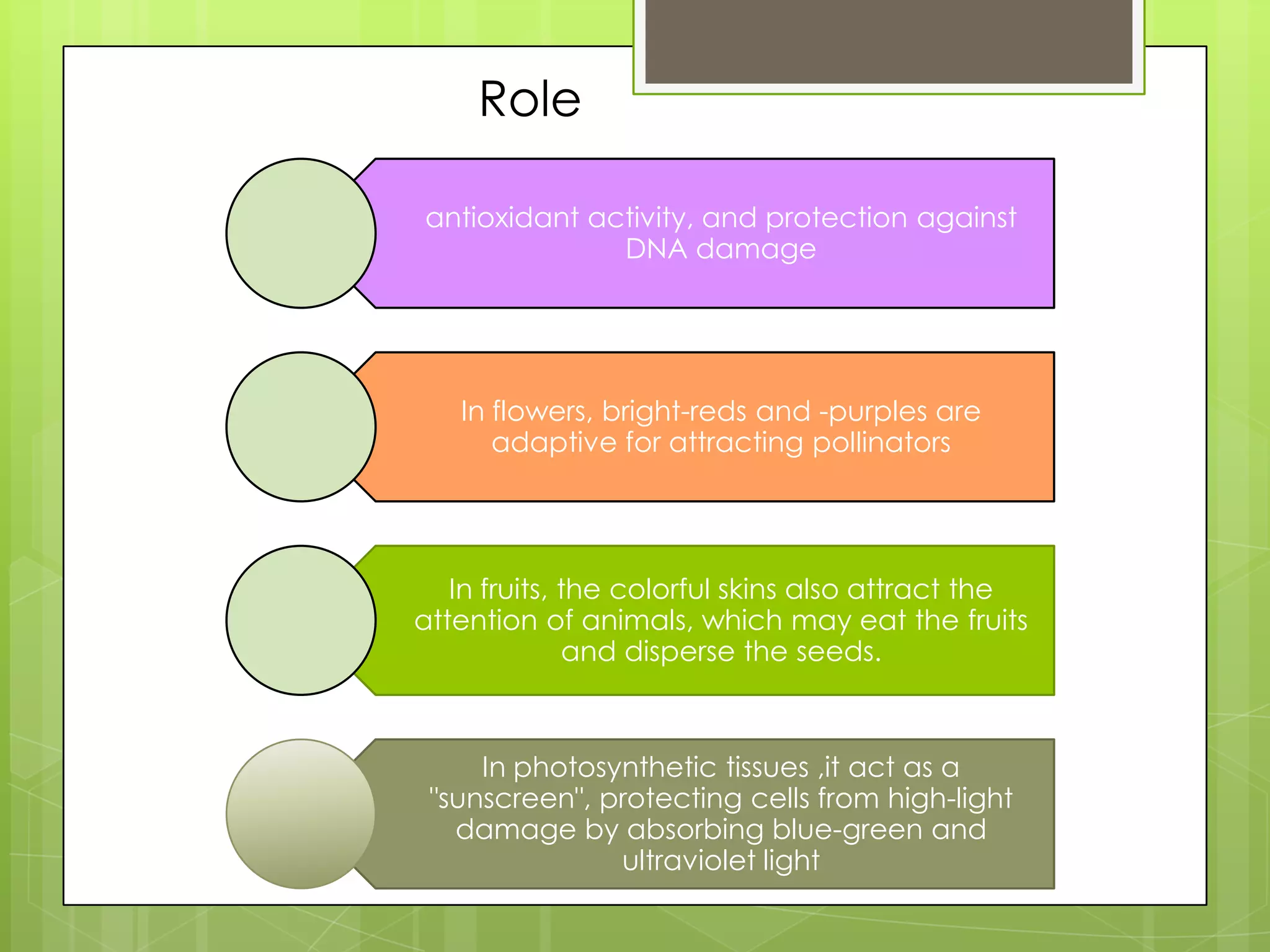
Role
antioxidant activity, andprotection against
DNA damage
In flowers, bright-reds and -purples are
adaptive for attracting pollinators
In fruits, the colorful skins also attract the
attention of animals, which may eat the fruits
and disperse the seeds.
In photosynthetic tissues ,it act as a
"sunscreen", protecting cells from high-light
damage by absorbing blue-green and
ultraviolet light