


Annotating Designs for Accessibility
AccessU 2021
Sarah Pulis
Director, Accessibility Services
@sarahtp
May 2021
Claire Webber
Digital Accessibility Consultant
@ClaireLWebber
Overview
What are annotations?
Annotation examples
So, what next?
Accessible design
Accessible
design
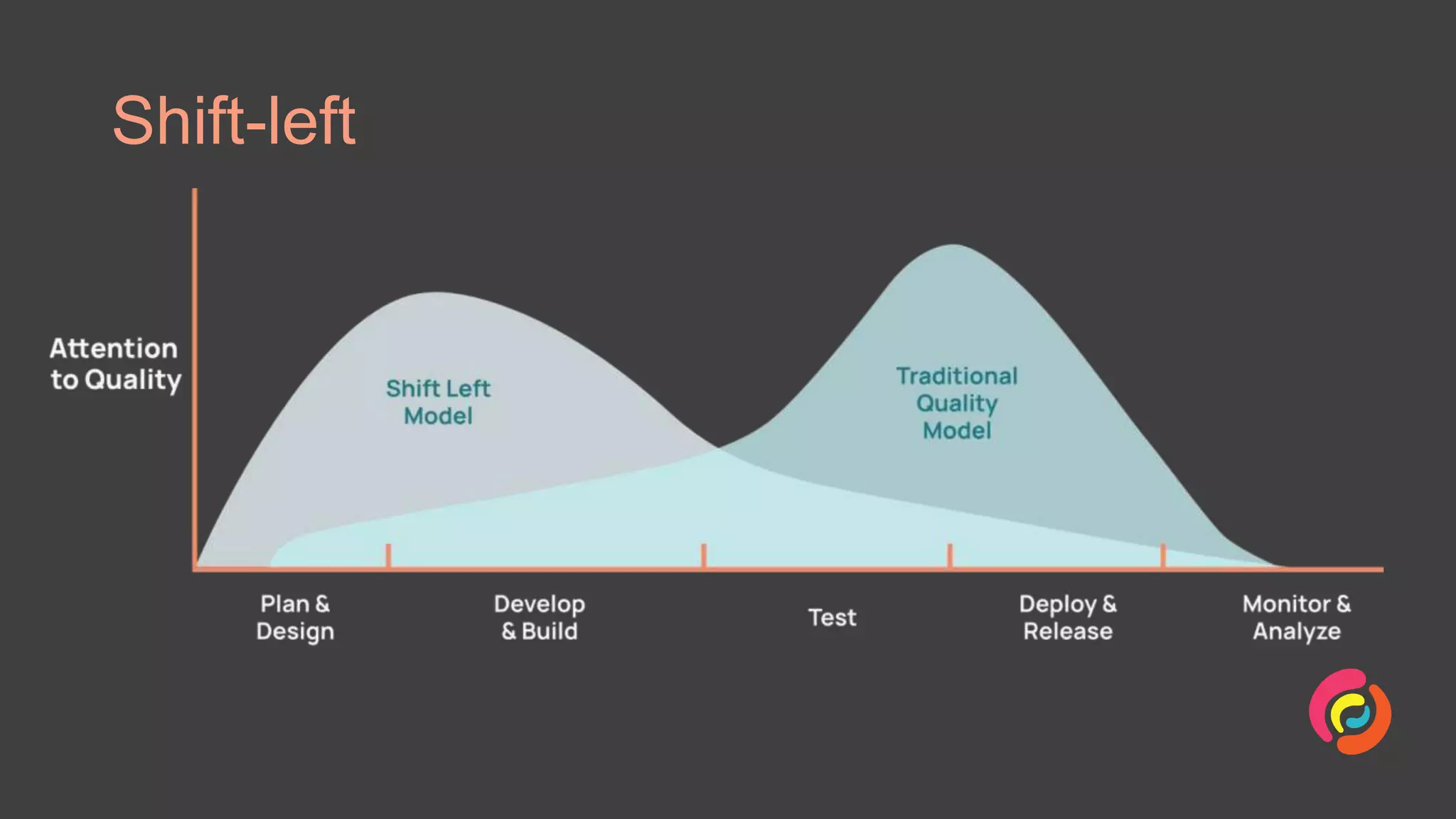
Shift-left
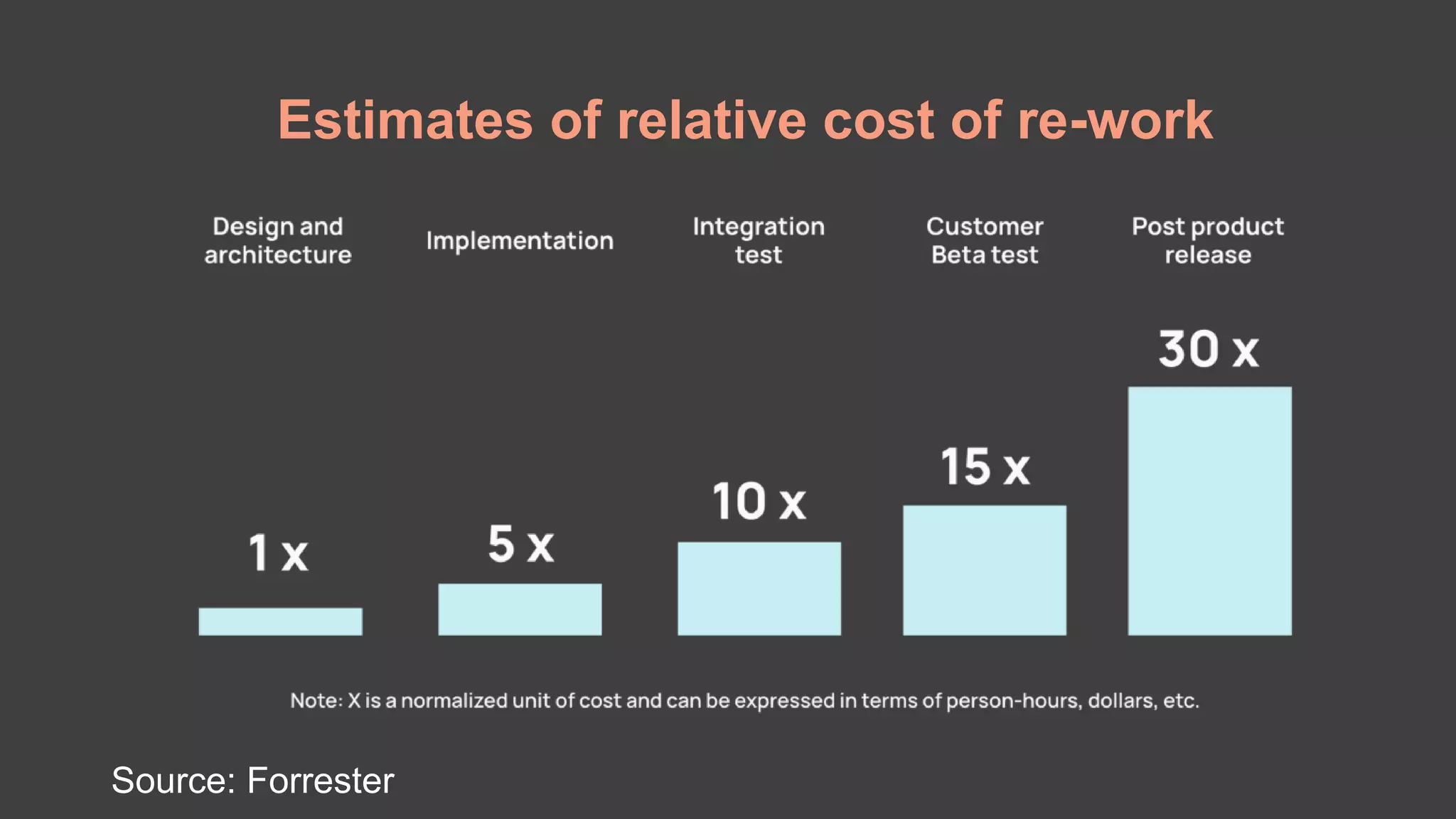
Estimates of relative cost of re-work
Source: Forrester
Annotations
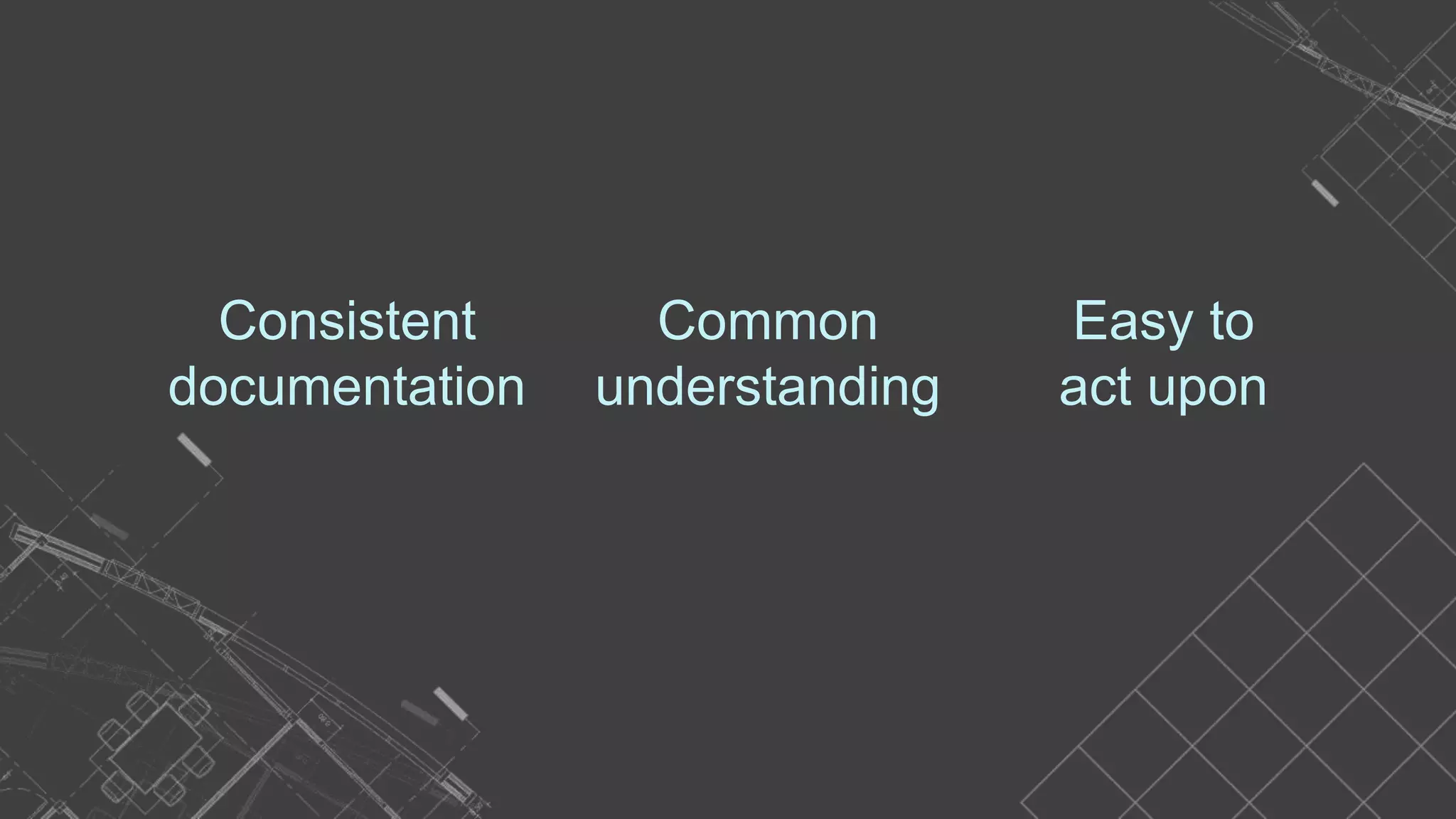
Easy to
act upon
Common
understanding
Consistent
documentation
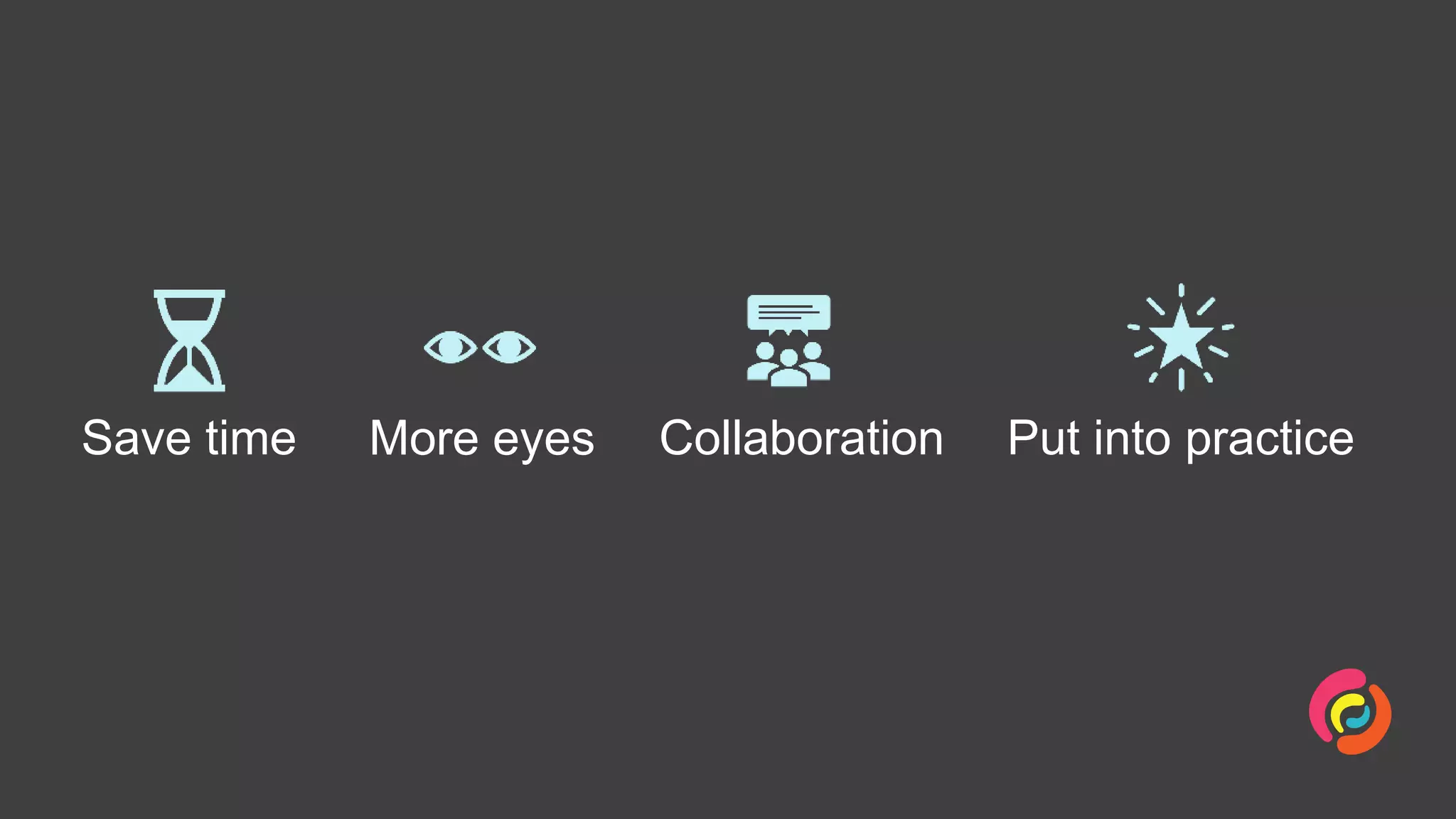
Save time More eyes Collaboration Put into practice
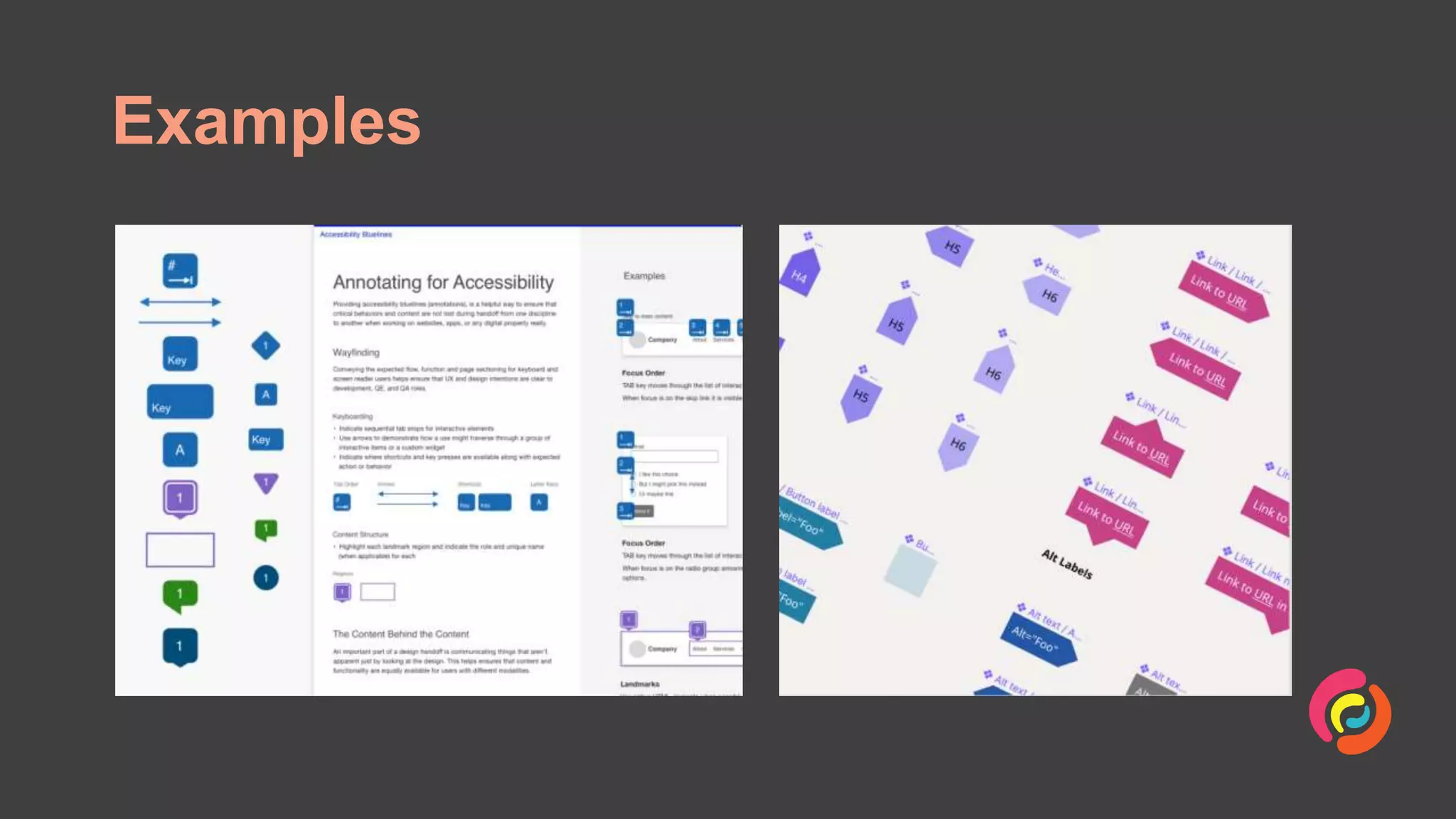
Examples
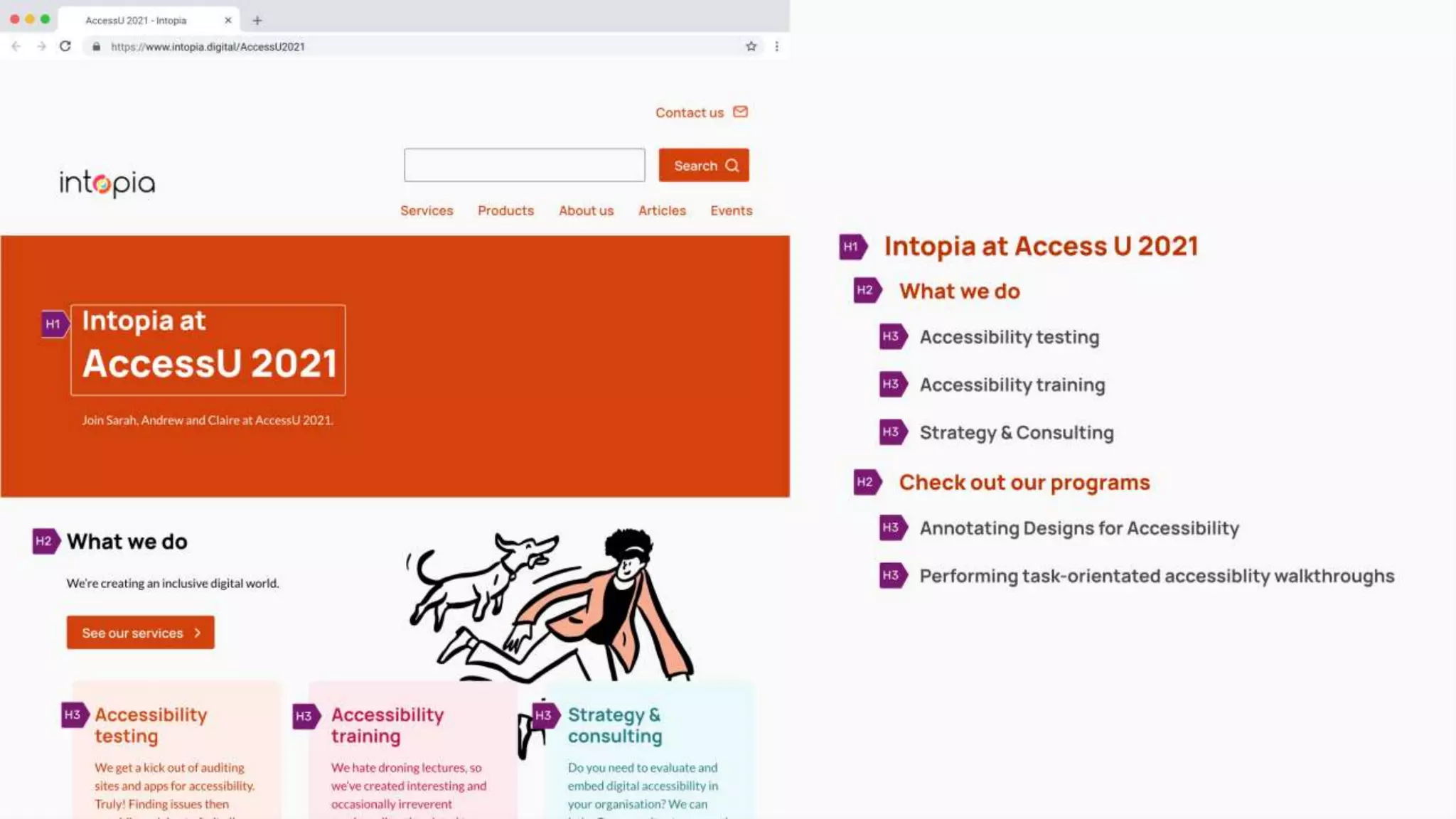
Page structure
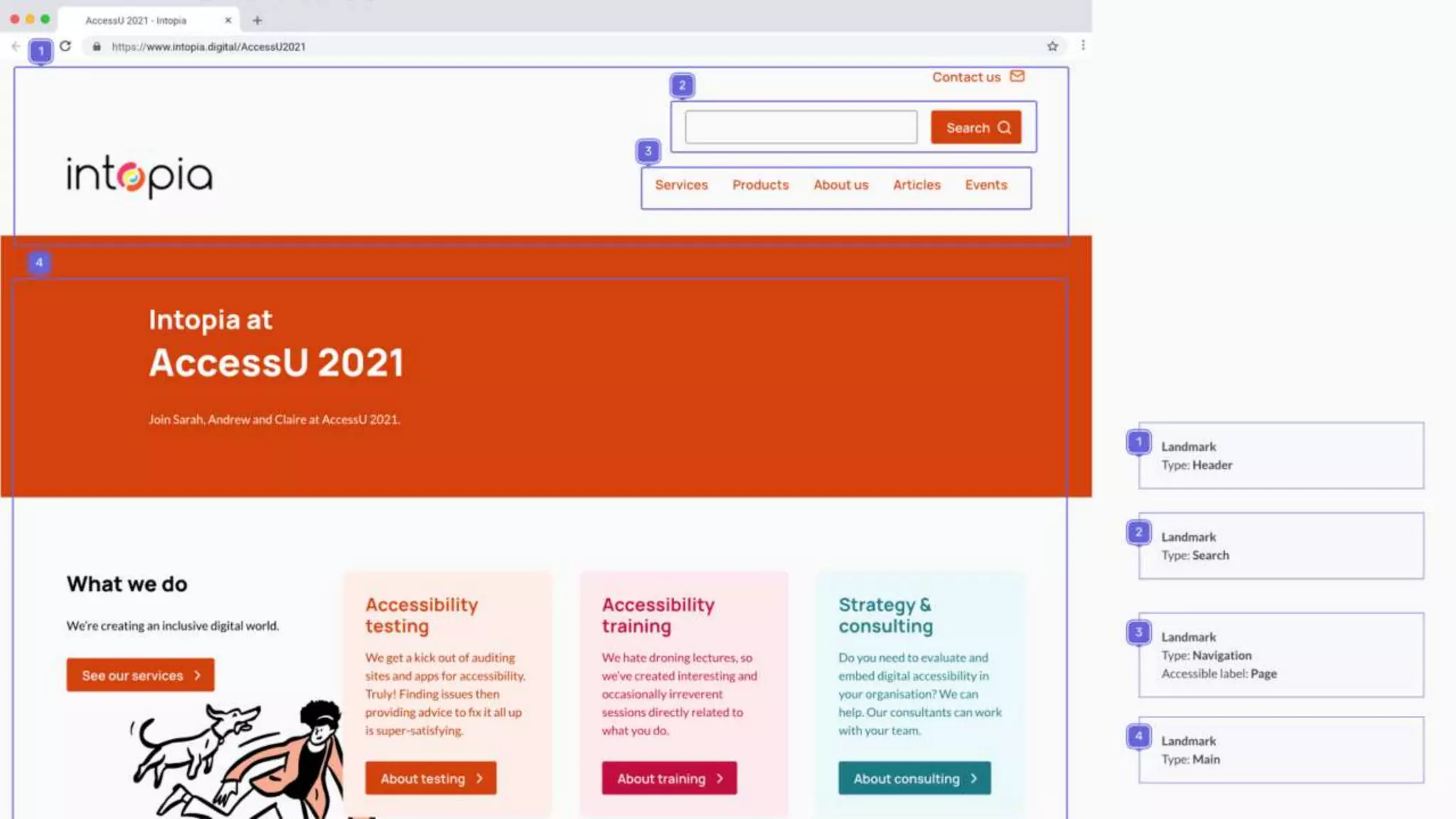
Page regions
Group content into
common page regions and
identify the regions and
label as needed in your
designs
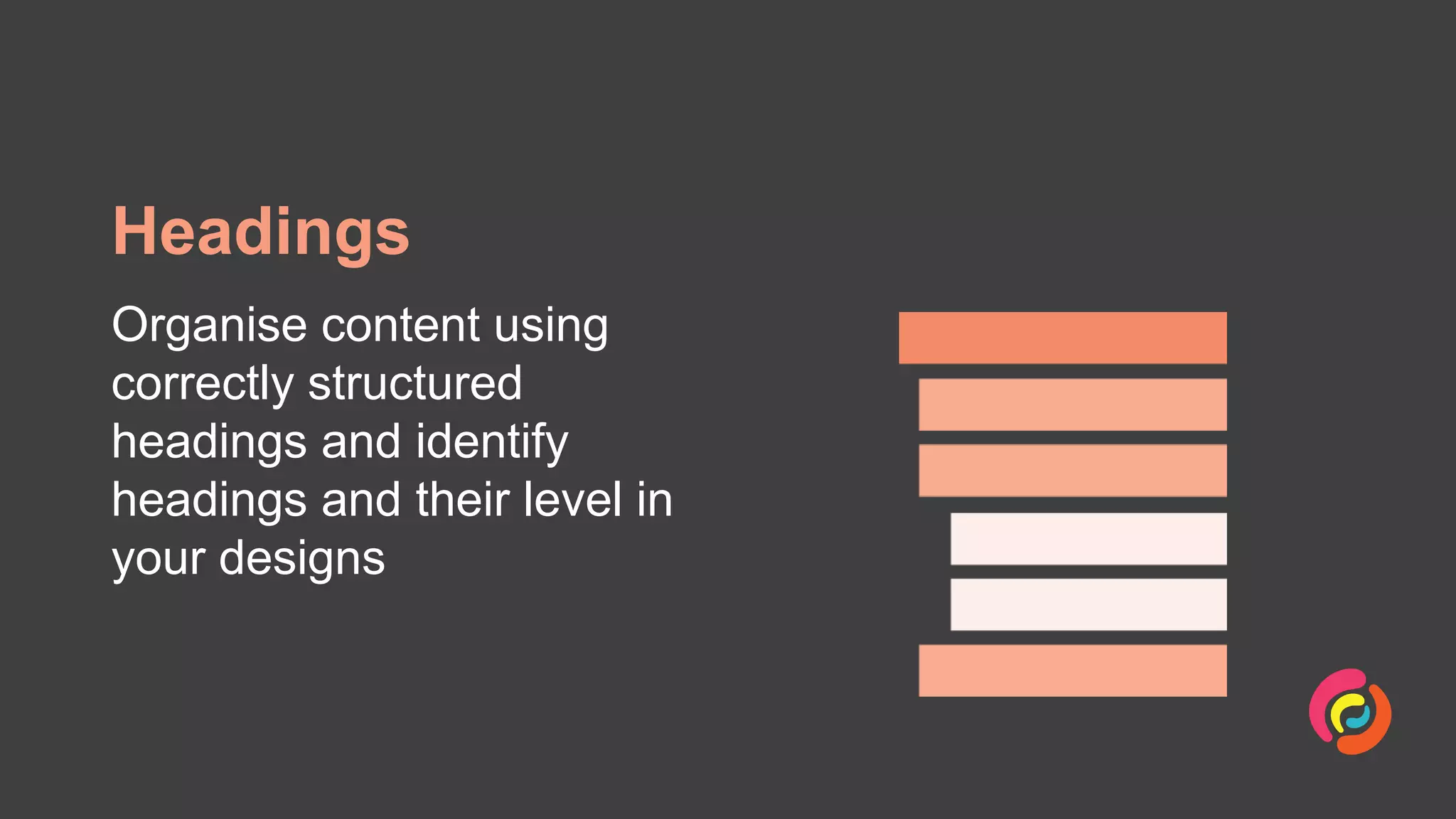
Headings
Organise content using
correctly structured
headings and identify
headings and their level in
your designs
Images
Informative images
Identify informative images
and provide a text
alternative that conveys the
meaning or content in your
designs
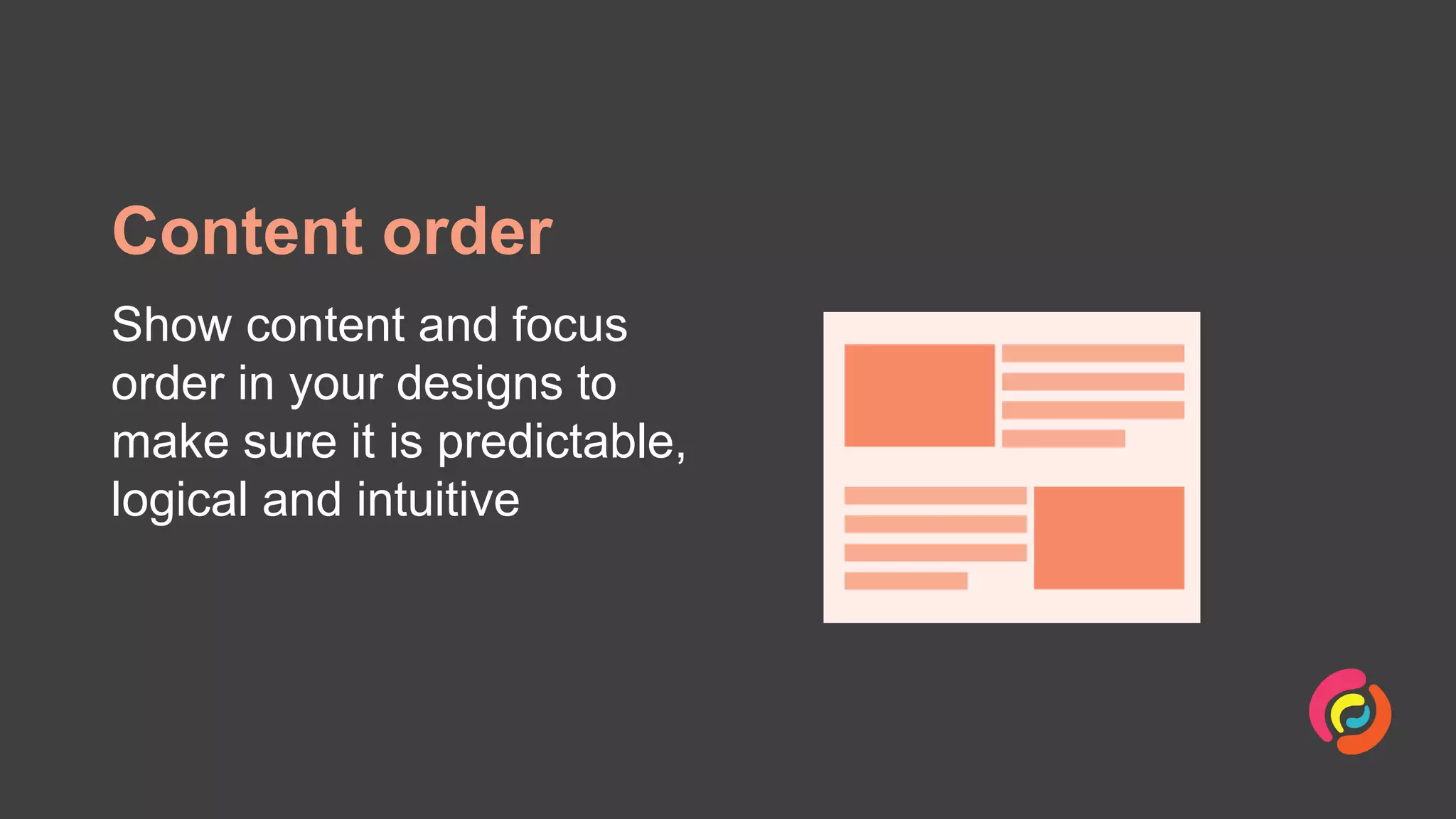
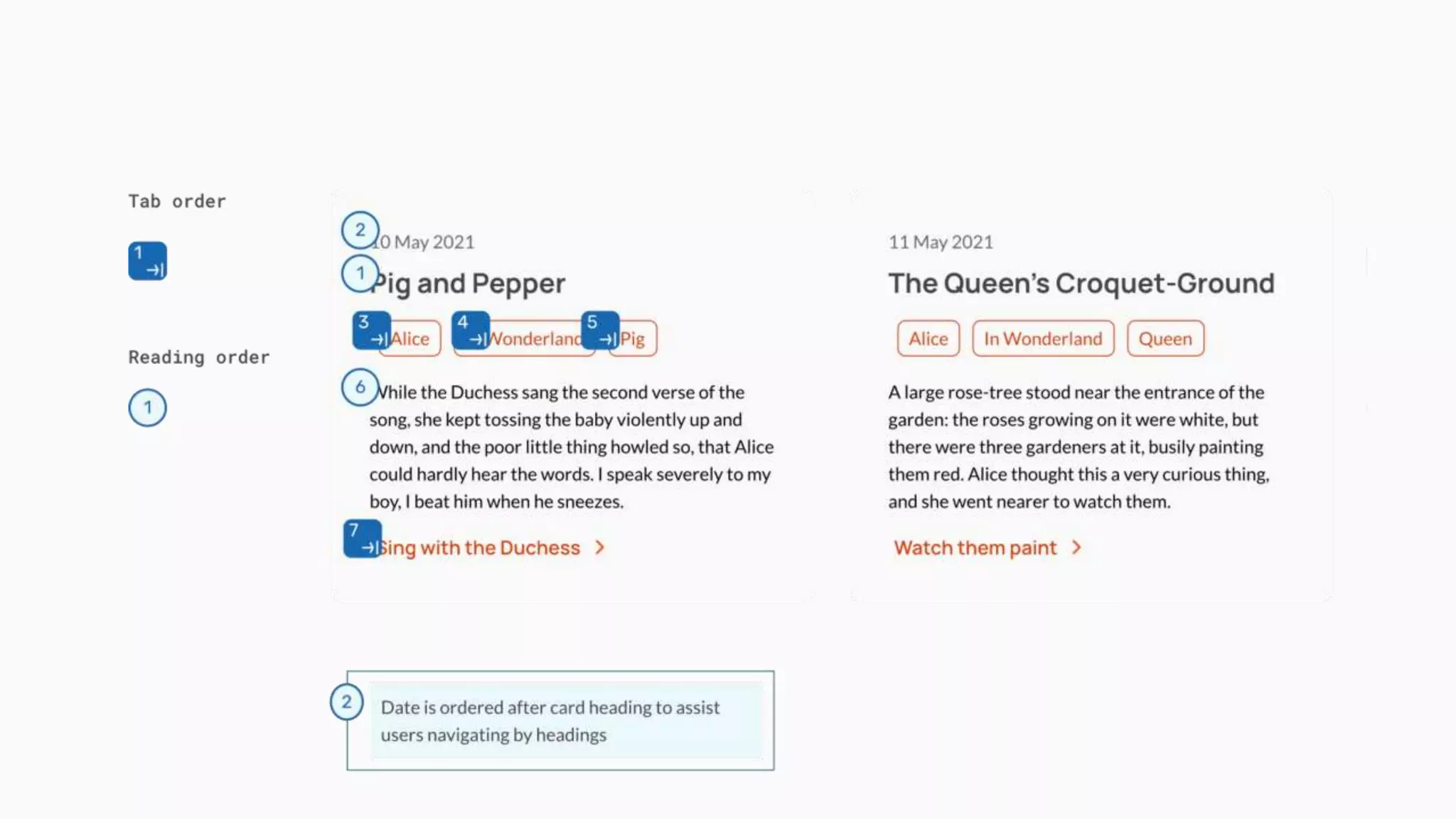
Content order
Content order
Show content and focus
order in your designs to
make sure it is predictable,
logical and intuitive
Other annotations
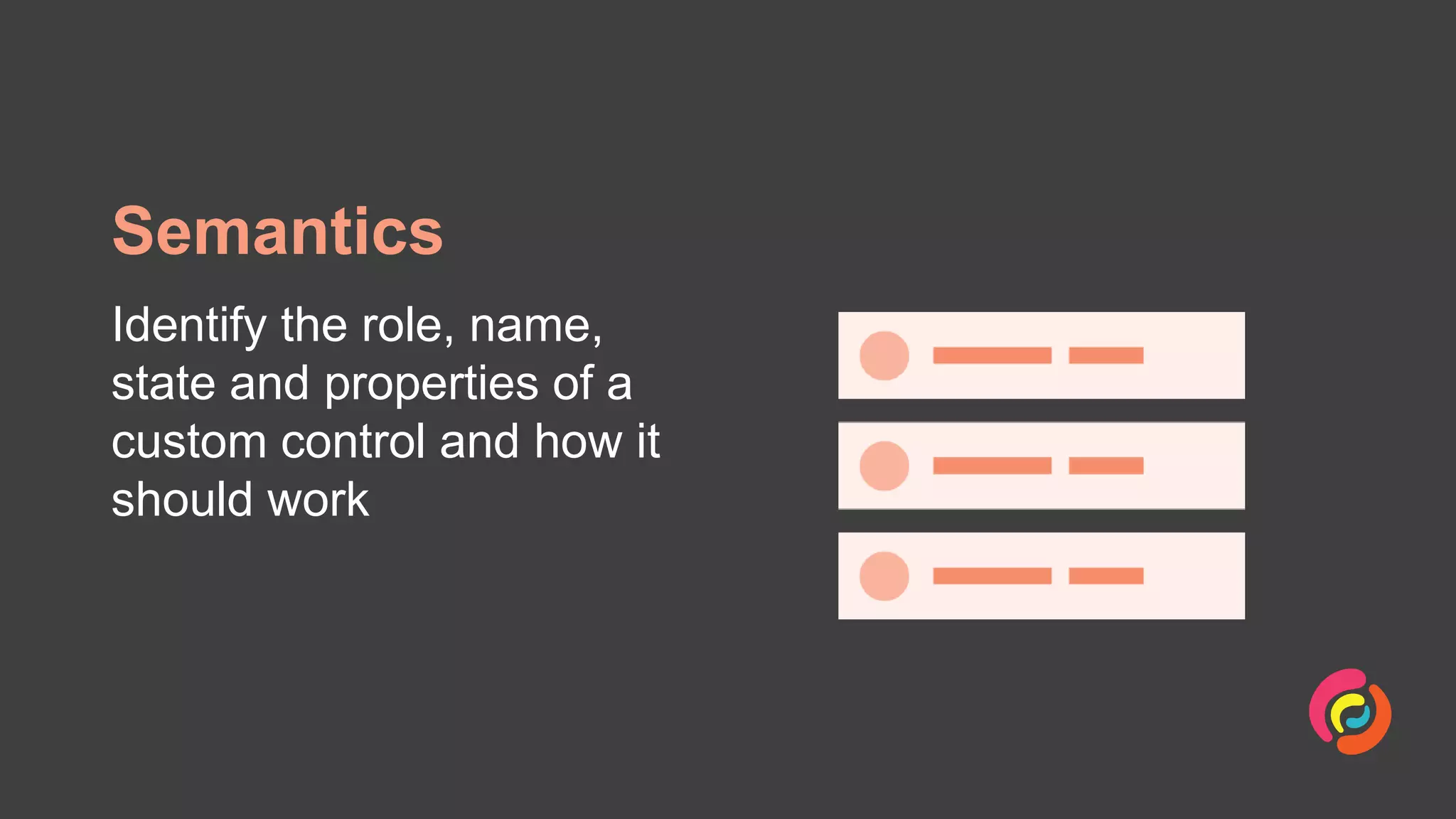
Semantics
Identify the role, name,
state and properties of a
custom control and how it
should work
Design systems
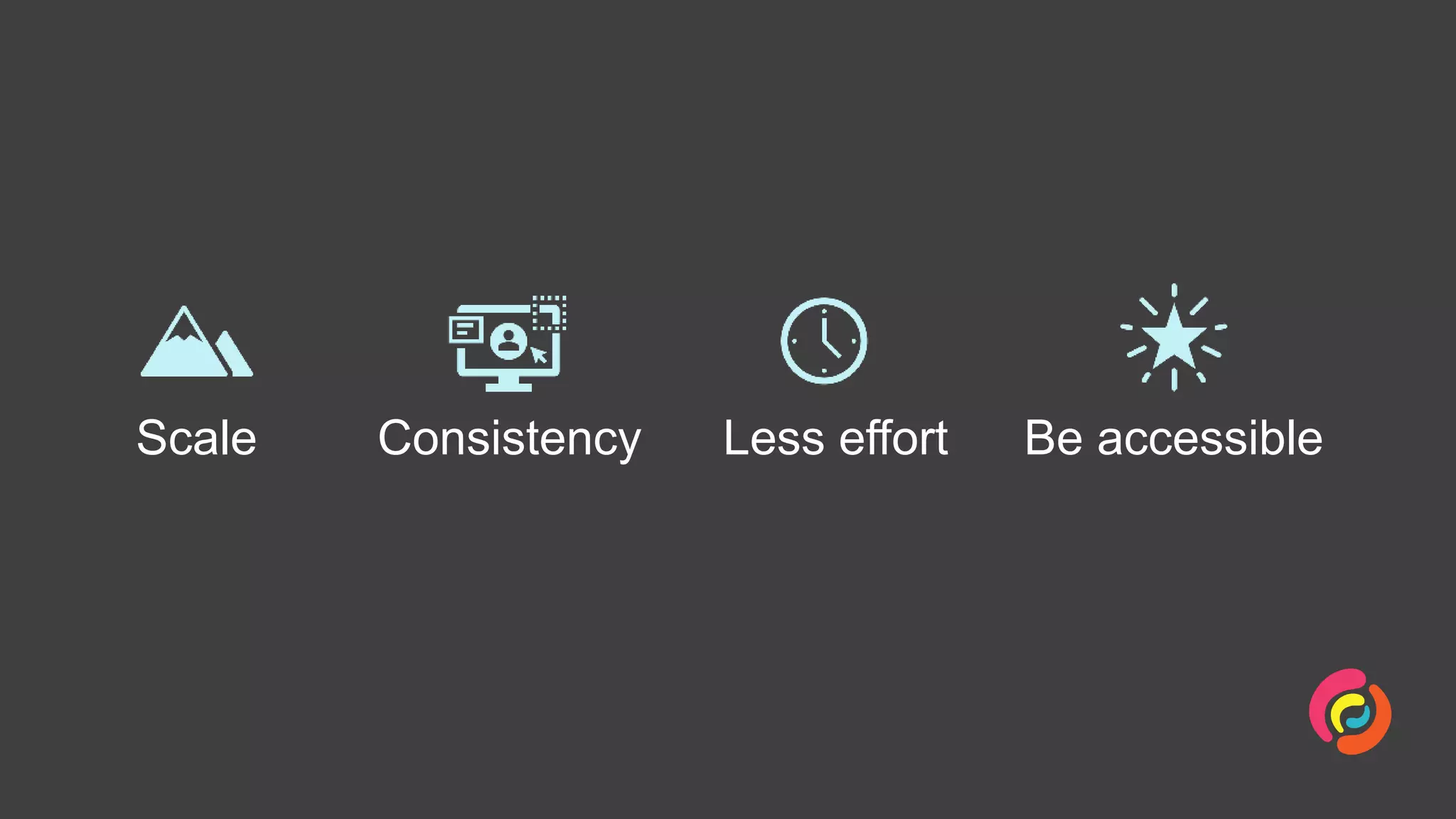
Scale Consistency Less effort Be accessible
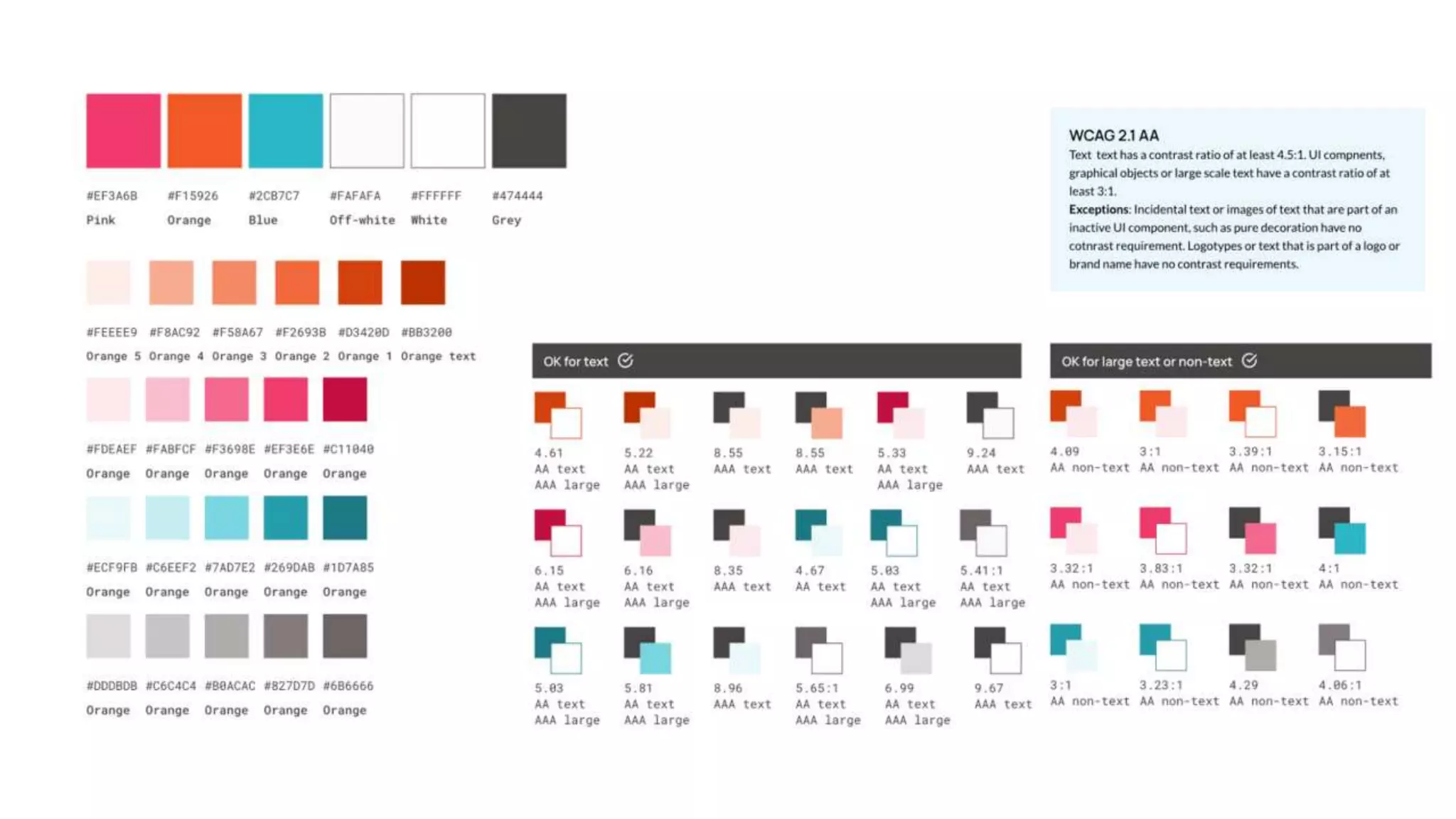
Colour
Use colours that contrast
well for all important
information
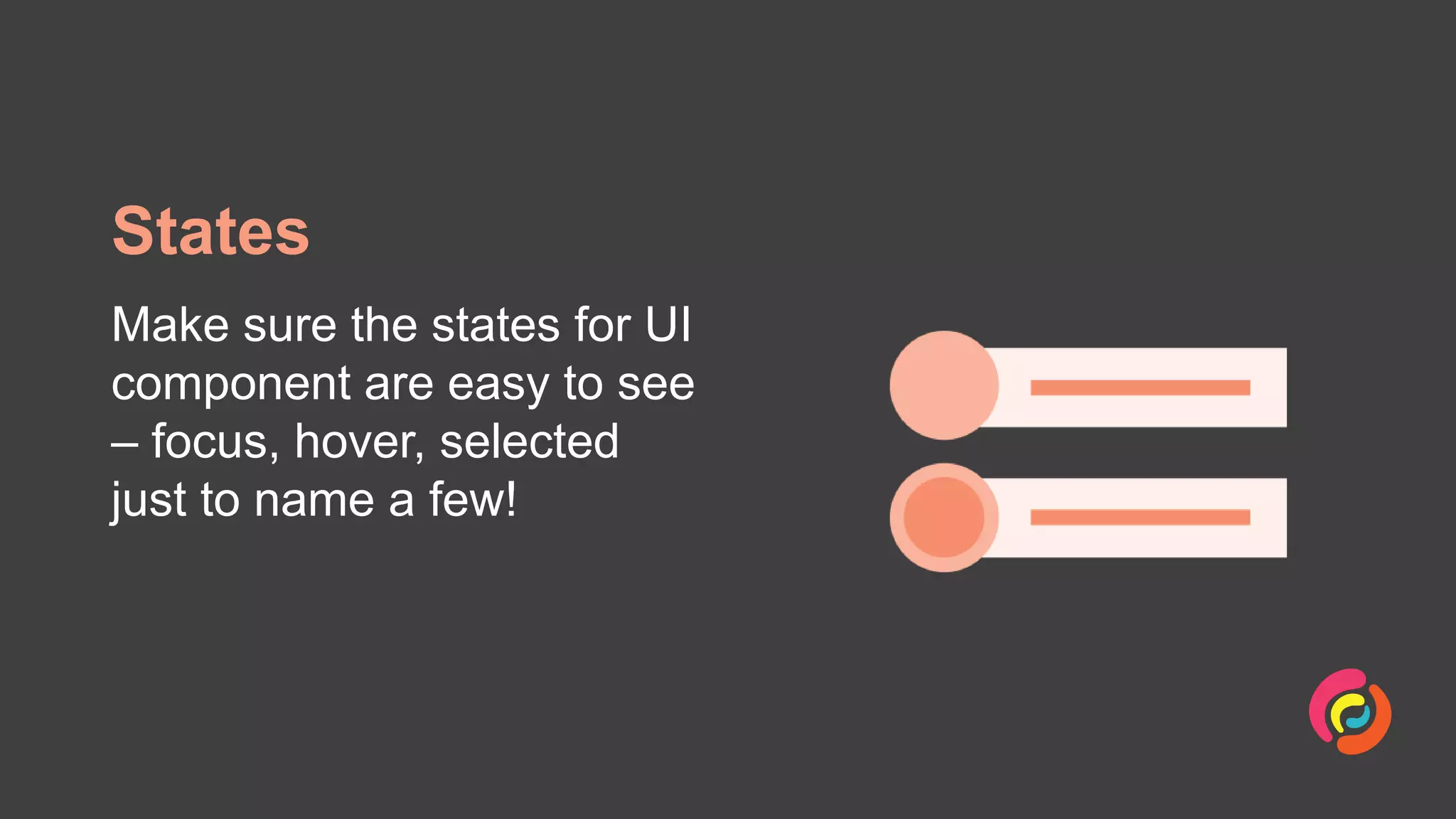
States
Make sure the states for UI
component are easy to see
– focus, hover, selected
just to name a few!
So, what’s next?
Have a
go
Start small Lead the way
Resources
• Accessibility Toolkit from Jack Nicolai
• Accessibility Bluelines by Jeremy Elder
• A11y Annotation Kit by Indeed (Figma)
• Auditing Design Systems for Accessibility By
Anna Cook
Let’s chat
@Intopia Intopia intopia.digital hello@intopia.digital
Sarah Pulis
Director, Accessibility Services
Claire Webber
Digital Accessibility Consultant
@sarahtp
sarah@intopia.digital
@ ClaireLWebber
claire.webber@intopia.digital

Annotating designs for accessibility

Editor's Notes

  • #2 Mention where slides are available – add link in slide link bit
  • #3 Sarah Won’t be deep diving into particulars of creating accessible designs – focusing on areas that should be considered and documented at design stage Encourage questions – time at end for more Q&A Page structure Page regions Headings Images Content order
  • #4 Sarah Shift left – agile methodology Test stuff earlier in the product lifecycle Why not do the same for accessibility? Often left until developer or even after the product is finished
  • #5 Sarah The shift-left model is common across DevOps (development and operations) which encourages quality to be addressed as early on in the process as possible. Image description
  • #6 Sarah Isn’t accessibility just for developers? NO, it’s everyone's responsibility A large amount of a11y defects come from design How much would you pay to save a product with bad UX? (konceptapp.com)
  • #7 Claire We’ve talked about why we should bring a11y forwards – now we are going to talk about how via annotations What do we mean by annotations & what are we looking to achieve?
  • #8 Claire By annotations we are talking about further documentation for the design. Like an architectural blueprint, we want all the information to be clear. If something is missing, how thick the foundations are for example – the house might fall down. We want to create: Consistent documentation Easy to understand and act upon Common understanding Annotating designs with accessibility information is a powerful way to focus on accessibility early in the design
  • #9 Claire Save time Bring conversations up front More eyes Build collaboration Increase communication Helps build test cases Clear what is required for accessibility Takes out assumptions Increases accessibility knowledge across organisation Put it into practice – embed accessibility into your way of working
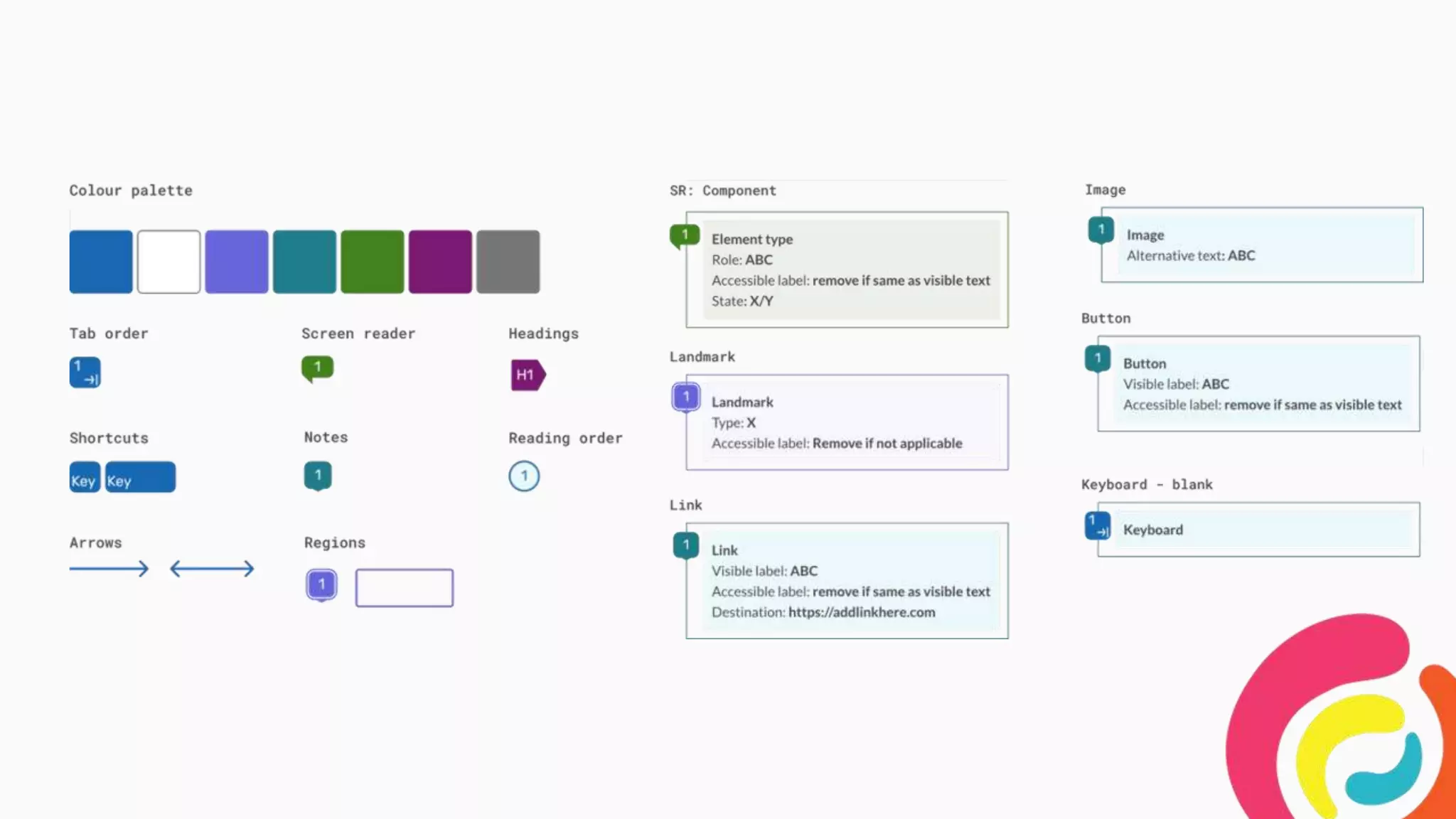
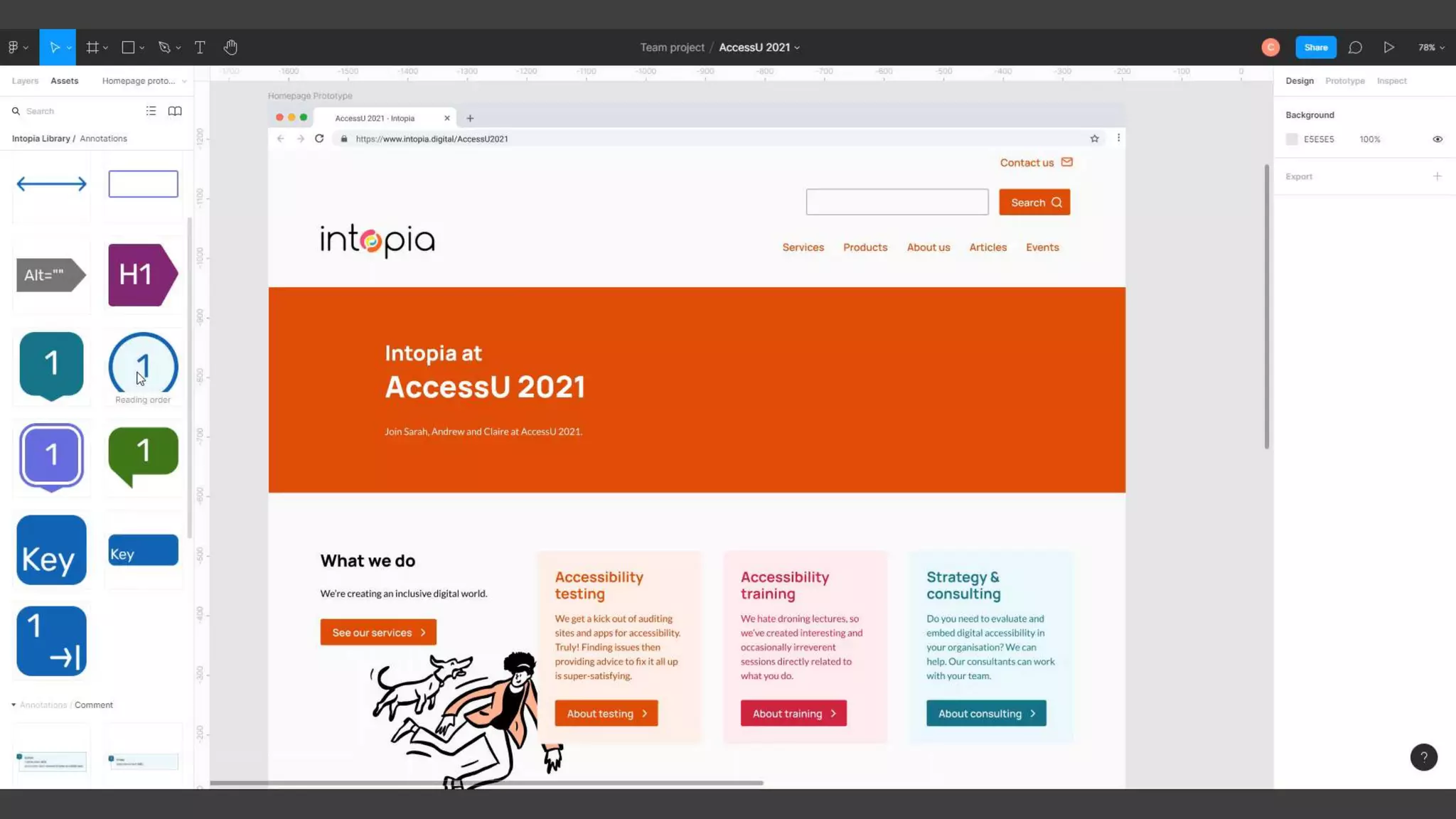
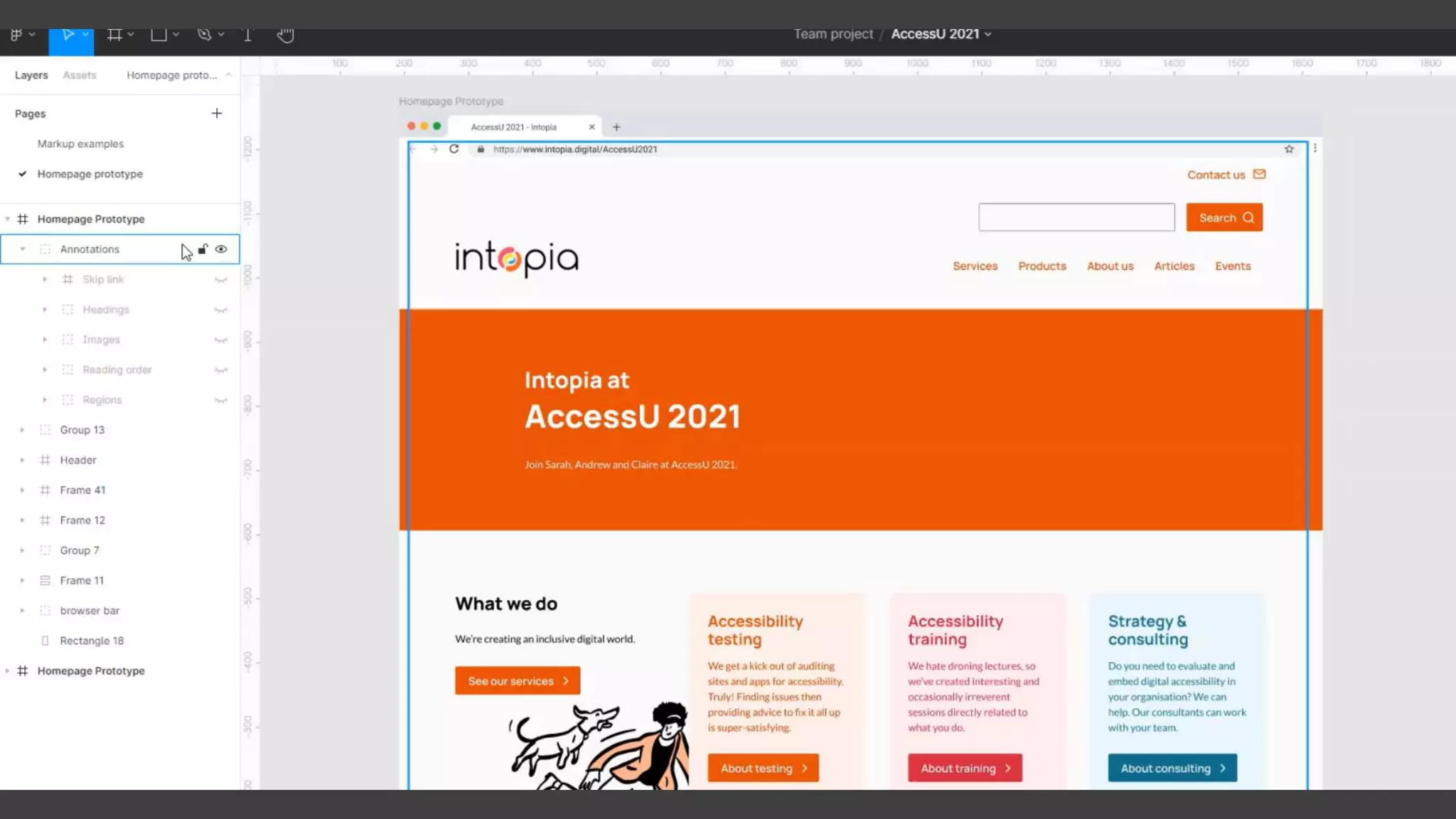
  • #10 Sarah Jack Nicolai, Jeremy Elder and Indeed have annotations kits available. Across Sketch, Adobe XD, Illustrator and InVision Studio Taken inspiration from bits of these libraries to create an example to show you today We will be showing demos using Figma but annotations can be applied anywhere
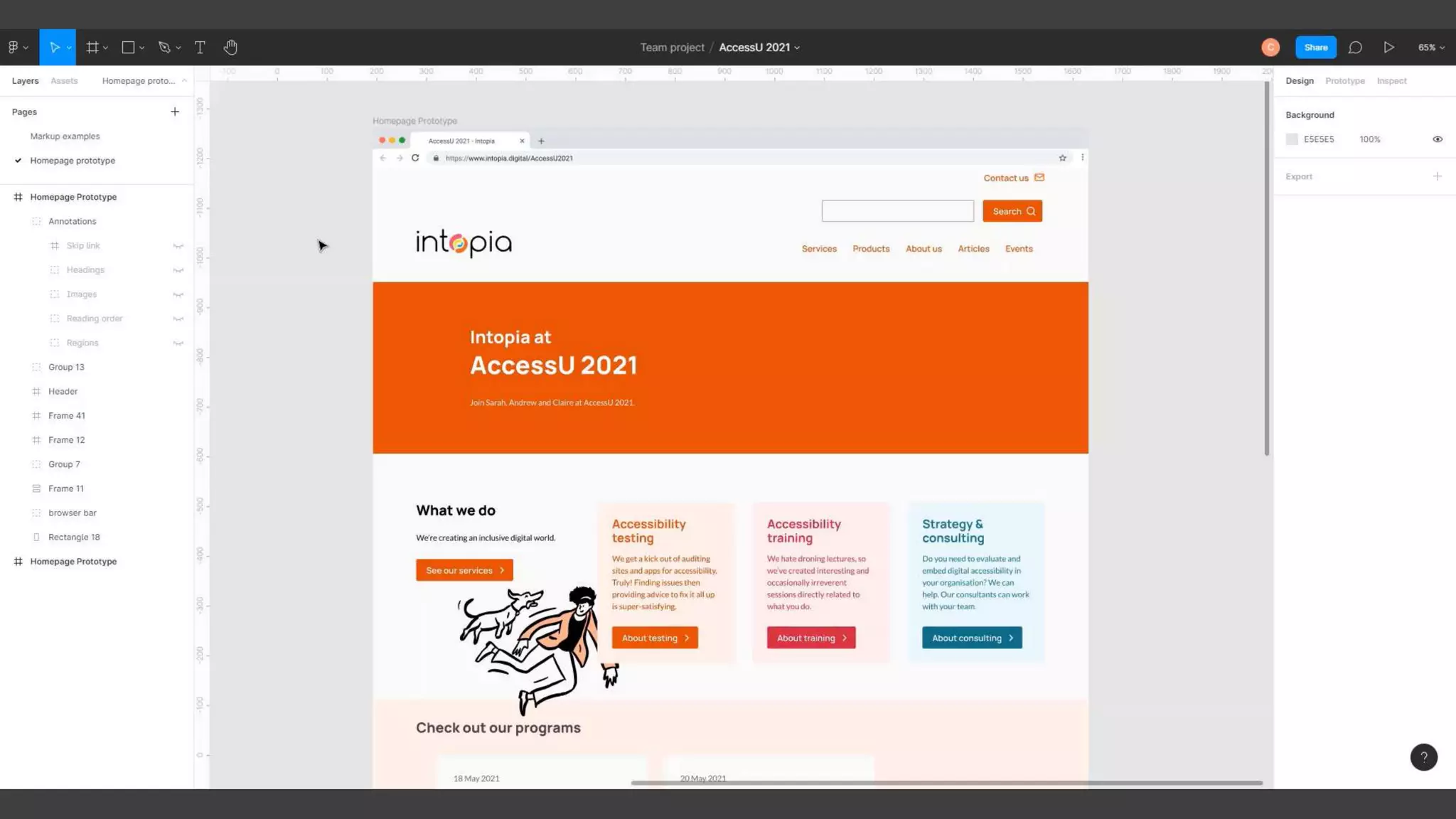
  • #11 Claire Add a bit here about the annotation system we will be using and what its purpose is
  • #12 Sarah
  • #13 Sarah Ways used Quick benefits of doing now
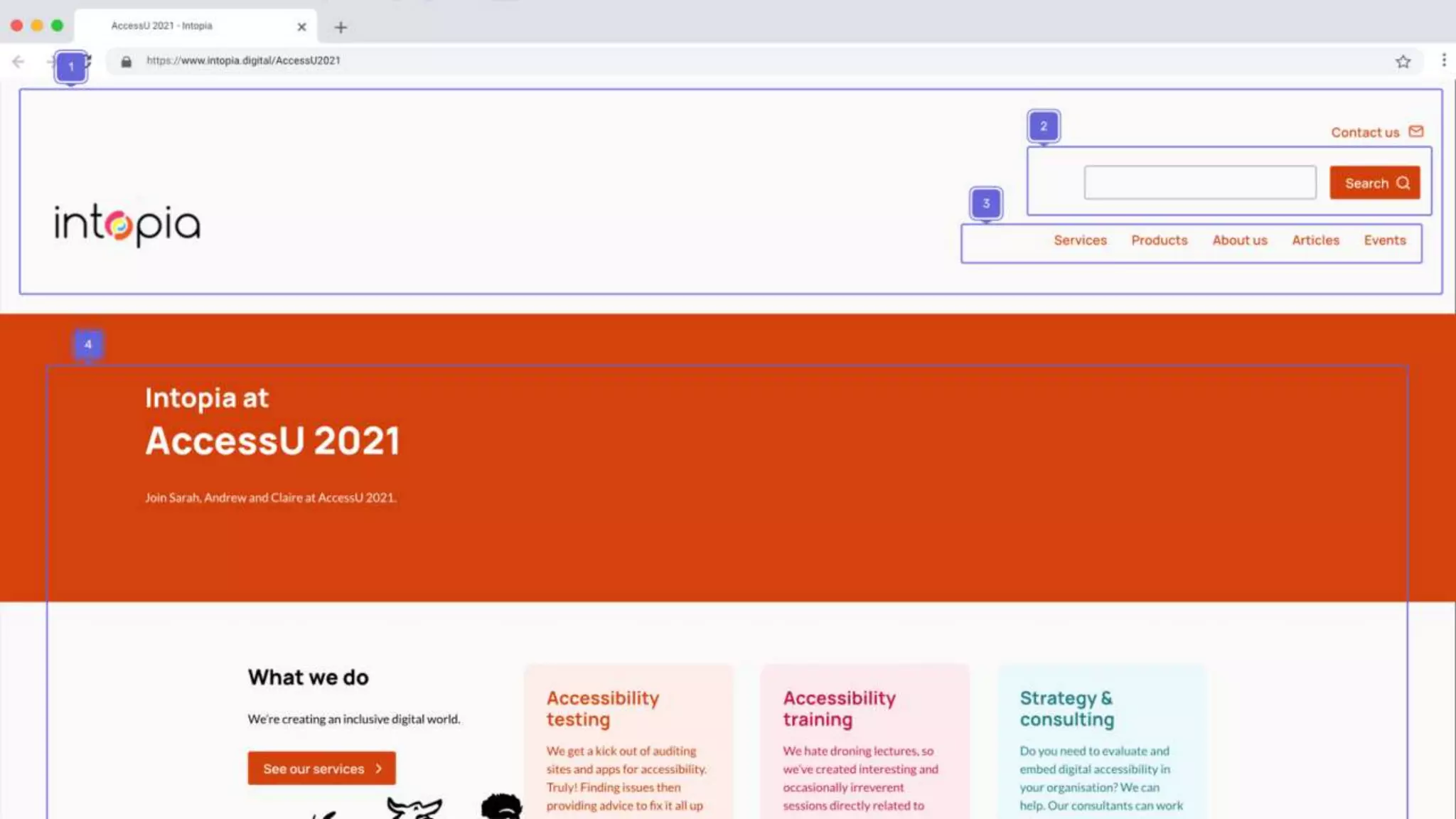
  • #14 Claire -describe regions + they are numbered + what's in each region -Numbered clearly – start here -outline show what's in and how nested
  • #15 Claire After – elaborate documentation in comments Info to include - what is it and if it has a label (touch very briefly on why label)
  • #16 Claire
  • #17 Claire
  • #18 Sarah
  • #19 Claire
  • #20 Claire
  • #21 Sarah
  • #22 Sarah
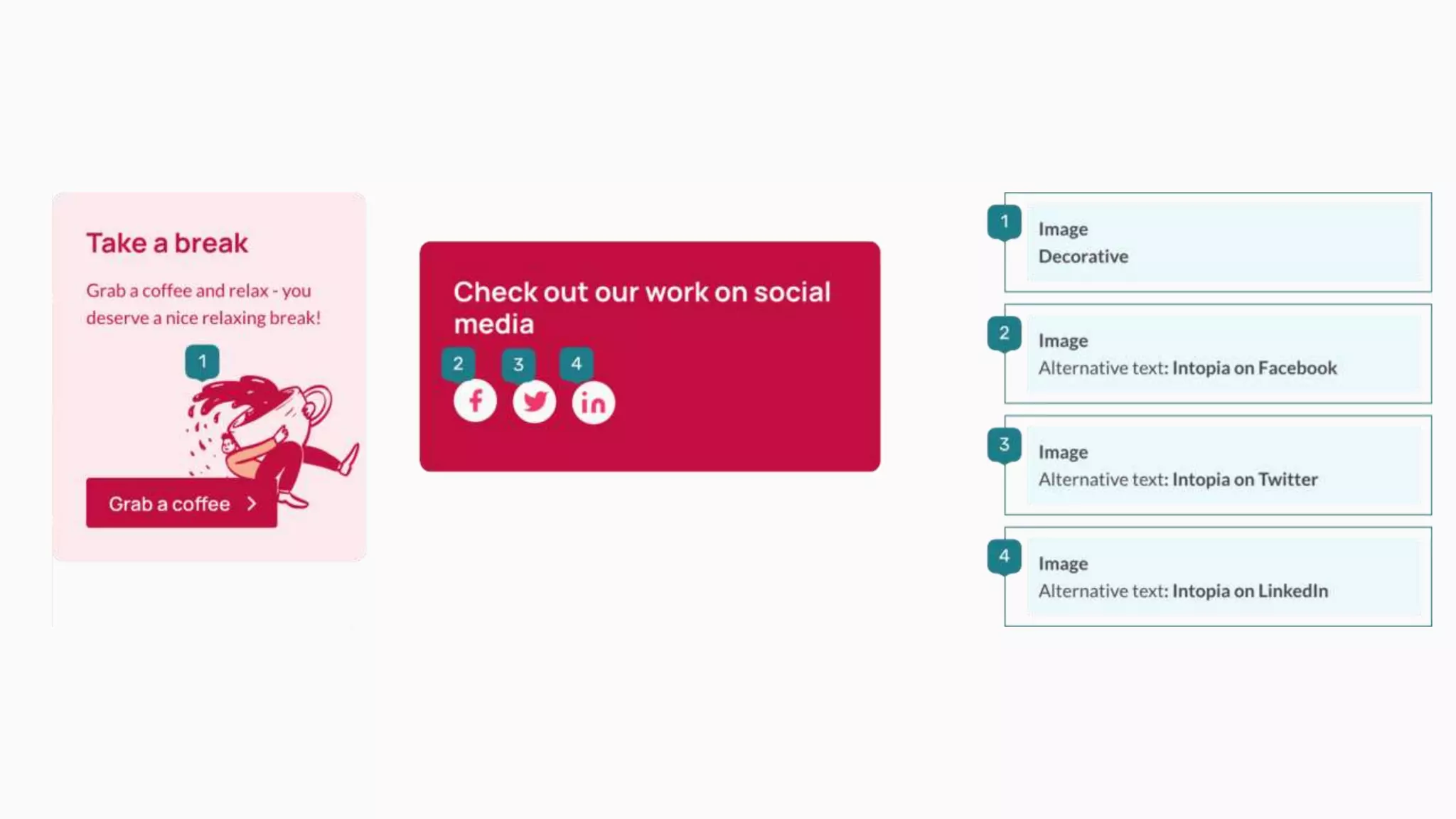
  • #23 Claire Develop your own internal rules around image management Decorative unless specified for example or mark up all images
  • #24 Sarah
  • #25 Sarah
  • #26 Claire Comment thing to show intent behind decision
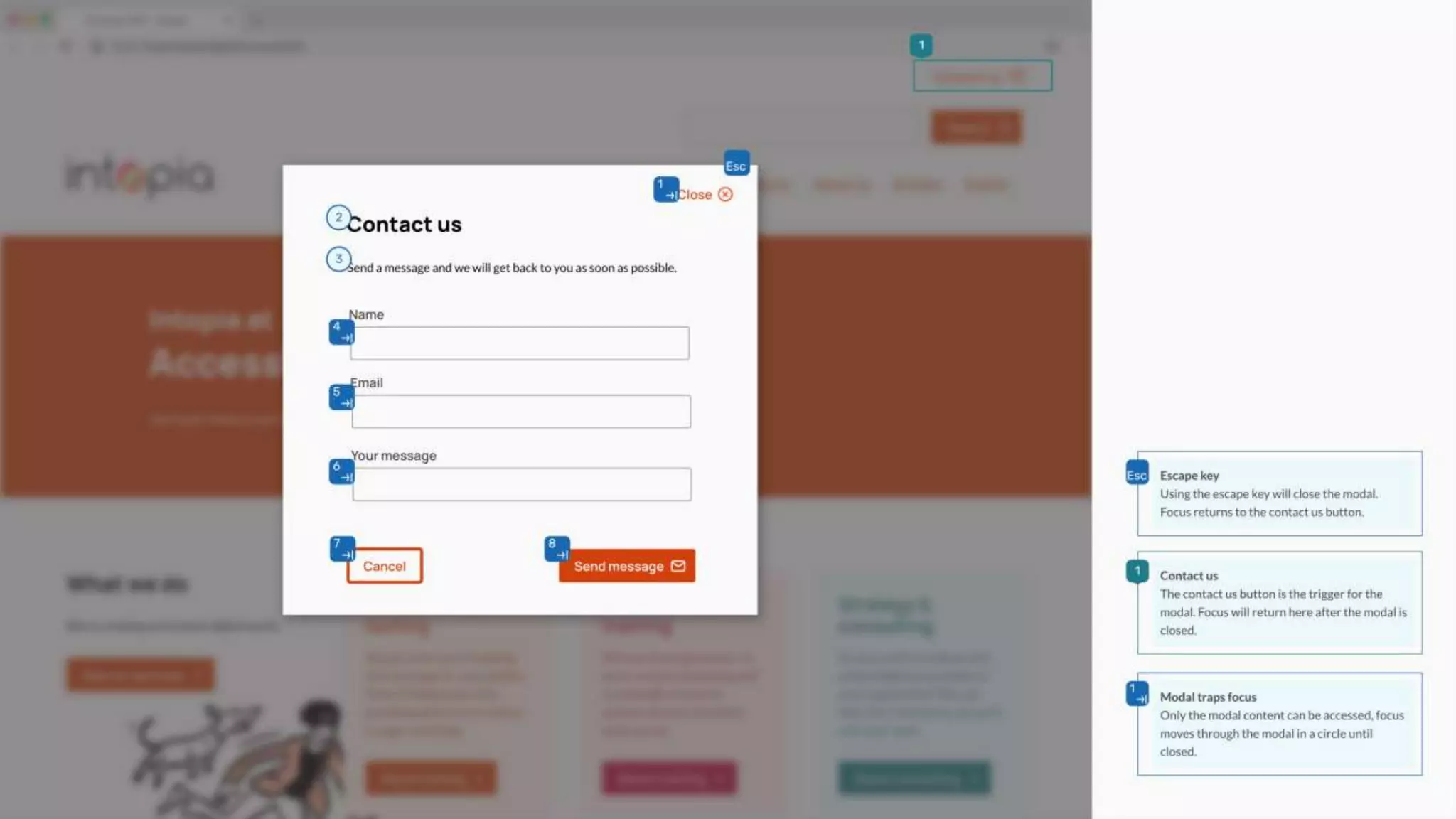
  • #27 Claire Focus management for modals is commonly overlooked
  • #28 Sarah
  • #29 Sarah
  • #30 Claire
  • #31 Sarah
  • #32 Sarah Accessibility at scale Consistent and template Firm rules / understanding Reduces effort over time Build knowledge across organisation Especially for larger brands that have multiple systems and websites etc. Good for your brand Good for your staff
  • #33 Sarah
  • #34 Claire
  • #35 Sarah
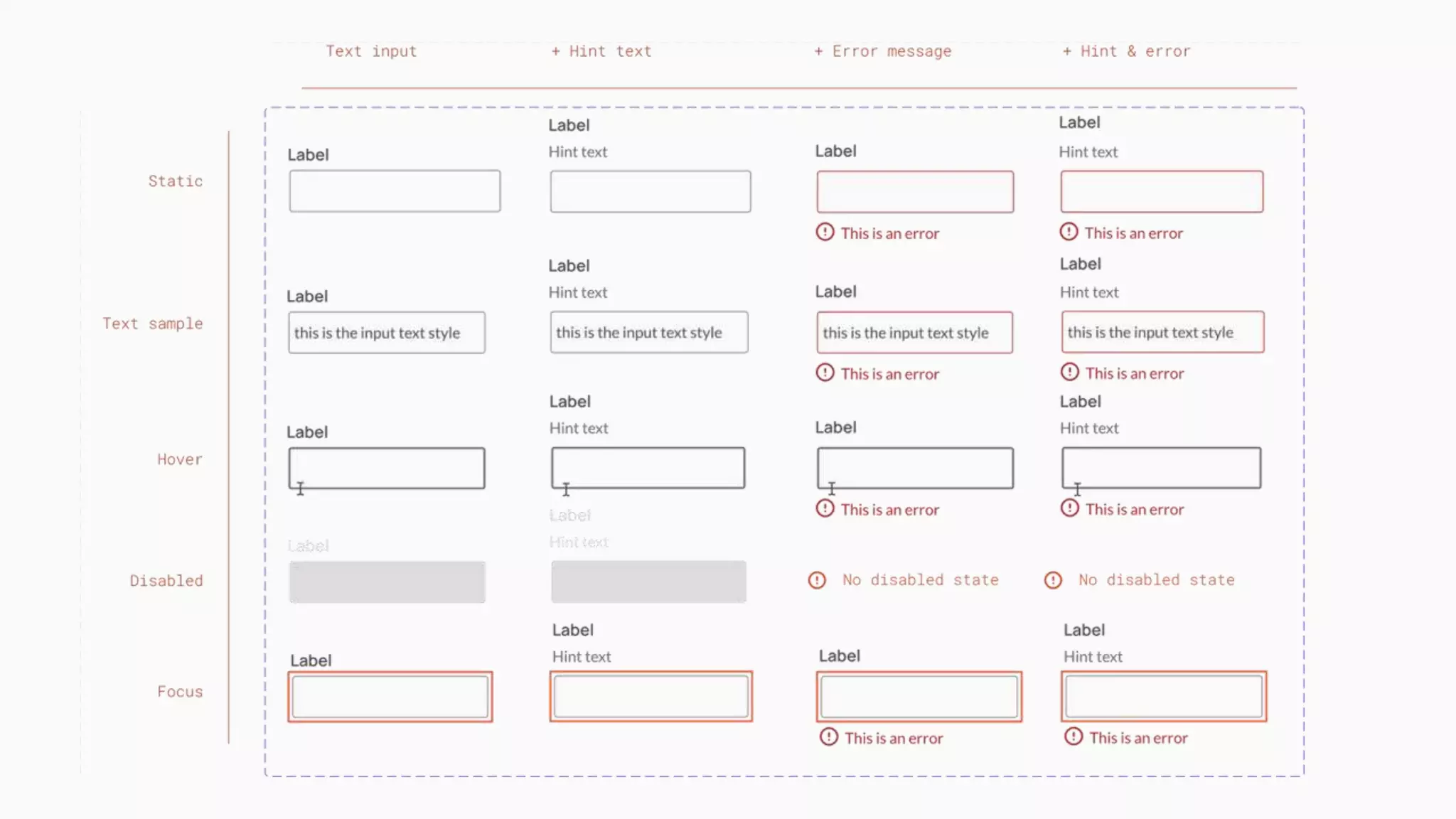
  • #36 Claire Don’t forget to consider the states of your components This can be commonly overlooked in the design stage particularly focus and error states Ensure you are considering and creating accessible Focus states Hover states Error states Also keep in mind when something should or shouldn’t be able to become disabled
  • #37 Sarah
  • #38 Sarah Have a go: Use one of the existing annotation systems such as Jeremy Elder’s annotations or the one from Indeed Watch out for ours which we’ll publish to the Figma community soon Make your own, build on your own existing design system/processes, think about how annotations can be used for more than just accessibility Start small: Don’t be daunted Pick something to start with that is going to have a big impact Lead the way Accessibility is all about momentum
  • #40 If you have any questions, you don’t feel comfortable asking during the Q&A we are on the slack channel