A 37 year old man out jogging stepped into a deep pothole left from
footpath repairs and injured his right ankle. The injury was half an
hour ago, he ate and drank just before he went out for the run and he
is obviously distressed by the pain. The ankle is his only injury.
•Describe and interpret the clinical photograph
•How will you manage him ?
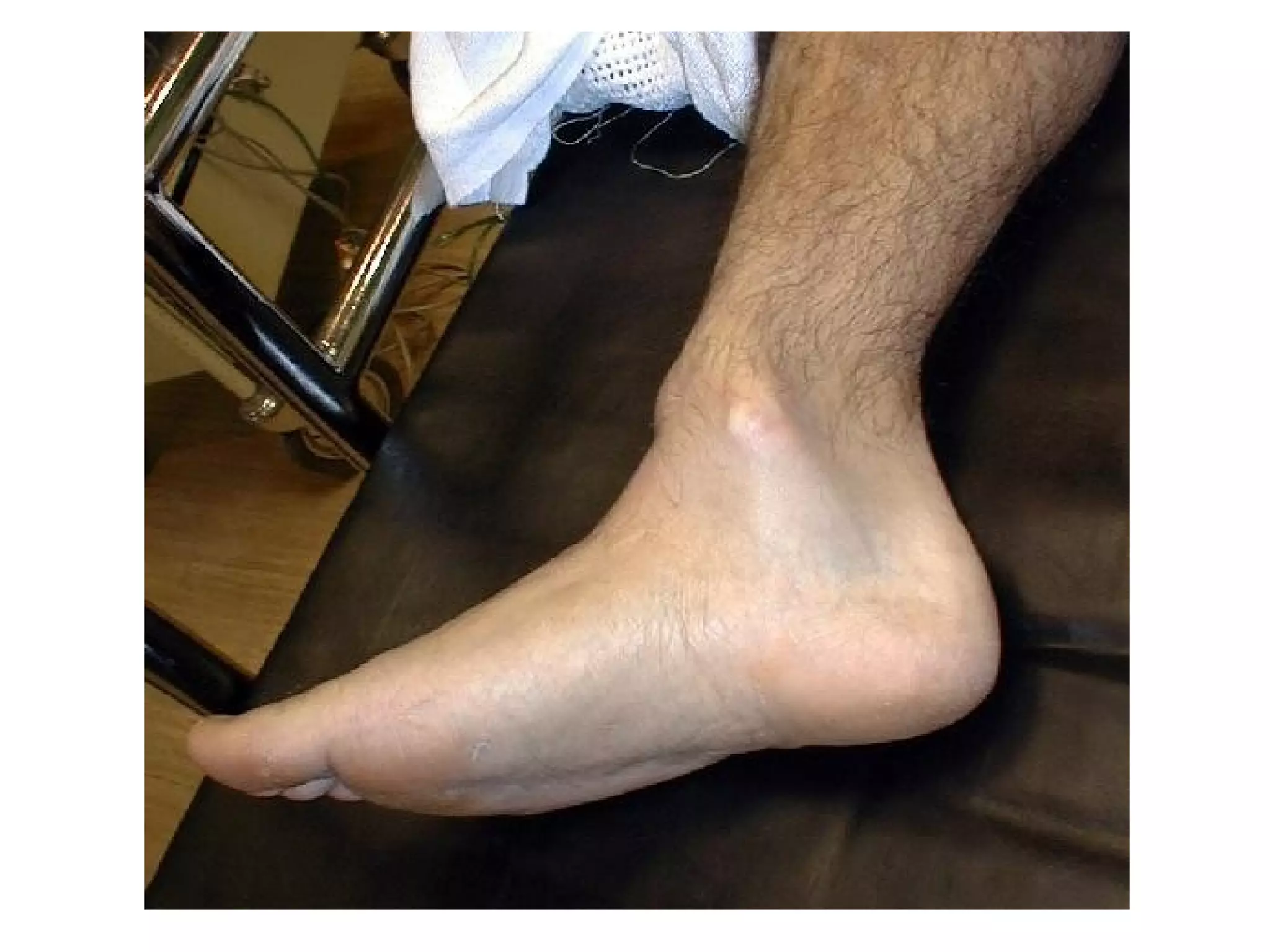
The ankle is obviously deformed with the foot apparently displaced laterally and posteriorly.
The skin overlying the lower end of the tibia is stretched and pale and presumably ischaemic.
The foot itself seems to be perfused. Such an appearance could be either due to an ankle joint
fracture/dislocation or a subtalar dislocation (with or without fracture). Clinically they can be
hard to differentiate. The appearance is more consistent with a fracture dislocation at the level
of the ankle mortice, made more likely by the area of “at risk” skin which is probably being
stretched over the distal tibia fracture end. Subtalar dislocation less often compromises skin
but can be associated with foot ischaemia.
The priorities in this man are analgesia and early reduction in ED to preserve skin integrity.
Traditionally, it was taught that preserving the integrity of the skin was an emergent priority,
and that reduction should occur before anything else, including Xrays. Fortunately, while this
is still true, getting an x ray (which our Ortho colleagues find enormously helpful) doesn’t
normally lead to long delays and should occur if possible. The other thing useful in this day
and age is a photo pre reduction. Post reduction, many have a CT performed to guide
definitive repair.
Initial analgesia could be with inhaled nitrous oxide and titrated narcotic. This may be enough
to allow reduction and splinting with substantial control of his pain. Should more sedation be
required his fasting status is a minor consideration and should not delay things. Propofol has
the advantage of rapid onset/offset but doesn’t provide analgesia. Ketamine “dissociates” but
has profound analgesic actions.

Ankle dislocation 2019

  • 1.
    A 37 yearold man out jogging stepped into a deep pothole left from footpath repairs and injured his right ankle. The injury was half an hour ago, he ate and drank just before he went out for the run and he is obviously distressed by the pain. The ankle is his only injury. •Describe and interpret the clinical photograph •How will you manage him ?
  • 3.
    The ankle isobviously deformed with the foot apparently displaced laterally and posteriorly. The skin overlying the lower end of the tibia is stretched and pale and presumably ischaemic. The foot itself seems to be perfused. Such an appearance could be either due to an ankle joint fracture/dislocation or a subtalar dislocation (with or without fracture). Clinically they can be hard to differentiate. The appearance is more consistent with a fracture dislocation at the level of the ankle mortice, made more likely by the area of “at risk” skin which is probably being stretched over the distal tibia fracture end. Subtalar dislocation less often compromises skin but can be associated with foot ischaemia. The priorities in this man are analgesia and early reduction in ED to preserve skin integrity. Traditionally, it was taught that preserving the integrity of the skin was an emergent priority, and that reduction should occur before anything else, including Xrays. Fortunately, while this is still true, getting an x ray (which our Ortho colleagues find enormously helpful) doesn’t normally lead to long delays and should occur if possible. The other thing useful in this day and age is a photo pre reduction. Post reduction, many have a CT performed to guide definitive repair. Initial analgesia could be with inhaled nitrous oxide and titrated narcotic. This may be enough to allow reduction and splinting with substantial control of his pain. Should more sedation be required his fasting status is a minor consideration and should not delay things. Propofol has the advantage of rapid onset/offset but doesn’t provide analgesia. Ketamine “dissociates” but has profound analgesic actions.