

Absolute and relative stability and
locking plate principles
Presenter: DR SOUVIK PAUL
Goal of this seminar
• AO Principles(Martin Allgöwer, Robert Schneider, and
Hans Willenegger)
• Elaboration of absolute and relative stability
• Discuss about locking compression plates
2
AO Principles
1. # reduction and fixation to restore anatomical
relationships
2. Stability by fixation or splintage , as personality of
fracture and injury requires.
3. Preservation of blood supply to soft tissues and bone by
careful handling and gentle reduction techniques.
4. Early and safe mobilization of the part and patient.
3
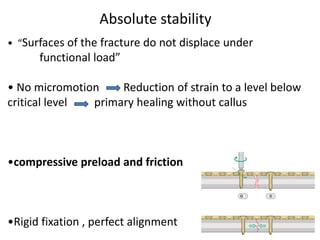
• “Surfaces of the fracture do not displace under
functional load”
• No micromotion Reduction of strain to a level below
critical level primary healing without callus
•compressive preload and friction
•Rigid fixation , perfect alignment
Absolute stability
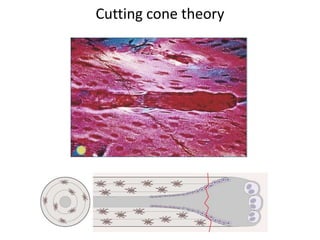
Cutting cone theory
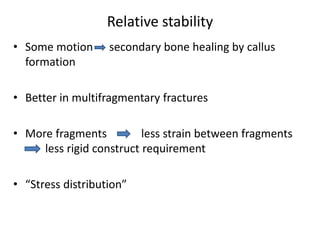
Relative stability
• Some motion secondary bone healing by callus
formation
• Better in multifragmentary fractures
• More fragments less strain between fragments
less rigid construct requirement
• “Stress distribution”
Biomechanics of callus formation
Post op interfragmentary mobility:-
• amount of external loading
• stiffness of the splints
• stiffness of the tissues bridging the fracture.
7
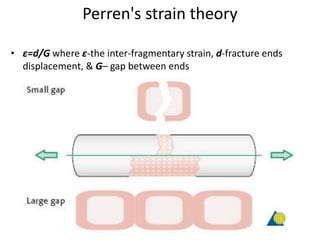
Perren's strain theory
• ε=d/G where ε-the inter-fragmentary strain, d-fracture ends
displacement, & G– gap between ends
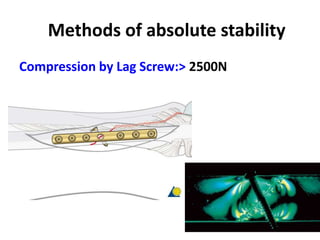
Methods of absolute stability
Compression by Lag Screw:> 2500N
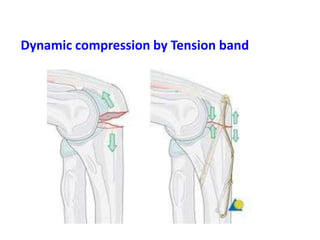
Dynamic compression by Tension band
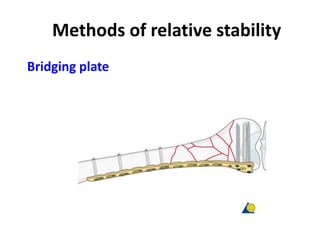
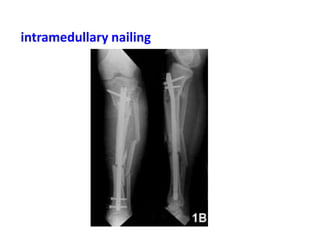
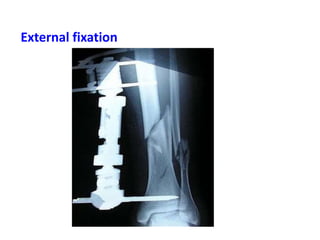
Methods of relative stability
Bridging plate
intramedullary nailing
External fixation
Plate function
• Neutralization[Protection] plate
• Compression plate
• Tension band plate
• Buttress plate
• Bridge plate
14
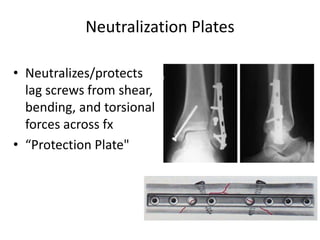
Neutralization Plates
• Neutralizes/protects
lag screws from shear,
bending, and torsional
forces across fx
• “Protection Plate"
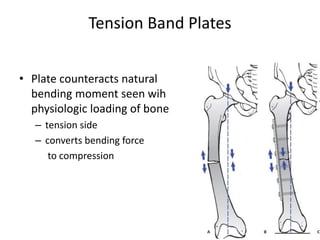
Tension Band Plates
• Plate counteracts natural
bending moment seen wih
physiologic loading of bone
– tension side
– converts bending force
to compression
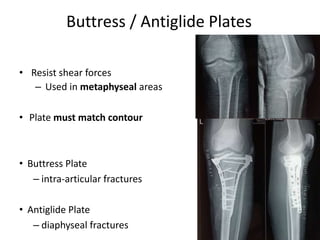
Buttress / Antiglide Plates
• Resist shear forces
– Used in metaphyseal areas
• Plate must match contour
• Buttress Plate
– intra-articular fractures
• Antiglide Plate
– diaphyseal fractures
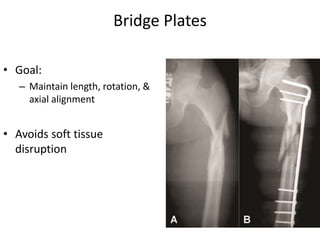
Bridge Plates
• Goal:
– Maintain length, rotation, &
axial alignment
• Avoids soft tissue
disruption
DCP
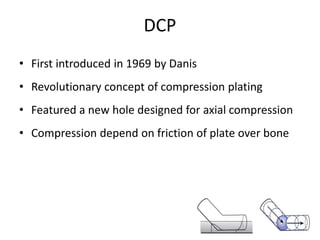
• First introduced in 1969 by Danis
• Revolutionary concept of compression plating
• Featured a new hole designed for axial compression
• Compression depend on friction of plate over bone
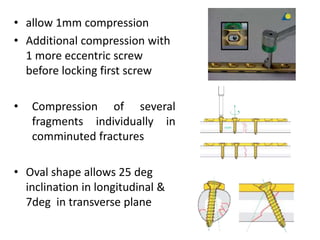
• allow 1mm compression
• Additional compression with
1 more eccentric screw
before locking first screw
• Compression of several
fragments individually in
comminuted fractures
• Oval shape allows 25 deg
inclination in longitudinal &
7deg in transverse plane
Problems with DCP
• Unstable fixation leads to fatigue & failure
• Strict adherence to principles of compression
• Compromised blood supply
• “Refractures” after plate removal
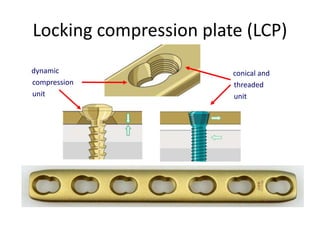
Locking compression plate (LCP)
dynamic
compression
unit
conical and
threaded
unit
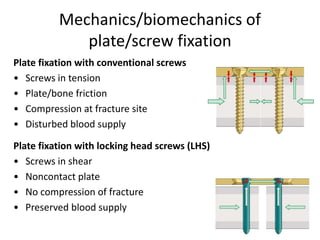
Mechanics/biomechanics of
plate/screw fixation
Plate fixation with conventional screws
• Screws in tension
• Plate/bone friction
• Compression at fracture site
• Disturbed blood supply
Plate fixation with locking head screws (LHS)
• Screws in shear
• Noncontact plate
• No compression of fracture
• Preserved blood supply
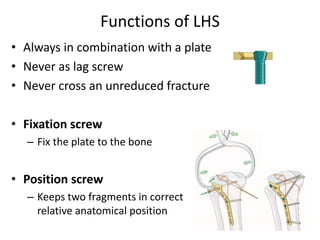
Functions of LHS
• Always in combination with a plate
• Never as lag screw
• Never cross an unreduced fracture
• Fixation screw
– Fix the plate to the bone
• Position screw
– Keeps two fragments in correct
relative anatomical position
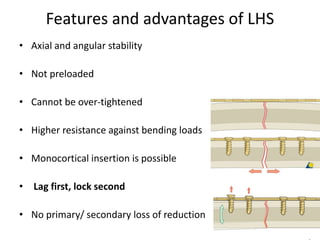
Features and advantages of LHS
• Axial and angular stability
• Not preloaded
• Cannot be over-tightened
• Higher resistance against bending loads
• Monocortical insertion is possible
• Lag first, lock second
• No primary/ secondary loss of reduction
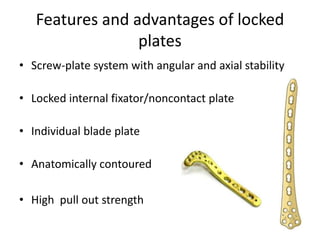
Features and advantages of locked
plates
• Screw-plate system with angular and axial stability
• Locked internal fixator/noncontact plate
• Individual blade plate
• Anatomically contoured
• High pull out strength
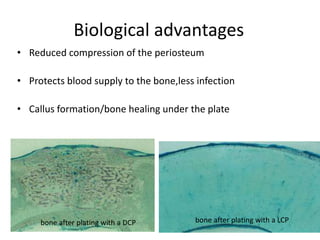
Biological advantages
• Reduced compression of the periosteum
• Protects blood supply to the bone,less infection
• Callus formation/bone healing under the plate
bone after plating with a DCP bone after plating with a LCP
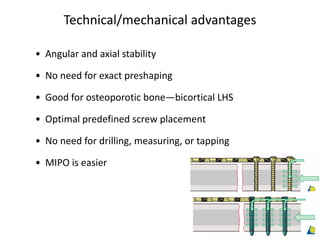
Technical/mechanical advantages
• Angular and axial stability
• No need for exact preshaping
• Good for osteoporotic bone—bicortical LHS
• Optimal predefined screw placement
• No need for drilling, measuring, or tapping
• MIPO is easier
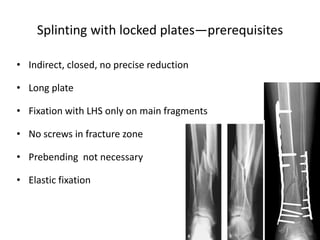
Splinting with locked plates—prerequisites
• Indirect, closed, no precise reduction
• Long plate
• Fixation with LHS only on main fragments
• No screws in fracture zone
• Prebending not necessary
• Elastic fixation
Drawback of fixation with LHS
• Screw insertion is only possible in a 90° angle
• Possible loss of the feel for the quality of the bone
during screw insertion and tightening
• Screw jamming and difficult implant removal
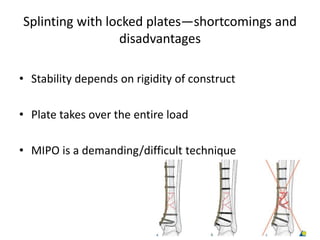
Splinting with locked plates—shortcomings and
disadvantages
• Stability depends on rigidity of construct
• Plate takes over the entire load
• MIPO is a demanding/difficult technique
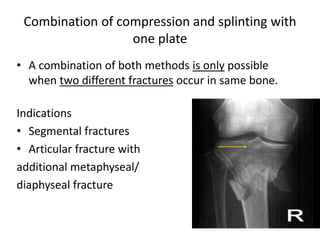
Combination of compression and splinting with
one plate
• A combination of both methods is only possible
when two different fractures occur in same bone.
Indications
• Segmental fractures
• Articular fracture with
additional metaphyseal/
diaphyseal fracture
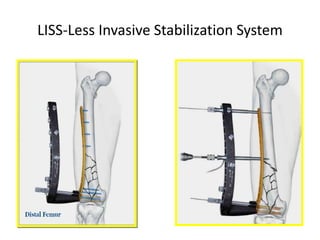
LISS-Less Invasive Stabilization System
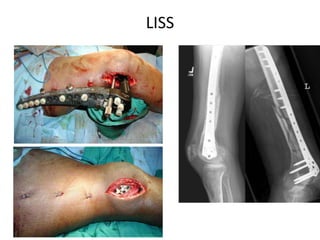
LISS
conclusion
• Two different methods and principles:
– compression—absolute stability
– splinting—relative stability
• no mixture of principles/methods in same
fracture
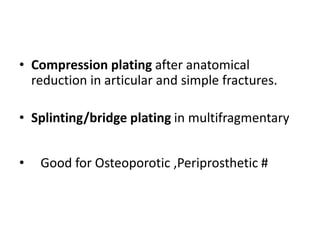
• Compression plating after anatomical
reduction in articular and simple fractures.
• Splinting/bridge plating in multifragmentary
• Good for Osteoporotic ,Periprosthetic #

Principles of locking compression plates

  • 1.
    Absolute and relativestability and locking plate principles Presenter: DR SOUVIK PAUL
  • 2.
    Goal of thisseminar • AO Principles(Martin Allgöwer, Robert Schneider, and Hans Willenegger) • Elaboration of absolute and relative stability • Discuss about locking compression plates 2
  • 3.
    AO Principles 1. #reduction and fixation to restore anatomical relationships 2. Stability by fixation or splintage , as personality of fracture and injury requires. 3. Preservation of blood supply to soft tissues and bone by careful handling and gentle reduction techniques. 4. Early and safe mobilization of the part and patient. 3
  • 4.
    • “Surfaces ofthe fracture do not displace under functional load” • No micromotion Reduction of strain to a level below critical level primary healing without callus •compressive preload and friction •Rigid fixation , perfect alignment Absolute stability
  • 5.
  • 6.
    Relative stability • Somemotion secondary bone healing by callus formation • Better in multifragmentary fractures • More fragments less strain between fragments less rigid construct requirement • “Stress distribution”
  • 7.
    Biomechanics of callusformation Post op interfragmentary mobility:- • amount of external loading • stiffness of the splints • stiffness of the tissues bridging the fracture. 7
  • 8.
    Perren's strain theory •ε=d/G where ε-the inter-fragmentary strain, d-fracture ends displacement, & G– gap between ends
  • 9.
    Methods of absolutestability Compression by Lag Screw:> 2500N
  • 10.
  • 11.
    Methods of relativestability Bridging plate
  • 12.
  • 13.
  • 14.
    Plate function • Neutralization[Protection]plate • Compression plate • Tension band plate • Buttress plate • Bridge plate 14
  • 15.
    Neutralization Plates • Neutralizes/protects lagscrews from shear, bending, and torsional forces across fx • “Protection Plate"
  • 16.
    Tension Band Plates •Plate counteracts natural bending moment seen wih physiologic loading of bone – tension side – converts bending force to compression
  • 17.
    Buttress / AntiglidePlates • Resist shear forces – Used in metaphyseal areas • Plate must match contour • Buttress Plate – intra-articular fractures • Antiglide Plate – diaphyseal fractures
  • 18.
    Bridge Plates • Goal: –Maintain length, rotation, & axial alignment • Avoids soft tissue disruption
  • 19.
    DCP • First introducedin 1969 by Danis • Revolutionary concept of compression plating • Featured a new hole designed for axial compression • Compression depend on friction of plate over bone
  • 20.
    • allow 1mmcompression • Additional compression with 1 more eccentric screw before locking first screw • Compression of several fragments individually in comminuted fractures • Oval shape allows 25 deg inclination in longitudinal & 7deg in transverse plane
  • 21.
    Problems with DCP •Unstable fixation leads to fatigue & failure • Strict adherence to principles of compression • Compromised blood supply • “Refractures” after plate removal
  • 22.
    Locking compression plate(LCP) dynamic compression unit conical and threaded unit
  • 23.
    Mechanics/biomechanics of plate/screw fixation Platefixation with conventional screws • Screws in tension • Plate/bone friction • Compression at fracture site • Disturbed blood supply Plate fixation with locking head screws (LHS) • Screws in shear • Noncontact plate • No compression of fracture • Preserved blood supply
  • 24.
    Functions of LHS •Always in combination with a plate • Never as lag screw • Never cross an unreduced fracture • Fixation screw – Fix the plate to the bone • Position screw – Keeps two fragments in correct relative anatomical position
  • 25.
    Features and advantagesof LHS • Axial and angular stability • Not preloaded • Cannot be over-tightened • Higher resistance against bending loads • Monocortical insertion is possible • Lag first, lock second • No primary/ secondary loss of reduction
  • 26.
    Features and advantagesof locked plates • Screw-plate system with angular and axial stability • Locked internal fixator/noncontact plate • Individual blade plate • Anatomically contoured • High pull out strength
  • 27.
    Biological advantages • Reducedcompression of the periosteum • Protects blood supply to the bone,less infection • Callus formation/bone healing under the plate bone after plating with a DCP bone after plating with a LCP
  • 28.
    Technical/mechanical advantages • Angularand axial stability • No need for exact preshaping • Good for osteoporotic bone—bicortical LHS • Optimal predefined screw placement • No need for drilling, measuring, or tapping • MIPO is easier
  • 29.
    Splinting with lockedplates—prerequisites • Indirect, closed, no precise reduction • Long plate • Fixation with LHS only on main fragments • No screws in fracture zone • Prebending not necessary • Elastic fixation
  • 30.
    Drawback of fixationwith LHS • Screw insertion is only possible in a 90° angle • Possible loss of the feel for the quality of the bone during screw insertion and tightening • Screw jamming and difficult implant removal
  • 31.
    Splinting with lockedplates—shortcomings and disadvantages • Stability depends on rigidity of construct • Plate takes over the entire load • MIPO is a demanding/difficult technique
  • 32.
    Combination of compressionand splinting with one plate • A combination of both methods is only possible when two different fractures occur in same bone. Indications • Segmental fractures • Articular fracture with additional metaphyseal/ diaphyseal fracture
  • 33.
  • 34.
  • 35.
    conclusion • Two differentmethods and principles: – compression—absolute stability – splinting—relative stability • no mixture of principles/methods in same fracture
  • 36.
    • Compression platingafter anatomical reduction in articular and simple fractures. • Splinting/bridge plating in multifragmentary • Good for Osteoporotic ,Periprosthetic #