GENERAL ANESTHESIA
INDEX
 Definition
 Classification
 Components
 Mechanism of action
 Complications &
interactions
DEFINITION
GENERAL ANESTHETICS [GAs] ARE DRUGS
WHICH PRODUCE REVERSIBLE LOSS OF ALL
SENSATION AND CONSCIOUSNESS SO IT CAN BE
DIFFERENTIATED FROM SLEEP,HEAD
INJURY,HYPNOSIS,DRUG POISONING AND COMA.
• Definition : Anesthesia (an =without, aisthesis =
sensation )
• Anesthesia is medication that attempts to eliminate
pain impulse from reaching the brain.
• In general anesthesia this is accomplished by putting
the patient asleep.
STREPTOKINASESTREPTOKINASEStreptokinaseANAESTHESIA
CLASSIFICATION
*INHALATIONAL
*INTRAVENOUS
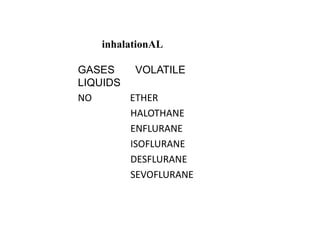
inhalationAL
GASES VOLATILE
LIQUIDS
NO ETHER
HALOTHANE
ENFLURANE
ISOFLURANE
DESFLURANE
SEVOFLURANE
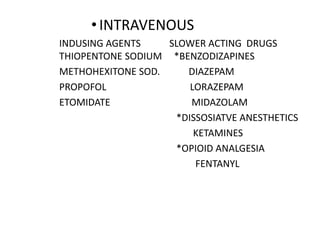
•INTRAVENOUS
INDUSING AGENTS SLOWER ACTING DRUGS
THIOPENTONE SODIUM *BENZODIZAPINES
METHOHEXITONE SOD. DIAZEPAM
PROPOFOL LORAZEPAM
ETOMIDATE MIDAZOLAM
*DISSOSIATVE ANESTHETICS
KETAMINES
*OPIOID ANALGESIA
FENTANYL
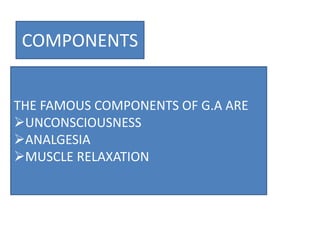
COMPONENTS
THE FAMOUS COMPONENTS OF G.A ARE
UNCONSCIOUSNESS
ANALGESIA
MUSCLE RELAXATION
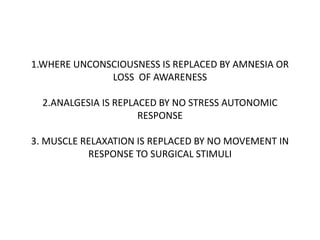
1.WHERE UNCONSCIOUSNESS IS REPLACED BY AMNESIA OR
LOSS OF AWARENESS
2.ANALGESIA IS REPLACED BY NO STRESS AUTONOMIC
RESPONSE
3. MUSCLE RELAXATION IS REPLACED BY NO MOVEMENT IN
RESPONSE TO SURGICAL STIMULI
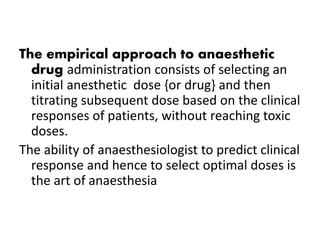
The empirical approach to anaesthetic
drug administration consists of selecting an
initial anesthetic dose {or drug} and then
titrating subsequent dose based on the clinical
responses of patients, without reaching toxic
doses.
The ability of anaesthesiologist to predict clinical
response and hence to select optimal doses is
the art of anaesthesia
HOW CAN WE ACHIEVE
G.A?
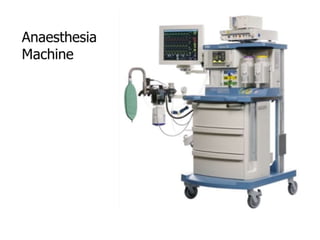
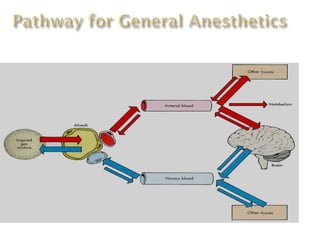
(a).INHALATIONAL ANAESTHESIA
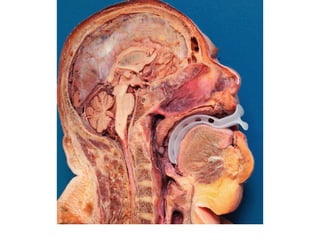
- Inhalational anesthesia is achieved through
airway tract by facemask, laryngeal mask or
endotracheal tube.
- The agent used is a gas like nitrous oxide or
volatile vapor like chloroform, ether, or
flothane.
- Inhalational anesthesia depresses the brain
from up [cortex] to down [the medulla] by
increasing dose.
INTRVENOUS ANAESTHESIA
-Very rapid: 10 seconds, for 10 minutes
-Irreversible dose
-It is used in short operation or in induction
of anesthesia and anesthesia maintained by
inhalational route
-New agent now can be used in maintenance by
infusion
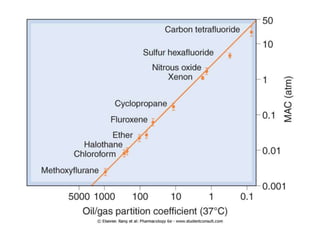
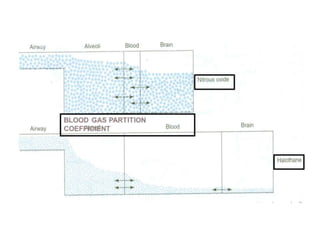
The relationship between anaesthetic activity
and lipid solubility has been repeatedly
confirmed. Anaesthetic potency in humans is
usually expressed as the minimal alveolar
concentration (MAC) required to abolish the
response to surgical incision in 50% of
subjects. Figure 36.1 shows the correlation
between MAC (inversely proportional to
potency) and lipid solubility, expressed as
oil:water partition coefficient, for a wide range
of inhalation anaesthetics. The Overton-Meyer
studies did not suggest any particular
mechanism, but revealed an impressive
correlation, for which any theory of
anaesthesia needs to account. Oil:water
partition was assumed to predict partition into
membrane lipids, consistent with the
suggestion that anaesthesia results from an
alteration of membrane function.
How the simple introduction of inert foreign
molecules into the lipid bilayer could cause a
functional disturbance is not explained by the
lipid theory. Two possible mechanisms, namely
volume expansion and increased membrane
fluidity, have been suggested and tested
experimentally, but both are now largely
discredited (see Halsey, 1989; Little, 1996), and
attention has swung from lipids to proteins,
the correlation of potency with lipid solubility
being explained by the effect of lipid solubility
on the concentration of anaesthetic adjacent
to its supposed protein target in the
hydrophobic region of neuronal cell
membranes
EFFECTS ON ION CHANNELS
Body_ID: HC036005
page 524
page 525
Body_ID: P0525
Following early studies that showed that
anaesthetics can bind to various proteins as
well as lipids, it was found that anaesthetics
affect many ligand-gated ion channels (see
Franks & Lieb 1994; Rudolph & Antkowiak,
2004). Many anaesthetic agents are able, at
concentrations reached during anaesthesia, to
inhibit the function of excitatory receptors,
such as the ionotropic glutamate, acetylcholine
or 5-hydroxytryptamine receptors, as well as
enhancing the function of inhibitory receptors
such as GABAA and glycine. The GABAA
receptor is the sole target for benzodiazepines
(see Ch. 37) and also appears to be a major
target for intravenous anaesthetics, such as
thiopental, propofol and etomidate (see
below), that act at a site on the receptor
different from the benzodiazepine binding site.
Studies of experimentally mutated receptors
(see Rudolph & Antkowiak, 2004) have
confirmed this and succeeded in identifying
the specific 'modulatory sites' through which
the anaesthetic drugs exert their effects on
channel function. The 'two-pore domain'
potassium channel known as TREK (see Ch. 4)
is another specifically anaesthetic-sensitive
channel. It is activated, thus reducing
membrane excitability, by low concentrations
of volatile anaesthetics (see Franks & Lieb,
1999).
In summary, general anaesthetics inhibit
excitatory channels (especially glutamate
receptors) and facilitate inhibitory channels
(particularly GABAA but also glycine and
certain potassium channels), and these
interactions are targeted at specific
hydrophobic domains of the channel proteins.
This is probably a serious oversimplification: as
Little (1996) emphasises, individual
anaesthetics differ in their actions and affect
cellular function in several different ways, so a
unitary theory is unlikely to be sufficient, but it
does provide a useful starting point.
EFFECTS OF ANAESTHETICS ON THE NERVOUS
SYSTEM
At the cellular level, the effect of anaesthetics
is mainly to inhibit synaptic transmission, any
effects on axonal conduction probably being
relatively unimportant
Inhibition of synaptic transmission could be
due to reduction of transmitter release,
inhibition of the action of the transmitter, or
reduction of the excitability of the postsynaptic
cell. Although all three effects have been
described, most studies suggest that reduced
transmitter release and reduced postsynaptic
response are the main factors. Reduced
acetylcholine release occurs at peripheral
synapses, and reduced sensitivity to excitatory
transmitters (due to inhibition of ligand-gated
ion channels; see above) occurs at both
peripheral and central synapses.
Inhibitory synaptic transmission is usually
potentiated by general anaesthetics,
particularly barbiturates, volatile anaesthetics
having similar but less strong actions (see
Rudolph & Antkowiak, 2004
The anaesthetic state comprises several
components, including unconsciousness, loss
of reflexes (muscle relaxation) and analgesia.
Much effort has gone into identifying the brain
regions on which anaesthetics act to produce
these effects. The most sensitive regions
appear to be the midbrain reticular formation
and thalamic sensory relay nuclei, inhibition of
which results in unconsciousness and
analgesia, respectively. Some anaesthetics
cause inhibition at spinal level, producing a
loss of reflex responses to painful stimuli,
although, in practice, neuromuscular-blocking
drugs (Ch. 10) are used to produce muscle
relaxation rather than relying on the
anaesthetic alone. Anaesthetics, even in low
concentrations, cause short-term amnesia, i.e.
experiences occurring during the influence of
the drug are not recalled later, even though
the subject was responsive at the time.2 It is
likely that interference with hippocampal
function produces this effect, because the
hippocampus is involved in short-term
memory, and certain hippocampal synapses
are highly susceptible to inhibition by
As the anaesthetic concentration is increased,
all brain functions are affected, including
motor control and reflex activity, respiration
and autonomic regulation. Therefore it is not
possible to identify a critical 'target site' in the
brain responsible for all the phenomena of
anaesthesia.
Body_ID: P036016
High concentrations of any general anaesthetic
affect all parts of the CNS, causing complete
shut-down and, in the absence of artificial
respiration, death from respiratory failure. The
margin between surgical anaesthesia and
potentially fatal respiratory and circulatory
depression is quite narrow, requiring careful
monitoring by the anaesthetist and rapid
adjustment of the level of anaesthesia, as
required.
Clinical uses of general anaesthetics
Body_ID: B036003
•Intravenous anaesthetics are used for:
• induction of anaesthesia (e.g. thiopental, etomidate)
• maintenance of anaesthesia throughout surgery ('total
intravenous anaesthesia', e.g. propofol given in combination
with muscle relaxants and analgesics).
•Inhalational anaesthetics (gases or volatile liquids) are used for
maintenance of anaesthesia. Points to note are that:
• volatile liquids (e.g. halothane, sevoflurane) are vaporised
with air, oxygen or oxygen-nitrous oxide mixtures as the carrier
gas
• halothane hepatotoxicity (see Ch. 53) occurs more often after
repeated exposure
• all inhalational anaesthetics can trigger malignant
hyperthermia in susceptible individuals (Ch. 10).
METABOLISM AND TOXICITY OF INHALATION
ANAESTHETICS
Body_ID: HC036012
Metabolism, although not quantitatively
important as a route of elimination of
inhalation anaesthetics, can generate toxic
metabolites. Chloroform (now obsolete)
causes hepatotoxicity associated with free
radical formation in liver cells. Methoxyflurane,
a halogenated ether, is no longer used because
about 50% is metabolised to fluoride and
oxalate, which cause renal toxicity. Enflurane
and sevoflurane also generate fluoride, but at
much lower (non-toxic) concentrations (Table
36.1). Halothane is the only volatile
anaesthetic in current use that undergoes
substantial metabolism, about 30% being
converted to bromide, trifluoroacetic acid and
other metabolites that are implicated in rare
instances of liver toxicity (see below).
The problem of toxicity of low concentrations
of anaesthetics inhaled over long periods by
operating theatre staff causes much concern,
following the demonstration that such chronic
low-level exposure (and associated metabolite
formation) leads to liver toxicity in
experimental animals. Epidemiological studies
of operating theatre staff have shown
increased incidence of liver disease and of
certain types of leukaemia, and of
spontaneous abortion and congenital
malformations, compared with control groups
not exposed to anaesthetic agents. Although
causation has not been clearly established,
strict measures are used to minimise the
escape of anaesthetics into the air of operating
theatres
•Pharmacological effects
of anaesthetic agents
• Anaesthesia involves three main neurophysiological
changes: unconsciousness, loss of response to painful
stimulation and loss of reflexes.
• At supra-anaesthetic doses, all anaesthetic agents can
cause death by loss of cardiovascular reflexes and
respiratory paralysis.
• .
• At the cellular level, anaesthetic agents affect
synaptic transmission rather than axonal conduction.
The release of excitatory transmitters and the
response of the postsynaptic receptors are both
inhibited. GABA-mediated inhibitory transmission is
enhanced by most anaesthetics
• diacAlthough all parts of the nervous system are
affected by anaesthetic agents, the main targets
appear to be the thalamus, cortex and hippocampus.
• Most anaesthetic agents (with exceptions, such as
ketamine and benzodiazepines) produce similar
neurophysiological effects and differ mainly in respect
of their pharmacokinetic properties and toxicity.
• Most anaesthetic agents cause cardiovascular
depression by effects on the myocardium and blood
vessels, as well as on the nervous system. Halogenated
anaesthetic agents are likely to cause car dysrhythmias,
accentuated by circulating catecholamines
Commonly used in children, where preoperative placement if an iv catheter
can be difficult.
Anesthesia is produced at end –tidal concentration of 0.7 -1%.
.
CLINICAL USES
SIDE EFFECTS

Anesthesia

  • 1.
  • 2.
    INDEX  Definition  Classification Components  Mechanism of action  Complications & interactions
  • 3.
    DEFINITION GENERAL ANESTHETICS [GAs]ARE DRUGS WHICH PRODUCE REVERSIBLE LOSS OF ALL SENSATION AND CONSCIOUSNESS SO IT CAN BE DIFFERENTIATED FROM SLEEP,HEAD INJURY,HYPNOSIS,DRUG POISONING AND COMA.
  • 4.
    • Definition :Anesthesia (an =without, aisthesis = sensation ) • Anesthesia is medication that attempts to eliminate pain impulse from reaching the brain. • In general anesthesia this is accomplished by putting the patient asleep. STREPTOKINASESTREPTOKINASEStreptokinaseANAESTHESIA
  • 5.
  • 6.
  • 7.
    •INTRAVENOUS INDUSING AGENTS SLOWERACTING DRUGS THIOPENTONE SODIUM *BENZODIZAPINES METHOHEXITONE SOD. DIAZEPAM PROPOFOL LORAZEPAM ETOMIDATE MIDAZOLAM *DISSOSIATVE ANESTHETICS KETAMINES *OPIOID ANALGESIA FENTANYL
  • 8.
    COMPONENTS THE FAMOUS COMPONENTSOF G.A ARE UNCONSCIOUSNESS ANALGESIA MUSCLE RELAXATION
  • 9.
    1.WHERE UNCONSCIOUSNESS ISREPLACED BY AMNESIA OR LOSS OF AWARENESS 2.ANALGESIA IS REPLACED BY NO STRESS AUTONOMIC RESPONSE 3. MUSCLE RELAXATION IS REPLACED BY NO MOVEMENT IN RESPONSE TO SURGICAL STIMULI
  • 10.
    The empirical approachto anaesthetic drug administration consists of selecting an initial anesthetic dose {or drug} and then titrating subsequent dose based on the clinical responses of patients, without reaching toxic doses. The ability of anaesthesiologist to predict clinical response and hence to select optimal doses is the art of anaesthesia
  • 11.
    HOW CAN WEACHIEVE G.A?
  • 12.
    (a).INHALATIONAL ANAESTHESIA - Inhalationalanesthesia is achieved through airway tract by facemask, laryngeal mask or endotracheal tube. - The agent used is a gas like nitrous oxide or volatile vapor like chloroform, ether, or flothane. - Inhalational anesthesia depresses the brain from up [cortex] to down [the medulla] by increasing dose.
  • 15.
    INTRVENOUS ANAESTHESIA -Very rapid:10 seconds, for 10 minutes -Irreversible dose -It is used in short operation or in induction of anesthesia and anesthesia maintained by inhalational route -New agent now can be used in maintenance by infusion
  • 16.
    The relationship betweenanaesthetic activity and lipid solubility has been repeatedly confirmed. Anaesthetic potency in humans is usually expressed as the minimal alveolar concentration (MAC) required to abolish the response to surgical incision in 50% of subjects. Figure 36.1 shows the correlation between MAC (inversely proportional to potency) and lipid solubility, expressed as oil:water partition coefficient, for a wide range of inhalation anaesthetics. The Overton-Meyer studies did not suggest any particular mechanism, but revealed an impressive correlation, for which any theory of anaesthesia needs to account. Oil:water partition was assumed to predict partition into membrane lipids, consistent with the suggestion that anaesthesia results from an alteration of membrane function.
  • 17.
    How the simpleintroduction of inert foreign molecules into the lipid bilayer could cause a functional disturbance is not explained by the lipid theory. Two possible mechanisms, namely volume expansion and increased membrane fluidity, have been suggested and tested experimentally, but both are now largely discredited (see Halsey, 1989; Little, 1996), and attention has swung from lipids to proteins, the correlation of potency with lipid solubility being explained by the effect of lipid solubility on the concentration of anaesthetic adjacent to its supposed protein target in the hydrophobic region of neuronal cell membranes
  • 18.
    EFFECTS ON IONCHANNELS Body_ID: HC036005 page 524 page 525 Body_ID: P0525 Following early studies that showed that anaesthetics can bind to various proteins as well as lipids, it was found that anaesthetics affect many ligand-gated ion channels (see Franks & Lieb 1994; Rudolph & Antkowiak, 2004). Many anaesthetic agents are able, at concentrations reached during anaesthesia, to inhibit the function of excitatory receptors, such as the ionotropic glutamate, acetylcholine or 5-hydroxytryptamine receptors, as well as enhancing the function of inhibitory receptors such as GABAA and glycine. The GABAA
  • 19.
    receptor is thesole target for benzodiazepines (see Ch. 37) and also appears to be a major target for intravenous anaesthetics, such as thiopental, propofol and etomidate (see below), that act at a site on the receptor different from the benzodiazepine binding site. Studies of experimentally mutated receptors (see Rudolph & Antkowiak, 2004) have confirmed this and succeeded in identifying the specific 'modulatory sites' through which the anaesthetic drugs exert their effects on channel function. The 'two-pore domain' potassium channel known as TREK (see Ch. 4) is another specifically anaesthetic-sensitive channel. It is activated, thus reducing membrane excitability, by low concentrations of volatile anaesthetics (see Franks & Lieb, 1999).
  • 20.
    In summary, generalanaesthetics inhibit excitatory channels (especially glutamate receptors) and facilitate inhibitory channels (particularly GABAA but also glycine and certain potassium channels), and these interactions are targeted at specific hydrophobic domains of the channel proteins. This is probably a serious oversimplification: as Little (1996) emphasises, individual anaesthetics differ in their actions and affect cellular function in several different ways, so a unitary theory is unlikely to be sufficient, but it does provide a useful starting point.
  • 21.
    EFFECTS OF ANAESTHETICSON THE NERVOUS SYSTEM At the cellular level, the effect of anaesthetics is mainly to inhibit synaptic transmission, any effects on axonal conduction probably being relatively unimportant Inhibition of synaptic transmission could be due to reduction of transmitter release, inhibition of the action of the transmitter, or reduction of the excitability of the postsynaptic cell. Although all three effects have been described, most studies suggest that reduced transmitter release and reduced postsynaptic response are the main factors. Reduced acetylcholine release occurs at peripheral synapses, and reduced sensitivity to excitatory transmitters (due to inhibition of ligand-gated ion channels; see above) occurs at both peripheral and central synapses.
  • 22.
    Inhibitory synaptic transmissionis usually potentiated by general anaesthetics, particularly barbiturates, volatile anaesthetics having similar but less strong actions (see Rudolph & Antkowiak, 2004
  • 23.
    The anaesthetic statecomprises several components, including unconsciousness, loss of reflexes (muscle relaxation) and analgesia. Much effort has gone into identifying the brain regions on which anaesthetics act to produce these effects. The most sensitive regions appear to be the midbrain reticular formation and thalamic sensory relay nuclei, inhibition of which results in unconsciousness and analgesia, respectively. Some anaesthetics cause inhibition at spinal level, producing a loss of reflex responses to painful stimuli, although, in practice, neuromuscular-blocking drugs (Ch. 10) are used to produce muscle relaxation rather than relying on the anaesthetic alone. Anaesthetics, even in low concentrations, cause short-term amnesia, i.e. experiences occurring during the influence of the drug are not recalled later, even though the subject was responsive at the time.2 It is likely that interference with hippocampal function produces this effect, because the hippocampus is involved in short-term memory, and certain hippocampal synapses are highly susceptible to inhibition by
  • 24.
    As the anaestheticconcentration is increased, all brain functions are affected, including motor control and reflex activity, respiration and autonomic regulation. Therefore it is not possible to identify a critical 'target site' in the brain responsible for all the phenomena of anaesthesia. Body_ID: P036016 High concentrations of any general anaesthetic affect all parts of the CNS, causing complete shut-down and, in the absence of artificial respiration, death from respiratory failure. The margin between surgical anaesthesia and potentially fatal respiratory and circulatory depression is quite narrow, requiring careful monitoring by the anaesthetist and rapid adjustment of the level of anaesthesia, as required.
  • 25.
    Clinical uses ofgeneral anaesthetics Body_ID: B036003 •Intravenous anaesthetics are used for: • induction of anaesthesia (e.g. thiopental, etomidate) • maintenance of anaesthesia throughout surgery ('total intravenous anaesthesia', e.g. propofol given in combination with muscle relaxants and analgesics). •Inhalational anaesthetics (gases or volatile liquids) are used for maintenance of anaesthesia. Points to note are that: • volatile liquids (e.g. halothane, sevoflurane) are vaporised with air, oxygen or oxygen-nitrous oxide mixtures as the carrier gas • halothane hepatotoxicity (see Ch. 53) occurs more often after repeated exposure • all inhalational anaesthetics can trigger malignant hyperthermia in susceptible individuals (Ch. 10).
  • 27.
    METABOLISM AND TOXICITYOF INHALATION ANAESTHETICS Body_ID: HC036012 Metabolism, although not quantitatively important as a route of elimination of inhalation anaesthetics, can generate toxic metabolites. Chloroform (now obsolete) causes hepatotoxicity associated with free radical formation in liver cells. Methoxyflurane, a halogenated ether, is no longer used because about 50% is metabolised to fluoride and oxalate, which cause renal toxicity. Enflurane and sevoflurane also generate fluoride, but at much lower (non-toxic) concentrations (Table 36.1). Halothane is the only volatile anaesthetic in current use that undergoes substantial metabolism, about 30% being converted to bromide, trifluoroacetic acid and other metabolites that are implicated in rare instances of liver toxicity (see below).
  • 28.
    The problem oftoxicity of low concentrations of anaesthetics inhaled over long periods by operating theatre staff causes much concern, following the demonstration that such chronic low-level exposure (and associated metabolite formation) leads to liver toxicity in experimental animals. Epidemiological studies of operating theatre staff have shown increased incidence of liver disease and of certain types of leukaemia, and of spontaneous abortion and congenital malformations, compared with control groups not exposed to anaesthetic agents. Although causation has not been clearly established, strict measures are used to minimise the escape of anaesthetics into the air of operating theatres
  • 30.
    •Pharmacological effects of anaestheticagents • Anaesthesia involves three main neurophysiological changes: unconsciousness, loss of response to painful stimulation and loss of reflexes. • At supra-anaesthetic doses, all anaesthetic agents can cause death by loss of cardiovascular reflexes and respiratory paralysis. • . • At the cellular level, anaesthetic agents affect synaptic transmission rather than axonal conduction. The release of excitatory transmitters and the response of the postsynaptic receptors are both inhibited. GABA-mediated inhibitory transmission is enhanced by most anaesthetics
  • 31.
    • diacAlthough allparts of the nervous system are affected by anaesthetic agents, the main targets appear to be the thalamus, cortex and hippocampus. • Most anaesthetic agents (with exceptions, such as ketamine and benzodiazepines) produce similar neurophysiological effects and differ mainly in respect of their pharmacokinetic properties and toxicity. • Most anaesthetic agents cause cardiovascular depression by effects on the myocardium and blood vessels, as well as on the nervous system. Halogenated anaesthetic agents are likely to cause car dysrhythmias, accentuated by circulating catecholamines
  • 34.
    Commonly used inchildren, where preoperative placement if an iv catheter can be difficult. Anesthesia is produced at end –tidal concentration of 0.7 -1%. . CLINICAL USES SIDE EFFECTS